
Podcast
Lost Prophets
Hosted by Elias Crim & Pete Davis · EN
A podcast about the the lost prophets of solidarity — the voices we need to hear again.
www.lostprophets.org
www.lostprophets.org
23episodes
Episodes
Newest firstAll episodes
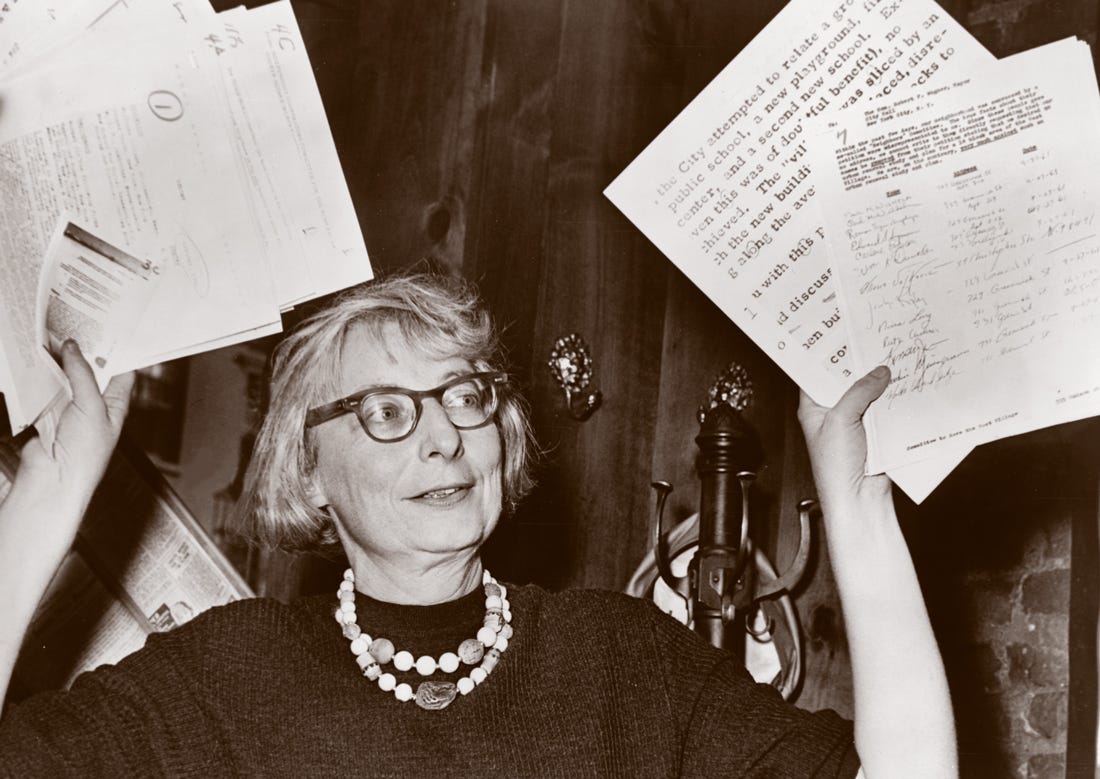
#2. Jane Jacobs (ft. Roberta Gratz)
Sep 10, 202402:14:11Tap to summarizeThe life and career of Jane Jacobs (1916-2006) is a remarkable case of the inspired “amateur” who changes an entire field of study (urban planning) merely by looking more closely at things than the experts had done. While not religious, she had a profound faith in the essential goodness and creativity of ordinary people — and consequently in our collective ability to co-create the places in which we live.In her later years, Jane Jacobs once recounted her reaction upon coming to New York in the early 1940s: “It was inexhaustible. Just to walk around the streets and wonder at it. So many streets different. So many neighborhoods different. So much going on.” In this language, we hear not only her love of cities but the beginnings of her intuition that we grasp truth through love. Thinking of the city planners of her day, many of whom seemed dubious about cities, she argued that it’s a big mistake to try to reform something you hate because that emotion will contaminate your prescription. One version of Jane Jacobs (in the eyes of her opponents) is the “uncredentialed housewife” whose organizing talents in 1962 defeated New York City’s mega-planner Robert Moses and his Lower Manhattan Expressway, thereby rescuing for later generations the neighborhoods of SoHo (one of the greatest inventories of 19th century buildings in the world) and Little Italy. Another version of Jane is the “city naturalist,” a keen observer of processes hiding in plain sight: the organic order of streets, the mail shunting by beneath her feet in pneumatic tubes, the diamond trade, the flower market. A true urbanophile, she saw self-organizing networks everywhere.A third Jane is the ecologist of cities and the champion of economic diversity, perhaps the most powerful benefit cities can offer. What Rachel Carson did for the natural environment or Ralph Nader for the commercial environment, Jane Jacobs did for the built environment. She became the articulate voice and defender of a movement which now seems merely common sense: a bottom-up approach to urbanism which values streets over buildings, people over automobiles, and the unpredictable over the centrally planned.For our conversation about Jane Jacobs, we spoke with her longtime friend and ally in urbanist advocacy Roberta Brandes Gratz, author of The Battle for Gotham: New York in the Shadow of Robert Moses and Jane Jacobs, among other titles.Takeaways from our conversation:“Cities are created by everybody.” Jane saw them as places where ordinary people had the chance to do something new and interesting. They offer scope for all kinds of people. Jane’s new theory about how cities function and her insight into the kind of problem a city is—i.e., one of organized complexity, requiring us to deal simultaneously with numerous interrelated factors in an organic whole.Against those who saw only disorder, Jane could see an intricate and unique order, which she liked to describe using ecological metaphors.Jane’s landmark book, The Death and Life of Great American Cities, gave a boost to localism of all sorts, including the local food movement.The concept of import replacement: Jane thought it her most important contribution. Not a product of planning but of bottom-up processes of discovery within a city.Jane was part of the wave of resistance to centralized authority in the 1960s—Betty Friedan, Rachel Carson, Noam Chomsky, the civil rights movement.Big plans live intellectually off little plans. Without the latter, planners often make big mistakes which cannot easily be corrected.Jane’s idea that we’re living in a time of “dying priesthoods” of all kinds. “We need unlimited independent thinkers with unlimited skepticism and curiosity.”Jane’s enormous impact on reverting cities from car-dominated places back to walkable (and bikeable) places. Episode Sections:Introduction to Jane Jacobs [00:00:00]Her early life and upbringing [00:02:47]Her deep curiosity and early interests [00:07:29]Early career as a journalist [00:13:35]Development of her urban theories [00:19:00]Her activism against urban renewal projects [00:39:32]Discussion of Jane's major books:The Death and Life of Great American Cities [00:30:00]The Economy of Cities [00:52:01]Cities and the Wealth of Nations [00:57:56]Systems of Survival [01:05:00]Interview with Roberta Gratz [01:09:56]Discussion of Jane's final book Dark Age Ahead [02:03:00]Concluding thoughts on her legacy [02:11:56]Recommended:Eyes on the Street, Robert Kanigal (2017)Citizen Jane: Battle for the City Documentary (2016)City Limits Documentary (1971)Death and Life of Great American Cities, Jane Jacobs (1961, 1992)The Economy of Cities, Jane Jacobs (1970)Cities and the Wealth of Nations, Jane Jacobs (1985)Dark Age Ahead, Jane Jacobs (2007)The Battle for Gotham: New York in the Shadow of Robert Moses and Jane Jacobs, Roberta Brandes Gratz Get full access to The Lost Prophets Podcast at www.lostprophets.org/subscribe
Transcribe →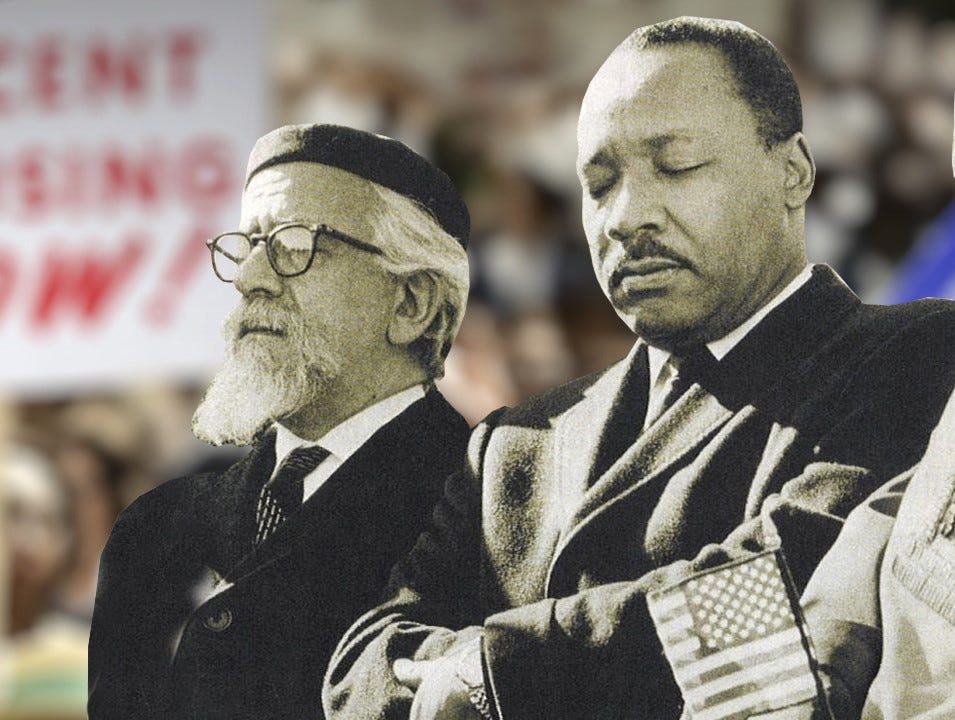
#1. Rabbi Abraham Joshua Heschel (ft. Rabbi Shai Held)
Sep 3, 202402:12:33Tap to summarizeFor our debut episode, we felt we could hardly find a better example of our theme than the life and work of Rabbi Abraham Joshua Heschel.To recover the spirituality of Heschel is to re-enter a state of awe and wonder, especially if we recognize, as Heschel taught, that “God takes humankind seriously.” That is, we are not merely worshippers but also covenant partners in tikkun olam, the ancient notion of repairing the world.An acclaimed interpreter of the Hebrew prophets, a popular theologian drawing on his own traditions of mystical Judaism, and an activist unafraid to plunge into both the Civil Rights movement and the protests against the war in Vietnam, Heschel exemplifies the “moral grandeur and spiritual audacity” he once exhorted President Kennedy to display in an urgent telegram.In this debut episode, our guest is Rabbi Shai Held, author of The Call of Transcendence, a study of Heschel’s spirituality. His latest book is Judaism Is About Love: Recovering the Heart of Jewish Life.In this conversation, Pete and Elias interview Rabbi Held about Heschel's influence on other mid-century prophets, his background in Hasidism, and his relationship with Martin Buber. The conversation delves into Heschel's views on American culture and militarism, as well as his interpretation of Exodus theology.Some themes and takeaways from our conversation:* Heschel’s view that God is everywhere: we search for his presence through a life of spirituality.* The key ideas of radical amazement, spiritual audacity, moral grandeur — and Heschel’s emphasis on the importance of the capacity for surprise.* Heschel’s memories of the warm humanity of Hasidic culture and his experience of growing up amidst people he could revere, concerned with problems of the inner life, spirituality, integrity.* The prophet must first have been shattered himself/herself. Rather than focusing on thought palaces, the prophet takes us on tours of the slums, as Heschel put it.* Heschel found himself in what he felt was a moral emergency rooted in a spiritual emergency. The ultimate and spiritual cause of the Shoah: distance from God, a lack of piety.* What the prophets have discovered: that history can be a nightmare.* The sanctity of time for the Jews—how to convert it to eternity.* Heschel’s prophetic anti-militarism. A favorite question to provoke his students: “Nuclear weapons—are they kosher?”* His view of education: “Reverence for learning and the learning of reverence”.* His wonderful humor: “I’m an optimist—against my better judgement.”* Heschel as a brilliant practitioner of mystagogy—he leads us into the mysteries.* Religion should not be used as a mere accessory to preconceived political beliefs, he argued, but should guide and shape one's politics.* Heschel's interreligious solidarity was bold and unapologetic, seeking to find common ground and learn from different religious traditions. “No religion is an island,” as he liked to say.Episode Timestamps:Introduction (00:00—15:52)* Why a Podcast about “lost prophets”?* Impact of the neoliberal “ice age” and our need to recover these mid-20th century thinkersHeschel’s Background (15:52—29:29)* His life and work* Hasidic upbringing in Warsaw* A move to America, eventual involvement in the burgeoning Civil Rights movementHeschel’s Major Works (29:29—44:59)* Overview of The Sabbath* Discussion of The Prophets and his concept of divine pathos* His critique of modern society and consumerismHeschel and Civil Rights (44:59—1:01:00)* His spiritual alliance with Martin Luther King Jr.* Activism in the Civil Rights movement, then Vietnam anti-war movement* His interfaith workInterview with Rabbi Shai Held (1:01:00—2:01:10)* Rabbi Held’s discovery of Heschel’s greater depths* Exploration of his theology and views on prophecy* Relationship between Heschel and Martin Buber* The relevance of Exodus theology; views on American culture and militarism* His relevance and legacy today, views on Judaism and love, the use of the term “prophetic”Conclusion (2:01:24—end)* Our key takeaways from the conversation* Discussion of Heschel’s emphasis on wonder, surprise, and breaking through callousnessRecommended:* The Prophets, A.J. Heschel (1962)* The Sabbath, A.J. Heschel (1951)* God In Search of Man: A Philosophy of Judaism, A. J. Heschel (1976)* Spiritual Audacity, documentary film biography (2021)* The Earth Is the Lord’s, A.J. Heschel (1995)* Heschel’s Last Interview — YouTube (1972)* A. J. Heschel: A Life of Radical Amazement, Julian Zelizer (2021)* Abraham Joshua Heschel: The Call of Transcendence, Shai Held (2013)* Judaism Is About Love, Shai Held (2024)Many thanks to the great band NOBLE DUST, who provides the music for Lost Prophets. Their latest album A Picture for a Frame is here.[Note: This episode and interview was recorded in December 2023, in the early months of Israel’s invasion of Gaza, a topic we will return to in more depth in a later episode.]</em...
Transcribe →
Coming Soon: LOST PROPHETS
Aug 31, 202400:10:14Tap to summarizeIn the coming weeks, join Elias Crim and Pete Davis as they journey into the land of the Lost Prophets, the mid-century figures who asked deep question and had big visions about what happened, where to go, and how to get there.Here in the mid-2020s, we are lost in the woods. We do not trust the established systems, and the established systems are revealing themselves daily to not be, as presently designed, worthy of our trust.Most of us don't feel like we are members of the places in which we reside, nor co-creators of the structures in which we inhabit — and as a result, loneliness, cynicism, and unease abounds. Powerful words like neighbor and citizen and solidarity, democracy, community, and ecology, participation — prophecy! — have been lost by years of abandonment and misuse. And none of the silver bullets of the past decades — the latest politicians, the latest technologies, the latest cultural trends — have delivered on their promise to get us out of this mess. Where to now?One way of thinking about what’s been going is that we are living in an age of what could be called declining hegemony.From the late 1980s to early 2010s, most of the questions that were raised about public life had conventional wisdom answers. There were always alternatives, critics, and dreamers, but the conventional wisdom dominated — if you had a question, the system had an answer, and most of us believed it.But eventually, that conventional wisdom started unraveling. Two decades of cultural malaise, disastrous wars, financialization, monopolization, Trump, an environmental crisis, technodystopias, and more have resulted in the conventional wisdom answers being much less believable today. That’s what declining hegemony feels like — unanswered questions, the most important being: Where to now?But here’s something we noticed: So many of the questions that we’re asking today were also asked by people who lived before the rise of the current, now-declining hegemony. In the mid-20th century, there was an explosion of reflection about big questions: How do we make sure our tools serves us instead of the other way around? How do we build community in the modern world? How should we relate to nature and to one another? How do we design our cities? Our systems? Our government? Where to now?Jane Jacobs, Dorothy Day, Hannah Arendt, Paul Goodman, Martin Luther King, Wendell Berry, Ella Baker, Ivan Illich, Simone Weil, Abraham Joshua Heschel, James Baldwin, Marshall McCluhan, E.F. Schumacher… it was an era of deep questions and big visions. It was an era of prophecy. If we want to figure out where to go from here, we may need to hear their voices again. And that’s exactly what we’re doing with Lost Prophets. Each episode, we will feature a Lost Prophet of solidarity — discuss their life, their work, and what they can teach us about today. Additionally, we’ll bring on a guest that’s a much bigger expert on their work to go deeper. And hopefully in this excavation, we’ll find some light that can shine a path forward today.Come digging with us, Listener! Get full access to The Lost Prophets Podcast at www.lostprophets.org/subscribe
Transcribe →