Podcast
Mind Body Health & Politics
Hosted by Richard L. Miller · EN
Dr. Richard Louis Miller is an American Clinical Psychologist, Founder of Wilbur Hot Springs Health Sanctuary, and broadcaster who hosts the Mind Body Health & Politics talk radio program from Mendocino County, California. Dr. Miller was also Founder and chief clinician of the nationally acclaimed, pioneering, Cokenders Alcohol and Drug Program. Dr. Miller’s new book, Psychedelic Medicine, is based on his interviews with the most acclaimed experts on the topic. Mind Body Health & Politics radio broadcast is known for its wide ranging discussions on political issues and health. The program’s format includes guest interviews with prominent national authorities, scientists, best-selling authors, and listener call-ins. The programs offer a forum and soundboard for listeners to interact with the show and its guests. We invite you to listen to the latest broadcasts below or visit our many archived programs. We’d love to hear from you on political and health issues!
www.mindbodyhealthpolitics.org
www.mindbodyhealthpolitics.org
24episodes
Episodes
Newest firstAll episodes
Choosing Each Other Again
Jan 600:20:24Tap to summarizeSummaryIn this conversation, Dr. Richard Louis Miller reflects on the importance of human connection, the historical rise of dominators in society, and the interplay between religion and governance. He emphasizes the need for community and collaboration to counteract the divisive forces in the world, expressing hope for humanity's ability to unite and thrive together.TakeawaysConnection with others is vital for personal well-being.Human beings are inherently tribal and collaborative.A small group of dominators has historically controlled resources.The concept of property emerged from power dynamics.Religion and governance have a complex and often dangerous relationship.The separation of church and state is crucial for freedom.Community and connection can combat isolation and fear.We must reach out to others to foster relationships.Hope exists for humanity to rise above divisive forces.We share this planet and must work together as one people.Chapters00:00 Introduction and Personal Reflections02:53 The Importance of Connection06:12 The Rise of Dominators in Society09:05 The Historical Context of Power Dynamics12:00 Religion and Governance: A Dangerous Alliance15:50 The Call for Community and Connection20:11 Hope for Humanity's Future This is a public episode. If you'd like to discuss this with other subscribers or get access to bonus episodes, visit www.mindbodyhealthpolitics.org/subscribe
Transcribe →
What Meditation Is Really For
Dec 2300:39:27Tap to summarizeWhy Meditation Is About Relationship, Not EscapeSusan Piver on breath, awareness, and strengthening human connectionEpisode SummaryIn this episode of Mind Body Health & Politics, I speak with Susan Piver, meditation teacher and author of The Wisdom of a Broken Heart, about what meditation truly offers in a distracted, isolated world.Susan shares how her online meditation community grew organically to tens of thousands of people seeking practice, presence, and connection. Together, we explore meditation not as a tool for self-improvement or avoidance, but as a way of relating differently to the mind, the breath, and one another.We discuss why the mind is a sense organ rather than the self, how meditation restores agency in an age that constantly pulls at our attention, and why practice does not remove pain—but helps us meet it without aggression or collapse.One line from Susan stayed with me:“I cannot defeat my enemies. But I can strengthen my friends.”In a culture overwhelmed by noise, fear, and division, this conversation is an invitation to clarity, steadiness, and genuine human presence.Timestamps00:00 — Why community is essential to mental and emotional health02:15 — Introducing Susan Piver and the Open Heart Project04:45 — How online meditation became a global community06:00 — The unexpected intimacy of practicing together online08:30 — What meditation actually is (and what it is not)12:30 — Why the mind is not the boss16:00 — Attention, breath, and reclaiming agency20:30 — Meditation, grief, and the danger of spiritual bypassing27:00 — Pain, loss, and meeting experience honestly30:45 — Meditation as opening to the world, not withdrawing from it34:00 — “I cannot defeat my enemies, but I can strengthen my friends”36:30 — A guided meditation with Susan Piver42:30 — Silence, presence, and closing reflections This is a public episode. If you'd like to discuss this with other subscribers or get access to bonus episodes, visit www.mindbodyhealthpolitics.org/subscribe
Transcribe →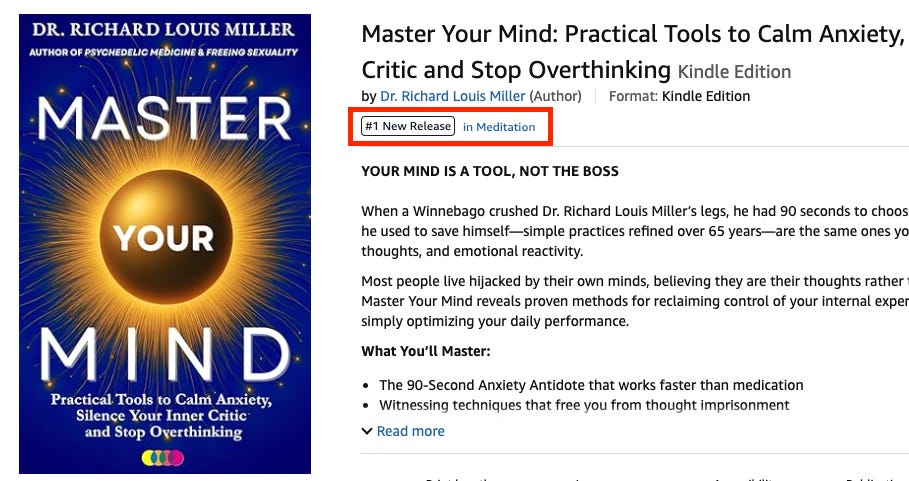
Three Simple Tools to Calm Anxiety and Quiet the Mind
Dec 1600:10:24Tap to summarizeThree Simple Tools to Calm Anxiety and Quiet the MindEpisode SummaryIn this week’s episode of Mind Body Health & Politics, I speak directly to you about anxiety and intrusive thoughts—two of the most common struggles I’ve encountered in over 65 years of clinical practice.I share three simple, practical tools that require no special equipment, no long meditation sessions, and no expense. These are techniques you can use almost anywhere, at any moment, to calm your nervous system and regain control of your inner world.We explore conscious breathing, guided visualization, and a surprisingly powerful method for interrupting intrusive thoughts. These practices helped me save my own life during a severe trauma, and they remain the foundation of how I manage anxiety to this day.This episode is a reminder that you don’t need to do everything at once. A little something over a long period of time is a lot of something. This is a public episode. If you'd like to discuss this with other subscribers or get access to bonus episodes, visit www.mindbodyhealthpolitics.org/subscribe
Transcribe →
Why Relationships Hurt — And Why That’s Not a Problem
Dec 900:47:53Tap to summarizeDr. Susan Campbell on Inconvenient Pain, Triggers & The PauseWhy conflict is normal — and how learning to “pause” can transform your closest relationships.Psychologist, author, and renowned couples therapist Dr. Susan Campbell returns to Mind Body Health & Politics for a powerful conversation about emotional pain, conflict, and the skills most of us were never taught.She and Dr. Richard Louis Miller explore why relationships inevitably hurt, why humans instinctively avoid emotional discomfort, and how this avoidance prevents us from growing. Instead of trying to “fix” or escape pain, Susan teaches how to feel it, understand it, and use it as a doorway to deeper connection.Susan explains why old childhood wounds get triggered in relationships, how the nervous system reacts under stress, and why even minor disagreements can unleash outsized reactions. She and Richard discuss the universal patterns couples fall into — denial, control, withdrawal, blame — and how practicing the pause interrupts these automatic behaviors.They also explore the deeper psychological landscape: why civilized cultures are addicted to control, how intimacy exposes our vulnerabilities, and why emotional courage is essential for personal and collective evolution.This conversation is honest, warm, practical, and deeply human. If you've ever wondered why conflict feels overwhelming — or how to navigate it with clarity and compassion — this episode offers tools that can change your relationships from the inside out.GuestDr. Susan Campbell — psychologist, couples therapist, group facilitator, and author of 12+ books including Getting Real, Truth in Dating, The Couples Journey, and From Triggered to Tranquil. She is internationally known for her work on honesty, emotional triggers, and relationship communication.Key TopicsWhy emotional pain is normal — not a sign something is “wrong”“Inconvenient pain” and why relationships activate our earliest woundsHow childhood patterns influence adult reactionsTriggers: what they are, why they happen, and how to recognize themThe body’s role in emotional reactions: fight, flight, freeze, control, or withdrawalWhy most of us avoid pain — and how this avoidance creates more sufferingThe Pause: how to interrupt spirals before real damage occursHow conscious breathing calms the nervous system after activationCompassionate self-inquiry: what to do after you pauseHow to identify your personal “control patterns”Saying no with kindness vs. protecting yourself with avoidanceExpansion of emotional capacity as a path to personal evolutionWhy our culture trains us to answer quickly — and how slowing down changes everythingHow relationships become mirrors that reveal unhealed woundsTeaching emotional intelligence to children — and why it mattersWhy genuine relating is more important than managing outcomesTimestamps00:00 — Why humans need community to thrive00:58 — Introducing Dr. Susan Campbell01:20 — Susan’s core message: expanding our capacity for emotional discomfort02:33 — What “inconvenient pain” really means03:45 — Why humans avoid painful truths04:19 — Normal frustrations inside relationships05:18 — Why our culture romanticizes ease — and misleads us06:40 — Pain as an opportunity for emotional growth07:51 — Childhood wounds and how relationships reactivate them09:30 — Real-life example: wanting different things at the same time10:55 — Triggered reactions: control, withdrawal, shutdown11:53 — How to recognize your trigger patterns13:45 — How to sit with discomfort instead of escaping it15:20 — How triggers mix the past with the present17:58 — The value of seeing your old patterns clearly19:51 — Why conflict escalates so fast20:26 — Susan’s signature tool: The Pause22:01 — Why talking while triggered never works23:55 — How to calm your nervous system during a pause25:30 — “You know the pause is working when you’re no longer blaming.”25:46 — Conscious breathing as emotional regulation26:36 — Why discipline leads to long-term harmony28:36 — Emotional skills we should teach children30:01 — Beyond the pause: compassionate self-inquiry31:14 — How self-compassion arises naturally after nervous-system calming33:22 — Why these tools should be taught in schools35:30 — Addiction to control in modern culture37:21 — Saying no with kindness39:14 — Control patterns: how we avoid discomfort41:27 — Why taking time to respond feels threatening in our culture43:28 — What happens when we fear uncomfortable outcomes45:51 — Susan’s final additional insight47:37 — Closing reflections and where to find Susan’s work This is a public episode. If you'd like to discuss this with other subscribers or get access to bonus episodes, visit www.mindbodyhealthpolitics.org/subscribe
Transcribe →