← Mind Pump: Raw Fitness Truth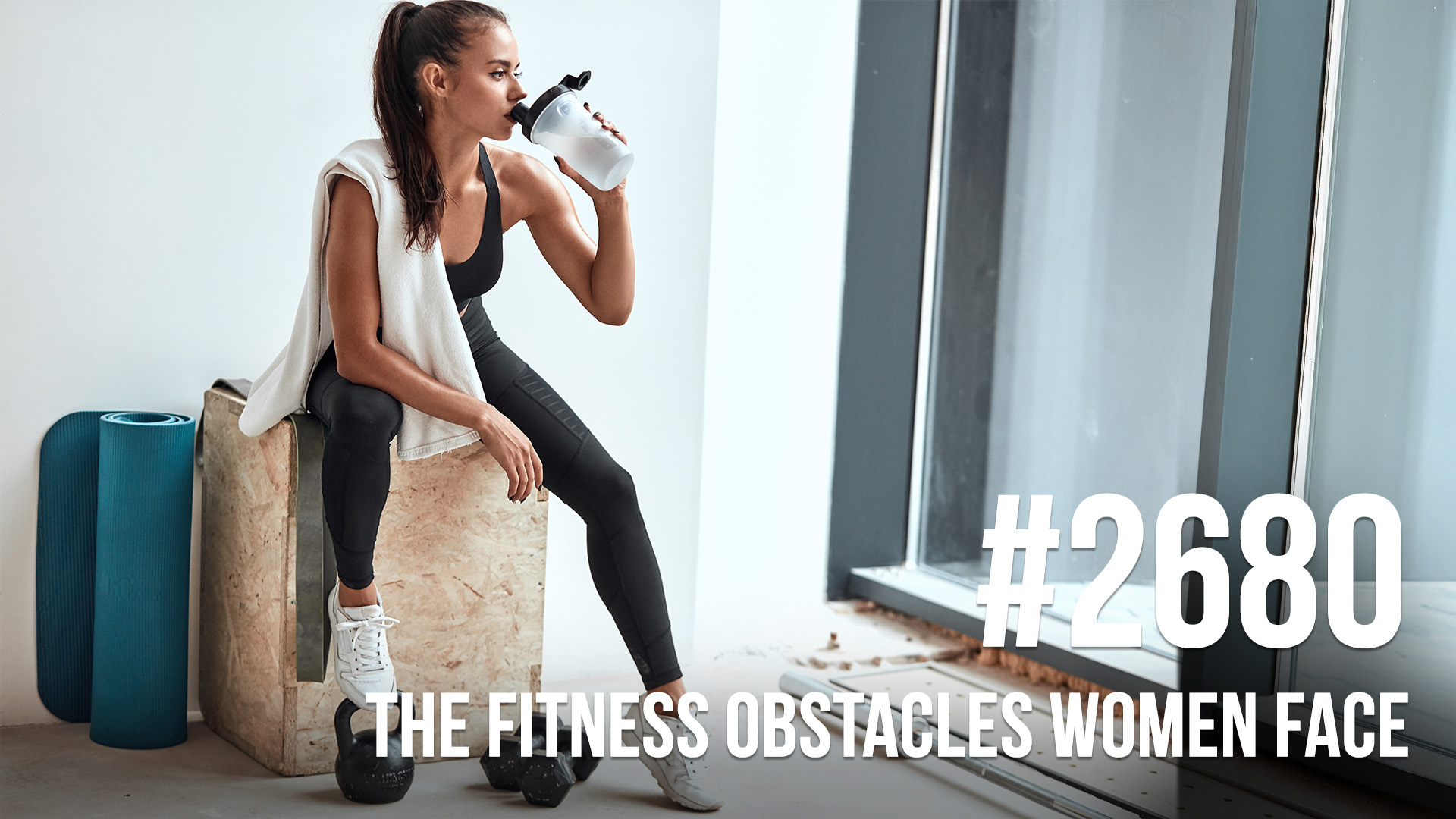
Mind Pump: Raw Fitness Truth
2680: The Fitness Obstacles Women Face and How to Solve Them
00:36:19
Losing weight, while hard, is not NEARLY as challenging as maintaining it. (1:14) Activity is not common. (3:59) Has to be a process that you ENJOY. (4:41) It’s not about perfect. It’s how to do this FOREVER. (6:58) The Fitness Obstacles Women...
Loading summary
Transcript62 lines
- [00:00]
T-Mobile Advertiser
Back to school is better with family freedom from T Mobile, we'll pay off four phones up to $3200 and give you four free phones, all on America's largest 5G network. Visit your local T Mobile location or learn more@t mobile.com FamilyFreedom up to $800 per line via virtual prepaid card typically takes 15 days. Free phones via 24 monthly bill credits with finance agreement eg Apple iPhone 16128 gigabyte 8 $2009.99 Eligible trade in eg iPhone 11 Pro for well qualified credits end and balance due if you pay off earlier, cancel contact T Mobile.
- [00:29]
Mind Pump Announcer
If you want to pump your body, your mind, there's only one place to go.
- [00:35]
Sal DeStefano
Mind Pump. Mind Pump.
- [00:37]
Mind Pump Announcer
With your hosts Sal Destefano, Adam Schaefer and Justin Andrews, you just found the.
- [00:43]
Sal DeStefano
Most downloaded fitness, health and entertainment podcast. This is Mind Pump. In today's episode, we talk about the fitness obstacles that women often face and we're going to help you solve them. By the way, if you go to muscle mommy movement.com you can see which avatar you fall under. Most of you will fall under one of them and then you'll get some tailored advice. It's a free quiz. MuscleMommyMovement.com Quiz now this episode is brought to you by a sponsor, Mass Zymes by Bioptimizers. These are digestive enzymes. They're especially helpful if you have a high protein diet. They help break down your food for better digestion and better assimilation. What does that mean? Better recovery from your workouts, maybe more muscle growth. Digestive enzymes can make a big difference for some people. Go try them out. Go to MassZymes.com that's M A S S Z Y M E S.com mindpump use the code mindpump10 get yourself 10% off all right, here comes the show. When it comes to fitness, especially when you're trying to do this for life, when you're trying to build a lifestyle around becoming fit and healthy, there are a lot of obstacles. It's difficult. That's why most people don't do this. That's why most people have trouble making it a consistent thing. When it comes to women, there are common obstacles. We're gonna talk about those common obstacles and how you can solve them with the right workouts. And by the way, at the end, we're gonna point you to a free quiz that's gonna help you out even more. So let's talk about these obstacles, especially the ones that women Face. Let's go.
- [02:17]
Adam Schafer
I was listening to Dr. Gabriel Lyon in an interview and she. I heard her say a stat that said that 9 out of 10 people that lose the weight. So actually people actually do go lose the weight, will not be able to get. Only 1 out of 10 will keep the weight off or keep themselves in shape. That's a Bismol number.
- [02:36]
Sal DeStefano
Yeah. Losing weight or getting into shape as hard as it is, right, because it is challenging. You have a fitness goal. It's real challenging to try to accomplish it. It's not nearly as challenging as maintaining it. So the first challenge or obstacle is getting there, but that's actually a small. It's a small bump in the road in comparison to the maintaining it. How do I keep it? How do I keep this going?
- [03:02]
Adam Schafer
Now? A big reason for that though, Sal, though, isn't it because of the method they got there.
- [03:08]
Sal DeStefano
That's a big part of it.
- [03:09]
Justin Andrews
A lot of the setups that led.
- [03:10]
Sal DeStefano
A big part of it is the setup, the mentality around it, like the root of why they're doing it. You know, am I hating myself through this process? Is. Is it really based in shame or is it self care? Of course. Am I doing this in a way that's so ineffective that after, you know, five months, I'm asking myself why I'm doing this in the first place. I got some results, but you gotta enjoy it.
- [03:32]
Justin Andrews
I mean, you're not gonna stick with something that long of term. I mean, we're all capable of like enduring something for a certain amount of time. And I think people have proven that, that they could, you know, literally stick to the plan and just stick to the plan. But then when you, you have to do this indefinitely. That's a whole nother conversation.
- [03:50]
Adam Schafer
Yeah, that was. I was going to say, I feel like we're very resilient creatures by nature, but when you. When so you can white knuckle your way to losing 30 pounds or getting in shape, but when you do it through that method of just restriction and, you know, sheer hard work to get there, it just rarely ever lasts because you get there and you're just like, okay, I did it. And it's like, okay. But this, this seven days a week, hour long cardio sessions, eating 13 to 1500 calories is just not sustainable long term. And so it's the approach that I feel like really needs to be addressed on getting there that that is so important.
- [04:29]
Sal DeStefano
You also have to consider that the odds are stacked against you because modern life is one where activity is. It's not common. It's. It's actually far more common or easy to be sedentary. Our lives tend to be organized in a sedentary way. We've done this now over the last, you know, few decades, and food has been engineered and designed to be so palatable and accessible and, or should I say, convenient that you're, you're battling all these, these different things. So your approach has to improve the quality of your life so much that you then can live differently. And also, this is the other part of it is it has to be a process that you actually value and enjoy to an extent. If you plan on, if this is something you're going to do for 10, 20, 30, 40 years, the rest of your life, it has to be those things. Otherwise it's just not going to happen. You're not going to be able to maintain this. And again, the data is very clear on this. The odds are that you won't unless you approach this properly. Now, just to give people some hope, because you might at this point want to just turn this off, like, okay, well, why should I even try? The odds that you're going to be able to maintain this if you do things right are astronomically higher. Okay, so when, you know, we all train clients for a long time. We were all trainers for two decades. And when we got really good at this process, the majority of my clients were able to do this forever afterwards. So it was not a, you know, 10% can maintain it. It was more like 10% dropped off, and it was more like 90% were able to maintain it. Now, the truth is this is a. It is a journey of, you know, fumbling and stumbling and setbacks, and that's just the way it is because it is difficult. So a big part of this is giving yourself grace as you go through this process. But the odds are so much better when you do this right. We've experienced it time and time again with people. We built an entire business and podcast around helping people do this. So don't be discouraged. Even though the data shows that you should be, it's because most people approach this the wrong way. And the fitness industry doesn't do people any, doesn't help them in any good way because it's geared around selling products or the information that's being communicated. It's coming from people who have figured it out, figured this out for themselves in a way that doesn't apply to most people. In other words, they're fitness fanatics or they're body obsessed. And that's Dysfunction in and of itself. And they're communicating to you somebody who's like, I don't want to be a fitness fanatic. I don't have a desire to live in the gym. It's not my favorite thing in the world to do. I want this to improve the quality of my life that I do enjoy. And they just don't know how to connect and communicate that properly. Whereas experienced, really experienced trainers know this because this is what you work with. These are the kind of people you end up training.
- [07:28]
Adam Schafer
Do you think a large part of the success that you had, or we had with training clients is your ability to hear somebody out, understand their past history and what they're telling you, their goals are, their availability, and then to really customize a plan, like, for them individually, like, versus, like, oh, you want to lose weight. Well, this is what's best for you. Or, oh, you're a woman, therefore, this is what's. But it's like taking into consideration all the variables of lifestyle, their current habits, their past history, like, all those things, and then going like, okay, like, I know you're willing to do all these things right now, but based off of what you're telling me, I think this is a better approach.
- [08:10]
Justin Andrews
Your odds substantially.
- [08:11]
Sal DeStefano
And there's also how to navigate the roadblocks that end up popping up. Right. Because that's what's going to happen. You're going to stumble, you are going to have setbacks, you are going to have challenges. How do you navigate those? And that's very different from person to person. And this is very complex. It's not as easy as it sounds. Easy, right? Eat right and move well. A lot of times you have to.
- [08:30]
Justin Andrews
Literally build new associations.
- [08:32]
Sal DeStefano
That's right.
- [08:32]
Justin Andrews
Reframe a lot of things that you may have, you know, a different perspective on coming in, like, oh, this is work, this is grueling. Or you start to learn to enjoy it based on shaping that association and what it's doing for you. And. And you have to communicate that a lot. And this is where a coach, like, really helps with that process.
- [08:50]
Adam Schafer
Well, I really feel like my early years, you know, of failure as far as a coach was just looking at everybody so similar as far as their, you know, oh, if. Oh, I've seen that goal before. You want to lose 30 pounds, this is what we do.
- [09:04]
Sal DeStefano
Formula.
- [09:04]
Adam Schafer
Yeah. Here's the macros, here's the diet, here's the plan. You know, then it was just purely motivation. It wasn't until way later did I get better at asking a Lot of the right questions and really listening to the client and go like, okay, this. This client's, you know, probably going to struggle with this. And I know they're not going to like this. And, okay. And then being able to hear them out and then go like, I think this is the proper plan. Even when they're in the most motivated state maybe at that time. Because a lot of times when clients are ready to make change, they say things like, I'll do whatever, seven days a week, I'll do this. But then when you start asking questions like, well, have you ever gone five days a week consistently? Like, okay, well, why would we start at 7 right now? That makes no sense. Right?
- [09:43]
Sal DeStefano
For most people, what a good fitness routine and a good kind of diet should look like is it should improve the quality of your life dramatically. It should not become your life. Okay? Again, this is the mistake many people in the fitness industry will communicate is that they're communicating to themselves. And so what you hear is, this becomes your life. This is your life. It's about hardcore discipline and structure, and this is what you should do. And never do this kind of stuff. And it's beast mode and all that stuff, which is great. If this is your life. Look, if you want to work in the fitness industry, you want to be a trainer, this is. This is what you want to do, then that might be your approach. But this is not your life. Your life is not working out and thinking about what to eat and what not to eat all the time. That's not gonna work. This is a way to improve the quality of your life. That's how it works. And so it's actually more simple than a lot of people make it sound. Although the individual variances can vary quite dramatically. We're gonna talk about some of those common ones that we ran into with our clients and kind of how to work around them. But. And again, this is a journey. That's one thing I want people to consider here. You may have a goal, you may have a timeframe, but the timeframe that you really want to work with is the rest of your life. Okay? Because think about it this way. If you exercised consistently and you didn't hurt yourself, right? It was an appropriate workout, and you were able to maintain this forever. Do you think you get good results? Like, do you think you get an improvement in quality of life? Yes. If your diet got somewhat better but stayed that way for the rest of your life, do you think over time you would get great return on that? Yes. Yes. So it's not about perfect. It's about how do I do this forever? So we're going to talk about some of the common challenges. I'll start with the first one. And you would hear this especially from women who were coming back after a layoff. And the layoff typically look like either I took a break because of whatever, I just lost motivation. It wasn't working for me. I was overdoing it, I think, or whatever. Or I just had a baby. That's a common one, right? You have a baby and that first. By the way, the fitness industry will have you believe that three months postpartum, you're ready to go and it's gonna all happen. That was never the case with clients I worked with. You'll see that. You'll see people posting that, but that's never the case. In my experience, it was typically one to two years postpartum when. When women were feeling like they could get back into a rhythm. Yeah, that's right.
- [12:19]
Adam Schafer
Because I would say, especially if you've had more than one.
- [12:21]
Sal DeStefano
That's right. Because it's not just about how long it takes your body to heal, which there's time your body dramatically changes. It's also, you have a child, you have a young child, which is very demanding, and sleep is off, and there's a lot of things to juggle.
- [12:34]
Justin Andrews
Recovery is not what it used to be.
- [12:35]
Sal DeStefano
That's right. So. And it's usually around, you know, a year or two after, when things get back into a rhythm where you're like, okay, I can devote some consistent time to exercise. I'm getting sleep again. It's not super broken up like. Like it has been for the last year or whatever. My body's starting to feel like it's back to normal now. I think I can get back into a routine. But when you come from that. That place, typically energy is low. This is the big challenge. You would hear this from moms. It's like. Or again, people after layoffs, it's like, I don't have a ton of energy. I just feel like I'm already spent doing all this stuff at home and at work and managing all these different things. I don't have a ton of energy to devote to this. Like, what do my workouts look like? So the thing I want to focus on with this is that exercise itself is not where you get the progress and results. What exercise is, is a stimulus. It's a stressor on the body that causes the body to adapt and change. So the body doesn't actually change in the workout, it changes after the workout, in the days off, in between, where your body senses the stress, if it's appropriate. It's important. Right. If you overwhelm your body with too much stress from the workout, and this is determined by lifestyle, genetics, diet, you know, your current fitness level. So. And it doesn't take much to overwhelm some people. Yeah, sometimes people are like, I used to work out like crazy. It's like, you haven't worked out in two years. This is this. It doesn't take much. You send the right stimulus and it's appropriate and your body will start to change. So it's an important thing to consider. And what this typically looks like is two short workouts a week. Strength training. Strength training. The best with this, with all these people we're going to talk about. There are many different forms of exercise, but the one that's going to give you the most roi, in other words, the most results for the time spent doing it is going to be strength training. It sends a muscle building signal, it tends to organize hormones in a positive way. It tends to speed up the metabolism, it shapes and sculpts the body, makes you stronger, generates energy. It's not energy expensive. So you're not out there burning tons of calories and sweating a lot, which you may think is a good idea, but it's actually more effective to teach your body to burn more calories, which is what strength training does. So it's two short strength training workouts a week and you're going slow, you're doing a set of 10 reps and then you're sitting on the bench or a chair and you're resting for two minutes and doing it again.
- [14:56]
Justin Andrews
Yeah. And I think everybody kind of inherently knows like when you take time off and your body starts to adapt and it starts to just get used to that path of least resistance. So it's like just even getting up and providing extra movement becomes more of a struggle. And so to introduce a new environment, a new stimulus, like, we don't want to overwhelm it, we want to invite it and be able to kind of start that ball to slowly start to roll for you.
- [15:23]
Adam Schafer
We've all now done three series on the YouTube channel and they're very different series. And I really feel like this was a lot of the, the message that I was trying to send with mine because I had just came off of a layoff I hadn't been in consistently. And really the, what I was trying to show people was how little I had to do the, the how moderate the workout was, how minimal of time that I spent in. There was a couple exercises, less than 30 minutes, like. And, you know, even for the first couple months, it wasn't like I went like. It wasn't like, oh, I did that for a week. And then I was right back to training, like, hardcore. It was like. And the point was to show people that when you have been laid off like that and you haven't been sending any sort of a stimulus like this, it doesn't take much for the body to start to adapt and make change. And any more than that is less optimal. And it's hard for people to grasp that. And so that was the point of me showing that is like listening. Even with my experience of lifting for many, many years, I don't need to do that much. This is such a new stimulus. And watch. The body will progress and it'll change.
- [16:27]
Sal DeStefano
I remember I had one woman that I trained who hired me. I think her child was a year and a half now, she used to be an athlete, but this was years before, right? So this was like maybe six or seven years before she had her child. So she didn't work out for six or seven years, got pregnant, had the baby, ended up finding me, hiring me. This was about a year and a half after. So baby was about a year and a half old, years old. And I had this conversation with her and we did our first workout. And I remember our first workout was something like, it was real minimal, right? It was like, it was like two or three sets of squats, a couple sets of bench press, and like a couple sets of rows. Okay. And in between the sets, we were resting a lot, a little bit of mobility. We were talking about fitness and stuff. So it was very minimal workout. And I remember her looking at me and she's like, am I going to get any results? Because she remembers she was an athlete years, years, years before. So she remembered how she used to train. And so I was trying to explain this to her. And then finally I said to her, I said, well, let me ask you a question. When was the last time you did bench press? She's like, oh, eight years ago, 1990 something. You just did something you haven't done in eight years. That's going to send a signal.
- [17:38]
Adam Schafer
Yeah.
- [17:38]
Sal DeStefano
You know, when was the last time you did rows? When was the last time you did squats? So. And she was like, I can't believe. And by the way, I started training her once a week. I can't believe that I'm going to get Results with once a week. And I told her, I said, here's how you'll know next time you see me next Monday. A week later, we just did whatever, eight reps with the squat. If you do more than eight reps, you just progressed. And I wrote it down and sure enough, she came in and she progressed and she progressed consistently. And eventually we moved up to two days a week. But. And her body responded the whole time and she was shocked because she goes, I thought I had to beat the crap out of myself to get my body to respond. I said, no, you just have to do a little more than what you're used to, essentially. So if you have low energy from a long layoff, it's not much like two short lifts a week, you go real slow, you do exercises you haven't done in a while, your body will respond, you will get stronger.
- [18:28]
Adam Schafer
My favorite part of taking a client through this process, also from a layoff and introducing it back like this too, is the lesson they learn from, from it too, of like, oh, wow, I can actually just do that and see some positive results and change. And so I, I find that after I would take a client through this process, that, that would then become their, their new floor. In other words, you know, them being off after we've gone through the whole progression of just one time a week, and then, you know, months down the road, we've progressed to two or maybe even three. And then they're at where they want to be and they realize like, wow, even when I, when, when Sal first started me or Adam first started me, I was only doing one day a week. I was seeing positive change. Like, I guess even when I have a rough week or tell me if I can just get one workout. So I felt like that it, it would teach the clients that, like, because you have a lot of people that are. And I was definitely one of these people guilty of all or nothing. Either I got to be all in training every day or going super hard and doing this like this, or I don't do any of it all because I, I was, I thought that I'm not going to see hardly any results or what's the point? I'm not going to see anything from it. Where you start to realize like, oh my God, this one day a week and two day a week, what it ends up doing, it does way more than I expected. Now I start, then I have a different conversation because it's inevitable. Life will happen again. You'll get busy, something will happen, have another kid, who knows? But this time you go, but man, I got great results. Just one time a week. Maybe I just at least do that now or get sneak one day in and then now that becomes their new floor.
- [19:55]
Sal DeStefano
Just to add to that, like, I'll use the same example, you know, she did, let's say eight squats today. Next Monday she comes in, she did 10, and then she would ask me, well, don't I need to do more? I said, you did, you just did more. This is a new stimulus which is going to continue your body moving forward. Now, this doesn't mean you're not active every day. By the way, I want to be clear. You know, movement daily is good, but that could be the form of walking. What we're talking about is structured exercise. And strength training is so powerful because it really organizes your body in a way to have more muscle and less body fat. It's a very powerful, powerful way to, of getting your body to change. It doesn't require nearly as much effort as people think. Now the next one is this is a person and we get these clients right where they're like, I need to see results. If I don't see results, then I'm going to have a. This would be very challenging for me. And now results in the mirror take time. Real fat loss, muscle building takes some time. So the results that I would focus on with clients were really performance results. Because you can see those, you can see those pretty quickly week over week. You can see strength gains or you can see improved stability or improved mobility or improved performance. By the way, performance increases lead to physical changes, lead to the changes on the mirror, lead to body composition changes. If I chase the performance and I track that as my results, rather than looking in the mirror, if I'm looking at the bar, how much weights on or how many reps I'm doing or how I feel, and if that's improving, everything else will follow.
- [21:29]
Adam Schafer
This is what this client. I love to focus on. One or two major lifts, you know, that we will pick. That's it, you know, I'll pick one or two and be like, this is what we're going to focus on showing them. Because there's. So you can move the needle so much in a deadlift or a squat or a bench press, these big compounds, because there's more than just you getting stronger, there's also the skill part of it. And helping a client really focus on just one or two lifts like that. And it has. And those one or two major lifts have so many added benefits when it comes to Sculpting the body, burning body fat, building muscle. And so having them hyper focus on one or two major lifts during the week, and we're practicing multiple times a week is a great way to show that like results oriented, it gives you wins.
- [22:10]
Justin Andrews
And I think that's, I mean we need to be able to provide that as coaches to, you know, really show the client that like all of this work, it's definitely contributing to. And again, you want to point this to how if you have any kind of improvement in your sleep, if you have any other kind of improvements in energy or cognitive focus, anything else you can attribute along the way, we got to start kind of pinning those.
- [22:34]
Sal DeStefano
And what this would look like, like an example would be we would do like three 30 minute workouts a week. Each workout would focus on a major lift. So today we're going to focus on the deadlift. Next time I see you, it may be the hip thrust or the squat or the row or the overhead press. And if there's time, we may throw in an extra lift at the end, an easier lift, maybe a core exercise or an isolation exercise. And again, but with this, what we're looking at is like, are we going to improve in these major lifts through technique, through improving neuromuscular efficiency, which then of course results in more muscle, which then results in the fat loss. Next up is the just the lacking confidence with lifting weights because you're new. You've never done this before. Yeah, this is a big one. This is a big one for both men and women. But when you've never done strength training before, it can be intimidating because strength training can seem, and you know, rightly so complex. Like what exercises do I do? And then how do I know I'm doing them properly? How do I know I'm feeling this properly? Is this soreness? What about this pain? And am I doing the right exercise order? Like, what should I do with this person right here? You keep it super basic, Very, very basic. You're doing three workouts a week and you're doing the same three or four exercises. You're doing the same ones each time.
- [23:59]
Adam Schafer
I always, when I think of this person, this is also. If I could go back and start my own journey all over again, this is what it would look like. Yeah, I would have focused on three or five of the main lifts. And, and you tell the story all the time about when the, the guy pulled you aside and you thought he was lying to you. Like, eat, eat like this. Follow these, these lifts, just do those. It's like, liar, I can do more.
- [24:22]
Sal DeStefano
But best advice.
- [24:23]
Adam Schafer
But it was the best advice. And it seems like such boring advice, but it, those lifts, it takes a lot of skill to get really good at those lifts. And they provide so much results. And so instead of doing like I did, which was always seeking out novelty and the newest move, a movement I didn't know how to do, or complex positions or different machines or, you know, creative workouts that the Mac is like, man, I should have just ran a five by five of the main lifts and just practice the of that for like the first three years. And I think that would have completely changed the trajectory of my whole fitness journey.
- [24:59]
Sal DeStefano
Yes. So the reason why you want to do the same lifts each time when you're new is because you want to get good at them. So exercises, strength training exercises are skills. The better you get at performing the exercise, the better results you'll get from that exercise. So if you're going to the gym, you may be like, all right, here's the. The three exercises I'm going to do for the next, you know, eight weeks. It's going to be a squat, it's going to be a bench press, it's going to be a row, let's just say, okay, and so you practice those exact same exercises each. And notice I use the word practice. I'm not going in there thinking I'm going to make this muscle sore or beat myself up. It's like, can I get better at this exercise? Can I get better at performing it? Can I make it feel more natural? Can I make it feel more stable and more solid? Can I practice these exercises and practice the same exercises? Because if I change up the exercises all the time, it'll take longer to get good at those exercises. Now once you become advanced, you can switch up exercises because you could jump right in. You've got the technique efficiency you built.
- [26:01]
Justin Andrews
By taking this time right now to get really good and like, really hone in on the mechanics and what your body's controlling throughout this entire movement like that, that makes a huge difference in terms of like time that you even need to spend in the gym or even on workouts.
- [26:18]
Adam Schafer
And the psychology behind this, you know, the confidence it builds in this person.
- [26:23]
Sal DeStefano
That's right, you're doing the same ones you're practicing.
- [26:24]
Adam Schafer
You're, you're a new person. You're not overwhelmed with a bunch of things you're worried about. You've got a handful at most of lifts that you're focusing on and you're just working and when and because you're only focusing on those major lifts, you see progress in them relatively quick and they have such high return on it. It's such a confidence booster of like, wow, okay, this isn't, it doesn't have to be that complex. If I just get good at these movements. Look at the return. I've already seen within weeks of doing this again. If I could go back all over again, this is how I would have trained myself. This is how I trained all my beginner class.
- [26:55]
Sal DeStefano
Yes, 100%, totally. Next, you have just the, the, the, the woman that is just super busy. Her, the demands on her schedule are the, are the kind that tend to, I mean, it makes it hard to be consistent with driving to the gym, spending time there, taking time, decide for yourself. And I know you've probably been told, take time for yourself, make it happen, schedule it. And I get that. But look, the reality of life is, especially if you're a, a working mom in particular or even if you just have all the kids, it's busy and it's unpredictable. You don't have, it's not like, you know, like, like my wife and I talk about this all the time. And by the way, most of the clients we trained were women. That's just the way that it trends with personal training. A good 60, 70% of clients tend to be women. So we, I have a lot of experience training situations like this and it's like, yeah, it'd be great if I had a schedule and I knew that I could do this or whatever, but you know, I got to go pick up so and so from school today a little early or this happened over here last night. We got terrible sleep. Like, how do I stay consistent? And the best thing that ever worked for this individual was to do one exercise a day and to figure out a way to do it at home with minimal equipment. Because then you could do it anytime. You can do it anytime. And it's one exercise and you do one a day. By the way, you add that up, you're doing seven exers, you know, seven exercises a week. Do it for three sets. That's 21 sets a week that you're doing. But you're only doing one exercise a day.
- [28:19]
Adam Schafer
And I don't, I don't want to alienate my non moms in here because the person who actually comes to mind right away to me is actually my niece who's in her mid-30s and is a high performer. Yeah, she's got a, she's got a killer job. She travels A lot all and stuff like that. And she's not busy because of mom, she's busy because she works a lot, she travels a lot and making time to get and she, and she always has these, these spurts or she's in a rhythm and she's training like consistent that she's off. And this is a direction I would love to push her into of like listen instead of always being on or off or overwhelming yourself with this high commitment of an hour in the gym, it's like just hit a lift a day. And I feel like that way of focusing for her opens up still the ability for her to be a high performer at work, still be able to get her traveling like that and it's less commitment to be inside the gym and then she's gonna have far better results that way. So even the non moms, I know we're speaking a lot to that, that, that person, but I feel like this avatar fits just as well into this.
- [29:17]
Sal DeStefano
Yeah, 100%. And now you want, you want to be able to use minimal equipment with this. So a suspension trainer or resistance bands are great. That's all strength training by the way. A suspension trainer, you can hang in your doorway or use bands and they take up almost no space. That's still strength training. It's still strength training.
- [29:36]
Justin Andrews
You can get an intense workout from those effective workout.
- [29:39]
Sal DeStefano
I've trained clients like that for years or some clients that that's all we used was a suspension trainer for sure. Now this wouldn't be complete with some diet and nutrition advice. And this is this part right here always is challenging because again the our space would make it seem that diet is so crazy and complex. And what I found over the years was very basic, you know, kind of goals that give you the most return are the ones that people are able to do and have the most success with. So here's some advice with your nutrition. Okay. For most women, if you target about 30 grams of protein with each meal, you're good. For most women, most women, 30 grams of protein with breakfast, lunch and dinner will get you the protein amount that is going to give you great results. Now why protein? Protein encourages muscle building. It produces satiety, so it helps with cravings. It has a fat burning effect. When you compare it to the other macronutrients, fats and carbohydrates, it helps with recovery. 30 grams of protein, breakfast, lunch and dinner. Eat it first. That's the other part that's really important. Eat that first because that's very important. By the way. Protein tends to come with fat. We don't have to worry about fat because your protein is probably going to have some fat attached to it if it's a whole natural source.
- [30:52]
Adam Schafer
My thing I would add to that, I would just say 30 plus. And the reason why is because whenever I give people any sort of a number goal, they miss a little bit. They miss a little bit. And I would say 30 is on the lower end of at least what I want to get with that client. And so I'm, I'm going to encourage 30 plus. And because what happens a lot of times is one of those meals is 26 and you go, oh, it's almost 30 and then another one's 28, it's almost 30. And it's like, well now we're looking at, we're only at 70, 80 grams of protein. And if you're 120, 130 pound female, you easily need more than that. And so I'm saying 30 plus every meal. Every meal. And, or this is where I like, I think shake out of convenience makes a lot of sense where it's like, hey, try and hit 30 every meal. If you have a meal that's on the lighter side, then this is where you add a shake out of shake at the end of the day. So keep again trying to keep it simple. Like simple whole foods. Hit 30 grams. Eat the protein first. Like that advice is going to take 90% of people a majority of the way to the goal.
- [31:46]
Sal DeStefano
Next up, you add your, your cooked greens. Now why cooked greens? They're easy to digest. You can, you can get more of them. You know, raw vegetables, I know there's like a trend for a while with eating raw vegetables is a great way to cause bloat, gas issues and digestive issues. You've probably experienced this if you've tried this yourself. Try well cooked greens. Eat that next in your meal and then last, eat your starches if you still want to eat them. And so when people tend to follow this order of 30 grams of protein, a nice serving of cooked greens, then they finish with their starches, the calories tend to fall right where they naturally. Naturally right where they need to. Enough calories to build muscle and strength. Not too many calories to where you, you could gain body fat. In fact, this tends to result in fat loss.
- [32:31]
Adam Schafer
Yep.
- [32:31]
Sal DeStefano
And finally, water. Water. A half to a gallon of water a day. Track it, track it throughout the day. What does this do for you? Well, it hydrates you, makes you feel good, flushes things out, all that stuff it also is great for satiety. It also prevents you from drinking other brain fluids.
- [32:47]
Justin Andrews
Yeah, all kinds of things.
- [32:48]
Sal DeStefano
Yes. And now I know most everybody watching this probably isn't dehydrated, but there is what's essential and there is also what is optimal. And for most people, about a half a gallon to a gallon a day is optimal. And you'd be surprised at what drinking that much water will do for your body.
- [33:05]
Adam Schafer
And I'm going to stress the tracking part because I can't tell you how many times I give this advice. Oh yeah, yeah, yeah. I hit that and then I make them track it like 16 hours and we're way two glasses. And so do yourself a favor, carry the half gallon thing around or something that you can, that you can easily measure. Don't do people do cups, water bottles, things like that, that are in odd shape or size, that are only 8 to 12 ounces. Trying to mathematically figure out at the end of the day how many of those you had. Terrible strategy. Much better strategy is to carry a big one. Yes, a big jug, as ridiculous as it may be, carry that around at least at the beginning phases of figuring that out. Because I have found that even my clients that claim they drink a lot of water, when we actually start tracking, they are significantly under what they think.
- [33:49]
Sal DeStefano
Now. Supplement wise. Aside from a multivitamin, creatine, creatine is a remarkable supplement. It's good for health, it's good for longevity, it's good for your brain, it's antidepressant and it's great for muscle gain and fat loss. Indirectly will help with fat loss through the muscle building process.
- [34:06]
Justin Andrews
All the things you want.
- [34:07]
Sal DeStefano
And women actually need creatine more than men do. They produce less of it and they require a good amount of it. So about 4 to 5 grams of creatine a day, you could do it in divided doses if you get any, you know, gastro distress from it. Most people are fine with about 4 or 5 grams at one serving. But if you're like, oh, it makes my tummy feel a little. Do half a dose earlier in the day, half a dose later in the day and that'll really help with your, with your fitness goals. Now we have a quiz that we've created so that people can figure out kind of what avatar they fit under. And so what we did is we organized about four avatars that a majority of the people listening to this will fall under. The first avatar we named the comeback Queen. This is someone who's returning after time off low energy, might have some aches and pains. The other avatar is efficient, powerhouse, busy person, but wants results now. Wants to experience and feel those results. Now we have the strength novice. This is the beginner, somebody who's new to strength training. And then we have a lifestyle integrator. This person just juggles everything. They need maximum flexibility with the routine. So what you can do is you can go to musclemommymovement.com quiz, see what you fall under. You'll get some tailored advice based off of your avatar and then also later on we are offering group coaching which helps people with their consistency. But this quiz is totally free and figuring out which avatar you are is also totally free. Look, if you like the show, come find us on Instagram mindpump Media. We'll see you then.
- [35:40]
Mind Pump Announcer
Thank you for listening to Mind Pump. If your goal is to build and shape your body, dramatically improve your health and energy, and maximize your overall performance, check out our discounted RGB super bundle@mindpumpmedia.com the RGB Super Bundle includes Maps, Anabolic Maps, Performance and Maps Aesthetic nine months of phased expert exercise programming designed by Sal, Adam and Justin to systematically transform the way your body looks, feels and performs with detailed workout blueprints and over 200 videos. The RGB Super Bundle is like having Sal, Adam and Justin as your own personal trainers, but at a fraction of the price. The RGB Super Bundle has a full 30 day money back guarantee and you can get it now. Plus other valuable free resources@mindpumpmedia.com if you enjoy this show, please share the love by leaving us a five star rating and review on itunes and by introducing Mind Pump to your friends and family. We thank you for your support and until next time, this is Mind Pump.