← Mind Pump: Raw Fitness Truth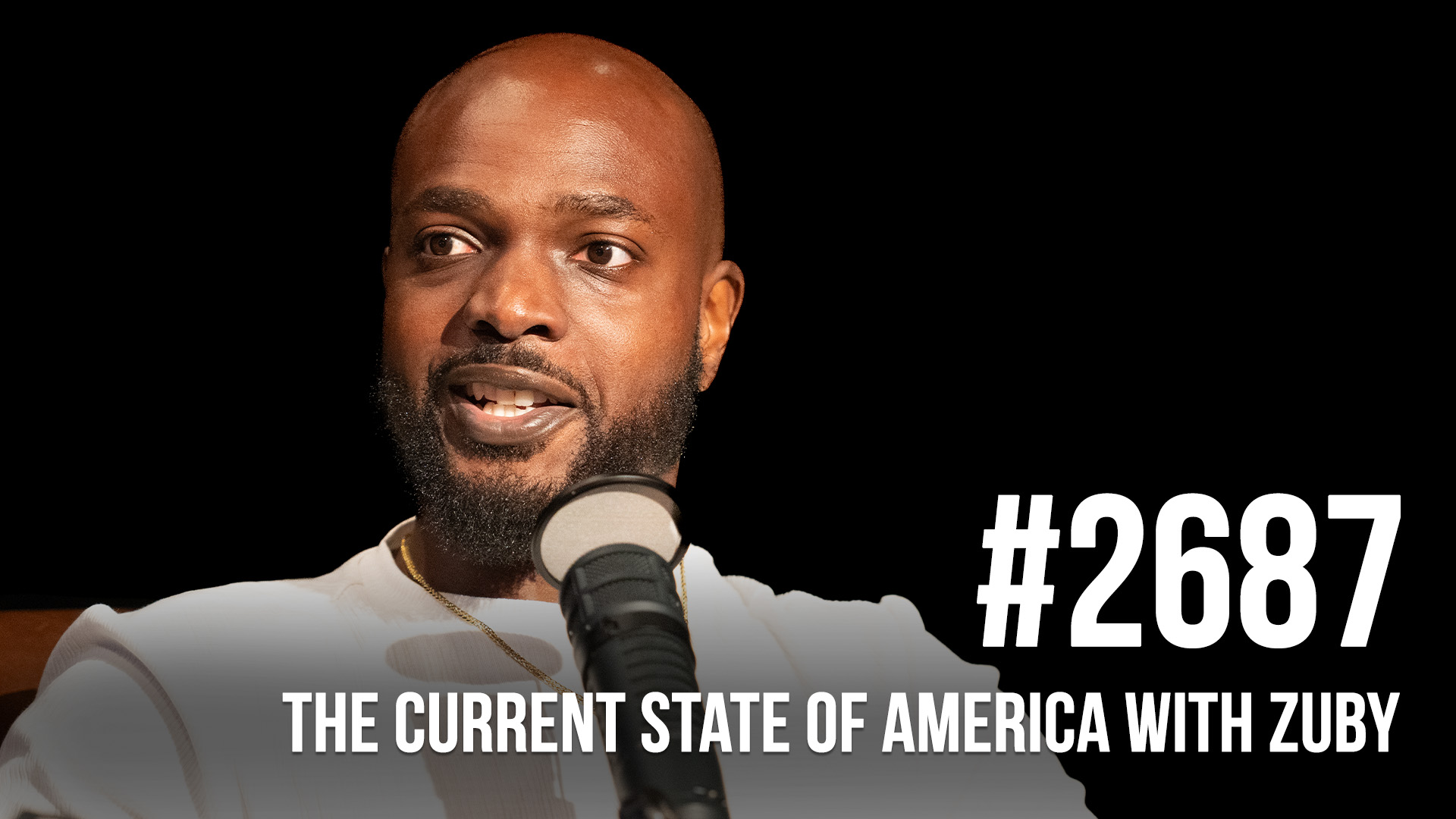
Mind Pump: Raw Fitness Truth
2687: Zuby On The Current State of America
01:05:51
Zuby Becoming a father. (1:31) Living in Dubai. (5:12) Collectivism is dangerous. (12:28) The more relatable it is, the more it impacts people. (20:38) Our perception is getting manipulated. (22:56) Normal doesn’t go viral. (25:40) The...
Loading summary
Transcript231 lines
- [00:00]
Zubi
Introducing Family freedom from T Mobile.
- [00:03]
Sal Destefano
We'll pay off four phones up to $3200 and give you four free phones, all on America's largest 5G network. Visit your local T Mobile location or learn more@t mobile.com familyfreedom. Up to $800 per line via virtual prepaid card.
- [00:18]
Zubi
Typically takes 15 days.
- [00:19]
Sal Destefano
Free phones via 24 monthly bill credits with finance agreement eg Apple iPhone 16128 gigabyte 8. $29.99 eligible trade in eg iPhone 11.
- [00:25]
Zubi
Pro for well qualified credits.
- [00:26]
Sal Destefano
End and balance due if you pay off early or cancel contact T Mobile. If you want to pump your body and exp, there's only one place to go. Mind Pump. Mind Pump.
- [00:36]
Zubi
With your hosts, Sal Destefano, Adam Schaefer.
- [00:40]
Sal Destefano
And Justin Andrews, you just found the most downloaded fitness, health and entertainment podcast. This is Mind Pump. We brought back Zubi. He was such a great guest last time. Such an intelligent gentleman, one of the best people on social media. His commentary, so intelligent, so well thought out, so balanced, so calm. This is so needed, especially during a time like this one. In today's episode, we talk about all the crazy stuff that's happening in the world, including the terrible assassination of Charlie Kirk. We know you're going to enjoy this episode. He is not somebody that tries to polarize. He's quite balanced. This episode is brought to you by Legion Supplements. These are supplements that are high quality, great for those of you that want to build muscle, burn body fat or improve your health. If you go through our link, you can get yourself a discount. Go to bylegion.com that's B Y L E G I-O-N.com mindpump. Use the code mindpump. You can buy one, get 50% off. Also, ladies, we have a group coaching group, the Muscle Mommy movement group. This is for women who like to build muscle, sculpt their body, get incredibly fit. This is group coaching done by Mind Pump. Go check it out. Go to muscle mommymovement.com all right, real quick.
- [01:59]
Zubi
If you love us like we love.
- [02:00]
Adam Schaefer
You, why not show it by rocking.
- [02:02]
Sal Destefano
One of our shirts, hats, mugs or training gear over@mypumpstore.com I'm talking right now.
- [02:08]
Zubi
Hit pause, head on over tomy pump store.com. that's it. Enjoy the rest of the show.
- [02:13]
Sal Destefano
Zubi, welcome back to the show, man.
- [02:16]
Zubi
Thank you so much. Great to see you guys again.
- [02:17]
Adam Schaefer
How you doing, Daddy?
- [02:18]
Sal Destefano
Yeah, You're a new father.
- [02:20]
Zubi
It's awesome, man. Isn't it? I was. I was already a very happy man.
- [02:23]
Adam Schaefer
Yeah.
- [02:24]
Zubi
And I've just opened this new chapter a few months ago. Married man, husband, father. And yeah, I've got a little son now, a little mini me out there in the world. And he's wonderful, he's great. My wife is great. And I feel very blessed, man. I feel very.
- [02:40]
Adam Schaefer
I'm always interested where, like, at what point did it hit you that you were. You were a different man?
- [02:50]
Zubi
Wow. In which aspect? The fatherhood aspect? Yeah. As soon as I knew she was pregnant.
- [02:56]
Adam Schaefer
Okay, so you. That's.
- [02:57]
Zubi
As soon as I knew she was pregnant, I was like, yeah, I have a. I have a child. I didn't know what he or she looked like, but I was like, yeah, I quietly knew I have a child that's in the world. I just haven't seen them yet.
- [03:12]
Adam Schaefer
Did you. Did you find that you started to change in ways? Was there things about you that, like, maybe you didn't think would happen or like, you noticed, like, oh, wow, I'm different with stuff like this now. Like, you notice stuff like that?
- [03:24]
Zubi
Yeah, I think there was just an immediate re. Prioritization. Monetization immediately became less selfish and more selfless. So I went from just thinking of, you know, me and what I need to do to thinking what is best for what is best for this upcoming family.
- [03:42]
Adam Schaefer
Yes.
- [03:44]
Zubi
So all of the decision making now runs through that filter. Whereas last time you guys saw me, which wasn't even all that long ago, I mean, I wasn't even living anywhere at the time. I think I was just totally nomadic and, you know, not in a negative way. I was more selfish just because I could be. And it was just like, all right, as long as I'm good and I can just go and be and do what I want, I don't need to think of too many other people's considerations. And, yeah, that's now changed, and I'm aware that it's changed permanently. And so that's great. You know, a lot of people say that you're never ready to be a dad. You're never ready to be. To become a parent. I didn't feel that, actually. I kind of felt, like, very ready.
- [04:25]
Adam Schaefer
Me too.
- [04:26]
Zubi
And I think also I'm very glad that I got to be an uncle times 10 before becoming a father. So I think it made the transition less of an extreme jump. I know with some of my friends and acquaintances, when they became a dad, you know, they'd almost like, never even held a baby before, and suddenly it's just like, what the heck am I doing? Whereas in my case, I've been an uncle for 19 years, so. And, you know, five nieces, five nephews, so I've seen them go through these different stages. My oldest niece now is 19. My youngest nephew is 2. So I've seen all of my four older siblings go through this process. So I don't think I walked into it as blindly as some other people do. Yeah, obviously, you can't be 100% prepared, and things are always going to be different, and there's things you got to adjust and adapt to, and that's going to keep changing. But I know that that's the case because I know so many people who have been through that and who are going through that. So I'm not expecting, you know, even in the first four months, things have already changed, you know, from newborn stage to a few months old. So I know that's going to just keep happening.
- [05:27]
Sal Destefano
Now, when did you get married? Was it shortly after that you guys had the baby?
- [05:31]
Zubi
Yeah, we had a miracle where the baby was born just two weeks after we got married. Wow. God works in the string.
- [05:39]
Sal Destefano
Okay. Magical.
- [05:41]
Zubi
I've never said that publicly. I'm an honest man. That's. But that's. That's. That wasn't like we were going to get. It was an acceleration. Yeah, we were. We were already on that course, and then it was like, oh, okay, well, here we go. All right. Like. And now you live here in the States? I live in Dubai.
- [05:56]
Adam Schaefer
Oh, you live in Dubai?
- [05:57]
Zubi
Yeah, I live in the uae.
- [05:58]
Sal Destefano
What's that like? I've heard, I've seen some of your posts about the safety and kind of like the. Just. Just how different it is over there versus the States. Explain that.
- [06:07]
Zubi
Sure. I think Dubai is one of the best cities in the world. You guys might know. I grew up in Saudi Arabia. I grew up in the Middle east, So I spent 20 years already living in the Middle east, and I moved back about two years ago now. So Dubai is. Yeah, it's one of the cleanest, safest, most futuristic cities in the world. A lot of people compare it to Singapore. It's hard to explain. It's easier to kind of answer specific questions because lots of things are just very different. So people know different things. A lot of people know the sort of glamorous aspect of it. Some people know that there's no taxes. Some people know that it's think it's just this millionaire playground. Some people compare it to this or that. There are other people who think it's like, oh, gosh, it's in the Middle east, so it must be like, you know, dangerous and horrible for women and blah, blah, blah. And you have no rights and it's nonsense. Can't think of a safer city for women. But yeah, Dubai is a great place. It's not for everyone. It's extraordinarily hot, particularly right now, like in the summer. If you're going to visit, I always recommend people October to March, unless you really, really like the heat. But it's a. It's a fascinating and phenomenal city in many ways. If you think just a few decades ago it was mostly just a desert and there wasn't really anything there. And then you see the scale of the infrastructure. Now that's crazy. And just how far along it is. It's unique in many ways. I mean, 90% of the population is foreign, so only 10% of the population is nationals. Yeah. In the UAE as a whole, only. Only 15% of the entire country's population is actually emirati. Wow. So 85% expats. I didn't know that.
- [07:47]
Sal Destefano
Where are most of the expats from?
- [07:49]
Zubi
I think numbers wise, the biggest majority would be India, maybe, followed by, like, Bangladesh, Pakistan, Philippines. But you have people from all over the globe. Lots of Russians, lots of Brits. People from every single continent, every single country. And what's interesting with Dubai is it's one of those places, no one ends up there by accident. So everyone who lives there has moved there in the way that I moved there and the way that my family is there. So apart from the small national population, everyone has moved there intentionally for specific reasons. So there's a. That changes things quite a lot, actually. Because if you think most places. Most people are in places just because they happen to be born there, whereas their.
- [08:37]
Sal Destefano
There's intention.
- [08:38]
Zubi
Yeah, there's intention. So you have a sort of naturally filtered population. That makes sense. And that's actually one of the. A lot of people think that there's virtually no crime just because of the harsh punishments. But actually, that's not the first and foremost thing. The first and foremost thing is this natural filter with how they actually do immigration and how they bring people in. So everyone is gainfully employed. Everyone is either, you know, has a job or is an entrepreneur or is an investor. So there aren't just large swathes of people hanging around doing nothing. And even if there were, there's no motivation for that. Well, a, your visa is tied to your employment, so you can't be there doing nothing. But also there's no taxes, therefore there's no welfare system. So there's no like, if you look at the US or Canada or Europe or something, there are advantages. Sorry, There are systems that people can take advantage of. Right, right. So someone can be like, hey, if I can just get into the UK or get into the States, I can kind of leech off of this system that doesn't exist over there. Right. So if you're not working, you're not, you're not eating, you're not accommodating yourself, there's, there's nothing for you. So I didn't know that. Yeah, so there's all of the, are all of these natural filters, but I think it's a great place. Super family friendly. Probably the most, one of the most family friendly cities in the world. There's babies and children, toddlers freaking everywhere. Everyone's happy, everyone's peaceful. It's like a little utopia. There's no politics, there's no culture war. There's no all of that stuff that occupies so much of people's brains. It's just, it's just not there. It's like this dark cloud lifts off.
- [10:11]
Sal Destefano
You mentioned harsh laws. The only time I hear about the harsh laws are like drug possession laws. Like so and so got caught with, you know, marijuana and they went to jail for 20 or 30 years. Are there, are there harsh laws in other ways as well, like for like violence or something like that? Yeah. What is that? What is that that perception come from?
- [10:29]
Zubi
There just isn't this whole like, let me just call it what it is. This sort of like liberal, progressive, soft on crime mentality of like, oh, you know, we should just like we need to be like very tolerant and kind to and compassionate towards people who steal, people who rape, people who rob, people who assault others. No, across the whole region, all the gcc. So you know, Saudi Arabia, Qatar, uae, Bahrain, Oman, like they, Kuwait, they don't play that you murder someone. Like you're gone. There's no three strikes, no, no one strike. Like, but it never. But because of that, it never comes to it, there's no. The murder rates like zero. Right. So. And if you're not planning on like killing anyone, why are you worried about, you know what I mean? Like, like you don't need to worry about that because like unless you're, you know, unless you are planning to go there and like move bricks of cocaine, you don't need to worry about what the. Yes, drug traffickers get the death penalty, but if you're going to Saudi Arabia or the UAE to sell drugs. Like, okay, like, it's hard to think of something more stupid than that. Right? Like, people know the rules. You land in the airport, it tells you. Right? So, yeah, so there are, there are harsh penalties for certain crimes, but if you are like a normal law abiding person, you don't need to worry about any of that. In the same way, you probably don't walk around here constantly like worrying about, like being put in prison for this.
- [11:54]
Sal Destefano
Right?
- [11:54]
Zubi
Like, what are you doing? You're not like running around hurting people. So. Yeah, they don't, they don't. Yeah, they don't tolerate that. And I don't think they should. Like, I'm, I'm very, I'm pretty hardcore on like, by Western standards. Like, certainly when I'm in the uk. In the US you guys actually have the death penalty. It's abolished all across Europe. Right. So in the uk, like, certain things will happen. And I'm like, people like this used to be hanged, right? Yeah, UK used to have like some pretty crazy punishments for people. Yeah. And then they kind of abolished it all. And now you got people running around stabbing each other, running around, shoot. And I'm like, why is this being tolerated? You're letting a tiny, tiny fraction of the population tyrannize everyone else, whereas you can just put them in prison forever or, you know, get rid of certain people and you won't have to deal with that. And, you know, the, the USA is going through that now as well. By the time someone murders someone, usually they've been like arrested and. 20 times, literally. Yeah, 20 times. And been let out again and again and again. It's just like, why we shouldn't live this.
- [12:55]
Sal Destefano
What was the name? Because one of the things I appreciate about, about you is your commentary on social media seems measured.
- [13:01]
Zubi
Thank you.
- [13:01]
Sal Destefano
It's always measured. You don't seem to get into these extreme, like. And I love how you will counter some of the extreme stuff and kind of bring it back to like, you guys, it's all relaxed, like, here's what's happening. What was the woman's name, the Ukrainian woman that got stabbed on the.
- [13:18]
Zubi
Irina Zarutska, Something like that.
- [13:20]
Sal Destefano
Yes, yes. So that was a more recent one. And the guy had been let out 14 times.
- [13:30]
Adam Schaefer
I thought it was 20. That's why I said 20.
- [13:32]
Zubi
His own mother.
- [13:33]
Sal Destefano
Yes.
- [13:34]
Zubi
Was like, he's not safe. Like, he needs to be put either in an asylum or some type of separation from society.
- [13:41]
Sal Destefano
Yes. And I love your commentary on how. Cause People what. What's wild about stuff like this? You know, you go all the way back to George Floyd and then this. And is that people turn it into something.
- [13:52]
Zubi
It's not a race thing.
- [13:54]
Sal Destefano
It's a race thing. It's become a race thing. I saw Matt Walsh did this, really angry, you know. You know, black Americans are this much more likely to da, da. And what they're doing is they're conflating data. It's like, look at people who are raised in single parent households. That's your correlate or whatever, if you want to use that kind of a correlate. But we're ignoring the fact that this was a criminal, a person that was violent 14 times, essentially, and we let him out. And I love how you counter some of that stuff. What do you see as the danger of how people can take these things and run with them?
- [14:28]
Zubi
I think collectivism in general is dangerous. I think collective guilt is an extremely dangerous concept. I think that. And collective punishment, which leads from that is an extremely dangerous concept. So just like in the past 10 years with all the woke crap, you know, sane people have been battling this idea that like, all white people are racist or all white people are, you know, all white Americans are somehow responsible for slavery and Jim Crow or whatever, and everyone has blood on their hands. And everyone, you know, like all of these narratives which came from the progressive left of, you know, the whole white people bad narrative, you know, people rightfully got sick and tired of that. And I think now there's this sort of swing that has happened and there's a danger always of this overcorrection. We overcorrected to the left for I don't know how many years, maybe two decades, maybe three decades. And now there's a risk of, as the pendulum comes back towards the middle, there's the risk of those same tactics and that same type of thinking just swinging back the other way. And that's happened before throughout history, right? Where it's. It's collective guilt, it's collective blame, it's collective punishment. It's like, oh, well, there are some bad. Look, there are bad people in every single demographic. However you want to cut it, ethnically, nationally, racially, religiously, non, religiously, politically. Like, there are bad people out there and there's people who do bad things. But I have the same. So I'm as responsible for that stabbing that happened in Charlotte as you are.
- [16:01]
Sal Destefano
Right.
- [16:02]
Zubi
Like we. As you are. As you. Like, like what connection do I have to. Oh, I'm also of African Descent. So now I'm somehow, you know, for someone like, that's a crazy way for someone to think that, oh, well, I'm not even a black American. But even if I were, like, no person except the guy who did that is. Is culpable, is responsible. If there are people around the community that have failed him or people who are supporting or celebrating that kind of activity, then that's also a problem. But people need. There's always a temptation for collective guilt, I think, in humanity. It's not something new. Human beings are tribal and always have been, and there are good parts to that. That's why we feel so bonded to our families. And it's why people feel, like, patriotic about their nation or their sports team or their company, whatever it is. Right. There are good ways to be tribal, but we've seen so many times all throughout history and even right now, how it can go really haywire and how it can be very dangerous and how it can be discriminatory and genocidal at its most extreme. So whenever I see people starting to lean in that direction, where they're moving away from individualism and thinking, okay, like, this is a problem and this needs to be dealt with in a proper way and there should be justice to just like, oh, all X people, all Y people have this problem or are somehow responsible. That's where I always kind of ring the little warning bell, because I don't want this nation or any other to kind of fall back into.
- [17:43]
Adam Schaefer
Do you think it's orchestrated?
- [17:48]
Zubi
It is sometimes. It is sometimes. But it's also on an. On an individual. It's just a. It's a temptation. You know, it's. It's. It's a temptation because people do recognize patterns and, you know, you can talk about something honestly without getting stupid about it. Right. Okay. So I don't take any offense or, like, if someone is like, oh, you know, statistically in the usa, the black population is. Has a higher rate of, you know, crime.
- [18:22]
Sal Destefano
Right.
- [18:23]
Zubi
Than the white population or the Asian population. That is just statistically and objectively true. And people might. There. There are different reasons why that may be the case. But even when, like a lot of conservatives, like the whole, you know, 13% of the population.
- [18:36]
Sal Destefano
Yes.
- [18:36]
Zubi
Commits 50% of the. Which is sort of lying with statistics to me, 100%. Right. Because the truth is it's probably more like 2% of 13% of the population is committing 50% of the crimes.
- [18:47]
Sal Destefano
That's right.
- [18:48]
Zubi
So the vast majority of black Americans are not criminal and are not murdering Anyone robbing anyone, raping anyone, right? So if you just say 13% of the population is doing 50% of the crime makes it sound like literally like every black American is out there committing crimes. And I'm just like, that's not true. First of all, it's not fair. And a lot of people just are not. You know, the truth is, a lot of people just are not very sophisticated thinkers, and so they can be led to believe things that are not true quite easily. And I just think if you have a big platform and you're an honest actor, you should always be cautious with that. And you should also just. I just think I'm all about speaking the truth. Like, I'm all about being honest and honest conversations and hard conversations. I'm happy to do that all day. I don't get emotional about it. But I think you also should think about, okay, what, what's the goal? What's the intention? So say, even if someone does just want to talk about, like, all right, let's just go. Let's just go deep on crime stats and talk about crime stats and talk about demographics and what it's like, okay, what's, what's the goal here? Is the goal to assign some type of collective guilt to a whole bunch of people, including most of whom are innocent, or is the goal to address the underlying issues and see, okay, what's actually going on here where there's little pockets of places and people, where there's just extremely high crime and what can be done about it? Is the goal to change the laws? Because obviously, if someone has been arrested 14 times and been through the system 14 times, keeps getting let out, like, to me, that doesn't sound to me like a law enforcement failure. That's a judicial failure. So whoever. I don't know how the system works in cities and states here, but I know I live in a place where you can't commit 14 crimes. They keep letting you back out there. No. After the first one, you'll be in prison and you'll be deported. And so there's obviously something that needs to change. And people have a right to be angry. But, but be angry at the right thing, Be angry at the right people. If you're just sort of lashing out randomly at your fellow citizens who have no more culpability than you do.
- [21:05]
Adam Schaefer
I feel like it's impossible to live in a, in such a huge melting pot country that is so free and, and is so loose on the laws and think that will completely eradicate evil and bad. I don't care how, how we talk about it or how much like evil will always exist.
- [21:25]
Zubi
Yes.
- [21:26]
Adam Schaefer
And you can always find a murder, an attack, a robbery, something that fits the narrative that, you know, that's why, why I asked if you thought it was orchestrated. Because it's like every day people are getting killed, hurt.
- [21:39]
Zubi
And I will tell you something that happens. And this is, this is sad to say, but it's just true. But people care about the crimes and the situations which somehow fit their narrative or agenda or pre existing biases. Because we all know, look, I don't know the stats in this country, but certainly around the world, you probably thousands of people get killed every day. I'd imagine in the US alone, it's gotta at least be dozens, probably. And so you can't care about them all. You can't even know about them all. Unless you're going to spend your whole life just, you know, every single day you're just looking at homicides. And so people naturally latch onto the things that emotionally hit them. A huge factor is, is their photo or video, the video itself, which now is more like, like if something's on video, then it hits people emotionally in a different way. And then if there's some type of relatability to it, either it happened in your city. Yeah. Or the, the victim was someone who looks like you or could be like your friend or your daughter or your. So. Right. Like the more relatable it is, the more it, the more it impacts people. If we read a story and it says that, I don't know, a bomb went off in Baghdad and killed 80 people, that doesn't hit the same way as if a bomb went off in San Jose and killed 80 people. Not because those 80 people's lives are worth different amounts, but it's just, whoa, that's close to home. Like I do I know someone involved? Like is everyone I know. Okay. All that type of thing. So that, that's just part of the, that's just part of the human psyche.
- [23:22]
Sal Destefano
I think what you're, what you're pointing to is the human psyche. And when we say when, when people speculate on the orchestration. Here's where I think it gets orchestrated. And I'd love to hear your opinion on this.
- [23:32]
Zubi
Sure.
- [23:33]
Sal Destefano
I'm not talking about like puppet masters pulling the strings, making things happen. What seems very clear to me is what gets orchestrated is things happen. And then either political parties or media will grab something and run with it and create a distorted perception of it somehow. For example, if you were to Ask conservatives, if you were to ask conservatives, has crime gotten worse in America over the last 20 years or 15 years.
- [24:03]
Zubi
They say yes, even though.
- [24:04]
Sal Destefano
They say yes, even though the crime stats show that's not true. In fact, I had this discussion with my cousins today, and they were debating an argument like, find the stats. Fba, FBI stats. Here's stats from here. It shows crime. In fact, I listed the cities. I said, what cities do you think are the most dangerous in America per capita for homicides? Oh, it's gotta be Chicago.
- [24:21]
Zubi
It's gotta be San Francisco.
- [24:23]
Sal Destefano
You know, Memphis, Tennessee is like, number four. You know, so.
- [24:27]
Zubi
And I'm like, probably Memphis, St. Louis.
- [24:29]
Sal Destefano
Yes.
- [24:30]
Zubi
Baltimore.
- [24:30]
Sal Destefano
You're right. Yeah. Those are places. And I'm like, our perception is what's getting manipulated. If you ask liberals, has racism gotten worse over the last 20 years or 30 years? Oh, absolutely. Not true. It's not true at all. But our perception has, you know, sexism gotten worse. Oh, yeah, it definitely has. No, it hasn't. It actually hasn't. And this. You can measure this in many, many different ways. One of the ways is you measure interracial marriages and relationships continues to grow. What's a great indicator of how race relations are in this country? So this is where I start to think or see. Oh, man, this is orchestrated. And so what it looked to me like is public perception or opinion is moving towards the left. They're going to hammer on that until they feel things start to move to the right. Now let's hammer in that direction. That's what it. That's what it seems like now.
- [25:21]
Zubi
Yeah.
- [25:22]
Sal Destefano
Is that they're now pushing in these other directions and things happen. And sometimes extreme things happen that can kind of fit that narrative, but they're going to run with it. And then this is how we get manipulated every single time.
- [25:35]
Zubi
Yeah. I think there are a lot of different things that are going on, and some of them are relatively new to the past 20 years or so. Obviously, now we live in this world of social media and smartphones, and people forget with smartphones. It also means that everyone is also walking around with cameras and video cameras at all the time. So the amount of crime that you see has increased.
- [25:57]
Sal Destefano
Yep.
- [25:57]
Zubi
Yeah. Right. It doesn't mean the amount of crime's increased.
- [25:59]
Adam Schaefer
Like a ridiculous amount.
- [26:01]
Zubi
Exactly. So now you are very likely to see photos, you're gonna see videos. Gosh, man. Obviously, I know we were certainly gonna talk about, like, you know, we. We saw Charlie Kirk. I saw.
- [26:12]
Sal Destefano
Horrible.
- [26:13]
Zubi
We literally saw him get murdered. Horrible. Like, I saw it, like, I didn't just hear about it. I. I saw it. This woman on the train, Irina, you met, like, we. You saw it. It wasn't. It wasn't just. You heard the story, which is bad enough. It's like, no, you. If.
- [26:27]
Sal Destefano
It's like you were there, even if.
- [26:28]
Zubi
You didn't want to see the video, you probably saw it.
- [26:30]
Sal Destefano
That's right.
- [26:31]
Zubi
Right. I didn't seek out the video. I'm just scrolling and. Whoa. What? Like what? Just. Yeah, you know, and that affects people's brains. If you think prior to the last. Prior to like our generation and maybe, maybe the one above us, if you ever saw someone get killed or you saw a violent incident or you saw, like something crazy, it meant for all of our ancestors, it meant they actually saw it. It meant they were there. Think about this for thousands and thousands of years of human history, how rare.
- [27:02]
Adam Schaefer
Think about how rare that is. You could go your whole life and probably never see that. Most people would, but if you did.
- [27:07]
Sal Destefano
You were in danger.
- [27:07]
Zubi
Yeah, but now. But like, our brains haven't sort of magically evolved in the last 20 years. So, like, when people. The reason why people have this perception, media manipulation, is part of it, both what they cover and what they don't and how they spin it. But it's also just like what people are seeing. And I don't think our brains are that, well, are designed to sort of separate. Oh, well, this is just something I'm seeing on a screen versus this is something I'm like really seeing. And it's global. It's like, you guys have probably seen, you know, horrible stuff happening in the UK or bad stuff happening across Europe. Like, why are we seeing so much of it? And then you're not just seeing it, you're getting all the commentary and this and that. So I can totally understand why people feel like cities in particular and their whole nation are getting more dangerous. I can understand why there are people who think that the police are just driving around just murking black people. Right. We all know that that's not. Well, that's not what's happening. That's not what the data bears out. But you can go online and you can find hundreds and hundreds and hundreds of videos of real world incidents of these things happening. If you're someone who's worried about black on black crime or black on white crime or whatever, like, whatever direction you can go online and you can find video after video after video. And by the way, once you've watched a few, the algorithm's Gonna be like, oh, okay, I'm gonna give you more of these so I can see why people are, why people think that way. And sadly, normal doesn't go viral, right? Normal doesn't go viral if it's in the news or if it's going viral on social media. By definition, it's an anomaly. And in a country of 350 million people, a lot of stuff happens every single day. But you're not, you're not getting fed. Oh, like you're not getting fed anything positive.
- [28:58]
Sal Destefano
So all. All true. All true. We're not or we're not designed or evolved to see this kind of stuff so often.
- [29:08]
Zubi
No.
- [29:09]
Sal Destefano
What are the. What should we be? What are the warnings? What are the downstream effects of this exposure that we need to be careful for since we are seeing this stuff?
- [29:19]
Zubi
That's a fantastic question. I think the first one is just your own personal mental well being and your emotional well being because it's very easy to get blackpilled. It's very easy to just be in a state of constant anger and outrage or sadness or frustration because you just keep seeing all this stuff. And like, you're meant to feel that, right? You're not meant to watch these videos and not feel anything. Like, of course you feel bad about it, but there's a level where it's not helpful. You know, there's a balance between being informed and just being inundated with like, horrible stuff that's going on, whether it's in your country or abroad. All of this bad stuff that's happening to the point that you become very fearful and incapacitated, or you're just so distracted that you can't take care of yourself and your family. You can't go about your daily business because you're just feeling upset all the time. So I think that's one danger which.
- [30:11]
Sal Destefano
Has its own downstream effects. If you're scared or angry, think of all the ways that can impact your decisions and actions just throughout your day, even just with your family or with people around you.
- [30:23]
Zubi
Another danger I think is further polarization and division. For sure, Balkanization, because again, people have that tribal mentality. And depending on what the narrative is, you could start to feel some type of animosity or even hatred towards not the people necessarily who are doing the bad thing, but just like anyone who sort of looks like that or anyone who sort of shares that worldview or so on. So, okay, you know this rip, Charlie Kirk, I wanna say that, man, like, freaking as we record this, he got killed yesterday. And that Was. That was awful. Horrible, Horrible. Truly horrible. I feel so bad for. Gosh, his family man. And, you know, there, right now, there's that temptation to blame what happened on the left.
- [31:12]
Sal Destefano
Right?
- [31:13]
Zubi
Right. I don't even really know what the left mean. Like, I don't know how many people that includes. Right. But just like, however someone interprets that, it's probably millions and millions of people. Okay? I don't know if that's like, anyone who voted Democrat. I don't know if that's like, people who are more on, like, the extreme end or whatever it is, but, like, as far as I know, one person killed him. I don't know. We don't know the backstory. We don't know all of this other stuff, Right? But there's this. There's this temptation to collectivize it, all, right? And to blame, like, and then, you know, put it on all the politicians and all the media and anyone who supports them and so on. But that's the type of thing that probably, perhaps, I don't know yet, I'm speculating, but that's perhaps the type of thinking that even led to what took place to begin with. You see what I mean? So, like, it just keeps getting amped up and amped up and amped up, and it's just. Yeah, it's Balkanization. And ultimately, look, this country is called the United States of America. The first word is united. And people are going to have their differences. This is one of the most diverse countries in the world. It's massive. Geographically, you've got 50 different states, thousands of different cities, people from all over, different belief systems. There's always going to be clashes, there are going to be differences, there are going to be disagreements. But at a bare minimum, for the nation to hold together, people at least need to at least agree to be civil with each other. And I think that's part of why this assassination yesterday hit people so hard. Even people who don't, like, they don't have, like, a personal connection, but it's just like, wait, like, in the usa, people are not meant to get murdered for talking, for sharing opinions, for having debates. Like, that's what we all. We all do this, right? Discussion. Yeah. So. And at. Not just in the US but at a US University campus. If you can't freely discuss and debate ideas on a US University campus, like, what hope is there for the rest of the world? That's very dark. Like, this is someone who's going around a peaceful man who's going around doing things the right way, whether you like or dislike or agree, disagree with the politics, that doesn't even matter. You're engaging the right way. You're engaging using your voice, you're not using bullets. And then someone else is just like, I disagree with this person so much or they've made me so angry, I have such little control over my emotions that I'm gonna take someone's life over.
- [33:31]
Sal Destefano
Two tweets you did yesterday after this horrible event. One of them. A lot of people are angry and upset right now, and rightfully so. I feel it personally. I urge you to not become as callous and soulless as the enemies, as your enemies during the process and then after that, taking some time off social media so I don't lose faith in humanity. Please be smart and hold on to your loved ones. There are some demons among us. God bless. Yeah, explain those.
- [33:55]
Zubi
Yeah. So the second one you said was the one I wrote last night actually, because, you know, these things happen. And you. First, the first thing was like, like, I think like two, three minutes after, after, after Charlie, Charlie was, was shot. I, I saw something about it online. Like it was very real time for me. So I was like, wait, is this even true?
- [34:15]
Sal Destefano
Yeah, Is this.
- [34:16]
Zubi
You know, and then it turned out he was. And then very quickly I saw the video. I was like, oh, my. Oh my gosh. And then I had, you know, but then, you know, you, you're just seeing, all of, you're seeing the, the positive, you're seeing the reactions of, you know, the, the worry and, you know, pray for him and pray for his family and, you know, did he make it? Did he not? So on and so forth. But then you also see that you. Quickly, I started, you know, seeing the dark side of, you know, there are people celebrating it and there are people saying like, oh, he deserved this, or like laughing about it or making jokes or whatever. And like, this isn't the first time I've seen this, I think, with any sort of high profile incident of this sort, you know, whether, just like when there was the Trump assassination attempt, you know, you had people saying things like, oh, you know, like, like people lamenting the fact that, you know, he didn't. He didn't get killed and that type of thing. And that's just, it's just so dark. Like, once someone is even thinking that way, like, they're in a really, like a really, really dark place. Because we, again, we all have our differences, we have our opinions, we have our thoughts. Thoughts, our beliefs. But honestly, this is not a virtue signal. But like never in my life have I like heard of like an innocent person. Not even like getting sick, getting hurt, dying. And like, I feel glee. I feel glee. And then I go publicly and I'm sharing my glee. Like that's demonic, man. Yeah, like that's so evil. Yeah, that's true. That's truly, genuinely evil. I don't know how people do that. And then they're still walking around believing that like you're the good guy when you're, when you're celebrating something like that, you know.
- [35:52]
Sal Destefano
On that note, I'll comment.
- [35:53]
Zubi
Sure.
- [35:53]
Sal Destefano
I wonder. Because we'll see videos and picture and it's like you see someone celebrating this, this poor father getting shot and immediately you're like, what is wrong with you? And then you see five more of them and then it's very easy to go, oh, those people, they all think this way.
- [36:08]
Zubi
Yeah, that's why I logged off.
- [36:11]
Sal Destefano
It's got to be a. Because I don't, I don't personally know any. And we live, we're in California. I'm sure we're surrounded by liberals. I mean, I don't know anybody who I'd go up to and say, hey, this, you know, Charlie Kirk, he got killed. And they'd say yay. They'd be like, oh my God, you know, I didn't agree with him, but that's terrible. So I wonder if it even represents a sizable minority. Probably not.
- [36:31]
Zubi
No, it doesn't.
- [36:32]
Sal Destefano
But it makes you feel like, yeah.
- [36:34]
Zubi
That'S, and that's one of the things that can happen with social media. You can make 1% of the population. Population look like 20%. Yeah, you can make 20% look like 70%. I always say, you know, the best and worst thing about social media is that everyone has a voice, everyone has a feeling. Honestly. Like it's kind of how I feel about democracy. Like it's like it's this double edged sword where it's like, great, we can hear from everyone and everyone can share their ideas and opinions but, but all crap. But yeah. But then you just realize like there are types of people who in the real world, I never encounter them, or if I did, I certainly wouldn't have a conversation or relationship with them. But then online they're free to just put out whatever, like the most heinous, the most callous, the most stupid, the most nasty things. So you kind of discover this subset of the population where you're like, geez, like I don't even come across people like this in my day to day life. And then it's all, you know, so that's the thing, you know, it's. As we talk about it, it's kind of answering the question, right. Because we all see you. You just said, like, you can see a few of those, and you. You can start to think, gosh, like, how many people. How many people think this way? How many people agree with this? Is this, like, a huge chunk of, like, my fellow citizens that I'm walking around day to day, and they harbor this darkness in their hearts. And so it does exist. Like, we're seeing that it does exist, but fortunately, thank God, it's rare. In the same way that people who want to go out and kill other people or rob other people or rape other people, it's rare. It does exist, and it's always existed, and it exists in every country, and it exists throughout history, but it's a small minority. And, yeah, I don't know, man. I. I feel. I.
- [38:23]
Sal Destefano
My. My fear with this, because we've been. We've dealt with, for a little while now, a lot of the extreme left and feeling like they have a lot of control and power for a while.
- [38:35]
Zubi
Yeah.
- [38:35]
Sal Destefano
Pendulum swinging the other direction. And I think a lot of people on the right are like, yay, here we are. And my warning to them is, like, the extreme right is either as dangerous or more dangerous. And here's why. Reactions to events from the extreme right can be covered in patriotism and nationalism, which has a lot more potential danger. There's a lot of power behind that because you can pass very tyrannical policies and laws under the guise of, like, safety, national safety, and this is what's good for us. And so my fear is the reactions to these things. These things are terrible when they happen, but it's the reactions that I. I mean, I'm old enough to remember September 11th, watching it happen.
- [39:22]
Zubi
Yep.
- [39:23]
Sal Destefano
And thankfully, I had some mentors at the time that were pointing things out to me, and they were like, oh, my gosh, this is terrible. We got to be very careful what they pass.
- [39:33]
Zubi
Yeah.
- [39:33]
Sal Destefano
Following. And we know what they passed afterwards. The Patriot Act.
- [39:36]
Zubi
Can you imagine? Defense Authorization act, what that would have been like in the social media age?
- [39:41]
Sal Destefano
Oh, good. Great. Great question. That would have been way worse.
- [39:47]
Zubi
It would have been worse.
- [39:48]
Sal Destefano
It would have been way worse.
- [39:49]
Zubi
Yeah, it would have been.
- [39:49]
Adam Schaefer
Meanwhile, we saw a lot of unity back then.
- [39:52]
Zubi
Yeah. Like, everybody kind of rallied together and got a bit more patriot, like, but.
- [39:57]
Adam Schaefer
Yeah.
- [39:57]
Sal Destefano
But that also led to passing some law. This massive surveillance manipulated in war, and.
- [40:03]
Adam Schaefer
Equally, people killed Just not our people. I think that's the problem. I mean, still. Terrible reaction.
- [40:08]
Sal Destefano
Yeah. Do you have any fears of the reaction of this? First of all, I want to say rightful anger and definite sorrow over what happened. Terrible. I don't know.
- [40:22]
Zubi
Charlie must have lots of mutual acquaintances, though.
- [40:26]
Sal Destefano
But he was a father.
- [40:28]
Zubi
Yeah.
- [40:28]
Sal Destefano
He was a human being. And to my knowledge, all he did was debate people.
- [40:31]
Zubi
Yeah, he did.
- [40:32]
Sal Destefano
You know, so horrible, horrible day. Crazy that it was done so publicly as well. But the reaction to this is where I'm like, oh, what's gonna happen?
- [40:44]
Zubi
And I think, look, this is where people just need to be smart, you know, because when people are angry or fearful, generally they make bad decisions, especially in groups.
- [40:53]
Sal Destefano
That is a truth.
- [40:54]
Zubi
Like one of my general rules when traveling, as someone who travels a lot internationally, one of my general rules is just stay away from large groups of angry people. Right. Like, it doesn't matter what city or what country I'm in. If I'm seeing, like, I don't know what's going on, but I'm seeing, like some people, I just steer clear because people. People stop mind thinking. The hive mind, the group mind, it's a very, very dangerous thing. So, you know, I think. I don't know. I don't know at this stage do. I do certainly have some fears. I have some fears and some concerns about what the sort of response or reaction could be. It's hard to say because people need to. This is where, again, this is where faith really comes in as well to me. Because from a purely animalistic perspective, the norm is to seek some type of vengeance, right? Like that's where the animal brain goes to. Even vengeance upon who? Like, it's not even known, right? Like, you know, pick. Pick the sort of target. And that's. That's just. That's just dangerous thinking, you know, like, one thing I've felt with the usa, especially over the last decade, is the temperature just needs to come down. Yeah, the temperature needs to come down. The social, the cultural, the political discourse, the level of division is one thing. And then when it becomes hatred. Hatred is what is what drove this, this person to kill. Right. I'm sure there's media manipulation that's in there. Like whatever view he had in his brain of who this person was to the point where, like, I'm going to make an assassination attempt, like, that's driven by hatred. And this is where, you know, the media. The media is. The media can be so dangerous, right? When you're going around and the rhetoric is calling Everyone you disagree with is a Nazi and a white supremacist and is the next coming of Hitler and this, like, look, people have freedom of speech. They can say. They can say what they want, but every right comes with a responsibility. Okay? So, like, we all have the freedom to say whatever we want to say. Like, you know, and you can't go to prison for it in this country. But it doesn't mean you should. It doesn't mean you shouldn't consider the impact of your words.
- [43:29]
Sal Destefano
What a great point, Zubi. What a great point. I think about our show, and we reached tens of millions of people. If my ultimate goal was just to get as many people as possible. Listen to me. Without the responsibility of, am I giving good advice? Oh, that would be terrible.
- [43:44]
Zubi
Yeah.
- [43:45]
Sal Destefano
And it seems like, well, definitely, it's got to be true. Media. It's just about how many people we get to look at us. It is. There is no, like, wait a minute, you guys. We're influencing, yes. People's perceptions. There's some responsibility. There's none of that.
- [43:58]
Zubi
Yeah. And, and, and there has to be. And, and that's true of, like, you know, quote, unquote, both sides. Yeah, it's, you know, and this is something, by the way, that this is so crazy that whoever this person is, they killed Charlie Kirk because he was going about things the right way. It's hard to think of a better example in this country of someone who is quite literally just willing to. It's all about ideas.
- [44:23]
Sal Destefano
He's engaging.
- [44:24]
Zubi
It's words. It's all about. I'm going to talk to people on my side, on the other side, anyone who wants to talk, anyone who wants to debate and so on, nonviolently. It can get feisty, it can get fiery, but it's going to stay just words. And that line just gets, you know, that line was just crossed in the most egregious way. In the most egregious way possible. Look, I've said many times before, I remember, I think I first publicly said it on the first time I was on Rogan, literally about almost six years ago to this day, 2019, September, I said to him, because we were talking about political polarization then, and I said, look, in any situation, whether it's between individuals, whether it's between groups, it's between nations. It's a marriage, it's friendship, it's diplomacy. There are only three ways to solve any conflict. Number one, words, discussion, debate, arguments, conversations. It's number one. Number two, separation, separation, segregation, divorce, breakup. Three's violence. Those are the only options on the table. If there's a conflict, if there's a disagreement, those are the only options on the table. So I'm a huge fan of number one, because if people can no longer talk and discuss and debate, no matter how uncomfortable it might be, how much they may dislike each other, whatever, if you can stay in that realm of number one, then you can avoid number two and number three. Right. Sometimes, maybe number two, it's like, okay, that's. Things are. There's no. There seems to be no pathway except, all right, we just need to go our separate ways and not engage and not really communicate with each other. And then the third one is just. It's literally physical violence.
- [46:14]
Sal Destefano
You know, one of the challenges with this is, Zubi, is that, like, if I ask you this question, I think I know what the answer is. Who's easier to manipulate in whatever direction you want. A calm person or an angry, scared person.
- [46:26]
Zubi
Emotional, angry, scared person.
- [46:28]
Sal Destefano
Very easy to manipulate.
- [46:29]
Adam Schaefer
So this is why I'm going to be the optimistic person in this situation right now and say that because this happened so closely to the George Floyd incident and we watched what media did with us then, and now we're seeing it on the total opposite side. I'm hopeful that some people. I know there's always going to be idiots, but more people will be aware and awake of what's happening. I feel like, you know, if you. You're now seeing this is the. The text message I had to send to my own friends and stuff like that is like, don't. Don't you see what they're doing to us right now the same way that they did to the other side? And because it's. If it was. If it was separated by a decade or two, it might be harder to connect them, but because it's so close, I feel like more people than ever will hopefully be aware of this, where before they would be kind of asleep. That's the optimistic side I hope for in this.
- [47:23]
Zubi
And I do think you're right. I do think I haven't lost so much faith in humanity that I think, like, oh, my gosh, this is over. I'm sure there are people who are like, it's civil war time or whatever. I'm like, I don't think I have enough faith in the good people of this country that it's not going to descend to that sort of level. Might there be, like, some individuals who do something stupid? There. There might be. I hope. I hope there aren't. I Hope that people aren't like, you know, someone's not going to try to retaliate in the same sort of manner in the opposite direction. But look, I think moments like this are. It could be, it could be a good opportunity for, for unity in the way that you guys talked about 9 11. And I think that a rather polarized USA, at least for some time, really, really came together on that one. So now I was happy to see social media posts from Gavin Newsom and Barack Obama and I think even Kamala Harris sending condolences and you know, denouncing, denouncing what happened. I was actually very happy to see that, you know, these are not people who are. Again, it's not about political agreement. That's the thing. You know, people need to get away from this idea that just because people have different ideas or different opinions that like they are not just. Not just enemies, but enemies worthy of destruction.
- [48:58]
Sal Destefano
Yeah.
- [48:59]
Zubi
That's so dangerous because then there's no, there's no limit to that. If you're just Anyone's a target.
- [49:05]
Sal Destefano
Yeah. If you're evil. If I think you're evil, then why talk to you?
- [49:08]
Zubi
Yeah.
- [49:08]
Sal Destefano
It doesn't make any sense.
- [49:09]
Adam Schaefer
Justified in your own mind.
- [49:11]
Sal Destefano
Yeah. Yeah. It's wild because there's so many incentives to press the scared angry button.
- [49:23]
Zubi
Of course.
- [49:24]
Sal Destefano
So if you're a political party, you have. And you already saw this. Right. Charlie Kirk gets shot. Horrible tragedy. It's so juicy for the right. And there's also. The left has tried to now pick up on the we need to ban guns.
- [49:39]
Zubi
Yep.
- [49:39]
Sal Destefano
It just becomes political fodder. And it's so enticing that I can use this. Media will use this. You can use this to sometimes sell products depending on what the situation is. It's the incentive is there because scared, angry people are really easy to manipulate. I think the smartest thing that you did was take a break from social media 100 the self awareness to be like, okay, I'm gonna take a break because I see now I'm no longer in this calm state of mind. And I don't. I know enough about myself to know that when I'm not calm, the decisions I make are not great. That's why there's great research on couples. Dr. John Gottman did this great research. They duplicated it. Oftentimes you can't even duplicate this kind of research. But his was duplicated. And one of the things they found is. And they experimented with couples where they had them hooked up to heart rate monitors, blood pressure gauge, whatever they had them live in this house. These were couples that were struggling with things. And when they saw that the couple's heart rates were going up, they were having a little bit of an argument or whatever, they would create an excuse to separate them. Oh, wait, hold on, you guys. Hold on to that conversation. The, you know, the equipment isn't reading stuff or whatever. Let's. Let's separate. And they wait. And they would wait until the heart rates came down. Everything came down. Then they let them come together, and the resolution rate went through the roof.
- [51:00]
Zubi
Yeah.
- [51:01]
Sal Destefano
Simply because they were calm.
- [51:03]
Zubi
Yeah.
- [51:04]
Sal Destefano
So that's the thing that I'm like. And what social media does very well. Any moment I can look at it and get pissed off and just get reminded of what happened.
- [51:13]
Zubi
It's part of why it's so important to just be rude. It's very important to be exist more in the real world than you do online. It's easy for me to tell when people exist more online than they do in reality, because there's this chasm, there's this gap in perception of just everything, because almost everything is worse online than it is in real life. And I see how it affects people. Just literally two days ago, I was talking to someone who had planned a whole trip to Europe, and then they canceled it based on stuff that they were seeing on social media because they kept seeing all the bad things happening in Europe, and they're like, gosh, it's too dangerous to go there. And I was like. I kind of felt sad. I was like, no, go to Europe, man. You'll be fine. Right? I know people in the UK who are afraid to step foot in the usa. I know people in the USA who are afraid to step foot in the uk And I understand why, because you're just seeing the worst of everything that's happening in each place. And I'm like, no, it's okay. When I tell people, hey, I'm going to California to record some podcasts, you know, what are the comments? You know, be careful. Wearable. You know what I mean? I'm like, guys, like, I'm going to be okay. You know, like, it's. It's. It's really okay. Like, I'm walking around, you know, I look up, down at my phone, and I'm like, it's chaos. It's destruction, it's anger, it's fighting. And then I look up, you know, I'm in the airport, and everyone's like, the black? Are the blacks fighting the whites or the whites fighting the black? The Republicans at the throats of the, like, no, right. And I'm in LA and then San Francisco. You know what I mean? Like a kind of a. Bit of a. Bit of a hotbed, right? And you're just like, no, like, most Americans are just getting on and people are being nice to each other and, like, I'm just. I'm literally with my own eyes just seeing everyone mingling and interacting and all of that. And it's just. And then you look down again and you're like, whoa.
- [52:58]
Sal Destefano
You know?
- [53:00]
Zubi
So, yeah, just. People need to be cautious of that. And I know touch grass is, like, used too often. It's become a kind of cliche, but there's. There's a lot of truth. There's a lot of this truth to that. The real world is better. And even people who are online, most people act better in the real world. I've met some of the most controversial people in the world who exist on the Internet. And I always get asked, like, what's this person like, what's that person like? And I'm like, everyone's nice in real life, you know, like, if you actually met. If you actually met him or her, like, you'd probably have, like, a good conversation and, you know, you wouldn't, you know, they wouldn't want to fight you or anything like that. So, yeah, and look, it's a. It's a constant temptation, especially if you're in the world of creation and media and all of that. Like, you know, we, We. We can all fall. We can all be tempted by some of the same incentives right to it. Just like, I'll tell you another one that happens all the time is like, people just wanting to be first, right? So something happens and no one knows the facts yet. No one knows what's true. But, like, rather than people wanting to. All right, let me just wait. Even if it's like, wait like 30 minutes for more. It's like people immediately want. I want to be the first to speculate because then you get the likes and the algorithm's going to show your thing to everyone and so on. And, you know, it happens all the time. I just. I think everyone just needs to get better at controlling their emotions.
- [54:25]
Adam Schaefer
Does it? Is anybody too early to ask you this? Do you think about this with your kid and how you're going to raise them in this. In this new tech world and iPhone world?
- [54:37]
Zubi
I do. You do? I thought about it before I even became a father, especially as someone who's been. I've been on social media for 21 years I've been on. I made my Facebook account, I think October 2004.
- [54:50]
Adam Schaefer
See, when it started, dude, I was.
- [54:53]
Zubi
One of the first people on Facebook, and I was on MySpace, like, around the same year because, you know, especially. And then with all my music stuff, like, you know, MySpace was like my big one to begin with, and then it became Facebook. So as someone who's actually heavily immersed in it and sees all the different sides of it, like, I think I'm even more cautious and discerning in that regard of what. What is appropriate and what's not. Yeah. So, yeah, I've. I've definitely thought about that a lot.
- [55:21]
Adam Schaefer
Yeah. Are you in the can? I don't know if you heard Jonathan Haidt talk about it. I'm like a huge fan of delay as long as you possibly can.
- [55:26]
Zubi
Yeah, yeah, 100%. And again, like, I think I have some advantages, like becoming a dad now because this experiment has been running for 20 years.
- [55:36]
Sal Destefano
Yeah.
- [55:37]
Zubi
So I can see patterns. You can see the patterns. You can see the data. You can see what works, what doesn't. You can even, even just anecdotally, I know a lot of. I know a lot of children. I see my nieces, I see my nephews, my little cousins, and, you know, their friends and so on. And you can see the ones who are heavy on the screen time and the tablet time and so on and how they act and how they behave versus those who, you know, that's a very, very small part of their life. Yeah. And so to me, the answer is clear. I'm sure it's easier said than done. I know my older siblings are going through some of that now with their teenagers.
- [56:15]
Adam Schaefer
I mean, I think it's really difficult. I mean, it's.
- [56:17]
Zubi
What's.
- [56:17]
Adam Schaefer
What's a blessing is, like you just said, is that you have all this experience that you can see. And so I think if you just don't open that can of worms, it's not as hard as you think it is. It's not hard. My son's six.
- [56:28]
Zubi
Okay.
- [56:29]
Adam Schaefer
We introduced a little bit of the iPad, like around four or five. And I quickly just said, you know what? No, he doesn't need any of this at all. And the first week of, you know, him being able to use it before to not using it was a little bit of, daddy, where's can I use my no? And then, so a week of no's, but hasn't looked back.
- [56:49]
Zubi
Yeah.
- [56:49]
Adam Schaefer
Doesn't even, doesn't even really realize it's not there. If we watch cartoons. We watch it together as a family in the living room or whatever like that. And hasn't been a thing at all. I think when you let them for a long time, that's where this gets really, really difficult. So you're in a great place of.
- [57:04]
Zubi
Yeah. And I. And I think, you know, like people with like very young kids now, like, we're just more conscientious of it. And I think it's also. I think it's going to be easier by that stage because I think there will also be like a large cohort of people with the same thinking. I can see how it's very difficult how if like your son or daughter is the only one in their class who doesn't have like, the pressure must be immense to get them a smartphone or to allow them access to whatever. But actually if like a large chunk of the people around you and fellow parents aren't giving them these things, then it's easy. It's easier for everyone.
- [57:40]
Adam Schaefer
100%.
- [57:41]
Sal Destefano
That's a very good speculation because I have two, I have four kids but big age gap. And with my older ones it was like new and so they had unfettered access because I thought it was like tv, sure. Which it's not like tv, but it wasn't that obvious to me. And with my younger ones it's very different. Very, very different approach. Approach to how it is. I agree with you. I think it's probably. You're probably going to have a lot of kids.
- [58:03]
Adam Schaefer
It's. I see it already personally. We, my wife and I have tried to curate my son's friends based off the parents and how they. Their views around that. So his best friend. Their parents are. This is why is the mom works at Netflix and so she's. They were already very cautious too. It was like, oh, this is so great. And so, you know, we've already had situations where we've gone on trips and stuff with them and it's so cool to see, you know, another parents that are that aware of it and it's just not a thing, you know, spin.
- [58:30]
Zubi
And it's not, it's not a need. We know it's not a need because we all grew up without it. Totally not all. 99.9% of humanity grew up without it. So it's not like. It's not like food or water or something.
- [58:39]
Sal Destefano
As somebody whose business is centered around this kind of media.
- [58:44]
Zubi
Yeah.
- [58:45]
Sal Destefano
And your commentary oftentimes is related to what's happening in the world and cultural commentary, political commentary, what keeps you centered and calm and facing in the right direction. How do you keep yourself from getting to not getting polarized or not becoming one of those people?
- [59:02]
Zubi
Faith, family, fitness, hobbies. Taking a break every week. I take every Sunday off social media. I've done that for many years.
- [59:12]
Sal Destefano
Just turn it off.
- [59:13]
Zubi
Yeah, yeah, just don't, just don't, don't use it, don't post, don't log in. Just, just, just a break every seven days. Even if it's just one day, like it makes a significant difference.
- [59:22]
Adam Schaefer
Well, it feeds into the stat that Sal was just saying about even like conflict with couples. Like, that's what that is, is you're interrupting that. You know, if you're not seeing every day, just that interruption of one day kind of probably goes, oh, okay, yeah.
- [59:34]
Zubi
And then normally by come after 24 hours, like sometimes I'm hesitant to even get back. Yeah, exactly. Sometimes I'll extend it one more day. So, yeah, those things. And then like I said, existing in the real world and prioritizing, Prioritizing the real world. There's a blur between online and real as we know. Because sometimes people say the Internet's not real life, which is true, but it sort of is to some degree as well. But yeah, I base my decisions and my opinions and my thought more on reality and what I'm seeing. So, so if someone asked me, you know, what are your thoughts on. What are your thoughts on the USA or Americans or California or Californians or San Francisco or la, it's not based, I'm not. My answer is not going to be based on stuff I see online. It's going to be based on my experiences and the thousands of people that I've met and spoken to and the actual interactions I've had. And that gives much greater priority than the things I see online. Because I'll tell you what, if I'd never been to the USA before and I just judged the US and the Internet based off what I see on social media, I would be one of those people, like, I'm not stepping foot in that country. I would. Because 90% of the insane stuff I see on the Internet is from this country. Right? Whether it's the woke tiktoks or it's the freaking trans kids or it's like school shootings or it's like insane politics. Some of the stuff we're talking about right now, like, that's the stuff you see. That's what people internationally right now are seeing. They're seeing this woman getting stabbed on the train. They're seeing people being shot. That's why they're afraid to come to America because they're like, I don't want to be killed. And. Yeah. And I'd say that reality is much closer to the truth than the negative filter that people are getting through their phones. And that that's true. I've never been to a country that was like, I want to say, like, every single country I've been to and every single, almost every city I've been to is like, better in reality than it was online. You got to know what I mean. Right. So. So people might have all these thoughts about this part of the world or that part. Oh, gosh, like, whether it's. It's Mexico or it's Saudi Arabia or it's Colombia or it's China or whatever, you know, and there's like all this fear. And then like, most cases, if they actually, like, go and visit, they're like, oh, Mexico's great. Right.
- [62:10]
Adam Schaefer
I've always, like, argued that logically, like, if it's so bad, why are millions of people staying there?
- [62:16]
Zubi
Yeah.
- [62:16]
Adam Schaefer
That's kind of how I've always made that vacation there. Yeah.
- [62:18]
Zubi
Yeah.
- [62:19]
Adam Schaefer
I'm just like, if you really thought it was that bad, don't you think nobody would be there? I'm like, there's a lot of people that, you know, choose to live there, so probably it's not as bad.
- [62:26]
Zubi
I also just think, you know, like, live, live not by fear. Yeah. Right. So obviously take reasonable precautions and don't throw safety to, you know, don't, don't, don't, don't throw caution to the wind. Right. Yeah. Be street smart. Have your wits about you when you go to different places and interact with people. But you don't need to just like, hide in one little corner of the globe your entire life because you're so, so, so afraid that if you step out there, you know, something will happen. You know, there's people who, they won't get on a plane because, you know, they're afraid the plane's gonna crash. Strangely, they'll drive a car, which is way more dangerous. But, you know, they don't want to go anywhere. They don't want to do any. It's fear based. So I just generally encourage people, like, I feel like young men especially because, like, that's when you should, like, yeah, have some freaking adventures, man. But yeah, like, there's. The world is an interesting place and I recognize that, you know, not everyone needs to travel to 100 different countries or go to so many places or do so many things. But like, it's good to see different places with your own eyes and mingle with people and experience different cultures. And I don't, I don't know anyone who's worse off. I know a lot of people who are better off for it. I don't know anyone who's worse.
- [63:43]
Sal Destefano
I love that you're saying that. And I think the key with this is not. Is realizing that you don't always know better, that you can be manipulated or you can be fear based. It's like when we give advice to people with diet and I say to them, hey, one of the best things you could do is not eat processed foods. Well, why is that? It's hard to stop eating them. So just know that, right? If you know that, then just stay away from them versus, you know, believing the lie that, no, I'll know when to stop. Like, it's not going to. Like, this just doesn't work that way. So it's like, why should you be off social media? Or why should you not get yourself into these news spins where, okay, you saw the thing, now leave it alone. Why do I got to keep staying in there? Because you know that you, the. There's an illusion of control that you think you have over yourself and your decisions and your mental state. And the reality is you don't have as much control as you think. So just don't expose yourself for a little while. Give yourself a break, watch what happens. It's actually one of the number one ways people reduce anxiety is to turn off.
- [64:46]
Zubi
Just turn off.
- [64:47]
Adam Schaefer
It's the processed food of communication, right?
- [64:49]
Sal Destefano
Yeah.
- [64:50]
Adam Schaefer
You know, it's most of it. Most of it's junk. Doesn't mean there's not some good stuff in there.
- [64:54]
Zubi
But most. It's not just what you eat. That's right.
- [64:56]
Sal Destefano
Yeah.
- [64:56]
Zubi
Crazy. Listen to. It's what you see with your eyes.
- [64:58]
Sal Destefano
Well, Doobie, always a pleasure having you on the show, man.
- [65:02]
Adam Schaefer
Stop by.
- [65:02]
Sal Destefano
Really appreciate you stopping by, my friend. And it was great being on your show earlier, so. And congratulations on being a dad.
- [65:09]
Zubi
Thank you so much, man. I really appreciate you guys, man. So happy to see you again.
- [65:12]
Sal Destefano
Thank you for listening to Mind Pump.
- [65:14]
Zubi
If your goal is to build and shape your body dramatically improve your health.
- [65:17]
Sal Destefano
And energy and maximize your overall performance.
- [65:21]
Zubi
Check out our Discord discounted RGB super bundle@mindpumpmedia.com. the RGB super bundle includes maps, Anabolic Maps, performance and Maps aesthetic. Nine months of phased expert exercise programming designed by Sal, Adam and Justin to systematically transform the way your body looks, feels and performs.
- [65:42]
Sal Destefano
With detailed workout blueprints and over 200.
- [65:45]
Zubi
Videos, the RGB Super Bundle is like having Sal, Adam and Justin as your own personal trainers, but at a fraction of the price. The RGB Super Bundle has a full 30 day money back guarantee and you.
- [65:58]
Sal Destefano
Can get it now. Plus other valuable free resources@mindpumpmedia.com if you.
- [66:04]
Zubi
Enjoy this show, please share the love by leaving us a five star rating and review on itunes and by introducing.
- [66:11]
Sal Destefano
Mind Pump to your friends and family.
- [66:13]
Zubi
We thank you for your support and until next time, this is Mind Pump. Hi, I'm Chris Gethard and I'm very excited to tell you about Beautiful Anonymous, a podcast where I talk to random people on the phone. I tweet out a phone number. Thousands of people try to call, talk to one of them. They stay anonymous. I can't hang up. That's all the rules. I never know what's gonna happen. We get serious ones. I've talked with meth dealers on their way to prison. I've talked to people who survived me mass shootings. Crazy funny ones. I talked to a guy with a goose laugh, somebody who dresses up as a pirate on the weekends. I never know what's gonna happen. It's a great show. Subscribe today. Beautiful Anonymous.