← Mind Pump: Raw Fitness Truth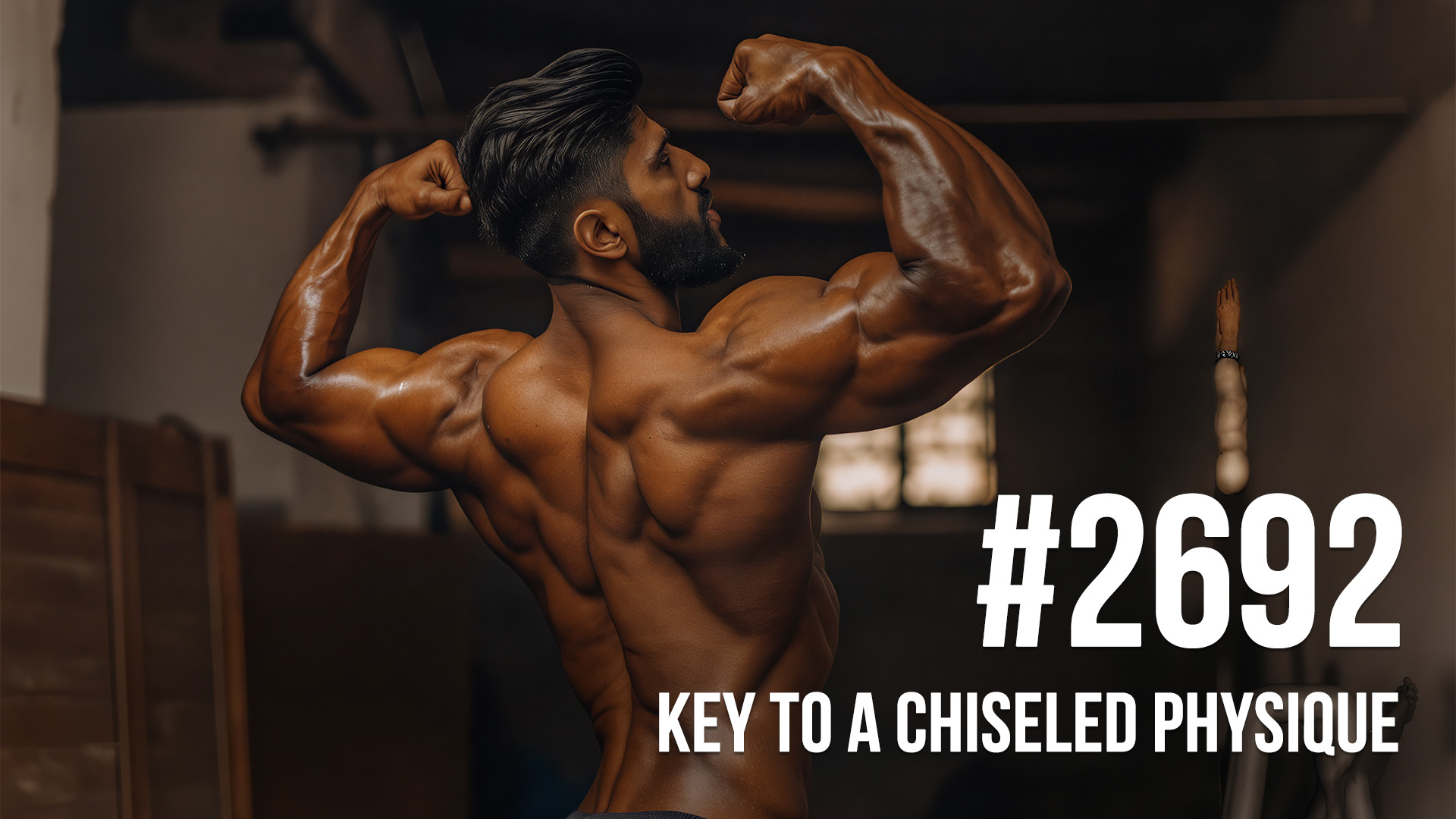
Mind Pump: Raw Fitness Truth
2692: Want to Look Better? The Secret to a Sculpted Body
00:27:27
Sculpt Your Body: Why Performance Training Is the Key to a Chiseled Physique Move good, look good. (1:21) Why performance is one of the BEST ways to measure your progress. (9:42) 5 Attributes of Why Performance Training Is the Key to a Chiseled...
Loading summary
Transcript69 lines
- [00:01]
Sal Di Stefano
I'm Scott Hanson, host of NFL Red Zone. Lowe's knows Sundays are for football. That's why we're here to help you get your next DIY project done. Even when the clock isn't on your side. Whether that's a new Filtreat filter or Bosch and Cobalt power tools, Lowe's has everything you need to feel like the MVP of diy. So get it done and earn your Sunday Shop now in store and online. Lowe's official partner of the NFL.
- [00:30]
Justin Andrews
In the heat of battle, your squad relies on you.
- [00:33]
Sal Di Stefano
Don't let them down.
- [00:34]
Justin Andrews
Unlock elite gaming tech@lenovo.com Dominate every match with next level speed, seamless streaming, and.
- [00:40]
Sal Di Stefano
Performance that won't quit and push your.
- [00:42]
Justin Andrews
Gameplay beyond limits with Intel Core Ultra processors.
- [00:45]
Sal Di Stefano
That's the power of Lenovo.
- [00:47]
Justin Andrews
With intel inside, maximize your edge by shopping@lenovo.com during their back to school sale. That's lenovo.com lenovo Lenovo if you want to pump your body and expand your mind, there's only one place to go.
- [01:06]
Sal Di Stefano
Mind Pump. Mind Pump.
- [01:08]
Justin Andrews
With your hosts Sal Destefano, Adam Schafer and Justin Andrews, you just found the.
- [01:14]
Sal Di Stefano
Most downloaded fitness, health and entertainment podcast. This is Mind Pump. Today's episode we're going to talk about why performance training is the key. This is the key to a chiseled physique. Everybody's doing it wrong. They're focused on the wrong things. We're gonna talk about why performance will get you there. Now this episode is brought to you by our sponsor, Element. This is an electrolyte powder with no artificial sweeteners, no sugar, the right amount of sodium to actually make a difference. It's delicious and it'll fuel your workouts. I love the pumps I get because of the sodium in Element. Anyway, go to drinklmnt.com mindpump you'll get a free sample pack of their most popular drink. Mix flavors with any purchase. Also, this episode Flash sale maps performance half off. Right now head over to mapsperformance.com, use the code athlete50. Get 50% off. All right, real quick.
- [02:07]
Adam Schafer
If you love us like we love you, why not show it by rocking one of our shirts, hats, mugs or training gear over@mypumpstore.com I'm talking right now.
- [02:16]
Sal Di Stefano
Hit pause.
- [02:17]
Adam Schafer
Head on over to my pumpstore.com that's it. We're enjoy the rest of the show.
- [02:22]
Sal Di Stefano
You want a chiseled physique. You want to look amazing. You want to have sculpt and shape and muscle and leanness. Here's the key. Performance, training. No joke. Nothing is more correlated to looking amazing than moving. Amazing performance is the key. We're going to get into it and why. If you chase this, you're going to look the way you want, move good, look Good. That's it. 100% goodwill movie. This is interesting conversation because we, we often. Good job with the joke. We often chase the look. We. We chase the body that we want. And when we ask people, what body do you want? What they refer to is the way it looks. Right. Yeah. Somebody hires you as a trainer, we know this. What are your fitness goals? The top goals are always appearance related. And I get that.
- [03:12]
Adam Schafer
I mean it. It's always that.
- [03:14]
Sal Di Stefano
Right.
- [03:15]
Adam Schafer
I'm trying to think of a time that somebody hired me and I asked that question and they said, oh, I want to move really well.
- [03:21]
I don't know if I've ever heard that 1%. I mean, I might have come across it, but it is not.
- [03:26]
I mean, I can't.
- [03:27]
Not.
- [03:28]
I imagine I've had somebody, but like, I can't, I can't pinpoint a story to share with you where I remember that.
- [03:34]
Sal Di Stefano
I remember there was a couple times where someone said specifically a performance goal, like a couple. I remember getting excited because it's so rare, so different.
- [03:42]
Adam Schafer
They came in, they said, we want to get strong.
- [03:43]
Sal Di Stefano
Yes.
- [03:44]
Adam Schafer
Oh, wow.
- [03:44]
Sal Di Stefano
Yes. And it was like, really exciting. Like, oh, this is that. And pain.
- [03:47]
Adam Schafer
I think I've had that pain.
- [03:49]
I get that pain is total. That's a, that's a major motivator.
- [03:51]
Sal Di Stefano
Yeah. Because that's a reminder every day.
- [03:54]
Adam Schafer
But I have to say, I'm pretty sure even all the pain people went like this. Like, I really want to get rid of that low back pain, but I'd love to get rid of this. And I want to look.
- [04:00]
Sal Di Stefano
Yes.
- [04:01]
Adam Schafer
I think almost always there's a. And also with the pain.
- [04:04]
Sal Di Stefano
Right. And so. And I get that. Right. I get that. Because the visual representation of health is what we're all after. Not necessarily health, not necessarily performance. But here's the kicker. Here's the trick or the hack or the secret is that if you focus on performance, you're going to move in the right direction. If this is your North Star and we'll talk about what we mean by performance. Right. If that's your North Star with your fitness journey, you're more likely to move in the right direction, less likely to move in the wrong direction. And this is even true with diet in relation to this particular goal. Now on the flip side, if this goal that you have is a visual goal or how you want to look or an aesthetic goal, and that's your North Star, I mean, I don't have to say this to you guys, but to people listening, more often than not, if that's your North Star, without guidance, you're not working with a good coach or trainer who understands better. You're more likely to move in the wrong direction. You're more likely to do things that sacrifice performance, oftentimes sacrifice health in pursuit of a look. And now here's the crappy part of that. You don't even get the look right if your performance declines, your health, especially if your health declines, you don't get that look that you're looking for. And I think this is one of the. This is like the crux of why people have trouble getting to their fitness goals and staying at their fitness goals because they're focusing on the side effect and not on the main thing, not the root. And at the root of aesthetics is a body that moves well, a body that's strong, a body that compels thriving and performing. That's right. That's right. And so again, and I'll say this as a trainer, good trainers know this. If a trainer is listening right now, you know exactly what I'm talking about. A client hires you with an aesthetic goal, which is most clients, you know what you track. You don't track their aesthetics. That's what they track. What you track is strength, stamina, mobility, endurance, how well they can move in different directions.
- [06:09]
Adam Schafer
Stability.
- [06:10]
Sal Di Stefano
Stability. This is what you're paying attention to now. Why are you paying attention to this? Well, one, you have integrity. You want your client to be healthy and move well. But two, this is what'll produce what they want, what they're after. And a good trainer has to communicate this along the way. And I wish people really understood this because, again, if your performance is improving, you're moving in the right direction. It's just what's happening.
- [06:33]
Adam Schafer
Well, this would keep. I think this would keep a much higher percentage of people continuing on if they focused on this. Because many times you will start to see a lot of these things move in the right direction with appropriate programs. Well, before you'll see the aesthetic part.
- [06:49]
Sal Di Stefano
That's right.
- [06:50]
Adam Schafer
And this doesn't require the diet to be perfect to move this needle in the right direction. I can improve stability, mobility, strength, some of these markers with a client who still hasn't wrestled with their diet issues or still hadn't hit their macros and haven't figured that out or still having some issues with getting their a grip on that. And so if we were focused on that, even though maybe we're not doing the best with the diet, you still be very optimistic because you're like, hey, I'm moving in the right direction.
- [07:17]
Sal Di Stefano
Right?
- [07:18]
Adam Schafer
Yeah. I think a clear example of that in terms of the difference of it is, like, if I've been in a calorie deficit for so long because I'm so sure that I don't want to gain body fat. Like, I just want to stay there. But I'm still training and I'm still kind of putting effort in the gym. My energy sucks, my workout sucks. Like, I'm not paying attention to any of those performance metrics of me moving forward at all, but I'm making sure that I'm staying under, you know, this calorie amount to keep my body weight as such. Like, I'm in a terrible place.
- [07:47]
Sal Di Stefano
Right. And again, now, just to add to that, if your North Star is performance, and we'll get to what we mean by performance, because it is a holistic approach. If your North Star's performance and you're making adjustments to your diet to improve your performance, the adjustments you'll make are typically the better adjustments. And if they're not, you'll know it. Right. If you're like, I need more stamina. Yeah. Okay, what's happening with my diet? I'm not feeding myself enough. Maybe I'm not eating enough carbohydrates. Maybe my fat intake is too low. Because any one of those things can contribute to reduced performance. So you start making these adjustments, and then you notice, improve stamina. This is the right direction. Okay, now I want to get stronger. What's the. What are the changes I need to make to my diet versus, you know, there's things I could do on my diet that can just make me lose water. I can lose weight on the scale, that can give me a false signal. I'm moving in the right direction. Meanwhile, I'm weaker. I don't feel as good. I can't. I mean, I can't tell you how many clients hired me. And we're so blinded by the false signals of the mirror and the scale, so much so that they totally sacrificed. They sacrificed performance and they sacrificed their health in pursuit of this sign that is meant to be the side effect. And I'll word it differently, a body that can perform well. Okay. A body that performs well typically looks good. Oh, yeah, it typically looks good. So chasing this or using this as your gauge is phenomenal. And you've heard us. If you listen to the show, you know that we like to point to strength. And strength is an incredible metric, especially for the first few years of training. But when we're talking about performance, we're talking about broad spectrum holistic performance. We're talking about all of the metrics of physical fitness because they all help balance things out. Because you could also get very narrow in scope with just like endurance or just strength. But when you're looking at overall, and what we're going to do is we're going to break down all the different attributes and metrics of performance that you can measure. And when you're looking at all of them, along with your workout programming and adjusting accordingly, you're moving in the right direction. And you will. So it's not like a maybe you will look better as you do this.
- [10:04]
Adam Schafer
Well, you made a point in an earlier episode that if you look at it holistically, all the different pursuits of performance, they have natural checks and balances to them because you can become obsessive about a single performance metric or number. And that can lead to chronic pain or bad, bad habits, bad behaviors. But if you look at it holistically at all the things they do have natural limiters or they have natural checks and balances. And so I think that's such a good way to look at it and so much better for long term health. And keeping people consistent would be to reframe their goal around stuff like psychologically too.
- [10:43]
Sal Di Stefano
Totally. And it's also this, like from a health perspective, the things that correlate best to longevity and health. If you look at, okay, what are the, what are the correlates, what are the metrics that I can measure that will directly tell me whether or not my longevity and my health are doing well? The best ones are all performance based. The famous one that now medical community talks about quite a bit is a grip strength test. So you can predict all cause mortality better with a simple grip strength test than you can with almost any other single metric. Now, what's so special about grip strength? Nothing specifically about grip strength, except that it's a proxy for overall body strength. So when someone's strong with that performance metric, we see longevity. Now what if we threw in there stamina? What if we threw in there mobility? What if we threw in there your ability to have reactional ability. Explosive, explosive power, which everybody needs a little bit. If you throw that all in there, what you have is a healthy person with great Longevity. And I'll put it differently. If you took two groups of people, 50 here and 50 here, and this group over here, we're just going to make you fit. We're not going to worry about anything else. I don't care about body fat percentage, I don't care about the scale, I don't care about how you look. The goal is at the end of this one year experiment, we want to dramatically improve your performance. And then this group over here, all you guys are gonna focus on is trying to look better in the mirror. So your workouts, your diet, all that stuff, it's all focused on what you see on the mirror. Over here, it's all about performance. At the end of the year, guess who looks the best? Yeah, the performance group. So this is one of the best ways to measure your progress, to gauge your progress, and to make adjustments in your programming, meaning your workouts and your diet. So what we're going to do is we're going to go through what performance looks like and why each of the attributes that we're going to talk about are so important and what they contribute to in terms of aesthetics. Because here's what we're going to do. Right now, our job is to sell you the right thing. Because I know it's easy to sell you. You're going to look good. Every other moron in the fitness industry does that. We're going to try and sell you the right thing and we're trying to sell it more effectively. And here's how. So we'll start with the first one, which is multiplane movement ability. Let's explain what that means. So multiplanar movement means I have good movement and stability forward and back, side to side, and I can rotate. Okay. So I'm not just strong and fast going forward and back. I'm also strong and fast going laterally. I can also twist. I can also move on one leg or one hand. I have this ability to kind of move in different directions. And sometimes what you'll see with athletes, bodybuilders are a good example where they just want to develop a particular look is that they miss out on multiplanar movements. So they oftentimes don't have good rotation, good lateral ability. Power lifters, sometimes you'll see this, or oftentimes you see this as well. If you have good multiplanar movement ability, here's what you accomplish from a look perspective. Balance and symmetry. That's it, balance and symmetry. So balance refers to how balanced your body looks. Right. Does your Legs and your upper body match. Do you look like you're balanced? You're well developed all the way up and down. That's balance. Symmetry is right to left. Well, if you're good at moving in all these different directions, everything's developed. Yeah. And if you're not good at moving all these different directions and you focus on getting better at them, you, you'll develop better balance and symmetry.
- [14:21]
Adam Schafer
Well, balance in this situation also includes stability.
- [14:24]
Sal Di Stefano
Yes.
- [14:25]
Adam Schafer
The ability to move in different planes challenges those joints to stabilize as you move left or right or rotationally. And that ability to stabilize anti rotate, do all those things also creates balance and balance in the joint and stability which is also important and comes from the multi plane movements. And I, I remember, I remember when this was this really hit for me because early on in my career this wasn't a part of my programming. And I remember having clients who I would have considered really fit and healthy, getting injured, not working out with me, but doing some of the most basic stuff back at home.
- [15:02]
Sal Di Stefano
Yeah.
- [15:02]
Adam Schafer
And like grabbing your shirt and looking back. I take full responsibility for that. As the person who was guiding them through their fitness journey. That I was not addressing a lot of these things that we're talking about today because I was so focused myself on what they're telling me. I just want to lose weight, Adam. I just want to look good. And so everything was around macros, weight loss, building muscle, but not also thinking about the other component of the performance piece which gives them stability, which it gives them the ability to reach back and feed their kid in the backseat or pull something weed out of the ground or pick up the shampoo, rotate and pick up the shampoo bottle. And that's what was so crazy was here were these clients that I got up to 200 something pounds deadlifting. But then they hurt themselves. Picking a shampoo bottle up out of the shower was like what? But it was because I neglected this in the programming.
- [15:50]
Sal Di Stefano
That's right.
- [15:51]
Adam Schafer
It's also segmented strength.
- [15:52]
Sal Di Stefano
Yes.
- [15:53]
Adam Schafer
How I like to picture that in instead of like integrated strength where it's complimenting big motor movements. And so I think that a lot of times like people can get really focused on body parts individually. And I understand that because it might be a glaring thing. I want to build and develop this. When in fact you start integrating these, these types of movements in a broader scale. It balances it out. Also expresses end range strengths which you build and develop muscles even fuller than you could by isolating them.
- [16:30]
Sal Di Stefano
Yeah. Now think of it this way. You have an orchestra, Right. So you've got, you know, 30 instruments in this orchestra, but they never play music together. Everybody practices by themselves, even the same song. They just practice by themselves. Then comes the night for the orchestra. They're about to present themselves. They all play together. It's just not as good as if they actually practice together. Your body's balance and symmetry is a reflection of how well things move together. Now, people have tried to hack this by developing individual muscles and body parts. And yes, that can definitely give you the look, but this naturally occurs when you pay attention to your ability to move in different planes of motion. This naturally occurs. You naturally develop balance and symmetry, or as bodybuilders call it, beauty of the body. So the aesthetic benefit of multiplanar movements, many, many times. These are exercises we avoid, we don't do in the gym, because it's not a specific body part that we're training. When you work on this, this balance and symmetry develops and your muscles develop in ways that they wouldn't had you not focused on that. Next, here's the attribute we talk about all the time. I probably don't have to sell this one that much strength, just general strength. Now, strength is a wonderful, wonderful metric and attribute I tell people to focus on for the first three years of training. Just get stronger. I like saying it because it's basic, it's simple. It tends to point people in the right direction. You have to feed your body appropriately to get strong. If you're getting stronger, you're building more muscle, which tends to speed up the metabolism, which makes fat loss easier. You can't undernourish or under feed yourself and get stronger. You can't over train and get stronger. Your programming has to be good or you want to get stronger strength. More strength equals more muscle. So this is. It's the closest correlate to muscle growth is muscle strength. Build strength, build muscle, faster metabolism.
- [18:22]
Adam Schafer
It also gets you out of the comparison game that I think that is more prevalent today than it ever has before because we follow all these inspirational super fit bodies. It's hard whether you believe, whether you know you're doing it or not, but subconsciously you're comparing yourself to all these bodies. And so getting away from looking at that body versus my body and feeling like, oh my God, I can never look that way, or I'm so far away from that. It's. I'm focused on, last month I could bench press this and squat this, and now this month I can do this. It's like you're Comparing your strength, your numbers, where you're at. And it helps move away from this comparison game that I think we do, whether we believe we do it or not. If you've got a feed on Instagram that's full of all these fit inspiration people that you follow, it is really difficult not to do that. Even, like, subconsciously, even if you don't realize it, that's what you're getting all the time. It's like you're subconsciously comparing that. Like, oh, I want to look like that or I want to be like that. Even if you're not saying it, I think that's what it helps move you away from that direction. Why that's such a healthy way to lift.
- [19:26]
Sal Di Stefano
Right. Next up is stamina. Stamina tends to contribute to a sculpted, athletic look. When properly pursued in a routine, stamina contributes to a body that looks more athletic. Now, what does that, what does that mean? Well, I mean, I hate to use these terms because I think they've. Again, these are terms that are bastardized. You look less muscle bound. You look like you can move better. You know, when you see it, you know, when a person looks like they have some stamina, can you, can you trick this? Can you. Can you fool people with this? You can, but building stamina in combination with multiplanar movement in combination with strength produces a sculpted look. And stamina training is great for VO2 max, great for muscle health, great for heart health, and it contributes to building strength. There is a certain amount of stamina you need to build strength. And in fact, sometimes strength athletes forget this, and the limiting factor is their stamina, and they can't build the strength that they need to.
- [20:21]
Adam Schafer
Yeah, to move fast, you have to have a bit of that mobility, that looseness. You can't, like, you can tell right away if somebody is limited in their movement patterns and they're rigid and to. To be able to move fast, it creates that, that, that specific look. And you, you see this in athletes where, you know, you know, it's, it's. It's definitely what we're going for, that more lean, defined type of a look with, with musculature. However, the actual movement itself is an aesthetic pursuit on its own.
- [20:55]
Well, when I think of lift stamina, I think of heart health and I think of lifting weights for the heart. Yeah, we talk all about the benefits of lifting weights. We understand that for your skeletal muscle, it's like your heart is the most important muscle on your entire body. This is your way of lifting weights with your heart. Is training, stamina training. Of course, you do get some of those benefits from traditional weightlift weightlifting. We talk about that a lot. We talk about the way you can manipulate reps. But tradition, pure traditional stamina type training included into a training block is like pure strength training for your heart. And all the benefits that come from.
- [21:28]
Sal Di Stefano
That's right. Now we'll talk about power. What's power? It's the ability for your muscles to contract quickly, quickly and safely. Now power is, by the way, training for power is a very lack of a better term powerful way to build muscle. It's all fast twitch muscle fibers. Those are the ones that build and grow. And here's the crazy part, big muscle.
- [21:49]
Adam Schafer
Fiber, it's also one of the first things that go too.
- [21:51]
Sal Di Stefano
You don't train power, you lose it. You can be strong with poor power. I know this personally. The other day I was filming a workout in my series and I hadn't done fast, explosive pull ups in a long time. Now it's crazy. I could rep out 25 pull ups. I'm strong at pull ups, but I went to go do fast pull ups and they were slow because I haven't, I haven't practiced this. Now the average person like, why do I need power? Why do I need that? Okay, well you, you step off a curb on accident, you need power. Your kid is about to run across the street, you need some power. You need to change directions quickly because the glass fell off. Jump over something, you need power and you lose it. Now what does power produce? Well, it looks like powerful muscle. And you can see this. Sprinters are a good example. When you look at their legs, they have muscle that looks like it can contract and move quickly. And so some power training, you can go crazy with power training like Olympic lifters, but there is a component of power training that the average person can implement that's going to just contribute to the way that their body performs and looks. Well.
- [22:54]
Adam Schafer
It's also, it's training your body to have control in those moments. Those moments are inevitable. To your point about stepping off the curb, sprinting up the stairs to your kid one time or like when it was very eye opening for me jumping out of the back of my truck and like thinking my knees were going to explode. Like, I remember the first time that happened to me was such an eye opening movement for me. And I remember going like, wow. I just, I haven't trained this way. I don't play basketball. I'm not doing a lot of sports that included power anymore. And because my Training wasn't reflecting that. I noticed that I had lost that ability to do that, to decelerate like that. And it's like, wow, that you. Training power is going to incorporate the control that you have in those situations. Huge value to people as they age, right?
- [23:37]
Sal Di Stefano
And then finally we have mobility. Now, what is mobility? It's your ability to move your joints through their fullest range of motion actively, not passively, meaning you control them. You have strength and stability in that full range of motion. It's not just flexible. Flexible means you can, someone can stretch your leg to your foot.
- [23:58]
Adam Schafer
You could get there.
- [23:58]
Sal Di Stefano
Yes. But actively you could do it yourself and you can control it. Mobility, good mobility means you typically don't have weak areas in your body. It means you get a better return from strength training. Okay, what does that mean? Well, a barbell squat or an overhead press or a barbell row or whatever exercise with better mobility, better range of motion means you get more out of the exercise. One set of squats with good mobility is more effective at building your lower body than one squat with subpar mobility. So mobility makes your strength training just more effective.
- [24:33]
Adam Schafer
And two, I mean, just any precarious position your body is going to be in, like, the more mobility capacity you have, the more likely you're going to be able to get out of that or through that safe and effectively with strength. And it's, it's one of those protective elements I don't think people really highlight enough. Two, it contributes to your overall performance. So, you know, the more mobile and stable you can create around your joints, you actually produce more force output. So you can actually recruit more muscle fibers when in a sense, you get stronger. So, you know, there's, there's a lot more benefit to it other than just like preventative injury.
- [25:15]
Well, how about quality of life and posture? I mean, those have just completely impacted my life personally. I mean, that up into that year kick that I went on, I really didn't address mobility in my own training and the impact it had on my low back, low chronic pain, my ability to sit down, ask the grass comfortably and play with my son, or to sit on a plane and not feel like my low back is on fire. I mean, addressing all the weaknesses and instability in all my joints has completely leave chronic pain, improve quality of life, and my posture is significantly better for it. So I just, I'm huge advocate for training this way, and I think it's overlooked in a lot of training programs because we're so heavily focused on the, the look. And this part look improves quality life like no other.
- [26:07]
Sal Di Stefano
You lose mobility over time. You will have a sacrifice with aesthetics. Why? You can't move as well. The repertoire of exercises available to you becomes smaller and smaller. Suddenly I can't do that exercise that I used to love, so now I got to move to this one and now I can barely do that one. I got to move to this other one. Next thing you know your your list of exercises is smaller and smaller and smaller and your body doesn't respond as well because you can't do as much stuff. Mobility is key. Mobility is absolute key to effective strength training. Now look, we have one program that addresses all of this. Only one. There's only one Maps program that you could follow indefinitely. Every other maths program is relatively narrow in scope in comparison and requires you to cycle in and out. But we have one program that does all of this. In fact, it's the program that would develop the perfect body over years and years and years because it's so balanced. It's Maps Performance. And because of this episode, Maps Performance is on a flash sale. It's half off right now, so it's 50% off. If you want to get it, you go to mapsperformance.com, use the code athlete50. That'll give you 50% off. You can also find us on Instagram indpump media. We'll see you there.
- [27:19]
Justin Andrews
Thank you for listening to Mind Pump. If your goal is to build and shape your body, dramatically improve your health and energy and maximize your overall performance performance, check out our discounted RGB super bundle@mindpumpmedia.com the RGB Super Bundle includes Maps, Anabolic Maps Performance and Maps Aesthetic. Nine months of phased expert exercise programming designed by Sal, Adam and Justin to systematically transform the way your body looks, feels and performs. With detailed workout blueprints and over 200 videos, the RGB Super Bundle is like having Sal, Adam and Justin as your own personal trainers, but at a fraction of the price. The RGB Super Bundle has a full 30 day money back guarantee and you can get it now. Plus other valuable free resources@mindpumpmedia.com if you enjoy this show, please share the love by leaving us a five star rating and review on itunes and by introducing Mind Pump to your friends, friends and family. We thank you for your support and until next time, this is Mind Pump.