← Mind Pump: Raw Fitness Truth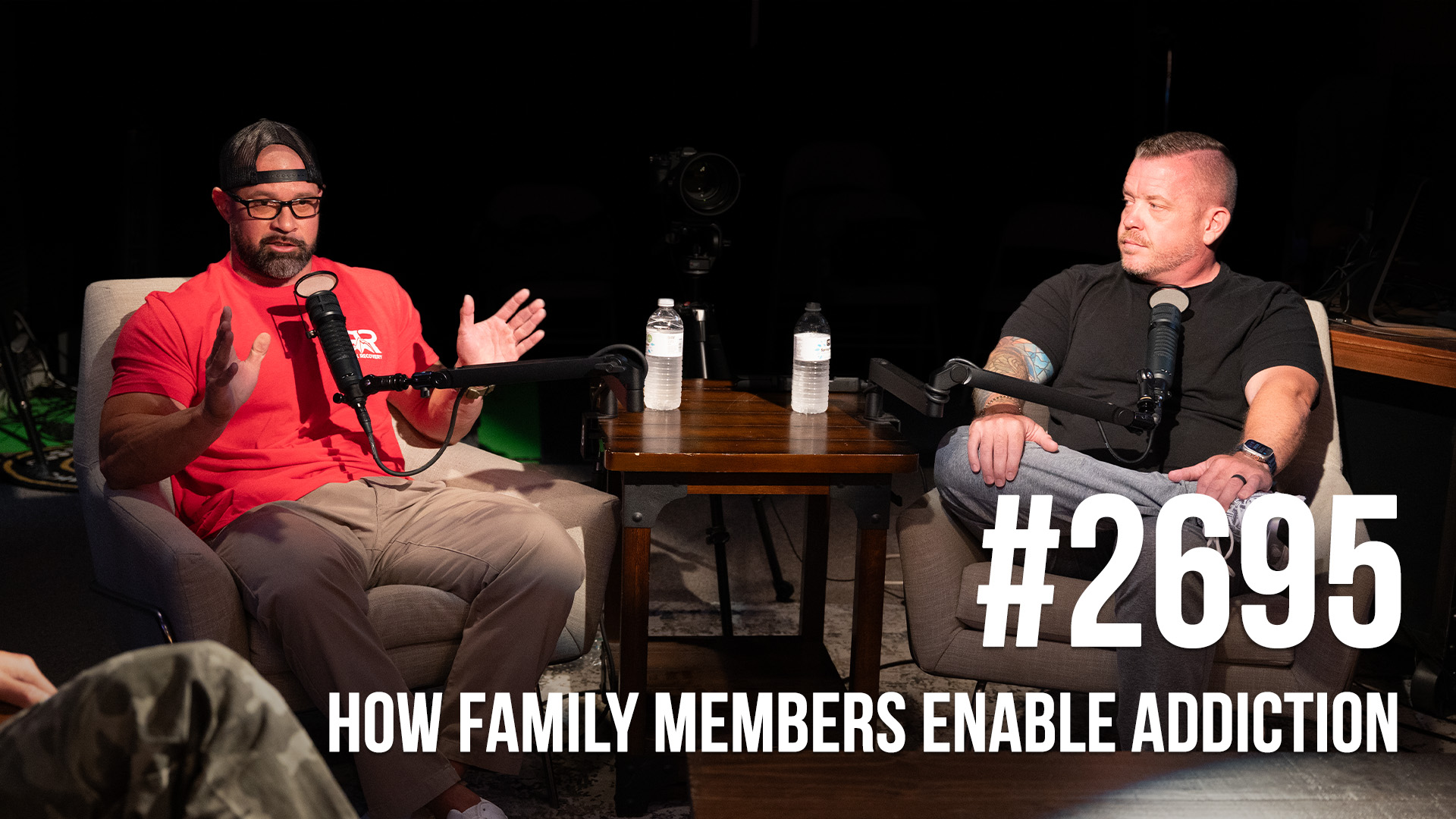
Mind Pump: Raw Fitness Truth
2695: How Family Members Enable Their Addict Loved Ones | Rock Recovery Center
00:28:18
Are You Enabling an Addict? … How to break the Cycle The MP x Rock Recovery Center partnership. (2:32) Accepting the truth that something needs to change. (5:53) Compassion fatigue. (9:25) You can love your addict to death. (11:42) Don’t...
Loading summary
Transcript64 lines
- [00:00]
A
In the heat of battle, your squad relies on you. Don't let them down. Unlock elite gaming tech@lenovo.com, dominate every match with next level speed, seamless streaming and performance that won't quit and push your gameplay beyond limits with Intel Core Ultra processors. That's the power of Lenovo. With intel inside, maximize your edge by shopping@lenovo.com during their back to school sale. That's Lenovo.com Lenovo Lenovo.
- [00:30]
B
If you want to pump your body and expand your mind, there's only one place to go. Mind Pump. Mind Pump. With your hosts, Sal Destefano, Adam Schaefer and Justin Andrews, you just found the most downloaded fitness, health and entertainment podcast. This is Mind Pump. This is a special episode. We had Ben and Tom on the show. They're the hosts of the Real Recovery podcast. They also run a rehab facility called Rock Recovery, which we've partnered with today. We had him on the podcast talking to friends and family members of addicts. Oftentimes, they're the ones or they are contributing to the cycle of addiction. It's very difficult to help somebody who's an addict and oftentimes the things that we do that help counter what we think are best. Tom and Ben are experts in this. They themselves were addicts years ago. They've been sober for a long time and now they help other addicts and family members. And also again, of course, they host that podcast, Real Recovery. We know you're going to love this episode and we hope it helps you if this is you. If this episode's for you again, I really hope this helps you and your family or friend out. Now this episode is brought to you by some sponsors. From first off, let's talk about Rock Recovery Center. Go to rockrecoverycenter.com mindpump they will pick a winner this month for a full scholarship for rehab. By the way, everybody that goes there gets some form of help. So go to rockrecoverycenter.com mindpump this episode's also brought to you by Seed. Seed is the world's best probiotic. Go check them out. Go to seed.com mindpump use the code 25mindpump and you can get yourself 25% off your first month's supply of seeds daily. Symbiotic. Also two days left for the special maps. Performance is 50% off right now. This is the most balanced strength training program we ever created. You can run this one indefinitely. Build an aesthetic athletic physique. Go to mapsperformance.com and use the code athlete. 50 for 50% off. All right, here comes the show.
- [02:41]
A
All right, real quick, if you love us like we love you, why not.
- [02:44]
B
Show it by rocking one of our shirts, hats, mugs, or training gear over atmypumpstore.com.
- [02:50]
A
I'M talking right now.
- [02:51]
C
Hit pause, head on over tomypumpstore.com.
- [02:54]
A
That'S it.
- [02:54]
D
Enjoy the rest of the show.
- [02:57]
B
Tom, Ben, welcome back to the show.
- [02:59]
A
Hello. Thank you for having us.
- [03:01]
B
I was just. It's funny, we just recorded a podcast before having you guys on, and we were talking about you guys and how we love all the sponsors we work with. You know, we believe in the products and the people. But the. You guys have been the most rewarding by far just to hear back from. You know, Tom and I will be in contact and he'll, with, of course, permission, will talk to me about people that have come through, through us and kind of what their struggle is. And often, sometimes you'll ask me to make a video for them. It's just so rewarding to hear stuff like that. So I, I'd love to hear about how that's been going since we started working together. You've seen people are able to help people through that.
- [03:39]
D
Yeah, I mean, it's been, it's been pretty impactful in a way that, like, we, you know, going into this, we were kind of. I, I think I could speak for all of us pretty blind and knowing how this was going to work out. And, you know, the, the people that have reached out, I think, you know, they listen to mind pump thinking. You know, it's fitness, nutrition, overall health, weight training, stuff like that. And then to come across somebody like us, you know, and then actually reach out. 90 of the conversations that I've had with people are family members and loved ones, and they're a hunt. They're absolutely clueless on what to do. And so being able to go and have those conversations with these people and actually re. Instill to them that, like, there's hope in this because a lot of them are like, this is. We're really just reaching out because we don't know what to do. And in fact, we think that this is. They're in a hopeless state, you know, and so being able to talk with them and really, you know, encourage them that there's, There's a silver lining to all this. You don't see it now. I know you don't see it now, but there is. And you just have to trust, Trust us. And we've gotten to have, you know, some scholarships come in. And, you know, we had Mark come in and Ben can elaborate on that one. We had another young guy come in that he did okay, but, you know, he's kind of on the fence, but he's young. But you know what we did, we planted seeds. He knows what's, he knows what's there, he knows the opportunities. And we have a guy coming next week that he is an end stage liver failure and he needs six months sober to get a liver transplant. And I just talked to him yesterday and he's going into detox next Tuesday and he doesn't have two nickels to rub together. And it was like one of those things. And I called Ben. I'm like, for whatever reason, like a God thing. It was like, I'm just being like, like, this is the guy, you know, 40, 42. I want to say young guy. So he's coming into detox and I told him, he was like, how long can I stay with you? I said, how long do you need to get on the liver transplant list? He said, six months. I said, you got six months.
- [06:13]
C
Wow, that's great.
- [06:15]
D
Awesome.
- [06:15]
B
Yeah, that's great.
- [06:17]
C
So the medical system won't even let you do like a liver transplant.
- [06:21]
B
It's like wasting a good liver.
- [06:23]
A
Yeah.
- [06:23]
D
And, you know, I, I recently did an interview, it hasn't released yet, for our podcast, Real Recovery Talk. And he's a firefighter and his name is Maddie. He's on Instagram as Maddie the Goony. He's a punk rock, like, born and raised in, in South Florida. And his story was he had esophageal hemorrhages four times, liver failure, yada, yada, yada. And he ended up getting a liver transplant three years ago. And he's back on the fire truck. He's back working for Fort Lauderdale Fire Rescue, like crushing life now. And the funny thing about that is, and I asked him in the episode, are you grateful for all that stuff? Yes. You know, because that's the thing when we go through this, myself and Ben sitting here, like, we've, we've gone through all this stuff, all the stuff that addiction does to us, and we're grateful for it, you know, but yeah, he had to wait six months. In fact, he actually, he opted out of the liver transplant, but it was like his fire chief and like the medical director, he was on his deathbed, he was in hospice. And they said, we're going to give you one last chance to get a liver. And he was like, okay, fine, I'll do it. And they were like, you have to do that. You have to take a test to see if you qualify. This test takes six months. He did this test in four days, and they ended up giving him. He ended up getting the liver, and he's good now. But, yes, you do have to wait six months to get it.
- [08:14]
B
Is that a part of the success is at the end of that initial journey, looking back and being like, I'm grateful I went through that.
- [08:23]
A
Absolutely. Because if we can come over alcoholism and addiction, like, I'm really good at just about everything in life that I put my mind to. Alcoholics and addicts are some of the most talented, gifted people, intelligent people you'll ever come across. This is the one thing. I'll speak for myself, but I hear it from thousands of others. This is the one thing that we had to, like, completely surrender. We, like, we. We can't do this alone, but once we overcome that. And, like, for me, like, I can sit here and tell you, today I haven't craved a drink or a drug in probably 14 years. I'm nearly 15 years sober. Like. Like, it's literally like, all of a sudden, I went from a guy who jammed a needle in my arm 15 times, 15 to 50 times a day. I couldn't not do it. And all of a sudden, like, it's just the problem's been removed. It's the wildest thing. But going through that journey and having to take a hard look at the truth about yourself, you know, who am I really? And accepting that truth and then saying, this needs to change, I always explain it like this. Thank God I crossed that line, right? If there's a line so many people throughout life ride right. Right under the line of misery, I was fortunate enough to cross it, right? And because of that, that. That almost forced change, if you will, like, that's what makes me grateful for going through everything that we've gone through. And, like, the. The reason that we keep doing this, like, when you were talking about, you know, we didn't know what to expect going into this. And we get what. A lot of times what we do for work is hard, man.
- [09:59]
B
I can't imagine.
- [10:00]
A
We get what. What's referred to as compassion fatigue. Like, you keep plugging away. We. I'm gonna call it what it is, man. We hear a lot of really sad stories, you know, know some of them personally. But, like, for instance, two weeks ago, I got a phone call from the. The guy Mark. He was the first scholarship we did. Yeah, he called me from Georgia Just ecstatic. I've never heard his voice. I'm, like, starting to tear up talking about it. I've never heard his voice and the tone that it was. He was so full of joy and happiness and purpose. And he said, ben, I just. I had to pick up the phone and tell you how amazing things are going. This guy. And he explained to us, like, his journey through. He was a mind pump listener. Hadn't listened to you guys for months, right? And he was a line cook. And he. One day, you know, he's cooking food in the kitchen, making 15 bucks an hour. He's like, I put on this episode. And that's when he heard you guys talking about us. And he made a decision to come to us. He ended up actually staying with us for nine months, and he just stayed the course. He's like, oh, you know, there's times when we're like, oh, we're gonna go home. We're gonna, you know, venture off on our own. We're good. And we just kept encouraging him, dude, just stay. Stay until that door opens. And you can't deny that that door is wide open for you. And all of a sudden, he got a job opportunity, dude. He went from. And it's not all about finances, but just to give the example, making 15 bucks an hour, feeling completely hopeless, drowning in a bottle to. All of a sudden, he's an aviation mechanic making over six figures. He had his aviation background from being in the military because he's a veteran. So hopeless veteran, dude. And he's calling. He's like, dude, I even have a girlfriend now. Wow, bro. And I'm like, I need the chills right now, you know, tears rolling down my face. But going back to the compassion fatigue thing, like, those are the moments that. That ignite the fire under us to keep doing this, dude. Like it. Because there's those painful moments, but then when you hear these success stories, it's just, like, worth it.
- [12:01]
C
Worth it.
- [12:02]
B
All worth it.
- [12:02]
A
You put. You put your. Your foot even harder on that gas pedal.
- [12:05]
B
You know, you said something earlier, Tom, that 90% of the people that call are friends or family members or loved ones of the addicted person. And, you know, off air, before you guys. You guys came on, I. You And I had talked and. And I said, you know, I can imagine that it's probably friends and family members and loved ones that. That can oftentimes keep that person without realizing it, keep that person in the cycle of addiction. And so. And you. You agreed. And so I wanted to talk about, like, what if someone's listening right now and they're struggling with somebody they love who's addicted, and they're like, I don't know what to do. I don't know what to do. This person's gonna kill themselves. What are the mistakes? What are the things that they do that keep that person in that cycle? What is it? What are the common mistakes that you see that people just don't realize?
- [12:57]
D
Well, a lot of it boils down to ignorance, right?
- [13:01]
B
Because you just don't know.
- [13:02]
D
You just don't. You don't know what you don't know. And unless you actually spend a lot of time and energy in this space and, you know, doing what we do, you know, it's not. It doesn't come. It's like raising a child. It doesn't come with a playbook, you know? So when you do find out that, you know, one of your loved ones struggles with addiction, then you go to what you think is going to be natural. And a lot of it is moms, Right? The vast majority of people that we speak to are moms. And Ben uses a great analogy of mother bear. You know, a mom is going to do anything that they can possibly do to protect their cubs to their own expense. You know, and that's what we see happen a lot of times is, you know, our, Our. Our judgment becomes so skewed because we're doing absolutely anything that we can to keep our child alive. Yeah. At the expense of ourself, at the expense of our. Our finances, at the expense of our. Our careers, our own mental emotional health and well being. All that stuff gets put on the back burner because we need to keep our child safe.
- [14:24]
A
Very counterintuitive.
- [14:26]
C
Yeah, super counterintuitive. I mean, and it's really easy for somebody on the outside looking in who sees the. The addict who's stealing and doing bad all these things and be like, God, why don't you just kick him out? Or why don't you just. But when it's actually your kid or your brother or your. It's a. And I've had it close to me in family, and it's like, man, you see it and you're like, you know what you're supposed to do? Because you maybe you've even heard and you're like, but that's so hard to do, especially when they're in that state. Cause you just. You right away default to God. But if I, if we don't, they're going to die or they're going to. It's going to get worse because. So it's very counterintuitive to, to do what you probably need to do in that situation. And really tough when it's, when it's your cub.
- [15:14]
A
You know, there, there's a saying, you can literally love your addict to death. And I, and I like to paint a picture like this. Cause a lot of times parents, loved ones that are here, what they suggestions that we have, and they're like, oh my God, I can't do that. But let me ask this question. If I am going to. In life, one of the hardest things for me, I have two kids, a 15 year old and a 7 year old. The worst thing for me ever is to see my kids in pain. Right. Like as a parent, it hurts in the gut, in the heart in a way that's unexplainable. But if I'm willing to do these things and put my myself in that pain as a parent, what greater love could you show, right? So people are like, oh, I can't do that to them. But the reality of situation is, is doing the hard thing, doing the right thing is the, the best demonstration of love that you can absolutely show. Because more than anyone, it's gonna hurt the parent, it's gonna hurt the loved.
- [16:12]
B
One and it's gonna hurt the kid.
- [16:13]
A
Yeah.
- [16:14]
B
So it comes to mind for me, I have someone close to me who dealt with this with their son. Thankfully they're sober now and they actually work with addicts now. So it's success story. But during this period of time it was rough. It was rough for the family. And the fear, one of the fears was because they were told, they were advised, like you got to cut them off. And they're like, well then they're going to be on the streets and then this is going to happen. At least now I know that they're in my house and I can see if they're okay. Like that's got to be the most counter intuitive, counter feeling thing ever is to cut them off when what you feel is, well, they need me close, they need me be as close as possible and I need to help them. This entire. Is that what you mean by love them to death?
- [17:01]
A
Yeah. And I think that we can give some tangible examples too. For instance, like the first one that comes off, oftentimes people ask about like finances and will end up like if you have an addict, alcoholic child, loved one, whatever the case is basically financially sponsoring their alcoholism. A lot of families are like, oh, if I just pay their rent for them, he'll Have a roof over his head. I know he's in a safe dwelling.
- [17:29]
B
Right? Which, which makes kind of sense, right?
- [17:31]
A
Yeah, absolutely. Who doesn't want their kid or their loved one to have shelter? Right? But the reality of the situation is, is essentially every bit of financial resources that you give them is time and energy that they're able to take their own finances to finance their addiction further. So while it sounds scary, my loved one, yeah, they're not going to pay their rent. They quote, unquote, could end up homeless at the same time. As long as you're paying that their rent, their time, energy and resources going into that next drink versus having to pay the rent. So the financial help tends to keep the situation comfortable for the addict. Alcohol. And until it becomes unmanageable and recognizable by them that it's unmanageable, they're just going to stay the course. Because alcoholism, drugs, they're rewarding. To call it what it is. When my, when I have life problems, for me, I hit a crack pipe, I put a needle in my arm, I take a drink, all of a sudden my problems are gone. Right? But until that situation becomes uncomfortable, uncomfortable to the point where I'm like, okay, this isn't working as a solution anymore. Because I'll tell you this, alcohol and drugs is a phenomenal solution to my internal problem. It worked so well that I can't let go of it now. And we have to kind of nudge them in a direction where, okay, this isn't working anymore.
- [18:55]
B
How do you, how do you sell that?
- [18:57]
C
Well, I feel like this is, I mean, this is how I try and sell to myself. I'd have to reframe it as. So whatever thing, whether it's rent, gas, food that I'm paying for and whatever their addiction is, alcohol, hair, whatever, I'd have to go, oh, that five thousand dollar rent is a total amount of hits I just gave them. I'd have to reframe the dollar amount that I was helping. Yeah, because you guys contributing to X amount more drugs or X amount more beer and, and think that that's literally what I just gave them. Instead of like thinking that you're giving them shelter, it's more like, no, I just gave them 17 more hits of heroin because I paid for that thing.
- [19:34]
B
Would it be accurate to say something like this? Like, if you continue to financially rescue them, the odds are high that they're going to die from their addiction. If you kick them out, there's still potential they can die, but you've just improved the Odds that they won't. Would that be a safe.
- [19:53]
A
I would say that you've improved the odds that they're going to ask for help.
- [19:56]
B
Right. Okay.
- [19:57]
A
Either way, I think scary. Either way, it stays the same. Especially nowadays, man, with the fentanyl epidemic. Like, whether I'm shooting heroin in the safety of my mom's home or shooting. Or fentanyl or shooting heroin and fentanyl on a bench, homeless, the odds are I can die.
- [20:15]
B
Right.
- [20:15]
A
What we want to increase the odds on is the odds that they're going to ask for help.
- [20:19]
B
Got it, Got it.
- [20:20]
D
The one thing I want to. I want to add to this is, you know, when. When we're talking to a family member or a loved one and kind of coaching them through this process, and this kind of goes into the second point. A lot of times they are acting on emotion, Right. Emotions for a family member fuels their next.
- [20:43]
C
Move directive.
- [20:44]
D
Yeah, their. Their next move. But just the same as, like when I instruct, when you're talking to your addict loved one, don't come at them, which is what 99% of the time, people do. And I speak from experience. I mean, me and my father almost got into fist fights. You know, I put him up against the wall one time, you know, because he was threatening my addiction. But when we're talking to family members, I don't come at them either. Like, a lot of times when I'm talking to them, I want them to come up with the answers that it's not my answer. You said it, you know, that this is the right thing to do. So if we tie this into finances, I oftentimes will just do a role reversal and say, okay, let's. Let's role play here. You know, let's walk through this scenario. I'm the addict mom. I need 500 bucks for rent. I'm short 500 bucks on rent. I'm tugging. I'm. I'm tugging at your heartstrings here. I need this money or else I'm going to miss my rent. And you give me this money. Exactly what you just said, Adam. Yeah, I got 500 and 500 bucks to somebody is a lot. I mean, that. That can go really far when it comes to drugs and alcohol, you know, and so really kind of walking them through this process, if I just go to them and say, hey, listen, you can't financially support them anymore. It's killing them. Yada, yada, yada. Now you're competing with their emotions and their. Their kind of like mother bear instinct. But that's why a lot of times, like I shared this earlier, one of the ladies that I spoke with once we started working together, my very first conversation with her was on January 2nd. I had to look in my text thread, January 2nd of this year. Her husband just got to us three days ago and we're in late August. It's a process like this takes time, and a lot of it is just coaching. And you know how to enter into these conversations. Because the second point that we wanted to make, we have the financial aspect, which we know, but the acting on emotion, we have to try and eliminate the emotion from the situation. Let's just look at it for what it is, you know, because if you look at somebody else's situation, you would probably give them the same advice that we're giving you.
- [23:36]
B
Do you give advice like this around? Because how do you deal with that? Is it like, look, before you say or do anything, call me so I can help you through this process. Does it look something like that?
- [23:45]
A
Exactly like that. And I literally use this example all the time. I look at myself, I'm an expert. An addiction, you know, personal. I've gone to school for it. I've been working in the field for 13 years now. Firsthand experience. And I say this all the time. If I have to go through this with my kids, with all my knowledge on this, with all my experience, the first thing I'm going to do is turn it over to somebody else, outsource it without. Because I'm emotionally attached to this situation. And I. And even with. With my insight to addiction, I'm blinded. And I've had situations like that in my life where I've had close family members where I've had to like, kind of push it off on somebody else and say, hey, I want to stay involved in this situation, but can you kind of take the reins on this? Because at the end of the day, emotion will completely kill this process.
- [24:40]
C
That makes sense. Are there patterns that you guys see? Like, for example, like, you talk to so many people that are dealing with this and based off of how much, you know, financial support they're getting from, say, a family member or not, can you tell early on how difficult this is going to be for you guys? For example, like, maybe there's this addict who is, you know, may just barely scraping by and is addicted, but he doesn't have any sort of support or help from family. No enabling is going on. That person, you're talking to that person versus the person who's living at home still for free. Rent or whatever with mom and dad, and they're out. Like, does there. Is there a clear difference on the success rate of those or how easily you're going to get that person to adopt some of this, or is it. Is it different for every individual?
- [25:25]
A
I would definitely say it's different for every individual because there's so many factors that go into this, where if you have the. The. The one that's at home living with mom, mom could be the obstacle. But just to call it what it is, we. We've had clients in situations where they're completely homeless, and they've become so comfortable with being homeless.
- [25:46]
C
That doesn't even. It's not even a motivator for them.
- [25:48]
A
Exactly.
- [25:49]
D
So it's crazy.
- [25:50]
A
You literally have to become an expert at navigating every situation. This thing is not black and white whatsoever. Why, to Sal's point, it's so important to bring it to somebody else?
- [26:01]
D
Yeah, well, Ben says it all the time. You have to be kind of the best manipulator in the room, because that's a lot of times it takes one to know one. Right? And. And a family member oftentimes don't know. And a lot of what Ben and I do is it is manipulation in a way. But we're manipulating you into a good life, like the second half of your life, you know, we're manipulating you into a new opportunity. And we're good at it because we've been there. Like, we were. I was manipulated into treatment. Ben was manipulated into treatment. I was manipulated into staying in treatment. I was manipulated into going into sober living. I didn't want to do, necessarily do any of this stuff because I was comfortable. I was fine, drinking every day, doing all that stuff. But I was manipulated. And now, knowing what I know now, like, obviously, you know, my dad had to get extremely uncomfortable. He didn't want to have to do all this stuff. He didn't want to have to throw me out of the house, fire me from my job. My own father had to call me and fire me.
- [27:20]
C
Did he get support from outside to do this with you?
- [27:23]
D
So. Not really. And, you know, my dad is, you know, it was just him and I just growing up, and we were here last July, and my story's there so people can go back and listen to that, but not really. He just, for whatever reason, he kind of had, like, this internal, like, instinct. Well, I mean, if we're speaking honestly here. And today he says that the day before, he was praying that something would happen for me, and he says And I don't know how true this is, but he said that he picked up the phone book and went into the yellow pages and found like Alcoholics Anonymous and called that number and it diverted to a treatment center. I don't know either way, he did what God instructed him to do at that time. And you know, I was on a one way flight to Florida to go to treatment. But no, he didn't attend any Al Anon or support groups, you know, because it was a very kind, you know, he didn't know anybody that really struggled with that stuff. But all to say, because he didn't have the resources and stuff, that's why Ben and I spend a lot of our time and energy into really kind of coaching families on what to do.
- [28:47]
B
I was just gonna ask.
- [28:48]
E
Hi, I'm Chris Gethard and I'm very excited to tell you about Beautiful Anonymous, a podcast where I talk to random people on the phone. I tweet out a phone number. Thousands of people try to call, talk to one of them. They stay anonymous. I can't hang up. That's all the rules. I never know what's gonna happen. We get serious ones. I've talked with meth dealers on their way to prison. I've talked to people who survived mass shootings, crazy funny ones. I talked to a guy with a goose laugh, somebody who dresses up as a pirate on the weekends. I never know what's gonna happen. It's a great show. Subscribe today. Beautiful Anonymous.