Podcast
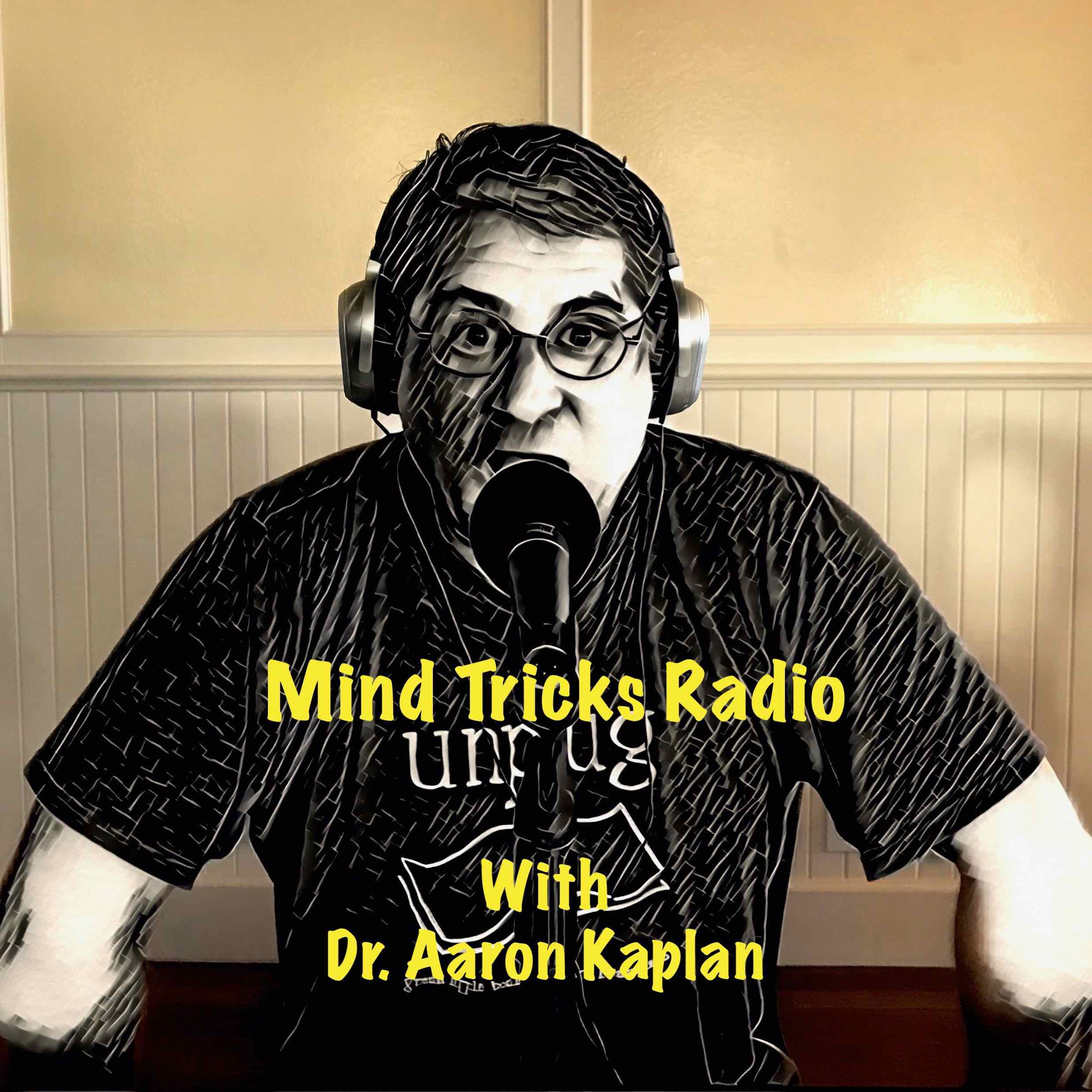
Mind Tricks Radio
Hosted by mindtricks · EN
Welcome to Mind Tricks Radio, where we’ll explore contemporary topics in Psychology, though interviewing creative and innovative thinkers in the field. I’m your host, Dr. Aaron Kaplan. Thanks for tuning in!
29episodes
Episodes
Newest firstAll episodes

Episode 94: The Path of Least Regret, with Parul Somani
1w ago00:51:49Tap to summarizeIn this episode of MindTricks Radio, I spoke with Parul Somani, author of The Path of Least Regret, about how to make difficult decisions when there is no perfect answer and no certainty about how things will turn out. Drawing on her experience of being diagnosed with breast cancer at age 31, during the same week her second daughter was born, Parul explains how regret can become a useful guide rather than simply a burden from the past. We talk about why high achievers often struggle with perfectionism, comparison, overthinking, and analysis paralysis, and how identifying a personal North Star can help people make choices that better reflect their values. Parul also explains why clarity matters more than certainty, and why the best solution may not be option A or option B, but an option C that has not yet been considered. This was a thoughtful and practical conversation about uncertainty, resilience, hindsight bias, self-compassion, and the trade-offs that come with life’s hardest choices. Parul offers a grounded approach to making the best decision we can with the information available, then moving forward with greater peace of mind.
Transcribe →
Episode 93: The Puritans, the Apocalypse, and Zombies: How American History Shaped Stories About the End of the World, with Dr. Kevin Pelletier
May 2601:02:35Tap to summarizeIn this episode of MindTricks Radio, I spoke with Dr. Kevin Pelletier, an associate professor of English at the University of Richmond, about apocalyptic and post-apocalyptic literature—where the tradition comes from, why it has endured for centuries, and why stories about the end of the world continue to speak so powerfully to the human imagination. We talk about the deep roots of apocalyptic thinking in early American Puritan writing, its connection to religion, morality, abolitionism, and fear of divine judgment, and how those older traditions gradually evolved into modern stories about pandemics, nuclear war, zombies, climate catastrophe, and social collapse. Dr. Pelletier explains why apocalyptic fiction is rarely just about destruction. At its best, it uses catastrophe to reveal what matters most in ordinary life: love, fear, mortality, community, meaning, and the fragile structures that hold civilization together. One of the things I especially enjoyed about this conversation is that Dr. Pelletier approaches these questions from the perspective of literature and intellectual history rather than psychology alone. I always find it stimulating to speak with people from different disciplines because there is often tremendous overlap in the ideas, but each field brings its own language, emphasis, and angle of vision. In this case, our conversation moved naturally between literature, religion, psychology, history, and existential meaning. This was a wide-ranging and thoughtful conversation about Puritan sermons, Edgar Allan Poe, Station Eleven, The Walking Dead, World War Z, COVID-19, and the enduring question of why human beings are so drawn to imagining the end. Dr. Pelletier brings warmth, depth, and literary insight to a genre that is often mistaken for mere entertainment, but that may actually help us think more deeply about fear, survival, morality, and what makes life worth living.
Transcribe →
Episode 92: Is Age Just a Number? The Subjective Experience of Age and Time, with Dr. Art Markman
May 1700:45:55Tap to summarizeIn this episode of MindTricks Radio, I spoke with Dr. Art Markman about the subjectivity of age and time—why we often feel younger than the number on our birth certificate, why time seems to speed up as we get older, and what psychology can tell us about making life feel fuller, longer, and more meaningful. We talk about the difference between chronological age and subjective age, the strange experience of looking in the mirror and seeing someone older than we feel inside, and how staying physically active, socially engaged, and open to new experiences can help people maintain a sense of vitality. Dr. Markman also explains why childhood and travel can feel so expansive, while routine-heavy adult years can seem to disappear in a blur. This was a lively, thoughtful, and surprisingly practical conversation about aging, memory, novelty, regret, and the importance of saying yes to life. Dr. Markman brings warmth, humor, and deep cognitive science expertise to a topic that touches everyone: how we experience the passing of time, and how we might live in a way that makes that time feel richer.
Transcribe →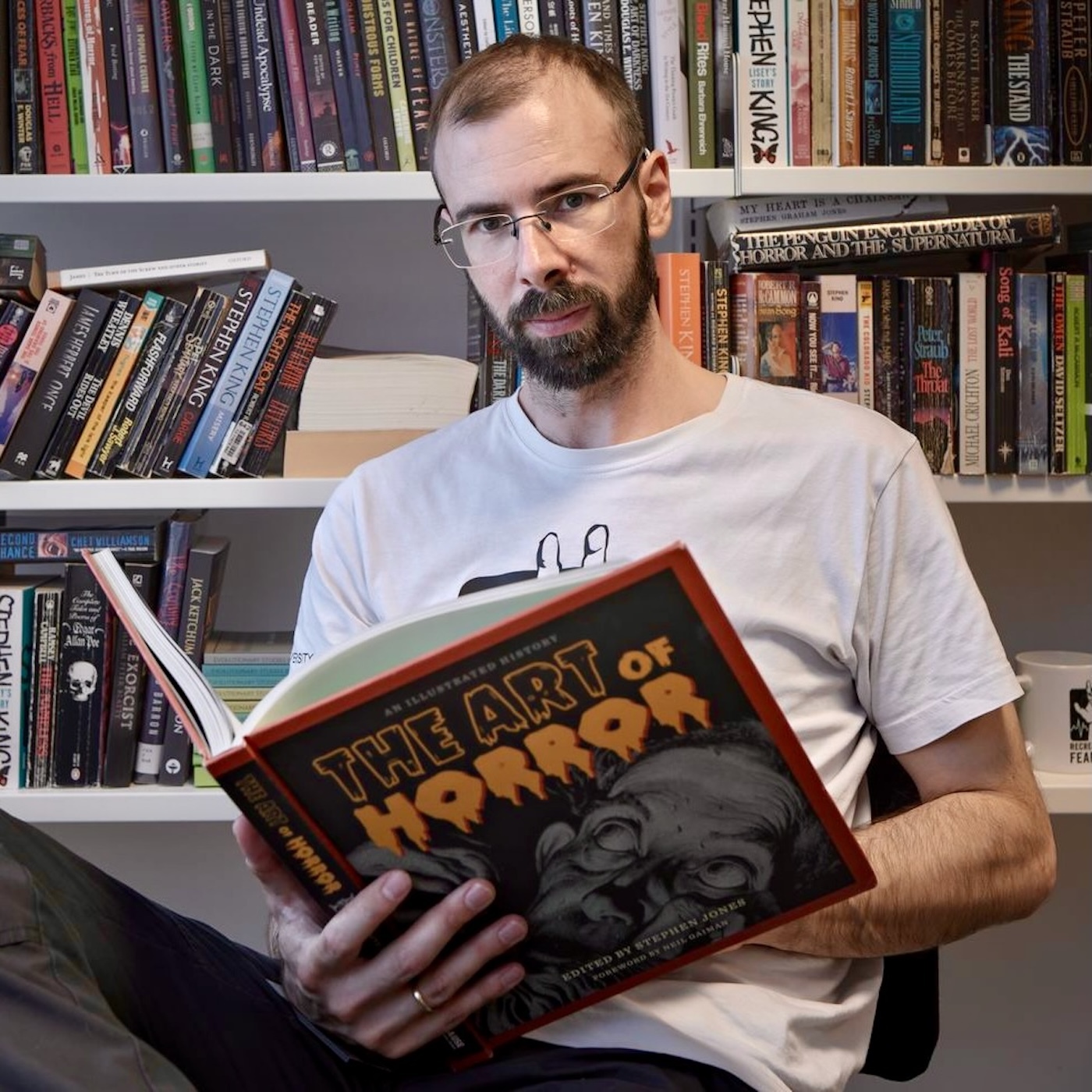
Episode 91: Imagining the End of the World -- The Psychological Appeal for Post-Apocalyptic Fiction, with Dr. Mathias Clasen
May 1100:52:35Tap to summarizeIn this episode of MindTricks Radio, I sit down with Dr. Mathias Clasen, associate professor of literature and media and co-director of the Recreational Fear Lab at Aarhus University in Denmark, to explore why people are so drawn to frightening stories — especially stories about the end of the world. Our conversation dives into the strange appeal of post-apocalyptic fiction, from its “blank slate” fantasy of starting over to its darker confrontation with loneliness, survival, morality, and meaning. Dr. Clasen explains how these stories tap into the human imagination, our tendency toward worst-case thinking, and our deep ambivalence about civilization: we depend on society, but we also fantasize about escaping its rules, pressures, and artificial constraints. We also discuss the psychology of fear, including how horror and apocalyptic fiction may function almost like emotional rehearsal. Drawing from his research on scary entertainment, haunted attractions, and pandemic-era resilience, Dr. Clasen makes the case that frightening fiction does more than scare us — it may help us practice coping with anxiety, uncertainty, and crisis. At my request, Dr. Clasen also generously provided a list of some of his favorite post-apocalyptic works of literature. For listeners interested in exploring the genre further, here is his list: George R. Stewart, Earth Abides (1949) John Wyndham, The Day of the Triffids (1951) Richard Matheson, I Am Legend (1954) John Christopher, The Death of Grass (1956) Nevil Shute, On the Beach (1957) Pat Frank, Alas, Babylon (1959) Walter M. Miller Jr., A Canticle for Leibowitz (1960) John Christopher, Empty World (1977) Stephen King, The Stand (1978/1990) David Brin, The Postman (1985) Robert R. McCammon, Swan Song (1987) Emily St. John Mandel, Station Eleven (2014) Max Brooks, World War Z (2006) Joe Hill, The Fireman (2016)
Transcribe →
Episode 90: Perfectionism -- Part 2, Beyond the Basics, with Dr. Liza Wacker
May 400:57:41Tap to summarizeIn this episode of MindTricks Radio, I caught up with Dr. Liza Wacker to continue our conversation about perfectionism—what it is, where it comes from, and why it can quietly create so much stress, anxiety, burnout, and self-doubt. We talk about the difference between healthy striving and perfectionism, how perfectionism shows up in relationships, parenting, work, athletics, creativity, procrastination, reassurance-seeking, and social media. Dr. Wacker also explains why perfectionism is usually less about “doing your best” and more about tying your self-worth to whether you meet impossible standards. I enjoyed a warm, practical, and thoughtful conversation with Dr. Wacker about learning to make mistakes, loosen unrealistic expectations, and choose wholeness over flawlessness. Dr. Wacker brings a lot of wisdom and clarity to a topic that many people struggle with—but may not always recognize in themselves.
Transcribe →
Episode 89: The Neuroplasticity of Identity, with Dr. Elizabeth Mateer
Apr 700:45:51Tap to summarizeIn this episode of MindTricks Radio, I sit down with Dr. Elizabeth Mateer, a Harvard Medical School neuropsychology fellow, writer, and Psychology Today contributor, to explore how identity is shaped by memory, attention, emotion, and the stories we tell ourselves. We talk about the idea that the self is not fixed, but continually built and rebuilt through experience. Our conversation dives into neuroplasticity, self-narrative, authenticity, and the value of developing multiple aspects of identity rather than overinvesting in just one role. We also explore how emotionally charged experiences can shape the way we see ourselves, why people get stuck in limiting stories about who they are, and how greater psychological flexibility can help us adapt and grow. Dr. Mateer brings warmth, clarity, and real depth to a conversation about how the brain, our experiences, and our choices all work together in shaping who we become.
Transcribe →
Episode 88: Progeny, a dystopian novel -- Interview with author Dr. Peter Weiss
Mar 2700:39:53Tap to summarizeIn this episode of MindTricks Radio, I sit down with physician and novelist Dr. Peter Weiss to discuss Progeny, his chilling dystopian novel set in a world where every newborn is taken from its birth mother and reassigned by the state in the name of equity. At the heart of our conversation is the book’s most unsettling question: what happens when a society’s drive for fairness begins to override the deepest and most instinctive human bonds? We explore how Progeny taps into fears about authoritarianism, social engineering, and the quiet, incremental normalization of ideas that would once have seemed unthinkable. Dr. Weiss also reflects on the path that led him from a long career in medicine and academia to writing fiction with bold political and psychological stakes. Along the way, we branch into a lively discussion about ideology, polarization, merit, AI, and the way readers often interpret stories through the filter of their own assumptions and beliefs. Thought-provoking and deeply relevant, this is a conversation about more than one novel—it’s about the cultural tensions already reshaping the world around us.
Transcribe →
Episode 87: Stop Trying, and Start Doing!, with Carla Ondrasik
Mar 1200:59:44Tap to summarizeIn this episode of MindTricks Radio, I sit down with author and motivational speaker Carla Ondrasik to talk about a deceptively simple word that may be quietly sabotaging our goals: try. In her book Stop Trying: The Life-Transforming Power of Trying Less and Doing More, Carla argues that the language we use with ourselves matters more than we realize. When we say we’ll “try,” we often leave the door open for hesitation, procrastination, and excuses. But when we decide to do, something shifts—not only in our mindset, but even in the way our brains engage with the task at hand. Carla shares stories from her unusual career path—from working in national security and aviation to becoming Vice President of Creative Writer Development at EMI Music Publishing, where she helped place songs with artists like Barbra Streisand, NSYNC, and Christina Aguilera. Along the way, she discovered a powerful mindset that guided her success: stop hedging your bets with “trying” and commit fully to action. Our conversation explores how fear of failure, procrastination, and even fear of success can keep people stuck in neutral—and how a simple shift in language can help move us into drive. We also talk about practical tools for getting unstuck, including the “eat the frog” strategy for beating procrastination, the difference between excuses and real reasons, and how committing to action can build confidence, leadership, and a life with fewer regrets. Carla brings humor, energy, and plenty of real-world examples to the conversation, making this episode both motivating and surprisingly fun.
Transcribe →
Episode 85: Don't Take It Personally!: -- Breaking Down The Cognitive Distortion of Personalization, with guest co-host Dr. Tyler Ralston
Mar 700:41:49Tap to summarizeIn this episode of Mind Tricks Radio, I sit down once again with guest co-host Dr. Tyler Ralston for a lively, practical conversation about the cognitive distortion of personalization — that sneaky mental habit of assuming that other people’s behavior, moods, or even major life events are somehow about us. Together, we unpack what personalization really is (and what it isn’t), including why “don’t take it personally” can sometimes feel invalidating if we’re not careful. From not getting invited to dinner, to a boss’s sour expression in a meeting, to waiting anxiously for a text that doesn’t come — we explore how quickly the mind can jump to “This must be because of me.” Dr. Ralston and I also dig into why personalization is so compelling. We talk about how our brains crave certainty, even if that certainty comes in the form of self-blame. We explore how childhood experiences — especially environments involving criticism, emotional abuse, or chronic blame — can prime people to over-attribute responsibility to themselves. Along the way, we examine the emotional costs of personalization, including guilt, shame, anger, relationship strain, and even road rage. Yes, we go there. Most importantly, we offer practical tools. We walk through core CBT strategies like examining the evidence, generating alternative explanations, reality-testing assumptions, and even running behavioral experiments to challenge distorted beliefs. We also touch on mindfulness-based approaches that help us step back from our thoughts rather than automatically believing them. Whether you’re a clinician, a student, or someone who occasionally wonders, “Was that about me?”, this episode will give you concrete strategies — and a few laughs — to help you stop taking responsibility for things that may never have been yours in the first place.
Transcribe →
Episode 86: Unleash the Power of the Four Kinds of Connections, with Dr. Adam Dorsay
Mar 701:00:23Tap to summarizeIn this episode of Mind Tricks Radio, I sit down with my friend and colleague, psychologist, Dr. Adam Dorsay to explore one of the most essential ingredients of psychological well-being: connection. Drawing from his book Super Psyched: Unleash the Power of the Four Types of Connection and Live the Life You Love, Dr. Dorsay introduces a framework for understanding why so many people feel lonely and disconnected despite living in an age of constant digital communication. We discuss the four kinds of connection that help people build fulfilling lives. Dr. Dorsay explains the importance of connection to others and why friendships and relationships often suffer in a world dominated by social media and busy schedules. We also explore connection to self, including authenticity, intrinsic motivation, and how people sometimes lose touch with what truly makes them feel alive. The conversation also covers connection to the world through work, community, and culture, as well as connection to something greater — the experiences of awe and wonder that remind us we are part of a much larger universe. Along the way, Dr. Dorsay shares personal stories, practical insights, and simple ways people can strengthen connection in their everyday lives.
Transcribe →