Podcast
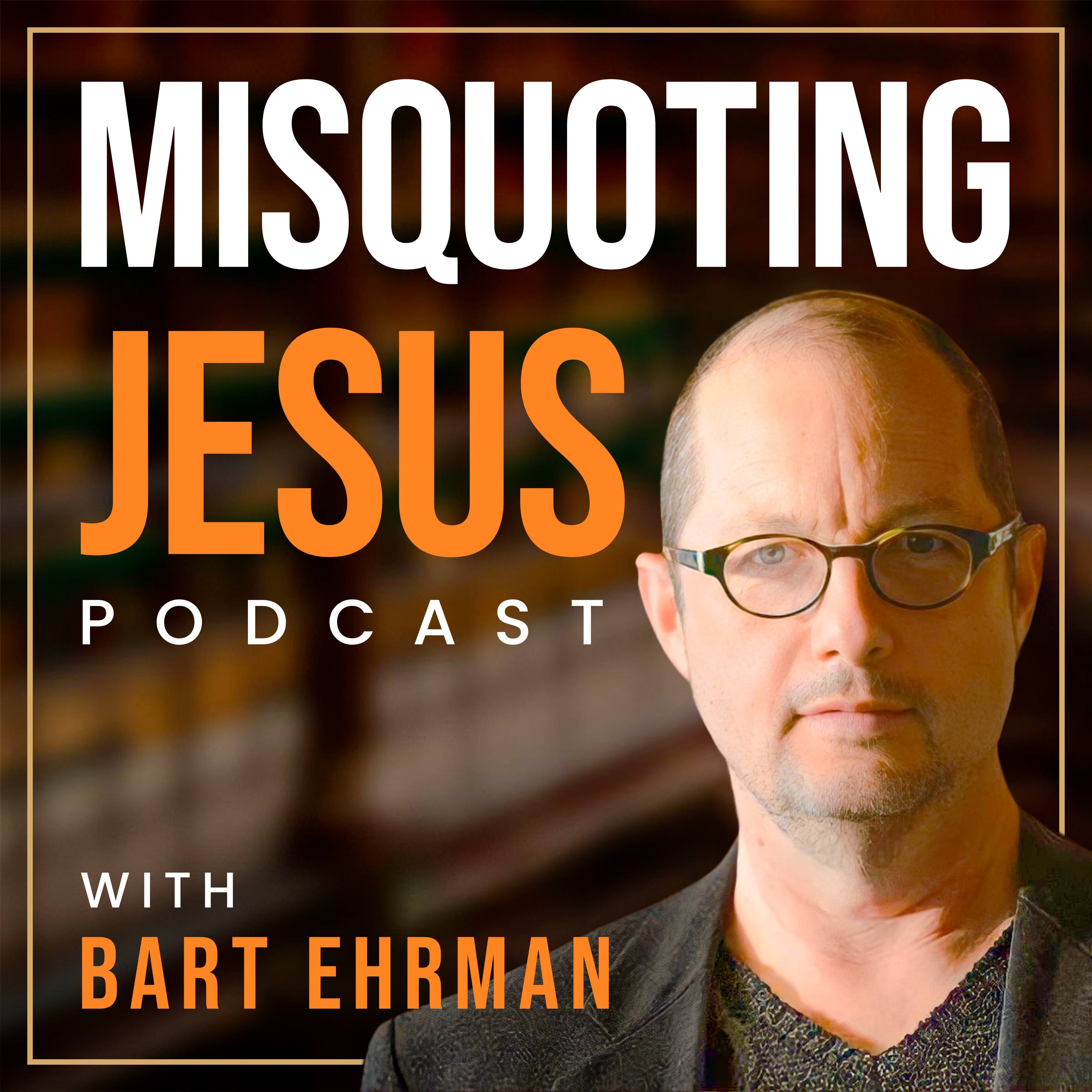
Misquoting Jesus with Bart Ehrman
Hosted by Bart Ehrman · EN
"Misquoting Jesus" is the only show where a six-time New York Times bestselling author and world-renowned Bible scholar uncovers the many fascinating, little known facts about the New Testament, the historical Jesus, and the rise of Christianity. The show features Dr. Bart Ehrman and host, Megan Lewis.
183episodes
Episodes
Newest firstAll episodes

Bart Fact Checks Apologist Wes Huff
5d ago00:58:54Summary readyLast year, Wes Huff was a relatively unknown Christian apologist. Then he went on The Joe Rogan Experience, one of the biggest podcasts in the world, and spent more than three hours talking with Joe Rogan about biblical manuscripts, the New Testament, the historical Jesus, and the case for Christianity. The interview exploded online. It now has more than 8 million views on YouTube alone, over 40,000 comments, and it essentially launched Wes into apologetics stardom overnight. Wes is smart, articulate, and clearly very knowledgeable when it comes to manuscripts and textual criticism. But as the interview goes on, there are several moments where manuscript evidence starts turning into much bigger claims about eyewitnesses, Gospel reliability, canon formation, and even evidence for the resurrection. Today, I'm joined by Bible scholar Bart Ehrman. We're going to watch some clips from the interview and ask an important question: where does solid scholarship end and apologetics begin? Welcome to the Misquoting Jesus Podcast with Bart Ehrman.
Summary
Did Jesus Actually Believe in Heaven?
2w ago00:42:49Summary readyDid you know that Jesus didn't believe in the soul, heaven, or hell? As an apocalyptic Jew, these ideas would have been completely foreign to him. So where on earth did Christianity get the idea that a life well-lived would be rewarded with a place in paradise for your soul? Today, we're talking about where the idea of heaven came from.
Summary
8 Bible Myths Many Christians Believe
3w ago00:43:15Summary readyHave you ever heard a Christian say something about the Bible and wondered exactly where they were getting their information from? Today we are talking about the most common claims Christians make about the Bible that are not actually based in reality.
Summary
Who Really Chose the Books of the New Testament?
4w ago00:41:11Summary readyHave you ever read something in the New Testament, maybe the Book of Revelation, and wondered why on earth it's included in the Bible? Why were these specific books included, and why are they considered inspired by God while the non-canonical writings are just the work of humans? Today we're talking about the formation of the New Testament, using listeners' questions.
Summary
John's Rewritten Gospel: What Did Scribes Change?
Jun 3000:43:54Summary readyDid you know that scribes made changes to all of the books of the New Testament? Some of them were accidental, but some of them were very deliberate. The gospel of John is no exception - but what was changed, and why?
Summary
Three Myths Atheists Believe
Jun 2300:39:20Summary readyAtheists often accuse people of religious faith of uncritically accepting a bunch of myths - but do atheists do the same? How closely do people actually examine their dearly-held views and beliefs, regardless of their religious persuasion?
Summary
Did Jesus Suffer During His Crucifixion? (Depends Which Gospel You Read!)
Jun 1600:34:17Summary readyIn the gospels, Jesus' suffering is on a sliding scale - from sweating blood, to calmly accepting his fate. What did Jesus think about his own suffering, and is it even possible to answer that question from the evidence we have?
Summary
This 1,700-Year-Old Song Is the Oldest Christian Music We Have
Jun 900:39:24Summary readyEver wondered what the first Christian praise and worship service sounded like? Join us as Dr. Charles Cosgrove unveils the mystery of the Oxyrhynchus Hymn, the earliest known Christian hymn with musical notation!
Summary
Why No One Can Prove the Resurrection
Jun 200:45:19Summary readyThe resurrection of Jesus is probably one of the most well known stories from the New Testament. But how do historians deal with this miraculous event? Should it be discounted in its entirety, or can it be investigated using the historical method? Today, we're talking about what historians can and can't say about the resurrection.
SummaryBefore Genesis: What the Old Testament Borrowed from Mesopotamian Stories
May 2600:40:14Summary readyThe Old Testament wasn't written in a cultural vacuum, but who and what influenced its writers. Today we're talking about the cultural background of the Old Testament and how the literature and societies of the surrounding cultures impacted its creation.
Summary