← Nat Theo Nature Lessons Rooted in the Bible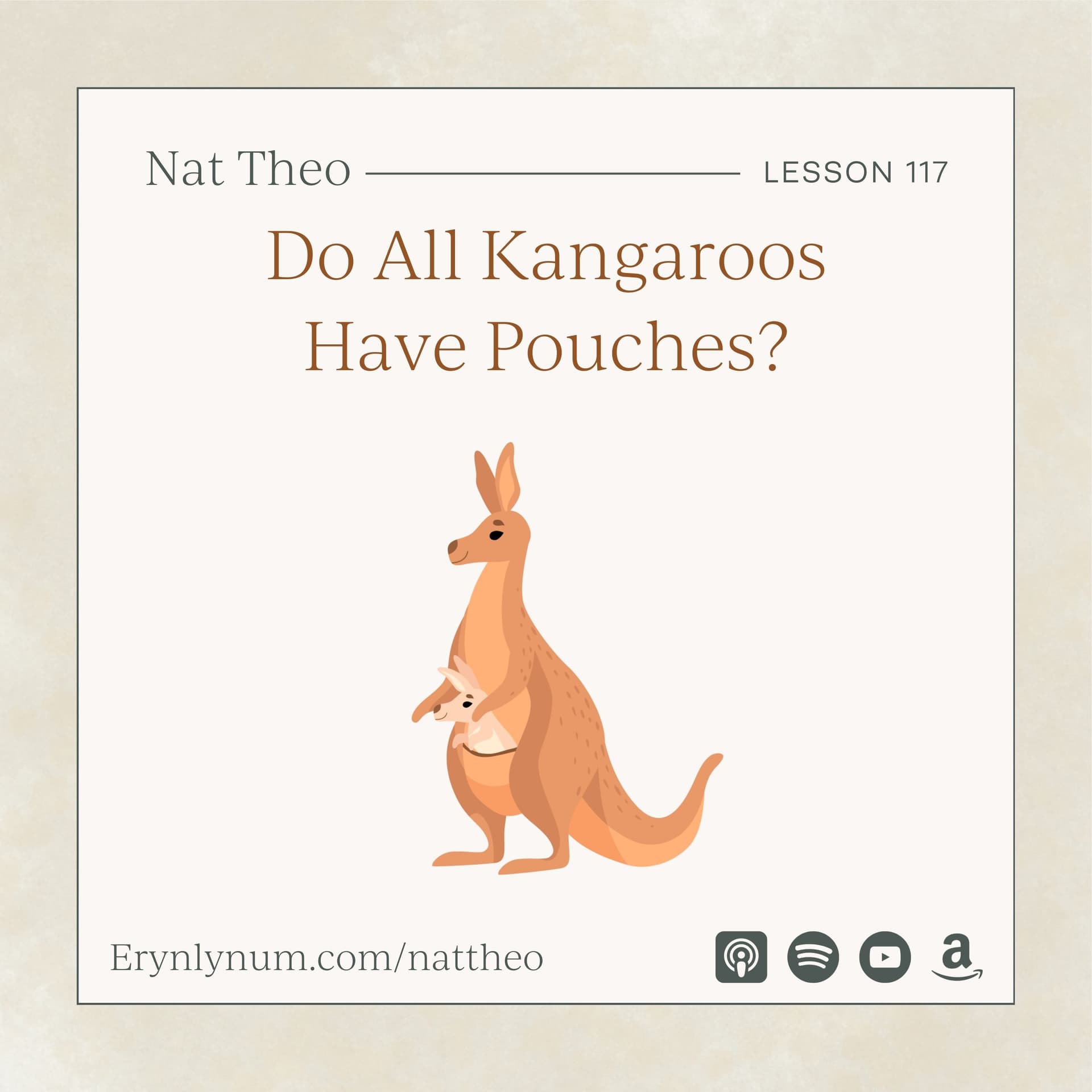
Loading summary
Transcript1 lines
- [00:00]
A
Have you downloaded the free coloring sheet for this lesson? Click the link in our Show Notes to print and color along as you listen. And join the Nat Theo Club at the link in our Show Notes to receive a full lesson and activity guide and a bonus video of content every single week so you can dive deeper into every lesson. Explore God's Wild and wonderful world in the Nat Theo club@aaron lyneum.com club or at the link in our Show Notes. Hello world. Wake me up to another good Good morning. Time to go. Are you ready to explore God's wild and wonderful world? Welcome to the naptheo Podcast. I'm your host Erin Lyneum. I'm a certified master naturalist, Bible Teacher and author and I am so excited to dive into God's written word, the Bible and His created world with. Have you ever jumped on a pogo stick? When I was a kid, I remember trying to balance and jump on a pogo stick and it was not easy. Now as an adult, sometimes when I'm working out I try to do something called a high jump. When I first started doing this type of workout, I felt a little bit silly. I stand in one place and I simply jump right where I am as high as I can, which is not very high. It ends up I am not great at jumping, but that's okay. I keep practicing and getting stronger. What about you? Do you ever jump? Maybe you jump in place or off a log or across rocks. Or maybe you see how far you can jump between one place and another. Jumping is fun and today we are discovering God's designs in an animal that is an expert jumper, the kangaroo. Here is our trail map. Are you ready? We are going to learn do all kangaroos have pouches? Why do kangaroos hop? Can kangaroos jump backward? And how does God help us move forward in faith? Before we hit the trail, let's thank our sponsors who help make this lesson possible, including CTC Math. Math is a door into God's creation. When we understand math, we can see how detailed God made everything in his wild and wonderful world. Math used to be a big struggle in my home, mostly because I wasn't sure how to teach it. But then we began using CTC Math and everything changed with a clear path forward for every student, simple video lessons, practice questions and a self paced approach aimed at skill mastery. My kids have made incredible progress over the past year and a half with CTC Math. Try CTC Math risk free with a free trial and a 12 month no questions asked money back guarantee@ctcmath.com or the link in our show Notes. If you enjoy learning about God's creation, you will love the let's Talk Science series by Master Books. These engaging, activity packed science courses are a perfect way to introduce key science concepts to kids ages 4 to 10. Explore the Days of creation. Learn about God's natural laws in motion, gravity and simple machines. Explore the food chain, climates and symbiotic relationships. Learn about the scientific method and chemistry and dive into marine biology and all of these lessons from a Biblical worldview in the let's Talk Science course by Master Books. Explore Master Books Full library of Biblically Based homeschool curriculum@masterbooks.com or at the link in our notes. It's time for our trivia question. What is a group of kangaroos called A A mob B A pack c a flock or D a school? Again, what is a group of kangaroos called a mob, B pack C flock or D school? Take a guess and we will find out at the end of today's lesson and Nat Theo Club members. After listening to this lesson, click over to the bonus video where we will learn why kangaroos are expert boxers and why they fist fight with each other. You can find that bonus video in your Nat Theo Club dashboard or at the link in our Show Notes. Discover more of God's wild and wonderful world with all of our extra videos, resources and nature unit studies in the Nat Theo Club at the link in our show Notes. All right, let's hit the trail. Kangaroos live in Australia and the areas near it. I know we have listeners and Nat Theo Club members in Australia and I am curious if you have seen a kangaroo in the wild. I have only seen them in zoos, but I would love to visit Australia one day and see a kangaroo in its wild habitat. Kangaroos are fascinating animals. They are one of those kinds of creatures that seem so very different from other creatures. They stand on tall, huge strong feet and have a long thick tail and they leap across the land. Kangaroos are truly unique in God's creation, but they do share some things in common with other creatures. And one of those things is a pouch because kangaroos are marsupials. Marsupials are a group of mammals that have very tiny babies which are born early. Most have a pouch in which their baby or babies crawl into. Inside that pouch the baby drinks milk and stays warm and safe as it continues growing. Only female kangaroos have a pouch because these pouches are built in nurseries for their babies, which are called joeys. You might have seen photos or Videos of a kangaroo with its little baby tucked inside the pouch on its belly. A kangaroo's pouch and the pouch on any marsupial is called a marsupium. The marsupium is a pouch on a mother marsupial's belly where her tiny baby or babies stay safe and warm after being born. Inside that pouch are nipples so the babies can drink milk and keep growing. So this pouch on the kangaroo mama, it is not simply somewhere where her baby joey hangs out. It is a complete nursery with everything that the baby kangaroo needs in order to grow up. Kangaroos can be very large. An adult male red kangaroo can be as tall as an adult human, and it is the world's largest marsupial. But they do not start out that way. No, they begin as tiny as a grape. The grape sized baby cannot do much. It cannot see, it cannot hear, and it has no hair. A baby born that tiny and helpless is not exactly ready to begin leaping across the Australian landscape. It needs more time to grow up, which is where its mama's pouch comes in handy, really. More than handy, it is critical. Although the newborn kangaroo is quite helpless, God designed it to be able to crawl through its mother's thick fur and get to the safety of her pouch all on its own. A marsupial's pouch acts like a second womb, giving its baby more time to grow up and get ready for life. Inside the pouch are the mother's nipples, which the baby gets milk from. At first, the baby is not even strong enough to suckle milk itself. So the mother uses her strong muscles to push milk into her baby's mouth until it grows strong enough to drink itself. The mother's milk is full of nutrients and fats that the baby needs to grow up. And grow up it does. How long a baby stays in its mother's pouch depends on the species of kangaroo. Some will begin poking their heads out of that pouch at around six to eight months old and begin venturing outside the pouch a few months later, still returning to the pouch to stick their heads inside for a milky snack when they're hungry. You might wonder if a mama kangaroo is jumping around, how does her baby not fall out of the pouch? God designed a mother kangaroo's pouch to act kind of like a drawstring bag. Now, not exactly like it because there's no ribbon or string, but it can close in a similar way. The pouch has a very strong muscle that the mother can use to close it tightly to protect her baby inside. That is a very smart and helpful design. If kangaroos are famous for something other than carrying cute babies in their pouches. It is hopping and they do a lot of it. Hopping is how a kangaroo gets around and they are certainly built for it. At first look, you might notice a kangaroo's huge feet. They are named for these big feet. As we learned, kangaroos are marsupials. Inside the marsupial category, there is a smaller category called Macropodidae, which means big feet. Macropodidae is a family or category of marsupials that includes kangaroos, wallabies and a few other creatures known for large feet and for hopping and for tails used to balance. All this talk about hopping brings up a great question from one of our listeners. Hi, my name is Rowan and I'm six years old. And my question is how do kangaroos jump so high? That is a great question. How do kangaroos jump so high? The big feet they are named for are also very powerful. Using its big feet, a kangaroo can leap around 30ft or 9 meters in one single hop. And without running or I guess a fast hopping start, it can jump 10ft or 3 meters high. That means it can easily hop over an adult human. A kangaroo's hopping motion is called saltation. Saltation is hopping locomotion. It is moving by jumps or hops instead of by walking. Can you think of any other creatures that use saltation or hopping to get around Instead of just walking? I'm going to play music for a few moments as I do. See if you can think of other creatures that use saltation or hopping to get around. Did you think of any other creatures that use hopping to get around? Here are some other creatures you might find going places via jumping. There are big hoppers like the kangaroos we're learning about. As well as wallabies. There are also medium hoppers like rabbits, hares, frogs and toads. There are also tiny super jumpers like grasshoppers, crickets, fleas and jumping spiders. There are also desert jumpers like jerboas, kangaroo rats and spring hares. Many small birds also use saltation or hopping to get around while they are on the ground. I watch small sparrows and juncos doing this every morning in my yard as they hop around on the ground looking for fallen bird seed. So God designed many creatures to get around by saltation. And kangaroos are certainly an animal that we think about when we picture a hopping animal. Kangaroos truly are built for jumping, hopping and leaping. They can run very fast by hopping, cruising along at up to 20 miles per hour or 32 kilometers per hour. And that's not it. When they sprint, or I guess we would call it sprint hopping, they can go higher speeds for short distances reaching 35 miles per hour or 56 kilometers per hour. That is some very fast hopping. But what about when a kangaroo is moving slowly, like when it is grazing on grass? Along with saltation or hopping, kangaroos have a second very interesting way of getting around and it is called pentapedal locomotion. Pentapedal locomotion. Let's break that big term down. The first word pentapedal can be broken down into penta and pedal. Penta means five and pedal means foot or feet. Pentapetal means five feet or five footed. And locomotion means moving. Pentapedal locomotion is moving by using five feet. Kangaroos don't actually have five feet, of course. They have four feet and one large, strong, sturdy tail that acts a bit like a fifth foot. When a kangaroo moves this way with pentapedal locomotion, it places its short front feet and its tail on the ground. Then it lifts its large back feet and swings them forward, planting them on the ground. Then moving the front legs and the tail forward again and repeating this motion. The kangaroo's front and hind or back legs move in pairs together. So when the front legs move, they move together. When the back legs move, they move together. They don't step right foot, left foot like our feet do, but instead move their pairs of legs together. And the strong tail always works together with their shorter, smaller front feet. For a long time it was thought that a kangaroo's tail only helped it balance. But researchers have discovered that the tail gives a kangaroo a whole lot of forward motion power. It works as hard as the front and back legs combined. It really is a super fifth leg. God designed kangaroos with a very special body plan. It is a work of incredible engineering. With their short front legs, long and strong back legs and super muscular and long tail, kangaroos are built for both hopping fast and slowly grazing so they can get what they need and go where they need to go. In other words, kangaroos are built just right and they are super fun to watch. So kangaroos move around by saltation or hopping and pentapedal locomotion or moving on 5ft or rather 4ft and a tail. But can kangaroos move backward? Not really. Because of their unique design, with a large tail and feet, they are built for only forward motion. Think about trying to hop or move backward. With that large tail getting in the way, you might just trip over it. Was this a mistake that God created an animal that can't really move backwards? Of course not. God created every creature just right for what it needs to do. Kangaroos simply turn when they need to go in the opposite direction and they turn very well, kind of like a swivel. We might even say that they turn on a dime. They can make super sharp turns. So not being able to move backwards really isn't a problem for a kangaroo. And it's no mistake, because what might seem like a weakness not being able to move backwards is actually a strength. As we learned, it is their large tails and feet that prevent them from moving backwards well, or at all. But those are the very things that allow them to move forward so quickly. God built kangaroos for forward motion, and they are a beautiful reminder that God created us for forward motion also. Of course we can physically move backward as we take backward steps, but the kangaroo is a great reminder that God wants us to move forward forward in life, not backwards. Listen to Philippians 3:13 14 Brothers and sisters, I know that I have not yet reached that goal, but there is one thing I always forgetting the past and straining toward what is ahead. I keep trying to reach the goal and get the prize for which God called me through Christ to the life above. Did you catch those words? Forgetting the past? Now, this doesn't mean we always forget what is behind us. God blesses us with good memories and we can also learn and grow from the hard things in our past. But what this passage means is that we shouldn't let things in our past keep us from moving forward. Like a kangaroo, we don't move backward, held back by our past, but instead always pressing on into God's good plans and purposes for our futures. Instead of falling back into old habits or sinful behaviors, God wants us to move forward, always following him and growing into bigger faith. And so we can look back and remember just like people in the Bible looked back and remembered how God had provided for them and helped them. That is a great practice. But we don't let anything hold us back or push us backward into old ways. Instead, like we read in Philippians 3, we strain toward what is ahead. And listeners, when you follow Jesus, what is ahead is really great. Yes, you will still face hard times, but we can trust his plans and purposes are good. Psalm 37:5 says, Commit your way to the Lord. Trust in him and he will act. When we commit our way ahead to God, trusting Him with our future, we can be sure that we will see him act. We will see God do incredible, incredible things and so we can move forward in faith. Listener, the next time you are struggling to move forward or you feel held back by your past, remember Isaiah 43 verses 18 to 19 which say, forget the former things, do not dwell on the past. See, I am doing a new thing now. It springs up. Do you not perceive it? I am making a way in the wilderness and streams in the wasteland. Can you picture it? God will do new and great things in your life, leading you through hard times and into his goodness, grace and love. In the book of Jeremiah, God spoke powerful words to the people of Israel. They had been through very hard times and I can imagine that it would be difficult not to dwell on the pain of their past, but instead God offered them great hope for their future. In God's words to them, we can glimpse his heart for us, his children. Listen carefully to Jeremiah 29:11 for I know the plans I have for you, says the Lord. They are plans for good and not for disaster, to give you a future and a hope. Now that is a truth that we can boldly move forward in. It's time to answer a question from one of our listeners. But before we do, parents and caregivers, I have something for you. Are you looking for practical parenting advice from a biblical perspective? Would you love to see your children obey out of a genuine love for God rather than a fear of punishment? Do you sometimes feel like your children have trained you more than you've trained them? Then check out the Parenting with Ginger Hubbard podcast. Ginger is the best selling author of don't make me Count to three Wise Words for Moms and I can't believe you just said that. The Parenting with Ginger Hubbard podcast equips parents to reach beyond outward behavior, address the issues of the heart, and point their children to the transformational power of Christ. Learn how to move past the frustrations of not knowing how to handle issues of disobedience and defiance and into a confident, well placed, balanced and biblical approach to raising your children. Subscribe to the Parenting with Ginger Hubbard podcast wherever you listen to podcasts. For practical encouragement that's rooted in God's word, here is today's question. Hello, my name is A. I am from Singapore. I'm six years old and I want to know Can a falcon kill an alligator? That is a great question, Ezra. Can a falcon kill an alligator? Alligators don't really have to worry about falcons hunting them. Falcons usually hunt other birds and small mammals, reptiles or insects. However, other kinds of birds like eagles, hawks, owls, storks and cranes sometimes hunt young, small alligators. Fully grown adult alligators do not have many predators. The main threat to an adult gator is humans hunting them or dying in a fight with another alligator. Before sin entered our world, animals were all plant eaters. They didn't need to hunt each other for food. But today, in our fallen world, animals like alligators and falcons prey on other creatures for their next meal. If you want to learn more about alligators, Listen to lesson 92 how are alligators and crocodiles different? Thanks for your great question, Ezra. Stay curious about God's wild and wonderful world and Nat the Oak Club members. Remember after this lesson to click over to the bonus video and learn how kangaroos are expert boxers and why they fist fight with each other. Find that bonus video in your Nat Theo Club dashboard or at the link in our show Notes. It's time to answer our trivia question. What is a group of kangaroos called A a mob, B a pack, C a flock or D a school? The answer is A a mob of kangaroos. In Australia, a group of kangaroos is called a mob of kangaroos and the group can be as big as 50 kangaroos. Now it's your turn to explore. Go look for a hopping creature. Can you find a grasshopper, cricket, jumping spider, rabbit, toad or frog? If it's not the right season to find one, ask Permission to research 1:1 in a book or online. As you learn about this creature, consider how God uniquely designed it to get around by hopping. Thank you so much for listening. If you enjoyed this lesson on the kangaroo, please take a moment to send it to a friend and subscribe. Rate and review Nat Theo, wherever you listen. Until next time, keep exploring God's wild and wonderful worlds. We are all looking for adventure. We are all looking for adventure. We are all looking for adventure. We are all looking for adventure.