← Nat Theo Nature Lessons Rooted in the Bible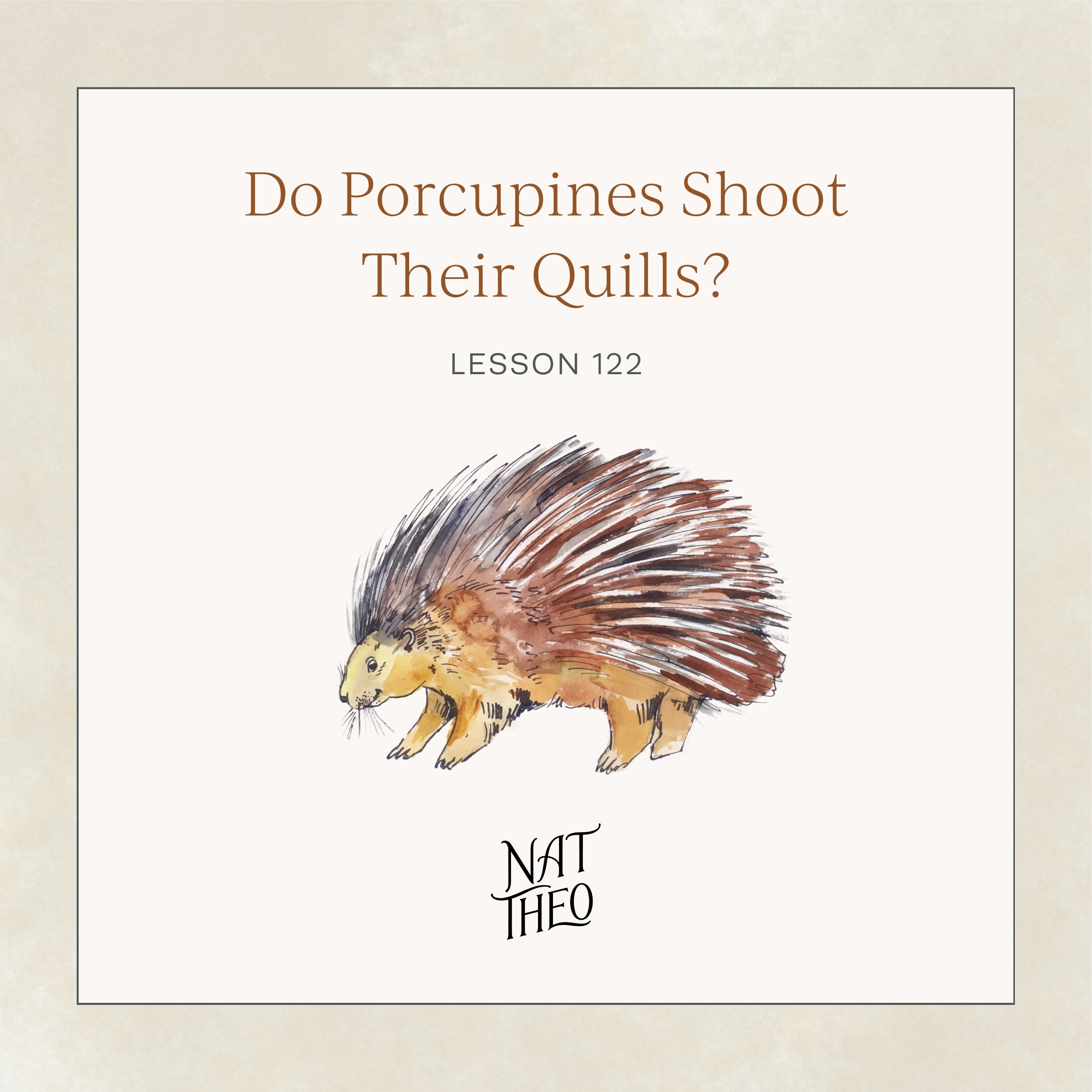
Loading summary
Transcript7 lines
- [00:00]
A
Have you downloaded the free coloring sheet for this lesson? Click the link in our Show Notes to print and color along as you listen. And join the Nat Theo Club at the link in our Show Notes to receive a full lesson and activity guide and a bonus video of content every single week so you can dive deeper into every lesson. Explore God's wild and wonderful world in the Nat Theo club@aaron lyneum.com club or at the link in our Show Notes. Hello world. Wake me up to another good Good morning. Time to go. Are you ready to explore God's wild and wonderful world? Welcome to the naptheo Podcast. I'm your host, Erin Lyneum. I'm a certified Master naturalist, Bible teacher and author and I am so excited to dive into God's written word, the Bible, and His created world with. Have you ever seen a spiky animal? Maybe while visiting an aquarium you saw a spiky sea urchin, but what about up on land, in the forest walking around or climbing trees? Today we are discovering God's designs in a very spiky animal, the North American Porcupine. Here is our trail map.
- [01:38]
B
Are you ready?
- [01:40]
A
We are going to learn how are porcupines and hedgehogs different? Do porcupines have hair? Do porcupines shoot their quills? And how can we avoid being prickly toward others? Before we hit the trail, let's thank our sponsors who help make this lesson possible, including Master Books. If you are curious about all the living things God made, check out the Life for Beginners book by Master Books. This course is written just for you kids with words you can understand to help you glimpse how God designed life on Earth. Discover God's designs in everything from you and your five senses to marsupials with pockets, to web spinning spiders to boneless jellyfish. Discover animals in the Bible and how God engineered so much wild and wonderful life on Earth. The Life for Beginners book is perfect for kindergarten through second grade. Journey through each chapter and grow in wonder and wisdom as you glimpse the incredible details of God's designs. Order Life for Beginners and check out all of Master Books, books and curriculum written from a biblical worldview@masterbooks.com or at the link in our show Notes. CTC Math is helping my kids, along with over 200,000 students, Master Math skills and gain confidence in their math journey. CTC Math helps students like mine learn, practice and master math skills at their own pace. Each lessons tutorial video walks them through new concepts step by step with visuals they can understand interactive questions, then help My kids practice what they're learning. If they get an answer incorrect, they can view it fully worked out to see every step. So even incorrect answers are an opportunity to learn and grow. CTC Math believes in their product and so does our family. Try it risk free with a free trial and 12 month money back guarantee@ctcmath.com or the link in our show notes. It's time for our trivia question. What is a group of porcupines called a a prickle, b a herd, c a tangle or D a school? Again, what is a group of porcupines called a a prickle, b a herd, c a tangle or D a school? Take a guess and we will find out at the end of today's lesson. Annethiokla members remember after this lesson to click over to the bonus video we will answer the question what if a porcupine pokes itself? Find out the surprising truth in how God designed porcupines to live safely with their own quills. You can find that bonus video in your Nat Theo Club dashboard or at the link in our show notes. Alright, let's hit the trail. When we picture a Spiky animal two might come quickly to porcupines and hedgehogs it's easy to think about small hedgehogs and large porcupines as similar animals because both of them seem to wear a coat of spiky armor. But these two animals are unique and very different from one another. Which brings up a great question from one of our listeners.
- [05:23]
B
My name is Grant and I am 5 years old and what is the difference between a a porcupine and a hedgehog?
- [05:33]
A
What a wonderful question Grant. What is the difference between a porcupine and a hedgehog? I have never had a pet porcupine, but I have had pet hedgehogs. When I was a young girl, our family received a phone call one day. It was from our local animal shelter. They had had two hedgehogs dropped off and they were looking for a home for them. They knew our family loved having pets and that we sometimes had uncommon animals as pets. So they asked if we would be willing to give a home to these hedgehogs. And yes, we were willing and excited. We named one hedgehog Porky and the other hedgehog Pine, even though, as we will find out, the they were not porcupines. This was a bit of a play on words. We had Porky and Pine for several years and I remember holding them and watching them run around and play on our floor. After my husband and I got married, we also had a hedgehog named Reepa Cheep. As a pet, sometimes we wore leather gloves when holding our hedgehogs to not get spiked. But most of the time we did not need to wear gloves as long as we were gentle and kind with them and handled them often so that they were used to us, they did not roll into a spiky ball and they were easy to handle. I imagine holding a porcupine would be quite different. For one, porcupines are wild animals, so I'm not about to go and find one and pick it up. Hedgehogs can also be wild animals. They but some, like the ones that I've had as pets, were bred in captivity. Let's learn about some other ways that porcupines are different from hedgehogs with a game of Guess who. I'm going to say a statement about an animal like, this animal is smaller and I want you to guess whether it's a porcupine or a hedgehog. Are you ready? Let's go with that first question. This animal is smaller. A porcupine or a hedgehog? Hedgehogs are smaller than porcupines. Hedgehogs are normally 6 to 12 inches and around 1 to 2 pounds. I remember holding my pet hedgehogs easily in my hands. Porcupines can get around the same size as a medium sized dog and weigh up to 20 pounds or 9 kilograms. So porcupines are much larger and heavier than hedgehogs. All right, are you ready? This animal eats tree bark. Do you have a guess? Porcupines eat the inner bark of trees. They also eat twigs and leaves. They are herbivores, which means they only eat plants. Hedgehogs, on the other hand, are omnivores. They will eat plants and animals. Some of the foods they love most are insects, worms and slugs. All right, are you ready for our next one? This animal can lose its spikes. Do you have a guess? Porcupines can lose their spikes. Their spikes are loosely attached to their skin and can come off. Then new spikes grow in their place. We'll learn more about those special spikes in a little bit. A hedgehog's spikes are firmly attached to its body and do not come off. All right, here's our last one. This animal is a rodent. Do you have a guess? Porcupines are rodents. They are the second largest rodent in North America. Do you know the only rodent in North America that is larger than a porcupine? The beaver, which you can learn all about in lesson 96. So porcupines are rodents, which means that they have Teeth that just keep on growing. They have to gnaw on things to keep their teeth short. Hedgehogs might look like rodents, but they are not. They are in a family or category of animals called Erinaceidae. Now you know the four ways to tell if an animal is a porcupine or a hedgehog. Porcupines are much larger. Porcupines eat tree bark, twigs and leaves. Porcupines have spines that can come off and regrow. And porcupines are rodents that gnaw on things to keep their teeth short. Now let's zoom in and look closer at a porcupine's unique spikes and how they use them. We often think of porcupines as super spiky. But can they be soft? Do porcupines have fur? They do, and it is quite a wonderfully designed coat of fur. First, porcupines have a layer of soft underfur. Underfur is wonderful for insulation or keeping a porcupine warm. This layer of fine, soft hair is very thick, like a nice warm coat. Along with underfur, God also gave porcupine another important layer of hairs called guard hairs. Guard hairs are long, stiff hairs that act like a raincoat. They are an extra layer of protection over the underfur. When a porcupine is relaxed and just going about its daily activities, its guard hairs are what you will likely see. They might look like long spikes, but they are really just long, whitish colored guard hairs. But what about the actual spikes on a porcupine? A porcupine's spikes are called quills. But what exactly are they? Quills are hard, hollow hair like structures made of keratin and used for defense. Let's look a little bit closer at these special quills. A porcupine's quills are similar to hair, but a bit different. They grow in a similar way as hair does. They grow from a follicle, just like a single hair grows from. They can also fall out and regrow, just like hair. Quills are made of the same material as hair also, and that material is called keratin. God designed keratin, which is a type of protein and used it to make many wonderful things in nature, including hair, nails, claws, scales, feathers, horns, hooves, and even the outermost layer of our skin. Do you want to take a guess as to how many quills a single porcupine can have? One porcupine can have around 30,000 quills. A porcupine quill might look to us like it has one sharp point, but every quill has around 700 to 800 tiny sharp barbs. That are so small we can only see them using a microscope. A porcupine's coat of fur is an amazing work of engineering. This special layered fur allows a porcupine to live and thrive in very cold areas, including Alaska and parts of Canada. During cold months, a porcupine can remain active and does not need to hibernate. This is partially thanks to the thick underfur layer which acts like a cozy coat. And also the quills. A porcupine's quills are hollow and they trap warm air and keep it close to the porcupine's body. A porcupine is built just right for a cold weather life. They don't have any problem finding food in the winter either. Since they eat tree bark and twigs, they can find food all year long. During very cold snaps, they might cozy up in a den for a few days. But they don't need to truly hibernate thanks to their specially designed fur and diet of tree bark. Besides keeping warm, why do you think a porcupine has all those quills? Is it to look fancy? Well, they certainly have a unique appearance, but their quills are quite purposeful. They use them like a spiky suit of armor to stay safe. How do they use their quills? Well, they do not use them like shooting harpoons. It is a myth that a porcupine can shoot or throw their quills. So what happens when a predator tries to go after a porcupine for its next meal? Porcupines are not looking for a fight. They would rather avoid any trouble. If they feel threatened, they will often simply retreat climbing a tree. But porcupines are not known for their speed. So what happens if they don't retreat quickly enough and they get cornered by a predator? They would still rather avoid a fight. So they give many warning signs to try to convince the predator to go away. They might chatter their teeth or stomp their feet. They might also display their signature defense move. A porcupine will turn its back to a predator and display a very spiky area on their back above their tail. This is called a porcupine's rosette. And although it has rose in its name, it is not lovely like a rose. Nor does its smell like one. Quite the opposite, in fact. A porcupine's rosette is an area on its back above its tail that is full of quills. It also has glands, kind of like little pockets that make a very smelly scent to warn predators to back off. So the porcupine turns around and displays its rosette like a spiky rose of quills and lets off a smell to warn predators. And it's very effective. How exactly does the porcupine raise up its quills when it is in danger? They use teeny, tiny muscles called arrector pili. Arrector pili are tiny muscles that cause skin or hair, or in this case, porcupine quills, to rise up. Us humans also have arrector pili in our skin, which causes our skin to raise up in goosebumps. Many mammals have these tiny arrectorpieli muscles. In dogs, these muscles cause their hair to lift up and stand on end on their haunches if they are alarmed. But what if a porcupine raises its quills, shows off its rosette, and lets off a stinky smell and it doesn't work? A porcupine might then use its strong, spiky tail, which is covered in quills, and whip it at the predator. This might be where the myth comes from, that porcupines can shoot their quills because they can whip a predator with their tail and the quills stick to the predator. But this only happens because when a predator comes into contact with the quills, the sharp barbs on the quills stick into the predator's skin and detach from the porcupine. What about when a porcupine loses its quills? Is that a problem? No, it's not. Because God designed the porcupine to regrow fresh quills in place of any that are lost. So a porcupine's quills are designed just right to keep them safe and warm. God designed porcupine to be prickly so they can survive in a fallen world where many other animals might want to chase and eat them. But we are not meant to be prickly. Of course, we don't have actual quills like a porcupine does. But did you know that sometimes our attitudes and the ways that we act toward others can be a bit prickly? I know I can sometimes be prickly toward others, which means that I might lose my patience or say things that are not helpful or even hurt the feelings of another person. Sometimes I find myself getting prickly if I have not gotten enough sleep, or if I haven't been spending enough time in prayer and in God's word, or if I have not been out enjoying God's creation. Do you ever feel prickly? Maybe you wake up just not feeling very kind one day, and it's hard to hold your temper or you get quickly annoyed by a sibling or a friend. It can be hard to get along with other people at times. But Romans 12:18 says, do your best to live in peace with everyone. This doesn't mean that we always have to agree with everyone or never get upset. But it means that even when we disagree with someone, we can stay peaceful and show them God's love. What might make you prickly? Maybe a friend wants to play a different game than you want to play. Or perhaps a sibling or a cousin or a friend takes something that belongs to you. James 1:19 20 helps us see how we can avoid avoid getting prickly and respond with love. This passage says, my dear brothers and sisters, always be willing to listen and slow to speak. Do not become angry easily, because anger will not help you live the right kind of life God wants. You know, sometimes when people disagree with me, I am tempted to get prickly like a porcupine. Maybe they challenge me and what I believe about God creating this wild and wonderful world. But I don't need to get prickly and neither do you. Listen to First Peter 3:15 Always be prepared to give an answer to everyone who asks you to give the reason for the hope that you have. But do this with gentleness and respect. We can see stand up for what is true without getting defensive or prickly. Listener hold fast to God's word. Spend time with him in prayer and enjoy time in his creation. These are three ways that we can avoid getting prickly and be ready to respond with God's love. It's time to answer a question from one of our listeners. Here is today's question.
- [21:20]
B
Hello, my name is Ezra and I'm six years old and I live in Pennsylvania and I wonder why they Clouds move more on mountains than they do on other places.
- [21:35]
A
Thank you for your great question, Ezra. Why do clouds move more around mountains than they do in other places? I live right next to the Rocky Mountains in Colorado and we often see big walls of clouds gather and form above the mountains. The weather around mountains constantly changes. Oftentimes, places near mountains will have quick rainstorms or thunderstorms that seem to pop up out of nowhere and last for only a few minutes. This is because God designed air to be constantly moving, and the mountains can get in the way of that. When warm air blows up against a mountain, it is forced upward. The air hits the side of a mountain and then travels up and over as it continues moving. If you have ever hiked or driven up a mountain, you probably know that the air on top is much cooler than at the base of the mountain. So as the warm air rises up the mountain, it cools and condensation when a gas turns into a liquid happens and it forms a cloud. This process is called orographic lift and it is the main reason that clouds form and move so much around the mountains. If you are ever hiking in the mountains and a storm begins to form, it is time to head back down the trail. Enjoy God's wonderful design of weather from a safe distance. Thanks for your great question, Ezra. Stay curious about God's wild and wonderful world and not Theo Club members. After listening, remember to click over to the bonus video. We will answer the question what happens if a porcupine pokes itself? Find out the surprising truth in how God designed porcupines to live safely with their own quills. Find that bonus video at the link in our show notes or your Nat Theo Club Dashboard it's time to answer our trivia question. What is a group of porcupines called a a prickle b a herd, c C a tangle, or D a school? The answer is A a prickle of porcupines. Isn't that fun? Now it's your turn to explore. Go look for an animal climbing a tree. Porcupines are excellent tree climbers. Can you think of any other tree climbers that might be right around your neighborhood? Look for a squirrel balancing across a tree tree branch or a woodpecker bouncing up and down a tree's trunk. Watch and marvel at how God designed many animals, including porcupines, to masterfully navigate trees. Thanks so much for listening. If you enjoyed this lesson on porcupines, please take a moment to send it to a friend and subscribe. Rate and review Nat Theo wherever you listen. Until next time, keep exploring God's wild and and wonderful world.