← Nat Theo Nature Lessons Rooted in the Bible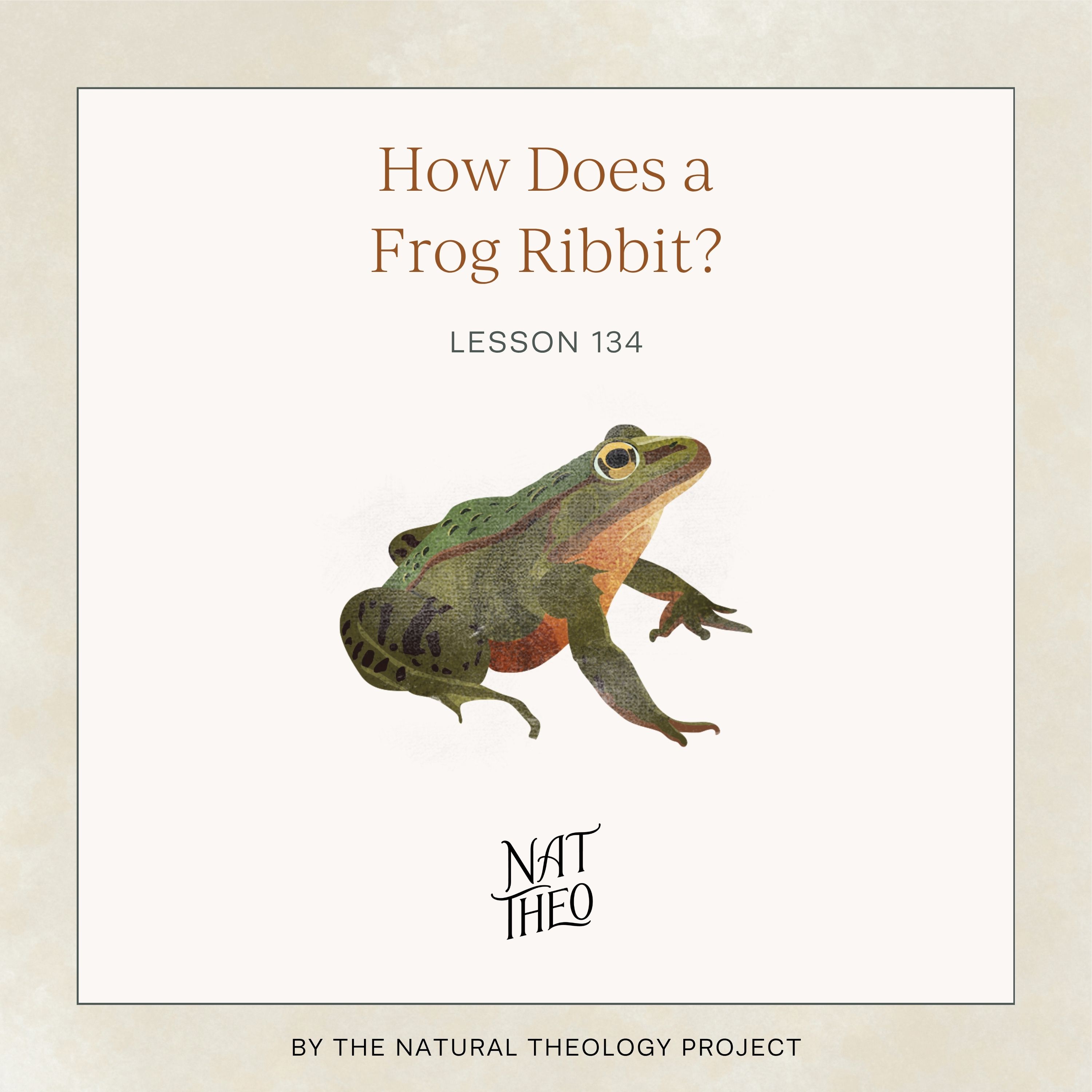
Loading summary
Transcript16 lines
- [00:01]
Erin Lynam
Every Nat Theo lesson comes with a free coloring page so you can color as you listen. Download this lesson's coloring page at the link in our show notes and explore every lesson further in the Nat Theo Club or with our Bible and Nature Unit Studies. Enjoy science, the Bible, experiments, arts and crafts, nature journaling, outdoor activities, recipes, geography, video teachings, and more in the Nat Theo Club or Unit Studies. Find it all@natttheo.com Club.
- [00:40]
Unidentified Male Voice
Hello world. Wake me up to another good Good morning. Time to go.
- [00:48]
Erin Lynam
Are you ready to explore God's wild and wonderful world? Welcome to the naptheo Podcast. I'm your host Erin Lynam. I'm a certified master naturalist, Bible teacher and author and I am so excited to dive into God's written word, the Bible and His created world with you. Have you ever thought about how many animals how hop? Fleas hop? Crickets and grasshoppers hop? Wallabies hop? Even many birds hop? We have learned about some hopping creatures in past episodes including kangaroos and rabbits. God made a lot of hopping animals and today we are discovering his designs in a famous Hopper the Frog. Here is our trail map.
- [01:52]
Child Listeners
Are you ready?
- [01:54]
Erin Lynam
We are going to learn how do frogs hop? How long is a frog's tongue? How do frogs rib it and how does singing worship Bless God and us. Before we hit the trail, let's thank our sponsor who helped make this lesson possible. Apologia curriculum. You can save 25% on all of Apologia's curriculum during their site Wide Summer sale@a apologia.com Discover God's designs in swimming, flying and land animals with Apologia's zoology courses or venture into astronomy, human anatomy or botany. If you are curious about nature and science and want to learn from a biblical worldview, Apologia offers award winning courses and curriculum that you will love. I know our family has Every lesson is written to nurture faith and wonder. Students will marvel at God's designs from the tiniest fruit fly to the massive galaxies. My family loves exploring creation with Apologia and we know you will also. Now is the perfect time to start your next adventure with Apologia. Save 25% on their site wide summer sale at apologia.com or at the link in our show notes. It's time for our trivia question. How long does it take a bullfrog tadpole to grow into an adult frog? A 1 to 3 days B 1 to 3 weeks C 1 to 3 months or D 1 to 3 years. Again, how long does it take a bullfrog tadpole to grow into an adult bullfrog a 1 to 3 days b 1 to 3 weeks, c 1 to 3 months or d 1 to 3 years. Take a guess and we will find out at the end of today's lesson and Nat Theo Club members. After this lesson, click over to the bonus video. We will learn about a frog that can freeze nearly to death, stopping its heart from beating and then thaw back to life in the spring. Find that bonus video in your Nat Theo Club dashboard or at the link in our show notes. Alright, let's hit the trail. Have you ever tried to catch a frog as it was hopping away from you? Something we notice right away about frogs is is that they are very hoppy. But what is with all of that hopping? God designed frogs to get around by saltation.
- [04:45]
Child Listeners
What?
- [04:46]
Erin Lynam
Despite how it sounds, saltation has nothing to do with salt. But it does have a lot to do with hopping and jumping. Saltation is hopping locomotion. It is moving by jumps or hops instead of walking. We learned about Saltation on lesson 117 with kangaroos. God designed many animals to move by jumping and this of course includes frogs. Jumping is not the only way that frogs move. Depending on the species, they can also crawl, swim and even climb. But jumping is what they are most known for and they are great at it. Some frogs can jump up to 20 times their body length. That would be like you jumping 80ft or 24 meters, which is almost the length of a basketball court. If you could jump like a frog, you could be the greatest basketball player on earth. Of course, frogs are a lot smaller than we are and they are not leaping across basketball courts, but they have a very impressive jump for their body size. You might think that a frog needs amazing muscles in their back legs to jump so far or high. And they do have strong legs. But it's not only about strength. The secret to a frog's jump is is a specially designed catapult system. Have you ever seen or used a catapult? My kids have built catapults out of things like popsicle sticks or wood. They place an object like a clay ball on one end of the catapult. When they release the catapult, the arm swings quickly forward and launches the object into the air. A catapult is a machine that stores energy and then releases that energy all at once to fling something through the air. This is similar to how God designed a frog's back legs. Here is how it works. As a frog gets ready to jump, it first bends and Crouches down. As it does this, the tendons inside of its legs stretch. Tendons are strong, stretchy cords that connect muscles to bones. When the tendons stretch, they store energy, kind of like a pulled back rubber band or a catapult arm being loaded. Then, when the frog is ready, that stored energy is released. Very quickly, the tendons snap back, helping the frog's powerful leg muscles push hard against the ground. This sends the frog flying into the air in one big leap. God engineered this amazing design into frogs so that they can get around and do what they need to do. All around us in nature, we can see machines just like in the frog's legs. Not machines built from metal bolts or rubber bands, but created from natural materials like stretchy tendons, powerful muscles, and strong bones. If we were to look at the pieces of a frog's leg beneath a microscope, we'd see even tinier machines. God was the first inventor, and he is the very best engineer. As we learn about the creatures and the plants that God has made, we can see how wise, kind and creative he is. As Psalm 104:24 tells us. How many are your works, Lord? In wisdom you made them all. The earth is full of your creatures. Legs built for hopping is only one of the amazing ways that God engineered for frogs. Let's look next at a frog's tongue. God gave frogs a special tool for catching their prey. A super long, sticky tongue. But how long is a frog's tongue? Maybe you have seen paintings or graphics or cartoons of frogs with very long tongues stretching far out to snag a fly. One of our listeners asked this great question about a frog's tongue.
- [09:32]
Child Listeners
Hi, my name is Christian and I'm 6 years old and I live in Washington. And I am wondering, how do frogs fit their tongue in their mouth?
- [09:43]
Erin Lynam
What a fun question, Christian. How do frogs fit their tongue in their mouth? Well, I hope I don't disappoint you, but a frog's tongue is not as long as we might think. Cartoons, movies and graphics often show a frog's tongue stretching way far out from its body to catch an insect. But that simply is not true. A frog's tongue does not stretch out a few feet or even a few inches. A frog's tongue can be around 1 inch long, so it can easily fit inside their mouth. One inch might not seem very long to us, but compared to the frog's body size, it is very long. It is normally one third to one half of the frog's body length. That would be like a 7 year old child having a tongue up to 2ft long, or like having a tongue long enough to reach our belly button, that is a long tongue. Think about your own tongue and where it is attached inside of your mouth. Is it attached at the front or the back of your mouth? It is attached at the back of your mouth, but listen to this. A frog's tongue is attached to the front of its mouth. The tip of its tongue points backwards towards its throat. When it comes time to catch prey, the tongue flings out and stretches forward from the front of the bottom jaw to reach an insect. We already learned how powerful and well designed a frog's legs are. But their tongue is also a work of masterful engineering. When a frog sees an insect that it wants to eat, it can launch its tongue out of its mouth five times faster than you can blink your eye. It snags an insect so fast that the insect can experience 12 GS or 12 times the force of gravity. Compare that to the three GS that astronauts normally experience when a rocket launches. And unlike an astronaut, that helpless fly had no chance to train for such extreme forces or speed. You would think that as a frog launches its tongue out quicker than we can blink an eye, it would not have time to do much else. But something happens in that split second. As a frog launches its tongue, it changes the stickiness of its saliva or spit. You see, a frog's tongue is not always sticky. If it was, it would stick to everything, not just insects. It could even stick to the frog's own mouth, and that would be troublesome. Instead, during a rapid launch, the tongue, or rather the saliva on the tongue, becomes stickier. In more sciencey language, the frog's spit changes viscosity. Viscosity means how thick or runny a liquid is. A liquid with high viscosity is thick and flows slowly like honey syrup or molasses. A liquid with low viscosity is thin and flows quickly like water, juice or vinegar. A frog's spit changes rapidly from being thin and runny to thick and sticky, and then back to thin and runny. When a frog's tongue hits an insect, the super sticky saliva pushes into any gaps, such as behind an insect's wings or around its legs to secure the insect to the tongue. At this point, the frog's saliva is around five times stickier than honey. That insect does not have a chance of escape. But if the saliva stays that sticky, it might be hard for the frog to swallow its prey once it's inside its mouth. Imagine trying to Swallow something five times stickier than honey. To solve this stickiness problem, the frog does something surprising. It pushes its eyes down toward its mouth. As it does this, its saliva turns back to its more liquid state, becoming not so sticky so the frog can swallow its prey. A frog's tongue is also around 10 times softer than a human's tongue. This allows the tongue to kind of wrap around an insect like one big sticky hug before pulling the insect to its mouth. So a frog's tongue might not be quite as long as a cartoon might make us think, but they are amazingly fast, helpfully soft, and can change stickiness to capture an insect with ease. That is quite the design. Along with powerful jumping and sticky tongues. Something that catches attention about frogs is the sounds that they make. A couple of our listeners had questions about this.
- [15:06]
Child Listeners
Hello, my name is Christian and I am six years old. I live in Washington and I'm wondering how to frog rivets. Hi, my name is Oakland and I'm Four Island, Virginia. And I want to know how can frogs make rivets sounds?
- [15:27]
Erin Lynam
What a great question. How do frogs ribbit? Just like a frog's super long tongue is a bit of a myth, a frog's ribbit is also Most frogs do not ribbit. It's really only a few types of tree frogs along the western coast of the United States that make a true ribbit sound, including the Pacific chorus tree frog. This frog's true ribbiting sound was used as a sound for many frogs in movies. That's why many of us grow up thinking that frogs ribbit because of movies. The Pacific chorus tree frog makes its ribbiting sound mostly at night and during breeding season. It is their advertising call, which means that they are trying to attract a female to breed. The males will make this call together, creating a unique summer nighttime sound. But how do these unique tree frogs ribbit? It's the same way that other species of frogs make sounds. This brings up a great question from one of our listeners.
- [16:58]
Child Listeners
My name is Winley, I'm five years old. I live in Pennsylvania, and I want to know why are spring peepeepers so loud?
- [17:09]
Erin Lynam
That's a great question, Winley. Spring peepers can certainly be loud. How do they make all that noise? Here is how it works. A frog's call begins with the way it breathes. The frog pushes air from its lungs into its throat area called a buccal cavity. The buccal cavity is like a little chamber behind the mouth. The frog can move air in and out of this space when it Breathes or makes calls. As the air passes over the frog's vocal cords, the cords vibrate and make sounds. Some frogs also have vocal sacs which are stretchy pouches that help make the sound louder. These sacs may be under the frog's chin or on the sides of its head. Put simply, when a frog calls, it pushes air from its lungs over its vocal cords. The sound travels into the vocal sac which puffs up like a balloon. The sac helps the sound echo and grow louder, kind of like a speaker. It's not only the true ribiters, tree frogs of the west coast that use this design. Each frog species has its own unique call that the male frogs use to get the attention of females. Maybe you have heard some of the unique calls of other frogs. I'm going to play some calls from different frog species. See if you can guess what type of frog it is. Or simply enjoy the sounds and I will tell you what they are after. That was the familiar song of spring peepers. Here's another frog. That was the bird like call of a wood frog. Here's another. That was the call of a banded bullfrog. Here's one more. And that was the call of a gray tree frog. As you can see, or rather hear, God designed frogs to make many noises. A true ribbit is unique to only a small number of species. But all of God's frogs are created with amazing voices made possible by the buccal cavity, vocal cords and vocal sacs. Frog calls are one of my favorite sounds of summer. Every evening we leave our windows open so that we can hear toads and frogs singing. As they sing together, they are like a choir singing a chorus of praise to their Creator. Do you enjoy singing praise to your Creator? Singing can be fun. But why is it important that we sing to God? Does he really need us to tell him how great he is? Well, no. God is great whether or not we sing about his greatness. But when we sing worship to him, it is an act of love. We are telling God that we love him, which he loves because he created us to do exactly that. God made us to have a relationship with him and to bring him glory. Singing worship helps do both of these things. It helps us have a closer relationship with God and brings him glory. Psalm 101:2 says, Shout to the Lord all the earth. Serve the Lord with joy. Come before him with singing. Our worship serves God and it is also good for us. There have been so many times that as I was singing a worship song, God brought me comfort as I sing about God. I am reminded of his promises in Scripture. So singing worship can be another way of hiding God's Word Word in our hearts. Listen to Colossians 3:16 Let the teaching of Christ live in you richly. Use all wisdom to teach and instruct each other by singing psalms, hymns and spiritual songs with thankfulness in your hearts to God. Did you catch that? God's Word, his truth and promises live richly inside us as we sing psalms, hymns and spiritual songs. What a wonderful way to bless God as we memorize and declare his truth. Listeners, we can join with the chorus of creation as all of the frogs, birds, crickets and whales sing, and as the bats make their high pitched chirps, and as the wind rustles the leaves of trees and as ocean waves crash on the shore, we can join in a melody of praise to our Creator. I want to close with a psalm. If you are in a safe place to do so, close your eyes and picture what I am reading From Psalm chapter 148, verses 7 to 13 Praise the Lord from the earth, you large sea animals, and all the oceans, lightning and hail, snow and mist and stormy winds that obey him. Mountains and all hills, fruit trees and all cedars, wild animals and all cattle, crawling animals and birds, kings of the earth and and all nations, princes and all rulers of the earth, young men and women, old people and children. Praise the Lord because He alone is great. He is more wonderful than heaven and earth. It's time to answer a question from one of our listeners. Here is today's question.
- [23:50]
Child Listeners
Hi, my name is Jane. I'm nine years old and I live in Ruidoso, New Mexico. My question is why do dogs roll in something stinky they smell on the ground?
- [24:00]
Erin Lynam
That is a good question, Jane. I have had to stop my dog boreal from rolling in stinky stuff plenty of times. Scientists are still researching the exact reason why dogs roll around in bad smells, but they have a few ideas. One theory is that dogs roll around on something to get their own scent on it. Have you ever left a note for a friend that said I was here? Some scientists think that a dog rolling in something is kind of like that. Your dog might be trying to tell other dogs that pass by later that it was there. Another idea is that your dog is trying to cover up its own scent. Packs of wild dogs organize themselves into levels and they know who is in charge based on a dog's smell. So some scientists think that when your dog rolls in something smelly, it is trying to cover its scent up. An instinct God might have created them with to make the dog seem less threatening to other dogs in its pack. In our fallen world, wild dogs also need to hunt for their food. So a dog's instinct to roll in something stinky could also be to cover up its scent while it's hunting, to keep prey from smelling the dog before it attacks. Finally, some scientists believe your dog likes to roll around on the ground, some simply because it feels good. Though we are not completely sure why dogs roll in smelly stuff. God knows he created dogs with instincts and behaviors that they need to survive and thrive, and one of those behaviors might be rolling in stinky stuff. Thanks for your great question, Jane. Stay curious about God's wild and wonderful world and not the only club members. After this lesson, click over to the bonus video. We will learn about a special kind of frog that freezes solid nearly to death, stopping its heart from beating, and then thaws back to life in the spring. You can find that bonus video in your Nat Theo Club dashboard or the link in our show notes. It's time to answer our trivia question. How long does it take for a bullfrog tadpole to grow into an adult bullf a 1 to 3 days, b 1 to 3 weeks, c 1 to 3 months, or d 1 to 3 years? It might be hard to believe, but the answer is d it takes one to three years for a bullfrog tadpole to grow into an adult frog. Now it's your turn to explore. Go listen for frogs. They sing mostly in the evening, so ask your parent or caregiver to take you on a walk at dusk. Or visit a natural area with water and see if you can hear frogs making their unique calls. Do some research to discover which frogs live near you and what they sound like. Thank you so much for listening. If you enjoyed this lesson on frogs, please take a moment to send it to a friend and subscribe. Rate and review Nat Theo wherever you listen. Until next time, keep exploring God's wild and wonderful world.
- [27:26]
Unidentified Male Voice
We are all looking for adventure. We are all looking for adventure. We are all looking for adventure. We are all looking for adventure.