← Nat Theo Nature Lessons Rooted in the Bible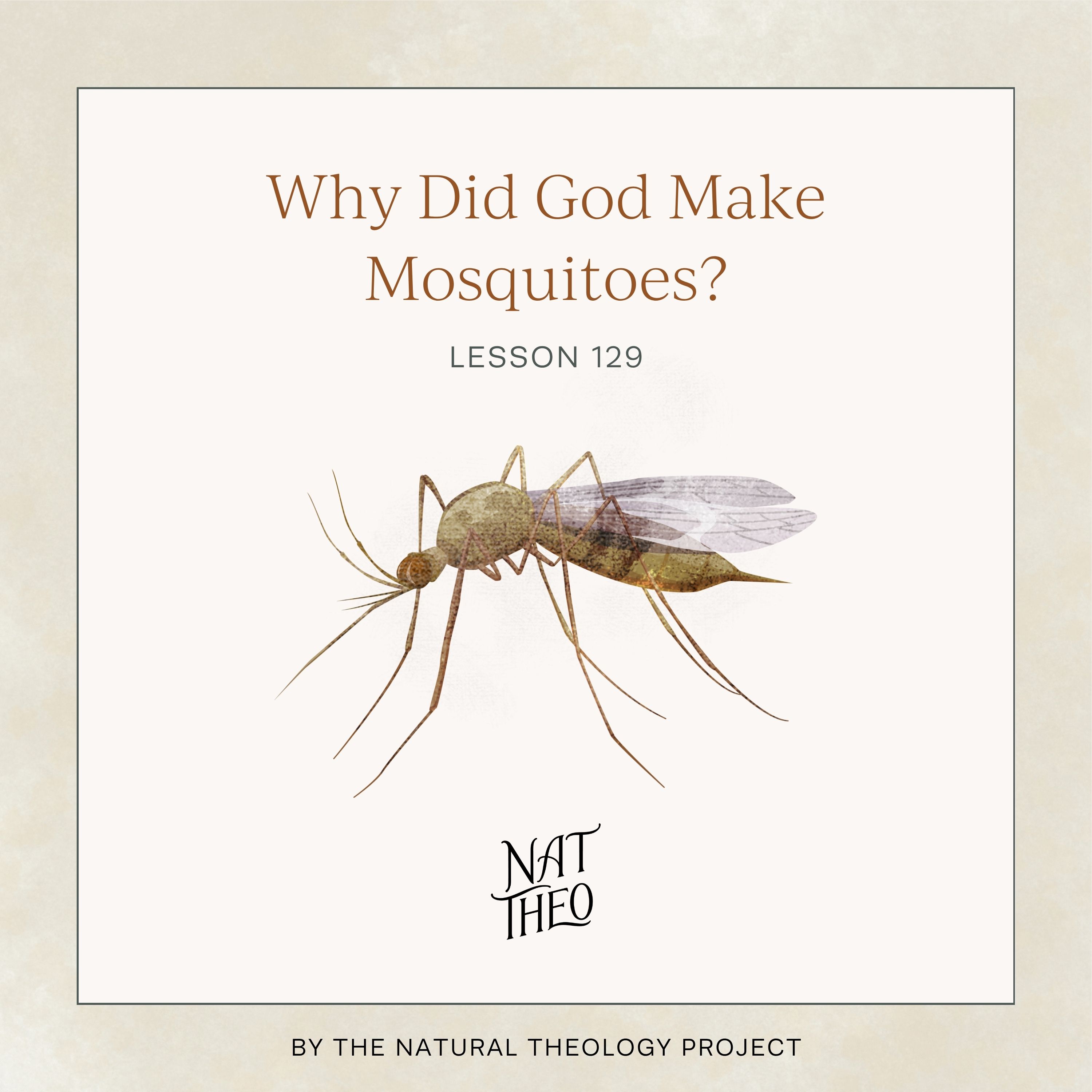
Loading summary
Transcript12 lines
- [00:01]
A
Have you ever collected toad eggs and hatched tadpoles? Or watched baby ladybugs hatching from eggs? That's what my family has been doing. This week. It's the perfect season for nature study and we invite you to join us for Magnify, a wild and wonderful Summer Adventure by Nat Theo. Discover God's creation right where you live as you find frogs, butterflies, animal tracks, birds and so much more. Become a Junior Naturalist for God's Kingdom. Join today at nottheo.com magnify to access the full summer guide and tune in for live video classes where you will learn from me and share your discoveries with other students. Don't wait. Join today, start exploring and get ready for our live video classes in magnify@natttheo.com magnify or or the link in our show notes.
- [01:00]
B
Hello world. Wake me up to another good Good morning. Time to go.
- [01:08]
C
Are you ready to explore God's wild and wonderful world? Welcome to the Nat Theo Podcast.
- [01:15]
A
I'm your host, Erin Lynam.
- [01:17]
C
I'm a certified Master naturalist, Bible teacher and author and I am so excited to dive into God' written word, the Bible and His created world with you. What would you think if I told you that I once raised baby mosquitoes? Mosquitoes are not exactly what we think of as great pets, but last summer I raised quite a few of them accidentally. And as I watched those baby mosquitoes, I learned a lot about them. And do you know what happens when we learn a lot about a creature, especially a creature that we might not like very much? We can find things to appreciate about them and we can see God's design even in a creature like a mosquito. That's exactly what we are doing today as we discover and learn to appreciate blood sucking mosquitoes. Here is our trail map.
- [02:28]
D
Are you ready?
- [02:30]
C
We are going to learn how are mosquitoes born? Why do mosquitoes suck blood? Why did God make mosquitoes? And how do mosquitoes show us God's goodness? Before we hit the trail, let's thank our sponsors who help make this lesson possible, including Master Books. If you want to know why God made insects, pick up a copy of Bugs Big and Small. God made them all at the link in our show. Notes this excellent insect book by Master Books showcases God's amazing insects including the elephant mosquito, harlequin beetle and hornets. Learn about the world's largest, strangest and most beautiful insects and what they all teach us about our Creator who made everything good. Like every book by Master Books, Bugs big and small, God made them all is written from a biblical worldview to help families grow in faith, wonder and wisdom. Explore Master Books full library@masterbooks.com or at the link in our Show Notes if you want to grow in math skills and confidence in a way that is stress free, try CTC Math's online program for kindergarten through 12th grade. When our family tried CTC Math for the first time two years ago, I had no idea how it would change our kids education. For the first time, they have a clear path forward and are making incredible progress in math skills and understanding. CTC Math's short, easy to understand videos and practice questions allow students to progress at their own pace. For a stress free experience, try CTC Math risk free with a free trial and 12 month money back guarantee@ctcmath.com or the link in our show notes. It's time for our trivia Question how can you tell the difference between a male and female mosquito? Is it the difference between their A antenna, B eyes, C nose or D color? Again, how can you tell the difference between a male and female mosquito? Is it the difference between their A antenna, B eyes, C nose or D color? Take a guess and we will find out at the end of today's lesson and Nat Theo Club members. After this lesson, click over to the bonus video. I will show you videos of the baby mosquitoes that I was raising last summer and we will discover the surprising ways that mosquitoes find us. Find that bonus video at the link in the Show Notes or in your Nat Theo Club dashboard. All right, let's hit the trail. Have you ever wondered what a baby mosquito looks like? Does it look like an adult mosquito but just a lot smaller? Or does it look like a little worm? Where are mosquitoes born? Do they hatch out of an egg on a plant like a caterpillar? Does mosquitoes begin their lives on the water? A mother mosquito will lay between 100 and 300 eggs at a time. She lays them on top of stagnant or still water such as a pond, and the eggs stick together and float kind of like a little raft of mosquito eggs. The eggs normally hatch within two days. Out of the egg comes a mosquito larva. Larvae are the baby stage of an insect's life. Mosquito larvae are also called wrigglers, and they definitely do a whole lot of wriggling around in the water. When a mosquito larva hatches from one of the eggs, it does not fly up into the sky. It does something unexpected. It goes down into the water. Mosquito larvae stay in the water for four to 14 days, depending on the temperature of the water. And at this point, they look a little strange. Like all insects, they have three main body, an abdomen, thorax and head. A mosquito larva, or a mosquito baby, Its abdomen is very long and the thorax is like a big bulge near the end. And then there is their head. Opposite of their head, at the tip of their abdomen, which looks like their tail, are two tubes that look very different from each other and are designed with different purposes. One tube has their swimming organs, which are like four little fingers and hairs. This is the special way that God designed the mosquito to be able to swim around in the water during this stage of their life. Watching a baby mosquito swim through the water is very funny. They look like they are doing somersaults through the water, twisting around themselves in quick, jagged movements to move their bodies through the water. The second tube at the tip of their abdomen is for breathing. You see, mosquitoes do not have gills like fish do for breathing underwater. They have to swim up to the water's surface to get air instead. I discovered this last summer when I was accidentally raising baby mosquitoes. You might be asking, how does one accidentally raise mosquitoes? But let me assure you, it's quite easy. In my case, I was curious what kinds of creatures were living in the water of my neighbor's pond, and so I asked her permission. Then I took a large glass container and dipped it into the pond and scooped up water and took it home. I covered the glass container with plastic wrap and poked some holes in it to let air in. And then I watched to see what kind of creatures were living inside. I mostly saw tiny white creatures called daphnia, which are a type of freshwater crustacean. But then after a while, I saw long bodied creatures that hung out near the water's surface, up at the top. And I discovered that they were mosquito larvae or babies. But why were they always near the surface with their long body hanging beneath them? It is because they were poking their breathing tube up out of the water to get air. If you have ever gone snorkeling or used a snorkel while swimming, you know that the top of the snorkel stays up out of the water while your head is below the water, and you can breathe in through the snorkel While swimming underwater. The mosquito larva's breathing tube is called a siphon, and it's like a tiny little snorkel. Do you remember where the siphon breathing tube is located on the mosquito's body? It's at the tail end. And so when the larva pokes its siphon up out of the water to breathe. It is hanging upside down in the water. As I watched my aquarium of mosquito babies, I saw dozens of them hanging upside down from the water's surface as they breathed through their siphons like little snorkels popping up out of the water. After four to 10 days, the larva grows into a pupa. This is kind of like the juvenile or kid stage of an insect's life. It is the stage right before the insect becomes an adult. Mosquitoes can still move around in their pupa stage. At this stage, they are called tumblers. Now they have two breathing tubes instead of one. At their rear end, they have two on top of their head. They can still swim around, but they mostly hang up near the water's surface. And they do not need to eat during this stage. After one to four days, they are ready to grow into an adult. This is how a mosquito goes from its its underwater life to taking to the skies in flight. The mosquito tumbler goes to the surface of the water. Its hard outer skin splits apart down its back. The adult mosquito carefully works its way out of its old skin and rests on top of it. Like a little floating raft. It waits for its new wings to dry and harden. And then, for the first time, it flies. It seems triumphant for an insect that spent its childhood under the water to emerge as an adult with wings and fly for the first time. But when it comes to mosquitoes, not many of us are very thrilled about this process, because nothing messes up an afternoon of outdoor play like biting mosquitoes. Why do mosquitoes bite in the first place? Why do they suck blood? First, we should understand something important. Only female mosquitoes bite and suck blood. If you have ever had a mosquito bite, and I'm pretty sure you have, it was from a female mosquito. Both male and female mosquitoes eat flower nectar and SAP, which gives them energy to fly. Only the females also eat blood. But why? A female's eggs need something called protein to develop. Proteins are tiny building materials inside living things that help bodies grow, repair themselves, and do important jobs. Has your parent or caregiver ever asked you to eat more protein? I often ask my kids to include eggs in their breakfast as a great source of protein. God designed many, many different kinds of proteins to do different jobs in animal and human bodies. And mosquito mamas need to include protein in their diet in order for their eggs to grow. Where do you think they find that protein? In blood. They can find it in animal blood by biting animals. But humans have thin skin and are often less hairy than an animal, making us an easy snack with lots of protein to help their eggs grow. When a female mosquito is not preparing to grow eggs, she only eats flower nectar and other plant sugars. So female mosquitoes bite to get the blood that they need for their eggs. But why does a mosquito bite make us itch so badly? When a female mosquito bites us to suck blood, she is not only taking something from our body, she is also putting something into our body. Her saliva or spit. Yuck. Yes. That means when a mosquito bites you, you have some mosquito sp spit beneath your skin. A mosquito's saliva or spit has something in it that keeps our blood from clotting. You see, God designed our blood to clot so that you stop bleeding after you get a scrape or a cut. When you get hurt, your blood is designed to plug the hole, kind of like putting a patch in a leak. This helps to stop the bleeding so that your body can start to heal. It's a very smart design, but that means trouble for a hungry mosquito. Mama. So her saliva keeps your blood from clotting so that she can suck up liquid blood. But humans have an allergic reaction to the proteins in a mosquito's saliva. So when she puts her saliva into us, our body starts having a reaction. A lot is happening at the site of a mosquito bite during an allergic reaction. But simply put, our body is using a system that God gave it to fight something that it thinks is harmful. All of this biting and itching brings up a great question from one of our listeners.
- [15:27]
D
My name's Iris. Iris, I'm five years old. We live in Tennessee. My question is, why did God make mosquitoes?
- [15:41]
C
Iris, you asked a question that I think many of us have wondered. Why did God make mosquitoes? Think about a mosquito's regular diet. What do the males eat and what do the females eat when they are not growing eggs, they eat flower nectar and plant sugars. Just like butterflies, moths, flies, bees, and other insects do. Do you know what all of these insects have in common? They are pollinators. A pollinator is a creature that helps spread pollen, which helps plants grow. This is a very smart design that God engineered at creation. Creatures such as bees, butterflies, and yes, even mosquitoes land on or hover near a flower to get at the sweet nectar inside. When they do, this powdery stuff called pollen rubs off the flower and sticks to the creature. Kind of like if you've ever been baking cookies in the kitchen and you got powdery flour all over your clothes. When that creature moves on to another flower of the same type, the pollen from the first flower can fall off or or rub off onto the second flower, which can help that flower make a seed. So the flower helps the creature get the food and the energy that it needs. And the creature helps the flower spread pollen so that more flowers and plants can grow. This is an amazing design that God created to help creatures and plants, which then helps us humans. And this is a very important design because pollination grows many, many plants that humans and animals need to eat. It is absolutely necessary and mosquitoes are a part of that process. Some people might ask, if God is good, why did he make mosquitoes that bite and that can sometimes carry dangerous diseases? When God created, he said that everything he made was good. After God made everything we read in Genesis 1:31, God saw all that he had made and it was very good. So what about biting mosquitoes? God designed mosquitoes to be helpful pollinators, like little buzzing gardeners, helping spread pollen and grow more plants for for people and creatures to use and eat. He designed mosquitoes to get everything that they need from plants. Listen to what God told the first people, Adam and eve, in Genesis 1, verses 29:30. God said, Look, I have given you all the plants that have grain for seeds, and all the trees whose fruits have seeds in them. They will be food for you. I have given all the green plants as food for every wild animal, every bird of the air, and every small crawling animal. And it happened. It makes sense that sin's curse messed up the mosquitoes diet. Just as many creatures began hunting each other for meat, female mosquitoes began going after blood for protein so that their eggs can could grow. But when they do this, they are only following God's plan to produce more of their own kind. Their instinct is to lay eggs and have more mosquitoes, which we might not be very excited about, but remember they were originally meant to grow more plants. Sin's curse changed our planet. Biting mosquitoes, they are a reminder of that curse and, and that earth is not as it was originally meant to be. Romans 8, 20, 22 say against its will, all creation was subjected to God's curse. But with eager hope. The creation looks forward to the day when it will join God's children in glorious freedom from death and decay. For we know that all creation has been groaning, as in the pains of childbirth, right up to the present time. Listeners just like us, all of creation is waiting for God to make all things new, for God's good designs to be fully restored and for creatures like the mosquito to live and thrive and to be a helpful part of God's creation like they were meant to be. As we read in Revelation 21:5, which says, I am making everything new. But even right now, on a planet cursed and broken by sin, and even as we swat away buzzing mosquitoes, we can glimpse God's goodness. First, think about all the mosquitoes that are not biting you, all of the male mosquitoes and all of the female mosquitoes that are not currently growing eggs. If God had actually designed all of the mosquitoes to suck blood, there would be a whole lot more mosquitoes biting us throughout the summer. It could be unbearable. Further, God has made humans smart to create tools and medicines to help keep people safe from mosquitoes. Things like mosquito spray and special candles and nets to protect from bites, and medicines to prevent or treat diseases that can be spread by mosquitoes. When I was 14 and I traveled to the country in Africa called Malawi, I was in areas that had types of mosquitoes that can carry dangerous diseases. I was very grateful for my doctor who made sure that I had medicine to prevent me from getting those diseases. Finally, many of God's creatures love eating mosquitoes, which helps control mosquito populations. We can thank bats, water striders, dragonflies, fish, frogs and many other creatures for helping keep mosquitoes away. So listener, the next time that mosquitoes threaten to mess up your summer plans, remember to protect yourself. Wear insect spray and look for natural options that protect your skin and God's creation. Be aware if there are any mosquito diseases in your area and take precautions. But also, when you are wondering, why in the world did God make mosquitoes? Remember this. Mosquitoes were originally part of God's good creation. They were designed to spread pollen and help plants grow. Now, because of sin's curse, females bite to get what they need to grow their eggs, following instructions that God put into them to produce more of their kind. And even in a broken world where they bite, we can see God's mercy as their biting is limited and humans have found ways to stay safe and animals help keep mosquito populations in balance. Living in a broken world can be confusing, but we have hope and assurance that God will one day make everything new. Nothing will be broken. And even now, his mercy is over all of his creation. As we read In Psalm chapter 145, verse 9, the Lord is good to everyone. He showers compassion on all his creation. It's time to answer a question from one of our listeners. Here is today's question.
- [24:09]
D
Hi, my name is Eleanor. I am 6 years old and I live in Georgia. My question today is how do possums survive in human habitats?
- [24:19]
C
Thanks for your great question, Eleanor. How do possums survive in human habitats? God designed some animals to be able to adapt easily to many different habitats, and this includes possums. One reason opossums can survive in human habitats is because they will eat almost anything. Some things that they like to snack on include fruits, nuts, insects, small animals like mice or snakes, eggs, and even carrion or dead animals. They even eat garbage and birdseed and pet food. Some of these things can get their tummy into trouble, but it shows that they are willing to eat many different things and with a diet like that, they are never short on food. Another reason opossums can survive in human habitats is because they like to live in dry and sheltered areas. In the wild, they make their dens in rock crevices, hollow logs or wood piles. But in a city or a neighborhood, they might hide out in sheds under decks or in spaces under buildings. Opossums are also mostly active at night, so their interactions with humans are limited. God gave opossums the features that they would need to survive and thrive in many different habitats. If you want to learn more about God's design in opossums, listen to lesson 107 why does an opossum play dead? Thanks for your great question, Eleanor. Stay curious about God's wild and wonderful World World and Nathio Club members. Remember to click over to the bonus video where I will show you videos of the mosquito babies that I was raising last year and we will learn the surprising ways that mosquitoes find us. Find that bonus video in your Nat Theo Club dashboard or the link in our show notes. It's time to answer our trivia question. How can you tell the difference between a male and female mosquito? Is it the difference between their a antenna, B eyes, c nose or D color? The answer is A Their antennae. Male mosquitoes have bushy antennae that look like feathers. Their feathery antenna help them hear high pitched sounds from females. Now it's your turn to explore. Learn about an animal that is eats mosquitoes and keeps their populations down. Maybe start with one of our recommended lessons in the show notes about bats and water striders. Thank you so much for listening. If you enjoyed this lesson on mosquitoes, please take a moment to send it to a friend and subscribe. Rate and review Nat Theo wherever you listen. Until next time, keep exploring God's wild and wonderful world worlds.
- [27:21]
B
We are all looking for adventure. We are all looking for adventure. We are all looking for adventure. We are all looking for adventure.