← Nat Theo Nature Lessons Rooted in the Bible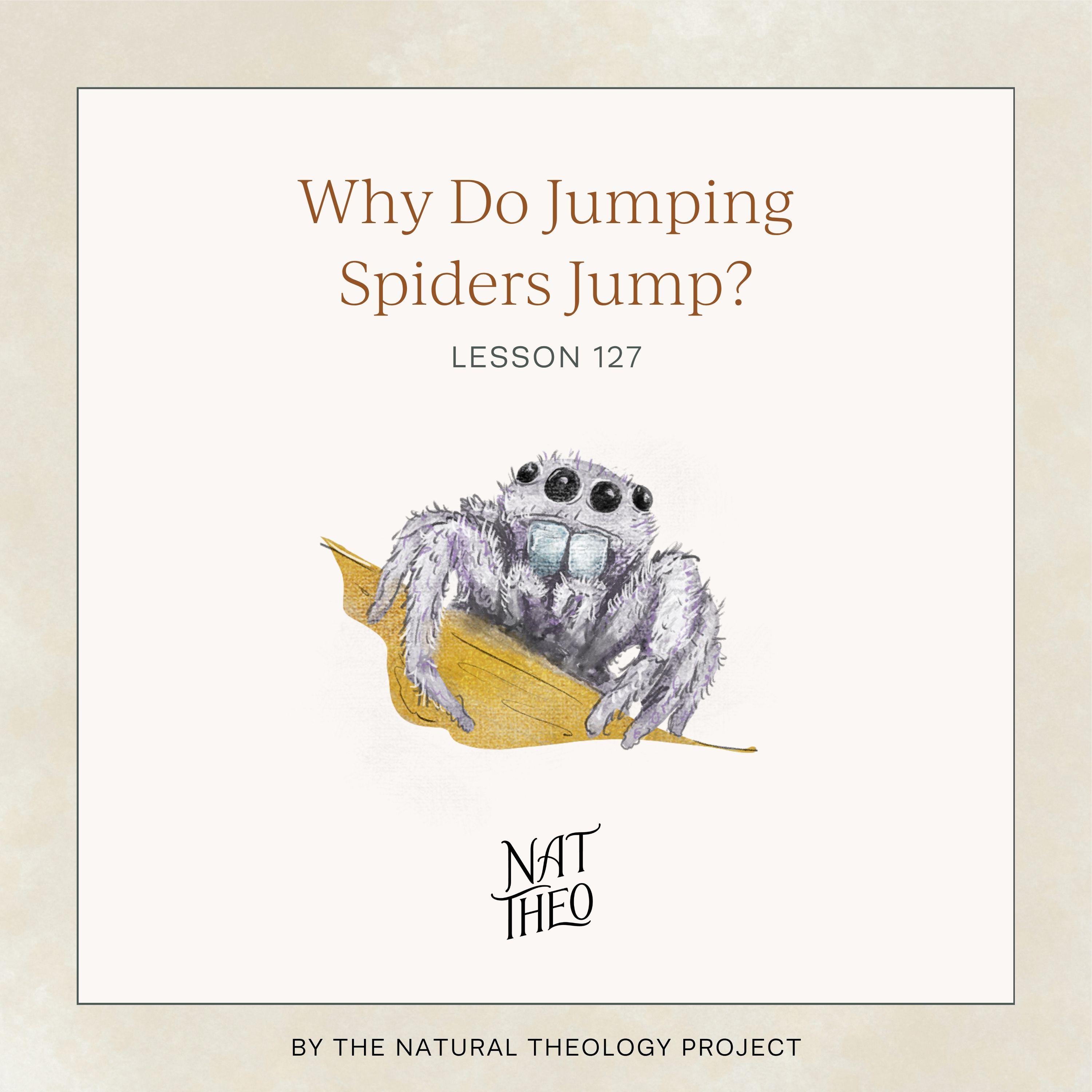
Loading summary
Transcript1 lines
- [00:01]
A
You can join me for live nature classes this summer. Discover God's creation right where you live as you look for birds, insects, amphibians, trees, reptiles, flowers, mammals and more. Magnify. A wild and wonderful Summer Adventure by Nat Thio has everything you need for stepping outside, slowing down and seeing God in nature this summer. Summer don't wait. Join now to begin exploring and creating your own nature notebook so you can be ready for our first ever live video classes. You will learn from me, see what I've been finding in nature and have an opportunity to share your discoveries with other students. Join@nattheo.com Magnify or at the link in our show Notes. Hello world. Wake me up to another good Good morning. Time to go. Are you ready to explore God's wild and wonderful world? Welcome to the Nat Theo Podcast. I'm your host Erin Lynam. I'm a certified master naturalist, Bible teacher and author and I am so excited to dive into God's written word, the Bible and His created world with adventure. I recently met a new creature. It was in a jar with fresh cut plants and a little shell with water in it so that this creature could drink. As I looked into the jar, this creature looked back at me with its many eyes. It moved around quickly in jerky movements almost as if it was living in a stop motion film. Eventually it tucked itself between a flower and a leaf and seemed to be resting. Can you guess what this creature was? It was a jumping spider and it is my sister in law's pet named Fresco. I really enjoyed watching Fresco go about his day and today I am excited as we are discovering God's many wild and wonderful designs in these small powerful jumpers, including some things that might surprise you. Here is our trail map. Are you ready? We are going to learn. Is a jumping spider a bug? Do jumping spiders bite? Why do jumping spiders jump and how can we learn from our mistakes? Before we hit the trail, let's thank our sponsor who helped make this lesson possible. Apologia. If you love learning about creeping jumping silk, spinning spiders and other creatures like them, you will love Apologia's Zoology 3 Land Animals course. Learn about God's amazing arthropods in this adventure packed course with vivid images, hands on activities and a biblical worldview. Craft an orb spider nest, learn to draw the details of a stinging scorpion and perform a woodlice population study. Beyond insects, arachnids and crustaceans, you will discover how God masterfully engineered all his land animals from the tiny jumping spider to the massive moose and tall giraffe. Click the link in our show notes to order Apologia's land animal course for grades K through 6 or visit apologia.com it's time for our trivia question. What is a baby spider called A larva B Spiderling, C Spinner or D Creepy? Again, what is a baby spider called a larva B Spiderling, C Spinner or D Creepy? Take a guess and we will find out at the end of today's lesson. Annetthio Club members after this lesson, click over to the bonus video. We will answer the question, why do jumping spiders wave hello to people? And we will learn about their amazing eight eyes, including eyes on the back of their head. Find that bonus video in your Nat Theo Club Dashboard or the link in our show Notes all right, let's hit the trail. Some people find spiders creepy, and to be honest, sometimes I do too. Like last summer when I was laying out on my back patio and I glanced over and saw a big venomous black widow spider crawling right toward my head. That was creepy. But hear me out. However you feel about spiders, they truly are made in wonderful ways. And the spider that we are learning about today is, in my opinion and the opinion of many others, the cutest spider. Before we dive into why and how jumping spiders jump, let's learn what a spider is. You might have wondered, is a spider a bug? Spiders are not bugs, and they are not even insects. They belong to a large class or category of creatures called arachnids. An arachnid is a type of animal with eight legs, a body with two main parts and no antenna or wings. Spiders, scorpions, ticks, and mites are all arachnids. Now I know a spider looks like an insect, so what sets it apart from beetles or bugs? Here are a few ways to spot the difference between a spider and and an insect. Spiders have eight legs, while all insects only have six legs. Most spiders create silk from their bodies for the majority of their lives, while insects that create silk normally only do so while they are young. An example of this is a caterpillar spinning silk, but it no longer creates silk once it is a butterfly. Finally, spiders have two main body parts, while insects have three main body parts. What do I mean by two or three main body parts? Picture an ant, which is an insect. It has three main body parts, kind of like if you were to take a long party animal balloon and twist it into three segments. An ant has a head, a middle segment or part called a thorax, and the largest back segment Called an abdomen. But spiders only have two main parts. The front of their body is called a cephalothorax. That's a big word. Can you say it? Cephalothorax. A cephalothorax is the front main body section of some creatures where the head and the thorax or the midsection are joined together into one part. So an easy way to tell the difference between insects and spiders is that insects have three main body parts, while spiders have only two. Another thing that sets spiders apart is that almost all spiders have venom. Only two small families of spiders do not produce venom. Lets look closer at the numbers. We know of around 50,000 different types of spiders that God has made. Most of them have venom, but of Those, only around 30 types have been responsible for human deaths. Which spiders are the dangerous ones? The most venomous spiders include wandering spiders, Australian funnel web spiders, widow spiders, and recluse spiders. So what about the cute little jumping spider? It does have venom like most spiders, and it can bite, but they rarely do. And their venom is not considered dangerous to humans. They just use it to kill their prey. You see, venom is very useful to spiders. They don't crunch on an apple or eat other solid food like we do. Instead, spiders mostly slurp up their food. A spider uses its fangs to inject venom into prey, like an insect. This paralyzes the insect, so if it's still alive, it cannot move. Then the spider uses special proteins called enzymes to turn its prey into soft, mushy liquid. While some spiders do a bit of chewing, most of the prey is slurped up. Venom is not only helpful to spiders, but can also be helpful to humans. Researchers and scientists are studying spider venom to see how it can be used in medicines for humans and to make safer pest control tools. When God created all the animals, including spiders, spiders did not need venom. But after sin entered the world and animals began preying on each other, venom became a very helpful way for spiders to get the food that they need. And now venom is helping humans understand how nerves work and even developing helpful things that we can use from spider venom. But a word of caution. It is wise to research if you have venomous spiders near where you live, and if you do memorize what they look like. We don't need to be afraid, but we should always be aware and wise. Like when I recognized the venomous black widow spider crawling toward my head last summer and I quickly got away from it. But if you see a cute little jumping spider, there is no reason to fear they are timid. And they will likely skitter or jump away to hide. They only bite if they feel cornered or threatened. And when they do, it feels like a mild bee sting. So if you ask permission from an adult and choose to handle a jumping spider, be gentle and make sure it does not feel like it is in danger. Jumping spiders can only use their fangs and venom to eat their next meal if they can first catch it. And they do not catch prey like most other spiders do. Many spiders catch their next meal by creating a sticky web that prey such as an insect gets caught in. But jumping spiders do not create webs. They do however make silk like other spiders do. Can you think of any ways a jumping spider might use their silk if they are not creating webs? Jumping spiders use their silk in a few different ways including to create a safety line. Before a jumping spider takes a big jump, they sometimes let out some silk and attach themselves to the surface they are jumping from. If they jump and they miss their target, they they can use the silk safety line to climb back up and try again. Another way they use silk is to create safe retreats. I saw my sister in law's jumping spider fresco do this. Between a leaf and a flower they create a little silk structure that looks a bit like a silk tube. It is often called a hammock or a sleeping bag. They create a silk retreat to stay safe as they rest, molt or to protect themselves during bad weather. Sometimes jumping spiders make a silk structure for a different purpose to lay eggs. These are sometimes called pup tents. This type of structure can be mostly enclosed and have thicker layers of silk. Females lay their eggs inside the pup tent to keep them safe. So although jumping spiders do not make webs like most other spiders do, God designed them with handy silk for getting around and creating spider hammocks and tents. They are quite the outdoorsmen or outdoors arachnids. If a jumping spider does not make a sticky web, how does it catch its prey? By jumping of course. God designed jumping spiders to spot prey from far away. Now this is unique among spiders because most spiders do not have good vision, but jumping spiders do. We are learning about their eight eyes and their excellent sight in today's bonus video for Nat Theo club members at the link in our show notes. Once a jumping spider spots a tasty looking insect, the pursuit begins. The spider spider slowly and carefully sneaks up on its prey. Jumping spiders are very patient, moving ever so slowly to not be noticed by their prey. To say they move inch by inch would not be accurate because most jumping spiders are Much smaller than an inch. Many are about the size of a green pea. Instead, they move a fraction of a millimeter by a fraction of a millimeter, taking their time closing in on an insect. Sometimes they might backtrack and find a better angle to pursue their meal. From to rush might mean being seen and giving the insect a chance to escape. There is nothing hasty about it, and this pursuit can take around 20 to 30 minutes. Once the spider finally gets within leaping reach, their slow movement erupts into a jump quicker than our eyes can see. The jumping spider might first secure itself with a safety line of silk, and then it pounces on its prey in one swift, rapid motion. Once it has its prey in hand or in many legs, the spider can inject it with venom to stun it or kill it. And again, practicing patience. Wait until the insect's insides are ready to slurp up the next time your stomach is grumbling. Or you need to practice patience as your parent or caregiver is making lunch. Remember the jumping spider and how it does not rush. And I don't imagine that it grumbles either as it waits for its next meal. This jumping and hunting strategy is very effective, as jumping spiders can jump around 40 times the length of their own body. What makes jumping spiders so great at jumping? God designed them with a special hydraulic system. A hydraulic system is a way of moving something by using liquid pressure, such as from water or oil. It uses liquid to push and move things. When you squeeze one part, the liquid inside pushes the force to another part. Some machines that you might be familiar with that use hydraulic pressure are car brakes, a dump truck lifting and dumping its bucket, an excavator or backhoe moving its bucket, and a dentist chair or a hospital bed moving up and down. Jumping spiders don't use water or oil to jump, but they use another type of liquid called hemolymph. Hemolymph is the fluid inside insects and arachnids that carries nutrients and helps their bodies work. It does some of the jobs that blood does in our bodies and in the bodies of animals. A jumping spider uses the hemolymph body fluid like a push system. It builds up pressure inside of its legs, and that pressure helps the legs straighten fast so that the spider can powerfully jump into the air. A jumping spider's hunting technique is not only a reminder to be patient, they also provide a lesson in learning from mistakes. Spiders are not known for their intelligence or smartness, but once again, the jumping spider is unique, especially jumping spiders in the porscha genus or category. These spiders have been observed showing great intelligence. Here are a few ways that we see a jumping spider's smartness. They can plan routes. If they think their approach to prey might not work, they can backtrack and plan a new, more successful path to get to their prey. Second, they can keep track of an insect even after they have lost sight of it. So if an obstacle in their path blocks the view of the prey, they know that the prey is probably still there and they can plan a route around the obstacle. And finally, they can learn by trial and error. And all of this in a brain about the size of a poppy seed. These spiders have confused scientists because they show so much brain power in such tiny hardware. But God is not limited in his creativity. He can pack as much smartness as he wants to in an itty bitty spider brain. I am most amazed by how a jumping spider can learn through trial and error. Or in other words, by making mistakes and learning from those mistakes. If a jumping spider makes a jump, whether toward prey or to get to another surface, and it misses that jump, it learns from that miss and tries again a different way. This is where their silk safety line really comes in handy, because they can use the safety line to get back to where they made the jump from and try a different strategy. They can do this with different types of prey, learning which hunting strategies work best for different types of prey that they are after and adjusting their strategy to become more successful. Put simply, a jumping spider learns by trying something, noticing whether or not it worked, and then changing what it does next time. God designed us humans to learn in the same way. We don't face the same challenges that a jumping spider does in spotting, stalking and jumping on our next meal. But we do face challenges every day, and we face new challenges as we grow up. Have you ever been in a situation like this? Maybe you said something unkind to a friend when you were upset. Later you realized that your words hurt them. You can learn from that mistake by apologizing to your friend and asking God to help you. Use kind words and trying to speak more carefully. Next time we will make mistakes, but God's grace is big enough to forgive us and to help us learn from our mistakes. Proverbs 24:16 says the godly may trip seven times, but they will get up again. But one disaster is enough to overthrow the wicked. Just as a jumping spider can learn by trying again, God can teach us through our mistakes. And listener, we can learn in greater ways than a jumping spider can. A jumping spider only learns from its own actions and what worked and what did not work. But we have help from God and from His Holy Spirit inside of us. When we want to learn from a mistake, we can pray Psalm chapter 25, verses 4 to 5 which say, Lord, tell me your ways, show me how to live, guide me in your truth and teach me my God, my Savior. I trust you all day long. Unlike a spider, when we make a mistake, we can ask God for wisdom in how to learn and grow from that mistake. James 1:5 says, but if any of you needs wisdom, you should ask God for it. He is generous to everyone and will give you wisdom without criticizing you. When we make a mistake, we do not need to be overwhelmed by discouragement. If our mistake hurt someone else, we can go to them and apologize and ask for forgiveness. And we can know that God always forgives us and wants to help us grow and walk in his ways. I want to end on one of my favorite verses, Psalm chapter 8. The Lord says, I will make you wise and show you where to go. I will guide you and watch over you. You. It's time to answer a question from one of our listeners. Here is today's question. My name is Riley, I'm 10 years old, I live in Virginia, and my question is how do flowers produce nectar? Thanks for your great question, Riley. God created plants to produce nectar as a nutritious and tasty meal for pollinators. When a butterfly lands on a flower to slurp up some sticky nectar, they get dusted with pollen from the flower. Then, when they land on the next flower of the same kind, the pollen rubs off, fertilizing the flower so a new one can grow. This is one way that God designed plants and pollinators to work together to fill the earth with beautiful, helpful plants. But how exactly is nectar produced? Nectar is made during photosynthesis, which is the way that plants make their own food. During photosynthesis, a plant's leaves turn sunlight, water and carbon dioxide into sugars. The sugars are then moved into nectaries, a plant's special nectar storage glands where they are stored until a pollinator comes by for a sweet treat. God's amazing design in plants ensures that new plants will grow and that the plant's pollinator will get a tasty and helpful snack. Thanks for your great question, Riley. Stay curious about God's wild and wonderful world and Nathio Club members. Remember to click over to the bonus video where we will answer the question, why do jumping spiders wave at people? And we will learn about their eight amazing eyes, including a set of eyes on the back of their head. You can find that bonus video at the link in the Show Notes or your Nat Theo Club Dashboard it's time to answer our trivia question. What is a baby spider called? A larva, B Spiderling, C Spinner or D Creepy? Although some people might call them creepy, the answer is B Spiderling. Now it's your turn to explore. Go look for a jumping spider. Search inside in sunny corners, window sills, or around door frames. Or head outside and look in plants, including tree bark or logs. They are mostly active during the day. Look for small spiders around the size of a green pea or a bit larger and making small jagged movements or jumps and not spinning webs. Watch and marvel at these incredible and smart arachnids that God designed. Thank you so much for listening. If you enjoyed this lesson on the jumping spider, please take a moment to send it to a friend and subscribe. Rate and review Nat Theo wherever you listen. Until next time, keep exploring God's wild and wonderful world. We are all looking for adventure. We are all looking for adventure we are all looking for adventure we are all looking for adventure.