← Nat Theo Nature Lessons Rooted in the Bible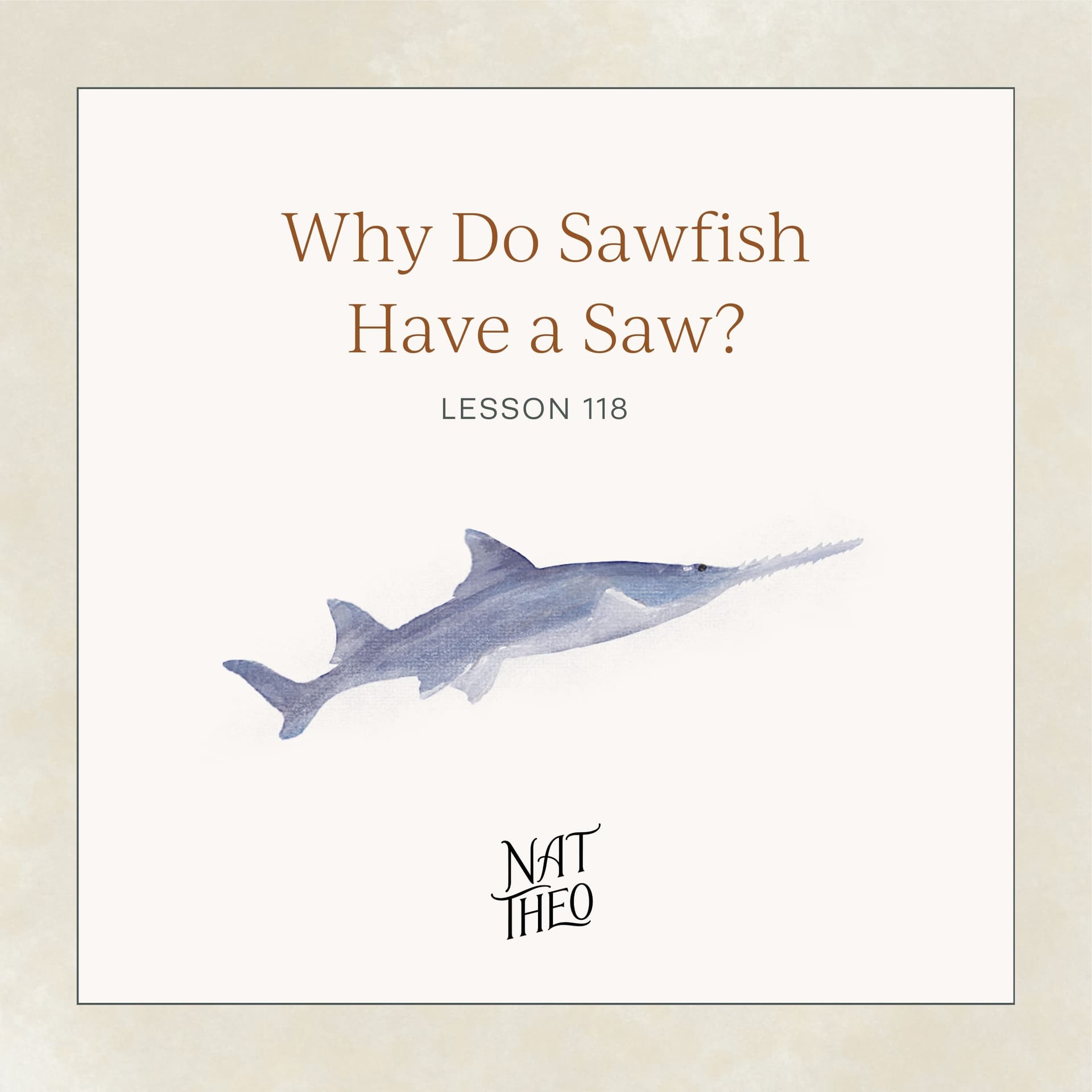
Loading summary
Transcript8 lines
- [00:00]
Erin Lyneum
Have you downloaded the free coloring sheet for this lesson? Click the link in our Show Notes to print and color along as you listen. And join the Nat Theo Club at the link in our Show Notes to receive a full lesson and activity guide and a bonus video of content every single week so you can dive deeper into every lesson. Explore God's Wild and Wonderful World in the Nat Theo club@aaron lyneum.com club or at the link in our Show Notes.
- [00:32]
Child Listener
Hello world. Wake me up to another good Good morning. Time to go.
- [00:40]
Erin Lyneum
Are you ready to explore God's wild and wonderful world? Welcome to the naptheo Podcast. I'm your host Erin Lyneum. I'm a certified master naturalist, Bible teacher and author and I am so excited to dive into God's written word, the Bible and His created world with. My family and I recently visited the Denver Aquarium. We were standing in front of a massive tank full of amazing ocean creatures swimming all around. There was also glass beneath our feet and we could look down and see that there was a sea turtle resting in the sand right below where we were standing. In front of us, all kinds of fish, including big sharks swam past, coming up close to the glass so we could see all of their amazing details. One creature caught our attention right away. A large, long ocean animal with a long, jagged nose. This creature is often called a sawtooth shark because its nose looks like a long saw. But what exactly is this amazing animal? That's what we are diving into today. Here is our trail map.
- [02:12]
Child Listener
Are you ready?
- [02:14]
Erin Lyneum
We are going to learn what is a sawtooth shark. Why do sawfish have a sawfish? Are sawfish born with saws? And how can we tell what is true from what is false? Before we hit the trail, let's thank our sponsor who helped make this lesson possible. Apologia. My kids are growing in faith and wonder with Apologia's award winning science curriculum. In fact, I used their Swimming Creatures of the fifth Day book and researching for today's lesson. Our family is diving deeper into topics like human anatomy, marine biology and physical science with their hands on experiments and student journals. What I love most is that Apologia connects every subject and each lesson back to the truth of God's word. I know that as my kids study science with Apologia, the roots of their faith are deepening as they discover all the evidence we have for God in creation. Explore Apologia's curriculum for Science, Math, Language Arts Worldview and the Bible@apologia.com or the link in our show notes it's time for our trivia question. How many species of sawfish are alive today? A5, B12, C34 or D106? Again, how many species of sawfish are alive today? A5, B 12, C34 or D106? Take a guess and we will find out at the end of today's lesson. And Nat the O Club members, after listening to this lesson, click over to the bonus video where we will learn how scientists are helping to protect God's amazing sawfish. Find that bonus video in your Nat Theo Club dashboard or at the link in our show Notes. Discover more of God's wild and wonderful world with all of our extra videos, resources and nature unit studies in the Nat Theo Club at the link in our show Notes. All right, let's hit the trail. When my family and I visited the aquarium and watched this massive ocean creature with its long saw like nose, it was easy to think, oh wow, that's a sawtooth shark. But a sawtooth shark is a confusing nickname because a sawtooth shark is not a real creature. Now there are two different saw like ocean creatures, the sawshark and the sawfish. Let's look at how we can tell them apart. First, their size. A sawshark, which is a true type of shark, is kind of small. It's only around 5ft or 1.5 meters long, including its long saw like nose. And they are very light, weighing only around 20 pounds or 9 kilograms. A sawfish, on the other hand, is a much larger creature, one that we often see at aquariums. And when I say much larger, I mean much larger. Except for the dwarf sawfish which can be smaller. Sawfish can grow over 20ft or 6 meters long, and they can weigh around 1,200 pounds or a half ton. The second big difference between a sawshark and a sawfish are how God designed them to breathe through gills. A sawshark is a true shark and like other sharks, they have gill slits on the sides of their heads. If you want to learn more about how gills work and how fish breathe underwater, listen to lesson 68, how do fish breathe underwater? Which we will link to in the show notes. Sawfish are a bit different. They do have gills, but instead of on the sides of their bodies, they are underneath their body. And they also have holes on the top of their head behind their eyes called spiracles. A spiracle is a special breathing hole that God designed some animals with, including sawfish. Water comes in through the spiracle hole and flows over the gills which take in oxygen from the water so the creature can breathe beneath water. This design for breathing is very helpful. It means that a sawfish can rest at the bottom of the ocean and still breathe because it can bring in water with oxygen through its spherical holes. There is another big difference between sawsharks and sawfish that I think is the easiest way to tell them apart and that is their long saw like snout. Now before we go any further, let's clarify that their special long snout is called a rostrum. A rostrum is a long flat saw shaped snout with sharp teeth along the edges. Sawsharks. So the ones that are smaller and and are true sharks have uneven teeth along their rostrum snout. Their teeth alternate with long and short teeth so their rostrum looks even more jagged. They also have a set of long barbells coming off their long rostrum right in the middle. They look like a single whisker hanging off each side of their saw like nose. These barbells are extra sensitive and they help the sawshark sense its underwater world and know what's swimming around them. A sawfish does not have these barbells. Instead, its long saw like rostrum is quite uniform with even teeth running along the edges. In both sawshark and sawfish, the jagged edges on their long rostrum or snout are not real teeth. They are a different type of scale like structure called dermal denticles. Dermal denticles are teeth like scales covering the skin of sharks and rays. So what look like sharp teeth and are often called teeth pointing off the sides of a saw shark or sawfish's long snout are actually extra long dermal denticle scales called rostral denticles. Okay, one more difference. The depth at which they swim. Sawsharks and sawfish swim in very different environments in the ocean. Sawsharks are deep sea creatures swimming at depths from 130 to 330ft deep, or around 40 to 100 meters deep and sometimes much deeper. With the Bahamas sawshark swimming at over 3,000ft deep, sawfish swim in much more shallow waters from around 3 to 33ft deep, or 1 to 10 meters deep. Sawsharks and sawfish are two distinct kinds of animals that God created wonderfully and each of them deserve individual attention. But for the rest of our lesson, we are going to focus on the one often seen in aquariums and often confusedly called a sawtooth shark. Why is their name confusing? Because they are not actually sharks. A sawfish, which is often called a sawtooth shark, is a Type of ray. So it is more like a stingray than a true shark. Both sharks and rays are in a class or category of fish called Chondrichthys. Chondricthys means cartilage. While most fish have bones, Chondrichthy, including sharks and rays, do not have bones. Instead of bones they have cartilage. But what is cartilage? Cartilage is a strong tissue that is flexible. Your ears and nose have cartilage inside of them. That's why they are flexible and can bend. Sharks and rays, along with sawfish have no bones in their bodies. That is what classifies them as Chondrichthes fish. Sharks and rays are the two main categories of Chondrichthy's fish with cartilage instead of bones. And the special sawfish we are learning about today is a type of ray. A ray is a type of Chondrichthys. So a fish with cartilage instead of bone that has large wing shaped pectoral fins. These fish look like they fly through the water. They have flat bodies and often hang out on the sandy bottoms instead of constantly swimming. Their mouths are on the bottom of their bodies and they have those spherical breathing holes we learned about that help them breathe. You might be most familiar with a stingray which we will need to cover on a whole separate lesson. But the sawfish, which is often confused as a sawtooth shark, is a ray. The sawfish is a unique ray because unlike most rays that have wide bodies that look like a circle, triangle or diamond, the sawfish has a long narrow body ending in its long saw like snout. While many rays have whip like tails, the sawfish's tail looks similar to a shark's tail, which is one reason it can be confused as a shark. The sawfish's saw like snout, called a rostrum is what really sets this animal apart. But why does it have a long snout with teeth like scales? What is its saw for? Is it for sawing things down? A sawfish uses its saw like rostrum to find and catch prey or other underwater creatures that are on the sawfish's menu for lunch. If you listened to our shark episode, you might remember that sharks are covered in little sensors called ampullae of Lorenzini. We will link to that episode in the show notes. If you are curious about sharks, remember that sawfish are a type of ray in the same larger Chondrichthes category which they share with sharks. Well, one thing that sharks and rays share in common are these ampullae of Lorenzini sensors. Ampullae of Lorenzini are jelly filled sacs or kind of like pores that allow sharks and rays, including sawfish, to sense the electrical field and find food using electrical currents. This is really cool. The sawfish use their long snout kind of like a metal detector for finding food. Of course, they are not looking for metal. Instead, the ampullae of Lorenzini sensors help them detect electricity from other creatures. They can move their long snout back and forth, kind of like you would move a metal detector back and forth. And they can search for food hidden beneath the sand. You see, their sensors detect electricity. No, they don't beep like a metal detector goes off, but they sense electricity from a creature and then their saw like snout switches from detection mode to to sword mode. The sawfish will thrash its long rostrum snout around in the water to stun or wound its prey. The saw like rostrum isn't only like a metal detector and a sword, but also like a shovel. If a sawfish detects a creature beneath the sand, like a tasty crab, it can use its long snout to dig up the crab and then use its snout to pin the crab to the ground before eating it. Once its prey is stunned or dug up and pinned to the ground, the sawfish then eats the prey with its mouth on the underside of its body. So while a sawfish's long saw like snout is isn't an actual saw and it's not used like a saw, it is designed just right to help the sawfish find and catch its next meal. So a sawfish's saw like snout is unique and very helpful. But is a sawfish born with this special saw like metal detector like sword like shovel like nose? It is, but that seems a little bit tricky. How would a mother sawfish give birth to a baby with a built in saw like nose? Maybe the babies come out in a protective egg like many other fish. Nope, A sawfish baby does not come out in an egg. So how is a baby sawfish born? Depending on the species, a sawfish mother can have between one and 14 babies which are called pups. Sawfish give birth in a very special way. They are oviviparous. This type of birth is kind of like a mix of both egg laying and live birth. Here is how it works. Babies grow inside the mother's uterus and are born live and fully developed while they are still inside their mother. Each baby has a big yolk sac like a built in lunch that it feeds on. There are no hard shells and no placenta. It is an egg type set up inside of the mom. So if they do not come out in a hard shell, how does the mother not get hurt from their little baby saw snouts? Well, God thought about this and he made a very smart design to protect the mother sawfish. A sawfish baby's miniature saw like snout is covered in a jelly like substance that acts like a protective sheath to protect the mother from being harmed as she gives birth. The jelly like sheath dissolves quickly after birth because it's no longer needed. So that is how a new sawfish arrives into its underwater world. Sawfish are a great example of a mistaken identity. They are often confused as a shark and called a sawtooth shark. But as we learned, they are not sharks at all. Did you know that we can sometimes be tricked by mistaken identities too? Just as it can be hard to tell a sawfish apart from a saw shark. It can be difficult to tell true teachers of God from false teachers. Sometimes they might look similar. Listen to this warning about false teachers from 2 Peter chapter 2, verses 1 to 2. There used to be false prophets among God's people. Just as you will have some false teachers in your group. They will secretly teach things that are wrong. Teachings that will cause people to be lost. They will even refuse to accept the Master Jesus who bought their freedom. So they will bring quick ruin on themselves. Many will follow their evil ways and say evil things about the way of truth. Sometimes false teachings will be dressed up in pretty packages. They will sound good and convincing, but they will ultimately lead people away from God's truth. Listen to 2 Timothy 4:3 4. The time will come when people will not listen to the true teaching, but will find many more teachers who please them by saying the things they want to hear. They will stop listening to the truth and will begin to follow false stories. How can we know who is teaching a false message and who is teaching God's truth? Well, just like we need to look closely at the details of an ocean creature to see if it's a sawfish or a sawshark, we need to look closely at someone's message and and what they teach about God. Do you remember at the beginning of our lesson how we learned to tell the difference between a saw shark and a sawfish? We looked carefully at their size and where their gills are on their bodies. How their long saw like rostrums differ just a little bit. And what depth they swim at in the ocean. We can do this same investigative work. When we hear someone's message about God, we can see how someone's message lines up according to what God's words say in the Bible. There was a group of people in the Bible who gave us a great example of telling if a message is true or false. They were called the Bereans and we read about them in Acts chapter 17. When the apostle Paul and Silas came to the Bereans town and began preaching about Jesus, the Bereans were excited to hear their message. But they didn't just accept the message right away. Listen to what they did in Acts 17:11. The Bereans were eager to hear what Paul and Silas said and studied the Scriptures every day to find out if these things were true. Did you hear what the Bereans did? They studied the Scriptures every day. Listener, this is the best way that we can know if a message is true or false. We can study God's Word for ourselves. As we study the Scriptures, we will know what is true and what is false. When we hear a message from someone and it says something that goes against God's word, a red flag can raise in our mind and spirit. A red flag warning that says, hey, this is not right. It does not match up with God's Word. So what are some ways that we can study God's Word? We can read His Word every day. If you're not sure where to start, consider starting in the Book of John to read about Jesus time on earth. We can also memorize Scripture. Consider memorizing Psalm 23 or Psalm 1. And one of my favorite ways to study God's Word is is to pray while I read His Word. I ask God to help me understand what I am reading and how it applies to my life. I also ask him to help me remember what I am reading. God's message does not change his good news for us. That Jesus came to earth to live a perfect life and die in our place, taking our punishment for sins and rising to new life. That message does not change. So listeners hold tight to that truth. Don't accept as true any message that goes against it. Remember these words from Galatians 1:7:9. Really, there is no other good News. But some people are confusing you. They want to change the good news of Christ. We preached to you the good News. So if we ourselves or even an angel from heaven should preach to you something different. We should be judged guilty. I said this before and now I say it again. You have already accepted the good news. If anyone is preaching something different to you, let that person be judged guilty. Let's be those who study God's Word every day and store up his truth in our hearts and minds so we can spot what is true from what is false. Here is my prayer for you from Colossians 3:16 Let the teaching of Christ live in you richly. Use all wisdom to teach and instruct each other by singing psalms, hymns and and spiritual songs with thankfulness in your hearts to God. It's time to answer a question from one of our listeners. Here is today's question.
- [24:02]
Child Listener
Hi, my name is Hendricks Young and I'm seven years old. My name is Ajahn and I'm five and we want to know why mockingbirds are called mockingbirds.
- [24:15]
Erin Lyneum
That is a great question, Hendricks and Eisen. Why are mockingbirds called mockingbirds? Mockingbirds got their name because they mimic or mock sounds that they hear. Their scientific name even means many tongued mimic. Mockingbirds will most often copy the songs of other birds, but they have also been heard imitating sounds like sirens and bells. God designed some birds, including mockingbirds, to make sounds through a special voice box called a syrinx, which is found at the bottom of a mockingbird's trachea or windpipe. Quickly contracting muscles push air through the syrinx and then the syrinx's tissues vibrate as air passes over them, allowing the mockingbird to produce the many sounds that they make. The mockingbird is an amazing example of God's wonderful creativity and expert engineering in the creatures he has made. Thanks for your great question, Hendrickson Eisen. Stay curious about God's wild and wonderful world and Nat Theo Club members. Remember to click over to the bonus video to learn how scientists are helping helping to protect God's amazing sawfish. Find a link to that bonus video in your nattheo Club dashboard or the link in our show notes. It's time to answer our trivia question. How many species of sawfish are alive today? A5, B12, C34 or D106? The answer is A. There are only five types of sawfish alive in the world today that we know about anyways. They are the small tooth sawfish, large toothed sawfish, green sawfish, dwarf sawfish, and the Nauru sawfish. While all five species are considered endangered of going extinct, people are working to protect them so that we can hope to keep enjoying these wild and wonderful creatures that God designed. Now it's your turn to explore. Look for other creatures in search of their next meal. Can you find a bird searching for berries or insects? Or a squirrel looking for a hidden acorn? What about a spider weaving a web to catch an insect, watch and stand. Stand in awe of how God designed creatures to be able to find what they need, including the sawfish with its electric sensing saw shaped snout. And if you have an aquarium nearby, ask your parent or caregiver to call and ask if they have sawfish and schedule a visit to go watch this amazing creature. Thank you so much for listening. If you enjoyed this lesson on the sawfish, please take a moment to send it to a friend and subscribe. Rate and review Nat Theo wherever you listen. Until next time, keep exploring God's wild and wonderful world.
- [27:25]
Child Listener
We are all looking for adventure. We are all looking for adventure. We are all looking for adventure. We are all looking for adventure.