← Nat Theo Nature Lessons Rooted in the Bible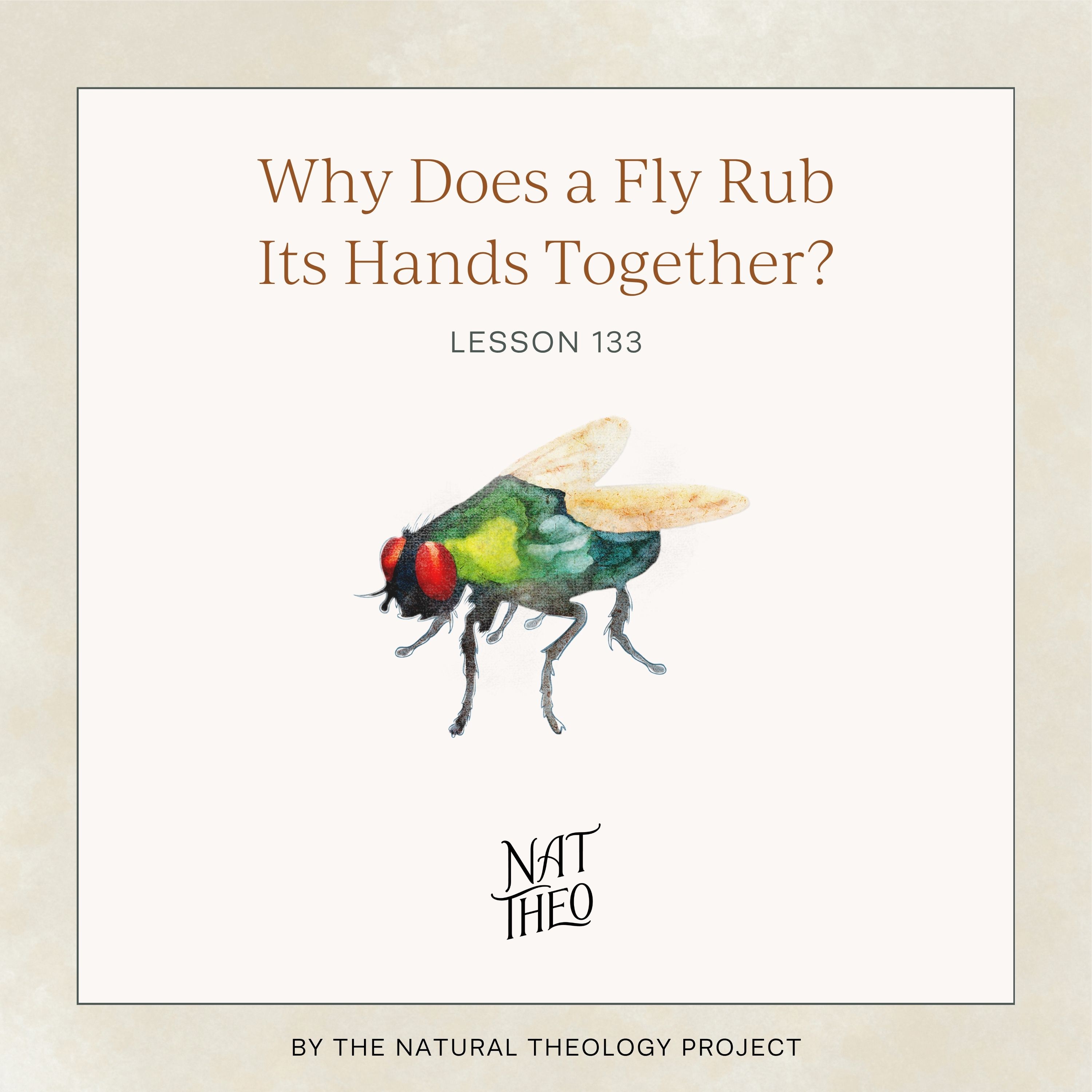
Nat Theo Nature Lessons Rooted in the Bible
Why Does a Fly Rub Its Hands Together? Lesson 133
00:26:46
Loading summary
Transcript14 lines
- [00:01]
A
Every NAT Theo lesson comes with a free coloring page so you can color as you listen. Download this lesson's coloring page at the link in our show notes and explore every lesson further in the NAT Theo Club or with our Bible and Nature Unit Studies. Enjoy science, the Bible, experiments, arts and crafts, nature journaling, outdoor activities, recipes, geography, video teachings, and more in the Nat Theo Club or Unit Studies. Find it all@natttheo.com Club.
- [00:40]
B
Hello world. Wake me up to another good Good morning. Time to go.
- [00:48]
A
Are you ready to explore God's wild and wonderful world? Welcome to the naptheo Podcast. I'm your host, Erin Lynam. I'm a certified Master naturalist, Bible teacher and author and I am so excited to dive into God's written word, the Bible and His created world with you. Have you ever been playing outside and and a fly kept landing on your skin and tickling you? Or maybe you were having a picnic and it was trying to steal some of your sandwich or watermelon Flies can be bothersome, but they are also quite amazing to watch. How do these small creatures zip and turn and fly so quickly through the air? How can they land upside down and crawl across a ceiling? These are some of the questions we are exploring today. And however you feel about house flies, whether you think they are annoying or interesting, or maybe both, I think you will be amazed at how God designed these flying acrobats. Here is our trail map.
- [02:09]
C
Are you ready?
- [02:11]
A
We are going to learn where do flies come from? How do flies dodge fly swatters? Why do flies rub their hands together? And how can we keep our heart clean before we hit the trail? Let's thank our sponsor who helped make this lesson possible. CTC Math Whether you are out counting flower petals or estimating birds in a flock, CTC Math can help. CTC Math's simple video lessons teach math in a way that makes sense, helping students build new skills step by step at their own pace. Practice questions help reinforce every lesson and when a student gets an answer incorrect, they can view a fully worked solution so mistakes become opportunities to learn. CTC Math has helped over 200,000 students, including my own, grow in math skills and confidence. Try it risk free with a free trial and a 12 month money back guarantee at C ctcmath.com and save half off at the link in our show notes. It's time for our trivia question. How many eyes does a housefly have? A2B4C5 or D8? Again, how many eyes does a housefly have? A2B 4C5 or D8. Take a guess and we will find out at the end of today's lesson. And Nathio Club members after this lesson, click over to the bonus video to see videos I took of a house fly under the microscope and we will answer the question, do flies really throw up on food? You can find that bonus video in your Nat Theo Club dashboard or at the link in our show Notes. All right, let's hit the trail. Each spring, without warning, flies return. After a quiet winter, they come buzzing back. But where do flies come from in the first place? Some flies survive the winter by finding dark, warm spaces to hang out and cozy up. Some go into a deep rest called diapause, and some die off after laying eggs, which hatch in the spring. And when spring rolls around, houseflies get active. It can feel like they show up all of the sudden. It was because of this appearing act that they were once thought to come out of. Well, to come out of nowhere. People in history thought that flies simply appeared out of nothing. This idea is called spontaneous generation. Spontaneous generation is the opposite of a disappearing act. It is an appearing act. It is the idea that something living can suddenly come from something not living. In this case, scientists noticed that flies suddenly appeared on rotting food or on poop. They thought that flies. Well, that they just showed up one day coming from the rotting food or some type of animal, scat or feces. Of course, this was not the case. Life does not come from something not alive. All life comes from God. And God designed the housefly not to mysteriously appear in poop, but to hatch from a tiny egg. This mysterious case was cracked in the 1600s when scientists discovered that flies lay itty bitty eggs, often on meat, that hatch into baby flies, which are called maggots. Maggots are the larvae or the baby form of flies. They are soft and look like little worms. A maggot hatches from an egg and later grows into an adult fly. So flies do not come out of nowhere. They hide and rest in the winter or die. After laying eggs, their eggs hatch into maggots, which grow into adult flies. It's a wonderful life cycle engineered by our wise and Creator, God and wise and caring. He is because even if flies can be pesky in a fallen world and sometimes even carry diseases, we can glimpse God's purpose in a housefly. They are important pollinators designed to spread pollen and help plants grow. Flies are also an important food source for many other creatures, including frogs, toads, birds, bats, lizards and spiders. In fact, I am pretty sure that Houseflies are the favorite meal of my pet jumping spider, Clark. Flies are in the order or category of insects called Diptera. Diptera is the order of true flies, including house flies, horseflies, fruit flies, gnats, crane flies and mosquitoes. Diptera means two winged. So can you guess what is true of all the flies in the Diptera category? They have a set of two wings. This is unique for many winged insects. Many insects with wings have two sets of so four wings total. But not true flies. Think about a dragonfly. Do you think a dragonfly is a type of fly? Dragonflies have two sets of wings, so they have four wings total. So even though they have fly in their name, they are not a true fly. What about a butterfly? Is a butterfly a fly?
- [08:36]
C
Nope.
- [08:37]
A
They have four wings, so they are not in the Diptera or fly order. What about a glowing firefly? Do you think a firefly is a type of fly? No, a firefly is a type of beetle and it has four wings. Here is a trick. If you hear of an insect with fly in its name, count its wings to see if it is a true fly. Does it have more than two wings? Then it is not a true fly, even if it has fly in its name. True flies have only one set of wings. But that is not a problem for them because God designed flies with a special flying mechanism that helps them navigate through the air with incredible agility and precision. In other words, they are expert flyers. So how do flies fly so well? God designed flies with something called a halter. Can you say that? Halter? A halter is a tiny knob shaped organ behind a fly's wings that helps the fly balance while it flies. If you watch a fly closely, you can see the tiny halter right, right behind each of its wings. It looks like a tiny yellowish stick with a round knob at the end. How exactly do these tiny knobs help a fly balance? The halters are full of sensors called campaniform sensilla that feel movement as the fly turns or tips. These sensors send messages to a fly's nervous system, helping the fly adjust its wings and stay balanced while in the air. So flies are great at staying in balance, but what about when they need to make quick, sharp turns, such as when a fly swatter is about to smack them? This is where the design goes even deeper. Remember that the halters have tiny sensors that send important flight information to the fly's nervous system. Well, that is not the only messaging going on. The halters are also connected to the fly's optical system or Eyesight. When the fly's eyes see something such as an incoming fly swatter, it can adjust the halt tears so it can make sharp sudden turns. So the fly does not turn off its stabilizing halters to make sudden movements. Instead, it tunes the halt tier balancers in moment by moment with information from the sensors and what the fly is seeing. What does all of this mean? God designed a fly's eyes, wings and halters to all work together with a whole lot of information passing between them to help the fly stand gear, balance and move quickly through the air. That is some expert engineering. So flies are amazing at flying, but what about when it is time to land? Maybe you have seen a fly land on a smooth glass window or even more impressive, upside down on a ceiling. How do they not fall down? A fly's sticky landing is another masterful work of engineering. Just like a human rock climber or a hiker needs special gear, a fly needs special gear for walking upside down across ceilings. But they don't go to a store to buy their gear. It is built in God equipped houseflies with tools on their feet to help them cling to surfaces with ease. At the tip of each foot are claws that help them grasp onto rough surfaces. But what about a smooth surface like a glass window? The claws cannot dig into the glass so they use another built in tool which is special footage foot pads. Each of the fly's six feet have two fatty pads called pulvilli. The pulvillae are covered in tiny hairs called setae. The hairs make a sticky glue like substance. It is these sticky foot pads that allow a fly to cling to almost any surface. Flight is not the only thing that makes us curious about flies or how they walk upside down across a ceiling. One of our listeners sent in this great fly question.
- [13:33]
C
Hello, my name is Maverick and I am 8 years old and I live in Colorado and I want to know why flies rub their hands together.
- [13:41]
A
I'm really glad you asked this question, Maverick. Flies rubbing their hands together is very interesting to see. Are they rubbing their hands together in anticipation of a tasty meal?
- [13:58]
C
Yummy.
- [13:59]
A
A fly does not rub its hands together because it's excited to eat. It is more purposeful than that. First, what looks like a fly's hands are actually its feet. Like all insects, flies have six legs and they rub together their front feet. But why do they do this? To stay clean. This might be surprising because flies are often thought of as dirty creatures. Think about where you might find flies. I'm going to play Music for a few moments. And I want you to list the places where you might find flies. Where are some of the places where you might expect to see a fly? Perhaps near a garbage can or dumpster, or on a pile of animal poop, on rotting meat, or on the carcass of a dead animal, such as road kill. Yuck. Flies hang out in some gross places, and as we learned earlier, that is often where they lay their eggs. However, even though they hang out in dirty places, flies care about being clean. Do you think it's because their mother always taught them to scrub their feet and behind their ears? No. It is because they need to keep their feet clean in order to find food. You see, it's not only those halter knobs behind their wings that are covered in sensors. Their feet, antenna, and other parts of their body are also covered in sensors. Flies are covered in sensors that help them feel what is going on around them. A fly has special taste sensors on their feet called called chemoreceptors. These help a fly taste its food before it actually eats it. That's right, a fly can taste through its feet. This helps them decide whether something is tasty and good to eat, or if they should leave it be. In order to taste with their feet, they need to keep their feet clean. Imagine walking around barefoot all day as you play outside. Maybe you run through some dirt or sand or grass. How do your feet look after a day of barefoot play outside? They probably have some dirt and maybe other things sticking to them. Would you want to use your feet to eat? No, of course not. And the same is true of a fly. They don't wear shoes, so they clean their feet often. If you watch a fly closely, you might notice that it not only rubs its feet together, but it also uses its legs and feet to clean its head and large eyes and its back and its wings. Its front legs are covered in hairs that act kind of like cleaning brushes. So flies care about cleanliness not necessarily because they want to look good, but because they need to keep all the tiny sensors that God gave them clean so they know what's going on around them and can find food. Think about a housefly working so hard to keep itself clean. Do you think it's important for us to be clean? Have you ever heard the saying, cleanliness is next to Godliness? Cleanliness is next to godliness means that keeping yourself and the places around you clean is a good and wise habit. But this saying is not actually in the Bible. This saying became popular after a theologian named John Wesley shared it in a sermon in 1791. However, even though cleanliness is next to godliness is not directly from the Bible, God's Word does have a whole lot to say about being clean. Of course, it's good to keep our bodies clean, especially after a day of playing outside in nature. But the Bible talks more about keeping our hearts clean. You see, sin makes a heart dirty. Sin makes all of our hearts dirty. The dirt of sin can be wrong things that we think or say or do that goes against God's ways. That sin separates us from God because God is holy, which means he has no sin. But there is great news on the cross. Jesus took our sin on himself and died in our place, taking our punishment for sin. Now when we follow Jesus as our Savior, our hearts are made clean. And listen to this. We don't need to keep scrubbing up our hearts like we might need to scrub our feet each evening after playing outside. No, Jesus cleaned our hearts forever. When God looks at us, he no longer sees the dirt of sin. He simply sees us completely clean and acceptable in his sight because of what Jesus did for us. 1 John 1:9 says, but if we confess our sins, he will forgive our sins because we can trust God to do what is right. He will cleanse us from all the wrongs we have done and listen to these precious words that Jesus spoke to his disciples in John 15:3. You are already clean because of the words I have spoken to you. When we believe what Jesus says and that he died for us, we are made clean forever. However you might be thinking, But I still do wrong things sometimes. Maybe you struggle to get along with a sibling or a friend. Or perhaps you have said mean things. Or maybe you have a hard time telling the truth or not giving in to temptation. Listener while we still live on a world that is broken by sin, we will still struggle to follow God's ways. We are free from the punishment of sin, but not yet free from the presence of sin. When we struggle, we can pray with the Psalmist in Psalm 51:10 Create in me a clean heart, O God, and renew a right spirit within me. We can pray this prayer with boldness, knowing that God already sees us as clean. We are completely forgiven and accepted, and God is patient with us in our struggles, always there to give us strength when we need it. In the study of the Bible, we call this the already and not yet. Can you say that already and not yet? It means this. We are already made right with God and free from sin's punishment. But we are not yet fully in God's presence and free from the presence of sin, fully saved, but still living in a broken world. Remember this, listener. We are not like houseflies. We don't need to keep cleaning ourselves up. Sin's dirt has no claim on our hearts. Instead, we can have peace knowing that God sees us as clean and free from sin's punishment. And day by day, as we still live in the presence of sin, he is helping us live clean lives that honor Him. Never let the shame of sin hold you down and never let it hold you back from God's good plans and purposes for your life. If you follow Jesus as as your Savior, you are clean indeed. It's time to answer a question from one of our listeners. Here is today's question.
- [22:34]
C
My name is Julia. I'm four years old and I moved from Nebraska to South Carolina and my question is how can cat clouds get so, so sharp?
- [22:50]
A
That is a great question, Julia. Have you ever seen a cat scratching at a scratching post? Or maybe on a door frame or a piece of furniture? I had to pin clear plastic to the corners of my family's couches because our cat Fisher likes to scratch them up. Scratching furniture might be annoying and even costly to us, but this behavior can help cats keep their nails sharp. A cat's claws and your fingernails are made out of a material called keratin. God designed a cat's claws to have layers of keratin that never stop growing. When a cat scratches its claws against something, it might be trying to shed the dead outer layers. It can be painful when a cat scratches you, but in the wild, cats need to use those claws to catch their food. Your pet cat doesn't have to work hard for its meal, but in our fallen world, a cheetah or other wild cat has to hunt down and catch its dinner or defend itself against predators. Sharp claws definitely come in handy then. If we have pet cats, we can do them a favor by having a scratching post for them to file their claws on. Thanks for your great question, Julia. Stay curious about God's wild and wonderful world and at the O Club members, remember to click over to the bonus video where I'm going to show you videos I took of a housefly under the microscope, including the tiny foot pads on their feet, and we will answer the question do flies really throw up on food? Find that bonus video in your Nat Theo Club dashboard or at the link in our show notes. It's time to answer our trivia question. How many eyes does a house fly have? A2B4C5 or D8. The answer is C. A housefly has five eyes, but they are not all the same. The two big eyes that we see are called compound eyes, and each one can have thousands of lenses that help the housefly see almost all the way around it. A housefly also has three small, simple eyes called oceli on top of its head that help it sense light and find its way. Their five eyes are another way that God made them just right for for their flying lifestyles. Now it's your turn to explore. See if you can spot the halters on a house fly. Find a fly perhaps in your house where it can't flee too far. While you are trying to observe it slowly get as near to the fly as you can. See if you can spot the halter, which looks like a small yellow knob behind each wing. It might be helpful to use a magnifying lens if you have one. Imagine all the information passing between the halters, eyes, nervous system and flight muscles. So much design wrapped up in a tiny package. God is such an excellent inventor. Thank you so much for listening. If you enjoyed this lesson on the How Housefly, please take a moment to send it to a friend and subscribe. Rate and review Nat Theo wherever you listen. Until next time, keep exploring God's wild and wonderful world.
- [26:25]
B
We are all looking for adventure. We are all looking for adventure we are all looking for adventure we are all looking for adventure.