← Nat Theo Nature Lessons Rooted in the Bible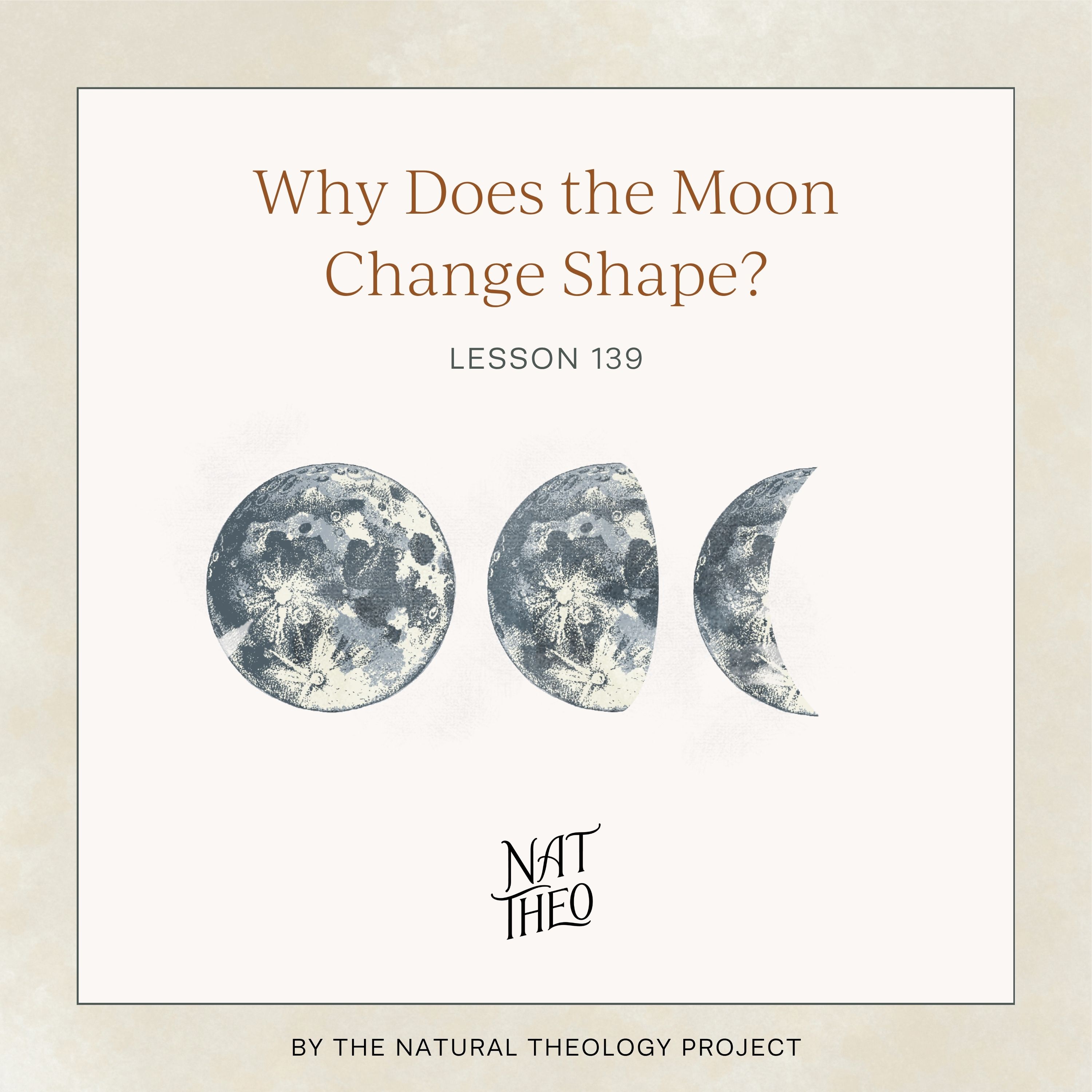
Loading summary
Transcript12 lines
- [00:01]
Erin Lyneum
This month we are blasting off to the Cosmos in an Outer Space series. Make sure to grab the free coloring sheet for every space lesson at the link in our show notes. Dive in deeper with Bible Based Nature and Science Curriculum by Nat Theo right in time for the new school year. And did you know that both of my new books for families are now available for pre order order Where Wonder leads and made to marvel at the link in our show notes or@Natttheo.
- [00:36]
Narrator/Intro Voice
Hello world. Wake me up to another good Good morning. Time to go.
- [00:44]
Erin Lyneum
Are you ready to explore God's wild and wonderful world? Welcome to the naptheo Podcast. I'm your host Erin Lyneum. I'm a certified master naturalist, Bible teacher and author and I am so excited to dive into God's written word, the Bible and His created world with. Have you ever seen a huge bright moon rising in the night sky? Have you noticed that the moon looks differently throughout the month? Or maybe you have realized that there was no moon in the night sky and wondered where it went? Today we are launching into our month long space series and beginning with something that we see most nights but might have some curious questions. The Moon. The moon can be mysterious, but as we unlock its mysteries, we begin to notice how carefully God made the moon. Which is a good thing because the moon has many important jobs to do. Genesis 1:16 tells us so. God made the two large lights. He made the brighter light to rule the day and made the smaller light to rule the night. He also made the stars. God made the moon to rule the night, but how exactly does it do that? Let's blast off into space and discover God's creativity and wisdom in the ways he made the moon. Here is our trail map.
- [02:35]
Listener/Child Questioner
Are you ready?
- [02:37]
Erin Lyneum
We are going to learn what is the Moon? Why does the Moon change shape? Does the Moon have gravity? And why did God make the moon? Tomorrow we will have a special guest joining us, Levi Lusko. We will hear how God's designs in the moon inspired him to write two moon books that share God's truth and the gospel message. So tune in tomorrow to continue our marvelous Moon conversation. Before we launch off to the Moon, let's thank our sponsor who helped make this episode possible. Apologia. I had a blast preparing for this month's Outer Space series using Apologia's Exploring Creation with Astronomy course. It's the perfect way to introduce Students K through 6th grade to astronomy while growing their faith. You can get it 25% off through August 31st with Apologia's site Wide Summer Sale Explore the Sun, planets, the asteroid belt, then zoom beyond our solar system to discover God's designs in galaxies, nebulae, and even black holes. Holes as they reveal the marvel and might of our loving Creator. Use the accompanying student journal with hands on activities to create your own mini books, master space vocabulary words and record the phases of the moon. Apologia's Exploring Creation with Astronomy course is the perfect way to blast off into space, study and tie every lesson Back to God Save 25% with Apologia's site wide summer sale through August 31st at apologia.com or at the link in our Show Notes, it's time for our trivia Question if you stood on the moon, what color would the sky be? A White, b Blue, c Red or D Black? Again, if you stood on the moon, what color would the sky be? A White, B Blue, c Red or D Black? Take a guess and we will find out at the end of today's lesson and Nat Theo Club members. After this lesson, click over to the bonus video where we will learn about lava on the Moon. You can find that bonus video in the show notes or in your Nat Theo Club dashboard. Alright, let's hit the trail. We see the moon on most nights, but have you ever wondered what is the moon? We Learned on lesson 112 that the sun is a star. Is the moon also a star? Or is it a planet? Or a meteor or a comet? Nope, the moon is none of those things. The moon is a satellite. Maybe that surprises you. Like it surprised me when I learned it. I had always thought that satellites were big metal things that humans launched into space, which they can be. But there is a lot more to satellites than than the kinds made by humans. A satellite is an object that moves in a curved path around a larger object in space. Wait, the Earth moves in a curved path around the sun, which is larger than Earth. Does that mean that the Earth is a satellite? It does. Even though Earth is a planet, it is also considered a satellite of the Sun. The Moon is a satellite of Earth because it is smaller than Earth and it travels in a curved path around the Earth. Kind of like an oval. There are two main types of artificial satellites and natural satellites. An artificial satellite is a machine people build and send into space to or another object. Can you think of reasons why people send artificial satellites into space? Some of the satellites take pictures and help scientists research Earth from up above to learn more about space or predict weather patterns. Other satellites help send data and information or are used for things Like GPS and helping people navigate. Some satellites help with television and phone signals. Long before there were ever artificial satellites, though, there were natural satellites made not by humans, but by God. A natural satellite is an object in space that travels around a larger object and was not made by people. So the Moon is a natural satellite. It's made from dust, rock, and minerals. And its core at the center is mostly made of metals. If the Moon is made from rock, how does it seem to change shape? Have you ever tried to change the shape of a rock? It cannot mold like clay. And although some thin pieces of sandstone can be broken, for the most part, rock is very hard to break. Before we explore the shape of the Moon, we need to understand something. The Moon does not make its own light. The whole reason that we can see the Moon in dark outer space is because it reflects the Sun's bright light, kind of like light shining off a mirror. Do you know that we are similar to the Moon in this way? God shines his light on us and we reflect that light to others around us. First John 1:5 says, God is light, and in him there is no darkness at all. God Himself is light. He shines his goodness, love and truth into us. Matthew 5:16 says, you should be a light for other people. Live so that they will see the good things you do and will praise your Father in heaven. Every time you see the Moon shining in the night sky, I hope you will think about it reflecting the sun and remember that God's light shines in us and we reflect it to the world so they can see Him. What does all of this light reflecting have to do with the shape of the Moon? The Moon is not always in the same place. It travels in a curved path around Earth. This oval shaped path is called an orbit. An orbit is the path one object takes as it moves around another object in space. The moon takes around 28 days to orbit or travel around Earth. As the Moon moves in its curved path around Earth, the Sun always shines on half of the Moon. But from Earth we see different amounts of that sunlit half. Sometimes we see only a thin sliver of light. Sometimes it looks to us like half of the Moon is lit up. Sometimes we see the whole bright face of the Moon. These changing shapes are called the phases of the Moon. So the Moon itself is not changing shape, even if it looks like it to us here down on Earth. Instead, we see different parts of the Moon lit up by the Sun. Throughout the month, the different phases of the Moon have different names. Do you know what they are. I'm going to say them for you. Don't worry about memorizing them right now. After I say them, I'll give you some hints for how to remember them. Are you ready? Here are the phases of the moon in order. New moon, waxing crescent, first quarter, waxing, gibbous, Full moon, waning, gibbous, third quarter, waning crescent. Then it starts the cycle over again with a new moon. Words like waxing, waning crescent, and gibbous might be unfamiliar and seem hard to remember. But here are some tips for becoming familiar with the moon's phases. A new moon is actually when we do not see the moon. Can you think of why we cannot see it? During a new moon phase, the moon is in the same part of our sky as the Sun. It rises around sunrise and sets around sunset. The sun is shining on the far side of the moon, the side facing away from Earth. The side facing us is dark. Because the moon is near the bright sun in the daytime sky, we cannot see it. And at night, the new moon is not up in the sky to reflect sunlight back to us. So during a new moon phase, we do not see the moon. Then, as the Moon continues its path around Earth, we begin to see the sunlight hitting it a little bit at a time. This is when the moon is waxing. Waxing means the lit part we see is growing and getting bigger. During the first half of the cycle, the moon is waxing. Each night we see more and more of it lit up. What happens when the entire side of the moon facing Earth is lit up by the sun? That is a full moon. A full moon happens about halfway through the moon cycle. This is when the moon is on the opposite side of Earth from the Sun. The Sun's light shows us the whole side of the moon facing Earth. So to us, it looks full. After the full moon, we begin to see less and less sunlight hitting the Moon. This is when the moon is waning. Waning means the lit part we see is shrinking and getting smaller. Waning happens during the last half of the cycle. Each night, we see less and less of the moon lit up. Okay, that was a lot. Here is what we know so far. The new moon looks invisible to us as it's in the same part of the sky as the sun. Sun. The moon begins waxing as the lit up part we see grows bigger until reaching a bright, beautiful full moon. Then it begins waning. And the lit part we see shrinks until we're back at an invisible new moon. What about the other moon? Phase words we heard crescent, gibbous and quarter. Crescent is when the lit up part looks like a sliver or a fingernail. Gibbous is when we see a lot but not all of the moon lit up. It's right before or after the full moon. And quarter means that to us it looks like half of the moon is lit up. But wait, why call it quarter if half of the Moon is lit up? Well, the first quarter phase is when the Moon has completed 1/4 or its voyage around the Earth. And the third quarter phase is when the moon has completed 3/4 or 3,4 of its voyage. Also during these phases, we see one quarter of the Moon lit up. Think of the moon like a ball. If you cut that ball in half twice, you will have four quarters. During the first quarter or third quarter moon phase, we see one quarter or one fourth of the Moon lit up. That was a lot of new words. Are you confused? If you are, don't worry. Simply remember that the Moon's phases are the changing shapes of the Moon. And as seen from Earth. You can work on memorizing its eight phases later. But for now, just remember we see the Moon as different shapes because it travels around the Earth each month. And from Earth we see different amounts of sunlight hitting the moon. Do you think you could breathe if you were standing on the moon? Nope. That's why astronauts who have been on the moon had to wear special space suits with built in oxygen. One of our listeners sent in this great question.
- [16:31]
Listener/Child Questioner
Hello, my name is Lenny and I am 7 years old and I live in Washington State. And my question is why is there oxygen on Earth but no oxygen in space?
- [16:47]
Erin Lyneum
That is a wonderful question. Why is there oxygen on Earth but no oxygen in space? Space does not have air like Earth does. It is mostly empty, so there is no thick atmosphere to breathe. There are oxygen atoms in space, but not in breathable air like we have here on Earth. Earth has oxygen in breathable air because God designed our planet with an atmosphere that holds air close to us. Space does not have a blanket of air. So astronauts have to bring oxygen with them in order to breathe. It's another way God made Earth just right for us. What about gravity? Have you ever wondered if there is gravity on the Moon? Gravity is an invisible pull between things that have mass. Gravity is what keeps us on the ground instead of floating around. It's what causes us to fall back to the ground after we jump. Earth's gravity pulls us toward Earth's center, while the Moon does have gravity also but it's weaker than Earth's gravity. That is because the Moon has less mass. It's much smaller and lighter than planet Earth, so its gravity is not as powerful. What do you think would happen if you were standing on the Moon and jumped? You would jump higher than you would here on Earth, and you would fall back down slower than you would on Earth because of the Moon's weaker gravity. You would also weigh a lot less than you do on Earth. You would weigh around one sixth of your body weight on the Moon. This means a person who weighs 100 pounds on Earth would weigh around 16.6 pounds on the moon, or about the weight of a large house cat on Earth. So the Moon's gravity is not as strong as Earth's, but it does have gravity. And the Moon's gravity is designed just right to help us out here on Earth. The Moon's gravity is very, very important for our oceans on Earth. But wait, how can an invisible force on the moon around 240,000 miles away, have an effect on our oceans? Have you ever heard of an ocean's tides? Ocean tides are the regular rise and fall of ocean water on the shores each day. Maybe you live by an ocean or have visited one and seen this. The ocean's waters move closer and farther from the beach throughout the day. My family experiences this when we explore near the ocean. We love beachcombing, which means looking for rocks and shells and creatures on the beach. Beachcombing is especially fun when the tide is out. That means the ocean water has moved farther away from shore, and more sand, rocks, and tide pools are uncovered for us to explore. But we have to be careful when we do this. When the tide comes back in, the water moves higher up the beach again. Sometimes water can fill in behind us, covering the path we used to walk out. Then we could become stuck on a sandbar or on a rock or a far part of the beach with water between us and dry land. That is why it's very important to watch the tide and head back before the water comes back in. What does the Moon have to do with ocean tides? It is the Moon's gravity, that invisible force that causes the ocean's waters to move closer and farther from the beaches each day. The Moon's gravity pulls on the ocean waters On Earth, this pull helps create ocean tides. Water bulges slightly on the side of the Earth facing the Moon and also on the far side of the Earth. As Earth turns, different places move through these bulges, and the ocean water rises and falls along the shores Our moon is very special. It is much smaller than Earth, but compared to Earth, it is a large moon. It is also close enough for its gravity to pull on our oceans. And God designed the Moon at just the right size and distance to help create the steady rhythm of ocean tides. In other words, God designed the Moon just right to control ocean tides. Why is this important, though? Well, ocean tides are important because they help keep ocean waters moving. This movement keeps beaches clean and refreshed with new water and brings nutrients to plants and animals. It also helps many shore creatures find food and create special habitats like tide pools, mud flats, and marshes. Tides also help people by making it easier for boats to travel in and out of some harbors. God knew exactly what he was doing when he created the moon. Do you think the moon has other jobs besides controlling the tides? It does. The moon gives us light during the night, especially during a beautiful full moon. That moonlight can help nocturnal creatures that are active at night find their way and locate food. Scientists are studying how the moon's reflected light, gravity, and phases affect creatures and plants down here on Earth. Some animals use moonlight to know when to hunt, hide, travel, and gather together. Some ocean creatures even use the moon's cycle to know when it is time to lay eggs. It has taken scientists a long time to figure out all of the moon's many purposes, and I'm sure that there are more to discover. But right at the beginning of the Bible, God tells us one of the reasons that he made the moon. Genesis 1:14 says, Then God said, let there be lights in the sky to separate day from night. These lights will be used for signs, seasons, days, and years. God made the moon to help humans track time and know what time of year it is. It's helpful for us to know what day, week, and month and year it is. But think back to a time on Earth. Before clocks and calendars, people needed to know the best time to plant and harvest crops. The moon helped them to know when to do these activities. The word moon means month and comes from from a word meaning to measure time. God gave us the moon to measure time. When we know what time, day, week, month, and year it is, we can better use our time. Here's an example. Around a year ago, I was enjoying watching a meteor shower with my husband, kids, and my parents. Watching the meteor shower gave me the idea to do a small space series on Nat Theo. I wanted the space series to air during the Perseid meteor shower this year, which is in August, So I knew I had one year to plan this series I set myself some goals for when to begin researching and preparing lessons and guest interviews. Because I was aware of time and how long a year is, I could plan for this series and be faithful in those preparations. God gave us the moon because he wants us to track time, to be aware of time, and to use it well because time is a gift from God. Ephesians 5, 15:16 gives us these instructions, so be careful how you live. Do not live like those who are not wise, but live wisely. Use every chance you have for doing good because these are evil times. Listener, let's not let time pass us by. Let's use our time to delight in God and serve Him. How can we do that? We can enjoy time in his creation, spend time reading and spending studying and memorizing His Word, the Bible, spend time worshiping him and sharing his truth with others and praying to Him. As we follow God, we can trust him with our time. As you watch the moon and it seems to change shapes throughout the month, remember that time is a gift from God and we can trust him with it. And think About Psalm chapter 31 verses 14 to 15 which say but I trust in you Lord. I say, you are my God. My times are in your hands.
- [26:59]
Listener/Child Questioner
Foreign.
- [27:04]
Erin Lyneum
It's time to answer a question from one of our listeners. Here is today's question.
- [27:08]
Listener/Child Questioner
Hi, my name is Brennan and I'm five years old and I live in Minnesota and my question is how do ants talk?
- [27:18]
Erin Lyneum
Thanks for your great question Brennan. How do ants communicate with one another? God designed ants to communicate with one another mainly through special chemicals called phero. Ants leave a trail of pheromones as they travel from place to place, leading other ants in the direction that they should go. Scientists have also discovered that some ants have a special spike on their bodies that they sometimes rub with their back legs. Some scientists believe that this action makes a very quiet noise that only ants and special equipment can hear. The scientists believe that ants rub this spike when an ant needs help and the noise it gives off is like an emergency alert signal letting other ants to know to come to help. That's a really fun theory to think about. While ants might not be able to say hello to a friend like you and I can, God gave them their own special messaging system so they can communicate with one another. Thanks for your great question Brennan. Stay curious about God's wild and wonderful world and Nat Theo Club members. Remember to click over to our bonus video where we will learn about lava on the moon. Find that bonus video at the link in our show notes or in your Nat Theo Club Dashboard. Alright, it's time to answer our trivia question. If you stood on the moon, what color would the sky be? A white, B B blue, C Red or D Black? The answer is D black. If you were standing on the surface of the moon and looked up, you would see a black sky even if you were on the side of the moon being lit up by the sun. This is because the moon does not have a thick atmosphere like Earth does. Our beautiful blue daytime sky on Earth is thanks to God's design of the atmosphere. When sunlight enters our atmosphere and gets scattered, blue light scatters the most, which is why our sky looks blue. But that does not happen on the moon. With no thick atmosphere to scatter the sunlight, the sky looks black. Remember Tomorrow Pastor and author Levi Lusko joins us to share about his moon inspired books and how God's design in the moon has grown his faith. So tune in tomorrow to continue our marvelous Moon conversation. Now it's your turn to explore. Go on a moonlit walk. Ask your parent or caregiver to help you research when the next full moon is. Ask them to take you on a moonlit walk or to watch the full moon moon rise the following week. Watch as the moon wanes and you see less and less of it lit up each night. As you watch these rhythms, marvel at how God made the moon so beautiful and to help us measure time. Thank you so much for listening. If you enjoyed this lesson on the moon, please take a moment to send it to a friend and subscribe. Rate and review Nat Theo wherever you listen. Until next time, keep exploring God's wild and wonderful world.
- [30:51]
Narrator/Intro Voice
We are all looking for adventure. We are all looking for adventure. We are all looking for adventure. We are all looking for adventure.