← Nat Theo Nature Lessons Rooted in the Bible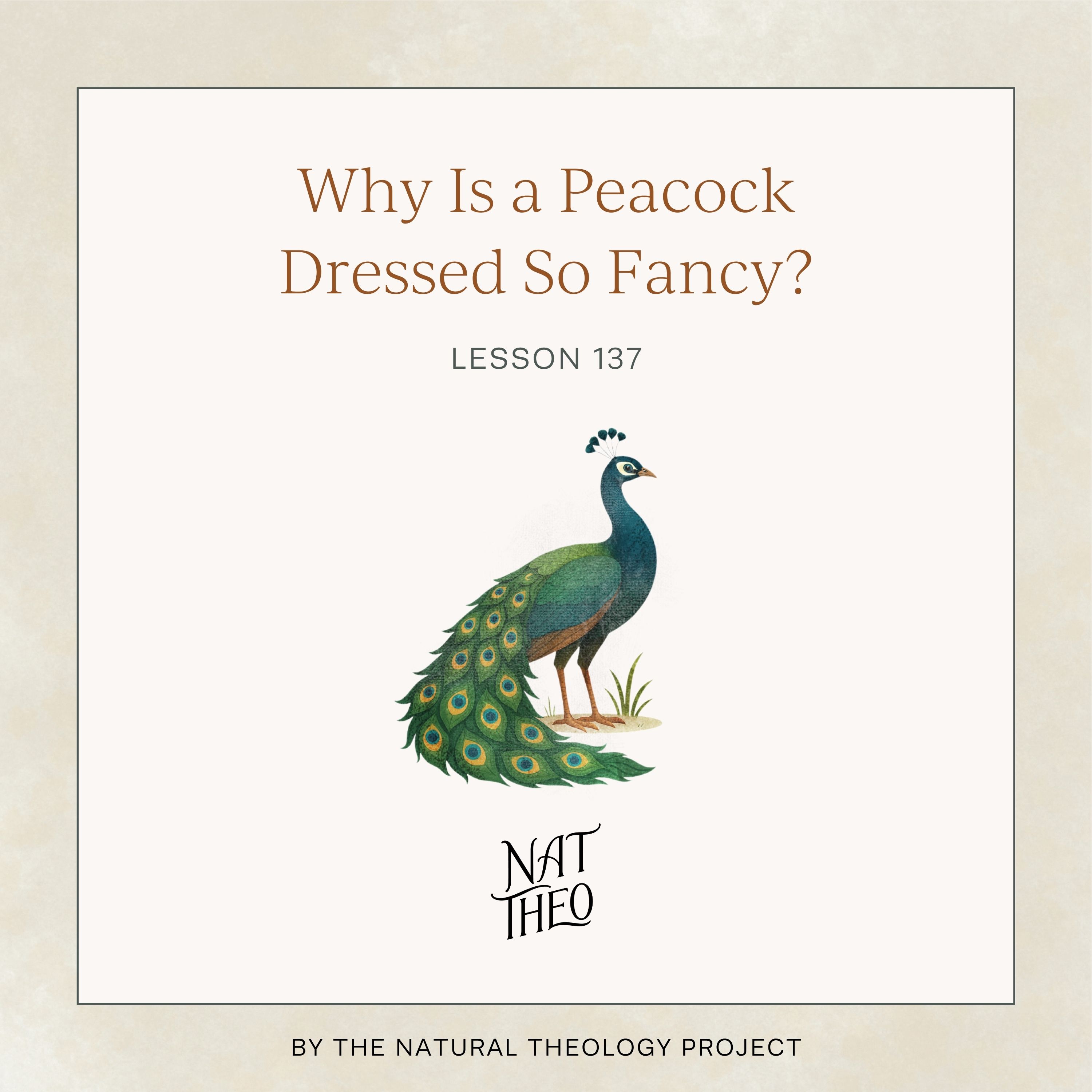
Loading summary
Transcript8 lines
- [00:01]
A
Every NAT Theo lesson comes with a free coloring page so you can color as you listen. Download this lesson's coloring page at the link in our show notes and explore every lesson further in the Nat Theo Club or with our Bible and Nature Unit Studies. Enjoy science, the Bible, experiments, arts and crafts, nature journaling, outdoor activities, recipes, geography, video teachings, and more in the Nat Theo Club or Unit Studies. Find it all@natttheo.com Club.
- [00:40]
B
Hello world. Wake me up to another good Good morning. Time to go.
- [00:48]
A
Are you ready to explore God's wild and wonderful world? Welcome to the naptheo Podcast. I'm your host, Erin Lynam. I'm a certified master naturalist, Bible teacher and author and I am so excited to dive into God's written word, the Bible and His created world with you. Have you ever seen an animal dressed up all fancy? I'm not talking about a dog in a costume, but an animal that God created to look extraordinary. We can find beauty in all of God's creatures, but some of them simply stand out as creatures that he made to wow us. Today we are learning about a very fancy bird. Can you guess what it is? It is the peacock. Here is our trail map.
- [01:55]
B
Are you ready?
- [01:57]
A
We are going to learn what kind of bird is a peacock. Why do peacocks shake their tails? Why is a peacock dressed so fancy? And why did God make beautiful things? Before we hit the trail, let's thank our sponsor who helped make this lesson possible. Apologia Curriculum if you are curious about flying creatures like the peacock, you will love Apologia's Flying creatures of the fifth day zoology course for grades K through 6. And you can save 25% right now through August with their summer sale at apologia.com apologia invites students to marvel at God's creation and dig in with hands on activities like making a feather quill pen, identifying and recording birds in your own yard, making a bird bath, dissecting owl pellets, and making bird feeders. Flying Creatures of the fifth Day is so much more than a textbook. It's an adventure in studying God's amazing birds, insects and bats, all while growing in faith and wonder. Order it now and save 25% with Apologia's site wide summer sale@apologia.com or at the link in our show Notes. Here is today's trivia question. A Peacock's call sounds like someone screaming this word A Coffee B Meow. C Gotcha. Or D Banana. Again, a peacock's call sounds like someone screaming this word. A Coffee B meow C Gotcha or D Banana. Take a guess and we will find out at the end of today's lesson. Anatio Club members, after this lesson, click over to the bonus video where we will see and learn about peacocks that are completely white. We'll learn what causes this striking phenomenon and what other surprising animals can be pure white instead of their regular colors. Find that bonus video in your Nat Theo Club Dashboard or the link in our show Notes all right, let's hit the trail. Have you ever seen a peacock? I have seen them at zoos or in pens or yards of people who keep peacocks as pets. Before we learn about where they live and what exactly they are, we should understand something important. Peacocks are actually peafowl. Peacock simply refers to the male or boy peafowl. So moving forward in this lesson, you will hear me calling them peafowl, unless I'm talking about the male, which specifically is called the peacock. If you see a peafowl, it might seem out of place. And it is, unless you are in Asia or Africa, where they are native to Two species of peafowl, including the big fancy blue and green one that you might be familiar with, are native to India. Another species, which is not quite as fancy but still very well dressed, is from the Congo. In Africa, however, peafowls have been introduced in many places around the world and you're likely to see one strutting around at a zoo. It's easy to wonder what kind of bird is a peafowl. They certainly stand out. They are obviously very different from other birds such as a blue jay or an eagle, and definitely different from a hummingbird. If you think about a peafowl's body shape, forgetting for a moment about their fancy tail and bright colors, does its shape remind you of any other birds? Maybe a pheasant or a turkey? Peafowls belong in an order or a large category of birds called galliforms. Galliforms are an order or a category of mostly ground dwelling birds that are often called land fowl. This includes chickens, turkeys, pheasants, quail, grouse and peafowl. There are around 290 species of birds in the Galliforms order. Most of them are pretty large. Think about a turkey or a peafowl. Many of them use their feet to scratch at the ground to find food such as seeds or insects. Most of them can fly, but they don't do it often. Even turkeys, another bird in the galliforms order, can fly. I often see them flying up To a high branch in a tree to roost at night. Other birds in the Galliformes order are very beautiful. Many chickens have fancy feathers, and pheasants have gorgeous colors. But the peafowl definitely stands out and makes a statement, Especially the male peacock with its long, exquisite feathers. We already learned that a male peafowl is called a peacock. But what is the female or the girl called? She is called a peahen. Can you guess what their babies are called? They are called pea chicks. Isn't that cute? All this talk about peafowl families brings up an interesting question. Why do peacocks shake their tails? Have you ever seen a male peacock spread its feathers out wide and shake them? It is quite the scene. What looks like a big fancy tail are actually long feathers called coverts growing from their back. A male peacock's covert feathers, which look like their long, fancy tail, can be around five feet or one and a half meters long. That is almost as long as I am tall. Their tail, like covert feathers, are often called a train. No, not that kind of train, But a train like a long royal gown or wedding dress. When a male peacock wants to attract a female to breed, he uses those fancy feathers. He makes them stand up on end, looking like a huge, colorful fan all around him. But he does not only stand there, he also shakes the feathers, Making them shimmer and shine. This is called train rattling. When a male peacock raises and shakes his feathers to get a female's attention, it is not only the shimmering colors of shaking feathers that grabs a female's attention. The male peacock is also playing music for her. Rapid vibrations or small shakes also make a unique rustling sound that is thought to grab the female's attention. When a peacock shakes its tail, it's not only making the rustling sound that we humans can hear, they also make an infrasonic sound that is so low in frequency that our human ears cannot hear it. It's another example of music behind the scenes of creation. Just imagine all the sounds and all the songs going on around us in nature that we can't even hear. A beautiful symphony to our creator. It's very impressive to see a peacock raise and rattle its covert feathers. Think about all of those feathers that can be around 5ft long. That is a lot of weight and bulk to raise up and shake. God designed a peafowl to be able to lift up their many long feathers. He gave them very strong lower back muscles, as well as a flexible or kind of bendable spine that helps lift up and shake all those feathers. The long feathers Are also supported by the peacock's actual tail feathers. Remember, what we see him raising up and shaking is not actually his tail, but are covert feathers coming from his lower back. The actual tail, made up of duller gray feathers, is often hidden beneath the beautiful train. And it helps hold all those fancy covert feathers up when the peacock raises them. So a male peacock raises and shakes his feathers to impress a female. But how do those feathers shimmer and shine? What is with all the feathery fanfare? Let's look closely at the marvelous colors of a peacock. What makes their feathers so bright blue, green and shiny? The shininess of a peacock and many other bird feathers is called iridescence. Iridescence is when something seems to change colors or shimmer as light hits it from different angles and refracts. Peacock feathers shimmer because tiny crystal like structures in the feathers play with light, Kind of like tiny mirrors. As the light bounces off those tiny crystal like structures, different colors shine back to our eyes. That's what causes us to see the shimmering shining feathers. Wow. We thought that peacocks were fancy enough, but it turns out that they have tiny crystals in their feathers that cause all of that magnificent shine. This kind of color and light show in nature, it is called structural color. Think about that word structure, like a building. A building is 3 dimensional or 3D. Structural color is like that. It is a color caused by something 3D. Like tiny layers, ridges or crystal like shapes. Structural color is not flat like paint or crayon on a piece of paper. Instead, these tiny structures are arranged in a special way that changes how light bounces back into our eyes. The iridescence or the shininess of a peacock's feathers, those are structural color. If you have seen a peacock with all of its fancy feathers raised up, you might have noticed that it looks like the peacock is staring at you with many, many eyes. Why do a peacock's fancy feathers look like eyes? These eye shaped feathers are called ocelli. Male peacocks can have between 100 and 175ocelli or eye spots in their feathers. These unique feathers can help warn off predators. I mean, think about it. Who wants to eat a massive bird that looks like it is staring you down with 175 eyes? These ocelli can also help attract females. Some studies suggest that female peafowl prefer males with more ocelli or eyespots in their feathers. Kind of like a female deer prefers a male deer with larger antlers. It can be a sign of good health and strength. And the female Wants to mate with a male who is strong and healthy and will help her to have strong and healthy babies. Or in this case, strong and healthy pea chicks. The peacock seems to be more beautiful than it needs to be. And in a way, it is. What do I mean by more beautiful than it needs to be? Let me explain. Some people do not believe that God created the world and everything in nature. Many of those people believe that nature created itself by random chance over a very long time. They also believe that the only reason for an animal to be beautiful is to attract a mate, breed and have babies so that its species can survive and continue. But there is a problem with this. Because the peacock is more beautiful than it needs to be. Many birds find mates and breed without being nearly as fancy as the peacock. This is a big problem for those who believe that nature created itself because this level of extreme beauty is not very practical. Consider these reasons why a peacock's fancy feathers take a lot of energy to grow and maintain and take care of. They can make the peacock more noticeable to predators. They may make moving through thick plants and tight spaces more awkward or even impossible. They can make quick escape more difficult than if the peacock had a small plane body. And they are not needed for eating, sleeping, breathing or staying warm. So a peacock's fancy feathers and its beauty doesn't really have a big purpose beyond, well, being beautiful. Some level of beauty in creatures, of course, helps them attract a mate. But extreme, extravagant beauty goes above and beyond. Think about other cases of extreme over the top beauty in nature. Like a sunset spilling pink, orange and purple colors across the sky. Or a butterfly's wing covered in tiny shimmering scales. Or a hummingbird's throat flashing like a jewel in the sunlight. Or a beautiful gemstone underground where no human eye may ever see it. Or a nudibranch or sea slug covered in brilliant colors. Or glowing creatures deep down in the dark ocean. In science, some people call this the problem of beauty. But beauty is not a problem. God created everything in nature, including the fancy peacock. And in God's eyes, beauty is incredibly purposeful. Beauty, such as the peacock's glistening feathers, causes us to delight and have joy. It creates awe and wonder, which helps us to see and admire and worship our Creator, who designed such beautiful things for us to enjoy. God made everything good. And everything God made reflects his goodness and truth. And yes, beauty. This idea in science is sometimes called extravagant beauty. It is beauty that seems to go beyond what is simply needed or practical. It is beauty for beauty's sake. Some things in nature are extravagantly beautiful for no other reason than to delight us and to bring glory to our Maker. Even the fact that we know when we see something beautiful shows us that beauty is not an accident. It is not random. God made us with hearts and minds to notice, enjoy and respond to beauty. Listen to Psalm chapter 96, verses 1 to 6. Sing a new song to the Lord. Let the whole earth sing to the Lord. Sing to the Lord. Praise his name each day. Proclaim the good news that he saves. Publish his glorious deeds among the nations. Tell everyone about the amazing things he does. Great is the Lord. He is most worthy of praise. He is to be feared above all gods. The gods of other nations are mere idols. But the Lord made the heavens honor and mercy. Majesty surround him. Strength and beauty fill his sanctuary. Listen again to verse six. Honor and majesty surround him. Strength and beauty fill his sanctuary. What are some of the most beautiful things that you can think of in nature? Maybe, along with a peacock's fancy feathers, you think about a stunning sunrise or sunset. Or a cascading waterfall. Or perhaps a rainbow arcing through the sky after a storm. Or a bright monarch butterfly flitting through the sky. Or a goldfinch's morning melody. Nature is filled with beauty, and each magnificent creature and plant reminds us of how beautiful our creator God is. Listen to the psalmist in Psalm 27:4. One thing I ask from the Lord this only do I seek that I may dwell in the house of the Lord all the days of my life to gaze on the beauty of the Lord and to see him in his temple. This can be our prayer. Also to gaze on the beauty of the Lord. If you follow Jesus as your Savior, you will one day get to see the beauty of the God in eternity. Can you imagine? We really can't. It's impossible to imagine. And yet here on Earth, we get little glimpses of that beauty. Extravagant beauty. Beauty above and beyond functional purpose is all around us. God filled creation with colors, patterns, songs, sparkles and surprises that do more than only help creatures survive. They invite us to marvel at what God has made. And yet the magnificent beauty of a peacock pales in comparison to the beauty of God himself. But he is so kind to give us hints of his beauty all throughout nature, to simply delight us. What a good, good Father who loves us extravagantly. It's time to answer a question from one of our listeners. Here is today's question.
- [22:01]
B
Hi, my name is Desmond. I'm four years old. I live in Michigan. My question is why Komodo dragons drool A lot.
- [22:12]
A
Thanks for your great question, Desmond. Why do Komodo dragons drool so much? Komodo dragons are the largest living lizards on Earth. God designed them with traits that make them fearsome predators in our fallen world. There are several ideas about why a Komodo dragon drools so much. Komodo dragons have curved, serrated teeth like a mouthful of miniature saws. These specialized teeth help them bite into large, tough, skinned prey. One reason that a Komodo dragon might drool is because they rip off and swallow large chunks of meat. And that extra saliva or spit might help the food slide down the Komodo's throat easier. At the Smithsonian National Zoo, Zookeepers have noticed that their Komodo dragon onyx drools when he is expecting a meal. Kind of like how your mouth might water when you smell something really yummy. Some scientists used to think that a Komodo dragon's drool was deadly. But more recent research has shown that Komodo dragons also have glands, kind of like little pockets that produce venom. It is the venom that a Komodo's prey really has to look out for, not just the drool itself. Thanks for your great question, Desmond. Stay curious about God's incredible reptiles and all of his wild and wonderful world Nathio Club members remember. After this lesson, you click over to the bonus video where we will see and learn about peacocks that are completely white. We will learn what causes this striking phenomenon and what other surprising animals can be pure white instead of their regular colors. Find that bonus video in your Nat Theo Club dashboard or at the link in our show Notes. All right, it's time to answer our trivia question. A peacock's call sounds like someone screaming this word. A coffee B meow C Gotcha. Or D Banana. The answer is B. When a peacock calls, it sometimes sounds as if it is yelling meow. I hear this often at my house as neighbors nearby own peacocks. Now it's your turn to explore. Go look for extravagant beauty in nature. Can you find something delightfully colorful? Maybe a shimmering insect? A flower with patterns or speckles that look painted on? Or listen for a bird's magnificent morning melody. As you find beautiful things in nature, remember that God made beauty to delight you. Thank you so much for listening. If you enjoyed this this lesson on the peacock, please take a moment to send it to a friend and subscribe. Rate and review. Nat Theo wherever you listen. Until next time, keep exploring God's wild and wonderful world.
- [25:25]
B
We are all looking for adventure. We are all looking for adventure. We are all looking for adventure. We are all looking for adventure.