Loading summary
Transcript306 lines
- [00:08]
Noah Friedman
Kaleidoscope. I'm Noah. This is Devin.
- [00:13]
Lily Kaplan
I'm Lily.
- [00:14]
Noah Friedman
Today's episode A question that nags at me every time I sit in one of their chairs Are dentists scamming us? We dig into the dental industry's surprisingly dark history.
- [00:31]
AJ Jacobs
A lot of the replacement teeth were from corpses.
- [00:35]
Noah Friedman
We hear from someone who uncovered a dentist drilling healthy teeth for profit.
- [00:40]
Dr. Brandon Zeidler
How did I let this happen to me? 28 root canals I must be stupid.
- [00:43]
Noah Friedman
And I talk with a startup founder who's trying to blow up the entire industry.
- [00:48]
Tyler Burnett
Going to the dentist is one of the biggest scams of our modern time.
- [01:02]
Dr. Brandon Zeidler
There's no no such thing. No such thing.
- [01:06]
Noah Friedman
No such thing. No such thing. No such thing.
- [01:19]
Public Investing Ad Voice
Support for the show comes from Public, the investing platform for those who take it seriously. On Public you can build a multi asset port portfolio of stocks, bonds, options, crypto and now generated assets which allow you to turn any idea into an investable index. With AI it all starts with your prompt. From renewable energy companies with high free cash flow to semiconductor suppliers growing revenue over 20% year over year, you can literally type any prompt and put the AI to work. It screens thousands of stocks, builds a one of a kind index and lets you back test it against the S&P 500. Then you can invest in a few clicks. Generated assets are like ETFs with infinite possibilities, completely customizable and based on your thesis, not someone else. Go to public.com podcast and earn an uncapped 1% bonus when you transfer your portfolio. That's public.com podcast paid for by Public Investing Brokerage Services by Open to the Public Investing Inc. Member FINRA and SIPC Advisory Services by Public Advisors llc. SEC Registered Advisor Generated Assets is an interactive analysis tool. Output is for informational purposes only and is not an investment recommendation or advice. Complete Disclosures available at public.comDisclosures in the
- [02:20]
Lenovo Ad Voice
heat of battle, your squad relies on you. Don't let them down. Unlock elite gaming tech@lenovo.com Dominate every match with next level speed, seamless streaming and performance that that won't quit. Push your gameplay beyond performance with Intel Core Ultra processors for the next era of gaming. Upgrade to smooth high quality streaming with Intel Wi Fi 6e and maximize game performance with enhanced overclocking. Win the tech search power up@lenovo.com lenovo
- [02:45]
AJ Jacobs
lenovo thy ticket lady Jennifer of Coolidge
- [02:52]
Lily Kaplan
well many thanks good sir. Here is my Discover card. They accept Discover at Renaissance Fairs? Yeah they do here.
- [03:01]
Noah Friedman
Here.
- [03:01]
Lily Kaplan
Discover is accepted at the places I love to shop.
- [03:04]
Dr. Sarah Stufan
Get It.
- [03:05]
Lily Kaplan
With the times.
- [03:07]
Noah Friedman
With the times.
- [03:08]
Lily Kaplan
You're playing the loot.
- [03:11]
Dr. Sherilyn Pizzulo
Yeah.
- [03:11]
Noah Friedman
And it sounds pretty good, right? Discover is accepted at 99% of places that take credit cards nationwide, based on the February 2025 Nielsen report. All right, so in the studio today, we're joined by a friend of the pod, a licensed therapist, and the writer of the Reality Test newsletter, Lily Kaplan.
- [03:30]
Lily Kaplan
Hi, guys.
- [03:31]
Noah Friedman
How's it going?
- [03:31]
Lily Kaplan
I'm so happy to be back.
- [03:33]
Noah Friedman
You may remember Lily from the Do I Need Therapy? Episode. So we're glad to have you back for a discussion that has nothing to do with therapy.
- [03:42]
Lily Kaplan
I love that.
- [03:44]
Noah Friedman
But, Lily, actually, specifically, we wanted you on this episode because Mandy and Mia's baby shower. A few weeks ago at the afters, we were all gathered around the table, and I was complaining about dentists and saying, hey, I think they're trying to scam me. I think dentists are scammers. We had some other people in the group saying, yeah, dentists are scamming us. And we had one dentist defender at the table. We had one person who said, guys, they're doing what they think is best. They care about your oral care. They are trying to prevent things from getting worse. And that was you, Lily. You were defending the dentist, which was, I thought, an interesting take to have, because I feel like brave dentists have, as we'll talk about in this episode, a pretty negative reputation. But you. You came in there, you know, supporting them and speaking up for them.
- [04:49]
Lily Kaplan
Giving voice to the voiceless.
- [04:51]
Noah Friedman
Exactly.
- [04:52]
Lily Kaplan
So I think that my take on dentistry is a bit of a defense, a bit of a yo, yo from where I used to sit. So I've struggled with a bit more than a bit of what one might call dentophobia throughout my life. So I've been super, super, super avoidant of dentists, which has some problems for my teeth. And I had to get, like, a whole bunch of work done on my mouth, which was pretty painful and terrible. And I had to really overcome my fear of dentists and going to the dentist. I find it a very vulnerable experience to go to the dentist. And, yeah, so I think coming off of that, like, I was not especially that night, and probably still I'm not emotionally prepared to have the view that dentistry is a scam because I was so far in the other direction of, like, I will not go to the dentist. I cannot go to the dentist. I can't handle the dentist. That the dentist did become truly necessary. And now I would say I'm of the mind that, like, you should go so that you don't end up like me two summers ago.
- [06:13]
Noah Friedman
Noah, talk us through what. What are your dentist interactions been like over the years? Over the past few years? None. Okay, I'm going. I'm booked. I'm booked to go soon. Long wait list, which.
- [06:26]
Tyler Burnett
Which I. That was news to me because in
- [06:28]
Noah Friedman
the past, I've been able to hop right over there. Yeah. Yeah.
- [06:32]
Tyler Burnett
So I didn't have any trauma with.
- [06:33]
Noah Friedman
I never minded going, but I never.
- [06:36]
Tyler Burnett
It was just more of an inconvenient thing to do. But I did feel like my teeth were cleaner after.
- [06:41]
Noah Friedman
Yeah. So basically you're going in for cleanings. Not regularly, as we. Yeah, we're hearing it's more laziness than
- [06:48]
Tyler Burnett
anything else, you know, than, like, mistrust, distrust.
- [06:53]
Noah Friedman
Okay, so the reason we're doing this episode is because of my experience with the dentist. For most of my life. Up until high school, I had pretty limited interactions with dentists. Never had cavities besides when I was a kid. So I was just going for cleanings until my senior year of high school, where we're transporting ourselves to the bowling alley in New Jersey, where it's the final frame. It's me and my friends, we're going head to head, and I am tied for last place. And if you're a bowling head, you know, the one rule of bowling with your friends is you don't want to come in last. So I just need to hit one to not come in last. So I said, okay, I just don't. Just don't get a gutterball. That's pretty easy. I don't know why in my mind, you know, I think I wanted to be a little bit of a jokester, too. So I was like, let me. Let me granny bowl it. So are you familiar with grainy bowling?
- [07:50]
Lily Kaplan
Is that where you do it between your legs?
- [07:52]
Noah Friedman
Yes, yes. You put two hands on a ball, you sort of get your legs nice and wide, and you sort of pull it. The ball between your legs and then push it out. Yep. So I did that, and I slipped, fell on my face because my hands were up. Remember when you rainy ball, your hands are going. Sure. So they're above my head and chipped three or four of my teeth, like on a. On a diagonal. And I know it sounds horrific. It did not hurt at all. Well, I knew immediately that my teeth came out because I could feel there was a gap, but I wasn't bleeding and there was no pain. And the worst part is I went over the line. Yeah, I was going to Ask about that. So it didn't even count.
- [08:37]
Lily Kaplan
So you also lost.
- [08:39]
Noah Friedman
You lost more than your four teeth. Yeah. Little did I know the trajectory that that would put me on. Because replacing teeth is very, very expensive. So even with insurance at the time, I ended up having to spend like three or four grand out of pocket for it. And the thing that people don't think about when you get dental work is that it's not a one and done. If you get teeth replaced, you have to get those teeth replaced. If you get it done right, like every 10 years or so. And you're paying thousands of dollars every 10 years or so to get those teeth replaced. So I've gone in to just replace the crown, but my dentist has been really, really trying to get me to replace all of my fake teeth because she's like, I just want to do them all. Make it all look, you know, the color will match better. I can make them match better. And I was like, okay, theoretically, that sounds fun. Like, let's find out. How much is that going to cost? She's like, okay, they run through the insurance, they get an estimate, it's like seven or eight grand. Okay, now let's just do the one.
- [09:45]
Public Investing Ad Voice
They don't have, like a bundle deal.
- [09:47]
Noah Friedman
Yeah, yeah, that's what I was thinking. Yeah. I was like, you know, if they're already. All the tools are out, you're already there. If it's only going to be slightly more expensive, you know, like, why not do it? Well, then they're all on the same timeline. Exactly. So I told them no. Then, you know, they're trying to convince me you can do a payment. I was like, I don't care if it's paying it right now or over a year. I don't want to pay seven or eight grand on. On teeth just for fun.
- [10:07]
Lily Kaplan
Buy them on Klarna.
- [10:09]
Noah Friedman
Yeah, exactly. Buy now, pay later. It's like, I'm still paying, so no, thank you. So they, you know, they seem to get the message. I come back and the thing when you're getting teeth replaced, you have to. As you know, when you're getting work done, you have to go in multiple times. So I had to go in like three or four times for this crown. And every time I would go in, it was as if I had not had that conversation with them, that they were only doing the one tooth. So they would. Down to the last time I was going in to get my permanent in, the dentist was like, okay, so this is gonna take a bit longer. Cause we're Doing, you know, all these teeth. And I was like, no, no, no, no, no, no, we're not. So it just felt. And I had liked, I've been going to this dentist for like two or three years now. I've liked that dentist up to this point. But it just to me felt very scammy in a way of that, Like, I've been very clear with you that. And I was pulling the, I can't afford it. You know, I was like, that's gonna shut it down. Like, you know, you could say whatever you want about, like, the cosmetics of it. I was like, I can't afford this right now. I just, I just cannot afford to do it. And the fact that they were still bringing it up every single time, I was like, something's going on here. And I have talked to other people who've been like, oh, yeah, I've been going to the dentist for years. It's been fine. I go to this random dentist, he says, I have all these cavities. So I had to get all these cavities filled. So I guess with this episode, what I want to look into is, is there a dental standard? What are dentists actually doing when they're in your mouth? Right. How do they determine you need a cavity filled? Right. Is there some sort of standard or are they just freestyling? And then I also want to deal with this idea of dental insurance and why, with all these experiences that I've had, I've always had dental insurance, and I'm still paying thousands of dollars out of pocket. Why doesn't dental insurance cover more of my oral care? So we're going to take a break and when we get back, we're going to walk you through my deep dive into the world of dentistry. We'll hear about its history. I'll talk to a dentist who found out a colleague was giving his patients unnecessary root canals. And a chat with a guy who says his startup will blow up the industry. All that after the break.
- [12:26]
Dr. Brandon Zeidler
Foreign
- [12:30]
Public Investing Ad Voice
for the show comes from public, the investing platform for those who take it seriously. On public, you can build a multi asset portfolio of stocks, bonds, options, crypto and now generated assets, which allow you to turn any idea into an investable index. With AI, it all starts with your prompt. From renewable energy companies with high free cash flow to semiconductor suppliers, growing revenue over 20% year over year, you can literally type any prompt and put the AI to work. It screens thousands of stocks, builds a one of a kind index, and lets you back test it against the S&P 500. Then you can invest in a few clicks. Generated assets are like ETFs with infinite possibilities, completely customizable and based on your thesis, not someone else's. Go to public.com podcast and earn an uncapped 1% bonus when you transfer your portfolio. That's public.com podcast paid for by Public Investing Brokerage Services by Open to the Public Investing Inc. Member FINRA and SIPC Advisory Services by Public Advisors, llc. SEC Registered Advisors. Generated Assets is an interactive analysis tool. Output is for informational purposes only and is not an investment recommendation or advice. Complete Disclosures available at public.comDisclosures in the
- [13:31]
Lenovo Ad Voice
heat of battle, your squad relies on you. Don't let them down. Unlock elite gaming tech@lenovo.com dominate every match with next level speed, seamless streaming and performance that won't quit. Push your gameplay beyond performance with Intel Core Ultra processors for the next era of gaming. Upgrade to smooth high quality streaming with Intel Wi Fi 6e and maximize game performance with enhanced overclocking. Win the tech search power up@lenovo.com Lenovo Lenovo
- [14:01]
Noah Friedman
Ugh. Could this vintage store be any cuter?
- [14:04]
Dr. Sherilyn Pizzulo
Right?
- [14:04]
Lily Kaplan
And the best part? They accept Discover.
- [14:06]
Dr. Sarah Stufan
Except Discover in a little place like this?
- [14:09]
Lily Kaplan
I don't think so.
- [14:10]
Noah Friedman
Jennifer oh yeah, huh?
- [14:12]
Lily Kaplan
Discover's accepted where I like to shop. Come on baby, get with the times.
- [14:17]
Dr. Sherilyn Pizzulo
Right?
- [14:17]
Noah Friedman
So we shouldn't get the parachute pants.
- [14:20]
Lily Kaplan
These are making a comeback, I think.
- [14:24]
AJ Jacobs
Discover is accepted at 99% of places
- [14:26]
Noah Friedman
that take credit cards nationwide, based on the February 2025 Nielsen report. All right, we are back. We have a lot to get into in this episode, but first I want to try to learn how the hell we got here. So I called up journalist AJ Jacobs for a history lesson.
- [14:48]
AJ Jacobs
Well, I like the premise because, for instance, I went to the dentist and they told me I had to get my tooth out. Like, how am I supposed to know whether that's true or not?
- [14:57]
Noah Friedman
So AJ Used to write this column for this magazine called Mental Floss.
- [15:01]
AJ Jacobs
And the column was called the Bad Old Days because the premise was that the good old days were not good. They were terrible. They were dangerous. They were racist, sexist, smelly. They were just horrible, painful.
- [15:19]
Noah Friedman
And every month he would cover a new topic. And one of his most memorable months was when he covered dentistry.
- [15:25]
AJ Jacobs
You know, I don't like going to the dentist, but I certainly don't like reading about the history of dentistry because it is just horrible.
- [15:36]
Noah Friedman
So let's say it's the 17th century. You're having an issue with one of your teeth. AJ said you would typically go to
- [15:43]
AJ Jacobs
a barber surgeon, which was a combination of a barber and a surgeon. And dentistry was often lumped in with surgery because you're taking stuff out of the body that was basically surgery.
- [15:54]
Noah Friedman
And an important thing to note is that during this time period, doctors did not perform surgery. So the church viewed surgery as being unclean because you were touching bodily fluids. So barber surgeons were seen as being more similar to something like a blacksmith. So back to our roleplay. If you have a toothache, they would rip your tooth out basically with no anesthetic at all.
- [16:19]
AJ Jacobs
Or maybe they'd give you some whiskey
- [16:22]
Noah Friedman
or something even weirder.
- [16:24]
AJ Jacobs
For some reason, in the 17th, 18th century, medical practitioners were obsessed with enemas. There's not a huge overlap between your teeth and your butt, but they just were like, let's shoot things up the butt and see if that helps the teeth.
- [16:40]
Noah Friedman
So barber surgeons were basically your best case scenario back then because there were also some straight up grifters.
- [16:48]
AJ Jacobs
There was this crazy genre of traveling dentists, and they were called tooth pullers, and they were sort of like quack medicine. And they would put on a show,
- [17:00]
Noah Friedman
so they'd come to your town with musicians, they'd draw a huge crowd, and then they'd pull out your teeth.
- [17:06]
AJ Jacobs
And they would first bring up a shill, someone who was on their team and who had a fake tooth that they would pull out. But then people would volunteer and pay whatever it was, 50 cents and go. And then they would pull out the
- [17:21]
Noah Friedman
teeth, and these grifters would signal for the band to play louder, to drown out patient screams.
- [17:29]
AJ Jacobs
And it was a spectacle. You know, people.
- [17:31]
Noah Friedman
People came to watch it.
- [17:32]
AJ Jacobs
People watched it. It was like people loved executions. People, people back then, I mean, sometimes now, are sadistic, voyeuristic, horrible people.
- [17:43]
Noah Friedman
And there are some crazy stories about how these traveling dentists try to one up one another.
- [17:47]
AJ Jacobs
One of the famous examples is that they would attach a string to the tooth, and then the dentist would get on a horse and kick the horse to go in an opposite direction, and that's how they pulled the tooth out. Now, there is some evidence that was apocryphal. It maybe didn't happen a lot or even ever, but that was the show.
- [18:08]
Noah Friedman
Dentists would use these shows to sell
- [18:10]
AJ Jacobs
the snake oil tooth ointments that were supposed to help.
- [18:15]
Noah Friedman
AJ Also told me about the dark history of dentures.
- [18:19]
AJ Jacobs
A lot of the replacement teeth were from corpses. So in the 19th century, there was something called Waterloo teeth, and it was from the dead soldiers on the Waterloo battlefield and other battles, scavengers would go and they would take out the teeth and then dentists would put them in.
- [18:38]
Noah Friedman
Growing up, you may have heard about George Washington having false teeth.
- [18:42]
AJ Jacobs
The rumor is that it was wood, but that's not true. Truth is much more disturbing that it was a combination of things. It was partly animal ivory from elephants and hippopotamus, but partly from enslaved people, human teeth.
- [19:01]
Noah Friedman
AJ Says the transition from the quack based dentistry of the past to the science backed dentistry of today didn't happen overnight. But there were incremental steps.
- [19:10]
AJ Jacobs
There were a few landmarks that that really helped. One was the invention of nitrous oxide, which was very helpful because before you were just getting your teeth pulled with no anesthesia, maybe a little, little whiskey.
- [19:26]
Noah Friedman
And the germ theory was also another huge step forward.
- [19:30]
AJ Jacobs
Back before the germ theory, these dentists would go in with their dirty hands and they would cause more infections than if they just left it be. So it was a gradual thing. Learning about germs, learning about pain management,
- [19:43]
Noah Friedman
and also the idea of prevention became a lot more popularized.
- [19:46]
AJ Jacobs
The idea of brushing your teeth and even flossing.
- [19:50]
Noah Friedman
AJ Also took a look at how culturally we viewed dentists over the years.
- [19:54]
AJ Jacobs
If you Google historical dentist illustrations, you'll see they look like these sadistic monsters pulling teeth out. And I think that that reputation has continued like in pop culture. There's Marathon man, who is this sadistic Nazi dentist.
- [20:14]
Public Investing Ad Voice
A live, freshly cut nerve is infinitely more sensitive.
- [20:19]
Dr. Brandon Zeidler
So I'll just drill into a healthy tooth until I reach the pulp.
- [20:24]
AJ Jacobs
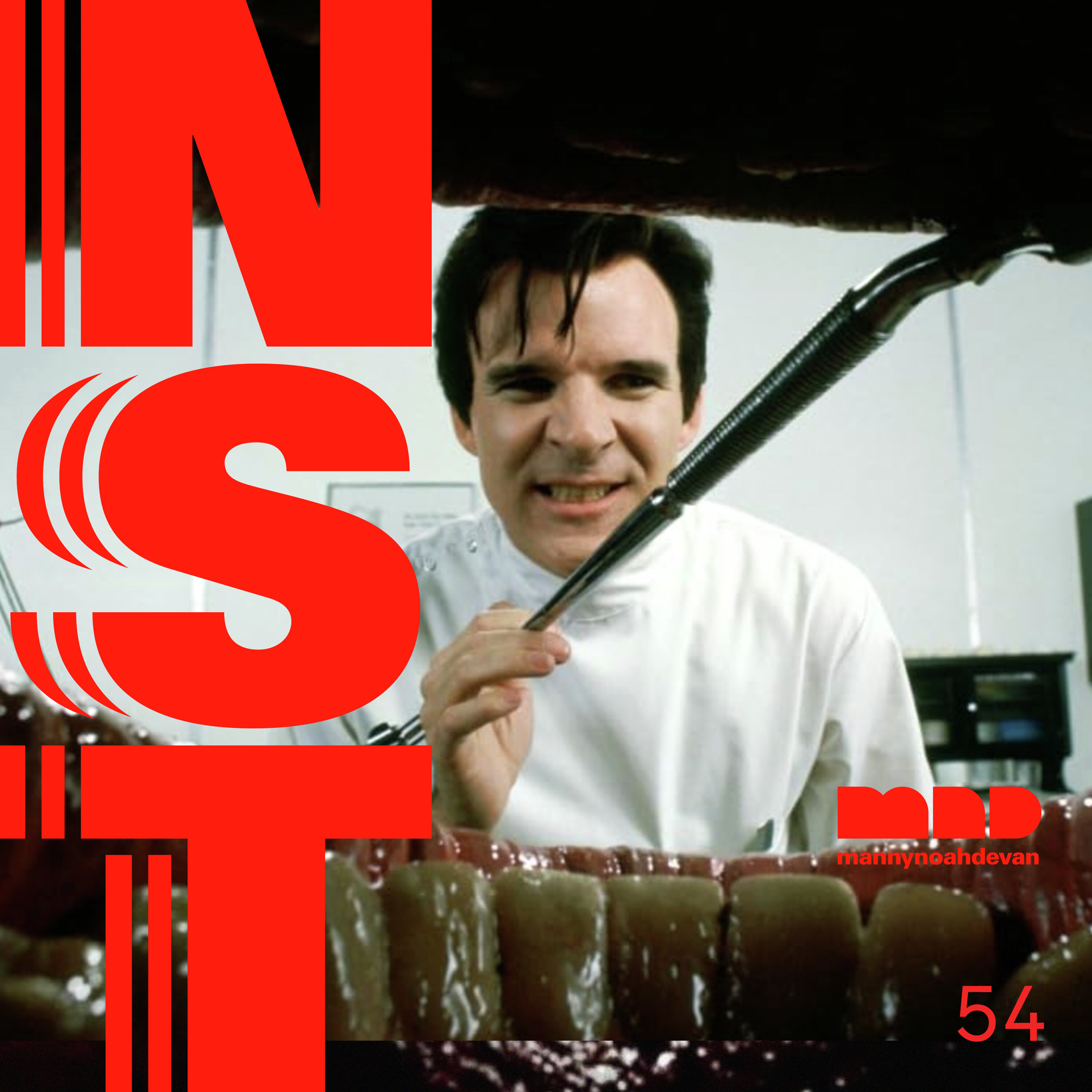
There's Steve Martin, who was in the Little Shop of Horrors and like that song, he's got an entire song about how much he loves inflicting pain on other people. There's a line in When Harry Met Sally when Meg Ryan says that her boyfriend's name is Sheldon, and Billy Crystal's like, well, he's not going to be a good lover.
- [21:02]
Noah Friedman
Sheldon, no. No, you did not have great sex with Sheldon. I did too. No, you didn't. A Sheldon can do your income taxes. If you need a root canal, Sheldon's your min. But humping and pumping is not Sheldon's strong suit.
- [21:17]
AJ Jacobs
So the poor dentists get beat up on a lot. And some of them, I'm sure, deserve it, because some, I'm sure, are still quacks and doing things they shouldn't. But I do believe a lot of them are out to make us healthier and make our teeth less painful.
- [21:40]
Noah Friedman
So that is the history of dentistry. Fast forward to today. Like I said, I am someone who has spent a lot of time going to the dentist over the last couple years. And one of my biggest issues with the dentist is that it is so damn expensive. Right? So a new study found that nearly one in three young adults have skipped the dentist in the past year because of cost. And one of the most frustrating things for me about dental care is that it is so expensive, even if you have insurance. So I want to find out why the hell dental insurance does not cover more. So I call up somebody who cares about this a lot.
- [22:23]
Dr. Sarah Stufan
I'm Sarah Stufan. I'm a general dentist in Iowa.
- [22:27]
Noah Friedman
So Dr. Sarah is also a dental insurance expert and a spokesperson for the American Dental association, otherwise known as the ada. She says I am not alone in being confused by how little dental insurance actually covers.
- [22:44]
Dr. Sarah Stufan
When we talk about patient satisfaction and we talk about frustration and cost of care, this is. This hits the nail on the head of what I hear from my patients is that they have some sort of dental benefit and they have expectations of what it's going to do for them. And then it turns out it's not meeting those expectations. What we've seen with dental insurance over the past 20 years is that dental insurance has an annual maximum, and those maximums haven't changed.
- [23:16]
Noah Friedman
So to break this down, most dental plans have what's called an annual maximum, which is the maximum amount the insurance company will pay towards any care for the year. Over the last 20 years, that number hasn't really changed, and that's despite rising healthcare costs and, you know, inflation. So the value of your dental insurance, say, 20 years ago is not the same as it is today. Another way of thinking about this is, if I gave you 100 bucks to go to a grocery store in 2006, how much would that get you versus $100 at the grocery store in 2026?
- [23:50]
Dr. Sarah Stufan
And that's frustrating because the idea and the expectation behind dental insurance is similar to most people base their experiences off of medical.
- [24:01]
Noah Friedman
But it turns out dental insurance is nothing like medical insurance.
- [24:06]
Dr. Sarah Stufan
Dental insurance, I think of more like a coupon. So. Right. And there's normally, you know, in the bottom of that coupon there was a bunch of. There's a bunch of asterisks like limitations and waiting periods and all these things. So when you get to the checkout, you find out that coupon isn't as great as you thought it was going to be.
- [24:24]
Lily Kaplan
I mean, all this work that I spoke about, my insurance covered like zero of it. Like, it was thousands and thousands of dollars, which, I mean, just hearing that just honestly made me feel tired. No, it just sucks. It makes me really angry. Yeah, it's like, it's such a. It's a. It's a promise. Like insurance. Insurance, the word insurance, is a promise that you will be insured against something bad happening. But if something actually bad happens, like your dental insurance covers, like, what, one, two cleanings a year. It doesn't insure you. If something bad happens. If something bad happens, you're paying for it.
- [25:07]
Noah Friedman
Dr. Sarah says the ADA's ideal dental plan has no annual maximum because if
- [25:13]
Dr. Sarah Stufan
you have some sort of problem that's beyond, you know, say that one crown or that one crown and root canal, is it right for a patient to say, okay, I'm going to wait on that until next year?
- [25:28]
Noah Friedman
Yeah.
- [25:29]
Dr. Sarah Stufan
When we're talking about health, this is. This is health. Somehow we've disconnected the mouth from the rest of the body, but healthy mouth is part of a healthy body.
- [25:40]
Noah Friedman
So the ADA is working on insurance reforms at both the state and federal level.
- [25:45]
Dr. Sarah Stufan
And one of the big things when you talk about value for care is called dental loss ratio, which is basically the amount of your premium dollars that actually get spent towards care versus administration of the plan and things like that. And that already exists on the medical side.
- [26:04]
Noah Friedman
Under the Affordable Care act, medical insurance companies have to spend between 80 and 85% of premium dollars on your actual care. But there's no federal regulation on dental insurance. So I was actually able to find one insurance company in West Virginia who had a dentist loss ratio as low as 36%.
- [26:25]
Dr. Sarah Stufan
So some plans are putting a very low percentage of what you're paying for a premium actually into your care.
- [26:36]
Noah Friedman
So where is most of that money, like you're saying, is going, what, towards administrative cost and just profit?
- [26:42]
Dr. Sarah Stufan
Right. We think it's important that patients, their actual. Their premium dollars are going towards care. Right. And that's the expectation from our patients, is that it's going towards care.
- [26:52]
Noah Friedman
It is like this is exactly what people fear is what's happening. Yeah, yeah. And it's right under our nose.
- [26:59]
Dr. Brandon Zeidler
Yeah.
- [27:01]
Lily Kaplan
I mean, I can't say I'm surprised. Yeah, it is an expectation that I would like to have, but it's not an expectation that I've had for any kind of insurance, to be honest.
- [27:15]
Noah Friedman
All right, so that's the insurance portion of this. And insurance is going to be a reoccurring thing that comes up in this conversation. So just keep that in the back of your mind, but let's talk about care, right? So I've been going to the dentist for, you know, over 30 years now. I'm still not quite sure what they're doing in my mouth. So I called up Dr. Sherlyn Pizzulo.
- [27:38]
Dr. Sherilyn Pizzulo
I'm a general dentist and a clinical associate professor at NYU Dental School.
- [27:43]
Noah Friedman
So the recommendation is that you go to the dentist twice a year for checkups and cleanings. And at one of those checkups, they're usually going to do some X rays.
- [27:51]
Dr. Sherilyn Pizzulo
So then when we look at those, we look at a couple of things. I'm looking at kind of like if I see any infection in the roots
- [27:58]
Noah Friedman
of your teeth, which might indicate you need a root canal, I'm looking at
- [28:01]
Dr. Sherilyn Pizzulo
old fillings that you've had or crowns or things like that to see how they're looking, that there's nothing compromising them.
- [28:07]
Noah Friedman
They're checking bone levels to make sure that your teeth have a good foundation. And they're also checking for cavities.
- [28:14]
Dr. Sherilyn Pizzulo
We could see the different layers of your teeth. So there's enamel, there's dentin. If I see those shadows going past that first layer, that enamel layer, then definitely I'm recommending that we do a filling.
- [28:24]
Noah Friedman
Dr. Sherrilyn says this is where things can get tricky.
- [28:28]
Dr. Sherilyn Pizzulo
Sometimes you might get recommended to get more fillings than you're used to. And you're like, what is happening here? Depending on that dentist practice or beliefs, they might do fillings on enamel lesions is what they're called like enamel cavities, like these little shadows that only are in the first place layer. Because they argue like, oh, we should just get rid of it now so it doesn't get any bigger.
- [28:50]
Noah Friedman
But research shows that these early stage cavities can actually be reversed if you take proper care of your teeth and use things like fluoride.
- [28:58]
Dr. Sherilyn Pizzulo
So I'm a pretty conservative dentist in that way where I don't like to drill a person's tooth unless it's really, really necessary.
- [29:07]
Noah Friedman
So is there no standard in terms of like, hey, hey, let's get all the dentists together and say, we are not going to fill someone's cavities unless they do X. It seems like there's a lot of, like, personal discretion.
- [29:20]
Dr. Sherilyn Pizzulo
There is. There is a standard and that we teach in dental school, because I teach in a dental school. What we teach our students is fundamentally that if it is, again, like I said, if the cavity has progressed past that first layer, that enamel layer of your tooth, once it's gotten to the dentin, which is the second layer of your tooth. Then you really need to. You need to do something to get in there, take out the decay and fill it up with, like, kind of seal it so that, you know, it doesn't progress, because once it gets that layer, it not only moves quicker, but it really can't be reversed. And, you know, once you get past that layer, you're getting into the nerves of your tooth, which is where, like, root canal. That discussion comes up. I've seen patients firsthand, though, be able to reverse cavities in the first layer of the tooth.
- [30:09]
Noah Friedman
She says she could understand an argument for drilling this early. If a patient just refuses to take care of their teeth.
- [30:15]
Dr. Sherilyn Pizzulo
Some patients will tell me, like, I'm not going to do it, doc. Like, straight up, like, I don't care. I got a lot going on. I only brush once a day, if that. So then I'd be like, all right, maybe then we should do this right.
- [30:25]
Noah Friedman
But she says even in those cases, it's a discussion. And she's not just drilling just because. But not all dentists follow that logic.
- [30:34]
Dr. Sherilyn Pizzulo
I actually recall before I was a dentist, I was like, you know, in college or something, and I went and I had never had cavities my whole life. I was really good about it. I always knew I wanted to be a dentist since I was like, 14. So I was that girl. So I went to the dentist, a new dentist, and they told me I had, like, four cavities, and I literally cried in the chair. I was like, no, this can't be. Like, I've not. How has this happened? And now that I look at my X rays, I don't think I really needed those. I think they were very tiny. I think they could have been reversed. But, you know, I guess that dentist, for whatever reason, and I'm not gonna, like, you know, bash him, but some people do over treatment plan for various reasons.
- [31:15]
Lily Kaplan
You.
- [31:16]
Dr. Sherilyn Pizzulo
I hope that a lot of them are because they really feel like it's the right thing to do. But I. I am sure, and I do know that a lot of people do it for, you know, insurance purposes and being able to collect, you know, it is a business at the end of the day with. For a lot of people, I don't own my own practice, so I have a completely different mindset in that way. But unfortunately, some people do get. They change over the years when they're trying to, you know, build their practice. They have employees, they have a family. So there's usually good reason, but still at the expense sometimes of Maybe what is the ultimate best for the patient?
- [31:53]
Noah Friedman
Wow. I was kind of shocked. Dr. Sherilyn was just outright like, yeah, there are some dentists who are just filling cavities for fun. Essentially. Not for fun, but because they want the insurance money. So I did ask Dr. Sarah about this. You know, she's a like your roundtable of dentists. You know, she's a spokesperson for the ada. This is a pretty big accusation. I didn't just want to take one dentist's word for it. So here's what she had to say.
- [32:18]
Dr. Sarah Stufan
I think in any profession, there's probably going to be a few bad apples, Right? I personally feel that dentists generally are wanting to do what's best for their patients.
- [32:34]
Noah Friedman
So I started looking around because I wanted to see just how often dentists are ripping off their patients. Unsurprisingly, I couldn't find any hard data, but I did come across some antidotes, like this journalist in 1997 for Reader's Digest, he sent his X rays to 50 different dentists. The journalist had already known that he needed maybe two crowns that would cost him up to $1,500. But the estimates that he got were all over the place. Six dentists said he needed at least 11 crowns, and four dentists said he needed at least 20 crowns, which would cost him up to $30,000. And more recently, I came across an article from the Atlantic from 2019 in which journalist Ferris Jabber questions just how scientific dentistry really is. He lays out the case that dentistry has created, quote, both the opportunity and motive for widespread over treatment. Here's Farris on the podcast. In 2021, most doctors will end up working for a large health care organization or a hospital with quite a bit of oversight.
- [33:47]
AJ Jacobs
But the vast majority of dentists in
- [33:49]
Noah Friedman
the US Open up their own practices,
- [33:51]
AJ Jacobs
so they mostly answer to themselves.
- [33:53]
Noah Friedman
There are ethical guidelines and codes that they're supposed to follow, but there isn't
- [33:58]
AJ Jacobs
somebody looking over their shoulder day to day.
- [34:01]
Noah Friedman
I emailed and DMed Farris multiple times to interview him for this episode, but he didn't get back to me. But I was able to chat with someone at the heart of Ferris reporting, the journalist.
- [34:13]
Dr. Brandon Zeidler
You know, Ferris Jabber, I don't know how you say his last name, but I don't subscribe to anything to his opinion of dentistry or dentist in general.
- [34:23]
Noah Friedman
That is Dr. Brandon Zeidler, who is a dentist in California. And no, he is not the fat guy in this story. But let's rewind a bit to the 2000 and tens.
- [34:44]
Tyler Burnett
Osama bin Laden.
- [34:47]
Dr. Brandon Zeidler
At the time, I was much younger. You know, I was working maybe three days a week, and I was looking to work five.
- [34:53]
Noah Friedman
So Dr. Brandon was looking to take over another practice.
- [34:56]
Dr. Brandon Zeidler
The barrier, you can't just put up a sign that says dentist and expect people to walk through the door. You kind of have to take over someone that was retiring.
- [35:03]
Noah Friedman
So a broker he had worked with before put him in touch with Dr. Lund, who was looking for someone to buy his practice so that he could retire.
- [35:11]
Dr. Brandon Zeidler
And it was about a mile and a half away, and I figured this would complement my practice perfectly.
- [35:16]
Noah Friedman
Things were looking great, like Lund's practice was bringing in a good amount of money. It was nearby. Dr. Brandon had only a day or two to make a decision because the market in the bay is very competitive. So he tried to do his due diligence by looking through Loon's patients records.
- [35:33]
Dr. Brandon Zeidler
It's pretty difficult if there's several hundred charts and you have an hour or so to go through the charts, you're just randomly selecting.
- [35:39]
Noah Friedman
Dr. Brandon ultimately decided to pull the trigger, and he bought the practice.
- [35:44]
Dr. Brandon Zeidler
I just had confidence that this could be a good fit for me. So I purchased the practice. And In February of 2015, I took over. And I just, you know, decided that I'd start meeting the patients, getting to know them like I did my first practice.
- [35:59]
Noah Friedman
But within that first month, he started to figure that something was off.
- [36:03]
Dr. Brandon Zeidler
I don't remember the numbers exactly, but if it had been $80,000 of production a month, it was around, like, 15,000.
- [36:09]
Noah Friedman
So in other words, Dr. Brandon was doing a lot less work on these patients than Dr. Loon was.
- [36:15]
Dr. Brandon Zeidler
I was thinking, maybe I'm doing something wrong, like, where am I going wrong here? And then the second month was similar, the third month was similar.
- [36:22]
Noah Friedman
And as he started seeing more and more of Loon's former patients, he started noticing something was off.
- [36:29]
Dr. Brandon Zeidler
I would look in their mouth and, you know, scan really, really well, and I couldn't find anything wrong with their mouth. And then they would stand up and be like, are you sure that you looked closely enough? I don't think you're looking closely enough. So then I'm now starting to second guess myself again. And then they'd go up and go to the front office. Staff member that I had that also worked for the previous dentist was like, I don't know that this dentist is looking closely enough. I don't trust his diagnostic abilities.
- [36:58]
Noah Friedman
Dr. Brandon also started to notice a disturbing pattern when I was looking at
- [37:03]
Dr. Brandon Zeidler
the patients I was starting to see a very high number of root canals, a very high number of crowns. And so that was another red flag for me. Started to put two and two together and I. And that's when I'm, you know, it was probably maybe six or seven months in. I was like, this is not me. I'm not doing anything wrong. You know, this. There was something that was not done above board here on these patients.
- [37:29]
Noah Friedman
And he decided he needed to take a closer look. So over the next year, he looked at all of Dr. Lone's former patients going through every. Every single procedure that he had performed over the previous five years.
- [37:42]
Dr. Brandon Zeidler
And I started to create a big spreadsheet because I knew that spreadsheet was important as far as percentages of treatment to see how far this dentist was from the norm.
- [37:54]
Noah Friedman
For example, Lund loved to give root canals. 50 of his patients had 15 or more root canals, with one patient getting 24. Typical person is only getting one to two root canals in their lifetime. Looking through the numbers that you. You have in terms of, you know, usually if there's a crown, I think you said there's usually 37% chance that you're going to perform a root canal. And he was in 90% in some cases. So, like, this is not like a difference of opinion. If it would have been like 10 or 15.
- [38:27]
Dr. Brandon Zeidler
Every day I get a patient coming in my office, you know, could be a new patient.
- [38:31]
Tyler Burnett
Right.
- [38:31]
Dr. Brandon Zeidler
And I don't always. A lot of times I don't agree with that. The other dentist did, but that's a difference of opinion. Yeah, right. And May. And one of my patients could move or leave, right?
- [38:40]
Noah Friedman
Yeah.
- [38:40]
Dr. Brandon Zeidler
And that dentist may not agree with what I did, but being in the 90 percentile range when it should be in the 3 to 7 percentile range is way outside norm.
- [38:50]
Noah Friedman
And if that wasn't bad enough, Loon was also charging patients insurance for. For work he never actually did. After seeing just how widespread this over treatment was, Dr. Brennan felt like he had to do something about it.
- [39:04]
Dr. Brandon Zeidler
And then I started talking to them one by one. Some. Some were already well aware. Some had suspicions.
- [39:12]
Noah Friedman
So Dr. Brandon, along with several of Loon's former patients, ended up suing him. There were some settlements. Loon's insurance had some big payouts. Loon never admitted to any wrongdoing, but he was arrested in 2015 and charged with dozens of felonies for insurance fraud. And he eventually ended up surrendering his dental license in 2023.
- [39:36]
Dr. Brandon Zeidler
A lot of them were like, I'm so stupid. How could I be so dumb? I can't believe it. And I would say to them, this is not about intelligence. This is betrayal of trust.
- [39:43]
Noah Friedman
Yeah.
- [39:44]
Dr. Brandon Zeidler
Like that's what it boils down to. Has nothing patient be like, I've had all these. How did I let this happen to me? 28 root canals. I must be stupid. I said it's betrayal of trust. You go to someone for all these years, they're a doctor.
- [39:56]
AJ Jacobs
Yeah.
- [39:56]
Dr. Brandon Zeidler
You, this person betrayed your trust.
- [39:59]
AJ Jacobs
Yeah.
- [40:00]
Dr. Brandon Zeidler
And that's, that's hard for some people to swallow. There's, you know, you know, in relationships, there's some spouses that have infidelity and one spouse may know, but doesn't want to bring up that topic because it's a betrayal of trust. They don't want to, they don't want to deal with it. They can't handle it psychologically.
- [40:18]
Noah Friedman
But despite what Dr. Brandon went through, he says he thinks this type of over treatment is extremely rare.
- [40:26]
Dr. Brandon Zeidler
I think in any profession. No matter what you go into, you know, law enforcement or medicine or, you know, lawyers, attorneys, whatever, I feel like 10%, I think, cross the line. I think no matter what profession, you're going to run into people that do the wrong thing, that don't do the right thing. And I felt like that article in particular kind of led the reader perhaps to believe that there's a much higher percentage, say, in dentistry than any other profession. But in reality, I've been doing dentistry 20 years now. I have a brother that's been doing it 25 and a father that had been a dentist for 57 years. And when you combine the three of us together, that's a lot of experience and it's a lot of colleagues, a lot of other professors, other people in the profession that we've come in contact with. And I and them have never seen anything like that.
- [41:21]
Noah Friedman
Do you feel like there needs to be something done more on just, you know, a more nationwide level in terms of dentists and holding them accountable?
- [41:31]
Dr. Brandon Zeidler
Yeah, that's, you know, people always ask that. I don't, I don't. I think the profession would be completely different if it was. Big Brother was watching. Right. I think, I think that would be hard to be a dentist. I think less people would want to be a dentist. I mean, there's a certain amount of ethics and integrity we're supposed to have. There's a similar to a Hippocratic oath that we take.
- [41:49]
Noah Friedman
Yeah.
- [41:50]
Dr. Brandon Zeidler
As dentists. I don't, you know, I mean like a governing body of some sort. You mean.
- [41:56]
Tyler Burnett
Right.
- [41:56]
Dr. Brandon Zeidler
Like, say, the IRS for taxes or.
- [41:58]
Noah Friedman
Yes.
- [41:59]
Dr. Brandon Zeidler
I mean, we have. There is the dental board, and the dental board has one primary goal, and it is nothing but to protect the patient.
- [42:08]
Noah Friedman
So my first thought after reading the story is, how do you not become that person who has all this unnecessary work done?
- [42:15]
Dr. Sarah Stufan
This is my recommendation.
- [42:16]
Noah Friedman
This is Dr. Sarah Ada.
- [42:19]
Dr. Sarah Stufan
If your gut tells you that something's up, go get another opinion. In general, dentistry is not emergent. There are definitely some emergent situations where you. You need to make a decision that day, but most of the time, you can take home the information and you can sleep on it.
- [42:39]
Noah Friedman
And this advice was also shared by Dr. Sherrilyn. But as you'll hear, I don't like this advice.
- [42:46]
Dr. Sherilyn Pizzulo
If it feels like it's weird, I would take a step back as a patient, be like, let me think about this before we move forward and you can get a second opinion.
- [42:54]
Noah Friedman
Yeah, I was going to say, how do you. So I get a little bit frustrated with this feedback of, like, get a second opinion. Because how. Usually when this is happening, you're going for your checkup, right? Your dentist is saying, hey, you need to get this thing done. I can do it now.
- [43:12]
AJ Jacobs
Right?
- [43:12]
Noah Friedman
And, you know, part of what goes through my mind is like, okay, to get a second opinion, I need to go search and find another dentist. And what if they say the exact same thing? Now I'm paying out of pocket because my insurance is not going to pay for that second appointment if I've already, you know, used it up for the year. So, yeah. Is there just, like, no good options outside of, like, you know, go get somebody else to give you X rays and give your opinion?
- [43:38]
Dr. Sherilyn Pizzulo
You don't have to necessarily take X rays again. You could take your records from the office you went to. So, like, that would save you because those records are yours. Like, you paid for them. So you'd ask them, like, hey, could you give me my records? And they have to give it to you, so you could take those to a different office or. I mean, now, I know I work at a dental school, but a dental school is a really good option. If you have a local dental school near you, what's great about it is you get so many eyes looking at you, right? Like, I know some people are kind of like, well, I don't want a student looking at me, but that student has to be checked off by, like, multiple dentists and professors, right? So there's really not a lot of places you could go to where, like, multiple dentists are giving you an opinion. So it is, it is a good way to kind of like get that feedback because especially students are taught these fundamentals and conservative approach so they're usually not going to over treatment plan you.
- [44:27]
Noah Friedman
Have you ever been in a situation when you've felt like, oh, I want to get a second opinion on this thing but like it seems like it's too much trouble. Yeah, I probably just wouldn't deal with it. I'd either just stop going and let my teeth rot or I would just pay. Yeah. But the school I guess also they wouldn't have the profit motive. Incentive is another benefit. Yeah. For their side. But
- [44:54]
Lily Kaplan
yeah, I just don't feel like I would ever have the bandwidth for that.
- [44:57]
Noah Friedman
Exactly. Yeah. It's like if I had nothing else to do but work on my, my teeth. Yep, sure.
- [45:03]
Lily Kaplan
It also kind of feels like it's just such a bummer, man. Because like you've got, you've, you. When you think about all these different parts of your body that you need to maintain, including your brain and emotions. As a therapist, which, and I'm, and I am like drawing some comparisons too to like my professional world back to that. But it just feels like, okay, I've made it to the dentist my twice a year visit, which is terribly annoying and often like a bad experience I don't have. Who in the world like has the resources, the time, the money, the mental capacity to like decide whether or not they believe their dentist.
- [45:51]
Noah Friedman
Yeah. And then who knows how long that's going to take too. Like I said, I'm waiting months for my a checkup. There's something wrong there. And then they're like, okay, go to another person. It's like now this whole thing might take three months if I have real pain. It's like, yeah, I'm just gonna be like, all right, just take it out or whatever, just do it now.
- [46:06]
Lily Kaplan
The onus on the individual just in it, you know, just for everything. It's just so heavy. It feels so burdensome.
- [46:15]
Noah Friedman
So we're going to take one more break and when we get back, I'm going to tell you guys about a startup with plans to blow up the dental world as we know it.
- [46:27]
Public Investing Ad Voice
Support for the show comes from Public, the investing platform for those who take it seriously. On public, you can build a multi asset portfolio of stocks, bonds, options, crypto and now generated assets which allow you to turn any idea into an investment investable index with AI. It all starts with your prompt. From renewable energy companies with high free cash flow to semiconductor suppliers growing revenue over 20% year over year. You can literally type any prompt and put the AI to work. It screens thousands of stocks, builds a one of a kind index and lets you back test it against the S&P 500. Then you can invest in a few clicks. Generated assets are like ETFs with infinite possibilities, completely customizable and based on your thesis, not someone else else's. Go to public.com podcast and earn an uncapped 1% bonus when you transfer your portfolio. That's public.com podcast paid for by Public Investing Brokerage Services by Open to the Public Investing Inc. Member FINRA and SIPC Advisory Services by Public Advisors llc. SEC Registered Advisor Generated Assets is an interactive analysis tool. Output is for informational purposes only and is not an investment recommendation or advice. Complete Disclosures available at public.comDisclosures in the
- [47:28]
Lenovo Ad Voice
heat of battle, your squad relies on you. Don't let them down. Unlock elite gaming tech@lenovo.com Dominate every match with next level speed, seamless streaming and performance that won't quit. Push your gameplay beyond performance with Intel Core Ultra processors for the next era of gaming. Upgrade to smooth high quality streaming with Intel Wi Fi 6e and maximize game performance with enhanced overclocking. Win the tech search power up@lenovo.com Lenovo Lenovo
- [47:58]
Public Investing Ad Voice
Ugh.
- [47:59]
Noah Friedman
Could this vintage store be any cuter?
- [48:01]
Dr. Sherilyn Pizzulo
Right?
- [48:02]
Lily Kaplan
And the best part? They accept Discover.
- [48:04]
Dr. Sarah Stufan
Except Discover in a little place like this?
- [48:07]
Noah Friedman
I don't think so.
- [48:08]
Dr. Sarah Stufan
Jennifer.
- [48:08]
Noah Friedman
Oh yeah, huh.
- [48:09]
Lily Kaplan
Discover is accepted where I like to shop. Come on baby, get with the times.
- [48:14]
Dr. Sherilyn Pizzulo
Right.
- [48:15]
Noah Friedman
So we shouldn't get the parachute pants.
- [48:17]
Lily Kaplan
These are making a comeback I think.
- [48:21]
AJ Jacobs
Discover is accepted at 99 of places
- [48:24]
Noah Friedman
that take credit cards nationwide based on the February 2025 Nielsen report. Okay, we are back. I'm Noah. Devin.
- [48:37]
Lily Kaplan
Lily.
- [48:38]
Noah Friedman
So a few days ago I took a trip down to Soho to meet a founder of a new dental startup.
- [48:46]
Tyler Burnett
How you doing?
- [48:47]
Noah Friedman
I'm good. How are you? Good, good. All right, Can I have you start by just introducing yourself?
- [48:57]
Tyler Burnett
Hey, my name is Tyler Burnett. I'm co Founder CEO here at Wally Health.
- [49:02]
Noah Friedman
Tyler was inspired to start Wally after having his own run in with a dentist after moving to the US from
- [49:08]
Tyler Burnett
Canada and being told I needed eight fillings when I didn't need them. Right. And so I wasn't showing any diagnostics. I wasn't educated on what was going on with my oral health during that appointment I was told by dentist that I had eight cavities and they needed to be filled immediately and it was going to cost me A lot of money.
- [49:30]
Noah Friedman
He didn't end up getting the fillings, but he did come up with the idea for this startup named Wally.
- [49:36]
Tyler Burnett
We're building the future of dental care. So what we're doing is solving a major health care Crisis.
- [49:42]
Noah Friedman
So about 40% of working age adults in the US go to the dentist each year.
- [49:46]
Tyler Burnett
We want to see that. Over 80%.
- [49:49]
Noah Friedman
Tyler thinks Wally can change that by making oral care more affordable and approachable.
- [49:53]
Tyler Burnett
Our product is simple, it's $249 per year. So it's membership based. And we provide unlimited dental cleanings, diagnostics, exams with dentists at any of our locations here in New York and New Jersey at the moment.
- [50:07]
Noah Friedman
Tyler, who is married to a dentist, by the way, is extremely critical of the industry and says it does not invest in prevention or the patient experience. He says Wally, though, has different incentives.
- [50:20]
Tyler Burnett
We're honestly incentivized to prevent and be proactive in our care, which no other dentist in the country is, by the way. No, we're very proud. We don't have drills. Yeah, well, you're not going to get drilled.
- [50:30]
Noah Friedman
So Wally doesn't actually do any major dental work in house. They offer things like aligners and cavity reversal treatments for an extra fee. But if you need like real work, they'll refer you out to someone else.
- [50:42]
Tyler Burnett
Going to the dentist is one of the biggest scams of our modern time. Here in the United States, it's pound for pound the most expensive healthcare experience we have as patients, as consumers. And what I mean by that is we spend more proportionately when we go to a dentist. That rate is higher than any other healthcare experience where you're going to a doctor, you're getting a prescription filled. So out of pocket spending is off the charts. A big reason why that's the case is because insurance is broken. Insurance is really driving the rules for the industry. And then we have private equity that's come in and been very good at playing those rules. Right. They're the experts. And so, you know, they own 30% of all dental locations. They're going to own 40% by the end of this year. So it's not getting better anytime soon. But they come in and they play those rules really well. One thing they do is they find all of the treatments that an insurance plan will cover. So that's why you see a lot of extra treatments being sold, and I mean, AKA diagnosed and sold, because the insurance will cover all of these little treatments up to a certain point. I know dentists, dental groups, to be clear that will know their patient's insurance before they've come in for their first appointment and already have a game plan on what they're able to sell before they've even looked at your mouth or taken a diagnostic.
- [52:12]
Noah Friedman
So Wally doesn't actually accept insurance.
- [52:15]
Tyler Burnett
We didn't want to play those rules. Look, we knew to be true to our mission around preventative and proactive care, we had to build the way we wanted to build, and we didn't want our thinking to be corrupted in any way.
- [52:33]
Lily Kaplan
I don't know anything about this startup, but he's saying, you know, if we accepted insurance like we there, we would have no agency over becoming corrupted morally. Like, it would just happen to us. Yeah, like, can. How about like that agency also just, like, lies with you as the provider. Yeah, just like, maybe don't get corrupted.
- [53:01]
Noah Friedman
Like that feels easier said than done.
- [53:03]
Lily Kaplan
You could have control over.
- [53:07]
Noah Friedman
So I thought it would be weird for me to talk about this service without trying it out for myself. So I was actually able to get a Black Friday deal. So I only paid $150. It's usually $250 for the year. And I made my first appointment to go to Wally's Williamsburg location in Brooklyn. So this was even before I spoke to Tyler. So they had no idea I was doing a story on Wally or who I was at all. Because I wanted to truly be undercover and get the real experience. So I walked into the building. There's no front desk person. There's no one to greet you. There's just an iPad that you sign in on. There's music playing that does not, you know, sound like dentist music at all. And the first thing I noticed that it's pretty noisy, so all the machines are going off. There's no actual walls. It's just a wide open office space. But there are paper dividers where there are dentist chairs and where people are getting their work done. So I sit down in the lobby. I wait for my name to be called. Called. They bring me over to my section, which is divided by these paper walls, and the dental assistant starts talking me through what they're going to do for the day.
- [54:27]
Dr. Brandon Zeidler
Welcome to Wally.
- [54:28]
Noah Friedman
I know it's your first time here. Yeah.
- [54:30]
AJ Jacobs
And I'm going to be your dental
- [54:31]
Noah Friedman
assistant for the day.
- [54:32]
Dr. Sarah Stufan
Since it is the first time, we're
- [54:34]
AJ Jacobs
going to start off the appointments of diagnostic exams. So I'll start off with a 3D scan of your teeth followed by some X rays once I.
- [54:40]
Noah Friedman
And then the doctor will come in briefly, and then you'll see, the hygienist
- [54:42]
AJ Jacobs
will do your sleeping. Okay.
- [54:43]
Noah Friedman
Okay. All right. Now, I would say every single person I talked to was really informative in a way that I was not used to at the dentist. They really talked me through step by step, what they were doing. Wally uses this Swiss technology called GPT, which doesn't involve any scraping. So it was really pain free and it passed the eye test. It looked just as effective as my normal cleanings. And then at the end of my appointment, I talked to the dentist for a few minutes. Make sure you're flossing underneath this bridge every day. Okay. Using those threaders. That way you can just keep everything cleaned out underneath it. Okay. And I was on my way. So for my first appointment, I felt like I had a pretty good experience at Wally, but I wanted to see what were the major complaints that people had as well. So one of the biggest issues people have is that this idea of unlimited cleanings. So the earliest I was able to book my next cleaning was two months after my first appointment. So, you know, not truly unlimited.
- [55:40]
Tyler Burnett
Sometimes, you know, growth outpaces what we thought it was going to be. And that's, you know, quote unquote, a good problem to have as a business. But we are always building to be ensuring there aren't limits on unlimited.
- [55:54]
Noah Friedman
Some patients also felt similar to a lot of the dentists that we've been talking about, that Wally was trying to upsell them on deep cleans and other add ons that don't come with the membership fee.
- [56:04]
Tyler Burnett
So even though we go through such rigorous modern diagnostics where we educate and talk through them, there is always going to be a group of people that are not going to react well to that information.
- [56:16]
Noah Friedman
He said, at the end of the day, if you don't want to do the treatment, like, you don't have to, you know, they're not pressuring you, they're just letting you know. So Wally only operates a few locations in New York and New Jersey right now, so it's not really gonna upend the entire system. Tyler says they have big plans to expand to 50 locations by the end of the. There are some other startups who are also trying to reimagine the future of dentistry. Places like Ten and Gleamry that are trying new approaches. Wally's model doesn't solve the problem for people who need major dental work. But I was curious what Dr. Sherilyn thought about them.
- [56:52]
Dr. Sherilyn Pizzulo
I mean, honestly, I don't have a problem with it. I think it's honestly pretty smart that they Came up with a way to provide this type of accessibility. There's kind of two groups of patients that would be really good for these type of places. So people that are really good at maintaining their oral health already haven't had, like, a lot of dental problems in the past, but really like to keep their teeth clean and want to get more cleanings. And usually dental insurance only covers two cleanings a year. So if you can get more, it's amazing. Right. So I think it's good for that person. And also a person who doesn't have dental insurance, but also is really good at taking care of their mouth. Right. And hasn't had a lot of issues. It's great to be able to get that, like, FaceTime and cleanings, like, multiple times for that price.
- [57:34]
Noah Friedman
So Dr. Sarah likes the idea of a membership, but didn't love that patients may be seeing a variety of dentists at Wally.
- [57:40]
Dr. Sarah Stufan
The more I get to know a patient, the more I understand, one, their past experiences. And two, what's changing. I can notice those changes a lot better. And I get to know what they like as far as care goes and as far as, let's say, they're anxious, what works really well for them. Each dental visit gets a little bit better when we know how we can best care for them.
- [58:07]
Lily Kaplan
We've heard a lot of claims about how many dentists are or not scammy,
- [58:13]
Noah Friedman
and there's no hard numbers to that.
- [58:14]
Lily Kaplan
Yeah. I mean, how could there be? Yeah. But, like, I feel like probably, I imagine. I want to imagine that most dentists are just, like, people who want to do a good job at their job and are trying to, like, make an honest living. And I think there is probably, like, a subset of dentists that are trying to make the most money possible by scamming their customers, just like there are. My family doctor, when I was a kid, got arrested for peddling opioids. That was crazy. He was a fine doctor to me,
- [58:46]
Noah Friedman
anyway, they give me any opioids.
- [58:51]
Dr. Sherilyn Pizzulo
But
- [58:53]
Lily Kaplan
those professionals exist in any profession. Like, I feel more concerned about, like, more broadly, people not being able to get the care that they actually do need. Because, like, our teeth are in our bodies and they do matter. And like, an infection is kind of an emergency, like, because that can spread and that can become, like, a really serious problem. Like, your teeth are connected to your health. And so just the fact that it's separate, that the insurance is separate, is what's so terrible. Just like, I feel like the real enemy is our, like, the healthcare system and not so much the individual dentists who are, I want to believe, for the most part, just trying to like, do their jobs.
- [59:46]
Noah Friedman
I agree with you. I think the big issue is access.
- [59:51]
AJ Jacobs
Right.
- [59:52]
Noah Friedman
I think, I don't think the issue with dentistry is all the dentists are trying to scam us and say we have cavities that we don't have. I do think there is a subgroup that is not conservative enough in terms of dental care and they're doing too much work that don't need to be done. But I don't think that's the majority of dentists. It's a few bad apples. Yeah. Let's put it this way, people. The only reason that people know that they went to a dentist that is maybe not conservative enough because they go to a conservative dentist who says, actually you don't need this work done. Right. Like, if all the dentists were conspiring against us, you would never have that moment where someone would be like, oh, actually you don't need all these cavities filled. So I think there are more good than bad dentists. I think more people just need to go to the dentist. And, you know, and I think part of that is cost. It's expensive. And I think another big obstacle is this anxiety piece of it. Right. And it's like the patient experience. Right. And I think there is a little bit of like old school dentistry needs a bit of an update because even like the best case scenario of a dentist is not very pleasant. So I think there does need to be updated a bit more of a priority for dentists on patient care.
- [61:13]
Lily Kaplan
I agree with you. I like, obviously the experience really needs to improve and dentists need to be more thoughtful and caring of the patient experience.
- [61:25]
Noah Friedman
Exactly. Hey, you know, we should send some dentists to some of your schooling. You know, we'll send up the Lilly School of Dentistry where you'll teach them some personal skills. You know, that's a great.
- [61:38]
Lily Kaplan
Okay. If any dentist wants to do some like one on one coaching with a therapist on some bedside manner skills.
- [61:49]
Noah Friedman
Yes,
- [61:52]
Lily Kaplan
maybe. I actually don't know if I can do that ethically.
- [61:57]
Noah Friedman
Scratch that.
- [61:58]
Lily Kaplan
Well, if dentists need therapy, you know, if you've been hurt by the misconception of therapy, by anti dentist sentiment in popular culture, I welcome you.
- [62:17]
Noah Friedman
It took a minute, but I had a lot of fun putting together this episode. If y' all are a fan of no such thing, please, please, please share this episode, your favorite episode, with your friends. We love making this show and the only way we can continue to do it is if y' all keep sharing it and talking about it and get more people to listen to it. Our special guest for this episode was Lily Caplan, sitting in for Manny. Check out Lily's reality test newsletter. We're gonna link to it in our show notes. And make sure you check out her previous episode if you haven't heard it already. It's titled do you need therapy? We're gonna link to it in the show notes. Thank you to our panel of dentists for this episode, Dr. Sarah, Dr. Sherilyn and Dr. Brandon. Thank you to Tyler Burnett at Wally and thank you to AJ Jacobs for bringing down the history of dentistry. As always, if you have feedback for the show, you can hit us up@mannynoadevimmail.com or you can call us at the number in our show notes. No such thing as a production of Kaleidoscope content. Our executive producers are Kate Osborne and Mangesh Harikudur. The show was created by Manny Fadal, Noah Friedman and me, Devin Joseph. The theme and credit song is by Manny mixing for this episode by Steve Bone. All right, see you guys next week. Bye.
- [63:54]
Lily Kaplan
This is Chelsea Handler from Dear Chelsea. After the Big Game. Like most people, I kept thinking about the commercials, and there was one that stayed with me. It was from the Blue Square Alliance Against Hate, and it wasn't loud or flashy. It showed a Jewish kid being targeted at school and another student who chose not to ignore it. As someone who was Jewish, that moment felt very real to me. Not dramatic, just familiar. And what struck me was how clearly it showed that hate doesn't always announce itself, but the impact is still huge. If you saw the Blue Square spot during the Big Game, it's worth thinking about. And if you want to show support, sharing the Blue Square is one small way to do that in the heat
- [64:32]
Lenovo Ad Voice
of battle, your squad relies on you. Don't let them down. Unlock elite gaming tech@lenovo.com Dominate every match with next level speed, seamless streaming and performance that won't quit. Push your gameplay beyond performance with Intel Core Ultra processors for the next era of gaming. Upgrade to smooth, high quality streaming with Intel Wi Fi 6e and maximize game performance with enhanced overclocking. Win the tech search power up@lenovo.com lenovo
- [64:58]
AJ Jacobs
lenovo
- [65:02]
Public Investing Ad Voice
I'm US Transportation Secretary Sean Duffy.
- [65:06]
Noah Friedman
The sound of a seatbelt it's one
- [65:08]
Public Investing Ad Voice
of the most important sounds in our car.
- [65:11]
Noah Friedman
It means everyone is ready and everyone is safe. The more our kids see us put on our seatbelts, the more natural it is for them to put theirs on too. Make it a priority.
- [65:24]
Public Investing Ad Voice
Buckle up every time.
- [65:26]
Noah Friedman
Hear the sound. Make it a habit paid for by nhtsa. If you work in university maintenance, Grainger considers you an MVP because your playbook ensures your arena is always ready for tip off. And Grainger is your trusted partner, offering the products you need all in one
- [65:44]
Public Investing Ad Voice
place, from H VAC and plumbing supplies to lighting and more.
- [65:48]
Noah Friedman
And all delivered with plenty of time
- [65:50]
Public Investing Ad Voice
left on the clock so your team
- [65:52]
Noah Friedman
always gets the win.
- [65:54]
Public Investing Ad Voice
Call 1-800-GRAINGER visit grainger.com or just stop
- [65:57]
Noah Friedman
by Granger for the ones who get it done.