Podcast
Now And The Future
Hosted by Down Syndrome & Intellectual Disability Queensland · EN
The Now And The Future podcast is an exciting way of sharing stories of Down Syndrome Queensland members, as well as opportunities, challenges and provide support and expert advice for the Down Syndrome community.
Down Syndrome Queensland’s vision is to support, advocate for and empower people with Down Syndrome to take their rightful places as valuable and contributing members of their community, both now and into the future.
11episodes
Episodes
Newest firstAll episodes
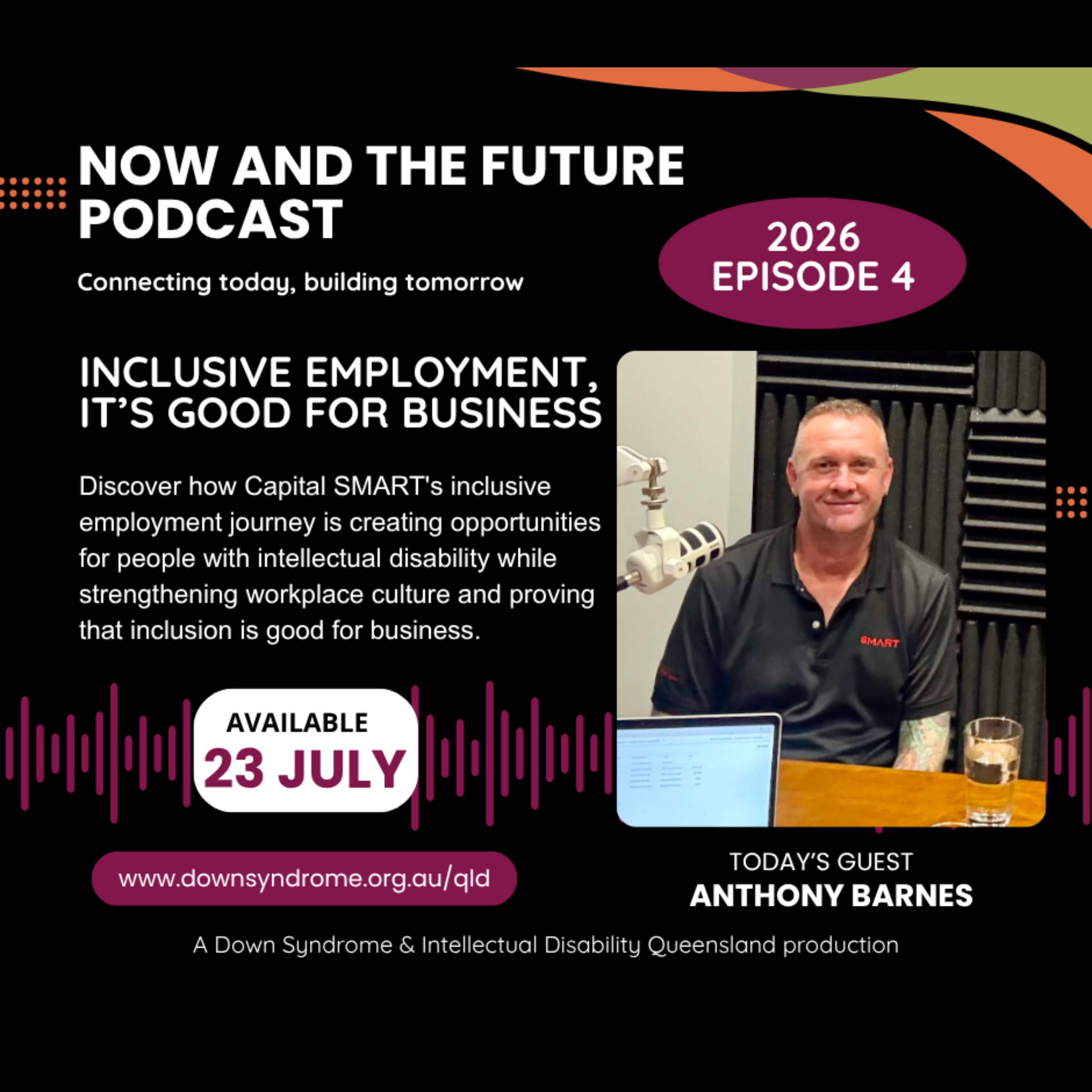
Inclusive Employment; It’s Good for Business
4w ago00:31:49Tap to summarizeInclusive employment isn't just good for people—it’s good for business.Australians with intellectual disability remain significantly underrepresented in the workforce, despite growing evidence that inclusive workplaces benefit from stronger employee engagement, loyalty, and a more positive workplace culture.In this episode of Now and the Future, host Michael Harrison, Community Engagement Manager at Down Syndrome and Intellectual Disability Queensland, is joined by Anthony Barnes, Queensland Operations Manager at Capital SMART, to discuss how one organisation is turning its commitment to inclusion into meaningful action.Anthony shares how Capital SMART's inclusive employment journey began, the practical steps they've taken to create opportunities, and the positive impact these initiatives have had on both employees and the business. From recruitment and onboarding to workplace culture and long-term success, this conversation provides valuable insights for employers looking to build a more inclusive workforce.Whether you're an employer, business leader, family member, or passionate advocate for inclusion, this episode demonstrates how creating opportunities can transform lives while strengthening organisations.In this episode, we discuss:Why inclusive employment mattersCapital SMART's approach to employing people with intellectual disabilityPractical tips for creating an inclusive workplaceThe benefits for employers, teams, and employeesHow businesses can take their first steps towards inclusive hiringDown Syndrome & Intellection Disabilities Queensland (DSIDQ) Website – https://www.downsyndrome.org.au/qld/Phone: (07) 3356 6655Email: office@dsidq.org.auDisclaimer: This episode is for general information only and does not constitute professional advice. Please seek independent advice relevant to your circumstances.https://www.downsyndrome.org.au/wp-content/uploads/2026/04/Disclaimer.pdf
Transcribe →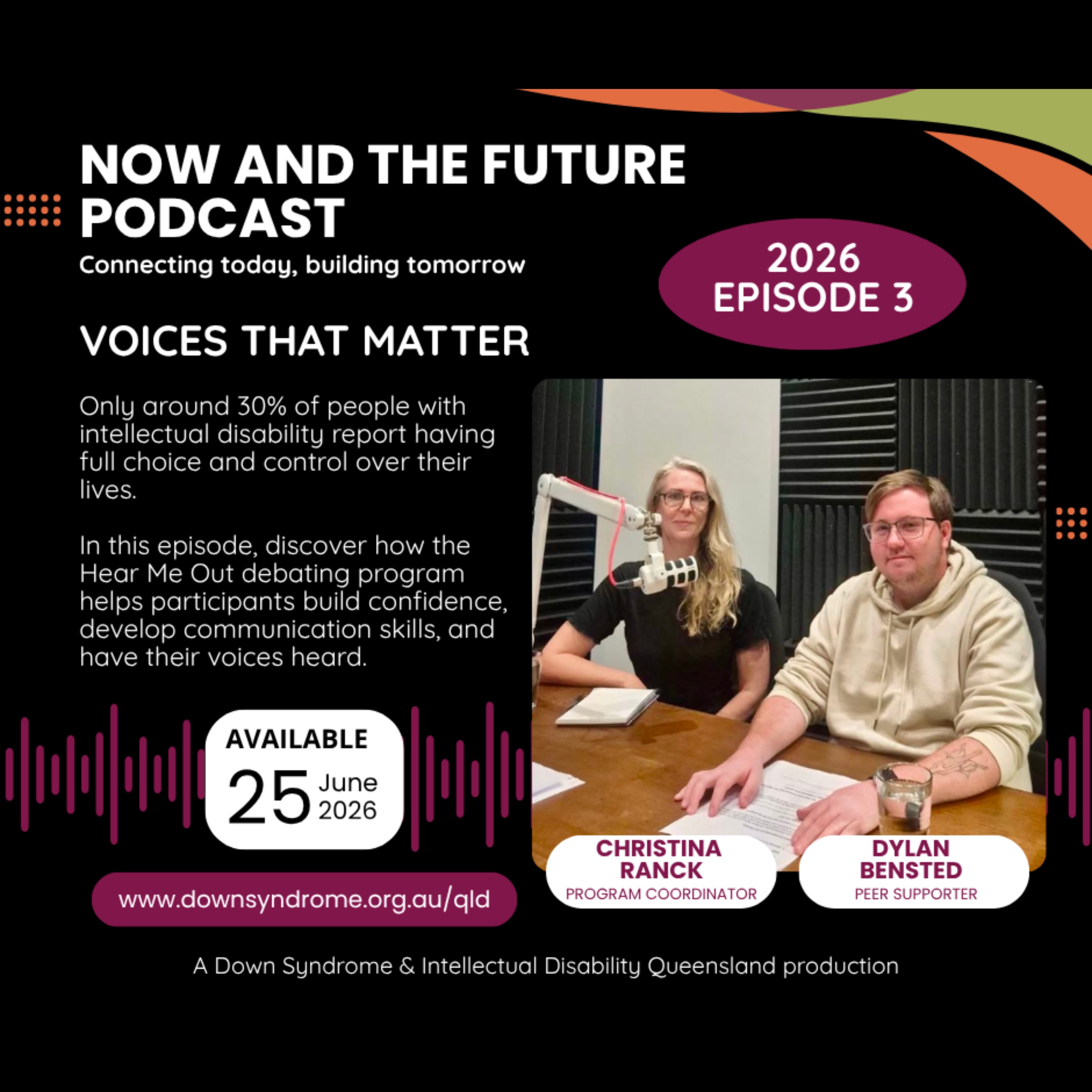
Voices That Matter
Jun 2400:36:13Tap to summarizeResearch shows that only around 30% of people with intellectual disability feel they have full choice and control over their lives. Building skills in communication, confidence, self-advocacy, and decision-making is an important step towards changing this.In this episode of the Now and the Future Podcast, "Voices That Matter," we explore the Hear Me Out debating program and how it empowers people with intellectual disability to express their views, have their voices heard, and actively participate in their communities.We discuss:The importance of self-advocacy and having a voiceHow debating builds confidence and communication skillsThe positive impact Hear Me Out has on participantsSuccess stories from people involved in the programExciting opportunities and future developments for Hear Me OutJoining us are Christina Ranck, Hear Me Out Program Coordinator, and Dylan Benstead, a former participant who has gone on to become a peer supporter. Together, they share valuable insights from both the facilitator and participant perspectives, highlighting the transformative impact of the program.Whether you're a person with disability, family member, supporter, educator, or advocate, this episode showcases the power of being heard and the difference it can make in creating more inclusive communities.Down Syndrome & Intellection Disabilities Queensland (DSIDQ) Website – www.downsyndrome.org.au/qld/Phone: (07) 3356 6655Email: office@dsidq.org.auDisclaimer: This episode is for general information only and does not constitute professional advice. Please seek independent advice relevant to your circumstances.See more - www.downsyndrome.org.au/wp-content/uploads/2026/04/Disclaimer.pdf
Transcribe →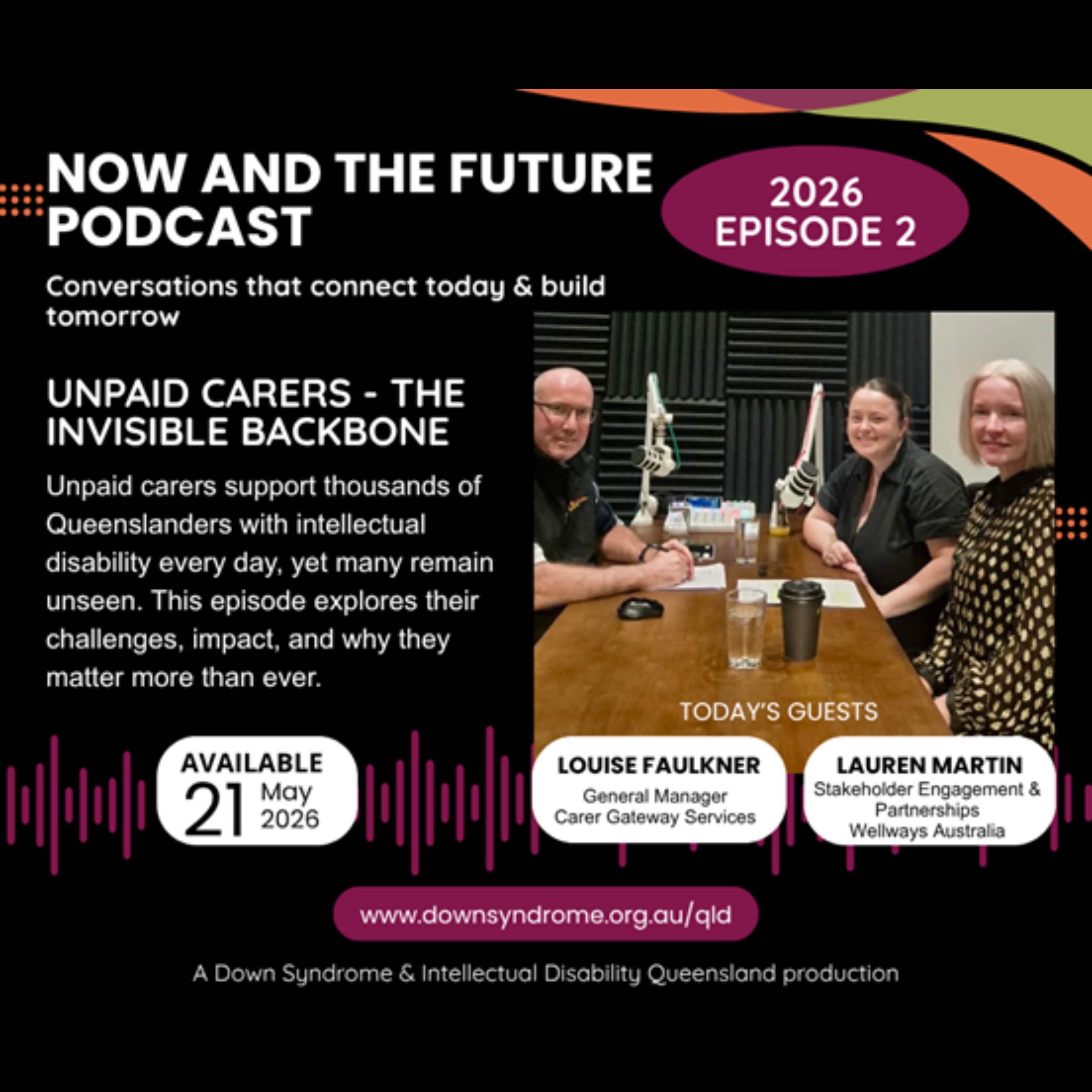
The Invisible Backbone
May 2000:28:27Tap to summarizeUnpaid carers are the invisible backbone of our community.In Queensland, around 642,000 carers support people with intellectual disability of whom live at home with family. Their role is critical, yet often unrecognised.In this episode, we’re joined by Lauren Martin and Louise Faulkner from Wellways to explore:What it means to be an unpaid carerThe challenges of isolation and burnoutThe supports availableWhat needs to change to better support carersAs the peak body for intellectual disability, DSIDQ recognises that supporting carers is key to building inclusive communities.🎧 Listen now and learn how we can better support those who support others.👉 Visit our website for resources, support services, and more episodes.Wellways Carer GatewayWebsite – https://www.wellways.org/our-services/Phone: 1800 422 737Email: enquiries@wellways.orgDown Syndrome & Intellection Disabilities Queensland (DSIDQ) Website – https://www.downsyndrome.org.au/qld/Phone: (07) 3356 6655Email: office@dsidq.org.auDisclaimer: This episode is for general information only and does not constitute professional advice. Please seek independent advice relevant to your circumstances.https://www.downsyndrome.org.au/wp-content/uploads/2026/04/Disclaimer.pdf
Transcribe →
More Than a Diagnosis: A Mum’s Fragile X Story
Apr 2300:37:05Tap to summarizeIn this week’s episode of the Now and the Future Podcast – More Than a Diagnosis: A Mum’s Fragile X Story - we meet Mandy Barker, a Brisbane-based advocate and mother of two children with Fragile X syndrome.During this discussion, Mandy shares her personal journey of living with Fragile X syndrome, the challenges faced by parents of children with intellectual disabilities, and some of the methods she has used to find balance and happiness. For more information about Fragile X syndrome and other intellectual disabilities contact Fragile X Association of Australia (FXAA) or Down Syndrome & Intellection Disabilities Queensland (DSIDQ): Fragile X Association of Australia (FXAA):Web - https://www.fragilex.org.au/Phone: 1300 394 636Email: support@fragilex.org.auDown Syndrome & Intellection Disabilities Queensland (DSIDQ) Website – https://www.downsyndrome.org.au/qld/Phone: (07) 3356 6655Email: office@dsidq.org.auDisclaimer: This episode is for general information only and does not constitute professional advice. Please seek independent advice relevant to your circumstances.https://www.downsyndrome.org.au/wp-content/uploads/2026/04/Disclaimer.pdf
Transcribe →
An Interview with Emma Memma
Dec 4, 202400:33:14Tap to summarizeIn this podcast, Dr Carly Lassig (DSQ’s Lead Education Consultant) interviews Dr Emma Watkins, also known as Emma Memma (previously known as the Yellow Wiggle). This interview came about in response to the increasing interest from schools in Auslan (Australian Sign Language) and Key Word Sign (a visual communication approach that adds signs, borrowed from Auslan, to spoken words), and the DSQ’s Education Team’s observations of how music is such an effective way to teach children signing. Emma tells us about the development of Emma Memma, which teaches Auslan through music and movement, and is based on her PhD research. We learn about what first motivated Emma to learn to sign and how she continues to develop her Auslan skills and understanding of Deaf culture. We also discuss some considerations for introducing signing in schools.This podcast is a production of Down Syndrome Queensland.If you have a question, would like more information on any of our episodes, or have suggestions for future topics, send us an email - engagement@downsyndrome.qld.org.au.For more information please visit the DSQ website, or follow us on Facebook and Instagram.Mentioned in this episode:Down Syndrome Queensland
Transcribe →Planning for the Future: Vision and Plan
Oct 30, 202400:17:55Tap to summarizePlanning for a future where you may no longer be around to support your loved one with an intellectual disability is a worrying thought. We all know that we need to have our financial and legal affairs in order, but what about your vision and plan? These aspects of planning for a future can often be overlooked or downplayed. This podcast is a condensed version of an online presentation that is designed to make you think about the future planning needs of your person with an intellectual disability. To view the presentation in its entirety please access it here - https://www.youtube.com/watch?v=OD1SqlUX4iAAdditional ResourcesCircles of Support Resources: Circles of Support - A manual for getting startedCircles of Support - Inclusion Melbourne Vision and Planning Resources:The Power of Planning - Community Resource UnitWhy it Matters Succession Planning - Community Resource UnitSupported Decision Making Resources:The La Trobe Support for Decision Making Practice Framework:This podcast is a production of Down Syndrome Queensland.If you have a question, would like more information on any of our episodes, or have suggestions for future topics, send us an email - engagement@downsyndrome.qld.org.au.For more information please visit the DSQ website, or follow us on Facebook and Instagram.Mentioned in this episode:Down Syndrome Queensland
Transcribe →
My Time is Your Lifeline
Sep 18, 202400:29:02Tap to summarizeIn today’s episode of the Now and the Future podcast, we are sitting down with Naomie Macquarie, MyTime Support Group Coordinator, to discuss the benefits and impact MyTime support groups can have on parents and carers of children with disabilities or other additional needs. MyTime is your lifeline.Reach out to Naomie today to find out more.Email: naomie@mytimeqld.org.auPhone: 07 3356 6655Website: www.mytime.net.auThis podcast is a production of Down Syndrome Queensland.If you have a question, would like more information on any of our episodes, or have suggestions for future topics, send us an email - engagement@downsyndrome.qld.org.au.For more information please visit the DSQ website, or follow us on Facebook and Instagram.Mentioned in this episode:Down Syndrome Queensland
Transcribe →
Communicate Your Way – Speech Pathology Week
Aug 21, 202400:32:05Tap to summarizeIn the lead up to Speech pathology, Week from 25 – 31 August, in today’s episode of the Now and the Future podcast we meet speech pathologist Amanda Hartmann. In this episode Amanda will take us on a journey through the ever-evolving world of speech pathology, share some fantastic real stories from the community and look at different ways to communicate your way. See the below links for more information about Amanda and AAC: AAC: https://www.speechpathologyaustralia.org.au/Communication_Hub/Resources/Fact_Sheets/Augmentative-and-Alternative-Communication.aspx https://www.health.qld.gov.au/__data/assets/pdf_file/0027/674172/aac_pro.pdf Amanda Hartmann: https://www.instagram.com/amandahartmann_slp_aac/?hl=en https://www.youtube.com/channel/UCwqbiepG71hZBz0e20hp07Q https://www.facebook.com/p/Amanda-Hartmann-SLP-AAC-100057332654773/ This podcast is a production of Down Syndrome Queensland.If you have a question, would like more information on any of our episodes, or have suggestions for future topics, send us an email - engagement@downsyndrome.qld.org.au.For more information please visit the DSQ website, or follow us on Facebook and Instagram.Mentioned in this episode:Down Syndrome Queensland
Transcribe →
Healthy Living
Jul 17, 202400:19:34Tap to summarizeWelcome to season 11 of the Now And The Future podcast from Down Syndrome Queensland!This episode of the podcast focuses on health and how we can live healthier lives.This podcast is a production of Down Syndrome Queensland.If you have a question, would like more information on any of our episodes, or have suggestions for future topics, send us an email - engagement@downsyndrome.qld.org.au.For more information please visit the DSQ website, or follow us on Facebook and Instagram.
Transcribe →
Individualised Plans for Students Accessing an Alternative Curriculum Level
Jun 19, 202401:05:23Tap to summarizeThis podcast episode brings together interviews with advisors from each of the three education systems in Queensland (State, Independent, and Catholic) to discuss students with intellectual disability accessing curriculum aligned with their year level curriculum, alongside their age peers, but that is adjusted to the expectations of a lower year level or to highly individualised goals. We delve into how teachers make decisions about who should access these individualised curriculum plans, what evidence and processes are involved, how to make decisions about what year level curriculum should be the access point for the student, and what the implications of these plans might be.For schools wanting tailored advice on decisions around an individual curriculum plan for their student with Down syndrome/Intellectual Disability, please register for our free ID:8 service (https://downsyndrome.powerappsportals.com/id8/) or one of our QEST services (email: education@downsyndromeqld.org.au).DSQ’s Education Services are proudly supported by the Queensland Government.This podcast is a production of Down Syndrome Queensland.If you have a question, would like more information on any of our episodes, or have suggestions for future topics, send us an email - engagement@downsyndrome.qld.org.au.For more information please visit the DSQ website, or follow us on Facebook and Instagram.Mentioned in this episode:Down Syndrome Queensland
Transcribe →