Podcast
Peptides Explained
Hosted by John Garrett · EN
Peptides Explained breaks down the most talked-about peptides and GLP-1 medications in health, fitness, and longevity — including semaglutide, tirzepatide, BPC-157, TB-500, and more.
Hosted by Registered Nurse John Garrett, this podcast explains how these compounds work, why they’re popular, what the research shows, and the real risks and side effects — all in plain language.
No bro science. No hype. Just clear, foundational education.
For informational purposes only. Not medical advice.
For Research Peptides; Offlinepeptides.com/ref/johngarrett/
https://www.skool.com/peptides-explained-15
27episodes
Episodes
Newest firstAll episodes
Lipo-C Injections: What Do They Actually Do?
2d ago00:13:29Tap to summarizeCheck out Peptide.Solutions.info/Pathways and submit a request to see what companies I have partnered with to get products. Lipo-C injections are often marketed for fat burning, energy, liver support, or breaking a weight-loss plateau. But “Lipo-C” is not one standardized formula—and real metabolic biology is not the same thing as proven fat loss.In this episode, John Garrett, RN, breaks down the ingredients commonly found in Lipo-C blends, including L-carnitine, choline, methionine, inositol, and B vitamins. We examine what each ingredient actually does, what human studies of L-carnitine suggest, why that evidence cannot automatically be applied to a compounded injection, and the questions to ask before paying for one.You’ll learn:• Why two products called Lipo-C may be completely different• How carnitine participates in mitochondrial fatty-acid oxidation• What “lipotropic” does—and does not—mean• Whether Lipo-C is FDA approved• What people report versus what trials establish• Risks, limitations, and when provider involvement mattersExplore the Peptides Explained app: app.peptidesexplained.infoLearn more through Peptide Solutions: peptide-solutions.infoEducational content only. This is not medical advice or a recommendation to use an injectable product.
Transcribe →
FOXO4-DRI: Can It Really Remove Senescent Cells and Reverse Aging?
4d ago00:21:55Tap to summarizeFOXO4-DRI has been called a “zombie-cell killer,” a senolytic peptide, and even a possible anti-aging breakthrough. The mechanism is fascinating—but the claims have moved much faster than the human evidence.In this episode, John explains what senescent cells are, why they are not automatically harmful, and how FOXO4 and p53 help regulate cell survival and cell death. He then breaks down the D-retro-inverso design of FOXO4-DRI, the proposed mechanism, and what the original 2017 research actually found in cultured human cells and mice.The episode also examines what has happened since that first study, why removing senescent cells may produce different effects in different tissues, and what the cancer, tissue-repair, regulatory, and long-term safety questions really look like.The bottom line: FOXO4-DRI is a scientifically credible experimental senolytic with compelling preclinical biology—but it has not been proven to reverse aging or provide clinical benefit in humans.Explore the Peptides Explained App:https://app.peptidesexplained.infoPeptide Solutions:If you are interested in checking out Compounded or Research Peptide Sources visit Peptide Solutions. https://peptide-solutions.infoThis episode is educational and is not individualized medical advice. FOXO4-DRI is experimental and is not an FDA-approved medication.
Transcribe →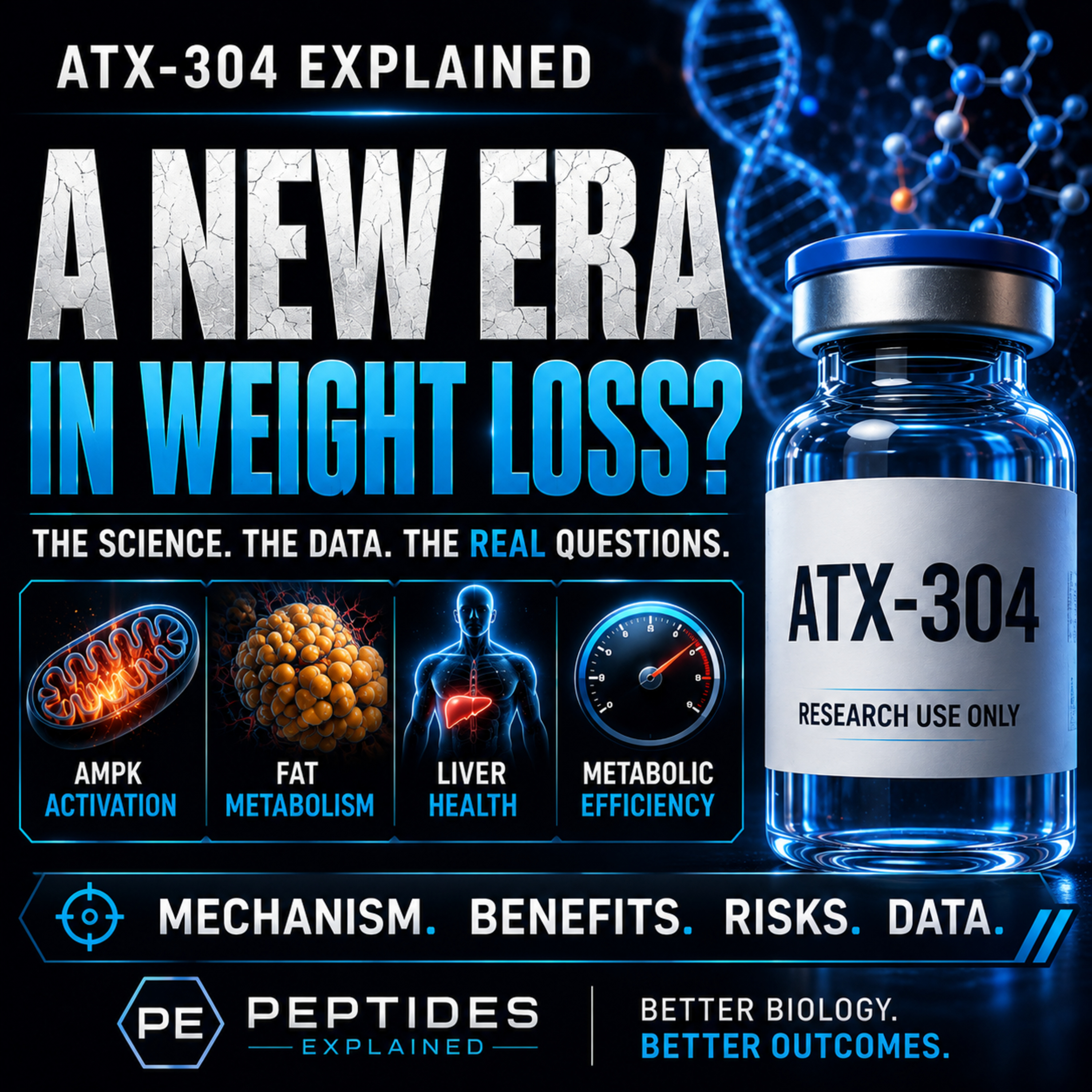
ATX-304: AMPK Activation, Metabolic Demand, and the Limits of “Exercise in a Pill”
1w ago00:20:25Tap to summarizeATX-304 is often called “exercise in a pill,” but it is more accurate to describe it as an investigational oral small molecule that activates AMPK and alters mitochondrial energy demand. John explains the mechanism, the preclinical metabolic findings, the early human signal in type 2 diabetes, the current obesity-development strategy, and the major gaps that remain before anyone can claim it reproduces the health effects of exercise.Batch tested and they have COAs available on all peptideshttps://www.americanpeptides.us/discount/JOHNATHAN10?ref=SteWwgMLys Or use Johnathan10 at checkout2. Offline Peptides Based in TexasBatch tested and they have COAs available on all peptidesVisit; OfflinePeptides.com/ref/JohnGarrettI am an affiliate with each of these companies. If you use my link I may earn a commission at no extra cost to you. All information on this podcast is for educational and not meant as medical advice.
Transcribe →
Thymosin Alpha 1: What Does It Do?
2w ago00:18:13Tap to summarizeThymosin alpha 1—also called Tα1 or thymalfasin—is frequently described online as an “immune-boosting peptide.” But that phrase oversimplifies a complicated biological system.In this episode of Peptides Explained, John Garrett breaks down how thymosin alpha 1 may influence dendritic cells, Toll-like receptor signaling, T-cell maturation, natural-killer-cell activity, cytokines, and immune regulation. The episode also reviews where it has been studied, including chronic viral hepatitis, vaccine response, oncology-support settings, severe infection, pancreatitis, and sepsis.The evidence is not uniformly positive. Earlier sepsis trials and pooled analyses suggested benefit, but a large multicenter phase 3 trial involving more than 1,100 adults found no reduction in 28-day mortality. That contrast illustrates why biological mechanisms and small clinical studies must be separated from confirmed patient outcomes.The episode also covers:• What thymosin alpha 1 is• Why “immune modulator” is more accurate than “immune booster”• Innate versus adaptive immunity• Human clinical evidence versus cell and animal research• International approval versus U.S. FDA status• FDA concerns involving compounded thymosin alpha 1• Potential risks, product-quality concerns, and major unknowns• A responsible decision framework for evaluating immune-peptide claimsThis content is for education and discussion only and is not medical advice. Always consult a qualified healthcare professional before starting, stopping, or changing any therapy.Peptides Explained is an affiliate partner with OfflinePeptides.com. If you use the link below, I may earn a commission at no additional cost to you.PeptidesExplained.info/OfflinePeptides#ThymosinAlpha1 #Thymalfasin #PeptidesExplained #ImmuneSystem #Immunology #PeptideScience #TCells #Longevity #Peptides #MedicalEducation
Transcribe →**Special Announcement** Healthcare Provider Webinar
2w ago00:01:25Tap to summarizeThe State of Peptides 2026 | Clinician WebinarThe peptide landscape is changing rapidly. New research is emerging, regulatory decisions continue to shape clinical practice, and healthcare providers are being asked more questions than ever before.Join Peptide Solutions for a live clinician-focused webinar covering the current state of peptides in 2026. This educational session is designed for physicians, nurse practitioners, physician assistants, pharmacists, nurses, and other healthcare professionals interested in understanding the latest developments.• The current peptide and GLP-1 landscape• Recent FDA and PCAC regulatory updates• The most commonly discussed therapeutic peptides• Current evidence and clinical data• Safety, quality, and sourcing considerations• What providers should expect moving forward📅 August 13, 2026🕖 7:00 PM Central TimeRegister: https://peptide-solutions.infoThis webinar is intended for educational purposes only. Peptide Solutions does not diagnose, treat, prescribe, compound, or dispense medications. Prescription therapies require evaluation and oversight by a licensed healthcare provider. Discussions of research peptides are for educational purposes only and should not be interpreted as recommendations for human use.
Transcribe →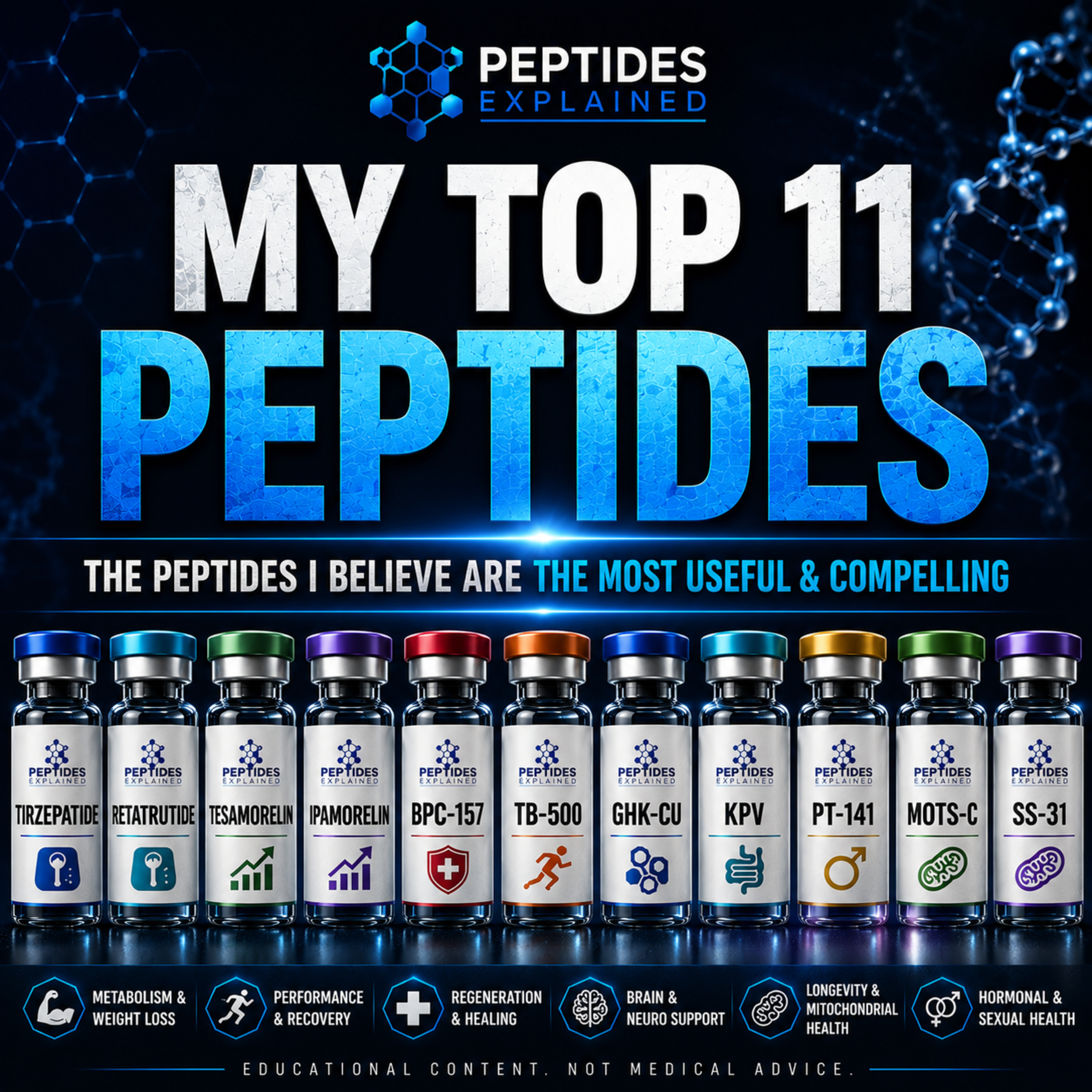
The 11 Peptides I Find Most Compelling
2w ago00:45:32Tap to summarizeAfter researching peptide science week after week—and using some compounds personally—I’m answering one of the most common questions I receive: Which peptides do I find the most useful and compelling?This is not a universal ranking or a recommendation to use all 11. Tirzepatide, retatrutide, tesamorelin, ipamorelin, BPC-157, TB-500, GHK-Cu, KPV, PT-141, MOTS-c, and SS-31 occupy very different evidence and regulatory categories. Some are FDA-approved prescription drugs. Some have encouraging human data. Others remain experimental and are supported mainly by animal, cell, mechanistic, or anecdotal evidence.In this episode, we examine the problem each peptide is intended to solve, how it works, what the human evidence shows, where the evidence is weak, known risks, regulatory status, and why each compound made my personal list.This episode is for education and discussion only. It is not medical advice. Always involve a qualified healthcare professional before starting, stopping, or changing a therapy.Peptides Explained is an affiliate partner with OfflinePeptides.com. Visit PeptidesExplained.info/OfflinePeptides.For Peptides through a compounding pharmacy or a telehealth option Visit Peptide-Solutions.info and submit a request for more information.
Transcribe →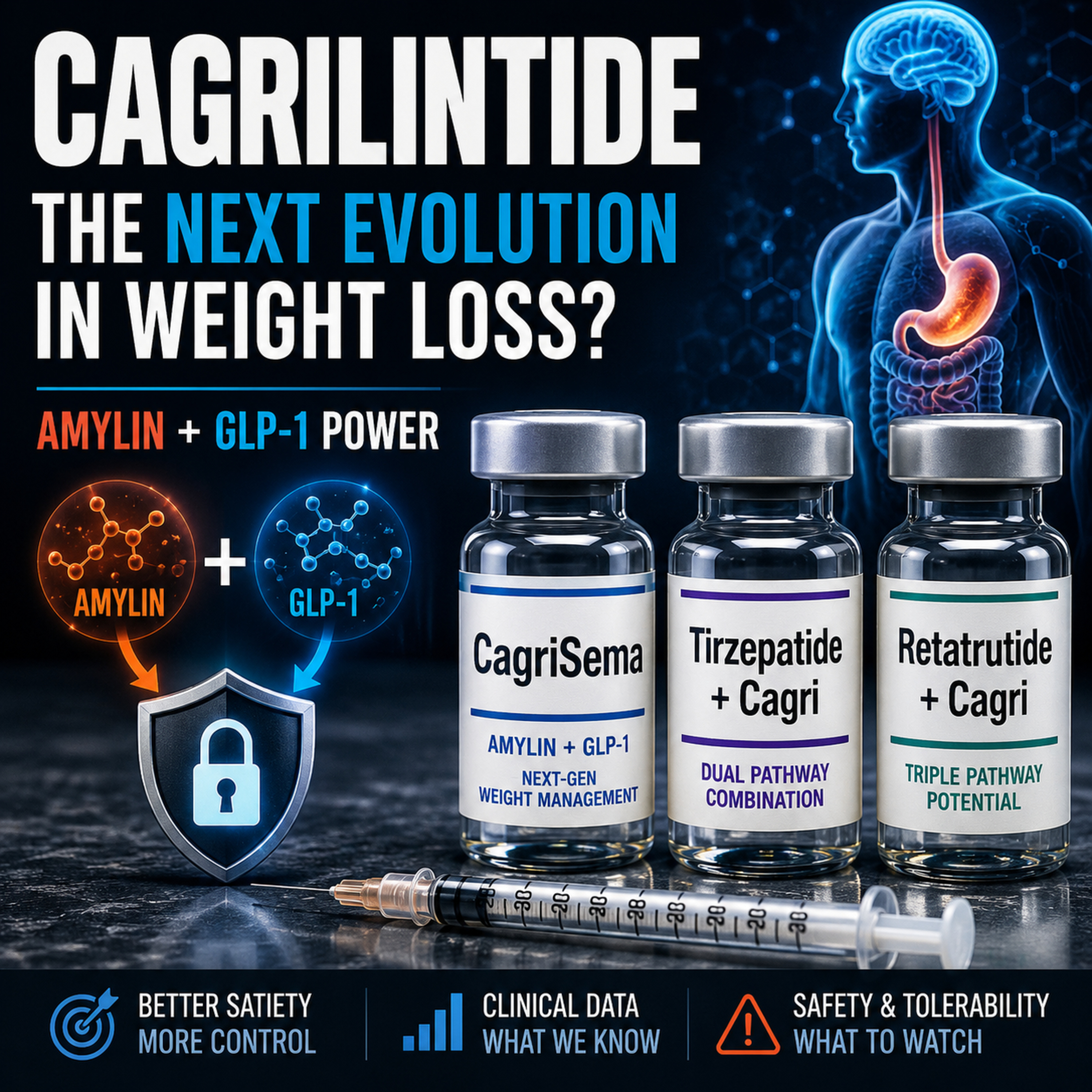
Cagrilintide vs GLP-1s: A Different Appetite Pathway?
3w ago00:17:24Tap to summarizeGLP-1 medications changed obesity treatment, but appetite regulation involves more than one hormonal signal. Cagrilintide is a long-acting analogue of amylin, a pancreatic peptide released alongside insulin that helps regulate satiety, gastric emptying, and post-meal glucagon signaling.In this episode of Peptides Explained, John Garrett breaks down what cagrilintide is, how it differs from GLP-1 receptor agonists, what standalone phase 2 data show, and what the phase 3 CagriSema trials tell us about combining cagrilintide with semaglutide.We also examine the REDEFINE 4 comparison with tirzepatide, common gastrointestinal adverse effects, unresolved questions about long-term outcomes and lean mass, and why online research products should not be treated as equivalent to the pharmaceutical trial material.Cagrilintide remains investigational and is not currently an FDA-approved treatment. This content is educational and is not medical advice.Peptides Explained is an affiliate partner with Offline Peptides. Research-use products are not approved medications and are not intended for human use.Visit: PeptidesExplained.info/OfflinePeptidesFor information on Compounded Peptides through Premier Pharmacy visit Peptide Solutions and submit a request for more informationVisit: Peptide-Solutions.info and submit a request for more informationSend a two- to three-minute N=1 video to john@peptidesexplained.info.
Transcribe →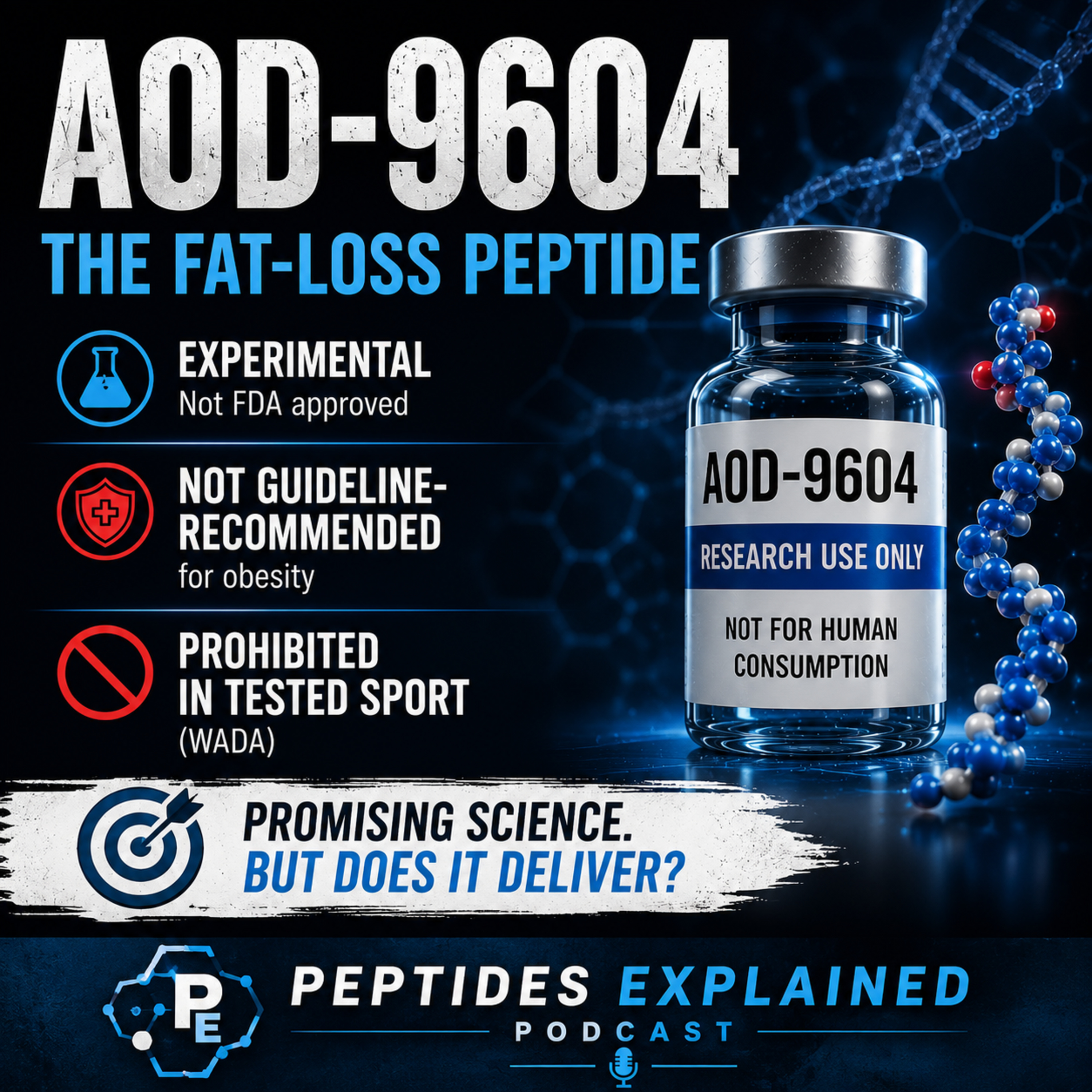
AOD-9604 Explained: Can a Growth Hormone Fragment Burn Fat?
3w ago00:18:13Tap to summarizeAOD-9604 is often marketed as the “fat-burning fragment” of human growth hormone. But what does it actually do, and did it work in human obesity trials?In this episode of Peptides Explained, John Garrett, RN, breaks down:• What AOD-9604 is and how it differs from full-length HGH• Lipolysis, lipogenesis, and beta-3 adrenergic signaling• Why animal studies looked promising• What the early human trials showed• Why the obesity-development program was discontinued• Whether AOD-9604 raises IGF-1• Regulatory status, risks, unknowns, and anti-doping concerns• A responsible framework for evaluating experimental fat-loss peptidesThe central takeaway: AOD-9604 has a plausible preclinical mechanism, but the available human evidence does not establish dependable, clinically meaningful fat loss.This episode is for informational purposes only and is not medical advice. Always consult a qualified healthcare professional before starting, stopping, or changing any therapy.This episode is brought to you by Offline Peptides. If you are interested in Research Peptides Learn more at PeptidesExplained.info/OfflinePeptides.For more information about Peptide Solutions, visit Peptide-Solutions.info.Send your 2–3 minute N=1 video to john@peptidesexplained.info.
Transcribe →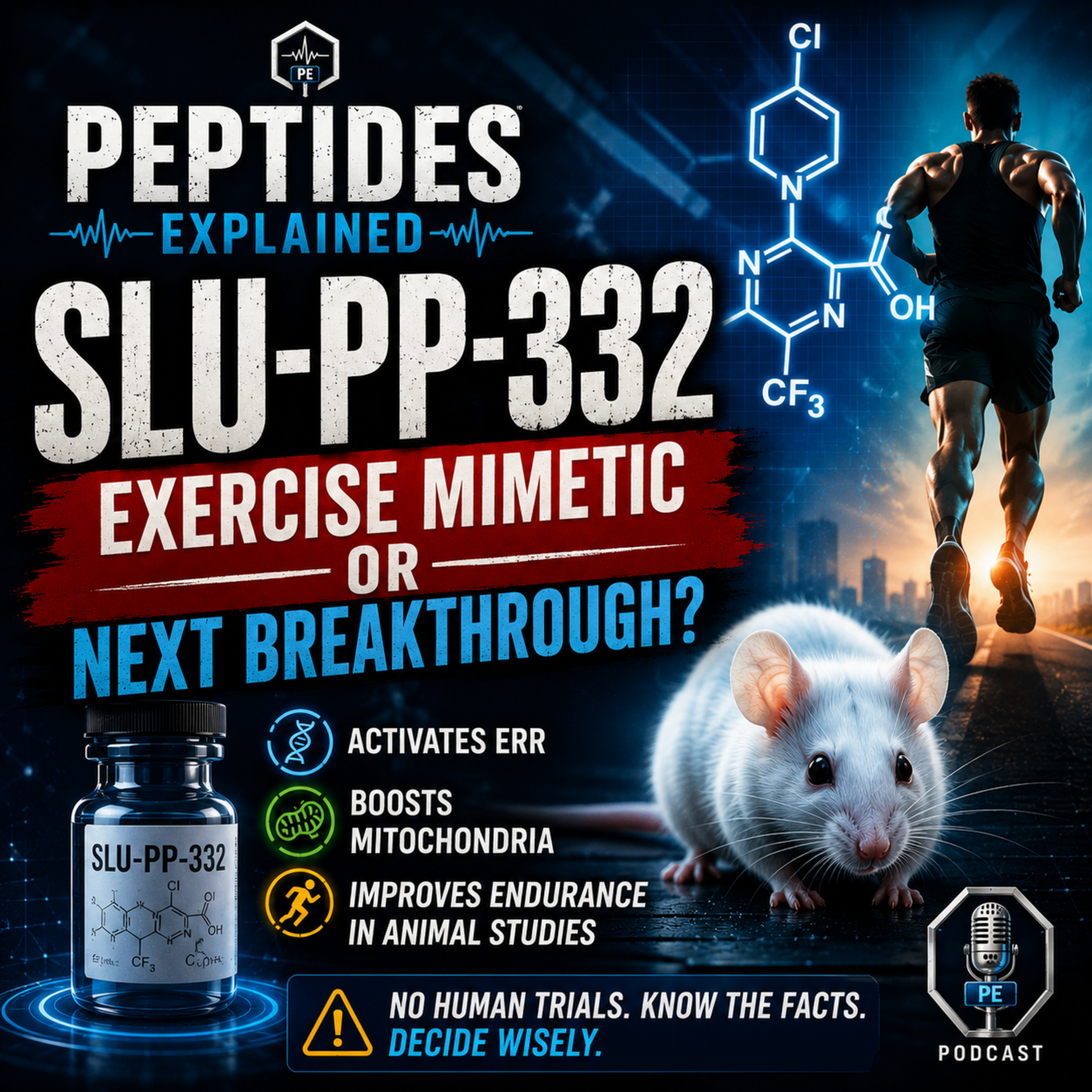
SLU-PP-332 Explained: Exercise Mimetic or Experimental Hype?
4w ago00:15:23Tap to summarizeSLU-PP-332 is being promoted as an “exercise mimetic” that may increase fat oxidation, endurance, and energy expenditure. But it is not actually a peptide, it is not FDA-approved, and the most compelling evidence comes from cell and mouse research—not human clinical trials.In this episode, John Garrett, RN, explains estrogen-related receptors, mitochondrial energy metabolism, the published preclinical findings, the oral-bioavailability problem, potential risks, regulatory status, and the difference between mimicking selected exercise pathways and replacing physical exercise.This content is for education and discussion only and is not medical advice. SLU-PP-332 is an experimental research compound with no established human therapeutic use.Learn more: PeptidesExplained.infoPeptide Solutions: Peptide-Solutions.infoOffline Peptides: PeptidesExplained.info/OfflinePeptidesAffiliate disclosure: Peptides Explained is an affiliate partner with OfflinePeptides.com. If you use my link, I may earn a commission at no additional cost to you.Send 2–3 minute N=1 videos to john@peptidesexplained.info.
Transcribe →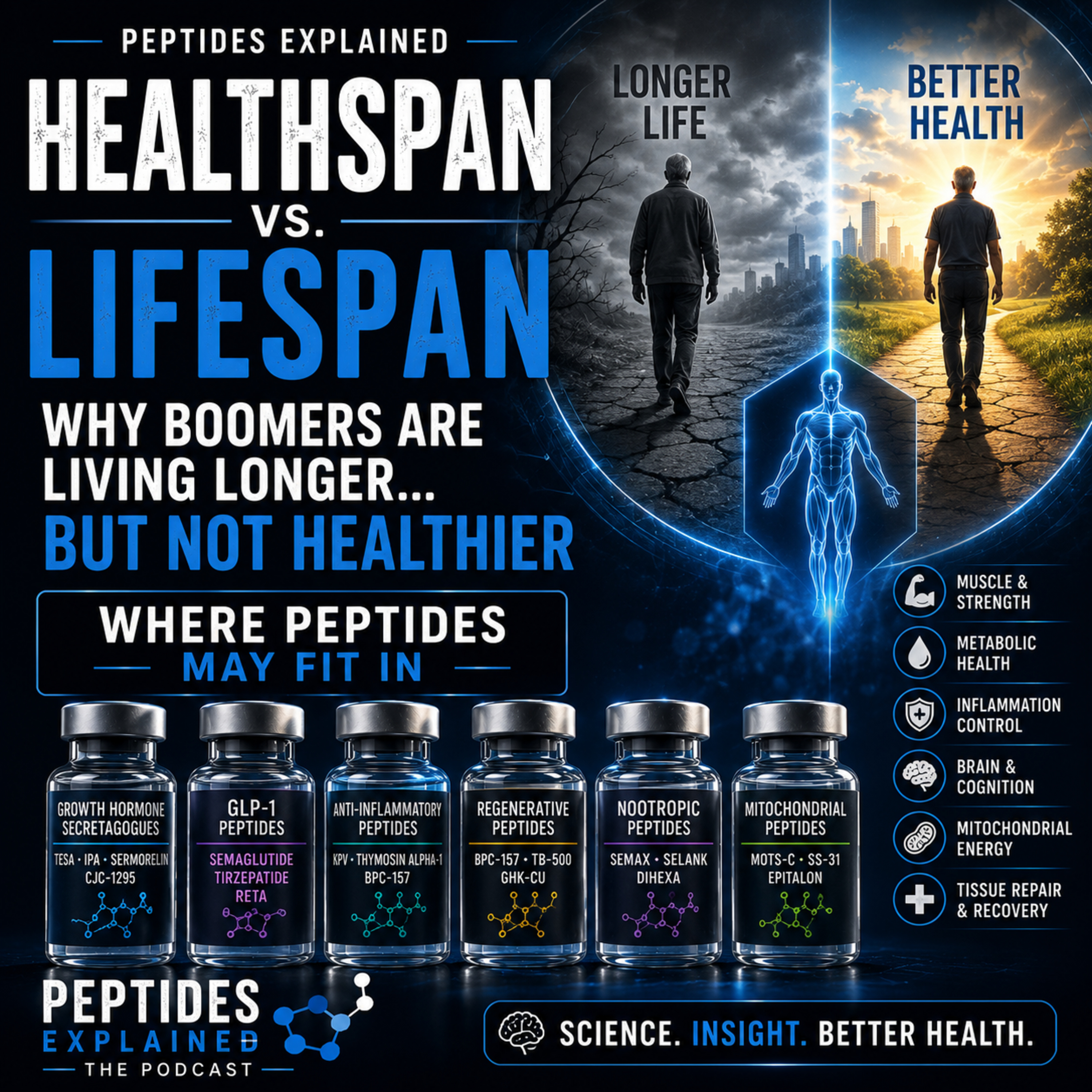
Why Boomers Are Living Longer But Not Healthier: Where Peptides May Fit Into Healthy Aging
4w ago00:15:38Tap to summarizeWhy are Americans living longer than ever before while spending more years battling chronic disease?In this episode of Peptides Explained, we explore one of the biggest questions in longevity medicine: the difference between lifespan and healthspan.You'll learn why muscle loss, metabolic dysfunction, chronic inflammation, mitochondrial decline, immune aging, and cognitive changes are major drivers of aging—and where peptide research may fit into each of these biological systems.We discuss several categories of peptides currently being investigated, including:• Growth Hormone Secretagogues (Tesamorelin, Ipamorelin, Sermorelin, CJC-1295)• GLP-1 and Metabolic Peptides (Semaglutide, Tirzepatide, Retatrutide)• Anti-Inflammatory Peptides (KPV, Thymosin Alpha-1, BPC-157)• Regenerative Peptides (BPC-157, TB-500, GHK-Cu)• Nootropic Peptides (Semax, Selank, Dihexa)• Mitochondrial Peptides (MOTS-c, SS-31, Epitalon)This episode discusses current science, emerging research, and where evidence is strong—and where it is still evolving.This podcast is for educational purposes only and is not medical advice.Sponsored by Peptide SolutionsLearn more:https://peptide-solutions.infoResearch Peptides (Affiliate):PeptidesExplained.info/OfflinePeptidesAffiliate Disclosure: Peptides Explained is an affiliate partner with Offline Peptides. #Peptides #HealthyAging #Longevity #GLP1 #Retatrutide #Semaglutide #BPC157 #MOTSc #Healthspan #PeptidesExplained
Transcribe →