Podcast
Peptides Explained
Hosted by John Garrett · EN
Peptides Explained breaks down the most talked-about peptides and GLP-1 medications in health, fitness, and longevity — including semaglutide, tirzepatide, BPC-157, TB-500, and more.
Hosted by Registered Nurse John Garrett, this podcast explains how these compounds work, why they’re popular, what the research shows, and the real risks and side effects — all in plain language.
No bro science. No hype. Just clear, foundational education.
For informational purposes only. Not medical advice.
For Research Peptides; Offlinepeptides.com/ref/johngarrett/
https://www.skool.com/peptides-explained-15
27episodes
Episodes
Newest firstAll episodes
NAD+ and Cancer: What the Science Actually Says
Jul 1200:18:24Tap to summarizeNAD+ is one of the most talked-about molecules in longevity and wellness. It is marketed for energy, mitochondrial support, cellular repair, brain fog, recovery, and anti-aging.But what happens when we bring cancer biology into the conversation?In this episode of Peptides Explained, we break down the relationship between NAD+ and cancer in clear, responsible language. NAD+ is essential for normal cellular function, DNA repair, mitochondrial energy production, redox balance, and immune signaling. But cancer cells may also rely on NAD+ metabolism to support growth, survival, DNA repair, oxidative stress control, and possible treatment resistance.This episode covers NAD+, NADH, NR, NMN, niacinamide, IV NAD+, NAMPT, PARP enzymes, DNA repair, cancer therapy, human evidence, preclinical evidence, and why active cancer or recent cancer changes the risk discussion.This is not a hype episode and not a fear episode. The real answer is context.NAD+ biology is real. The cancer concern is biologically plausible. The human evidence is incomplete.This podcast is for informational purposes only and is not medical advice. Always consult a licensed healthcare professional before considering any therapy, supplement, peptide, injection, or infusion.Peptides Explained is powered by Peptide Solutions.Learn more: peptide-solutions.infoAffiliate disclosure: Peptides Explained is an affiliate partner with Offline Peptides . If you use my link, I may earn a commission at no additional cost to you.PeptidesExplained.info/OfflinePeptides#NAD #NADPlus #NMN #NR #CancerBiology #LongevityScience #Mitochondria #DNARepair #NAMPT #PARP #PeptidesExplained #PeptideScience
Transcribe →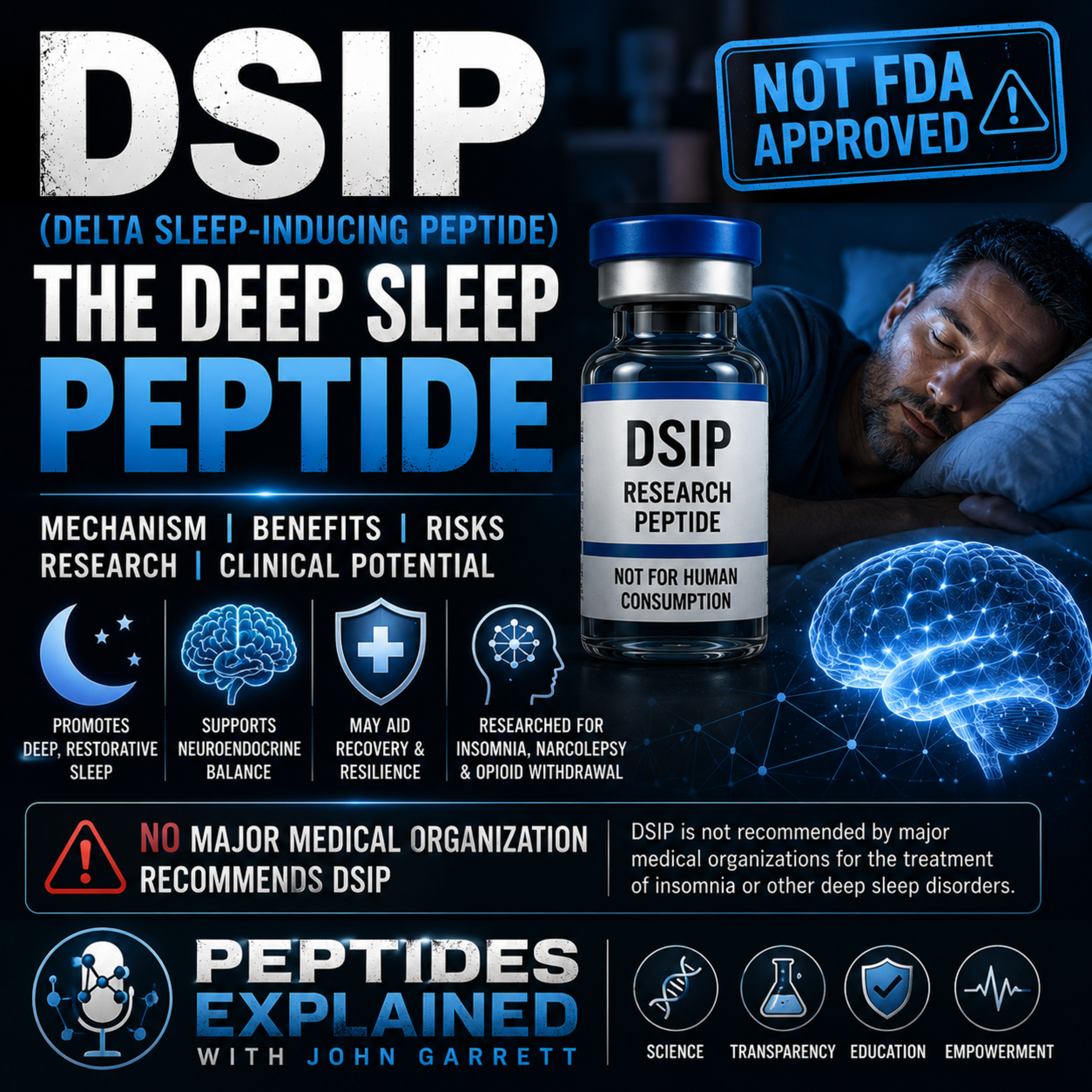
DSIP Explained: The Sleep Peptide That Science Still Can't Explain
Jul 800:08:29Tap to summarizeDescriptionCan a tiny peptide discovered nearly 50 years ago hold the key to better sleep?In this episode of Peptides Explained, we explore Delta Sleep-Inducing Peptide (DSIP)—one of the most mysterious compounds in peptide research. Unlike many peptides discussed today, DSIP has no confirmed receptor, conflicting clinical data, and decades of unanswered questions.In this episode you'll learn:✔️ What DSIP is✔️ How sleep is biologically regulated✔️ The fascinating history of DSIP's discovery in the 1970s✔️ Proposed mechanisms involving GABA, serotonin, dopamine, and the HPA axis✔️ Human and animal research findings✔️ Potential side effects and safety considerations✔️ Why DSIP is not FDA approved and why no major medical organization recommends it for insomnia or other sleep disordersThis podcast is intended for educational purposes only and is not medical advice.🌐 Peptide Solutionshttps://peptide-solutions.info🧬 Research Peptides (Affiliate Partner)PeptidesExplained.info/OfflinePeptidesIf you use my affiliate link, I may receive a commission at no additional cost to you.📧 N=1: Your Real-World ResultsHave you researched DSIP?Send a 2–3 minute video describing your experience to:john@peptidesexplained.infoYou may be featured in a future episode.#DSIP #SleepPeptide #Peptides #SleepScience #Insomnia #Longevity #PeptidesExplained #SleepResearch #Neuroscience #Biohacking
Transcribe →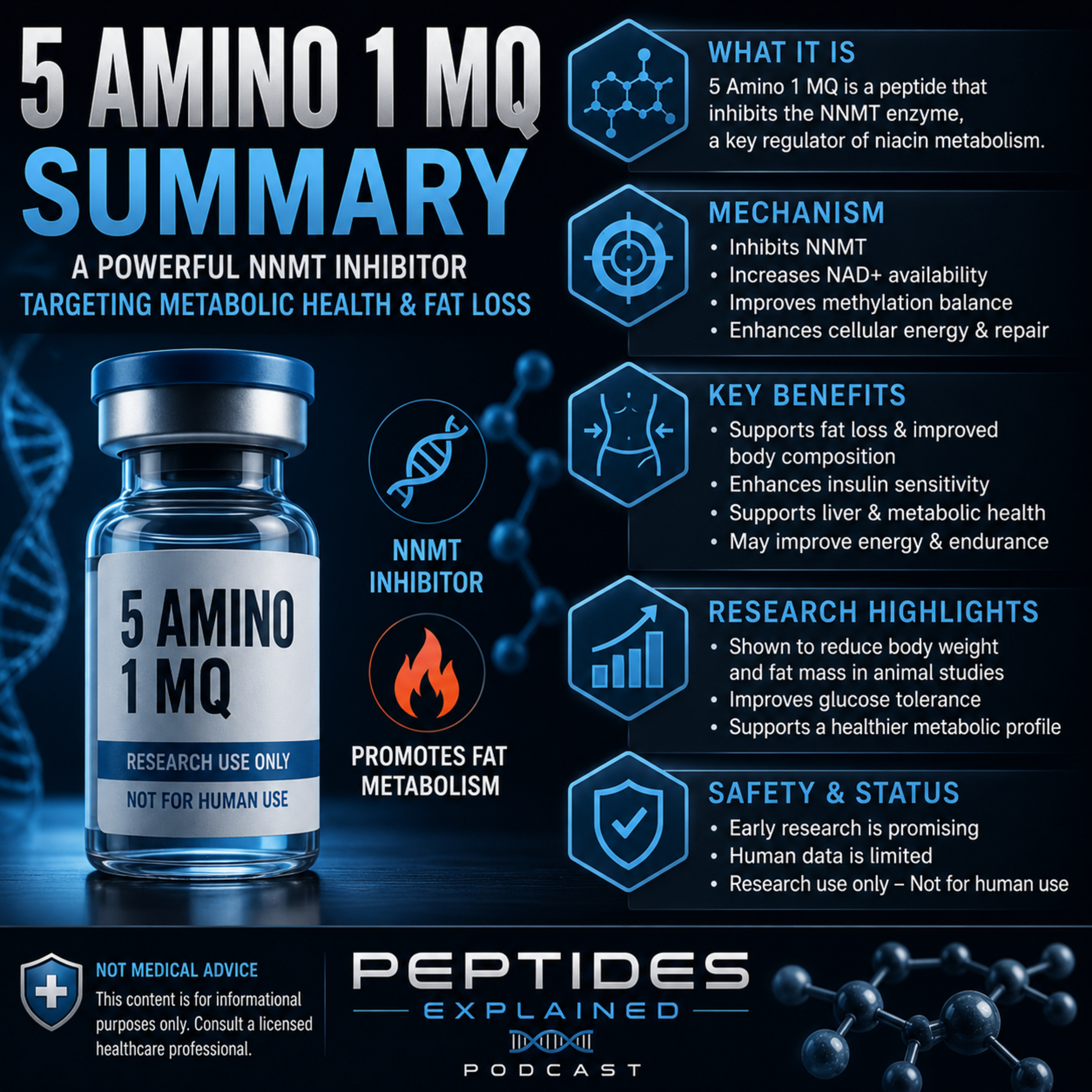
5-Amino-1MQ Explained: NNMT, NAD⁺, and Fat Cell Metabolism
Jul 600:29:11Tap to summarize5-Amino-1MQ is often talked about in peptide circles, but it is not actually a peptide. It is a small-molecule NNMT inhibitor being studied for its potential role in nicotinamide metabolism, NAD⁺ biology, methylation, fat-cell function, insulin sensitivity, and liver metabolism.In this episode, John Garrett breaks down the proposed mechanism behind 5-Amino-1MQ, why people are discussing it for fat loss and body composition, and what the current research actually shows.The data is interesting, especially in preclinical studies involving adipocytes, diet-induced obese mice, glucose tolerance, insulin sensitivity, and fatty liver markers. But the human clinical evidence is still limited, and 5-Amino-1MQ is not FDA-approved for fat loss, obesity, metabolic disease, longevity, or body composition.This episode takes a balanced look at the science, the grey-market reality, and how to think about emerging metabolic compounds responsibly.This podcast is for informational purposes only and is not medical advice. Always consult a licensed healthcare professional before considering any therapy.Peptides Explained is powered by Peptide Solutions.Peptides Explained is also an affiliate partner with Offline Peptides. If you use my link, I may earn a commission at no additional cost to you.Offline Peptides affiliate link:https://offlinepeptides.com/ref/JohnGarrett/Podcast website:https://peptidesexplained.infoPeptide Solutions:https://peptide-solutions.info
Transcribe →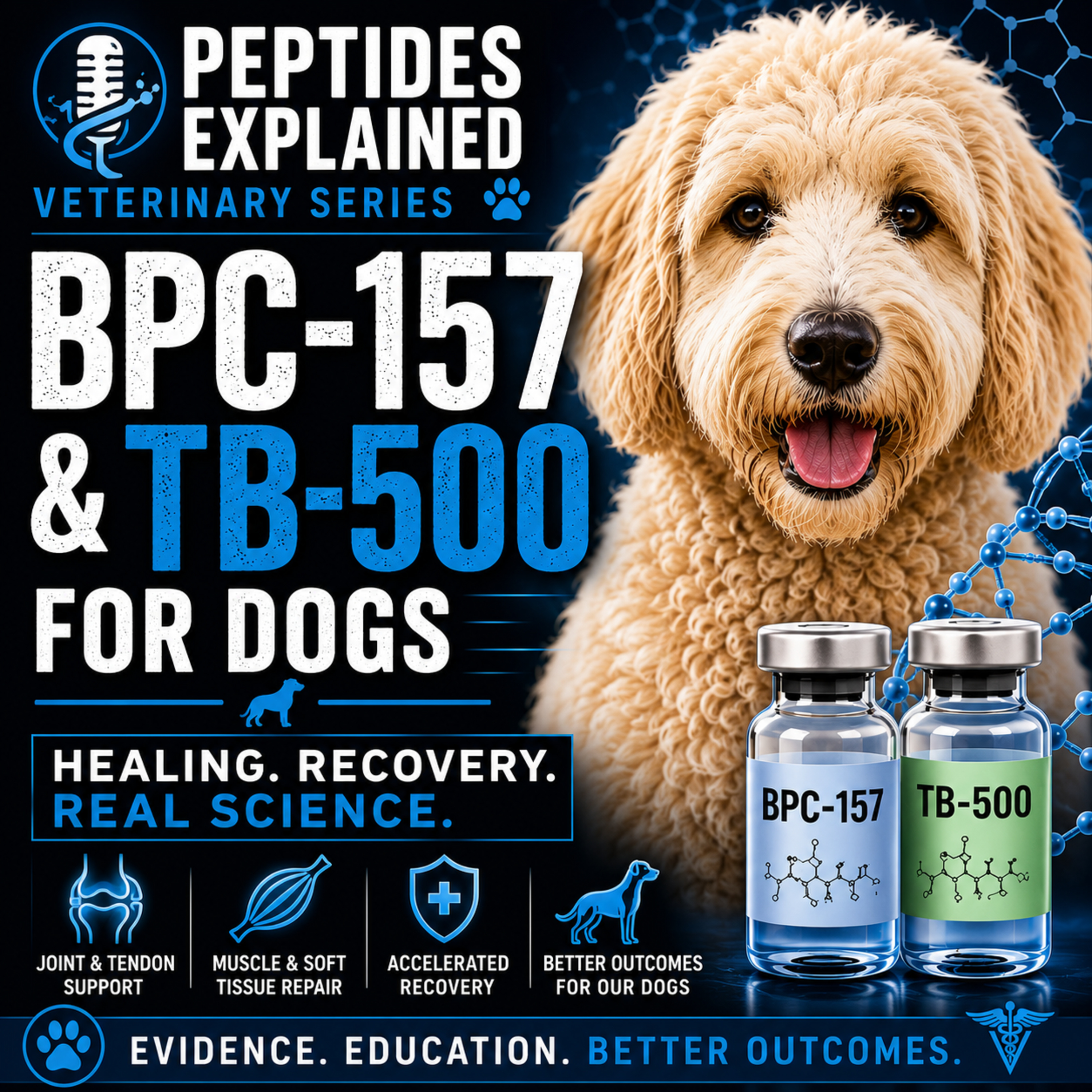
BPC-157 & TB-500 for Dogs: Healing, Recovery & the Science | Veterinary Series Ep. 1
Jul 300:21:44Tap to summarizeBPC-157 & TB-500 for Dogs: Healing, Recovery & the Current ScienceWelcome to Episode 1 of the Peptides Explained Veterinary Series.In this episode, we examine two of the most talked-about peptides in regenerative veterinary medicine—BPC-157 and TB-500.We'll discuss what researchers currently know about these experimental peptides, why they're generating interest among veterinarians and dog owners, how they may influence tendon, ligament, muscle, and connective tissue repair, and where the evidence remains limited.Whether you own an active family pet, a hunting dog, an agility competitor, or a working K9, this episode provides a balanced look at the science while separating evidence from online speculation.Educational only. BPC-157 and TB-500 are experimental compounds and are not FDA-approved veterinary medications.Learn more at https://peptide-solutions.infoPeptides Explained is an affiliate partner with Offline Peptides. If you use my link, I may earn a commission at no additional cost to you.https://offlinepeptides.com/ref/JohnGarrett/Have a real-world experience using peptides with your dog? Send a 2–3 minute horizontal video to john@peptidesexplained.info for a chance to be featured in our "N=1: Your Real-World Results" segment.
Transcribe →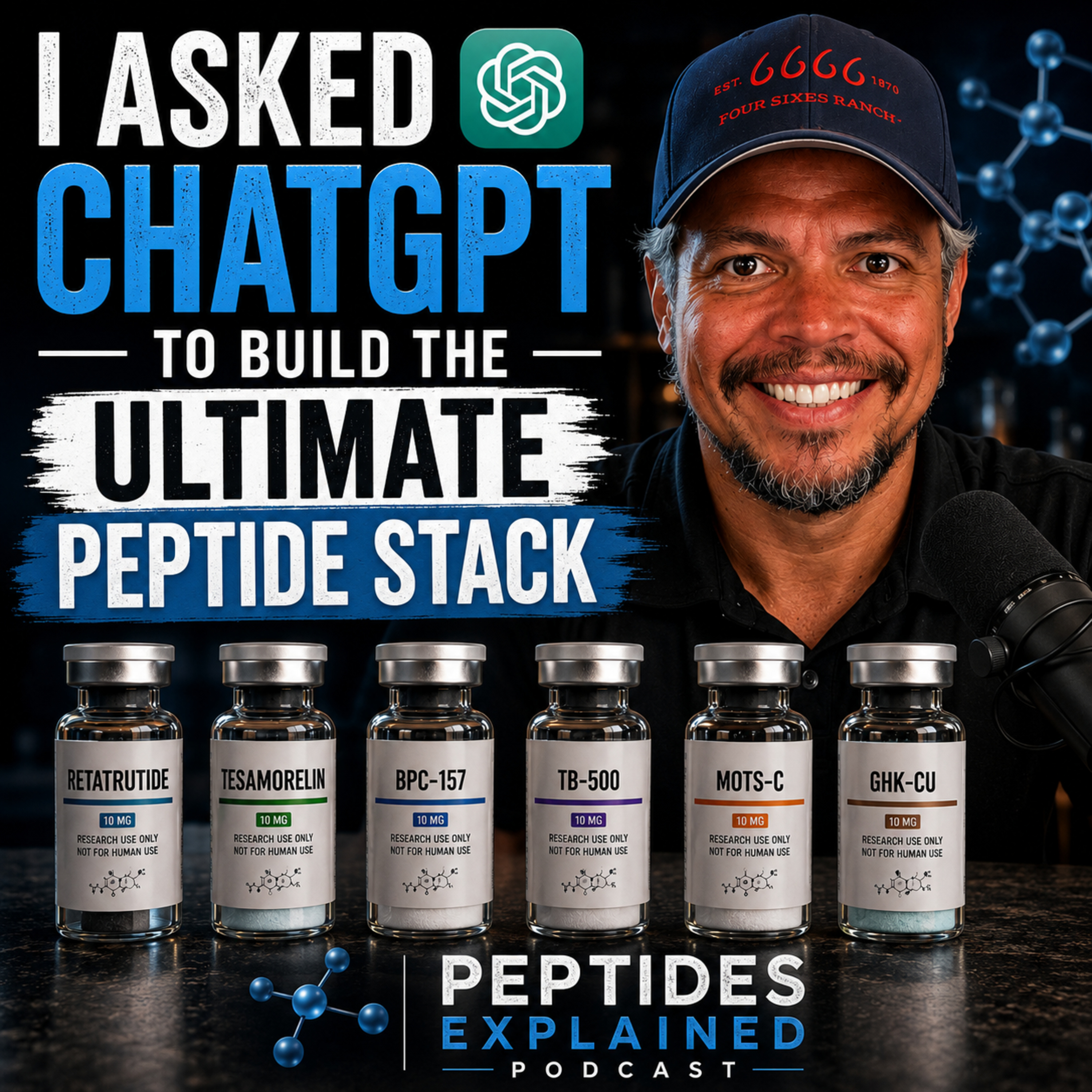
I Asked ChatGPT to Build the Ultimate Peptide Stack... Here's What It Chose
Jul 100:13:09Tap to summarizeI asked ChatGPT a simple question... and the answer surprised me.For Research Grade Peptides, check out Offline Peptides 🌐 OfflinePeptides.com/Ref/JohnGarrettIf ChatGPT were a 47-year-old peptide researcher who needed to lose 40 pounds, had a nagging knee injury, wanted to preserve muscle, improve energy, and had an unlimited budget, what peptide stack would it choose?Instead of recommending every popular peptide on the market, it built a surprisingly logical plan focused on solving the biggest problems first.In this episode of Peptides Explained, we break down the science and reasoning behind each selection:RetatrutideBPC-157TB-500TesamorelinMOTS-cGHK-CuWe also discuss why several well-known peptides didn't make the list, why ChatGPT preferred individual peptides over a Glow Stack, and how prioritizing your biggest health challenge may be more important than simply taking more compounds.This episode is an educational thought experiment—not medical advice—and is designed to spark discussion about peptide science, mechanisms, and evidence.Powered by Peptide SolutionsLooking for peptide education, research resources, or provider-guided peptide options?🌐 https://peptide-solutions.infoFor Research Grade Peptides, check out Offline Peptides 🌐 OfflinePeptides.com/Ref/JohnGarrettAffiliate Disclosure: Peptides Explained is an affiliate partner with OfflinePeptides.com. If you choose to use my affiliate link, I may earn a commission at no additional cost to you.
Transcribe →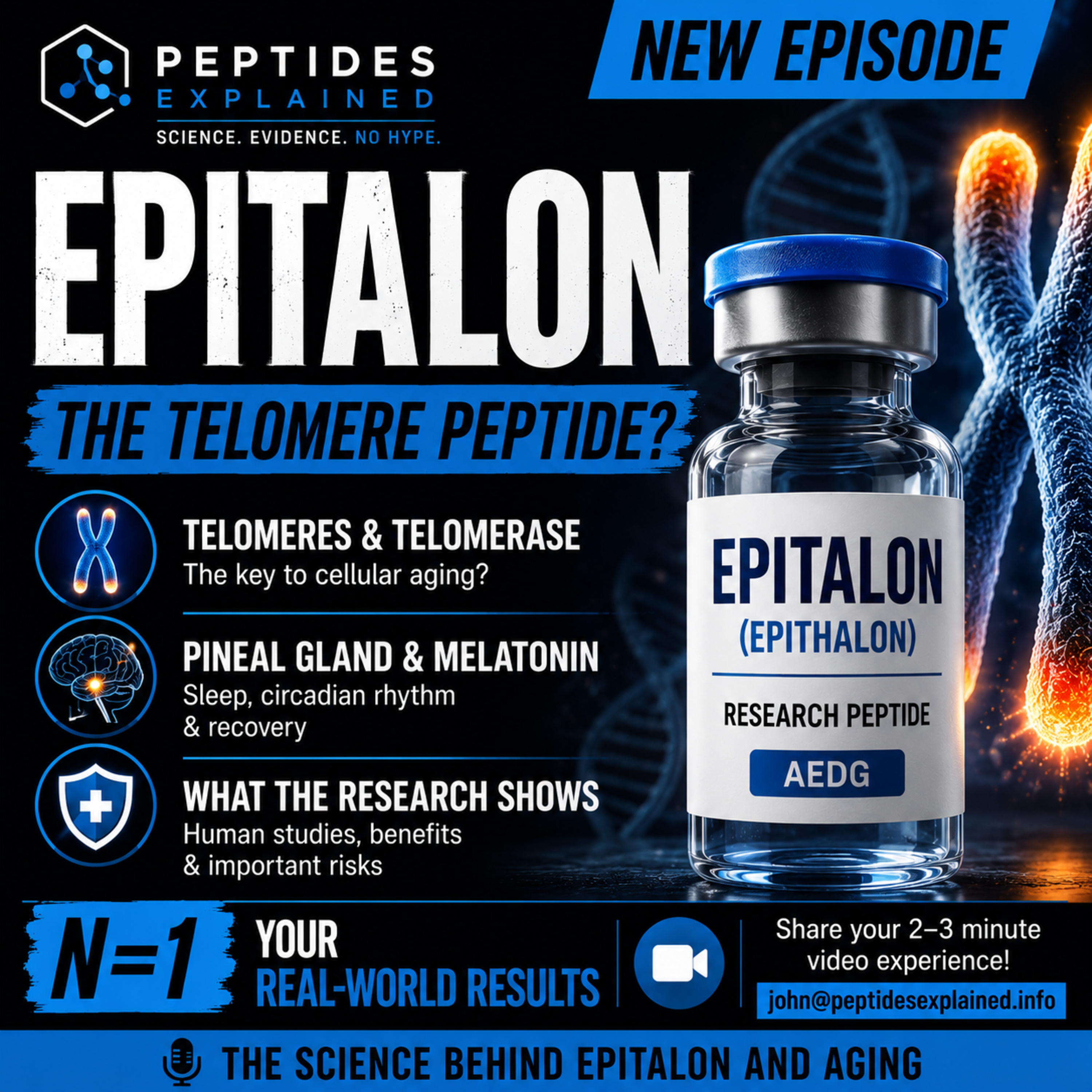
Epitalon Explained: The Science of Telomeres, Aging & Longevity
Jun 2900:13:16Tap to summarizeCan a peptide actually slow the aging process?In this episode of Peptides Explained, we take a deep dive into Epitalon—one of the most talked-about peptides in longevity medicine.You'll learn:What Epitalon is and where it came fromHow telomeres and telomerase workWhy the pineal gland may play a role in agingWhat the human and animal research actually showsWhy activating telomerase is both exciting and scientifically complexThe current FDA and regulatory status of EpitalonThe difference between promising mechanisms and proven clinical outcomesRather than relying on hype, we examine the available evidence and discuss what researchers know—and just as importantly, what they still don't know.New Segment – N=1: Your Real-World ResultsHave you used Epitalon or another peptide we've covered on the show?I'd love to feature your experience in a future episode.Record a 2–3 minute video sharing:• Which peptide you used• Why you decided to try it• Your results—positive, negative, or somewhere in between• Anything you learned along the wayEmail your video to:john@peptidesexplained.infoYour experience may be featured in an upcoming N=1: Your Real-World Results segment.This podcast is for educational purposes only and is not medical advice.
Transcribe →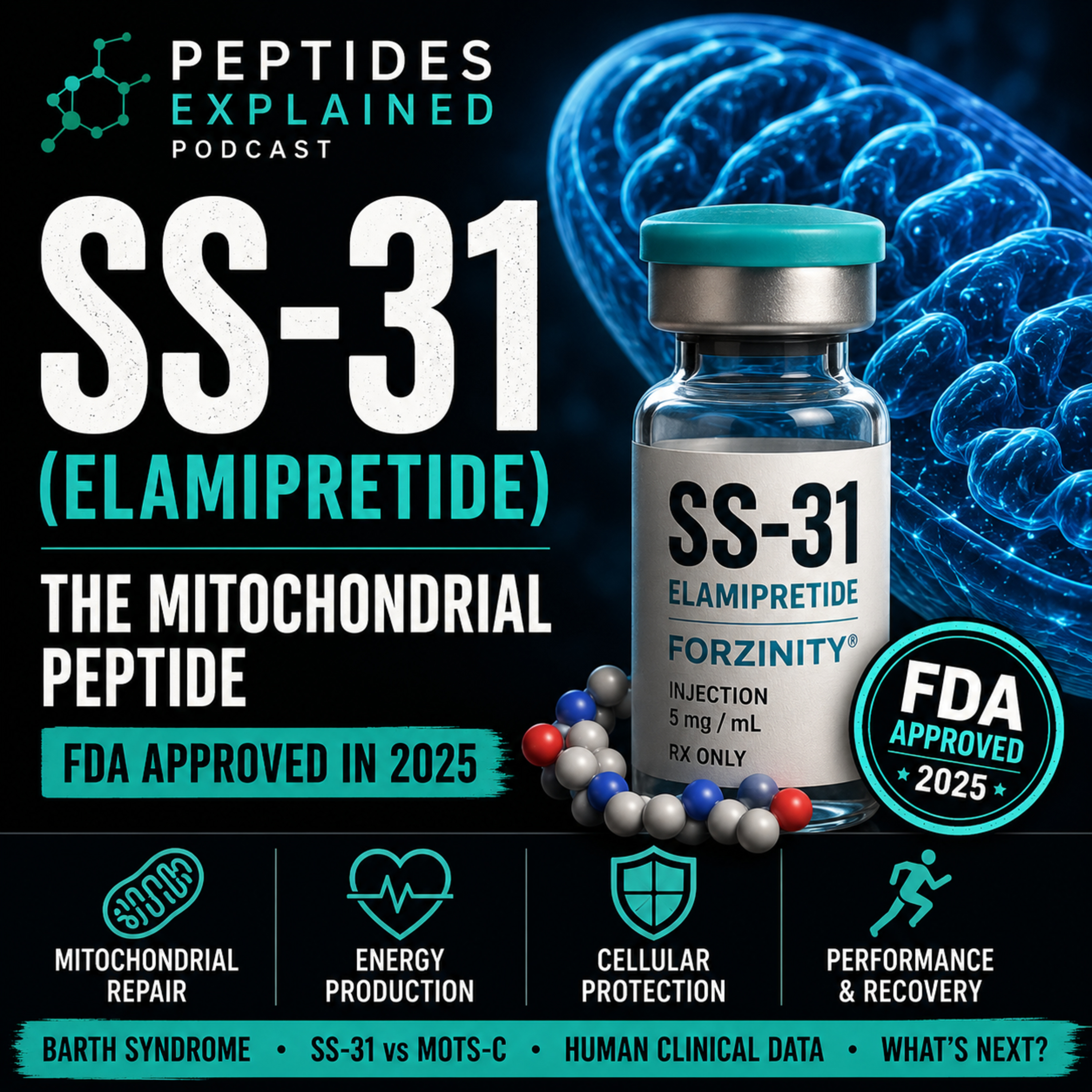
SS-31 Explained: The FDA-Approved Mitochondrial Peptide
Jun 2400:14:53Tap to summarizeSS-31 (Elamipretide) may be one of the most fascinating peptides ever developed.Unlike most peptides that work by activating receptors on the surface of cells, SS-31 targets the mitochondria—the cellular power plants responsible for producing energy.In this episode of Peptides Explained, we break down:✅ What mitochondria actually do✅ The role of cardiolipin in cellular energy production✅ How SS-31 works biologically✅ Why SS-31 received FDA Accelerated Approval in 2025✅ What Barth Syndrome is✅ The latest human clinical data✅ How SS-31 compares with MOTS-c✅ Whether repairing mitochondria before metabolic optimization makes biological senseWe'll separate proven science from speculation and discuss what remains investigational.This podcast is for informational purposes only and is not medical advice.Support the ShowPeptides Explained is an affiliate partner with OfflinePeptides.com. If you use my link, I may earn a commission at no additional cost to you.https://offlinepeptides.com/ref/JohnGarrett/For peptide education, provider resources, and information about compounded peptide options through licensed providers:https://peptide-solutions.info#PeptidesExplained #SS31 #Elamipretide #Forzinity #BarthSyndrome #Mitochondria #Longevity #MOTSc #Peptides
Transcribe →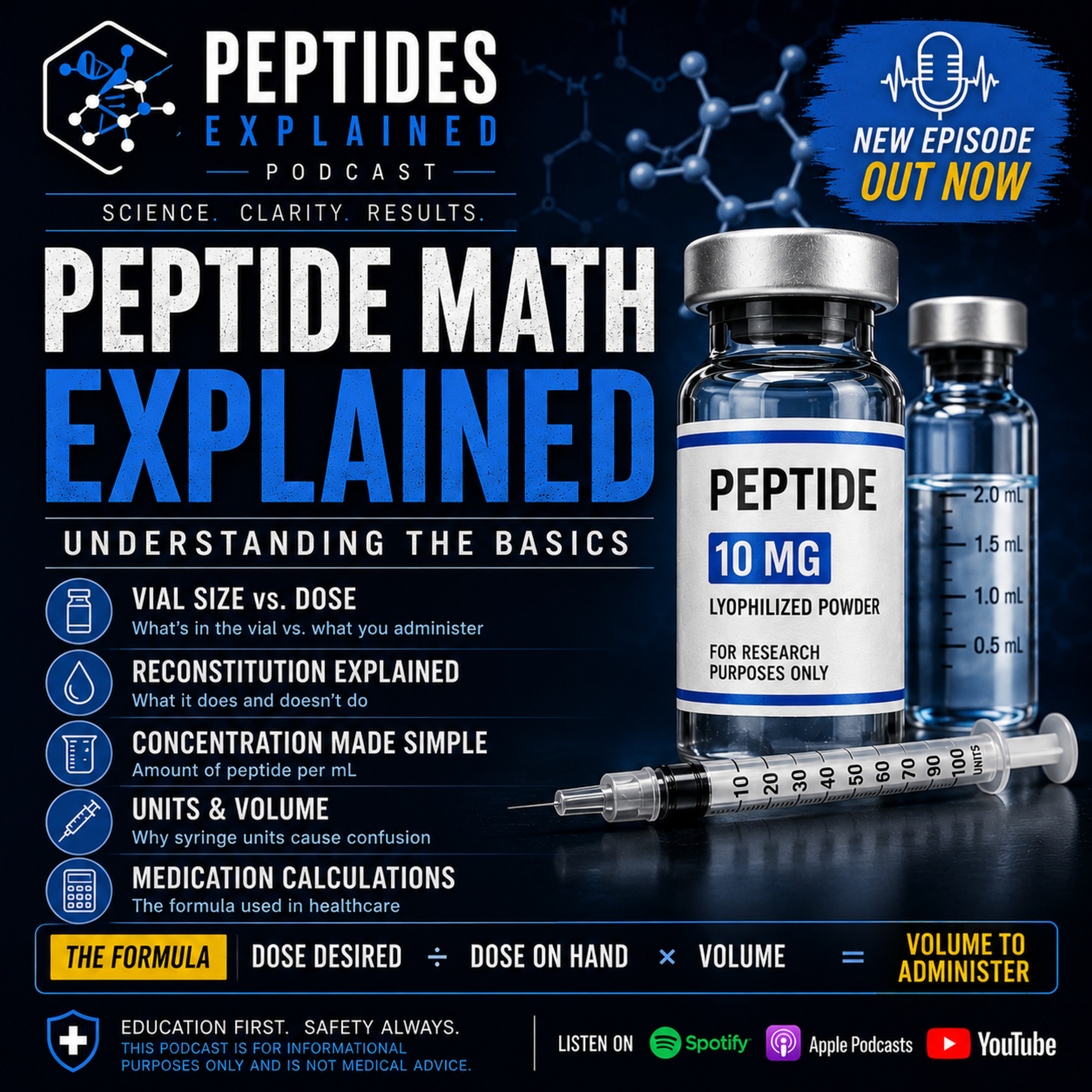
Peptide Math Explained: Dose, Volume, Concentration & Reconstitution
Jun 2200:12:35Tap to summarizeMost peptide users understand what peptide they want to use, but many struggle with the math behind vial size, reconstitution, concentration, units, volume, and medication calculations.In this episode of Peptides Explained, we break down the fundamentals of peptide math in plain English. You'll learn the difference between total vial contents and dose, what reconstitution actually means, why concentration matters, how syringe units can create confusion, and the medication calculation formula used throughout healthcare.Whether you're interested in GLP-1 medications, growth hormone secretagogues, BPC-157, TB-500, Tesamorelin, or other peptides, these mathematical principles apply across the board.Topics Covered:• Vial Size vs. Dose• Reconstitution Explained• Concentration Made Simple• Units vs. Volume• The D ÷ H × V Medication Calculation Formula• Common Mistakes Peptide Users MakeThis podcast is for informational and educational purposes only and is not medical advice.Support the Show:Visit Peptide Solutions:https://peptide-solutions.infoPeptides Explained is an affiliate partner with OfflinePeptides.com. If you use my link, I may earn a commission at no additional cost to you.https://offlinepeptides.com/ref/JohnGarrett/
Transcribe →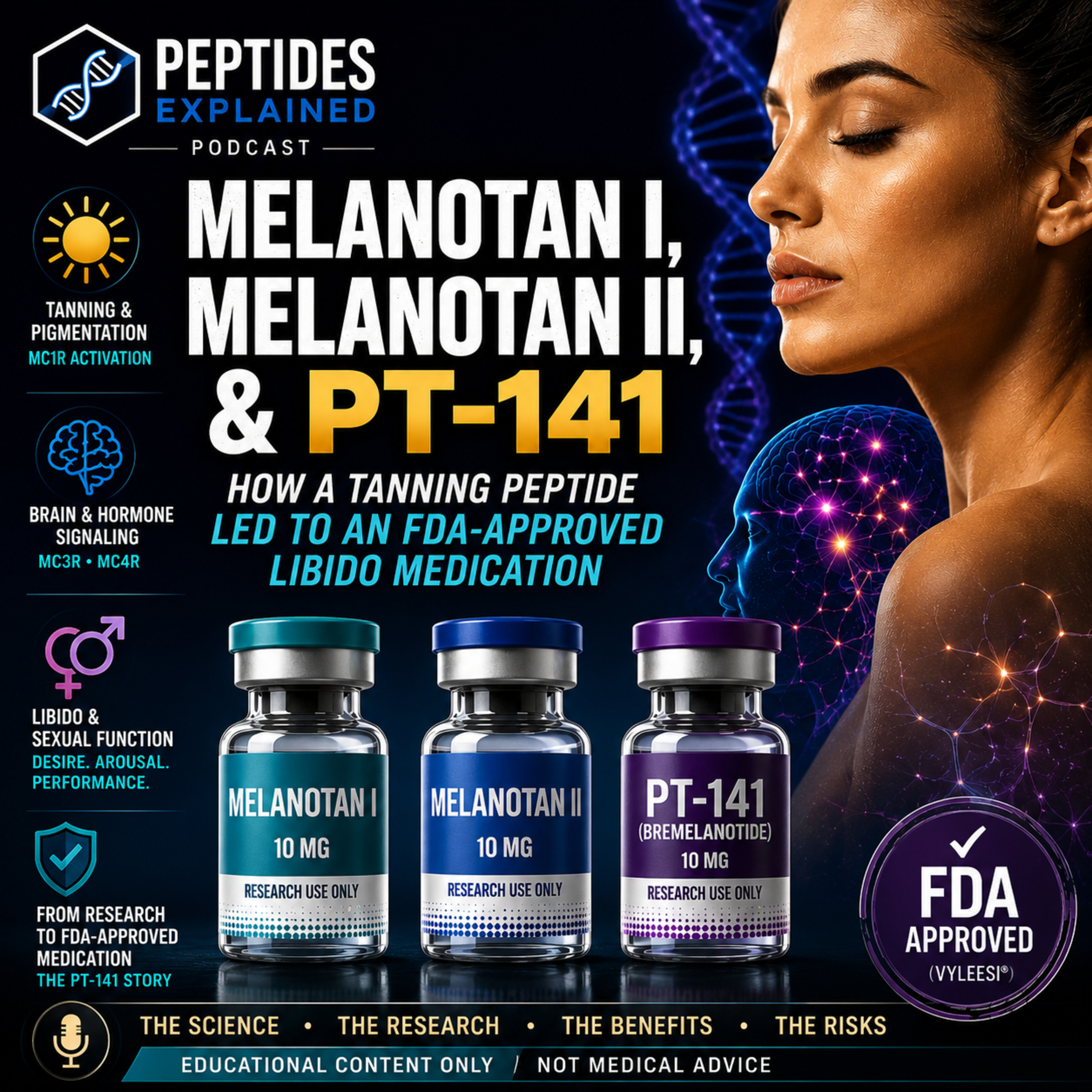
Melanotan I, Melanotan II & PT-141 Explained: The Tanning Peptides That Changed Sexual Medicine
Jun 1700:10:09Tap to summarizeWhat do tanning peptides have to do with sexual medicine?More than you might think.In this episode of Peptides Explained, we explore the fascinating science behind Melanotan I, Melanotan II, and PT-141 (Bremelanotide). What began as research into skin pigmentation and UV protection unexpectedly led to the development of an FDA-approved medication for hypoactive sexual desire disorder.You'll learn:• How the melanocortin system works• The role of alpha-MSH in pigmentation and physiology• The differences between Melanotan I and Melanotan II• Why Melanotan II became known for effects beyond tanning• How PT-141 was developed from Melanotan II research• The clinical data behind pigmentation and sexual function• Potential side effects and safety considerations• The current regulatory status of these compoundsWhether you're interested in peptide science, dermatology, sexual health, or drug development, this episode highlights one of the most unexpected stories in modern peptide research.This podcast is for informational purposes only and is not medical advice.Learn more at:📍 Peptide-Solutions.infoResearch Peptide Affiliate Partner:📍 https://offlinepeptides.com/ref/JohnGarrett/Affiliate Disclosure: Peptides Explained is an affiliate partner with OfflinePeptides.com. If you use my link, I may earn a commission at no additional cost to you.#PeptidesExplained #Melanotan #Melanotan2 #Melanotan1 #PT141 #Bremelanotide #PeptideTherapy #Longevity #HealthPodcast #MedicalScience
Transcribe →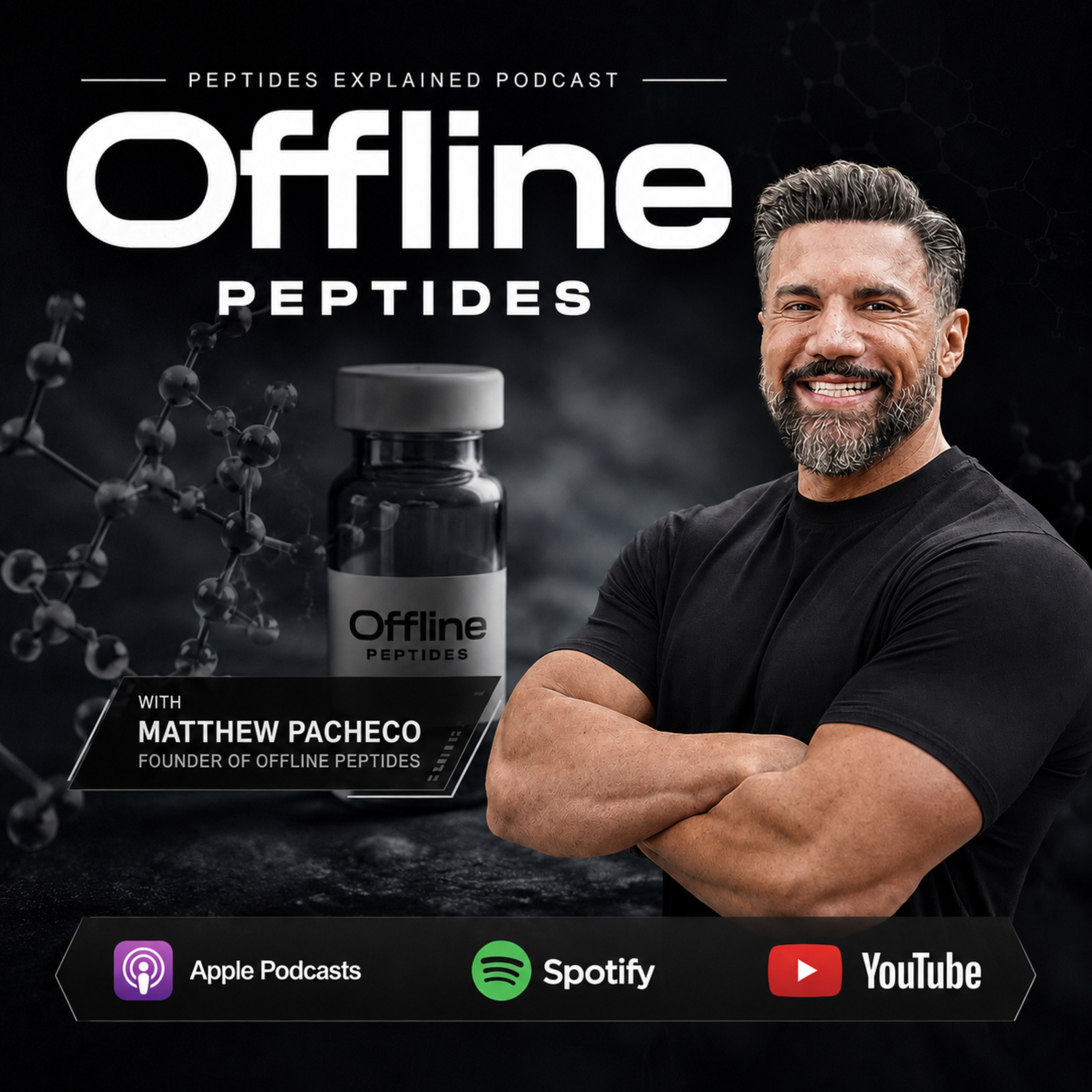
Inside the Peptide Industry: Quality, Testing, Regulation & Grey Market Peptides
Jun 1500:35:38Tap to summarizeThe founder of Offline Peptides joins Peptides Explained for a candid discussion about grey market peptides, quality control, regulation, and the future of the peptide industry.What are grey market peptides, and why have they become one of the fastest-growing topics in health, wellness, longevity, and performance?In this episode of Peptides Explained, host John Garrett sits down with Matthew Pacheco, founder of Offline Peptides, for an in-depth conversation about the current peptide landscape, quality control, consumer education, and the realities of the peptide industry.Together, they discuss why peptides have exploded in popularity, what consumers should know about third-party testing and Certificates of Analysis (COAs), the challenges facing the industry, and how the regulatory environment may shape the future of peptide access.This is not a sales pitch. It's an honest discussion about one of the most talked-about areas in modern health and wellness.TOPICS COVERED• What "grey market peptides" actually means• Why peptides have become so popular• Quality control and third-party testing• Understanding COAs and lab testing• Common misconceptions about peptides• Regulatory and FDA considerations• Consumer safety and education• The future of peptide research• The role of transparency in the peptide industryGUESTMatthew PachecoFounder, Offline PeptidesPEPTIDE RESOURCESPeptides Explained Podcast Websitehttps://peptidesexplained.comPeptide Solutionshttps://peptide-solutions.infoPeptide Solutions was created to help connect listeners with peptide education and peptide access pathways through trusted partners.OPTION 1: RESEARCH PEPTIDESOffline Peptideshttps://offlinepeptides.com/ref/JohnGarrett/OPTION 2: LICENSED PROVIDER & COMPOUNDED PEPTIDESPremier PharmacyFor clinicians interested in prescribing peptides in their practice, or individuals interested in speaking with a licensed healthcare provider regarding peptide therapies, visit:https://peptide-solutions.infoAFFILIATE DISCLOSUREPeptides Explained is an affiliate partner with Offline Peptides. If you use the affiliate link above, I may earn a commission at no additional cost to you.ABOUT PEPTIDES EXPLAINEDPeptides Explained is a podcast dedicated to helping listeners understand peptide science, mechanisms, clinical research, and real-world applications through evidence-based discussions and expert interviews.DISCLAIMERThis podcast is for informational and educational purposes only and is not medical advice. Nothing discussed in this episode should be interpreted as medical, legal, or regulatory guidance. Always consult a qualified healthcare professional regarding your individual health needs.#PeptidesExplained #OfflinePeptides #PeptideSolutions #Peptides #GLP1 #Retatrutide #Tirzepatide #Semaglutide #Longevity #Healthcare #MedicalEducation #FunctionalMedicine #WeightLoss #PeptideResearch
Transcribe →