Podcast
Peptides Explained
Hosted by John Garrett · EN
Peptides Explained breaks down the most talked-about peptides and GLP-1 medications in health, fitness, and longevity — including semaglutide, tirzepatide, BPC-157, TB-500, and more.
Hosted by Registered Nurse John Garrett, this podcast explains how these compounds work, why they’re popular, what the research shows, and the real risks and side effects — all in plain language.
No bro science. No hype. Just clear, foundational education.
For informational purposes only. Not medical advice.
For Research Peptides; Offlinepeptides.com/ref/johngarrett/
https://www.skool.com/peptides-explained-15
27episodes
Episodes
Newest firstAll episodes
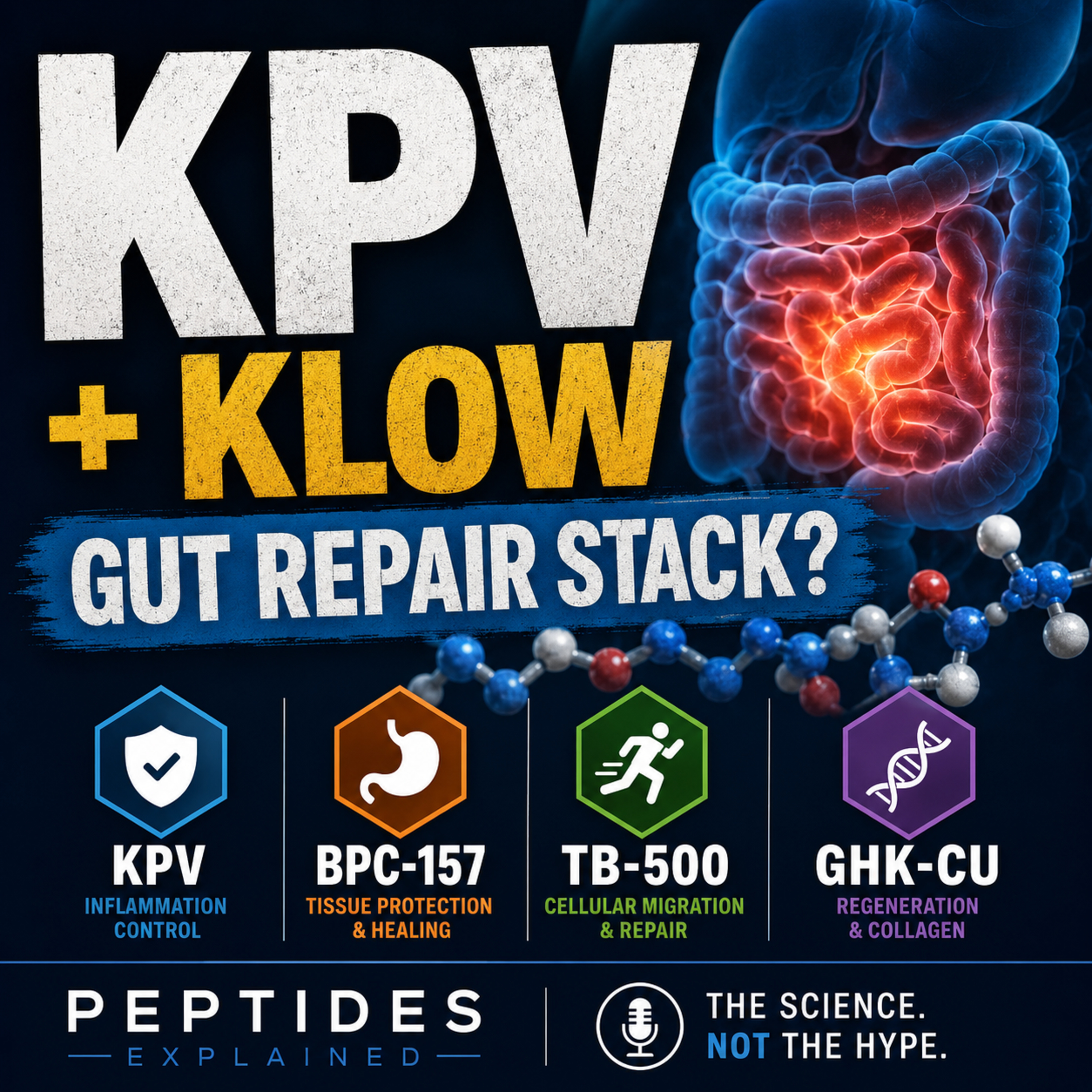
KPV Explained: Gut Inflammation, Ulcerative Colitis, and the Science Behind the KLOW Blend
Jun 1000:18:53Tap to summarizeIn this episode of Peptides Explained, we take a deep dive into KPV, a three-amino-acid peptide derived from alpha-melanocyte stimulating hormone (alpha-MSH) that has generated growing interest for its potential anti-inflammatory effects.We explore the biology behind KPV, how it may influence inflammatory pathways such as NF-kB, and why researchers have studied it in models of ulcerative colitis, Crohn's disease, inflammatory bowel disease (IBD), and intestinal barrier dysfunction.You'll learn:• What KPV is and where it comes from• How KPV may reduce inflammatory signaling• The role of PepT1 transporters in the gut• What animal and laboratory studies have shown• The limitations of current human data• Why KPV has become popular in gut health discussionsWe also examine the growing interest in the KLOW Blend, a combination of:• KPV• BPC-157• TB-500• GHK-Cuand discuss the scientific rationale behind combining these peptides to target inflammation, tissue protection, cellular migration, and regeneration.As always, we separate biological mechanisms from marketing claims and review what the evidence actually shows.Peptide Solutions is owned and operated by host John Garrett and helps educate both patients and healthcare professionals about peptide science and peptide therapy pathways.Learn more at:Peptide-Solutions.infoPeptides Explained is an affiliate partner with OfflinePeptides.com.If you use the link below, I may earn a commission at no additional cost to you:https://offlinepeptides.com/ref/JohnGarrett/Healthcare providers interested in prescribing compounded peptides and individuals interested in telehealth consultation options can learn more through Peptide Solutions.Visit:Peptide-Solutions.infoDisclaimer: This podcast is for educational and informational purposes only and is not medical advice. KPV and the KLOW Blend are not FDA-approved therapies, and much of the research discussed comes from laboratory and animal studies. Always consult a licensed healthcare professional regarding medical decisions.Powered By Peptide SolutionsResearch Peptide Affiliate DisclosureCompounded Peptide Information
Transcribe →Selank vs Semax: The Russian Peptides for Anxiety, Focus, and Brain Health
Jun 800:11:13Tap to summarizeIn this episode of Peptides Explained, we take a deep dive into two of the most talked-about Russian research peptides: Selank and Semax.We'll explore where these peptides came from, how they work in the brain, and why researchers have studied them for anxiety, stress resilience, cognitive performance, neuroprotection, and stroke recovery. You'll learn about key mechanisms involving GABA, dopamine, serotonin, BDNF, and neuroplasticity while separating scientific evidence from internet hype.We also review the available clinical data, discuss regulatory status in the United States, and explain what is known—and still unknown—about the safety and effectiveness of these compounds.Whether you're a clinician, researcher, peptide enthusiast, or simply curious about emerging neuroscience, this episode provides a balanced, evidence-based look at Selank and Semax.Topics Covered:• What are Selank and Semax?• Russian peptide research history• Anxiety and stress-response signaling• BDNF and neuroplasticity• Cognitive enhancement claims• Stroke recovery research• Safety considerations and limitations• Current regulatory statusSupport the PodcastPeptides Explained is powered by Peptide Solutions, owned and operated by John Garrett.For educational information about peptides and available options:Peptide Solutions: https://peptide-solutions.infoFor those interested in research-use peptides:https://offlinepeptides.com/ref/JohnGarrett/Affiliate Disclosure: Peptides Explained is an affiliate partner with OfflinePeptides.com. If you use the affiliate link above, I may earn a commission at no additional cost to you.This podcast is for informational and educational purposes only and does not constitute medical advice.
Transcribe →
Can Peptides Help Menopause? The Truth About Libido, Weight Gain & Aging
Jun 300:19:43Tap to summarizeIn this special episode of Peptides Explained, we're focusing on a topic that affects millions of women but often isn't discussed openly enough: menopause, hormonal signaling, libido, body composition, and the emerging role of peptides.Why does weight gain seem different during menopause? What causes the sudden changes in energy, sleep, skin, hair, and sexual desire? And where do peptides like Kisspeptin, PT-141 (Bremelanotide), Tesamorelin, GHK-Cu, BPC-157, and GLP-1 medications fit into the conversation?Join host John Garrett, RN, as he breaks down the science behind female hormone signaling in clear, understandable language. We'll explore the biology of menopause, the neurochemistry of desire, the "collagen cliff," metabolic changes, and the latest research on peptides being studied for women's health and aging.This episode covers:• Menopause and metabolic changes• GLP-1 medications and weight management• Kisspeptin and reproductive hormone signaling• PT-141 and female sexual desire• Tesamorelin and growth hormone pathways• GHK-Cu and collagen production• BPC-157 and recovery science• Oxytocin and emotional connection• What is evidence-based vs. what remains experimentalWhether you're navigating perimenopause, menopause, or simply interested in understanding how peptide science intersects with women's health, this episode delivers a balanced, evidence-based look at one of the most important conversations in modern medicine.Learn more:www.peptide-solutions.infoPodcast website:www.peptidesexplained.infoSupport the podcast and learn more about peptide research:offlinepeptides.com/ref/JohnGarrettAffiliate Disclosure: Peptides Explained is an affiliate partner with Offline Peptides. If you use my affiliate link, I may earn a commission at no additional cost to you.Follow Peptides Explained:• Instagram: @PeptidesExplained• Facebook: Peptides Explained• LinkedIn: Peptides Explained• Patreon: Peptides Explained• Skool: Peptides Explained CommunityIf you enjoy the show, please follow, subscribe, leave a review, and share this episode with someone who would benefit from understanding the science behind menopause, hormones, and peptide therapy.Peptides Explained is powered by Peptide Solutions, founded and operated by John Garrett, RN, providing education on peptide science and helping connect patients and clinicians with peptide-related resources.This podcast is for informational purposes only and is not medical advice.
Transcribe →GLP-1 Medications and the Brain | Mood, Anxiety, Motivation & Dopamine Explained
Jun 100:15:37Tap to summarizeGLP-1 medications may affect far more than appetite and weight loss.In this episode, we explore the growing evidence surrounding semaglutide, tirzepatide, and retatrutide and their potential effects on mood, anxiety, dopamine signaling, motivation, and compulsive behavior.We discuss both the research and the real-world patient reports clinicians are increasingly hearing in practice.
Transcribe →Do Growth Hormone Peptides Cause Cancer? | The Truth About IGF-1
May 2500:15:12Tap to summarizeDo growth hormone secretagogues increase cancer risk?This episode breaks down the real science behind IGF-1, cancer biology, and compounds like MK-677, Ipamorelin, Sermorelin, CJC-1295, and Tesamorelin.We review:Human IGF-1 cancer studiesAcromegaly dataTumor signaling pathwaysObservational vs causal evidenceWhat current science actually supportsThis podcast is for informational purposes only and is not medical advice.Peptides Explained is an affiliate partner with OfflinePeptides.com. If you use my link, I may earn a commission at no additional cost to you.Support the show:OfflinePeptides Affiliate Link
Transcribe →BPC-157 and Cancer: What the Studies Actually Show
May 1800:30:25Tap to summarizeDoes BPC-157 cause cancer — or is that claim being oversimplified?In this episode of Peptides Explained, we take a study-review approach to one of the biggest concerns surrounding BPC-157: its potential angiogenic effects and whether that could theoretically contribute to cancer proliferation.Angiogenesis means new blood vessel formation. It is essential for normal wound healing and tissue repair, but it also plays a role in tumor biology. That overlap has led to concerns that BPC-157 could “feed” cancer growth.But what do the studies actually show?In this episode, we review key papers on BPC-157, including:• Hsieh et al., 2017 — VEGFR2 activation and angiogenesis• Radeljak, Seiwerth, and Sikiric, 2004 — melanoma cell-line data• Kang et al., 2018 — cancer cachexia context• Masnec et al., 2015 — corneal injury and neovascularizationWe break down the difference between physiologic repair signaling and pathologic tumor angiogenesis, and explain why the current evidence does not support the simple claim that BPC-157 causes cancer proliferation.That said, the lack of strong human oncology safety data means caution is still appropriate, especially for anyone with active cancer, prior cancer, unexplained symptoms, or elevated cancer risk.This episode is designed as a literature review for clinicians, physicians, and scientifically curious listeners who want a balanced, evidence-based explanation.Disclaimer: This content is for informational and educational purposes only and is not medical advice. Always consult a licensed healthcare professional before considering any therapy.Affiliate disclosure: Peptides Explained is an affiliate partner with OfflinePeptides.com. If you use my link, I may earn a commission at no additional cost to you.https://offlinepeptides.com/ref/JohnGarrett/#BPC157 #PeptidesExplained #CancerRisk #Angiogenesis #PeptideScience #VEGF #TissueRepair #MedicalEducation #PhysicianReview #Peptides
Transcribe →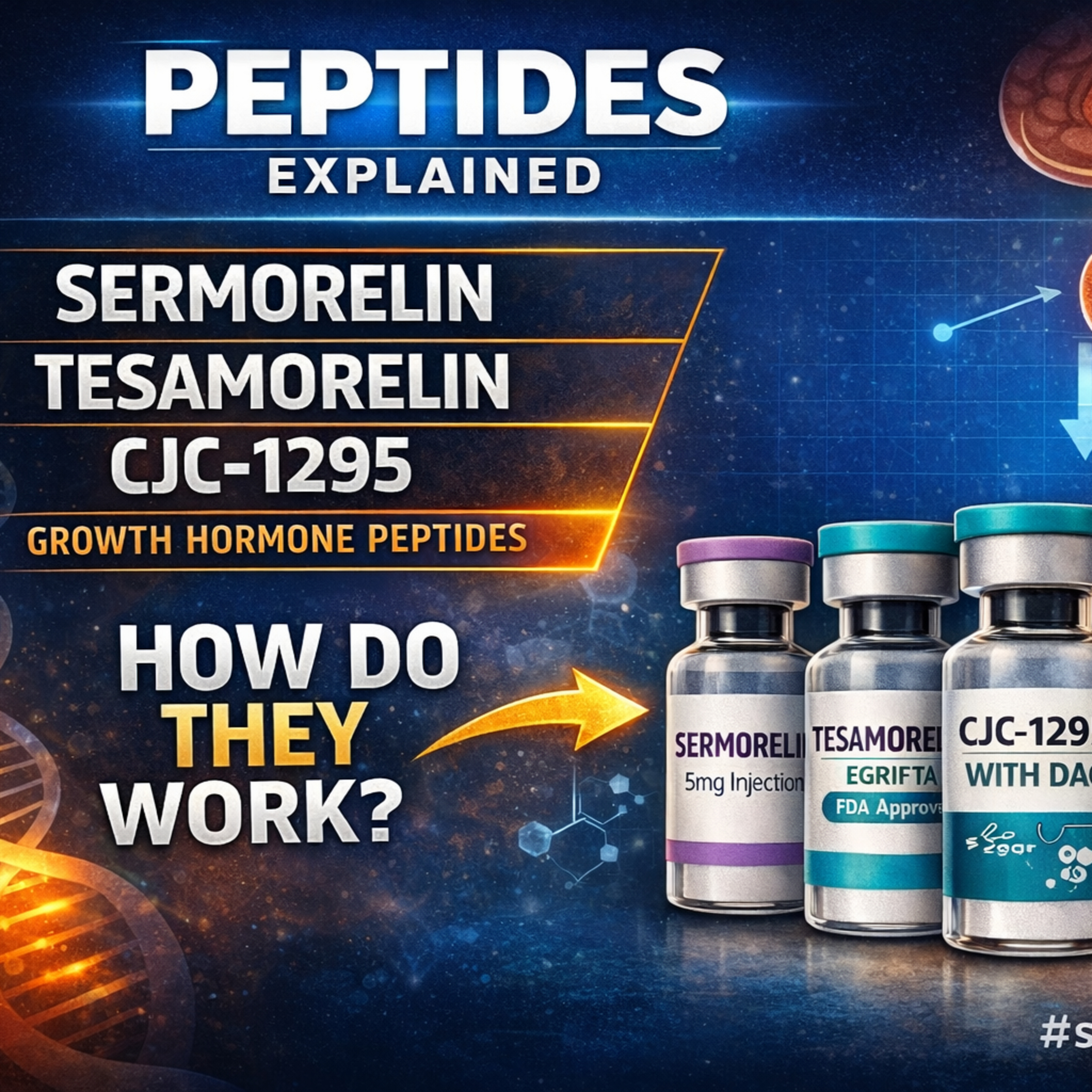
Do Growth Hormone Peptides Actually Work? CJC-1295, Ipamorelin & Sermorelin Explained
Mar 14Tap to summarizeGrowth hormone peptides are some of the most talked-about compounds in longevity medicine, metabolic health, and hormone optimization. But how do they actually work inside the body?In this episode of Peptides Explained, we break down the science behind four growth hormone secretagogues: Sermorelin, Tesamorelin, CJC-1295, and Ipamorelin.Instead of injecting growth hormone directly, these peptides stimulate the pituitary gland to release the body’s own growth hormone through different biological pathways.We explore the physiology of the growth hormone axis, the role of GHRH, IGF-1, and ghrelin signaling, and how these peptides may influence metabolism, recovery, and sleep.You’ll also learn the differences between these compounds, why CJC-1295 and Ipamorelin are often stacked, and what the clinical research actually shows.Topics covered in this episode include:• How growth hormone is regulated in the body• The biological role of ghrelin and GH pulses during sleep• The difference between Sermorelin, Tesamorelin, CJC-1295, and Ipamorelin• What DAC (Drug Affinity Complex) means in CJC-1295• Potential effects on IGF-1, metabolism, and recovery• Possible side effects, including effects on prolactin and glucose metabolism• What the clinical evidence actually supportsAs always, this podcast focuses on biological mechanisms and scientific evidence so you can understand how peptide therapies interact with human physiology.Disclaimer:This episode is for informational purposes only and does not constitute medical advice. Always consult a licensed healthcare professional before considering any therapy.If you'd like, I can also give you a very effective pinned comment for the YouTube video. That small detail often increases engagement and pushes the algorithm to recommend the episode more.
Transcribe →