Podcast
POAAS
Hosted by H.E. Negash · EN
-self-published short and longform conversations on art and science
-book and film reviews
-homilies
aksum.substack.com
aksum.substack.com
13episodes
Episodes
Newest firstAll episodes
Mount of Olives
Mar 2000:58:40Tap to summarizeThe Fifth Sunday of the Great Fast, Lent in the EOTC, is called Mount of Olives. Pascha is a stone’s throw away. Keep fighting. The lectionary assigns the Gospel According to Matthew Chapter 24 to be read aloud before the great gathering (Psalm 39/40:9). I was called upon, by my former and beloved archdiocese of the great city of Los Angeles dba Southern California Orthodox Tewahdo Youth (SCOTY), to share a reflection on these words (debarim) of the Lord (yahweh).Praytell they edify.Aksum Review of Books (ARB) is a reader-supported literary review. Free subscribers help it grow by liking, commenting, and sharing with friends, strangers, and especially enemies. Paid subscribers help keep the lights on, for the price of a cup of coffee a month. This is a public episode. If you'd like to discuss this with other subscribers or get access to bonus episodes, visit aksum.substack.com/subscribe
Transcribe →
Guest Spot
Jan 1201:09:13Tap to summarizeOTYG invited me back to wish their great gathering a Merry Christmas. I decided to do so with the Gospel According to Matthew.Aksum Review of Books (ARB) is a reader-supported literary review. Free subscribers help it grow by liking, commenting, and sharing with friends, strangers, and especially enemies. Paid subscribers help keep the lights on, for the price of a cup of coffee a month. This is a public episode. If you'd like to discuss this with other subscribers or get access to bonus episodes, visit aksum.substack.com/subscribe
Transcribe →
Dcn. Mihret's Book Launch in Seattle
Dec 1900:53:44Tap to summarizeMihret Melaku, an Ethiopian Orthodox deacon who went viral defending the apostolic teaching on the eucharist and on baptism, is on a book launch tour for his second book Defending the Ancient Faith: An Orthodox Response to the Knechtle Debate. The first stop was our hometown of Los Angeles. The second stop was Washington D.C. This is a snippet of the third stop in Seattle. The next stop is scheduled for this weekend in Dallas. And after that, Godwilling, Adees Abeba, Ethiopia.h/t OTYG Seattle.Aksum Review of Books (ARB) is a reader-supported literary review. Free subscribers help it grow by liking, commenting, and sharing with friends, strangers, and especially enemies. Paid subscribers help keep the lights on, for the price of a cup of coffee a month. This is a public episode. If you'd like to discuss this with other subscribers or get access to bonus episodes, visit aksum.substack.com/subscribe
Transcribe →
Hate Your Father
Dec 600:12:55Tap to summarizeHere is a guest spot from last Sunday (11/30/25 A.D.) at Abouna Lazarus’ Christ the Good Shepherd Coptic Orthodox Church in the LBC (Long Beach, CA). I was home for the holidays. I hope that you are edified by my words as I was edified by the words of the gospel and the eucharistic liturgy which is its context. Remember me in your holy prayers!Aksum Review of Books (ARB) is a reader and watcher supported review. Free subscribers help it grow by liking, commenting, and sharing with friends, strangers, and enemies. Paid subscribers keep ARB’s lights bright for the price of a cup of coffee a month.“Now great multitudes went with Him. And He turned and said to them, “If anyone comes to Me and does not hate his father and mother, wife and children, brothers and sisters, yes, and his own life also, he cannot be My disciple. And whoever does not bear his cross and come after Me cannot be My disciple. For which of you, intending to build a tower, does not sit down first and count the cost, whether he has enough to finish it— lest, after he has laid the foundation, and is not able to finish, all who see it begin to mock him, saying, ‘This man began to build and was not able to finish’? Or what king, going to make war against another king, does not sit down first and consider whether he is able with ten thousand to meet him who comes against him with twenty thousand? Or else, while the other is still a great way off, he sends a delegation and asks conditions of peace. So likewise, whoever of you does not forsake all that he has cannot be My disciple. “Salt is good; but if the salt has lost its flavor, how shall it be seasoned? It is neither fit for the land nor for the dunghill, but men throw it out. He who has ears to hear, let him hear!”” (Luke 14:25-35 NKJV) This is a public episode. If you'd like to discuss this with other subscribers or get access to bonus episodes, visit aksum.substack.com/subscribe
Transcribe →
The Martyrs of Arethas
Nov 100:22:13Tap to summarizeMy top piece here at ARB is my book review of Saints of Ethiopia by Scriptorium Press. This video is a reading of Chapters 7, 8, and 9, with the most minimal commentary short of no commentary. I hope you enjoy the reading, buy and read the whole book, and share this scary and spooky story with others.For this post, comments are open-to-all.Aksum Review of Books (ARB) is a reader-supported review. Free subscribers help it grow by liking, commenting, and sharing with friends, strangers, and enemies. Paid subscribers keep ARB’s lights bright for the price of a cup of coffee a month.Notes:-Greek Orthodox Archdiocese of America Saints and Feasts Arethas the Great Martyr and His Fellow Martyrs-Britannica:At its height, Aksum extended its influence westward to the kingdom of Meroe, southward toward the Omo River, and eastward to the spice coasts on the Gulf of Aden. Even the South Arabian kingdom of the Himyarites, across the Red Sea in what is now Yemen, came under the suzerainty of Aksum. In the early 6th century, the emperor Caleb (Ella-Asbeha; reigned c. 500–534) was strong enough to reach across the Red Sea in order to protect his coreligionists in Yemen against persecution by a Jewish prince. However, Christian power in South Arabia ended after 572, when the Persians invaded and disrupted trade. They were followed 30 years later by the Arabs, whose rise in the 7th and 8th centuries cut off Aksum’s trade with the Mediterranean world. This is a public episode. If you'd like to discuss this with other subscribers or get access to bonus episodes, visit aksum.substack.com/subscribe
Transcribe →
On Orthodoxy
Oct 1802:10:01Tap to summarizeWhen maximally polemical, I refer to the communion that I serve as deacon in as Apostolic Orthodoxy; short for the One, Holy, Catholic, and Apostolic Church. This is the communion that began in Alexandria and Antioch, very quickly added Armenia and Aksum, and one thousand years later grafted in the Malabar Coast. When I am being more neutral, I refer to our communion as Afroasiatic Orthodoxy, because Coptic (Alexandria) and Syriac (Antioch) and Ge’ez (Classical Ethiopic) are Afroasiatic tongues, and Egypt, the Levant, Mesopotamia, Greater Armenia, Greater Ethiopia, and India are all geographically home to the indigenous Church of Africa and Asia.My brothers and sisters in Christ from OTYG Seattle invited me to give a talk on Orthodoxy last night, and so I did. On Sundays, I normally take my students through series on scripture. Occasionally, I do one-off talks like this when prompted with a topic. It is my hope that this talk edifies you and sparks your curiosity to dig deeper into Christendom and Church History.Leave a comment about any topics you would like me to explore in further depth and at more length in the future.Aksum Review of Books (ARB) is a reader-supported review. Free subscribers help it grow by liking, commenting, and sharing with friends, strangers, and enemies. Paid subscribers keep ARB’s lights bright for the price of a cup of coffee a month. This is a public episode. If you'd like to discuss this with other subscribers or get access to bonus episodes, visit aksum.substack.com/subscribe
Transcribe →
Subdeacon Moses Barjon
Aug 1501:09:08Tap to summarizeI am joined on the latest philosophy of art and science broadcast by Subdeacon Moses Barjon of the Coptic Orthodox jurisdiction (specifically the Los Angeles and Hawaii archdiocese which gives us the gift of the saints Athanasius and Cyril Theological School (ACTS) and the In Spirit and Truth app) of the one, holy, catholic, and apostolic church.Aksum Review of Books (ARB) is a reader-supported publication. Free subscribers help amplify this project by liking, commenting, and sharing with friends, strangers, and enemies. Paid subscribers keep ARB’s incandescent lights bright, for the price of a cup of coffee a month, which after all originates in Ethiopia. This is a public episode. If you'd like to discuss this with other subscribers or get access to bonus episodes, visit aksum.substack.com/subscribe
Transcribe →
The Emperor by Ryszard Kapuściński
Aug 2, 202500:14:07Tap to summarizeThey say the number one way to get you to read or hear something is to be recommended it by someone whom you trust. A dear reader (and hearer) recommended the True Anon broadcast to me with gumption, and I gave it a try. I like it in the way that you smell something you do not like but it is so unique that it keeps beckoning you back to smell it again, an olfactorial siren. Some experience this feeling with smelling salts. I have experienced it with Newcastle Brown Ale, black drip coffee, and now True Anon.The episode that lured me in was about Ethiopia’s neighbor and newest African nation-state South Sudan (2011 A.D.), and Ethiopia (800 B.C.) herself was mentioned. Including, the infamous Polish communist journo Ryszard Kapuściński’s fever dream fiction-nonfiction hybrid The Emperor, about Ethiopia’s last king of kings and the world’s last functional Orthodox Christian emperor. It is not surprising that unlicensed private investigators Liz Franczak, Brace Belden, and Yung Chomsky swim in the same circles as Kapuściński, because they too are outright communists (I commend them for this, many are hidden, but they are manifest), but it is noteworthy that American monarchist blogger and computer programmer Curtis Yarvin has on more than one occasion made the same recommendation. And, dear reader, he is not a communist, but perhaps up there with Michael Moynihan as one of the leading anti-communist voices in the media today.As an American anti-communist, and monarchist, of Ethiopian descent, I did a video review of this book a couple of years ago, which had been sitting in my dad’s library in North Los Angeles for decades. I am sharing it here with you to encourage you to take under consideration more recommendations from your friends, strangers, and enemies. And to further demonstrate that when it comes to literature, the horse-shoe theory of political science is correct. I especially find this to be the case when it comes to antiwar or non-interventionist voices from Aaron Maté and Glenn Greenwald to Dr. Ron Paul and Tucker Carlson. And to remind you that the formation of nation-states are accidental and not necessary happenings in our timeline. Nothing but the individual action of human beings perpetuates them into the future…Cheers.Aksum Review of Books (ARB) is a reader-supported publication. Free subscribers help amplify this project by liking, commenting, and sharing with friends, strangers, and enemies. Paid subscribers keep ARB’s incandescent lights bright, for the price of a cup of buna a month. በእንተ:ስማ :ለማርያምNotes:-If you stare closely at Emperor Haile Selassie, and recall the visual below which was in my Race in Greater Ethiopia article, you can begin to visualize him (as an amhara/oromo hybrid) as part Peter Biar Ajak (or Luol Deng or Manute Bol or Bol Bol or Oballa Oballa or Barack Obama Sr.) and part Mota Man and part New Stone Age Levantine (Palestinian) and part Bronze Age Mesopotamian. -It is very interesting that True Anon, multiple times, deride and disparage the Juba International Airport of South Sudan and the entire humanitarian-industrial-complex. The way horseshoe theory works is that the critique is usually the same, but the solutions are different. I saw this when I worked in Congress for the Honorable Dennis J. Kucinich who would often agree with the Honorable Ron Paul on what the government should stop doing, but they would disagree on what the government should start doing. This is a public episode. If you'd like to discuss this with other subscribers or get access to bonus episodes, visit aksum.substack.com/subscribe
Transcribe →
Guest Spot
Jul 9, 202501:34:25Tap to summarizeFriend of the online zine and show, Childish Wiseguy, invited me to speak to his adult English group that he runs for his Eritrean Orthodox parish in London, United Kingdom. The advantage of this digital age is that geographic distance and eight hours of time zone difference are stumbling blocks that we are able to overcome for the sake of the euangelion.I discuss love, as it is written (John 21). And as I have written.Aksum Review of Books (ARB) is a reader-supported publication. Free subscribers help amplify this project by liking, commenting, and sharing with friends, strangers, and enemies. Paid subscribers keep ARB’s incandescent lights bright, for the price of a cup of buna a month. በእንተ:ስማ :ለማርያም This is a public episode. If you'd like to discuss this with other subscribers or get access to bonus episodes, visit aksum.substack.com/subscribe
Transcribe →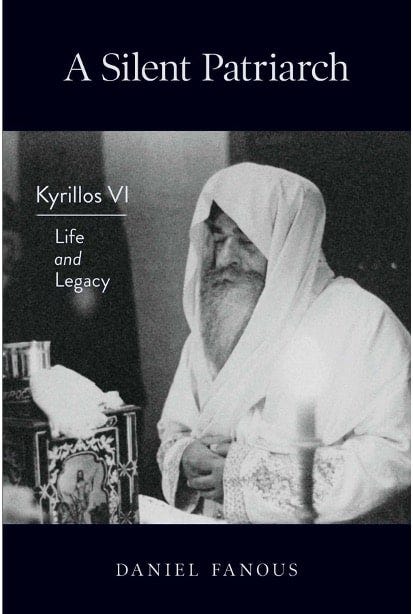
10 Books that point to Alexandria
Jun 28, 202500:51:06Tap to summarizeEditorial Note: When I write these editorial notes I assume you all understand that the editor is Deacon Enoch (Henok;חנוך), authorially H.E. Negash. The video here is produced by Derek Cummins. He is one of the online friends I have made over the years, and alongside the angels (Luke 15:10), I rejoiced when he entered the Coptic Orthodox Church which is the right and just successor of St. Mark the Evangelist’s See (seat;throne) of Alexandria. Of course, in full communion with Antioch (Syriac Orthodox Church including our Indian St. Thomas Christian brethren of the Malabar Coast in the state of Kerala) and Mt. Ararat (Armenian Apostolic Church) and Aksum (Orthodox Tewahdo).I first appeared on his youtube channel adoseoftheosis in May 2023 (20k views, so far). I like to think that this gently prodded him along his journey, not so that I could get any credit, God forbid, for the glory God abundantly shines and reflects upon his holy ones. And this review of ten books first appeared on his channel a couple months ago. I am reposting it here along with a few written words he added as an addendum. I hope his journey edifies you in someway, whatever your religious tradition is.by: Derek CumminsIn a recent live stream, I opened up about something I do not always have the space—or courage—to unpack: how my family and I came to find our spiritual home in the Coptic Orthodox Church. It was not a linear journey. Like many modern pilgrims, we moved through nearly every Apostolic communion (Latins, Greeks, Afroasiatics), gathering pieces of beauty and conviction in each. But something about the Coptic tradition—its quiet strength, its uncompromising humility, its theology of suffering and resurrection held in tension—felt like home in a way nothing else had.The stream itself was less a roadmap and more a spiritual inventory. I walked through ten books that helped shape that journey. I did not dive too deeply into each (the stream would have gone on for hours), but these works were more than informative—they were transformative. Some broke me open. Others gently healed me. Each one played a role in forming not just how I think about God and the Church, but how I live, pray, and carry pain. These books aren’t just “resources” to me, they are companions, mile markers, and in some cases, a means of grace of their own.What strikes me, again and again, is how Oriental Orthodoxy—Coptic, Syriac, Armenian, Ethiopian, etc.—is almost never seen as a live option for those exploring historic Christianity. Rome and Constantinople (East Rome) dominate the imagination. Alexandria and Antioch often go ignored. And yet, what I have encountered here is nothing short of holy ground. The Coptic Church does not try to sell itself or smooth its edges. It offers something better: a witness forged in martyrdom, a liturgy that does not aim to impress but to transform, and a theology of the Cross that runs deep into every aspect of life. It’s not flashy. But it is real. It is slow. It is stable. And in an age of spiritual fatigue and fractured identity, that matters.Below are the ten books I mentioned in the video. I am not offering them as a syllabus, but as stories—each with its own way of drawing you closer to the mystery of Christ through the lens of Oriental Orthodoxy. Some of them are deeply theological, others more personal and poetic. All of them are worth your time:A Silent PatriarchA powerful biography of St. Pope Kyrillos VI, whose hidden life of prayer and miracles shaped modern Coptic spirituality.On the Unity of ChristA landmark Christological work that anchors the Orthodox understanding of the Incarnation (of him becoming flesh), written by a father allegedly accepted by Latins, Greeks, and Afroasiatics.My American Flight to EgyptA poetic and profound memoir of an American biker and his wife’s journey to the Coptic Church.Characteristics of the Spiritual PathOne of the most honest, soul-stretching guides to the interior life I have ever read.The Council of Chalcedon Re-ExaminedA scholarly yet accessible analysis of the council that split Latins and Greeks from Afroasiatics—critical for understanding Oriental Orthodox identity.The 21A haunting, beautiful account of the twenty-first century twenty-one Coptic martyrs of Libya—lay saints who bore witness to Christ with their blood.This Is My BodyA deep-dive into the shape and theology of the Coptic Orthodox Liturgy.Agpeya (Coptic Orthodox Book of Hours)The daily rhythm of prayer (also called the breviary, or liturgy of hours) that has reordered my days and centered my soul.Orthodox Prayer LifeA rich, accessible, and challenging exploration of prayer in the Orthodox tradition. Elements: The Transfiguration of ElijahThe first of five small, enigmatic, and deeply moving books that explore mystery, suffering, and transformation with stunning originality.If you’re on a journey—any kind of journey—toward God, toward wholeness, toward truth that heals and transforms, I would invite you not to overlook Oriental Orthodoxy. It might not be on the map you were handed. But it’s been here all along, waiting quietly, with incense and psalms and the kind of mercy that takes root over time. It might just be the home you didn’t know you were missing.Aksum Review of Books (ARB) is a reader-supported publication. Free subscribers help amplify this project by liking, commenting, and sharing. Paid subscribers keep ARB’s incandescent lights bright, for the price of one cup of buna a month. በእንተ : ስማ : ለማርያምNotes:-The Poor, a title given to Abouna Matta (Fr. Matthew) is in Arabic El-Miskeen. This is a cognate of both Ge’ez and Amharic which has entered the English lexicon through the great city of Toronto (whose only part I have graced is the airport on the way to Ottawa) via Arabs and/or Somalis, as have alhamdullilah (thanks be to God) and inshallah (God-willing) and mashallah (God willed it) and astaghfirullah (I seek God’s forgiveness), and is most prominently featured as a tattoo on the forehead of the artist formerly known as Wheelchair Jimmy. This is a public episode. If you'd like to discuss this with other subscribers or get access to bonus episodes, visit aksum.substack.com/subscribe
Transcribe →