Podcast
Podcast - SURF MASTERY
Hosted by Surf Mastery Podcast · EN
We interview the best surfers in the world and the people behind them, so surfers can learn ways to improve their own surfing. The podcast is targeted to open-minded surfers who want to improve and progress their surfing as well as enhance their surf longevity & health. Each interview will educate the listener on ways to refine and progress their surfing and/or increase their surf longevity.
25episodes
Episodes
Newest firstAll episodes

130 How Details Transform Surfing, Self-Talk & Relationships with Kyle Thiermann
Nov 19Tap to summarize130 How Details Transform Surfing, Self-Talk & Relationships with Kyle Thiermann Surf Mastery Podcast Download What if the key to mastering any craft - surfing, storytelling, relationships, or even table tennis - lies in simply slowing down and noticing the smallest details?In a fast-paced world that often rewards intensity and output, we easily overlook the quiet power of presence and reflection. Whether you're navigating the chaos of Mavericks or confronting inner narratives, this episode reveals how attention to detail can reshape not just your performance, but your perspective on life itself.Discover why focusing on one small detail - like the placement of your back foot - can dramatically improve your surf sessions and silence self-doubt.Learn how table tennis taught Kyle Thiermann a life-altering lesson about humility, ego, and mastery that spills over into his big wave surfing.Explore how interviewing his parents not only led to his new book but also transformed his relationships and deepened his empathy through the art of asking better questions.Listen now to uncover how Kyle Thiermann’s philosophy of detail and reflection can elevate not just your surfing, but your entire approach to growth and connection.Kyles' - Book: https://geni.us/onelastqbeforeyougoWebsite: https://www.kylethiermann.comInsta: https://www.instagram.com/kyle_tman/Kyle was first on the show in 2018 - episode 27Kyle Thiermann is a surfer, podcast host, and author of One Last Question Before You Go, a book about why you should interview your parents.Music: Leo Meizoso - Soul Elegance Michael Frampton: Kyle Thiermann is a writer, podcast host sponsored surfer for Patagonia, and most recently a published author, which is very cool and a book I am excited to talk about. But before we get into the book, I was just looking through the notes of our first podcast back in 2018 and the most important advice that I took away from that interview, you probably don't remember it was quite some time ago, but was basically to slow down and look for the details, which reiterated.Something that Tom Carroll said the year before that he was guest number two on the podcast. And that's what he said. He said, look at the details. 'cause the, what sparked the conversation with Tom was, Tom was, you know, a good 10, 15 years older than me, and we went surfing before I interviewed him. And the waves were maybe waist high, high tide, no water, drawing off the bottom.And here's this old man like doing full roundhouse cutbacks on waves that I couldn't even catch. And I was scratching my head. He's like, I can't even catch these waves. If I do, I'm like pumping, just trying to stay with it. And you're just flowing these beautiful round out, like, what is going on? What am I missing?And he's just like, oh, it's just, you gotta look for the details. You go look for the little ripples and the secondary swells and the back washes and it's like trying to get blood out of a stone, surfing small waves. And if you don't have an eye for the finer details. You'll never do it. So it was really cool to, to have you sort of reiterate it as well.And the question I have that comes off the back of that is, is that still your philosophy in surfing and in other parts of life? How has that changed? How has that evolved? Are you still looking for the details and trying to slow down in surfing? What's been going on since we last spoke? Kyle Thiermann: I love that you checked out our last podcast because, , that's great advice that I should still give myself, uh, younger, wiser, Kyle Thiermann, uh, said that, and it's a very good reminder, uh, particularly, you know, if we want to take this concept of looking at the details specifically to surfing.I find that my worst sessions are when I I'm thinking too broadly about myself as a surfer. As an example, take off on the first wave, , try and hit the lip mistime it fall. All of a sudden this flood, and maybe it was just me, but this like flood of negative narrative enters my brain. Like I was never that good at surfing.I, my best days are behind me. , , this board doesn't work. Like these grand brush strokes of negativity can often, , build just a, a narrative that can ruin a session. , And, what's in common about all of those narratives are that they're too broad, right? That you're thinking about yourself generally.And I think one of the best antidotes to negative self-talk is to look at the details. So, okay, now I'm gonna take off on this next wave and I'm just gonna think about. Where my back foot is placed on my pad. I, I find that that's actually one of the healthiest things for me to think about when I'm taking off on a wave is where is my back foot, because that's the control center of surfing.I grew up, um, actually before I started surfing, started surfing when I was maybe 10, 11 years old. Uh, but before then, I was a really serious skateboarder. And still, you know, I had halfpipes in my backyard growing up. My older brother built this crazy six foot, six foot halfpipe with a seven foot extension.So growing up in Santa Cruz, I was very much a, a, a, a multi-sport athlete and the bad habit of skateboarding. , That can transfer to surfing and it transfer to my surfing is that you put too much weight on your front foot. , 'Cause skateboarding is when, when you're pushing down on a halfpipe, when you know, you, you are more centered over your front foot.Whereas surfing the control center is in the back. So it's something that I've really had to fight my whole life. Um, a bad habit to break. And even still, when I surf, I can just focus on the back pad. Okay, where's my back foot? That's a small detail I can think about throughout a wave. And suddenly, because I'm thinking about that, I can't think about this bigger narrative of how good I am as a surfer, which is not gonna help you improve at all.You can take all those details just focusing on one thing. You know, I think a, a, a great theme of your podcast really is. Breaking apart this vexing craft of surfing into these smaller and smaller bite-sized chunks. And that's how improvement happens, , from an athletic standpoint. And it's how improvement happens from really any task that you want to take on extrapolatin...
Transcribe →
129 Lineup Strategy, Surfing Technique and Reading the Ocean with Surf Coach Matt Scorringe
Nov 12Tap to summarizeWhat if the key to unlocking your best surfing isn’t how you ride a wave - but how you read the ocean before you even paddle for it?Whether you're a seasoned surfer or just stepping up to steeper waves, too many of us overlook the 99% of surfing that happens off the board. In this eye-opening episode, elite surf coach Matt Scorringe shares why ocean knowledge - not tricks or turns - is the hidden edge that separates good surfers from great ones. If you’ve ever felt lost in the lineup, struggled with wave selection, or wondered how top surfers always seem to be in the right spot, this conversation is for you.Discover the missing piece in most surf coaching: how reading the ocean gives you faster decision-making, greater confidence, and better waves.Learn how to turn crowded lineups into a game of strategy, not frustration, using Matt’s unique “first line of defense” approach.Explore how treating the ocean like a playground—not a proving ground - can unlock more joy, progression, and long-term success in your surfing journey.Hit play now to learn how rethinking your approach to wave reading and lineup dynamics can instantly elevate your surfing experience.https://www.theartofsurfing.comUse Discount Code: "surfmastery25" for 25% discount on Matts Academy and Remote coaching program.Matts Instagram:https://www.instagram.com/mattyscorringe/?hl=enTranscript: Michael Frampton: yeah, it is. I actually think that most surf courses miss the mark anyway because 99% of your time when you are surfing is not surfing. You are, you're literally paddling around or sitting there reading the ocean, trying to stay focused on the horizon, trying to decipher you look at this little sliver of ocean.Are you gonna paddle over there to get the wave off the crowd or are you gonna paddle over there? Do you want that wave? What's the wind doing? How many swells are in the water? Like all that stuff that makes you a great surfer. People, people don't focus on it. So I actually, I actually released a course that's all about how to read waves.There's nothing Yeah. To do with basically what happens between when the surfboard is under your arm and under your feet. Yeah. Because once you're on to your feet, that's been done to death. And yeah. I wanna segue that into what, in terms of like reading the ocean and reading water, , do you coach people on some of your elites on that sort of stuff?Do you spend much time on it? What are your thoughts? Matt Scorringe : Yeah, absolutely. I mean, with regards to like more high performance athletes that I train, you know, there's a clear, difference between those that have, that really do and those that don't. So again, once on feet, both equally fantastic surfers, but one just has a higher level of ocean knowledge and understanding and, and able to read and, you know, you run.Drill after drill on scenario after scenario and pressure situation after pressure situation and all of that ocean knowledge just, um, you know, means obviously they're gonna read the ocean better, but their confidence is higher and their decision making processes are faster because of the nuances that they're picking up and processing and, and making decisions on to get those waves that go underneath for that wave that didn't look like maybe an opportunity to the other surfer.Uh, and then if you drop it down to like more of my everyday clientele, uh, and a lot of my online clientele with, you know, the, the academy membership or my remote coaching, um, a massive part of what I try and get them to do is actually film more of them. With, uh, a camera that's like not on wave, just them roaming the ocean and, and looking to catch waves.So, you know, zoom it out, push record and let it sit there and have your GPS tracker. And it's amazing what learnings come from that, that you can just pick up, um, that you wouldn't otherwise. And yeah, it's a huge, huge pillar that is really overlooked in most coaching scenarios. Uh, and if you've got someone on a one on one lesson for an hour and a half, like there's only so much you can do in that time, right?Like, hey, this is the day's conditions, this is where the rip is, this is the kind of, you know, the period. And, um, this is kind of where the bank is. , And you can assess what you, you might want to in that moment, but really you're getting such a small snapshot of the, their, their decision making and their, their ocean knowledge., So I, I really enjoy having more of a longer. Time with my remote coaching clientele to actually assess that, give them, you know, training drills and strategies and games. I, I call them games to play, and then they can go out and start to do their own assessments of those outcomes. And that's really my ultimate goal is to teach self-assessment., And to play with different, different, uh, strategies in the ocean to, to learn, you know, I mean, when we're kids, we learn about the ocean through play. Like we're jumping in the shore break, we're swimming in the rip, we're, you know, boogie boarding along closeouts with the boys and you know, that's where you understand all of those, those things that the ocean, uh, teach you.Michael Frampton: , Yeah. Most great surfers had that childhood early on where they, yeah, there was no pressure to even stand up on a surfboard. It's just, just messing around in the ocean. Yeah, makes me think of Wingnut. I interviewed Wingnut a few years ago and he didn't start surfing till he was 17, and I thought that that's such a unique case.Someone's starting surfing so late and becoming so good at it. That didn't make sense to me. I almost didn't believe him. But then he told me he had been body surfing since he was five, and I was like, ah, of course. Yeah, you've got already got the wave, the wave knowledge, the, the way you read water is already there.That's, that's your fundamental school. You're comfortable in the ocean. 'cause surfing, when you think about it, one, once you're on your feet, it's not actually that hard. I mean, look at, look at someone like OIE who barely even, and John, John too. They barely move their bodies at all, right? Yeah, yeah. Kelly's unique.He moves his body all over the place. But someone like AKI is just that, that those subtle movements of changes of balance and direction and it's amazing how you technically, you could be really stiff and inflexible. And not move that much and still be a great surfer, but only if you can stand, get to your feet in the right part of the wave on a good wave with, and then have good timing.And it all essentially comes from reading, reading the ocean and being comfortable in the ocean. Matt Scorringe : Yeah, no, I, I, I agree. I mean, really when you distill, uh, technical surfing on a wave, and sometimes, you know, I, with the, the profession I'm in and other coaches you are sort of, do people not see how simple this technical piece is that they're mis...
Transcribe →
128 Surfing Etiquette & the Evolution of Surf Culture with Holly Beck
Oct 14Tap to summarizeIs the surfer catching the most waves always the best surfer in the lineup - or just the loudest?Surfing is more crowded than ever, and the line between etiquette and entitlement in the lineup is getting blurry. Whether you're new to surfing or a seasoned local, understanding the evolving ethics of surf culture can make or break your session - and everyone else’s.Hear Holly Beck share how her transformation from competitive surfer to retreat leader changed her perspective on surf etiquette.Learn why the unspoken “rules” of the lineup are more complex than just "who's deepest," and how understanding nuance can lead to a better surf experience.Discover how surf culture can shift towards empathy and inclusivity without sacrificing skill, tradition, or respect. Tune in to hear a refreshingly real and nuanced conversation that will challenge how you think about surfing, sharing waves, and what it truly means to be the best surfer in the water.https://surfwithamigas.comTranscript: Michael Frampton: . That's a good segue into what we're gonna talk about today, but there's another thing that's, , for those listening, we're gonna talk about etiquette today, soon, but let me ask you, here's a question that I've been asking guests recently, which I think ties into the, the broader topic of what we're gonna discuss today is, is surfing a sport or is it an art?Holly Beck: I think it depends. I think it could be either, depending on the participant. I think that for me, when I was a competitive surfer, then it was sport. And now that I'm not a competitive surfer, then for me it's more of an art. But I think that different people can, can make that choice and be right.You know, that both, both answers could be right, depending on the person and how they approach it. Michael Frampton: Okay. Holly Beck: What do you think? Michael Frampton: I, I agree with that. I, I I, I think it's a, well, I think it's a sport, obviously if you're in a surfing competition and you're being judged, you know, it's a sporting competition.And in those situations, surfing is a sport. However, when you were to watch the replay of John John surfing his final winning wave, it's pretty hard to argue how artistic and dance like the way he moves is, and I would, he hesitate to, to guess that he's just in the zone at trying to be one with the wave and express himself through surfing rather than, oh, I gotta hit the lip three times to get to the beach, to score a, an 8.7 that I need.Maybe sometimes he thinks like that, but I just think the, the, the best in the world, they treat competitive surfing like a sport, except when they're actually surfing, when they're actually standing up on the wave. That's when they're performing an art form. They just, all the competitive stuff, all the rules and regulations of , paddling around priority, all that jazz.The sporting stuff seems to sort of get, it should be forgotten about once you're up on the wave and then you're an artist essentially. Um, there's no finish. I wonder Holly Beck: if you could say the same thing about the greats in things that I think most of us would say are a sport like soccer or football, , my son is really into soccer and so I've been learning about soccer.I didn't play soccer growing up, but we've been watching messy, you know, videos of messy and all of, you know, the compilation on YouTube of the amazing goals that he's able to score and the different ways that he's able to do it. And I think when you mentioned Jonjo on his winning wave, I kind of had that same thought of like, if you are so great.At whatever it is that you're doing and you're in the flow, like the different ways of scoring a goal or even shooting a basket, you know, with the hang time and the style of the way that your arm is , at that point it's going beyond just, I need to get this ball into the goal, or I need to get this ball into the basket.And it's like the flare of how you do it that makes it into an art. Michael Frampton: I totally agree. I think messy is an artist. I think the difference is though, a football game, the score, if the ball goes in the goal, you know, there's a hard line you win. Like, like a running race is a great, like there's no arguing. You either won the race or you didn't.It doesn't matter whether the second place looked more beautiful doing it, this, they still came second. Whereas in surfing, we're almost judged on how artistic we look when we are actually surfing. The fastest surfer doesn't necessarily win. It's the most beautiful way that you surf with the wave that you've been given.So I'd almost argue that the sport of surfing is judged from an artistic perspective far more similar to gym gymnastics in the Olympics, for example. Holly Beck: Yeah, for sure. That makes sense. Mm-hmm. Michael Frampton: But Holly Beck: I, again, I feel like the, the difference in, well, at least the, the way that I interpreted your initial question is like how you are approaching it.You know, if there's like a, a sporting mindset of like my fitness and my training, and I'm gonna go out there and I'm gonna perform a certain, I guess even using the word perform kind of messes it up. But I'm gonna, I'm gonna achieve a certain set of things versus I'm going to maintain my flexibility so that I can go out and perform my.Stance with the wave. So maybe it's just, I, I just noticed that my relationship to surfing has definitely changed. And, you know, 10 years ago I would answer your question differently than I answer it now. And I don't think that surfing has changed. I'm the one that's changed. Michael Frampton: Yeah, I guess my argument is that for most of my listeners, I, if you wanna get better at surfing, I think it's better to think of it as an art form rather than a sport.'cause it sort of takes the competitiveness away from it. 'cause often when we think of sport, we think of competition, whereas surfing outside of competition, 99% of people listening to this probably more have no, um, have never competed in a surfing competition and have no desire to.However, they do want to get better at surfing and I like to sort of think of, , surfing as more like music than it is tennis. Holly Beck: Well, and then I guess you have to ask the question like, what does it mean to be better at surfing? Is it better because you're able to catch more waves, you're able to ride bigger waves, you are able to perform more advanced maneuvers?Or is it because you're able to go out there and connect with the ocean and feel the glide and have fun? Because for some people it might be really good at at the first and really bad at the second. And are they really better surfers because they can do Hess, but they're getting angry and they're making enemies and everybody in the lineup hates them.Does that make them a better surfer than somebody that's just paddling o...
Transcribe →
127 See Feel Do - The 3 Pillars of Good Surfing - (Best of Episode)
Sep 17Tap to summarizeAre you truly seeing the wave - or are you missing the subtle signals that could transform your surfing forever?Many surfers hit a performance plateau because they focus only on big maneuvers and ignore the foundational skills that unlock flow, control, and wave mastery. In this “Best of” episode, discover the overlooked mental and physical shifts that elite surfers use to elevate their performance - without needing better waves or a new board. Learn how to “read” the ocean and see opportunities in every wave, just like world champion Tom Carroll.Discover why the best surfers don’t think balance - they feel it, and how you can train your instincts to surf with more fluidity.Get a simple yet powerful breakdown of how waves and surfboards work, and why leaning - not forcing - is the secret to rail surfing.Hit play now to uncover the three timeless surf insights that will sharpen your focus, deepen your feel, and transform how you approach every session.www.surfmastery.com Quotes from Episodes 2,3 and 14.Music: "make a smile" Anthony Mea
Transcribe →
126 Why Paddling is 90% of Surfing - And How to Master It
Aug 15Tap to summarizeAre you wasting energy every time you paddle out — and missing waves because of it?Most surfers spend 99% of their time in the water not actually riding waves. They're paddling, positioning, sitting, or struggling to get back out — and often doing it inefficiently. If you're tired of burning out in the lineup and still not catching the waves you want, this episode is for you.Discover the three most common ways surfers waste energy — and how to fix them to catch more waves with less effort.Learn why your pop-up is the most important move in surfing — and how improving it could change everything.Explore how shifting from a fixed to a growth mindset will fast-track your progression and elevate your surfing experience.Listen now to learn how to become a “lazy surfer” — and start catching more waves with far less effort.Rob’s Website:https://www.surfingpaddling.com Episode Summary:In this episode, Michael Frampton welcomes back surf paddling expert Rob Case to dive deep into the often-overlooked side of surfing: everything that happens before you stand up. They explore the massive role paddling technique plays in wave-catching, the evolution of surf coaching, and the mindset shift needed for adult learners to truly progress. Rob discusses insights from his new book, shares practical ways to reduce energy waste in the water, and explains why becoming a "lazy surfer" might be the smartest thing you can do. Whether you're a beginner or a seasoned surfer, this conversation will change the way you look at the ocean and your time in it.Key Points:Paddling is Most of Surfing:Rob highlights that around 99% of surfing is not standing on a wave — it’s paddling, positioning, and ocean awareness.The Three Biggest Energy Wasters:Most surfers waste energy in paddling, wave-catching, and getting back out after a ride. Rob explains how improving technique in each area leads to more waves and less burnout.Why Pop-Ups Matter Most:The takeoff is surfing’s most dynamic and demanding move. Mastering it is key to consistent, confident wave-riding.The Art vs. Sport Debate:Surfing is both art and sport. Treating it like an art form invites deeper curiosity and long-term progression.The Growth Mindset Advantage:Adult learners can progress quickly by being deliberate and focused — and by embracing the role of student.Becoming a “Lazy Surfer”:Rob’s coaching philosophy is about helping surfers do more with less: catch more waves, waste less energy, and surf with more efficiency and grace.The Value of Observation & Ocean Reading:Watching the ocean with purpose, understanding swell periods, currents, and timing are vital skills to develop.Behind the Book:Rob shares the challenges and revelations of writing his new book — and why it’s designed to give every surfer access to paddling mastery, regardless of budget.Transcript:SMP126RobCaseMichael Frampton: welcome back or welcome to the Surf Mastery Podcast, the podcast that helps surfers to catch more waves and surf with more speed, style, and grace. Today we have a return guest, uh, as Rob Case. He first appeared back in episode 12 and then again in episode 91, and Rob specializes in surfing, paddling, or paddling for surfing.Now I have just released a course, which is all about what you do or improving what you do between when the surfboard is under your arm and when the surfboard is under your feet, because every other surfing course is all about what do you do when you're standing up. However, 99. Maybe more. 99% of what we do when we are surfing is not actually surfing.It is sitting there looking at the ocean, trying to predict where waves are coming or paddling around trying to catch them. The thing is, what I mentioned in my course I don't specialize in is paddling, which is a lot of that time is spent paddling. , I refer that to Rob, that is Rob's specialty. And, , ideally you can get in front of Rob and do a one-on-one, , in Northern California or get to one of his courses and, , get some hands-on experience if you can't do that.<p class=...
Transcribe →106 Surf Everyday Until Sponsored - Silas’s Bold Mission
Jan 9, 2025Tap to summarizeFollow Silas on Instagram: https://www.instagram.com/surfendipitous What does it take to master surfing when you start late, face fear, and dive into the complexities of surf culture?In this episode, Silas shares his inspiring story of committing to surfing at 19 and navigating the highs and lows of his journey. From mastering line-up politics to dealing with fear and embracing dry-land training, Silas offers a refreshing perspective on what it means to pursue passion while staying grounded in the realities of surf culture. If you’re looking to improve your skills or gain insight into the unwritten rules of the surf world, this episode is packed with practical tools and honest wisdom.Learn how to approach line-up politics and navigate the culture shock of the surf world with respect and confidence.Discover the benefits of dry-land training, video analysis, and unconventional balance exercises to improve your surfing skills.Get actionable tips on conquering fear, entering a flow state, and even surfing through chandelier barrels with your eyes closed.Take your surfing skills and understanding of the surf culture to the next level—listen now! In this episode:How negotiate line-up politicsHow to deal with the surfing culture shock and How to surf with your eyes closed - make a chandelier barrel section.How and why to improve your balance and vision.Tips for dry-land trainingPractical tools to improve surfing skills, from dry-land training to video analysis.Techniques for managing fear and entering a flow state.The importance of respect and connection in surf culture.How to set goals and define success on your own terms.This episode provides actionable advice, personal inspiration, and insights into building a fulfilling surfing journey.Key Takeaways from This EpisodeRediscovering PassionSilas shares how reconnecting with surfing reignited his sense of purpose and transformed his life.Overcoming AdversityHis journey from a challenging childhood to a dedicated surfer illustrates resilience and determination.Commitment to ImprovementLearn how coaching, video analysis, and consistent practice can accelerate skill development.Facing Fear and Embracing FlowSilas offers strategies for confronting fear in the water and achieving the elusive "flow state."Purposeful Social Media UseGain insights into leveraging social media to document progress, create opportunities, and inspire others.Respecting Surf CultureTips on navigating local surf dynamics, building community respect, and thriving in new environments.Defining Success Your WaySilas emphasizes growth, passion, and creating opportunities over conventional measures like sponsorships.OutlineEarly Surfing Experience- Silas first tried surfing at age 4 with their mother, but had a negative experience due to salt water and tumbling waves, leading to a memorable fight with their mother.- At age 12, Silas rediscovered surfing during a family vacation to Hawaii, falling in love with it again and deciding their dream was to become a professional surfer and marry a Hawaiian.Challenges During Adolescence- Between ages 12 and 19, Silas experienced difficult times at home, including issues with their mentally ill stepfather, which stunted their ability to pursue surfing.Reigniting Passion for Surfing- At age 19, Silas's cooking school instructor suggested they move to Tofino to surf, reigniting their passion.- In Tofino, Silas got a job at a beach resort and began surfing intensively, teaching themselves initially before getting a surfing coach to improve further.Social Media Challenge- Silas started a social media challenge 73 days prior to the interview, posting a surfing video every day until they get sponsored, aiming to dedicate themselves more to surfing and improve their skills.- Silas views social media as a tool for progress rather than having specific sponsorship expectations, seeing any opportunities arising from it as worthwhile.Philosophy on Surfing Enjoyment- Silas believes in the logarithmic nature of surfing enjoyment; the better one gets, the more fun it becomes exponentially.- Silas aims to be around people who share their passion for surfing and making surf films, having recently lived a 'bum surfing lifestyle' to focus on the sport.Inspiration and Goals- Silas acknowledges starting surfing later than many but does not see it as a reason not to try, finding inspiration in surfers like Kelly Slater who continue to compete at an older age.- Silas is open to various paths in surfing, not necessarily aiming for traditional pro surfing sponsorship but exploring different opportunities in the surfing world.Training and Improvement Techniques- Silas has found working with a coach and analyzing video footage to be the most helpful in improving their surfing.- They practice pop-ups on dry land and have considered trying to surf goofy-footed based on viewer comments on their videos.- Silas struggles with compression and getting low while surfing, recognizing it as an area for improvement.- The interview discusses various training techniques, including practicing in front of mirrors, skateboarding with surfing techniques, and using slacklines for balance.- Emphasis is placed on the importance of body awareness, balance, and vision training for surfing improvement.Interacting with Other Surfers- Silas finds interacting with other surfers in the lineup challenging, preferring to focus on surfing rather than socializing extensively.- The transition from surfing beach breaks in Tofino to crowded point breaks in New Zealand was initially discouraging for Silas.- The importance of being respectful in the lineup while still asserting oneself is discussed, along with the potential for relationships to develop over time with other surfers.Surfing Philosophy and Overcoming Fear- Silas emphasizes the value of surfing in all conditions, even when forecasts are poor, to maximize time...
Transcribe →105 Dr. Tim Brown + Taylor Knox + Michael Rintala - Surfing Longevity
Dec 19, 2024Tap to summarizeSurfing longevity tips from 3 experienced legends of the surf world;https://www.rintalamovementdesigns.com/mindset-and-movement-masterclassDr Tim Brown - WSL Medical Director and treating Doctorhttps://www.instagram.com/tbsportscare/Taylor Knox - Pro Surferhttps://www.instagram.com/taylor_knox/?hl=enDr. Michael Rintala - WSL Treating Doctor, movement and rehab specialist.https://www.instagram.com/rintala_movementflow/?hl=enFor more details and to book tickets:https://www.rintalamovementdesigns.com/mindset-and-movement-masterclassMore surfing tips:www.surfmastery.com
Transcribe →104 Candice Land - Exercise Physiologist for WSL and "The Female Surfer"
Oct 3, 2024Tap to summarizeIn this episode, we chat with Candice Land, exercise physiologist for the World Surf League and founder of The Female Surfer. Candice has an extensive background in exercise physiology, human performance, with over 20 years of experience. She shares her journey from sports psychology to exercise science, and how her athletic background—ranging from martial arts to rowing—shaped her approach to surfing, which she discovered in her mid-20s.Candice delves into the unique challenges female surfers face and emphasizes the importance of core stability, movement efficiency, and understanding one’s physiology. We explore her methodology for training female surfers, including her Pillar System program, which focuses on core, upper body, and lower body development to enhance surfing performance.She also discusses how female athletes can better connect with their bodies by recognizing the influence of hormonal cycles and lifespan changes on their training. Whether you're a beginner or an advanced surfer, Candice offers invaluable insights into surf-specific conditioning, injury prevention, and maximizing athletic potential.Key Topics:Candice's path to surf training and exercise physiologyHow athletic backgrounds influence learning in surfingThe Pillar System: core stability, upper, and lower body development for female surfersThe importance of understanding hormonal cycles in trainingTraining strategies for female athletes to enhance movement efficiency and reduce injuryResources:Visit The Female Surfer for more information on Candice’s programs and resources for female surfers.Follow Candice on Instagram: @thefemalesurfer Sponsor for this episode is Flatrock Wetsuits, head to https://flatrockwetsuits.com.au and use code MASTER15 at checkout for 15% off.Transcript:Michael Frampton So now I'm here. Oh, cool. So what, by way of intro, could you tell us a little bit of your background and what you're currently doing?candice landSure. So I'll flip it around and start with the end first. I'm currently managing female surfer, which is something I created to ensure.for that female athletes and female surface have the toolkit that they need to perform at their best. So that's currently what I'm doing.But I've been in the world of human performance for about 20 years now. So I've been in exercise, which seems crazy, actually.It seems like I just graduated from uni yesterday. But yeah, I've been in exercise physiologists now for nearly 20 years.So delving into the world of human performance and how we can make that better.Michael Frampton Oh, wow. So did you dive straight into that world as soon as you left school?candiceFun fact, I actually was initially enrolled in sport psychology. I was always an athlete at school, so I always had that kind of interest.I don't understand how we're supposed to even know what we want to do when we finish high school. For some reason I didn't get into sport psychology, but I'm so grateful that I didn't.I ended up getting into sport and exercise science with a good friend of mine. She went on to physiotherapy and I stayed on as an exercise physiologist.And I'm one of those lucky people that this is my passion and this is what I love. So from the from the get-go, this is what I've been, I guess, I feel pulled to do.So I just stayed an exercise physiologist that whole time.Michael Frampton Yeah, awesome. When did surfing come into the picture?candiceLate. I played a lot of sports growing up but living in the tropics, obviously we've got the Great Barrier Reef.So I wasn't exposed to surfing until I lived in Ireland when I was about 25. So that's when I got exposed to surfing because when the weather was, I said to myself when the is good, I don't want to be...
Transcribe →103 Captain Liz Clark - Adventure Surfer
Sep 26, 2024Tap to summarizeCaptain Liz Clark: Surfer, sailor, author, change maker. In this episode Liz describes her deep, multifaceted relationship with the ocean, which has provided her a sense of peace, acceptance, and purpose over the years. She discusses how the ocean has challenged her to grow in many ways, reflects on her decision to embark on a solo sailing voyage in her 20s, despite the significant risks involved.Liz shares advice for surfers looking to improve their relationship with the sport, emphasizing the importance of focusing on enjoyment and flow rather than performance-based goals. She discusses how her own surfing evolved to be more about the experience than competition as she got older.Liz describes how her solo sailing voyage led to a profound "awakening" in multiple aspects of her life - discovering herself as a woman, developing a deeper spiritual connection, and gaining a clearer understanding of her place in the world.Links to Liz:https://swellvoyage.comhttps://www.instagram.com/captainlizclark/?hl=en The sponsor for this episode is https://flatrockwetsuits.com.auEnter code MASTER15 for 15% off a new wetsuit. Transcript: @1:10 - Michael Frampton Yeah. Let me start. I want to ask you, do you remember your first wave, your first surf?@1:19 - lizI do. I do. I was in high school. I think I was a freshman in high school, so 15.And I had a friend who was a surfer, and she offered to take me out on her board one day.And we just stayed in the whitewater the whole time. And I don't even think I stood up all the way.But I got the feeling of the glide and just being out there in the ocean, which was something I already loved so much.And yeah, I was hooked. I was absolutely hooked.@2:01 - Michael Frampton So now, what does surfing mean to you now?@2:07 - lizWell, I mean, it's surfing is such a foundational part of my life. It's just one of the biggest pillars that I revolve my world around.And so, yeah, surfing means so much to me. shape so many of my decisions around it, you know, based on being able to keep freedom and have a lifestyle that allows me to surf when the waves are good and be in a place where I can enjoy that year round, know.Yeah, it's my salvation and my playground and You know, it gives me so, so much.@3:04 - Michael Frampton How would you describe your relationship to the ocean?@3:11 - lizMy relationship to the ocean. I mean, the ocean has given me so much, you know, when you think back to.When I think back to my youth and. Just how the ocean was always a place that I could go to feel.At peace and accepted. Always kind of a medium where I felt like I could be myself. And then, of course, when I spent.Ten years, you know, more than a decade and. Thousands of miles traveling the ocean on my sailboat. You know, the.Ocean gave me so many challenges and, you know, was a place where I was forced to grow in so many ways that, yeah, our relationship is something of like love and respect and a healthy amount of fear, but there's so much more to gain than, you know, to fear in my opinion, so something I keep going back to all the time to feel good, to stay inspired, to keep feeling a purpose in my life, and so yeah, I'm very close to the ocean and hope that I will get to continue to be.<a href="https://fathom.video/share/hw_eCN4zyPkyPrLGte5n8k4cVtkYosib?timestamp=293.88" tar...
Transcribe →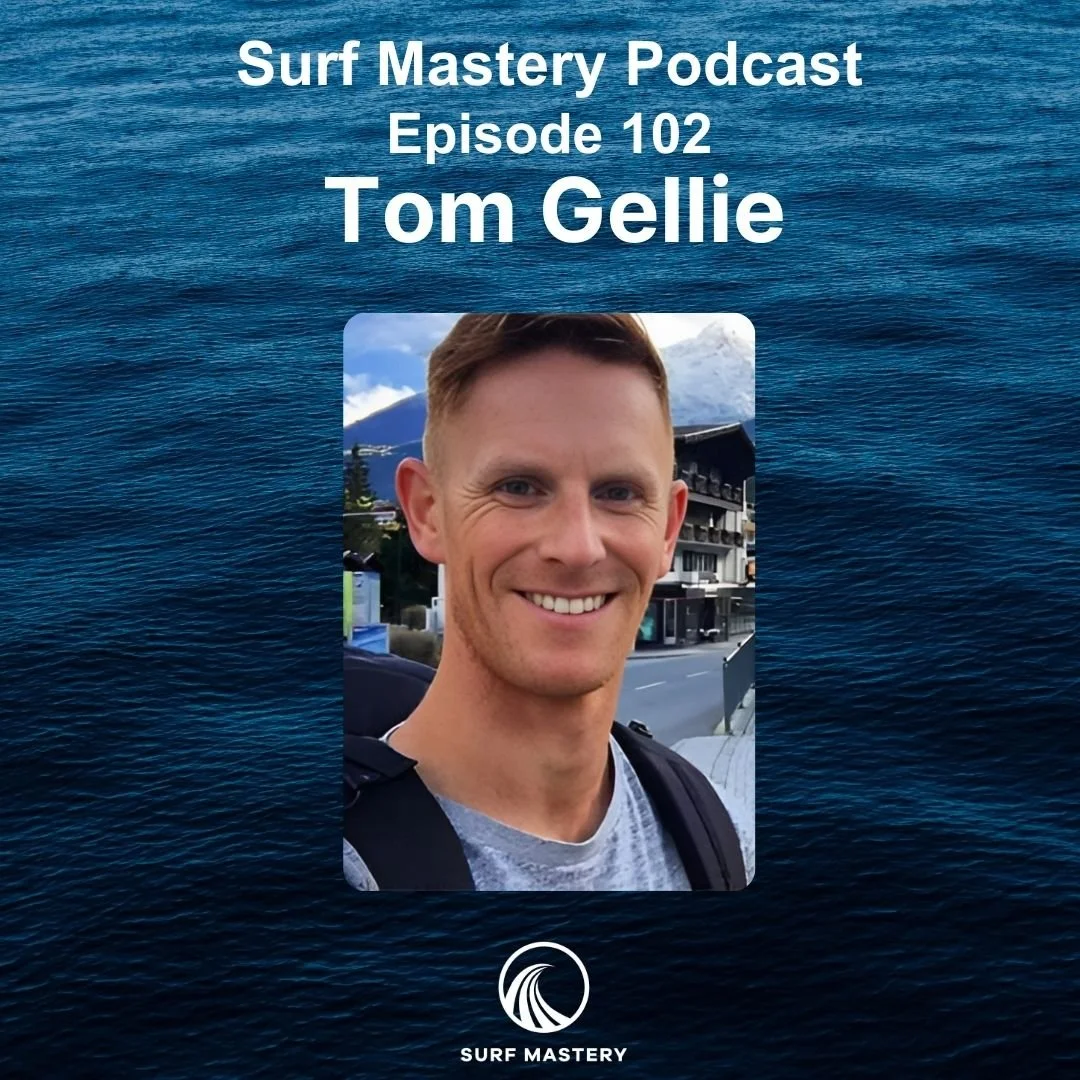
102 Tom Gellie-The Importance of Athletic Stance in Surfing for Beginners and Experts
Sep 11, 2024Tap to summarizeAudio Block Double-click here to upload or link to a .mp3. Learn more In this episode, Michael Frampton connects with Tom Gellie, a renowned ski instructor and bodyworker, to explore the intricate relationship between biomechanics and athletic performance. Tom shares his expertise on the gait cycle, its significance in both skiing and surfing, and how it can be applied to enhance technique and prevent injuries. The discussion also covers Tom’s journey in the field, his approach to movement analysis, and the resources available through Big Picture Skiing. Key Takeaways:Understanding the Gait Cycle:Tom explains the concept of the gait cycle as detailed in Gary Ward’s book What the Foot?. He discusses how understanding this cycle can help identify movement issues and improve performance in skiing and surfing.Biomechanics in Skiing and Surfing:Tom delves into how biomechanical principles apply to skiing and surfing, sharing examples of how movement analysis can address performance issues and enhance overall technique.Comparison of Biomechanics Approaches:The conversation touches on the similarities and differences between Gary Ward’s approach and that of Gary Gray, providing insights into how these methods contribute to understanding and improving human movement.Tom’s Journey and Resources:Tom reflects on the impact of Gary Ward’s work on his coaching practice and invites listeners to explore his resources, including the Big Picture Skiing website and social media channels.The Role of Gait Analysis in Performance:Understanding the gait cycle helps diagnose movement inefficiencies and enhances athletic performance by addressing underlying biomechanics issues.Application Across Sports:Insights from gait analysis and biomechanics apply to both skiing and surfing, illustrating how cross-disciplinary knowledge can lead to better technique and injury prevention.The Importance of Comprehensive Movement Mapping:Detailed mapping of every joint and phase of movement allows for precise analysis and correction of movement patterns that contribute to injuries or performance issues.Self-Study and Continuous Learning:Tom’s experience underscores the value of self-study and staying updated with new research and techniques. Continuous learning can transform professional practice.Holistic Approach to Movement:A holistic view of how body parts interact during movement helps in identifying compensatory patterns and areas that need improvement.Influence of External Resources:Utilizing resources like books, videos, and courses from experts such as Gary Ward provides valuable insights and tools for enhancing movement analysis and coaching techniques.Impact of Biomechanics on Injury Prevention:Proper understanding of biomechanics is crucial for preventing injuries by correcting faulty movement patterns and maintaining proper alignment and function.Tom’s Personal Impact:Tom reflects on the transformative effect of Gary Ward’s work on his coaching practice, highlighting the profound influence of mentors and resources on one’s career.For more insights and tips from Tom Gellie: Follow Tom Gellie:Website:<a hr...
Transcribe →