
Podcast
Radiolab
Hosted by WNYC Studios · EN
Radiolab is on a curiosity bender. We ask deep questions and use investigative journalism to get the answers. A given episode might whirl you through science, legal history, and into the home of someone halfway across the world. The show is known for innovative sound design, smashing information into music. It is hosted by Lulu Miller and Latif Nasser.
376episodes
Episodes
Newest firstAll episodes

Brown Box
May 13, 2021Tap to summarizeYou order some stuff on the Internet and it shows up three hours later. How could all the things that need to happen to make that happen happen so fast? Hosted by Simplecast, an AdsWizz company. See pcm.adswizz.com for information about our collection and use of personal data for advertising.
Transcribe →
What Up Holmes?
Apr 2, 2021Tap to summarizeLove it or hate it, the freedom to say obnoxious and subversive things is the quintessence of what makes America America. But our say-almost-anything approach to free speech is actually relatively recent, and you can trace it back to one guy: a Supreme Court justice named Oliver Wendell Holmes. Even weirder, you can trace it back to one seemingly ordinary 8-month period in Holmes’s life when he seems to have done a logical U-turn on what should be say-able. Why he changed his mind during those 8 months is one of the greatest mysteries in the history of the Supreme Court. (Spoiler: the answer involves anarchists, a house of truth, and a cry for help from a dear friend.) Join us as we investigate why he changed his mind, how that made the country change its mind, and whether it’s now time to change our minds again. This episode was reported by Latif Nasser and was produced by Sarah Qari. Special thanks to Jenny Lawton, Soren Shade, Kelsey Padgett, Mahyad Tousi and Soroush Vosughi. Support Radiolab by becoming a member today at Radiolab.org/donate. further reading: Thomas Healy’s book The Great Dissent: How Oliver Wendell Holmes CHanged His Mind - And Changed the History of Free Speech In America (the inspiration for this episode) plus his latest book Soul City: Race, Equality and the Lost Dream of an American Utopia. The Science article that Sinan Aral wrote in 2018, along with Soroush Vosughi and Deb Roy: “The Spread of True and False News Online” Sinan Aral’s recent book The Hype Machine: How Social Media Disrupts Our Elections, Our Economy and our Health - And How We Must Adapt Zeynep Tufekci’s newsletter “The Insight” plus her book Twitter and Teargas: The Power and Fragility of Networked Protest Nabiha Syed’s news website The Markup Trailer for “The Magnificent Yankee,” a 1950 biopic of Oliver Wendell Holmes Anthony Lewis, Freedom for the Thought that We Hate: A Biography of the First Amendment Hosted by Simplecast, an AdsWizz company. See pcm.adswizz.com for information about our collection and use of personal data for advertising.
Transcribe →
Dispatch 14: Covid Crystal Ball
Mar 12, 2021Tap to summarizeLast summer, at a hospital in England, a man in his 70s being treated for complications with cancer tested positive for covid-19. He had lymphoma, and the disease plus his drugs weakened his immune system, making him particularly susceptible to the virus. He wasn’t too bad off, considering, and was sent home. That was Day 1. This is the story of what the doctors witnessed, over the course of his illness: the evolution of covid-19 inside his body. Before their eyes, they get a hint of what might be to come in the pandemic. This episode was reported by Molly Webster. Special thanks to Ravindra Gupta, Jonathan Li. Support Radiolab by becoming a member today at Radiolab.org/donate. Want to learn more about some of the covid case studies? Here are a couple papers to get you started:The “U.K. Paper”, co-authored by Ravi Gupta, one of our sources for the episode: https://www.nature.com/articles/s41586-021-03291-y A case study out of Boston, co-authored by Dr. Jonathan Li, one of our sources for the episode: https://www.nejm.org/doi/full/10.1056/NEJMc2031364 For more on immune suppression and covid-19, check out this amazing Scientific American article: https://www.scientificamerican.com/article/covid-variants-may-arise-in-people-with-compromised-immune-systems/ Hosted by Simplecast, an AdsWizz company. See pcm.adswizz.com for information about our collection and use of personal data for advertising.
Transcribe →
Red Herring
Feb 19, 2021Tap to summarizeIt was the early 80s, the height of the Cold War, when something strange began happening off the coast of Sweden. The navy reported a mysterious sound deep below the surface of the ocean. Again, and again, and again they would hear it near their secret military bases, in their harbors, and up and down the Swedish coastline. After thorough analysis the navy was certain. The sound was an invasion into their waters, an act of war, the opening salvos of a possible nuclear annihilation. Or was it? Today, Annie McEwen pulls us down into a deep-sea mystery, one of international intrigue that asks you to consider the possibility that maybe, just maybe, your deepest beliefs could be as solid as...air. This episode was reported by Annie McEwen and produced by Annie McEwen, Matt Kielty, and Sarah Qari, with sound design by Jeremy Bloom. Special thanks to Bosse Lindquist. Support Radiolab by becoming a member today at Radiolab.org/donate.
Transcribe →
Dispatch 13: Challenge Trials
Nov 25, 2020Tap to summarizeWhat if someone asked you to get infected with the COVID-19 virus, deliberately, in order to speed up the development of a vaccine? Would you do it? Would you risk your life to save others? For months, dozens of companies have been racing to create coronavirus vaccines. Finally, three have done it. But according to the experts, we’re not out of the woods yet; we’ll need several vaccines to satisfy the global demand. One way to speed up the development process is a controversial technique called a human challenge trial, in which human subjects are intentionally infected with the virus. Senior correspondent Molly Webster gets the lowdown from Public News Service reporter Laura Rosbrow-Telem and then tracks down some of the tens of thousands of people who have volunteered to participate in a challenge trial. Special thanks to Jonathan Miller. This episode was reported by Molly Webster and Laura Rosbrow-Telem and produced by Molly Webster and Pat Walters. Support Radiolab by becoming a member today at Radiolab.org/donate. Hosted by Simplecast, an AdsWizz company. See pcm.adswizz.com for information about our collection and use of personal data for advertising.
Transcribe →
The Wubi Effect
Aug 14, 2020Tap to summarizeWhen we think of China today, we think of a technological superpower. From Huawei and 5G to TikTok and viral social media, China is stride for stride with the United States in the world of computing. However, China’s technological renaissance almost didn’t happen. And for one very basic reason: The Chinese language, with its 70,000 plus characters, couldn’t fit on a keyboard. Today, we tell the story of Professor Wang Yongmin, a hard headed computer programmer who solved this puzzle and laid the foundation for the China we know today. This episode was reported and produced by Simon Adler with reporting assistance from Yang Yang. Special thanks to Martin Howard. You can view his renowned collection of typewriters at: antiquetypewriters.com Support Radiolab today at Radiolab.org/donate.
Transcribe →
Invisible Allies
Jul 31, 2020Tap to summarizeAs scientists have been scrambling to find new and better ways to treat covid-19, they’ve come across some unexpected allies. Invisible and primordial, these protectors have been with us all along. And they just might help us to better weather this viral storm. To kick things off, we travel through time from a homeless shelter to a military hospital, pondering the pandemic-fighting power of the sun. And then, we dive deep into the periodic table to look at how a simple element might actually be a microbe’s biggest foe. This episode was reported by Simon Adler and Molly Webster, and produced by Annie McEwen, Pat Walters, Simon Adler, and Molly Webster, with production help from Tad Davis. Support Radiolab today at Radiolab.org/donate. Hosted by Simplecast, an AdsWizz company. See pcm.adswizz.com for information about our collection and use of personal data for advertising.
Transcribe →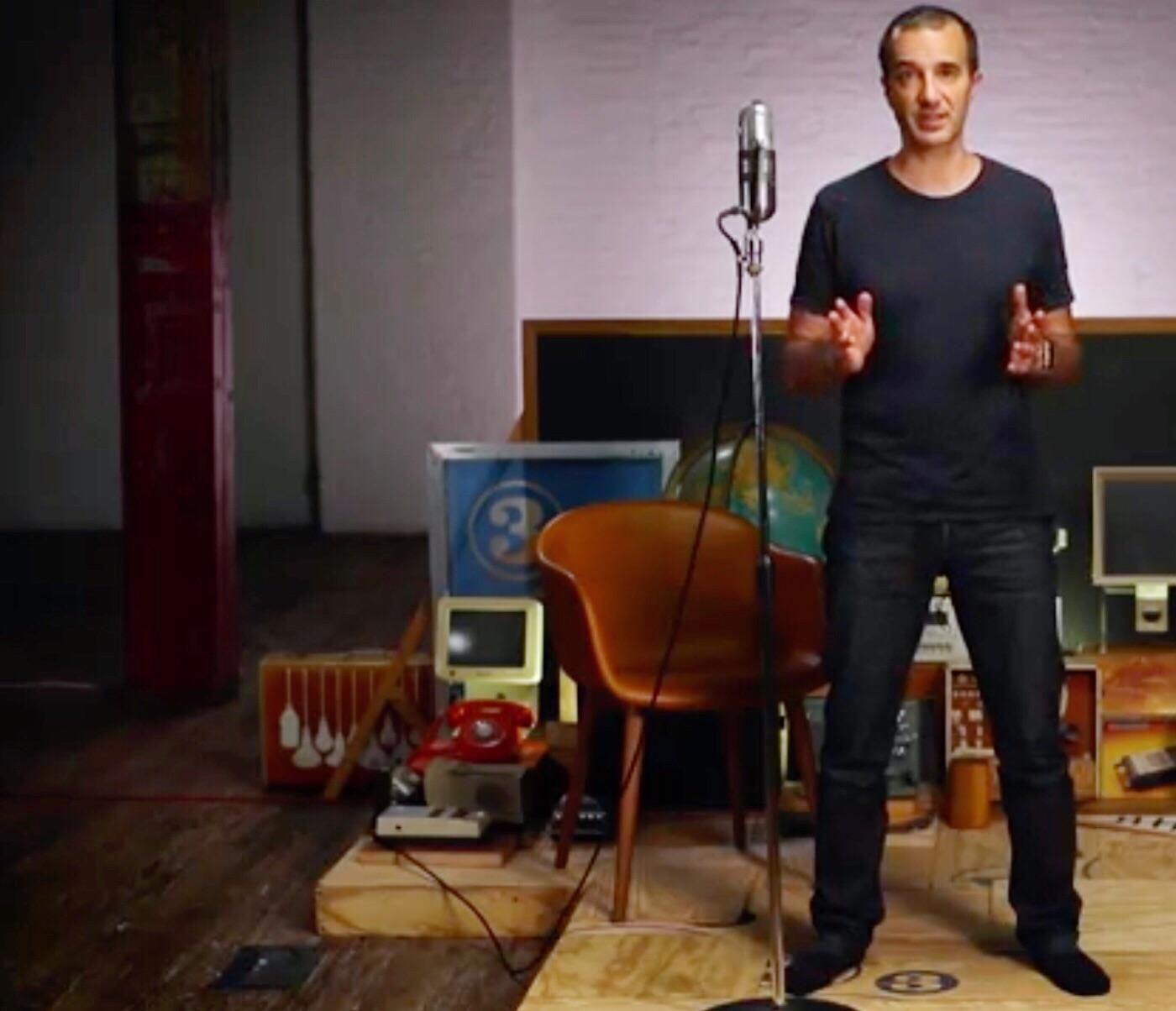
The Third. A TED Talk.
Jun 25, 2020Tap to summarizeJad gives a TED talk about his life as a journalist and how Radiolab has evolved over the years. Here's how TED described it:How do you end a story? Host of Radiolab Jad Abumrad tells how his search for an answer led him home to the mountains of Tennessee, where he met an unexpected teacher: Dolly Parton.Jad Nicholas Abumrad is a Lebanese-American radio host, composer and producer. He is the founder of the syndicated public radio program Radiolab, which is broadcast on over 600 radio stations nationwide and is downloaded more than 120 million times a year as a podcast. He also created More Perfect, a podcast that tells the stories behind the Supreme Court's most famous decisions. And most recently, Dolly Parton's America, a nine-episode podcast exploring the life and times of the iconic country music star. Abumrad has received three Peabody Awards and was named a MacArthur Fellow in 2011. Hosted by Simplecast, an AdsWizz company. See pcm.adswizz.com for information about our collection and use of personal data for advertising.
Transcribe →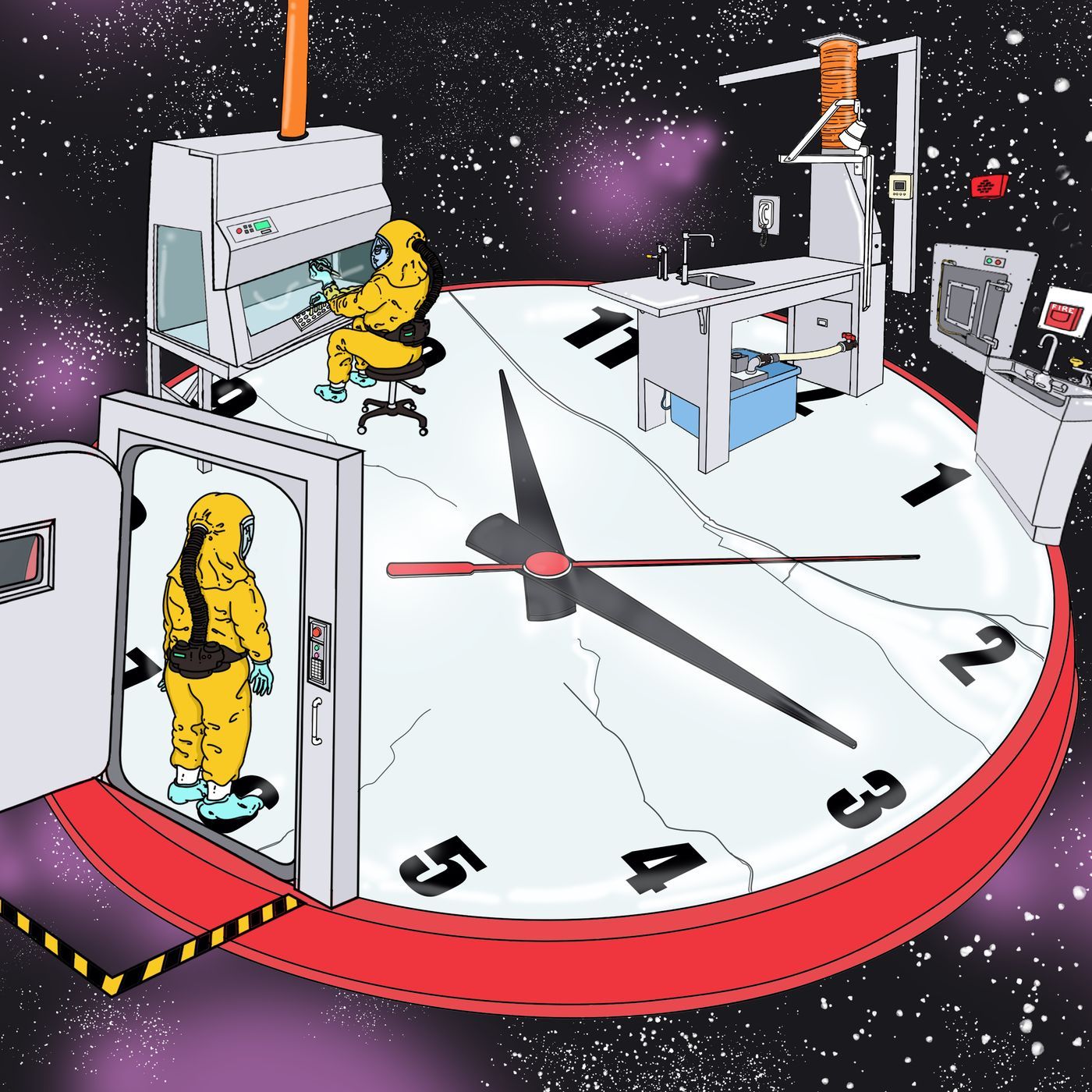
Dispatch 6: Strange Times
May 29, 2020Tap to summarizeCovid has disrupted the most basic routines of our days and nights. But in the middle of a conversation about how to fight the virus, we find a place impervious to the stalled plans and frenetic demands of the outside world. It’s a very different kind of front line, where urgent work means moving slow, and time is marked out in tiny pre-planned steps. Then, on a walk through the woods, we consider how the tempo of our lives affects our minds and discover how the beats of biology shape our bodies. This episode was produced with help from Molly Webster and Tracie Hunte. Support Radiolab today at Radiolab.org/donate. Hosted by Simplecast, an AdsWizz company. See pcm.adswizz.com for information about our collection and use of personal data for advertising.
Transcribe →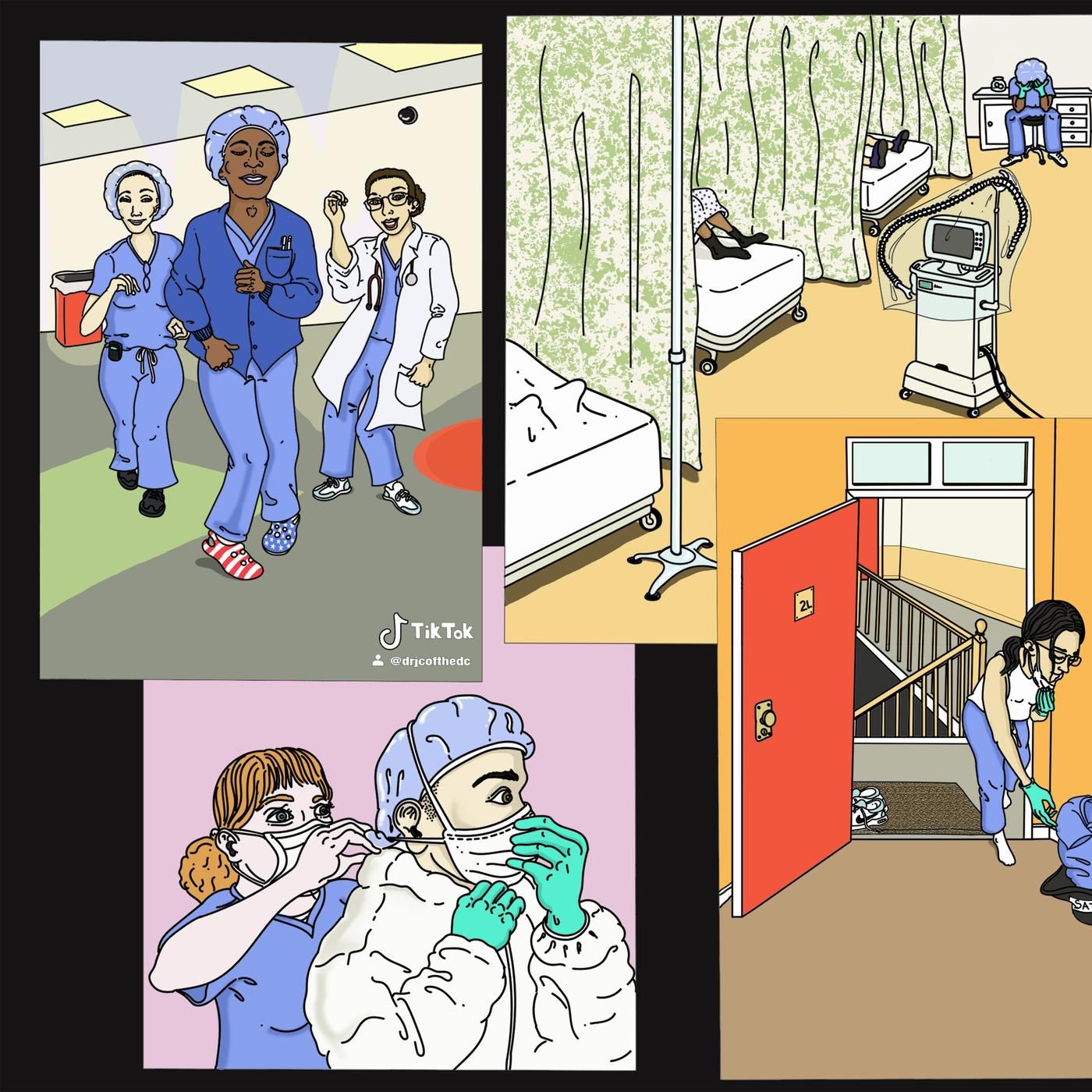
Dispatch 5: Don't Stop Believin'
May 6, 2020Tap to summarizeCovid-19 has put emergency room doctors on the frontlines treating an illness that is still perplexing and unknown. Jad tracks one ER doctor in NYC as the doctor puzzles through clues, doing research of his own, trying desperately to save patients' lives. This episode was produced by Jad Abumrad and Suzie Lechtenberg. Support Radiolab today at Radiolab.org/donate. Hosted by Simplecast, an AdsWizz company. See pcm.adswizz.com for information about our collection and use of personal data for advertising.
Transcribe →