Podcast
Terrestrials
Hosted by WNYC · EN
Welcome, nature lovers, to the home of the Terrestrials podcast and family-friendly Radiolab episodes about nature. Every other week, host Lulu Miller will take you on a nature walk to encounter a plant or animal behaving in ways that will surprise you. Squirrels that can regrow their brains, octopuses that can outsmart their human captors, honeybees that can predict the future. You don’t have to be a kid to listen, just someone who likes to see the world anew.
You’ll hear a range of nature stories on this podcast. Sometimes these will be brand new Terrestrials episodes, full of original songs (by “The Songbud” Alan Goffinski) that tell a fantastical-sounding story about nature that is 100% true. Sometimes these will be our very best, shiniest, furriest, leafiest Radiolab episodes about animals or plants or nature.
The stories that drop here will always be family-friendly and safe for kids. They will always be sound-rich and full of the vivid, gripping storytelling you’ve come to expect from Radiolab. They will always transport you to the beyond-human world: into the depths of the ocean, into jungles, prairies, forests, space, snow, wildflower fields and beyond. Sometimes we’ll encounter something so wild we just have to break out into song about it! Don’t worry, good voices not required.
Join us on this adventure!
29episodes
Episodes
Newest firstAll episodes
A Podcast Turducken: With Wow in the World, Terrestrials and Circle Round
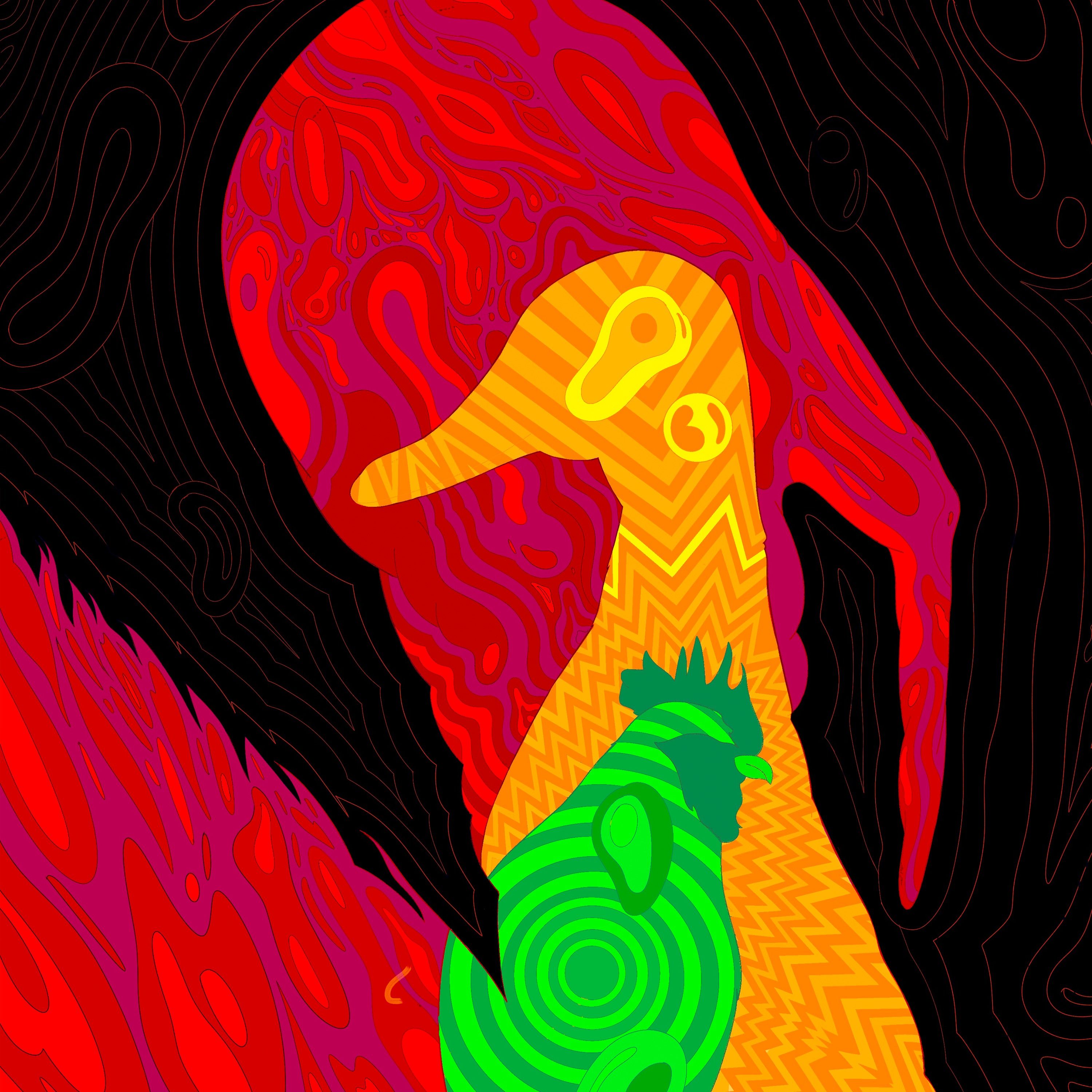
Nov 1700:37:20Tap to summarizeLulu is hosting a holiday meal. She’s invited the characters from her extended kids podcast family - Wow in the World and Circle Round - for an epic kids podcast crossover special. It’s a potluck of stories and on the table is a turducken. Yes, a turkey stuffed with a duck stuffed with a chicken. Each show brings a wild story about one of these creatures. We learn about a chicken’s unexpected journey back home, a duck mystery in the middle of the Arctic Ocean and an indigenous folktale about how the turkey got its gobble, culminating in a giant singalong. Keep learning!Check out Inge the chicken’s route back home.Read about the mysterious ocean quack sound. Learn about the turkey’s role in Cherokee culture. This episode was a huge collaboration between our team and the teams at Tinkercast’s Wow in the World and WBUR’s Circle Round, including Mindy Thomas, Guy Raz, Rebecca Sheir, Eric Shimelonis, Tom van Kalken, Steph Sosa and Anna Zagorski. Terrestrials was created by Lulu Miller with WNYC. This episode was reported and produced by Lulu Miller, Alan Goffinski, Ana González and Tanya Chawla. Beautiful sound design by Mira Burt-Wintonick and Joe Plourde. Engineering by Joe Plourde. Our Executive Producer is Sarah Sandbach. Factchecking by Anna Pujol-Mazzini. Support for Terrestrials is provided by the Simons Foundation, the Arthur Vining Davis Foundations, and the John Templeton Foundation.A reminder that Terrestrials also makes original music! You can find the single from this episode Turducken Dreams and all of our other music here. HEY GROWN-UPS!Love the show? Leave us a ⭐⭐⭐⭐⭐ rating and review on your podcast app—it helps curious listeners find us!We want to hear from you! Share your thoughts about Terrestrials with us.Subscribe to our weekly newsletter for bite-sized essays, activities, and ways to connect with the show.Follow us on YouTube, Instagram, and TikTok for behind-the-scenes extras and more.Listen to original music from Terrestrials on Spotify, Apple Music, or our music page.Got a badgering question for the team? Email us at terrestrialspodcast@wnyc.org or submit a voice memo with your name, age, and your question using this form!Terrestrials is made possible in part by listeners like you. Support the show by joining Radiolab’s membership program, The Lab—and we’ll send you a special thank-you gift from our team!
Transcribe →
Vanished Moon!
Apr 1, 202500:21:12Tap to summarizeThe moon has disappeared. Ok, just kidding. Happy April Fool’s Day. But what if the moon actually vanished?After songbud Alan saw a movie about stealing the moon, he wondered what would actually happen if the moon disappeared. He found the perfect person to talk to – Mika McKinnon who has a masters in disasters. We learn about eerie silences, ocean stench, hurricanes, and ecosystems in total flux. Also a whole new season of Terrestrials is coming out soon! New stories, new songs and new wild beasts. Watch out for it on April 17th. Radiolab was created by Jad Abumrad and is edited by Soren Wheeler. Lulu Miller and Latif Nasser are our co-hosts. Dylan Keefe is our director of sound design. Our staff includes: Simon Adler, Jeremy Bloom, Becca Bressler, W. Harry Fortuna, David Gebel, Maria Paz Gutiérrez, Sindhu Gnanasambandan, Matt Kielty, Annie McEwen, Alex Neason, Valentina Powers, Sarah Qari, Sarah Sandbach, Arianne Wack, Pat Walters and Molly Webster. Our fact-checkers are Diane Kelly, Emily Krieger and Natalie Middleton. Production help from Tanya Chawla. Sound mixing by Joe Plourde. We're on the hunt for listener feedback. Let us know how you liked Terrestrials here!Sign up for Radiolab for Kids’s newsletter! It includes short essays, recommendations, and details about other ways to interact with the show. Sign up here.Radiolab for Kids and Terrestrials are supported by listeners like you. Support Radiolab by becoming a member of The Lab today.Follow Radiolab on Instagram, X Facebook, Threads and TikTok @radiolab.Support for Terrestrials is provided by the Simons Foundation, the Arthur Vining Davis Foundations, the Kalliopeia Foundation and the John Templeton Foundation.
Transcribe →
Gettin' Crabby
Mar 20, 202500:26:34Tap to summarizeIf someone calls you crabby, it’s not a compliment – they’re calling you grumpy, grouchy or snappy. But let’s reconsider this stain on the humble crab’s reputation. Look closely at a crab’s gnarled shell and you’ll see an incredible creature. Today, we bring you two very different crab stories. The first comes from former Radiolab producer Rachael Cusick about a woman who replicated the ocean to breed hermit crabs. Next, how crabs may hold a secret to surviving the chaos of the universe.Radiolab was created by Jad Abumrad and is edited by Soren Wheeler. Lulu Miller and Latif Nasser are our co-hosts. Dylan Keefe is our director of sound design. Our staff includes: Simon Adler, Jeremy Bloom, Becca Bressler, W. Harry Fortuna, David Gebel, Maria Paz Gutiérrez, Sindhu Gnanasambandan, Matt Kielty, Annie McEwen, Alex Neason, Valentina Powers, Sarah Qari, Sarah Sandbach, Arianne Wack, Pat Walters and Molly Webster. Our fact-checkers are Diane Kelly, Emily Krieger and Natalie Middleton. Production help from Tanya Chawla. Sound mixing by Joe Plourde. We're on the hunt for listener feedback. Let us know how you liked Terrestrials here!Sign up for Radiolab for Kids’s newsletter! It includes short essays, recommendations, and details about other ways to interact with the show. Sign up here.Radiolab for Kids and Terrestrials are supported by listeners like you. Support Radiolab by becoming a member of The Lab today.Follow Radiolab on Instagram, X Facebook, Threads and TikTok @radiolab.Support for Terrestrials is provided by the Simons Foundation, the Arthur Vining Davis Foundations, the Kalliopeia Foundation and the John Templeton Foundation.
Transcribe →
Luck of the Lobster
Mar 6, 202500:15:19Tap to summarizeSt. Patricks day is coming up. People worldwide will wear leprechaun hats and celebrate the luck of the Irish. But what about the luck of lobsters? Today we have a story about the biggest, luckiest lobster we have ever heard of — Nick. As lobsters age, they keep growing bigger and bigger. They don’t wear out or get sick like most other creatures do. The most common way they die is through accidents.One day a woman named Bonnie went to her nearby grocery store and saw behemoth Nick cramped in a small lobster tank. She asked the guy behind the seafood counter why Nick was there. After some back and forth with upper management, the store manager made her a deal. She could have Nick if she could get him back to Maine. This is the story of Nick’s escape from the grocery store to the ocean, in first class. For more on lobsters, read Trevor Corson’s The Secret life of Lobsters.Radiolab was created by Jad Abumrad and is edited by Soren Wheeler. Lulu Miller and Latif Nasser are our co-hosts. Dylan Keefe is our director of sound design. Our staff includes: Simon Adler, Jeremy Bloom, Becca Bressler, W. Harry Fortuna, David Gebel, Maria Paz Gutiérrez, Sindhu Gnanasambandan, Matt Kielty, Annie McEwen, Alex Neason, Valentina Powers, Sarah Qari, Sarah Sandbach, Arianne Wack, Pat Walters and Molly Webster. Our fact-checkers are Diane Kelly, Emily Krieger and Natalie Middleton. Production help from Tanya Chawla. Sound mixing by Joe Plourde. We're on the hunt for listener feedback. Let us know how you liked Terrestrials here!Sign up for Radiolab for Kids’s newsletter! It includes short essays, recommendations, and details about other ways to interact with the show. Sign up here.Radiolab for Kids and Terrestrials are supported by listeners like you. Support Radiolab by becoming a member of The Lab today.Follow Radiolab on Instagram, X Facebook, Threads and TikTok @radiolab.Support for Terrestrials is provided by the Simons Foundation, the Arthur Vining Davis Foundations, the Kalliopeia Foundation and the John Templeton Foundation.
Transcribe →
The Big Cat and the Little Boy
Feb 20, 202500:15:44Tap to summarizeWhen wildlife conservationist Alan Rabinowitz was a boy, he had a stutter. Strangely, his stutter vanished when he spoke to animals. One day, when his father took him to the Bronx Zoo, Alan saw a majestic jaguar and made a promise to it. He spent the rest of his life fulfilling that promise.Read Alan Rabinowitz’s picture book: “A Boy and a Jaguar.”Radiolab was created by Jad Abumrad and is edited by Soren Wheeler. Lulu Miller and Latif Nasser are our co-hosts. Dylan Keefe is our director of sound design. Our staff includes: Simon Adler, Jeremy Bloom, Becca Bressler, W. Harry Fortuna, David Gebel, Maria Paz Gutiérrez, Sindhu Gnanasambandan, Matt Kielty, Annie McEwen, Alex Neason, Valentina Powers, Sarah Qari, Sarah Sandbach, Arianne Wack, Pat Walters and Molly Webster. Our fact-checkers are Diane Kelly, Emily Krieger and Natalie Middleton. Production help from Tanya Chawla. Sound mixing by Joe Plourde. We're on the hunt for listener feedback. Let us know how you liked Terrestrials here!Sign up for Radiolab for Kids’s newsletter! It includes short essays, recommendations, and details about other ways to interact with the show. Sign up here.Radiolab for Kids and Terrestrials are supported by listeners like you. Support Radiolab by becoming a member of The Lab today.Follow Radiolab on Instagram, X Facebook, Threads and TikTok @radiolab.Support for Terrestrials is provided by the Simons Foundation, the Arthur Vining Davis Foundations, the Kalliopeia Foundation and the John Templeton Foundation.
Transcribe →
It's Raining Cats and Cats
Feb 6, 202500:17:04Tap to summarizeNext week is Valentine’s Day, but instead of talking about falling in love, we’re going to talk about falling cats and barrels. First, writer David Quammen tells us about a strange observation: cats are falling out of buildings in New York City. When a cat falls from less than five stories or more than nine stories, it usually survives. But when it falls from between five and nine stories, it suffers serious injury. Why? Physics has the answer. Then we meet Annie Taylor, the first person who went over Niagara falls in a barrel. For more, check out Garret Soden’s “Falling: How Our Greatest Fear Became Our Greatest Thrill.”Radiolab was created by Jad Abumrad and is edited by Soren Wheeler. Lulu Miller and Latif Nasser are our co-hosts. Dylan Keefe is our director of sound design. Our staff includes: Simon Adler, Jeremy Bloom, Becca Bressler, W. Harry Fortuna, David Gebel, Maria Paz Gutiérrez, Sindhu Gnanasambandan, Matt Kielty, Annie McEwen, Alex Neason, Valentina Powers, Sarah Qari, Sarah Sandbach, Arianne Wack, Pat Walters and Molly Webster. Our fact-checkers are Diane Kelly, Emily Krieger and Natalie Middleton. Production help from Tanya Chawla. Sound mixing by Joe Plourde. We're on the hunt for listener feedback. Let us know how you liked Terrestrials here!Sign up for Radiolab for Kids’s newsletter! It includes short essays, recommendations, and details about other ways to interact with the show. Sign up here.Radiolab for Kids and Terrestrials are supported by listeners like you. Support Radiolab by becoming a member of The Lab today.Follow Radiolab on Instagram, X Facebook, Threads and TikTok @radiolab.Support for Terrestrials is provided by the Simons Foundation, the Arthur Vining Davis Foundations, the Kalliopeia Foundation and the John Templeton Foundation.
Transcribe →
Stars from the Big Fib
Jan 16, 202500:35:55Tap to summarizeToday we bring you an episode from our friends over at The Big Fib. In the era of fake news, kids need to learn to be able to tell what’s true from what’s false. And what better way to do that than a game show that puts kids in the driver’s seat, adults in the hot seat, and a sound-effects robot strapped to the roof?Each week, a kid interviews one fake and one real expert on a particular topic and they have to figure out who’s the true expert and who’s a liar. In this episode, they interview two star experts on exoplanets, star nurseries, how stars turn into supernovas, shooting stars, white dwarf stars, telescopes, and much more. Can you figure out who’s lying about stars?For more shows, visit GZMshows.com. To hear all episodes of The Big Fib ad-free subscribe now. We're on the hunt for listener feedback. Let us know how you liked Terrestrials here!Sign up for Radiolab for Kids’s newsletter! It includes short essays, recommendations, and details about other ways to interact with the show. Sign up here.Radiolab for Kids and Terrestrials are supported by listeners like you. Support Radiolab by becoming a member of The Lab today.Follow Radiolab on Instagram, X Facebook, Threads and TikTok @radiolab.Support for Terrestrials is provided by the Simons Foundation, the Arthur Vining Davis Foundations, the Kalliopeia Foundation and the John Templeton Foundation.
Transcribe →
Hole-y Cow
Jan 9, 202500:21:12Tap to summarizeFor centuries, the stomach was a black box to humans. We didn’t understand the mystery of what happened to food after it went inside us. That is, until the early 1800s, when Dr. William Beaumont found a boy, Alexis St. Martin, with a hole in his stomach. Writer Mary Roach brings us that story. She first sticks her hand inside the stomach of a live cow and then tells us how Beaumont conducted experiments on St. Martin to understand how the stomach breaks down food. This strange relationship between doctor and patient changed the way we understand digestion. Also, we have a brand new Terrestrials coming up just in advance of the Lunar New Year. We will be diving into the history and science of one of the animals associated with the festival. Check back in two weeks to hear that story. For more on guts, read:Mary Roach, “Gulp: Adventures on the Alimentary Canal”Fred Kaufman, “A Short History of the American Stomach”Radiolab was created by Jad Abumrad and is edited by Soren Wheeler. Lulu Miller and Latif Nasser are our co-hosts. Dylan Keefe is our director of sound design. Our staff includes: Simon Adler, Jeremy Bloom, Becca Bressler, W. Harry Fortuna, David Gebel, Maria Paz Gutiérrez, Sindhu Gnanasambandan, Matt Kielty, Annie McEwen, Alex Neason, Valentina Powers, Sarah Qari, Sarah Sandbach, Arianne Wack, Pat Walters and Molly Webster. Our fact-checkers are Diane Kelly, Emily Krieger and Natalie Middleton. Production help from Tanya Chawla. Sound mixing by Joe Plourde. We're on the hunt for listener feedback. Let us know how you liked Terrestrials here!Sign up for Radiolab for Kids’s newsletter! It includes short essays, recommendations, and details about other ways to interact with the show. Sign up here.Radiolab for Kids and Terrestrials are supported by listeners like you. Support Radiolab by becoming a member of The Lab today.Follow Radiolab on Instagram, X Facebook, Threads and TikTok @radiolab.Support for Terrestrials is provided by the Simons Foundation, the Arthur Vining Davis Foundations, the Kalliopeia Foundation and the John Templeton Foundation.
Transcribe →
Volcanoes on the Moon
Dec 26, 202400:30:20Tap to summarizeThe year’s best celestial event was, without a doubt, April’s solar eclipse. The moon went in front of the sun to cast a 115 mile wide shadow on Earth. A swathe of North America was showered in sudden darkness. In honor of the eclipse, the Radiolab team made a show about the star of the show: the moon. We think we know the moon — we know that humanity visited it, that it’s a shiny white rotating rock in the sky. But what else really? In today’s episode, the team tells us about the moon’s formation, moon dust, moon-quakes, moon volcanoes, how the moon causes the tides on the Earth, and what the temperature up there is like. Turns out, we’ve barely scratched the surface.For more, check out Rebecca Boyle’s book, ‘Our Moon: How the Earth’s Celestial Companion Transformed the Planet, Guided Evolution and Made Us Who We Are’Radiolab was created by Jad Abumrad and is edited by Soren Wheeler. Lulu Miller and Latif Nasser are our co-hosts. Dylan Keefe is our director of sound design. Our staff includes: Simon Adler, Jeremy Bloom, Becca Bressler, W. Harry Fortuna, David Gebel, Maria Paz Gutiérrez, Sindhu Gnanasambandan, Matt Kielty, Annie McEwen, Alex Neason, Valentina Powers, Sarah Qari, Sarah Sandbach, Arianne Wack, Pat Walters and Molly Webster. Our fact-checkers are Diane Kelly, Emily Krieger and Natalie Middleton. Production help from Tanya Chawla. Sound mixing by Joe Plourde. We're on the hunt for listener feedback. Let us know how you liked Terrestrials here!Sign up for Radiolab for Kids’s newsletter! It includes short essays, recommendations, and details about other ways to interact with the show. Sign up here.Radiolab for Kids and Terrestrials are supported by listeners like you. Support Radiolab by becoming a member of The Lab today.Follow Radiolab on Instagram, X Facebook, Threads and TikTok @radiolab.Support for Terrestrials is provided by the Simons Foundation, the Arthur Vining Davis Foundations, the Kalliopeia Foundation and the John Templeton Foundation.
Transcribe →