Podcast
Raise the Line
Hosted by Osmosis from Elsevier · EN
Join host Lindsey Smith and other Elsevier team members for a global conversation about improving health and healthcare with prominent figures in education and healthcare innovation as well as senior leaders at organizations such as the CDC, National Institutes of Health, Johns Hopkins University, WHO, Harvard University, NYU Langone and many others.
40episodes
Episodes
Newest firstAll episodes
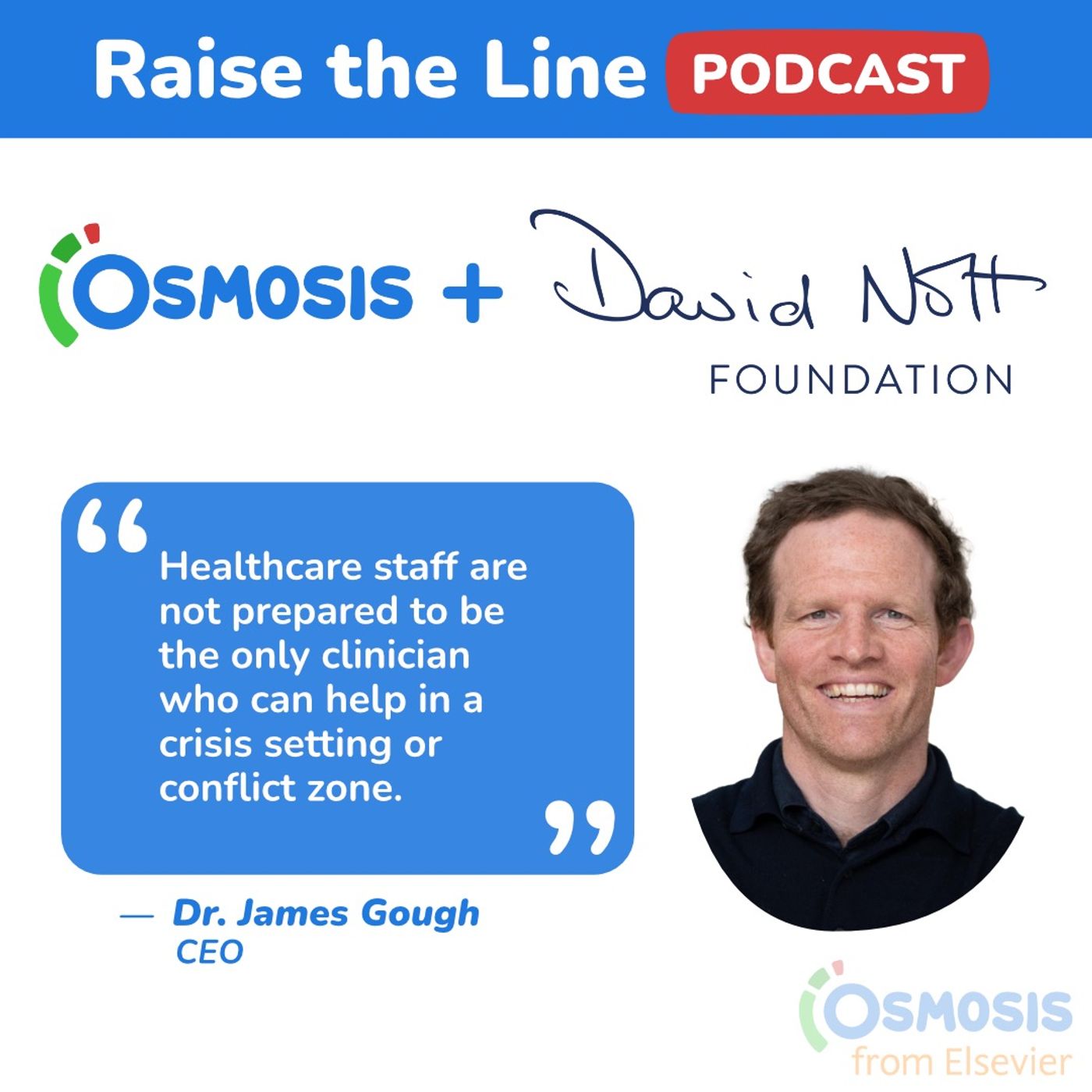
Training Healthcare Workers to Be “The Only One” In Crisis Settings: Dr. James Gough, CEO of The David Nott Foundation
Jan 800:25:48Tap to summarize“The world is a very volatile place, with currently 110 conflicts globally, and yet healthcare staff in the hospitals, even here in London, are not prepared to be the only clinician who can help in a crisis or hostile setting,” says Dr. James Gough, CEO of the David Nott Foundation, which equips providers with the skills and confidence needed to function in war and other extraordinary situations. A former British Army doctor injured in Afghanistan, Gough brings lived experience as well as a background in tech to his current role at the Foundation, which itself is anchored in decades of field work amassed by its namesake, a renowned war surgeon. As Dr. Gough points out to host Lindsey Smith, the cause could be helped by augmenting medical school curricula, but in the meantime, the Foundation is filling the knowledge gap by using prosthetics, virtual reality simulations and cadavers to train a broad swath of health workers including surgeons, anesthetists, and obstetricians. Tune in to this important Raise the Line conversation as Dr. Gough reflects on the strengths and weaknesses of NGOs in doing this work, his plans to expand the Foundation’s footprint in the US, and the gratifying feedback he’s received from trainees now operating on the frontlines in Ukraine and elsewhere. Mentioned in this episode:David Nott Foundation If you like this podcast, please share it on your social channels. You can also subscribe to the series and check out all of our episodes at www.osmosis.org/podcast
Transcribe →
Helping People Understand Science Using the Science of Information: Jessica Malaty Rivera, Senior Science Communication Adviser at de Beaumont Foundation
Dec 1800:26:57Tap to summarize“People are not looking for a perfect, polished answer. They're looking for a human to speak to them like a human,” says Jessica Malaty Rivera, an infectious disease epidemiologist and one of the most trusted science communicators in the U.S. to emerge from the COVID-19 pandemic. That philosophy explains her relatable, judgement-free approach to communications which aims to make science more human, more accessible and less institutional. In this wide-ranging Raise the Line discussion, host Lindsey Smith taps Rivera’s expertise on how to elevate science understanding, build public trust, and equip people to recognize disinformation. She is also keen to help people understand the nuances of misinformation -- which she is careful to define – and the emotional drivers behind it in order to contain the “infodemics” that complicate battling epidemics and other public health threats. It’s a thoughtful call to educate the general public about the science of information as well as the science behind medicine. Tune in for Rivera’s take on the promise and peril of AI-generated content, why clinicians should see communication as part of their professional responsibility, and how to prepare children to navigate an increasingly complex information ecosystem.Mentioned in this episode:de Beaumont Foundation If you like this podcast, please share it on your social channels. You can also subscribe to the series and check out all of our episodes at www.osmosis.org/podcast
Transcribe →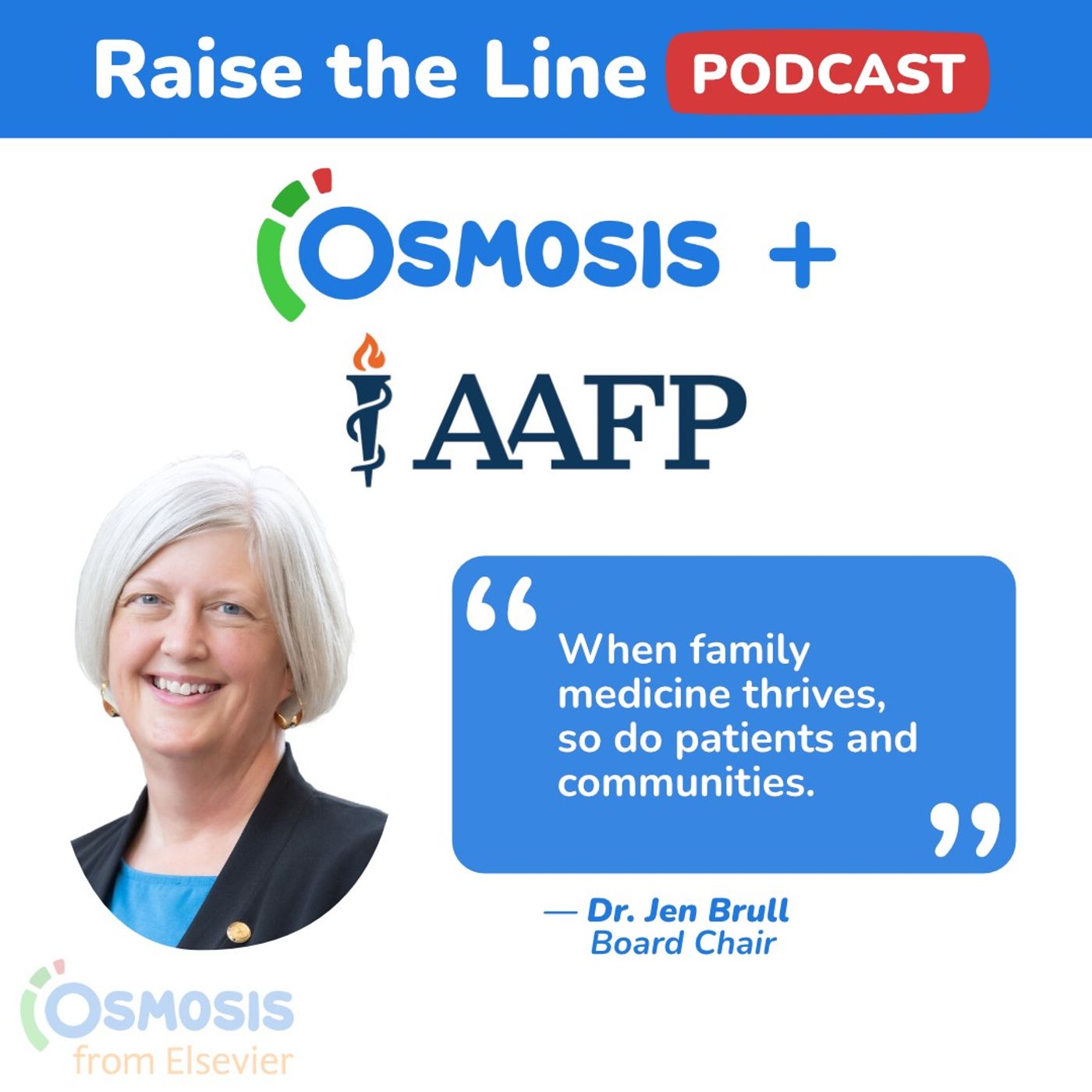
Aligning Investment in Family Medicine With Its Impact: Dr. Jen Brull, Board Chair of the American Academy of Family Physicians
Dec 1100:19:42Tap to summarize“Delivering a baby one day and holding a patient’s hand at the end of life literally the next day...that continuity is very powerful,” says Dr. Jen Brull, board chair of the American Academy of Family Physicians (AAFP). And as she points out, that continuity also builds trust with patients, an increasingly valuable commodity when faith in medicine and science is declining. As you might expect given her role, Dr. Brull believes strengthening family medicine is the key to improving health and healthcare. Exactly how to do that is at the heart of her conversation with host Lindsey Smith on this episode of Raise the Line, which covers ideas for payment reform, reducing administrative burdens, and stronger support for physician well-being. And with a projected shortage of nearly forty thousand primary care physicians, Dr. Brull also shares details on AAFP’s “Be There First” initiative which is designed to attract service-minded medical students – whom she describes as family physicians at heart -- early in their educational journey. “I have great hope that increasing the number of these service-first medical students will fill part of this gap.”Tune-in for an informative look at a cornerstone of the healthcare system and what it means to communities of all sizes throughout the nation. Mentioned in this episode:AAFP If you like this podcast, please share it on your social channels. You can also subscribe to the series and check out all of our episodes at www.osmosis.org/podcast
Transcribe →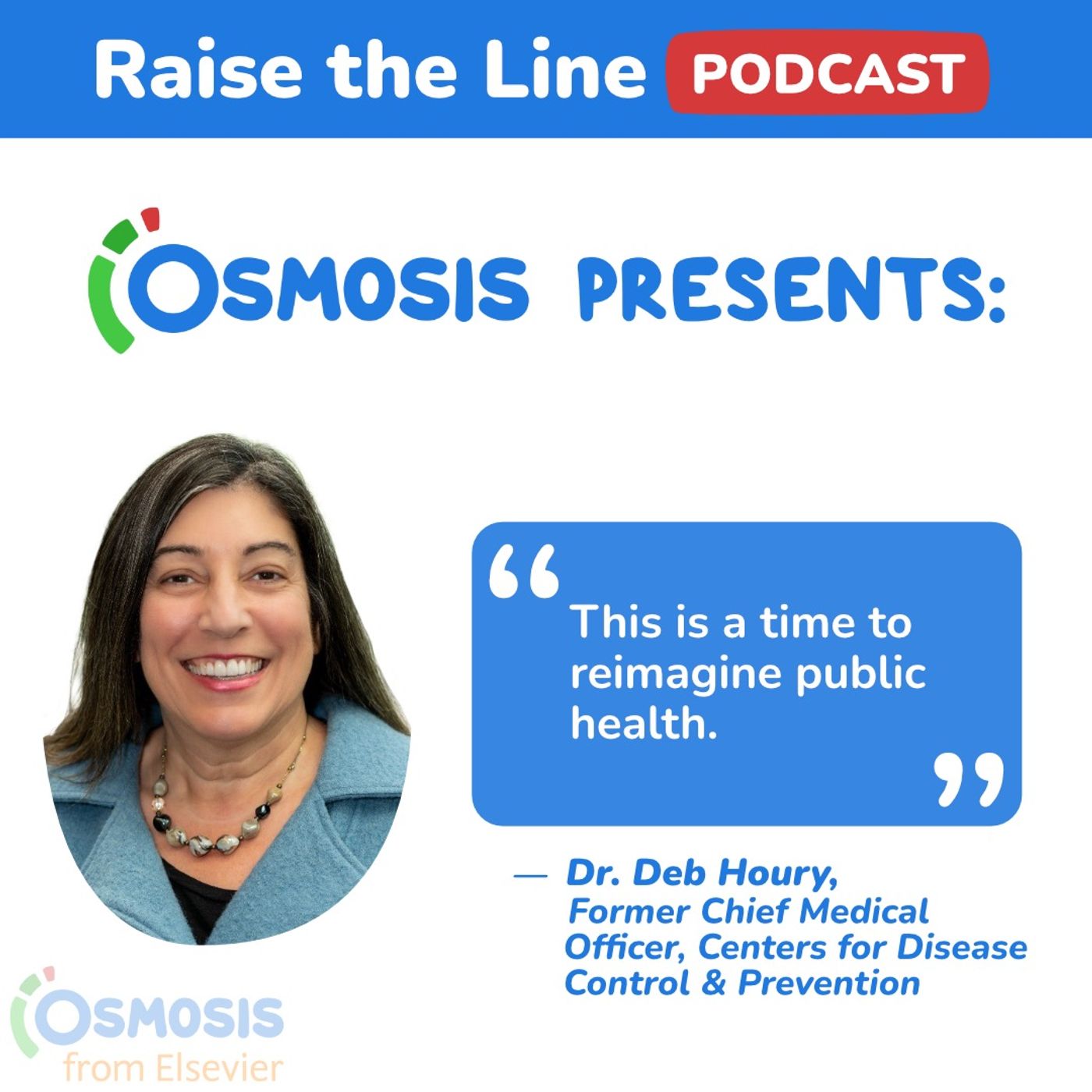
Reimagining Public Health: Dr. Deb Houry, Former Chief Medical Officer at Centers for Disease Control and Prevention
Dec 400:16:27Tap to summarize“This is a time to reimagine public health and public health/healthcare system integration,” says Dr. Deb Houry, the former chief medical officer for the US Centers for Disease Control and Prevention. In this thoughtful Raise the Line conversation, Dr. Houry reflects on unprecedented federal action in vaccine guidance and other issues since her noteworthy resignation from the CDC in August, and sees a more decentralized landscape emerging where states and localities play a larger role in providing public health recommendations. And while she acknowledges upsides to this shift, she’s also concerned what the absence of a national consensus on health standards could mean. “Diseases don't recognize borders, and it’s also important that people have equitable access to preventative services, vaccines, and other things,” she tells host Lindsey Smith. Tune in for Dr. Houry’s seasoned perspective on this consequential moment in public health, and her encouraging message for learners and early career providers considering a career in the sector.Mentioned in this episode:DH Leadership & Strategy Solutions If you like this podcast, please share it on your social channels. You can also subscribe to the series and check out all of our episodes at www.osmosis.org/podcast
Transcribe →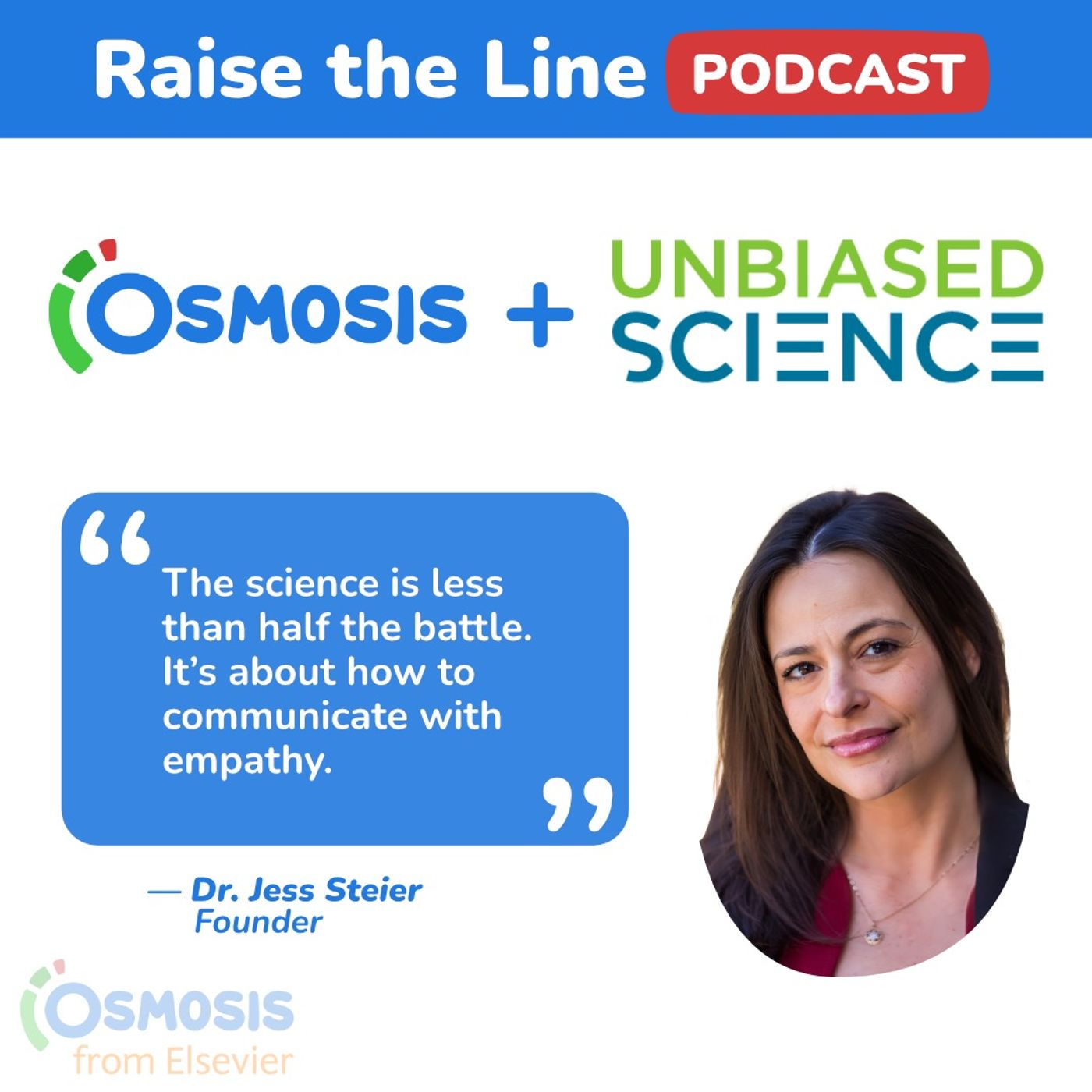
The Power of Empathy in Science Communication: Dr. Jess Steier, Founder of Unbiased Science
Nov 2000:20:03Tap to summarize“My most powerful content is when I lead with my voice as a mom because I have the same concerns about keeping my kids safe as my audience does. It’s a powerful and effective way to find common ground with people,” says Dr. Jess Steier, a popular public health scientist and science communicator seeking to bridge divides and foster trust through empathetic, evidence-based communication. Dr. Steier has several platforms from which to do this work, including Unbiased Science -- a communication hub that uses multiple social media platforms and other communications channels to share validated health and science information -- and as executive director of the Science Literacy Lab, a nonprofit organization dedicated to reaching a diverse audience seeking clarity and reliable information on scientific topics. “The science is less than half the battle,” she explains. “It’s about how to communicate with empathy.”Join Raise the Line host Lindsey Smith for a valuable conversation that explores:What sources Dr. Steier relies on to validate informationHow she uses “escape room” exercises to train clinicians on empathetic communicationWhy tailored, story-driven messages reach audiences more effectively than facts.Mentioned in this episode:Unbiased Science If you like this podcast, please share it on your social channels. You can also subscribe to the series and check out all of our episodes at www.osmosis.org/podcast
Transcribe →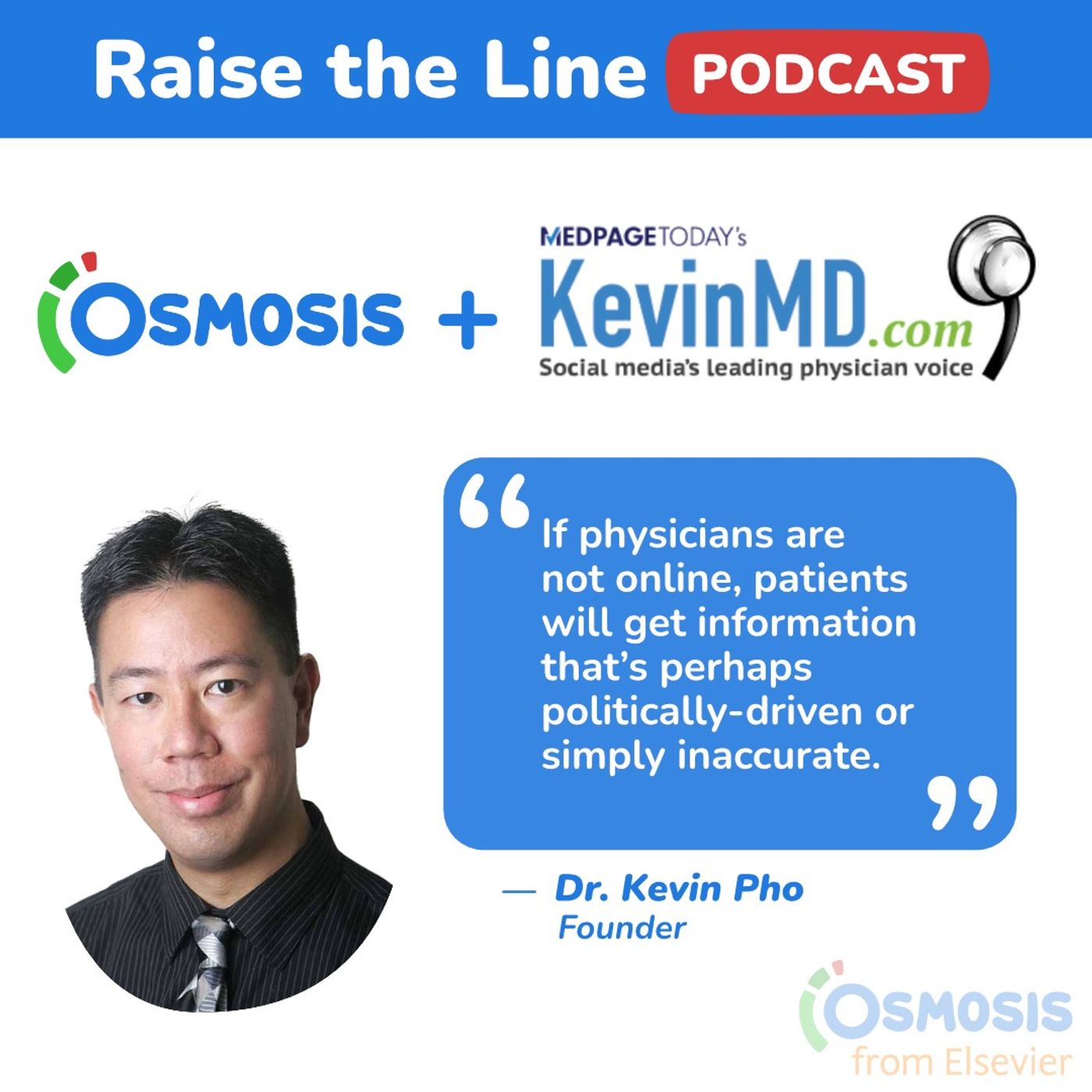
Amplifying Physician Voices Online: Dr. Kevin Pho, Founder of KevinMD
Nov 1300:24:41Tap to summarize“I realized that rather than talking one-to-one with patients in the exam room, you could talk one-to-many on social media,” says Dr. Kevin Pho, explaining the origins of KevinMD, the highly influential information sharing site he created for physicians, medical students and patients twenty years ago. Since then, KevinMD has become a valuable space for clinicians and patients to share stories and perspectives on topics from burnout and moral injury to technology and trust. In this conversation with Raise the Line host Michael Carrese, Dr. Pho reflects on the dual paths that have defined his career: as a practicing internal medicine physician and as one of healthcare’s most trusted online voices. And despite the challenges of doing so, Dr. Pho encourages other medical providers to follow his lead. “Patients are going online, and if physicians are not there, they’re going to get information that’s perhaps politically-driven or simply inaccurate.”This thoughtful conversation also explores: How social media has reshaped health communicationThe risks and rewards for clinicians of having an online presence Why medical schools should teach negotiating skillsMentioned in this episode:KevinMDEstablishing, Managing and Protecting Your Online Reputation If you like this podcast, please share it on your social channels. You can also subscribe to the series and check out all of our episodes at www.osmosis.org/podcast
Transcribe →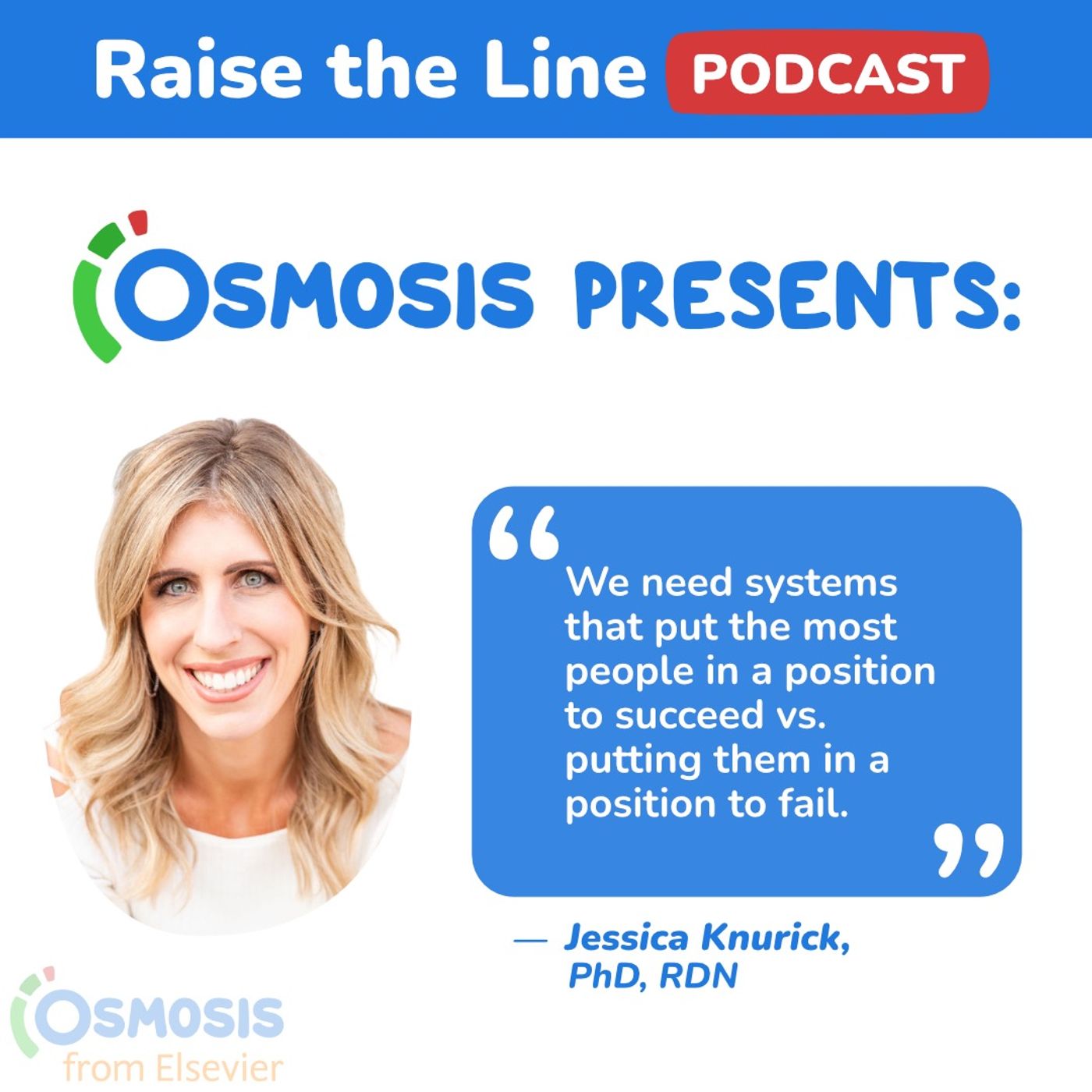
Using Social Media to Rebuild Trust in Nutrition Science: Jessica Knurick, PhD, RDN
Nov 1100:24:06Tap to summarize“We’ve created this ecosystem where the vast majority of information on social media, particularly in nutrition science, is inaccurate or misleading,” says Dr. Jessica Knurick, a registered dietitian and Ph.D. in nutrition science specializing in chronic disease prevention. As you’ll learn on this episode of Raise the Line with host Lindsey Smith, countering that trend has become Dr. Knurick’s focus in the past several years, and her talent for translating complex scientific information into practical guidance has attracted a large following on social media. Beyond equipping her audience with the tools to think critically and make informed choices for themselves, she also wants them to make the connection between the generally poor health status of most Americans with public policies on food and health and advocate for more beneficial approaches. “We can create systems that put the most people in the position to succeed versus putting the most people in the position to fail.” Tune in to learn from this trusted voice on nutrition, food policy, and public health as she shares her perspectives on: Strategies for risk reduction and behavior changeWhat can rebuild trust in medical information How you can cut through the noise and spot misinformation onlineMentioned in this episode:Dr. Knurick’s WebsiteTikTok ChannelInstagram FeedFacebook Page If you like this podcast, please share it on your social channels. You can also subscribe to the series and check out all of our episodes at www.osmosis.org/podcast
Transcribe →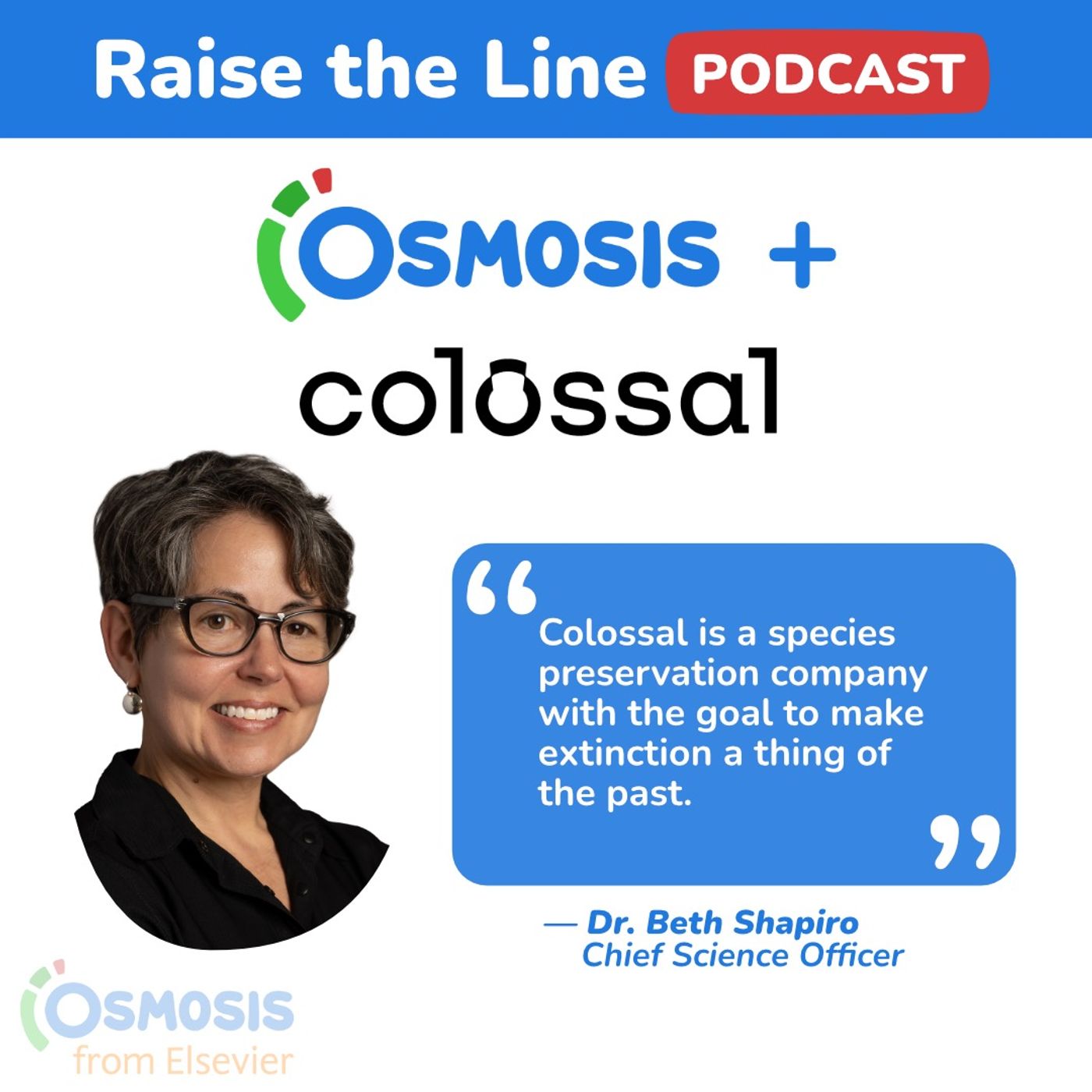
What Restoring Extinct Species Means for Modern Medicine: Dr. Beth Shapiro, Chief Science Officer at Colossal Biosciences
Nov 600:31:00Tap to summarizeCould studying the DNA of extinct animals – or even bringing them back to life – help us save today’s endangered species and inform modern medicine? That may sound like the premise for a Hollywood movie, but it’s work that our Raise the Line guest, Dr. Beth Shapiro, is actually engaged in as Chief Science Officer at Colossal Biosciences, which describes itself as the world’s first and only de-extinction company. “It's not just about learning about the past. It's learning about the past so we have more validated scientific information that we can use to predict what we can do to better influence the future,” she tells host Michael Carrese. An internationally-renowned evolutionary molecular biologist and paleogeneticist, Dr. Shapiro is a pioneer in ancient DNA research and has successfully sequenced genomes, like that of the dodo, to study evolution and the impact on humans. At Colossal Biosciences, she leads teams working to bring back traits of extinct species such as the mammoth, not for spectacle, but to restore ecological balance. “When species become extinct, you lose really fundamental interactions between species that existed in that ecosystem. By taking a species that's alive today and editing its DNA so that it resembles those extinct species, we can functionally replace those missing ecological interactions.” Tune into this utterly fascinating conversation to hear about what Jurassic Park got wrong, the positive ecological impact of reintroducing giant tortoises to Mauritius, and the ethics of using gene editing and other biotechnologies. Mentioned in this episode:Colossal Biosciences If you like this podcast, please share it on your social channels. You can also subscribe to the series and check out all of our episodes at www.osmosis.org/podcast
Transcribe →
YouTube Powers Health Information Videos - Dr. Garth Graham
Jun 16, 2021Tap to summarizeCommunicating accurate, vital healthcare information to the public has seldom been more important than during the COVID 19 pandemic. As we’ve all seen, the challenges of doing that well have been a major factor in the spread of the disease and participation in vaccination campaigns. Watching all of this carefully is cardiologist, researcher and public health expert Dr. Garth Graham, who was chosen earlier this year to lead a new health partnerships team at Google/YouTube to create high-quality health content for viewers around the world. Graham will work with an impressive coalition of organizations including the Mayo Clinic, National Academy of Medicine, Harvard School of Public Health (and Osmosis!) to extend evidence-based clinical information beyond the exam room in a way that meets the evolving digital health needs of consumers. “The challenge that we're taking on is how to deliver public health information to empower communities across the world to live their healthiest lives. We’re using the power and reach of YouTube to engage people directly with health information in a way that they’re used to receiving other information in their daily lives.” Check out this lively conversation with host Dr. Rishi Desai to learn about the importance of providers seeing life through the eyes of the patient and community, and why the healthcare system sometimes resembles a stampeding elephant. If you like this podcast, please share it on your social channels. You can also subscribe to the series and check out all of our episodes at www.osmosis.org/podcast
Transcribe →Dr. Patrice Harris - President, American Medical Association
Apr 22, 2020Tap to summarizeThe Coronavirus crisis has presented unprecedented challenges for physicians. Retired doctors are back in their white coats helping on the frontlines while medical students are being allowed to practice before graduation, and community physicians are struggling to hold on to their practices as people avoid getting routine care. Keeping a sharp eye on all of it is Dr. Patrice Harris, president of the American Medical Association. As you'll hear in this conversation with Dr. Rishi Desai, Harris is a forceful advocate for protecting the safety of her members, basing policy decisions on evidence and making sure we fully understand the disparate impact COVID-19 is having based on race. And as a child psychiatrist, she also drops some wisdom for parents on how to talk to their kids about these unsettling times. If you like this podcast, please share it on your social channels. You can also subscribe to the series and check out all of our episodes at www.osmosis.org/podcast
Transcribe →