← Realfoodology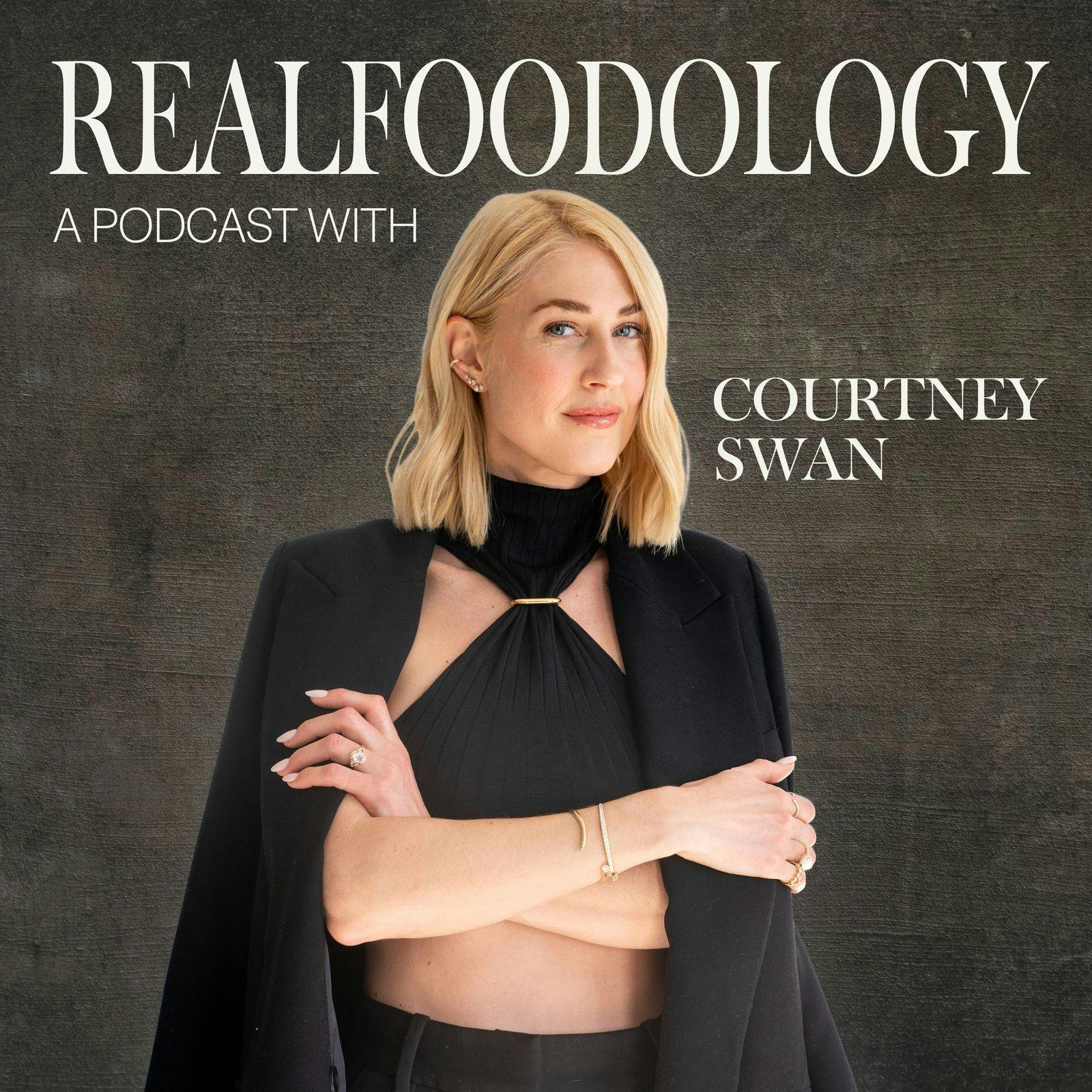
Realfoodology
Big Food and Pharma Are Keeping Us Sick: Subsidies, Ozempic, & EBT | Calley Means
01:17:36
Loading summary
Transcript47 lines
- [00:00]
A
On today's episode of the Real Foodology.
- [00:02]
B
Podcast, pharma and the food are really connected because we're clearly demonstrably getting sick from food and we can really dive into that. But I think the real shameful part is that the medical industry does financially profit when there's more patients that are sick to treat. And working on a company now to change those incentives and just really think it's the biggest issue in the world.
- [00:25]
A
Hi friends. Welcome back to another episode of the Real Foodology podcast. I am Courtney Swan, your host. I am so excited about this episode. Oh my gosh, I'm so excited. I said oh my gosh for the first time and I have no idea how long I have such a fire lit under my ass right now. I sat down with the co founder of trumed, which is a payment integration that enables qualified customers to use pre tax HSA and FSA funds to purchase health promoting products or services from their favorite merchants. So essentially, people that are on food stamps can go to their doctor and their doctor can write them a note that will give them tax incentive for foods and lifestyle changes like exercise that are actually health promoting that are actually good for us. Kelly Means is my guest today and he goes more into detail about this, but just to give you a little snippet of it, 40.2% of Coca Cola's US revenue comes from SNAP benefits. So that's food stamps. 40% of Coca Cola's revenue revenue. That is insane. So he has set out to change that with his company, True Med. He's also just an amazing voice in this, for lack of a better word, fight that we are in right now with our healthcare system and our food system. This is something that I am so incredibly passionate about. It is one of the main driving reasons that I started Real Foodology in the first place is this desire to pull the blindfold off of the American public about the corruption that's happening in our food system and in our healthcare system. So we just dive straight into it. Cali actually used to work as a consultant for a lot of these big food companies and I love when this happens. He has an inside scoop in what is actually happening behind closed doors and these large food corporations and healthcare companies and where the funding is going. And he's literally seen the tactics that they use to confuse the general public. They, meaning these big food corporations as well as big pharma are using pages straight out of the tobacco playbook. They're using the same PR that tobacco used when they were fighting for the Regulations that were being put on tobacco. So Callie and I dive into that. We talk about how the system is rigged. Subsidies that are being paid for corn, wheat and soy and how these corporations are incentivized to keep us sick. How we got to this place where the NIH is funding universities like Tufts to release a new food pyramid that says that Lucky Charms and glyphosate laden Cheerios are healthier than eggs and ground beef. Can you tell that I'm so fired up about this it drives me insane? And when I first started learning about all of this, I would say like 12 years ago, it's what made me start Real Foodology. I remember learning back in the day that there is a policy in place for schools. When they are thinking about the foods that they are serving to children in schools, they actually consider pizza to be a vegetable because they say that the tomato sauce and the pizza acts as a vegetable. And so they can serve pizza to kids and say that they're serving them a vegetable. I mean, it's crazy. And it's all funded by these big food corporations that have vested interest to get children on their addicted to their foods early. So then they become customers for life. I'm fired up, as you can tell, and I'm so excited for you guys to hear this episode. I was just so honored to have Kelly Means on my podcast to talk all about this. He talks a lot about what's happening right now in our food system and what is keeping us sick and the corporations behind that that are being incentivized to keep us sick. And I know this all sounds like doom and gloom, but we also talk a lot about what you as the listener and the consumer can do on a personal level so that we can change this. This can be incredibly empowering if you let it be. So don't let this be discouraging to you. Just know that there is a lot of good people out there that are doing good things with our food and there's a lot of people that want to do good by the so please don't let this allow you to be discouraged. Let it light a fire under your ass. Like, let's get involved here. Let's put our money into companies and farmers and people that we know are doing us right by our food system and that actually care about our health. Because this is how we get out of the state that we're in right now where only 7% of the American population is metabolically healthy. 7%. That means 93% of the American population is unhealthy but. But we can change that and we can change this now. We have the tools, we have the resources, we have the information. It's just about educating everyone and get everyone fired up and we can do this, guys. We can do this. Anyways, I want to get to the episode because I'm so excited for you to hear it. As always, if you are loving the podcast, please take a moment to write and review it. It means so much to me. It really helps support the podcast and it helps get the podcast into more ears. So thank you so much and write me on Instagram. Tag me reelfoodology. Let me know if you loved the episode. Thanks so much. Well friends, we have officially hit the New Year, which means that I'm sure we all have New Year's resolutions Now. I'm not really big on New Year's resolutions, however, I do see the New Year as a way to just really hone back into what's important to me and really get in touch with my personal goals. Now for me, something that I have really been working on for this year is my fertility. As well as getting stronger, I have really I've been taking on weight training, I invested in a trainer and I'm really working on building muscle in a way that I never have before and I feel so strong and I just want to feel my best. So whether you want to feel confident in your skin, conquer your goals, look and feel younger, I have something for you that I personally have been taking for over a year now and that is Mito Pure from timeline. I love Mitopure. It has something called Urolin A in it. It is a supplement on the market that's clinically proven to target the effects of age related cellular decline. It is quite literally food for the mitochondria which can equate to better fertility health. Because we know that our fertility is greatly affected by our mitochondria. It also helps with muscle building, it helps with recovery if you're working out and Mitopure is a precise dose of the rare postbiolog Urolithin A. It works by promoting an essential cellular cleanup process that clears out dysfunctional mitochondria AKA your cell's battery packs. Plus it's shown to deliver double digit increases in muscle strength and endurance without a change in exercise. That is crazy. The New year isn't about a new you, it's about a renewed you might appear promotes cellular renewal and mitochondrial health to address common signs of aging and at the root. So if you would like to try Mito Pure today and join me in taking this every day. Timeline is offering 33% off your order of Mito Pure while supplies last. Go to timeline.com real foodology33 that's T I M E L I N E.com real foodology33. You all may remember that I had Mark Hyman on the podcast last year and we talked about Function, which is a company that he helped found. And it's an all in one health platform that starts with over 100 advanced lab tests covering your entire body. Heart, hormones, liver, kidneys, thyroid, autoimmunity, cancer signals, toxins, nutrients. They also have some new tests now outside of the 100 advanced lab tests that they're already testing for. And they can test for things like BPA exposure, pfas, mtf, hr, Alzheimer's, early detection, brain injury, bone health, chronic inflammatory response, extended autoimmunity, Epstein bar, heart and metabolic, extended hormone, extended thyroid, food sensitivities, and so much more. Also Lyme, which is amazing. I think you and your family should join function. In fact, I'm getting my parents on it this year. I got my fiance on it. If you want to skip functions wait list, go to www.functionhealth.com real foodology that is functionhealth.com real foodology Cali I was saying before we started recording that just how excited I've been about recording this episode because what you are talking about and revealing to the general public is something that I am so passionate and so fired up about. So first of all, I just want to honor you and say thank you so much for all the amazing work that you're doing right now because it is so needed. So thank you.
- [08:57]
B
Thank you so much. I'm so proud to be in the fight with you and others. Just trying to bring light on, I think, the biggest issue in the world right now, which is our food system.
- [09:07]
A
Yes. Okay. So for people that are unaware of you and the work that you're doing, this is such an important part of your story. Can you tell people how you got started and how were you? How are you in these rooms getting the inside scoop into what's actually happening with our food industry?
- [09:21]
B
Yeah. So I grew up in Washington, D.C. so a lot of people say they're from D.C. or from Maryland or Virginia. I was born and raised in the swamp and from an early age thought I was going to be in politics. Went out to school at Stanford and California, but studied economics, started political science, went right back to D.C. and went on some campaigns. I would call myself pretty Ideological wanted to really push forward American competitiveness. And it was distressing to see everyone really in politics, from the left and the right. They get in there for the right reasons. And then inevitably you get into consulting after the campaigns are over. And the biggest spenders in Washington, as I quickly learned, are pharma, number one. And pharma spends five times more on lobbying than the oil industry, three times more than any other industry in America. And then food. These are two of the most highest employed industries in the country, two of the largest industries in the country, and the two big players in D.C. so found myself across the table from special interest, primarily pharma and food. Got out of that and got more into entrepreneurship. And in the past several years, it's really all clicked. The dots have connected. Having a new son, seeing my mom pass away from a pancreatic cancer, which is highly tied to metabolic dysfunction to prediabetes. The doctors said it was random. Oh, such bad luck. And people that have Alzheimer's bad luck. It's like, no, you trace this story. You trace what really is causing the increase in all these diseases. It's highly tied to really pre diabetes. Diabetes, metabolic dysfunction. And having a new son going into this world that's looking at what's happening with kids. 25% of teens having prediabetes, which is just unthinkable. Really traced and started asking about these incentives and coming up with this thesis that the pharma and the food are really connected because we're clearly, demonstrably getting sick from food, and we can really dive into that. But I think the real shameful part is that the medical industry does financially profit when there's more patients that are sick to treat and working on a company now to change those incentives and just really think it's the biggest issue in the world.
- [11:31]
A
Yeah, absolutely. So you're speaking out about this now from a lens of knowing what's going on truly in. In these rooms behind closed doors. What were you doing before? You were consulting for big food companies, right. Like Coca Cola. And so you've seen the playbook that they. They throw out.
- [11:49]
B
Yeah, and it's so, you know, it's so normalized. You know, I didn't even totally realize at the time, but, you know, in the same week, you know, we'd be working for Coca Cola. You know, I've talked about how, you know, 2011, 2012, when I was working for them, it was an explicit goal to keep food stamp funding, snap funding, as it's called, for soda. And, you know, Back then it's like, well, you know, we need to give people choice. We can't take a nanny state, take the Coke away. It's all framed in this nice way. But what was in reality happening is an all out assault to keep billions of government funding for the key nutrition program for lower income Americans flowing to sugar water. It's still to this day, tragically, 10% of SNAP funding goes to soda. And back then when I was working for Coke and it was very dispiriting, the key question is how do we rig institutions of trust? And Koch funded civil rights organizations, leading civil rights organizations both on the national level, the naacp, but in New York, Philadelphia, where they were combating soda taxes. You had real effort to racialize the debate, quite frankly, which paying millions of dollars to civil rights groups, which is to me very perverse because lower income communities are absolutely being crushed by metabolic dysfunction. And then I think even to me, potentially more shockingly is we steered millions of dollars to medical groups during that time when I was working for soda and the American Beverage association processed food companies sod were able to donate millions of dollars to the American Diabetes Association. Like let's not even the American Diabetes association and the American Academy of Pediatrics, let's just take the American Diabetes Association. You know, listeners might not know how important these groups are. They really set the standards for the standard of care. You know, if you are treating diabetes and go against the American Diabetes association or you know, God forbid, or a pediatrician and go against the American Academy of Pediatrics, you're in real trouble. It's a real problem. And they really set the standard of care. And both of those groups, the preeminent pediatrician group and the preeminent diabetes groups, accepted millions of dollars for food companies. The American Diabetes decision had a Koch logo on their website. And it's just, it's shameful because what you should have is these groups shouting an alarm bell about the metabolic dysfunction and this weaponized sugar water that we're drinking, which is biologically evolutionary unprecedented. But no, we were buddying up and I was helping and watching donations flow to those medical groups.
- [14:39]
A
It's just crazy. And I tell people this all the time, that we need to be educated on what's really happening, because it is. And it's an assault on us. And there's this illusion of choice that we're being given, but we don't understand that. We are essentially in a way being brainwashed to think a certain way and think that we have this choice. But we're actually Just being infiltrated with all these sugary, highly palatable, highly addictive food like products. And what you were just saying reminds me of. It's straight out of the tobacco playbook. I mean, I've been saying this for years and I've heard you say this too, where back in the day they got PR firms and they got doctors to say, smoking is fine for you. In fact, it's healthy for you. Do it while you're pregnant. And now we're doing the same thing with food and we're essentially telling people, oh, it's totally fine. You can have a Coke every day. And just as long as you exercise and you work it out, you work out, you're gonna burn it off. This is so insane to me. In fact, I don't know, my listeners know this story about me. So I actually started on the dietetic track because I wanted to be an rd. The reason that I stopped that track and I went down a more holistic route was because I saw that Eat Right, the Dietetics association, they're taking funding from Coca Cola, General Mills, all of these large food corporations that are supposed to have our back. And they're taking money from the very companies that are contributing to these chronic diseases like obesity, diabetes, et cetera, that we're dealing with.
- [16:05]
B
Yeah, I mean, Mark Hyman, who's had a big inspiration on me and is, you know, we've been working with our company, wrote a book called Food Fix, which dives deep into that. Dr. Robert Lustig, I think another warrior, Metabolical and Hacking of the American Brain. And they really outline some of these stories on particularly the, the nutrition groups. And it's just so interesting hearing, hearing that story. It's just, it's really. You wouldn't believe it. And I think that, I think the word. What did you say? Brainwashing? I, I think that's a good word. It's actually just kind of connected the dots. I was reading a book about like Maoist China and like literally like some of the tactics to like make people question the reality that's clearly right in front of them. It's Orwellian. I mean, you know, you still to this day have studies from leading universities calling into question whether sugar causes obesity. And you have thousands of those studies. There were 40, over 45,000 nutrition studies conducted between 2020 and 2022, peer reviewed on PubMed. If you search nutrition studies. And I really do, in retrospect, think it is a like out of a Maoist playbook on brainwashing. It's A systematic effort to have people question, questioning manifest reality. I think what's very interesting kind of thinking about this now from the top down is humans and actually animals we've domesticated and feed are the only animals that have chronic obesity, that have chronic metabolic dysfunction. Right. Actually animals are born with this innate sense. You watch a beautiful child being born. They have a predisposition to natural food, they're moving all the time, they want to be out in the sun. There's no obesity crisis among giraffes or lions and the wild. The only animals that are having these issues are ones where the experts and humans are basically getting involved. You know, it's basically humans and our dogs just going down a rabble where there's a diabetes like crisis among dogs. I think it's like over 50% of dogs have depression. Over, over 50% of dogs, over 10 have cancer. It's like any, any, any animal that touches processed food that we're making is having a real issue and, and being, you know, incentivized for a sedentary lifestyle, we don't need those experts. The problem that we have is there doesn't need to be 45,000 nutrition studies, I believe, basically gaslighting people. And there's this debate. I talk about seed oils now which are industrial byproduct created in the past hundred years. And I get tis, tis from the Ivy League crew from the medical establishment. Well, we don't have enough evidence based research on whether it's like this is created by Rockefeller in the early 1900s as a use of industrial byproduct. It's a brand new invention. We're not biologically made to ingest now the number one source of US fat. It's like we're on this totally like bizarro world where we now have to defend that with these rigged studies. It's like we need to get back to basics.
- [19:12]
A
Yes, and I'm so glad that you brought this up. Actually last night I did a deep dive on a bunch of your tweets, which are amazing, by the way. And, and the one that I found was you were talking about a study that was done on PB&J. And it was a PB&J on white bread, by the way. And they found in this study that a PB and J increases life expectancy while eggs and meat decrease the life expectancy. And then you dove into it a little bit deeper and you saw that it was funded by Unilever, who is the owner of guess what, Skippy Peanut butter. And we're sitting here. Well, many of us are not, but many are scratching their heads wondering why everyone's so confused on how to eat well. And it's because we have all these huge corporations with huge budgets and they are funding the studies to show that their foods specifically are healthier for you, when in reality they're just like you said, they're gaslighting us, they're lying to us. Another thing I want to dive into, and I'm sure you have things you want to say this, but it's all kind of connected, is the Tuft food compass that just came out funded by the NIH saying that lucky charms and glyphosate laden Cheerios are better for than ground beef.
- [20:19]
B
Right?
- [20:19]
A
What is happening?
- [20:21]
B
Yeah, you hit on two, I think crucial points there. So, so, so I think we'll do this food compass next. But, but first I, I think it's two different strategies that I saw and I think they're being executed to perfection. Number one is this absurdity, right? The, the PB&J study, I don't know, you've probably seen like where there was this big brouhaha about gas stoves. You know, there's national news about not, not, not mentioning that autoimmune conditions, allergies, diabetes, fatty liver disease are exploding among children and maybe we should be worried about what's being cooked on those stoves. No, no, no. We should be worried about gas stoves. And then there was a recent study making the rounds last week that soda increases test testicle size or something. It's just like, and everyone's oh, ha ha ha. It's like, it's like. And that was going all over Twitter. But, but, but, but sitting, you know, in a PR office, right? Where Coke and processed food companies have literally billions of dollars they're spending on lobbying and other kind. Very well known what they're doing. The strategy is distraction, right? It's actually we can all just kind of imagine, right? Imagine you had a billion dollars and you wanted to kind of weaponize the debate and distract from what's actually happening, which is everyone is, you know, eight of the 10 largest killers in America are preventable food based conditions. And we're being brought to our knees by metabolic conditions caused by food. How do you want to distract that? It's not that complicated. You fund a bunch of studies, you just have a steady stream of distracting news articles. You have a bunch of experts saying different things and confusing people. I mean, this is what's happening. So that, that's kind of What I put in that lever, it's like there's a huge strategy to just fund distraction. And then of course, food and farm, which you can get into, which, which ties into this, I think, you know, are, are some of the chief funders of entertainment. You know, food is the number one spender on Nickelodeon. They actually, food companies and Nickelodeon, Viacom and other kids channels aggressively lobby the FTC to allow sugary foods to be advertised to kids. So they own a lot of the news networks, they own a lot of the things. And that really influenced the debate. Now then, the tough foods compass. Now I think this gets a little bit more serious. There's the systematic distraction, but then we have the Tufts Food Compass. And the Tufts WHO compass is the preeminent study in recent years from the National Institute of Health. This has the seal of the NIH on it. The nih. What did literally talk about folks being confused. It's like we should be able to depend on the NIH as an unimpeachable source. But the nih, which by the way, isn't actually government bureaucrats that are nonpartisan. The NIH, 90% of their money is actually grant making. And overwhelmingly their grants go to the nutrition grants go to professors and researchers that are heavily conflicted. That happened here too. So it's an NIH grant jointly with food companies, including Danone, that also funded millions of dollars into the same study. Okay. This study has tens of thousands of food. Extremely convoluted. And I was recently, because we've called a lot of attention to this and Joe Rogan's talked about it and Fox News, Fox News is the only, whatever you think of them as the only network that will even touch food issues. It's not on the right. It's actually a lot of independent folks and folks on the right, so. So getting a lot of attention. So the guy, the study's author called me and kind of trying to talk it down a little bit and he's like, I just asked him, I said, you got millions of dollars from food companies. You've received personal payments, not even research funding, direct personal payments from food companies. Does this have any influence? He's like, absolutely not. Absolutely not.
- [24:03]
A
Of course.
- [24:04]
B
And I said, he's like, you know, Danone, they're a milk maker. So I pulled up the study and they had milks listed different types of milk and above, grass fed Greek yogurt, above, you know, a two dairy, above, above any type of milk. The number one rated milk was chocolate, almond milk, chocolate almond milk and chocolate that was above any other dairy in America. That was the NIH study. Chocolate almond milk processed. Who's the number one maker in the world of chocolate almond milk? Dunno. The head funder of the study, I'm like. And he's telling me. So it's like that's just, that's just defined. You know, we're, we're back to the Orwellian thing. You know, the studies all say, you know, we had a wall between. You're telling, you're asking us to believe that food companies are spending billions of dollars on research, which is what they're doing. And they're not expecting, they're just trying to advance nonpartisan, non biased scholarship, but just diving in a little bit more. And there's been a lot of talk about this food, but it really is, this is not a mischaracterization. Cheerios, which I think is so much glyphosate, it's not even legal in some countries, are rated as high as quinoa. The study's authors said that highly processed grains, that they're fortified with these vitamins is very problematic. And the highly processed grains take all the fiber out. Nutritional value, they said it's just the same as quinoa, a whole grain organic quinoa. So that's point number one. I just want to make kind of one other quick point about that food compass. And it's kind of funny almost how ridiculous this is that lucky charms are three times healthier than an egg and all this stuff. Okay, okay, the system's cracked. We get it. Here's the problem. And I saw this close up. This has disastrous real world implications, right? And the study's author's like, well, you know, this is just science and you've taken some things out of. And you know, there's some cereals rated low. No, no, no, no, that doesn't matter. Every cereal company understands that like the, the rhesus puffs might rate low, but every single cereal company had cereals that were rated encouraged. I think it was like several dozen cereals, processed cereals. So what happens? Why are the food companies funding this study? In the press release before it got pushed back a year and a half ago, it said the premier purpose of this study was to influence, quote, childhood marketing and nutrition guidelines. That was the express purpose of the study. So what happens? You have this study from the NIH and Tufts Nutrition School. Are the food companies debating the nuance of it? No, they're going to school boards and literally arguing that they should be serving lucky charms instead of eggs. That's the whole point of the study and that's how these studies and the research is being weaponized. And it's a criminal thing. Here you kind of understand institutions arguing for their interest, but is causing devastation to children.
- [27:03]
A
One thing I've realized is that there's so much confusing information out there and it's hard to know who to trust. That's why I was really excited when I found Sepco. It's a new app for managing your supplement stack. It analyzes your entire routine, rates it based on data they have on over 180,000 products, and gives you real tips on what's working and what's not. Subco showed me how many products rank across their trust score, quality rating system, how much I'm spending, and they even gave me doctor Built supplement plans that I could follow. Here is the best thing about it. Sepco doesn't care whether you buy any supplements or not. They're not an e commerce company. In fact, they'll often tell you not to use a product anymore if they think that it's not right for you. Sepco is currently in beta, but my listeners can get 100% free access today at sepco.com realfoodology that's S P.com real foodology definitely check it out now because it won't be free forever. I've already tried the whole app. It's incredible. I think one of the most asked questions that I get in my DMS is what cookware do I use? And the answer is always the same R Place. I've been using Our Place for years. They are PFAS free, otherwise known as forever chemicals. They are incredibly concerning. They're endocrine disrupting and I'm on. I'm on a fertility journey right now. As y'all know, I'm am becoming increasingly concerned about these endocrine disruptors. So I really want to make sure that I am reducing my exposure as much as possible. Which is why I love the Our Place cookware. They're also beautifully designed. I feel like they are art objects that I just want to display on my kitchen and on my stovetop and I cannot recommend them enough. So go to fromourplace.com and enter code real foodology at checkout to receive 10% off site wise guide. That's fromourplace.com code real foodology. Our place offers a 100 day trial with free shipping and returns. And this is what I love so much about your message. I've heard you talk about this, that you recently had a son, right?
- [29:11]
B
Yes.
- [29:12]
A
Yeah. And, and that's kind of your driving concern, which I'm, I'm there with you. I don't have kids yet. But you know, when you look at, at the stats and you see that they're saying the first time in history that this next generation may not outlive their parents, that's insane. That's insane. And at what point are we going to stop and start holding these corporations accountable for what they're doing? Because this is. They are the ones that are proliferating this. And how did we get to this place where we are allowing these corporations to fund these studies to say that, like, oh yeah, my product is superior to ground beef and eggs just because I say so. And I have enough money to say that. And also I want to know how did we get to this point in society where people are even falling for this? Because I think about this from. You take a step back for a second and you really think about it and you're like, how could sugary chocolate almond milk that's highly processed be better for us than just dairy that came out of a cow? Or how could lucky charms possibly be healthier for us than ground beef? How have we gotten to this place? Like, it's, it's maddening.
- [30:22]
B
Yeah. So, so I think this is where it ties to healthcare. So I, I think it's a very important question. How did we get to this place? And you know, there's some quotes, right. From economists. It's like, you show the incentive, you can explain anything. So healthcare is now the largest and the fastest growing industry in the United States. More people are employed by the healthcare industry than any other industry. And it still has a semblance of trust, although that's very deservedly eroding, I think. So I'll just give a quick kind of theory of how this all happened. So it has a lot to do with healthcare. So in 1960, 0% of healthcare dollars were spent on managing chronic conditions. The first chronic condition treatment was the birth control pill right around 1960. Where. And by that, I mean a pill or a treatment you would take for a sustained period of time. So when we think about medical miracles, when we think about the medical miracles that really, you know, have extended life expectancy, it's almost universally acute. Treatments that invented before 1960. And by acute, I mean a treatment for something that was probably going to imminently kill you, such as a, you know, infection or, you know, childbirth used to be very dangerous. Actually, I think one of the most deadly things a person could do. In 1900, it was like several percentages death rate. I mean, it was absolutely crazy. So emergency surgical and in various procedures for childbirth, birth, appendix, et cetera, et cetera. And then some people credit vaccines and antibiotics, some acute issues. Today, 90 plus percent of dollars go to managing chronic conditions. So what we realize in 1960 is that if you can treat and manage something for a lifetime, it's recurring revenue. So actually, Arthur Sackler, the grandfather of the folks that did Purdue Pharma on the opioids, actually was the genius on this. He was in the 60s, he was the marketer for Pfizer. And he actually said, how do we, how do we create chronic things? And Valium and this class of drugs like that for mental things started becoming popular. And by the end of the 1960s, 30% of US women were on Valium and into the 70s, okay, and now today we've siloed chronic diseases into all these different things. So what we don't realize is that it's been a disaster. As we've siloed and treated chronic conditions that are caused by food, all the conditions have gone up. So we prescribe more statins and heart disease goes up, we prescribe more Metformin, diabetes goes up, we subscribe more SSRIs. Obviously, depression's going up, we subscribe more blood pressure. So you just go down the list of the top drugs. They're all basically siloing and treating what's essentially the same thing, which is metabolic dysfunction caused by food. And I think what that's led, what those incentives have led to is an explosion of the healthcare industry because it hasn't worked right. If you literally just get people and fix our food system, there wouldn't be. There'd be almost no diet diabetes. You could theoretically wipe out literally heart disease and diabetes if you took processed sugar, seed oils, and highly processed grains out of the American diet. So there's no talk about that. Most doctors graduate from Harvard, Stanford or anywhere don't even understand that fact. So the incentives of the system, and it's led the medical system to, oh, we're creating stats, we're creating these drugs, we're helping people, but nobody's asking, including the nih, which is just fully tied to the incentives as well. So we can dig it to. Nobody's asking why people have gotten so sick, nobody's questioning why worldwide we'd spend a trillion dollars in statins and heart disease rates are still exploding. It's just like they've taken no responsibility for the fact that people are getting sick. So that's a key thing. I think it's that the medical systems that we would assume are asking why people are getting sick, aren't they're profiting off people getting sick. And that's not an impugment of anyone's individual motives. I know a lot of great doctors, we all do. There's a lot of dedicated people in the system. But. But it has led to a complete moral blind spot where very few medical leaders are ringing the alarm bell right now, today. The USDA nutrition guidelines says that a two year old their diet can be 10% added sugar, an addictive drug. That's highly. I do not see the NIH and the head of Harvard Med School and all the medical leaders, if they got together and every medical leader the same way they were ringing the alarm bell on a pharmaceutical product on Covid. I mean, you know, if there was one voice people listen to medical leaders actually, like, like when they told us to take the COVID vaccine, 85 I think percent 90% of Americans, you know, got it one. At least one. It's like when the surgeon general said to that smoking's bad in the 1980s, very late we. Smoking rates plummeted. When we said in the 1990s that, you know, the food pyramid disasters of ice to eat more carbs, we ate a lot more carbs. It's like we actually, actually do. Like if there was medical unanimity to lower recommended sugar, it should be zero for kids, it should be zero for adults. I don't think sugar should be illegal. But like I don't think there should be a USDA recommendation for allotted alcohol. Like, like I don't think there should be a USDA recommendation for that. 10% of your, you know, calories should be alcohol or marijuana. It's like this is a drug. Like, like the government guidelines should be zero. So but, but that, that, that the incentives of healthcare have allowed the food companies to run amok. And understandably the food companies want food to be more addictive and cheaper.
- [35:40]
A
Absolutely. I tell people this all the time, that once you really understand that these food corporations do not have your best health in mind, once you really, really get that, then all of this starts making sense. Because I think a lot of people have this misconception that one that if it's on the shelf that it's totally safe and fine to eat and vetted for, which is completely not true because a lot of these food manufacturers are. They just have to write a letter to the FDA proving, quote unquote, proving that their products that they're using are safe. And the FDA is like, okay, fine, because they're overloaded and they can't even keep track of all of the different ingredients that are coming in. And then, not to mention, I think a lot of people think that these corporations are creating products with their health in mind, but they're not. They're creating these products within their, their money in mind, you know, their bottom dollar. And there's no one really taking accountability for this and, and keeping them in check and regulating it. And it's insane. Not only that, but there's a revolving door between all these regulatory agencies. Like you know, a high level executive working for a pharma company suddenly is like on the board for the fda, you know, and vice versa. It's like there's no checks and balances for any of this.
- [36:50]
B
Yeah, it's, it's, it's worse, it's worse than you think. And I think you hit on I think an important point which is distressing. But, but I, I actually hope the message people take and folks take and is empowerment out of this because I think actually understanding, it's kind of licensed to actually think for yourself here and understand that we do have an ability, I think to understand strife for us and understand but that, that, that things are, are not right. But I think, and you asked, it kind of gets to why this has happened. I think we have understandably defer and trust institutions, the medical institutions. And I think that's really potentially where we've gone wrong. I mean I can tell you a Harvard study and Harvard just to pick on them for a little bit. It's like can't have a more elite study than that, a Harvard medical study. They produced the foundational studies saying sugar didn't cause obesity. Paid for by the Sugar Research Council. It's like these documents, I'll just say it correct. A document on pharmaceutical products or document on nutrition. It's a public relations document. You talk about the revolving door. Of course, the former FDA administrator is now the head of the, on the board of Pfizer. I mentioned that the NIH is primarily a grant making organization with essentially no rules on conflict of interest to the grants they make. Even NIH employees are able to take outside consulting funds from pharmaceutical companies. Companies. There's absolutely complete and utter toothless. And again, it's just asking us to believe that somebody that's trying to pay their mortgage and send their kids to private school aren't influenced by Hundreds of thousands of dollars from a company. And when they say that there's no conflict. It's like the former dean of Yale Law School, there was a report a couple years ago, was paid over a million dollars for basically doing nothing from pharma companies. He went to one, one meeting a year. It's like, it's like, it's like kind of asking us to believe like, crazy things about, like, the rules of, of economics not working. And, you know, I hope, Yeah, I hope that does empower people to kind of, kind of question. It's basic, but questioning what a, what a study says and using common sense.
- [39:07]
A
Yeah, and I'm so glad that you brought that up, because I, I am always careful to bring this up whenever I talk about con, you know, whenever I have conversations like this, because I don't ever want someone leaving, listening to something like this feeling disempowered. Because like you said, it's very empowering. I actually find it incredibly empowering. And I was telling you before we were recording that when I was prepping for this, I just had a fire under my ass. I was so excited because once we know all of this and we reveal all of it to the general public, the more that we know, the better we can do. And we can hold these companies accountable. We can vote with our dollars, Stop putting money in these corporations like Coca Cola or, you know, just to name one, but these corporations that, you know, that are not doing us good and start putting your money back into the farmers that are actually creating really healthy foods for us that nourish our body. And this is how we have the power. And I find it also incredibly empowering to know that a lot of what we learn in mainstream is actually not true. Like what you were saying earlier about the chronic diseases. We can completely wipe this out. You know, just because your diabetes runs in your family does not mean that you're going to get it. And I find that incredibly empowering, 100%.
- [40:14]
B
And I think there's two levels to this. And I've been, you know, really have so much gratitude for talking to you and just being on this journey, meeting other fighters in this, in this space and my theory of change. I guess I'll give a little bit of my. So I, you know, as I said, I grew up kind of conservative, loving American greatness on food and pharma and defending it. And as I mentioned, some health issues, IADs and my mom passing away, my sister, I didn't mention, who was a physician. The pride of the family, kind of all the good stamps you could have. Stanford med school, top of her class, surgeon. She abruptly left surgery. A real kind of moment for the. And I was like, what the heck are you doing here? On the up and up. And she really brought me along to the fact that she. She was doing surgery on folks and had no idea why they were sick. And they were under her knife for a second time in six months, cutting out their sinus inflammation. Why are people inflamed? Well, maybe because there's so many. Foreign inflammation is attacking a foreign substance in the body. We're chronically inflamed because we're putting foreign substances in our body. It's not that complicated. But that's not what med schools teach doctors. There's 80% of doctors. 80% of med schools do not require one nutrition class to this day. So really understanding that. But, yeah, so it's been a big path for me, and I think I'd say it went this way. I was despondent, like, two years ago, like, peeling back the onion. It's like, oh, my gosh, we are screwed. Like, what's going on? And then I got more of this empowerment thing. I actually like learning just reading from Mark Hyman, listening to podcasts like yours. Just the act, I think, of trying to understand and questioning the American Academy of Pediatrics, saying that the first thing we should feed kids is highly processed grains, which kids ever used to. It's just like. Just like, even, like, asking questions and listening to podcasts, reading books, talking to folks. It's just like, to me, it's been a path of, like, happiness. I don't have all the answers, but, like, it's almost like it's kind of obvious to me that the United States, like our public policy, should inspire us to have more awe about what we're putting into our body. It's the most important thing we do as humans. It's like we are totally disaggregated from farmers. We just have no idea how our food is made. It's just like, we should actually encourage more curiosity and awe about our bodies and what we're putting in there. Instead, we do the exact opposite. So it's like, I think it's a personal thing, but then it does get to. It does get to hopefully changing some policy. I think the big problem in policy is that there's this cynicism in medicine. And my sister Casey talked about this, and I think everyone hopefully can kind of see this. But this is my take, is that there's just this, like, kind of shoulder shrug from the medical system. It's like, yeah, people are going to eat their big Macs. People are going to make bad decisions. 80% of American adults are obese or overweight. It's like, yeah, America, Americans are lazy. It's this nihilism about patients. And think about what they're saying. Think about what the medical system's saying. They're saying that 80% of Americans who are overweight, they're saying that 50% of American adults who are pre diabetic or diabetic, they're saying that people are systematically trying to kill themselves at a population scale. Life expectancy is declining for the most sustained period in American history since 1860. People are missing their child's wedding or playing with their grandkids. People are suffering so much more. And I don't think that's happening on a system. Clearly, something wrong is happening. Something's happening with incentives. I think the problem is that obviously we subsidize the poison that's making this happen. We have grain subsidies, we have corn subsidies. I talked about snap food stamps, school lunch programs which don't have a sugar limit. We're actually subsidizing and paying for this poisonous food that's really hurting us. And medical spending kind of crazily. Right. Only kicks in at the end once you get sick, which is much more expensive. So my goal in life is to spur and be a part of this bottoms up change and people waking up and asking questions and making better decisions, as you said. And then that hopefully that eventually gets to seeing food as medicine. If you put a. You know, I was recently speaking to a friend who has Crohn's disease and. And a leading doctor told them they got to get a pharmaceutical kind of treatment, injections every two weeks for the rest of their lives. And the friend asked the doctor, well, what about food? The doctor said, top credentials you could have. He said, well, food's not part of this. And that person then went on a journey reading Terry Wahls and reading other folks who have talked about food and autoimmune conditions. And they are in the best health of their life, lives symptom free, and have really, like, completely transformed their mental health and just general life by going on this path of food is medicine. The doctors could talk about that. We could. Actually. They're paying out of pocket now, but, like, it would be so much cheaper and just better because it would reduce other comorbidities if. Imagine that person got a specialized plan, and instead of all these lifetime injections, which are incredibly expensive of food interventions. That would obviously be the best public policy. And we could do that tomorrow. We could do that tomorrow. And it would transform lives. And I believe most people suffering from autoimmune conditions would want to go on that plan. But that cuts off a lifetime patient because, of course, if that doctor isn't talking to that patient about food and they continue getting their injections but eating inflammatory food, they've gotten. They're guaranteed for many more comorbidities. They're guaranteed for diabetes treatment eventually, which generates a trillion dollars for the healthcare system in the U.S. they're, they're, you know, guaranteed for other, other dynamics throughout their life. Chronic diseases are an absolute windfall for the medical system because they're lifetime patients to manage.
- [46:11]
A
And what you just said is all we're doing is masking the symptoms. We're just putting a band aid over it, you know, instead of teaching them how to fix their diet. This is what I have a huge problem with, is Ozempic stuff happening right now. I mean, there's not, you know, they're going on 60 Minutes and saying that obesity is totally genetic and has nothing to do with our food or environment, and then just telling everyone to go on these injections. And the problem is, the second they come off these injections, they're still going to be doing the same thing they've been doing, you know, eating the same foods and having the same lifestyle, and then they're just going to gain all the weight back and probably more, and then probably have stacked on more diseases because they haven't changed anything.
- [46:49]
B
The Ozempic thing is, you know, you're going to fire me up on that, but I've been on this because. No, I totally agree with what you just said. And for listeners who haven't been following this, it's this diabetes drug that now is being rolled out as this miracle cure for obesity. So I think there's two issues here. There's just, does the drug work and then the societal implications. So just the drug itself. And there's a lot of articles about this being the miracle cure. I just want to say I predict that this is going to get recalled. I think it's going to be a really problematic drug. There's actually very credible reports, Peter and tia, but other kind of clinical studies have been showing it actually dramatically reduces muscle mass. It's very interesting, right? And you got to understand, like, everything, everything we try to have a miracle cure for, you gotta. To me, it's. This is so simple. It's like metabolic dysfunction is the root. Our cells are malfunctioning. Okay, so it reduces muscle mass. What does that mean? Muscles are the glucose sponges. But if you have prediabetes or diabetes or really trying to like improve your blood sugar, the first thing, first thing, you know, food is obviously important, but, but one of the first things a doctor will say is like, like do some resistance training because your, your, your, your muscles can, can really sponge up the glucose, actually absent of insulin, but you can go down the whole rather hole in that. But muscles are really important. It, it erodes your muscle mass, not your fat. That the studies are increasingly showing that. So inevitably, like, like if that is true, and there's very credible reports that that is true, you are going to see an explosion, an increase of metabolism, metabolic dysfunction, pre diabetes, heart disease. It's not right. So you might lose a little bit of weight, your muscles are shriveling. And you have the doctors giving this because in order for them to substantiate wide prescriptions, we have to categorize obesity as a disease. And as you said, you have Dr. Fatima Stanford at Harvard on 60 Minutes literally saying that food and lifestyle don't have much to do with diabetes. Just take the drug. So let's think about, about that. We have somebody that doesn't know how to eat well. They are rigged incentives. Take this drug, lose a little bit of weight, their muscles are shriveling, they're continuing inflammatory food, maybe 20% less, but that's still your foundational fuel for your body is inflammatory high glucose poison. And you don't have the muscles to soak up the glucose. It's a recipe for disaster. Additionally, the drug is metabolic. It's metabolic dysfunction. Technically that's what the drug does, and particularly gastrointestinal dysfunction, actually in an unknown way. We don't even know the full mechanism. Mechanisms alters your gut to make you less hungry. There's also cases of depression, and that's listed as a side effect. Why is that? Well, and again, the medical system silos diseases and silos departments into 42 specialties, 82 subspecialties. But let's think about this. Our gut is what produces our serotonin. Our serotonin regulates our happiness. And 95% of your serotonin is made in your gut. If you have IBS or some gastrointestinal issues, you're much more likely to have depression. I recently had a little bit of a stomach bug. I realized that now I was actually like very irritable. I really felt actually much Worse. And you usually wouldn't even associate that. But it's like your gut actually controls your mood in a huge way. So you're also seeing cases of that. So anyway, there's all of these. That's just the drug itself. My big concern with Ozempic is that in the past 50 years we've shifted our diet and it's causing everything. It's all the things are going up. Autoimmune conditions, to every chronic disease, we up to depression, to everything. It's all going up. It's really tied to food and metabolic habits. And what's happening is there's a huge push for government subsidiation of this drug. And the target market is 80% of American adults and 45% of teens who are obese or overweight, which is what the market is. So you're actually going to have. Because we can't even negotiate, we can't negotiate drug prices, so you're going to have a very expensive drug. And then once you have have that, the government cannot intercede between a doctor and the patient. So you obviously have an incentive for every doctor to be prescribing this drug because as you said, it's a lifetime treatment. You're supposed to be on it for life and manage the condition for life, which is great for the system but terrible for the patient because it's a little cure when they're still eating inflammatory food and not solving the root cause issues. So my big thing on Ozempic, and I really do actually think it's one of the key debates of our time right now, because this will be the most expensive drug for taxpayers in American history. We're on the road to bankruptcy from health care costs. We could take one fifth of what we're expected to spend on Ozempic of taxpayer money and buy every obese child in this country healthy food. The question is, are we going the road of drugs or are we going the road of food? We need to slant healthcare dollars more towards food. If you tomorrow, when you had an autoimmune case, when you have obesity, obviously when you have heart disease, when you have a diagnosis, bees shift more funding and more focus to food. We would revolutionize our human capital in this country. We would, we would bend the cost of health care. I think we're being blinded from that with this Ozempic debate.
- [52:00]
A
Yeah, we really are. Thank you so much for breaking that down. I haven't heard anyone talk about it from that lens and that, I mean, you make some really great points and I wanted to add on to that as well, is that what's so maddening about this whole conversation is that they're trying to say that we're seeing this influx of diabetes and heart disease and obesity because it's genetically related. But you think about the fact that our genes haven't changed that much in the last 50 years, and we have people on this planet that have been alive long enough to see the change not only in our food landscape, but also just in the rise of all these chronic diseases. So how are we not making this connection is what I want to know. And I know why. It's because it's not incentivized to make that connection.
- [52:45]
B
It's so tragic. Yeah. I mean, I go back to the point, which I. Which I think is really unsettling. It's just like, you know, throughout the past couple decades, Gallup does polls of, like, what institutions you trust. A lot of institutions have been going down. You know, the military stayed high, but, you know, obviously Congress and, you know, some various corporations. But medical has always been high. We've always trusted medical systems. Again, I just think it's taking the trust that the medical system rightfully gained, you know, at the first half of the century, you know, the discovery of antibiotics is credited, you know, you know, in a large part with winning World War II. I mean, there was a lot of great discoveries, and just we've taken that trust. The medical system has taken that crust and squandered it. So I just actually think, like, we've got to have a bottoms up revolution. I think folks listening to this podcast and others are getting empowered and taking matters in their own hands. But I do feel for, you know, most. It's like an average person needs to defer. Anyone needs to. Institutions, society. Right. For some things, I'm focused and really have gratitude for focusing my life on trying to change healthcare. But, like, I defer to institutions of environmentalism and education for my children. You know, it's just like you have. You can't solve everything. And I think that's kind of what happened. It's like we've just been kind of tricked into this siloing of chronic disease. It makes no sense. You know, going back to Rockefeller Feller, he had the industrial byproducts on the seed oils, and then he was kind of the father of the modern pharmaceutical industry through kind of some of his oil byproducts, too. And he funded, and actually one of his employees, last name Flexner, wrote the Flexner Report in the early 1900s, which actually established this idea of evidence based medicine. It actually established the credentialing and the rules in Congress. And Rockefeller wrote this book still about how medical education and it stigmatized any type of nutrition. And it really propelled forward an innovationist based system, propelled BY this doctor, Dr. William Halstead at Johns Hopkins, who's the father of kind of modern medical education, modern surgery. And it was all about interventions. It was all about, you know, they stand, the medical system stands ready to intervene. And Dr. Halstead had all these radical surgeries which turned out to be ineffective. But that's kind of been this macho kind of vibe of the medical system is like, well, we're not going to deal with nutrition. We're going to step and cut someone open or write a prescription. And that flexner report in 1909, I believe it was, is still, that bill hasn't been changed. And it's all about intervention based systems. I think that's been disastrous. I think that's been really disastrous in taking away all the human body and created these profit incentives. Yeah.
- [55:38]
A
And didn't that report also create this kind of vilification of anyone that was talking out about like holistic and nutrition interventions? Right. And also too, like, as I hear you saying this, I, I always come back to this. What is so crazy to me is that we've, we've been, again, to bring that word back again, is brainwashed into thinking that having a surgery and like taking a pill is just totally normal. But if you, God forbid, you change your diet, that's considered to be this like insane intervention that we're being gaslighted into thinking like, oh God, like, don't, you don't need to do that to me. I'm like, and I'm not here to vilify surgeries. Thank God we have doctors that can cut us open when we need to. But the fact that there's so many other interventions that we can do instead of having to cut someone open to, you know, heal their heart or whatever it is, that is asinine to me. The fact that like we just immediately jump to like, oh, well, we'll just cut them open. That is the most extreme intervention you can possibly think of. It's barbaric. When we have all these other options before that we can completely avoid that. And so it's just, it's. Yeah, I mean, this, this system needs to be completely disrupted. We need an upheaval.
- [56:49]
B
Yeah, yeah. And my sister was a surgeon, talks about this. It's like, surgery is not, it's this rite of passage. Now it's a rite of passage in America to get us some surgeries and take your statin and, you know, metformin. And, you know, we talked about my mom, who, as I said, passed away from pancreatic cancer, but, like, she was like a normal American. She, you know, had elevated glucose levels, she got metformin, she had elevated cholesterol levels, she got a statin, she had high blood pressure, she took a drug, and every time it was like, oh, this is, you know, just everyone, you know, oh, go on your way. And it's like, these are warning signs. These are all warning signs. One reason I'm on this mission condition is that's where we need to get to. It's like, it's not this intervention basis, oh, you're fine. Take this out. And it's like, it's like, let's be curious. Why is your cholesterol levels high? Why are your fasting glucose? How can you reverse that? What happens even if you take a drug that maybe superficially brings one level down? What's actually happening in your body that if you don't reverse that underlying inflammation, underlying oxidative stress, underlying issues, what could that lead to? How is that potentially tied to mental health problems like depression? Because there's cells in your brain, and what. What elevated glucose and prediabetes represent is cel dysfunction and a lot of cells are in your brain. It's like. It's like this curiosity about the interconnections. Doctors don't even know this. I mean, doctors aren't taught this. You know, medical schools, you know, a doctor chooses their specialty, as I mentioned, 1 out of 42 specialties. So, you know, the. The way to rise up in medicine is go narrower and narrower. Narrower. You go, you know, the head and neck where it's, you know, a couple millimeters. And then, you know, you. You do a fellowship on 1 millimeter of the body. It's like, that's. That's how you rise up. And it's a complete S body to where, you know, an average patient who's going to the hospital is seeing several different doctors with several different treatment plans and several different medications. When, you know, if somebody has, you know, some chronic inflammation and prediabetes and depression and fatty liver disease, it's all the same thing. It's like. It's like, we siloed this. You can fix that. All doing one thing like. Which is like, yeah, but. But it's totally wimpified and totally really stigmatized. Any talk nutritional, you know, Literally, I was. I was speaking to leading doctors and a leading policy group and talking about these topics, and they said, well, we'll connect you with our nutrition department. It's like, this is a siloing of this issue. It's not nutrition or preventative health. This is. This is not. This is not preventative. This is reversal, like. Like food and metabolic habits. It's siloed. It's kind of what. It's like this. The best way to reverse diabetes, reverse heart disease. You know, there's books you've probably seen. Dr. Brett Bresna, I believe it is, on reversing, you know, really clinically ways to reverse dementia. So, yeah, I. I just. We've got it. We've got it wrong.
- [59:44]
A
Yeah. And isn't it interesting that you'll never hear a doctor or anyone in the medical care system say that you can reverse diabetes. You can reverse, you know, all these different inflammatory. But like IB and Crohn's and, I mean, you name it, you can reverse it. I've been saying this for 12 years, and everyone's looking at me like I'm crazy. But it's because we've been told in the medical system that once you have this, oh, well, you just have to go on meds for life, and it's because they're incentivized to put you on meds instead of actually just reverse it. But, you know, when we look at things like you've brought up these subsidies, where our tax dollars are going, we are literally paying for these issues because we're subsidizing corn, wheat, soy, and then it's going into our food, and then that's what's leading to the inflammation. And then, you know, we're complaining about our $4 trillion a year, you know, debt that we have with health care system. All of this, this entire conversation that we've had, all of these issues that we are dealing with that are top of mind, like the biggest issues that we're dealing with this in the country that we're talking about from different angles on mainstream media could all. All be fixed if we just had this approach.
- [60:51]
B
You're just getting me fired up here.
- [60:53]
A
I know. I'm so fired up.
- [60:55]
B
No, like, oh, my. I just want to underline. You said it so well. Like, imagine you're just like, go high level and imagine you're trying to design the worst public policy imaginable for a government. You would subsidize food that's inflammatory and causes disease that we know you would. You would literally Pay, as we do right now, over $10 billion for a government nutrition program for sugary drinks, which is this, like, weapon. It's weaponized in many ways, like the liquid form of sugar, which is, like, unprecedented. Right? It's like nobody used to do that or drink that. It's like that immediately goes the bloodstream. And then of course, it's subsidized in that soda. Most likely high fructose corn syrup. Fructose is a processed. Weaponized. Processed. Fructose is totally weapon. Weaponized because fructose used to be in, you know, fruit. It is in fruit. And actually, evolutionarily, there's some very interesting books on this. Drop acid and nature wants us to be fat. Dr. Perlmutter wrote, Drop acid going really deeply into the fact that fructose specifically shuts off our satiety signals. So it actually makes us want to, like, binge, I think. Yeah, yeah. So. So when you talk about weaponized, they know this. So the fructose we're giving kids not only just like overwhelming 100 times more sugar than they ate 100 years ago, but also weaponized with natural flavors that are addictive. And the fructose, which makes them want to drink more. Okay, so we pay for that and then that causes trillions of dollars of downstream health impacts that are bank. Literally. And this isn't hyperbolic. And people kind of gloss over the. You know, we hear about 20% of healthcare, it's 4 trillion. We hear that it's real. It's like it is 20% of GDP. It's growing at an increasing rate. As I said, it's the largest and fastest growing industry in the United States, producing worse outcomes the more it grows and not slowing down. It's like, this is not a joke. And it's all because we're actually funding. We're funding that at the front end, the devastation, particularly for lower income folks, but really everyone from my mom and many people we know, it's like criminal.
- [63:11]
A
It is criminal. And what a lot of people don't understand is we are just. We're not actually seeing the true cost of what food costs because of these food subsidies. Right? So people are going to fast food restaurants, or I'm trying to think of an example like Coca Cola or whatever it is. Like, they're able. So the fast food restaurants are able to give you that cheeseburger at a cheaper cost because it's made. Made from all of these crops that are subsidized. If we were subsidizing avocado and greens and you know, all these vegetables, those would be cheaper to buy. But the reason why, and everyone's complaining, you know, that like an avocado is more expensive than going through, like the McDonald's drive through for a burger. It's because we are incentivizing those crops to be cheaper.
- [63:54]
B
Yeah, it's by design. Coca Cola at a grocery store is less expensive than water. And that makes sense because there's so many ingredients of that Coca Cola that are subsidized. So basically we're paying the government, government's paying. And then of course that's included in, in Sabbath. As I said, this is a huge issue. So this, as I said, I think it's like, bottoms up. The revolution, my friend who has the autoimmune condition is paying out of pocket for more expensive food. And, and that's, that's tough. But I do think, and I'll just be blunt and you know, talking about this, my, my sister too, and maybe I'll just say it this way, this is my formulation. We can't have an excuse. Like, like, if you can't afford. It's serious. Like, like, like, like, like, like I, the way I'm thinking about it is like feeding my new child the healthiest food and myself is the highest priority. Like, we will move to a smaller house if we can't afford it. Like, we will. You know, it's, it's like, it's like on exercise, I would say that the food is number one, but exercise. And I've really been trying to do that more. It's like I was recently talking to a friend. He's like, it is so important for me, exercise. It's like, I don't want my kid to see any screen time. But like, if I have an exercise, I'll put them like in front, like in front of the screen. It's like, it's like do whatever you have to do for you and your kids to get these basic metabolic habits. And I think, you know, there are a lot of American suffering. There are a lot of problems. I think it is the medical leaders, quite frankly, should be a little bit more on the other side too, saying this needs to get done. Like, there's no excuses, you need to cut other expenses in order to eat correctly. That's where we are right now. And it is direly serious. We're all, in many ways, I think, not to be too hyperbolic, but I think losing our minds as a country. In many ways, I think really there's serious, both mental health and physical Health problems that are unprecedented and tied to food. I just think the medical system isn't clear on that. It's just drop what you're doing and make sure you're eating correctly and just do whatever you need to do. Really, it should really be the message at this point given the fact that government's doing nothing. That's, that's number one. Number two, I've been, this is what I'm devoting my life to and I asked that simple question, how do we change the incentives? Because if we change the incentives and actually pricing the externalities correctly, right now vegetables and fruits are considered specialty crops by the USDA and receive 0.4% of all subsidies. Grains and corn and soy are 80%. So it's totally rigged. So it's like how do you change that? And one thing thing we're doing, our company Trumat, is you can actually get a note from a doctor. Most doctors won't even know how to write this note but forward thinking doctors, functional medicine doctors actually are writing basically a letter of medical necessity for food and exercise. And actually food and exercise does count as a medical expense if a doctor substantiates it. And it can be for preventative or reversal. And almost everyone in America should be on a prevention, urgent prevention plan for various metabolic disorders. So we have a telehealth way, true med to issue those notes and enable folks to buy exercise, healthy food select supplements that improve metabolic health with hsa, fsa, tax free dollars. That's kind of, it is a real problem on the incentives and this is one way we're attacking that. There's a lot of ways we need to attack it but a family can $7200 HSA, FSA and that's tax free pre income tax. So it's just, it's the best way we could find I think an impactful way to change that cost curve by enabling, you know, maybe 30, 40% depending on your tax rate savings on, on food.
- [67:37]
A
It's so amazing what you're doing. We'll definitely put a link in the show notes for that. And so thank you for, for sharing with everyone because I think this is so incredibly important and my, I want to be mindful of your time but I do want to end this on a more, you know, a positive note and send everyone off feeling super inspired. So on a personal level, what would be your advice to people that are, you know, listening to this and they're fired up like what can people do on a personal level to shift this.
- [68:05]
B
Man, I'M sure many, many folks listening are more along the journey as I am. I think it's just awe for the, for food and what's going on in our body and, and I have a simple framework. I don't want a single seed oil, added sugar or highly processed grains to touch my one year old's lips for as long as I can have that happen particularly as a child, you know, an infant where we can control that and really trying to get that out of the house, you know, that's my simple friend. You know, you're much more knowledgeable on this stuff. You might have some additions. I think there are a lot of additions to that list. You know, when you get a natural flavors and dyes and stuff. But I think if you cut those three ingredients for me, it gets to a situation where we would have a revolutionized country if we had a national effort to not only, I'm not saying ban them, but even to your point price in the externalities, the devastation those are causing and kind of rework the system. So I'm really working on that and my framework and just like the journey I'm on, it's just curiosity. It's just like, like you know, understanding that as I'm working out it's like building muscle to absorb glucose, you know and, and just like, you know, just diving into the science. I think it's criminal that biology is so boring in high school, at least for me. It's like, it's so interesting just learning. We've just been so disconnected, you know, listening to your podcast and others and just like how sunlight, you know, impacts us and we villainized sun. But my framework is, it's, it's food and kind of the framework I just talked about, it's, it's movement. It's gotta be 150 minutes in some way. Then you gotta basically just start doing that and not stop and still work in progress on that. But that's something I really try to do. Sleep obviously super important. And then I think there are, you know, you talk about trusting companies. I think there's not a lot of trust deserved with our personal products in our home. And I think, I do think that's a more and more important thing and just like environmental toxins and going on a journey in that I don't think we're ever going to get to the right solution. But it's been such an improvement to my life to be on that journey. I have never been a big health, not going to farmers markets but now I just, I think it's the most important issue in the world. I'm working to solve those incentives to trumab. But just like I know, my hope is just that more and more people could be spurred to just be asking questions like that for them and their families. I'd also just say real quick, there's a lot to be happy for. I think the fact that these podcasts are gaining traction, you look at the bestseller list, it's people talking about metabolic health. It's not as if we don't have a system that's designed for criticism. And I actually think that's a real benefit of our system. I mean, we have come a long way. You know, we couldn't have imagined where we would be a hundred years from now, but we have lost our way. We've lost our way big time. But the fact that we're able to talk about and the fact that so many folks are listening and on their personal journeys gives me hope.
- [70:57]
A
Yeah. Oh, my gosh. And I'm so glad that you said that. And I want to also provide a little bit of that hope to people. There's a lot of people and a lot of companies doing it the right way. I went to a conference last spring with Force of Nature on their Rome ranch outside of Austin, and it was a entire conference all about regenerative farming. And I left feeling so inspired and so hopeful for the future because there are so many people dialed in on this issue right now, from farmers to parents to leaders in. I mean, there were. There were people there that work at General Mills, and they were. I was sitting at a table with them, and they were talking to me about regenerative farming and how they want to change things. And so there's a lot of people that are on this right now, and a lot of people are waking up to this. And I would say, as the listener, no matter where you are in your journey of all of this, like you said, stay curious and get healthy, get your family healthy, get your friends healthy, because that's how we change this. You know, we start putting our money into different companies because we have the buying power. And like you said, organic is becoming more of a thing because people are waking up and people are putting their money into these companies that are actually doing it right. So there's a lot of amazing things happening. So there's a lot of hope to be had. And I'm so grateful for your work because you're a huge part of this. And. Oh, actually, I have a question to ask you before we end, which you may already know what's coming, but what are your own personal health non negotiables. So these are things that no matter how busy and crazy your day is, you do these to prioritize your own health.
- [72:33]
B
Great question. And this has been a journey for me and really a work and to be perfectly candid, right, I'm doing the company, writing a book and have a newborn. But here's what I'm putting. For me and my son, I think it's just discipline and habits. I think we've been taken away, away revolutionarily from like things that we just used to do as a part of natural life. Eat natural food, move all the time. I, I, I, to me, exercise is actually a part of like key to everything in a way that it instills discipline and a little bit of time almost meditatively to like understand the connection to my body. Now if I, if I can't do the hour class, I'm going to do some pushups, I'm going to like get in some way in touch with my body. And I think that the science on like moving your body and like what that does for your cells is just so, so powerful. So I'm really on a non negotiable thing where with our new child and talk about this with my wife, we're going to have an active lifestyle where we're going to be active consistently and not give up. And in a way I do think the more I do that it cements in my head an appreciation for my body which I think psychologically actually spills the other habits, the most important being food. The other thing I just, you know, as I said, there's a lot of dietary philosophies, a lot of them are, have, have some philosophers, solidity, but I really just don't want to have seed oils, sugar and processed grains in the house. Those are not necessary, those are frank and food ingredients. And I think that gets a long, long way on sleep as well. It's not quite a non negotiable yet to be, to just be totally candid, but that's the trifecta for me. It's sleep, it's food and it's exercise. And I can really try to have, have curiosity about those habits and try to make them non negotiable. I just think a lot of other things in your life flow and I just think from a personal standpoint and I hope and I'm pushing for this a public policy standpoint, not forcing people to sleep, but encouraging it. These are foundations and we'd have such a happier, more productive country if we did those things. So that's how I think about it.
- [74:40]
A
Yeah, I love that. It was so beautifully put. And you mentioned this a couple times, and I'm sorry that we didn't get more into it in the podcast, but it's really important to note the connection with what you eat and your mental health. I mean, this is a huge thing. It is so big. And, you know, we are seeing so many people struggling in this country with their mental health. And there is a direct connection, and I've talked a lot about this on other podcasts, but we know that there's a direct connection between the gut and the brain through the vagus nerve. And we know our guts are inflamed. So with that connection, we absolutely know our brains are inflamed as well. And that's going to affect our hormones and the way we react to things. It's going to lead to depression, anxiety. No wonder we're struggling on so many different fronts. So I just wanted to say that I appreciate. Yeah, it's really powerful. And I appreciate that that's part of your message, too, because that is also an added benefit for our country is that when we start cleaning up our diet and our health, it's going to help us be happier as a nation, too, and be more, More productive.
- [75:37]
B
It's all connected. It's all connected.
- [75:40]
A
Yes. Yes. Well, please tell my listeners where they can find you. And thank you so much. This was so amazing.
- [75:46]
B
Well, thank you, Corey. Your work is super inspiring. It's just awesome to chat with you. So, yeah, my company, as I mentioned, is True Med, and we're really trying to build up an army. I mean, we really want to. To me, it's a subversive act to use those HSA FSA dollars that, you know, are kind of designed to go to pharma. You know, use them to keep yourself healthy on food and exercise. We're trying to make that very seamless. So true. Med.com is the then cali means on Twitter. I never been a huge fan of Twitter, but it has been a great way to talk about these issues. I'm glad you have looked at some of the tweets. I'm just trying to keep it positive, keep it focused on this issue and just share interesting things. And again, it's not about negativity. It's about being empowered and understanding how the systems work. And, yeah, the mental health connection, too. And you mentioned regenerative farming at the end, but geez, that is a huge part of the answer that I've been diving into. So maybe next time we could talk about a couple of these these other issues. But that's for another day.
- [76:43]
A
Yeah. Well, thank you so much and please let me know how I can be involved with trumat. I'm I am so fired up after this conversation. So thank you for coming on.
- [76:51]
B
Thank you, Courtney.
- [76:53]
A
Thank you so much for listening to the Real Foodology podcast. This is a Wellness Loud production produced by Drake Peterson and mixed by Mike Fry. Theme song is by Georgie. You can watch the full video version of this podcast inside the Spotify app or on YouTube. As always, you can leave us a voicemail by clicking the link in our bio. And if you like this episode, please rate and review on your podcast app. For more shows by my team, go to wellnessloud.com see you next time. The content of this show is for educational and informational purposes only. It is not a substitute for individual medical and mental health advice and doesn't constitute a provider patient relationship. I am a nutritionist, but I am not your nutritionist. As always, talk to your doctor or your health team first.