← Realfoodology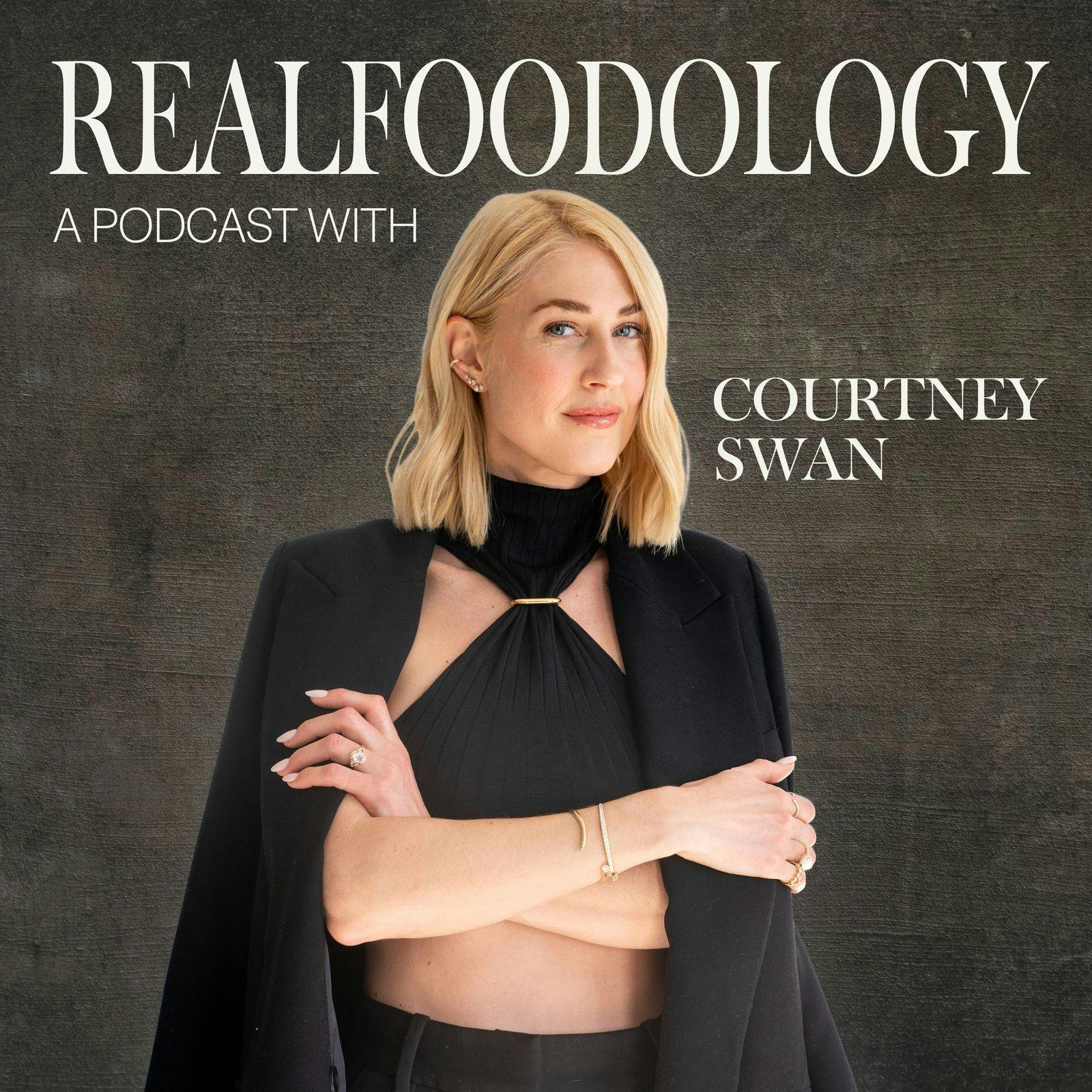
Loading summary
Transcript75 lines
- [00:00]
A
On today's episode of the Real Foodology.
- [00:02]
B
Podcast, Best Diet is the diet that, number one, that you digest well, number two, that you have the energy to do what you want to do. Number three, that it's in alignment with your genetic proclivities, and four, that your digestive system is set up to digest, assimilate and utilize the food that you are actually eating.
- [00:23]
A
Hello, friends. Welcome back to another episode of the Real Foodology Podcast. This is Courtney Swan, and today's episode is all about optimizing your digestion with Wade Light Heart from Bio Optimizers. If you are at all dealing with gas, bloating, heartburn, constipation, maybe diarrhea, you're going to want to hear this episode. This was a, I feel like this was a crash course in what you can do to optimize your digestion. And also all about digestive enzymes and why they're so incredibly important to take. And I really, I love this conversation because I think when we talk about optimizing digestion, we talk about gut health. At least in my, in my opin in, it often feels like just this uphill battle that we can't figure out. And there's so many mysteries going on. And this episode really just gives you some super tangible things that you can start doing literally today to help optimize your digestion so that you don't have to struggle with everything. We were talking about gas bloating. I talked about how I dealt with a horrible case of heartburn when I was in college. And if you're dealing with any of that, I mean, it can really affect your quality of life. It can also affect your cognitive function because we know that there's that direct connection between the vagus nerve and the brain and the gut, because the vagus nerve goes up from the gut into the brain. And so if you're dealing with any sort of digestion issues, chances are you're probably dealing with either brain fog or maybe you're having a hard time focusing or, you know, there's a multitude of things that people can be struggling with. And so this was just a great episode to really break it down, make it super tangible and easy. And then if you wait till the very end, there, there's actually a code that you can use if you want to buy any of the products that we talk about that can optimize your digestion. Definitely make sure that you pay attention to that so that you can get all the info and so that you can order the bioptimizers products and get a little bit of a discount. So I personally love these products. They have been a sponsor of my show for years simply because I personally love and use bioptimizers every single day. I'm a huge fan of a lot of their products. I started out on their magnesium breakthrough years ago because my doctor actually suggested that I take them. And then I went from there. I started learning, learning about so many of their other products. Y'all know I have a gluten intolerance that I've had for 14 years now. I love that they have the gluten guard that we talk about in the podcast a little bit to where if I ever do consume gluten, whether it's on accident or if I'm like, you know what I really want that sourdough bread with butter. I can take that. And it usually helps my does help my body to digest the gluten. So I really hope that you love this episode. I got so much out of this. It was so interesting and I just. Yeah, I hope that it's valuable to you. So if you could just take a moment to rate and review the podcast. Y'all know this. I say it every week. It really does help the show. It takes just a minute of your time, and I just so appreciate your support. Also, if you want to post about it on Instagram, tag me Ealfoodology and Ealfoodology podcast. I try to get back to all of your tags, all of your messages. Just know that I see them. I love you and I just so appreciate your support. So thank you so much and I hope you enjoy the episode. Wade, thank you so much for coming on the podcast today. I'm so excited to talk to you. Thanks so much for coming on.
- [03:38]
B
Yeah, thanks for having me. Excited to be here.
- [03:40]
A
I actually just want to dive right into the mass times. I. I've been taking digestive enzymes for a really long time. I started going to see a naturopath probably when I was like 16, and they put me on digestive enzymes. And for context, I'm 40 now, and so I've been on and off them for a long time, but I've never actually done a podcast episode about this. So this will be really interesting for audience that maybe is new to them or takes them and has no idea why they take them. So maybe let's just talk about in general, because I can already see people saying, well, why would you want to take a digestive enzyme if your body already creates and produces them?
- [04:13]
B
Yeah, great question. And I had the same question so I'll give you the where I got into the whole enzyme equation. Long, long, long time ago. To be specific, 21, 22 years ago. I guess it'd be, yeah, we're 20, 25. I had just come out of the Mr. Universe contest and I gained 42 pounds of fat and water in 11 weeks. After the Mr. Universe was a disaster. So I was eating for what I would say is an aesthetic style, performance based diet. And that had consequences. In other words, my digestion, it became completely disrupted. And I met a doctor by the name of Dr. Michael O'Brien who could have been a cast, you know, casting person from Cocoon, that movie way back in the day when they had like these super seniors that were like super vibrant and healthy. This guy was amazing. And I went to him at a professional seminar and I said, look, I don't get it. Like, I've been following this, you know, really strict diet for 16 years. I'm at the top of the aesthetic elements for, because that's what bodybuilding requires. And yet something's gone wrong. And he told me something that just blew my mind and set me on this path. And that was, Wade. You've learned to build the body from the outside in. I'm going to teach you how to build the body from the inside out. Now, Matt, my business partner, co founder of Bioptimizers, him and I went all in with Dr. O'Brien's program and it focused specifically on enzymes and probiotics and a little bit on hcl as well. And that becomes more relevant the older you get. But regardless, within six months, I recaptured my physical appearance, but I had a new level of vitality. I had more energy, I recovered better. I just, it was a transformation on virtually every level. Didn't have any more gas or bloating, which is very concordant with bodybuilding style diets. You have to be very meticulous about these things, especially if you're following any of the, you know, trending advice to ladies right now in particular, which they're essentially adopting a bodybuilding style diet. And the advantages of a bodybuilding diet are high amounts of protein. Make sure you keep your satiety, which is your feeling of fullness, because that allows you to maintain the optimal calorie restriction to hit your, say, body fat reduction goals and not feel like you're going crazy. The other element is there's a whole lot of other things, especially related to females is that, you know all of the research points that, you know, strength training a few times a week is the most relevant and productive way to maintain all of your internal health as well as all of your aesthetic goals. So this is a very relevant topic. Now, almost no one was talking about enzymes and probiotics, you know, 22, 23 years ago. And we got into the topic and then we realized that there was a huge element within the bodybuilding and fitness community that we wanted to address. Now, most of Dr. O'Brien's clients at that time were sick or ill or older patients. And we were onto the performance side. And what we recognized quickly is the biggest challenge in the enzyme world is almost nobody focused on the proteases. So just to give you a breakdown of how enzymes work so you can categorize them into a variety of categories. Proteases break down protein, lipases break down fats, amylases break down carbohydrates, and cellulases break down fiber, plant fiber particularly. And so there's different classifications. You make about 18 different enzymes yourself in your digestive system, but you have over about somewhere. Well, it's in excess of 25,000 different enzymatic processes in your body. And so when we dove into the research, we came across a fellow by the name of Dr. Edward Howe. Now he was famous because he took the original enzyme studies were by a fellow by the name of Pottinger. And it's well known about Pottinger's cats. Well, turns out that Dr. Howell took that research and he applied it to a whole bunch of different species, rats, cats, dogs, horses and everything. And the interesting element about what would happen, and he would feed them a raw diet, native to that animal's normal behavior. He had a cooked food diet. And just for people to know, a cooked food diet destroys enzymes that you would naturally get in your food if it was in a raw state. And it will also destroy the probiotics that are utilized or native to that species. So a bear would eat, which is, you know, an omnivore would eat like salmon or blueberries, but it eats it in a raw state with its enzymes intact. A tiger that eats, you know, wildebeest or zebras, it eats its food in a raw state. And the horse or a cow, which is, you know, plant based, eats their food in a raw state. So the enzymes and probiotics are normally intact in a normal part of the digestive process. I'll explain the digestive process in a minute. If you have insufficient enzymes when you digest your food, your liver is then supposed to manufacture these digestive enzymes, even though that it's suboptimal and it'll release it through your pancreas or your gallbladder, et cetera. Gallbladder being more fat based enzymes and your other enzymes would be released concordantly, but all of it's manufactured in the liver. Now if you're manufacturing the enzymes in your food from your liver which produces all these 25,000 different enzymes that is required from everything from thinking to blinking, then you've got a major issue. And that issue is going to be that you are shunting your energetic resources from fixing, repairing your body, running your brain, performing all these metabolic activities is now being shunted for digestion. And I would say, you know, just think of Thanksgiving dinner, right? We consume this super amount of calories, but it doesn't translate into energy very quickly. It's the opposite lying on the couch. Because what happens is with that mass amount of food, our body is now requiring it to shunt enzymatic processes somewhere else. It's got to focus on digestion. And they shut down all of the other elements. So one of the reasons that fasting has been shown for healing and recovery is largely in part it frees up all the energy you're expending on digestion for enzymatic activity into shunting those enzymes because your liver just keeps manufacturing and it just creates these families. Another element that Dr. Howell found is that you'll never find enzymes in your food. So if you take exogenous enzymes, I.e. enzymes in a supplement form your body, even if it doesn't use all of them for digestion, will reuse them. And I have some anecdotal evidence that suggest that the families of enzymes that you use get reconstituted into the enzymatic family processes. So in other words, proteolytic enzymes have protein. And how I would show that someone would have skin conditions, I give them a high amount of lipase, a lot of their skin conditions would go away.
- [11:47]
A
Is that like psoriasis and eczema? Do you mean skin conditions or okay, exactly.
- [11:51]
B
And if they had lip, if they had like amylase, we'd see improvements in their carbohydrate metabolism. And if we gave them proteolytic enzymes, we saw the biggest impact. And so what Dr. Howell discovered that in all his animal species, just like Pottinger, by the third generation of enzymatic deficiency, the animals in question behaved in first off, they had strange sociological behavior not normal to the species. They stopped acting like cats, stopped acting like cats, dogs start stopped acting like dogs. They also saw a massive up spike in genetic based Diseases like it was many times, factors. And then third thing is they lost their ability to procreate.
- [12:39]
A
Oh, wow.
- [12:40]
B
And he predicted back in the 40s and 50s, with the mass of conventional farming and all the processing and the production of food, that the same thing would happen to the human species. Well, if you look today's statistics and you look at the rise of genetic based diseases, you go on social media, there's definitely some unusual social behavior. And then of course, if you see how birthing clinics have come up, have gone up, you know, to get pregnant.
- [13:09]
A
Well, an ivf.
- [13:10]
B
Yeah, exactly. It's a massive spike through the roof. And I, yeah, and I do believe that there is a correlation between what Dr. Howe put out was your total enzymatic capacity. In other words, let's say for an arbitrary example, you have 100 units of enzymes that you can produce on a daily basis. And if 40 or 50 or even 80% of your enzymatic reserve was being used for digestion, you only had 20% to run everything else in your body. And of course that becomes more and more of a drain over time because these processes start to break down. So we decided that we would focus particularly on proteolytic activity with a complimentary set of enzymes for the other elements. Because it seems like proteases created the most problems, because undigested proteins are the things that create indol and scadol, these neurotoxins by bad bacteria feeding on them in their gut. The other element is this is what causes the gas, the bloating, the constipation, the changes in skin or brain fog, crusty eyes, bad breath. Right. So we started experimenting and we went out and built essentially the world's most proteolytic, centric and most advanced enzyme blend in the world. In fact, when we contracted with the enzymatic experts on this, they're like, is this guys? Like no one's going to produce this. It's way too expensive. It doesn't make sense. We said we don't care. We're doing it for our own research. And we did that and then it developed the cult following in that we still have today. 20 years since we've released the first version of Mass Times. We still have subscribers from 20 years ago, if you can believe that it makes that much of a difference in your life.
- [15:03]
A
Yeah.
- [15:04]
B
So now today, enzymes are becoming much more prevalent in the conversations, as are probiotics. And there's a deeper understanding that if we consume food, you know, I'm a classically trained nutritionist and if you read, I've read, I don't know, hundreds of books on nutrition and all this stuff. And there's usually like a couple paragraphs on enzymes, how they're essential in the conversion of everything in your life, including the food that you eat, into the energy units or building blocks. There's a few paragraphs and then they move on to all of the other elements. It's like, well, wait a second, if we have disrupted digestion because of lack of enzymes, well, then we're going to see all of these other challenges build up down the road. And so we started addressing that and developed a whole bunch of clinical research. We coached over 15,000 people over four years and determining what were the results? Different dietary strategies, different age groups, all that sort of everything you could imagine within that subset of people. And we saw market improvements with almost anyone who started using Mass Times regularly. And since that time, we've developed a lab in Bosnia, a partnership with the Birch International university. We have 20 PhDs and master's students who are literally doing round the clock experiments on the role of enzymes and probiotics, what actually gets utilized, how things cross the barrier, which raw, which types of enzymes, when you're buying raw ingredients because they're not all created equal, and what combinations give you the best results and work synergistically with your microbiome. And so since that time, we've become the industry leaders in the industry. So if you were to go to the leading brand on store shelves today, we're 2400% stronger than those companies and we're 600% better than the best enzyme formulation that we have found. And we've literally combed the globe for 20 years to find something superior. So that's kind of the background and history of how we came to that. And for people who want to dive deeper into the whole enzyme element, they can look up Dr. Howell's enzyme nutrition or Food Enzymes for Health and Longevity. And you know, the, the first book is more easier read. The second one is a much more technical. There's two versions of the technical one, a shorter book and then a really extensive one that really dives into the research where you know the PhD geek types. And that will give you a whole frame of reference of why they're so important, why you can benefit from them, and more importantly, why. I think it's a critical, it's a critical element if you want to live a stronger, longer, better life.
- [17:53]
A
You mentioned this a little bit earlier, and I know that my audience is going to be very intrigued by this, because I know a lot of women in particular are really struggling a lot with their digestion right now. There was a trend that, I don't know if you saw that was happening on TikTok and Instagram maybe a year or two ago that was hot girls have stomach problems or hot girls have ibs. So it's a big thing that a lot of women are talking about now. Do you think a lot of this has to do with the fact of, you know, a lot of what you were just talking about the loss of nutrients in the food because the way that we're farming now, also the lack of enzymes because we're not really eating a lot of raw material, if you want to call it raw material food anymore. We're cooking pretty much everything. Is that, do you think what's largely driving all this bloating, heartburn, gas, that everything that's, you know, all these women that are struggling with these stomach issues, do you think that's largely driven by the fact that we are, we're just not taking enzymes anymore or we don't have enzymes?
- [18:42]
B
It's definitely one of the factors. And so Howell suggested that we have an, what he called an enzyme bank account. And he, in the very first of enzyme nutrition, he suggested that the length of life is directly proportionate to, to the enzymatic capacity or reserve of that particular animal species person. And if you understand that, what that means is, is that if you're, even if you're going to eat, you know, really clean, really, which I do, you know, you know, I'm very particular about what I put into my body, very specific, and have been literally most of my life, then you'll recognize that just eating the right foods isn't sufficient enough. And I've seen so many clients, you know, that would come to me and they'd say like, I'm doing everything right, but I still have gas, I have bloating, I have constipation, or I have diarrhea, or I have a heartburn or acid reflux. Well, why is it? Well, generally the, the amount of toxicity that you've been exposed to in your life is going to put a drain on those 25, 000 enzymes inside of your body. So if you were exposed to, you know, fertilizer or you're exposed to a bunch of chemicals, or we don't know the effects of dyes and preservatives and other chemical agents that may be present in our food, then there's drinking and smoking and drug use, and then there's pharmaceutical medicines as well, which can disrupt the microbiome or enzymatic activity.
- [20:06]
A
There's glyphosate on our food. There's a lot.
- [20:09]
B
Correct? Yeah, correct. So there's a massive, massive, massive amount of issues that are contributing to this. And I think one of the challenges that listeners today, we have a plethora of information, but we're looking for the one thing, and I would say there's a multitude of causes going on that are leading to digestive distress. And the stats are this. 100 million people on any given day in America are reporting digestive distress. 25% of those are on permanent prescription medications. And the other variety is using over the counter or just living with the challenges. And eventually that can degenerate into some of the disease states that people will experience. But you got to go upstream to what's going on. And we've broken down digestion into five distinct phases. And from that, you can kind of troubleshoot where in your digestive system might be wrong. And then we suggest if you really want to go all in and correct your digestion, you know, things like mass times are a great start, but you might have a hydrochloric acid issue, especially as you age, or you may have a disruption in the microbiome that is the ratio between the good bacteria, the bad bacteria, and, you know, you know, the. You know, the ones that kind of just take advantage of what you happen to be eating on that given day. Right, the opportunist back at bacteria.
- [21:31]
A
Exactly. So like a dysbiosis kind of situation. Yeah, yeah. Okay. So I'm curious about mass times, too, because I also want to talk about the little travel packs that y'all do, because I love those. I travel with those. And I know it has the HCL and the probiotics in there, which I'm a huge fan of. And I was wondering for mass times and then also for those travel packets, because they have so much in there. Is this something that you can take with every single meal, or is it kind of overdoing it and you're only supposed to take it with one meal, or how does that work?
- [22:02]
B
What's really interesting about enzymes in particular, there seems to be no level that your body can't tolerate. So I've literally experimented with doses up to a thousand a day to see if I could break the GI barrier, is that there's an element in orthomolecular nutrition, which is the treatment of disease using high dosages of vitamins, nutrients, et cetera, is developed by two time Nobel Prize winner, Dr. Linus Pauling, Dr. David Hawks and Dr. Abram Hoffer back in the 70s to treat psychiatric conditions. And they would do high dosages and what happens like. So one of the most famous protocols was high dosage of vitamin C to remove heavy metal toxicity like mercury. Well, the challenge is, is when you start loading up the dose of a particular vitamin or nutrient, when you hit tolerance, you break the GI barrier, which means your, your intestinal tract can't absorb any more of that. So it flushes it out and you get the runs. That's really the threshold. There's no amount of enzymes that you can take where that happens. Your body just absorbs the unused enzymes and starts delivering it to these other elements. And like I said anecdotally we would see corrections, enzymatic, specific corrections relative to the enzymatic process that we wrote. Like skin is high in fat, cognitive health is high in proteolytic activity. Because most of or a lot of your neurotransmitters are actually made in the gut. And they're breaking down proteins into amino acids would make the peptides and the neurotransmitters in the body. And then carbohydrate metabolism would be coming to amylase based stuff. And then people who don't digest plants very well, maybe they have trouble with that. Oftentimes cellulase is an enzyme that can be very helpful in assisting in breaking down that. And usually in those cases you also have to correct the microbiome as well by offering specific bacteria that will be able to repopulate. Because almost all of us have been hit with some sort of medication at some point, like for example, antibiotics, which pretty much everybody has taken at some point in life and they've saved millions of lives. But the over prescription, See an antibiotic doesn't differentiate between good, bad bacteria, whatever. It just wipes out as many as it can, so it kills as many again. But what are you doing after antibiotics? To repopulate that microbiome. So there's an inter reaction. And if you want, before we go too deep into the mass times, I want to break down the five stages of digestion so people can kind of understand. Yeah. So first you taste, touch, feel the food, sense the food. That's a sensory experience which starts your body to start producing enzymes in the body or to reflect. That's why you go to a fancy restaurant. It's a nice quiet, dim atmosphere, they got nice music, nice lighting, et cetera. The food is presented in a certain way because this gets you into the rest and relax. Driving down the road with your kids in the back screaming, gobbling down a protein shake or a protein bar is not a rest and relax situation. So your body's not even set up for digestion in the first place, which has a big element. Second, after you masticate the food, you're chewing the food up, which is the first stage to break things down. Some of the amylase starts to break down simple carbohydrates. That's why a lot of people crave sugar really quickly, because you can get quick energy to the brain. Has some downstream effects, but there's some upstream benefits. That's why people do it unconsciously. Then the food travels down the esophagus into your stomach and that's divided into two stages. So there's the upper cardiac portion of the stomach where the food is going to sit for 30 to 60 minutes before it drops into the lower half. This is where the enzymes present in the food, if it was, would start breaking down that food right there. Then hydrochloric Acid comes in 30 to 60 minutes later and does two things. One, it disinfects the food. In other words, it kills the pathogens, the bacteria, the viruses, any bugs that might be on there. And any pathogenic aspect that would disrupt your body is covered by hcl, largely in part. The secondary aspect that HCL does is it changes the PH of the food and it starts moving it to more and more acidic. And when it does that, that means that some enzymes will become deactivated and other enzymes will become activated in that environment. So if you're looking at an enzyme blend, and this is particularly relevant on proteases, because proteases are the hardest things to break down.
- [26:43]
A
And those are the ones that do protein, right, that digest protein.
- [26:46]
B
Yeah, that's why I destroy it. So, yeah, proteases are a key element to break down protein. So we don't need protein, we need the amino acids from protein, and that's required through digestion, which is a combination of proteolytic enzymes, hydrochloric acid and proteolytic probiotics that hopefully are present in your gut, but may not be because they're so rare. So after it goes through that third phase of digestion in the stomach, your body releases what's called bicarbonate buffers. It's a fancy name for alkaline minerals like calcium and magnesium, et cetera, that buffers the acid so that you don't get duodenal ulcers inside your body. And Then the food goes into the intestinal tract. Now this is where the microbiome works. And the microbiome, as I said, is a 10, 80, 10, 10 good, 10 bad, 80% opportunists. And inside that element, the ratio of that microbiome would mean that you have a functional microbiome or if you have dysbiosis, you have a disproportionate amount of the bad guys than the good guys. And so you have to work at reconstituting them. Particularly the bad guys really feast on undigested protein, which started if you didn't have an enzyme first. And so right now what'll happen is a lot of people will hear the recommendations of people for, especially for ladies. Now it's becoming a trend. Hey, you need to get your protein in the morning, protein in the afternoon. And you know, that's a really important aspect for satiety. And they start doing it and they're like, oh, I do it. But I, I'm gassy, I'm bloating, my poo smells, my fart smell, it's embarrassing. I don't want to deal with this. And the reason is, is just not breaking down those proteins, especially if you're coming from a high sugar diet or higher fermented stasia, maybe you have a bacteria overgrowth or something like that, which is common with a lot of ladies.
- [28:44]
A
And then there's like fermentation happening, right?
- [28:46]
B
Yeah, yeah. And so when it gets to the. Because it's a symbiotic relationship with these bacteria, if we don't have bacteria in our body, we're dead. So these are the last part of the conversion cycle in your gut, where or in your intestinal tract, where it converts the food into building blocks or energy units. And then it also produces a whole bunch of different antioxidants and vitamins and minerals. These bacteria are amazing. And then the final stage is the elimination process, which you eliminate whatever's left over properly. That's all controlled. All that food moves through a process called peristalsis. And there are cases who, people who are, have conditions of constipation or diarrhea, which actually they're correlated. Interesting enough, there are incidences where there is an electrical disruption because they have a vertebrae out of place that's disrupting the movement of the smooth tissue. So they're maybe 5% of the population, especially if they've been in car accidents or had a fall or something like that, where they've disrupted their spine, that can be reset by a high Quality chiropractic or something like that. And you know, I know chiropractors that had people that do that. They do an adjustment and people will crap themselves on the table.
- [30:09]
A
I've never heard this. This is wild.
- [30:13]
B
Yeah, yeah. So that usually corrected. Yeah, it can be corrected relatively quickly. Going back to digestion, your first line of defense is massim or enzymes. You want to cover all of the different enzymes based on your diet. If you were. And we created mass times to cover. It's basically enzymes for the masses. It covers all of the different digestive spectrum with a focus on proteases. There's other different enzyme complexes we build like capex or ketogenic folks veg zymes for plant based. And then we have another category which is called gluten guardian, which is for people who are intolerant to gluten. It has a special enzyme that about a third of the population doesn't produce anymore. Some people, some populations do. It's called dipeptidase 4. And if you have that, you can eat gluten and if you don't, you can't. And that's an increasing group of society. For whatever reason, we're shutting down that particular enzyme production inside the body. And I do believe it's again because the overall drain on the system. So when you develop food intolerances or foods that don't work for you, it's largely in part because your body has lost the ability or doesn't have enough reserves in its enzymes to deal with that. So it says just don't eat that food. And these are the feedback loops. So if you're getting, if you're waking up with crusty eyes and bad breath and that type of thing, definitely proteolytic. It's definitely a proteolytic issue. If you eat a high protein meal and it sits like a stone in your stomach, that's usually an issue as you get older or if you're catching every single flu that goes around, you may have problems with hydrochloric acid or if you have acid reflux and heartburn, those are usually indications that you don't have enough hydrochloric acid and that becomes more prevalent as you get older.
- [32:06]
A
Yeah, that's really fascinating. I actually just posted about this on my Instagram last week because I have gotten sick for the third time this season with some. I don't know. I tested the first time for flu and then since then I haven't tested because it was. That one was negative. But I keep getting really knocked down And I'm the type of person that before this year, I don't even know the last time I was sick. Four or five years ago probably. And then I'm wondering, because I did have a doctor tell me maybe six months ago that I'm. I have low hcl. And I gotta be honest, I just keep forgetting to take the hcl. That's why I love those little travel packets that you have, because I can lay them out. I'm like, yes, oh my gosh, I need to take this. But I take so many freaking supplements that I forget to take, like the HCL or the mass enzymes. Like half the time I do it, half the time I take it, and half the time I forget because I'm either out and I forgot to bring the little packet with me, or I'm at home and I just forget. But HCL is something that I've been needing to take. And I was curious, okay, so that's really fascinating about the getting sick. I'm. Now I'm like, wow, I really need to be taking that hcl. And remember that what would cause your body to not produce enough hcl? Because that really is what the issue is. Right? Your body's just not producing enough of it.
- [33:13]
B
Yeah. Two elements in particular, or three elements. One, insufficient hydration levels. Oh, because you need water actually to produce hydrochloric acid. There's not like this pool of acid sitting in your gut waiting to break things down. It's actually released. So if you're improperly hydrated, that's one element, probably me. The second element is an H. Pylori overgrowth. So if you have H. Pylori, which can hang around in the. In that intestinal wall, whatever, then it'll create a disruption to hydrochloric acid production. Interesting enough, there's a. And then the third thing is aging. We just tend to stop producing more HCL as we get older and older. One key chest is an easy, simple test to find out if you have enough hcl. You just take a quarter teaspoon of baking soda, stir it up in 4 ounces of water, drink it on an empty stomach. If you burp within five minutes, five minutes, you have sufficient hcl. And if you don't, you don't.
- [34:18]
A
And you need to take hcl. That's so easy. Okay, so everyone's going to be taking the baking soda burping test after this.
- [34:25]
B
Baking soda burp test, man. It doesn't deny. And then the final stage would be a disruption in your microbiome. So for Example, we have a proteolytic enzyme, or it's proteolytic probiotic, which is only a couple proteolytic strains of good bacteria out there. We focused on one and we enhanced it through a very elaborate process that Dr. O'Brien developed in order to do that, which was putting these probiotics through a toxic soup and running a sine wave through it and like 2% survive. And they mutated to adapt to that environment. And they had all these specifics. He got a US Patent to it, and then he granted us that just before he died. And so that was really cool. And so those are the three elements, particularly enzymes, hydrochloric acid and probiotics. And if you understand the families of enzymes, the families of probiotics and HCL and how they work synergistically together, you can pretty much fix any digestive issue without going to medications.
- [35:26]
A
Let's talk about women specifically, because I think that's a lot of my audience and I know everybody's talking about eating protein right now, and you're saying how, you know, if your body is not used to it, maybe you were running on sugar before and now you're eating a lot more protein and it's causing the gas and the bloating and all of these issues. Is the way to remedy that taking something like mass times to help with that or what is that process look like? And because I can imagine, like we talked about what's happening, but we didn't actually talk about, okay, well how can we remedy that?
- [35:55]
B
Well, if you take a few caps of mass times before your meals, you're going to enter the pre digestion element where it's breaking down in the proper situation. What that tells your body is that I don't need to shun enzymatic activity from my liver from some other process to digest it. So it frees up a lot of energy.
- [36:14]
A
Amazing.
- [36:14]
B
Second, that your food is now entering into the intestinal tract in a way that is perfect for those bacteria to do their job and convert it into the energy units and building blocks. And so the better the state food is in, or the more digested that food is when it arrives there, the easier the load is on your intestinal tract and the less fermentation that happens. So gas and bloating are largely in part because of fermentation. In other words, the food is fermenting and the bacteria down there, you don't have sufficient levels or the food is not digested enough, it starts to grow. And this is where the bad bacteria can start feeding on the undigested protein and creating all these problems. That's why I referred to the crusty eyes, bad breath in the morning. That means that your body's literally trying to get out the proteins out of the system and that's where you're getting that. And the bad breath is coming from the fermentation. Like if you're around a beer factory, for example, it ferments.
- [37:20]
A
Yep.
- [37:20]
B
Right. And so there's an optimal level of fermentation and then there's a suboptimal level of fermentation. Because essentially digestion is, for lack of a better word, is. Is controlled rotting in a way that your body can handle in a way to diverse to give your nutrifier self. And if that's disrupted, then you're either starving on one level or second, you're dealing with gas and bloating and all those elements that, that go along with it. And so you want to correct your microbiome, optimize your enzymatic activity, ensure that you have enough hydrochloric acid. And it's amazing how many things just go away.
- [37:54]
A
Oh yeah. I mean, I think about this all the time when I was in college and my audience largely knows the story, so I don't have to go too far into it. But when I left my home where my mom was making pretty much everything from scratch using organic ingredients was really clean. And then I, you know, was suddenly finding myself at the Taco Bell drive through at 2am Which I'm horrified by now. I would never touch that now. But I had a. I had actually had so much heartburn and indigestion that I had to get a scope down my throat at one point because they were concerned because it was so bad that my doctor was like, we need to make sure that there's not something worse happening right now. Because I felt like I was burning my esophagus out. And the second that I changed my diet, which is just meant that I went to a real whole food diet and I stopped eating all the crap that I was eating. I mean the heartburn went away almost overnight. Like it was wild how it just went from like I was a burning inferno of indigestion and then changed my diet and it was just like gone. And I think during that time too, I was seeing a naturopathic. I remember I was put on digestive enzymes. So I'm sure that that definitely helped it. But it was a lot of it was just simply changing my diet and healing my gut really well.
- [39:06]
B
You experienced something that I experienced when I went to university. I grew up really, mom go or did organic and all this stuff. And I went to, I went and was eating what I thought was relatively the same things in residence. And I was like, I'm gaining weight, I don't feel good, I don't have as much energy. What's going on? I'd come home in the summer and I'd feel better. And then I go back to school.
- [39:24]
A
And it was different experience. Yeah.
- [39:26]
B
And I was like, what's going on here? And that really got me looking into all of these elements. And frankly, I was unimpressed with my university degree because they weren't diving into those answers at the university level. And that, that caused me to start seeking out experts like Dr. O'Brien and a variety of others who were producing the results that I wanted. And I began extrapolating my background and correlating with what they were suggesting. And that was working in a clinical side and going, oh, what's going on here? And so as a company, we decided that we would build the most robust suite of digestive health products of any single nutrition company in the world. And Matt, of course, he's my business partner now. He's a ketogenic guy, I'm a plant based guy. Right. So we're like, for years, we're like at loggerheads of what's the best diet and what we now are able to determine. The best diet is the diet that, number one, that you digest well, number two, that you have the energy to do what you want to do. Number three, that it's in alignment with your genetic proclivic proclivities. And four, that your digestive system is set up to adapt, to metabolize, to utilize, assimilate, you know, digest, assimilate and utilize the food that you are actually eating. That's why when people switch diets, what two things happen. They'll switch the diet and they'll start noticing, oh, either one, I feel really disrupted digestively, or two, wow, I can't believe how much bloating, gas and digest and elimination of dropping weight like crazy. Well, it's probably because either one, that diet is right for you, or two, it's taken a while, it's going to take probably three, four weeks for your microbiome to adjust to a new diet. Some of those bacteria that were getting fed before will kind of go to a dormant stage. Some of the ones that were dormant will start to say, oh, I've got food, I'm going to grow and develop and then hopefully you don't feed the bad guys. Along with that transition is where people will have a extremely. So they might have had a moderately good digestive system. They switch diets and that diet just exposed the dysregulation in their microbiome and they're like oh, this diet doesn't work for me. That's because they haven't made that adjustment. So we decided that we were going to fix digestion and we did and then went on to solve other issues in the digestive world. But we have like a cult like following for our digestive health products. Because you simply. There's really no other company that I'm aware of that has the research capability that we do. Most supplement companies, what they do is they just cure a trend. Go to one of these co manufacturers manual, they slap on a label to some white labeled product that's based on margin, not on effectiveness and sell it. And they don't back the product. They don't have a guarantee like us. All that stuff like we have a 365 guarantee that doesn't work for you. Just give your money back, right? And we have the lowest refunds rates in the entire industry. And I've been in this industry my whole life so I'm aware of a lot of the people in the companies and things like that. So it's, it's really, really exciting.
- [42:45]
A
I mean I have to tell you that I've been on your products for years and I've had several naturopathic doctors that I work with e recommend me beyond products. Like I remember years and years ago my doctor had recommended that I start Magnesium Breakthrough or if I meet with a new doctor and I tell them all the, the supplements that I'm taking almost always they're like oh, bio optimizers, I love them. Those are great products. I always get great feedback on them. In fact, I was one of my very close friends is also a naturopathic doctor and I think we were talking about Mass Times last week and she was like that is one of my favorite products on the market. And it's fascinating that you brought that up about just the supplements in general because, just because the field that I'm in, for years I've had a lot of questions from people either in the industry or just from my audience that are like when are you gonna create supplements? When are you gonna do products? And I've had calls with people and stuff, but I had a similar experience in that where it was oftentimes seeming like they were just gonna show me a product that they felt like would be good for my audience that people would buy. And it just never sat right with me because if I'm gonna create and sell a product, I want to make sure that it's something that's of the highest quality, that's really going to bring value for people and actually really work. And I just have never felt like I don't have the research behind me, I don't have the backing behind me in that. And I would rather partner with a company like yours where I know that you guys are diving into the research like you just said. I mean, you guys have been around doing this for so long and you have a cult following people following you for this and buying all of your products because they test them out and they know that they work. Work. It's incredible.
- [44:15]
B
Yeah, it's a fun thing. And you know, I've been fortunate to be as successful I have been in the industry because we built it on foundational principles, what I call small town principles. Like everybody knows if you're a good mechanic or a bad mechanic in a small town, or you're a good farmer or bad farmer if you drink on the weekends or not. So you can't really hide. And so we tried to, both Matt and I, for small towns, we adopted that philosophy is, well, let's make the best. We're, we're a little bit finicky about excellence. We think its own reward. We've been high performance guys our whole life. So we're like, there's always a market for excellence and at the end of the day there's nothing more expensive than a product that doesn't work right. Like if you spend $5, 500, $5,000 on a product, if it doesn't work, all of the money is wasted. So we said two things. Let's make the best product we possibly can and number two, let's back it with a guarantee for if for whatever reason it didn't work for some reason, well, people would get their money back so they could try it and not feel that they're risking their hard earned money because you only have so much money for supplements or your nutrition program and you want to be very meticulous. And one of the things that I suggest people is when you get a high quality naturopathic doctor that understands things, they can dive into your genetics and your microbiome and very specific aspects of where your hormone profile are and suggest supplements that are relative to you. Just because your friend is doing this doesn't necessarily mean that's going to work for you because you might have totally different gene situation, totally different hormonal situation. There could be lifestyle related illness elements that are contributing and it's not one thing. So you need someone with the ability and expertise to be able to dive in, isolate and then move from there. And you just keep eliminating what the potential causes are. Sometimes you don't get it right the first time. It might take a little bit of tweaking, but that's where that expert comes in to. One of the big things I think is just to build the confidence that hey, this is going to work. And then when you experience the benefits, well then it's like, okay, that was a well invested time and energy and money. So a little bit of research and element always goes a long way in the long term. And having that expert to kind of coach you and and then help sort through the mass of divergent information that comes in nowadays because we're like, we're just, you know, today plants are going to save your life, tomorrow they're going to kill you. That's a trend that's on right now. You know, like, so I've been around long enough, I'm in my 50s. Like I see these trends coming beforehand and the quickest way to get attention in social media is to find out who's the biggest, most influential people in the world. And whatever they're advocating come out hard against them, just attack the heck out of them, right? And then what happens is whatever segment of the population that wasn't getting the results from that person, that person's recommendation, they all jump on the bandwagon, become the cult followers of that cult leader and then the cycle just repeats itself. It's just now the cycle is a much shorter cycle than it used to be. Like back when I started it'd be like five, six years or whatever. Now it's like six months, you know, as a new trend. And it's just a recycled old trend with some, you know, new research papers that have demonstrated and then it's on all the podcast circuit and blah blah, blah. And so, you know, you have to protect yourself from that. Steady, consistent, small integrations at a time make a difference. And in my opinion. And this is coming from 20. Well, no, actually I started when I was 50. So this is coming from 37 years of experience.
- [48:06]
A
It's a long time.
- [48:07]
B
When it comes to digestion, massimes probably solves more digestive problems than anything else. The second thing I would say, especially as people age would be hydrochloric acid might be the best bang for the buck for a lot of people because hydrochloric acid is relatively inexpensive. And then the third element would be getting your microbiome sorted out. Oftentimes, mass times alone will fix the microbiome. Second stage hydrochloric acid is usually the second tier. And then after that, you can get in the microbiome because the microbiome testing, it's a little spotty at best. Every naturopath has their kind of favorites. And your microbiome is changing so much based on stress, the environment, your diet, etc. Time of the month, all of these things can disrupt that microbiome. So what, your microbiome poo test this week, next week, it's totally different and would give you a different inference. So it's really hard unless you're spending a lot of money pooping in boxes and getting it examined to really figure out what's right for you. And that's really not a fun behavior. I've done it all.
- [49:13]
A
Yeah.
- [49:13]
B
And I'm saying there's ways to get around all of that stuff a little bit faster and a little bit more effective.
- [49:19]
A
I agree. And then I would say, I would add on to that. And then I would say, lastly, I think it's so incredibly important that people figure out exactly what works best for them. And it's gonna take a little bit of, like, your own, I call it kind of just your own, like, science experiment on your body. Because everything you just talked about, it made me think of my personal journey of where when I first started getting into health and nutrition and all that there was a mass movement behind being vegan and vegetarian. And there still is. But I just felt like back then it was like there was only, quote, unquote, one way to be healthy, and it was vegetarian. And at first it really worked for me. And then five years down the road, I have. I'd never been so sick in my whole life. And it's so funny because now I figured that out kind of just on my own of doing it, and finally had one doctor specifically be really just like, tough love with me and tell me you're gonna get to a point of desperation and you're just gonna start eating meat again. And it's exactly what happened. And then it's funny because last year I did a ton of different genetic testing done, because I've been on the kind of this journey of trying to heal my gut and my microbiome and all that. And one of the things that my genetic testing came back saying was that it's funny because my doctor didn't know me back then. And she goes, whatever you do, do, never go vegetarian because your body actually really needs good, high quality meat. And I laughed. I was like, well, funny story. I've already figured that out. And it literally showed up in my genetic testing where she just said, your body, the way that your body works, your detox, detoxification pathways, like, there were just so many things going on that she was like, you're not a great candidate for vegetarian. And so I, I share this story and urge people to just figure out what's best for you. Whether that means, like, quite literally test it on yourself and see how you feel, see what your digestion looks like, and then get some genetic testing done if you can. Because at the end of the day, we're also bio individual. And some of it totally depends on. I mean, I would argue if anyone has. Comes from Indian descent, they're probably a great candidate for a vegetarian diet because all their ancestors have eaten that way their whole life, you know, their whole. Yeah, life. And so I just think that it's. This isn't talked about enough because we have these experts that go online and they go on podcasts and they say, well, this is the only way to eat healthy. And I would argue that there's not really one way. There's many different ways to do it. And a lot of it's dependent on your own body specifically and what your needs are.
- [51:35]
B
You nailed it 100%. And you can always optimize for any type of. Like, I'm, I'm confident that I could do well on any diet.
- [51:43]
A
Yeah.
- [51:44]
B
And how I know that is because I'm. I can optimize around the suboptimal elements. Like, for example, I don't break down fats very well. And so a vegetarian diet does really well, as opposed to keto. Because when I tried keto, it didn't work for me because I'd get fat in my stool. Well, then, you know, 20 years later, I got genetic testing and it says, well, you don't break down fast. I'm like, oh, wow, interesting. There's a whole bunch of people in my family that has gallbladder issues, which is where you store your lipases. Okay. And then, like, people who have pancreatic issues or blood sugar issues, guess what? Low carbohydrate diets are going to work for them. Why? Because our pancreas is like three and a half times the size for any species. Because we eat so many refined carbohydrates. But. And then, well, how do you say satiety? It keeps satiety. You feel full if you eat a high carbohydrate rich diet. Well, the key element that nature built was you have a lot of fiber that goes with it, which slows down the digestion and feeds the bacteria that will feed on the good bacteria, that'll feed on the carbohydrates instead of the bad bacteria. And so all of these elements you can mix and match. So I could load up on lipase like Capex and use my proteolytic and lipase stuff. I can go to a plant based and switch to vegzymes, or I could just eat whatever diet I want and use mass labs. And so I've played around with all those different volumes with myself and a bunch of different people. And at the end of the day, the diet that's going to work for you is the one that you can stick with and that produces the health results that you want. So there's no one size fits alls, but there are trends that you need to pay attention and all of them require digestion. And almost nobody talks about it. They go, oh yeah, you got to hear digestion, right? Or you got to eat this diet. But yeah, how do you break that diet down? Is going to determine which we just went through in those five stages. And that's why we do these podcasts to help people stay informed. Because I know there's your listeners that are out there, they're trying to find the solutions, they want to know what's going on, they're taking the recommendations and maybe that's what we're simple, easy way, fix your digestion, fix your health.
- [53:36]
A
Well, and I was just thinking about this is such a basic thing that can help everyone because it doesn't matter what diet you're on, we all need those digestive enzymes in order to get the most from our food. And that was actually another question I was going to ask, ask you. Are digestive enzymes, are they actually helping your body to get more of the nutrients from your food? Like, are they helping you to absorb more protein and absorb more nutrients from your food? Vitamins, minerals.
- [54:01]
B
That's exactly it. Okay. Because it's that single canal and if that food isn't broken down, it can't feed the bacteria to convert things over. And those three stages, those three key stages, the enzymatic stage, the hydrochloric acid stage and the probiotic stage, those three elements are contributing and of course, the first stage, are you in a rest and relax phase, and that your peristaltic contraction is functioning properly. So all of those elements conspire to put yourself in the best state to absorb the amount of nutrients. Take for example, high dosages of caffeine. That can reduce the uptake of magnesium. If you add magnesium to the diet, guess what? That stimulates your bacteria cultures to optimize how they work. And they produce a whole bunch of elements that you don't actually consume in your diet. The bacteria produces elements that you can't get from your diet at all. Yeah, but they need to be fed the right thing. So that state of pre digestion, think of it as a baby. A baby needs to drink milk. It can't drink water, it can't eat steak, it can't eat apples or veggies, it can't eat anything because its digestive system is not in a state, whereas it's sufficiently developed in order to convert. Food doesn't have the. You don't have the teeth, you don't have the microbiome set up all of those elements. And the child has to age to a certain level. And four, it's even ready for those foods. And they need to be introduced seamlessly. Just like people will go on an elimination diet if they're severely sick. Like, what foods can you eat based with what you have? I'm like, that's cool. Why not just optimize your digestion? Because I believe that health increases your range of choices, not decreases.
- [55:48]
A
Absolutely. This is something that I learned in school actually, because I went back and got my master's of science in nutrition. And that was one of the first things that we learned that really impacted me was that if you're dealing with a lot of food allergies and if you're seeing an increase in all these food allergies all of a sudden, that generally is telling us that. Not necessarily that you should be so worried about those foods and more that we need to understand why your gut is starting to go nope to all these different foods. It's more of an indication that your gut is imbalanced, that you need to actually focus on the microbiome. Because we are mostly designed to be able to eat a wide array of foods. And if your body is suddenly not able to digest all these foods and something is not going on, or something is going on that's not allowing you to assimilate all those different foods, you.
- [56:36]
B
Got it really simple.
- [56:38]
A
That's so fascinating to me. Okay, well. And so if somebody is. I mean, I feel like we've already covered this, but I just really want to reiterate this for people. If someone is really struggling with something with their gut and their digestion, and they're like, I don't even know where to start. And we've talked about stool tests, and there's so many different avenues that people could go down. But could we argue and say that the first step that would maybe really help them get to optimizing their gut would be to take some enzymes, like mas, take some HCl, and a good, really good probiotic, which you guys have all of in those little travel packs.
- [57:12]
B
You got it. That I have seen thousands. And, well, it's in the tens of. I mean, we helped a million people last year with their digestion. I've seen. But I've seen ten tens of thousands of personal cases over the course of my career. And about 95% are corrected with those three things.
- [57:34]
A
Wow.
- [57:34]
B
Mass times hydrochloric acid. And our probiotic breakthrough used to be called P3O. And the reason being is that's a proteolytic probiotic. And when it comes to dysbiosis, the bad bacteria feed on undigested proteins the most. And if you've got those two other elements covered in your diet, then that's going to probably have the best effect. It'll also beat down any bad bacteria as well to get yourself organized.
- [58:00]
A
Amazing. Amazing. I'm so glad we had this conversation, because, like I was saying earlier, I've been struggling so much with remembering to take them, and this has just really motivated me to be like, okay, this is something I need to really be on. I'm so good about it when I'm traveling, because I have. I just bring little packs in my suitcase and I see them, but it's so different when I'm home, you know, and you're in your routine. And so I need to just be better about. I'm just gonna literally place them, like, in front of my stove.
- [58:25]
B
Yeah. We actually have them on our dinner table.
- [58:28]
A
Smart. It's so smart. I know. That's because it's just. It's tough, you know, if you're like me and you take a bunch of different supplements a day, because I'm a huge fan of supplements. But it's like, you know, just remembering to take them all is a whole other thing.
- [58:41]
B
I. I actually. That's one of my trademarks. Like, cupboards full, and people send me stuff all the time, and I experiment everything. But what I find Is that I'm naturally. If two things that I look at. One, when I go to my cupboard, what am I naturally attracted to?
- [58:56]
A
Yes.
- [58:57]
B
And number two, if I stop taking something, what do I notice? If I notice something's not working right, and I go, oh, I stopped taking that a while ago. I need to get back on it. So that's my. That's my sniff test. And I will warn people, once you start using mass times, you're not going to want to be without it because the difference in your digestion is so profoundly different that you might have been dealing with suboptimal digestion. And I would suggest most people are your whole life, and then it optimizes and then your brain just kind of forgets about it. And then you go out and you don't have them one day, and then you eat the steak dinner and you're like, oh, this is my favorite steak dinner. My favorite restaurant is just sitting in my gut like a stone. What happened? And then it then goes, oh, I didn't take my enzymes.
- [59:45]
A
You know what's so funny? You just helped me have a light bulb moment in my brain because I've been dealing with some gut stuff that I've been trying to figure out with my doctor. And whenever I come back from vacation, she'll check, or not even vacation. I've been traveling, like, non stop recently for work. And whenever I would come back from traveling, she'd go, okay, how is it going while you were traveling? Like, was it worse? And every time lately I've been like, you know, it's so funny. Whenever I travel, it's so much better. And it's because I've been taking my mass times, because I bring them with me on my trips. That's so funny. Wow. Okay. This is amazing. Well, before we go, is there anything that we haven't covered regarding this topic that you think is really important for people to hear?
- [60:25]
B
Well, I think there's. When you're coming down to particularly a lot of ladies who might be having digestive distress, I would put your probiotics into three categories. We didn't touch on it very much, but here's something. They can maybe come back for another podcast sometime. But yeah, there's probiotics that protect. They kill the bad guys and let the good guys grow. That's like probiotic breakthrough. Then we have things that patch so leaky gut, which is undigested proteins leaking into the system that you have an autoimmune response. Allergies, infections, and then dysbiosis. And then all kinds of stuff. Those. So patching it, we created a product that literally patches leaky gut in record time. It's called microbiome Breakthrough. And then there's produce. What are the bacteria cultures and what do they produce and what does that help? So, for example, a lot of people suffer with neurotransmitter issues, mood dysregulation, things like that. If you look at their stool samples, when they start doing bacteria, they're often missing key elements that involved in the production of serotonin. Serotonin, 95% of it's made in your gut. That's what makes you feel good and happy. And a lot of ladies really become. They fluctuate significantly based on their hormone cycle because of the needs for serotonin. And again, if they don't have sufficient protein and they're not breaking down their protein, well, then there's not enough amino acids to feed the bacteria, or they don't have these bacteria, so they don't produce enough neurotransmitters. Like, I'm crying all the time. I don't know why I feel bad or whatever. Usually because it's a dysregulate neurochemistry. So we have probiotics like cognitives, which produce are focused on the elements that produce the neurotransmitters for our brain. And we have another company that just focus on neurotransmitter optimization called Neutopia, because we're all into, like, optimized brain function and accelerate out. So we. We do a lot of research in that area as well, because that's an area that Matt and I are deep down the rabbit hole now solving the problems of, you know, cognitive adjustment to a digitally driven world.
- [62:29]
A
Well, we will definitely have to have another podcast talking about that, because there is that direct. And I know you know this, but just for my audience, there is that direct connection with the gut and the brain called the vagus nerve. So if your gut microbiome is off, and if there's something off their gut, gut, chances are there's probably something going on with the brain too, and it's fixable. It's not anything to freak out over and be scared about. But it's like you said earlier, our serotonin's produced in our gut. There's a lot of things happening there. And if the gut is unable to do its job, then it's also gonna have an impact on the brain too.
- [63:00]
B
You got it?
- [63:01]
A
Yeah. It's so fascinating. I love all this. I can totally nerd out with you on this. I think it's so fascinating and I also, I get really upset because I feel like this is really not top talked about. I think the first mode of defense is just to immediately put somebody on a pharmaceutical and thank God we have pharmaceutical drugs. But why are we not addressing the root cause first? Because it can mitigate a lot of horrible side effects that people might be dealing with and just improve quality of life for someone.
- [63:27]
B
You got it?
- [63:28]
A
Yeah. Cool. Thank you so much for coming on. Please let everybody know where they can find bio optimizers. I also know if you go to bioptimizers.com real foodology and use code real foodology, you're going to get 10 off. So. So definitely go utilize that. I hope everyone listening is going to go get on Mass times HCO probiotics. I'm going to be joining you and taking those with every meal now too.
- [63:48]
B
So there you go. So you can reach us@bioptimizer.com or on Facebook, social media, all that stuff we do. Also, I give away a course called the awesome Health Course which is free on our site. And I walk through the seven pillars for an optimized healthy lifestyle. And it's not about supplements, it's about all of the things that we put. I put it into a 15 minute routine that people can do in the morning that really maximize everything. We have a number of books, you can see behind me the Ultimate Nutrition Bible, which is kind of like a reference guide. It's like 500 pages, thousands of research papers that went into that. And we outlined the different goals that people might have as well as the different dietary strategies and then what to look at into genetics and epigenetics and things like that. So you have an idea that when you're talking with these sophisticated experts, you can go back and it's like, oh, here's what's going on, here's how this works. Oh, I want to lose weight or I want to build more muscle or whatever it happens to be. I want to optimize sports performance. You can go to the book and pick that chapter and start reading. And these are the key elements that you can look at. You don't have to read the whole book. And then we have another book called Sick to Superhuman which is kind of like all advanced biohacking stuff to optimize your body that you know, it's kind of like for the super geeks.
- [64:59]
A
That's amazing. I have that bible that you were just talking about and it's a great resource for anyone that's, that's, that's interested in, in any of this. Well, thank you so much for coming on today. I so appreciate your time. This was great.
- [65:10]
B
Thanks, Courtney. My pleasure.
- [65:11]
A
Thank you. Thank you so much for listening to the Real Foodology podcast. This is a Wellness Loud production produced by Drake Peterson and mixed by Mike Fry. Theme song is by Georgie. You can watch the full video version of this podcast inside the Spotify app or on YouTube. As always, you can leave us a voicemail by clicking the link in our bio. And if you like this episode, please rate and review in your podcast app. For more shows by my team, go to wellnessloud.com see you next time. The content of this show is for educational and informational purposes only. It is not a substitute for individual medical and mental health advice and doesn't constitute a provider patient relationship. I am a nutritionist, but I am not your nutritionist. As always, talk to your doctor or your health team first.