← Realfoodology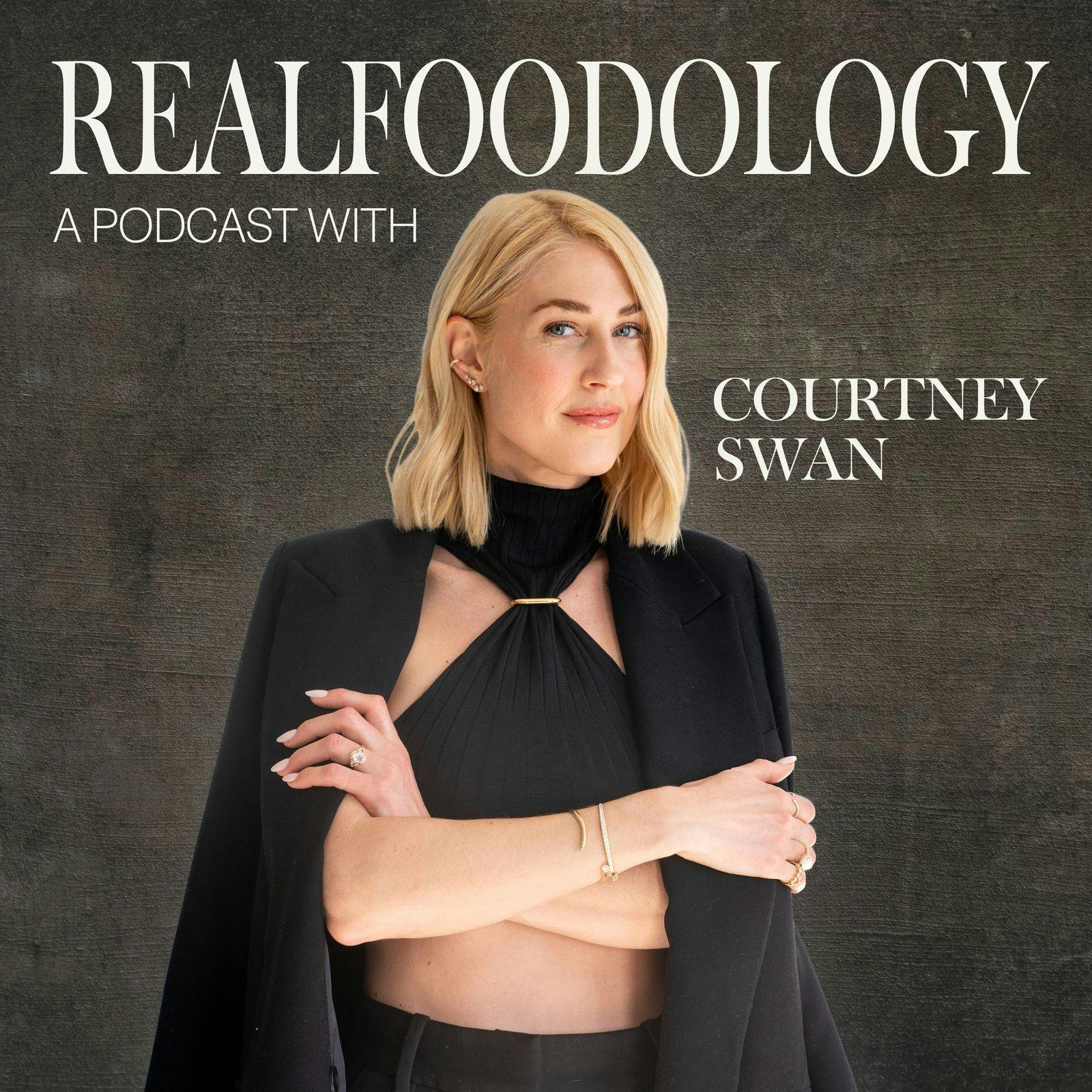
Realfoodology
Monsanto, Birth Control, + The Poisoning of The American Public | MAHA Senate Roundtable
01:21:06
Loading summary
Transcript31 lines
- [00:00]
Courtney Swan
Hi, guys. Welcome back to another episode of the Real Foodology podcast. As always, I'm your host, Courtney Swan. And today's podcast episode is a little different than how we normally do things. Some of y'all may remember I spoke to the senate last September, September 23, to be exact, at a roundtable discussion put on by Senator Ron Johnson. It was called American Health and A Second Opinion. My dear friend Callie Means helped put this on with Senator Ron Johnson. And I had the amazing opportunity to speak to the US Senate with some really amazing people. Jordan Peterson was there, Michaela Peterson, Vani Hari, you guys may know her as the food babe. Alex Clark, Marty McCary, who is soon to be the new head of the fda. Jason Karp, who was the co founder of Hugh Kitchen, Max Lugavir, Jillian Michaels, of course, my friends Cali and Casey Means. There were so, so many amazing names there. Chris Palmer and I, I mean, it was unbelievable. I can't even believe that I was a part of this. It felt so surreal and I was so grateful to be a part of this discussion. The speech that I gave to the Senate has been recirculating around Instagram recently and we thought, why not bring it to the podcast? So you will hear my speech along with some of my favorite speeches that were given that day by some of the names that I just mentioned. And if you're interested in finding out more information on those people, please check out the show notes. If you don't already know who they are. We are going to put all of their links to their Instagram in the show notes. So please check out everybody. And I really hope that you love this episode. If you could take a moment to rate and review the podcast. It means so much to me. It really helps the show. And if you want to spread word about the podcast, if you want to tag me on Instagram, Ealfoodology and Ealfoodology podcast. I try to get back to all of your messages, I see all of your tags, and I just want to say I'm so grateful for the support. Thank you so much. And thank you so much for listening. I hope that you enjoyed the episode. I am a huge fan of Manuka Honey. In fact, I've taken it for years because of its antibacterial and antiviral properties. It's great for if you have a sore throat, you feel like maybe you're getting run down, especially as we go into the winter months. In fact, I was just traveling and I took this Manukora honey with me because they come in these amazing little travel packs. I love Manukora Honey. It's rich, creamy and honestly the most delicious honey I've ever tasted. What makes it so special? It's ethically produced by master beekeepers in the remote forests of New Zealand and it's packed with powerful nutrients that support both immunity and gut health. The bees collect nectar from the Manuka tea tree and the honey they produce contains three times more antioxidants and prebiotics than regular honey. Not only that, but Manukora honey also contains a special antibacterial compound called mgo. Every single harvest is third party tested for MGO and you can even scan a QR code to see the results for yourself. I love to take a spoonful of Manukora honey straight from the jar in the morning. The creamy texture just melts in your mouth and it's a perfect way to start the day. I also love to add it to my coffee. Plus it's great to add to tea or drizzle on toast. Now it's easier than ever to try Manukora honey. Head to manukora.com realfoodology to get $25 off the starter kit which comes with an MGO 850 plus Manuka honey jar, five honey travel sticks, a wooden spoon and a guidebook. That's M-A-N-U-K-O-R-A.com Real Foodology for 25 off.
- [03:39]
My name is Courtney Swan, I have a Master's of Science in Nutrition and I host the Real Foodology podcast. And thank you so much for listening to us today. Our food is being tainted by dangerous chemicals and it's making us sick. In 2009 I started to get debilitating stomach aches. I bounced around between specialists with no clarity for two years until 2011 when I was diagnosed with a gluten intolerance. I was also told to avoid corn and soy which are common food sensitivities amongst my generation. Unfortunately, my story is not unique. Clueless to how this was connected to our food system, I started to do some digging. What I found was alarming. Our current agriculture system origin story involves large chemical companies, not farmers chemists. 85% of the food that you are consuming started from a patented seed sold by a chemical corporation that was responsible for creating Agent Orange in the Vietnam War. Why are chemical companies feeding America? Corn, soy and wheat are not only the most common allergens but are among the most heavily pesticide sprayed crops today. In 1974, the US started spraying our crops with an herbicide called glyphosate. And in the early 1990s, we began to see the release of genetically modified foods into our food supply. It all seems to begin with a chemical company by the name IG Farben. The later parent company of Bayer. Farben provided the chemicals used in Nazi nerve agents and gas chambers. Years later, a second chemical company, Monsanto, joined the war industry with the production of Agent Orange, a toxin used during the Vietnam War. When the wars ended, these companies needed a market for their chemicals, so they pivoted to killing bugs and pests on American farmlands. Monsanto began marketing glyphosate with the catchy name Roundup. They claimed that these chemicals were harmless and that they safeguarded our crops from pests. So farmers started spraying these supposedly safe chemicals on our farmland. They solved the bug problem, but they also killed the crops. Monsanto offered a solution with the creation of genetically modified, otherwise known as GMO crops that resisted the glyphosate in the Roundup that they were spraying. These Roundup ready crops allow farmers to spray entire fields with glyphosate to kill off pests without harming the plants. But our food is left covered in toxic chemical residue that doesn't wash, dry or cook off. Not only is it sprayed to kill pests, but in the final stages of harvest, it is sprayed on the wheat to dry it out. Grains that go into bread and cereals that are in grocery stores and homes of Americans are heavily sprayed sprayed with these toxins. It's also being sprayed on oats, chickpeas, almonds, potatoes and more. You can assume that if it's not organic, it is likely contaminated with glyphosate. In America, organic food by law cannot contain GMOs and glyphosate and they are more expensive compared to conventionally grown options. Americans are being forced to pay more for food that isn't poisoned. The Environmental Working Group reported a test of popular wheat based products and found glyphosate contamination in 80 to 90% of the products on grocery store shelves. Popular foods like Cheerios, Goldfish, chickpea pasta, like Bonza Nature Valley bars were found to have concerning levels of glyphosate. If that is not alarming enough, glyphosate is produced by and distributed from China. In 2018, Bayer bought Monsanto. They currently have patented soybeans, corn, canola and sugar beets. And they are the largest distributor of GMO corn and soybean seeds. Americans deserve a straight answer. Why does an agrochemical company own where our food comes from. Currently, 85 to 100% of corn and soy crops in the US are genetically modified. 80% of GMOs are engineered to withstand glyphosate. And a staggering 280 million pounds of glyphosate are sprayed on American crops annually. We are eating this Roundup Ready corn. But unlike GMO crops, humans are not Roundup ready. We are not resistant to these toxins and it's causing neurological damage, endocrine disruption, it's harming our reproductive health and it's affecting fetal development. Glyphosate is classified as a carcinogen by the World Health Organization's International Agency for Research on Cancer. It is also suspected to contribute towards the rise in celiac disease and gluten sensitivities. They're finding glyphosate and human breast milk, placentas, our organs and even sperm. It's also being found in our rain and our drinking water. Until January of 2022, many companies made efforts to obscure the presence of GMOs and pesticides in food products from American consumers. It was only then that legislation came into effect mandating that these companies disclose such ingredients with a straightforward label stating made with bioengineered ingredients. But it's very small on the package. Meanwhile, glyphosate still isn't labeled on our food. Parents in America are unknowingly feeding their children these toxic foods. Dr. Don Huber, a glyphosate researcher, warns that glyphosate will make the outlawed 1970s insecticide DDT look harmless in comparison to glyphosate. Why is the US Government subsidizing the most pesticide sprayed crops using taxpayer dollars? These are the exact foods that are driving the epidemic of chronic disease. These crops, heavily sprayed with glyphosate, are then processed into high fructose corn syrup and refined vegetable oils which are key ingredients for the ultra processed foods that line our supermarket shelves and fill our children's lunches in schools across the nation. Children across America are consuming foods such as goldfish and Cheerios that are loaded with glyphosate. These crops also feed our livestock which then produce the eggs, dairy and meat products that we consume. They are in everything. Pick up almost any ultra processed food package on the shelf and you will see the words contains corn, wheat and soy on the ingredients panel. Meanwhile, Bayer is doing everything it can to keep consumers in the dark while our government protects these corporate giants. They fund educational programs at major agricultural universities, they lobby in Washington and They collaborate with lawmakers to protect their profits over public health. Two congressmen are working with Bayer right now on the Farm bill to protect Bayer from any liability. Despite already having to pay out billions to sick Americans who got cancer from their product, they know that their product is harming people. Chronic illnesses are on the rise and half of our population is obese. This is a national security issue. 77% of young Americans are in ineligible for military service. We have industrialized our food at the expense of our health. Prioritizing profits over people to the point where our bodies can no longer cope with this chemical assault. We must stop subsidizing the foods that make us sick. We must prioritize people over profit. This is not. This is. This isn't just about policy. It's about survival. Let's create a future where our food system is designed to nourish us and not destroy us. Thank you.
- [11:04]
Well, friends, we have officially hit the New Year, which means that I'm sure we all have New Year's resolutions. Now, I'm not really big on New Year's resolutions. However, I do see the New Year as a way to just really hone back into what's important to me and really get in touch with my personal goals. Now for me, something that I have really been working on for this year is my fertility. As well as getting stronger, I have really. I've been taking on weight training, I invested in a trainer and I'm really working on building muscle in a way that I never have before and I feel so strong and I just want to feel my best. So whether you want to feel confident in your skin, conquer your goals, look and feel younger, I have something for you that I personally have been taking for over a year now and that is mitopure from timeline. I love Mito Pure. It has something called Urolithin A in it. It is a supplement on the market that's clinically proven to target the effects of age related cellular decline. It is quite literally food for the mitochondria which can equate to better fertility health. Because we know that our fertility is greatly affected by our mitochondria. It also helps with muscle building, it helps with recovery if you're working out. And mitopure is a precise dose of the rare postbio Urolithin A. It works by promoting an essential cellular cleanup process that clears out dysfunctional mitochondria, AKA your cell's battery packs. Plus it's shown to deliver double digit increases in muscle strength and endurance without a change in Exercise. That is crazy. The new year isn't about a new you. It's about a renewed you. Mitopure promotes cellular renewal and mitochondrial health to address common signs of aging and at the root. So if you would like to try Mito Pure today and join me in taking this every day, timeline is offering 33% off your order of Mito Pure while supplies last, go to timeline.com real foodology33 that's T I M E L I N E.com real foodology33. Next up is Vani Hari, otherwise known as the food Babe.
- [13:22]
Vani Hari
I'm here today to share something important with all of you that affects all of our lives, something that has been overlooked for decades. Our government is letting US Food companies get away with serving American citizens harmful ingredients that are banned or heavily regulated in other countries. Even worse, American food companies are selling the same exact products overseas without these chemicals, but choose to continue serving us the most toxic version. Here. It's un American. One set of ingredients. Thank you. One set of ingredients there. And one set of ingredients here. Let me give you some examples. Thank you.
- [14:21]
Courtney Swan
You want to.
- [14:21]
Vani Hari
Yeah, do my honor. Here we go. My Vanna White, Everybody. This is McDonald's French fries. I would like to argue that probably nobody in this room has not had a McDonald's french fries. By the way, nobody raised their hand during the staff meeting earlier today. In the US there's 11 ingredients. In the UK there's three. And salt is optional. An ingredient called dimethyl polysiloxane is an ingredient preserved with formaldehyde, a neurotoxin. In the US Version, this is used as a foaming agent so they don't have to replace the oil that often. Making McDonald's more money here in the United States. But they don't do that across the pond. Here we go. This is Skittles. Notice the long list of ingredient differences. 10 artificial dyes in the US version and titanium dioxide. This ingredient is banned in Europe because it can cause DNA damage. Artificial dyes are made from petroleum, and products containing these dyes require a warning label in Europe that states it may cause adverse effects on activity and attention in children, and they have been linked to cancer and disruptions in the immune system. This on the screen back here is Gatorade. In the US they use red 40 and caramel color. In Germany, they don't. They use carrot and sweet potatoes to color their Gatorade. Okay, Doritos next.
- [16:02]
Casey Means
Doritos.
- [16:04]
Jason Karp
There we go.
- [16:05]
Vani Hari
Thank you. This is Doritos. The US version has three different M3 different artificial dyes and MSG. The UK version does not. And let's look at cereal. General Mills is definitely playing some tricks on us. They launched a new version of Trix just recently in Australia. It has no dyes. They even advertise that when the US version still does. This is why I became a food activist. My name is Vani Hari and I only want one thing. I want Americans to be treated the same way as citizens in other countries by our own American companies. My dad came to America in the 1960s and when he went back to India to have an arranged marriage to my mom, they came back to the US to live for the rest of their lives on their honeymoon. The first thing my dad said to my mom when they got here is if we're going to live in America, we're going to eat like Americans. And he introduced her to McDonald's. So that was the start of my mother relying on ultra processed food to feed her children, like so many mothers do every single day. As a result, I was a child ridden with health issues. And after going through two surgeries on nine prescription drugs, I hit rock bottom. In my early 20s, I started to take a hard look into the food I was eating. I learned that over the last 60 years, almost all food additives were being created for one sole purpose. To improve the bottom line of the food industry and not improve our health. These chemicals were created to mimic real food, to make it easier and cheaper for food manufacturers, to preserve their food, to make it last longer on the shelf, to help manufacturing. And sinister of all, to allow them to create products that are more addictive in nature. Once I decided to take back control of my health, I eliminated ultra processed foods from my diet and started eating real food made without synthetic preservatives and pesticides, growth hormones, chemical additives. I went off every single prescription drug and realized a life I never thought was possible. I had been walking around like a zombie. And because I didn't want anybody else to feel this way, I ended up quitting my lifelong career as a corporate management consultant to investigate and write about food full time. During my investigations, I found an alarming discovery. We use over 10,000 food additives here in the United States and in Europe, there's only 400 approved. In 2013, I discovered that Kraft was producing their famous Mac and cheese in other countries without artificial dyes. They used yellow 5 and yellow 6. Here. I was so outraged by this unethical practice that I decided to do something about it. I launched a petition asking Kraft to remove artificial dyes from their products here in the United states. And after 400,000 signatures and a trip to their headquarters, Kraft finally announced they would make the change. I also discovered Subway was selling sandwiches with a chemical called azodicarbonamide in their bread. In other countries, this is the same chemical they use in yoga mats and shoe rubber. You know when you turn a yoga mat sideways and you see the evenly dispersed air bubbles? Well, they wanted to do the same thing in bread so it would be the same exact product every time you went to a Subway. When the chemical is heated, studies show that it turns into a carcinogen. Not only is this ingredient banned in Europe and Australia, you get fined $450,000 if you caught using it in Singapore. If we were able to get. You know, when this. What's. What's really interesting is when this chemical is heated, studies show that it turns into a carcinogen. Not only is this ingredient banned, but we were able to get Subway to remove azodicarbonamide from their bread in the United States after another successful petition. And as a bonus, there was a ripple effect in almost every bread manufacturer in America followed suit. For years, Starbucks didn't publish their ingredients for their coffee drinks. It was a mystery until I convinced a barista to show me the ingredients on the back of the bottles they were using to make menu items like famous pumpkin spice lattes. I found out here in the United States, Starbucks was coloring their PSLs with caramel coloring Level 4, an ingredient made from ammonia and linked to cancer, but using beta carotene from carrots to color their drinks. In the UK after publishing an investigation and widespread media attention, Starbucks removed caramel coloring from all of their drinks in America and started publishing the ingredients for their entire menu. I want to make an important point here. Ordinary people who rallied for safer food shared this information and signed petitions were able to make these changes. We did this on our own. But isn't this something that the people in Washington, our elected politicians, should be doing? This game of whack a mole I've been playing with other concerned citizens for the last 10 years isn't enough to protect Americans from the unethical and hypocritical practices of these companies. We deserve the same safer ingredients other countries get. We cannot allow our own American companies to treat us this way anymore. We've had enough. It's unethical and it needs to stop. Right now, we're at a critical moment where Americans are sicker than ever. And much of this is due to the alarming amount of harmful chemicals allowed in our food. Asking companies to remove artificial food dye would make an immediate impact. They don't need to reinvent the wheel. They already have the formulations. As I've shown you, consumption of artificial food dyes has increased by 500% in the last 50 years. And children are the biggest consumers. Yes, those children. Perfect timing. 43% of products marketed towards children in the grocery store contain artificial dyes. Food companies have found in focus groups children will eat more of their product with an artificial dye because it's more attractive and appealing. And the worst part, American food companies know the harms of these additives because they were forced to remove them overseas due to stricter regulations and to avoid warning labels that would hurt sales. This is one of the most hypocritical policies of food companies, and somebody needs to hold them accountable. The FDA is asleep at the wheel. They've admitted they're not capable of regulating all these chemicals in our food. And the food companies are using the lack of regulation to their advantage. But now there's a significant wave of public awareness spreading about this corruption, and more people are asking for change. Many of the people in this room I see in the audience, our grassroots movement is continuing and I'm now asking for your support. Right now, we are petitioning Kellogg's because the government hasn't taken up this issue right over the border. This box of Froot Loops is from Canada. It's colored naturally with watermelon, blueberry and carrot juice. This is the US version. It contains four different artificial food dyes with the preservative bht, which is an endocrine disrupting chemical LinkedIn to cancer. In 2015, Kellogg's announced plans to remove dyes from their cereals by the end of 2018, but they never did. Instead, they kept producing new cereals for children with these dyes and preservatives, using the most popular toddler songs and movies to hook modern children of the day, like Baby Shark cereal and Disney's Little Mermaid, targeting the most vulnerable children. We now have over 111,000 signatures on our petition to ask Kellogg's to finally serve Americans the same cereals there serving other countries. I'm going to be delivering these petitions to Kellogg's headquarters in Battle Creek, Michigan, next month on October 15th. Mark your calendar with many of the health leaders in this room. And I'm inviting all concerned citizens to join me, including all the politicians here today and in Washington and both presidential candidates. This issue is nonpartisan and affects all of us. It's time for us to join together and end this corruption once and for all. Thank you very much.
- [25:51]
Courtney Swan
Did you know that most cookware and appliances are made with forever chemicals?
- [25:54]
Yes.
- [25:55]
That means your nonstick pans, your air fryers, your waffle makers, your blender could possibly have PFAs and yes, even our beloved crock pots and pressure cookers. I have actually been talking about this for so long. Back in 2006 my mom came to my dorm room and made me get rid of all my nonstick pans because she was concerned about me being exposed to something called Teflon. Teflon is a coating that is used on nonstick pans and a lot of these appliances that I just named. So I've avoided Teflon nonstick PFA coated appliances, pots and pans, you name it, for a very long time. And the only option for the for a very long time was just stainless steel pots and pans. So I was really excited when a company like Our Place came out because they started creating really beautiful cookware and appliances that are like pieces of art. Every appliance that I have from Our Place, I legit want to store it on the counter. And I'm the type of person that does not want anything on my counter because I like it to look really just clean and minimal. But so obsessed with all the Our Place products that I have so many of them displayed on my counter because they are legit pieces of art. Our Place is a mission driven and female founded brand that makes beautiful kitchen products that are healthy and sustainable. All their products are made without PFAS which are the forever chemicals and also made without PTFE which is Teflon. If a company is not outwardly stating that they don't use these chemicals then if they are using non stick coating on their appliances, they are absolutely using forever chemicals. And there's been increasing global scrutiny for their impact on the environment in our health. And recognizing this impact, the EU plans to prohibit PFAS by 2025. Our place has always been PFAS free and they offer durable toxin free ceramic coatings ensuring a healthy safe cooking experience. And let me tell you, you guys, they are changing the game with non toxic appliances. They have a blender, they have an air fryer, they have a crock pot, not to mention they're amazing always pan, they have a perfect pot which is just the perfect size for soups. And they also just came out with a cast iron that I'm loving as well. And I more recently replaced all of the bowls and plates in my kitchen because I really needed an upgrade. My other ones were so old so I got some from our place and they are so beautiful. The ceramics are beautiful, the colors are amazing. Like I said, everything is like a piece of art. If you want to try any of the products from our place, go to fromourplace.com and enter my code real foodology checkout to receive 10 off site wide. That's fromourplace.com code real foodology. Our place offers a 100 day trial with free shipping and returns. Next up is Alex Clark.
- [28:37]
Alex Clark
My average listener, like me, is a woman in her late 20s and early 30s, and we demand accountability for how the millennial generation was turned into a science experiment without our informed consent. For the sake of enriching Big Pharma, Big Ag, and Big Food, millennial women have started to have kids for the first time and they are disillusioned with how hard it has become to not only get pregnant, but also raise kids who are healthy, happy and mentally well. Today, I am proud to represent them. The poisoning of our food and the environment is the issue for these independent women. It is devastating us and our children. My name is Alex Clark and I host Culture Apothecary. By virtually every measure, Millennials are more health conscious than any generation before us. But at the same time, we are also the sickest. That is, until our children end up surpassing us. The next generation of children is predicted to not outlive their parents if we continue on trajectory that we are currently on. When in human history has that ever been the case? We are fatter than any prior generation. At this age, we're having more fertility issues. New cancer diagnoses in the US are projected to top 2 million for the first time this year. And these new cases are almost all driven by young people. This is according to American Cancer Society data. What happened Growing up, Millennials were handed health advice that was inaccurate, mistaken, or downright fabricated. Almost everything that we were taught about food and health was made up. The only guidance that we received on what to eat came in 1992 via the Food Pyramid, a completely manipulated work of fake public health crafted by the Department of Agriculture. The food Pyramid told us that all fat was bad. A lie. It told us to make complex carbs like pasta, bread, and processed breakfast cereal the bedrock of our diet, not because it was healthy, but because it was the most profitable recommendation for Big Ag and Big Food. We became the first generation subjected to sugary, fattening, inflammatory foods deliberately engineered to be as Addictive as heroin. Thanks to the food companies buying these, the scientists from the cigarette companies, for that exact purpose. In the 80s and 90s, the same era as the food pyramid scam, youth obesity tripled from 5% to 15%. Today, in 2024, close to half of all American kids are overweight or obese now. Why are you surprised? Ultra processed foods make up 70% of the calories that kids eat now. Now, most of us millennial girls got our first period when we were 13 to 15 years old. Pediatricians wasted no time telling us that there was a magic pill that could solve all of our problems in a 10 minute wellness checkup with no informed consent about the risks or side effects. What problems were we solving exactly? A couple pimples? We were advised to not worry about learning to track our cycle or understand our hormones. No conversation about how our likelihood to experience anxiety or depression would increase by 80% on the pill. 10 to 15 years went by on the hormonal birth control pill. We stayed on the pill because no one advised us it was only ever supposed to be taken temporarily. Then we wanted to have children. We got off birth control for the first time in our adult lives, only to discover that we had major fertility issues that the hormonal birth control hid. Infertility is going up 1% every year. Suddenly, starting a family means spending tens of thousands of dollars on IVF and other fertility treatments, because even more medical interventions are always the first solution, rather than addressing the root causes of the problem. If the IVF even works, Millennial moms are seeing the same drama play out for their own children, but on a far greater scale. They want to raise healthy kids. They do, but where can they go for info? The studies are bought and paid for by the food companies. They look for unbiased info on the news, but that's funded by big pharma. In 2022, the pharmaceutical industry spent an average of $1 billion per month on advertising in the United States. What news company is going to risk reporting the truth if it means missing out on advertising dollars like that? Their pediatrician. These moms pediatrician had less than a day of nutrition training in all their years of medical school. They don't even know what seed oils are when they ask about them. If one of my listeners has a child today, there is a 1 in 50 chance that child will have a deadly peanut allergy. 4 times what it was just a few decades ago. And that rate is rising. Children today are about 20% more likely to develop type 1 diabetes than they were 20 years ago. Childhood cancer rates are rising a percentage point every year. Asthma is UP, so is ADHD, allergies, virtually every type of psychological disorder. In 1980, autism was diagnosed at a rate of just three or four per hundred thousand kids. Today, a newborn child has a 1 in 36 chance that he or she will be autistic. And that rate is also rising every year. Who cares about politics if the next generation is dead or close to it before they can even vote? In 1985, newborn millennials had to follow a schedule of just a handful of vaccines. Today, a child following the recommended vaccine schedule will receive up to 70 shots by the time they turn 18, including 27 before he or she turns 2, and as many as six shots in a single visit. Are all these shots producing healthier kids? According to the data? No. Are we allowed to even ask? Also no. Some parents who've asked too many questions about the recommended vaccine schedule can find themselves reported to child protection services or they will get kicked out of their pediatrician's office for not being compliant. This is America, the land of the free. Parents are being held hostage. They did not sign up to co parent with the government. We want a divorce. But there's more. Remember when I said that my generation had our first period at 13 or 15? Today, little girls are starting their periods at 8 or 9 and they are getting pubic hair as young as 5 or 6. Is it their drinking water? Their food, chemicals and personal care products that other countries have banned? Don't ask, don't tell. Girls are still being pressured to get on birth control, by the way, without informed consent. But now they get the added bonus of an antidepressant to go with it. Two for one special. Just to reiterate the war on moms in this country today, virtually everything a child eats or drinks will be served on a plastic plate, in a plastic bottle, or be eaten from a plastic container with plastic utensils. Human breast milk now contains thousands of microplastics. If you need formula, you can't find it without inflammatory seed oils or soy. Parents have to order it and buy it from Europe. Does this all seem overwhelming to you? Good. This is what the American mom deals with every day.
- [37:22]
Vani Hari
Amen.
- [37:29]
Alex Clark
The typical American parent today has to worry about a job, about their children's education, about all the things that a parent has always had to worry about. They shouldn't also have to deal with the added stress of finding the poison that lurks in almost everything their child eats or drinks. The American dream is that a parent will be able to raise children who are better off than themselves. But now that dream is vanishing, not just on an economic level, but a biological one. Unless we break this, unless we break this spiral, we will fall into a death spiral of unhealthy parents raising even more unhealthy kids that will bankrupt this country. As RFK Jr has said, the last thing standing between a child in an industry full of corruption is a mom. Let's make it easier for them.
- [38:30]
Courtney Swan
Next up is Marty Makary, the soon to be head of the fda.
- [38:35]
Marty Makary
I'm trained in gastrointestinal surgery. My group at Johns Hopkins does more pancreatic cancer surgery than any hospital in the United States. But at no point in the last 20 years has anyone stopped to ask why has pancreatic cancer doubled over those 20 years? Who's working on that? Who's looking into it? We are so busy in our health care system billing and coding and paying each other. And every stakeholder has their gigantic lobby in Washington D.C. and everybody's making a lot of money except for one stakeholder, the American citizen. They are financing this giant, expensive health care system through their paycheck deduction for health insurance and the Medicare excise tax. As we go down this path of billing and coding and medicating and can we be real for a second? We have poisoned our food supply. Engineered highly addictive chemicals that we put into our food. We spray it with pesticides that kill pests. What do you think they do to our gut lining in our microbiome? And then they come in sick. The GI tract is reacting. It's not an acute inflammatory storm. It's a low grade chronic inflammation and it makes people feel sick. And that inflammation permeates and drives so many of our chronic diseases that we didn't see half a century ago. Who's working on, who's looking into this? Who's talking about it? Our health care system is playing whack a mole on the back end. And we are not talking about the root causes of our chronic disease epidemic. We can't see the forest from the trees. Sometimes we're so busy in these short visits, billing and coding, we've done a terrible thing to doctors. We've told them, put your head down, focus on billing and coding. We're going to measure you by your throughput and good job. You did a nice job. We have all these numbers to show for it. Well, the country is getting sicker. We cannot keep going down this path. We have the most over medicated, sickest population in the world and no one is talking about the root causes. The Pima Indians are the perfect example. Here is a group where the obesity diabetes rate was less than 1%. The land in New Mexico and Arizona had its river supply diverted by ranchers and settlers and the land and the soil was destroyed. The government, recognizing this tremendous injustice, started to send free government food, but it wasn't organic kale and fruits and vegetables. It was processed and junk food. Instantly, the Pima Indians developed an obesity diabetes rate of 90%. And what did the United States government do? What did our health care system do? The NIH dispatches its researchers to draw the blood of the Pima Indians to look for a gene that predisposes them to obesity and diabetes. What are our leaders doing? The H in NIH is supposed to stand for health. Where are they spending their money? On food as medicine and looking at the estrogen binding properties of pesticides that are driving our fertility rates down. They're funding research in Wuhan, China and they're funding research on a new food compass to replace the misinformation they put out with the food pyramid telling us lucky charms is healthier than steak. Somebody has got to speak up. Maybe we need to talk about school lunch programs, not just putting every kid on obesity drugs like Ozempic. Maybe we need to talk about treating diabetes with cooking classes, not just throwing insulin at everybody. Maybe we need to talk about environmental exposures that cause cancer, not just the chemo to treat it. We've got to talk about food is medicine and research these areas. 20% of our nation's kids are on medication and as you heard, half are obese or overweight. Are they more disobedient than children in Japan? Or have we poisoned the food supply? Is this a chronic disease epidemic that has been a direct result of what adults have done to children? We like to blame people for their diseases, but maybe we need to look inward. We see all these shiny objects thrown at us. Politicians talk about, oh, we've got a new health care proposal. Medicare can now negotiate the prices of 10 generic drugs. Don't be fooled. These are things in the periphery. It's not to say they don't have merits, but the proposed program savings in year one, by their own description is $6 billion. In a $4.5 trillion economy that's expanding at 8% per year. In the commercial sector, that's a $200 billion expansion. We saved $6 billion. The best way to lower drug costs in the United States are to stop taking drugs we don't need.
- [43:59]
Courtney Swan
Next up is Jason Karp.
- [44:03]
Jason Karp
I've been a professional investor for 26 years dealing with big food companies, seeing what happens in their boardrooms and why we now have so much ultra processed food with proof there are ways to responsibly scale food. I am also the co founder of Hue Kitchen, a health food company where we created the number one premium chocolate in the US without using chemicals, synthetics and being 100% organic. And this is a deeply personal issue for me today. After miraculously curing an incurable eye disease that was making me blind in my 20s by using food as medicine, I have dedicated the last 23 years of my life to researching and trying to clean up our uniquely toxic American food system. Given the exponential rise in our chronic diseases in just the last 50 years, many ask how did we get here and what has changed? Americans now live in a toxic soup of synthetic chemicals, plastics and untenable pesticide loads that permeate our food, water and air. Having studied the evolution of corporations, I believe the root cause of how we got here is an unintended consequence of the unchecked and misguided industrialization of agriculture and food. I believe there are two key drivers behind how we got here. First, America has much looser regulatory approach to approving new ingredients and chemicals than comparable developed countries. Europe, for example, uses a guilty until proven innocent standard for the approval of new chemicals, which mandates that if an ingredient might pose a potential health risk, it should be restricted or banned for up to 10 years until it is proven safe. In complete contrast, our FDA uses an innocent until proven guilty approach for new chemicals or ingredients that's known as grasp or generally recognized as safe. This recklessly allows new chemicals into our food system until they are proven harmful. Shockingly, US Food companies can use their own independent experts to bring forth a new chemical without the approval of the fda. It is a travesty that the majority of Americans don't even know they are constantly exposed to thousands of untested ingredients that are actually banned or regulated in other countries. To put it bluntly, for the last 50 years we have been running the largest uncontrolled science experiment ever done on humanity without their consent. Why should America, the greatest country on earth, be the last developed nation to protect its people? And the proof is in the pudding. Our health differences compared to those other countries who use stricter standards are overwhelmingly conclusive when looking at millions of people over decades. On average, Europeans live around five years longer, have less than half our obesity rates, have significantly lower, chronic disease have markedly better mental health and they spend as little as 1/3 on health care per person as we do in this country. While lobbyists and big food companies may say we cannot trust the standards of these other countries because it overregulates, it stifles innovation, and it bans new chemicals prematurely, I would like to point out that we trust many of these other countries enough to have nuclear weapons. These other countries have demonstrated it is indeed possible to not only have thriving companies, but also prioritize the health of its citizens with a clear do no harm approach towards anything that humans put in or on our bodies. The second driver, how we got here is all about incentives. US industrial food companies have been myopically incentivized to reward profit growth, yet bear none of the social costs of poisoning our people and our land. Since the 1960s, America has seen the greatest technology and innovation boom in history. As big food created some of the largest companies in the world, so too did their desire for scaled efficiency. Companies had noble goals of making the food safer, more shelf stable, cheaper and more accessible. However, they also figured out how to encourage more consumption by making food more artificially appealing with brighter colors and engineered taste and texture. This is the genesis of ultra processed food. Because of these misguided regulatory standards, American companies have been highly skilled at maximizing profits without bearing the societal costs. They have replaced natural ingredients with chemicals, they have commodified animals into industrial widgets, and they treat our God given planet as an inexhaustible abusable resource. Sick Americans are learning the hard way that food and agriculture should not be scaled in the same ways as iPhones. After watching this go on for too long and spending a lot of time with Vonnie, earlier this year I filed a shareholder activist letter against Kellogg for selling a less safe, inferior version of their cereals to American families. As Vani pointed out, very few Americans know that Kellogg sells a safer, cleaner version of their cereals in Europe than the ones they sell here. They use more chemicals in the US version because it is more profitable and because we allow them to. The absurd question we should all be asking today is why shouldn't American children receive the safest version of products that Kellogg already makes? To highlight the perverse incentives, Senator Kellogg declined to meet with us and effectively told us that American children prefer the brighter colors and they will continue selling the more toxic versions of as long as it's, quote, compliant with applicable relevant laws. Which is why I'm here today. We need your help to stop this behavior. Because of our lax regulations and public company incentives to prioritize profits over safety. Millions of Americans are constantly subjected to uncontrolled trials of chemicals that are band or regulated all over the world. While there may be many difficult issues discussed today, this one is easy because healthier countries are already showing us how it can be done. By adopting the same chemical regulatory approach of healthier developed nations, we can take a significant and absolutely necessary step in both providing safer food and lowering health care costs for all Americans. We can reverse this great American poisoning. And we already have a playbook on how to do it. Thank you.
- [51:40]
Courtney Swan
Next up is Max Lugavere.
- [51:43]
Max Lugavere
Our food environment is killing us and it's doing so slowly over the course of decades. And if we don't change course, future generations will suffer even more. Today, 73% of the modern supermarket is made up of ultra processed foods. Foods that barely resemble what we've evolved to eat. 60% of the calories Americans consume are from these types of products. Certain demographics are hit harder than others. For example, black Americans consume on average 80% of their calories from ultra processed foods, contributing to a disproportionate burden of diet related diseases. This isn't by accident. Many such populations are specifically targeted by advertisers. But make no mistake, all Americans are under attack and it's costing us dearly. A recent umbrella review of meta analyses linked ultra processed foods to 32 negative health outcomes. Everything from cancer, heart disease and diabetes, the usual suspects to depression and anxiety. As Dr. Palmer has alluded to, not one single positive health outcome was associated with these foods. Not one. Ultra processed foods. The kinds of foods that typically line our supermarket aisles are engineered to be hyper palatable and addictive. In fact, according to a study published by Gearhard et al in 2022, ultra processed foods meet the exact same criteria for addictive substances as tobacco products. Seminal NIH funded research clearly shows their obesogenic effect. They drive us to overeat by as much as 800 calories per day simply due to the quality of the food. This finding was actually precisely replicated and published last week in Japan. This is why America is facing an obesity epidemic. That's not about willpower, it's about the food system. And yet, the most recent Dietary Guidelines Advisory Committee appeared to bury their head in the sand, claiming that there is limited evidence that ultra processed food intake increases risk for obesity in adults. We now know that every 10% increase in the proportion of ultra processed foods in the diet is associated with a 14% increased risk of all cause death and a 25% higher risk of Alzheimer's disease, a cause that's near and dear to my heart. As my own mother suffered from dementia for years before passing due to pancreatic cancer, I've seen profound sickness up close and personal, and it's motivated me to dedicate my life to this fight. But ultra processed foods aren't just driving weight gain and subsequent metabolic dysfunction. Ultra processed foods are exposing us to dangers that are invisible to the naked eye forever. Chemicals, pesticide residues and endocrine disruptors. You won't find microplastics on the ingredients list of any item in your cupboard, but they're there too, harming everything from our fertility to our cardiovascular health and increasing risk of heart attack, stroke and death. New research published in the New England Journal of Medicine has shown our bodies are capable and resilient. But today the toxic burden is simply too high. These compounds are laced into the very food like products that line our grocery store shelves. And yet they remain under discussed in public health conversations. In fact, legitimately concerned families are gaslit again and again reminded that quote, everything is a chemical. It's insulting to American families like mine who have seen real sickness. All this adds up to the fact that today we are not simply living longer, we are dying longer. Chronic diseases are becoming more prevalent and we're living out our final decades plagued by illnesses that are largely preventable with the right interventions. But here's the problem. A fraction of the money spent on chronic disease goes towards the research and promotion of these interventions for brain disease. Specifically, my passion, prevention accounts for only 2 cents of every research dollar spent. Think about that for a moment. The majority of our resources are being funneled into treatment while we're barely investing in stopping these diseases before they start. It's a short sighted approach to one of the greatest public health challenges of our time. Prevention isn't just an option. It's the only solution. In what seems like a coordinated effort between the food industry and the upper echelons of academia and nutrition science, the dangers of ultra processed foods continue to be suppressed while the fear mongering of nutrient dense whole foods such as red meat and eggs continues. Even Harvard recently published a study correlating red meat consumption to type 2 diabetes. No legitimate researcher believes that unprocessed red meat consumption, which has declined over past decades while type 2 diabetes rates soar, is causally related to type 2 diabetes. This misinformation campaign is one of the greatest public health scandals of our time. If we don't change the narrative, we're going to continue to see an escalation in chronic diseases like Alzheimer's, Parkinson's and metabolic disorders that are crippling our health care system. We need to shift the paradigm from treatment to prevention. That means educating the public on the dangers of ultra processed foods, incentivizing the production and consumption of whole, minimally processed foods of both plant and animal origin, and putting pressure on the food industry to improve or remove these toxic products from our shelves. And let's invest in the promotion of evidence based diet and lifestyle interventions for chronic diseases. Because as we've learned, genetics play only a small role. What we eat matters. If we act now, we can avert the collapse of our health care system under the weight of preventable diseases. But if we continue down this path, the cost will be staggering. And not just in terms of dollars, but in human lives. The food we eat is either the safest form of medicine or the slowest form of poison. I'll end with a question. If your grocery store has a health food section, what does that make the rest of the storm? Thank you.
- [58:41]
Courtney Swan
Next up is Jillian Michaels.
- [58:45]
Jillian Michaels
During the time that we've been given to speak with you today, roughly 800 people will die of an obesity related disease that was completely preventable. And it's not just their loss that should elicit your devastation and your outrage, but the immense suffering of those left behind by those gone too soon. And it should also go without saying the ways in which obesity robs our nation of able bodies to defend our freedom robs our nation of the brightest and best. As childhood obesity is linked to lower academic performance and robs our nation of economic vitality with a financial impact estimated to range from 500 billion to a trillion annually. When you combine direct healthcare costs, lost productivity and social burdens, our role as the dominant player on the world stage is being forfeited. My name is Jillian Michaels. I am a health advocate, a fitness expert and a nutritionist. I have no political alliance because health transcends partisanship and ideology. Unlike the majority of issues I imagine people in Washington contend with on a daily basis, this one is not nuanced. It's black and white. It's right and wrong. It's good against evil. The experts accompanying me today are sharing with you the staggering depth of corruption big corporations engage in to transform Americans as young as possible into fat, sick and nearly dead cash cows. They're terrifying you with skyrocketing statistics of infertility, autism, early onset cancer diagnosis, type 2 diabetes, and a host of other horrors. They're detailing for you what needs to change and how to change it. I've traditionally worked outside the system, trying to empower people to help themselves instead of waiting for lifeboats that may never arrive. But that said, it's become harder and harder for people to take agency and enact change for the reasons we're laying out for you today. And ultimately, I have discovered that despite my best efforts and the efforts of people here like me, Americans need systemic help, and they need it urgently. We sit here before you today to set the stage, establish the stakes from firsthand perspectives, and hopefully inspire you to act upon some of the suggestions provided. I aim to do this with a story about one of the lucky ones, one that escaped the spider web of corporate rapacity. A story About Me Today I'm widely known as an individual synonymous with fitness. But this wasn't always the case. In 1974, the year that I was born, less than 10% of our population was overweight or obese. And prior to that, over the course of all human existence, being overweight or obese was considered extremely unusual and rare. And somehow they weren't holding panels, by the way. Nobody needed a panel to figure it out. But by the late 70s, suddenly the rate in which our population began to grow in size became supersonic. By the time I was 13 in 1987, I was already 170 pounds at only 5 foot 1, officially clinically obese. And from the year I was born to the year I turned 21, obesity rates had tripled. Today, in 2024. As we've said now numerous times, it's estimated that roughly 75% of our adult population is obese or overweight. The entirety almost of my generation, along with the two generations that followed, have fallen victim to America's unchecked obesity crisis and over 170 comorbidities that go along with it. I don't know about you, but I've watched my friends jabbing themselves every day with fertility drugs, praying for a pregnancy, my friends getting up at the crack of dawn to get radiated where the lump was found in their breasts. My friends swallowing fistfuls of pills to manage their debilitating anxiety and depression. The decades between 1980 and now didn't beget a genetic quantum leap in which our DNA inexplicably mutated to make American bodies expand and fall ill at an unprecedented pace. And while Gen X, Millennials, and Gen Z have our problems, 75% of us are not stupid, weak, or lazy. So hopefully you are wondering what has happened to us and we're here to tell you, in the late 70s and the early 80s, a sinister series of events converged to change food and subsequently health in America indefinitely. A plague that crept like a fog while we slept, literally and figuratively, blindly trusting that the powers that be would never betray us. I mean, it seemed unthinkable to question whether a corporation would poison us for profit. I mean, the widespread assumption, at least when I was a kid, was that they were acting on our behalf. They wanted to make food more affordable and more convenient. But it was this betrayal of trust that allowed them to insidiously infiltrate every part of our lives. Home cooked meals became fast food value meals. Libraries and bookstores with no food or drink policies installed. Cafes selling 500 calorie coffee drinks and pastries. Eggs became heart disease, cholesterol bombs and honey nut Cheerios got labeled heart healthy. The default human condition in the 21st century is obese by design. Specific traceable forms of what's referred to as structural violence are created by the catastrophic quartet of big farming, big food, big pharma and big insurance. They systematically corrupt every institution of trust which has led to the global spread of obesity and disease. Dysfunctional and destructive agricultural legislation like the farm bill, which favors high yield genetically engineered crops like corn and soy, leading to the proliferation of empty calories saturated with all of these toxins that we've been talking about today for three hours and it seems like we can never say enough about it. And then this glut of cheap calories provides a boon to the food industry giants. They just turn it into a bounty of ultra processed factory assembled foods and beverages, strategically engineered to undermine your society and foster your dependence like nicotine and cocaine. So we literally cannot eat just one. And to ensure that you don't, added measures are taken to inundate our physical surroundings. We're literally flooded with food and we are brainwashed by ubiquitous cues to eat. Whether it's the Taco Bell advertisement on the side of a bus as you drive to work or the vending machine at your kid's school, there is no place we spend time that's left untouched. They're omnipresent. They commandeer the narrative with 30 billion worth of advertising dollars. Commercials marketed to kids with mega celebrities eating McDonald's and loving it. Sponsored dietitians paid to promote junk food on social media utilizing anti diet body positivity messaging like derail the shame in relation to fast food consumption. Time magazine brazenly issuing a defense of ultra processed foods on their cover with the title what if ultra processed foods aren't as bad as you think? And when people like us try to sound the alarm, they ensure that we are swiftly labeled as anti science, fat shamers, and even racists. They launch aggressive lobbying efforts to influence you, our politicians, to shape policy, secure federal grants, tax credits, subsidy dollars which proliferates their product and heavily pads their bottom line. They have created a perfect storm in which pharmaceuticals that cost hundreds if not thousands per month, like Ozempic, that are linked to stomach paralysis, pancreatitis and thyroid cancer, can actually surge. This reinforces a growing dependence on medical interventions to manage weight in a society where systemic change in food production and consumption is desperately needed and also very possible. These monster corporations have mastered the art of distorting the research, influencing the policy, buying the narrative, engineering the environment and manipulating consumer behavior. So given all of this, the question becomes, how did I escape? I mean, I still remember the lunches my mom would pack me as a little kid. Such innocence and love. And she had no idea that my kindergarten lunchbox contains at least 50. Now I'm thinking it's far more carcinogens, solvents, emulsifiers, colorings, preservatives. I have the list. I'm going to skip it because we did it already. Frankenfoods. Like juice boxes with no juice, processed lunch meat held together by meat glue. I mean, as a tween, I would sit on the couch after school, just numbingly inhaling Cheetos and Oreos in front of the tv. There was no such thing as mealtimes, and I could stuff myself endlessly and never feel full buckets of KFC at night for our family dinner because it was quick, convenient, affordable. And I remember I would lay in bed comatose. It was a lifestyle equivalent to a death sentence, but we never questioned it because we were just a family that was simply attuned to the culture. So it should come as no surprise that by that tender age of 13, I was obese, failing in school and becoming increasingly depressed and despondent, and my mom began to feel helpless. She spoke to my pediatrician and a child psychiatrist, both of whom suggested she medicate me on Prozac and Ritalin. But she was watching many of her friends kids on this exact same protocol, and they weren't improving. My mom was becoming progressively desperate to help me. And then fate intervened. She met another mom whose child had been thriving since joining a local martial arts studio, and she signed me up the next day. And my sensei was smart enough to recognize the ways in which America's youth were being routinely poisoned. And he cared enough to create an environment where myself and the other students under his wing were educated, insulated and nourished to become our best selves. I went on to get my black belt and become a trainer and a nutritionist myself, with the intention of waking up the others and giving them the same tools that he gave me. And while I have been fortunate enough to pull many back from the edge, over the course of my 30 year career, I have lost just as many, if not more, than I have saved. I have watched them slip through my fingers. Mothers that orphaned their children, husbands that widowed their wives. I have even watched parents forced to suffer the unthinkable loss of their adult children. There are not words to express the sadness I have felt and the fury knowing that they were literally sacrificed at the altar of unchecked corporate greed. Most Americans are simply too financially strained, psychologically drained and physically addicted to break free without a systemic intervention. Attempting to combat the status quo and the powers that be is beyond swimming upstream. It is like trying to push a rampaging river that's infested with piranhas. After years of trying to turn the tide, I submit that the powers that be are simply too powerful for us to take on alone. I implore the people here that shape the policy to take a stand. The buck must stop with you. While the American people tend to the business of raising children and participating in the workforce to ensure that the wheels of our country go round. They tapped you to stand watch. They tapped you to stand guard. We must hold these bad actors accountable. And I presume the testimonials you heard today moved you. Digest them, discuss them, and act upon them. Because if this current trend is allowed to persist, the stakes will be untenable. We are in the middle of an extinction level event. The American people need help. They need heroes. And people of Washington, your constituents chose you to be their champion. Please be the change. Thank you.
- [71:32]
Courtney Swan
And next up is Casey Means.
- [71:36]
Casey Means
The message I'm here to share and reiterate is that American health is getting destroyed. It's being destroyed because of chronic illness. And if the current trends continue, if the graphs continue in the way that they're going, at best, we're going to face profound societal instability and decreased American competitiveness. And at worst, we're going to be looking at a genocidal level health collapse in our country and the world. Over the last 50 years, in the United States, we have seen rapidly rising rates of chronic illnesses throughout the entire body, the body and the brain. Infertility, obesity, type 2 diabetes and prediabetes, Alzheimer's, dementia, cancer, heart disease, stroke, autoimmune disease, migraines, mental illness, chronic pain, fatigue, congenital abnormalities, chronic liver disease, autism, and infant and maternal mortality all going up. Americans live 8 fewer years compared to people in Japan or Switzerland, and life expectancy is going down. I took an oath to do no harm, but listen to these stats. We're not only doing harm, we're flagrantly allowing harm. While it sounds grim, there is very good news. We know why all of these diseases are going up, and we know how to fix it. Every disease I mentioned is caused by or worsened by metabolic dysfunction, a word that it is thrilling to hear being used around this table. Metabolic dysfunction is a fundamental distortion of our cellular biology. It stops our cells from making energy appropriately. According to the American College of Cardiology, metabolic dysfunction now affects 90 93.2% of American adults. This is quite literally the cellular draining of our life force. This process is the result of three processes happening inside our cells. Mitochondrial dysfunction, a process called oxidative stress, which is like a wildfire inside our cells, and chronic inflammation throughout the body and the gut. As we've heard about, metabolic dysfunction is largely not a genetic issue. It's caused by toxic American ultra processed industrial food, toxic American chemicals, toxic American medications, and our toxic sedentary indoor lifestyles. You would think that the American health care system and our government agencies would be clamoring to fix metabolic health and reduce American suffering and costs, but they're not. They are deafeningly silent about metabolic dysfunction and its known causes. It's not an overstatement to say that I learned virtually nothing at Stanford Medical School about the tens of thousands of scientific papers that elucidate these root causes of why American health is plummeting and how environmental fashion factors are causing it. For instance, in medical school, I did not learn that for each additional serving of ultra processed food we eat, early mortality increases by 18%. This now makes up 67% of the foods our kids are eating. I took zero nutrition courses in medical school. I didn't learn that 82% of independently funded studies show harm from processed food, while 93% of industry sponsored studies reflect no harm in medical school. I didn't learn that 95% of the people who created the recent USDA food guidelines for America had significant conflicts of interest with the food industry. I did not learn that £1 billion of synthetic pesticides are being sprayed on our food every single year. 99.99% of the farmland in the United States is sprayed with synthetic pesticides, many from China and Germany. And these invisible, tasteless chemicals are strongly linked to autism, adhd, sex hormone disruption, thyroid disease, sperm dysfunction, Alzheimer's, dementia, birth defects, cancer, obesity, liver dysfunction, liver dysfunction, female infertility, and more, all by hurting our metabolic health. I did not learn that the 8 billion tons of plastic that have been produced just in the last hundred years, pasta was only introduced, invented about 100 years ago, are being broken down into microplastics that are now filling our food, our water, and we are now even inhaling them in our air. And that very recent research from just the past couple of months tells us that now about 0.5% of our brains by weight are now plastic. I didn't learn that there are more than 80,000 toxins that have entered our food, water, air and homes by industry, many of which are banned in Europe. And they are known to alter our gene expression, alter our microbiome composition and the lining of our gut, and disrupt our hormones. I didn't learn that heavy metals like aluminum and lead are present in our food, our baby formula, personal care products, our soil, and many of the mandated medications like vaccines. And that these metals are neurotoxic and inflammatory. I didn't learn that the average American walks a paltry 3,500 steps per day, even though we know based on science and top journals, that simply walking 7,000 steps a day slashes by 40 to 60% our risk of Alzheimer's, dementia, type 2 diabetes, cancer and obesity. I certainly did not learn that medical error and medications are the third leading cause of death in the United States. I didn't learn that just five nights of sleep deprivation can induce full blown prediabetes. I learned nothing about sleep. And we're getting about 20% less sleep on average than we were 100 years ago. I didn't learn that American children are getting less time outdoors now than a maximum security prisoner, and on average, adults spend 93% of their time indoors, even though we know from the science that separation from sunlight destroys our circadian biology and circadian biology dictates our cellular biology. I didn't learn that professional organizations that we get our practice guideline from, like the American Diabetes association and American Account of Pediatrics, have taken tens of millions of dollars from Coke, Cadbury, processed food companies and vaccine manufacturers like Moderna. I didn't learn that if we address these root causes that all lead to metabolic dysfunction and help patients change their food and lifestyle patterns with United Strong Voice, we could reverse the chronic disease crisis in America, save millions of lives and trillions of dollars in health care costs per year. Instead, doctors are learning that the body is 100 separate parts and we learn how to drug, we learn how to cut, and we learn how to bill. I'll close by saying that what we are dealing with here is so much more than a physical health crisis. This is a spiritual crisis. We we are choosing death over light. We are we are choosing death over life. We are choosing darkness over light for people and the planet, which are inextricably linked. We are choosing to erroneously believe that we are separate from nature and that we can continue to poison nature and then outsmart it. Our path out will be a renewed respect for the miracle of life and a renewed respect for nature. We can restore health to Americans rapidly with smart policy and courageous leadership. We need a return to courage. We need a return to common sense and intuition. We need a return to awe for the sheer miraculousness of our lives. We need all hands on deck. Thank you.
- [80:25]
Courtney Swan
Thank you so much for.
- [80:26]
Listening to the Real Foodology Podcast. This is a Wellness Loud production produced by Drake Peterson and mixed by Mike Fry. Theme song is by Georgie. You can watch the full video version of this podcast inside the Spotify app or on YouTube.
- [80:38]
As always, you can leave us a voicemail by clicking the link in our bio.
- [80:40]
And if you like this episode, please rate and review on your podcast app.
- [80:43]
For more shows by my team, go.
- [80:45]
To wellnessloud.com see you next time. The content of this show is for educational and informational purposes only. It is not a substitute for individual medical and mental health advice and doesn't constitute a provider patient relationship. I am a nutritionist, but I am not your nutritionist. As always, talk to your doctor or your health team first.