← Realfoodology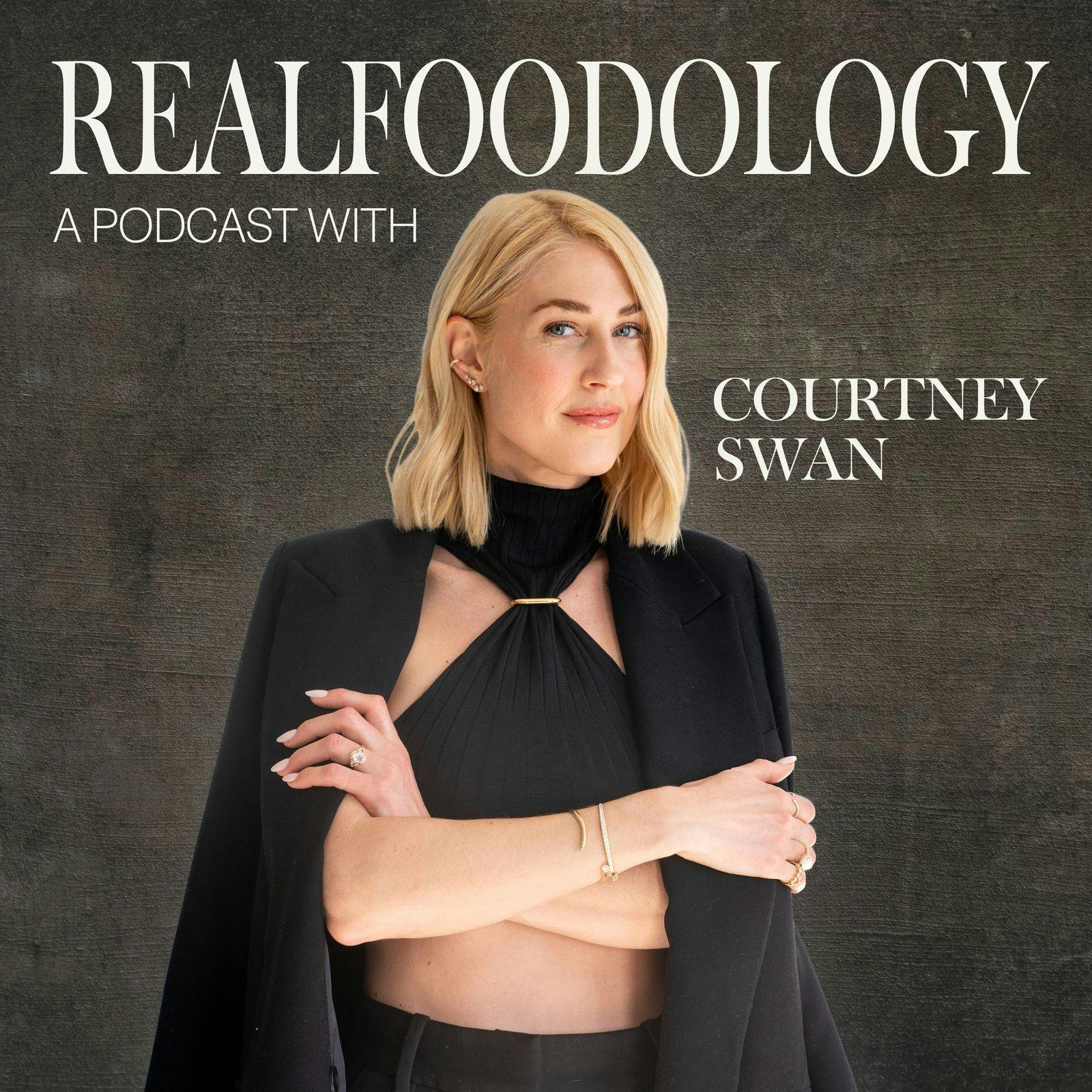
Loading summary
Transcript179 lines
- [00:00]
Courtney
On today's episode of the Real Foodology.
- [00:02]
Ronit
Podcast, why we even got into this business of Wenatal was when we saw that there is a fertility crisis that we're living in that's very similar to the chronic disease epidemic that we're seeing. And fertility is just kind of one of those diseases.
- [00:19]
Courtney
Hello, friends. Welcome back to another episode of the Real Foodology podcast. Today I sit down with the founders of Wenatal and we talk all about fertility. Y'all know I already claimed this a couple months ago on the PODC that 2025 is going to be the year of fertility for me. I'm hoping to be pregnant by the end of this year and I am on a deep dive talking to as many experts as I can around this subject because unfortunately we're also dealing with a fertility crisis in this country right now. But fear not, I've got a lot of amazing episodes that have already come out. I have more coming out and this one is definitely one that you are not going to want to miss. Both of them went through miscarriages, which is so incredibly heartbre. But what it resulted in is them really diving deep into what nutrients our bodies really need in order to sustain a healthy pregnancy. And as a result, they created Wenatal. We talk a lot about myths around fertility, geriatric pregnancies and what you really need to know about that. We talk a lot about what I should be personally taking myself if I'm hoping to be pregnant by July. So if there's anybody listening that's like, I'm really hoping to be pregnant this year or next year, you're definitely not gonna wanna miss this. It was an amazing episode. I cried, we got emotional. I really enjoyed this and I hope you do too. And I hope that it helps you on your fertility journey if you're on one. And if you have any friends that are on fertility journeys, please send this to them. My heart goes out to you if you are dealing with this right now and struggling and I hope that maybe this can bring you some peace and hopefully maybe bring you some babies this year. Please enjoy the episode. If you could take a moment to rate and review it. It means so much to me. It also really helps the show. So than much for your support. Really appreciate y'all. I'm often asked in the DMs what I feed my dogs. I just recently put Butters on this fresh whole food diet from this company called Ollie. I believe if your dog could talk that they would beg for Ollie. And I'm happy to report that it's really healthy. They deliver straight to your door. Clean, fresh nutrition and they have five drool worthy flavors. And you don't need to be a veterinary nutritionist to know that they're real, minimally processed. They're made in US Kitchens with high human grade ingredients. They contain no fillers, no preservatives, just real food. And you know, we love real food around here. Not just for the humans, but also for our pets. All you have to do is fill out Ollie's 32nd quiz and they'll create a customized meal plan based on your pup's weight, activity level and other health info. Head over to Ollie. It's O L-L-I-E.com Real Foodology and use code Real Foodology to get 60% off your welcome kit when you subscribe. Today they offer a clean bull guarantee in the first box, so if you're not completely satisfied, you'll get your money back. Ronit and Vida, I'm so happy that you're here today. We have been needing to do this podcast for so long, but I also feel like this is the literal perfect time to do it. We were just talking right before we started recording that I'm on my own journey right now. I'm getting married in June. Congrats. Thank you. I'm so excited and I'm hoping. I almost like, don't even want to admit this on the podcast because I don't want people to like be watching me under a microscope. But I'm hoping that get married in June and that I can get pregnant really quickly afterwards because I'm 40 already and I have a lot of my own around that. But I want to talk. So maybe that's where we go into this first because I know you had your kids later as well. So if you want to tell your story about that.
- [03:51]
Ronit
Yeah. So just to share, I had my first Eden when I was 38 years old and then I had my second when I was 42. And to be honest, like, I didn't think I was old any of those times. And I conceived naturally. However, I did kind of all the things and all the things that we're going to talk about today. I think with my first pregnancy, I was preparing my body really since like my early 30s when I got into functional medicine and I healed my gut and I worked on my thyroid. I was re not knowing that I was doing that to support my fertility. Truly investing in your health early on. And we talked about that too. You know, it's if you know, you want to have kids one day. It's never too early to start working on your fertility.
- [04:42]
Courtney
100% bottom line. Yes. Well, and I think too, like everyone just. It's so narrow, focused, like fertility, fertility. But you're not thinking about what you just said. The overall, like, zoom out and think about gut health, your thyroid, there's. Because it all works in synchronicity together. Right. And so why are we not feeding focused on that? And in the nutrition, what does the body need for preconception?
- [05:04]
Ronit
Yeah, it's 100%. It all works together. And with my second baby, it was actually after I had my miscarriage at the age of 41. So when I was 41, my birthday gift was that I got pregnant and three months later I had a miscarriage. And that was devastating. And I was shocked because, Courtney, I was working with Dr. Hyman, I was doing all the things I was entrenched in wellness and functional medicine. And I actually had no idea that I could have a miscarriage. It didn't even cross my mind. And now that we know the stats, of course, like now, if I would were going into it, I would be more prepared. But our biggest aha from that miscarriage was that I was focused on my health. I was doing all the things, but completely ignored my husband's health and had no idea that men were 50% of pregnancy. Health and fertility.
- [06:04]
Courtney
Isn't it crazy that we don't even. We don't talk about that publicly at all? It's so obvious when people point it out. I'm like, duh. But it's never really talked about publicly. It's always on the woman.
- [06:15]
Ronit
Always on the woman. And when we kind of came across the information on how men actually have this amazing opportunity because they're always regenerating sperm with a process called spermatogenesis. So I think they're generating like thousands of sperm every second of the day.
- [06:34]
Courtney
That's wild.
- [06:34]
Ronit
I think it's like 100 to 200,000 sperm a day.
- [06:38]
Vida
Yeah, it's about 1500 every second. So.
- [06:40]
Ronit
So they have this amazing ability to regenerate sperm. Now, us as women, we don't regenerate eggs. We are born with eggs that were born. We can improve how those eggs are mature. But men, they're getting new batches of sperm all the time. So they have almost a bigger opportunity to improve the fertil equation, if you look at it like that. And research shows that men that take antioxidants like CoQ10, NaC, L, carnitine, vitamin C, have five times higher chances of getting their partner pregnant. So when we came across that information after our miscarriages, we were like, wait, why aren't all men on antioxidants? What's going on here? This should be like the protocol for every couple who's getting married. It's like, here's your engagement gift, a meal for you. Wouldn't that be a little, would be a little intrusive. And honestly, I do that.
- [07:40]
Courtney
No, I honestly think it's brilliant. I'm like, anyone that wants to gift me that, I would be so happy.
- [07:45]
Vida
But really it goes back to like what happened in society that for hundreds of years as women, we're so advanced in so many things. We're in the workforce and we're literally have equal rights and all these things. But how are we not discussing that men are 50% of the fertility equation. That was the true aha moment that led to wenatal. We're literally like, we need to shift the gender paradigms. We need to open people's aperture to realize that it's a team sport.
- [08:09]
Courtney
Yes.
- [08:09]
Vida
You cannot do it alone. And regardless of your, you know, single parent by choice, if you're in a same sex couple, whether you're doing this in any component, you need to make sure both partners are leveling up their health and you're both doing everything you can to have a healthy pregnancy and healthy child. And it's not just that, it's the genes that you give your kids for their lifetime.
- [08:31]
Courtney
Yeah.
- [08:31]
Vida
And so that is the biggest window of opportunity that we love to share that so many people kind of want to have a kid and then just start trying and don't take the time. Similar to any sport. I used to run marathons back in the day. I wouldn't just buy shoes and run a marathon. You would do the work, you would train, you would probably get a health coach. You would. If you really want to do it well, you would take the steps. And I think that's the education we need in fertility. It's not just decide to have a baby and go, yeah, it's literally like take three to six months. Both partners level up. There's low hanging fruit in your lifestyle, diet supplements that you can do and put your best foot forward. And that's what we're so passionate about.
- [09:08]
Courtney
Yeah. Well, I'm so glad that I'm starting to really pay attention to this and talk about it because we talked about this before we started recording. But I froze my eggs when I was 36 and I have a lot of regret. Around it now because I was not really aware of all the things that I could have been doing to up my egg quality to maybe get more eggs than I ended up getting to work on my mitochondri. I'll admit I went in a little confident being like, I'm super healthy, my blood work is amazing, I eat really well. Like, I'm going to be great. And I just, looking back now, I'm like, man, I just wish that somebody had told me, like, hey, give yourself like three to six months before you freeze your eggs. Let's do X, Y and Z. Let's make sure we get the best quality eggs. And look, maybe they'll be fine. And I'm probably about to find out very soon. But I wish that this conversation was being had more. And so now I'm at least grateful that, like, knowing now that hopefully I'm going to be pregnant in, you know, the end of the summer that I can start all this stuff now. One of the things which is I have Hector on wenatal and then I'm also on it as well, which is amazing. So we're trying to focus on that. He's also on a carnivore diet. We're really on his diet. I was actually joking with my producer earlier that similar to you, where I feel like subconsciously the last couple of years I've been doing all this stuff for my health that I. That now I'm realizing, like, oh, I think subconsciously I've been kind of getting my body ready for pregnancy. And I was telling Drake earlier, I was like, I haven't even had a drink in a long time and I don't drink a lot that much anyways. But just lately more than ever, just been kind of like, eh. And then I was joking with Drake about it this morning. I was like, I wonder if that's my body literally subconsciously just like really getting me ready for pregnancy and being like, we are getting everything out that does not serve you. And we're really working on the health, which is.
- [10:49]
Ronit
Love that 100% and I think you said a lot there. So first of all, you use the term mitochondria and why does working on your mitochondria. Why is it important before you're trying to freeze your. Before you're freezing your eggs or before you're trying to conceive. Yeah, the mitochondria is the powerhouse of the cell and our eg have the most amount of mitochondria compared to any other cell in the body. I think it has about 15,000 mitochondria. And what happens when you age is there's kind of this, like, old school thinking of when you age, your eggs age with you. And if you're 36, your. Your eggs are 36. If you're 40, your eggs are like 40. But actually, what ages is your mitochondria? And if you work on improving your mitochondria with nutrients d reducing toxin burden, you can improve the mitochondria, which is essentially the battery of the cell. And then in the time before ovulation, when your egg matures through a process of meiosis, and there is less likelihood for chromosomal abnormalities when you have strong mitochondria, which is why we recently launched essentially all the nutrients that we were taking on top of our prenatal when, after our miscarriage, which is. Is five in one CoQ10 PQQ L carnitine, alpha lipoic acid and say CoQ10 CoQ10. Yes.
- [12:22]
Vida
I said yes.
- [12:23]
Ronit
Yeah, I think that's kind of like the main one. And it's just amazing to see that these nutrients have so much power. And when you support your mitochondria, you support your egg health and your egg quality. So I think there's this myth that people think like, oh, there's nothing I could do to improve my eg. There's absolutely so much you could do to improve your egg quality, whether you want to have a baby or if you're going down the route of IVF or if you're freezing your eggs. So I think the three months before any sort of procedure is so important. And going back to my story, after I had my miscarriage, I actually stopped trying for three months. I worked on my health, I worked on my husband's health. He got all the antioxidants and the nutrients, the B vitamins that ended up being in WEN was really upping my game as far as nutrients. I also did acupuncture two to three times a week. And then after three months, we tried and I got pregnant on my first try at the age of 42. So I think there's just a lot to be said about kind of like this, the society, and like us thinking like, I'm so old, I need to rush. I need to do this quickly. It's better to do it right and take the time than it is to rush into things.
- [13:43]
Courtney
I am a huge fan of Manuka honey. In fact, I've taken it for years because of its antibacterial and antiviral properties. It's rich, creamy, and honestly the most delicious honey I've ever tasted. What makes it so special? It's ethically produced by master beekeepers in the remote forests of New Zealand and it's packed with powerful nutrients that support both immunity and gut health. The bees collect nectar from the manuka tea tree and the honey they produce contains three times more antioxidants and prebiotics than regular honey. Not only that, but Manukora honey also contains a special antibacterial compound called mgo. Every single harvest is third party tested for MGO and you can even scan a QR code to see the results for yourself. Now it's easier than ever to try Manukora honey. Head to manukora.com realfoodology to get $25 off the starter kit. That's M A N U K-O-R-A.com Real Foodology for 25 off your starter kit. It I think it's safe to say that everyone loves hot chocolate, right? I think we're all in agreeance that hot chocolate is delicious and we love it. But have you ever had salty hot chocolate? Hear me out. If you have never tried the element chocolate salt, you are seriously missing out. And during the holiday season they come out with a Chocolate Medley, which is a tasty trio of flavors featuring chocolate mint, chocolate chai and chocolate raspberry. They are designed to be enjoyed hot and it's also a great way to get your electrolytes in. And they taste so good you can have them on your own. You could also just add a little bit of water and then steam coconut milk, which is what I love to do. They are not going to be around much longer. I believe that they stopped selling them in February, so get it while it's hot because the Chocolate Medley is only here for a limited time. If you want to try Chocolate Medley Today, go to drinkelement.com realfoodology and you can receive a free free Element sample pack with any order. That'S-R-I-N K L M-N-T.com Real Foodology Even in in the IVF world there is this notion of like, well like after 35, like your eggs are just older and it's not going to be as easy for you. And there's like this part of me that there's this huge resistance to it where I'm like, no, I do not claim that for myself. And similar to you, I don't feel like I'm old. I feel very young. The fact that I just turned 40 is insane to me. It's insane. It's actually insane.
- [16:15]
Ronit
Yeah, I. I felt the same way.
- [16:18]
Courtney
Like, it's crazy, right?
- [16:19]
Ronit
Crazy.
- [16:20]
Courtney
It just does not feel true for me. Like, I. I don't feel that I'm that old. And it. And it just. It also felt like it just came out of nowhere. And all of a sudden I was like, oh, like, I've known. I wanted to be a mom my whole life. I just have been so focused on my career. So hearing this makes me feel a lot. Wanted to ask you something because you said something earlier, and I'm genuinely curious if you've heard this at all. So I heard something a couple months ago that they're starting to discover that we actually are. We have more eggs than what we were just born with and that we can regenerate more. Have you guys ever heard that? And is that maybe just not true?
- [16:53]
Ronit
I'm not sure about. I mean, there's a lot of research coming out from, like, being able to regenerate egg cells from, like, other cells. I'm. I don't think that there's like, concrete research around that. Listen, maybe in our lifetime.
- [17:09]
Courtney
I know that'd be wild.
- [17:10]
Ronit
But I do think that there's a lot to say about chronological age and biological age.
- [17:15]
Courtney
Yeah, let's talk about that.
- [17:17]
Ronit
Yes, your chronological age is 40, but what's your biological age? Have you ever.
- [17:22]
Courtney
Yeah, it's 23.9.
- [17:24]
Vida
There you go. That's another reason why we shouldn't be in our head. And I think so much of society feeds us some of this nonsense, like even terms like geriatric pregnancy. Both of my kids were also after the age of 35, and I found that term to be so offensive and really messes with you mentally.
- [17:39]
Courtney
Yeah.
- [17:40]
Vida
And it's unnecessary. We're all having kids later in life. There's so much that can be done. And you already know your biological age being that it should give you the confidence to put some of that nonsense aside, in my opinion.
- [17:51]
Courtney
Yeah, no, I really appreciate that. I just. I also struggle. So maybe we can talk a little bit about this too. So I have. I have a couple friends right now that are like, pretty healthy that are pretty significantly struggling right now on their. What people are calling online is the TTC journey, the trying to conceive journey. And there's all this stuff coming out. Like one of my friends talks about all the time on her Instagram where she's like, even no matter how healthy you are, it's not a determine of fertility is at least what she's saying, and I don't know that I believe.
- [18:21]
Ronit
That it's a little bit like the term unexplained infertility. Is it unexplained or is it that? We just don't know the answer, what yours is, and we don't know what is the cause. Is it nutritional deficiencies? Is it some sort of hormone imbalance? Is it pcos? Is it. There's so many reasons. And so for me it's like, well, you know, if you don't know what's going on, you should dig even further.
- [18:51]
Courtney
Yeah.
- [18:51]
Ronit
But I do think that there are a lot of, like, basic things that a lot of people could do, you know, to improve their fertility in general. And it's a lot of the things that I'm sure that your audience talks about and knows about. But let's.
- [19:05]
Courtney
Yeah, let's outline those, because I think that'd be helpful.
- [19:07]
Ronit
Outline those. I mean, I think that, you know, when we think about fertility, we think about fertility blockers and fertility boosters and so, like, what are the things that are blocking our fertility? Environmental toxins, stress, toxic behavior. So like ingesting, you know, all of these things that are common, legal, maybe even normal, like marijuana, alcohol, vaping, smoking, those are not conducive to having good sperm and egg quality and, you know, having a baby. So I think there's just like a lot of things that people could do to like, eliminate those things and we could talk about those. And then there are things that you could do to enhance fertility. So we know that antioxidants reduce oxidative stress, which, you know, kind of harms the egg and the sperm and just overall. So adding an antioxidant rich diet, focusing on the, like, the middle, the Mediterranean diet actually has a lot of research around it when it comes to male and female fertility movement. We know that so many people are like, sedentary nowadays. So research shows that if a man walks over 4,000 steps a day, they have higher testosterone than a man that walks a thousand steps a day. So it's like little things and then just general like diet. We know that 70% of the American population is eating ultra processed foods. Yeah, those foods are, are not going to be the building blocks of creating the foundation for a healthy baby. So I think it's, you know, eliminating that and then removing those environmental toxins as much as we can. Listen, we are living in a toxic soup and we know that there's so many things that are outside of control. But can you. Things like Getting an air filter, taking your shoes off when you walk into.
- [21:05]
Vida
The house, clean water, removing plastics, glass containers, saunas. Yeah, there's a lot actually that once we dug deeper that can provide optimism. I also think the two things I dug in super when I was in the same state and I actually had two miscarriages and I think sleep and stress are two things that are low key, no one talks about it, but are so important. Sleep is like, like arguably one of the most important things to repair our immune system, let our body. I actually invested in an aura ring very early on when I was having sleep issues. And there's so much, so many things it's taught us. Right. So making sure also with all of us being on screens more and later at night that we are doing things to prevent, whether it's red blocking, blue blocking, glasses and light bulbs, weighted blankets, weighted eye pillows, whatever you can do to maximize your sleep. I truly emphasize, is it important for your audience to hear. And then stress isn't going away. So anyone trying to tell you don't have stress when you're trying to have kids. Kids is like they're wearing two heads. You know, you're not, it's not normal, it's not possible. How can you find the things that work for you? Whether it's being in nature, meditating, movement, anything that can help you relieve stress is so key. And I think sometimes, myself Included, I had 20 year career in wellness and I thought it was healthy, but my stress being in a corporate career was off the charts. I had adrenal fatigue, I was literally running on adrenaline every day. And just if you go back to like an evolutionary perspective when we're in fight or flight mode, that's me meant for a rare occurrence where you're being chased by a bear, not for everyday occurrences. So it was creating havoc in my body. And so maybe similar to your friend, we could think we're healthy, but there could be more to the story and everyone just needs to be their own advocate because it's. No one knows your body better than you and the system is as you know, medical system. It's hard to get answers and it's very dismissive and it's not easy. And so it really is important to find a trusted practitioner and someone that gets your vibe and you can go deeper with.
- [23:01]
Courtney
Yeah, well, because I found just through my friends that are struggling, it's like, and you know, this, this is probably not a surprise to anyone listening is that they, they go in, they're struggling and then they just immediately Want to throw them on ivf. There's no conversation about lifestyle changes. There's no conversation about what their diet is. Have you, you know, gotten stuff out of, of your house, your home? Have you reduced your toxin exposure? I had a naturopathic doctor on recently who has her test that she does. Why am I forgetting what it's called? Oh, clockwise. Have you heard of clockwise?
- [23:33]
Vida
Sounds familiar.
- [23:34]
Courtney
And it's a fertility test, but in a way that I've never seen before. Where they test you for bpa, phthalates, glyphosate.
- [23:43]
Vida
Very cool.
- [23:44]
Courtney
There's another one too. And then they test your biological age as well. And I thought it was really fascinating because I think a lot of people aren't talking about that from that standpoint of are you being exposed to all these pesticides? Are you being exposed to all these plastics, like phthalates that could be blocking your fertility, things like that?
- [24:01]
Ronit
Well, Dr. Shauna Swan has an amazing book called the Countdown where she talks about the link between basically bpa, phalates and fertility in men. Specifically looking at the trends in which sperm counts have declined by 50% in the last 50 years. You know, this is kind of from a high level. It's actually have declined by 62% in the last 50 years and continue to decline at an alarming rate. And a lot of it is linked to the plastics. And what we're seeing is that this fertility decline is also happening in dogs. So these are animals that are living within our environment. So there is a mismatch between, you know, the environment that's creating kind of this like inability to conceive. And, you know, I think after Vida and I had our fertility struggles, she had a miscarriage, then I had a miscarriage a week later. But then why we even got into this business of wenatal was when we saw that there is a fertility crisis that we're living in that's very similar to the chronic disease epidemic that we're seeing. And fertility is just kind of one of those diseases. And we know that one. According to the cdc, one out of five people in the US have infertility, one out of four pregnancies and a miscarriage. We're seeing essentially a fertility reduction of 50% in the last 50 years. So if you think about where that's taking us, that can be, you know, a very tragic future for, you know, the humankind. So we are here to say. And then just kind of like what you were saying with IVF. IVF is a 20 billion dollar industry.
- [25:56]
Courtney
Yes.
- [25:57]
Ronit
So yes, There are a lot of businesses that are interested in ivf. I'm not saying that it's not a solution. It's a solution for many people. There are people that have structural issues that need to go through IVF and.
- [26:12]
Courtney
Happen to my friend. Yeah.
- [26:14]
Ronit
So 100 hands down it's a great solution, but it's not the only solution in town. And you know, a lot of of you know what we've been seeing is that IVF is a little bit like could be a band aid, especially when it comes to like male fertility issues. Because a lot of times one out of four couples that have go through ivf, the partner isn't even tested.
- [26:42]
Courtney
You could be eating all the right foods for your New Year's resolution, but if your body isn't properly breaking them down, you're literally flushing money down the toilet. That's where masks on times from Bio Optimizers comes in. This isn't just another digestive enzyme. We're talking about a powerhouse supplement with 100000 units of protein digesting enzymes per capsule. If you're hitting the gym and upping your protein intake for those 2025 gains, mass times will help you actually absorb those expensive protein shakes and meal prep high protein meals that you are eating every day. Users report better digestion, increased energy and faster muscle recovery. Plus no more feeling bloated and sluggish after meal meals, which is exactly what you don't need when you're trying to stick to those New Year's fitness goals. For an exclusive offer, go to buyoptimizers.com real foodology and use promo code Real Foodology for the purest and most exceptional coffee experience. Explore Paleo Valley's Polyphenolo Defense Organic Coffee. The original single origin beans hail from organic sustainable farms in Honduras and Peru. Not only is the coffee rich in polyphenols, but it's also infused with eight functional mushrooms like lion's mane, Reishi and Cordyceps for energy, cognitive clarity, immune support and stress relief. They've even added coffee fruit extract to boost brain derived neurotropic factor by 143% enhancing focus and mental acuity. Best of all, it's low acid which makes each sip gentle in the stomach and each cup is third party tested for toxins and mold. So make sure that you go to paleovalley.com real foodology also check out all their other products. They have great supplements, they have spices. They have so much to choose from. I am a huge fan of Paleo Valley and everything that they're doing. And if you go to paleovalley.com Real Foodology, you're going to save 15%. Again, that's paleovalley.com Real Foodiology and use code Real foodology and you are going to save 15%. That is so insane. How are we allowing that to happen? That. What, what, how are they missing that.
- [28:45]
Vida
The process is messed up because imagine how much burden the female takes on just going through ivf. How could you not even check the male partner? I know, it's a big.
- [28:53]
Ronit
And we know that, like, sperm quality is a barometer of your health. So you have this opportunity to, like, look under the hood and dive deep and say, okay, well, why do I have sperm motility issues? Why do I have sperm quality issues? It could be linked. Men that have. Have issues with erectile dysfunction have higher chances of cardiovascular disease. So this is an opportunity to dive in and look under the hood of your health for both men and women. And a lot of times we're just like, okay, we just need to have the baby ASAP. We just got married. We're 40, you know, and it's like, you know, we're, we're very much advocating for, like, there's so much you could do and use this challenge as an opportunity to become healthier.
- [29:40]
Courtney
Yeah, absolutely. I mean, we're. We're both doing that right now. Like I said, honestly, part of it, it started out as subconsciously. I don't know why. With the fertility piece. I think over the last decade, I've kind of just had this mentality of, like, oh, it's going to happen when it's supposed to happen. And I never was thinking, like, really thinking about, like, how can I improve my fertility? Because also at the time, I mean, I wasn't even, you know, on my way to getting married and just didn't know when I was going to. It was even going to be possible. And so I'm so glad we're having this conversation because I'm hoping that people younger will listen to this and start to take more care and pay attention to this, because I feel like, I don't know, I'm just. I'm really hoping that I have paid enough attention to my health and that I've taken care of my health enough to where I'm just like, I'm starting to get so nervous because I'm like, oh, my God, if I can't get pregnant, I'm gonna be so upset. It's hard.
- [30:33]
Vida
It's hard. Hard. It's hard. And I would say, the more you can get back to not letting those thoughts creep in. We've all had them. I mean, I had a miscarriage before I had kids and it went, I'm sorry. I know it's emotional and I know it's okay. All the thoughts, will I ever have kids? Why me? All these things, why did I have, you know, married later in life? All the things it's proven that gratitude, a few minutes a day can really help shift the brain. And that's why. Also at Wenatal, we knew that the supplements are one part of the equation, but your mental health is so important also.
- [31:03]
Courtney
Yeah.
- [31:03]
Vida
We came out with a weenatal journal to help guide our not yet pregnant couples. Ask questions, do it together and just do a daily prompt every day, a couple minutes and have those loving thoughts for yourself, for your partner and your future child. And I love that you will get there 100%. But you also have to believe and know that it's waiting for you. I think it's hard to keep faith when a lot of the messages were spewed are pretty toxic. Yeah, it's not just the food in the air that's toxic. It's really these terms and these, these fear mongering and there's a lot of this and it's an industry. And so being kind to yourself during this process is also super important.
- [31:39]
Courtney
Oh, I know. Thank you. The geriatric thing really gets me because like I was saying, I mean, I'm.
- [31:43]
Vida
Like, I told Rooney, I want like have my lifetime. I want to get rid of this term. This is like my goal.
- [31:49]
Ronit
Thinking back to your biological age. And honestly that's what I did before I met my husband. I met him when I was 35. But at 34, I was like contemplating, should I freeze my eggs? Should I not freeze my eggs? And I found out that I had low amh, which is essentially your egg reserve. And in my head I was like, you know what, I'm not going to freak out about this number because I know I'm healthy. I know I've been like really taking care of myself. And it's about egg quality, not egg quantity. So I think that's like a big message of ours too. Like, yes, you probably have less somebody who's in their 30s, but you're focused on, you know, about improving your mitochondria. You are building those nutrient reserves that are crucial for fertility. And so I think it's just thinking and changing the mindset. And like for me, when I found out I had low amh, I just thought to myself, well, my mom had my sister when she was 37, and this was, like, back in the day. So, like. Like, there's no reason why I would be. Have, like, issues, and I didn't have issues. So I think a lot of it is just also, again, that, like, mindset and just, like, kind of not thinking about it and, like, not thinking about the number and just being confident that you are doing all the things.
- [33:11]
Courtney
Thank you.
- [33:12]
Vida
And we know it's easier said than done. It's easier for someone who's had the kids to be like, don't stress about it. But the reality is you are leaps and bounds ahead of most people who haven't done the health work, the gut work, like, you know what I mean? The food, and you're immersing yourself in all the right things. And I. Every now and then I'll have a friend who's like, but I'm doing all the right things, and this person's doing drugs and eating fast food and how did they get pregnant? And, like, it doesn't mean you don't know. You can't look under the hood of every couple. You don't know the lifelong health of the child and all the things. And so trying to stay in your own and not look left and right, right. Like, just stay in your own lane and be. Be super grateful for your relationship, grateful for your health. You're gonna get there. I have no doubt.
- [33:54]
Ronit
And I will say, there's so many positives to having kids later in life. I look at people that are, like, 25, and, you know, they have kids, but then, like, maybe they're not, like, advanced in their career, or maybe, like, they're not stable financially, or maybe they're. You know, there's a million reasons why I am so grateful that I had my kids in my late 30s and early 40s. Like, I don't have FOMO when people go out, I was like, I just wanted done that.
- [34:24]
Courtney
I'm over that.
- [34:25]
Ronit
I'm okay with being, like, super present with my kids. And, like, I never feel like I'm missing out on anything. And there's just, like, so many benefits. So.
- [34:35]
Courtney
Yes. Oh, I just love this because they're. It's so interesting how, like, your life just unfolds obviously the way that it's meant to be. But, like, I always thought I was going to be a young mom, so I think a lot of this journey, too, has been me kind of, like, grieving that and just accepting, like, okay, like, I decided to take my Career on first. And also I just didn't happen to meet my person until later for whatever reason.
- [34:55]
Ronit
Yeah.
- [34:55]
Courtney
But you made some really good points. And I think that, yeah, that helps me a lot. And hopefully it helps a lot of people listening because it's, you know, we're, I think, as women too, we take on so much of this. Right. Like, we get. We're so hard on ourselves. And we're also, I think women are just hard on other women in general. Like, we're brutal.
- [35:13]
Vida
Yes.
- [35:13]
Courtney
To each other about all of this.
- [35:14]
Vida
That's why the impetus of we name was like, to share the responsibility so that women don't take on the burden. Both of my miscarriages, I, like, got so depressed and retraced everything I ate and did, and I literally only blame myself. It didn't even dawn on me that my husband could have had any part in it.
- [35:30]
Courtney
Yeah.
- [35:31]
Vida
And so much of who we are as women is that nurturing, caring, taking on responsibility, when in reality, having a village, sharing that responsibility is so important also for your mental health. And know that you have a community. You're not alone. We're all having kids later in life. And your career, specifically with your voice has helped so many people. And so that was meant to be. You've helped our food system. You're helping educate people's health and know that. That I truly believe, like, that journey was meant to be.
- [36:00]
Courtney
Thank you. Thank you.
- [36:02]
Vida
Yeah.
- [36:02]
Courtney
So I'm curious to know what both of y'all did after your miscarriages that helped you to have viable pregnancies afterwards. Because I'm sure a lot of people listening are thinking like, okay, what are tangible tips if I were to have a miscarriage that I could do after?
- [36:15]
Vida
It's a great question.
- [36:16]
Ronit
So I think the biggest thing is investing in preconception for both partners. So preconception trimester zero. Some people call it Primester is this golden window of opportunity. And it's the three to six months before trying to conceive. For us, the easiest recommendation would be to take a high quality prenatal. We created Wenatal because we couldn't find anything like it on the market. We worked with Dr. Mark Hyman and Kelly Levesque and Bridget Tigemeyer. We have an amazing advisory board that helped us with the formulation. So making sure that you're taking a prenatal that has folate, not folic acid.
- [37:00]
Courtney
Yes.
- [37:00]
Ronit
So folate is the bioavailable, which means you can absorb it. Absorb it. Form of folic acid choline, which is super Important for baby brain development. Iron vitamin D is cr crucial for fertility. B vitamins in general, being on a good quality omega, which we also launched to reduce inflammation. And then for anybody that's kind of ex, kind of wants to like either take it to the next level or you know, know is a little older or has had losses, taking like an egg quality booster like the one that we have with CoQ10 and a few other nutrients to help support mitochondria is super important. So like, and obviously putting your partner on a prenatal like goes without saying. So those are the two like most basic simple things that you could do and anybody should do. Doesn't require a lot of like behavior change.
- [37:59]
Vida
And can I add a tidbit? Because a lot of people think I'm healthy, I don't need supplementation. I eat all organic and I'm eating high protein and good qual vegetables. The reality is, and I know you know this, but our food is just not as nutritious as it once was. Our soils are depleted and orange today. Let me think. If my grandfather ate an orange, it's the equivalent of eating eight oranges today. So you could realize that even eating healthy you're, you have to eat way more like almost to an impossible format of getting the same nutrients. And so why the supplementation is important, even if you're eating clean and healthy is to build those nutrient reserves that we're not getting because of our soils and the situation with our food system.
- [38:36]
Courtney
Yes, it's very important to note.
- [38:39]
Ronit
Yeah. And then I think it's kind of like doing all the things that we talked about, focusing on the fertility boosters, reducing those fertility blockers. One thing that we didn't touch on is exercise. I think a lot of people in our space, in the wellness space can kind of overdo it with exercise. So I just want to say like sometimes it's better to like, let's say like sleep over exercise as an example. If you are waking up at five in the morning to do those like high intensity workouts and missing sleep, that's for sure. No, no, like listen to your body. If you go and work out and you feel good afterwards, great. If you feel depleted, then that might not be the exercise for you. So it's kind of like moving. But don't like overdo it. It.
- [39:27]
Courtney
This is such an important piece. I've talked about this a lot in the past on my, my Instagram because I went through a phase in my life where I felt like if I didn't get an insane workout where I came out super sweaty that I felt like it didn't count as a workout. And I was sometimes doing two a day where I would do like soul cycle twice a day. And I was, by the end of that, I was such a mess. Mess. Like I was anxiety ridden because I think from all the hormones just being all over the place, right. And like I was on adrenaline, basically I had major adrenaline fatigue. And I finally like, basically had an intervention with myself and was like, you cannot keep living like this. This is insane. And I put a full halt on exercises for literally two years. All I did, I just committed that I was just gonna walk every day. And the way that that transformed my health, I could not even. I can't even explain to you how much that changed my whole life because it reduced my anxiety. I felt like my adrenal fatigue was finally able to go away. I allowed myself the ability to just like sleep in and like miss a workout class if I was tired and I didn't feel like it. And I, I still see some of my girlfriends struggle with this now where they'll get up at like 7am and they'll just be like dead afterwards. And I'm like, babe, skip that class and sleep in. Make sure you're getting eight or nine hours hours of sleep and then just get a walk in that day. Or like, if I have to get up super early for a flight and I'm pretty tired and sluggish, I just won't work out that day because in my mind I'm like, that's really bad for my hormones. It's better to just protect my hormonal health. And I've been really working on doing weight training, which I think has been like game changer.
- [41:05]
Vida
Yeah.
- [41:05]
Courtney
Yes. And I was always kind of scared of it. Like, I don't know why. I not even about scared of getting bulky. I just like don't. I don't know, I just like don't love like gym culture in that regard. But I think it's been helping me a lot. A lot.
- [41:17]
Ronit
Definitely.
- [41:18]
Vida
I think walking is under underrated.
- [41:20]
Courtney
It's so underrated.
- [41:21]
Vida
Good.
- [41:21]
Courtney
Yes.
- [41:22]
Vida
There's so, so much to be said. It's also, you're in nature and you're moving and you're getting fresh air and we're not, we're indoors. You know, 90 plus percent of the day. We need to get out there. And also I think an important message in all this is listening to your body.
- [41:35]
Courtney
Yes. Yes.
- [41:36]
Vida
What I wasn't doing in my 20 year corporate career was doing that. I was trying to do all that and the hardcore workouts, and I was drinking like 10 cups of coffee a day to make it through the day. And, like, that wasn't good, nor. And it's a coffee culture now. And, like, it's fun, but you really have to, like, take a step back and be in tuned. That's also going to help you nurture that future child.
- [41:55]
Courtney
Yes, absolutely. I'm so glad y'all brought that up. I feel like that's really important. So we kind of talked about this a little bit, but we didn't go into detail. Are there any myths around fertility that you feel like, need to be debunked, that we haven't talked about so many.
- [42:09]
Vida
I think we talked about, you know, women, you're stuck with the eggs. We have. We talked a little about that. There's so much you can do. I think the other one that we hear is that men could help have kids at any age. You know, they don't have a chronological biological rock. And the truth is, you see these celebrities having them at 70s and 80s McJagger and all these people. But really there is an increased chance as the paternal age increases with, you know, you know, the offspring having developmental challenges and other things that could happen.
- [42:35]
Courtney
Doesn't autism go up too?
- [42:37]
Ronit
I think, yeah, that's one of them. Which is why it's super important for men to focus on improving their sperm quality. And they can. They have this ability to do it. So I think that's like, our big PSA is like, listen, if you're 20, you might not need to, like, work on improving your sperm quality, but if you're in your 30s and 40s, which most men are when they're, you know, they're trying to have a baby, it's so important. Especially even, like, 50s.
- [43:04]
Courtney
Yeah.
- [43:04]
Vida
Yeah. And then there's so many more that I think coming up through the research through enatal about, like, mental health and fertility, even oral health and fertility. I don't think it's a big one. Like, no one ever thinks they're related, but they are.
- [43:17]
Ronit
Yeah, yeah. There's research that shows that gut inflammation in the gum is, like, one indicator of, like, reducing your fertility. So, like, we always say, like, okay, when you want to have a baby, go get a teeth cleaning and make sure to. We have a master class coming out at the end of February. Fertility master class. And we have one episode with a friend, biologic biological dentist, that talks. Talks all about the connection between oral health and fertility and just general health, too.
- [43:50]
Courtney
Yeah, well, in general, it's funny. I'm. I'm really intrigued to see what comes out in the next, like, 10 years or so with the connection to our oral health, to our overall body. Because we already know women that have breast cancer that. That now they're having them look at to see if they have bacteria in there from, like, a root canal or some sort of, like, dentistry that they got done that was never addressed, dressed.
- [44:12]
Ronit
Wow.
- [44:12]
Courtney
Because they're finding a huge connection. It's kind of wild, like, for. For some women, not all. Not all cases, but in some cases, they can look at, like, a root canal on the right side, and then literally, she had breast cancer on her right side. Because think about it, there's a direct, like, line.
- [44:27]
Vida
The best thing that Casey means, our good friend has taught us is that we typically treat the body as pieces. Like, we go to an ear, nose, and throat doctor. But it's all connected. And she always talks about, like, we need to treat the body as well. 1. And it's all connected. And that's why even if you're doing every perfect workout, every good food, making sure you're gracious to yourself, you have gratitude, you're getting out in nature, you're doing some of the most basic fundamental things that our ancestors did. Getting outside, not sitting all day. There's, like, so many fundamentals that we've kind of completely gone away from that just don't equate to, like, a healthy lifestyle and health and fertility are equal. It's not just focusing on your health to be fertile. Anyone listening to this who wants to increase the, you know, human species and make sure we're a healthy, live bunch should care about this.
- [45:13]
Courtney
Yeah.
- [45:13]
Vida
And so it shouldn't matter what stage in life. We should know that, like, obviously we double it when we're trying to have a baby because we have an end goal. But this feedback is good for anyone in any stage of life.
- [45:23]
Courtney
Yeah, absolutely. Yeah. So we've probably already covered all this, but I just want to. Just. Because I would love to know what you guys have to say about this. So let's just say my plan as of right now is to hopefully be pregnant by, like, July or August. I get married in June, really hoping it doesn't happen before because I have a beautiful corset dress that I would really love to fit in. Okay, got it. So obviously, so I'm taking the Wenatal supplements, and Hector's also on his. And what are some other things maybe that we haven't covered that, you would suggest that I look into, like, have we covered all of that as far as, like, what I should be doing for myself? I think the gratitude is a big one.
- [46:00]
Ronit
Gratitude is a big one. And I think, think, like, gratitude goes hand in hand with, like, stress kind of management. I think for me, when every time I was pregnant, I somehow become very anxious and I'm not an anxious person. And then I would just, like, download some, like, meditation app and like, it would be like, S.O.S. i need to, like, calm down. But, like, working on these things early, like before you're pregnant and finding, like, what is your, you know, preferred stress relief technique. Stress relief technique. And then it's, you know, really setting the foundation in your house. You know, there's a spiritual aspect of having babies, too. One of my favorite books that I read after my miscarriage was called Spirit Babies.
- [46:49]
Courtney
I knew you were going to say that. Yes.
- [46:50]
Ronit
And there's this spiritual aspect of, like, setting up your home to welcome the soul and making sure that you're kind of like, available for the soul and so is your partner. So I think there's like that spiritual aspect too. So there's the mind, body, there's a spirit and what else?
- [47:13]
Vida
And you probably know all the toxic things are removed from your house. And so, you know, all the lifestyle tips. And I think also for men, some people, men still don't know that when they're trying to conceive that heat is like, saunas are not great for them. I think it's still a big aha. That men love the sauna and they forget that when trying to conceive, he is actually destroys their sperm. And so whether he can cut that out for a couple months when you're trying to conceive or if he must have it, there are ice packs and different things that they say, yeah, you.
- [47:40]
Courtney
Think the ice pack helps and it.
- [47:42]
Vida
Probably is important if you're trying.
- [47:44]
Ronit
You have to go into the sauna. If a man has to go into the sauna, just like, needs it, then, yeah, put a nice pack there.
- [47:50]
Courtney
I mean, I'm not worried about Hector. He doesn't really sauna that much anyways. I do it more than he does.
- [47:54]
Vida
So actually for you, it's great and detox and it's wonderful. I don't think there's any problems.
- [47:58]
Courtney
But, you know, there's another thing that I feel like not a lot of people talk about, and it reminded me when you brought up the spirituality thing. So I had this soul reading done last year and One of the things a woman told me is she said that, I mean, this is going to sound so woo and I'm probably going to lose half the people here. But she was like, your tribe, like your angels, whatever, are communicating to me that you quite literally have to create space in your life for this baby. Because the way that you are running your business right now, the way that you are with your career, you barely have enough time and space for yourself. So like this baby's kind of like floating around going, where am I going to fit into your world? And that really hit me hard. And it's interesting because now that I'm thinking about it, looking back, I'm like, wow. I've actually like, kind of subconsciously done a lot of like repositioning with my work lately where, where I feel like I've started kind of without even realizing, like, kind of making a little bit more space. But I think that there is a large aspect of that too, where you have to literally create space and know that it's like safe and like, so your baby can know that it's safe in time for them to come in as well.
- [49:02]
Ronit
Yeah. I mean, I've heard a lot of stories of people too, that actually created like physical space.
- [49:09]
Courtney
Yes. You know, like, I've heard this too.
- [49:11]
Ronit
Started to like, maybe they bought a onesie or maybe they like. But I do think that it's so important and it goes back to our earlier conversation of you, like maybe like traveling a little less now, being at home more, being more in that like feminine energy of like receiving and not like doing so much. I think there's so much there and I'm all about the spirit guides. So.
- [49:35]
Vida
Yeah.
- [49:35]
Courtney
Oh, I'm so here for it. I just. It's funny because I feel like sometimes you lose people with it, but I'm like, whatever. I. I think it's. I love it.
- [49:42]
Ronit
Yeah.
- [49:42]
Vida
I think it's an important message. And it sounds like you're. You're kind of already doing that with the workouts, with your flights, with, you know.
- [49:48]
Courtney
Yep, exactly.
- [49:49]
Vida
With the alcohol. It just like feels like you're getting ready.
- [49:52]
Courtney
Yes. Yeah. So I'm like, okay, please call it, calling it on. I'm just curious, just from Yalls perspective, from a health perspective, what are your thoughts on freezing eggs?
- [50:03]
Ronit
I think freezing eggs is. Is a great option for people if they have it. There are actually a lot of companies nowadays that make it like cheaper and affordable for people to freeze their eggs. Like CO Fertility is one, but it's not like a 100% bulletproof insurance policy. So what people need to understand is you can't test your egg quality when they're just frozen eggs. You can actually test frozen embryos. And so if you are in a relationship, it might be wiser to freeze embryos if you don't want to have babies just yet. And then you can freeze the embryos and test and see which ones are genetically viable. But just knowing that the egg freezing process is not pros. Is not perfect and the thawing process is not perfect. But going into it, understanding that you're planning to freeze eggs as if you're planning for a pregnancy.
- [51:02]
Courtney
Yes.
- [51:02]
Ronit
Like, like it should be 100%. Like you are doing all the things that we talked about for freezing your eggs as well.
- [51:10]
Courtney
Yeah, yeah. I mean, like I said in the beginning of the episode, I wish that I had heard a conversation like this before. Oh, and also, I wanted to bring this up just for people listening. I've talked about this before on the podcast and I'm wondering if you all have heard this because I, you know, where I got this from was from Kelly Levesque. Kelly told me that with some of her clients when she started putting them on urolith and a, that it upped their. Their egg count when they went to go freeze their eggs because some of them were, were struggling, like, first round to get enough eggs and then took your lithium A and then it helped to increase their egg count. Do you guys know what that is?
- [51:43]
Ronit
There is a. Some research on that. And I know that some people are starting to talk more and more about, like, there's a lot of new kind of innovation when it comes to all of the things that you could do to increase your egg count. I don't think that there's like, concrete evidence around.
- [52:03]
Courtney
Yeah, no, no, there's definitely. This is all. Let me be very clear. It's very anecdotal.
- [52:07]
Ronit
Yeah, yeah, yeah.
- [52:08]
Courtney
But, you know, this is where this.
- [52:09]
Ronit
Stuff starts, you know, a hundred percent.
- [52:12]
Courtney
So. But, but, and also to me, I just think about it logically and it makes sense. Urolithin A is food for your mitochondria. And they've done all these studies. They do know. And we do have a lot. We have like 15 years worth of studies now showing that uran A is really good for your mitochondria and it helps to improve your mitochondria. So in my brain, I just take it further and I'm like, okay, well then why wouldn't that be better for 100%? Right? Like how could that not help improve it? So I've been taking timeline. Timeline for it.
- [52:39]
Ronit
So, yeah, we're all about it. So we have an amazing bundle for your listeners. If anybody subscribes to Wenatal, they get a free omega. And our omega is every epic because it does not smell like fish. It you do not burp up the fish.
- [52:53]
Courtney
I can attest to all of that. Yeah, I take it right now.
- [52:56]
Ronit
Really good. So you get a free omega if you go to wenatal.com real foodology.
- [53:01]
Courtney
Yay. Oh, also, I do want to say that I heard this on another podcast. Y'all. Y'all talking about this. You kind of said this, but I want to, like, really reiterate this. The way that y'all formulated your prenatal, you were looking at all the other prenatals and saying they didn't have some of the things that you were looking for. And also they didn't have them in the right quantities. And not a lot of people talk about this.
- [53:19]
Ronit
This is a big one. So we natal for her has 24 key nutrients in it. We wouldn't leave one nutrient out. So there's the amount of nutrients, but then there's the dosages. Let's use choline as an example. We have 400 milligrams of choline. Some prenatals on the market don't have choline at all. Choline is crucial for baby brain development. I can't even tell you, like, when I see people on prenatals without choline or low choline, I'm just like, oh, my God, SOS for your baby's iq. Like, we. I'm just like, there is just so much power. There is so much power in these nutrients. And so it's like the dose matters. The. The form matters because not all of them are bioavailable. And. And so it's super important. So what we were. We were taking packs of like, oh, my gosh, like, eight, seven pills. Yeah.
- [54:15]
Vida
And then we were adding.
- [54:16]
Ronit
Multiple adding to it because it didn't have iron, it had low vitamin D, it didn't have enough folate. So we were taking, like, 10 pills. And we were like, women deserve better. We deserve better. And so we basically created a prenatal. We packed it all in to three capsules, and we're able to do it because we manufacture in small batches. We don't have any fillers and binders. So. So it's like, you know, our expiration date is after two years because we don't have any preservatives. Or junk in it. But we're not, you know, we're not making you take eight pills like some of our competitors. So honestly, we wouldn't have gotten into this space if we didn't think that there was room for innovation. And we're so grateful because, you know, Vita, recently I was off for three weeks because has my house burned down in the fire?
- [55:09]
Courtney
I know. I was going to talk to you about that after the recording. I'm so sorry.
- [55:13]
Ronit
Crazy. But Vita actually just recently told us that, like, somebody invited us to their baby shower. Like, say, they emailed our customer service and they were like, we just, like, want Ronit and Vita to come. We. We really feel like we're pregnant because of this pren.
- [55:29]
Vida
They were struggling for years and they found we. I'm just like.
- [55:32]
Ronit
Like the stories that we hear from our customers, the testimonials, all the Wenatal babies, it's just so, so heartwarming. And I think it's just like, you know, our contribution to the world to try to make. I don't know, there's Maha and then there's Maa. Like, make America fertile again.
- [55:53]
Courtney
Like, I love that. And let's make more healthy babies that make more healthy babies. Mm, hb, yeah.
- [56:02]
Ronit
Mm.
- [56:02]
Vida
Hb, yeah. Healthy little humans was like our first tagline. Like, that was why we created this. And we're so excited. And I will say the testimonials will give you goosebumps. Some women who have had 14 rounds of IVF and now have had successful pregnancies by finding wenatal and functional medication and healing their gut. I mean, it's just. There's goosebumps there. We have a poster child for sure.
- [56:24]
Ronit
Yeah.
- [56:25]
Vida
But all these to say day that there is so much more than you know that meets just any part of this aspect and believing in the holistic taking care of your body, mind, all of it, your partner. There's so much more to this. And we're here for all the questions. That's the other thing your audience should know. You can email us anytime. Care@wenatal.com we have an amazing medical board. We will answer anything if you DM any DMS.
- [56:49]
Ronit
And we have an amazing guide, wenatal.comguide, where people could go to get our free tips for preconception.
- [56:57]
Courtney
That's amazing. Thank you so much for everything that y'all are doing. I'm so grateful. I also. I mean, this is just like a silly little note, but I also just love your packaging so much. I talk about this all the time on Podcasts where, like, I just love when a brand has a really pretty, beautiful jar, and then it comes little compostable packets that you can like, or I don't know if they're compostable, actually, but you can, like, refill it. And I just. I. All around. I just love so much what you did. The quality is really high. I love that I'm not having to take 18 supplements a day for this, you know? Know. And I appreciate the. The aesthetic of it, too. It's very beautiful.
- [57:29]
Ronit
We wanted it to be part of your house, like, part of people's house, and not to, like, hide it with all of your supplements and.
- [57:35]
Courtney
Yes.
- [57:36]
Ronit
Your bathroom. And also, we're brand people. We met at Nike in our corporate job. So, like, having a beautiful brand experience was super important to us.
- [57:44]
Courtney
Yeah. I love it. I love it. I think it's so underrated, in my opinion. It really, like, makes a difference. It's so funny, actually. Literally, when I was on the phone with Hector last. Last night, I was like, are you taking your. Your prenatal supplements right now? And he's like, I think so. I literally said. I was like, you know the really pretty, like, turquoise jar. Yeah. And he was like, oh, yeah, that one. Yeah, yeah, yeah.
- [58:03]
Ronit
I love it. I love it.
- [58:05]
Courtney
I always have to check in on him and make sure he's taking out my.
- [58:07]
Ronit
All of them.
- [58:08]
Vida
If we don't put it on the napkin after breakfast, like, who knows if they'll take it? But.
- [58:12]
Courtney
Okay.
- [58:13]
Vida
Yeah. You're not alone.
- [58:14]
Courtney
Oh, my God. It drives me insane. I'm like, hector, because every time. Because I've been traveling so much lately, and every time I come home, I'm like, you haven't been taking your supplements. Happy.
- [58:22]
Vida
You see, when they back up, because it's still a jar, my husband will.
- [58:25]
Ronit
Be like, you haven't given me my supplements. I'm like, yo, it's the green jar. Like, it's like, I just like when you give it to me.
- [58:34]
Vida
Same.
- [58:35]
Courtney
That's so funny. Well, thank you so much for your time. Thank you so much for what you're doing to make America fertile again.
- [58:40]
Ronit
I love that so much. It's our goal.
- [58:43]
Vida
Thank you for having us.
- [58:44]
Courtney
Yeah. I'm so appreciative of you guys.
- [58:46]
Ronit
Thank you, Courtney.
- [58:48]
Courtney
Thank you so much for listening to the Real Foodology podcast. This is a Wellness Loud production produced by Drake Peterson and mixed by Mike Fry. Theme song is by Georgie. You can watch the full video version of this podcast inside the Spotify app or on YouTube. As always, you can leave us a voicemail by clicking the link in our bio. And if you like this episode, please rate and review on your podcast app. For more shows by my team, go to wellnessloud.com see you next time. The content of this show is for educational and informational purposes only. It is not a substitute for individual medical and mental health advice and doesn't constitute a provider patient relationship. I am a nutritionist, but I am not your nutritionist. As always, talk to your doctor or your health team first.