← Realfoodology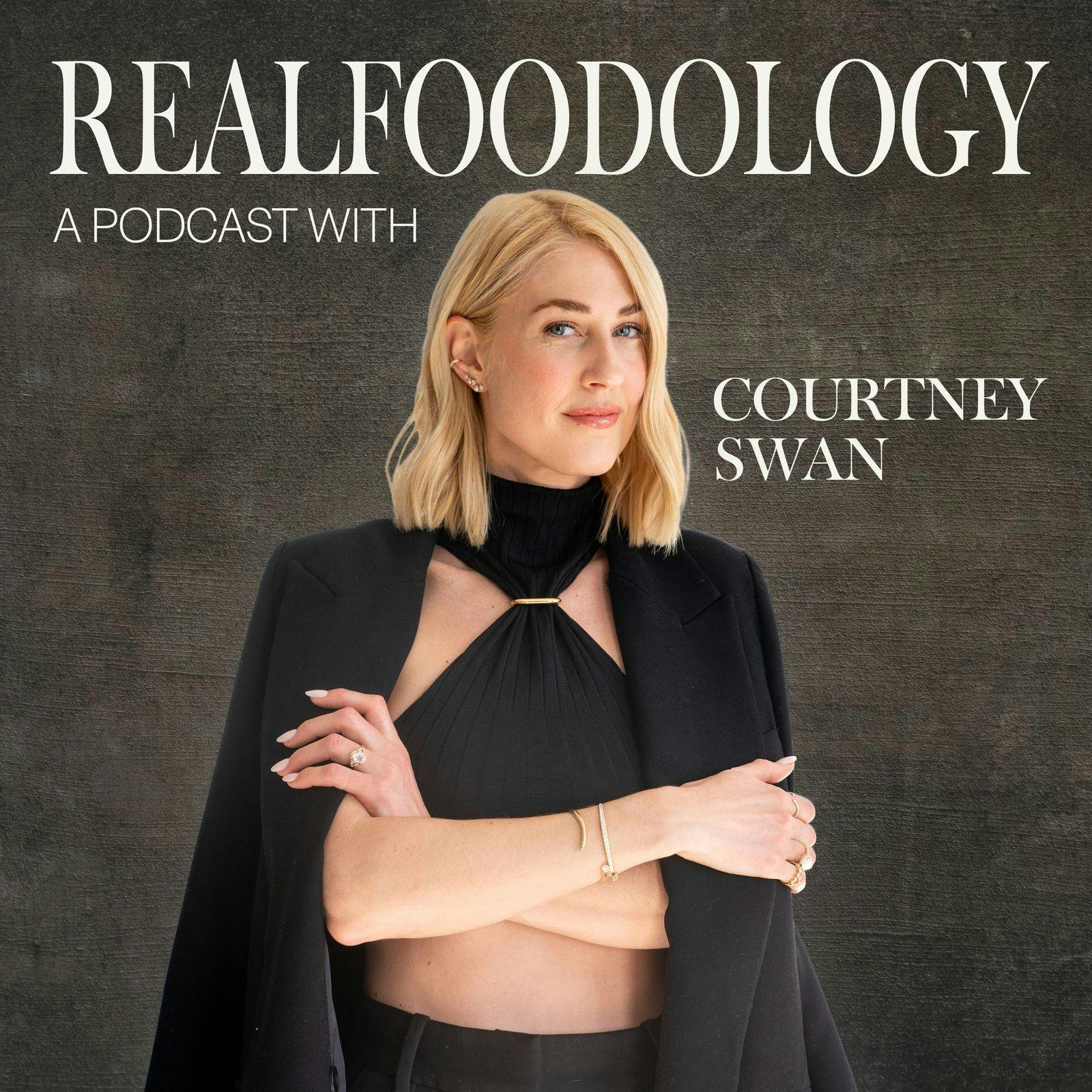
Realfoodology
The Secret to Healthier Kids: Clean Air and Better Schools! | Mike Feldstein of Jaspr
00:54:23
Loading summary
Transcript267 lines
- [00:00]
Courtney Swan
On today's episode of the Real Foodology.
- [00:02]
Mike Feldstein
Podcast, we're on a mission to create the healthiest school in America. So what does that really mean?
- [00:09]
Courtney Swan
Hello, friends. Welcome back to another episode of the Real Foodology Podcast. As always, I am your host, Courtney Swan. And today's episode, I sat down with Mike Feldstein again. He is the founder of Jasper Air Filters, otherwise known as an air scrubber, which, if you wait until the very, very end of the episode, he describes what an air scrubber is, and so you'll learn more about that. But this episode, I am so pumped about y' all. He built a school, and he is revamping what a school will look like for children, addressing things like the environment, the air that they're breathing, getting them into nature. It is everything that I wish that I had as a kid, and it's everything that, as I've gotten more into health and wellness, that I've been dialing in for myself and have been concerned about when I have kids. How am I gonna address this with my kiddos? And now there's a school that exists. And what's really cool is that he's gonna put his blueprint for how he online so that other schools across the nation can also copy it. So this is how we get healthier children. This is how we make America healthy again. We start with the children. I love this episode. I hope that you love it as much as I do. Wait till the very end because we are giving an amazing, epic discount on Jasper Air Filters. And I hope that you love the episode. If you could take a moment to rate and review it, it means so much to the show. It really, really does help. So if you want to tag me Eelfoodology and you want to post about this on Instagram, I try to get back to all your messages. I try to post them as much as I can, and it means so much to me. I truly, truly am so grateful for the support. So thank you so much for listening and supporting, and I love you guys so much. I hope that you love the episode. Mike, thank you so much for coming back on the podcast. I'm so happy to have you here.
- [01:52]
Mike Feldstein
Thanks for having me. Round two.
- [01:54]
Courtney Swan
Round two, baby. Let's go. We're talking all about clean air, and also you bought a school, and so we're talking about that, too, which I'm very excited to talk to you about.
- [02:00]
Mike Feldstein
That I'm excited to tell you.
- [02:02]
Courtney Swan
So you were just telling me right before recording that you just did a study on microplastics and your Jasper air filters tell us about that.
- [02:08]
Mike Feldstein
Yeah, so there was a study, I think it came out since last time I was on the pod with you in the uk in London. If anyone wants to read it, just type in like BBC microplastics study on Google and you can read all about it. But in the 48 homes that they tested, a hundred percent of them had microplastics in the air. Indoor air had like five times more microplastics than outside. They also did biopsies of people's lungs and basically everybody whose lungs that had a biopsy had microplastics in them.
- [02:48]
Courtney Swan
Wow.
- [02:49]
Mike Feldstein
And if you think about it like everything that decays over time, like, you know, the plastic water bottles take a long time to be gone but like where do you think they go in the meantime and. Or the rubber from the tires, like where does that go? Everything that gets aerosolized. A lot of plastics basically are getting aerosolized all day long. They get into your home, they get trapped in your home and then you start breathing them in. So a lot of people are concerned about microplastics in your water, but the amount of microplastics, the evidence is early, but it's mounting very quickly that we likely breathe way more microplastics than we drink. So many of the things we're worried about getting in through our water, if we drink two or three liters of water a day, but we breathe 17,000 liters of air per day, it's just a lot more volume.
- [03:38]
Guest
Yeah.
- [03:38]
Mike Feldstein
So we contacted our lab and we said, hey, considering everybody's air has microplastics in it, how can we create a study to see if Jasper is effective at removing microplastics? They said we don't, we can't exactly run a microplastics test, but what we can do is use late aerosolized latex beads that are the same particle size size as microplastics. So that was the best test that they could put together because if it's the same particle size then we can be very confident that Jasper captures it and filters it. So yeah, we are going to publish it very soon, but we removed 99% of airborne plastic beads that were the same. I don't want to misspeak, but of the plastic beads that we put in the air, we remove 99% in one hour.
- [04:27]
Courtney Swan
Wow. That's pretty epic. Okay, that makes me feel better that I have two Jaspers in my house.
- [04:31]
Mike Feldstein
It's like water filtration. Everybody's water has like bacteria and chlorine and a lot of other stuff. But if you have a good water filter, they work really well.
- [04:40]
Guest
Yeah.
- [04:41]
Mike Feldstein
So, yeah, that, that's the, that's the newest study to, to hit the docket. We're. We're doing one right now on, on Wildfire Smoke. We've done a lot on mold, we've done a lot on sleep. So we're gonna. If you ever have any ideas. We love. We love just doing outside the box studies and kind of creating more. Industry is mostly based on most air purifier studies that you see. They take the filter out of the machine, they put it in a very controlled environment with a very low airflow and have these big claims about like we remove 99.9999% of stuff. The only type of studies we like to do is real world studies like how much better do you sleep? How much better do you feel? Or let's fill the room with dust, mold, smoke, microplastics, et cetera. And how fast do we actually clean the air? Because that's what really matters.
- [05:28]
Courtney Swan
Yeah.
- [05:28]
Guest
Yeah.
- [05:29]
Courtney Swan
And if anybody's interested in learning more about some of those specifics, I know we talked about it on the last episode, so I would highly encourage everybody to go back. That was a wildly popular episode. That was a great episode. We talked all about.
- [05:39]
Mike Feldstein
Good call. That's. So the first episode was basically like Air Quality 101.
- [05:43]
Guest
Yes.
- [05:43]
Mike Feldstein
That was the fundamentals, that was the basics. That was like intro to air. So if you haven't heard that, pause now. Because a lot of this episode is going to build on that foundation. So if you haven't heard that last episode, hit pause, go back and listen to that one first.
- [05:55]
Courtney Swan
It's a good one. I mean, it sold me. It's why I have two Jaspers in my home now. And I love them. Love them. Thank you.
- [06:00]
Guest
Yeah.
- [06:01]
Courtney Swan
Actually, when I was telling you this before we started recording last time I was here in Austin, you sent me one, so I'm so grateful for this. Where I was staying at my godmother's house and she has kept it since then. And one of the first things she said to me when I walked in the door was, I love this Jasper. She's like, it's so cool. She was going on and on about how whenever she's cooking and it turns on red and she loves it. It cleans out the air when she's cooking, especially when she's doing like steaks and stuff like that. She cooks, loves it.
- [06:27]
Mike Feldstein
Sweet. Happy to help.
- [06:28]
Courtney Swan
Yeah, it Was really cool. Okay, so you have been telling me about something called sick building syndrome. And I want to know what is sick building syndrome and how did you first discover this? Its hidden impact.
- [06:39]
Mike Feldstein
It's actually strange that sick building syndrome seems to be talked about less now than it was 10 years ago. Yeah, maybe because people are working in offices less, but sick building syndrome is well known and well studied. And it's the idea that. And normally when we were talking about sick building syndrome, we were looking at larger buildings, apartments, condos, office buildings, things like that. Because big companies realized that if their indoor environment was sick, absenteeism rates were going up, sick employees, decrease of focus, productivity. So it was very expensive for companies to have buildings that were making their team sick. So a whole industry kind of emerged and there's a group called like LEED certified. You ever heard of them? So they would go around and certify buildings for energy efficiency. So everything that they were doing was to make the building as energy efficient as possible, AKA as tight as possible. So they were basically, you know, you want to keep the cool in the summer and the warm air and the winter and keep your energy bills down. But now we're realizing that the cost of a super efficient building is a very environmentally sick building because we're trapping everything inside. So these big buildings are like wrapped in saran wrap. They're like giant Tupperware boxes.
- [07:54]
Courtney Swan
Oh, yeah.
- [07:55]
Mike Feldstein
You know, when you leave the sandwich in the Tupperware, that's when you get the mold. And our buildings are basically like giant Tupperware containers that can't breathe. So sick building syndrome is now being talked about in the home setting. Like sick home syndrome.
- [08:11]
Guest
Yeah.
- [08:12]
Mike Feldstein
So this could mean a bunch of stuff. So a sick building could be a moldy building. It could be a building that has really high carbon dioxide, so people don't have enough oxygen to breathe.
- [08:24]
Courtney Swan
And probably toxic paints too, I would think.
- [08:27]
Mike Feldstein
All of it.
- [08:28]
Courtney Swan
Yeah, the off gassing of the furniture.
- [08:29]
Mike Feldstein
Carpets, furniture, paint, et cetera.
- [08:32]
Guest
Yeah.
- [08:32]
Mike Feldstein
And then when they have like leaks and things like that, the building usually has a property manager. And everything is centered around cost because it's no one's home. When you're dealing with a big business, nobody treats it like a home, so everybody kind of neglects it like a workspace. Meanwhile, there could be thousands of people working in these buildings eight hours a day. It's basically like everybody's home, but it's treated like it's nobody's home. No one's taking it seriously. No one's prioritizing it. Well, the same things that happen with the buildings are happening with people's homes.
- [09:02]
Guest
Wow. Yeah.
- [09:04]
Courtney Swan
That's so interesting. So these could be acting like invisible stressors in our lives without even people realizing it.
- [09:11]
Mike Feldstein
They are.
- [09:11]
Guest
Yeah.
- [09:12]
Mike Feldstein
And. Yeah. Like, so we can get right into the school.
- [09:16]
Courtney Swan
Okay, let's talk about it.
- [09:17]
Mike Feldstein
Let's talk about the school, because I'm.
- [09:18]
Courtney Swan
Very excited about this.
- [09:20]
Mike Feldstein
So my daughter Aria, she's just turned five, but when she was, like, two and a half. Ish, three, she went to her first school daycare place. And as soon as we started sending her there, she was sick constantly, chronically, like, completely congested, coughs all the time, Having some skin issues, like, her heels were cracking. She's two. She's supposed to have perfect skin.
- [09:43]
Guest
Yeah.
- [09:43]
Mike Feldstein
So she was always sick. And then obviously, you're gonna, like, kiss your baby all the time and be really close to your kid. So when one kid gets sick, then the parents get sick, then the colleagues get sick, all the kids in school pass it all around. And the doctor's reaction was basically like, this is normal. Between the ages of, like, 2 and 6, your kid's gonna be sick all the time because they're getting exposed to sicknesses for the first time. So I'm like, okay, that's the story we've been told for a long time. But how come right before school, like, she wasn't getting sick? She wasn't a hermit. We were traveling, we were going to events, we were in dinners, we were in restaurants. It's not like she's been a bubble wrap baby.
- [10:23]
Courtney Swan
That's a great point.
- [10:24]
Mike Feldstein
So how come in school in particular, she's getting sick all the time? So I pick her up from school, and I'm starting to, like, assess the environment there. And every day, I'd go to the school and I'd unplug the, like, air fresheners and their. Their scents. And then every morning, they'd have it plugged back in. And every day, I would, like, unplug it and put it somewhere, like, a little bit more out of the way. And every day, they'd plug it back in. Which, by the way, if you're. If anyone out there is buying a home, and when you go to do your home inspection, there's air fresheners and scents. What I recommend you immediately do is you unplug all of them and you schedule another home inspection. Because typically, when you see a lot of air fresheners, it's to cover mold.
- [11:04]
Courtney Swan
Oh, wow, that's good.
- [11:05]
Mike Feldstein
And the way Air sense and air fresheners work is they hijack the pathways that allow you to smell so you can't smell anything else. That's why when there's an air freshener going on, it's not like you smell the other thing and the freshener, it hijacks your ability to smell the other stuff. That's what those chemicals do. Probably why they're so harmful so often. A lot of people buy very moldy and moldy homes, but it just smells so clean and fresh on home inspection day. So, yeah, if it smells. You want to train your brain that if you smell sense to ask questions.
- [11:35]
Courtney Swan
Yeah. Wow. I've never thought about that. That's such a good tip.
- [11:38]
Mike Feldstein
And in a home, I'll go back to the school, but to me it's unbelievable that you. A home is like the most expensive thing you buy in your life. You're ready to start your family, get this big mortgage, start that, that phase of your life. You hire a home inspector. 5, 6, 7, 8, hundred. They spend the day there. By the way, I got certified as a home inspector just to see what home inspector meant. I almost thought it was an. It was an online course. It took a few days.
- [12:02]
Guest
Wow.
- [12:03]
Mike Feldstein
It was like it was nothing. It was a little online course. And this template contract that they gave us to send people said, like, we don't go on roofs and we look for nothing environmental.
- [12:13]
Courtney Swan
So what are they looking for?
- [12:15]
Mike Feldstein
They're looking for something that's gonna put a hole in your wallet. They're looking for something that the age.
- [12:20]
Courtney Swan
Of the roof foundation.
- [12:21]
Mike Feldstein
How old is your water heater? Is there a foundation crack? Do all the plugs work? But in this entire process, there's no part of the home inspection that's looking to see if this home is gonna make you and your baby sick.
- [12:33]
Courtney Swan
Yeah, that's a great point. So people should also hire a mold inspector.
- [12:37]
Mike Feldstein
I think it's a slow moving trend that home inspectors are getting into more environmental stuff. But yeah, I would want to have an environmental assessment done looking for mold and toxins and water quality and things like that. Like, yeah, I want to know if my roof is cracked and like, if there's a leak in my roof. But I just as much want to know if this is a safe place for me to raise my family. Because how many people do we know now that are ripping their whole homes apart because of mold? And when they bought that home, they just assumed the home inspector was. It's like back in the day when you were getting blood work, you're like, I got my blood tested for what? I don't know. They tested for everything. And then you realize, like, that's not how testing works.
- [13:16]
Guest
Yeah.
- [13:16]
Mike Feldstein
So when you get a home inspection done, they're just going through a very simple checklist and none of that is health related.
- [13:23]
Courtney Swan
That's so interesting. I've been seeing a new trend of these mold sniffing dogs. Actually, my friend Alex Clark I think was one. I just saw in her stories that she had a dog sniffing through. I love the concept. I'm kind of worried about the health for the dogs and I know this is kind of off topic, but is that a bad thing for dogs, do you know?
- [13:39]
Mike Feldstein
I don't know. I can't say that it is or isn't. I can say that living in a moldy environment is when we really have problems. We're pretty adept. We can handle some allergens, we can handle some mold. It's when we're 24 hours a day beat down that we have problems. Like when we're sleeping in that environment, when we're living it, when we're working in it. I mean, if the mole dog is in these environments all the time. But yeah, so I would say mold dogs are definitely like the most amazing by far. There's no lab equipment and mold testing equipment that comes even close to the effectiveness of a dog, really. But myself, like, I can smell mold from a mile away too. I'm. I can only imagine how good a dog is. I am trained because if you've been in hundreds of homes and then you've tested for mold in all of them, you start calibrating your own senses to detect mold. Like Ryan Blazer from Test My Home. Me and him, we've done home assessments together and we joke that, you know, you're there all day, but you know in the first five minutes, what's going on the rest of the day is just giving the data for the homeowner. But, like, you know exactly what's going on.
- [14:40]
Courtney Swan
Okay. I'm really excited about this school concept because this is actually something that I had never thought about. And it's so interesting that you brought that point up. So I have a really good girlfriend, my friend Celeste, who has been telling me exactly what you just said. She has a baby that's in daycare now or a child. She's a toddler now and she has been talking about how they get sick all the time now ever since that their baby started going to daycare. She's like, we get sick non stop and she's like, this is just how it goes. And I remember kind of thinking like, well, one, I don't want to go through that. Like, I have, you know, I have to show up for my podcasts and once and I want to have a baby and hopefully we'll have help and maybe send them to daycare. And I mean, how do we avoid that? We have to buy a school.
- [15:21]
Mike Feldstein
So the crazy thing is a lot of people who are working from home, you may not realize this if you have a team that's working from home, but when the kid is sick, the kid's at home.
- [15:30]
Guest
Yeah.
- [15:31]
Mike Feldstein
So now not only does everybody get sick, but now nobody gets work done. There's no getting work done when your 3 year old is at home that day.
- [15:37]
Guest
Yeah, that's true too.
- [15:38]
Mike Feldstein
So, like, I think it should start at what's the true cost of a sick child on society.
- [15:43]
Guest
Yeah.
- [15:44]
Mike Feldstein
The way it spreads and ripples through, you know, thousands of people that are just like, you know, trips get canceled, work gets canceled, kids are home from school, they're not learning. It's a big deal. Like, it was really substantially decreasing the quality of our life having our daughter sick all the time. And then she would pass it to the infant.
- [16:04]
Courtney Swan
Oh, yeah.
- [16:05]
Mike Feldstein
So I was like, wait a second, this does not seem right. I don't think she's supposed to be sick all the time. So, you know, I'm unplugging all my air fresheners and then I put a Jasper in the class. And then all of a sudden, she almost stopped getting sick. Because if you think about it, how are the kids getting sick? Everything is pretty much you're getting sick in two ways. It's either like contact droplets, surfaces, et cetera. Right. Like a kid touches their nose, they touch their butt, they touch that toy. You touch that toy, you put it in your mouth, you get sick. Everything else is by breathing. So when all these kids are coughing and sneezing all the time, if you can deal with it at the air level, then you're not. Everyone's sharing air. So if you're sharing air, dirty sick air in a classroom environment, of course, everything's spreading rapidly. We learned during COVID dental offices, schools, buildings. Like you use air filtration to stop infections. So we put the Jasper in her class. Her sickness went way, way, way, way down. Wow.
- [17:05]
Courtney Swan
And probably for her classmates too, I'd assume then, right?
- [17:08]
Mike Feldstein
I assume so too.
- [17:09]
Guest
Yeah.
- [17:11]
Mike Feldstein
So Finland, this is what really got. Got us fired up. And we tried like three or four different schools in The Austin area, pretty much. You either have a school that's like. And we did. We actually tried an outdoor nature based school and she wasn't getting sick there at all. But we found that you're either in like these nature based schools where I'm speaking broadly. It's awesome. They're playing outside. It's like summer camp. It's great. But she wasn't learning anything. She wasn't really learning how to like read or do math or like any of the basics things that she loves. So the trade off of like a healthy outdoor school is pretty much no learning.
- [17:46]
Guest
Yeah.
- [17:47]
Mike Feldstein
And then it swings the other way. A lot of classes, they have a 15 minute a day recess. And so I look at the school, I'm like, okay, so the air quality is really bad. They don't have water filtration. It's riddled with toxic cleaning chemicals. The chemicals that they're using are very, very harsh. Horrible lighting, either like fluorescent or LED lights.
- [18:07]
Courtney Swan
I mean, they're kind of like prisons.
- [18:08]
Mike Feldstein
They're kind of prisons. Yeah, they're kind of like prisons. So the, the light is the same all throughout the day and it's bright and there's very little windows and the windows don't open. So we take our young children, we put them in these little kid prisons in small environments with a bunch of sick kids with no airflow, dirty air, toxic cleaning chemicals, and bright lights. So Finland did a study that was really eye openening for me, and they put air purifiers, and not even great ones, but obviously good enough. They put air purifiers in 50% of the classes across three schools and in the classrooms that had air purifiers. Absenteeism dropped by 30 to 50%.
- [18:52]
Courtney Swan
That's a big difference. Wow.
- [18:54]
Mike Feldstein
Huge.
- [18:55]
Guest
Yeah.
- [18:55]
Mike Feldstein
So. And that was just a very simple. Just an air purifier. Absenteeism dropped a ton. And it felt horrible, like dropping off our kids at school every day, but like, welcome to your cesspool and then they would bring it back home. So it was horribly frustrating to either have a situation where our kids are going to learn nothing or be sick all the time, or both. And an opportunity came up to buy the school in our neighborhood and reinvent it. And it just, you know, as an entrepreneur does, when you see the. When the world doesn't have something you need, solve your own problem and find people who have the same problem as you. So we're on a mission to create the healthiest school in America. So what does that really mean? That means Air filters in every class. That means, you know, whole building water filtration system. That means a non LED lights, but we're found a lighting system. We're still picking between our final two contractors and systems, but it matches the frequency of the sun throughout the day. So the lighting at 11:00am vs. 2:00pm vs. 3:00pm is actually changing to match the sun. So I think the whole point of our indoor environment, we want thermal comfort. We don't want to be too hot or too cold, but we want our indoor environment to most closely mimic nature, not be this like either sterile stuffy box. And then we're. The school's rooted in Montessori philosophies. But the issues that we had with Montessori is it's not very collaborative, it's very independent and the kids learn well and they have fun doing so, but it's not entrepreneurial and it's not collaborative. So we're basically building a school for people, basically training, not training, creating an environment for young entrepreneurs in the healthiest place possible. So we'll have the lighting, the clean air, an organic chef who sources all the food, hyper local. And then the chef will have. We'll have a program. So not only does your kid get a healthy lunch at school, but the parents can actually pick up a really healthy, healthy dinner to bring home because that sucks. The time between pickup, dinner and bed is like this mad dash that you can't get anything figured out, then you got to pack the lunch the next day. So these were all our pain points. Has. Has a family.
- [21:14]
Guest
Yeah.
- [21:14]
Mike Feldstein
And then the. We're. We're bringing in a lot of mentors from the community, so, you know, people to come in and talk about healthy food or to talk about building or to talk about, you know, cooking and things of that nature. So. And everything we're doing at the school is going to be 100% transparent. So we're going to be benchmar our absenteeism rates, our symptoms and comparing them against the state, against the state and against the rest of the country because we want to show that we'll have the lowest absenteeism rates in the country. We're also putting all of our financials on the, on the website as well, because for a lot of people it's very overwhelming to start a school. But we want to show that like we're going to create like a template, a framework that people can basically copy for free. And the reason it's called Kindling Academy is our belief is that every child already has a spark. They have A fire within. So we're not here to craft your child. We're just here to add a little bit of kindling and a little bit of wind to the spark that they already have. And then ideally we can show that there's a better, healthier way to build schools. And I love when you can have a good initiative that also can be for profit for others. So in Texas, and I think basically every state works this way, the schools get paid based on attendance.
- [22:29]
Courtney Swan
Really?
- [22:29]
Mike Feldstein
So they make no money on a sick child.
- [22:31]
Courtney Swan
That's interesting.
- [22:32]
Mike Feldstein
There's truancy laws. So if the kid misses like two weeks of school, you have like a hearing. It's a big deal. You can't just miss school in public school. So schools typically never want to invest in health, but if they can buy air filters, water filters, and get higher quality food and decrease absenteeism, they're going to get a lot more revenue from the state for sure. So it's nice when someone could do a healthy initiative that also will profit them because now we don't need to sell to the. It's very hard to sell to a corporation health. It's very. It's very easy to sell them dollars on a discount.
- [23:08]
Guest
Yeah.
- [23:09]
Mike Feldstein
So when you can sell money at a discount, it's a good deal, even if the health impact doesn't matter to them. So our point is, if we can show with concrete evidence the drop in absenteeism, maybe we can get the public school system to pick up on it as well.
- [23:24]
Courtney Swan
Yeah, it's basically incentivizing them to have a healthier school population. Okay, this is blowing my mind. Also, can I put in our non existent child in line for that now? Because we're moving to Austin and I'm already like, yes. Oh my gosh. I want to put our kid.
- [23:41]
Mike Feldstein
And there's a little thing that we took from India. Some of the schools there do this. So when you apply for the school, they put mom and dad in two separate rooms and they give them a values alignment test. Because if the parents aren't aligned on values, then it's going to be really hard for them to integrate into the community of the school. And when we went to all these different schools, one of them, it was amazing. The community was so, so strong. So we're going to try to bring a lot of those aspects in. So this school had like five or six camping trips a year. So no, we want people who at least want to go on one or two of them and they want to be involved in the school. If they have something to teach, you know, come in once a month and be a part of it. So we're also gonna have saunas and cold plunges at the school.
- [24:25]
Courtney Swan
Oh, my God, this is such a dream.
- [24:28]
Mike Feldstein
When you drop off your kid, you can take a sauna, take a cold plunge, take a shower, and that's how you'll get to meet all the other parents.
- [24:35]
Guest
Wow.
- [24:36]
Mike Feldstein
You know, when you're a kid, friendship is kind of like built into it. You just have built in friends, and then you get into, like, adult life and it can be really difficult to make friends. And I feel like when you have young children, it's that last attempt at making lifelong friends.
- [24:50]
Guest
Yeah, I agree.
- [24:51]
Mike Feldstein
Because when you have kids, your friends who don't have kids don't really want to hang out with you much anymore. So you're just like you. The best thing ever is if you have a bunch of friends who have kids that are the same age and everybody can hang out together. So by having the saunas and the cold plunges and stuff like that, when you go to pick up your kid at the end of the day, come like half an hour early, sauna, do your thing, then pick up your kid. And it feels really comforting when you know your kid, kids, friends, parents.
- [25:20]
Courtney Swan
Yeah, of course. Well, and also, you're basically building a little community in that. And then you were saying that if people are taking these tests in order to get in and their values are aligning, then chances are you're. You're probably going to be in alignment with a lot of the parents that are that whose kids are at the school, which is the idea.
- [25:35]
Mike Feldstein
Is the school supposed to be for the whole family?
- [25:37]
Guest
Yeah.
- [25:37]
Mike Feldstein
Not just for the child.
- [25:39]
Courtney Swan
And is this going to be like K through 8? Is it going to be all the way through high school?
- [25:44]
Mike Feldstein
So the first year will be there'll be a 3 to 6 program and a 7 to 9 program.
- [25:48]
Courtney Swan
Cool.
- [25:48]
Mike Feldstein
But then within the next, a bunch of of the adjacent lots are also going to be for sale. So we're going to add where the goal is over the next four or five years. We'll scale it all the way up to high school. Our oldest child is five, so we want to keep it at least three or four years ahead of her.
- [26:03]
Courtney Swan
Cool.
- [26:04]
Mike Feldstein
But yeah, it's really the most amazing way that we can think of to have a strong impact and invest in community.
- [26:11]
Guest
Yeah.
- [26:11]
Mike Feldstein
And then every child, as soon as they sign up the kid, the child gets a free Jasper for their bedroom.
- [26:16]
Courtney Swan
Wow.
- [26:17]
Mike Feldstein
Because when they're at School, they're gonna have a really clean environment. So we're gonna have, like, a lot of talks for the parents too. So imagine you could come in and give a talk to all of the parents on, like, food education and nutrition. So then not only can we provide them with clean food at school, but ideally, we can teach them a better way to live outside of the classroom and bring that into their home.
- [26:38]
Courtney Swan
Wow. I mean, this is incredible. And there's so much talk, too, about our education system here in the United States and how, you know, reading is failing. Like, all these kids don't know how read anymore. Their numbers are just failing across the board in schools. And this is a great way to hopefully reform that and encourage, because once you get this off the ground and running and it's successful, then other schools will see how you're doing it and be able to model that. And hopefully this will cause a whole revolution across the US Which I'm.
- [27:05]
Mike Feldstein
I think you really can.
- [27:06]
Courtney Swan
This would be amazing.
- [27:07]
Mike Feldstein
And like, I'm 35. My wife's 33. Since we were 18 and 19, we've been working on curriculums as a hobby. We never even knew that we would get into education, but she was a labor and delivery nurse who went into nursing because there was no teaching jobs in Canada 15 years ago. So she's like a pure teacher at heart. So now.
- [27:26]
Courtney Swan
And so will she be teaching at school?
- [27:28]
Mike Feldstein
She'll be the director.
- [27:29]
Courtney Swan
Oh, cool. Okay.
- [27:29]
Mike Feldstein
So she's the one who's bringing all the entrepreneurial type, entrepreneurial and really robust educational program. And my role is the chief wellness officer. So things have flipped. She's here to make it an incredible learning and community environment. And then I'm here to make it the healthiest school and use all the brands and the relationships that I have that I've been able to form with Jasper to influence this one school. Because if we create a model for how to do this and make it really easy for people to just steal bits and pieces, then I think we could do a lot of good here.
- [28:01]
Courtney Swan
Yeah. And all I keep thinking about is how you're creating an amazing foundation for these kiddos growing up and. Cause you're addressing the air, their environment that they're breathing in. You're also addressing the food. And I'm hoping that you probably would do nutrition classes.
- [28:14]
Mike Feldstein
Sure.
- [28:14]
Courtney Swan
And get them in on that early. Something that I've talked about a lot on the podcast that I would love to start seeing in schools, especially starting in, like, kindergarten. Is the school having a garden and Having the kids be involved in it. Because I've talked to so many parents, and so many of them say that when their kiddos are actually involved in the whole process of everything, then they want to eat healthier. Like, for example, if you help them or if you have them help you in the kitchen with chopping the veggies and getting dinner ready, they're way more inclined to eat those veggies because they had a. They had a purpose and a part playing in it. So they want to be able to taste what they made.
- [28:47]
Mike Feldstein
We do that now.
- [28:48]
Courtney Swan
You do.
- [28:49]
Mike Feldstein
There's nothing better you could do on a weekend than taking your kid to a nursery, buying a plant together. And then even if it's an herb, like, even if it's mint, the easiest thing to grow ever.
- [29:01]
Guest
Yeah.
- [29:01]
Mike Feldstein
And then when in the evening when you want to make tea, like, let your child go outside, snip that mint, put it in there with the hot water, fill their cup, put in a little bit, squeeze a lemon in, and just realize, like, oh, whoa. That plant flavored that thing.
- [29:16]
Guest
Yep.
- [29:17]
Mike Feldstein
And there's this idea that, like, some people think, like, learning's not that important, and honestly, I kind of did, too. Like, like, reading and stuff.
- [29:25]
Guest
Yeah.
- [29:25]
Mike Feldstein
I thought, like, let kids be kids. Play, collaborate. Like, they could figure out reading and writing and learning later. There's AI now. Who cares? But then Rachel started to teach Aria how to write because her school was how to, like, read and write. She was teaching her 15 minutes twice a week, and in that little bit of time, she was learning fast. And then all of a sudden, she was, like, reading books and ordering off the menu at the restaurant for herself and reading signs at the airport. So it wasn't just about books. It was her ability to, like, navigate life and build confidence.
- [29:56]
Guest
Yeah.
- [29:56]
Mike Feldstein
But it only took such a small amount of time, and it's such a gift now that she's able to, like, she reads us bedtime stories now. So it wasn't the idea that, like, it's going to be this big burden and you have to be in this classroom six hours a day to learn stuff.
- [30:10]
Courtney Swan
So that was going to be. My other question is, I know that there is a lot of conversation now because, you know, we talked about earlier, a lot of parents are concerned that the schools are kind of like prisons, and they're stuck in there for eight hours a day. They're not getting sunlight. They're barely getting exercise. So is there going to be part of the program, an encouragement to be outside in nature? I see that Part like run around. Okay.
- [30:29]
Mike Feldstein
So the perimeter of the school, every classroom has very big screened in porches.
- [30:34]
Guest
Cool.
- [30:34]
Mike Feldstein
So the idea is they can be. It's kind of an indoor outdoor environment. So basically it's default outside. We should only be inside if it's too hot, too cold, or maybe too buggy or rainy or something.
- [30:45]
Guest
Yeah.
- [30:46]
Mike Feldstein
So there's a massive outdoor playground with all these big oak trees and we're using these tree weaves that basically make tree houses out of ropes so like the kids can like play in the trees. But yeah, we'll be default outside. So the classrooms will be in these screened in porches.
- [31:03]
Courtney Swan
Oh, cool.
- [31:04]
Mike Feldstein
Yeah, so they'll be in inside. Yeah, basically like inside, screened in, porch outside. And most of the time should either be in those screened in porches or outside. And then we'll be inside when we want to. But also in Austin, the only time that you'd really want to be inside is the heat of summer in July and August. Otherwise we can be outdoors like all the time.
- [31:23]
Courtney Swan
Oh my gosh. This is so cool. On so many different levels. Getting them out more in nature, teaching them about nutrition, feeding them organic food. I mean, you're truly setting these kids up for a real foundation and giving them like a real shot at life. And I feel like too, I would be curious to see a comparison of how their learning and their, their levels look as far as like testing and their cognitive function.
- [31:49]
Mike Feldstein
We're benchmark all of it.
- [31:50]
Courtney Swan
Yeah. Because I, I would guarantee that they're probably going to be ranking at higher numbers and all of that too.
- [31:55]
Mike Feldstein
And it's also like a two minute golf cart ride from the Jasper office. You can literally walk back and forth.
- [32:00]
Courtney Swan
Awesome.
- [32:01]
Mike Feldstein
So as we're building out Jasper and recruiting people to come move to Austin, a lot of the Jasper team will have their kids in the school.
- [32:08]
Courtney Swan
Oh, cool.
- [32:08]
Mike Feldstein
So it's just like a really cool community builder when everybody sort of works at the same place and has the healthy kids and it just creates for this really nice synergy between Jasper and the school. And it allows Jasper to like fund the school to get it started.
- [32:22]
Guest
Yeah.
- [32:23]
Mike Feldstein
So yeah, I'm pumped.
- [32:25]
Courtney Swan
I'm so excited about this. This makes me really excited about moving to Austin too because now we'll bring.
- [32:30]
Mike Feldstein
You on a little tour.
- [32:31]
Courtney Swan
Yeah, I would love that. And I want to apply like stat.
- [32:33]
Mike Feldstein
Yeah. Get up, get, get, get on the waiting list.
- [32:36]
Courtney Swan
Exactly. Hector, we're gonna have to take that alignment test. Good thing we're in. We're in alignment on many things.
- [32:43]
Mike Feldstein
Guys. Will be fine.
- [32:44]
Courtney Swan
What else are they doing in schools that you want to reform?
- [32:48]
Mike Feldstein
I think that's the main thing right now.
- [32:50]
Courtney Swan
Okay.
- [32:50]
Mike Feldstein
Is like, let's get the kids healthy.
- [32:53]
Courtney Swan
Yeah.
- [32:53]
Mike Feldstein
First healthy. And with the circadian rhythm lighting and then bringing that. So for example, like I'll bring back it to Ryan Blazer. So he, you know, he's a building biologist. So we're going to use all my Health and Wellness Friends network to be on the advisory board of the school. So for example, once our school is a healthy building, we're going to give the families all a tour of what makes this a healthy building. So then they can go implement that in their homes, change out their light bulbs, change out their water filters, add air filters. So the school really just becomes this amazing. It's going to. Can it be this. Basically a content machine, but also a learning machine to teach families Kind of the things that we've learned that feel like they're just. Yeah. Like. Like life. When you change your environment, I think changing your environment is the best way to upgrade your life.
- [33:41]
Guest
Yeah.
- [33:41]
Mike Feldstein
Because like if you don't have a good bedroom, you're not going to have a good night's sleep. If you don't have sleep, you're not going to have a good life.
- [33:46]
Guest
Yeah.
- [33:47]
Mike Feldstein
And the same. So now that we optimized our sleep environment, how do we optimize our day environment to support the whole experience?
- [33:55]
Courtney Swan
I mean, this is just gonna be a game changer across the board. This is so cool. And it's wild to me, like so many of these other things in this whole wellness world that it's taken us so long as humans to figure all this out, you know. Cause this is a great way to start an amazing foundation for these kiddos. And you said something about else about circadian rhythm that reminded me of. There's another criticism that I see a lot in the standard school system that, you know, kids need a lot of sleep, especially when they're younger.
- [34:19]
Mike Feldstein
Oh yeah.
- [34:20]
Courtney Swan
And they're forcing them to go to school. Like they have to be there sometimes.
- [34:23]
Mike Feldstein
At like 7am you know how much sleep kids need?
- [34:25]
Guest
How much?
- [34:25]
Mike Feldstein
Tell me, like a five year old, what do you think?
- [34:27]
Courtney Swan
I mean, I would assume like 12 hours.
- [34:29]
Mike Feldstein
Yeah. Like 12, 13 for a five year old. When they're younger, it's like 13, 14.
- [34:32]
Guest
Yeah.
- [34:33]
Courtney Swan
Well. And then they're having them show up at school like 6:30 or 7am so that's.
- [34:37]
Mike Feldstein
I'm glad you brought that up because there's some pretty great public schools around here. But like the buses picked the kid up at 6:45. So let's think about that. We're getting up now like 5:45, 5 or 6 o' clock. And then you put your child to bed at like, like 6pm and they get out of school at 3:20. Like what is their life? Yeah, you're just. So they wake up to you grabbing them out of bed, wrangling, basically force feeding them. And then you can't feed them healthy food because you don't, that's like you don't have time. Cereal and yogurt wins when you only have 15 minutes.
- [35:10]
Guest
Yeah.
- [35:11]
Mike Feldstein
And then here's your salami, your, you know, your processed salami and your cheese sticks and out the door. And then yeah, they, they're, then they're done school like 3:30 or 4, you're rushing them home frantically for a dinner. And I believe homework was actually, I think a lot of the purpose of school was daycare, like to like watch kids so adults could work. And I think a lot of the purpose of homework is so you can either keep working or so you can cook dinner.
- [35:37]
Guest
Yeah.
- [35:37]
Mike Feldstein
Like there's no reason why a kid needs to go to school eight hours and then do more school when they get home.
- [35:43]
Courtney Swan
It's actually a great point.
- [35:44]
Mike Feldstein
You're telling me I give you 40 hours a week and you still couldn't teach my kid. So I think homework, there's just no place for it.
- [35:51]
Courtney Swan
So there, so there won't be homework at your school?
- [35:53]
Mike Feldstein
No.
- [35:53]
Courtney Swan
And what time do you think they'll be going to school every day?
- [35:55]
Mike Feldstein
Great question.
- [35:56]
Guest
Yeah.
- [35:57]
Mike Feldstein
So when I, I talked about this on Skinny and Lore, it was funny. Lauren took the words right out of my mouth. She's, she hates this morning thing too because some of the best time that you could spend with your child is that morning time.
- [36:09]
Guest
Yeah.
- [36:09]
Mike Feldstein
By the end of the day, like you're tired, they're tired. You're giving like each other like the worst of that you have for each other. The morning can be great. So drop offs by nine o' clock.
- [36:19]
Courtney Swan
Oh, this is so epic.
- [36:20]
Mike Feldstein
And then a lot like the school that they're at now, it's three and then there's after school programs all the way to six. So a lot of people, if they're working nine to fives and like honestly the school is not for people who are working nine to fives.
- [36:31]
Guest
Yeah.
- [36:31]
Mike Feldstein
It won't work. It's just not who it's for. Other people can steal the healthy model and change the hours and all that, but drop off will be between 8, 30 and 9. And then the first, you know, 30, 45 minutes it's going to be just play like, just get there. And like, let's start it off with like outdoor, having fun outside. Let's start with that. And then pick up will be three. So it's for people who want to, you know, want to spend time with their children in the afternoon and. But yeah, I think those early mornings and those early buses and then all of a sudden like, you can't do anything with your kids in the evening, you can't do anything on Sunday, then you cram it all in, went on. And then on the weekend you try to like have these action packed weekends and your kids are like, yo, we just need a rest. We're just happy to be at home. We haven't seen our house all week.
- [37:15]
Courtney Swan
That's so true.
- [37:16]
Mike Feldstein
So I think the timing is a big deal. And then the other thing is really encouraging travel. So you know, with these truancy laws, you can't travel. So I take my daughter Aria on podcast trips all the time and she loves it. We fly, we go to meetings together. I bring her to podcast. She, she's there as a live audience. She learns a ton. She has so much fun. I love bringing her. Because you feel guilty traveling when you have a young kid.
- [37:41]
Guest
Yeah.
- [37:42]
Mike Feldstein
Leaving your spouse like, meh, like, I have that muscle built. But leaving like your like, toddler is the saddest thing ever. So when I can bring her along and then Rachel gets a vacation at home, it's the greatest thing ever. And then to be told by your school, you cannot, like, you'll have a board hearing.
- [37:58]
Courtney Swan
It's insane.
- [37:58]
Mike Feldstein
You can't take your kid out of school. So what you want to do is basically, entrepreneurs like to travel. Let's encourage that and not try to stop that. Allow that flow to happen. So let's say you're gonna go to like Italy in the summer or you're taking your kid on a podcast trip. It's like, let's flesh out. Okay, where are you going? What do you intend to learn? I think you're gonna learn more in the real world than you will at school anyway. And then we're gonna create these little passport books for the whole class so whenever someone travels, they come back and they put a little sticker in everyone's passport. So everybody gets a passport of where all their classmates went that year. And then the kid can present on like where they what they did you few photos, take a little Few videos, even arranging like a FaceTime while they're at a cool place. So if we know they're going to be somewhere cool at two, like let's do a FaceTime and like put them on the big screen and everyone can like see their classmate while they travel and just kind of like make it fun and, and encourage it instead of stifling it.
- [38:52]
Courtney Swan
Mike, this is so amazing. You are just touching on so many things that, that either personally affect me. Like I was one of those kids growing up that, yeah, I'd have to get up at like 5:30, 6 in the morning. And I remember back then, like just dragging ass in morning. And so I've always been really concerned about that. Just thinking forward for my kiddos. Cause I want them to be able to get enough sleep. Like my dream world is that they can sleep till like 7:30 or something, you know, so they get adequate amount of sleep. And then the travel thing, I mean, this is, you know, how Hector and I first started having or talks about having kids because I hope he doesn't mind me saying this publicly, but he was a little concerned at first about having kids because he wants to have that freedom. He loves to travel. And I'm the same way. And I kept having all these conversations with him and just telling him, look, I plan to be the type of mother that I want to travel with my kids a lot. Like I plan on bringing them to podcasts with me. I plan on any time I get an amazing work opportunity. I want to be able to travel and bring them with me. Because I have other friends that are already doing this and they're modeling it for me. And I knew that that's the type of life that I wanted. And then I hear that, oh, it's so hard. Wait till you have kids and wait till they're in school. You're not gonna travel anymore. Yeah. And I'm like, sorry. But I'm not. I'm not claiming that for my life.
- [40:01]
Mike Feldstein
So, yeah, like I keep a little I secret I told you so folder.
- [40:05]
Guest
Yeah.
- [40:06]
Mike Feldstein
The amount of people who told us, like, once you have kids, your life is over and you'll never sleep again. All this stuff, like literally not one of the things has been true. Because if you, if you. It's even like a lot of friends who hear that, who have built big businesses and they're quite wealthy now and their main obsession is not up their kids. I'm like, if you obsess over not up your kids, you're gonna get what you focus on. Like this doesn't make any sense to me. So, yeah, make schools healthy again.
- [40:34]
Courtney Swan
Yes, make schools healthy again. Oh, my gosh.
- [40:37]
Mike Feldstein
Make schools healthy again. So the school is called Kindling Academy. So if anybody, whether you live in Austin or not, if you like, we're gonna be putting everything online. So just Kindling Academy on Instagram and the website is actually Kindling dot Academy.
- [40:51]
Courtney Swan
Okay.
- [40:52]
Mike Feldstein
Yeah, Dot Academy is a thing. So it's not dot com, it's Kindling Academy. And we have a little stay in the loop thing. So we'll have like a monthly newsletter of like, what we're doing, what we're learning, how are the health stats? So if anybody just wants to kind of like follow along on the journey, then please join us.
- [41:07]
Courtney Swan
Oh, this is so cool. Well, I'm immediately putting in our names for that school because I'm so excited about this. Okay, so before we go, since you created this amazing air filter, let's just give this maybe like a little 5 or 10 minute, like 101 on why Jasper is a superior air filter. I could tell you why I love it, but I want people to hear it.
- [41:29]
Mike Feldstein
I'll go first and then tell me why you love it. Okay, so really, Jasper, at its heart is not an air purifier, it's an air scrubber. So it's a really important differentiation. So as a recap, my background was in wildfire restoration, floods, hurricane cleanup, and toxic mold remediation. We would use machines called air scrubbers. They were large industrial air cleaning machines. They look somewhere between a photocopier and a subwoofer. So they were incredibly effective but loud and ugly. And if you think about how does a mold remediation project work? You isolate the environment, you remove the affected material, you double bag the mold, you wipe the surfaces, and you run an air scrubber in that environment and outside. So a lot of mold remediation is actually scrubbing the air. So. So I'm like, whoa, air scrubbers, super effective. These little air purifiers and air filters that you see at Walmart, Best Buy, Amazon, these were designed by like huge companies. A lot of them make thousands of products. So they don't, like, they're not focusing on one thing.
- [42:33]
Guest
Yeah.
- [42:34]
Mike Feldstein
So I really, I would keep an air scrubber when I would go to these disaster zones, like, you know, fires in California or hurricanes in Houston, we would. The homes that we would live in for the month or two that I was there, we'd keep a couple air scrubbers in our home to keep the Environment safe. I come back home, I put the air scrubber in our basement. People would enter our home, be like whoa. It would literally be like mountain fresh crisp air.
- [42:57]
Courtney Swan
Wow.
- [42:57]
Mike Feldstein
But it was this big, loud, ugly machine which was just not practical. So you unplug it, it's just, it's in a nuisance. So the mission for Jasper was to create the world's first air scrubber designed for your home.
- [43:10]
Courtney Swan
Cool.
- [43:11]
Mike Feldstein
So at its core it's an industrial machine that looks beautiful and is quiet. So that's why it's made from steel, no plastic. It has the commercial grade sensors on it. So as soon as you're cooking, cleaning, incense, candles, if your neighbor's using the barbecue, it's quiet all the time. But then it's always patrolling and it's detecting a spike in air quality and then responding and bringing it down. And you can see it working in real time. Huge filter. Our filter is 4 and a half pounds. Most air purifiers filters are half a pound. It's half a pound, it's nine times more filter. So everything about it was designed by me creating like an industrial mold removing machine but pretty quiet and smart like, like my wife is really big into interior design so it had to be nice enough that for me has a remediation guy and her has like an interior designer mind for us to want it in. Our home was kind of the bar that we set. So I wasn't doing any market research, I knew exactly what I wanted and I spent a few years to create Jasper. And yeah, so really where it's different is it was designed to tackle wildfire smoke mold, heavy metals, microplastics. It wasn't designed to be like a little box that sits in your corner that cleans your dust a little bit.
- [44:27]
Guest
Yeah.
- [44:28]
Mike Feldstein
And if you see dust in your home, that's a symptom of an air quality problem. And you know the biggest air filter in a home is actually your carpets and your couches. And when people get their carpets steam cleaned, the water is black. And 50% of all the stuff that makes your carpet black is coming from the air. So if you think about like a swimming pool, how do you clean a swimming pool? Do you get in the pool and like scrub the sides of the pool with a sponge? No, you don't. You have a water filter. And with our homes everybody's busy like mopping, vacuuming and wiping surfaces but forgetting to actually clean the air which is the main thing that our home is, you know, comprised of.
- [45:05]
Courtney Swan
Yeah, yeah, well and I think finally, now people are starting to wake up to this. But so many people weren't even paying attention to the air and even thinking about it, right? Candles, when you're cooking, all the off gassing from your furniture. Like, there's so many things that we never thought about.
- [45:19]
Mike Feldstein
A couple massive wins we've been having lately. So now that there's like, you know, well over 10,000 Jaspers in the wild, we get incredible feedback because people share their health wins. So if anyone looks at the reviews on our website, like, this stuff could make me cry. It's insane. So I actually met someone at a coffee shop in Austin like two weeks ago that bumped into me. Me, I was wearing my shirt and they recognized me and her husband, they were both there. He would go like a hundred times a day. Yeah, they put one Jasper in their home in Palm Springs and he hasn't done one since. A lot of people who snore, probably my favorite feedback, it's definitely when people are sleeping better and not having any allergy symptoms anymore. But the amount of people who have not snored since I got their Jasper. So how cool is this? You have a husband and wife. Let's just say that they're 50 years old. They haven't shared a bedroom in 10 years. Jasper enters their life, the snoring is immediately over, and now they're sharing a bed. Bed again.
- [46:22]
Courtney Swan
I mean, it's life changing.
- [46:23]
Mike Feldstein
I did not think when I was creating Jasper I was reuniting husbands and wives in their beds again. People who had chronic nosebleeds, no more nosebleeds. Often having asthma attacks. Gone. People who use oura ring or whoop or track their sleep, their HRV scores are improving. Their deep scores, their deep sleep is improving. If you think about it like, so the average bedroom has about a million particles floating around. And when we put a Jasper in the room, within about 20 minutes, the air is about 20 times cleaner. So just think about it like, you know, if you believe that the food you eat matters, the water you drink matters, you're consuming thousands of times more air than water and food. And when you can have clean, pure sleep fuel all night long, the impacts are insane. And because at Jasper we obsess over only making one product, the Jasper. When you do like, we're like the taco truck of air purifiers or air, scrubbers, you know, it's really hard to do like 50 things good, but to do one thing great, we can do. Yeah, that's why our, that's why we can Do a lifetime warranty. That's why we can have incredible service and support. That's why in Austin we can hand deliver people's Jaspers and sometimes even the replacement filters. And that's why, like, that's why we can do things like the school.
- [47:37]
Guest
Yeah.
- [47:37]
Mike Feldstein
To increase air awareness and go further with our education. A lot of brands now are so obsessed with new products all the time. But like, markets are so big. If you just obsess over being the best at one thing and don't get shiny object about 50 other things, you can make one thing so great. And that's just like what we're ruthlessly focused on.
- [47:55]
Courtney Swan
That's so cool. Well, I mean, I've told you this so many times, but for the listeners, so they know how much I love my Jasper. So I have two of them.
- [48:02]
Mike Feldstein
Jaspers.
- [48:03]
Courtney Swan
Jaspers. We have one in our bedroom and actually I got this tip from you, but we turned the light off and then we take off the. I took off the smart feature and we have it at either a 2 or a 3. And I love it because it kind of acts like a noise machine a little bit. And then our. Our room.
- [48:19]
Mike Feldstein
Just two or three. Perfect.
- [48:20]
Courtney Swan
Yes. It feels like a cozy dark den in there. And I just like it. I love that our house just smells so clean and pure. Like there's no like smell to it.
- [48:30]
Mike Feldstein
No sense.
- [48:30]
Courtney Swan
Yeah, like no sense. Like it's just like clean and pure. And I love the. It kind of acts like a dual like white noise machine kind of in our bedroom.
- [48:39]
Mike Feldstein
Like people use white noise machines.
- [48:41]
Guest
Yeah.
- [48:41]
Mike Feldstein
Which are literally speakers with EMFs pretending to sound like air. Why not just have clean air being the white noise.
- [48:49]
Guest
Yeah.
- [48:49]
Mike Feldstein
And people, some people like to sleep with silence. Most people who live in a city, that's not an option anyway. But like if anyone's ever gone camping in the woods, nature is not quiet, like not at all.
- [48:59]
Courtney Swan
Bugs chirping and all those things.
- [49:02]
Mike Feldstein
Trees and animals and all that.
- [49:03]
Courtney Swan
Coyotes.
- [49:04]
Guest
Yeah.
- [49:04]
Mike Feldstein
So yeah, the best place to put a Jasper by far is in your bedroom. Fan speed, two or three on dark mode. But more and more now people are putting like three or four in their home. And you know, like it's for sure an investment. But when you have a few in your home now your whole home has 95% cleaner air. So you have like a clean air sanctuary. Like what is the cost? The average family that's focusing on their health can easily be spending $3,000 a month on groceries. For, for organic food. You could spend 5, 6, $7,000 a year on water, you don't pay attention. All those mountain valleys are adding up. You know that airport water, your water bill, like changing your whole home water filtration system. So people spend like 30, 40 grand a year on food, like 5, 10,000 on water, and then they have zero air budget. Whereas for like $2,500, you can have a whole home air filtration system. And then for life, for a few dollars a day, you're breathing clean air all the time.
- [50:00]
Guest
Yeah.
- [50:00]
Mike Feldstein
So that I say the only bad thing about getting a Jasper is you may become an air snob. All of a sudden, when you go to people's homes or hotels or Ubers, you will notice scents more and more. So that's a big deal. But yeah, the for life thing is also a huge deal. So the way it works, if anybody buys a Jasper, they get a lifetime warranty. So the way that works is, let's say Jasper breaks, and it's kind of like the school and the Jasper. I love business because it allows you to take out your frustrations as being a customer and actually do something about it.
- [50:31]
Guest
Yeah.
- [50:32]
Mike Feldstein
So if Jasper breaks, we ship you a brand new one, you take the new one out of the box, you put the old one in the box, we give you a prepaid shipping label, and then we send UPS to your front porch to pick it up. Because I hate when I buy a product and I need to, like, get a weird box and get a, get a receipt and do all this stuff and go to FedEx and I just lost half a day. So you end up not even using the warranty.
- [50:54]
Guest
Yeah.
- [50:54]
Mike Feldstein
So we just, Yeah, I believe that, you know, treat people like you want to be treated. And if you have a business, treat your customers how you would want to be treated if you were the customer. And I think all the business outcomes will just kind of follow that line of thinking.
- [51:07]
Courtney Swan
Yeah, I mean, it's amazing. I love what you've done. And they're so sexy. They look beautiful in our home. Because I, like your wife very much, care about an aesthetic, and I just love that. So before we go, do we have a code for the listeners?
- [51:18]
Mike Feldstein
We do. I believe this is coming. This pod drops June 10th. June 10th. So, yes, as always, you know, we're not in Walmart, Best Buy, Amazon, Home Depot. You can't find us anywhere. And that's for two reasons. That's because, number one, we want to pass the best possible price to a health conscience audience. So people who are already, like, obsessed with eating better and Getting healthier year, which is why we're here. Like, if you care about your food and water, then obviously you should care about your air. And the other reason is if we sold through any of those big stores, there's nothing worse than, like, being unhappy with a product and having to get in line at Target to go to a return. We want to treat all of our customers like gold. So we can do that because we control that. So we sell directly to customers. We support everybody directly. We do the warranties, we do the filters. Like, that's all us. So, yes, this, as always, code Real foodology starting today, June 10th until June 20th will be 400 off.
- [52:20]
Courtney Swan
That's huge.
- [52:21]
Mike Feldstein
So basically, like, that would be the deal that we would. That we would do at Black Friday. Yeah, but last year at Black Friday, we got four months back ordered. So remember that and it will probably happen again. So between June 10th and June 20th, it's basically a mini Black Friday for real Foodology listeners. So code real foodology between June 10 and June 20 will be 400 off. And if you actually add more, if you buy more than one, Real Foodology stacks with the code.
- [52:50]
Courtney Swan
Oh, wow.
- [52:51]
Mike Feldstein
So if they buy 2, 3 or 4, the discounts actually get bigger and bigger. So instead of Jasper being 11.99, it can be as. It can be like 6, $700 when they stack the two discounts together. So code real foodologyasper co j a s p r no e co and real foodology will be $400 off between June 10th and June 20th. So for anyone out there who's like, yes, I do want to invest in clean air and I do care about the aesthetic and I want an air scrubber in my home. Well, today's a good day.
- [53:22]
Courtney Swan
Yeah, today's the day. Go get them while. While you can before they sell out. Thank you so much, Mike. This was epic.
- [53:28]
Mike Feldstein
Thank you.
- [53:29]
Courtney Swan
Thank you so much for listening to the Real Foodology podcast. This is a Wellness Loud production produced by Drake Peterson and mixed by Mike Fry. Theme song is by Georgie. You can watch the full video version of this podcast inside the Spotify app or on YouTube. As always, you can leave us a voicemail by clicking the link in our bio. And if you like this episode, please rate and review on your podcast app. For more shows by my team, go to wellnessloud.com see you next time. The content of this show is for educational and informational purposes only. It is not a substitute for individual medical and mental health advice and doesn't constitute a provider patient relationship I am a nutritionist, but I am not your nutritionist. As always, talk to your doctor or your health team first.
- [54:08]
Dr. Tina Moore
Are you ready to rock middle age? I'm Dr. Tina Moore, Gen X truth teller and holistic physician. On the Dr. Tina show, one of Apple Podcasts Top Alternative Health Shows, I share what actually works for metabolic health, hormones and strength, backed by decades of clinical results, not trends. From loving the gym and hitting your protein goals to peptides and microdosing GLP1s, it's all done the right way, not the hype way, because menopause doesn't have to suck if you're fit. New episodes every Thursday, produced by Drake Peterson and Wellness Loud.