← Realfoodology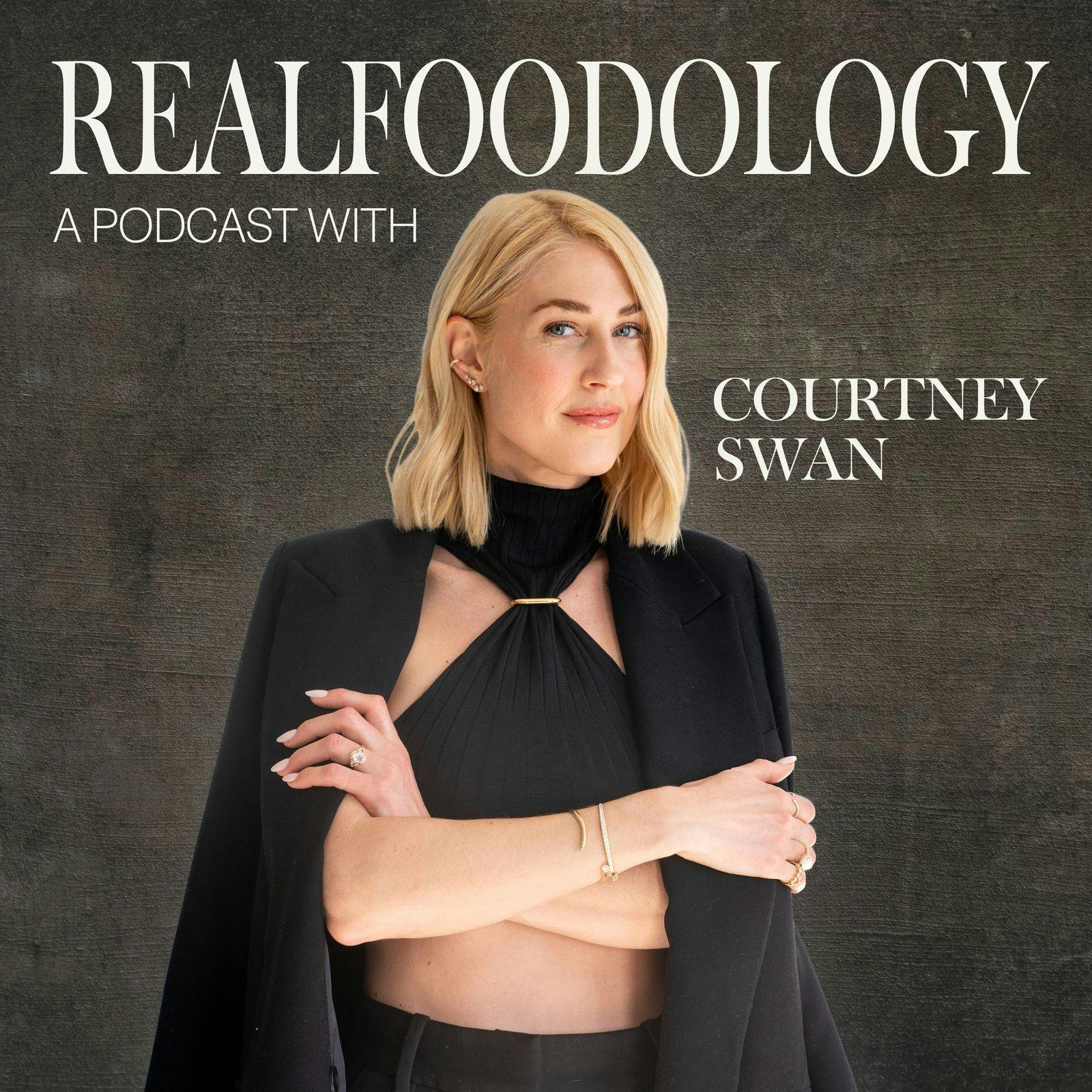
Loading summary
Transcript229 lines
- [00:00]
A
On today's episode of the Real Foodology.
- [00:02]
B
Podcast, we don't agree with everything that the Trump administration does, but we can say because this is our lane and they're putting. They're progressing our lane, of course we're gonna get behind that.
- [00:13]
A
Hello, friends. Welcome back to the Real Foodology Podcast. As always, I am your host, Courtney Swan, and today's guest is a repeat guest, Dr. Will Cole. You may remember I had him on a couple years ago to talk about one of his books that he had just written, and I have him back on today to talk about all things Maha. I have had the pleasure of seeing Will Cole so many times recently. He has become a dear friend, and we have both been involved in a lot of the stuff that has been going on with the Make America Healthy Again movement. And I am just so grateful to be working with him. I love the work that he's doing. We both did the Kellogg's petition together. We also were at the Make America Healthy again ball in D.C. and it's just really fun to be working alongside people that I really respect. And I just love the work that he's doing so much. It's a really interesting time, y'all. Will and I have talked about how we just. We never thought that we would see the day that this would become something that was being talked about on a political stage, which makes us very excited because we feel like we have a real chance at change. We feel like we can hopefully change our broken food system. So we talk a lot about that. He shares his stance on what's going on as far as getting all the pushback from people and getting hate from people about the Maha movement. Why does he feel like we needed Robert F. Kennedy Jr. To come in? Why can't we all just agree on this and come together for the betterment of our nation and our people and our children? So we address a lot of that, and then we also talk about some other things. We talk about POTS and the COVID connection. What is POTS? We talk a little bit about SSRIs and. And so much more. And, yeah, I hope that you all love the episode. If you could take a moment to rate and review it, you know the drill. It helps the show. And I'm just so appreciative of your support. And if you want to share it, if you want to tag me reelfoodology and also tag drwillcole on Instagram, and we will hopefully see and repost it. So thanks so much for the support and thanks for listening. This episode of Real Foodology is brought to you by Graza. My new favorite olive oil. It's single origin which means that it's only one olive from one region. No mysterious blends. That means a traceable fresher product without mixing in any lower grade or unknown oils. It comes in super fun squeeze and spray bottles so there's no more messy tins or drippy spouts which I always struggle with in my kitchen. They also have three different types depending on what you're doing in the kitchen. They have one called Frizzle which is their newest one. It's a higher 490°F smoke point meaning that it's perfect for frying, crisping or grilling. They also have the sizzle which has a 4110 degrees Fahrenheit smoke point, so it's more of an everyday cooking oil for roasting, marinating and sauteing. And then they have Drizzle which is a bold punchy finishing oil that you can sprinkle on salads, dip in bread or even top on ice cream, which is my new favorite thing to do. So head to Grazet Co and use code Real foodology to get 10% off of the trio, which I recommend. It includes all three the Sizzle, the Frizzle and the Drizzle. And get to cooking with your next chef quality meal. Again, that's Real foodology code@graza.com co a lot of non stick cookware still contains harmful chemicals like Teflon PFs which are forever chemicals and these can leech into our food, the environment and our home. Well I'm so happy to announce that there is an amazing company called Our Place that creates cookware that's nonstick that isn't loaded with forever chemicals. A study by the Ecology center in California found that 80% of non stick pans contain Teflon which is a PFAS forever chemical which can be released into your food, home and your body. And also brand new study published in the Science of the Total Environment found that a single scratch on a non stick coated pan can release approximately 9,100 plastic particles. So this is why it's so incredibly important to get something like Our Place that makes high performance toxin free cookware without the forever chemicals like PFAs and PTFEs. And they have this four piece cookware set which is the best way to overhaul your kitchen with multifunctional high performance space space saving pots and pans. Stop cooking with toxic cookware today and upgrade to our place. Visit fromourplace.com real foodology and use code real foodology for 10% off site wide. With a 100 day risk free trial, free shipping and returns, you can experience this game changing cookware with zero risk. Will, I'm so excited to have you on today.
- [04:51]
B
Oh, man, thanks for doing this and coming out and seeing me and I really means a lot to me. Thank you.
- [04:56]
A
I mean, it's so cool to come and see your office. You and I have been friends for a couple years now and we were talking earlier about how the last time we did this was via Zoom because we were. I think we were still in the height of the pandemic when we chatted.
- [05:05]
B
Yes, yes. I think it was probably 21. Maybe 20. Yeah, exactly.
- [05:10]
A
It was somewhere around there. And so I was excited to be able to come out and actually do this with you in person and come see your office. And I just, I love doing podcasts in person. I think they.
- [05:19]
B
Me too. Especially with friends. Thank you.
- [05:22]
A
Exactly. It's so much more fun.
- [05:23]
B
And you're traveling the world, man, doing this podcast.
- [05:26]
A
I'm traveling so much.
- [05:27]
B
You're going to have. I have to slow down. Eventually I'm gonna have to step in.
- [05:30]
A
No, please. I need somebody to step in and.
- [05:33]
B
Be like, who are you? You are a world travel. I mean, a nation traveler at least doing this, which is a lot of work.
- [05:38]
A
It's a lot. It's a lot. I pretty much. I joke that my office has become my packing station where I just like pack and repack every week.
- [05:46]
B
Yeah, I know. Every time I see you're somewhere else.
- [05:48]
A
I know it's nuts, but I'm really, I'm enjoying it.
- [05:51]
B
It's a blessing.
- [05:51]
A
I'm. It's such a blessing. I'm so grateful that I get to connect with so many amazing people like yourself. And I mean, we spoke at the Kellogg's petition together, which get into. And I also really want to talk about all the Maha stuff. Okay, so let's dive into that first. I know you're getting. You're getting a ton of pushback and hate right now because you came out and you really took a stance like I did. You and I both were like, I'm going to side with this movement regardless of the hate that I'm going to get. And I'm curious what has been your experience in that?
- [06:18]
B
I love that you're asking this question because I haven't had a chance to really talk about it. And I'm glad I'm. You're like one of the Few people that knows what I'm going through. But I told you that I must have some weird trauma response with social media because I don't see most of the trolls and the negative comments. But I'll have friends come up to me like, are you doing okay? How are you doing, man? This guy at my church told me the other day, man, people either love you or hate you. I'm like, bro, thanks for telling me that. I just thought everyone loved me because I'm not looking at it. So I'm living in my world. But it's not great for the mental health to be like sucked into that keyboard warrior, troll world. I try to limit it really. And it helps when you're busy seeing patients and you know, I'm not. So I don't want to be so immersed in that. But I mean, to me, this wasn't a time to be quiet. Like if you do what we do and see people get healthy on a daily basis, I have a very unique perspective on that. When you see labs improve, when you see what functional medicine can do for people that don't know. I started the first functional medicine telehealth clinic. So I have all 50 states. A real unique perspective. For 15 years, I've seen all different walks of life, no matter who you voted for or didn't vote for, no matter your religious beliefs or no religion, just as a human being, an American, getting them healthy. So if I could see that for 15 years and then see just even the potential chance of that same potential of healing being democratized to every American, not just people that have access to functional medicine, but everybody, who would I be? Who would I be if I didn't speak up for something that I see just be such a positive thing and it is such a state of affairs for health to be now a pejorative to be. And they wouldn't say it that way, but I would say our. The way we do health, they're saying, no, that's not the right way to get healthy. That's not the right way to heal. No, we are the voices of healing. We're the only ones that can be talking about public health. You cannot talk as if they have a monopoly on human health. So to me it's like insanity. And I got to the point where I wasn't gonna be censored. I wasn't going to be self centered because I was, I was self censoring myself knowing, okay, I'm going to talk about something that shouldn't be polarizing, but it is, but who Would I be if I didn't speak up now? Because, I mean, I've known Bobby, been, you know, spoken the same events and met him and was friendly with him for years. To see him come this far and to see how God is using him, like, prayers have been answered from millions of moms around this country, from millions of parents who've been medically gaslit. So to me, it was like a deeply spiritual thing. And look, time will tell. Humans are flawed and imperfect. Even the ones that I like are flawed and imperfect. But I've never seen something like this. So to me, it was knowing American history, specifically knowing the history of the medical industrial complex and knowing actually the people that are involved in this movement personally. How could we be quiet? That's my answer.
- [09:44]
A
I could not agree with you more. And I have a similar experience. Not in the same that I've been seeing patients for the last 15 years, but I've been so immersed in this world.
- [09:52]
B
Yeah.
- [09:53]
A
Because I think you and I probably started around the same time as, like, I started real foodology in 2011, just as an outlet, and my audience knows this, but just as an outlet to get everything that's now being talked about on a public stage and in the Maha movement are things that I started trying to warn people back in 2011 about. So I felt very similarly where I've spent the last 14 plus years looking around going, wow, we're in a really big mess right now. And there's no one at the top really talking about this or doing anything about it. I remember Obama said he ran on saying that he was gonna ban GMOs, and then he never really fully delivered on that. And so, yeah, it was just really interesting when this started to happen. I remember I had like a conversation with myself and then like, brought it to my fiance where I was like, am I really gonna come out and do this? Because I was also a person that. I lived in LA for the longest time. I was mega liberal. I cried when Trump won in 2016.
- [10:52]
B
Wow.
- [10:53]
A
Like, I was like, not down. And then you fast forward to now and when RFK Jr. I have been a huge fan of RFK Jr. S for a long time. I've followed his work because he was doing the litigation against Monsanto. And, you know, and so when he came out and he sided with Trump, I was like, okay, I guess we're doing this. I was like, okay.
- [11:14]
B
And to me, isn't it a weird, like, seeing me this and coming? I was the same thing as you. Like, I'm a Left of center guy. I'm an independent guy. I'm not like a super, I'm not a right wing person. I would call myself pretty socially liberal, fiscally conservative, kind of libertarian esque. I think most Americans are kind of like that.
- [11:32]
A
I agree.
- [11:33]
B
Where it's like there is a significant realignment going on right now where you look at the main people in this administration like Tulsi and Bobby and even Elon and whether you like them or even Trump, they were all former Democrats. And then you have the Democratic Party being endorsed by Dick Cheney who they called a war criminal. And somehow like that. So it's completely a brand new era of, I would say the statists and the populists is really what it is. It's the authoritarians and the more libertarian, meaning freedom loving people. I really think that's what it is. And look, I'm in the health space, so that's my main lane. But you look even beyond the health. What's happening here, that's really what it is. So you have a diverse group of people that aren't going to agree on everything, but specifically with this Maha movement, they agree on some things and they're existential threats to the United States, which is the chronic health epidemic.
- [12:30]
A
Exactly. And so I was going to ask you, why do we need a movement like Make America Healthy again? Let's kind of lay that out. And why, why do you believe that RFK Jr. Is the man for that?
- [12:42]
B
Well, he walks the walk. And I don't want to make this just about one man. Right. Because we have to realize this is way more than that. To me, he's a vehicle to bring innovative thought leaders in the space. So like Bob is a spearhead in it, but when you look at Jay and Marty and Mehmet and Callie and Casey and all the other people that aren't even named, that are behind the scenes, these are people that are not again, Republican or Democrat. They're just people that get people healthy for a living and they're largely independent and their main motive is health. That's what I want people to know about this. This isn't like a sort of idolization of Bobby. He's just the vehicle.
- [13:26]
A
Yes.
- [13:27]
B
To bring a lot of eclectic group of people within science and health and medicine and all that stuff. So why is it important is because it's bankrupting our country. I mean we, it's unsustainable the way things are at as far as chronic disease. We spend the most money on chronic disease, yet we have the shortest lifespan of all industrialized nations and the most chronic disease. So if we. It's like the definition of insanity is doing the thing repeatedly and expecting a different result. We have to have an outsider, we have to have a disruptor to the system to reform it. And that's really what this is about. As you have someone that is so. And I find interesting too is like the system, mainstream media, the people that are advertisers on there, the entire medical industrial complex and the censorship industrial complex, they are out for blood for him. I mean, they did everything they could to destroy a man. And then you wonder why when we have the most chronic disease in the shortest lifespan, they spend the most money on it. And you see the amount of corruption. It doesn't take a rock rocket scientists to know they do protest too much. Because it's like these are not like Mother Teresa shaming Bobby Kennedy. These are part of the sick care system. So that's why most Americans can see through that BS because if they're not indoctrinated, if they're free enough thinking and independent enough minded, they may not agree on everything that Bobby and co are saying, but they're enough to say, yeah, there's something, he's onto something. I like some of the things he's saying, at the very least to people being very excited. You know, I was on a call the other day with some of the heads of Walmart and they want to learn about this movement because their consumers, the average American consumer, are wanting more informed consent and they're voting with their dollar, the Walmart shopper.
- [15:22]
A
Wow.
- [15:23]
B
And that's largely due to this movement, right? They're wanting better, they're reading labels, they're becoming literate with the foods and they're demanding better. This is just the beginning. And that's this part of this sort of peaceful revolution that I think is happening since turning 40.
- [15:37]
A
There's a couple things that I'm really hyper focused on right now with my health. I want to feel stronger in my workouts. I also want to proactively preserve my health, my mobility, my strength and also my fertility. This is why I have been taking mitopure from timeline for about two years now. It's supports your health at the foundation by encouraging cellular renewal. It is the precise dose of the rare postbiotic urolithin A and it works by promoting an essential cellular cleanup process that clears out dysfunctional mitochondria. And mitopure is the only urolithin a supplement on the market clinically proven to target the effects of age related cellular decline. With regular use, you'll see and feel the difference in the form of improved energy levels, better workouts, faster recovery, more endurance, and so much more. Timeline is offering 10 off your order of Mitopure if you go to timeline.com realfoodology Again, that's timeline.com real foodology One thing I've realized is that there's so much confusing information out there and it's hard to know who to trust. That's why I was really excited when I found Sepco. It's a new app for managing your supplement stack. It analyzes your entire routine, rates it based on data they have on over 180,000 products, and gives you real tips on what's working and what's not. Subco showed me how many products rank across their trust score, quality rating system, how much I'm spending, and they even gave me doctor built supplement plans that I could follow. Here is the best thing about it. Supco doesn't care whether you buy any supplements or not. They're not an E commerce company. In fact, they'll often tell you not to use a product anymore if they think that it's not right for you. Sepco is currently in beta, but my listeners can get 100% free access today@sepco.com Real Foodology that's S U P.com Real Foodology definitely check it out now because it won't be free forever. I've already tried the whole app. It's incredible. Yeah, I think it's it. It tells a lot to me that we already said this, but the fact that RFK Jr. Was a Democrat and and then came out and said I feel like the party left me. And I want to be very clear. I'm actually really trying to not make this political. My point is that I don't think a lot of people have realized that the party that they have so aligned themselves with is not the same party that it was. Yeah, and this was a huge learning lesson for me because it's funny because I think people now see me post a lot about this Maha movement and I've gotten some comments on my podcast saying, oh, this is a MAGA podcast. And I'm like, I'm talking about Maha. If you go back to my 200 plus episodes, my whole thing is health. Like this has nothing to do with politics. And this has been a huge learning lesson for me in the sense that I did once really align myself with the Democratic Party and now I find myself in 2025 where I'm picking and choosing what I'm aligning myself with. Right. So I would not even call myself a Republican. I think I'm very similar to you where I'm a libertarian, but honestly, I'm hesitant to call myself anything because I just want to be me. I just want to get my message out and my message and what I believe that my soul's purpose is here on this earth is to help people get healthier. And whichever way that I can do that in a large way is what I'm gonna align myself with, which is why Maha is so incredibly important to me. And I wish that more people could see that this is not about Trump. This is not about left or right. This is about what will move our.
- [19:12]
B
Species along, as you're absolutely right, because that's exactly how I feel like we have always talking about this. Anybody that knows you or I, we have not changed.
- [19:21]
A
Yes.
- [19:21]
B
It's the convergence of politics converging with what we do that has changed.
- [19:28]
A
Yes.
- [19:28]
B
That has amplified our mission. So why wouldn't we take the opportunity to help more people with this increased visibility, increased light shining on what we do? So this is not like we were in this lane moving forward with our mission. We just came in contact with being able to democratize this with everybody, the potential to it for that to happen. So time will tell. Again, we have to be pragmatic about this. There's some deep corrupt systems at play that want to stop this at every chance they can get. But I know people at least want to. These people want to help people. So, yeah, that's what it is. It shouldn't be political. We're not coming from political lane. But they have politicized us, so they have pushed us in a corner to have to say, no, you're wrong. You are misrepresenting what we're saying. This is not a right or left thing. This is a human thing. And we're just putting people above our tribalism.
- [20:21]
A
Yes.
- [20:22]
B
And they would rather choose the tribalism and being right and feeding their own dopamine hit ego and being a keyboard warrior troll and not seeing past their own bias. And that's what we tried to do. Like you said, we're picking and choosing. We don't agree with everything that the Trump administration does, but we can say, because this is our lane and they're putting the progressing our lane, of course we're gonna get behind that.
- [20:46]
A
Absolutely. I think anyone, like, put yourself in the shoes of, if you're in another line of work, that you are so incredibly Passionate about that you wanna see move forward and then suddenly you have this on a political stage and you have the opportunity to create policies around whatever it is that you're doing that could help people. Why wouldn't you do that?
- [21:07]
B
Yeah, and the three things, I mean the three main things that, that people should know about is getting special interests out of scientific literature, out of health research. It's like depending on the study that you cite, it's like 50 to 90% of our research is funded by the special interests. By Big Pharma, by Big Food, by Big Chem. That's insane. The second is getting stop subsidizing food. That's killing us.
- [21:31]
A
Yes.
- [21:31]
B
And third is just having the education and empowerment of the first two. When you have transparent science and you have, you have education around food and you have all these things that are needed. This is actually, if you look at it historically, a very left thing.
- [21:46]
A
Yes.
- [21:47]
B
But their brains are broken and they can't see that this left thing, that the left never really did is now being done by independence. They're completely. The cognitive dissonance is so real. Like it's like this is something that you all said you wanted, but now the wrong person's doing it. It's not. Okay, has to be. You're the right person, the approved person.
- [22:08]
A
Well, and I'm seeing some people online from like an expert authority angle going after the Maha movement right now. And it's been really interesting to watch because a lot of these videos, they are outlining all the issues and they are agreeing with everything that Maha stands for. But then they shit all over it because it's not their people that are pushing it forward.
- [22:28]
B
Yeah.
- [22:29]
A
And I feel like it's, it's creating this, this pocket of the Internet where people are outraged about what we're but care about health. And so there's like this weird confusion and like you said, cognitive dissonance. Like what? Also my thing is how are you helping people?
- [22:46]
B
Yeah. What are they doing on a daily basis? I want to know that too. Because as someone that looks at labs for a living and see those labs improve, I always wonder, are you just a public health pontificator on social media? I want to see your clients. Yes, I want to see your clients labs. Please show me. Because unless you can produce what our industry produce, and by our industry, I mean health coaches, wellness, functionally medicine, functional medicine, doctors, functional medicine minded, conventional doctors, whoever you are. It's a diverse group of people that are within this movement of ours. If you're not doing what we're doing and we can show you the data. We can show you. And that's what I'm also excited about. Talking to some of the people that are involved already with getting this off the ground in D.C. is now getting research done on what we do. Yeah, let's show them the RCTs. We've never been able to get access to that type of research because it's very expensive and never been given the shot and never be given the time of day with the way that the sick care system does.
- [23:47]
A
What's an rct? I should probably know that.
- [23:48]
B
Yeah. Randomized control trial.
- [23:50]
A
Oh, got it. Okay.
- [23:50]
B
So it's just a gold standard in research.
- [23:52]
A
Yes.
- [23:52]
B
So we want that be to be done on the things that we do.
- [23:55]
A
Absolutely.
- [23:56]
B
So, okay, now let's. So let's show everybody and have informed, true, informed consent and they can pick whatever they want within healthcare, not this cherry picked pharmaceutical above all else. Without looking at all the potential, what is the most effective option for you as the patient, as the person, as the American with the least amount of side effects? Let's really show them that.
- [24:16]
A
Well, because it's interesting. That's the type of science that will actually help people not just match somebody's symptoms with a pill. And then it will, it's, it will be really amazing to see when this happens. My hope is that this is gonna happen because those so called experts, I don't wanna say so called, many of them have degrees and stuff. So I don't wanna. They will no longer be able to go online and say, well the science actually says that da da da da. And it's like, okay, well that science that you're referencing was paid for by big pharma. And now if we can change that gold standard of science to actually do studies that benefit American's health above all else. What are they gonna do? They're gonna have to come back and be like, well, the new science.
- [24:59]
B
But will they? Will they. I think their tribalism will trump everything that you know they will. They are so contrarian and like they call it derangement syndrome. Like Trump derangement syndrome. Anything Trump is tangentially connected to, they are deranged about it because you could say why the cure for cancer? And they would say, well, they'd find something, they'd poke holes in it because it's not coming from the right people. It's that level of derangement.
- [25:23]
A
No, it really is. I'm wondering what it is going to take for people to wake up because the people in the health space that genuinely care about this, I don't understand how they don't see the good that's coming of it. And what's really driving me nuts is a lot of these videos that are being floated around the Internet. They're making all these assumptions about things that haven't even happened yet. Or they just say, well, this is how the system works and good luck getting it through with so and so. And it's like, well, can't we at least be a little optimistic? I know you and I will both be the first people to speak out if things are not moving forward. I'm not siding with anyone. I'm not a Trump sympathizer. I'm not even an RFK junior sympathizer. If four years from now we're sitting here going, well, nothing really happened, I'm literally going to be the first person to call it out.
- [26:09]
B
Yep, same here. Same here. We're just. The bot works. We're hopeful about the opportunity, we're hopeful about the potential. I am under no delusions of grandeur. I really know there are people and the system is really messed up and their people can get bought off. I get it, like anything can happen. But if you look, statistically, this is the best chance we've got in 200 plus years of American history and 100 years of the medical industrial complex. So, yeah, the sort of subset of experts on social media that are just coming hard on what we're doing that you're saying, you're right, they're agreeing. Of course. How can you deny chronic disease? But where we kind of differ from them, not kind of, where we differ from them is that they do not think there is a quote unquote conspiracy with the sick care system. Like they believe it is genuine. There's no conflict of interest is basically what they're saying. But yet there is this corporate conflict of interest. I'm not fully even understanding their position. The vein that I do see from them and what I'm talking about, these experts, RDs mainly RDs, conventional RDs. And look, there are many, many brilliant, loving, functionally minded, wellness minded, independent thinking RDs. I'm not talking about them. I'm talking about the statist authoritarian centralized power RDS is how I could explain it is like they're speaking as sort of, you know, that what's the Hunger Games. I feel like they're like the capital. Yes, it's like the capital arties that are like here peons. And there's a sort of Elitist, smug, arrogant hubris to what they say, where they blame everything on capitalism. And what I hear almost is like this sort of Marxist like vein is they really don't like entrepreneurs, they really don't like independence. They want you to work for the system, be trained by the system, be indoctrinated by the system. That is the science. Read approved science, cherry pick science, right? And you know, they're only, they're the purveyors of that information and anybody that speaks in, you know, a different district isn't allowed to speak.
- [28:30]
A
I've got something seriously exciting to share with you. It's called Qualia Senolytic. So as we age, our bodies accumulate these senescent cells. So these senescent cells, they're kind of like those outdated apps taking up space on your phone. They can make us feel sluggish, achy and just not really like ourselves. But, but here's the kicker. Qualia Senolytic steps in to help clear out those worn out cells, making way for renewed energy and vitality. Personally, I was blown away when I first tried it. Within a couple months I noticed a real difference. I felt sharper, more energized. And those little aches and pains, they just started to fade away into the background. The best part, it's super easy to incorporate into your routine. Just two days a month. That's it. You only take it for two days a month. And it's made with all the good stuff. Vegan, gluten free and crafted to complement your body's natural rhythms. If you are ready to experience the power of Qualia Senolytic for yourself, head over to qualialife.com real foodology right now for up to 50% off your order. Oh, and don't forget to use code Real Foodology at checkout for an extra 15% off. That's qualialife.com realfoodology Qualia is Q U A L I A L I F E. Y'all may remember that I had Mark Hyman on the podcast last year and we talked about function, which is a company that he helped found and an all in one health platform that starts with over 100 advanced lab tests covering your entire body. Heart, hormones, liver, kidneys, thyroid, autoimmunity, cancer signals, toxins, nutrients. They also have some new tests now outside of the 100 advanced lab tests that they're already testing for. And they can test for things like BPA exposure, pfas, mtf, hr, Alzheimer's, early detection, brain injury, bone health, chronic inflammatory response, extended autoimmunity Epstein Barr, heart and metabolic, extended hormone, extended thyroid, food sensitivities, and so much more. Also Lyme, which is amazing. I think you and your family should join function. In fact, I'm getting my parents on it this year. I got my fiance on it. If you want to skip function's wait list, go to www.functionhealth.com realfoodology. That is functionhealth.com realfoodology. That's exactly how it feels. It feels like they're standing up on this stage with a podium and saying, ignore what's actually happening. Ignore what you're seeing with your very eyes, ignore what you're feeling in your body and just listen to what the government and what the settled science says already. But it is, you're so right. It's so confusing because they'll sit up there and say, well, you know, capitalism and these big food conglomerates are, you know, they own a lot of the food system. Like, they'll name all this stuff. And I'm watching it going, okay, okay, yeah, yeah, good, good. They're to something. And then they end it with like, well, but we're not gonna, we're not gonna fix it with this. Like, we need to go back to the real science. And it's like, oh, you mean the real science that's funded by those food corporations and funded by big science. Yeah, it's, it's incredibly, it's mind games.
- [31:31]
B
Or the studies that they. Even if they're. Because I heard some of them say, well, like we us in the rd, in the sort of capital rds, we don't like conflict of interest in science. We actually try to avoid it where we can. But then you look at what's being studied, like, what's really being looked at. It's, it's these root cause mechanisms. And to be honest with you, like, can't we have science without presupposition? Can't we really have independent science with transparency? And if they really mean what they say, follow the science, trust the science, and really look at. When everything's being looked at, not just the things they want to look at, what will they say then? I think that time that will also be. Time will tell. But I don't know. I don't feel if. I just feel like they are where they could come together as a coalition. I really want that. Like, I want them these sort of what I would call elitist rds. Like, can't you find common ground with us? Like, we don't want to have a war with you no, like, I hear what you're saying. I can agree with a lot of what you're saying.
- [32:31]
A
Yeah.
- [32:32]
B
Why can't you put down arms? Why can't you put people above your tribalism right now? Even if you're thinking, say yes, I am the elitist, I'm the best person to talk about this. But yeah, these people have some truth about it. And why can't we focus on that instead of what we have have not in common? And they are, but they're. It's part of it's, I think for the likes, it's like they really getting this ego push because all the contrarians are coming out and social media is great for that. Social media, the algorithm, the confirmation bias there. They are getting a lot of attention from celebrities, a lot of attention from mainstream media because they are talking the approved narratives.
- [33:12]
A
Yeah. Wow. And the approved narratives are safe because if you go with the approved narrative, you're not going to get. I mean, I think now everybody's getting pushed back. It doesn't matter what side of the aisle you're on. But I think a lot of them were used to, for a very long time that many of us that felt differently than the mainstream common narrative were all silencing ourselves. And I'm just talking about, politically, you and I have been talking about the health stuff for a long time and I'm used to getting pushback from that. But now that it's become political, people have just been so used to self censoring and for the longest time in our country it's only been okay to come out on one side of things. So everybody on the other side of things have just been quiet and silencing themselves. And so it has, I think, given a lot of these people that are on the left, this false sense of, well, everyone agrees with us, we're on the right side of history and. Cause they kind of have this conflated almost ego about it.
- [34:06]
B
Yeah, they do. And I feel like Covid woke a lot of people up. Like again, we've been talking about this for years, but I think a lot of average American were like, something doesn't add up here. Right. The science is settled. And then you find out, well, they wanted to hide documents with the Pfizer vaccine for whatever 75 years when everybody.
- [34:26]
A
Was going to be dead.
- [34:27]
B
Yes. Right. And it's like we can't ask questions that why did they want to hide this for 75 years? So they can push this through the emergency use act. Like there's. And again, you're talking about an industry that when you talk about big food, big pharma, they have big pharma specifically created the opioid epidemic and many other pharmaceutical epidemics knowingly harming people, but yet somehow they've had their come to Jesus moment with the one product that they can't be sued on because of protections. It is so much cognitive dissonance. And again, I'm not anti vaxx. Like that's another thing too. It's like I just want real transparent science because people can have real informed consent.
- [35:10]
A
Exactly.
- [35:11]
B
Because I deal with people. My telehealth patients are people with autoimmune conditions. How am I supposed to trust the science when they're hiding things and they're suppressing data and they're cherry picking data so my people, my telehealth patients can make the decision that's right for them. This is true pro choice when it comes to any health decision in my mind. And it should be for every. Everybody.
- [35:32]
A
Exactly. It's medical informed consent. And I can't help but I always think about the issue with Vioxx. This is a perfect example that everybody can look up. It's very tangible, digestible. There were internal emails going on saying that they knew that it was going to cause heart issues in people. And then it caused something like, I think it was like 50,000 heart attacks in people. They knew before they put it on the market this was gonna be an issue, but they knew that their fines for that were gonna be less than the profit they were go make, so they put it out anyways. And if anybody thinks that if that's happening in that one space with Vioxx, that it's not happening in other pharmaceutical spaces. Especially when you brought up the. There's the 1986 Liability act that leaves the vaccine companies not liable if something happens. So how, how is that not happening across the board? Especially when they have immunity, especially the potential to it.
- [36:29]
B
And then you know, things at the Pfizer paper like it just. All we are is being curious enough to say, well yeah, all of these things add up. We need to at least shine a light on it and say what is going on here? Especially when you put things on a schedule and you're mandating it.
- [36:43]
A
Exactly.
- [36:43]
B
And you can't enter a building, but not now. Right. But during COVID you couldn't enter a building without a dang card. What the heck are we talking about? Without any true science or you can't. You'd lose your job when you don't have you can't even have informed consent. I mean this is absolutely Orwellian draconian that they would think this is okay. Especially when you look at the data of it. It didn't decrease spread. You couldn't even make a public health statement on like you're harming your neighbor, which they tried to do, like you're a bad American because you're gonna harm grandma and kill grandpa by not getting this. But now we know at the very least it decreases severity, which that's a personal choice.
- [37:21]
A
Exactly.
- [37:22]
B
And what are your risk factors if you're old and sick? Maybe make the decision to have the vaccine if you're a baby, which there's no child that did the healthy child. There's no healthy child that died from COVID None. But they want to put that on the schedule.
- [37:34]
A
I mean, I think it is on the schedule right now, right?
- [37:37]
B
Well, yeah. And now more and more people are pushing back and there's different legislations of re evaluating these vaccines to have medical freedom.
- [37:49]
A
But it's just absolutely insane because I was just thinking about as you're saying all of this, that there are going to be people that will probably leave comments, I'm probably going to get DMs and it's fine. But just the fact that we just are, we're just asking questions and we're just having a conversation about it and we're talking about the potential for there being a lot of fraud happening. Just simply raising that is already gonna ruffle feathers, get people mad at us. They're gonna call us names, they're gonna call us anti vax just for saying hey guys, maybe we should look at this.
- [38:19]
B
Yeah, well it's asking questions is an offensive radical act to a system that thinks that their the sole mouthpiece for every information, health or otherwise. So it is authoritarianism is really what it is because they, they want to self, they want to censor people. And then they did for years. And then we know with Zuckerberg, we know it started from the top down of them shutting down actually true information but inconvenient to the system. And that's really what they still want. They still want that free speech is inconvenient. Even if the free speech is wrong speech. Can't you have a free forum of information so people can push down the negative, push down the false ones because people are smart, people can figure things out.
- [39:05]
A
Exactly.
- [39:06]
B
This is what our country is predicated on. So yeah, this is very much the whole concept of free speech and speech online is intimately connected to Health, because we saw the destruction of that in 2020. We saw so many people being canceled and deplatformed and good information being suppressed because it was inconvenient information. So this is why there's another convergence with politics, because we need to be able to speak our minds and speak truth to power, even when it's inconvenient.
- [39:37]
A
Absolutely. It's interesting because you and I have been in this space for so long, and actually, you and I talked about this. I think it was at the Maha Ball or somewhere around, like, the inauguration, where we couldn't believe that we were in this time and space because we're so used to, for so long being a part of the minority when it comes to the health space. Because a lot of. Largely of what we're saying, you could say, like, that it goes against the mainstream, but it should be the mainstream. And so it was interesting to see, like, during COVID because it was such a validation for me of, like, oh, I'm really onto something. Because what I'm talking about is now being silenced and suppressed because it really is an attack on what the mainstream narrative is. And to me, that was such a profound, like, truth in the sense that this is what the truth is.
- [40:36]
B
Yeah, well. And when you say mainstream or, yeah, like the conventionally approved. But then you look at the majority of Americans, right. And actually what's mainstream amongst the people, like the movement. The Maha movement is popular, but could you imagine how much more popular it would be if you didn't get 98% negative press? If you actually had true free press that showed actually what we're talking about, not the smear campaigns, not the hyperbole, not the lies, but just state the facts for what it is. What is already popular would be almost every American, I believe.
- [41:13]
A
I agree.
- [41:14]
B
This would be. I mean, Bobby alone is more popular than most presidents that have ever ran in modern history.
- [41:21]
A
People love him.
- [41:22]
B
And then that's. With 98% negative press. Could you imagine if it was just fair? Just fair. Just fair press. Just accurate press, Just unbiased, neutral press. Could you imagine? And it's like, to me, it's like. Like whatever they accuse people of, like the system, they actually are guilty of, like, this whole, like, censoring. They're afraid of, you know. Yeah. They're afraid of democracy going away. They're afraid, like, they have been the biggest destroyers of exactly. Basic civil liberties. Like, please, please. But it's like the Orwellian upside down. It's doublethink. It's doublespeak. Because it's like they will call somebody something. But I saw a meme the other day, like people are worried about RFK being anti science, but while Fauci needed to be a pardon for his science.
- [42:13]
A
That I know, and the fact that some people still don't see that, it's just mind blowing to me. I just wonder, do you have any thoughts on what you think it will take for some people to wake up?
- [42:24]
B
I think, to me, I think the average person that's maybe on the fence, it's just fair and accurate information.
- [42:32]
A
Yeah.
- [42:32]
B
Because I think the average American out there has really heard a lot of twisted things. Like you. He see it in the comments. When I do look at the comments, they will just regurgitate the approved talking points that are just the weird. They'll talk about his cutting off a whale's head. They'll betting the most random things up, as if that or the other main thing is like, oh, he's Bobby's not a medical doctor. As if they didn't know the head of NIH of HHS was a lawyer just like he was. Exactly. Were they ever up in arms with all the other lawyers that were ahead of HHS before him? They didn't even know. But because the media told them he's not a medical doctor, that's what they repeat.
- [43:12]
A
Yeah.
- [43:13]
B
So I think if you get fair and accurate information, I think more and more Americans can make true just choice on what they think. And again, they may not align on everything that he's doing. Do we align on everything that most people in politics are doing? No, but you can have a, I think a net positive when you get fair and accurate information. So I think that's what we need. We need to actually, you know, sunlight's the best disinfectant. That starts with media and like public channels and how people get information, like truly getting sunlight, but then also sunlight in the medical research too, like truly getting that. All right, here's all the information. America, home of the free, you know, home of the brave, land of the free. Can we make decisions for ourselves? So that's what I'm hopeful that this can do. It's just a lot of sunlight.
- [44:01]
A
Yeah. So you're in a really unique position where you have been seeing patients, like you said, and you've been seeing blood work for the last 15 years. What have you been seeing in your practice? One, that people are really struggling with, and then two, by implementing all the stuff that you're doing, how are you seeing people getting better?
- [44:19]
B
Well, I mean, it starts with the foods. It starts with really empowering the person to being mindful. So if they haven't done that, of course this is something you talk about at length on your podcast. But it's, you know, most of the people that I see are really beyond the basic stuff. Like they're people that have seen all the doctors. They've exhausted conventional medicine, they've exhausted alternative routes. So that's not every patient, but I would say 80% of our telehealth patients are that sort of difficult. They're not difficult, but their health challenges can be difficult. And they've exhausted all options. And we are what they feel is like their last resort many times. So I'm used to. That's sort of my lane. That's not the average American's problem. I don't think increasingly it is. More and more Americans, I think more and more health problems are becoming more complex because of this environmental food problem that we're seeing, which we need to fix. It's unsustainable.
- [45:13]
A
Well, are you seeing. Because, you know, we're seeing a lot of, of headlines. Right. And I'll get pushback from people saying, okay, it's not that bad in the US People aren't that sick. In your clinical experience, are you seeing people that sick?
- [45:24]
B
Oh, I'm seeing people that sick. They. For people to say that they're not talking, they don't, they're not looking at America. They're, they're not talking to the sea of people that have autoimmune conditions. Yeah, because I can tell you, 15 years of experience, it's getting more complex. It just is. And that's just me and my 15. One person in 15 years. And I'm hearing that time and time again from other functional medicine doctors, other health coaches, other nutritionists, other RDs, the free thinking ones, they're all seeing the same thing. This is not, there's a lot of what we would say anecdotal, just experience that we see on a day to day basis that we want rcts for. Like I want the randomized controlled trial, please, because we're seeing it on the front lines. Please do study studies on this because there's something going on and we're helping people on an individual, grassroots, like patient by patient basis. But this is a national problem. When you look at Some statistics of 50 million Americans have an autoimmune disease and people will say, you're right, the pushback will be, there's always a contrarian view, but, oh, that's just better. Diagnostics. That's why. That's a part of it, of course. But better diagnostics happened because more and more people were sick and they had to figure out what the heck is going on. So the need, the demand created better diagnostics. Like, they didn't just start better diagnostics because nobody had it. And then all of a sudden just happened. The medicine, albeit slow, is getting better at diagnosing these complex, what the world would call mystery illnesses because more people are demanding and doctors are needing to look at these areas that they didn't need to look at before. Someone said to me online the other day, and I thought, this is astute observation. Anybody that's been in. When you look at behavioral problems, and the statistic is one in five American kids, like 15 million kids, have a diagnosable mental, emotional, or behavioral disorder. And then people say, well, it's better diagnostics. Tell anybody in education for the past couple of decades, they will tell you there's more behavioral, emotional, mental issues amongst kids and adults. So I think that's a good way of putting it. Talk to the teachers, they'll tell you about. Talk to the schools, the amount of food allergies.
- [47:42]
A
Talk to them.
- [47:43]
B
Anybody that's been in the system since the 70s, 80s, they'll tell you that that's growing. This is not better diagnostics. They're just. The teachers are seeing it on the front line, and we're seeing it on the front line. So please, I would say sit down. Respectfully, sit down. Because you can pontificate about your public health all day long, but we're seeing it on the front lines.
- [48:02]
A
You know, I've had many teachers actually reach out to me and DM me and say, courtney, this is getting insane. They're like, I've had a couple messages that really stood out to me saying essentially what you just said, where, you know, they said, I've been in, you know, education for the last 15 years. And you would not believe the explosion of mental disorders, behavioral disorders like adhd, diagnosis, diagnoses, food allergies. I mean, I can just speak to this anecdotally to myself. And I hear people say this all the time. When I was a kid, we didn't know a single person that had a peanut allergy. And then I started as a nanny. Like, when was I a nanny? Probably 10 or 15 years ago now. It was right. It was actually I was right when I was studying nutrition. And I remember I was making the lunches for the daughters every day, and the mom said, the first day in the job. She said, they are not allowed to have anything with almonds in it and anything with peanuts. And I said, why? And she said, because so many kids have allergies now that they have to outlaw them from the schools.
- [48:58]
B
Yeah.
- [48:59]
A
And that to me was insane because when I was a kid, I didn't know a single person that had one.
- [49:03]
B
Yeah, no, yeah. My kids, when they were in school, like my daughter's homeschooled now, but when she was in traditional school, same thing, it was a peanut free zone. And this is a small little country school. Yeah. So it is a significant problem. And that's just scratching the surface, let alone all the unspoken, unseen things that are going on behind closed doors, like people really struggling with. With again, these mystery illnesses that we typically see. So we have to look, to answer your question, we have to look at environmental toxins, we have to look at their gut health, we have to look at nutrient deficiencies, we have to look at biotoxins like mold, bacteria, viruses. And I have kind of conflicting views on that because I look at genetic variants. Almost 100% of our patients have specific HLA genes, human leukocyte antigens, which makes them more sensitive to things like mold. And different methylation gene variants which are sensitive to tend to be an increased likelihood of sensitivity to these things. But then my mind goes to, okay, mold has been never toxic. Mold has never been healthy for human race. But you're talking about average to moderate levels of mold. It's flaring people up. So is it the mold alone? I don't think it is. I think it's the. That may be the straw that broke the camel's back. I think it could be the tipping point. It could be the gasoline on the fire, if you will, the mold. But mold and human have a long existence together. So there's a certain level of, yeah, mold is everywhere. Why is the resilience so low that the person is having a reaction to pretty much everything? Low to moderate amounts of mold included, including foods and including other things too. Right. They have these multiple chemical sensitivities. To me, it's not the mold. The mold is a piece of the puzzle, but certainly should not be only looked at. And same with viruses, same with bacteria. Humans had a symbiotic relationship with these things for eons. The new variable is the microplastics, the pfas, the heavy metals, the herbicides, the pesticides, the soil microbiome destruction, the nutrient density of the foods we're eating. That's the biggest thing. And that's why policy is so important, because these people are going in the grocery store, they're thinking they're doing the good thing, but there's so much confusion out there and there's no transparency on the foods that they're having. So that's why my work is helped by. Would be helped by real good food policy change.
- [51:26]
A
Absolutely. Well, because there's the invisible, insidious things happening, like the glyphosate on the food, like you said, the PFAS's that are not regulated, the plastics that are not being regulated at all. The industry is regulating all of those on their own. And this is where we need the government to intervene because those are all the invisible things that people largely don't know about. People are waking up to them now, but largely don't know that they're being poisoned. So the mold thing is interesting to me because I'm curious. So do you think more people are being affected by it because they're. I've heard you talk about the buckets before and we can kind of go into that where people's buckets are just overflowing because they're just, they're being exposed to. It's like we're under attack. Yeah, from every angle.
- [52:07]
B
Too much. So, yeah, that bio individuality, like some people have big buckets buckets, some people smaller buckets, and that's those HLA gene variants, methylation gene variants, detox gene variants, endocannabinoid gene variants. We all have a different, you know, configuration of these genetic variants.
- [52:23]
A
And that means it can affect the way your body detoxes things correctly, the.
- [52:27]
B
Way we detox, the way they methylate, the way that we handle inflammation. Because human leukocyte antigens, they're just. If they get exposed to a bacteria, virus, mold toxin, their immune system doesn't know how to calm down as much. So there's this confluence of genetic and epigenetic factors that we see very, very high correlated. And not just in our telehealth clinic, but studies are now looking at this stuff. They're beginning to look at it. And again, I want more studies, I want more data out there so we can understand these mechanisms and what's at play here. But yeah, it's. You can't change your bucket size, you can't change your genetic tolerance for stressors, but you can change what you put in the bucket. So mold is a piece of it for some people, not everybody. Bacteria, like opportunistic pathogenic bacteria can be viruses, can be stress unresolved Trauma, environmental toxins, foods that don't love us back. All these things are what fill up that bucket. So if we can take out broad swaths of, like, these contributing factors, the human body can handle some stress. But right now we have an epidemic of people that their buckets are overflowing. They've hit their tipping point of symptoms and they're going to their doctor. And the doctors are like, you're just depressed. Like, here's an antidepressant, or it looks autoimmune. Here's a steroid, here's a prednisone, here's a pain pill, here's an immunosuppressant, or I mean, whatever the training is to diagnose the disease and match it with the medication. These people are not sick from a pharmaceutical deficiency. So why the heck are they sick? Let's ask the questions. Let's truly look at what's going on here. And studies already are looking, but we want more. I want more information. I want to help people better with better science and more transparent science.
- [54:08]
A
Same. Yeah. I mean, it's unfortunate that the current reality is if you go to your standard GP allopathic doctor, conventional doctor, they have been trained to match your symptoms with a pill. And I'm not knocking doctors. Thank God we have them. A lot of people have talked about this before and said this, but America is amazing for if you are in an accident or you need a surgery, it's incredible. We, like, we really have that down. But if you're dealing with something like we're talking about right now, and you go in and you say, oh, I have X, Y and Z. And it's actually coming from the mold that they're being exposed to and the glyphosate that they're eating and the microplastics and the PFA s, but instead their doctor just says, oh, you just have anxiety. And then they put you on an ssri, which I would love to talk about.
- [54:52]
B
Yeah.
- [54:53]
A
This is why what we were saying in the beginning is why we need more studies. We need to look at this from a different angle. We need what we're called, what. What has been said in the executive order, which is a gold standard of science, because we need to be studying all this and then we need to get it out to all of our doctors so that they can better treat people with the things that they're dealing with now instead of just matching them with a pill.
- [55:15]
B
Yeah, you're absolutely right. I think that it's. I think it's a testament to it. And this precedes Maha and Bobby and all that stuff. I've seen a trend over 15 years of more and more conventional physicians referring their patients to me. They don't. I've never met these doctors. I don't know who they are. But I never thought there'd be a day where I would say, the last four or five years, it really has ramped up of people saying, yeah, I heard about functional medicine. I don't know a lot about it, or I'm reading about it, I'm interested. It, go see this guy. I heard good things about this guy. Go see this guy. All right, that's, that's significant because those doctors that aren't, you know, they're not bread pilled, they're not like drinking the Kool Aid, the wellness Kool aid, the stevia sweetened Kool Aid. Exactly.
- [56:06]
A
Die free.
- [56:07]
B
They are just your average doctor who's guess what? On the front line. And they're seeing these more complicated cases and they're like, bro, I don't know what to do. They wouldn't say, bro, they would say, I don't know what to do. And they're sending them to people like me. So that is going on. Believe me, that was not happening 10, 15 years ago. It wasn't. If it was, it was a small amount. Now it's more and more people. And if you look at the Institute for Functional Medicine, almost all the physicians being trained with postdoctoral education and functional medicine are all conventionally trained physicians every single year. These are people that are got into medicine to help people. They realized because their lived experience, man, I can't help people the way that I want to. I need to go get trained in this, go to a school for another few years through the Institute for Functional Medicine to learn how to help people. This is happening every year and now it's really ramping up because of the amount of chronic health problems. So if people actually knew, the people involved here, like all this hyperbole, controversy would really be dispelled because these are just, most of them are just average doctors that are seeing something and they want to figure out how to help people.
- [57:17]
A
Yeah, exactly. Because doctors get into this world because they want to genuinely help people. And I think what's happening is that there has been such an explosion in chronic disease that a lot of these doctors, you know, that trained 20, 30 years ago, they weren't trained on what we're seeing now. And so they're kind of going, I don't really know how to deal with this. So then they're sending them to you or I interviewed allopathically trained doctor who's now a functional doctor because she went back to study functional medicine because she realized that she wasn't able to help her patients in the way that she had been classically trained.
- [57:53]
B
Well, yeah. I mean, there's a study. It was a pediatric residency study looking at pediatric residency and looking at most conventional doctors would fail a basic nutrition test.
- [58:05]
A
Yes.
- [58:06]
B
Why. Why did most doctors receive little to no nutrition training when the most of the chronic health problems that they're seeing on an hourly basis are driven by epigenetic lifestyle things, including food and stress? And why that's what we're talking about here, is that these people are falling through the cracks and the doctors want to help, but they're not equipped to help people. They're equipped to give out pharmaceuticals. So you talk about trust. The science. That's the science that's happening right now. That's why the system is the way that it is. Is. But it's obviously the statistics speak for themselves. If what we were doing is working, why aren't we having better outcomes? I'd be all for doing what we're doing if we had the best health in the world. We're not. So it is the height of hubris to say we're failing, but let's keep doing it because we're the right ones. I mean, it is insane. But like, you brought up SSRIs. That's the other thing is like so many. Like a lot of my job is educating people on the fact that mental health is physical health. Our brain is a part of our body just as much as anything else is. And psychiatry and psychology is very behind in this of, like, not even looking at the organ they're treating. They're not even observing what the science is showing. What does the science show right now? Or there's things like the cytokine model of cognitive function. How does cytokines pro inflammatory cells? How does that impact how the brain works? So yet we're just giving people, kids, adults, these SSRIs without looking is what's driving this neuroinflammation. If that's a piece of their puzzle. I'm not saying that's everyone's piece of the puzzle, but it shouldn't it be looked at if it's being studied. And I would say that I see inflammatory components to most people that have anxiety, depression, brain fog, and fatigue. And this science also shows that SSRIs work about the same as placebos. And that's not a knock on SSRIs, because I think there's power and beauty in placebo. It's mind over matter. It's the mind body connection. It's the power of suggestion. So if anything, it's like, yeah, wow, you're telling me that with a shift of, I believe this is going to work for me. It helps somebody. The problem is SSRIs have side effects. So is there a more effective option that doesn't have the potential side effects? And I'm not saying people should come off of their SSRIs. I'm not saying. I'm not saying it doesn't help people. I think it does help people. But you don't have depression because of an SSRI deficiency. So maybe you need to be on that SRI for a time or maybe indefinitely to get your head above water. Maybe the mechanism is placebo. Who cares if it's helping you, if it's helping you. Yeah, I want you to have that choice, to choose that if you want to. But if it's not working for you, or if it does come with side effects, or if you want to know, why do I have this problem in the first place, shouldn't you be able to have agency on your health to ask these questions? And that's where there's the disconnect, because they're not looking at it. But when you look at things like gut health and the research around the microbiome and how 95% of serotonin is made in the gut, 50% of dopamine is made in the gut, it works upon the vagus nerve. Why aren't we looking at vagal nerve toning? Why aren't we looking at vagus nerve health in the gut brain axis? Why aren't we looking at neuroinflammation and what the researchers call the leaky brain syndrome, like the increased blood brain barrier permeability and neuroinflammation and the impact of inflammation on the microglial cells of the brain. This is all science that's being looked at, but it's not being given the light of day. It's not trickling down to the average PCP or, you know, psychiatrist office yet. But so this is the type of stuff. And that's just one example. There's so much, much there is actually exciting science being done, but just it's not given any attention, very little attention, other than our pockets of weird wellness people.
- [61:49]
A
I know, exactly. Quote, unquote weird. Yeah. I mean, it is it's fascinating. You brought up the vagus nerve for people listening that don't know. So the vagus nerve goes from your gut to your brain.
- [61:57]
B
Yeah.
- [61:57]
A
It is the direct connection.
- [61:59]
B
It's the largest nerve in the body. It gets. I believe it's a Latin origin trans. It's from the word wanderer. It translates like the wandering nerve. Right. And it's. Yeah, it's the largest cranial nerve in the body. It's responsible for that resting, digesting. So. We say that so flippantly, but if you think about it, that parasympathetic aspect of the autonomic nervous system. Resting, calming, grounding, anti anxiety, hormone balanced. I would add to that digestion, healthy digestion. How many people are having dysregulation in that area? They're wired and tired. They feel dysregulated, they're hypervigilant, or they have and. Or they have digestive problems. There's going to be a problem oftentimes with what's called the neuroimmuno endocrine axis, which is the intersection between the nervous system, the immune system, I. E. Inflammation, which is a product of the immune system and your endocrine system, your hormones. So you can run labs on these people and you will see just things. Like it could be a collection of things you don't know. That's why we're running the labs. But dysbiosis, leaky gut syndrome, a lot of gut centric drivers of inflammation, a lot of opportunistic and pathogenic bacteria, a lot of sibo, which is type of dysbiosis, small intestinal bacterial overgrowth. There's a lot of inflammation markers that's high, and a lot of hormone dysregulation. So this is happening all the time, and it's showing up as mental health issues or these other things that we're talking about here, inflammatory problems. So, yeah, this is stuff that can be quantified on labs today. Like, we run labs for people around the country, and you have to know what you're dealing with to do something about it. Like, this is empowerment. This is not about fear mongering. This isn't about looking for problems where there isn't, which is another critique from the Capitol. But we're actually getting people better, and they could see their labs improve. So District 13 says it's a good thing.
- [63:54]
A
District 13.
- [63:55]
B
I think that's the district, right, Katniss?
- [63:57]
A
Yeah. Is that hers? I can't remember. I think it is, though. We should look it up.
- [64:00]
B
I should know It. Katniss's district. That's actually where we're at right now is Western Pennsylvania, Appalachia, which I find very apropos.
- [64:10]
A
I love that. Okay, so we're in District 13. Hopefully it's 13 that we're trying to get right here. But the. I did want to say one thing about the SSRIs, and then we can move on from it. But. So I've been learning some things more recently about SSRIs that I've been a little bit horrified by. One, I just saw a post about this, like, a week ago, a girl claiming that. That she has lost the ability to have, like, sexual desire and have orgasms. And apparently this is a side effect with the SSRIs, and sometimes even if you just take it for a little bit of time. And I had never heard that before. Thank God I never went on an ssri, but if I had been and then I heard about this later, I would have been so mad. And I hate that this is not being talked about more, because I think we've gotten to this place in society where we are so used to just medicating everything that we don't really think about the potential complications that could come along with them. And this is why I love so much what you do, and this is why I love so much about the functional medicine space and the integrative space is that what we try to do in that space is we try to turn over every single rock, we shine light in every corner and area of the body before we go to medication. And it's not to vilify medication. It's not to say that we shouldn't ever use it. It's not to. That we hate medication. And thank God that we have it. There's been certain advances, like, for example, antibiotics. We wouldn't be here anymore without them, so thank God. Right? But if there's things that we could do, like, for example, if your gut is messed up and it's presenting as, you know, anxiety and depression symptoms, why can't we clean that up first without having to do this extreme medical intervention? When especially. Do you know who Kelly Bickle is or is? No, no, no, it wasn't Kelly Bickle. Who was it? Kelly something. I'll leave it in the show notes. Years ago, I listened to her on this podcast, and she said that she was a conventionally trained psychiatrist, and she started.
- [66:06]
B
Kelly Brogan.
- [66:08]
A
Yes, that's what it is. Brogan. Yeah.
- [66:09]
B
Kelly Brogan. Yes, I know her. She's great.
- [66:11]
A
Okay, so what she found when she started digging into the science, and I believe there was a pretty big study that actually just came out recently, confirmed this, is that they found that the mechanism for SSRI is. The pharmaceutical companies were never actually able to prove in their studies that it worked.
- [66:24]
B
Yeah, right.
- [66:26]
A
Which is insane.
- [66:27]
B
Which is insane.
- [66:28]
A
And they're still pushing them, and now there's data to actually show this. And she. She was on this really early, oh, years ago.
- [66:34]
B
And she got vilified for that.
- [66:35]
A
She got really vilified for it.
- [66:37]
B
Don't dare ask questions.
- [66:39]
A
Right?
- [66:40]
B
Don't dare ask questions. I mean, there's. There is an orthodoxy to this. It is like. It's the best thing I can. Sorry for interrupting. The best thing I can equate this to when, you know, human history is religious religion. There's a religion. Religious authoritarianism to it, and you can have secular religions. This is a secular religion. Like, almost like communist China. It's that sort of energy. I'm not saying we're communist China, but it's that sort of like, shut down, don't talk, shut them down. Like, delegitimize them. Make them sound like they're crazy. And if they could throw these people in jail, they would.
- [67:15]
A
They would.
- [67:16]
B
That's what we're talking about here.
- [67:17]
A
Exactly. And so I'm just using this specifically. Specifically as an example. I'm not trying to personally attack SSRIs. I believe in everything that you said. If somebody is utilizing them and it's helping them and it's making their life better, I love this. At the end of the day, I want everybody to do whatever's best for them. Truly. I just want informed consent around all of this.
- [67:36]
B
Informed consent. That's all we're asking. So people can have the choice. Choice. SSRIs are one of them. You have this, this, and this option. What would you like? These are the pros and cons of both. This is the true transparent science of the relative risks.
- [67:47]
A
Exactly.
- [67:47]
B
Maybe it's way more pros to take it versus the potential negative, like rare side effects.
- [67:53]
A
Yes.
- [67:54]
B
There's actually. With the data we have right now, even if with the data, we know the side effects of these drugs, but how many times are people given the medications without any conversation?
- [68:03]
A
None.
- [68:04]
B
And these are people that are desperate and with the person with the white coats telling them to do it. And that's they're gonna do because they trust them.
- [68:11]
A
Exactly.
- [68:12]
B
So it's like, okay, maybe if a certain percentage of people heard with the already messed up signs, we have Right now we still know these side effects exist. Maybe they would want another option. Maybe they wanna start with something a little bit more conservative and then maybe wait, if they could. So, yeah, that's what we're talking. That's what we want across the board for any medication is just informed consent. And what is the most effective option that causes the least amount of side effects?
- [68:38]
A
Exactly.
- [68:39]
B
And science to show that, true science, transparent science to show that, well, you.
- [68:42]
A
Know, another example of this happening. And then we can move on from the medications. But my generation, I believe, was the most affected by this, was. I feel like we were the first generation that started getting put on birth control when we were like 12, 13 years old. Thankfully, my mom didn't allow me to go on it, but all of my girlfriends were put on it at 12, 13, 14. And then they were given. No, there was no conversation around what the potential side effects could be, what the risks were. And then a lot of them were on it for 10, 15 years, and now they're my age trying to get pregnant. And there's a whole other conversation about that with the infertility. But I do think that it's a piece of that. If you're suppressing your natural hormones for 10 to 15 years, nobody is having conversations with these people and putting them on medications outlining the risks. So many of my girlfriends had to figure that out on their own later and then went, why the heck didn't my doctor tell me this? Or why didn't they tell my mom? Because I was 12 years old and she's putting me on this. And then now I'm dealing with all these side effects. And so I just. Again, it's another example of there needs to be more conversation around this, people.
- [69:44]
B
I mean, the drug commercials say it, talk with your doctor, but yet the doctor's not giving the full information because probably the doctor doesn't even know.
- [69:51]
A
Exactly.
- [69:52]
B
Because it's like they're being sold from the pharmaceutical reps. And it's like, all completely fluffed up, filtered. And like, this is. This is the magic drug that we want to sell. It is, again, profit over people. And, yeah, that's what's going on. And we just want basic things. I think, people, what we're saying right now, if every American heard this conversation, I would assume almost 100% of our country would be for it, no matter where their background is. So to me, this is like. This is the insanity of it all. Because it's like, wait, what are we living in, like, a parallel universe? This should Be. Everybody should be demanding this.
- [70:31]
A
Well, because all we're saying is that we want a high quality of life for everybody. Yeah, that's literally it. That's all I'm saying. I want people to be left to their own choices, to make the best decisions for themselves with the most information so that they can make the best decision for themselves, so that they can thrive. At the end of the day, I just want to see humans healthy. That's literally it.
- [70:49]
B
Yeah. Yeah, exactly.
- [70:51]
A
It is so crazy. Okay, so talking about. I guess this could be about pharmaceuticals, kind of, but pots? Okay, I want to talk about this because I feel like POTS was a side effect of the COVID vaccine. I know that, but where are people getting. Like, how do you get pots?
- [71:10]
B
POTS is preceded Covid. It's postural orthostatic tachycardia syndrome. So it's a dysautonomic problem. Right. It is a dysregulation of the autonomic nervous system. So some symptoms of POTS can be dizziness, vertigo, fatigue, brain fog, histamine intolerance, heart palpitations, anxiety. I think I mentioned all the main ones. So we've seen pots for 15 plus years. So pots can be triggered by lots of different things. Viruses, like Epstein Barr virus can trigger pots.
- [71:41]
A
Oh, I didn't know that.
- [71:42]
B
Mold can trigger pots. Trauma, like emotional trauma, can trigger pots. Chronic stress can trigger pots. So it has an autoimmune component in many cases, not all cases, but that's what the science shows now. But certainly I would say a high correlation with autoimmune issues and potentially other autoimmune problems, too. And it's just one manifestation of that larger poly autoimmunity. But since the. Since COVID we saw an uptick in POTS where more and more people were getting POTS triggered by Covid. And for some people, the COVID vaccine. So. And that's, you know, I want more studies on that. Is the virus and the vaccine the same? Are the potential triggering of POTS and other autoimmune problems the same for both? We don't have that science. I would be curious on it. I would say I've definitely seen POTS be triggered by Covid itself.
- [72:33]
A
Interesting.
- [72:34]
B
And I've seen POTS being triggered by the COVID vaccine. So I want to know the data. I don't know the data. I know both are potentiality for people that have these different genetic variants and different health issues that are going on. And that can be, again, that straw that broke the camel's back, whether it's the virus itself. Or the vaccine or any other modulator of the immune system is really what's happening. When you're modulating the immune system one way or the other. It can be the tipping point for people. But it's a complex problem when you're dealing with really debilitating fatigue, brain fog, digestive problems, anxiety, racing, you know, racing thoughts. It can't calm down. Their autonomic nervous system is dysregulated back to that vagus nerve issue. Like their sympathetic fight or flight or freeze response is off. They're feeling dizzy, lightheaded. But we really are able to deal with these mechanisms, these inflammatory mechanisms, sort of gut brain, vagus nerve mechanisms, the histamine intolerance mechanism. Histamine is a part of our immune system. The mast cells of the body release histamine. The brain is rich with these histamine receptor sites. So calming down the histamine response is a bigger, big component for those people. So we have a lot of success with it. But a lot of people since the pandemic have had these mystery illnesses being triggered by either virus or the vaccine. And we just need more science. I want more transparent science because, again, I'm seeing it on the front lines. I'm not a researcher, I'm a clinician. So I would love. Because we're getting people healthier, but we're basing it on just anecdotal experience and the science that's out there there. But this is the type of stuff that I want more and more transparent science to really look at and not have any conflict of interest, to say, well, we can't look at this.
- [74:13]
A
Yeah.
- [74:14]
B
Because this is profitable. We don't want people to see this for 75 years. Yeah, like, come on here. Like, this is the. People deserve true, free information here.
- [74:23]
A
Yeah, exactly. Because a lot of people are suffering. Yeah, well, there was. So I actually sent this to you yesterday, and I know you've talked about Long Covid. So I want to talk about that for a second, if you're okay to talk about it, Because I know sometimes people are like, oh, I don't want to touch that.
- [74:35]
B
No, we can touch it. Okay, cool.
- [74:38]
A
Because there was a study that just came out saying that Long Covid is just a vaccine injury. And I want to know your thoughts on that, because I will be honest. For years, I have said I thought Long Covid was just actually somebody dealing with a vaccine injury. And then there was a study that came out saying that. But then I've heard you saying that people have gotten Long Covid from, from COVID itself.
- [74:59]
B
Oh yeah, for sure. I have again this broad diverse swath of telehealth patients. I would say like a lot of people that had autoimmune conditions didn't get the vaccine and I saw long Covid from them and I saw people that did get the vaccine and had symptoms after from that too. So it's a bit of both. Again, I want to know, okay, is one or the other more likely to get these symptoms than others? I don't know that answer. I've seen some reports say that the vaccine was significantly higher. So I have seen data out there. So that may be the case. And when you think of, and this is, you know, elementary for me to say, but I think if you think about it on this basic level of well, there's nature. Even if there's a novel virus, you have sort of nature and the body's long time relationship with viruses versus something that is man made, that's engineered, that was genetically modified.
- [75:56]
A
Yeah, right.
- [75:56]
B
That may have a bit of a more of a, a tempestuous interaction with the human immune system. I don't have any science to show that. But I'm just saying I could think mechanistically that could be the case is a more of a hyper inflammatory immunomodulating response with the vaccine versus the virus in some people. Again there's a genetic component to these things. I think, I think if people have these HLA gene variants they may and other methylation and detox gene variants. Maybe it's these people genetically that aren't everybody that for them their immune system is going to respond and not calm down the way that most people do.
- [76:30]
A
Yeah.
- [76:31]
B
So that's why I don't want to fear monger around something where we don't have a lot of compelling data. But I want that compelling data one way or the other with no presuppositions exactly like that's all that I want. It's like well whatever it is, let's discover what it is. But I could tell you that I've seen it trigger it in both. I've seen POTS and other autoimmune issues and I would tie long Covid into pots. Really? I think a lot of of long Covid is a form of some dis. It's on somewhere on the dysautonomic spectrum.
- [77:01]
A
Yeah.
- [77:02]
B
So that may not be diagnosable as pots, but it's like there's components, there's histamine, inflammatory dysautonomic components to neuroinflammatory components to what the world would call long Covid.
- [77:14]
A
Okay, that's fascinating. Well, and I would just think from. Again, this is just me just thinking about the mechanism of it. We know autoimmunity is when your body starts attacking things that. That it sees as foreign. And I'm talking specifically about, like the injection. It was a foreign entity that your body doesn't recognize. And so it could have caused some sort of autoimmunity. But again, no, like diet data or. I think there might be a little bit of data out there about that.
- [77:38]
B
There's. Oh, yeah, there's certainly more and more data coming out, and so much so that there's certain. There's certain bills and legislation at the time of recording this where they're trying to put a pause on MRNA vaccines until we get better data.
- [77:52]
A
Yeah, because we need it.
- [77:54]
B
Because we're. Enough reports. Like, we're talking about tens of thousands of reports coming out of people saying they have interactions from the vaccine. Can we pause here? Especially when there's mandates or schedules involved. Can we just pause here and really look at the data with full transparency, not suppressing things for 75 years? Yeah. So I think that is that certainly it's happening and they're going to find things because there's enough. Like, where there's smoke, there's fire.
- [78:19]
A
Exactly.
- [78:19]
B
There's enough smoke to know there's a fire going on.
- [78:22]
A
Yeah, yeah, yeah, yeah. We just want to limit the harm, you know?
- [78:25]
B
Exactly.
- [78:26]
A
Okay. To go a little bit of a different direction. So you and I both spoke at the Kellogg's petition, which was really fun.
- [78:32]
B
It was.
- [78:33]
A
And I wanted to ask you because I know that we've gotten a lot of pushback from people saying, okay, well, if you take the dyes out, it's still going to be GMO sugary corn. Why are you so focused on the dyes? Why is this such a big deal? It's still going to be unhealthy food. What would you say to somebody like that? And why are we. Why are we fighting for this cause?
- [78:51]
B
Yeah, Well, I think it's. For me, it was a. Emblematic artificial dyes was emblematic of something that should have been and still is and to some degree, bipartisan. It was something that anybody who you are. It doesn't change. The taste has no nutritional value. There's not. I mean, there's always going to be some pontification, some contrarian with different views on seed oils or saturated fats or anything within nutrition. But artificial dyes isn't that The Kumbaya of ingredients. Like, can't we just all come together? I mean, look, I mean, if Canada is using fruit and vegetable extracts to dye their cereal, why can't. Doesn't that seem like erring on the side of caution makes the most sense? So I think that's where people like Vani Hari and Jason Carve and Cali means, like these guys that I believe was their intention behind spearheading it. And we've talked about the neurobehavioral inflammatory autoimmune data that's in the science when it comes to artificial dyes for years. But I do feel like, from a food activist standpoint, and I would put you in that group too, I think that this. You all brought this up as a poster child for something of like, no matter who you are, as America, let's look at this. Because talk about where there's smoke, there's fire. Like, this is just the tip of the iceberg. And there's a different layer with artificial food dyes because it has nutritional value and it's easy swap. And there is data where, I mean, the FDA's equivalents in these other countries put regulations on it. So this isn't some woo woo caucus thing where we're just making shit up. This is. No. The FDA's equivalence in the EU, in Australia, in New Zealand, yes, there may be artificial food dyes, but it's more regulated. So, okay, if it requires a warning label or they're using fruit and vegetable extracts as alternatives, shouldn't we just follow the science? I thought they loved that.
- [80:58]
A
Exactly.
- [80:58]
B
I thought they loved that. But again, it's only the approved science. I think so. To me, I think this should have been a Kumbaya moment. But it wasn't. Because they have derangement syndrome.
- [81:09]
A
Yes.
- [81:10]
B
Oh, Maha, Bobby's tangentially connected to this, which it wasn't. And we were there on our own volition.
- [81:16]
A
Exactly.
- [81:16]
B
We were there. Had nothing to do with Americans. Yeah. But even though. Because like, okay, we knew Bobby or Bobby was coming on along. Yeah. He agreed with us. Okay, well, we're gonna die on the die hill now. It's okay. The dose makes the poison. We want it. We would have sipped that red dye 40. I mean, they are. That's the level of derangement that's going on. It's like, oh, wait, we tried to put an olive branch for every American, but you literally are going to burn that. Okay, all right. That's where we're at. That's the level of your tribalism and.
- [81:51]
A
It'S very sad because you're right. This should be something that would bring all of us together. And what makes me so sad about just the whole conversation around dies is, you know, I'll, I'll get all these comments from people saying, well, just don't buy it. Just don't even put it in your cart. They're discounting the fact that companies like Kellogg's have contracts with schools around this country. And these kids are getting this no matter what every day in their schools. And a lot of these kids, this is the only meals that they're getting.
- [82:17]
B
Yeah. That from a public health standpoint, that's without the, without a doubt the biggest issue for me. It's like, okay, yeah, you're right. I'm not going to buy Froot Loops, even the Canadian version.
- [82:26]
A
Exactly.
- [82:27]
B
But there's a lot of marginalized, I mean, talk about, about poor people, disenfranchised people, low income people. This is disproportionately preying on them because there's no informed consent again. And they're being marketed to with a very colorful toucan like thing. And then this isn't just Fruit Loops, this is the cereal industry as a whole. Yeah. And they don't have a choice. When you talk about the public school system and the SNAP program with food assistance.
- [82:52]
A
Yes.
- [82:52]
B
Like they are subsidizing through the public school system and the SNAP program food that is killing them. Hurting poor people, Hurting disproportionately. People of color.
- [83:01]
A
Yes.
- [83:02]
B
This is, if you talk about, I mean, the judgment of wellness is that we're elitist. The judgment of wellness is that we're white. Too white. And the judgment of wellness is that we're not, we're not accessible, we're not affordable. But yet when we come into a policy that could help the disenfranchised people, even that is shut down. Down.
- [83:22]
A
Yeah.
- [83:23]
B
And that's sort of the, again, the cognitive dissonance that's going on right now.
- [83:26]
A
It's so maddening. And I'm so glad that you brought that up because, yeah, it's affecting not only in the schools, but I was thinking about this the other day. It's also in hospitals.
- [83:35]
B
Yeah, good point.
- [83:36]
A
Nursing homes. Our military personnel, they oftentimes don't have access to anything outside of what the contracts are with those certain food companies. So this is affecting actually a lot of people.
- [83:48]
B
Yeah. And when you look at the level of obesity and diabetes and autoimmune conditions amongst these groups. Why? Why? And then the public health Elitist will say, well, they're not getting, like, it's about this sort of. They're really coming against capitalism. And I would say, well, is it capitalism or is it crony capitalism? Is it sort of corporatocracy? Is it sort of an incestuous relationship between corporations and government? I would agree with that. Again, there's overlap in there between our messages, but I don't think you throw the baby out with the bathroom. I don't think that you need to become a communist nation to have healthy people, because, again, I see people healthy all the time on a daily basis, and we don't live in Cuba or China or North Korea. So to me, it's like they want to sort of propel this chronic disease epidemic into sort of this weird Marxist place that. That motivates, I think, a lot of them, not all of them, but it does motivate a lot of them, which I find interesting, because at that point, okay, we're talking about fruit loops over here. They're talking about. About disassembling American economy really is really what they want to do.
- [84:53]
A
Exactly, yeah. Oh, my gosh. Well, in the essence of time, I have so many other things I want to talk to you about, but I think we should wrap it up so we can also record another podcast.
- [85:02]
B
Yes. Yeah, let's get to it. Thanks for having me, friend. I appreciate it.
- [85:05]
A
Well, thank you so much. I really enjoyed this conversation. Honestly. This is one of my favorite ones I've recorded in a while. This is really awesome.
- [85:11]
B
That means a lot to me. Seriously. Thank. It was great.
- [85:13]
A
It was really good. And I just want to say I appreciate you being so involved in this movement. I also really appreciate your voice. I know that it hasn't been easy. I know that you're getting a lot of pushback, and, I mean, it's great. You're not seeing a lot of hate, which is amazing.
- [85:29]
B
I'm like, wow, okay.
- [85:30]
A
I haven't even seen hate on you. I'm just speaking for myself, and I'm seeing all the hate I'm getting, and I can just imagine, yeah, it's happening.
- [85:37]
B
I'm sure it's happening, but the Lord has. Has spared me my eyes.
- [85:40]
A
I need to pray for that, too.
- [85:42]
B
Just don't look at it. Just live in La La Land. Okay. Yeah, they love it. They. I'm not pissing anybody off.
- [85:49]
A
Exactly. Everyone loves to believe, but truly, I'm so grateful for your voice in this. It's so. It's so needed. Thank you so much. Thanks for having me and just I'm sure everybody already knows where to find you but just in case let them.
- [86:02]
B
Know where drwillcole.com all the telehealth information there tons of free resources like thousands of articles are written over the years of just free all research to the science so they can follow it and my podcast is the art of being well my books I have four books so they can check it all out there.
- [86:20]
A
Yeah I love your books. They're great.
- [86:21]
B
So much appreciate it.
- [86:22]
A
Thank you so much. Thanks thank you so much for listening to the Real Foodology Podcast. This is a Wellness Loud production produced by Drake Peterson and mixed by Mike Fry. Theme song is by Georgie. You can watch the full video version of this podcast inside the Spotify app or on YouTube. As always, you can leave us a voicemail by clicking the link in our bio. And if you like this episode, please rate and review on your podcast app. For more shows by my team, go to wellnessloud.com see you next time. The content of this show is for educational and informational purposes only. It is not a substitute for individual medical and mental health advice and doesn't constitute a provider patient relationship. I am a nutritionist, but I am not your nutritionist. As always, talk to your doctor or your health team first.