
Podcast
ReInvent Healthcare
Hosted by Dr. Ritamarie Loscalzo · EN
Reinvent Healthcare provides support, insight, and cutting edge information for health and wellness practitioners passionately committed to transforming our broken, disease-focused, healthcare system.
Dr. Ritamarie Loscalzo, the founder of the Institute of Nutritional Endocrinology, shares more than 30 years of clinical experience using science-based, nutritional and natural approaches for successfully correcting the imbalances that lead to chronic disease. Her vast knowledge, infectious energy, and love for all things geeky will provide listeners with the kind of insights and information found nowhere else. Her commitment to and success in supporting the body's own ability to heal makes her a proven leader in the field of functional healthcare.
An internationally recognized nutrition and women’s health authority, Dr. Ritamarie’s goal is to provide practitioners with the knowledge and tools needed to guide their clients to optimal, lasting health. Reinvent Healthcare provides that rare opportunity to thoroughly explore complicated issues. Dr. Ritamarie and expert guests will devote an entire month to a complex health topic, focusing on specific aspects each week. In the final episode, she will respond to questions submitted by her listeners, making Reinvent Healthcare a uniquely interactive and personal experience.
Dr. Ritamarie leads the way in the exploration and use of proven, science-backed, restorative therapeutics that go well beyond treating symptoms and get to the root cause of disease. Using diet, exercise, adaptogens, fasting, intermittent fasting, effective and directed supplementation, blood sugar and ketone testing, vitamin and mineral analysis, and herbal therapy, Dr. Ritamarie proves repeatedly that our bodies have an innate wisdom to heal when supported properly.
A self-proclaimed geek with a gift for teaching, Dr. Ritamarie will use nutritional endocrinology, nutrigenomics, epigenetics, functional assessments, and comprehensive lab testing, to take a deep dive into the science behind stubborn, yet common conditions such as inflammation, diabetes, food allergies, parasites, hair loss, hyper and hypo thyroidism, insulin dysregulation, autoimmune disease, Alzheimer's, adrenal fatigue, metabolic imbalance, gluten sensitivity, and microbiome/GI tract issues. She will also explore recognized but lesser known holistic approaches that are moving to the forefront of the wellness industry.
Be sure to join Dr. Ritamarie and Reinvent Healthcare each week, your go-to podcast for finding solutions to a broken system, one success story at a time.
More about your host Dr. Ritamarie Loscalzo
Dr. Ritamarie Loscalzo is a best-selling author and speaker known for her extensive knowledge, infectious energy, and inspirational message that encourages individuals to become their own best health advocate. She is an internationally recognized nutrition and health authority who specializes in using the wisdom of nature to restore hormone b...
42episodes
Episodes
Newest firstAll episodes
Metabolic Readiness: Why Your Labs and Genetics Aren’t Matching Your Results
May 2700:05:24Tap to summarizeYou’ve seen cases where everything appears to line up, yet nothing changes.The labs are acceptable.The genetics make sense.The plan is solid, and progress stalls.At that point, most practitioners begin adjusting. When a case stalls like this, the issue is rarely the intervention itself.It is the timing.Genetics suggests what may be needed.Labs show where the system is under strain.Symptoms reflect how the body is compensating.When these are not interpreted together, support is often introduced into a system that is not ready to respond.In this episode, Dr. Ritamarie breaks down metabolic readiness and how to determine when the body can actually use what you are introducing.If your cases look correct on paper but fail to move clinically, this is the shift.What’s Inside This Episode?Why your “right” call can stall a caseThe risk of acting on data too quicklyWhen fixing one marker worsens the systemWhy insulin is the problem you’re not prioritizingThe unintended consequences of pushing methylationWhat low ferritin is costing youHow genetics can point you in the wrong directionWhen more intervention creates more imbalanceThe difference between correction and overcorrectionThe question that tells you to wait, not actResources and Links:Download the full transcriptDownload our FREE Guide to Using Genetic Testing to Optimize Patient OutcomesAccess the Genetic Pathway Mapping Workshop Replay to learn a clinical framework for identifying genetic patterns and applying targeted epigenetic strategies. Approximately 2 hours of training.Join the Next-Level Health Practitioner Facebook group here for free resources and community supportVisit INEMethod.com for advanced health practitioner training and tools to elevate your clinical skills and grow your practice by getting life-changing results.Check out other podcast episodes here
Transcribe →
Oxytocin and Hormones: The Missing Link to Metabolism, Mood, and Longevity
May 2001:11:39Tap to summarizeWhat’s Inside This Episode?Why oxytocin is more than a “love hormone”• The hidden link between oxytocin and digestion, gut motility, and metabolism• How oxytocin influences blood sugar and pancreatic function• Why environmental toxins disrupt oxytocin more than other hormones• The connection between oxytocin, mood, bonding, and emotional resilience• How hormone imbalances contribute to disconnection and chronic illness• The truth about hormone replacement and long-standing misconceptions• Practical ways to support oxytocin naturally and clinicallyResources and Links:Download the full transcript hereDownload our FREE Metabolic Health Guide here.Join the Next-Level Health Practitioner Facebook group here for free resources and community supportVisit INEMethod.com for advanced health practitioner training and tools to elevate your clinical skills and grow your practice by getting life-changing results.Check out other podcast episodes hereGuest Resources and LinksCheck out Dr. Devaki Lindsey Berkson’s Website: https://drlindseyberkson.comSocial Media:Find Dr. Devaki Lindsey Berkson on FacebookFind Dr. Devaki Lindsey Berkson on Instagram Books & Resources:Oxytocin MedicineHormones: Vilified to Vindicated Everything Hormones (CME Course) Membership & Ongoing Learning:Membership – https://drlindseyberkson.com/membershipAgile Thinking Substack – https://drlindseyberkson.substack.com/Guest BioDr. Devaki Lindsey Berkson: Where Audacity Meets ScienceAs a Distinguished Hormone Scholar from the highly praised Center for Bioenvironmental Research at Tulane and Xavier Universities, Dr. Berkson worked shoulder-to-shoulder with pioneering scientists who discovered the first hormone receptors. Her breakthrough book, Hormone Deception (McGraw-Hill 2002,Awakened Medicine Press 2016), earned her this prestigious invitation, as she exposed the public health emergency of environmental toxins assaulting our hormones and provided the original guidelines for reducing exposure.Her impact on medical literature continues to grow. Dr. Berkson’s book Healthy Digestion the Natural Way (Wiley & Sons, 2000) was the first gut, nutrition, and mindfulness book to sell over 1 million copies. Her work Sexy Brain (Awakened Medicine Press 2017) further explored endocrine disruption and gender-bending, while her latest book, Oxytocin Medicine, reveals how the “hormone of connection, empathy and calm” is under attack – and what we can do about it.
Transcribe →
Stop Chasing SNPs: What MTHFR and APOE Actually Mean in Practice
May 1300:11:09Tap to summarizeYou’ve seen this before. A genetic report comes back loaded with red SNPs. MTHFR. APOE. COMT, and suddenly everything feels more complicated. More supplements. More restrictions. More second-guessing.That creates overwhelm.In this episode, Dr. Ritamarie breaks down how to actually use genetics in practice without turning it into a list of problems to fix. SNPs aren’t diagnoses, and they don’t tell you what to do on their own.What matters is how those variants show up in the body.You’ll learn how to step back, look at pathways instead of individual SNPs, and connect genetics with labs, symptoms, and physiology, so your decisions actually make sense.If genetic testing has ever made things harder instead of clearer, this will change how you approach it.What’s Inside This Episode?• Why genetic testing often creates overwhelm instead of clarity • The problem with focusing on individual SNPs like MTHFR and APOE • Why SNPs are variants, not diagnoses or mutations • The shift from “red flags” to pathway-based thinking • How to integrate genetics with labs, symptoms, and physiology • What to look at instead of reacting to every variant • How to prioritize interventions using systems thinking • Why sequencing matters more than stacking protocolsResources and Links:Download the full transcript hereDownload our FREE Smart Supplementation MatrixJoin the Next-Level Health Practitioner Facebook group here for free resources and community supportVisit INEMethod.com for advanced health practitioner training and tools to elevate your clinical skills and grow your practice by getting life-changing results. Check out our other podcast episodes here
Transcribe →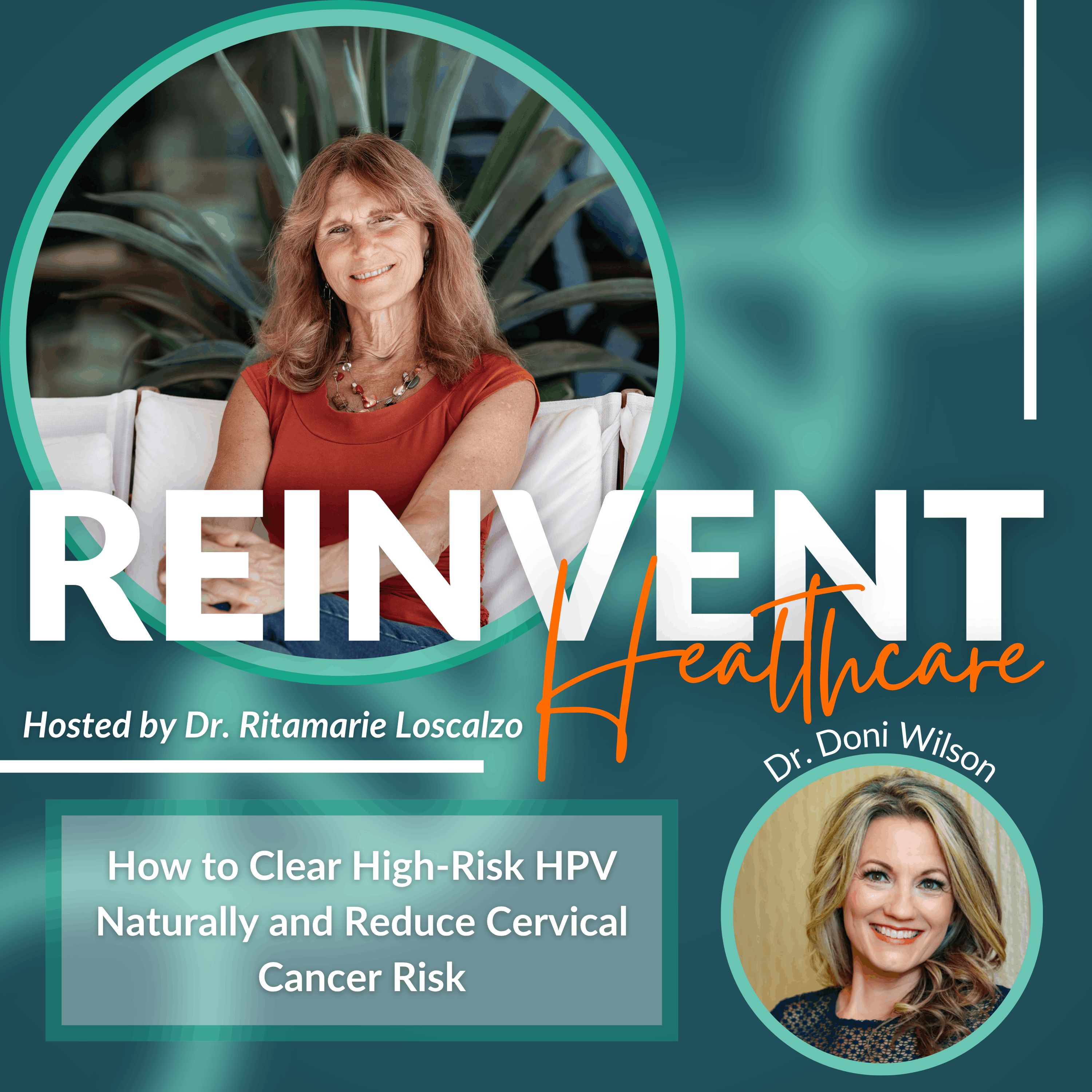
How to Clear High-Risk HPV Naturally and Reduce Cervical Cancer Risk
May 600:44:35Tap to summarizeHPV gets treated like a life sentence, and the conversation usually stops at fear, procedures, or a vaccine that does not fully protect. In this episode, Dr. Ritamarie talks with women’s health expert Dr. Doni Wilson about what actually drives HPV persistence, why most women are told “there’s nothing you can do,” and how a terrain-based approach helps the body clear high-risk HPV and stay negative long term.You’ll learn what to look for beyond exposure, how the vaginal microbiome, hormones, blood sugar, nutrient status, toxins, and chronic stress shape susceptibility, and which overlooked lab clues can point to the real problem, before it becomes a crisis.What’s Inside This Episode?The question most HPV conversations never askWhy eliminating a virus isn’t the same as eliminating riskThe early signals and lab clues that matter before abnormal cells appearThe missing piece in cervical cancer prevention most women never hearHow understanding the why changes everythingResources and Links:Download the full transcript here. Download our FREE Free Guide to Supporting a Healthy and Balanced Immune SystemJoin the Next-Level Health Practitioner Facebook group here for free resources and community supportVisit INEMethod.com for advanced health practitioner training and tools to elevate your clinical skills and grow your practice by getting life-changing results. Check out other podcast episodes hereGuest Resources and Links Dr. Doni Wilson’s website: doctordoni.com Get Dr Doni’s Free Training for Healthcare PractitionersFind Dr Doni on Facebook: @drdoniwilsonInstagram: @drdoniwilsonTwitter: @glutenfreedocTickTok: @drdoniwildonYoutube: https://www.youtube.com/@DoniWilsonNDGuest BioDr. Doni Wilson is a powerhouse naturopathic doctor, professional midwife, clinical nutritionist, best-selling author of Master Your Stress, Reset Your Health, and an internationally renowned speaker and thought leader in women’s health. For over 25 years, she has been on the cutting edge of health care, helping women to transform their health naturally. As the creator of the Stress Recovery Protocol®, developed through her own journey overcoming chronic migraines, Dr. Doni has helped thousands of patients break free from health challenges and become resilient to stress. A true advocate for women’s health, she is dedicated to empowering others to take control of their healing, drawing awareness to the profound impact of stress and trauma on the body.You can find her blog, podcast How Humans Heal, and transformational programs at DoctorDoni.com.
Transcribe →
When Labs Look Normal but Aren’t: Advanced Functional Lab Interpretation for Practitioners
Apr 2900:14:08Tap to summarizeIf you’ve practiced long enough, you’ve seen this. Labs come back “normal,” and yet… the person in front of you clearly isn’t. Fatigue. Brain fog. Anxiety. Metabolic dysfunction. All of these are dismissed, because the numbers fall inside a reference range.Reference ranges are statistical. They are not optimal.In this episode, Dr. Ritamarie walks through how to interpret labs in context by looking at patterns, physiology, and functional markers instead of reacting to isolated numbers.This is the missing layer between data and clinical results.What’s Inside This Episode?• Why “normal” labs can still reflect dysfunction• The difference between lab sufficiency and functional sufficiency• How to read patterns instead of isolated markers• Early signs of methylation strain most practitioners miss• When serum markers mislead you• How to think through a hierarchy before supplementing• When advanced testing adds clarity—and when it doesn’tResources and Links:Download the full transcript hereDownload our FREE Smart Supplementation MatrixJoin the Next-Level Health Practitioner Facebook group here for free resources and community supportVisit INEMethod.com for advanced health practitioner training and tools to elevate your clinical skills and grow your practice by getting life-changing results.Check out our other podcast episodes here
Transcribe →
Genetics and Supplement Forms: When Activated Nutrients Actually Matter
Apr 2200:16:05Tap to summarizeActivated forms. Methylated forms. Chelated minerals. The supplement world often implies that newer or “activated” means better, but does it?In this episode, Dr. Ritamarie continues the supplementation conversation, this time through the lens of genetics, enzyme efficiency, and precision forms. She breaks down when activated nutrients truly matter, when they don’t, and why choosing the wrong form can stall progress just as much as choosing the wrong supplement.You’ll also learn how excipients, binders, and delivery systems can influence tolerance and outcomes, especially in sensitive people.If you’ve ever wondered whether you’re using the right form or just following a trend, this episode will help you think more precisely and prescribe more effectively.What’s Inside This Episode?• Activated forms: when they matter and when they don’t• Genetic variants: how they affect enzyme efficiency (not just deficiency)• Bottlenecks: why the limiting step, not the nutrient, guides decisions• Functional deficiency: when labs look normal but pathways aren’t• Absorption vs activation: why form doesn’t fix every problem• Excipients: what’s really in the capsule and when it matters• Delivery systems: powders, capsules, liquids, and what to consider• Overcorrection: how “more” and “activated” can create new imbalancesResources and Links:Download the full transcript hereDownload our FREE Smart Supplementation MatrixJoin the Next-Level Health Practitioner Facebook group here for free resources and community supportVisit INEMethod.com for advanced health practitioner training and tools to elevate your clinical skills and grow your practice by getting life-changing results.Check out our other podcast episodes here
Transcribe →
Why Is It Low? The Root-Cause Approach to Nutrient Deficiencies and Supplementation
Apr 1500:19:39Tap to summarizeYou run the labs and a nutrient comes back low. What’s your first move?For many practitioners, the reflex is simple: replace it. But we’re living in the most over-supplemented era in history. People are taking magnesium for sleep, B12 for energy, iron for fatigue, adaptogens for stress, creatine for cognition without asking the most important question.Why is it low in the first place?That question is the difference between protocol prescribing and real clinical thinking. A deficiency isn’t a diagnosis but a clue. Until we understand the mechanism behind that clue, we’re reacting and not practicing true healthcare.What’s Inside This Episode?• Low nutrients: why they’re a clue, not a diagnosis• Six hidden drivers: the real causes of many deficiencies• Absorption problems: why adding more often fails• Activation issues: when nutrients can’t convert to active forms• Cellular transport: the overlooked signaling problem• Increased demand: how stress, toxins, and inflammation drain nutrients• Functional deficiency: when labs look normal but cells aren’t• Supplement decisions: when they help and when they miss the root causeResources and Links:Download the full transcript hereDownload our FREE Smart Supplementation MatrixJoin the Next-Level Health Practitioner Facebook group here for free resources and community support.Visit INEMethod.com for advanced health practitioner training and tools to elevate your clinical skills and grow your practice by getting life-changing resultsCheck out other podcast episodes here
Transcribe →
Blue Zones for Metabolic Health: How Cities Make the Healthy Choice the Easy Choice
Apr 800:41:30Tap to summarizeWhat if the biggest lever for metabolic health is not another protocol, supplement, or perfect diet? What if it’s the environment people live in, and the relationships that shape daily choices?In this conversation, Dr. Ritamarie speaks with Dan Buettner Jr. of Blue Zones about what the world’s longest-lived populations can teach us, and how entire U.S. cities are applying those lessons through practical changes in people, places, and policy. You’ll hear why individual discipline often fails, how small changes create massive health shifts over time, and what this means for practitioners who want results that actually stick.What’s Inside This Episode?Why willpower breaks down, even when motivation is highWhat the longest-living populations did instead of chasing healthHow small environmental shifts outperform big personal effortsThe longevity levers most health conversations sidestep, but communities can’tWhat changes when health becomes a shared identity rather than a personal projectA simple way to redesign your own environment so better choices happen automaticallyWhat modern culture is erasing from traditional longevity regions, and what still mattersHow practitioners can move beyond protocols and participate in population-level changeResources and Links:Download the full transcript here.Download our FREE Metabolic Health Guide here. Join the Next-Level Health Practitioner Facebook group here for free resources and community supportVisit INEMethod.com for advanced health practitioner training and tools to elevate your clinical skills and grow your practice by getting life-changing results. Check out other podcast episodes hereGuest Resources and LinksBlue Zones website: BlueZones.comBlue Zones ChallengeBlue Zones Project communities: BlueZones.comBlue Zones® Certification Course (with ACLM): LifestyleMedicine.org Guest BioDan Buettner Jr. is a driving force behind Blue Zones LLC and its success in deploying a well-being strategy across the US, leading transformative community health initiatives across America. With a focus on applying evidence-based longevity principles from global Blue Zones, he has spearheaded projects impacting over 10 million people in 80+ U.S. communities, achieving measurable reductions in obesity, smoking, and healthcare costs while boosting well-being and economic vitality through innovative partnerships and scalable models.
Transcribe →
The Bigger Supplement Conversation: What Creatine Teaches Us About Clinical Discernment
Apr 100:20:40Tap to summarizeCreatine is one of the most researched supplements in the world, yet it’s still surrounded by confusion, especially when it comes to kidney health and lab interpretation.In this episode of ReInvent Healthcare, Dr. Ritamarie looks at creatine through a clinical lens. She explains why creatinine levels often rise when someone takes creatine, why that change is frequently misinterpreted as kidney damage, and what labs actually tell us about kidney function.This conversation also opens a bigger question about supplements: how practitioners can develop real discernment. She is separating myths, marketing, and fear from meaningful science and clinical context.What’s Inside This Episode? Why creatinine often rises with creatine and why it doesn’t necessarily mean kidney damage The difference between creatinine production and kidney filtration Why lab markers can be misinterpreted when supplements are involved How creatine supports cellular energy and metabolic health The bigger clinical question: how practitioners develop discernment around supplements When creatine may be helpful and when it deserves a closer lookResources and Links:Download the full transcript hereDownload our FREE Guide to Customize your Food Plan for Health and LongevityJoin the Next-Level Health Practitioner Facebook group here for free resources and community supportVisit INEMethod.com for advanced health practitioner training and tools to elevate your clinical skills and grow your practice by getting life-changing results. Check out other podcast episodes here
Transcribe →
The Neuro-Spicy Brain: Autism, Sensory Overload, and the Genetics Behind It
Mar 2501:14:23Tap to summarizeWhy do some people experience sound, light, stress, and even social interactions so differently?In this episode of ReInvent Healthcare, Dr. Ritamarie sits down with functional practitioner Dr. Sam Shay to explore what he calls the “neuro-spicy brain.” They unpack how genetics, sensory processing, and nervous system signaling shape the way neurodivergent individuals experience the world.You’ll hear why many neurodivergent people are misunderstood in clinical settings, how sensory overload can drive chronic stress and health challenges, and what practitioners can do differently to create safer, more effective care.This conversation offers a fresh lens on neurodiversity, communication, and the biology behind why some brains respond to the world in profoundly different ways.What’s Inside This Episode?The question most practitioners never ask when someone feels constantly overwhelmed by everyday stimuliWhy some brains experience sound, light, stress, and social environments so intenselyWhat “neuro-spicy” really means and how genetics shape sensory processingWhy neurodiverse people are frequently misunderstood in healthcareThe clues that a patient or client may be experiencing sensory overloadHow practitioners can shift communication and care to better support neurodivergent patientsResources and Links:Download the transcript hereDownload our FREE Metabolic Health Guide here. Join the Next-Level Health Practitioner Facebook group here for free resources and community supportVisit INEMethod.com for advanced health practitioner training and tools to elevate your clinical skills and grow your practice by getting life-changing results. Check out other podcast episodes hereGuest Resources and LinksGuest Resources and LinksVisit Dr. Sam Shay’s websites here: www.FitgenesUSA.com and www.DrSamShay.comConnect with Dr. Sam on social media:Facebook InstagramYouTubeAccess Dr. Sam’s gift and practitioner genetics resources hereGuest BioDr. Sam Shay, DC, IFMCP is a functional medicine expert, speaker, and stand-up comic who helps practitioners unlock their client's ideal diet, reduce inflammation, and reclaim energy through simple genetic testing.Dr. Sam Shay started www.FitgenesUSA.com to help licensed practitioners and certified health professionals integrate powerful functional genetics to improve their practice outcomes.Dr. Sam’s mission is to make personalized genetic testing easy, effective, and actionable. He’s known for making cutting-edge science relatable and actionable, giving practitioners and their clients the tools to turn DNA into a blueprint for better health.Whether supporting exhausted parents, health-conscious professionals, or individuals seeking sustainable transformation, Dr. Sam makes cutting-edge science feel human, hopeful, and empowering. Featured on over 200 podcasts and summits, he delivers each conversation with insight, warmth, and a dose of sharp humor—helping audiences turn their genetic blueprint into a roadmap for thriving.
Transcribe →