
Podcast
Sermon Audio – Cross of Grace
Hosted by Cross of Grace Lutheran Church · EN
Weekly audio of sermons preached at Cross of Grace Lutheran Church in New Palestine, Indiana
48episodes
Episodes
Newest firstAll episodes
The Best and Worst of Times
Feb 15Tap to summarizeMatthew 17:1-9 Six days later, Jesus took with him Peter and James and his brother John and led them up a high mountain, by themselves. And he was transfigured before them, and his face shone like the sun, and his clothes became bright as light. Suddenly there appeared to them Moses and Elijah, talking with him. Then Peter said to Jesus, “Lord, it is good for us to be here; if you wish, I will set up three tents here, one for you, one for Moses, and one for Elijah.” While he was still speaking, suddenly a bright cloud overshadowed them, and a voice from the cloud said, “This is my Son, the Beloved; with him I am well pleased; listen to him!” When the disciples heard this, they fell to the ground and were overcome by fear. But Jesus came and touched them, saying, “Get up and do not be afraid.” And when they raised their eyes, they saw no one except Jesus himself alone.As they were coming down the mountain, Jesus ordered them, “Tell no one about the vision until after the Son of Man has been raised from the dead.” “It was the best of times, it was the worst of times.” That’s how Charles Dickens opens A Tale of Two Cities.It’s also how comedian Anthony Griffith begins a story on The Moth about the season when his career was taking off and his daughter was dying. He had just moved his family to Los Angeles for stand-up. And almost immediately he got two phone calls.The first was from a talent coordinator offering him his first appearance on The Tonight Show with Johnny Carson. The moment he moved there for.The second was from his daughter’s doctor telling him her leukemia had returned.It was the best of times.It was the worst of times.During the day, Anthony cared for his daughter — watching the heart monitor, giving her medication, driving back and forth for blood work and platelets.At night, he was in comedy clubs, working and reworking his set, trying to get it perfect for The Tonight Show.Finally the night came. He’s backstage waiting to be introduced, thinking to himself, Don’t screw this up. Don’t screw this up. The curtain goes up. He is terrified. And for the next six minutes he doesn’t even remember what he said — but he gets six applause breaks. He cooked, as the kids say.In the parking lot Johnny Carson tells him, “You’re extremely funny. Start working on your second Tonight Show. I want you back.”It was the best of times.But by the time the official call came for that second appearance, his daughter had been admitted to the hospital.It was the worst of times.Peter, James, and John knew that rhythm too — the worst of times pressing in on the best. Because just six days earlier Jesus had told them that everything was about to fall apart. That he was going to Jerusalem to suffer and be killed. And that if they were going to follow him, their road would look the same.These were men who had already left their homes, their work, their security for him. And now the one they trusted most was talking about crosses and death. They had six long days of despair to sit with that.But on that sixth day, Jesus took Peter, James, and John up a mountain. And suddenly his appearance changes — his face shining, his clothes dazzling white. And he’s not alone. Moses and Elijah are there — the heroes of their faith, the ones their parents told them stories about at bedtime. No wonder Peter blurts out, “Lord, it is good for us to be here.”Of course it is.This would be like us seeing Abraham Lincoln, Martin Luther King Jr., and Oprah standing together atop the Rockies. You’d want to set up camp and stay awhile.After six long, confusing days — here it is — a moment that makes sense of everything.Now they see who Jesus really is. Not just another teacher of the law. Not just another prophet pointing to the promises they made with God. But the one who is the fulfillment of both.It is the best of times. And Peter wants to hold on to it.While Peter is still talking, a cloud comes and covers the mountain. And a voice — “This is my Son, the Beloved… listen to him.” And just like that, the moment is over. The disciples fall to the ground, terrified.But Jesus comes to them. He touches them. “Get up. Do not be afraid.” Because it is time to go back down the mountain. Back to the valley. Back to the hard days he has already told them are coming.The best of times gives way to what they could only imagine would be the worst of times. This is not the mountain where the story ends: the cross and the empty tomb are still ahead.”That’s how life is.You plan a wedding, get married — and then you find yourself signing divorce papers.You finally hold the baby you prayed for — and then you’re walking through postpartum depression. Your loved one makes it through chemo and radiation and is declared cancer free — and six months later the cancer is back.The best of times. The worst of times. Over and over again.And just like Peter, James, and John, we too can faint — knocked down by the fear or sheer exhaustion of it all. The constant movement from the best of times to the worst of times, the interruptions that come whether we want them or not, can bring us to our knees.And that is exactly where the disciples are in this story. But when they look up, the only person standing there is Jesus. That’s what our text tells us: “When they looked up, they saw no one except Jesus himself.”Jesus himself, ready to go back into the valley with them.Jesus himself, ready to face the difficult days with them.Jesus himself, who is with his disciples — then and now — at every moment of the journey.And we see exactly this in Anthony’s life.By the time he appeared on The Tonight Show for the third time, Brittany had died — not yet three years old. For ten years, Anthony says, he and his wife walked around like zombies, shells of who they once were. It was their church community that endured those dark days with them. Someone eventually suggested that Anthony teach Sunday School. He knew it wouldn’t bring Brittany back, but not long after he said he began to feel her presence more powerfully than ever.About that same time, The Moth called and asked him to tell a story. He knew which one it had to be.In the memoir he wrote with his wife, Anthony says, “Life is cruel sometimes, and it’s okay to have whatever emotion you have when you lose someone you love. If you want to cry, if you want to get mad, if you want to shout out — God’s shoulders are big enough. It’s okay. God still has you.”I hope and pray that we are that kind of extraordinary community: gathered by Jesus, helping one another endure the dark days we all will face, and catching small mountaintop glimpses of his glory along the way.That this place is one where, whether you are in the best of times or the worst of times, you find yourself saying, “It is good for us to be here. It is good for me to be here” Because I believe it is.When we get it right, we walk with one another through a whole life: from the first promises spoken at baptism, to weddings and graduations, to hospital rooms and funeral homes, and everything in between.Above all, rest in this truth and promise: when we leave this place and come down from this mountain, or any other, all that is left for us, for you, is Jesus himself.Jesus himself, coming to us and raising us up, again and again, never leaving us to face the perils and the joys of this life alone.Amen.
Transcribe →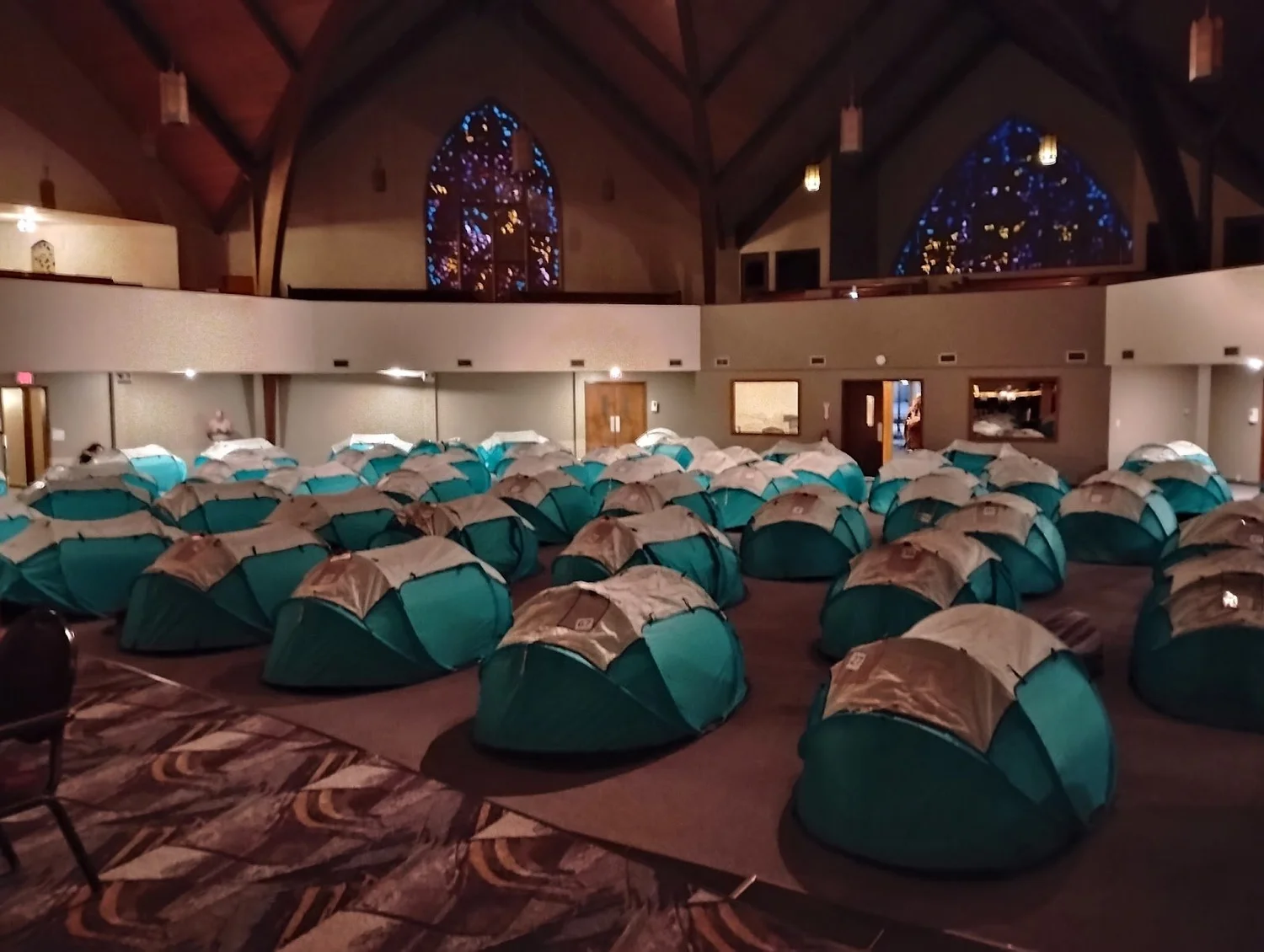
Salt, Light, and Looking Ahead
Feb 8Tap to summarizeMatthew 5:13-20[Jesus said,] “You are the salt of the earth. But if salt has lost its taste, how can it’s saltiness be restored? It is no longer good for anything, and is thrown out and trampled underfoot. You are the light of the world. A city built on a hill can not be hid. No one lights a lamp and puts it under a bushel basket, but places it on the lampstand where it gives light to all in the house. Let your light shine before others, therefore, so that they might see your good works and give glory to your father in heaven.“Do not think that I have come to abolish the law and the prophets, for I have not come to abolish, but to fulfill. For truly I tell you, until heaven and earth pass away, not one letter – not one stroke of a letter – will pass from the law until all is accomplished. Therefore, whoever breaks one of the least of these commandments and teaches others to do the same, will be called least in the kingdom of heaven. And whoever does them and teaches them, will be called great in the kingdom of heaven. For truly I tell you, unless your righteousness exceeds that of the scribes and pharisees, you will never enter the kingdom of heaven.” I got to spend a couple of days this week at the annual reunion of the Wabash Pastoral Leadership Program, in Crawfordsville, which is always a real boon for my spirit and sense of call, and reminder of why church work and ministry matters so much in the world, these days – and the impact we can have when we get it right.For those of you who don’t know/remember, the Wabash Pastoral Leadership Program is a Lilly Endowment-funded endeavor that gathers small groups of Christian clergy from around Indiana for a two-year program of study, learning, and travel, that connects pastors with each other and with civic leaders from around the state to broaden the scope of what congregations can accomplish in the world, in whatever context they find themselves. For those of you who’ve been around awhile, you might remember that I was part of the first cohort of the program back in 2009-2010. (I would spend a few days, every other month at Wabash College and take a couple of international trips thanks to the program.)Anyway, the program hosts annual reunions for the pastors who’ve engaged it over the years, and that’s where I was for about 48 hours last week. As part of it all, some of our colleagues shared, with the rest of us, some of the work they’ve been up to in their various settings and communities.A couple of pastors in New Albany teamed up the past couple of summers to establish a ministry of “cooling stations,” hosted by a handful of churches in their town … places where house-less people and families – rather than hiding in the public library or wading in the creek on the edge of town to keep cool – could find air-conditioned shelter, safety, and water when the temperatures reach 100 degrees or more. This is what kingdom welcome and hospitality looks like – on earth as it is in heaven.Another pastor’s congregation does the opposite. Over at West Morris Free Methodist Church on the westside of Indy, they have a very traditional 60,000 square foot building with a sanctuary that seats close to 1,000 people, though they only worship about 40, these days. So, they removed all of their empty wooden pews, filled their space with tents, and house nearly 80-100 house-less people when temperatures are too dangerously cold to sleep outside. What used to look like this: now looks like this: Of course, they feed them and care for them in other ways, too. It’s still very obviously a sanctuary, maybe more now than ever before, and this is what the fullness of the kingdom tastes like when we get it right. A friend from my own cohort – Kent Ellet, the Pastor at the Speedway Church of Christ and his congregation – have bought and rehabbed three houses in recent years on Alton Avenue, near their church. They’re working on their fourth, as we speak. Once they are ready, they rent these houses at half the cost – or less – to individuals and families who need stable housing and other support, in order to get back on their feet after all manner of struggle, difficulty, bad luck, and whatnot. My friend Kent calls this ministry the “Alton Alternative” and it is a light of grace, sitting high on a lampstand, shining brightly for all in those houses – and their surrounding neighborhood, and now all of us – to see.When Jesus tells the crowds on the hillside in this morning’s Gospel that they are the salt of the earth and the light of the world, he was trying to get them to think differently about the kind of light and flavor their faith brings to the world around them. And, I happen to think, he was inviting them to get creative about that for a change … to wonder differently about what kind of difference they might make … to imagine ways their faith was inviting them to be a blessing for the world.“You are the salt of the earth,” he tells them. “But if salt has lost its taste – if you have lost your flavor – what good is that? What are you doing here? What’s the point of it all?”“You are the light of the world,” Jesus says. “Like a city on a hill… like a lamp on a stand… like a beacon in the night. Don’t cover yourselves up… don’t ...
Transcribe →A Blessing for the Screw Ups
Feb 1Tap to summarizeMatthew 5:1-12When Jesus saw the crowds, he went up the mountain; and after he sat down, his disciples came to him. Then he began to speak, and taught them, saying:“Blessed are the poor in spirit, for theirs is the kingdom of heaven. Blessed are those who mourn, for they will be comforted. Blessed are the meek, for they will inherit the earth. Blessed are those who hunger and thirst for righteousness, for they will be filled. Blessed are the merciful, for they will receive mercy. Blessed are the pure in heart, for they will see God. Blessed are the peacemakers, for they will be called children of God. Blessed are those who are persecuted for righteousness’ sake, for theirs is the kingdom of heaven. Blessed are you when people revile you and persecute you and utter all kinds of evil against you falsely on my account. Rejoice and be glad, for your reward is great in heaven, for in the same way they persecuted the prophets who were before you. I like to be right. Just ask Katelyn. Or better yet, ask Pastor Mark when he points out a grammatical error in my writing. Yes—the Oxford comma should be there.What’s worse than liking to be right is having a toddler who also likes to be right. I hold up an orange and he declares it an apple. I say it’s too cold to go to the park and he responds, “No it’s not—it’s perfect!” You get the picture.I imagine I’m not alone in this. We all like to be right. And our certainty—our confidence that we are right—can be far more dangerous than we realize.In 2008, a woman went to Beth Israel Deaconess Medical Center, a Harvard teaching hospital, one of the best in the world. She’s taken back to the OR, put under, and the surgeon completes the surgery successfully. Everything went great…Until she woke up in recovery and realized the wrong side of her body had been stitched up. The surgeon had operated on her left leg instead of her right.When the hospital later explained how this happened, Kenneth Sands, a vice president, said this: “The surgeon began prepping without looking for the mark and, for whatever reason, he believed he was on the correct side.”We’ve all felt utterly right about something, only to discover later that the opposite was true. And more than we like being right, we hate realizing we’re wrong. Now, an important clarification - Being wrong and realizing you’re wrong are not the same thing. Kathryn Schulz uses an image from Looney Tunes to explain this. Wile E. Coyote chases the Road Runner straight off a cliff. He keeps running, completely confident, even though there’s nothing beneath him. It’s only when he looks down that he realizes he’s in trouble.That’s the difference. Being wrong is standing over thin air and thinking you’re on solid ground. Realizing you’re wrong is looking down and seeing there’s nothing holding you up.This morning, I want to linger with just two of the Beatitudes. Not because the others don’t matter—but because these two speak directly to the world we’re living in right now. Our longing to be right, and our deep resistance to admitting we’re wrong, sit at the heart of so much division: in our homes, our communities, our churches, our nation, and even within ourselves.And into that reality, Jesus speaks a word of blessing—a word that turns our fear, our hatred of being wrong into good news.Blessed are those who hunger and thirst for righteousness, for they will be filled. We know what it means to be hungry and thirsty. Those longings are part of being human. We hunger not only for food, but for connection, purpose, community, beauty, and joy.But to hunger for righteousness? That’s not a phrase we use or even hear outside of this space. In fact, it’s a word many of us avoid. It can sound pious, self-righteous, or just plain uncomfortable.And that’s unfortunate… Because our discomfort with the word comes from confusion about what it means. Righteousness simply means being made right: made right with God, made right with others, and made right with yourself. Blessed, then, are those who long to be made right.Like the other Beatitudes, this one surprises us. Standing there on the mountainside, we might expect Jesus to say, Blessed are the righteous. Blessed are the ones who get it right. Blessed are the ones who already are right.But that’s not how it goes. When people come to Jesus assuming they are righteous, he has a way of setting the record straight. It is those who come knowing they are wrong—those who long to be made right—who receive grace and mercy.The truth of the matter is this: we cannot make ourselves right with God, no matter how hard we try.All the praying, Bible reading, worshiping, serving, and learning in the world do not make us righteous before God. Rather, the Holy Spirit works through these practices to make us aware of the grace of Jesus. And that grace alone is what makes us right. Not our words nor our posts on Facebook. Not our deeds. Not our politics. Grace alone.Which is why Jesus finishes the Beatitude in the passive voice: for they will be filled.Those who recognize they are wrong, those who don’t always get it right, those who long to be made right rather than clinging to the certainty that they already are - they will be filled. They will be made right with God, with others, and themselves.This is a blessing for those of us who get it wrong—who mess up, who don’t always get it right.So much of what we see and hear around us—in our culture, in business, certainly in politics—tells us to do the opposite: never admit fault, double down, point fingers, claim victory at all costs, and insist that we are always right. But there is no hunger or thirst to be made right if we never admit that we’re wrong. This blessing is for those who screw up - and can say so.What if this was our posture in the present moment, instead of the certainty that we are right?What if we moved through the world not with the desire to be right, but with the desire to be made right—not only with God, but with one another? What if we faced our spouses, our kids, our neighbors with the simple possibility that maybe… I’m wrong on this.Believe me, I’m preaching to myself here. How much better would your marriage be? Your relationship with your kids? How many friendships might be healed if we could say, “I was wrong. I’m sorry. I want this to be made right.”To error is to be human. So be human, admit you’re human, and be blessed.And the best news comes with the Beatitude that follows: Blessed are the merciful, for they will receive mercy.Jesus meets our wrongness—our sin, our failure, our getting it wrong—not with contempt, not with an I told you so, but with kindness. With mercy. In this life, we expect being wrong to be met with punishment. But Jesus shows us another way. Instead of meeting our sin with punishment, he meets it with sacrifice, generosity, and mercy.And it is only because we have received mercy that we can extend merc...
Transcribe →Walking Hope
Jan 25Tap to summarizeMatthew 4:12-32Now, when Jesus heard that John had been arrested he withdrew to Galilee. He left Nazareth and made his home in Capernaum, in the territory of Zebulun and Naphtali, so that what had been spoken by the prophet might be fulfilled: “Land of Zebulun, land of Naphtali, on the road by the sea, across the Jordan – Galilee of the Gentiles. Those who sat in darkness have seen a great light; those in the region and the shadow of death, on theme light has shined.”From that time, Jesus began to proclaim, “Repent, for the kingdom of heaven has come near.”As he walked along the Sea of Galilee, he saw two brothers, Simon, who is called Peter and Andrew, his brother, casting a net into the lake – for they were fishermen. He said to them, “Follow me and I’ll make you fish for people.” Immediately, they left their nets and followed him. As he walked along a little further, he saw two other brothers, James the son of Zebedee, and his brother John, in the boat with their father, mending their nets, and he called them. Immediately, they left the boat and their father, and followed him.And Jesus went throughout Galilee, teaching in their synagogues and proclaiming the good news of the kingdom, and curing every disease and every sickness among the people. I have those walking monks from Texas on the brain lately. They are inspiring a piece of what we hope to do together during Lent in a few weeks, which you’ll hear about soon enough. But I they came to mind as I read this morning’s Gospel story about Jesus, making his way around Galilee.Surely, you’ve heard about the Buddhist monks from Fort Worth, Texas. They’ve been “walking for peace” since October, with plans to make their way to Washington, D.C., sometime in February. 2,300 miles, I believe. Just walking. Stopping every once in a while to give talks about what they’re up to – which is nothing more and nothing less than walking as an invitation to and witness about being mindful of peace and compassion. They’ve been compelled and inspired, of course, by a world – and our nation, in particular – that displays the opposite of those things, too much of the time; peace and compassion, I mean.So, they’re just walking. And passing out prayer cords and flowers along the way. Shining a light on the call to be generous and deliberate about loving-kindness.Just walking. With their rescue dog Aloka, who walks faithfully along with them, and who has almost 700,000 followers on Facebook.Just walking. Even though at least one of them was injured along the way, after being hit by a car, and having his leg amputated.Just walking. Receiving the grace and generosity of strangers in the form of food and water and blessings of support and encouragement.Just walking. And gathering crowds as they go – in fits and starts – in various places; in all kinds of weather; sometimes a dozen or so; sometimes it looks like hundreds or thousands walking along with them.And all of it made me wonder about what we just heard about the beginning of Jesus’ ministry – and if it started out just as simply and profoundly – with him just walking.When Jesus heard that John the Baptist had been arrested – which we know happened because John had spoken out against King Herod’s unlawful behavior – Jesus likely felt like things had taken a turn in his world … that things had taken a turn, perhaps, in the world at large … to the point that he may not have felt safe or settled anymore in his hometown of Nazareth … maybe that he just couldn’t sit still any longer …In fact, while Matthew’s Gospel says that Jesus “left” Nazareth, we know from Luke’s Gospel that there was more to it than that. Jesus actually got run out of town. He was kicked out of Nazareth. His hometown friends, family, and neighbors threatened to hurl him off a cliff, remember – because Jesus had the nerve to proclaim good news for the poor and recovery of sight for the blind; because he promised release for captives and freedom for the oppressed; because he reminded people about God’s prophets doing ministry with – caring for – loving – and tending to – the outsiders, the outcasts, and the foreigners in Minneapolis … I mean the outsiders, the outcasts, and the foreigners in their midst.But when he was threatened with that cliff after standing up for foreigners, outsiders and outcasts, the Gospel says Jesus “passed through the midst of them and went on his way.”He just walked.And in today’s Gospel, Jesus is just getting started. I imagine him walking alone when he meets Simon and Andrew – that first set of brothers who leave their nets and tag along, with the simple curiosity of what it might mean to “fish for people,” instead of, say, small mouth bass, for a change. And then Jesus gathers up James and John, who leave their boat and their dad behind, to go wherever Jesus was headed next. And maybe all of that is why some followed and some didn’t. Maybe Zebedee was just too old for all of that walking. Maybe Zebedee wanted his boys to get out of the house, off the payroll, and about their own business for a change. Or, maybe Zebedee – like all those people in Jesus’ hometown – wasn’t on board with everything Jesus was preaching and teaching and calling them toward: release for the captive, freedom for the oppressed, care for the widow and the orphan, concern for the outcast, the immigrant, and the resident aliens in their midst.All of this is to say that this way Jesus was walking – and calling his followers to follow – was a hard one. It was counter-cultural and anti-establishment. It was dangerous and lonely, at times. It was not for the faint of heart. It was open-hearted and gracious to a fault. It was not popular or powerful – it was worthless and weak by the world’s standards.But it was full of hope … hope that in spite of the brokenness of the world … that precisely because of the world’s brokenness … the kingdom of heaven had come near, in Jesus. Hope … that just like before … those who sat in darkness had seen a great light. Hope … that just like before … those who sat in the region and the shadow of death … would have the light of God shine upon them, again.We could surely use some light to shine in our darkness right about now. We could surely use some hope in the face of the bad news, the violence, the lies, the unnecessary and unwarranted death and despair that seem to be winning the day for so many.And I heard someone say recently that “hope is not something you HAVE, it’s something you DO.”“Hope is not something you HAVE, it’s something you DO.”And that’s what I see in those walking monks … and it’s what I imagine Jesus was up to as he walked, too: holding out hope – for himself as he worried about John the Baptist’s arrest; manifesting hope – as he grieved the loss of his hometown and their threats against him; holding out hope - as he saw the struggle and suffering of the hurting world around him; manifesting hope – for those who dared to walk with him for all of the above, and for all of us, just the same.I know it’s not enough all of the time – just walking certainly doesn’t feel like enough for many of us these days. And I know there won’t be a lot of walking in the storm and snow that has covered so much of our country this weekend. But let’s follow Jesus when and however we’re able – with actions that hold out and that manifest hope – in the face of what can be so disheartening so much of the time.When things seem so frustrating, so fearful, so hopeless, imagine that HOPE isn’t something you HAVE or something you can LOSE, even. Imagine, instead, that HOPE is something we can DO.So let us worship, learn and serve. Let us pray and be generous and kind. Let us walk and march for peace whenever the opportunity presents itself. And let us repent, too, that thing today’s Gospel says Jesus couldn’t shut up about once he started making his way around Galilee. “Repent for the kingdom of heaven has come near.”Repent for the things we’ve said and left unsaid.Repent for the things we’ve done and left undone.Repent for the actions we’ve taken and for the apathy we’ve shown.Repent for the ways we’ve ignored Jesus’ invitation to follow him with faith, courage, justice, and love for all people.Let’s repent because it means to change; because it means to turn around; because it means to do better now that we know better. Repent, because it means to exercise the Christ-like qualities of sacrifice, surrender, and humility.Let us repent, as a supreme act of faith, not because we HAVE to, but because we GET to. Repent, not full of shame or full of guilt or despair. But, let us repent and be filled with HOPE for the grace, mercy, forgiveness, and CHANGE that will come when we let the love of God, in Jesus, have its way with us, with our neighbor, with our enemies, and with the world God so loves.Amen.
Transcribe →How to Live a Life
Jan 18Tap to summarizeJohn 1:29-42The next day he saw Jesus coming toward him and declared, “Here is the Lamb of God who takes away the sin of the world! This is he of whom I said, ‘After me comes a man who ranks ahead of me because he was before me.’ I myself did not know him, but I came baptizing with water for this reason, that he might be revealed to Israel.” And John testified, “I saw the Spirit descending from heaven like a dove, and it remained on him. I myself did not know him, but the one who sent me to baptize with water said to me, ‘He on whom you see the Spirit descend and remain is the one who baptizes with the Holy Spirit.’ And I myself have seen and have testified that this is the Chosen One.”The next day John again was standing with two of his disciples, and as he watched Jesus walk by he exclaimed, “Look, here is the Lamb of God!” The two disciples heard him say this, and they followed Jesus. When Jesus turned and saw them following, he said to them, “What are you looking for?” They said to him, “Rabbi” (which translated means Teacher), “where are you staying?” He said to them, “Come and see.” They came and saw where he was staying, and they remained with him that day. It was about four o’clock in the afternoon. One of the two who heard John speak and followed him was Andrew, Simon Peter’s brother. He first found his brother Simon and said to him, “We have found the Messiah” (which is translated Anointed). He brought Simon to Jesus, who looked at him and said, “You are Simon son of John. You are to be called Cephas” (which is translated Peter). A couple of weeks ago, I signed up for Better with Time, a weekly newsletter course. Each week, I get a new tip in my inbox. Something small I can do at a different time of day to add a little more joy and adventure to my life. I’m two weeks in, and so far, I’ve experienced no added joy and absolutely no adventure.And it’s not because I didn’t try—well, maybe the first one. Week one’s suggestion was to eat chicken parmigiana for breakfast. I mean… who would do such a thing? The point wasn’t nutrition. It was control. The author argues that breakfast can be whatever you want it to be, and that by eating chicken parm for breakfast, you reclaim a sense of freedom over your life. You start thinking outside the bowl.You can let me know how that goes.Week two didn’t do much for me either. The challenge was to spend twenty minutes flipping through a dictionary. The most joy I got from that was asking Pastor Mark for a dictionary—who, of course, had one from 1922.I signed up for this newsletter because, honestly, I could use a little more joy in my day—who couldn’t? I don’t necessarily need more adventure. But a distraction would be nice. A distraction from the endless updates of insanity that seem to flood our newsfeeds, no matter which one you’re looking at. So when I saw something that promised to tell me how to live my life in a way that might add a little joy—and it was free—I thought, why not?After all, we are constantly being told how to live a life. By people, by companies, by experts. We’re told what we should want, what we should value, and then—almost always—we’re offered a solution. Usually at a cost. But our passage today gives us a pretty good picture of how to live a life.This is Jesus’ first public appearance in the Gospel of John. And instead of John the Baptist doing any baptizing, he shows up here as John the Witness—or John the Testifier. He doesn’t perform a ritual. He points. Literally.Every time Jesus walks by, John points and says, “Look! There he is!” Honestly, it’s a little odd. John is like a toddler in public, loudly pointing at a stranger: Look at that person! I can’t help but wonder if it was as embarrassing for Jesus as it can be for parents when that happens. But that’s the scene. John sees Jesus, and he wants everyone else to see him too.The second time John points and shouts at Jesus, two of his disciples finally pay attention. They hear what John is saying, and something about it catches them. So they begin to follow Jesus.And then—Jesus turns around.He looks at them and asks, “What are you looking for?”In English, the question sounds simple. But it doesn’t really capture the depth of what Jesus is asking. It’s closer to: What are you seeking? What do you hope to find? What do you long for? The disciples respond to Jesus by asking, “Rabbi, where are you staying?”It’s a richer question than it first sounds. They aren’t asking for an address. They’re asking where Jesus dwells, where he abides. And that word carries the sense of belonging. It’s the difference between a hotel and a home. You stay at a hotel. But you abide, you belong, at the place you call home. That’s what the disciples are really asking: Where do you dwell? Because we want to dwell there too.Jesus responds with a simple invitation: “Come and see.” Not an explanation. Not a theological lecture. Not a test to see if they believe the right things or are worthy enough. Just an invitation. Come and see.And they do. They spend the rest of the day with Jesus. The text doesn’t tell us what happens while they’re there, but something clearly does happen. We know this because before abiding with Jesus, they called him Rabbi, teacher. Respectful. Formal. After spending time with him, they leave calling him Messiah: the anointed one, the one who saves and frees.Don’t you wonder what happened in between: what they talked about? what they saw? what they experienced? Whatever it was, it changed them. They had to be impressed. Amazed. Astonished. So much so that Andrew immediately goes and tells his brother Simon what he has seen and experienced.I wonder how Simon took that news. If he’s anything like me, I imagine his response was something like, No way. Are you sure? Prove it. But Andrew doesn’t argue. He doesn’t explain. He simply brings his brother to Jesus. I wonder if he used the same invitation Jesus used with him: Come and see. Because no sooner than he tells his brother the two of them are off to find Jesus. And that’s when it clicks for me.I don’t need a newsletter to tell me how to live a more joyful or adventurous life. I don’t need influencers, companies, or marketing campaigns promising they have the product that will finally solve all my problems. What I need in this life is what those two disciples just experienced—because that is living a life: paying attention, being astonished, and telling about it.And that’s not my framework, but the poet, Mary Oliver’s. In her poem Sometimes, she writes: “How to live a life: Pay attention. Be astonished. Tell about it.”The disciples paid attention to what John was saying about Jesus. They noticed where he was pointing, and they were willing to look in that direction. That’s often how faith begins, not with certainty, but with curiosity. With listening to those who point us toward Jesus, and being willing to follow their gaze. And sometimes that pointing takes us somewhere we didn’t expect.Then they abide with Jesus—and they are astonished by him. What a gift. When was the last time you were astonished by Jesus? Truly astonished—filled with wonder, caught off guard, surprised by grace.Maybe it happens in the quiet of prayer, when you aren’t looking for an answer, and Christ meets you with peace instead.Maybe it happens through the words of Scripture - when you read a passage for the one hundred and first time and finally hear the promise it has for you. Not because the words changed, but because you did.Maybe it happens through a song - when the Spirit overwhelms you at the very moment you least expected it.You know this kind of astonishment when it happens - because it changes you. No longer is Jesus only a teacher, someone with wise words to admire from a distance. He becomes Messiah: the one you follow, the one who meets you, the one who saves and frees. And once we are astonished, just like Simon, we can’t help but tell about it.About the Messiah we’ve found. About the astonishment we’ve experienced. About the abiding that has changed us.And the way we tell isn’t by arguing or proving or persuading. It’s by offering the same invitation Jesus offered in the first place: come and see. Hearts and minds aren’t changed by data or debates. They’re changed through stories and experiences.Siblings in Christ, Jesus gives the same invitation to us: come and see.Come and abide with me.Come and be astonished by me.This is what I hope for us at Cross of Grace. That we are a people who have seen Jesus, and who can’t help but point to him. A community astonished by his mercy, forgiveness, and grace. So that when others are searching, when they know something is missing, when they are looking for more hope, more joy, more belonging in their life, we don’t try to convince them or fix them.We simply point. We point to Jesus. We point to a place where he abides with us. A place where they will be welcomed and loved. And we offer the same simple invitation: Come and see.Come and see why our joy doesn’t come from newsletters, but from being astonished by the grace of Jesus Christ. Come and see a place where you can experience that grace for yourself.That’s how we live a life:...
Transcribe →Vows of the Peacock and Baptismal Variety
Jan 11Tap to summarizeMatthew 3:13-17Then Jesus came from Galilee to John at the Jordan, to be baptized by him. John would have prevented him, saying, ‘I need to be baptized by you, and do you come to me?’ But Jesus answered him, ‘Let it be so now; for it is proper for us in this way to fulfil all righteousness.’ Then he consented. And when Jesus had been baptized, just as he came up from the water, suddenly the heavens were opened to him and he saw the Spirit of God descending like a dove and alighting on him. And a voice from heaven said, ‘This is my Son, the Beloved, with whom I am well pleased.’ We don’t like resolutions anymore. In fact, most of us probably didn’t make a single one this year.Pew Research Center found that about 70 percent of Americans skipped resolutions altogether. When asked why, more than half simply said, “We don’t like them.” And honestly, I’m with them. Most of our resolutions have become predictable, boring, and very inward-focused. Just listen to the top five resolutions according to a survey done by You Gov.Exercising moreBeing happyEating healthierSaving more moneyLosing weightYou probably could’ve guessed them. But these days self-improvement isn’t just the focus of our resolutions: it’s the focus of our whole society. We’re surrounded by a culture that tells us we are always one habit, one purchase, one routine away from becoming a better version of ourselves. Social media feeds us an endless stream of trends, all built on the same promise: if you work harder, focus more, and optimize your time, you will finally be okay. Nearly all of it tells us to cut out distractions — like the people in our lives — so we can walk with a weighted vest and drink mushroom coffee till we are entirely better people, physically and mentally.Who has time for New Year’s resolutions when the pressure to improve is nonstop? But resolutions weren’t always this way. In fact, for most of their long history, they were almost the opposite of what we know today.The practice goes back thousands of years. In ancient Babylon and Rome, people made vows at religious festivals that were meant to strengthen the whole community: praying together, settling debts, promising to live well with their neighbors and their gods. Even as recently as the 1940s, resolutions were still mostly about how to be a better person with other people. A Gallup poll from 1947 found the top three resolutions were to improve my disposition, be more understanding, and control my temper. That’s a very different vision of change than losing weight, getting rich, or optimizing yourself. My favorite legend about New Year’s resolutions is the Vow of the Peacock, told of medieval knights. They would gather for a grand feast, and at the center of it all was a peacock: roasted, re-dressed in its dazzling feathers, and carried through the hall. One by one, knights would rise and make their vows upon the bird, speaking promises of chivalry before everyone present. These were not modest intentions, but aspirational, even risky commitments: to courage, loyalty, and love.The Vow of the Peacock, more legend than ledger, shows us what people once believed promises were supposed to be: public, costly, witnessed, and binding; not private acts of self-improvement, but commitments made for the sake of others.And that turns out to be exactly the kind of vow Jesus steps into at the Jordan River.Because when Jesus comes to be baptized, he is not trying to become a better version of himself. He is stepping into a shared, public act: one that binds him to sinners, to repentance, and to the people he has come to save.That’s why we get baptism so wrong when we treat it like a spiritual achievement, something you earn once you’ve spiritually improved enough to be worthy. That’s not what’s happening at the Jordan at all.In fact, at this point in Jesus’ life, he had done nothing. No miracles. No healings. No teachings. And yet God says to everyone gathered, “This is my Son, my Beloved, with whom I am well pleased.”God doesn’t say, “This is my Son, who kept all his resolutions, who eats the right amount of protein, and walks on water.” There is none of that. No self-improvement, no spiritual résumé, but still called beloved.So if this baptism isn’t about self-improvement or earning anything, what is Jesus doing in the water?First, he is doing this for us and with us. By stepping into the Jordan, Jesus is saying, “I am in this with you — all of you who repent, all who need forgiveness, everyone trying to turn toward God.” He does not stand above us, but with us. That’s why Jesus tells John, “It is proper for us to fulfill all righteousness.” He chooses not to go it alone. He includes John in the work God is doing. This baptism is a radical act of solidarity, showing us how Jesus will bring about the kingdom of heaven, by working in, with, and through people.And that righteousness doesn’t stay with Jesus. The righteousness he fulfills in those waters is given to us in ours. In baptism, our sins are forgiven and we are set back into right relationship with God and with creation. That’s why, at every baptism, and every time you remember your own, you should hear God’s voice echoing over you: “This is my child, my beloved, with whom I am well pleased.” With you. God is well pleased.We don’t need resolutions to be worthy of anything, no matter what the trends and ads tell us. What we do need, believe it or not, are peacock vows. I know that sounds strange. We don’t need to swear chivalry on a bird. But we do need public promises made for the good of our neighbors: the kind that say, out loud and together, “I’m not just here to improve my own life. I’m here for yours.”The good news is we don’t need to be medieval knights or stage a ceremony with a roasted bird — even though that does sound fun. What we already have are our baptismal vows: promises made to God, to one another, and for the sake of the world.In the Lutheran tradition, many of us were baptized as infants, when others made those promises on our behalf. But at some point — at confirmation, or later in life — we take those vows as our own: to live among God’s faithful people, to hear God’s Word and share in communion, to proclaim the good news of Christ in word and deed, to serve all people as Jesus does, and to strive for justice and peace in all the earth.Yes, keeping these promises will shape you. But their real purpose is to bless others: just like Jesus’ baptism, and even those old peacock vows. And we know that resolutions made with others and for others are the ones that last.So here is what I’m asking of you this year: instead of self-improvement resolutions, tend to your baptismal vows. Not for you, but for God and for this world God so loves. Because what this world needs right now is not one more upper-middle-class person chasing a wellness trend or a bigger bank account.In a world that is lonely and anxious, it needs people who will live among and beside their neig...
Transcribe →A.I. and the Good News of Christmas
Jan 4Tap to summarizeJohn 1:10-18He was in the world and the world came into being through him, but the world did not know him. He came to what was his own and his own people did not accept him. But to those who received him – who believed in his name – he gave the power to become children of God, who were born, not of blood, or of the will of the flesh, or of the will of man, but of God.And the Word became flesh and lived among us and we have seen his glory, the glory as of a father’s only son, full of grace and truth. (John testified to him when he cried out, “This is the one about whom I said, ‘He who comes after me, ranks ahead of me, because he was before me.’”) From his fullness we have all received grace upon grace; the law indeed was given through Moses. Grace and truth came through Jesus Christ. No one has ever seen the Father, it is God the only son – who is close to the Father’s heart – who has made him known. (Trigger Warning for talk of suicide.)Now, I thought I had the coolest sermon illustration to show you all this morning – a video of an animal shelter, somewhere in Europe, I think, where they supposedly let the dogs choose their owners. Have you seen it? It’s adorable. And fun. And full of some kind of sermon fodder, I was certain. There’s a room full of people sitting in what looks like the DMV and they release one dog at a time who sniffs around until it jumps on or lays its head in the lap of the human it has chosen to adopt him or her. Like I said, it’s adorable.But, when I went to find it to share with you all, the first video that showed up in response to my search was a very detailed description of all the subtle, but clear evidence within the video of how it was an AI fake. There are wagging dog tails that disappear and then reappear. There are people in the background with limbs that bend in impossible ways. Of course there are extra hands and fingers, too.And all of this is harmless enough, really. They call it “AI Slop” and, if nothing else, it’s a fair warning for all of us to be careful about what we’re reading, believing, and – in the name of the Lord – what we’re reposting as TRUTH or as NEWS on social media. No, the Buckeye's’ head coach, Ryan Day, didn’t get his nipple pierced. No, those bunnies weren’t actually bouncing on a trampoline in the middle of the night. And, no, I didn’t go sledding in my Sunday best – no matter what Pastor Cogan’s announcement slide pretends.And a lot of it, like I said, is harmless. But we know some of it – plenty of it – is not.So the concerns over AI’s rapid expansion are legit and many. There is fear about the economic impact of jobs that have already been or that will be lost in droves by the proliferation of artificial intelligence.And it sounds like science fiction, but there’s very real concern by people smarter than me about the capacity for AI to evolve in ways that have shown it is learning to be deceptive and malicious; that it can scheme and lie to hide and manipulate information in order to protect itself from being replaced, erased, or whatever.Tristan Harri...
Transcribe →Meaning in the Mundane
Dec 25, 2024Tap to summarizeLuke 2:1-20In those days a decree went out from Emperor Augustus that all the world should be registered. This was the first registration and was taken while Quirinius was governor of Syria. All went to their own towns to be registered. Joseph also went from the town of Nazareth in Galilee to Judea, to the city of David called Bethlehem, because he was descended from the house and family of David. He went to be registered with Mary, to whom he was engaged and who was expecting a child. While they were there, the time came for her to deliver her child. And she gave birth to her firstborn son and wrapped him in bands of cloth, and laid him in a manger, because there was no place for them in the inn.In that region there were shepherds living in the fields, keeping watch over their flock by night. Then an angel of the Lord stood before them, and the glory of the Lord shone around them, and they were terrified. But the angel said to them, ‘Do not be afraid; for see—I am bringing you good news of great joy for all the people: to you is born this day in the city of David a Saviour, who is the Messiah,* the Lord. This will be a sign for you: you will find a child wrapped in bands of cloth and lying in a manger.’ And suddenly there was with the angel a multitude of the heavenly host,* praising God and saying,‘Glory to God in the highest heaven, and on earth peace among those whom he favours!’*When the angels had left them and gone into heaven, the shepherds said to one another, ‘Let us go now to Bethlehem and see this thing that has taken place, which the Lord has made known to us.’ So they went with haste and found Mary and Joseph, and the child lying in the manger. When they saw this, they made known what had been told them about this child; and all who heard it were amazed at what the shepherds told them. But Mary treasured all these words and pondered them in her heart. The shepherds returned, glorifying and praising God for all they had heard and seen, as it had been told them. Christmas has a way of feeling extraordinary. All the gathering, feasting, and laughing — it’s a day when memories are made and traditions are cherished. For many of us, it’s the kind of day that feels just right, filled with a sense of joy and meaning that lingers long after the wrapping paper is cleared away. And nearly every year, as the lights glow and the laughter fades, I find myself asking the same question the late great theologian Elvis Presley asked: “Why can’t every day be like Christmas?”And if not every day, what about most days, or even more days than not? Because in reality most of our days are not like Christmas. Most of them are quite ordinary, mundane even. Of course, there are valley and mountain-top moments, but the sum of those days pales in comparison to the days we would consider routine. Or at least that’s how my life has felt lately; not in a bad way, but if my days were put into a novel, you wouldn’t pick it up, or at least not twice. They aren’t quite boring, because I’m not sure life with a “near two-year-old” can ever be called such. But when I reflect on the best moments of my life—the memories I cherish most or the life I aspire to live—it doesn’t look like the majority of my days. Most days feel unimportant in comparison. Get up, help get everyone off to where they need to go, go to work, come home, make dinner, say I’ll clean or read but do neither, go to bed, and do it all over again. Does this sound familiar?Yet, what if those ordinary days aren’t unimportant at all? What if those moments, mundane as they seem, are exactly where God chooses to meet us?One of those nights while I was neither cleaning nor reading and the babe was asleep, this video stopped my scrolling. It made me question what I was seeing. Take a look: Thomas Deininger is an artist who lives on a farm in Rhode Island. In his early twenties, he went on a surfing trip to some remote islands in the Pacific. While there, he was shocked to see all the trash and plastic washed up on the beaches. At the time, he was a painter, but when he returned home, he couldn’t get the image of all that garbage out of his head and wanted to do something about it. So he began scouring beaches, parks, and dumpsters, collecting trash, particularly pieces of nostalgia: toys, cassette tapes, old phones. And from this waste, he started creating beautiful, mind-altering sculptures of the creatures endangered from that same trash.These works start with an illusion. At first, you see a brilliant, yet familiar sight: a parrot in all its colorful splendor. Then as you step to the side, the illusion shatters and you see something you never expected; what you once thought was the head of a beautiful bird becomes bottle caps, action figures, plastic netting, and a floppy disk. Step closer and the scene turns bizarre. The whole thing is made up of material you never expected, put together in ways that make no sense. “I am fascinated with perspective and illusion,” Thomas said in an interview. “I value finding potential in the mundane and the overlooked.”Deininger’s work shows us that beauty can come from what’s overlooked, what’s forgotten, what seems like trash. This is the lens of Christmas: God’s ability to take what seems ordinary—even broken—and create something extraordinary.Consider the nativity. At first glance, it’s serene and familiar: Mary cradles her sleeping, or at least content, baby, Joseph gazes with admiration. The shepherds gather to see what had been told them, and the animals crowd around too. It is a beautiful, picturesque scene.But step to the side, come closer, and see it differently. Mary, a young, unwed, lowly woman with no great characteristics or influence, travels with her not-yet-husband Joseph, a poor carpenter, to Bethlehem, a tiny, impoverished town in the hills of Judea, to give birth in a room where the animals stayed, and places her fragile, newborn baby in a feed trough, surrounded by animals and shady shepherds from the nearby fields. You see, when we step to the side just a bit, this pristine, beautiful image of the nativity transforms and we see Jesus' birth from a new perspective: God chose to come among us through ordinary, overlooked people in a forgotten, unimportant place.And then if we look closer still, the whole thing becomes bizarre, because that baby lying in the manger, swaddled and helpless, is none other than God. The almighty, ever-powerful, Creator of the heavens and the earth, chose to give it all up to live with us as a poor peasant from Palestine. God in the manger doesn’t just show us humility; it shows us that no part of life is too small, no person too ordinary, for God to transform it into something sacred.God takes unimportant people, an overlooked place, and weaves them together in ways we never expect to create something remarkable—Jesus Christ the Savior of the World.The good news of Christmas is that God does the same with us. Like those sculptures made of discarded toys and plastic, God takes the scattered, seemingly insignificant pieces of our lives—our routines, our mistakes, even our struggles—and transforms them into something beautiful and life-giving. In the people we overlook, in the places we least expect, in the seemingly unimportant days after all the gatherings and festivities, the Christmas story tells us this is exactly where God chooses to come among us. In our rising and our resting, our labor and our leisure, there is more than what meets the eye. God is in the faces we love and the strangers we meet. There is hope in the children we care for, grace in the routines we endure, light even in the darkest places.The Christmas message comes to tell us that how we see this life of ours is all wrong. What we take to be unimportant or worthless is really beautiful and purposeful because it comes from God. Our eyes are at fault, that is all. God is in the manger. Beauty in routine, strength in weakness, meaning in the mundane.The gift I pray you receive this Christmas is a new perspective — to step to the side, to come closer and to find God’s grace in the routines and messiness of your life. Because the good news is this: God is already there, waiting to transform it all into something beautiful. Amen
Transcribe →Advent and Ancestors
Dec 22, 2024Tap to summarizeLuke 1:39-45In those days, Mary set out with haste and went to a Judean town in the hill-country where she entered the home of Zechariah and greeted Elizabeth. When Elizabeth heard the sound of her greeting, the child leaped in her womb. Elizabeth was filled with the Holy Spirit and exclaimed with a loud cry, “Blessed are you among women and blessed is the fruit of your womb! And why has this happened to me, that the mother of my Lord has come to me? For when I heard the sound of your greeting, the child in my womb leaped for joy! And blessed is she who believed there would be a fulfillment of what was spoken to her by the Lord.” When David Brooks talks about what it means to see others deeply and to let ourselves be more deeply seen, he leans pretty heavily into acknowledging the significance of a person’s family tree, history, and culture, in order to do that. And he asks this really great question: How Do Your Ancestors Show Up in Your Life?He quotes the novelist and poet, Robert Penn Warren, who said, “You live through time, that little piece of time that is yours, but that piece of time is not only your own life, it is the summing-up of all the other lives that are simultaneous with yours. …What you are is an expression of history.”And we forget this, don’t we? …about ourselves, about each other, and about the strangers we meet and see in the world? When someone upsets or angers us on any given day – by cutting us off in traffic, or acting selfish or unkind at the grocery store, by talking behind our back in the church parking lot, or by not pulling their weight on that group assignment at school – it’s worth wondering what else might be going on in their life at the moment, don’t you think?We’ve all seen that meme or heard the notion that “Everyone you meet is fighting a battle you know nothing about, so be kind. Always.” Well, I think David Brooks takes this to another, more meaningful level, when it comes to really seeing and knowing a person.We don’t just land here, showing up out of nowhere – so unique, individual, special, and in control of our own respective destinies. Like it or not, we are beholden to or influenced – in some way – by those who came before us; by all of the culture, history, and baggage – good, bad, and ugly – that come along with us. All of the good stuff we’d like to claim about ourselves and be most proud of – isn’t all or only of our own creation. And the hard stuff we work so hard or wish we could change about ourselves – isn’t … always … either.And the same is true about our neighbor.Which is to say – what we’ve been trying to show throughout these Advent days – is that seeing others deeply and being deeply seen takes time, work, effort, energy, and faith. And as Christmas draws ever nearer, my hope is that we see this work as ours, because it is and was God’s, in the coming of Jesus. God showed up to see us more fully, completely, deeply … And so that we might take the time and do the work to see Jesus – and each other, through him – more fully, completely, and deeply, too.What child is this? What child is this? What child is this, and this, and this, and this?And, perhaps the most human thing about Jesus, is that he had a family tree, ancestors, and a rich human history of his own. And the Gospel writers – heck the whole of the Scriptural narrative – reveals this for us.I was tempted, but decided to spare you the reading of Jesus’ genealogy from the first chapter of Matthew’s gospel to prove this point. But you know – or I suspect you’ve heard about – all of those old-school “begats” – Abraham begat Isaac, and Isaac begat Jacob, and Jacob begat Judah and so on down the line – 77 times, until you get to Jesus. The point of that litany of names, speaks to the power of ancestry, the impact of a person’s family tree, and the meaning behind all that comes before us and that is poured into our identity and personhood.Well, for generations, theologians and professors, pastors and preachers have used Matthew’s genealogy of Jesus for nothing more and nothing less than proving Jesus to be the fulfillment of God’s plan for salvation; to establish his credibility as the Messiah; to prove his promised, prophetic pedigree, if you will, as the offspring of Abraham, Isaac, Jacob, King David, and so on.And that’s not nothing. It may very well have been Matthew’s point. And it serves its purpose. But there’s more to it than that. It’s subtle, surprising, beautiful and impossible to miss once you see it – and I think it comes to a head in this morning’s meeting between Mary and Elizabeth, in Luke’s Gospel.See, buried in Matthew’s account of Jesus’ genealogy … hidden almost among the names of all those men – the well-known patriarchs, the faithful fathers, and the powerful kings – are also listed the lesser-known names of five women: Tamar, Rahab, Ruth, Bathsheba, and Mary, the mother of Jesus, herself.And because we know that women – generally – weren’t held in high regard in first-century Palestinian culture, if they were regarded at all, it is profoundly noteworthy to understand, just briefly, who these particular women were; to know their own history as part of this mix, and to acknowledge why their participation in the lineage of Jesus matters.First, there’s Tamar, who saved her own life and livelihood by surreptitiously sleeping with her Father-in-Law, Judah, becoming pregnant, and thus preserving the family line that led to Jesus. Rahab was likely an owner/operator of the best little brothel in Jericho, who used her wisdom, hospitality, faith, and bravery to save some Israelite spies once, insuring a victory for God’s chosen ones in battle, and securing for herself a worthy branch on the family tree of Jesus.Ruth was a Moabite – an outsider of the highest order as far as God’s people were concerned at the time – but, by way of her steadfast faithfulness to her mother-in-law and some sexual self-preservation of her own, she ingratiated and grafted herself into Jesus’ genealogy, too.Bathsheba, the wife of Uriah, was the – likely unwilling – sexual conquest of King David. Though it’s rarely described as such, she survived a sexual assault by the most powerful man in the land people, who then had her husband killed to cover up the indiscretion, so that she could be kept, by the king, as his wife.And then there’s Mary, who shows up to Elizabeth this morning with some insane news about a baby on the way.And Mary and Elizabeth, good, faithful, Hebrew women that they were – would have known every bit of this history, tradition, and genealogy. Which is why it’s not hard to see or imagine how a.) Elizabeth could believe such a thing, and b.) why Mary breaks into song in the verses following what we just heard – that little ditty we call “The Magnificat.” And it’s a song that sounds strikingly similar to a song Hannah, a different ancestral sister from way back in the day – was known to have sung, as well.And this song is one about a God who scatters the proud, remember; who brings down the powerful from their thrones, who lifts up the lowly, who fills the hungry with good things, who sends the rich away empty. This song, from a Hebrew woman, in the presence of ano...
Transcribe →Blue Christmas: The Wound, The Route, The Gift
Dec 19, 2024Tap to summarizeJohn 20:24-28But Thomas (who was called the Twin), one of the twelve, was not with them when Jesus came. So the other disciples told him, “We have seen the Lord.” But he said to them, “Unless I see the mark of the nails in his hands, and put my finger in the mark of the nails and my hands in his side, I will not believe.”A week later, the disciples were again in the house, and this time Thomas was with them. Jesus came, again, and stood among them and said, “Peace be with you.” And he said to Thomas, “Put your finger here and see my hands. Reach out your hand put it in my side. Do not doubt, but believe.” Thomas said to him, “My Lord, and my God.” David Brooks, in his book, How to Know a Person: The Art of Seeing Others Deeply and Being Deeply Seen, the inspiration behind our Advent journey this season, tells some beautiful and hard stories about grief and despair and suffering. He gives some sad statistics about how and why we are such a disconnected people these days – and about what it means to experience hardships ourselves, to learn to see them in others, and to walk with others – and each other – through the struggles of this life.If you’ve picked up the book, but haven’t made your way into it, yet – and you’re here tonight – maybe Part 2, Chapter 8, page 97, is a place you could begin reading. (If you don’t have this book – or don’t know or care about any of that – fear not; none of it is necessary. I plan to fill in all the gaps you might be missing.)But in discussing what it means to see one another in our struggles, David Brooks tells part of Frederick Buechner’s story. Buechner was a Presbyterian minister, theologian and very prolific author – a few of who’s books were required reading in my Pastoral Care and Counseling courses back in seminary. When Buechner was just ten years old – and his younger brother, only 8 – their dad peaked in them early one morning in their bedroom before they were set to go on a family outing about which the brothers were quite excited.It was too early that morning to get up so the boys stayed in bed, in their room, anticipating the fun day they had planned. As Brooks writes it, “A little while later, they heard a scream and the sounds of doors opening and closing. They looked out their window and saw their father lying in the gravel driveway, with their mother and grandmother, barefoot and still in their nightgowns, leaning over him. Each woman had one of his legs in her hands. They were lifting his legs up and down as if they were operating two handles of a pump. Nearby, the garage door was open and blue smoke was billowing out.“… their father had gassed himself to death. It took them a few days to find the suicide note, which their dad had scratched in pencil on the last page of Gone with the Wind. It was addressed to their mom, [and said]: ‘I adore you and love you, and am no good … Give Freddy my watch. Give Jamie my pearl pin. I give you all my love.’”Within just a couple of months, Buechner’s mother moved them to Bermuda, where they started a new life, and little Freddy effectively avoided and denied whatever grief he would have/could have/should have probably wrestled with until he couldn’t avoid it any longer – when he became a young adult. His work as a teacher and author helped with that, as did more life experiences and research into his dad’s past and family history. Sadly, and surprisingly, it wasn’t until he reached middle age that Frederick Buechner was able to cry real tears – to actually grieve – the loss of the father he loved very much.I picked this story to tell, because I agree with David Brooks: that the trajectory and experience of Frederick Buechner’s grief is a familiar one for many people. See if this scenario sounds familiar:Some sadness, struggle, or even tragedy strikes. There is a period of shock and grief that feels too great to face or engage, so that grief – and all the emotions that come along with it – are packed away, avoided, denied, whatever. We suck it up and move on, because we think that will be easier. We brave the grief alone, or quietly, because that looks like “strength” to us – and that supposed “strength” is often affirmed as such by the world around us. At the very least, maybe we minimize whatever grief or struggle finds us because we are needed by others – children, parents, spouses – or because we don’t want to appear weak, or to be a burden or a buzz-kill, or something of the like.(Again, not that anyone here would ever … but does any of this sound familiar?)Whatever the case, this can go on for quite some time … until it can’t anymore. In Frederick Buechner’s case, it took decades before it caught up with him and before he was finally able to find meaning and new life through the grief he learned to experience and engage over having lost his father so young and so tragically.Anderson Cooper tells a similar story. (I know I am a broken record about Anderson Cooper and his podcast “All There Is,” and I’m sorry – not sorry – that I bring it up every chance I get. If nothing else I have to say tonight resonates or sounds encouraging or helpful to you, make listening to that podcast part of your holy homework soon and very soon. I propose – I almost promise – it will either help you find some words and wisdom about whatever grief you’ve already experienced, or it will prepare you for the grief that will find you – as it does us all – at some point in our lives.)Anyway, the whole reason Anderson Cooper started this podcast a few years ago, where he interviews others all and only about their grief is because – at the age of 55 – he realized he had never been taught or encouraged to engage, let alone wrestle with or mend, the deep grief he endured by losing his father to heart-failure when he was just 10 years old (like Frederick Beuchner was); or the grief he suffered after losing his 23 year-old brother to suicide when he was just 21.Instead of grieving well, Anderson says as a young adult, he traveled the world, risking his life to report on wars and tragedies and disasters – literally on a global scale – so that, while simultaneously running from and avoiding his own grief, he could subconsciously measure that kind of horrific sadness against his own, and maybe see how other people survived in the face of it.Anderson Cooper embodies Frederick Buechner’s suggestion that, even though we long more than anything to be known fully, grief – even though it is utterly universal – may be one of the things that is most difficult to embrace, admit, or share about ourselves.It’s why what we’re up to tonight is as practical as it is holy to me. It’s why I’m so grateful you’ve showed up. It’s why I wish this place was as full tonight as it will be on Christmas Eve.See, on a recent episode of that podcast, Anderson Cooper interviewed the actor Andrew Garfield, who talked about the loss of his mother. And Andrew Garfield said something so profound it’s been making its way around the internet, lately. Maybe you’ve seen or heard it. “The wound is the only route to the gift.”I wonder if, when Jesus showed up for the disciples after his death – and then aga...
Transcribe →