← Slow Burn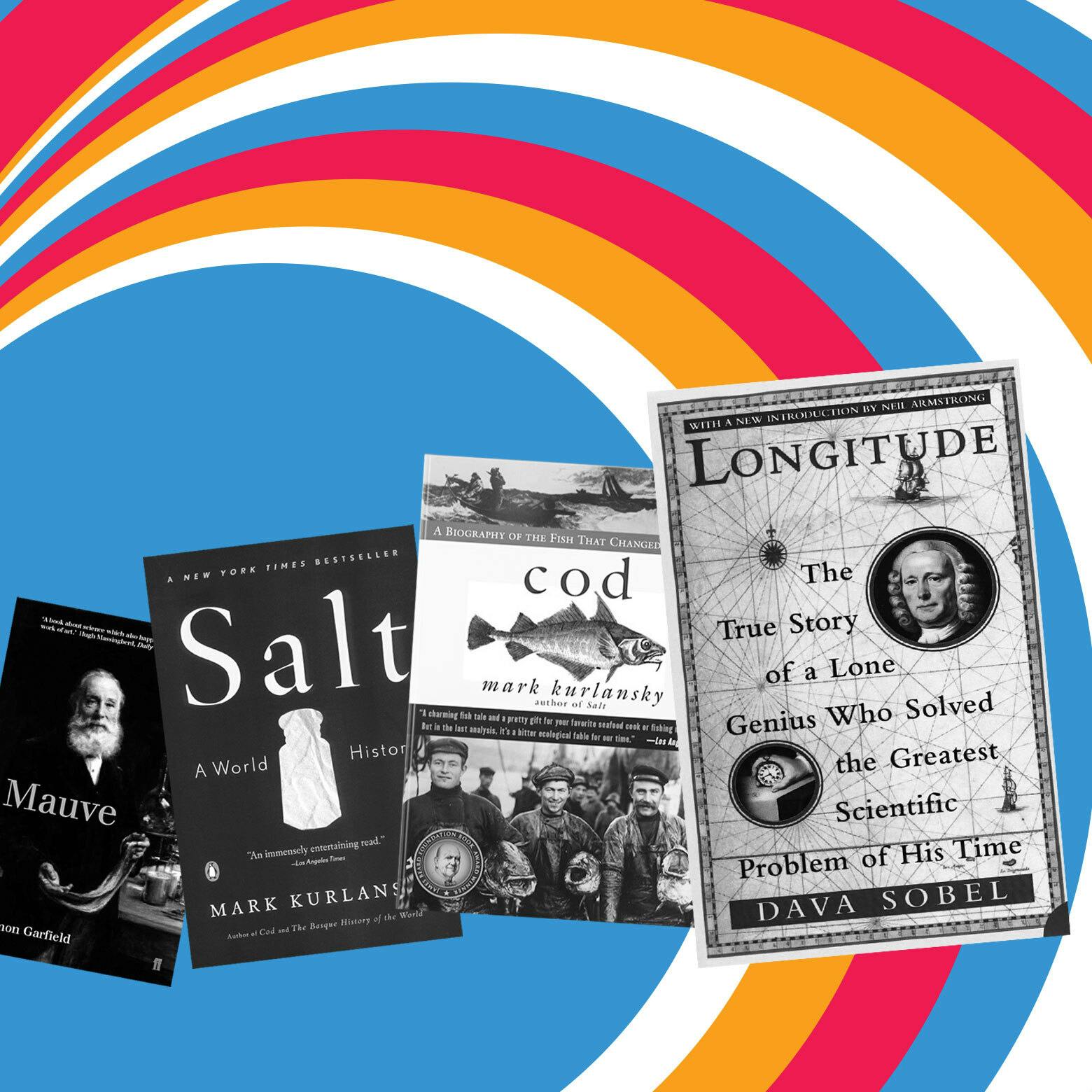
Slow Burn
Decoder Ring | How Books About Things That Changed the World… Changed the World
00:58:24
Whether it’s cod, kudzu, or nutmeg, authors love to claim their subjects shaped history. Did they really?
Loading summary
Transcript193 lines
- [00:01]
Willa Paskin
This podcast is brought to you by Progressive Insurance. You chose to hit play on this podcast today. Smart Choice make another smart choice with Auto Quote Explorer to compare rates from multiple car insurance companies all at once. Try it@progressive.com Progressive Casualty Insurance Company and affiliates. Not available in all states or situations. Prices vary based on how you buy. Today's episode is sponsored by Smart Travel, a new podcast from NerdWallet. You know the feeling when you're trying to book a trip. Too many choices, too much fine print, and no real way to know if you're actually getting the best deals. Smart Travel helps you skip that stress and book with confidence. NerdWallet's travel journalists break down the pros and cons of travel decisions, like when lounge access is worth paying for, how a travel agent could save you money, and which hotel loyalty programs give you the best value. So before you book, learn how to get the most out of your travel dollars. Follow Smart Travel on your favorite podcast app and stay tuned later in the show for a special segment on travel. In the late 1990s, the author Simon Garfield found himself leafing through a book his son had brought home from school.
- [01:24]
Simon Garfield
It was like a Horrible Histories kind of book. And it was about all these experiments that people had conducted, mostly men, mostly Victorians, that had gone wrong in some way.
- [01:36]
Willa Paskin
Like think of scientists who caused eye gouging, life taking explosions while trying to isolate compounds and elements. Or the one who discovered that waste from an ammunition factory made a good toilet bowl cleaner. But one story in the book particularly grabbed Simon it had a two page.
- [01:55]
Simon Garfield
Spread on this man called William Perkin.
- [01:58]
Willa Paskin
In 1856. Perkin was an 18 year old chemist living in London who was trying to.
- [02:04]
Simon Garfield
Find a way to make an artificial quinine to save trouble. Troops dying in Africa and India of malaria.
- [02:15]
Willa Paskin
So one day in his lab, Perkin was attempting to do just that and.
- [02:19]
Simon Garfield
He got one element of the molecule wrong.
- [02:23]
Willa Paskin
Instead of quinine, Perkin had made something.
- [02:26]
Simon Garfield
New, a sort of dark purpley sludge.
- [02:30]
Willa Paskin
The legend goes that Perkin promptly got the sludge all over his shirt, which instantly turned a deep, bright, unfadable purple.
- [02:40]
Simon Garfield
He thought, okay, that is interesting. This wasn't what I was going for at all. But if we can make an artificial color like this, then I can make quite a lot of money.
- [02:51]
Willa Paskin
Up to this point, all clothing dyes had come from some natural source and it had been particularly difficult to afford.
- [02:59]
Simon Garfield
Purple, which you could normally only make by gathering, you know, a million shellfish from the Mediterranean shore, which was where purple came from.
- [03:10]
Willa Paskin
So in 1859, William Perkin set up a dye works in London and began selling his creation, the first ever commercial artificial dye, a color known as mauve.
- [03:25]
Simon Garfield
And people sort of just couldn't get enough of this color.
- [03:28]
Willa Paskin
Queen Victoria started to wear it, and soon the world seemed to come down with a fever for it.
- [03:34]
Simon Garfield
What I think Punch magazine called mauve measles.
- [03:38]
Willa Paskin
Everyone wanted it. It was like the equivalent of millennial pink if no one had ever been able to afford anything in any shade of pink before. And mauve was just the start.
- [03:51]
Simon Garfield
Once you could make mauve, you could make any other color of the rainbow as well.
- [03:56]
Willa Paskin
Mauve was the first of what would become hundreds of artificial dyes, dyes that technicolored our lives, altering clothing and fashion as well as medicine and food. But it also paved the way for something we take as much for granted as a purple T shirt. The idea that a scientist and inventor like William Perkin should also be an entrepreneur.
- [04:19]
Simon Garfield
He had sort of busked that boundary. It was one of the very, very first applications of pure chemistry into the industrial world.
- [04:30]
Willa Paskin
To Simon Garfield, Mauve obviously deserved more than two pages in his son's paperback about chemistry catastrophes. It deserved a book of its own. So he wrote one.
- [04:43]
Simon Garfield
I kind of always quite liked the idea of taking a single tarpic that was a bit more unexpected.
- [04:51]
Willa Paskin
When the book was published in 2000, the title was a no brainer. It was called Mauve. But Simon also knew he needed a subtitle that would help sell his honestly kind of oddball book that would position this very precise topic as expansive, exciting and important.
- [05:13]
Simon Garfield
And the subtitle, which I now find slightly embarrassing, is How One Man Invented a Color that Changed the World.
- [05:20]
Willa Paskin
Why do you find it embarrassing?
- [05:23]
Simon Garfield
I mean, it's not embarrassing because it's wrong or anything. As such, it's a truism. But there have been so many of those kind of things, all these other books about, you know, something that changed the world.
- [05:34]
Willa Paskin
Banana. The Fate of the Fruit that Changed the World. The Golden Thread. How Fabric Changed History.
- [05:42]
Nicola Twilley
How Iceland Changed the World.
- [05:43]
Mark Kurlansky
The Map that Changed the World.
- [05:45]
Simon Garfield
The City that Changed the World.
- [05:47]
Willa Paskin
The Corporation that changed the world.
- [05:49]
Tim Queenie
10 tomatoes that changed.
- [05:50]
Willa Paskin
Change the World. Mauve is one of scores, if not by this point. Hundreds of books that promise their seemingly mundane subjects have changed the world. So have they. This is Decoder Ring. I'm Willa Paskin. The world turns. Seasons pass. Children grow. Publishing trends come and go. But then there are the nonfiction books about the unexpected things that changed the world. Cod, potatoes, pickles, soccer, coffee, tea, bees, oak trees, sand, chickens. There are books about all of them, and many more besides, with the phrase change the world or something similarly grandiose right there in the title. Where does this trend come from? Why has it been so persistent? And should I stop skeptically thinking really, whenever I see a book like this? In this episode, we're going to answer all of these questions by establishing this trend's origins, and most of all by roping in a number of authors of books just like this to make their case directly to us. So today on Decoder Ring, how did that change the world? This episode is brought to you by Saks Fifth Avenue Shopping at Saks is the perfect way to discover the latest styles, elevate your everyday look, and refresh your wardrobe just in time for spring. At Saks, you'll find inspiration for every occasion, from casual outfits to special events. One of the things I like about Saks is just how many different brands and designers they have, and how easy it is to mix and match them while putting an outfit together. Bod Eileen Fisher, apc, Rachel Comey and so much more. They have clothes for every occasion, be it a work event, a party, a date, or just a lounge around the house. Whether you're refreshing your entire wardrobe or shopping for a vacation, Saks makes it Fun and easy. Saks.com is personalized, with arrivals from brands picked just for you, making it simple to find inspiration for your everyday style. So if you're looking for a fun, effortless shopping experience and want to elevate your personal style, head to Saks. That's Saks.com for everyday inspiration. It's smart to always have a few financial goals. What's a really smart one? You can set earning cash back on what you buy every day. With Discover, you can get this Discover automatically matches all the cash back you've earned at the end of your first year. Seriously, all of it. Discover trusts you make smart decisions. After all, you listen to this show see terms@discover.com credit card the kind of books we're talking about today are sometimes called micro histories or thing biographies. They focus on one thing, and often it's a surprising thing. So the books are showing you how something unexpected like nutmeg or kudzu, earthworms or the vocoder is actually connected in ways you could not have imagined to the wider world. In other books, though, the one thing is more like uranium, penises, oxygen or tuberculosis, it's presented as so obviously important we've become blind to its relevance really could stand to grasp it even more. These books do not all have the exact phrase change the world in their title, but many have some kind of bold, grand claim there, or make that argument over the course of the text. If you chart the publication dates of volumes like this, there is a clear moment when they went from being rare and sporadic to ubiquitous and plentiful. And there are two books in particular that are responsible for this change. And to tell you about them, I'm going to take a page out of the books themselves, because whatever the topic, they tend to reveal that their subject's origins go back much further than you'd think. And so we're going to start our story 300 years ago in the middle of the age of Sail. That's the period in European history when trade, exploration and war were all taking place on the high seas, and when, surprisingly often, sailors had no goddamn idea where they were. Oh, they knew how far north or south of the equator they were. Apparently, a good sailor can figure that out from the sun. But when it came to east and west, they had about as much clue as a tourist without a data plan. Another way to say this is sailors could calculate their latitude, which is where they were, relative to the lines that circle the globe like belts, but not their longitude, the lines that slice it up and down like an orange. And not knowing your longitude was not a minor problem. Ships regularly smashed into land they didn't know was there, and if they stuck only to the established trade routes, they were easy targets for piracy and conflict. The problem was so bad that nations offered rewards of tremendous fortunes to anyone who could solve it, even though there was already a theoretical solution. A ship should be able to calculate its longitude by comparing the time on board, which could be determined by looking at the sun to the time in another set point like its home port. What was needed then was just a clock. But building a clock that could accurately keep the time of a boat's home port while said boat was at sea in rolling waves and storms, in varying temperatures, in corrosive water, was such an enormous technical challenge that many people thought it was impossible. But in the early 1700s, an Englishman named John Harrison, with no education or even apprenticeship in clock making, devoted decades of his life to the task, overcoming skeptics and obstructionists to prototype, test and build a clock that could stop stay true. His invention, the marine chronometer, solved the problem of longitude. It changed sailing, exploration, trade and geopolitics forever. Yet despite all of this, few people had heard of John Harrison in 1993, 300 years after his birth, when Harvard magazine ran a cover story about a symposium on longitude.
- [13:10]
George Gibson
I remember climbing out of bed that night at around 11 o'clock and reading this article and thinking to myself, there's a book here.
- [13:16]
Willa Paskin
George Gibson, who is now the executive editor at Grove Atlantic, was then the publisher of Walker and Company.
- [13:22]
George Gibson
I mean, John Harrison's invention was so seismic. I mean, it really changed not just the way seamen navigated, but the way countries interacted with each other because trade suddenly became much more doable.
- [13:36]
Willa Paskin
And so George, who was in the business of making books, reached out to the author of the article, a science journalist named Dava Sobel.
- [13:44]
George Gibson
I just said I love this article and I think it's really a cool story. And I think there's a book here. And the only description I would give to the book is A, it should be short and B, think of it as a biography of an inanimate object, you know, the chronometer. And then Deva wrote this brilliant book.
- [14:01]
Willa Paskin
Dava Sobel's Longitude the true story of a lone genius who solved the greatest scientific problem problem of his time, was released by George's publishing house in 1995.
- [14:13]
George Gibson
I knew when Dava finished the manuscript that it was really good. I remember saying, if we're really lucky, you know, I think we could sell maybe 25, 30,000 copies of it. And we ended up selling 150, 160,000 copies of it in hardcover. And it became, you know, a phenomenon.
- [14:29]
Willa Paskin
It sold millions more in soft cover, was on the New York Times bestseller list for, for six months, and eventually got adapted into a TV miniseries.
- [14:39]
Simon Garfield
It's a marine timepiece navigation device.
- [14:41]
Willa Paskin
Impossible. Doesn't work. I've tried it. It does work.
- [14:44]
Simon Garfield
I built it.
- [14:46]
Willa Paskin
So Longitude is the trend's embarkation point. It wasn't the first book like this ever written, but because of its mega success, it would set the template for the books that followed. Books about an object like the chronometer or a noun like longitude that seems small, contained, finite, but upon careful close inspection reveal themselves to be fundamentally intertwined with the world as we know it. But it would take another book, Setting Sail soon after Longitude, to really put the wind behind this trends back. Because while longitude had many of the hallmarks of the books we have today, it was missing one. It did not have the phrase changed the world in its title, but this next book would.
- [15:38]
Mark Kurlansky
The woman I was dating, who is now my wife, was extremely skeptical. He thought, you know, nice guy, but weird. He's writing a book about codfish.
- [15:48]
Willa Paskin
Mark Kurlansky was working as a journalist in the 1990s when the idea for the book started to crystallize. He was in Europe reporting on how British waters were opening up to a very small amount of intra European cod fishing.
- [16:02]
Mark Kurlansky
And everybody was incredibly upset about this. I talked to people in fish and chip shops and they say, oh, it's all over. We won't get any chunky pieces anymore. And instead of thinking these people are just absolutely crazy about cod, it actually.
- [16:18]
Willa Paskin
Reminded Mark of his own upbringing.
- [16:20]
Mark Kurlansky
Because I'm from New England, you know, I grew up with people who were crazy about code.
- [16:25]
Willa Paskin
The more he thought about it, he realized that everywhere around the globe he'd reported the people had been obsessed with cod. Basque country, Jamaica.
- [16:34]
Mark Kurlansky
I even ran into it when I was in West Africa. It kind of followed me everywhere.
- [16:39]
Willa Paskin
So Mark started digging into the history of this once hugely abundant fish. He learned Basque fishermen had been catching it in North America long before the so called discovery of the New World. Just one of the many fascinating details he found.
- [16:55]
Mark Kurlansky
I mean, cod really united the Atlantic and brought Europe and the Americas together, much more so than, you know, Columbus. I mean, John Smith was going around trying to get Englishmen to settle and colonize North America. What was he talking about? He was talking about cod. And I started thinking, this is a great story.
- [17:17]
Willa Paskin
And George Gibson, the same man who had published Longitude, agreed.
- [17:21]
George Gibson
I remember getting a call out of the blue just to say, you know, I got this thing from Mark and would you be interested? And I. And I'm instantly. Because I like the idea of short books about particular topics, I said, absolutely.
- [17:34]
Willa Paskin
They published the book in 1997. Its title was Cod A Biography of.
- [17:40]
Leela Philip
The Fish that Changed the World by Mark Kurlansky.
- [17:44]
Willa Paskin
Who came up with a biography of the fish that changed the world?
- [17:47]
Mark Kurlansky
I did. You know, I didn't have this idea I was writing a bestseller. I had this idea I was writing a funny little book.
- [17:54]
Willa Paskin
But like Longitude, cod sold millions of copies. On the publishing end of things, these books worked like a one, two punch, signaling there was a market in thing biographies.
- [18:07]
George Gibson
As publishers, to some degree, we're all copycats. I mean, we see what's happening with someone else and we say, oh, that's interesting, and we could do that.
- [18:14]
Willa Paskin
And it wasn't just publishers. Many of the authors we talked to pointed specifically again and again to longitude and cod as their inspirations. And many books followed them, including Simon Garfield's mauve and Mark Kurlansky's own follow up a history. But if everything I've told you so far explains how this trend so started when it did, I want to turn now to why it started when it did. Because these kinds of books had existed for a long time. All the way back in the 1800s, British magazines were publishing it. Narratives, fictional biographies told from the perspective of objects like a coat or a coin. Moving into the 20th century, there was a surprisingly jocular self proclaimed biography of typhus, John McPhee's monograph about oranges and the scholar, Sydney Mintz's study of sugar, as well as books about the pencil and corn. So what was it about the 1990s that turned these from one offs into a trend?
- [19:21]
Bronwyn Everill
I think the reason that these caught fire when they did was because they helped to explain the world after the end of the Cold War.
- [19:32]
Willa Paskin
Bronwyn Everill is a lecturer at the Princeton Writing Program and she's written about books like this.
- [19:37]
Bronwyn Everill
I think it really was a particular cultural moment, like needing a new way of thinking about how history is shaped by forces other than states being in a constant tension with each other.
- [19:50]
Willa Paskin
For 50 years, the cold War had been the defining fact of geopolitics. What shaped the world was ideologies and armies and nations and great men. Now it was over and Bronwyn thinks that history writers could be a little more counterintuitive, have a little more fun, and they could do it while also supplying people with something they needed. A way to think about this new globalizing post Cold War world.
- [20:22]
Bronwyn Everill
Like, what is history like? Oh, can we go back and look at all these other things in history that may have actually been threads that now we can pick up? Oh, okay. Like trade shapes the world as well as geopolitics. Right.
- [20:36]
Willa Paskin
Chronometers had helped ships travel to the far corners of the Earth. Cod and salt had been factors in cultural transmission and global conflict. Dyes like mauve had been a part of industry and wardrobes the world over. These things might seem like trivial commodities, but they were connected to world historical events.
- [20:57]
Bronwyn Everill
Did you know that there were trade wars between Britain and Iceland over who controlled cod? You know, did you know that the American Revolution had this like weird Cod element? I guess part of the lesson is like, oh, these seemingly frivolous things can change the world.
- [21:13]
Willa Paskin
Bronwyn's theory makes intuitive sense to me. These thing biographies took off in the 90s as objects were once again hurtling around the globe and change seemed inherently good. And we had the time and space to seriously consider the seemingly not so Serious. The only wrinkle is you'd figure books birthed in such a specific context would have faded away as that context changed. But 35 years after the fall of the Berlin Wall, that's not what has happened at all.
- [21:50]
Bronwyn Everill
I think it's like crazy that they all kept it up for so long, right? Like it's always that.
- [21:55]
Willa Paskin
It's this.
- [21:55]
Bronwyn Everill
Like, this is the thing. No, this is the thing.
- [21:58]
Willa Paskin
It can feel at this point like all of the things have been given this treatment or will be soon. But Bronwyn has noticed some changes. Nevertheless, over the years, the books have gotten much longer. And whether they're about coal or cobalt, as we've moved out of the optimism of the 1990s, they're not so light hearted.
- [22:19]
Bronwyn Everill
I think that they've just gotten a lot darker.
- [22:21]
Willa Paskin
Right.
- [22:21]
Bronwyn Everill
It's like these commodity histories are much more focused on, like, the unexpected ways that a single thing will wreck the world.
- [22:29]
Mark Kurlansky
You know, some work, some don't.
- [22:32]
Willa Paskin
Author Mark Kurlansky, again, I mean, you.
- [22:35]
Mark Kurlansky
Can kind of do this with any commodity, but it won't necessarily be an interesting book. And there has to be something sort of surprising about the story.
- [22:44]
Willa Paskin
But making a surprising claim of world altering impact can also elicit some pushback, as one of my colleagues well knows.
- [22:53]
Henry Grabar
My name is Henry Grabar and my book is called Paved Paradise How Parking Explains the World.
- [22:59]
Willa Paskin
Regular listeners may recall that Henry made an episode of Decoder Ring all about how interesting and important parking is. So consider me bought in. When the book came out, an interviewer tweaked Henry about the title.
- [23:13]
Henry Grabar
He was like, okay, so you say parking explains the world, huh? Does it explain crime rates? Does it explain homelessness? And I was like, well, you know, I played along. I mean, ultimately I did say I felt a little bashful about the like, grandiose claims of the subtitle. But at the end of the day, we're trying to sell books here. You know what I mean?
- [23:33]
Willa Paskin
Henry could have used an alternate subtitle that wouldn't have raised any eyebrows.
- [23:37]
Henry Grabar
I don't think anybody would bat an eye if the book was called How Cars Explain the World. Everybody knows that cars explain the world and cars spend 95% of their time parked.
- [23:49]
Willa Paskin
But a book with the subtitle How Cars Explain the World is so obvious it wouldn't do the one thing these titles are supposed to do, which is raise eyebrows, surprise you, jolt you. This kind of title may be formulaic, but it's still a promise.
- [24:09]
Henry Grabar
I had to write something that would live up to that and that when people interviewed me about the subject that I had to be ready to defend this claim that I was making.
- [24:19]
Willa Paskin
When we come back, we hit the books and ask some authors to deliver on their own claims. Today's episode is sponsored by Smart Travel, a new podcast from NerdWallet. NerdWallet's travel journalist break down the pros and cons of travel decisions, like when premium economy is worth it and when you're just paying extra for a slightly bigger armrest, or whether booking direct is cheaper than using third party sites. I've definitely planned and gone on trips and found the planning especially very overwhelming and could have used clear and helpful guidance. I'll give you my one travel tip though. When I was in college I studied abroad and I had a new enormous giant backpack that was honestly like the size of myself and it was way overpacked. So that is my tip. Overpacking. Don't do it. But it was in packing this thing every single day, every morning and every night, that I learned the importance of rolling up clothing items. And I do that now when I pack anything. And it really does help me pack a lot less or at least make it take up a smaller amount of space. I am known among some of my friends as a light packer and I take a lot of pride in it. Having that extra confidence and a little less stress can make all the difference when you're planning an amazing trip. So before you book, learn how to get the most out of your travel dollars. Follow Smart Travel on your favorite podcast app this new year, why not let Audible expand your life by listening? Explore over 1 million audiobooks, podcasts, and exclusive, exclusive Audible originals that'll inspire and motivate you. I've been listening to Wesley Morris's energetic the Wonder of Stevie all about Stevie Wonder, and I'm sure there's something you'll like too. Just open the app and tap into your well being with advice and insight from leading influencers, experts and professionals. Whatever your focus or interest, there's a listen for it on Audible. You'll find titles on health, relationships, career, finance, and so much more. Let Audible help you reach the goals you set for yourself. Start listening today when you sign up for a free 30 day trial at audible.com decoder. New members can try Audible now free for 30 days with your first audiobook included. Visit audible.com decoder or text decoder to 500 500. That's audible.com decoder or Text decoder to 500. 500. So now we're going to do something a little different. We're going to put some writers on the spot. While working on this episode, I compiled a very hefty but surely not comprehensive list of books like this. We looked it over and selected a few recent entries on it thing biographies with particularly grand sounding claims in their titles and asked their authors to make a case for why their subject really changed the world.
- [27:29]
Nicola Twilley
Refrigeration. I mean, it's a time machine because what coal does is it slows down time and that remakes space.
- [27:38]
Willa Paskin
Nicola Twilley is the co host of Gastropod and a writer.
- [27:42]
Nicola Twilley
I am the author of How Refrigeration Changed Our Food, Our Planet and Ourselves.
- [27:48]
Willa Paskin
Okay, so I'm hoping you can tell me why refrigeration changed the world in a succinct fashion.
- [27:56]
Nicola Twilley
Okay. So refrigeration transformed what we eat, where it's grown, how it tastes and how good it is for us and the planet. Just to add a little weight to my case, Britain's Royal Society named refrigeration the most important invention in the history of food and drinking. So that's more important than the plow, more important than domesticating crops. And you can trace the impact of refrigeration everywhere, from the tiniest things, the contents of our gut microbiome, the invention of the hamburger or the hoodie, to much bigger planetary geopolitical scale things. Irish independence, global warming. In the United States alone, there is already 5.5 billion billion cubic feet of artificial cold. That's almost impossible to imagine, but I mean, it's, it's. As the actual Arctic melts, they're increasingly comparable in size. So yeah, I'd say it changed the world.
- [29:02]
Willa Paskin
Not going to lie. I found this a compelling start. I asked Nicola to elaborate.
- [29:07]
Nicola Twilley
For 99% of human history, people have eaten what was nearby and in season.
- [29:14]
Willa Paskin
That worked until about the 1700s when big cities started to become more common.
- [29:19]
Nicola Twilley
And once people moved to cities, right away, it was a panic. People were like, oh gosh, how are we going to feed these people? We can't get perishable food to them. We have to bring it to them. But it doesn't travel because it's perishable. It was a genuine crisis.
- [29:35]
Willa Paskin
The immediate solution was to get the sources of the food as close to the city as possible.
- [29:41]
Nicola Twilley
For example, herds of dairy cattle were kept in basements in London to provide milk. And those cattle would be like, allowed above ground for two weeks a year and sent out of the city for like a two week vacation to see the Sunshine.
- [29:54]
Willa Paskin
In the meantime, they explored other modes of potential mass preservation. Dehydration, compression, fumigation. The one solution they didn't even consider was using cold, because cold at the.
- [30:08]
Nicola Twilley
Time, we did not have control of it. Yes, humans realized that ice stopped rot and mold, but they didn't have a way of making it on demand. So it wasn't going to be a solution to feeding London until we figured that out.
- [30:25]
Willa Paskin
The person who began to figure it out in the early 1800s was a high school dropout and schemer from Boston named Frederick Tudor, who overheated on a vacation in Cuba and got a harebrained idea.
- [30:40]
Nicola Twilley
He's like, oh, gosh, if only I could have an iced drink. There isn't any available on the island of Cuba. No ice, of course, none forms there. And so he was like, wow, if these Cubans could ever taste our ice in summer, they would go wild for it.
- [30:58]
Willa Paskin
Fred started trying to ship ice from the greater Boston area to Cuba in 1806. It went about as well as you'd think at first, but Fred stuck with it through bankruptcies and arrests until he solved it and became a tycoon of a new global ice shipping industry.
- [31:23]
Nicola Twilley
And he is shipping ice around the world to India, to South Africa. And once people have enough regular, guaranteed access to cold, they're like, wow, this is useful. We could use this for more than just ice cream or wine slushies. We could use this to preserve meat and to preserve milk and to solve our gigantic food crisis.
- [31:47]
Willa Paskin
Scientists and engineers got serious about ice making technology until they were able to produce cold on demand. By the 1880s, they'd created refrigerated rail cars that could transport food over long distances. And to see the kind of huge cascading effects this would have, let's just look at what happened to meat.
- [32:07]
Nicola Twilley
The quantity of imported meat just goes through the roof. The price falls to nothing. The amount of meat people eat skyrockets in a decade.
- [32:18]
Willa Paskin
And the change isn't just to our diet. You no longer had to bring living cows close to every city. Instead, you could chop them up and ship their parts cold. So in America, you get the centralization of slaughterhouses and the infamous Chicago stockyards, out of which would eventually come many of our food regulation laws. And to be able to chop up meat on an industrial scale, something called.
- [32:43]
Nicola Twilley
The disassembly line, which then Henry Ford copied for his groundbreaking assembly line, which revolutionized manufacturing. All of these things, refrigeration is the thing that allowed them to happen.
- [32:58]
Willa Paskin
Now, how, how did refrigeration lead to Irish independence?
- [33:04]
Nicola Twilley
Yeah. So, I mean, with all due respect to the people of Ireland, there are a lot of facets here. But before you could ship meat around the world, Ireland was basically the meat growing resource for England. Until refrigeration comes along, suddenly you can ship meat that has been raised in Australia, New Zealand, South America undercut the Irish. Suddenly, the price of Irish cattle collapsed.
- [33:37]
Willa Paskin
For English landowners, that collapse in price upended the incentives of staying in Ireland. So many of them stopped resisting the independence movement quite so fiercely.
- [33:47]
Nicola Twilley
And that is the turning point in allowing Ireland to become an independent nation again. I started out being like, that's a stretch. People are going to shoot me down if I say this. And then I would read academic papers crediting refrigeration with Irish independence and be like, oh, maybe I'm not nuts. Maybe, maybe it really is the precondition that allowed a lot of these much bigger forces that are maybe more visible to people. Refrigeration made them possible. It didn't make them inevitable, it made them possible. And listen, I only wrote about food. Cooling has even more transformative impacts that I didn't write about. If you want to, you know, truly.
- [34:31]
Willa Paskin
Change the world, like the most obvious, very important thing that it's connected to is global warming.
- [34:38]
Nicola Twilley
Yeah. What happens when the billions of people around the world who don't have a US style cold chain right now get one? As it is now, it's already responsible for the same emissions as aviation. And we hear all the time, oh, you shouldn't fly. Does anyone say, wait a minute, we need to think about our relationship with refrigeration? They do not. It's just me. So, I mean, I don't ever want someone to come away from the book being like, wow, you hate refrigeration. Because that is absolutely not true. Refrigeration has changed. Like I say, everything about what we eat, where it's grown, how it tastes, all of these things. Why don't we also look at its costs as well as its benefits?
- [35:30]
Willa Paskin
Speaking with Nicola, I felt a bit sheepish for ever having doubted refrigeration's importance. And it's even easier to take our next subject with a claim to changing the world for granted.
- [35:42]
Tim Queenie
When you think about the pyramids, for example, people tend to think about chisels and wooden sledges and ramps, but nobody ever thinks about rope.
- [35:53]
Willa Paskin
Tim Queenie is a writer and lifelong sailor with a book coming out this August.
- [35:58]
Tim Queenie
And the book is how a Bundle of Twisted fibers Became the backbone of Civilization.
- [36:04]
Willa Paskin
So how did rope become the backbone of civilization?
- [36:06]
Tim Queenie
Well, I think it's really one of humanity's big early inventions. It's right up there with learning to use fire and stone tools. You twist some plant fibers together and you get this tool that you can do all this great stuff with. You can haul things with it, you can lift things with it, you can bond things together. So you can organize all your stuff and you can tie up the family cow so it doesn't go wandering off. And I think it's very ubiquity, its very usefulness has led it to sort of disappear and become generic.
- [36:36]
Willa Paskin
So this is a thing that I realized I actually had never thought about, like, what is rope? What takes fiber and makes it rope?
- [36:46]
Tim Queenie
Right. What is rope? So it was made originally from just simple grasses that people would find. You take the fibers and you spin them together just like spinning yarns. And then you spin the yarns together into what are called strands. And then the strands are twisted together, always changing the direction of twist each time you go up the ladder.
- [37:09]
Willa Paskin
So it's like you're twisting and twisting and twisting, but in opposite directions, like multiple times.
- [37:14]
Tim Queenie
Right. Because what you're actually creating is you're creating this sort of helix. It's pretty amazing. It sort of calls for some abstract mathematical thinking.
- [37:22]
Willa Paskin
It's complex thinking humans, and not just humans, have been doing for a surprisingly long time.
- [37:28]
Tim Queenie
The oldest piece of rope ever discovered is actually 50,000 years old. And it shows that Neanderthals were making rope using this method, twisting it one way and then twisting it the other way.
- [37:41]
Willa Paskin
Eventually, Homo sapiens civilizations like those pyramid building ancient Egyptians figured out just how powerful the application of this tool could be.
- [37:52]
Tim Queenie
You know, if you have 500 workers, you need to move a 2 ton stone block. All 500 of them can't get their hands on that block to move it. But if you put a rope around it and extend it out in front, all 500 of them can haul away.
- [38:05]
Willa Paskin
And it wasn't just pyramids. Rope became essential to construction of all kinds, from scaffolding to Stonehenge to Gothic cathedrals. It's also been used to communicate, sometimes symbolically. Many cultures have love knots, but also concretely. The Inca, for example, used khipu, a horizontal string with vertical strings knotted onto it in different ways to convey complex numerical and bookkeeping information. But rope's real star turn was in and on ships, where was an absolutely necessary ingredient to connecting and opening up the world.
- [38:43]
Tim Queenie
One of the most amazing examples is the Austronesian and then the Polynesian peoples moving across the Pacific, completely settling the Pacific using outrigger canoes that required rope for the rigging, but also used rope to tie the pieces of the boat together.
- [39:00]
Willa Paskin
And even more rope was required during a period we've already mentioned, Starting in the 1500s, the age of sail. That's when instead of ore powered galleys, suddenly you had huge sailing ships, all requiring tens of thousands of feet of rope to hold the masts up and control the sails.
- [39:20]
Tim Queenie
An 1840s whaling ship, for example, has something like 117 running rigging lines that the sailors have to know what each one of them are and what each one does. You're in the middle of a storm and it's nighttime. You can't be looking at the labels. And there are no labels at which piece of rope you're going to use. You have to grab the right rope at the right time. So you have to learn what all these ropes do.
- [39:45]
Willa Paskin
Hence the term learning the ropes. But since their heyday on sailing ships, ropes have slipped back into the background. You may not know much about the new, extraordinarily strong, wackily named synthetic ropes.
- [39:59]
Tim Queenie
Tuaron, Technora, Spectra, Vectran, Kevlar.
- [40:05]
Willa Paskin
You also may not have considered that rope was an essential part of anything as flashy as lowering the Mars rover to the surface of the red planet.
- [40:14]
Tim Queenie
We're down to 86 meters per second at an altitude of 4 kilometers and descending without the rope. They couldn't have used the parachute to slow the lander down. And then the lander was actually lowered to the surface on Vectran ropes.
- [40:26]
Willa Paskin
Touchdown confirmed. We're safe on Mars. And you certainly haven't considered what Tim says might be in rope's future.
- [40:35]
Tim Queenie
Well, there is a type of device that's called a space elevator.
- [40:39]
Willa Paskin
The idea of a space elevator is that you'd have a super strong, super long rope made of a material called graphene. One end would be attached to the Earth, and the other end would be attached to a weight 60,000 miles into space.
- [40:55]
Tim Queenie
And now you can have crawlers that just crawl up this tether. And when you get up to 20,000 miles, you open the doors and push your satellite out, and it's in geosynchronous orbit. So it would be a great way to get to space, and you wouldn't have to use new rockets. So rope, I think it's kind of a metaphor for civilization in a way. You know, a bunch of small strands of fiber, they're not that useful, but you put them together and you get this great tool and it's sort of like people working together can accomplish great things.
- [41:27]
Willa Paskin
Where would we be without strain? It could be our most valuable thing. So rope Everywhere but hiding in plain sight. Of course, it changed the world. When we come back, something a little weirder and furrier too. Where would we be without string?
- [41:51]
Nicola Twilley
Where would we be without string?
- [42:04]
Willa Paskin
This episode is brought to you by Saks Fifth Avenue. Shopping at Saks is the perfect way to discover the latest styles, elevate your everyday look, and refresh your wardrobe just in time for spring. At Saks, you'll find inspiration for every occasion, from casual outfits to special events. One of the things I like about Saks is just how many different brands and designers they have and how easy it is to mix and match them while putting an outfit together. Bodhi, Eileen Fisher, apc, Rachel Comey and so much more. They have clothes for every occasion, be it a work event, a party, a date, or just a lounge around the house. Whether you're refreshing your entire wardrobe or shopping for a vacation, Saks makes it Fun and easy. Saks.com is personalized, with arrivals from brands picked just for you, making it simple to find inspiration for your everyday style. So if you're looking for a fun, effortless shopping experience and want to elevate your personal style, head to Saks. That's Saks.com for everyday inspiration. For our final book, claiming to be about a subject that changed the world, we're turning to the animal kingdom and in particular, to a creature of great importance to America. Surprising as that may be.
- [43:19]
Leela Philip
We talk about the American bison or eagles, but how come beavers, which really literally made America, are not our national animal?
- [43:29]
Willa Paskin
Lela Phillip is a writer and professor.
- [43:31]
Leela Philip
Of English, and I'm the author of How One Weird Rodent Made America.
- [43:37]
Willa Paskin
So, just like jump in the deep end, jump into the beaver pond. How did this one weird rodent make America?
- [43:45]
Leela Philip
Okay, first of all, it's just no exaggeration to say that beavers jumpstarted capitalism in North America. Our first foundations of wealth came from beaver fur. But it wasn't just our first economies that were born on the back of the beaver. But that beavers literally shaped the continent. Beavers shaped the river system, that shaped the geology of North America over the eons. And that would lead to the great boreal forests and the great hardwood forests and the abundance of the Great Plains, which would lead to the abundance of animal life. They're also one of our greatest 20th century conservation comeback stories, and they have this vital new role to play helping us in our environmental future.
- [44:33]
Willa Paskin
That's a lot of big claims about a buck toothed dam building furball. And before we get into them, I wanted Leela to tell me what makes the beaver so weird to begin with.
- [44:44]
Leela Philip
I'll just go beaver geek on you for a minute if I may.
- [44:47]
Willa Paskin
Please.
- [44:47]
Leela Philip
Okay, so first of all, this little 36 inch rodent, which is the, it's the largest rodent in North America. There are these mishmash of animal features. This like mammal head and this reptilian tail and these goose like hind feet. They're monogamous rodents. They're incredibly diligent parents. They rear their young for up to two years. They have these two sets of funky orange teeth. They can take down a tree in almost like 10 minutes. They work cooperatively, they work over generations. Three beavers working together can move a hundred pound boulder. I mean it is capable of building the largest animal construction in the planet. The things that they can actually do are pretty stunning.
- [45:33]
Willa Paskin
And what do they use their tail for?
- [45:35]
Leela Philip
The tail is really amazing. So this flat paddle tail that looks like it's been run over by like a tractor tire. That tail is a sophisticated water sensor so they can feel water pressure. And anybody who's been around beavers knows that if you rattle the dam or if the dam is breached, they don't have to see it, they don't have to be anywhere near it, but they can feel the changes in the water pressure of the pond from far away and they'll come over to repair the dam.
- [46:04]
Willa Paskin
So beavers kind of incredible animals and it's actually because of some of their unique qualities that humans have been hunting them for millennia. We've killed them for their tails, which were considered a delicacy and an aphrodisiac for their castor, a musky secretion used in perfume and traditional medicines, and to this day in strawberry and raspberry flavorings. And then above all, there is their incredibly warm, dense fur.
- [46:32]
Leela Philip
They have 126,000 individual hairs in the size of about a postage stamp on their pelt. And so that much hair is the same amount of hair as the average human head. You know, a healthy human head. So that's very dense fur.
- [46:48]
Willa Paskin
And beneath that is an even denser layer of under fur.
- [46:52]
Leela Philip
And by the 15th century in Europe, they figured out how to get the under fur out and make a kind of felt out of it. And then everybody needed a beaver felt hat. It wasn't just fashion, it was practical, you know, because it was the warmest, most waterproof material you could get.
- [47:09]
Willa Paskin
Because of this, the Eurasian beaver was well on its way to being hunted to near extinction when a new source of beaver fur appeared in the New World.
- [47:19]
Leela Philip
Once it's discovered that there are beavers in North America, there is a rush on beavers, because a beaver pelt, if you could get it back to London, had a markup of something like 900%. So you can imagine, right, everybody is coming here trying to get beaver. The Dutch, the French, the English. Everybody wants a piece of North America for beavers.
- [47:41]
Willa Paskin
There were wars over beavers, literally, the beaver Wars. A century of conflict starting in the 1600s, in which European powers and Native American nations fought to control the beaver trade in the East. Eventually, Europeans began to rely on their own trappers with steel cages rather than indigenous peoples.
- [48:01]
Leela Philip
And that accelerated the trapping, and the beaver became wiped out very, very quickly. And so they'd have to move to new areas. So the fur trade begins in New York harbor, then goes up the Hudson river, goes west along the Mohawk toward the Great Lakes, and just keeps going west.
- [48:20]
Willa Paskin
And everywhere fur trappers go, they're laying down routes and outposts. The story of the hunt for beavers is not some insular animal yarn. It is the story of the exploration, settlement, and colonization of this continent. It's also where we got our first multimillionaire businessman.
- [48:39]
Leela Philip
John Jacob Astor was a German immigrant who came here hoping to start a music business. But on his way, he heard about the beaver fur trade, and he quickly pivoted to trading beaver pelts in the wharves of Mannahatta. And by the time he was, like, 25, he was already an incredibly wealthy man and founded a global trading empire.
- [49:02]
Willa Paskin
The first American settlement west of the Rockies was established by Astor and was called Astoria in Oregon. Astor's company, the American Fur Company, was America's first multinational business and a monopoly that turned him into the richest man in the world. So it was the beaver trade that established an American oligarch and helped jumpstart capitalism in North America and played no small part in the War of 1812 to boot. When Astor extracted himself from the company, his fortunes continued to rise, but those of the beavers did not.
- [49:38]
Leela Philip
By 1810, they've exterminated the beaver.
- [49:43]
Willa Paskin
For millennia, there had been around 400 million beavers in North America. But in just a few decades, they were hunted down to practically, not in their absence. We forgot exactly what streams and rivers and watersheds were like when beavers were around, constantly damming them up and we might still not remember if this familiar story about an animal hunted to death hadn't taken a surprising turn.
- [50:10]
Leela Philip
Theodore Roosevelt and early conservationists were really worried about American men going soft and this idea that we needed to save the wildlife so there could be hunting. If Americans lost their wilderness, what would we have? So we had to save it. And so beavers were part of that restoration.
- [50:29]
Willa Paskin
In the east, it was relatively straightforward. As industrialization proceeded, farmland started to rewild, and beavers, like deer and raccoons, proved surprisingly adept at moving into the spaces like left behind. In the west, the efforts to restore beavers could be more dramatic, like the.
- [50:48]
Leela Philip
Beaver parachute program in Idaho, you know, in 1946, where they literally drop them in boxes from airplanes to try to get them back into the Idaho wilderness.
- [50:59]
Willa Paskin
Now into the air, and down they swing, down to the ground near a stream or a lake, and a most unusual and novel trip ends for Mr. Beaver. Today there are an estimated 10 to 15 million beavers in North America, and there are a million or so in Europe, some of whom just built a dam in the Czech Republic in the exact spot where the government was planning on building their own dam, saving them millions of dollars. And Leela says, we need beavers now more than ever.
- [51:31]
Leela Philip
You know, beavers are like this Swiss army jackknife when you have environmental problems.
- [51:37]
Willa Paskin
The problem in particular is that we've destroyed our Wetlands. We've lost 50% of them in the United States.
- [51:44]
Leela Philip
So that's why when we get a scalding rain event, we get all these floods. And that's why when we get a drought, we're really cooked. The river has no water to replenish itself.
- [51:53]
Willa Paskin
But that's where beavers can help.
- [51:56]
Leela Philip
So what beavers do is they'll move into a creek or a stream and they'll build a dam, and the water will swell out and they'll build a pond and another pond and another pond. Each pond has a wetland underneath it, a huge sponge underground that's holding at least three times as much water as you can see. And this is really, really important because that huge underground sponge is there to rehydrate the river in times of drought. All that water will go back into the stream system if there's a drought, and that the stream won't dry out, the creek won't dry out, the river won't dry out. And then if there's a flood, the entire river system can absorb that scalding rain. So you get five inches of rain in two days, no problem. The river system can absorb it. That sponge also is acting like the kidney of the river. It cleanses the water. So by the time the water gets down into the aquifer, it's clean. So that's why beavers have this really important, important new role to play for us. Much more valuable than a pill. We're facing some really serious challenges. We're going to need to reset our relationship to the natural world to get through this. And beavers, this animal that really did make America, we're so obsessed with, like, looking at the moon and the stars for all our answers. But actually, I think the answers that are going to save us in the 21st century are probably under our feet.
- [53:25]
Willa Paskin
I like to think of myself as a curious person, but I also think of myself and maybe like to think of myself as a skeptical one. And as I said earlier, my interest in thing biographies was motivated by more than a little skepticism, a little eye roll. I felt anytime I saw that someone was doing this yet again. And then I actually sat with more of these books, read them, thought about them, talked to more of their authors. What I found is the ones that work really are not just about one weird thing that changed the world. That's the hook, the selling point, the trick, really, what they're about is how intricately and unexpectedly connected the world is now that we're all connected may be obvious. It may in fact be a cliche, a version of the Butterfly effect. And it's easy enough to roll one's eyes about that. But what some of those books reminded me of is when those connections are illustrated correctly, they can still be kind of astounding. So, yes, this format is a publishing trope. And for sure, not all of these books are fantastic or created equal. And you bet not every everything changed the world as much as everything else. But starting small, looking hard, sussing out connections until a single surprising thing gives you insight into the biggest ones, that's an exercise I can get behind.
- [54:59]
Henry Grabar
Yeah, I mean, I think, to me at least, it reflects a kind of philosophy of. Of wonder at the complexity of the world.
- [55:08]
Willa Paskin
I thought my colleague Henry Grabbar, the author of Paved Paradise, How Parking Explains the World, put it very well, to.
- [55:16]
Henry Grabar
Me, it's almost like a philosophical shift in how you think about how the world is put together. And one that I. I think is kind of like a nice way to perceive the world because you are constantly asking yourself, you know, why does the leaf of a tree have the shape that it does? How did a brick come to be that size? You know, just because I'm looking out the window at a brick wall, right? And it's like, if that's your attitude towards life, you never run out of interesting things to look at or think about.
- [55:43]
Willa Paskin
I agree with Henry. And I also don't think you'll be surprised to hear that there's already a book about the brick. Really something good. Maybe if I Could Change the world this is Decoder Ring. I'm Willa Paskin. I want to please ask you to check out all of the books we talked about in this episode. I swear there is so much more in depth and detailed information in them than we possibly could have gotten in into in this episode. And if you're a Slate plus member ready to become one, please stick around. While putting this episode together, we talked to a lot of people who wrote really fascinating books about things that changed the world, and we couldn't fit all of them here. But if you're curious how red meat changed the world, well, we have got a conversation for you.
- [56:53]
Tim Queenie
The push of United States power into the west and the Great Plains was all about cattle ranch. Cattle were both a tool of and a justification for conquest.
- [57:02]
Willa Paskin
If you want to hear more, you can sign up for Slate Plus. If you aren't already a member, you can subscribe now on Apple Podcasts by clicking Try Free at the top of the Decoder Ring show page or visit slate.comdecoder/ to get access wherever you listen. This episode was written by me and produced by Evan Chung, Decoder Ring Supervising producer. We produce Decoder Ring with Katie Shepard and Max Friedman. Merritt Jacob is Senior Technical Director. We'd like to thank Joshua Spect, Dan Capel, Tina Lupton, Dan Kois, and Nancy Miller. If you have any cultural mysteries you want us to decode, please email us@decoderinglate.com and you can also call us on our new decodering hotline. That number is 347-460-7281. We'd love to hear any and all of your ideas for the show. We'll see you in two weeks for a limited time. At Verizon, you can get our best price ever for a single line, just $45 per month. When you bring your phone, which is less than you spend on two tired to cook takeout every week. Get one line on unlimited welcome for $45 per month with autopay plus taxes and fees. Visit your local Portland Verizon store by April 2nd to save $20. Monthly promo credits applied over 36 months with a new line on unlimited welcome in times of congestion. Unlimited 5G and 4G LTE may be temporarily slower than other traffic. Domestic data roaming at 2G speeds. Additional terms apply.
- [58:35]
Leon Nayfak
I'm Leon Nayfak and I'm the host of Slow Burn. Watergate. Before I started working on this show, everything I knew about Watergate came from the movie all the President's Men. Do you remember how it ends? Woodward and Bernstein are sitting at their typewriters, clacking away. And then there's this rapid montage of newspaper stories about campaign aides and White House officials getting convicted of crimes. About audio tapes coming out that prove Nixon's involvement in the COVID up. The last story we see is Nixon resigns. It takes a little over a minute in the movie. In real life, it took about two years.
- [59:09]
George Gibson
Five men were arrested early Saturday while.
- [59:12]
Willa Paskin
Trying to install eavesdropping equipment.
- [59:14]
George Gibson
It's known as the Watergate Incident.
- [59:16]
Leon Nayfak
What was it like to experience those two years in real time? What were people thinking and feeling as the break in at Democratic Party headquarters went from a weird little caper to a constitutional crisis that brought down the President? The downfall of Richard Nixon was stranger, wilder, and more exciting than you can imagine. Over the course of eight episodes, this show is going to capture what it was like to live through the greatest political scandal of the 20th century. With today's headlines once again full of corruption, collusion and dirty tricks, it's time for another look at the gate that started it all. Subscribe to Slow Burn Now. Wherever you get your podcasts.