← Slow Burn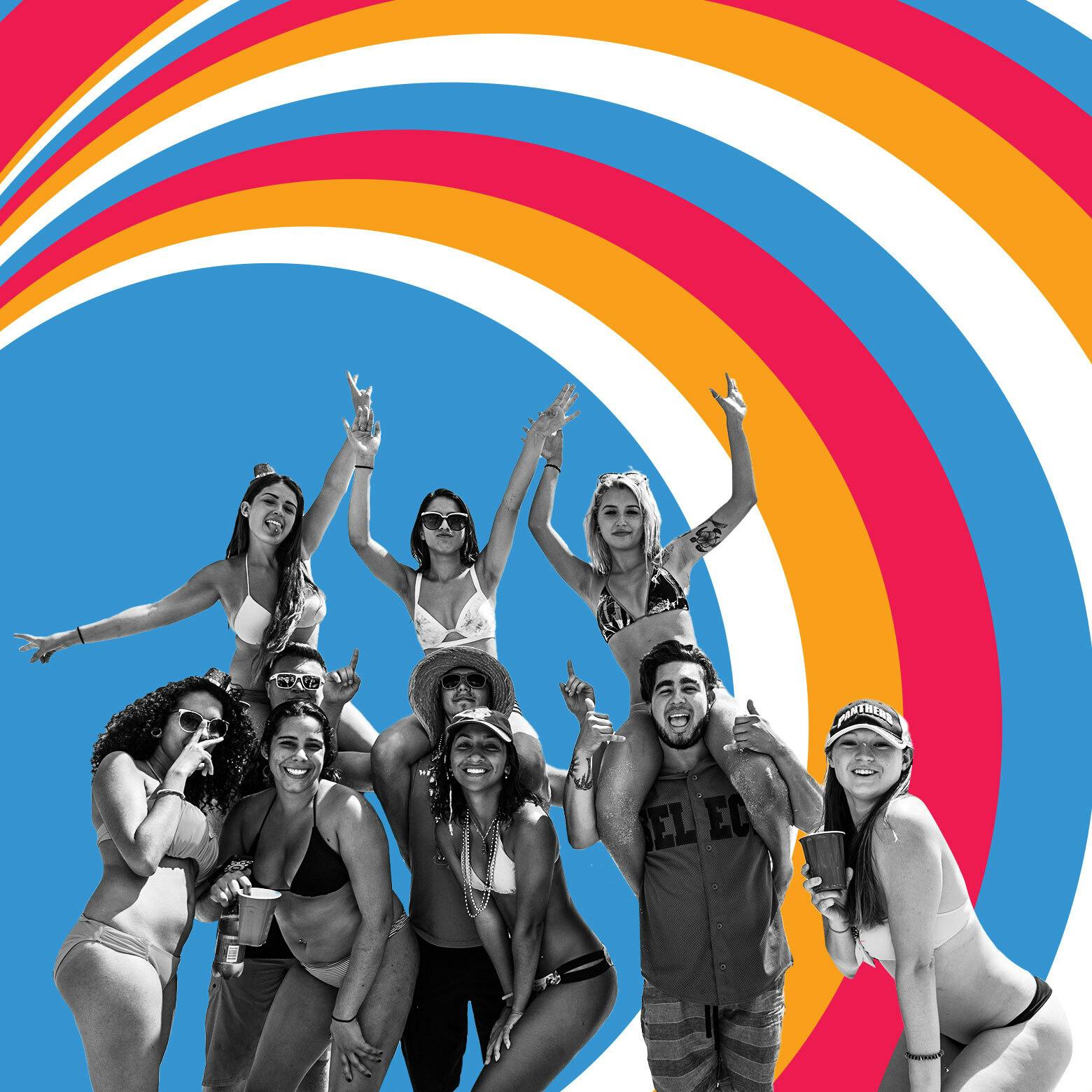
Slow Burn
Decoder Ring | Spring Break Forever
00:50:08
How spring break became the party that never ends.
Loading summary
Transcript235 lines
- [00:01]
Willa Paskin
This podcast is brought to you by Progressive Insurance. Do you ever find yourself playing the budgeting game? Well, with the name your price tool from Progressive, you can find options that fit your budget and potentially lower your bills. Try it@progressive.com Progressive Casualty Insurance Company and affiliates Price and coverage match limited by state law not available in all states.
- [00:28]
Megan
Hi, I'm Megan and I've got a new podcast I think you're going to love. It's called Confessions of a Female Founder, a show where I chat with female entrepreneurs and friends about the sleepless nights, the lessons learned, and the laser focus that got them to where they are today. And through it all, I'm building a business of my own and getting all sorts of practical advice along the way that I am so excited to share with you. Confessions of a Female Founder is out now. Listen wherever you get your podcasts before.
- [00:58]
Willa Paskin
We begin, this episode contains adult content and language. I don't know when you're going to be listening to this episode, but as I talk to you right now It's April. Spring has officially begun, but winter is lingering and it would be nice to take a break. Lots of people do. Millions of Americans travel somewhere warm in March and April. Schools from elementary on up close their doors and people pick up and go somewhere. That means many of these trips, most even, are a kind of family vacation happening during spring break. But when I hear the phrase spring break, I'm not picturing a family trip. Spring break. Yay. Spring break is an infamous annual ritual in which thousands of college students notoriously and stereotypically head to the same location, somewhere cheap and warm and go crazy.
- [02:00]
Sachi Kul
Spring break. A time, as they say, to get hammered, wasted, ripped or blasted. Translation, roaring drunk.
- [02:07]
Willa Paskin
Growing up in the 90s and 2000s, spring break felt like it was everywhere. On TV, in the news, in sitcoms, and especially on MTV. Now it's time to shake spring break until it breaks. Get ready to move in sweat. One academic paper found that 40% of college students at the time participated. I'm sure I would have thought nothing of this back then, but more recently I've become curious about spring break's ubiquity. We treat college students flying south every year like migrating birds, as if flocking en masse to warm weather locations to engage in various rituals. Mating and otherwise is part of their very nature. But it's not. Spring break is a man made phenomenon, a habit that has somehow survived massive cultural changes pretty much intact, making it a ritual of remarkable persistence. Or to put it another way, spring break.
- [03:06]
Sachi Kul
Spring break forever.
- [03:10]
Willa Paskin
When they say nothing lasts forever, they didn't know about Spring Break.
- [03:14]
Sachi Kul
Foreign.
- [03:22]
Willa Paskin
This is Decoder Ring. I'm Willa Paskin. Spring break is so established it can seem like it's always been here, but it hasn't. It's a holdover from mid century teen culture that has endured by changing just enough to be passed from one generation to the next. In this episode we're going from the beaches of Fort Lauderdale to Daytona, from the movie screen to the TV set, from MTV to Instagram reels from its start to its surprisingly recognizable present as we follow the evolving self reinforcing ritual that is Spring break. So today on Decoder Ring, how did Spring Break become the party that never ends? Foreign we're calling all Decoder Ring fans in the Boston area. We're going to be live at the WBUR festival in Boston on Saturday, May 31st. It's a celebration of WBUR's 75th anniversary and they're going to be a lot of great live shows there. Everything from Slate's Amicus to Wait, Wait, don't tell me. Modern Love and Us. We'd love to see you there, but we would also love your questions. If you happen to be in the Boston area, are free that Saturday and have a cultural mystery you want us to solve, please send us an email@decoder ringlate.com or call us at 347-460-7281. You can find out more details about the festival and how to get tickets@wburfestival.org we hope to see you there. This episode is brought to you by Choiceology, an original podcast from Charles Schwab. Choiceology is a show all about the psychology and economics behind our decisions. Each episode shares the latest research in behavioral science and dives into themes like can we learn to make smarter decisions? And the power of do overs. The show is hosted by Katie Milkman. She's an award winning behavioral scientist, professor at the Wharton School, and author of the bestselling book how to Change. In each episode, Katie talks to authors, historians, athletes, Nobel laureates, and everyday people about why we make irrational choices and how we can make better ones to avoid costly mistakes. Listen and subscribe@schwab.com podcast or find it wherever you listen. So I am very familiar with the concept of spring break with the sun, the sand, the misbehavior, but I've never actually been to spring break myself. It just was not a thing in my school growing up. My colleague Sachi Kul didn't go either and when she would catch glimpses of the American spring break phenomenon on the Internet or tv, she struggled to see the appeal.
- [06:44]
Doug Herzog
I watched it and didn't get it. I was like, so it's just hours of white people on the beach. My understanding is you can get that for free almost anywhere there is a coast.
- [06:54]
Willa Paskin
For her, spring break was literally a foreign concept.
- [06:57]
Doug Herzog
I'm Canadian, so we didn't have like this as a cultural thing. I didn't know anybody who went.
- [07:04]
Willa Paskin
But Sachi has since done a lot of reporting around spring break and adjacent phenomena, and she's seen how large it can loom in its participants memories.
- [07:13]
Doug Herzog
It's interesting talking to people about their time on spring break because some of them have a lot of fondness for it. Even if they had a bad time. In a weird way, even then, they still are like, it was what a great time. I was so young, I was so free. I'm like, I have no idea what you guys are talking about with this.
- [07:34]
Willa Paskin
The people who started spring break itself might have been similarly perplexed. Because spring break did not begin with freedom on a beach in April, it began with swim practice in upstate New York during Christmas time.
- [07:50]
Sachi Kul
Never fear, give a cheer for colony. It is a place where men are bold.
- [07:55]
Willa Paskin
Colgate University is located about 40 miles from Syracuse. In the winter, the campus is frigid. Not an ideal place to train if you're a swimmer. So in 1934, a member of Colgate's swim team convinced his teammates to spend their Christmas break training somewhere warmer. His hometown of Fort Lauderdale, Florida.
- [08:14]
Sachi Kul
Fort Lauderdale, another fast growing resort town. Many of the so called natives are people who once made a vacation visit to the Sunshine State and just never went back home.
- [08:25]
Willa Paskin
Fort Lauderdale was very small at the time. Only 8,000 people had lived there in 1930. But the swim team loved it and the nascent city loved having them. It was the middle of the Great Depression and the swimmers brought in revenue. The city began hosting a college swimming competition every winter. And when the swimmers went back to college, they spread the word that if you wanted to have some fun in the sun, Fort Lauderdale was the place to be. Soon hundreds of college kids were heading down. Though more and more during the spring vacation, universities were starting to introduce. Instead of Christmas break, that number kept rising in the years after World War II, as young people, some of whom had just been dubbed teenagers, suddenly had more flush allowances and space power than ever before. By the 1950s, Fort Lauderdale was openly encouraging them and their dollars to come down, mailing invitations to fraternities and sororities. And they wouldn't need the mail to spread the word for much longer. Where the Boys Are In December of 1960, a movie called where the Boys are was released in theaters. Based on a novel, it's about the sexual misadventures of four college girls on spring break in Fort Lauderdale. Why don't we all admit it?
- [09:51]
Sachi Kul
Admit what? We're going to Lauderdale for one reason. To meet boys.
- [09:56]
Willa Paskin
The movie was risque and frank about sex for its time, and it captured an idea about spring break that would persist but had not yet been articulated clearly.
- [10:07]
Doug Herzog
It was the suggestion that girls would lose their minds because they were on spring break and behave in a way that was otherwise never gonna happen.
- [10:14]
Willa Paskin
Saatchi. Cool again.
- [10:16]
Doug Herzog
That all these well behaved co EDS are going to school and they're not thinking about sex or their bodies or boys. And then they get this week where they go insane.
- [10:25]
Sachi Kul
What are you talking about? Men, naturally. What else is there?
- [10:28]
Willa Paskin
When the movie was released, it was a hit. Three months later, 50,000 kids descended on Fort Lauderdale.
- [10:35]
Sachi Kul
Is this the first year that you've come down to Fort Lauderdale? Sure is. To be honest with you. Came down to meet that girl stage, standing right over there.
- [10:41]
Willa Paskin
The movie turned spring break into a national phenomenon, One that laid out what to expect and how to behave there, Even for students who had never and would never set foot in Florida. It also enshrined Fort Lauderdale as the capital city of spring break and made it a place that was alluring to young men and young women. Spring break's most essential ingredients.
- [11:08]
Doug Herzog
Because then if girls go, then boys go. And if boys go, then girls go. And if girls go, then boys go. So they have this thing that's just gonna self propagate forever.
- [11:16]
Sachi Kul
What do you find to do down here? Oh, lots of good stuff. This is where the boys are.
- [11:23]
Willa Paskin
Throughout the 1960s, spring break's reputation kept expanding through word of mouth and the movies, including one starring Elvis.
- [11:31]
Sachi Kul
Any male in Fort Lauderdale who is not pursuing cute female will automatically land in jail. That's law enfort Lauderdale.
- [11:47]
Willa Paskin
During the upheavals of the late 1960s and early 70s, spring break receded a bit in the popular imagination. The kids were protesting, not partying. But in Fort Lauderdale, spring break kept on keeping on. And as hedonism roared back into style, so did spring break. By the early 1980s, 250,000 students were attending Fort Lauderdale annually. But as spring break grew, so did its problems. From the moment they had first arrived, college kids had brought all the Inevitable headaches with them. Hijinks, rowdiness, public drunkenness, bodily excretions, violence. And now their behavior was getting increasingly hard to ignore. The seasonal phenomenon that began after the 1960 filming of where the Boys Are has turned into a seasonal headache for beach residents.
- [12:38]
Sachi Kul
I didn't invite 100,000 people to the beach on any given Friday night during spring break. Fill their little bellies with beer. Kids urinating on my lawn. They're overindulged, over sexed, and over here.
- [12:50]
Willa Paskin
Residents had complained for years, but it was only in 1985, after Fort Lauderdale saw a record 3, 350,000 spring breakers, more than double its population, that the city finally took action. It banned open alcohol containers and ended beach concerts. Police started cracking down on bar and hotel capacity limits. They arrested 2,500 people. The city commissioners even decided to construct a barricade separating the beach from the.
- [13:21]
Sachi Kul
Bars, voting to put up a six foot high fence right down the middle of the A1A strip.
- [13:26]
Willa Paskin
The mayor went on national TV and explicitly told college students, do not come to Fort Lauderdale. And the students got the message.
- [13:36]
Sachi Kul
I've been here three days and I already got arrested and I don't think I want to come back.
- [13:44]
Willa Paskin
As attendance began to plummet, it looked like the phenomenon had peaked, that a tradition that had started back in the Great Depression might just fade away. But something was starting to happen that would usher in a new era of spring break. Kids were going to flock to a new epicenter of fun. And all that fun was going to be captured on cable tv.
- [14:09]
Sachi Kul
It's MTV spring break. And this coverage goes on and on and on.
- [14:14]
Willa Paskin
When we come back, MTV takes spring break to another level. Vacation season is nearly upon us this year. It's time to treat yourself to the luxe upgrades you deserve with Quince's high quality travel essentials at fair prices. They have some really nice, sturdy, hard shelled carry ons right now and handsome leather shoulder bags that look to me like a big upgrade over your average duffel. And they have backpacks in some great colorful prints my kids would love. The best part, all Quint's Items are priced 50 to 80% less than similar brands. By partnering directly with top factories, Quince cuts out the cost of the middleman and passes the savings on to you. For your next trip, treat yourself to the luxe upgrades you deserve from Quince. Go to quince.comdecoder for 365 day returns plus free shipping on your order. That's Q U I n c e.com/decoder to get free shipping and 365 day returns. Quince.com/decoder it's smart to always have a few financial goals. What's a really smart one? You can set earning cash back on what you buy every day. With Discover, you can get this. Discover automatically matches all the cash back you've earned at the end of your first year. Seriously, all of it. Discover trust you make smart decisions. After all, you listen to this show. See terms@discover.com credit card for a decade, spring break had been something that happened in person or on the movie screen. But it was about to start getting beamed into people's living rooms.
- [16:10]
Sachi Kul
MTV Music television.
- [16:13]
Willa Paskin
Video music 24 hours a day, and it's stereo lobster. MTV launched in August of 1981. It was the dawn of the cable age. And instead of just three networks, viewers were now getting more varied and niche options. In MTV's case, it was nothing but 24. Seven music videos introduced by young video jockeys known as VJs. Coming up, more rock and roll. It swiftly became a youth sensation, the coolest TV station there'd ever been, and the cultural taste maker of a generation.
- [16:47]
Alan Hunter
It was like, oh, my God, there was nothing else like it.
- [16:50]
Willa Paskin
Doug Herzog graduated college the year MTV started, eager to work in television.
- [16:55]
Alan Hunter
You know, MTV was my dream job. I used to sit up all night and drink beer and smoke pot and watch videos till the wee hours of the morning going, wow, that seems like a cool place to work.
- [17:05]
Willa Paskin
When he was 25, Doug landed his dream job. He was hired to start MTV News in an effort to expand what the channel had to offer. Because by 1984, the 247 music video programming that had made MTV hip was already becoming a ratings problem.
- [17:22]
Alan Hunter
We basically changed our programming every three or four minutes. So if you didn't like the Billy Idol video, that came after the ZZ Top video, maybe followed by a Madonna video, you might change the channel.
- [17:33]
Willa Paskin
They needed to come up with some different stickier programming.
- [17:37]
Alan Hunter
And at one point, there was a guy who ran music programming. He was a rock and roll guy. He was the one who said he, man, we should go to spring break.
- [17:47]
Willa Paskin
Spring break was where young people were, and that was MTV's audience.
- [17:52]
Alan Hunter
We'll bring some bands down, we'll bring some celebrities down, and we'll broadcast live from spring break. That was basically the idea. Bring MTV to the audience, bring MTV to the streets.
- [18:01]
Willa Paskin
But with Fort Lauderdale in the midst of its campaign to keep college kids away, Doug wasn't sure spring break was still A reality.
- [18:09]
Alan Hunter
My first reaction was, you know, spring break wasn't a thing anymore. But we were like, well, maybe we could go down there and reinvent it.
- [18:17]
Willa Paskin
Fortunately for them, there was another Florida town about three hours north of Fort Lauderdale that had been trying to get into the spring break business for years.
- [18:27]
Sachi Kul
Welcome to Daytona Beach. A geographic phenomenon has resulted in a spectacular beach so smooth and compact that automobiles can safely drive along the surf's edge.
- [18:37]
Willa Paskin
Daytona beach was shaggier and more down at its heels than Fort Lauderdale. And especially after Disney World started to lure tourists away to Orlando, they were desperate to bring some back.
- [18:47]
Sachi Kul
In fact, the spring break committee here has actively begun advertising all over the country.
- [18:53]
Willa Paskin
By the early 80s, city officials, hotel and bar owners and a local suntan oil mogul had begun enticing students down with cheap package deals on bus fare and a room, as well as hosting concerts on the beach. The city had even peppered the Fort Lauderdale beach with ping pong balls printed with the message get on the ball and get to daytona. So in 1986, when Daytona beach heard about what MTV wanted to do, the city was eager to get in on it.
- [19:24]
Alan Hunter
And we decided we were to go down there and sort of create a weekend full of spring break.
- [19:29]
Sachi Kul
Listen, everybody, listen one and all. We down to Daytona and we having a ball.
- [19:34]
Willa Paskin
Instead of MTV's usual segments pre taped in a studio In Manhattan, now VJs were throwing to music videos live from the beach. They also staged concerts with Jefferson's Starship, modern English and Mr. Mr. And they enticed celebrities like the Beastie Boys, who you're listening to right now, to come down.
- [19:55]
Sachi Kul
I'm down to Daytona to get my kicks. We the Beastie Boys and TV Spring Break 86.
- [20:03]
Willa Paskin
But the most energizing and surprising thing about that first year had nothing to do with celebrities.
- [20:10]
Alan Hunter
You know, MTV was completely canned, right? And all of a sudden we're live. We are with the audience.
- [20:16]
Sachi Kul
Young, single and ready to mingle.
- [20:19]
Alan Hunter
They are in bathing suits and bikinis. They are drinking their ass off.
- [20:24]
Sachi Kul
If you want to meet the best girls, this is the spot to be.
- [20:29]
Alan Hunter
They couldn't be more excited to be on and part of mtv.
- [20:32]
Kaylee Morris
I came here to get.
- [20:33]
Willa Paskin
No, I can't say that, can I?
- [20:36]
Sachi Kul
So they sent yours truly to Daytona to kind of turn the camera around on the audience.
- [20:41]
Willa Paskin
Alan Hunter was a blonde, shaggy VJ who was tapped to be the master of ceremonies. He was happy to get out of the studio and harness the insanity.
- [20:51]
Sachi Kul
When we did get to Daytona and we did turn the camera around people went absolutely nuts. Alan Hunter here, party reporter. What do people do in between sunbathing during the day and going out at night? Hi, how are you?
- [21:03]
Kaylee Morris
Okay, Fine, thank you.
- [21:04]
Sachi Kul
I would wander the halls and some two co EDS would be trying to jam into a hotel room and I would run to them and say, what are you doing in there? And they go, you can't come in. You can't come in. And of course, I busted in. Whoa. Hi. Are you taking a shower? Yes, I'm taking a shower. Great. Are you getting ready for tonight's activity? It was that kind of sort of, I called it investigative reporting. What kind of soap do you use? What kind of soap do I use? Whatever they have hotel soap. Well, that's great. That's all we did for a week, starting in the morning, all the way through to the night. And that's what played on MTV all day long. The ratings went nuts.
- [21:44]
Willa Paskin
MTV's experiment in Daytona had succeeded beyond all expectations. It was a hit with the kids who were there, the ones watching at home, and with sponsors and advertisers.
- [21:55]
Alan Hunter
And the big revelation for us was, oh, my God. When we turn the camera on the audience and let them be on camera and be part of the show, they love that more than anything else.
- [22:08]
Willa Paskin
They knew they had to do it again, and so they did.
- [22:11]
Sachi Kul
We're back live and it's Daytona. It's spring break 87.
- [22:15]
Willa Paskin
But this time, something was different.
- [22:17]
Alan Hunter
Now they're playing to the cameras, right?
- [22:19]
Willa Paskin
Giant fight. At this moment, MTV's the Real World, one of the first reality shows, was still five years away. Survivor, the series that made reality TV a mainstream staple, wouldn't air for another 15. But spring break was already tapping into what would become a reality TV trope After that first season, the participants know exactly what's expected of them.
- [22:48]
Alan Hunter
They realize the whole world is watching and their friends can see them. And. And yeah, it' started to, you know, sort of feed on itself. Like I'm supposed to go there, get shit faced, put on a bikini and have a great time.
- [23:00]
Sachi Kul
So tell me what this game is. This is quarters. What's the ultimate object of this game?
- [23:06]
Alan Hunter
It was Sodom and Gomorrah.
- [23:08]
Joe Devola
It's the power of the camera. Kids go nuts for cameras, so they'll do anything to be on camera.
- [23:13]
Willa Paskin
Joe Devolo was a segment producer for mtv and one of his jobs was to wrangle spring breakers into on air hijinks.
- [23:21]
Joe Devola
We did all these stupid contests like best body, best buns, you know, buns.
- [23:25]
Willa Paskin
Girls and guys, I'm the best buns winner.
- [23:28]
Sachi Kul
Best buns winner. Let's take a look at those. Can we?
- [23:32]
Willa Paskin
They greased kids up and saw how many they could cram into a Volkswagen. They hosted kissing contests sponsored by breath mint companies. They had a guy shave MTV into his chest hair.
- [23:44]
Joe Devola
It wasn't like they were savvy. They were all drunk.
- [23:48]
Sally Frattini
I was just like, this is fucking crazy. Is this television?
- [23:52]
Willa Paskin
Sally Frattini started at MTV in 1988 and eventually became the head of spring break's production.
- [23:58]
Sally Frattini
Everything was on the fly for spring break. Everything was on the fly. And every year we just kept building it and building it and building it.
- [24:06]
Willa Paskin
As it became an annual Must See TV tradition, the whole slate got bigger. They started bringing some of their full length shows down to Daytona.
- [24:15]
Sachi Kul
Welcome back to the only game show that gets to go on spring break Remote control.
- [24:20]
Willa Paskin
And flooded the programming with celebrities.
- [24:22]
Sachi Kul
Hey, yo, what's up? This is Marky Mark, a marky market, a pokey bunch. I'm lounging in Daytona with the rest of the Funky bunch. MTV Spring Break. Hey you guys, it's me, it's Polly Shore. I'm here in the Boot Hill Saloon in Daytona Beach. That's Christian Slater here. Pretty damn incredible, I must say.
- [24:37]
Willa Paskin
And it was incredible and over the top and sometimes over the line.
- [24:43]
Sally Frattini
I remember like Rodney Dangerfield who always wear this bathrobe and he would walk around flashing everybody, which was so inappropriate. And girls would be like, Rodney Danger. Jill just walked right by me and opened up his bathrobe and he had nothing on. I was like, oh my God.
- [25:02]
Willa Paskin
Looking back, the people we spoke with said a lot of what they put on air also just would not fly today.
- [25:09]
Alan Hunter
I mean, there is a lot of, you know, gratuitous, you know, bikini shots and that kind of thing. The kind of thing that you would not do today and probably shouldn't have done that.
- [25:21]
Sachi Kul
Beautiful, beautiful. Contestant number two, she's 5 7, she weighs 116. Her measurements are 36, 23, 35. Have mercy.
- [25:34]
Joe Devola
I know it's objectifying. It is. I'm not, I'm not going to deny any of that stuff.
- [25:39]
Willa Paskin
Segment producer Joe Devola again.
- [25:41]
Joe Devola
But it wasn't like we were like, oh, let's go get girls in bikinis. No, it was like we were equal opportunity exploiters. You know what I'm saying? It was like, you know, we were doing the B abs contest with the guys too.
- [25:53]
Sachi Kul
We have narrowed it down to four contestants in the male beauty contest. Would you like to take off your shirt for us, guys, please. Just go ahead and take them off. Rip them right off.
- [26:00]
Willa Paskin
But still, it was young women, mostly bikini clad and intoxicated, who are at the very center of spring break. And parading them around, whether it be in hot bun contests or concert footage or on the pool deck, was a huge implicit part of the draw.
- [26:16]
Doug Herzog
It's before we had access to, and I think this is important, like images and photos of other people because we didn't have the Internet.
- [26:24]
Willa Paskin
Saatchi, Cool.
- [26:25]
Doug Herzog
Again, like, this is the era of people jerking off to the Sears catalog. So to see cleavage, to see a woman in her bathing suit was like really exciting and lecherous and weird.
- [26:38]
Sachi Kul
What made you enter the contest? I have no idea, but you look good. Does she look great?
- [26:44]
Doug Herzog
I mean, we were rubbernecking.
- [26:47]
Willa Paskin
In the 1960s, where the Boys Are had cemented Fort Lauderdale's status as the singular spring break destination, the place to find girls running wild. Now MTV had done the same for Daytona beach and a new generation.
- [27:04]
Alan Hunter
We became a 24 hour commercial for spring break in Daytona.
- [27:08]
Joe Devola
We ran that town while we were there and we got to do whatever we wanted to do.
- [27:14]
Willa Paskin
But within only a couple of years, the same problems that had plagued Fort Lauderdale began to plague Daytona.
- [27:22]
Sachi Kul
A car spins out after a high speed chase on a crowded beach. Police say the driver was drunk, as was the spring breaker killed yesterday after he fell four stories off a motel balcony.
- [27:32]
Willa Paskin
As attendance grew to nearly half of a million, some residents questioned spring break's benefits. But others didn't want to kick out. The golden goose. Like Fort Lauderdale had the public urination, the rowdy nights and packed roads were just the price to pay. For all those paying spring breakers, you.
- [27:52]
Sachi Kul
Know, what brings the revenue, what keeps.
- [27:54]
Willa Paskin
The taxes down for Daytona?
- [27:55]
Sachi Kul
The tourists.
- [27:59]
Willa Paskin
But is that premise even right? Are spring breakers really an economic boon to a city?
- [28:05]
John Laurie
As the theory goes, the hypothesis was the bigger the spring break location, the better. Like the bigger you are, the more that it benefits them.
- [28:14]
Willa Paskin
John Laurie has a PhD in economic development. And for his dissertation, he studied the economics of spring break.
- [28:21]
John Laurie
I really do actually want to get the title down because, my God, that was such a long, long name. Yeah. The title of the dissertation is Spring Break the Economic, Social, Cultural and Public Governance of College Students on spring break host Locations.
- [28:35]
Willa Paskin
John analyzed as much data as he could. Everything from a town's budget and tax code and revenue to hospital admissions and arrest rates. And he found that there is an economic benefit to hosting spring break.
- [28:49]
John Laurie
There is at first. When you get Tens of thousands of students coming in. Sure, they spend money that creates jobs, and more money flows into the city. So at first seems like a good deal.
- [29:01]
Willa Paskin
But John realized that to understand spring break, you can't just look at all the money flowing in. You have to look at where it's.
- [29:08]
John Laurie
Flowing to, specifically when you have tourists like college students. Places that end up making all of the money are bars, and everybody else takes the punishment.
- [29:22]
Willa Paskin
For the rest of the town, it's thousands of puking kids, snarled traffic, and overloaded hospitals. And as for the revenue the city earns, John found much of it got gobbled up by hiring extra law enforcement and paying them overtime.
- [29:37]
John Laurie
And it's not like they were controlling it. They were just kind of containing it.
- [29:42]
Willa Paskin
So a lot of money is now being spent just to maintain spring break, even as there are potential visitors who go to bed early and don't drink their dinners, who are staying away because of those very spring breakers.
- [29:58]
John Laurie
The reality is, families spend way more money than college students do, and the family is not going to trash the room.
- [30:06]
Willa Paskin
So after crunching all the numbers, John was surprised to find that the residents who were fed up with spring break weren't just right, that it was a hassle. It also just didn't really add up.
- [30:16]
John Laurie
People are just like, look, man, it's just whatever money I'm making is just not worth it.
- [30:19]
Willa Paskin
By the early 1990s, more and more residents and lawmakers in Daytona were coming to that conclusion.
- [30:27]
Sally Frattini
When things started to unravel, I was like, oh, shit.
- [30:31]
Willa Paskin
As fights became more common and multiple hotels were shuttered with reports of feces and vomit in the halls, Sally Frattini says the town started to demand more influence over MTV's Spring Break.
- [30:44]
Sally Frattini
Daytona beach wanted to approve our talent and wanted to approve our scripts, and we were like, we're not going to let you do that.
- [30:55]
Willa Paskin
In 1994, Daytona took matters into their own hands. They passed laws cracking down on underage drinking, hotel occupancy, and open containers. They sent a message that spring break was over in Daytona. And that message was received.
- [31:12]
Sally Frattini
Daytona was like, we've had enough, so we moved on.
- [31:18]
Sachi Kul
Welcome back to Spring Break 94. San Diego. What up?
- [31:23]
Willa Paskin
MTV's Spring Break Sensation had been created at Daytona. The municipality and the programming had gone hand in hand. But now it turned out that MTV did not need Daytona. It was the epicenter of spring break, and it picked up and just took spring break with it. MTV started bopping from location to location, like San Diego and Lake Havasu, Arizona, and then in 1996, it landed in the next spring break mega site. Hi, I'm Victoria from the Spice Girls, and welcome to the spring break grind. Coming to you from Panama City Beach, Florida. Panama City, a town on the Gulf coast, picked up where Daytona beach left off, becoming the biggest spring break destination yet. But with MTV still jumping from place to place. Cancun, South Padre Island, Texas, Miami. Panama City never got quite the national name recognition as Fort Lauderdale and Daytona did. It just got the kids. It eventually would host half a million of them every spring between Panama City and mtv, spreading the festivities. Spring break stayed at the center of the culture through the 90s. The kind of thing that was so well known, it would just show up in late night bits and SNL sketches on a random episode of Friends or a movie like the one starring the winners of the first season of American Idol. Look, spring break is this hell of a mob scene, and all the guys.
- [32:55]
Kaylee Morris
Have one thing on their mind.
- [32:56]
Sachi Kul
Well, I know. Why do you think I'm going?
- [32:59]
Willa Paskin
It seemed like the party might go on forever, but that's not what happened.
- [33:05]
Sachi Kul
Panama City beach used to have its own version of March Madness spring break. But a year later, beaches here look quaintly quiet.
- [33:15]
Willa Paskin
The exact same cycle that had played out in Fort Lauderdale and Daytona had happened again, only this time, it went further. In 2015, not only did Panama City beach crack down on spring break, MTV ended its spring break broadcast altogether. And this time, no one entity or city took up the mantle. When we come back, how spring break is navigating uncharted waters. This episode is brought to you by Saks Fifth Avenue. Shopping at Saks is the perfect way to discover the latest styles, elevate your everyday look, and refresh your wardrobe just in time for spring. At Saks, you'll find inspiration for every occasion, from casual outfits to special events. One of the things I like about Saks is just how many different brands and designers they have and how easy it is to mix and match them while putting an outfit together. Bodhi, Eileen Fisher, apc, Rachel Comey, and so much more. They have clothes for every occasion, be it a work event, a party, a date, or just a lounge around the house. Whether you're refreshing your entire wardrobe or shopping for a vacation, Saks makes it Fun and easy. Saks.com is personalized, with arrivals from brands picked just for you, making it simple to find inspiration for your everyday style. So if you're looking for a fun, effortless shopping experience and want to elevate your personal style, head to Saks. That's Saks.com for everyday inspiration.
- [34:58]
Megan
Hi, I'm Megan and I've got a new podcast I think you're going to love. It's called Confessions of a Female Founder, a show where I chat with female entrepreneurs and friends about the sleepless nights, the lessons learned, and the laser focus that got them to where they are today. And through it all, I'm building a business of my own and getting all sorts of practical advice along the way that I am so excited to share with you. Confessions of a Female Founder is out now. Listen wherever you get your podcasts.
- [35:31]
Willa Paskin
In 2015, MTV stopped airing Spring Break after nearly 30 years. That same year, Panama City, like all of the cities before it, cracked down on spring break revelry. Just a decade earlier, spring break had been a cultural juggernaut. Now it was cut loose, undesirable to cable channels and municipalities alike. What had happened? First there was the economics. Other cities saw the data from Fort Lauderdale, Daytona and Panama City and they did not want to fall into the same trap.
- [36:04]
Sachi Kul
We're breaking up with you and don't.
- [36:06]
Willa Paskin
Try to apologize and come crawling back. This is a PSA made by the city of Miami, leading directly with spring breakers not to come this march. You can expect things like curfews, bag.
- [36:17]
Kaylee Morris
Checks, and restricted beach access, whatever it.
- [36:19]
Willa Paskin
Takes because it's time to move on. But there was a cultural component too. Spring break has always had a debauched, dangerous and seedy side. There's an off camera rape scene in where the Boys are, but by the 2010s that was less the hidden underbelly of the phenomenon than part of its very premise. You could see it being critiqued in a movie like 2012 Spring breakers, about four girls who go beyond teen hijinks instead end up in a world of very adult crime and violence.
- [36:51]
Sally Frattini
Get on your knees.
- [36:51]
Sachi Kul
You want to die tonight? No, I'm scared.
- [36:54]
Willa Paskin
Don't kill me.
- [36:55]
Sachi Kul
Give it to us.
- [36:57]
Willa Paskin
You could also see it in what happened to the pornography company Girls Gone Wild.
- [37:01]
Alan Hunter
It's the most blazing Girls Gone Wild.
- [37:03]
Willa Paskin
Spring break video yet, as our camera crews catch real college girls going wild at the beach. Girls Gone Wild had started in the late 1990s. From the beginning, it had coerced young, sometimes underage spring breakers into appearing in their videos, tapping into the idea, part of spring break since at least the 1960s, that this was where nice girls went sexually buck wild.
- [37:26]
Doug Herzog
I think Girls Gone Wild is kind of the natural progression of something like spring break.
- [37:30]
Willa Paskin
Sachi Cool has reported extensively on Girls Gone Wild and produced a documentary about the company in 2024.
- [37:36]
Doug Herzog
Spring break is promising something. It's promising sex. It's suggesting something in the programming and in the marketing. But Girls Gone Wild took it and said, oh, there's a suggestion of something word. I'm going to give it to you.
- [37:49]
Willa Paskin
The company had sold itself as a lifestyle brand, and celebrities had even rocked Girls Gone Wild merch. But by the 2010s, the extent of its exploitativeness was being exposed.
- [38:01]
Sachi Kul
A Cartersville woman says her life was ruined when she appeared on the COVID of Girls Gone Wild. She was a child, she says.
- [38:08]
Doug Herzog
What happened when she was 14 years.
- [38:10]
Willa Paskin
Old on a supervised spring break trip.
- [38:12]
Megan
In Florida still haunts her.
- [38:14]
Willa Paskin
The legal scrutiny and collapse of Girls Gone Wild happened alongside increased alarm about sexual violence at spring break. Overall, Panama City's crackdown had followed a sexual assault on the beach that took place in broad daylight. The irony was that even as the sexual danger of spring break was being more openly discussed, it was only becoming easier to see as much sex as you wanted online. And this had consequences for MTV, too. When MTV's Spring Break first started, its appeal was that it was unlike anything else on television. Provocative, titillating, messy, and irresistible to audiences.
- [38:53]
Doug Herzog
MTV was the beginning of, like, fomo, because that's what they were selling to you. When you watch, like, MTV programming, they're selling to you a party that you can't go to. It's a party you can't go to with people you'll never meet who are better looking than you.
- [39:06]
Willa Paskin
Guaranteed by the 2000 and tens, all the things that mtv had once been able to exclusively provide with spring break, well, you could get it now. So many other places if you wanted sex, you could find it on the Internet. If you wanted regular people being their wackiest, messiest selves on camera, you could turn on reality tv. And the network no longer had a direct line to young people who would soon be able to see a party just by looking at their phones.
- [39:34]
Doug Herzog
You can have anything you want, but because you can have anything you want, it. It numbs us, I think, a little bit to the impact. But that's why this stuff was so valuable in the 90s and the early aughts.
- [39:45]
Willa Paskin
Spring break is much less alluring, unique and potent as a viewing spectacle than it used to be. It's not must see TV anymore, and its place in the cultural conversation has diminished as a result. It's less in the air, particularly for people who have long since aged out of it. But I think it would be a mistake to assume spring break itself. The thing college kids actually do is in the same boat as spring break, the thing we watched. And I know it's a mistake because that's kind of what I assumed before talking to a spring breaker.
- [40:21]
Kaylee Morris
I do think there is definitely a pressure to live up to this expectation of spring break. Although that definition of what spring break looks like has really changed.
- [40:31]
Willa Paskin
Kaylee Morris is 22 years old, and.
- [40:34]
Kaylee Morris
I'm a senior at Pitzer College.
- [40:36]
Willa Paskin
And have you been on spring break?
- [40:38]
Kaylee Morris
I have been on spring break before.
- [40:40]
Willa Paskin
Where'd you go?
- [40:41]
Kaylee Morris
I have been to Puerto Vallarta, Mexico, and I'm just about to go to Oahu in Hawaii.
- [40:48]
Willa Paskin
I reached out to Kaylee because I wanted to know what spring break was like now. And to be clear, I had a hunch, I thought it had changed, that it was not as centralized or compulsory or debauched, just way less of a thing. And Kaylee seemed to agree.
- [41:03]
Kaylee Morris
Yeah, I think definitely like the MTV beach house concept. That's just the term that comes to mind. I think it's a different thing.
- [41:12]
Willa Paskin
Kaylee was only 12 when MTV stopped airing Spring Break. Even so, it cast a long shadow, one Kaylee grew up in.
- [41:20]
Kaylee Morris
I feel like it was a little bit before my time, but I just hear that talked about as kind of this time when people would go crazy and hooked up and drank all day and all night. And it's messy. It seemed messy, for sure. Did that seem appealing to you personally? No.
- [41:39]
Willa Paskin
There's one thing in particular about the old image of spring break that concerns Kaylee.
- [41:44]
Kaylee Morris
It's this scary thing for women, too. With so many inebriated people, I would just feel so anxious.
- [41:52]
Willa Paskin
Talking to Kaylee, this came up quite a bit. The objectification of women and sexual violence that lurked relatively unacknowledged in the background of spring break for years is front of mind for her. She thinks about it a lot. And she also thinks about what it must have been like to deal with when spring break was so big that it could attract half a million kids to one location.
- [42:14]
Kaylee Morris
I am the person that always needs to, like, have my eyes on everyone in the friend group, like, needs to make sure they're safe. So if there were that many people in a different place that we were not familiar with and everyone was, like, really drunk, that would be really my nightmare. Honestly.
- [42:30]
Willa Paskin
As Kaylee and I spoke, this was a key difference that she drew out for me. That the spring break experience today feels smaller in scale and thus more manageable and safer because it is not defined by a single destination.
- [42:43]
Kaylee Morris
There's so many more options nowadays. It's not just MTV telling you where to go now. It is Instagram as well that is telling you, oh, this is a fun place for spring break. That's cheap and you can go there with all your friends. And here's an Airbnb, like, everything is kind of spoon fed to you in a way.
- [43:00]
Sachi Kul
Where is everybody going to spring break this year?
- [43:02]
Doug Herzog
Let me know where you guys are.
- [43:03]
Sachi Kul
Going and maybe I'll just have to plan. Plan around that. Top 10 spring break destinations. 10. Miami.
- [43:09]
Willa Paskin
9.
- [43:09]
Sachi Kul
Cancun. 8.
- [43:10]
Willa Paskin
Key West.
- [43:10]
Kaylee Morris
Not only is Jamaica beautiful, but there.
- [43:12]
Sachi Kul
Is so much to do.
- [43:13]
Kaylee Morris
So it's not just like random places, but there isn't just one that everyone's kind of flocking to. But I did find it very interesting this year that many separate friend groups that I know ended up just all choosing New Orleans, which the first person I heard tell me that they were going there. I said, wow, that's such a niche spring break choice. That's awesome. And then I heard like five other friend groups going there. So then I was like, okay, maybe it's not niche.
- [43:38]
Willa Paskin
Like, how much spring break content do you end up seeing, like, as it's happening, like, from your peers?
- [43:44]
Kaylee Morris
I do see a decent amount, but it's more just like story posts of the pretty mountains and of the pretty beach.
- [43:52]
Willa Paskin
Hi, guys. Welcome to a little vacation vlog. I went to Punta Cana with my.
- [43:55]
Sachi Kul
Friends for spring break.
- [43:56]
Willa Paskin
Not gonna lie, we spent most of.
- [43:58]
Sachi Kul
Our day at the beach, tanning, drinking pina coladas.
- [44:01]
Kaylee Morris
But it's not what I envision of MTV beach house.
- [44:05]
Willa Paskin
So here Kaylee and I were chatting, agreeing, jibing on all the ways spring break was altered. And then I asked Kaylee about what her last spring break experience was actually like. Will you tell me about Puerto Vallarta?
- [44:20]
Kaylee Morris
So Puerto Vallarta. I went with seven friends. Some days we would, like, drink during the day. That. That got to be very tiring. And then we would spend the day on the beach, get ready for the night, go to the bar at the hotel, pre game for the night, and then go to one of the clubs. Basically every single night that we were there, we went to the club. There were hundreds and hundreds, probably thousands of other students around our age. It was definitely crazy.
- [44:51]
Sachi Kul
I don't know.
- [44:52]
Willa Paskin
That sounds like spring break classic.
- [44:54]
Kaylee Morris
Yeah. Now that I retell the story, I'm like, I guess that's kind of what I did. Now that I'M thinking about it.
- [45:02]
Willa Paskin
So it's different, but not that different. And that's because spring break is entrenched and adaptive. It's been passed down from spring breaker to spring breaker using whatever means are at hand. Word of mouth, analog media, digital media, social media. So certain things about it change even as others stay very much the same. And some balance of this, a little variation on a theme will probably continue for as long as kids make going bonkers on the beach with friends look and sound like fun. This is Decoder Ring. I'm Willa Paskin. If you're a Slate player, we have a bonus episode for you all about one of our colleagues experiences on spring break as a contestant on MTV's say what Karaoke.
- [46:02]
Doug Herzog
We had this whole plan that we knew the lyrics to the songs that.
- [46:05]
Sachi Kul
We knew, but then producers like literally.
- [46:07]
Doug Herzog
On the bus were like, okay, you're actually gonna do this song.
- [46:11]
Willa Paskin
If you want to hear more, you can sign up for Slate plus as a member. You can also hear a great interview my colleague Sachi Cool, who you heard in this episode, did with my other Slate colleague Anna Sale on the Slate podcast Death, Sex and Money. They spoke more extensively and very insightfully about Girls Gone Wild. If you aren't already a member of Slate plus, you can subscribe now on Apple Podcasts by clicking Try Free at the top of the Decoder Ring show page or visit slate.comdecoder/ to get access wherever you listen. This episode was written by me and Katie shepherd, who also produced it. It was edited by Evan Chung, Decoder Ring supervising producer. Our show is also produced by Max Friedman. Merritt Jacob is senior Technical Director. We'd like to thank Bob Friedman, David Cohen, Derek Johnson, Ivy Simonez, and Alan Cohen. If you have any cultural mysteries you want us to decode, please email us@decoderinglate.com and you can also call us now on our new Decoder Ring hotline. That number is 347-460-7281. We love to hear any and all of your ideas for the show and any comments you have for us. Like this message we got from listener Chuck Musano about our last episode.
- [47:33]
Sachi Kul
Just listened to your episode on books that change the world and you missed. I'm so sorry you missed the most.
- [47:39]
Willa Paskin
Important one of all.
- [47:40]
Sachi Kul
It's not a book, it's a television series and it's called Connection. And it was the original series that.
- [47:46]
John Laurie
Connected things over time.
- [47:48]
Josh Levine
The things around us, the man made inventions we provide ourselves with are like.
- [47:52]
Sachi Kul
A vast network, each part of which.
- [47:54]
Josh Levine
Is interdependent with all the others, the things we take for granted of multiplied ways beyond the ability of any individual.
- [48:00]
Sachi Kul
To understand in a lifetime. Thank you so much for what is just a delight to listen to every.
- [48:05]
John Laurie
Time a new episode drops.
- [48:07]
Willa Paskin
Thank you Chuck, and to all of the other listeners. There were a few of you who pointed this out. I would also be remiss if I did not give a shout out to our multiple Canadian listeners who wrote in about the same episode to note that beavers are in fact Canada's national animal. I really do regret the oversight. Thanks for listening and we will see you in two weeks.
- [48:42]
Josh Levine
Hi, I'm Josh Levine. My podcast, the Queen tells the story of Linda Taylor. She was a con artist, a kidnapper, and maybe even a murderer. She was also given the title the Welfare Queen, and her story was used by Ronald Reagan to justify slashing aid to the poor. Now it's time to hear her real story. Over the course of four episodes, you'll find out what was done to Linda Taylor, what she did to others, and what was done in her name.
- [49:13]
Willa Paskin
The great lesson of this for me.
- [49:15]
John Laurie
Is that people will come to their.
- [49:17]
Willa Paskin
Own conclusions based on what their prejudices are.
- [49:20]
Josh Levine
Subscribe to the Queen on Apple Podcasts or wherever you're listening right now.