Loading summary
Transcript177 lines
- [00:00]
Podcast Announcer
You're listening to an iHeart podcast.
- [00:05]
California Psychics Announcer
At California Psychics. We know some people can't read the career warning signs like your boss. Still not knowing your name.
- [00:12]
Carrie
You, Tina, Lisa, Sheila, whatever. Get that report to me by lunch, okay? It's Carrie, ma'am. Just get it done, Terry.
- [00:20]
California Psychics Announcer
So talk to California Psychics and receive the career guidance you need. We only connect you with the very best, so guarantee if your reading isn't life changing, it's free. California psychics. Visit CaliforniaPsychics. Visit CaliforniaPsychics.com today for limited time offers.
- [00:37]
Lowe's Announcer
Lowes helps refresh your garden in time for Mother's Day. Right now, get five bags of one and a half cubic foot Scott's Naturescapes mulch for just $10. Plus select one and a half gallon annuals. Hanging baskets make the perfect gift. Now two for only $15. The best garden starts with great deals.
- [00:56]
Ed Helms
Lowe's.
- [00:57]
Lowe's Announcer
We help you Save. Valid through 5 7. Selection varies by location while supplies last. Discount taken at time of purchase.
- [01:12]
Terrence Winter
Hey there.
- [01:13]
Ed Helms
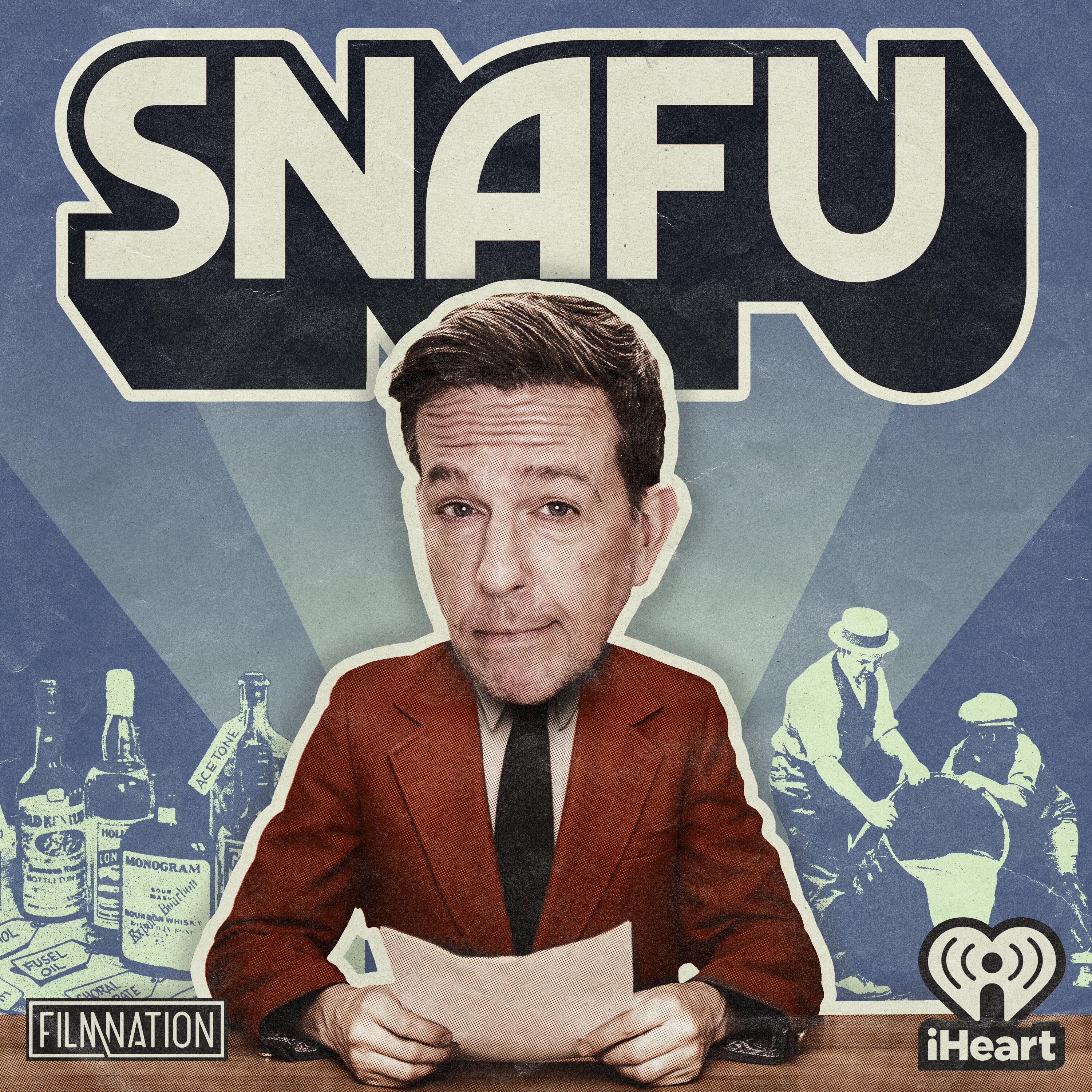
I'm Ed Helms and this is SNAFU Season 3 Formula 6. How Prohibition's War on alcohol went so off the rails the government wound up poisoning its own people. Welcome to another bonus episode. You may recall in these bonus episodes I bring in a guest and just have a great interview. So after spending this season unraveling Prohibition, I wanted to talk to someone who knows this era inside and out. Someone who could give us a whole new layer of historical context, color and detail. So who better than the guy who actually built it, or at least rebuilt it on TV? Enter Terrence Winter, the brilliant creator of HBO's Boardwalk Empire. He joins me for a fascinating deep dive into Prohibition's gangsters, corrupt officials, and of course, its completely bonkers policies. We talk about his unlikely journey from Brooklyn to Hollywood, including the wild story of how he invented a fake talent agency to get his foot in the door. And how he stumbled upon the real life Nucky Johnson, the inspiration for his lead character, Nucky Thompson. I also ask him whether Formula 6 was ever on his radar and dig into some of the not entirely coincidental parallels between his fictionalized characters and the real people we covered this season. And honestly, just as a fellow showbiz guy, I had a blast nerding out with him because who doesn't love a peek behind the curtain of a great TV show? So settle in, grab a stiff drink, preferably non poisoned, and enjoy my conversation with Terrence Winter.
- [03:11]
Hey. I'm so good to meet you, man.
- [03:13]
Terrence Winter
You too. It's so, so great to meet you.
- [03:16]
Ed Helms
Honestly, I didn't know you were a history guy.
- [03:19]
Terrence Winter
You know, there's such a cool overlap of this season of snafu, which is all about Prohibition. And we'll get into some of the. The really surprising things that I learned in research for this season that might even be surprising to you as an expert on Prohibition because of your incredible series Boardwalk Empire. But let's start a little more broadly so our listeners can get to know you a little bit better. Where are you from originally? What was your sort of path to Hollywood? Writer?
- [03:53]
Ed Helms
I grew up in Marine Park, Brooklyn, which is an area that I usually have to describe by its proximity to other neighborhoods in Brooklyn that people have heard of. You may have heard of Sheepshead Bay, which actually was an integral neighborhood in terms of Prohibition, because boats used to come right in there and that's kind of near Coney Island. So, you know, basically blue collar family, blue collar neighborhood. I actually studied to be an auto mechanic in high school and that didn't stick. I took a detour into the deli business. Eventually figured out that I needed to go to college. Eventually went to law school, Practiced law for two years. Hated it. And then my deep, dark secret was I had always wanted to be a sitcom writer, which was something that, you know, on the east coast in the 70s, you dare not tell your friends that you wanted to go to Hollywood and be anything.
- [04:43]
Terrence Winter
I had a similar thing in growing up in Georgia. I harbored these deep aspirations from a very young age. But I knew I could never tell anyone because they would. Yeah. Either get beat up or they would just crush your. Your dreams.
- [04:58]
Ed Helms
Absolutely. Which is what friends are for. Can I curse on this?
- [05:02]
Terrence Winter
Hell yes. Or.
- [05:04]
Ed Helms
Okay, good. Because it's very difficult for me to talk with that. Yeah, I do hold the record for the most uses of the word fuck in a movie, Wolf of Wall street, which I'm very proud of. So it's very hard for me to have a conversation, so that'll slip out occasionally.
- [05:16]
Terrence Winter
Good.
- [05:16]
Ed Helms
Anyway, once I came out of the closet as a writer, I just said, I'm moving to LA and I'm going to figure this out. Showed up here in 1991 and I just kind of plunged in and I started out attempting to be a sitcom writer and then eventually just morphed into drama that kind of had comedy in it. So I just got incredibly lucky and still lucky to be doing that kind of stuff.
- [05:39]
Terrence Winter
So growing up in Brooklyn and then heading off to law school, did you then become a lawyer in Brooklyn?
- [05:47]
Ed Helms
Did you stay in Brooklyn. I was a lawyer in Manhattan. My only ambition as a kid was I wanted to be rich, because we were not. And the only two jobs I knew that could make you rich were doctor and lawyer. The doctor was out. And I remember there was a quote by Benjamin Franklin, and he said, pour thy purse into thy head and no man can take it from you. You know what? Get an education, basically.
- [06:09]
Terrence Winter
Yeah, that's a beautiful quote. I like that.
- [06:11]
Ed Helms
Yeah, I love that. So I took creative writing, and eventually I stumbled onto journalism. And, you know, again, you know, my ambition was to make money. That was what a good job was. The concept of liking your job was something, you know. You know, you just want to make money. So lawyer was the thing. So I had another professor, journalism professor, named Jerry Schwartz, who is a managing editor at the Associated Press. And I asked him to write me a recommendation for law school. And he did. He wrote me this glowing recommendation. He gave it to me in a manila envelope, and he said, there's another letter in there for you personally. And that letter said, please don't go to law school. Please be a writer. And I was like, holy shit. This is the second adult who's told me I'm a good writer.
- [06:52]
Terrence Winter
Good thing you didn't submit that letter to the law school.
- [06:57]
Ed Helms
It might have saved me a lot of time. Meanwhile, all my friends who became auto mechanics were making a fortune, and they all thought I was the biggest idiot in the world. Joe College, you know, I'm already now in the whole student loan wise from nyu. And I said, all right, there's only one way forward, and that's the law school. So I did that. Went at night, worked for Merrill lynch during the day as the legal assistant to one of the lawyers who counseled the trading people and graduated, got a job at a big Manhattan law firm, passed the New York bar, the Connecticut bar. And my first week there, I realized I had made a grave, grave error. I hated it. I didn't. I just couldn't give a shit about any of it. Within about a week and a half, I was sneaking out during the day, going to movies, bookstores. I just. Two years in, I couldn't get out of bed in the morning. I just didn't want to go there. So it was really, you know, and it's very, you know, really.
- [07:53]
Terrence Winter
Were you making good money there?
- [07:54]
Ed Helms
Yeah, yeah, it was great. I had everything I thought I wanted. I had an assistant, I had an office. I had a diploma written in Latin. I was like, holy shit, look at me. I'm a Lawyer.
- [08:02]
Terrence Winter
And was that new thing. Did you go to NYU Law School also?
- [08:05]
Ed Helms
No, I went to St. John's Law School, which is the Harvard of Queens.
- [08:09]
Sure.
- [08:10]
And I was in the top 5% of the bottom third of my class, so I was very proud of that. Again, it was like I wasn't even thinking in terms of, are you happy?
- [08:19]
Terrence Winter
Yeah.
- [08:19]
Ed Helms
And, you know, it was. I was like 29 at this point, and I had that moment like, okay, you were gonna either jump out a window in 10 years from the depression of working somewhere you just don't like, and you'd never be good at this because you don't like it. What do you want to do when you wake up in the morning? And I was like, all right, well, maybe I'll be a salesman, you know, because I looked at bullshit and I was like, all right, there's a little voice that said, come on, it's not salesman. What is it? And it's like, all right, well, an ad copywriter, maybe I could do that. Because. And then even the voice, like, come on, go deeper. And then it was, finally, I want to go to fucking Hollywood and write sitcoms. And once I said that out loud, it was like everything changed. But then I thought, all right, well, I remember this bit in Mr. Saturday Night with Billy Crystal where he talked about the idea of, you're either living room funny or you're really funny. You know, you could be funny with your friends. And yeah, hey, I'm on. I'm the funniest guy in the group. Can you do that for real? And I thought, all right, well, I think I can. And I thought the fastest way to figure this out is write my own material and do stand up. And if I can get people to laugh, then I'm legit.
- [09:29]
Terrence Winter
Wow.
- [09:29]
Ed Helms
I wasn't particularly interested in being a stand up, but I wanted to see am I crazy or am I funny or I really am funny. So for a couple of months, right around that time, I was doing Stand up and Catch a Rising Star.
- [09:39]
Terrence Winter
And this is what year?
- [09:42]
Ed Helms
90. 1990.
- [09:43]
Terrence Winter
1990. Wow. What a great time in those clubs.
- [09:46]
Ed Helms
Yeah. Oh, yeah. And it was interesting too, because it was like this young woman named Sarah Silverman.
- [09:51]
Terrence Winter
Sure.
- [09:52]
Ed Helms
Holy shit. Chris Rock was still around. You know, I thought, these are the real deal, you know, And I was doing open mics and watching these people and going, oh, man. You know, like a young Sarah Silverman was just great to see that. And then to watch her career after that was great. But, you know, I did okay, you know, I get on at 2 in the morning to three people. And it's okay. I said something. They laughed. Great. That worked this, worked that. And then once I. Once I said, okay, I'm not crazy. Then I was like, all right, I'm doing this.
- [10:17]
Terrence Winter
So you stopped doing stand up and then dove it. That's so interesting that that crucible of standup was your sort of testing ground. And it was. I had a similar. Similar path. I knew that I wanted to work in comedy, and to me, stand up was sort of like, all right, if you're serious, you know, get into it. And I got right into that same circuit you were in, but, like, the next sort of time frame. So I started in about 97, 98. And. And I love. I still relish my years in the New York City stand up.
- [10:54]
Ed Helms
It's. And for anybody who's never done it, I mean, you know, it's funny if you think, like, they say, like, one of the biggest fears people have is speaking in public.
- [11:02]
Terrence Winter
Yeah.
- [11:03]
Ed Helms
Speaking in public with the agenda of also trying to get people to laugh.
- [11:06]
Terrence Winter
Yeah.
- [11:07]
Ed Helms
Is like. And it's funny. You do a bit or you say a joke and people don't laugh. It's like getting punched in the face. Oh, yeah, it is. No sound louder than people not laughing when you think they're going to.
- [11:19]
Terrence Winter
Let's say you're like a string quartet or even a great professor at a university giving a lecture. Most performers will get up in front of an audience, and the audience actually wants them to succeed. Not true. In comedy clubs. A lot of audience members in a comedy club want you to bomb. They want to feel the train wreck. They're there to see the just car crash. But, wow, that's awesome. Okay, so then Hollywood and you just moved out.
- [11:52]
Ed Helms
And I just moved out. I did not know a soul. I literally sold everything I had. I was not in a relationship at the time. And I just showed up here on May 8, 1991. I got a room in a horrible SRO hotel. It was actually in MacArthur Park. And now I was like, all right, I have to figure out. So I went down to the Writers Guild, and this was just complete luck. They had a list of new agents or young agents who were actually looking for clients. And on that list was a guy I went to law school with who sat four seats away from me.
- [12:26]
Terrence Winter
Oh, wow.
- [12:27]
Ed Helms
And his name was Doug Viviani. He's not an agent, so don't call him. But I called him and I said, what are you doing? Are you an agent? He goes no, I'm a real estate attorney, and a client of mine wrote a book on real estate, and I used the fee to get bonded as an agent, but I don't know anything about being an agent. I said, well, congratulations, you're my agent. What are you talking about? I'm in la. I'm right. I'm trying to be a writer. I need an agent. I said, so I'm going to create the Doug Viviani Agency out of a mailboxes, etc. And we're going to get letterhead and a phone mail, and I'm going to submit my work under your letterhead. And if I get anything, you get 10% like an agent. And he said, great. So that's what I did.
- [13:01]
Terrence Winter
So you were your own agent?
- [13:03]
Ed Helms
I was.
- [13:03]
Terrence Winter
He was just the sort of, like, nominal he was.
- [13:06]
Ed Helms
He was like, you know, the guy on Charlie's Angels. So I did that, and I photocopied all my scripts. And this is back. You know, this is now like 1992 when you could do this. I would just pull up to the Warner Brothers lot, for example, and say, yeah, I'm the messenger from the Doug Viviani Agency. I have some scripts I need to drop off. And I just hit every sitcom office in LA, and there was like 30 of them at the time. And I addressed, you know, here's my scripts to the showrunner from an agent. And now at least my scripts are in the building where theoretically, if lightning struck, I could at least have a shot.
- [13:36]
Terrence Winter
Yeah.
- [13:37]
Ed Helms
And I don't know, about a week or so into it, I got a. There's a phone message on the Doug Viviani voicemail line, and it's a woman said, yeah, hi, my name is Winifred Hervey Stallworth. I'm the executive producer of Fresh Prince of Bel Air. I read Terry Winter's stuff, interested in having him in maybe to pitch. So I was like, oh, my God. So I called Doug in New York, and it was a Friday, he was gone for the weekend. I was like, ah, shit, I gotta wait till Monday now. And I was like, you know what? Doug doesn't really know anything about being an agent. I'll just be Doug. And I called her back and I said, yeah, hi, Doug.
- [14:07]
Terrence Winter
Oh, that's so Donald Trump of you.
- [14:09]
Ed Helms
Yeah, John Baron calling. So, yeah. And I have no idea what agents did or said. The only agent I ever saw was Reuben Kincaid on the Partridge Family. And he didn't seem to do much, but I figured, you know what? Let me just. I'm just Gonna wing it. And she said, yeah, yeah, we read his stuff. He's really, you know, talented. Kid's amazing. So she said, does he have, like one more teenage oriented script? Cause, you know, Fresh Prince is kind of a teenage show. I said, yeah, he just finished an incredible episode of the Wonder Years, but I don't have a copy of it. I won't read have it until. So I'm trying to calculate in my head how long is it going to take me to write a one year's episode. So it was Friday. I can get it to you two late Tuesday afternoon if that works. Yeah, fine. Great. So hung up the phone and cranked out a Wonder Years episode. Went in, gave it in. Now he was the messenger, I was the lawyer. I was everybody. And they had me in the pitch an idea, and that became my foot in the door. I sold him on an idea that ultimately never went anywhere. But that was my first shot. And a little after, I got into a thing called the Warner Brothers Sitcom Writers Workshop, which they used to do. They would take 15 people from a pool of hundreds around the country and then put you through a program. At the end of it, they called me and they said, we have an interesting situation. We have a show we think you'd be great for. It's not a sitcom. And this isn't a reflection of your sitcom writing. It's a drama that has comedy in it. And I said, well, why me? And they said, well, it's about a blue collar guy who's a lawyer who works for a big stuffy law firm. Do you think you could do that? And I was like, if I don't get this fucking job. I said, yes, basically my life story. So, yeah. And that was my actual first staff job. It was a show called the Great Defender with Michael Rispoli, Peter Krause, Richard Kiely, who is Mandala La Mancha. And thank God that I've been working ever since that show.
- [15:53]
Terrence Winter
Wow. Incredible, incredible story. There's a thread here which is grit and moxie and a sort of never seeing an obstacle as an obstacle, but just something to work around.
- [16:11]
Ed Helms
And especially with this, I was not taking no for an answ.
- [16:16]
Terrence Winter
So where do you think that came from, growing up? Like, were you a scrappy kid in Brooklyn?
- [16:20]
Ed Helms
I mean, yeah. I mean, I grew up. When I was 13, I started working for a butcher shop that was owned by Paul Castellano, who's the head of the Gambino family. When I was 16, I worked in an illegal card game run out of a Synagogue in our neighborhood that was run by a guy named Roy DeMaio, who's the subject of a book called Murder Machine. He and his crew in the early 80s, killed more people than the Iraqi army at the time, I think, was the statistic. He had a bar in my neighborhood, so by osmosis, I just kind of knew that those guys. I also just became fascinated with crime and criminals. Actually, somebody asked me this, like, what was the first thing? And it sounds quaint now, but it was the movie Oliver. I loved the idea of being part of that gang of pickpockets. That was, like, so cool. I wanted to be the artful dodger. That looks so cool to me. And right around that time, I read Abbie Hoffman had this book called Steal this Book, of course, which was my bible. And it was the first time, like, oh, wow, you can scam shit. And then the sting came out, and I was like, oh, my God. Using your brain to psych people out and get what you want. And I just became fascinated with the idea of using psychology or human nature to sort of, you know, get my way through the world. And I just sort of, yeah, became that guy and that kid, you know, who was. Always think. Even to this day, my initial instinct, if I'm presented with a problem, I always think of, what's the way to scam my way through this? And I go, yeah, you can just pay it. You can just pay the bill. You don't need to do it.
- [17:51]
Podcast Announcer
Right, right, right.
- [17:51]
Ed Helms
But that's right where I go. What lie do I tell to get? And I go, that's you from when you're 15 years old. But, wow, it was so ingrained.
- [18:00]
Terrence Winter
Well, that's a pretty good transition point for us. Cause you had a kind of exposure to that criminal element in Brooklyn. Is that what made you such a perfect candidate for one of your biggest staff jobs at the Sopranos there?
- [18:17]
Ed Helms
I think so, yeah. When I. When I saw that pilot, my agent at the time sent it to me. And, you know, like most people, I thought, opera, what is this? And I don't even think I finished watching it. And I was. I was, like, trembling. I was like, I know these guys. I know these people. I know how they talk. I know how they think. I called him up, I said, you got to get me on this show.
- [18:37]
Terrence Winter
So the real life mob life was not for you. It was not something that even attracted you from a sort of, like, romantic or exotic sense, which I think draws a lot of people into that space. But the fictional mob space was right where you felt at home.
- [18:57]
Ed Helms
Yeah, I love that stuff.
- [19:00]
Terrence Winter
It's like all the fun of the mafia with none of the danger.
- [19:05]
Ed Helms
It's like I say, why people ride roller coasters. It's like you feel like you're about to die, but you're not actually going to die. How exhilarating. So writing about it was much preferable for me.
- [19:15]
Terrence Winter
All right. I could go on for hours. I love hearing about your career and all the machinations and steps you took. It's my favorite thing is just learning about how people got where they wanted to be. And you have an incredible story. But let's turn the page and get into kind of where you and I actually have this interesting overlap, which is in our shared fascination with the prohibition era. I think most people assume they know what prohibition is. Liquor was made illegal. It was a big mistake. There was a bunch of mobsters and tommy guns, and then it got repealed. You made this incredible show Boardwalk Empire. What drew you to Prohibition in the first place? I mean, I could make an obvious leap from the Sopranos to prohibition era, gangsters being the overlap. But was there anything about that era in particular that felt so ripe for storytelling?
- [20:19]
Ed Helms
Yeah, I mean, I was given a book by HBO called Boardwalk Empire about the history of Atlantic City. And they said, maybe there's a TV series in here. Okay, the history of Atlantic City. That sounds great. But on the way out the door, they said, oh, Martin Scorsese's attack attached to that book. And I was like, oh, okay, well, that's a different story. I will find the TV series in here.
- [20:40]
Terrence Winter
You're right.
- [20:41]
Ed Helms
So I started reading, and there was a chapter about this guy named Nucky Johnson, who I later fictionalized as Nucky Thompson. But Nucky was the corrupt treasurer of Atlantic City during the prohibition era, where, you know, you have a corrupt politician in charge of a city on the eastern seaboard where all the alcohol comes through, and suddenly, overnight, he was friends with Lucky Luciano and Arnold Rothstein and Al Capone and everybody else. I went, this is the series guy, this era. And I was like, I love the 20s. You know, that snappy, fast talking 1920s stuff. I've always been fascinated with that kind of dialogue. The era, you know, was also interesting to me, too, is that Even though it's 100 years ago, it still felt modern. People dressed in suits, they went out to restaurants, they talked on the telephone, they drove in cars. You know, it still felt cool, still felt, like, accessible. It wasn't like 10 years earlier would have felt like you know, Downton Abbey, but this was modern. You know, you could wear some of those clothes today.
- [21:36]
Terrence Winter
Yeah.
- [21:37]
Ed Helms
And I said, wow, this is such a great setup. And. And it's really not really been explored in TV or film. So when I went to meet. I'll call him Marty, because I know him, and I know it sounds douchey, but that's his name. I went to meet Marty when I went to meet Mr. Scorsese. And believe me, that's what I called him initially. He was like, oh, this is great. I've never done anything in this era before. So once he gave me the blessing, you know, we were off to the races. And then, you know, the real work started. We had a protagonist who was like 50 years old in 1920. So I was like, okay, so he was born in 1870. So, God, what books did he read? What was his pop culture references? What was happening in 1920? There's the war. World War I just ended. He had all these guys coming home. Women just got the right to vote. Prohibition itself. What were the movies? So it was like a ton of research, you know, Also, how do people actually talk? I'm sure they didn't alter, say, 23 Skidoo every five minutes. Do the Charleston was like, every time you ever see anything in the 20s. Yeah, everybody's doing the fucking Charleston. I was like, did they do. Is there any other songs written between 1920 and 1930? And it's funny, I mean, I wanted to do a thing where, you know, it was like that Nucky at some point says, if I hear the Charleston one more time, I'm gonna kill somebody. And it actually didn't come out till 1924 anyway, so we didn't even touch on it until way late. But, yeah, it was just sort of. Once I started doing the research, it was just fascinating. Not just all the other stuff, but the prohibition stuff itself was so eye opening in terms of the history of how it even came to be. And then what a disaster. It became, you know, the single biggest thing that made criminals millionaires overnight. And it was like outlawing turkey sandwiches. It was like most people didn't give, like, wait, what? I've been drinking beer my whole life, now I can't do it. Fuck you. I'm going to keep doing this. And just. So many failed consequences of that law.
- [23:31]
California Psychics Announcer
At California Psychics, we know that sometimes you can wake up thinking.
- [23:37]
Ed Helms
I don't.
- [23:37]
Carrie
Know if I'm in the right career ew. Or the right relationship.
- [23:43]
California Psychics Announcer
But whatever your life dilemma at California Psychics, we'll give you the guidance you need to feel certain about your life choices. And because we only connect you with the very best, we guarantee, if your reading isn't life changing, it's free. California psychics. Visit CaliforniaPsychics. Visit CaliforniaPsychics.com today for limited time offers.
- [24:02]
Podcast Announcer
Ryan Reynolds here from Mint Mobile with a message for everyone paying big wireless way too much. Please, for the love of everything good in this world, stop with Mint. You can get premium wireless for just 15amonth. Month. Of course, if you enjoy overpaying. No judgments. But that's weird. Okay, one judgment anyway. Give it a try@mintmobile.com Switch upfront payment.
- [24:24]
Carrie
Of $45 for 3 month plan equivalent to 15 per month required intro rate first 3 months only, then full price plan options available, taxes and fees extra. See full terms@mintmobile.com not everyone who handles.
- [24:33]
Lifelock Announcer
Your personal information is going to be as careful as you are. And it only takes one mistake to expose it to hackers and identity theft. Maybe that's why there's a new victim of identity theft every five seconds in the United States. Fortunately, there's Lifelock. Lifelock monitors hundreds of millions of data points a second for threats to your identity. If your identity is stolen, a LifeLock US based restoration specialist will help solve identity theft issues on your behalf, guaranteed or your money back. Plus, all Lifelock plans are backed by the million dollar protection package, meaning Lifelock will reimburse you up to the limits of your plan if you lose money due to identity theft. You can't control how diligent others are with your personal information. But with Lifelock you can help protect it. Act now and save up to 40% your first year. Call 1-800-LIFELOCK and use promo code iheart or go to lifelock.com iheart for 40% off terms apply.
- [25:28]
Terrence Winter
It is truly a wild moment in American history. The sort of moral panic on one hand. And then there's the anti German sentiment kind of like flaring up and, and then gives the teetotalers ammunition to go after the brewers. Yeah, to go after all these German brewers.
- [25:47]
Ed Helms
It was a perfect storm. I mean, yeah, you're at, you're at war with Germany and now suddenly, you know, coleslaw is liberty cabbage and hamburgers are liberty sandwiches. And I mean, I think half the brewers got shut down and I got where it came from. You know, there were, it was, alcoholism was devastating. You know, the cliche is the dad, you know, got paid on Friday and then you didn't see him and spent all his money at, you know, and your family went destitute. This is in days before social programs or even before AA was a thing, I guess. So there was a real. It was a real problem.
- [26:24]
Terrence Winter
So Nucky Thompson is a character that was played by Steve Buscemi. How close to the real Nucky Johnson was he?
- [26:34]
Ed Helms
Not at all.
- [26:35]
Terrence Winter
Not at all.
- [26:36]
Ed Helms
If we were to cast a real. We were to cast somebody who looked like Nucky Johnson, Jim Gandolfini would have. Actually. Nucky was a big, burly, bald headed guy.
- [26:45]
Terrence Winter
So I feel like Steve Buscemi's casting was such a stroke of genius for Boardwalk Empire because it is against type and in a way that, you know, can this guy who's. Who's sort of a slight build, not an intimidating presence, and whose face, to me just has a sort of kind of warmth and sadness and a sort of tenderness, can this guy carry a mob show? Tell me a little bit about why Steve Buscemi was so perfect for Boardwalk Empire.
- [27:19]
Ed Helms
You know, it started with Marty. You know, we said, all right, who are we gonna get to do this? And, you know, I said, well, this is what the real guy looked like. And Marty said, well, no one's ever heard of this guy. Which is also funny because when I went down to do my research in Atlantic City, the real nucky between like 1910 and 1930 was hands down the most powerful guy in Atlantic City. City. Everybody knew him. Nothing moved without Nucky. And when I went down initially and talked to old timers and people ever hear Nucky Johnson? No, never heard him. Never heard him after the show. Oh, yeah, Nucky, I. My uncle worked for. Suddenly everybody knew who he was, but nobody knew who this guy was. So Marty, you know, very, you know, correctly said, it doesn't matter. We can cast anybody. And then he just said, well, who. Let's. Let's just name actors we like. And one of the first. Yeah, Ed Helms came out. Available.
- [28:04]
Terrence Winter
Not available.
- [28:05]
Ed Helms
And I said, well, Steve is semi. I always. I love Steve. And he goes, oh, I love Steve Buscemi. And we rattled off a couple of other names. And then he's like, all right, whatever. And a couple of days later, Marty called me up. He said, I can't stop thinking about Steve for this. And I said, yeah, me too. I said, isn't that crazy? I see. He says, yeah, yeah. And it's funny. Even Steve, when I called him, he knew he was in the running. And when I called him to tell him he got the role, I said, steve, you know, we're really excited. We want to offer you this role. And he said, hey, look, you know, it was really just an honor to be considered. And. And I said, steve, no, we're giving you the role. And he's like, what? I've been preparing myself for two weeks to not get this. I didn't even hear you. I didn't even let that register. I said, yeah, no, you got it. We're doing this. And he's like, holy shit. And then, of course, you know, he went on. You know, I think he won the Screen Actors Guild a couple times in a row and Emmy nominations, and, you know, people just loved him. He totally sold it and pulled it off. Obviously, he's Steve Buscemi.
- [29:02]
Terrence Winter
Yeah, he is. I would imagine, you know, your collaboration as a showrunner with the wardrobe department and the production design department and the props department was so fun on a project like this and so cool. And then, of course, your music team, both the score and, you know, your needle drops throughout the episodes. What are some things that stood out to you in that research process that were either surprising or especially exciting or fun to think about and write about? And were there things that came up in that process that inspired moments in the show?
- [29:41]
Ed Helms
I loved all the wardrobe stuff, the hair stuff. One of the things I loved was a little detail that in somewhere in 1916, the Gillette Company invented the safety razor. Up until that point, men shaved themselves with a straight razor. So facial hair was a big thing. So a lot of guys had beards and mutton chops and all these crazy. Everybody had facial hair up until 1917. Suddenly, that was. The safety razor came out. So young people started looking at facial hair as, oh, yeah, that's your dad. That's your grandfather. So we. Somewhere around season two, I would start seeing young people with mustaches in the crowd of extras or on the show. And I mentioned it to our hair person a few times, and I mentioned it to our extras casting person. I said, do not send me any young men with facial hair. It kept popping up, and it started to drive me crazy. So I actually got the yearbook from Princeton University of 1922, and I went into the hair department, and I said, find me one man in this book with facial hair. And there was not one college student that had a mustache or a beard in 1922. I said, that's the level of accuracy we need to have here. And I did. I had the A plus team of every department. Head, hair, makeup, wardrobe, music, the cross. It shows production. I mean, production design. Just crazy details. Yeah. You know, like, wardrobe is like, you know, drives me crazy. If you see a Show Set in 1920, everybody's dressed like it's 1920. You know, I don't know about you, but I've, you know, I have, guess jeans from the 90s, probably, that I still have, actually. My wife has called me on shit like that a couple of times. Like, you've got it, you know, you got to get rid of it. So not everybody dresses like it's 2024. Most people don't. You know, if you're really hip and maybe you're in New York or L. A.
- [31:25]
Terrence Winter
Maybe.
- [31:25]
Ed Helms
Maybe you do, but you sure don't. And if you're a working class guy in Atlantic City, you dress like it's 1893.
- [31:31]
Terrence Winter
Yeah.
- [31:31]
Ed Helms
You know, so I needed a. We needed a smattering of that. And everybody took such pride in it, too. I remember even once a big debate about a chain link fence. You know, I didn't even bring it up. But our production designer, he said, you know, we had a chain link fence somewhere. And he said, before you say anything, yes, they had chain link fences in 1920. They're invented in 1905. Okay, take it easy. He goes, I didn't know myself and I had to check this out, but, yeah, they had chain link fences back then. So, yeah, like, stuff like that.
- [31:57]
Terrence Winter
Ah, I love that. And it just informs all the. The actors on the set. It gives them all these. These kind of anchors and reference points to latch onto. So most prohibition crime stories center around the male bootleggers, but Boardwalk features a lot of extremely unique and morally gray and enterprising female characters. Margaret Thompson, Gillian Darmody being a couple of standouts. What was the inspiration for those incredible characters?
- [32:32]
Ed Helms
In the book Boardwalk Empire, Nelson Johnson fictionalized a meeting between the real Nucky and a woman from the neighborhood who came to asked to get her husband a job. And he said, this is the kind of thing Nucky would do. You know, people worked in the hotel business in the summer months. It was great. But during the winter, people were out of work, and if your husband, you know, drank and didn't have money, you know, you were going without food. So he talked about a little fictional encounter between a neighborhood woman, Nucky, and Nucky would give her $50 to tide her over for the month, whatever. And I said, that's interesting. That's an interesting relationship. I wonder who that is. Who is that woman? And then I, you know, I just took it from there. Like, okay, what if. What if he's interested romantically. And what if her husband is a creep and he beats her up and Nucky gets rid of him? And where does that go? So that became Margaret Gillian D'Armity just came. You know, I knew Jimmy Darmody was coming home from World War I, and this was, again, one of those happy or not happy accidents of Prohibition. World War I ended, and you had a lot of disenfranchised soldiers coming home after horrific experiences overseas. And I think most Americans, even to this day, have no idea how incredibly brutal World War I was. Trench warfare. And just. Absolutely. Just horrific. Guys living up to their waists in filth and rat infested water and, you know, just shooting at each other. And for. No, they didn't even know why they were there, but it was really horrible. So a lot of these guys came home and.
- [34:02]
Terrence Winter
Chemical warfare.
- [34:03]
Ed Helms
Oh, chemical. Yeah, absolutely. And, you know, a lot of guys came home and our character on the show, Richard Harrow, who was the guy with the half face and the mask, you know, played by Jack Houston, that was the first time that, you know, battlefield medicine got to the point where you could keep people alive and well, because it was trench warfare. There were so many then. Inordinate amount of facial injuries. Guys would poke their heads up from a trench and boom, get half of their face blown off. Normally, you know, 20 years earlier, you're dead, but now battlefield medicine got to the point where you could keep those people alive. So those guys are coming home alive. So thousands of guys are coming home with facial injuries. Literally, like half your face blown off or your jaw blown off. And then they had to get into society. So there was an artist in New England, a woman who was a sculptor, who thought, I wonder if I could do, like, a half mask to match their face. So these guys could at least go out in public or go out at night and just. And that's where that character came from. But again, it was just these little details in the research.
- [35:05]
Terrence Winter
There's another formidable female character in Boardwalk Empire, Assistant Attorney General Esther Randolph, who attempts to prosecute Nucky. Now, she's presumably based on the real world.
- [35:19]
Ed Helms
Mabel Walker Willibrand. Yeah, great. Who. Fascinating character. Yeah.
- [35:24]
Terrence Winter
So we talk a lot about her in Snafu. I'm just curious, kind of what your research brought to light. What excited you about her as a character? She's such a mess of contradictions.
- [35:35]
Ed Helms
Yeah. I mean, the one thing I loved is that when Prohibition ended, she went to work for a wine company. And even, like, she wasn't averse to having A drink herself. But it's like once she became like, okay, you know, I'm doing this, she was really staunchly trying to enforce those laws. And of course, her bosses were just unbelievably corrupt. Harry Daugherty, Warren Harding, that whole administration was just like, you know, you can't. And that's another thing that just surprised me about the era. Again, it's the idea of corrupt politicians. These guys were selling shit right out of the White House. I mean, you literally. There were bootleggers who were showing up at the Capitol with suitcases full of stuff, selling their stuff to congress people. And like, you could buy anything you want from Harry Daugherty and his guy Jeff Smith, and just another fascinating relationship.
- [36:25]
Terrence Winter
And George Cassidy is a character that is a real life bootlegger who actually had an office in the Capitol building where he was distributing liquors to congress people. That's very similar to your character Gaston Means in Boardwalk Empire, who is kind of a supplier to high level folks, right?
- [36:48]
Ed Helms
Yeah. And a real guy. Yeah. I mean, the more we would research this, the more incredible it became. Another detail too. Al Capone's brother, one of his brothers was moved out to the west and became a sheriff. And he was like a cowboy sheriff who would arrest bootleggers.
- [37:03]
Terrence Winter
Yeah.
- [37:03]
Ed Helms
And we like, we gotta get this on the show. And we could never work it in, but it's like just these little odds and ends. Like, holy shit, this actually was real.
- [37:11]
Terrence Winter
It's so cool to hear you touch on these things that, that we also dig into in SNAFU and some of these strange and more obscure connections.
- [37:22]
Ed Helms
Or George Ramis too. Another one. Like one of the craziest stories you hear about like an incredibly successful defense attorney becomes like the biggest bootlegger ever and then loses everything, goes to jail, and then his wife completely steals all of his money in conjunction with a federal agent who she has an affair with. With. And then he gets out of jail and then murders her and then is found not guilty by reason of insanity. He represented himself and he with a temporary insanity plea. And it's like, if I made that up, you'd go like, come on. And this absolutely all happened and Willebrandt.
- [37:58]
Terrence Winter
Prosecuted him and he's part of what led to the federal government taxing illegal liquor.
- [38:06]
Ed Helms
Right.
- [38:06]
Terrence Winter
Which is just another insane.
- [38:08]
Carrie
Yeah.
- [38:09]
Ed Helms
He's like, yeah, why would you think you would have to do that? But yeah, I mean, I guess it's the same principle now. Like you, you go, okay, well, I don't care how you earned Your money, even if it's illegal, you have to still have to pay taxes on it. And that's, I guess, how they. They get. You know, they get Al Capone, you know, for. For tax evasion. It's like. I know you said you were furniture salesman, but you've got a million dollars here, so. Okay.
- [38:31]
California Psychics Announcer
At California Psychics, we know some people can't read the career warning signs. Like your boss. Still not knowing your name.
- [38:38]
Carrie
You, Tina, Lisa, Sheila, whatever. Get that report to me by lunch, okay? It's Carrie, ma'am. Just get it done, Terry.
- [38:46]
California Psychics Announcer
So talk to California Psychics and receive the career guidance you need. We only connect you with the very best, so guarantee if your reading isn't life changing, it's free. California psychics. Visit CaliforniaPsychics. Visit CaliforniaPsychics.com today for limited time offers.
- [39:03]
Blinds.com Consultant
Hi, this is Jevon, your blinds.com design consultant.
- [39:06]
Carrie
Oh, wow, A real person.
- [39:08]
Blinds.com Consultant
Yep. I'm here to help with everything from selecting the perfect window treatments to.
- [39:12]
Carrie
Well, I've got a complicated project.
- [39:15]
Blinds.com Consultant
No problem. We make the complex simple. I can even help schedule a professional measuring install.
- [39:20]
Carrie
I didn't realize you did that.
- [39:21]
Blinds.com Consultant
We can also send you samples fast and free.
- [39:24]
Carrie
Wow. I mean, I always thought I needed a designer to come to my home, but scheduling's always a nightmare.
- [39:31]
Blinds.com Consultant
Notwithblinds.com, we're on your schedule. And there's no haggling pressure or hidden fees either.
- [39:36]
Ed Helms
Hmm.
- [39:37]
Carrie
I just might have to do more.
- [39:39]
Blinds.com Consultant
Whatever you need. How about you tell me what you had in mind?
- [39:42]
Carrie
Okay, then. So the first room we're looking at is for guests coming over, and I'm thinking of something. Blinds.com has covered over 25 million windows, all backed by a 100% satisfaction guarantee. Shopblinds.com now. And get up to 50% off with minimum purchase. Rules and restrictions may apply.
- [40:01]
Lowe's Announcer
Get in the zone AutoZone.
- [40:04]
AutoZone Announcer
Welcome to AutoZone. What are you working on today? Ah, worried about your battery and the heat? We get it. You don't want to get stranded somewhere with a car that feels like an oven. We've got you covered. At AutoZone, America's number one battery destination. Our free battery testing and charging service can help. And if you need a battery, we'll help you find a new one. No problem. Power through with free battery testing and charging at AutoZone.
- [40:28]
Ed Helms
Get in the zone.
- [40:29]
AutoZone Announcer
AutoZone restrictions apply.
- [40:34]
Terrence Winter
I just was gonna kind of bring it back to this. This overarching theme throughout that era of hypocrisy. Sometimes it's kind of buried and Sometimes it's just outrageous and flagrant. Like we discussed George Cassidy and these bootleggers supplying the lawmakers who are passing the laws of prohibition with alcohol. I'm curious if you hit on in your research, are you familiar with Formula 6?
- [41:05]
Ed Helms
I am not.
- [41:06]
Terrence Winter
Yeah. So one of the things we get into in this season of Snafu is this really staggering realization that for a long time, the government was putting additives into industrial alcohol to prevent people from drinking it. And these were things that made industrial alcohol. This process was called denaturing. And it made alcohol incredibly yucky to imbibe, but it also made people a bit sick, just enough to keep people from drinking it. And that was going on for decades. Before Prohibition, industrial alcohol had a lot of uses, obviously. Then During Prohibition, Formula 6 emerges. And in order to try to dissuade people from drinking alcohol, they start adding real poison to alcohol in levels sufficient to kill people. We get into the really remarkable story of the New York City medical Examiner's office, Charles Norris and Alexander Getler, who kind of pieced this together by examining the corpses of a lot of people dying and starting to see patterns of different chemicals and poisonings and also at the same time revolutionizing chemistry in the service of toxicology and medical examination as a practice, these were relatively new at the time. And Alexander Gettler is credited with really kind of inventing a lot of processes to figure out out what chemicals were in dead bodies or in human tissue. Anyway, it's just wild what they start.
- [42:48]
Ed Helms
I have to assume formulas two through five were varying degrees, I guess. How bad is this gonna be? Like, why? Yeah, Formula four is like diarrhea. That's not enough. We gotta really get like, you know, you know, blisters.
- [43:03]
Terrence Winter
Now let's Formula 5 knocks you out for like a week.
- [43:07]
Ed Helms
Yeah, exactly. Formula 6, you're not drinking anymore. So I was very aware of the fact that bootleggers would incorporate. Sometimes it got to the point where they mix turpentine, they'd mix wood alcohol, you know, all of which, you know, into their shitty, you know, home manufactured stuff. And that was killing people, making people blind. There was a rash of people who went blind. I think it was in New York City, like 18 people over the course of a weekend who all drank the same bootleg alcohol. I'm wondering now if was that some of the stuff that the government was actually now sneaking into the criminal? Like, how were people getting government poisoned liquor?
- [43:45]
Terrence Winter
There was a drink called Derail because it was an alcohol that was used in the industrial Railroad industry. And it was making people terribly sick. That was basically bootleggers just using industrial alcohol to enhance their product.
- [44:04]
Ed Helms
Formaldehyde too, of course. He actually did that on the show, actually showing somebody using it and anything. And it's interesting too. Like, this is. The people don't realize, like, the advent of the mixed drink came because of Prohibition. Because the bootleg alcohol was so vile, they had to start mixing it with fruit juices and stuff. So all the stuff that we know today, you know, up until Prohibition, it was, you know, straight whiskey, beer, you know, it was just straight alcohol wasn't. You know, and you do. You just drank it to get drunk quickly, I guess. I don't know. There's a lot of sipping going on, but it was, you know, suddenly all the drinks that you hear about today, you know, are, you know, come from the. The need to make this stuff palatable. And, you know, what killed me too, is I. I love the details, the lengths bootleggers would go to in terms of creating false labels, getting the bottle, filling it up with alcohol, too. There was one which detail that blew my mind, that they would create a whole false crate of alcohol, put them in fishing nets, like, bunch of them, and then take the fishing nets and dunk it in the water, leave it in seawater for a couple of hours and come out. You know, you dump this big fishing net full of crates that say Johnnie Walker or whatever it was, and there's still seaweed on it. And you go. Nobody would ever think you faked this. But the lengths they would go to to make stuff that was fake look real. You go, wow. I mean, and that appealed to the con man in me. I go, wow, what a brilliant little touch. You still smell the salt water. It's obviously came out off a boat in the ocean.
- [45:32]
Terrence Winter
Yeah.
- [45:32]
Ed Helms
No, this is made in some guy's garage.
- [45:34]
Terrence Winter
That's no different than you calling up Paramount, pretending to be your own agent.
- [45:39]
Ed Helms
Not at all. But, yeah. He's like, wow, that's. That's, you know, and that's, I think, what people don't realize that criminals, 24 hours a day, there's people thinking about how to do this shit. You know, it's pretty. Pretty incredible. And even the hypocrisy, too. And thinking like, as you were talking, you know, the whole. The Catholic Church, you know, sacrificial wine.
- [45:59]
California Psychics Announcer
Sure.
- [46:00]
Ed Helms
Suddenly they had unbelievable demand for sacrificial wine. And the Jewish Church is suddenly, you know, everybody was a rabbi that because there was an excursion, like you could do it. For religious things or doctors. How many doctors were writing prescriptions, running low on Manisha? Yeah, yeah. Another order, selling it out your back door. And how many, you know, neighborhood people had stills in their kitchen? You know, you could make, you know, extra money by, you know, you'd have guys like entire tenement buildings. Everybody had a little still. And, you know, you could make an extra 20 bucks a week in 1920. That was a fortune. That was your grocery money, I'm assuming, or more. And the local gangsters just come around and pick everything up and sell it. And this went off for years. And again, you know, all unintended consequences of this. And again, back to me, back to what? The point I made before about this, making millionaires out of criminals overnight. This is how organized crime infiltrated legitimate business. They needed a place to put all that money. And it's like, great, let's buy trucking companies, which they initially did to transport all this stuff. Then it was like, you know, let's buy warehouses, let's buy real estate, let's get into other things. And this, over that 12 year period, enabled them to infiltrate every other area of American life.
- [47:14]
Terrence Winter
It's almost like the scale of the stupidity of prohibition as a law is commensurate with the scale of how much organized crime then penetrated American society.
- [47:34]
Ed Helms
Absolutely.
- [47:35]
Terrence Winter
In other words, the fallout of Prohibition is commensurate with the stupidity of it.
- [47:40]
Ed Helms
In the first place. Yeah. I mean, up until Prohibition, most organized crime was, you know, gambling, prostitution, extortion, things of that nature that were, I guess, lucrative, but not. This was just a windfall that they couldn't have even possibly predicted. And I mean, I guess. I guess I'm certainly not the first person to make the observation that the drug business today is exactly the same thing.
- [48:05]
Terrence Winter
Well, I can't help thinking that there is a really cool prequel to Boardwalk Empire in the story of the New York City medical examiners who uncovered some of this insane. Because they're right at the interface of law and crime, basically.
- [48:25]
Ed Helms
Right.
- [48:26]
Terrence Winter
Because they're examining the. The coroner's job was just to rubber stamp all of the police misconduct. And, you know, the police were just, you know, they kill somebody that they didn't like or because they were in some crime lord's pocket. This was a suicide. Even though he's got like six gunshots to the back of his head and. But then Charles Norris came in, really turned things around, and Alexander Gettler turned out to be quite a genius of chemistry and put it to good use. It is an incredible story we're recording this interview before season three of SNAFU actually comes out, so I really can't wait for you to hear it.
- [49:08]
Ed Helms
No, I mean, there's so many details you wrote up that I hadn't heard of. And again, it's just endlessly fascinating.
- [49:13]
Terrence Winter
Well, Terence Winter, this has been an absolutely delightful, very enlightening conversation. Thank you so much for jumping on stage.
- [49:21]
Ed Helms
Absolutely. My pleasure is so fun to do. I can't wait to hear season three.
- [49:25]
Terrence Winter
Awesome. Thank you so much.
- [49:27]
Ed Helms
Thanks so much, ed. Take care.
- [49:31]
SNAFU is a production of iHeartRadio Film Nation Entertainment and Pacific Electric Picture Company in association with Gilded Audio. It's executive produced by me, Ed Helms, Milan Popelka, Mike Falbo, Whitney Donaldson and Dylan Fagan. Our lead producers are Carl Nellis and Alyssa Martinez. Additional production from Steven Wood, Olivia Canney and Kelsey Albright. Our story editor is Nikki Stein. Our production assistants are Nevan Kalapali and Ekemene Ekpo. Fact checking by Charles Richter.
- [50:06]
Terrence Winter
Our creative executive is Brett Harris.
- [50:09]
Ed Helms
Our associate producer, Tori Smith edited this episode. Editing, music and sound design by Ben Chugg. Engineering and technical direction by Nick Duel. Andrew Chugg is Gilded Audio's creative director. Our amazing theme music is by Dan Rosado. Special thanks to Allison Cohen, Daniel Welsh and Ben Ryzak.
- [50:38]
California Psychics Announcer
At California Psychics, we know that sometimes you can wake up thinking, uh, I.
- [50:44]
Carrie
Don'T know if I'm in the right career, ew you or the right relationship.
- [50:49]
California Psychics Announcer
But whatever your life dilemma, at California Psychics, we'll give you the guidance you need to feel certain about your life choices. And because we only connect you with the very best, we guarantee if your reading isn't life changing, it's free. California psychics. Visit CaliforniaPsychics. Visit CaliforniaPsychics.com today for limited time offers.
- [51:08]
Lowe's Announcer
Get in the Zone AutoZone.
- [51:10]
AutoZone Announcer
Welcome to AutoZone. What are you working on today? Ah, worried about your battery and the heat? We get it. You don't want to get stranded somewhere with a car that feels like an oven. We've got you covered. At AutoZone, America's number one battery destination, our free battery testing and charging service can help. And if you need a battery, we'll help you find a new one. No problem. Power through with free battery testing and charging at AutoZone.
- [51:34]
Ed Helms
Get in the zone.
- [51:36]
AutoZone Announcer
AutoZone restrictions apply.
- [51:38]
Podcast Announcer
You're listening to an iHeart podcast.