Podcast
Suits and Sneakers: Leadership Unfiltered
Hosted by Team Mojo · EN
Suits and Sneakers:Leadership Unfiltered is an interview series featuring candid conversations with leaders from diverse backgrounds and styles. The host, Carrie Tuttle, has a background in sales and marketing and started this series to fill the gap in formal mentorship opportunities and provide valuable insights. The main themes of the series include the importance of emotional intelligence in leadership, bravery, balancing performance vs. empathy, and learning from failures. Join in the conversation!
29episodes
Episodes
Newest firstAll episodes

The Courage to Raise Your Hand with Luticia Miller
Jun 3000:30:01Tap to summarizeHost: Carrie Tuttle Guest: Luticia MillerDo you wait for permission before taking on something big or do you go for it? Today’s guest really goes for it! Luticia Miller is President and Managing Partner of DRIVE Workforce Lodging, an award-winning camp company serving major projects across Canada. She started as a welding apprentice in northern Alberta, became a project controls leader on a billion-dollar industrial build, and moved into executive strategy, capital, and governance after completing her Executive MBA at Queen's University. Luticia is a multi-startup founder and co-founder, an advisor in clean energy and Indigenous industry participation, and sits on the board of Alliance Trust Company. For more than 20 years, her answer to almost every opportunity has been the same: say yes, then figure it out.This episode digs into shifting from high-context communication to being more direct, the discipline of over-communicating so people can act with confidence, and her two non-negotiable team rules. Luticia is candid about the moment she had to raise her hand and stop a founder she was advising, even when she was the only one in the room with doubts. This conversation holds great advice, contextual stories, and a reminder that trust is built when a team takes accountability together.QUOTE-WORTHY MOMENTS“Much of what I’ve accomplished in my career is by virtue of not knowing that it wasn’t possible. So I did it.”“’It’s not my job’ does not belong in our vocabulary. We don’t get to say that.”“When we can all together as a team take accountability, that’s where the gold is at. That’s where we build trust.”EPISODE HIGHLIGHTSBeing direct delivers more value than high-contextcommunication when the stakes are high.Assuming best intent lowers defences and lets feedback actually land.The best advice comes from lived experience, not theory.Initiative and autonomy drive the biggest gains, but onlywith clear communication behind them.Leaders have to over-communicate so their teams can act with confidence.“It’s not my job” and blame-shifting have no place on ahigh-trust team.For women in male-dominated industries, focus on the work, not the gap.Shared accountability is where trust gets built and where the real gold is.Reframing the story, from recycling to green manufacturing, is what makes people’s eyes light up in her world.Adapting your style for team members who need more guidance is a growth opportunity, not a compromise.LINKS FROM EPISODELuticia Miller on LinkedIn: https://www.linkedin.com/in/luticia-miller-emba-2a160a36/Drive Workforce Lodging - finalist, Emerging Scale Up of theYear (Mount Royal University - Scale Up program): http://www.drive-mod.com/Atmos Renewable Recycling: https://atmosgroup.ca/Mentioned in episode:Atlas Shrugged — Ayn Rand Brené Brown — referenced on standing your ground---------- Like What You Heard? Don't forget to subscribe on YouTube or follow us on your favourite podcast service, so you never miss an episode!Want to be an expert guest? APPLY HERE
Transcribe →
Men, Emotions and What Leaders Get Wrong with Mike Cameron
Jun 1600:48:32Tap to summarizeHost: Carrie TuttleGuest: Mike CameronMost leaders learn to manage tasks long before they learn to manage emotions, and some never really learn. Mike Cameron believes the gap is costing companies more than anyone realizes. Mike is a three-time TEDx speaker, Canadian author, ultramarathoner, and a leader with more than 30 years of experience, including 16 years as a CEO. After the murder of his girlfriend in 2015, Mike walked away from the company he built to focus on what he now considers the most underestimated threat to organizational performance: the emotional disconnection of men in leadership. Mike joins Carrie to talk about the difference between emotional intelligence and emotional competence, and why theory means little without practice. They dig into practical experiments any leader can try, like the two-word check-in, the SOAR framework, and asking people whether they want strategy or empathy. As the founder of Connect'd Men, a community built around emotional connection and men's well-being, Mike has his own experience with burnout and what it really means to move from success to significance.Whether you lead a team, a family, or just yourself, this conversation offers grounded frameworks, honest stories, and a reminder that connection starts with how you show up for yourself first.QUOTE-WORTHY MOMENTS“If you want to support a dude who’s struggling, set him up to support somebody else.”"We’ve got artificial intelligence. We don’t need more intelligence. What we need is more competence.""The most powerful gift I can give to any audience is for them to look at me and say, he’s just like me."EPISODE HIGHLIGHTSEmotional intelligence is theory; emotional competence is the practice that changes how leaders actually show up.The two-word check-ins give teams a release valve and give leaders a quick read on the room.SOAR — slow down, observe, accept, reconnect — is a simple way to ground a meeting before the work begins.Asking “do you want strategy or empathy?” stops leaders from fixing what people only want heard.Supporting your people rarely means fixing their problems; often it just means holding space.Men are not born emotionally disconnected; they are conditioned into it, and reconnection starts with self.Toughness worn as a badge is often fear in disguise, not courage.Admitting you don’t have all the answers is one of the biggest gifts a leader can give a team.AI should serve connection, not replace it, freeing people to spend more time with customers and each other.The shift from success to significance starts with asking why the work matters.LINKS FROM EPISODEMike Cameron on LinkedIn: https://www.linkedin.com/in/mikecameron-ca/Connect'd Men: https://connectdmen.com Email Mike: mike@mikecameron.caMike Cameron's website: https://mikecameron.ca/ Mentioned in episode:Don't Change Much podcast: https://menshealthfoundation.ca/dont-change-much-podcast/Canadian Men's Health Foundation (Mike is co-host) June is Men's Health Month ----------Like What You Heard? Don't forget to subscribe or follow us on YouTube or your favourite podcast service, so you never miss an episode!Want to be an expert guest? APPLY HERE
Transcribe →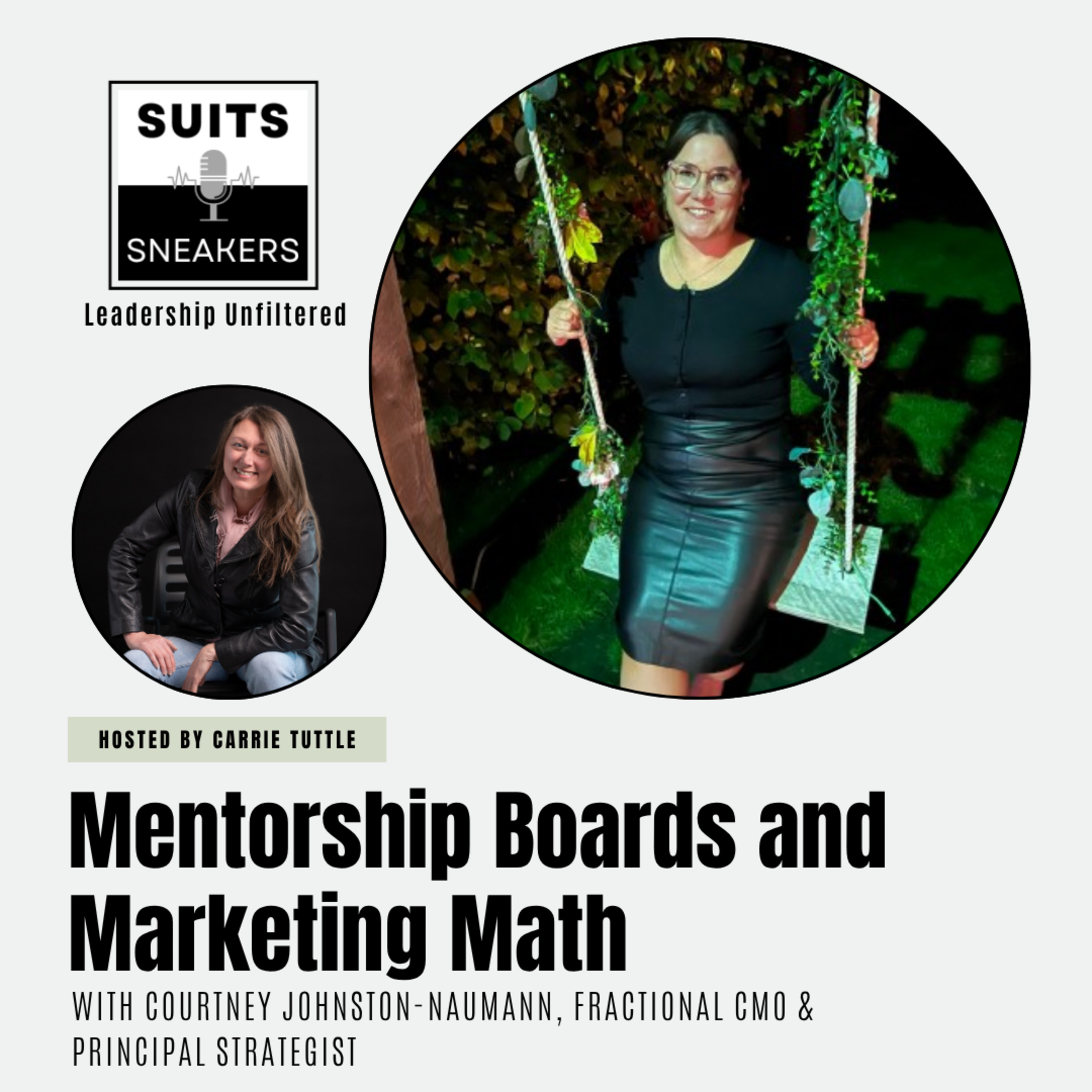
Mentorship Boards and Marketing Math with Courtney Johnston-Naumann
Jun 200:31:04Tap to summarizeHost: Carrie Tuttle Guest: Courtney Johnston-NaumannCan you name someone who has mentored 10 or more people? I can. Courtney Johnston-Naumann is the founder of Weave Strategy and a fractional chief marketing officer (CMO) who has led brand and marketing teams at Edmonton Economic Development, Service Credit Union, and CashCo Financial. She helps organizations move from scattered marketing efforts to focused, purpose-driven growth.Some leaders treat marketing as an art form. Courtney has spent her career proving it's also math. Courtney explains how she built a bridge between marketing and sales, why she says every strategy starts with intention before it touches a spreadsheet, and what it really takes to lead a team through a founder-to-management transition. The juiciest part of this episode is when Courtney shares her approach to mentorship, including the concept of a personal mentorship board. She sets the expectation that mentees own the relationship before they start and believes in having a framework. You’ll walk away with a clearer picture of how to lead people through ambiguity without losing them, and why the words you choose at work matter more than you think.QUOTE-WORTHY MOMENTS“I find mentees who want to work harder than I'm going to work for them.““There’s a lot of math in marketing. When you really look at your pipeline and your growth objectives, you have to reverse engineer it and then connect it with what’s the story we’re trying to tell.”“If you’re on my team, I will train you to take my job. Because at some point that’s going to happen and that’s okay.”EPISODE HIGHLIGHTSMarketing is both head and heart. Strategy starts with intention, then reverse-engineers tometrics.Build a strong sales–marketing partnership to align on shared organizational goals.“Words matter” and miscommunication often happens when we assume others share our definitions.Create a personal mentorship board: peers, seniors, experts, and people younger than you all have a role.How Courtney structures mentorship relationships: ground rules, a starting package, and the expectation that mentees own the pace.Trust and know how much “gray” each team member can handle.LINKS FROM EPISODECourtney Johnston-Naumann on LinkedIn https://www.linkedin.com/in/cjohnstonnaumann/Brené Brown — brenebrown.com----------Like What You Heard? Don’t forget to subscribe or follow uson YouTube or your favorite podcast service, so you never miss an episode!Want to be an expert guest? APPLY HERE
Transcribe →
Building Your Dream Team with Rebecca Wood
May 1900:34:57Tap to summarizeHost: Carrie Tuttle Guest: Rebecca WoodMost leaders are handed the keys to their first team without a roadmap. Rebecca Wood has been there. She is a leader with over 25 years of experience as a former National Director of Sales and a Director transforming membership models at the Calgary Chamber of Commerce. Now, the founder of Romeo Whiskey Consulting, Rebecca has built teams from scratch and coached executives navigating the real loneliness that comes with senior leadership.She joins Carrie to talk about what it takes to build a dream team. They dig into the key ingredients, like trust, communication, clarity, mindset, and the courage to have hard conversations before things fall apart.Rebecca shares a practical approach to using communication tools like DISC to help leaders adapt how they deliver messages, and she's candid about the moments her own high-D drive got in the way of the very results she was chasing.Whether you're stepping into your first people leadership role or a seasoned leader who has lost momentum with your team, this conversation offers real frameworks, honest stories, and a grounded reminder that you don't have to figure it all out alone.QUOTE-WORTHY MOMENTS"It's not about you and succeeding. You now have to get that team to where you need them to be. "“I don't need all the credit. I want other people to be able to step up into their own and have the confidence to make the decisions they need to make.”"Be vulnerable and get some support, because you don't have to do it alone. And it can be very lonely."EPISODE HIGHLIGHTSTrust is the foundation. Without it, everything stays surface level.Knowing your own communication style is the first step to adapting it for the people around you.Clarity on goals and alignment on direction are what keep a team rowing the same way.A quarterly action plan only works if the team actually refers back to it.Hire for mindset and attitude — skills can be taught, but mindset is harder to shift.Have the hard conversation early. Letting it build is harder on everyone.Momentum comes from investing in people, celebrating milestones, and leading with energy over fear.Self-awareness is the prerequisite to leading others — know your own pace before you set it for your team.You don't have to figure it out alone. A mentor or coach is one of the most effective tools a new leader has.LINKS FROM EPISODERebecca Wood on LinkedIn: https://www.linkedin.com/in/rebeccawoodyycRebecca Wood's website: https://www.romeowhiskey.ca/ Books mentioned:Radical Candor — Kim ScottThe Five Dysfunctions of a Team — Patrick LencioniStart With Why / other titles — Simon SinekExtended DISC — mentioned in episode. See also: Suits & Sneakers Episode with Markku Kauppinen https://open.spotify.com/episode/0ZA79RJWfrTZCtROBE7LHw?si=mwmt_9i2SQicxuoA5Ai_ZA----------Like What You Heard? Don't forget to subscribe on YouTube or your favourite podcast service, so you never miss an episode!Want to be an expert guest? APPLY HERE
Transcribe →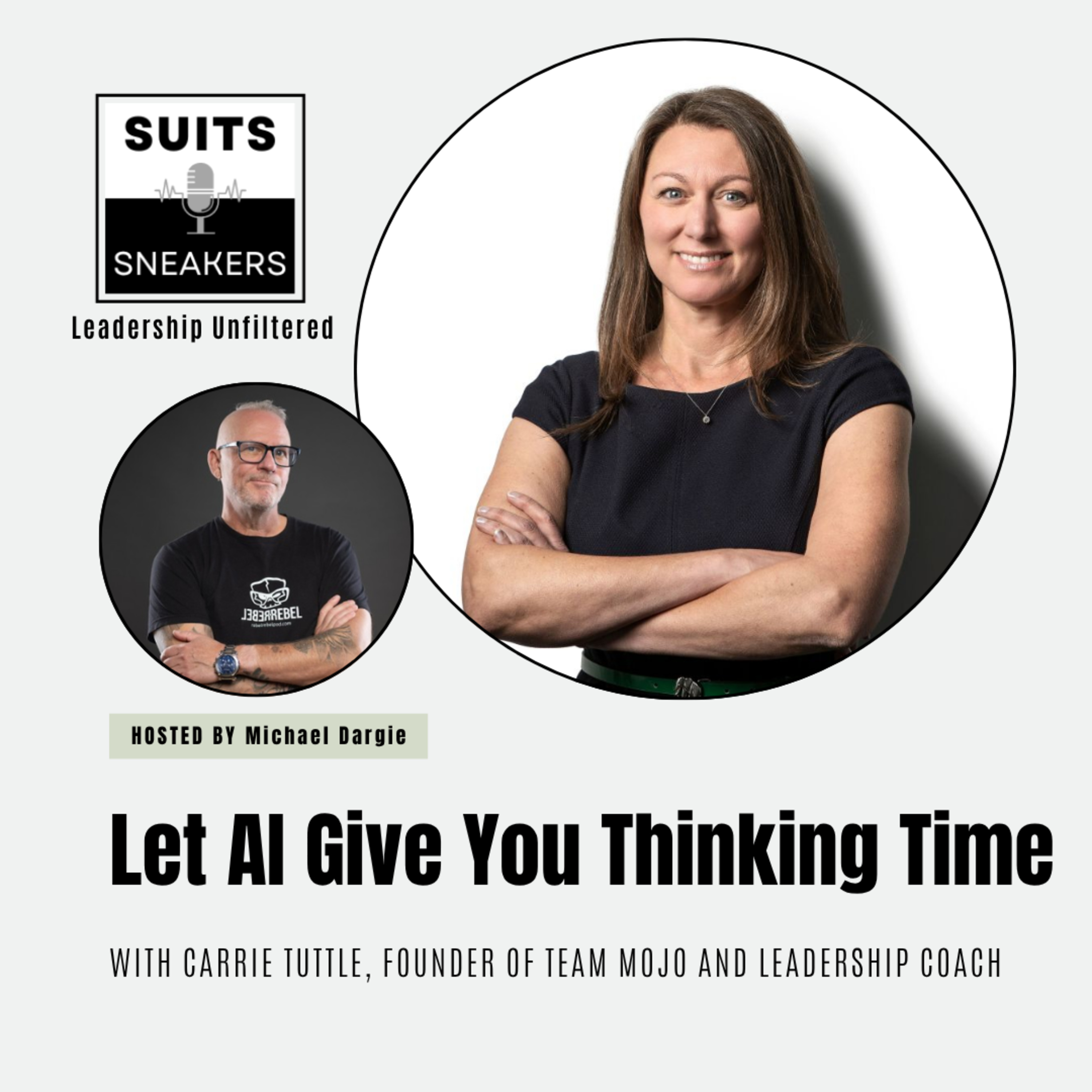
Let AI Give You Thinking Time with Carrie Tuttle
May 500:15:53Tap to summarizeHost: Michael Dargie Guest: Carrie TuttleWhat does AI mean for leaders — and what does it not replace? Carrie Tuttle, founder of Team Mojo, invites Michael Dargie (Make More Creative / RebelRebel podcast for entrepreneurs) to host.We keep this one short and sweet, with Carrie sharing how technical founders are embracing AI, why revenue teams should consider using it to draft messaging sequences and communication templates, and exactly where it falls short. She also talks candidly about her own use of AI in her coaching practice, including the honest admission that first drafts aren’t her strongest suit! With AI changing so fast, it’s hard to keep up. So much so that her business use has changed in the months between recording and publishing this episode. Send her a note if you want to compare notes on what else she is using AI for with revenue teams. Walk away with some ideas of what AI can carry for you and what still needs a human leader in the room, specifically around empathy, challenging blind spots, and keeping your team accountable.Listen up for when Carrie reframes the AI speed conversation entirely and makes a case for humans to slow down and think. Enjoy!P.S. Check out similar topics, like “Data Therapy First, Then AI with Ian Tell” and “Succeed at Recruiting in an AI World with Serge Boudreau”.QUOTE-WORTHY MOMENTS:“What if we framed it as: let’s let AI go do all those repetitive things so that we can take a step back and have some thinking time to do creative work?” "Having AI say ‘great job’ is different than having another human say, I really like what you did there, and here’s why.”"Learn everything you can about how AI works now, because now is the foundation for the future."EPISODE HIGHLIGHTSTechnical founders are broadly embracing AI, some dedicating full resources to governance and implementation.AI gets you 85% of the way there, but a human still needs to review it.AI augments coaching; it does not replace the human relationship.Leaders still need humans for genuine empathy, real feedback, and real accountability.AI is a strong starting point for revenue team communication templates and outreach sequences.Building AI literacy now makes future adaptation easier.Sales and marketing team misalignment is an underestimated gap.LINKS FROM EPISODECarrie Tuttle on LinkedIn: https://www.linkedin.com/in/1carrietuttle/ Team Mojo website: https://www.teammojo.ca/ Instagram: https://www.instagram.com/carrieatuttle/ YouTube: https://www.youtube.com/@teammojo_ca FREE Ultimate Delegation Playbook: https://lp.teammojo.ca/ultimate-delegation-playbook Michael Dargie website: https://makemorecreative.com/ The RebelRebel Podcast : https://rebelrebelpodcast.com/----------Like What You Heard? Don’t forget to subscribe on YouTube or your favourite podcast service, so you never miss an episode!Want to be an expert guest? APPLY HERE
Transcribe →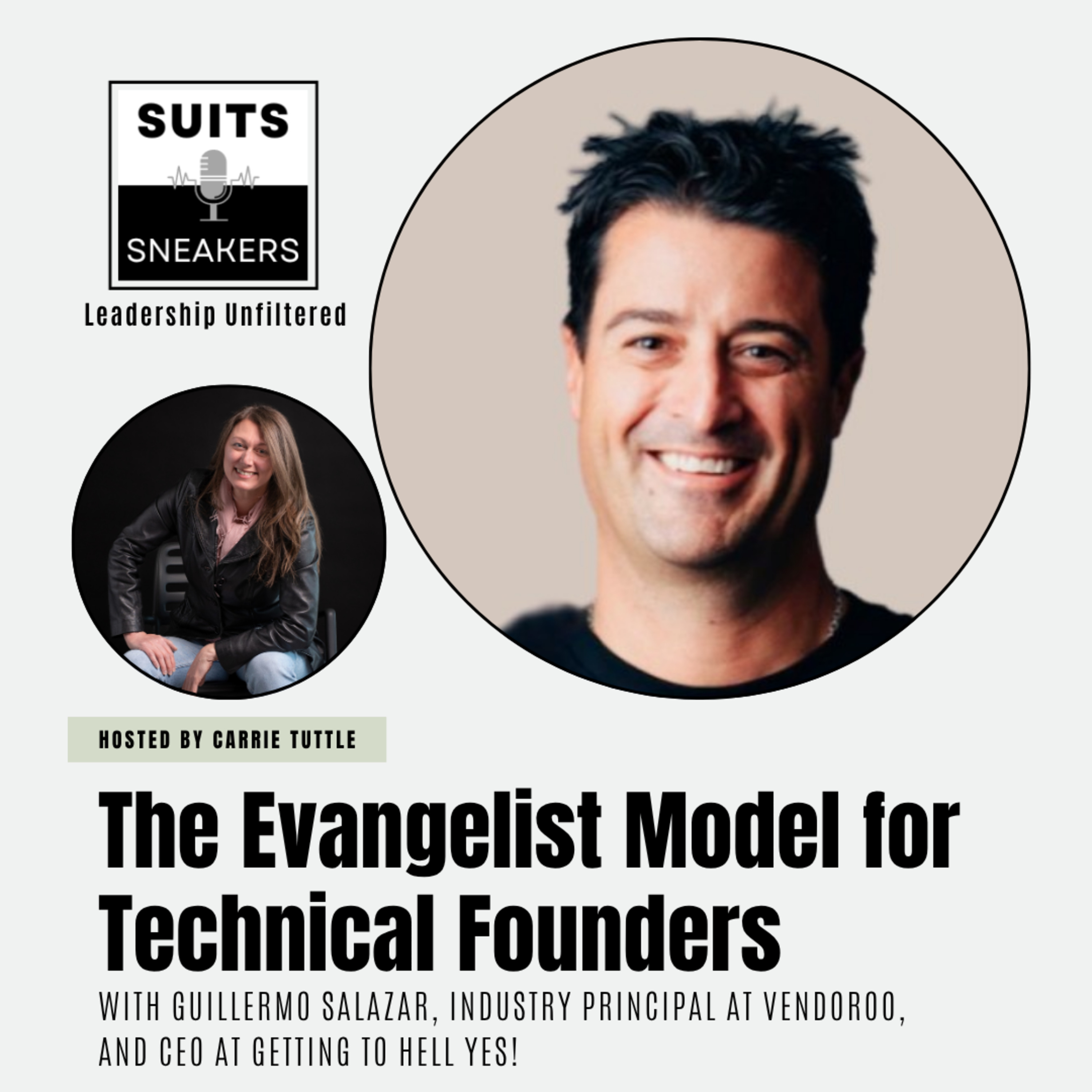
The Evangelist Model for Technical Founders with Guillermo Salazar
Apr 2100:31:55Tap to summarizeHost: Carrie Tuttle Guest: Guillermo SalazarCarrie sits down with Guillermo Salazar, Industry Principal at Vendoroo, an agentic AI maintenance coordinator for property management. He’s the former CEO of IrisCX, and a four-time founder with three exits. He's also the host of the LinkedIn Live show Getting to Hell Yes!In this episode, Guillermo unpacks what he's learned growing three companies from $0 to $2MM+ and why those wins all share the same engine. He explains the four-point framework he uses to cut through noisy ideal-customer profiles, and why technical founders unintentionally hold their teams back when talking about technology instead of the buyer's problem. He also shares the prioritization rubric he runs teams on.You might appreciate when Guillermo gets candid about his own leadership edges. He admits he doesn't have it all figured out, and talks about why he pursues the discomfort of growth on purpose. Listen for the moment when Guillermo admits he'll create chaos on purpose when things get too repetitive and why that's actually a leadership asset when you know how to hand off.Whether you're a first-time founder or a leader trying to get your team pointed in the same direction, this episode has gold to get you thinking about revenue, scale and aligning on key priorities.QUOTE-WORTHY MOMENTS:“Listening is the plan. Not having the answers is okay.”“I’m constantly pursuing the discomfort of growth.”“Listen to the market, listen to your customers, and they will pull you to where they want to go next.”EPISODE HIGHLIGHTSEvangelist customers compound growth in a way ad spend can’t match.Pull-based go-to-market makes each new customer easier to acquire than the last.Technical founders often hold teams back by emphasizing the solution over the buyer’s problem.A sharp ICP comes down to four points: the problem, why it’s unavoidable, the options considered, and their limitations.Clear expectations are the prerequisite to coaching andfeedback.Prioritize work by stopping what hurts you, staying good enough at table stakes, and be best-in-the-world at what makes you different.Start / stop / continue is a simple cadence for cascadingpriorities without micromanaging.Saying “grateful” with intention lands differently than acasual “thank you”, especially on remote teams.Listening is the plan. Not having the answers is okay.Founders who listen let the market pull them to the realopportunity.LINKS FROM EPISODEGuillermo Salazar on LinkedIn: https://www.linkedin.com/in/1guillermosalazar/Getting to Hell Yes! (LinkedIn Live show): https://www.linkedin.com/events/7440854704177397760/Vendoroo: https://venderoo.ai/Resources mentioned:Reframe newsletter and The Power of Pull — Rob Snyder (forthcoming, July 2026)Dan Sullivan — Strategic CoachGino Wickman — Traction / EOSAndreessen Horowitz (a16z) newsletter----------Like What You Heard?Don't forget to subscribe or follow us on YouTube or your favorite podcast service, so you never miss an episode!Want to be an expert guest? APPLY HERE
Transcribe →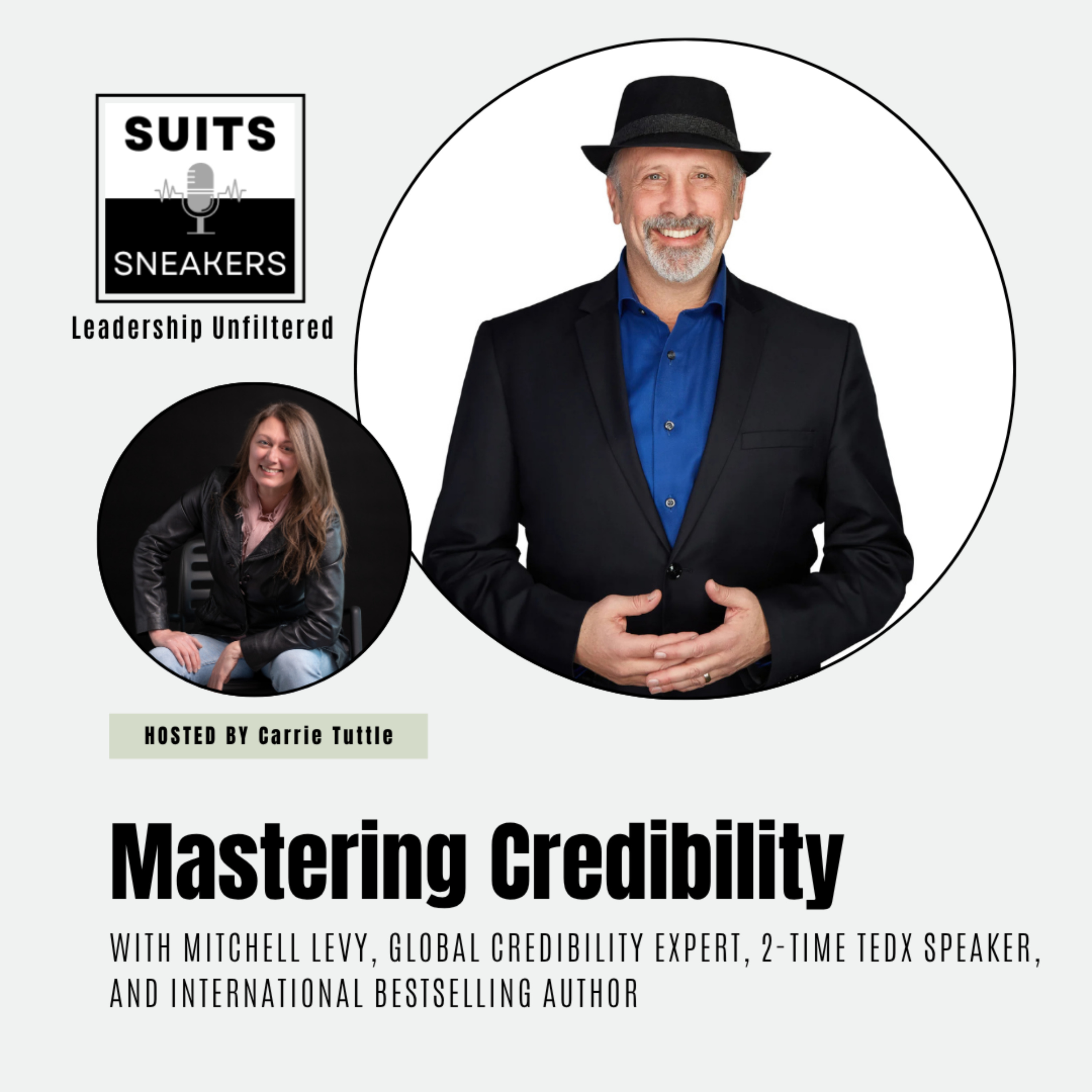
Mastering Credibility with Mitchell Levy
Apr 700:45:30Tap to summarizeHost: Carrie TuttleGuest: Mitchell LevyCarrie sits down with Mitchell Levy, global credibility expert, two-time TEDx speaker, and international bestselling author of over 60 books, to explore one of the most overlooked leadership advantages: credibility. With experience building 20 companies and publishing over 750 books, he brings a unique perspective on what it truly means to be seen, heard, and trusted as a leader. From his new book “Executive Abundance”, Mitchell shares what it means to build executive abundance with five stakeholder groups. In this episode, Mitchell breaks down how credibility isn’t just about reputation—it’s about clarity, alignment, and consistently serving others. He explains how leaders can articulate their value, build stronger stakeholder relationships, and create meaningful impact through authentic communication. In fact, he demonstrated how quickly he does it. It’s simple, not easy. You’ll hear why many leaders struggle to define their message, and how becoming “credible” unlocks opportunities, influence, and growth. QUOTE-WORTHY MOMENTS:“Credibility is the quality in which you're trusted and liked.”“Executives are being evaluated against… Will they be good tomorrow when the company is X percentage bigger?”“Being seen and heard starts with understanding how you serve others, not just what you do.”EPISODE HIGHLIGHTSWhat credibility actually means—and why most leaders misunderstand itHow lack of clarity impacts leadership effectiveness and team trustThe connection between credibility and thought leadershipWhy leaders struggle to articulate their valueBeing seen and heard starts with understanding how you serve others, not just what you doHow to position yourself so others can easily understand and trust you Authenticity builds long-term influenceCredible leaders strengthen relationships with stakeholdersPractical ways to become more visible and trusted in your industryLINKS FROM EPISODEMitchell Levy on LinkedIn: https://www.linkedin.com/in/mitchelllevy/Website: https://mitchelllevy.com/Facebook https://www.facebook.com/happyabout X https://twitter.com/happyaboutInstagram https://www.instagram.com/mitchell.levy YouTube https://www.youtube.com/c/CredibilityNationResources:Executive Abundance, Mitchell Levy https://amazon.com/execabundanceCredibility Nation, Mitchell Levy https://getbook.at/CredibilityNationTEDx “BEing Seen and BEing Heard as a Thought Leader”: https://AHA.pub/TEDtalk ----------Tell us a topic you’d like to hear more about in the comments. Want to be an expert guest? APPLY HERE Follow us on socials:LinkedIn: https://www.linkedin.com/company/teammojo/Facebook: https://www.facebook.com/teammojo.caInstagram: https://www.linkedin.com/company/teammojo/Website: https://www.teammojo.ca/
Transcribe →
Don’t Lose Your Sh*t at Work with Karen Thrall
Mar 2400:43:09Tap to summarizeHost: Carrie TuttleGuest: Karen ThrallKaren Thrall, executive coach, culture strategist, and author of Don’t Lose Your Sh*t at Work, joins Carrie for a candid conversation about the role of emotions in leadership, especially anger.Yes, that’s right. Anger. As a former Vice President of Sales, Operations, and Culture, she delivered double-digit annual revenue growth while building high-performing, value-based teams. With over 20 years of executive experience across industries like biotech, consumer goods, and life sciences, Karen has coached more than 150 leaders and worked with over 60 organizations, including Thermo Fisher Scientific, John Fluevog Shoes, Blinds Galore and Maraval Life Sciences. In this episode, she shares how unmanaged emotions can quietly erode trust, relationships, and leadership effectiveness. She also discusses how learning to process and communicate emotions can become a powerful leadership advantage.Karen opens up about her own journey with anger, the neuroscience behind emotional reactions, and the frameworks she uses to help leaders turn emotional triggers into clarity, confidence, and better decision-making.This episode is a must-listen for leaders who want to strengthen their voice, build trust, and lead with both humanity and intention.QUOTE-WORTHY MOMENTS:“The energy will always precede anything you say.”“Anger is wisdom—it’s just messy wisdom.” "Think before you speak. It’s a game changer."EPISODE HIGHLIGHTSAnger can be seen as a form of wisdom that needs to be processed.Trust is a journey that team members must earn first.The importance of rehearsing conversations to improve leadership communication. Practical tools for managing emotions in real-time, especially in high-stakes meetings.Silence in a team can be detrimental to communication and trust.Hidden ways remote work can erode trust with private chats, disengagement, lack of presence. Energy and tone in communication significantly impact perceptions.Key trust-building questions leaders can use to assess and strengthen team dynamics.Celebrating accomplishments is vital for personal motivation and growth.Understanding team dynamics is crucial for effective leadership.LINKS FROM EPISODEKaren Thrall on LinkedIn: https://www.linkedin.com/in/karenthrallinc/Website: https://www.karenthrall.com/ Instagram: https://www.instagram.com/karenthrallinc/YouTube: https://www.youtube.com/@karenthrallincThreads: https://www.threads.com/karenthrallincX: https://www.x.com/karenthrallincBluesky: https://bsky.app/profile/karenthrall.bsky.socialBooks mentioned:Don’t Lose Your Sh*t at Work, Karen ThrallOutsmarting Anger, Joseph Shrand, MDGive and Take: Why Helping Others Drives Our Success, Adam Grant----------Tell us a topic you’d like to hear more about in the comments. Want to be an expert guest? APPLY HERE
Transcribe →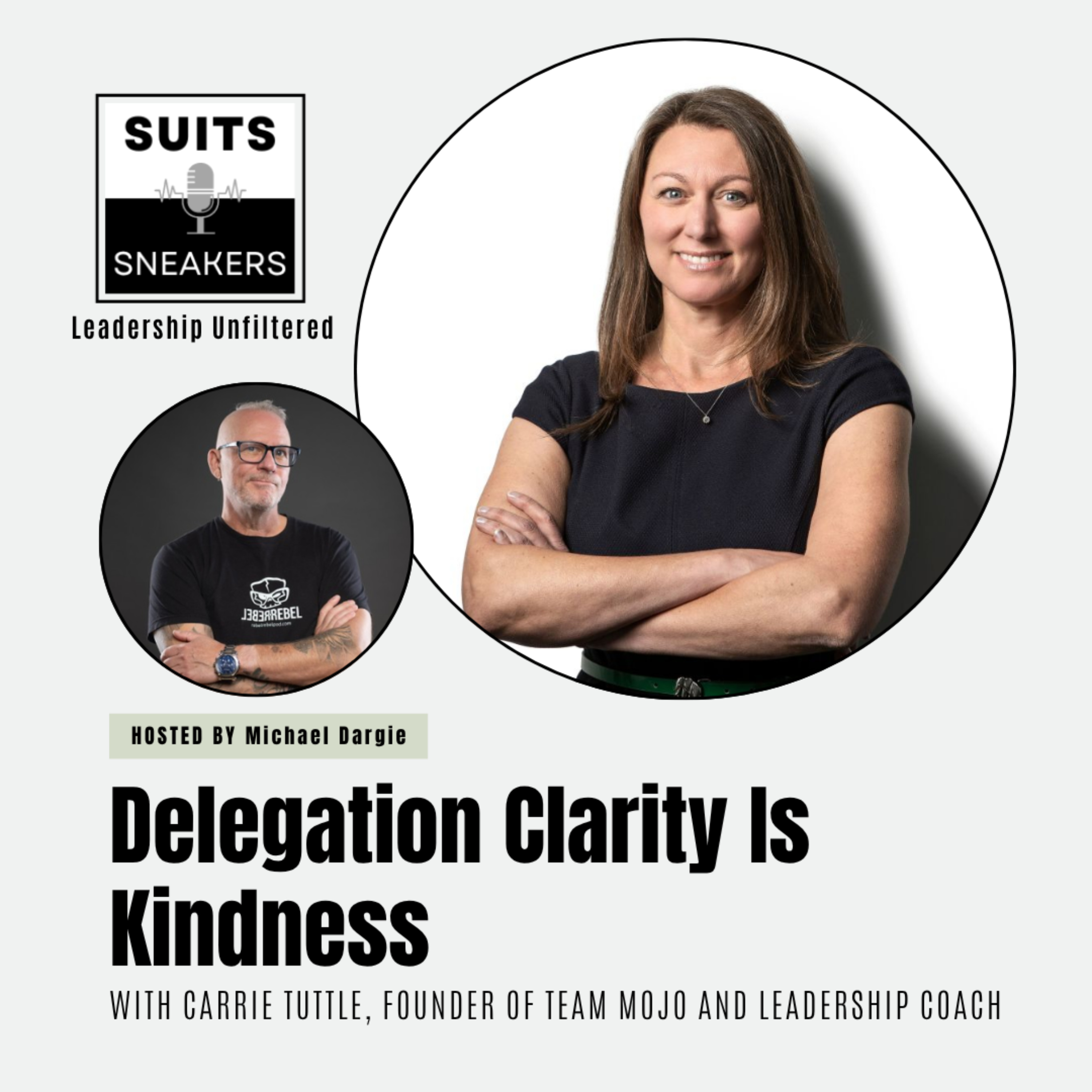
Delegation Clarity Is Kindness with Carrie Tuttle
Mar 1100:20:56Tap to summarizeHost: Michael Dargie Guest: Carrie TuttleIn this season 4 opener, Carrie Tuttle takes the hot seat andbecomes the guest. Founder of Team Mojo, leadership coach for technical founders building revenue teams, Carrie sits down with guest host, Michael Dargie, to reintroduce herself and discuss a few topics on leadership, coaching and delegation. Carrie shares what’s behind her work coaching technical founders who are building revenue teams while learning how to lead people at the same time.Together, they explore the common challenges founders face when scaling their businesses—from letting go of sales responsibilities to clearly communicating vision and expectations to their teams. Carrie also explains her coaching approach, why leadership clarity matters more than perfection, and how founders can move from doing everything themselves to building empowered teams.The conversation touches on the personal side of leadership: learning to ask better questions, giving honest feedback, and when to have those tough conversations. Carrie also shares a free workbook to guide effective delegation. (Link below in show notes!) QUOTE-WORTHY MOMENTS:"Set clear expectations and let them teach you back."“I've learned, I really need to have the right questions, not the right answers.”"Seeing founders find their mojo again excites me."EPISODE HIGHLIGHTSTranslating vision into direction for a teamPractical approach to delegating starts with Tell, Show, Teach-back.Establish clear guidelines for messaging and behaviorSales and marketing outcomes can take months to materializeLINKS FROM EPISODECarrie Tuttle on LinkedIn: https://www.linkedin.com/in/1carrietuttle/Team Mojo website: https://www.teammojo.ca/ Instagram: https://www.instagram.com/carrieatuttle/YouTube: https://www.youtube.com/@teammojo_caMichael Dargie website: https://makemorecreative.com/Resources:FREE Ultimate Delegation Playbook: https://lp.teammojo.ca/ultimate-delegation-playbook----------Tell us a topic you’d like to hear more about in the comments. Want to be an expert guest? APPLY HERE
Transcribe →
Lead It Like Lasso with Marnie Stockman and Nick Coniglio
Dec 200:44:17Tap to summarizeHost: Carrie Tuttle Guests: Marnie Stockman & Nick ConiglioWhat happens when a high school math teacher-turned-Ed-Tech leader and an executive programmer join forces to bootstrap a software company based on shared values and a mission to create raving fans? Marnie Stockman and Nick Coniglio built, scaled up, and sold their successful software company for 8-figures in just three years — then turned that lived experience into the best-selling book, Lead It Like Lasso and the follow‑up, The Business of You. Just like Ted Lasso’s Diamond Dogs, they encourage leaders (and young people) to intentionally build a personal board of advisors: a mentor, a challenger who tells you the hard truths, and a connector who opens doors.Marnie and Nick talk about how The Business of You treats you as an organization: you’re the CEO (vision), head of HR (people), head of marketing (how you tell your story), head of learning and development (building skills that create value), and CFO of your time and energy, not just money.Not only did Marnie and Nick share stories of what challenged their leadership along the way of scaling their company to 8-figures, but they are a lot of fun! This episode is a conversation for every modern leader who suspects that values and culture, are not just strategy, but the real competitive advantage for you and your team to succeed!QUOTE-WORTHY MOMENTS:“Leadership is life. It happens in the boardroom, locker room, classroom, and living room.”“There’s no one right way to lead. The most important thing you can do is identify what makes you tick, your core values and then, embrace and build on those.”EPISODE HIGHLIGHTS:You are the CEO of yourself, in charge of your own well-being.The most successful teams build and establish trust.Lead with your values and the team will buy into that and follow.Beware if there is a disconnect between people’s core values and what the company is actually doing.Transparency in business turns challenges into opportunities.Servant leaders are typically so busy taking care of othersthat they neglect to take care of themselves.Creating a personal operating system enhances communication.Celebrating company wins is important for individual and team morale.Defining what success looks like is crucial for progress.LINKS FROM EPISODE:Connect with Marnie on LinkedIn: https://www.linkedin.com/in/marniestockman/Connect with Nick on LinkedIn: https://www.linkedin.com/in/nick-coniglio-5b62153/Lead It Like Lasso website: https://leaditlikelasso.comThe Business Of You website: https://www.thebusinessofyou.ai/ Resources mentioned: Book: Raving Fans by Ken Blanchard https://a.co/d/doyLcZr Book: 10X is Easier Than 2X by Dan Sullivan and Dr. Benjamin Hardy https://a.co/d/6uLWLqW ----------Like What You Heard?Don’t forget to subscribe or follow us on YouTube or your favorite podcast service, so you never miss an episode!Tell us a leadership curveball you’d like to hear more about in the comments. Want to be an expert guest? APPLY HERE
Transcribe →