
Podcast
Supervision Simplified
Hosted by Supervision Simplified Podcast · EN
Welcome to Supervision Simplified, the podcast for mental health clinical supervisors doing the real work—in the real world.
Hosted by nationally credentialed clinical supervisor and leadership consultant Dr. Amy Parks, this show explores the messy, meaningful, and transformative world of clinical supervision. Whether you're guiding new clinicians, navigating complex cases, or just trying to keep your paperwork organized, you'll find practical tools, relatable stories, and candid conversations that actually help.
Dr. Parks has supervised hundreds of interns and pre-licensed clinicians, trained supervisors across the country, and built a thriving group practice from the ground up. She’s on a mission to educate and elevate counselors, social workers, and psychologists—empowering them to serve their clients with integrity, clarity, and confidence.
And yes—she breaks down supervision in a way even your grandma could understand.
If you're ready to stop checking boxes and start creating transformational supervision experiences, Supervision Simplified is your new home.
Let’s make supervision simpler, smarter, and more human—together.
30episodes
Episodes
Newest firstAll episodes
How to Say No Without Feeling Guilty
1w ago00:26:43Tap to summarizeSaying no sounds simple—until you're sitting across from a client, responding to a colleague, talking with a supervisor, or trying not to disappoint someone who needs you.In this episode of Supervision Simplified, Dr. Amy Parks explores why so many mental health professionals struggle with boundaries—not because they don't care, but because they were never taught how to hold them under real-world pressure.You'll learn:Why guilt is often the biggest barrier to healthy boundaries.The four places clinicians most commonly struggle to say no.How supervisors can model healthy boundaries instead of unintentionally reinforcing burnout.Practical strategies you can begin using immediately.Whether you're a therapist, counselor, psychologist, social worker, supervisor, or other mental health professional, this episode will help you build healthier boundaries, reduce burnout, and care for others without sacrificing yourself.
Transcribe →
The Leadership Blind Spot Most Supervisors Never See
Jul 800:39:43Tap to summarizeMost supervisors don't struggle because they lack knowledge—they struggle because they don't always recognize their own blind spots.In this episode of Supervision Simplified, Dr. Amy Parks is joined by Julia Nepini, LICSW, to explore how self-awareness influences leadership, communication, conflict, and clinical supervision. Using the Enneagram as a practical framework, they discuss how personality patterns shape the way we lead, give feedback, navigate difficult conversations, and support clinicians with different needs.Whether you're an experienced supervisor, a practice owner, or stepping into leadership for the first time, this conversation offers practical insights to help you become a more intentional and effective leader.In this episode, you'll learn:Why self-awareness is one of a supervisor's greatest leadership toolsHow personality influences communication and conflictCommon leadership blind spots that affect supervisionHow the Enneagram can strengthen your supervision and leadership stylePractical ways to better support clinicians with different personalitiesIf you've ever wondered why certain leadership challenges keep repeating—or why some conversations seem harder than they should—this episode will help you see your leadership through a new lens.Originally recorded in 2025, this conversation remains one of our most valuable discussions on self-awareness and clinical leadership.
Transcribe →
Why Good Clinicians Struggle as Supervisors with Sharon Greene, LCSW
Jun 2400:39:59Tap to summarizeMany clinicians assume that being a great therapist naturally translates into being a great clinical supervisor. But supervision requires an entirely different set of skills.In this episode of Supervision Simplified, Dr. Amy Parks is joined by Sharon Greene, LCSW, clinical supervisor, educator, and founder of Mental Health CE Hub, for a conversation about what separates effective supervisors from effective clinicians.Together they discuss competency-based supervision, developmental supervision models, constructive feedback, ethics, documentation, burnout prevention, and the practical tools supervisors can use to better support the next generation of mental health professionals.Whether you're a new supervisor, seasoned clinical leader, or therapist considering a supervisory role, this episode offers actionable insights you can apply immediately.Topics discussed:• Why being a good clinician doesn't automatically make you a good supervisor• Constructive feedback that supervisees actually appreciate• Competency-based supervision and developmental models• Documentation, ethics, and risk mitigation• Building confidence as a clinical supervisor• The future of supervisor trainingConnect with Sharon Greene:🌐 https://www.sharongreenelcsw.com🙏 https://www.mentalhealthcehub.comSubscribe to Supervision Simplified for practical conversations on clinical supervision, leadership, ethics, and professional development.
Transcribe →
Why 57% of Future Therapists Never Get Licensed
Jun 1000:50:05Tap to summarizeWhat if one of the biggest problems facing mental health care isn't a therapist shortage at all?What if we're losing future therapists before they ever get licensed?In this episode of Supervision Simplified, Dr. Amy Parks welcomes Rachel Ledbetter, CEO and Co-Founder of Motivo, for a candid conversation about clinical supervision, workforce retention, and the hidden barriers preventing thousands of aspiring clinicians from entering the profession.Rachel shares her own journey to licensure, the challenges of finding supervision in rural communities, and the startling reality that 57% of counseling and social work graduates never complete the licensure process.Together, Amy and Rachel discuss:• Why supervision is a workforce issue, not just a training issue• The connection between supervision and therapist retention• Burnout among early-career clinicians• Why new therapists often work with the highest-acuity populations• The impact of unpaid internships and financial barriers• Virtual supervision and expanding access to care• AI, technology, and the future of supervision• Building stronger support systems for clinicians throughout their careersWhether you're a therapist, counselor, social worker, supervisor, clinical director, educator, practice owner, or graduate student, this episode offers valuable insights into the future of the mental health profession.Guest:Rachel LedbetterCEO & Co-Founder, Motivohttps://motivohealth.comConnect with Supervision Simplified:https://www.supervisionsimplified.comThe revolution starts with you.
Transcribe →
No One Says This: Real Questions Every Clinician Quietly Wonders About
May 2700:29:30Tap to summarizeWhat questions do mental health professionals quietly wonder about—but rarely ask out loud?In this Q&A episode of Supervision Simplified, Dr. Amy Parks answers some of the most common questions she hears from clinicians, supervisors, and mental health leaders across the field.From figuring out whether you’re ready to become a supervisor… to handling imposter syndrome… to understanding how supervision can reduce burnout and strengthen ethical decision-making… this episode is a real-world conversation about the challenges many clinicians carry quietly behind the scenes.Inside this episode:• How to know if you’re ready to become a supervisor• What to look for in a supervisor• What to do when supervisees bring “nothing” to supervision• Why psychological safety matters in clinical supervision• Common mistakes new supervisors make• Managing imposter syndrome as a supervisor• How supervision can help prevent burnout• What ethical supervision really looks like• Why clinical courage matters more than perfection• Where to connect with supervisors, supervisees, and ongoing trainingWhether you’re a supervisor, therapist, counselor, social worker, or mental health leader, this episode offers honest conversation, practical insight, and encouragement for the work you’re doing every day.Subscribe to Supervision Simplified and join us as we continue elevating the conversation around clinical supervision, leadership, and better mental health care.
Transcribe →
Your Supervisees Are Absorbing Your Nervous System
May 1300:32:25Tap to summarizeYour supervisees are learning more than interventions, case conceptualization, and clinical skills… they’re learning you.In this episode of Supervision Simplified, Dr. Amy Parks explores one of the most overlooked truths in clinical leadership: your supervisees are constantly absorbing your nervous system, emotional regulation, conflict style, and ability to stay grounded under pressure.Whether you’re a clinical supervisor, therapist, practice owner, educator, or emerging leader in mental health, this conversation will challenge the way you think about influence, emotional safety, and the ripple effect of your leadership.In this episode:✔ Why supervision is never just skill transfer✔ How your nervous system shapes clinical culture✔ The difference between management and true leadership✔ Why emotional safety directly impacts client care✔ How great supervisors model resilience, not perfectionSubscribe for weekly conversations designed to elevate clinical supervision, leadership, and the future of mental health.#SupervisionSimplified #ClinicalSupervision #MentalHealthLeadership #Therapist #Counselor #LPC #LMFT #LCSW #Psychology #Leadership
Transcribe →
Why Clinicians Struggle When They Become Leaders (And No One Trains You for It)
Apr 2900:40:21Tap to summarizeMost clinicians are trained to care for others—but not to lead.So what happens when you step into a leadership role without the tools, training, or support to succeed?In this episode, we explore why so many clinicians feel overwhelmed when they become supervisors, practice owners, or team leaders—and why it’s not a personal failure, but a gap in training.We discuss:• The shift from clinician to leader• Why “just do what I do” isn’t effective leadership• The hidden pressure leaders carry• Burnout vs. moral injury• What clinicians actually need to lead wellIf you’ve ever felt unprepared, uncertain, or stretched thin in a leadership role, this conversation will help you understand why—and what to do next.🎁 We’re also giving away 5 copies of Lisa Duez’s book Leading Without Losing YourselfCheck our social channels to enter.About the Guest:Lisa Duez, LCSW, MPA, is a leadership expert and author of Leading Without Losing Yourself. She helps clinicians and professionals navigate the transition into leadership without burnout, overwhelm, or losing their identity.🌐 Website: https://www.lisaduez.com/
Transcribe →
Why This Is So Hard (And Why Most People Quit) | Part 2
Apr 1500:21:58Tap to summarize“It would be really easy to just quit.”In Part 2 of this conversation, Dr. Amy Parks shares what it actually takes to build something meaningful — especially when it feels hard, unclear, or easier to walk away.From making ethical decisions to refusing to build something at the expense of others, this episode explores the real challenges behind leadership, supervision, and staying committed when things get difficult.Dr. Amy also breaks down why supervisors are often the most unsupported role in the clinical system — despite being responsible for developing the next generation of clinicians.If you’ve ever felt like quitting because something got too hard, this conversation will resonate.This is Part 2 of a two-part episode.Sponsor:Clinical Supervision Directorywww.clinicalsupervisiondirectory.com
Transcribe →
How Dr. Amy Parks Thinks About Therapy, Parents, and Change
Apr 100:20:27Tap to summarizeIn this episode of Supervision Simplified, Dr. Amy Parks pulls back the curtain on how she thinks about therapy, parents, and the role clinicians actually play in change.This is not a tactics episode. It is a perspective shift.Amy shares the experiences that shaped her approach to clinical work, supervision, and leadership, including what she believes most clinicians get wrong about responsibility, why therapy alone often is not enough, and how real change actually happens.This conversation moves beyond surface-level techniques and into the deeper thinking that drives clinical decisions, relationships, and outcomes.If you are a therapist, supervisor, or practice owner, this episode will challenge how you think about your role and the work itself.In this episode, we cover:• Why therapy alone does not create change • The role parents play in the outcome of treatment • What clinicians often misunderstand about responsibility • How Amy developed her approach to supervision and care • The difference between knowing what to do and actually doing itThis is Part 1 of a two-part conversation. In Part 2, we break down how these ideas show up in real-world clinical decisions, supervision challenges, and outcomes.Sponsor Clinical Supervision Directory www.clinicalsupervisiondirectory.com
Transcribe →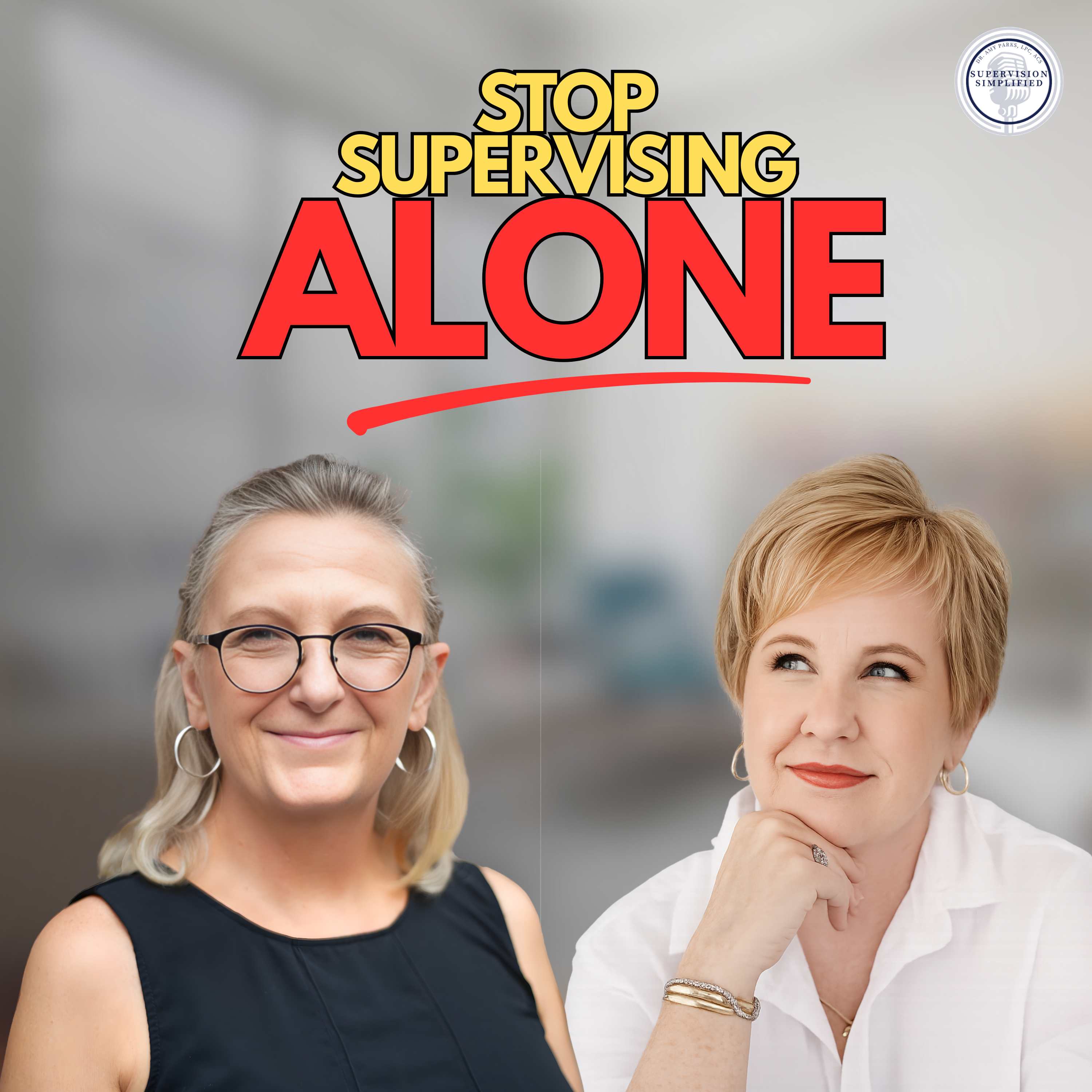
Stop Supervising Alone: Why Isolation Is Holding Your Clinicians Back
Mar 1800:38:06Tap to summarizeSupervision isn’t just about cases—it’s about people. And people don’t grow in isolation.In Episode 56 of Supervision Simplified, Dr. Amy Parks is joined by grief counselor, educator, and supervisor Debi Jenkins Frankle to explore why supervising alone may be limiting your clinicians more than helping them.Debi shares her approach to group supervision, including how connection, support, and real-time feedback shape confident, capable clinicians. From starting supervision with “how’s your heart and soul” to creating environments where clinicians can learn from each other, this conversation reframes supervision as a developmental process—not just a requirement.If you’re a clinical supervisor, practice owner, or stepping into leadership, this episode will challenge your current model and give you a more effective path forward.Connect with Debi Jenkins Frankle:https://www.calabasascounseling.comhttps://www.facebook.com/groups/privatepracticegriefhttps://www.instagram.com/debijenkinsfrankleSponsor:Clinical Supervision Directorywww.clinicalsupervisiondirectory.comNote: This is a previously released episode we’re bringing back because the conversation is just as relevant today—especially for supervisors looking to build stronger, more supported clinicians.
Transcribe →