
Podcast
Supervision Simplified
Hosted by Supervision Simplified Podcast · EN
Welcome to Supervision Simplified, the podcast for mental health clinical supervisors doing the real work—in the real world.
Hosted by nationally credentialed clinical supervisor and leadership consultant Dr. Amy Parks, this show explores the messy, meaningful, and transformative world of clinical supervision. Whether you're guiding new clinicians, navigating complex cases, or just trying to keep your paperwork organized, you'll find practical tools, relatable stories, and candid conversations that actually help.
Dr. Parks has supervised hundreds of interns and pre-licensed clinicians, trained supervisors across the country, and built a thriving group practice from the ground up. She’s on a mission to educate and elevate counselors, social workers, and psychologists—empowering them to serve their clients with integrity, clarity, and confidence.
And yes—she breaks down supervision in a way even your grandma could understand.
If you're ready to stop checking boxes and start creating transformational supervision experiences, Supervision Simplified is your new home.
Let’s make supervision simpler, smarter, and more human—together.
30episodes
Episodes
Newest firstAll episodes
You Probably Have Autistic Clients (Even If You Don’t Realize It)
Mar 400:36:04Tap to summarizeIf you think you don’t have autistic clients in your practice… think again.In this episode of Supervision Simplified, Dr. Amy Parks sits down with Jamie Roberts, LMFT — therapist, author, speaker, and founder of NeuroPebble — to unpack what clinicians often miss about neurodiversity in therapy and supervision.From late diagnoses and masking to the gaps in graduate training, this conversation challenges the idea of a “typical brain” and explores how neuroaffirming practice changes the way we supervise, treat, and support clients.We discuss:• Why most clinicians underestimate how many autistic clients they serve• The difference between neurodiversity as a social model vs. a medical model• What grad school didn’t teach us about autism and ADHD• How supervision can either reinforce or dismantle neuro-normative assumptions• Universal design in supervision and training• Why flexibility — not rigid scripts — creates better cliniciansIf you are a supervisor, supervisee, or practicing therapist, this episode will challenge your assumptions and expand your lens.The legacy of supervision starts here.
Transcribe →
Under Investigation by Blue Cross: Insurance Overreach & Leadership in Mental Health
Feb 1800:34:03Tap to summarizeIn Episode 54 of Supervision Simplified, Dr. Amy Parks speaks with Arizona group practice owner and supervisor Brianna Reinhold about what happens when insurance companies begin reshaping clinical authority, supervision structures, and access to care.After being placed under investigation by Blue Cross, Brianna shares how shifting associate billing policies, supervision restrictions, and audit pressures are impacting rural access, training pipelines, and ethical leadership in private practice. Together, they explore what this moment means for supervisors, practice owners, and the future of mental health care.This conversation goes beyond billing challenges. It asks a bigger question:Who gets to define quality care — clinicians or insurance companies?If you supervise, lead, or work within an insurance-based system, this episode will give you language for what many in the field are feeling — and practical insight into what may come next.Sponsor:Clinical Supervision Directorywww.clinicalsupervisiondirectory.comGuest:Brianna Reinhold, LPCwww.northernlightstherapyaz.com
Transcribe →
Inside the Supervision Summit That Shifted the Field
Feb 400:38:12Tap to summarizeWhat happens when over 1,000 supervisors show up—hungry for better leadership, clearer ethics, and supervision that actually works?Something shifted at this supervision summit—and it wasn’t just the content.From the questions being asked to the conversations happening behind the scenes, it was clear that supervisors are craving something deeper than techniques and checklists. In this episode, Dr. Amy Parks pulls back the curtain and shares what she witnessed firsthand: the themes, tensions, and moments that quietly raised the bar for supervision across the field.You’ll hear Amy’s candid reflections on standout sessions covering:Presence and mindfulness in supervisionNeurodiversity-affirming supervisionRemediation, gatekeeping, and ethical leadershipProfessional identity developmentCulturally responsive supervisionTrauma-informed supervision and burnoutAdvanced clinical thinking and questioningEFT-informed supervision in actionMore importantly, Amy explains why this content landed so strongly, what supervisors are clearly craving right now, and how this summit raised the bar for what supervision education should look like.If you supervise clinicians—or plan to—this episode will help you decide whether the PESI self-study recording is worth your time (spoiler: Amy doesn’t mince words).🎧 Insider perspective. Real supervision leadership. No fluff.👉 Affiliate link to purchase the PESI Clinical Supervision Summit recordings is included in the show notes.Purchasing through this link supports the Clinical Supervision Directory and helps keep high-quality supervision resources accessible.LINK TO PURCHASE SELF STUDY COURSE (LIVE COURSE HAS ENDED) -https://my.pesi.partners/298N36N/2QGWMGX/
Transcribe →
AI in Clinical Supervision: Ethics, Awareness, and Responsibility
Jan 2100:30:14Tap to summarizeArtificial intelligence is already part of clinical supervision, whether we acknowledge it or not. From documentation and treatment planning to reflective practice and supervision prep, AI is shaping how clinicians work and how supervisors guide development.In this episode of Supervision Simplified, Dr. Amy Parks offers a clear, ethical, and human-centered framework for supervising in an AI-influenced landscape. This conversation moves beyond hype and fear to focus on what supervisors actually need: judgment, awareness, and responsibility.Dr. Parks examines emerging research, ethical risk areas, and real-world use cases while emphasizing one essential truth: supervision is not an output skill. It is a relational process designed to shape clinical judgment over time.This episode is for supervisors, educators, and clinicians who want to engage AI thoughtfully without losing the heart of the work.
Transcribe →
Supervision Is Not Management: Building Sustainable Supervision with Gulsah Kemer
Jan 700:37:06Tap to summarizeIn this episode of Supervision Simplified, Dr. Amy Parks is joined by counseling supervision researcher and educator Gulsah Kemer for a thoughtful conversation about what supervision truly is and what it is not.Together, they challenge the idea that supervision is simply a form of management or administrative oversight. Instead, they explore supervision as a relational, reflective, and sustainability-focused practice that supports both supervisors and supervisees over time. Gulsah shares insights from more than a decade of research and teaching in counselor education, including the development of her Cohesive Model of Supervision, a research-informed framework grounded in how experienced supervisors think and make decisions in practice.The conversation addresses why supervisors are often left to develop their identities and styles in isolation, particularly outside of academic settings, and how this lack of support can contribute to burnout, ethical strain, and uncertainty. Dr. Parks and Gulsah discuss the importance of supervisor self-awareness, intentional reflection, and lifelong development, as well as the role supervision plays in gatekeeping, professional identity formation, and client care.This episode is especially relevant for supervisors working with students, licensure-seeking clinicians, and early-career professionals, as well as anyone interested in the future of supervision, counselor education, and sustainable clinical practice.
Transcribe →
Supervision Isn’t About Managing People—It’s About Keeping Them in the Field
Dec 2400:22:07Tap to summarizeSupervision isn’t about managing people. It’s about sustaining them.In this final episode of 2025, Dr. Amy Parks zooms out to take a 30,000-foot look at what sustainability really means in supervision and leadership—and why it matters now more than ever. Drawing from supervision practice, leadership research, neuroscience, and real-world supervision stories, Amy explores how traditional management models fall short in mental health work and how sustainable supervision protects clinicians, supervisors, and the profession itself.This episode unpacks why burnout, ethical drift, and workforce loss are not individual failures—but leadership and systems issues—and how supervision can become the most powerful tool we have for keeping clinicians engaged, ethical, and alive in the work.You’ll hear about nervous system regulation, psychological safety, moral injury, capacity over productivity, and the subtle ways supervision either sustains or silently erodes the people inside our systems.As we head into 2026, this episode offers a grounded, hopeful reframe: sustainability isn’t soft—it’s strategic.Supervision Simplified brings you real conversations with real clinical supervisors navigating the complex, messy, and meaningful world of mental health. Each episode delivers tools, insights, and stories that make supervision a little simpler—because who doesn’t want simpler?Sponsor:Clinical Supervision Directory – www.clinicalsupervisiondirectory.com
Transcribe →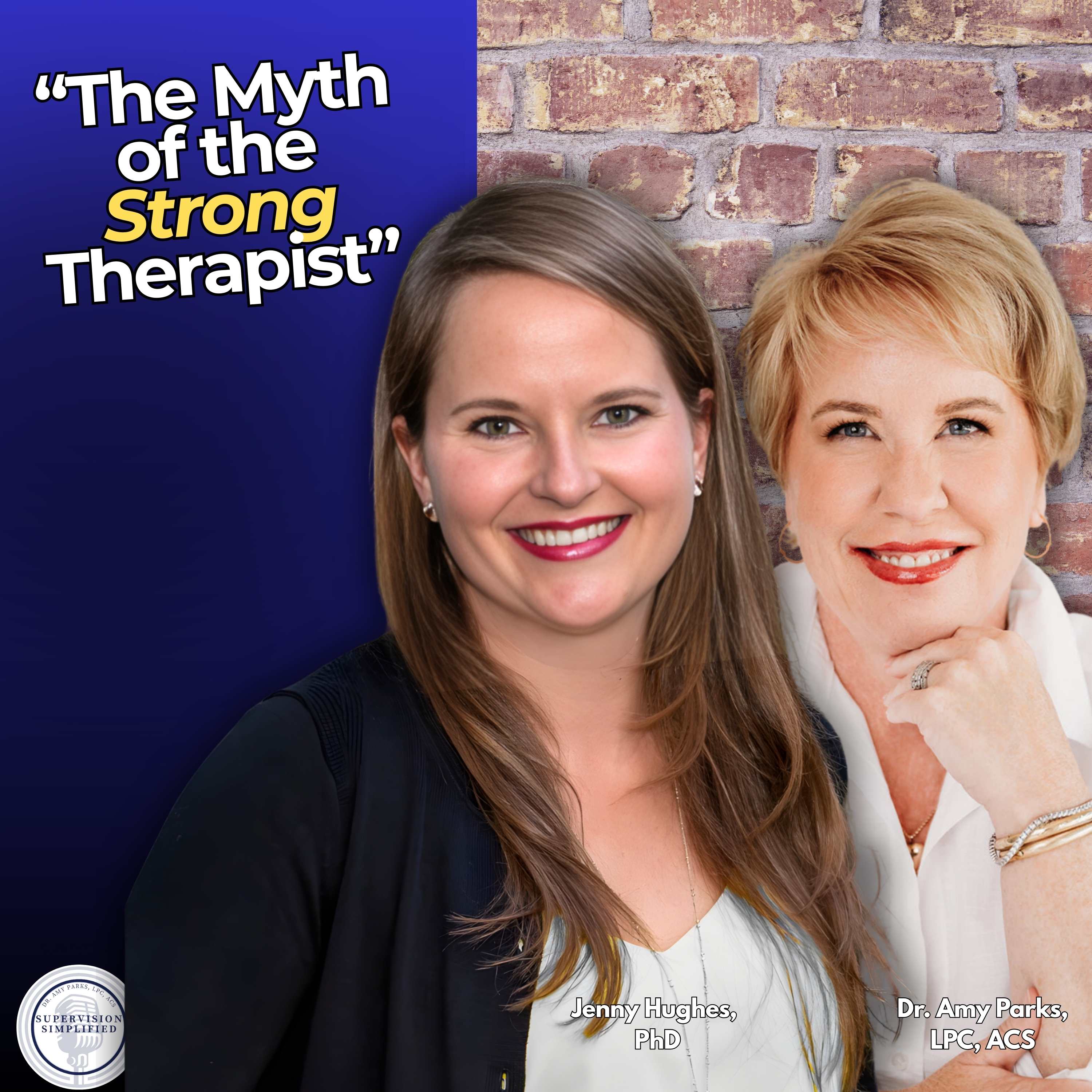
Soft Front, Strong Back: Sustainable Supervision for Trauma Therapists
Dec 1000:33:34Tap to summarizeSupervision Simplified brings you real conversations with real clinical supervisors navigating the complex, messy, and meaningful world of mental health. Each episode delivers tools, insights, and stories that make supervision a little simpler, because who does not want simpler?In this powerful Part two of our confidential grief series, Dr. Amy Parks sits down with trauma psychologist and community builder Dr. Jenny Hughes to talk about what it really means to be humans first and therapists second.Jenny shares the origin story of the Brave Trauma Therapist Collective, born in the middle of COVID when she was supporting frontline workers and suddenly realized no one was holding space for the therapists. Together, Amy and Jenny dig into vicarious trauma, vicarious resilience, and why the “strong therapist” myth is quietly pushing people out of the field.They explore how reflective supervision, genuine community, and the practice of “soft front, strong back” can help therapists metabolize what they hold instead of armoring up and burning out. If you listen to part one with Dr. Khara Croswaite Brindle on confidential grief, this conversation completes the picture and offers very practical paths toward staying in the work sustainably.This 2 part series is for supervisors, leaders, and trauma therapists who want more than survival. It is for those who want to build systems, communities, and supervision spaces that keep people human, connected, and in the field for the long haul.Connect with Dr. Jenny Hughes and Brave Providers:Website: www.braveproviders.comInstagram: @braveprovidersYouTube: @braveprovidersClinical Supervision Directory – www.clinicalsupervisiondirectory.com
Transcribe →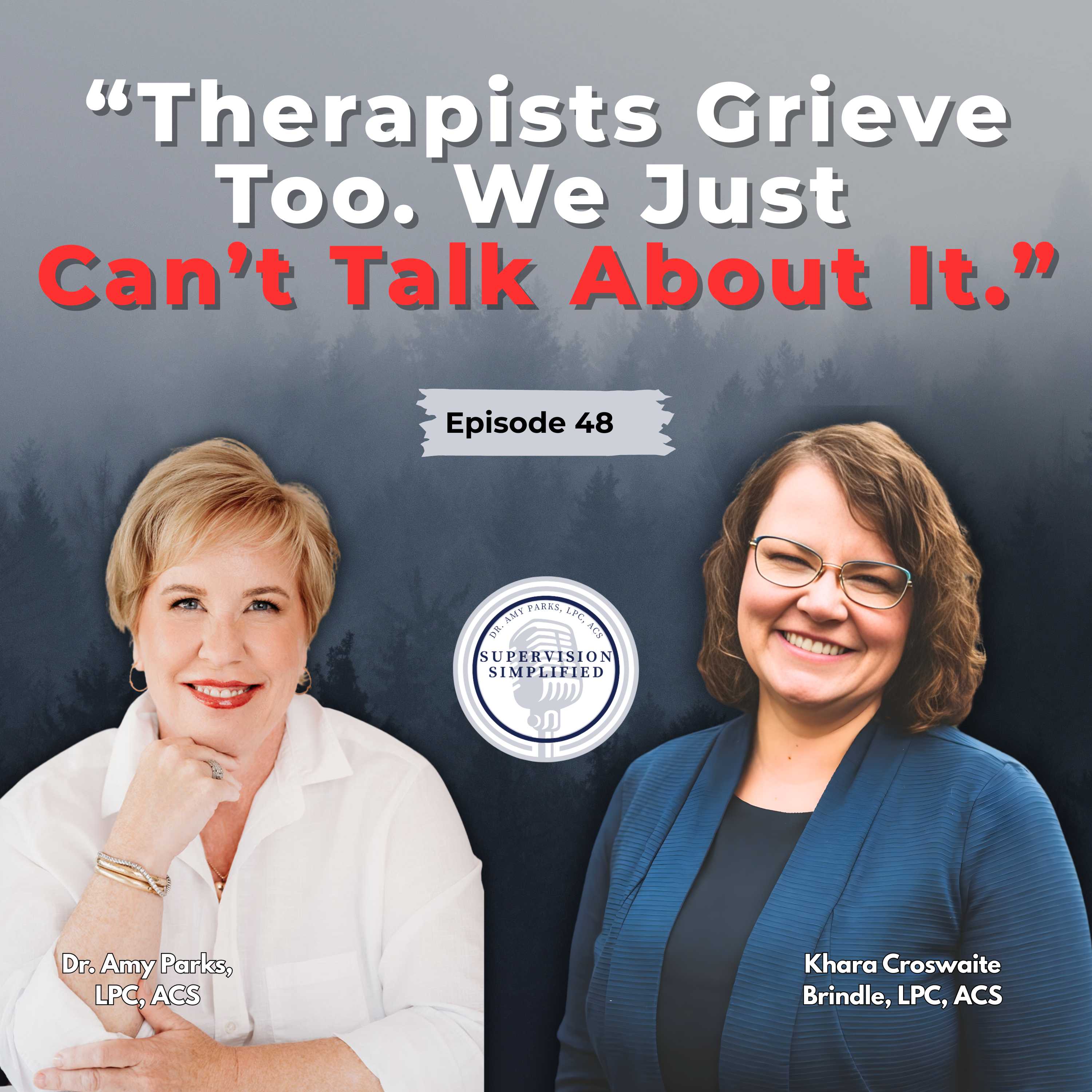
Confidential Grief: The Hidden Trauma Therapists Carry and How Supervisors Can Help
Nov 2600:40:30Tap to summarizeThis is Part 1 of a special two-part series on confidential grief, vicarious trauma, and the resilience it takes to stay human in this field.In this intimate conversation, Dr. Amy Parks sits down with confidential grief specialist Khara Croswaite Brindle to explore the hidden emotional landscape therapists carry — the losses we don’t talk about, the pain we hold in silence, and the career-shaping moments that often go unseen.Khara shares insights from her nationally reaching research on confidential grief and the six major adverse psychological events that impact therapists throughout their careers. Together, Amy and Khara unpack why clinicians often suffer in silence, how shame and responsibility distort the healing process, and what supervisors can do to create safe, human-first spaces for clinicians facing the unimaginable.This episode is a grounding, compassionate reminder that no therapist should face these moments alone — and that supervision, when done well, becomes an anchor for healing, belonging, and post-traumatic growth.Part 2 continues the conversation, moving into vicarious trauma, vicarious resilience, and how supervisors can sustain their teams and themselves.
Transcribe →Leading with Compassion: The Enneagram, Leadership, and Legacy with Julia Nepini
Nov 1200:39:43Tap to summarizeIn this inspiring podcast swap episode, Dr. Amy Parks sits down with Julia Nepini, a powerhouse therapist, supervisor, and leadership consultant whose career blends clinical supervision, consulting, podcasting, and parenting—all with a healthy dose of humor and heart.Together, Amy and Julia dive into the power of the Enneagram as a framework for leadership, self-awareness, and supervision, exploring how understanding personality patterns can strengthen teams, improve relationships, and deepen insight in both clinicians and supervisors.Julia shares her journey from solo practice to leading a 30-person group, discusses the challenges of wearing multiple hats (mom, supervisor, business owner, podcast host, and speaker), and opens up about being recently diagnosed with ADHD—and how it’s reshaped the way she leads and lives.You’ll learn:How to apply the Enneagram in clinical supervision and leadership settingsThe difference between managerial vs. clinical supervisionHow to create self-led leaders and sustainable systems in group practiceWhy leadership isn’t about managing people—it’s about sustaining peopleWhat legacy really means for those shaping the next generation of cliniciansSupervision Simplified brings you real conversations with real supervisors navigating the complex, messy, and meaningful world of mental health. Each episode delivers tools, insights, and stories that make supervision a little simpler—because who doesn’t want simpler?Sponsored by: Clinical Supervision Directory — www.clinicalsupervisiondirectory.com
Transcribe →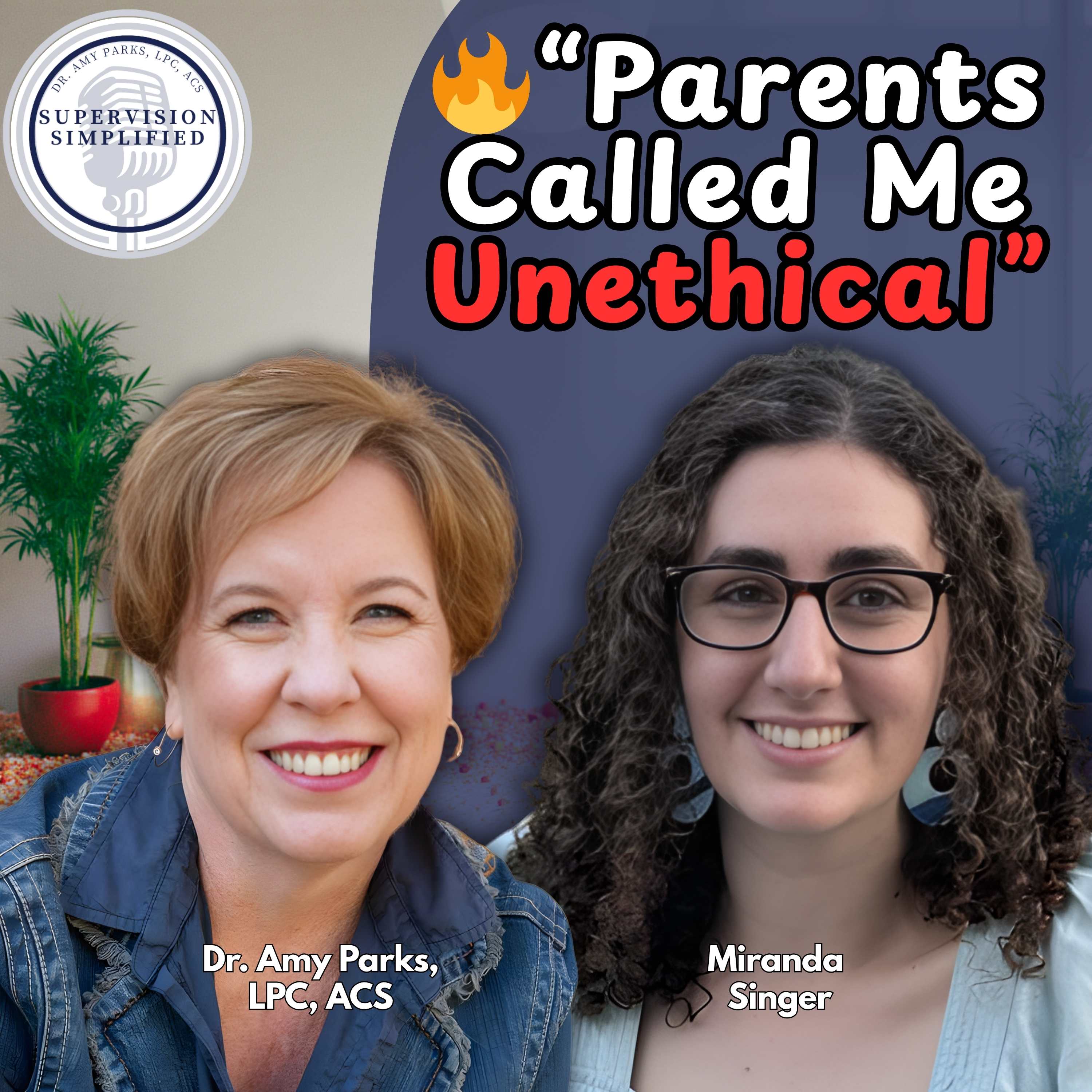
From Supervisee to Self-Advocate: A Conversation with Miranda Singer
Oct 2900:37:30Tap to summarizeSupervision Simplified is back with a fresh perspective—from the supervisee’s chair! In this heartfelt conversation, Dr. Amy Fortney Parks sits down with Miranda Singer, a neurodivergent social work supervisee, play therapist-in-training, and passionate advocate for neurodiversity and anti-ableist practice.Together, they explore the real-world experiences of clinical supervision from the trainee’s point of view: the nerves, the learning, and the growth that come from good feedback and supportive supervisors. Miranda shares insights from her work with neurodivergent children, what she’s learned from supervision, and how her late diagnosis shaped both her advocacy and her approach to therapy.You’ll also hear about her initiative, Dis No More Abilities, and how she’s building a movement to promote inclusion, empathy, and authenticity within and beyond the therapy world.Supervision Simplified brings you real conversations with real clinical supervisors—and now, supervisees—navigating the complex, messy, and meaningful world of mental health.Clinical Supervision Directory – www.clinicalsupervisiondirectory.com
Transcribe →