Loading summary
Transcript131 lines
- [00:05]
A
Fatty liver and something called MASH can develop quietly, but the impact is very real. In this episode, our guest shares his firsthand experience and the key steps that helped him take control of his liver health. On this episode of the taking control of your diabetes podcast, I am one of your hosts, Dr. Jeremy Pettis, joined as always by my good friend and colleague Steve Edelman. And, Steve, on this podcast, we're gonna get into fatty liver, something called mash. You know, people hear these terms a lot. It's something very common, especially in people with type 2 diabetes, to get, you know, we get fat everywhere, but you can get fat in your liver, and that can go on to develop, you know, to cause problems such as mash, which is basically an inflammation fibrosis of the liver. So anything you want to say about introducing the topic before we introduce Manuel?
- [00:56]
B
I'd just like to highlight what you said. It is a very qu condition, has no symptoms in the early stages, which is why education and knowledge to people out there who may be susceptible for it is so important. And I'm looking forward to speaking to Manuel.
- [01:11]
A
Yeah, the last thing I'll say is up to 70% of people with type 2 diabetes have fatty liver, and people don't know about it. So who should get screened, how to do it, all those kinds of things. So we have an interesting setup today because we have kind of two guests. So we have Manuel, who's a patient that is living with MASH and has been treated for this and is going to talk about that. And then we also have his hepatologist or liver doctor, who we've done other things with, has recorded some of his thoughts on mash. We're going to go back and forth between kind of doctor and patient. So, Manuel, first just say hi. Tell us about yourself a little bit and maybe how it came to be that you landed here at tcyd.
- [01:50]
C
Well, my name is Manuel Liveros, and the way I came here is Dr. Julio actually recommended me to you guys to talk to you about mash. I'm a father of three kids and a beautiful wife. Oh, wow.
- [02:08]
A
All right, so before we get your kind of firsthand experience and your patient experience with mash, we did want to hear from your doctor. And by the way, Julio, it's Dr. Julio Gutierrez. Julio and I trained together. We did medicine training, gosh, decades ago when I was a young buck at ucsd. And he went the kind of liver pathway, and I went the endocrinology pathway. But I've actually known him for a very long time. So we did an ask the doctor kind of segment with Julio and had him record some things. And we asked him specifically just some key things about what to ask your doctor if they say you have fatty liver, if you have fibrosis, what that conversation looks like. So let's hear from Dr. Julio and then we'll come back and, and and talk more with Manuel.
- [02:53]
D
So your doctor told you you have fatty liver. And this is a common diagnosis, especially amongst patients with type 2 diabetes. Up to 50% of patients with type 2 diabetes can have significant fat in their liver. And this can often be picked up by simple tests like an ultrasound of the liver. But what should you do? Right? And you're now your doctors told you you have f. Fibrosis of the liver. Fibrosis is chronic scarring that occurs in the liver, kind of like a callus. And this can occur with daily liver injury and accumulate into different stages of fibrosis. Stage four is the famous one, Mr. Cirrhosis. And when people hear that word, they often say to me, but I'm not an alcoholic. Yes, we understand that because there are many different causes of chronic liver disease and hepatic fibrosis. The good news is what most patients already know, the liver can regenerate.
- [03:50]
C
Right?
- [03:50]
D
How do we know that? We know that from Zeus and Prometheus and the ancients. And what happened was Prometheus stole fire from Zeus and Zeus punished him by chaining him to a rock and sending an eagle to eat his liver. Every day and every night, the liver would grow. I love this story. I love patients know that the liver has that regenerative capacity. And you can really think of the eagle as the metabolic syndrome that attacks the liver. But there is a cure for that now that is controlling metabolic liver disease through good health, weight loss, and now FDA approved therapies.
- [04:34]
A
All right, so Dr. Gutierrez, I'm going to call him Julio because I do know him, did a much better job there explaining kind of what this condition is than I do. And I think the points there is it's very common, it's silent, it can progress, but also it's treatable. So, Manuel, start by saying a little bit of your medical background. So maybe before you were told you have liver disease, do you have other medical problems, diabetes, etc.
- [05:01]
C
I don't have diabetes. I do have high blood pressure. And I've been a proponent of making sure that I get my annual physical every year. And like in my 40s, I went to go see my doctor. She asked me about past family history and I had an uncle who had just passed away about a year before that of colon cancer. So she sent me to a gastroenterologist, and he ran some tests. He did a fiber scan, he did a colonoscopy, and he did blood work. Everything. My blood work came back a little bit elevated for my enzymes for my liver, but he said it was just a little bit elevated. Not bad. The fiber scan showed nothing. So he said, we're just gonna monitor this. And he also reported it to my pcp, who had it originally sent me to him.
- [06:03]
A
So how did that work? So you got your blood work done and. Yes, these liver enzymes come back usually as AST and alt. Most people can see that on their apps these days. And, you know, so it's probably flagged as abnormal. So you probably noticed that. And a fiber scan is basically an ultrasound of your. Of your liver. So did that happen stepwise? They said your labs are abnormal.
- [06:25]
C
Yes.
- [06:25]
A
Go get the ultrasound. Okay.
- [06:27]
B
Let me add one more thing. Speaking to Manuel before we started the podcast, he was overweight.
- [06:32]
C
Yes.
- [06:33]
B
More overweight at the time. And we know that's the underpinning of a lot of conditions, including liver disease.
- [06:39]
A
Well, can I ask, like, how much do you think you weighed at that time versus now? Like, what are you. What's your difference?
- [06:44]
C
At the time, I actually weighed about 160. And because of my height, I'm supposed to weigh about 135. 140. Okay, so it wasn't like, what are you now? A lot. Right now I'm at 180.
- [06:58]
A
Okay.
- [06:58]
C
But I got up to 270 at one point.
- [07:01]
A
Okay.
- [07:01]
C
Because after Covid, I gained almost 100 pounds.
- [07:04]
A
So when you were told about this liver problem, were you at the 270?
- [07:08]
C
No, I was at when I originally started as a. About 160.
- [07:13]
A
Okay, and then you gained weight. And then I gained weight and then lost weight. Okay. So. All right, so I think we're going to check in with Julio now, because the next thing is you were told that you have these liver problems, and at this point, you should probably be referred to a specialist. And we asked him this question, like, who should you see next? How should that go? So let's hear from Julio and come back to hear more from you.
- [07:38]
D
Now you've been told you have fatty liver. Who should you see first? Well, I would suggest the doctor in front of you is the best person to start with, because patients with metabolic liver disease, or mash should be treated where they're at. Your physician can Start by giving you good lifestyle advice. 7 to 10% weight loss can improve metabolic and liver health. Also, also, your doctor can stage your fibrosis. Right. There's four stages of fibrosis, and stage two and three are treatable with FDA approved therapies. There's a lot of different ways to stage a patient, including ultrasound based techniques where they just put a probe up to your liver and measure the liver fat. But if your doctor doesn't have one of those, he can order a simple blood test called an enhanced liver fibrosis test. Even that same day, they can ballpark your fibrosis with a simple test, a blood test you already have, called the fib4. So ask your doctor, what's my fib4?
- [08:42]
A
All right, so a lot of good info there. So first of all, kudos to your primary care doctor for catching this, acting on it, doing the ultrasound. So your enzymes were abnormal. You said the fibroscan was normal. Normal. And then did they send you to a liver doctor or how did that go?
- [09:02]
C
They told me that they would monitor it, and for about five years it was pretty much stable.
- [09:09]
A
Okay.
- [09:11]
C
And then five years later, they ran all the tests again, and this time my enzymes, and they also did another fiber scan, was a little bit elevated to where he sent me back to my PCP, who then referred me to Dr. Gutierrez.
- [09:28]
A
Okay, and during this five years, is that when you were gaining weight?
- [09:33]
C
Not quite yet. At that point in 2020, when Covid hit, I had a lot of underlying issues with COVID which I wound up hospitalized. Had a lot of major problems with that. And during that time is when I gained almost 100 pounds.
- [09:54]
A
Okay.
- [09:56]
C
During all that time, I couldn't see Dr. Gutierrez either because all the issues going on, nobody could see any doctors or anything. And at that time, I had already talked to him before, and he told me, he's like, why don't you try losing weight? Try doing this, try doing that. And part of it was he said, think about maybe gastro bypass. So I was like, okay. So during the entire time I had that in the back of my head. And then when I gained 100 pounds, I was like, okay, I need a gastric bypass. Only because this is a lot of weight to gain in such a short period of time. And did that. While I was talking to Dr. Guterres, a medication came out also.
- [10:44]
A
So, okay, so that helps. I kept pressing about your weight because honestly, I'm looking at you and you look pretty svelte and. And if you don't have type 2 diabetes, that's trying to put together. Those are the two most common things that cause the fatty liver.
- [10:57]
B
I love you use the Yiddish term.
- [10:59]
A
Yeah, you told me this term, but it's a good word.
- [11:03]
B
It's a perfect word.
- [11:05]
A
So, yes, we really think about in people that are particularly that have obesity or have type 2 diabetes. So at some point, you gained a lot of weight, and that certainly didn't help your liver. How did he stage you? How did he tell you what stage of fibrosis you have? Because historically, it's been a biopsy, which is not fun. So did you have to do that or.
- [11:26]
C
No. What he wound up doing is the blood work. Then he did a fiber scan. He sent me to go get an ultrasound, and all those things together. He was able to diagnose me at stage three.
- [11:43]
A
Stage three.
- [11:44]
C
High stage three, just shy of being in stage four.
- [11:50]
A
Okay, and what was that like? Did that mean anything to you? Did he. I'm sure he explained it to you.
- [11:57]
C
He explained it to me, and when he did, most of it went over my head because I got maybe 10% of what he was telling me. But what he wound up doing is he wound up giving me, like, papers, and he's like, I know you probably only got a small percentage of this. He's like, read up on it. He's like, I wrote down everything that we talked about. He's like, that way you can absorb everything.
- [12:20]
B
It's a very complicated condition.
- [12:22]
C
Yes.
- [12:22]
B
And I can see. And I think it's so important that you said. It just went over my head. And the questions that Jeremy's asking you, I think he's asking you. Did it shock you? Did it make you afraid? Did you worry about the big C, the cirrhosis? And you were pretty close to that, too.
- [12:39]
C
I did worry about cirrhosis because he had told me within the next five to 10 years, I was gonna have to get a liver transplant. When he told me that I was at high stage three, that I would have to go do. What do you call that? Where they clean out your blood?
- [12:57]
A
Oh, like maybe dialysis or something.
- [13:00]
C
You told me I would have to do dialysis.
- [13:01]
A
So you might not have understood the ins and outs, but you clearly understood this was serious.
- [13:05]
C
Oh, yeah. It was scary.
- [13:07]
A
Yeah. So I think, because, you know, a big reason that we're doing this podcast is that there's new treatments in this area, and, like, it has been for the longest time, like you said, some of these conservative things, like try to lose weight, manage your diabetes better. Like, there was no real specific therapy for mash, but we do have that now. So, you know, we have another clip from Julio, but we also have your model. So I don't know. Steve's been dying to get this thing out.
- [13:34]
B
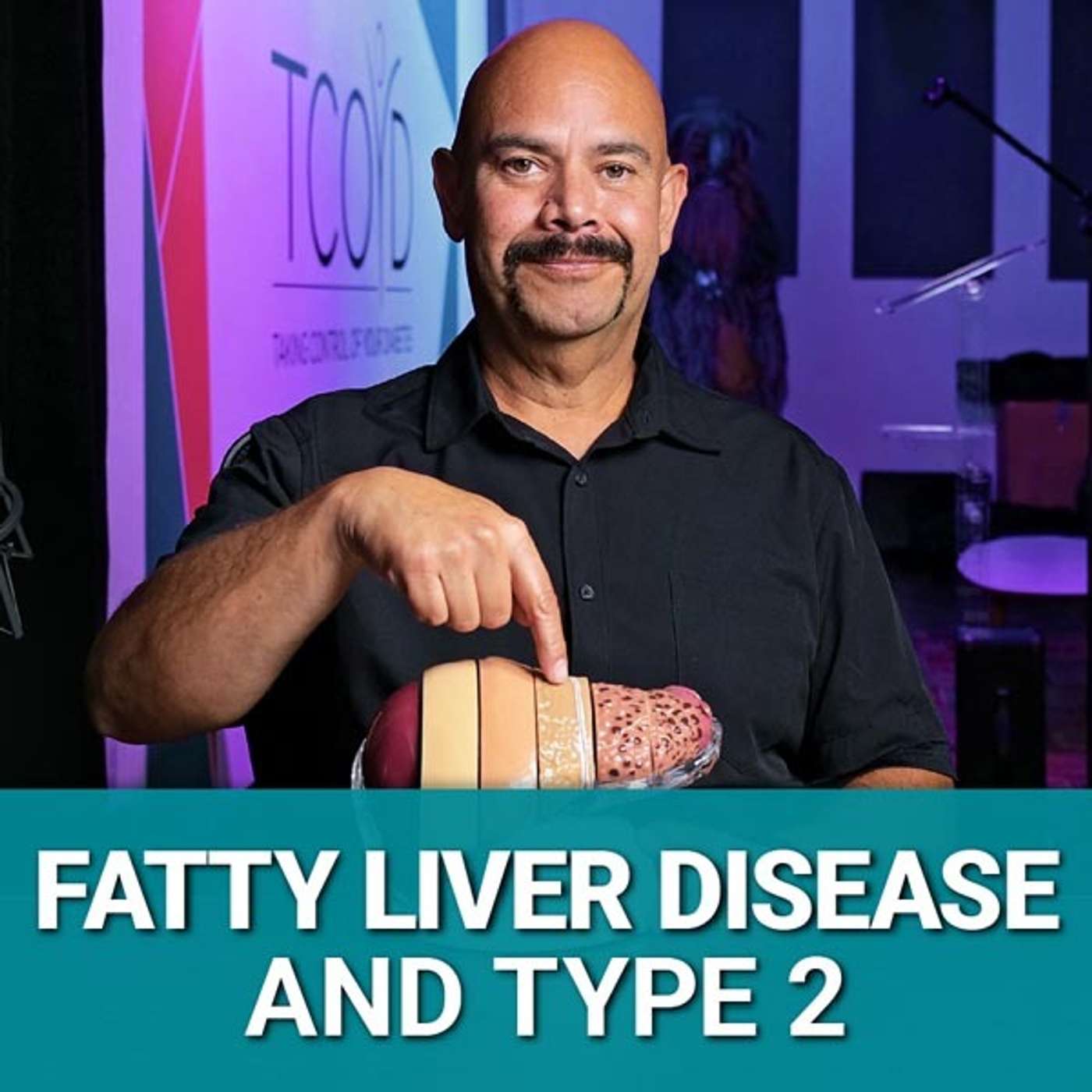
I already showed it to them. Well, well, not all of you that are listening are watching on YouTube, but this is the liver. It's about as big as Jeremy's liver. Actually, livers are much smaller. But the. The important point that you really can't feel is that starting over here, closer to Jeremy is a normal liver. And it's got really flexibility, like a putty. And as the.
- [14:02]
A
Yeah, and if you're listening, it's this kind of like, you know, reddish, purplish, very smooth, kind of, like, complexity. Like when you think of a liver or that you might actually eat at a restaurant, a human liver, obviously, this
- [14:12]
B
is what it looks like uncooked, and, you know, you can squeeze it and it's quite, you know, pliable. But as you go from the healthy liver all the way to the other end of the spectrum, which is cirrhotic liver, super hard and rubbing almost as hard as, like, a. I don't know, a racquetball or one of these toys that kids that bounce around and everything in between is just advancing the amount of cirrhosis. I'm sorry, of fibrosis until you get to the end stage and cirrhosis. And we've done a podcast on this before, if you have cirrhosis, then you're also susceptible to getting cancer of the liver as well. So there's so many reasons to prevent that. But the scary thing about your story is, I mean, as. As I heard your story, your big risk factor was really the weight. You told us before we started you don't drink alcohol. So it's scary how this thing develops. And I'm not sure if they would have followed you every year by your primary care doctor. They would have picked it up sooner. But nonetheless, you did the right thing. You lost 100 pounds with your bypass that probably.
- [15:23]
C
I lost 80 pounds, and then I also gained 30 pounds of muscle mass.
- [15:28]
B
So you worked out.
- [15:29]
C
Yes.
- [15:30]
B
You look pretty buff and svelte. You gotta say it, right?
- [15:34]
A
Well, you know, I would say yeah. The couple big advances here that we're hearing about is one, it has improved a lot in terms of, like, staging and diagnosis. That, like I said, you historically had to do these liver biopsies, put a big needle through someone's stomach and get, like, a chunk of liver. And those are painful and can have complications. So combination of an ultrasound, which is completely painless, like you said, it's a probe. It's what pregnant women get to see their babies with. Combination of that and lab tests, you can come up with this kind of scale. So we're detecting this much more. So that's one big advance, this kind of detection. And two is going to be the treatments.
- [16:11]
B
Yeah, Well, I should just mention the fib four that Dr. Julio mentioned. And that's a test that people can calculate on their own. So it's just really four things. Your age. You should know that. And then these two tests that come on, a complete metabolic panel called sgpt. Sgot. These are the enzymes.
- [16:31]
A
Yeah, yeah.
- [16:32]
B
Different names for them, but yeah. And they're. Everyone gets a complete metabolic panel that's like, standard. And then the other one that you need, what we call a CBC or complete blood count, is the platelet count. So you just add those up and there's a score. And if you're above a certain level, then you. It tells you you might have to start.
- [16:50]
A
And, you know, some lab, like we've been talking at ucsd, like, we would love them to automatically just calculate that for us because it's.
- [16:56]
B
The VA does.
- [16:56]
A
The VA does.
- [16:57]
B
Yeah.
- [16:58]
A
Well, the UCSD doesn't.
- [16:59]
B
We're behind the times, and we are educating our younger doctors to get that fib 4, because that's kind of a nice. I'd say it gives us more information than just looking at the two enzymes that were high with you. So it's a very simple test. And then if that's elevated, then you go to the next steps, which you got.
- [17:17]
A
Well, I'm going to put this away because I'm stroking this like Dr. Evil petting a cat. Let's hear from Julio. This would be a nice transition into, like, treatment options. And we'll come back to, like, what. What you did.
- [17:31]
D
So the treatments for fatty liver can start within you. All right, you're going to have to make a decision about your lifestyle. And what I encourage my patients to do is how to help amount of exercise, especially weight training. You got to get those muscles up, right? That'll offset your glucose load systemically and utilize the fats that would otherwise be stored in your liver. Also, 7 to 10% weight loss can turn the tide on fat in your liver. Those are the first two steps. But there's also therapies that can reinforce biological activity, such as GLP1s semaglutide is FDA approved for F2, F3. Many patients know that as Ozempic or Wegovy. And then also there's liver directed therapy that can help your liver heal called Ridiphra.
- [18:26]
A
Okay, so, all right, so you already. You had your gastric bypass. And, you know, one of the meds that Julio just mentioned is a GLP one. Ozempic, Wegovy, Manjaro. We use it all the time in people with type 2 diabetes because it helps with their blood sugar. But now we have indications for obesity and for liver disease. So I don't know where your weight was at at that point, but did they start you on one of these meds also, or.
- [18:52]
C
My insurance didn't cover them.
- [18:53]
A
Oh, wow.
- [18:55]
C
But my insurance did cover the gastric bypass.
- [18:58]
A
Okay.
- [18:59]
C
So I went to go see the doctor. That's gastric bypass.
- [19:05]
B
Well, you know, it was a different. What year was your gastric bypass?
- [19:10]
C
2023. So I just did it about a year ago. Yeah, you know that actually, no. What are we. So it's 2025.
- [19:18]
A
Okay. So, yeah, like insurance should have. Well, you would think they would cover this.
- [19:21]
B
Someone's not thinking clearly. However, you did get a good result. You did say you gained muscle mass. So you are obviously working, working out, and that's important. But I would say this, that you need to do everything you can to get a hold of Ozempic. And I do think that with prior authorization, you know, even in the last two years, they're getting more flexible with it and it's getting more affordable. They have an oral form that it's, you know, much cheaper. And so I think, you know, both Novo and Lilly are trying to make this drug more accessible.
- [19:57]
A
And, you know, we're kind of taken aback by your story here, because sometimes it goes the other way more frequently. Hey, we won't do the gastric bypass until you've exhausted all these other mechanisms of exercise and diet and a GLP1. So you got a very good result. So I don't want you to ever think that things were done inappropriately. It's just more like, why would a company not pay for a GLP1?
- [20:19]
B
But an expensive surgery and the Ozempic will help you maintain the weight you lost. That's key, because weight is a big deal with progression of liver disease. So as you know.
- [20:31]
A
So then tell us about risdifa. Like, how would you explain what that is to somebody? How do you. Is it a pill? Is it injection? What is it?
- [20:40]
C
It's a pill. You take it. I take it in the evening because. Talk to Dr. Gutierrez, because I do have High blood pressure. So I take my morning meds, which is my blood pressure meds. And he said, okay, well, just to make sure that there's no complications with your medication, why don't you take it at night? So I usually prepare my meds in a little vial. So I brush my teeth. As soon as I brush them, take my pills, pop them.
- [21:06]
B
You're a good patient, you know, because so many people say, oh, I forgot to take my nighttime pill. You got a system down. I like that.
- [21:14]
A
And how long you been on?
- [21:15]
C
It was different for about a year, a little bit over a year.
- [21:19]
A
And did Julio, or in your kind of speaker training, I suppose, they talk about how you would explain how it works or how do you think about that or what it's actually doing for you?
- [21:31]
C
It's supposed to reverse the side effects of a fatty liver.
- [21:36]
B
The fibrosis?
- [21:36]
C
Yeah, the fibrosis. And for me, the diet, the exercise, and the medication, the combination of everything is helping.
- [21:45]
A
So tell us about that. So how, like, what kind of follow, repeat staging and things like that. So you started at three, maybe four, borderline. And is that regressed now, or.
- [21:58]
C
Yes, and it's actually a lot better.
- [22:00]
B
That's amazing.
- [22:01]
C
And Dr. Gutierrez, he follows me every about three months. The last time I saw him, which was about a month and a half ago, he said that I'm doing well, and he said that I probably won't need to see him for at least three months. And then after that, if it continues being better, he's like, it'll be six months and then a year. But he's like, he'll have to follow me for the rest of my life.
- [22:24]
A
Okay. And when can you start drinking again,
- [22:27]
C
Jeremy, to me, drinking is not that
- [22:29]
A
big of a deal. I know, I know. I'm kidding. But I do like a beverage here and there, but, you know, so go ahead.
- [22:36]
B
Oh, thank you. You know what I'm amazed at? We have so many diseases that we work hard to prevent the progression. Kidney disease, heart disease. But you actually saw improvements. And that, to me, is amazing. And what you had in your future, if you had not found Dr. Gutierrez or found good doctors or was able to get this medication or your bypass, you might have already had pretty bad cirrhosis. So you really are a poster child for taking control over your liver health.
- [23:08]
A
And I don't know this. Is this a lifelong treatment for you now, or has there come to a point where you might not need this
- [23:13]
C
medication because the medication's so new? They don't really know yet? They're still trying to follow up on that. But I have been taking the medication. It has been working for me. But you know what? Everybody has to follow their doctors. And like you said, be the perfect patient, pretty much. Because whatever the doctor tells you, you gotta listen. I'm like. And so many of us don't listen. My thing is, if I'm going through all this and I went through surgery, I'm like, why am I not gonna listen? And I have to go see my doctors. Be proactive about this, because if not, it's just going to revert back to where it was if I don't pay attention.
- [24:03]
B
And you have three kids, and I'm sure you want to be a grandfather.
- [24:06]
C
Yes.
- [24:07]
A
And I was going to ask, do you have brothers or sisters?
- [24:09]
C
I have one brother, one sister.
- [24:10]
A
And have you reached out to them? Do they have any similar.
- [24:13]
C
Yes, I told them, and they did all their blood work. They did everything. They don't have any issues. It was just me.
- [24:20]
A
Okay.
- [24:21]
C
But Dr. Gutierrez did tell me that in the Hispanic community, it's very high. And it might be because of our diet, exercise, whatever it is, but it is pretty high in the Hispanic community.
- [24:34]
B
Well, you've adapted to a really healthy lifestyle, and that helps everything else in your body. You know, your heart and your kidneys. You know, I'll say one scientific sentence is that, you know, we talk about this thing Manuel called the cardio heart, renal kidney hepatic syndrome. And it turns out it's one condition, and it's really based on a foundation of behavior, overweight, inflammation, and more, and other things. And I think that's probably the foundation that you had where you developed liver disease. And, you know, as a result of getting liver disease, they followed your kidneys and your heart closely. So you're living a healthier life almost because you got diagnosed with liver disease.
- [25:17]
A
Yeah, you know, it's funny. So, yeah, this cardiorenal hepatic syndrome, basically, heart, liver, kidneys, like you said. I mean, us doctors are talking about this like this is some blockbuster idea. I think anybody without a medical degree would say, of course, all these things are connected. Your heart, your kidneys, your liver. And if you're treating your. If you have diabetes or your weight, you're positively affecting all of these things, and they're so interconnected. But the reason that we're really talking about it more now as this uniform thing, is because we have medications and treatments that address all of these things totally. The GLP1s in particular can help all those different Categories. And it's had our. Our worlds as separate specialists kind of coming together and melding in a really nice way.
- [26:01]
B
Yep. And, you know, so Ozempic is a really important drug that you need to get on. Not that you're getting worse now, but just something to help maintain the benefits that you've already gotten. And I can. Once the show ends, I can help give you some other direction on that, because I think that's important.
- [26:19]
A
So, you know, what a success story for you. And I think that the early or the diagnosis in general is so important. So if you're listening, you have type 2 diabetes, or maybe you're overweight or obese. It is a little less common in people with type 1, but type 1 still obviously get liver disease. And I think, to reiterate Steve's point, is this isn't like asking your doctor for some esoteric, weird test. These are things that we do annually on pretty much everybody. So if you see a little red exclamation mark by that AST or alt, ask your doctor what this means. You can talk about a fib 4, but if you don't know what any of that means, just make sure you check in with your doctor about your liver. Is there anything abnormal in my labs that I should follow up with? Because the screening process is not that difficult, but you have to be proactive, like I'm sure you were. Hey, I want to see a specialist. I want to get treatment. And it is really a new day with all these new therapies. So congrats to you. We're talking about the medicine and the bypass surgery, but you've done a ton of yourself. You don't put on 30 pounds of muscle with any drug, really. So congrats to you and for seeing Julio's taking good care of you.
- [27:31]
B
Yeah, you're a great role model, and hopefully a lot of people will watch and listen to this podcast.
- [27:36]
C
I hope so.
- [27:37]
A
Any closing remarks, Manuel, or anything you want to leave people with?
- [27:40]
C
I just want to thank you guys, thank Dr. Gutierrez, because it's very important to get information out like this, because me as a layperson, I had no clue what any of this was. Dr. Guterres, he educated me on this. You guys are educating people on this. And without the education, a lot of us just keep going through our life, because I had no symptoms with this until he told me, you have this, you have that. And I was like, what? But nothing hurts, so how can this be wrong?
- [28:14]
B
Yeah.
- [28:15]
C
And usually, and he did tell me, he's like a lot of times it's a silent killer. By the time you find out that you have pain, you're already at the end stages.
- [28:23]
A
Right.
- [28:24]
C
So he's like, it's a good thing that you're following your doctors.
- [28:27]
A
Right.
- [28:27]
C
And I'm like, I'm glad I did.
- [28:30]
A
Yeah. Well, I don't know if I can share. If I can't, we can edit it out. But Manuel shared with us before the podcast that you're going to be on a Rodifa commercial. It's not released yet, so it'll be nice that, you know, we sat down with the Razdefa guy. I'm sure you'll hear that on the street a lot. I want your autograph, by the way. So, yeah, if you're watching on YouTube, you can recognize him or your voice too, because that'll be obviously in the commercial. So when that comes on for the first time, I'm gonna scream, let's have
- [28:59]
B
a coming out party.
- [29:01]
A
Well, thank you so much. Thank you everybody for listening. Thanks, Manuel, for being here. Thanks to Dr. Gutierrez for all those insightful comments. And please make sure to, like, subscribe, subscribe, follow, share our podcast and we will see you on the next one.
- [29:16]
C
Thank you.
- [29:17]
B
Thanks, Manuel.
- [29:18]
C
Thank you.