Loading summary
Transcript105 lines
- [00:00]
A
Foreign.
- [00:24]
B
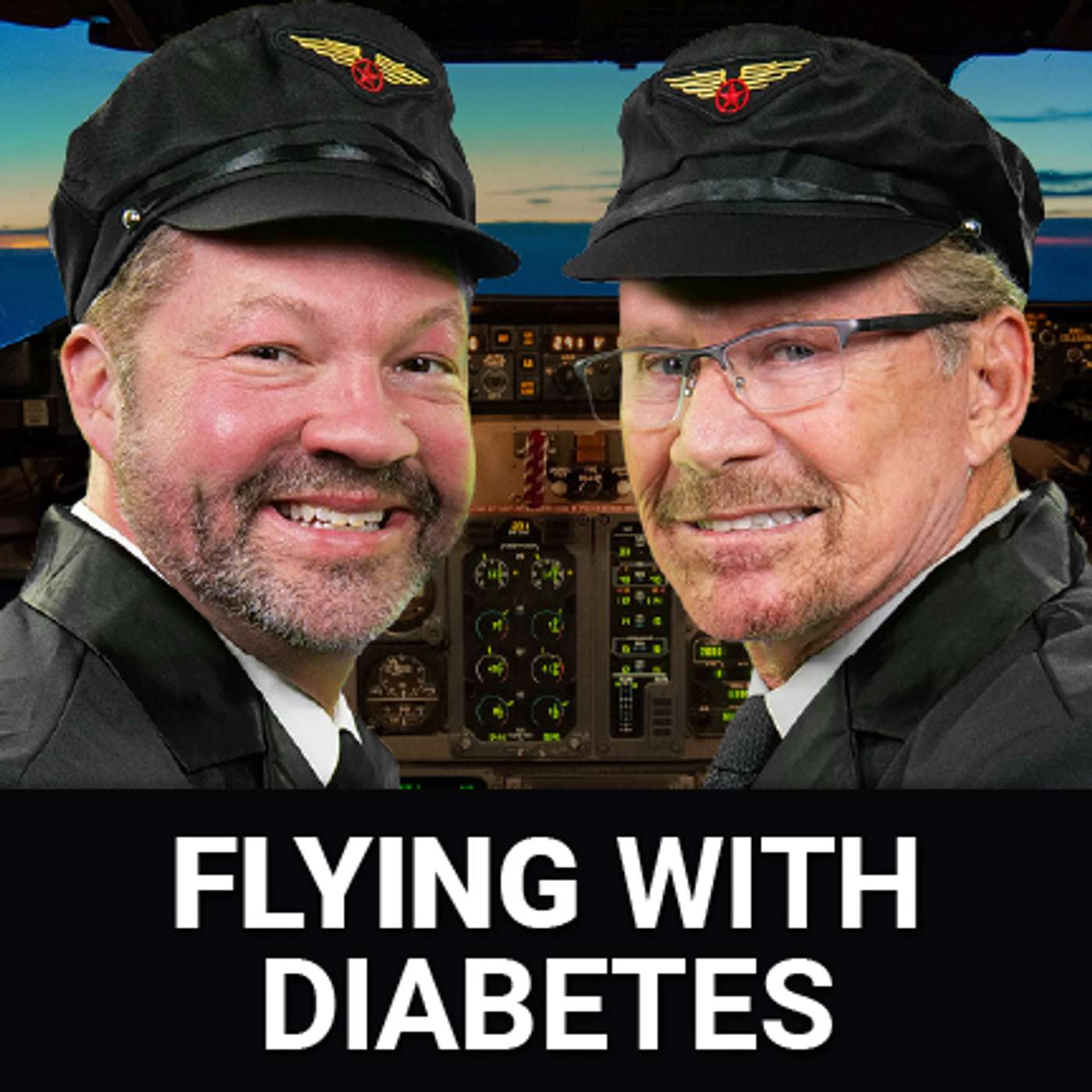
What if your job put you at 35,000ft and. And you also had to manage type 1 diabetes? Well, today we are cleared for takeoff with Quentin Weiskettle, who's a commercial pilot that's actually living with type 1 diabetes, who's proving that diabetes doesn't have to ground your dreams. Steve Quinton is gonna share his journey to the cockpit and the real world strategies he uses to safely manage diabetes in the air through time zones, turbulence, and takeoff. So if you've ever wondered what it's like to fly with diabetes or traveler smarter with type 1 diabetes, and this episode is for you episode of the Taking Control of your diabetes podcast. You've never said that with me before. I'm one of your hosts, Dr. Jeremy Pettis, joined as always by my good friend Steve Edelman. And if you're just tuning in, we both have type 1 diabetes. We're both adult endocrinologists. We work at University of California, San Diego, and here at Taking Control of your Diabetes not for Profit, that's been in existence for about 30 years now. So, Steve, this particular guest is actually. You know him well. So why don't you give us a little bit of background on how you met, and then we'll have Quentin introduce himself.
- [01:34]
C
Yeah, you know, I have a clinic at UCSD and I see patients a lot of type 1s, and although I do have a lot of patients who fly, Quinton is the only one that has a commercial license that flies for a major airlines. And so it's been a. It's been a fun way to get to know him. And he's. He'll tell you himself, but he's been on multiple daily injections up to this podcast. And we'll talk about pump therapy in the sky as well later on. And it's been fun. I see him every once in a while in person, but usually he's flying around the world somewhere on a zoom call in his hotel room.
- [02:10]
B
Well, Quentin, say hi. Thanks for joining us, and tell us just a little bit about your background.
- [02:15]
A
Hi. Yeah, so I am a commercial pilot and a type 1 diabetic. I was diagnosed fairly late in life. I was 37 years old when I was diagnosed with type 1 diabetes. And at that point, um, I had already been flying for quite some time professionally as a career. Aviation is just kind of what I always wanted to do when I was a kid. I always grew up with that passion. And there was really no question when I reached young adulthood that that's what I wanted to do when I was in college. I started working on all my civilian ratings at that time and kind of decided that I'd either better make a lot of money to afford this hobby or better get paid to do it. So I chose to get paid.
- [02:58]
B
That's smart. Well, I would say this is an interesting topic for a number of reasons, but up until pretty recently, being a commercial airline pilot was one of the few things you could not do with type 1 diabetes. You couldn't be a long distance truck driver. I don't know if they've changed that one yet. I think they actually have too. And you couldn't be a commercial airline pilot. So here you are. You've been in pilot, I'm imagining, for some time, when you get type 1 diabetes. Right. So tell us that story and how impactful that was to your, you know, your health, your life, but then also.
- [03:35]
C
Your career, your psyche, you know, that's your career.
- [03:40]
A
Right. So I was diagnosed in 2014, and at that time, I actually. We had. Our first child was born like a month prior to this. So I kind of masked that with a lot of the symptoms, you know, fatigue and always being worn out and just kind of generally feeling malaise. Well, that's kind of everybody with a newborn in the house, right? What it was for me was the just being so thirsty that I was just trying to consume anything I could get my hands on. That's when I kind of started to realize, like, this is. This isn't normal. There's something going on here. And I finally went to the doctor, and luckily, you know, I know a lot of people are misdiagnosed, but for me, luckily they caught it right away. They. They immediately listened to my story. And the minute I said, you know, yeah, I'm like, drinking like crazy. Like, for instance, I would be going from Boston down to Raleigh, Durham, and I would be asking the flight attendants to set up for a bathroom break, like, twice. And they would be getting frustrated with me, you know, because I was just drinking so much.
- [04:46]
C
Do they allow adult diapers in the cockpit?
- [04:50]
A
I suppose that would have been an option. I hadn't thought about that at the time.
- [04:55]
B
Steve loves the adult diapers joke too.
- [04:56]
C
I do.
- [04:57]
B
Don't feel special. Quentin. He uses it quite a lot. Okay, so that's actually good news in terms of your diagnosis, because you're right. Very often people are told they're type two and they get the diagnosis wrong for years. So when did you realize that this might affect your career, that you could lose your license with this diagnosis? How did that Roll out.
- [05:16]
A
So that. That was immediate. You know, I basically, I returned from a flight into Boston and I said, okay, I need to go see the doctor. Like, something's just not quite right. And when I went to go see the doctor, like, that was it. I knew that that was, like, my last flight as a commercial airline pilot. I did have some hope, though, because at that time, the Canadians, and I want to say it was also Australia and Great Britain, were allowing commercial pilots to fly with type 1 diabetes, and they had been doing so for quite some time. So it was a little bit strange because a foreign pilot was perfectly legal to fly into the United States from a foreign country, land, and take back off and return home with type 1 diabetes and being insulin dependent. But as an American pilot, that wasn't legal. So I did have some hope that the rules would change. And sure enough, they did. That came a few years later, but I initially thought that it might take just a couple of years. I was in communication with the American Diabetes association at the time, and there was a handful of people that were suing the FAA to get the regulations changed. And specifically, there was a guy named Eric Friedman who brought a lawsuit about to the faa, and he was actually working within the faa when he brought that lawsuit on onto the faa, that ended up going to the night, I think it was the Ninth District Court in Washington, D.C. so it went pretty high. And it was apparent that the FAA was going to lose that lawsuit. And at that point, they withdrew from the court case and they said, hey, listen, we'll start issuing medicals at this time. Let's just withdraw the lawsuit. Let us kind of get this figured out. And then by 2021, they started actually issuing certificates again.
- [07:05]
B
So then how long were you out of the gig? That's almost 10 years.
- [07:09]
A
Yeah, I was out for a total of seven years.
- [07:12]
B
So, again, you know, man, so you just had your first child, you just got diagnosed with type 1 diabetes, and you essentially got fired. Right. Like, all within the span of a.
- [07:22]
C
Couple months, lost the job of your dreams. And I told Jeremy, you became a Mr. Mom. I'm not sure if I had that right.
- [07:29]
B
Right.
- [07:30]
A
Yeah. So there was a couple of things that were. I mean, I guess you could say if you're going to become a type 1 diabetic. My timing was fortuitous. Our child had just been born a month prior. Paige, my first. My oldest daughter, and my wife had just started residency and emergency medicine. So we were essentially looking at having a nanny that was going to be raising her for the first few years of her life because I was traveling a lot. My wife, as you know, in residency, was going to be extremely busy. So I just kind of transitioned right into being Mr. Mom. So I was able to be at home with my daughter basically every day of her life for the first three years.
- [08:10]
B
Well, that's a real.
- [08:11]
A
I mean, if I was timing wise, it couldn't have been better.
- [08:16]
B
So that's a very positive spin.
- [08:18]
C
Yeah.
- [08:18]
B
And so. Okay, so then years are going by. Are you kind of actively fighting this or have you moved on with your life? Are you always hopeful to get back in the pilot seat? What's, what's going on there?
- [08:31]
A
Yeah, I was always hopeful in the. You know, I was still actually kind of doing some stuff in the aviation world. I had had some previous experience in like film and video. I was part of a group that we went down to Mexico with a plane. It was a 727. And we actually crashed it in the desert for a Discovery Channel. That was a guy named Dave Kennedy and Chip Shanley that produced this for the. And you could look it up online. It's called Plane crash. It was two, I think two, two hour long episodes is what they did on Discovery Channel.
- [09:05]
C
I think that was. That was Lost, right?
- [09:08]
A
Yeah, it was actually very much. It was very similar to the crash in Lost.
- [09:12]
B
So you actually intentionally crashed an airplane?
- [09:15]
A
We did, yes. It was a 727. And the 727 has a back ramp that are called the. It's called the DB Cooper door. And the reason that they call it that is because there was a guy back and said, Dr. Edelman smiling, he knows the story. There's a. There was a guy in this, I think it was the late 60s, early 70s, who hijacked a plane. It was a 727 and demanded a million dollars in a suitcase. And also demanded that the plane be flown at, I think it was about 10 or 15,000ft over the Sierra Nevadas all the way down to Mexico. And at some point he dropped that back door and he jumped out with a parachute, of course. So ever since, we've always affectionately called that the DB Cooper door. So what we did on that particular show was we had it set up with remote controls and I was flying a chase plane on the side of it with a backup remote control. And then there was another primary remote control and another aircraft on the other side. And the test pilots that were inside the 727 set it up on a final approach. So it was supposed to mimic a kind of crash that was just short of the Runway. And we were testing the survivability of that because we had a bunch of crash test dummies inside of the cabin of the aircraft. And there was a bunch of accelerometers and equipment from this head scientists had basically put on board. So our job was to make sure that that plane actually didn't continue towards the United States and cross the border, that it actually went down. But it was set up on an intentional trajectory to hit at a specific point at roughly, I think about 1500ft per minute. So a very, very hard landing, but definitely survivable. And it was.
- [11:01]
B
So this was.
- [11:02]
A
Pilots jumped out that DB Cooper door and parachuted to safety.
- [11:06]
B
So this was something you were doing in this period where you weren't a commercial pilot, is that what you're saying?
- [11:11]
A
No, I'm sorry. So I had already done this previously, so I had some film and video experience by doing that. So I kind of transitioned to doing a little bit of that stuff on the side once I, I just wasn't doing it in a flying capacity.
- [11:24]
B
Okay. So that was kind of filled the gap.
- [11:27]
A
Yeah, exactly. So Aside from being Mr. Mom, I was kind of doing a bit of that.
- [11:32]
B
Got it. Okay. And then let's fast forward to, you know, the, the good news of getting your, your license back. What do you have to do, I guess, to get that approval and to maintain it? What are the requirements? Do you have to be on CGM? Do you have to have an A1C of certain X? Like what are they? What are the requirements?
- [11:51]
A
So for a commercial pilot, there are basically, there's three different medicals that you can get with the faa. A first class medical is the highest standard and that's what you have to have if you want to be working professionally without getting into like too many specifics, there's very few things that you can do to get paid to fly without having a first class medical. If you wanted to have a third class medical, you could go out and have your own plane and go fly around all you want. With a third class medical, you do not have to have a cgm. But the demands I think are a little bit more stringent. I don't know a whole lot about that. But with the first class medical, yes, you absolutely have to have a cgm. You don't have to have a pump, which I don't, I don't use a pump, but I do use a Dexcom G7. And then I just do a long acting and a short acting. Insulin. And I just find that that works really well for me that. So I haven't felt the need to switch to a pump at this point. Initially speaking, I think it is, I have it actually right here. But it's going to be about 12 months of data that they're going to want from, from you. And they're going to want your CGM data separated out into months. And what they want to see on that is the bare minimum. They're going to want to see like a time and range of 70% and that is between 70 and 180. And then they don't want very many like less than 1% excursions above 250 and they want very few excursions below 50 and so forth. You also have to see an endocrinologist every three months. You have to see ophthalmology once a year, and then you also have to see cardiology once a year. And that's just because I'm assuming that there's increased risk for problems.
- [13:39]
B
So you send them this 12 years, or sorry, 12 months, a year's worth of CGM data and then they renew your license every year so they can look at this previous 12 months and.
- [13:49]
A
Say, so that is for the, that is for the initial certification. And then once you get that, at least as of right now, I think everybody's on the same. But I'm on a six month cycle, so I have to send in my data to them every six months. And every six months I just have to send in the endocrinology reports and blood test or blood work, I should say, but I don't have to do the cardiology and the ophthalmology on the six month, I need to do that on the yearly cycle.
- [14:19]
C
Sounds like good diabetes care to me.
- [14:20]
B
Yeah, but I was gonna say, I mean the concern, right, is that you have some kind of event, either probably a low, I guess potentially a high that's gonna incapacitate you in some way or make you at least not as conscious as you would like to be. And you could affect your flying. So what if you do get low blood sugar during, like when you're flying? You know, there's different degrees obviously, like you said, less than 70, less than 55. You have to drink juice. Is that a problem? Do you have to report that like.
- [14:51]
C
And what do you take too for a low? Jeremy, if he was a pilot, he'd bring a big thing of Skippy's Peanut Butter on the plane with a spoon and some Skittles. And Skittles, yeah.
- [15:01]
A
Skippy's Peanut Butter. That's an interesting. I wouldn't think that that would work very fast.
- [15:05]
B
No, it doesn't. It works terribly.
- [15:06]
C
That's why he's a doctor, not a pilot.
- [15:10]
A
Yeah. So my typical routine is anytime I'm working, I have a very different diet and lifestyle than I do when I'm not. So basically the night before I'm going to be working or I'm going to be flying, I kind of start off right away with a low carb diet and I mean pretty low. Like I'm just going to be eating like chicken salad and stuff like that. So I'm not going to be going out and getting a burger and fries or anything that's going to be really carb loaded. I just find that it's kind of a numbers game for me. If I'm going to be doing large amounts of insulin and I happen to just miscalculate by a small percentage. If I'm doing large amounts of insulin, that's going to create like a pretty big change in my blood glucose numbers. But if I'm only dealing with maybe like four units for a salad, chicken salad or something, even if I'm off on that by a little bit, percentage wise, that's going to change my blood glucose by maybe like 20, 30 points at the most. So it makes the corrections very easy. And then when I'm flying, I basically my routine is I come into the cockpit, I start setting up all my stuff on my side of the plane and I immediately just set like an orange juice over in the cup holder and that's kind of what I would use. I also allow my blood glucose to go a little bit higher than I normally would. I typically strive to keep it under 120 and I'd like to see it like, would be great if I'm 80 to 90, but I don't do that when I'm flying. When I'm flying, I'm perfectly fine with it being like 140 or 150. I'm okay with it being like a little bit on the higher side because that gives me that much of a buffer. If I start going below 120, then I'll start kind of just maybe taking like a little bit of sip of that, that OJ or something because I don't have to worry about it.
- [16:58]
C
What do you set your low alert on?
- [17:03]
A
Typically, like when I'm flying, I'll set my low alert at 100. So if I go below 100, then I immediately like, okay, I need to do something about that. That gives me a long time to react to it.
- [17:14]
C
Yeah, you look at the trend arrow, of course.
- [17:16]
B
So that makes sense. I mean, yeah, you want to catch a pending low as soon as possible. And I would say 140, 50. I wouldn't even call that really high. I mean, that's a pretty good number. But I get what you mean. It's like exercise. We say we target a little bit of higher blood sugar to give you more of a buffer. You know, avoid going low. So as you're saying, as you know, you get on the cockpit, you set up all your stuff. I imagine you don't know every co pilot you fly with. So do you ever get strange looks or any comments or what's the feeling from your colleagues there about you having diabetes?
- [17:50]
C
They hear your alert go off. They go, what's that?
- [17:52]
A
Yeah, yeah, no, I'm not. I actually do warn them. I'm not getting a text. Like, that's. That's actually just a cgm. And, you know, because I will be checking it, like, before we go to take off. Like, I don't want them to think I'm unprofessional because we're lined up for takeoff. And part of, you know, we have what are called flows in aviation, and that's where we're basically setting up the aircraft for whatever phase of flight we're going to be going into. And these are kind of by memory that we do. And part of my flow, I add onto that. I grab my phone, I pull it up, I check my cgm, because that's my last chance to, you know, if something's going weird, which is, luckily, this has never happened. But if for some reason something's really off, that's kind of my. My last chance to say, hey, I need to return to the gate. Like, I can't, you know, fly today. So I let them know, like, I'm not checking text messages. I'm actually checking my CGM. I'm a type 1 diabetic, and I learned my lesson pretty early on with warning people about if I have to do any shots, because I actually had one girl that has a very, very bad phobia of needles. And I just went and did my shot. And I look over, and she's covering her eyes, and she's got her head down, and she's kind of, like, breathing heavy. And then she finally said, if you're gonna do that again, you need to warn me.
- [19:07]
C
Okay. Because a pilot you're talking about.
- [19:09]
A
Yeah, sorry. It was. Yes, it was a female pilot. Yes. And she had a phobia of needles, so.
- [19:14]
B
But any, like, beyond that, anybody ever kind of. Do you ever feel like, I don't know, I don't discriminated against, or that people are worried about your capabilities or anything like that with diabetes?
- [19:26]
A
No, not within the aviation community in the sense of, like the people I fly with. There was something that you guys said in a podcast, I think it was just a few weeks ago, and you were kind of mentioning how, like, a lot of physicians will just kind of very, very lazily just kind of toss everything as being associated with type 1 diabetes. And I feel like I encounter some of that when it comes to the medical stuff, because I think that there's a. A lot of physicians, you know, especially outside of endocrinology, maybe feel like a type one diabetic. Okay. Obviously, you're going to have kidney problems, you're going to have circulation problems, you're going to have cardiac problems, you're going to have ophthalmology problems. And that's just not necessarily true.
- [20:17]
B
No, you're right. You know, it's always like, yeah, you have knee pain. Oh, it's your diabetes. Or your ear hurts.
- [20:22]
A
Oh, it's your diabetes. Exactly.
- [20:23]
B
You're itchy, it's your diabetes.
- [20:25]
C
Your friend drives you crazy, you got diabetes.
- [20:27]
B
But, yeah, so, yes, that's a common frustration. Yeah.
- [20:33]
A
And I'm actually, that's something I'm going through right now is I had. I think I talked to you about this doctor, but I took a stress test because I have to do a cardiac stress test every five years. And during peak exertion, I had a little bit of an ST depression on like two beats, I believe it was. So the FAA is doing their due diligence, and I've been grounded as a result of that again. But I just had to do a nuclear stress test, and I did that today. So they did imaging, but the cardiology team kind of felt like this was not really an issue, you know, that this was something that wasn't going to be anything that would be problematic or that they would even have done a nuclear stress test for if it wasn't something that the FAA required. But during the process of doing this, I had spoken with a. What's called an ame, a airman medical examiner. And he kind of said to me, well, with your past history, you definitely have something, which really kind of just irked me the wrong way because he was basically insinuating that, you know, because I'm a type 1 diabetic. Obviously, I have cardiac issues, which is not entirely true, you know, and that's one thing that's been nice about, like, being treated by Dr. Edelman and stuff. I don't know how old you are, but you're still, you know, extremely sharp and fit, and you cycle regularly. And you guys are positive.
- [22:01]
B
How much. How much does.
- [22:02]
A
Steve, this isn't something that is, you know, this. You know, just because you're a type 1 diabetic, with proper care, you can live a long, fulfilling life. This absolutely, you know, any sort of, like an early death sentence, if you will. But I think that there's some people out there, they still have that misconception that once you get it, like, oh, man, you know, your time is limited. I do, and I unfortunately encounter that, so.
- [22:28]
C
Well, that's ignorance. Just ignorance, you know.
- [22:31]
B
So then I guess slightly beyond your piloting. We talked about this a little bit before we started. You fly a lot, and just being in the air, traveling, things like that can affect blood sugars. And we've talked about this a lot. And it usually comes up with pumps that people will say that during takeoff or during landing when there might be pressure changes in the cabin, that it can affect their insulin delivery. And this has been investigated, kind of up the wazoo, people mimicking this in pressure chambers. And I've ultimately found that some people are more affected by this than others. And so I was kind of intrigued. You said you're not on a pump. Does that have anything to do with concerns about using a pump on a plane or just simply other lifestyle choices.
- [23:17]
A
Or what it does? There is one concern that I have with a pump, and that is if I were to have a catastrophic decompression, you know, say, for instance, we're at 36,000ft and all of a sudden pressurization fails. Like, we. We are going to have a pretty serious situation. And that amount of pressure, if there's a pump that has any sort of air in it, if it's all liquid and there's no air, it should be fine. But if there's any sort of air in that line of the pump, I'm not sure. I've tried to get answers from the engineering teams of some of the pump manufacturers, and I can't get a straight answer on this. But if the path of least resistance is going to be into the injection site, then that's a really big problem. So that is something that really concerns me, and that is one of the reasons why I've chosen to just not use A pump. And I also have perfectly fine control with just doing the injections. I don't mind the injections. I don't feel like it's that much of a nuisance to my life.
- [24:20]
B
So that's amazing.
- [24:23]
A
I do that.
- [24:24]
B
You have great control considering you have the world's worst doctor as your physician.
- [24:30]
C
I knew that was coming. But, Quentin, I want to.
- [24:33]
B
Can I ask something real quick? Yeah, sorry, I keep cutting Steve off. So another thing that was interesting as we were talking is you gave some broad estimates, so there might be 100,000 commercial airline pilots. And don't worry, we won't hold your feet to the fire on that. But there's a lot, and there's maybe 50 or so now that are living with type 1 diabetes. And Steve said kind of jokingly, do you guys have a Facebook group? I actually think that's a good idea. But do you have a sense, do you think all these people are non pumpers? Is this like in the community that you guys feel this way about using pumps on airlines?
- [25:04]
A
It seems to vary. The people that I speak with the most, they've actually elected to not use a pump as well. I think maybe, maybe it has something to do with just pilots and our nature. We want to be able to kind of still have kind of control over that. We're not so quick to just be able to hand off control of something that so important to a device. But there are some, like, I do have some friends that I've met along the way through this process that they use pumps and it seems to be working really well for them. So.
- [25:36]
C
Yeah, you know, I was just going to add before that. I really am impressed how good your control is. And you don't have the help of a hybrid closed loop system with automatic insulin delivery. But I do have two patients that fly jets. Jeremy knows one of them. He was a fighter pilot when he got type one in the Air Force. And of course he cannot fly a fighter jet anymore and he didn't want to go through the hassles of a class one. So he flies and he wears an omnipod and he uses the off label loop algorithm. But you know, if there's air in the reservoir and when you take off, even on a regular flight going from the ground to the up 30,000ft, you could have expansion of those air bubbles and that could push insulin in. So that's a well known issue. And it does happen. And if people are ready for it, it's not a big deal. That's different than flying a Commercial jet, you know.
- [26:37]
B
Yeah. And I think people have looked at this Omnipod versus different palms. Omnipod doesn't have as much tubing, things like that. But the other thing that I was thinking about, Quentin, is the one time in my life that I was actually. Two times in my life I've been told I couldn't do something because of type 1 diabetes. Once was scuba diving, and I just learned that you don't tell them and then you can go scuba diving. So I've gotten around that one. But the second one was when I got accepted to medical school. And I found out that at the time it was like $50,000 a year. This school is probably $70,000 or something now, so expensive. So I actually looked into joining the military and I didn't pick a branch or anything like that, but they would pay your tuition and actually give you a stipend and things like that. I never knew this story, which seemed like a really good deal. I mean, I didn't have any money, so $50,000 a year just to go to school, plus whatever, to live on seemed like a good deal. And I don't remember who I called, like 1-800-Army-something, but I talked to somebody and they told me, no, you can't join the military with type 1 diabetes. And in retrospect, I'm glad because the decision was made for me. I didn't have any service obligations in the military. Things like. But I was thinking about it in your field. My understanding is a lot of pilots have a military background. And do you know if. Is the military changing its concepts on this also? I mean, I'm just thinking that might be more of a pipeline for people getting into commercial flying with type 1 diabetes.
- [28:03]
C
That's a good question.
- [28:04]
A
Yeah. I do not know. As far as I know, I think that it's kind of a blanket denial for anything that's autoimmune in the military.
- [28:15]
B
So.
- [28:15]
A
Because I actually had experience with that early on because I wanted to fly for the military, but I had Hashimoto's, so that was kind of what kept me from going the military route. But that was not something that stopped me from going the civilian route. And I was told early on that you are more likely to get a second one, that I should watch out for type 1 diabetes. But by 37 years old, I thought that that time had kind of already passed.
- [28:40]
B
Yeah. Well, you know, it's interesting because Steve and I both work at the VA also. Well, I don't actually anymore, but I spent a lot of time there where we take care of veterans, obviously, and we have a number of type 1 diabetes patients, but they're all people that got it either after they were in the military, or they got it in the military and then got it and had to be discharged from the military because of type 1 diabetes. So because of that, our average age of diagnosis in the VA is like you people that got it later in life. It's a very specific kind of adult type 1 diabetes that we see at the VA because of this restriction that you can't get it as a kid and go into the military. But, man, if you can't have Hashimoto's and go into the military, we got a long way to go before they'll let type 1 diabetes.
- [29:25]
C
I mean, that's so ridiculous. It's a thyroid issue that's easy to treat. I mean, they're cutting themselves short of good people like yourself. And also, it takes time and money to train someone to fly a plane, and you don't want to just kick them off for any old, goofy reason.
- [29:40]
A
And that certainly might have changed. I mean, that was late 90s. So, you know that the rules may be different on Hashimoto's. I don't know.
- [29:50]
B
Well, as we're kind of, you know, getting close to the end of our time, I also have to ask you if you had any kind of, like, golden tips for people when they're traveling in general, Like I said, you're in and out of the airport. Steve did say, though, that you get to jump the TSA line or you have your secret special line, which I'm sure helps a lot because I've been patted down so many times for devices and rub my hands with whatever that is. Explosive stuff all the time. So do you have any just tips that Everybody with type 1 diabetes needs to know to navigate the airport that.
- [30:24]
C
Maybe we don't know other than wearing a pilot's uniform?
- [30:26]
B
Yeah, that's a good one.
- [30:29]
A
Yeah. So for me, what I find is, even though, yes, I do get to go through security much faster than most people, I do feel that the rush of the before flight and then the process of sitting in airplane and being immobile does make it particularly challenging because you tend to start to want to go low because you're basically exercising right as you're rushing to your flight and running through the airport. And then you get onto an aircraft and you're sitting there for three to five hours. And now your blood sugar always has a tendency to want to go, go up. So I Always kind of like anticipate that. And I try to, you know, again, have my blood glucose maybe a little bit on like the higher side, but when I say higher, I mean like 140 to 150. And that way when I'm rushing through the airport and I'm, you know, getting to my plane and starting to get ready, it has a tendency to want to kind of come down a little bit. And then when I'm sitting in the aircraft, I know that I have to basically do maybe one or two units like every few hours, every couple of hours, just to kind of keep it from wanting to rise. Because anytime I'm immobile, I find that it just wants to go up. And that's. Unfortunately, there's a lot of sitting in my job. And you are immobile for that period of time.
- [31:45]
C
You know, the other thing too is as you're describing what you have to go through, it just reminds me how effective these hybrid closed loop systems are. You know, it'll turn off the insulin to prevent lows as you're creeping up. Sitting on a, you know, for hours, it'll increase the basal rate. And I think one thing we really have to do as doctor patient is find out for sure. And I think it would make your life a lot simpler. For sure.
- [32:13]
A
Yeah. Another thing, like when you're going through security, one thing that I always found really challenging was trying to keep my insulin cold. You know, like the ones especially, because I always carry backups of everything. If I'm going on a trip, then I don't want to just have like one pen. I want to have like two of everything. And ideally I want them in separate bags. So if something happens and I lose my bag, I don't lose my insulin. When I know I'm going to be somewhere for like, for a while to keep it cold. I'll usually take like a clean canteen or something like that, like a water bottle, and I'll put some ice on there. And I store all my insulin in there for like getting through security and stuff like that. And that will keep it cold for a long time. And that way it doesn't get too hot.
- [32:53]
B
You know, I would say my advice to patients, what Steve and I do is that like the cold, keeping insulin cold is overrated. You know, it's good for like long term storage. You don't want it like, you know, out long term, keep it in the fridge, but when you're using it, it can handle 12, 24, 72 hours of being at room temperature, like, no problem. So if you just have it in your. Because there's people that ask this a lot. You know, do I need to bring, like, a cooler or whatever? And you really don't. So maybe that's a tip that we can give you to save you. Your insulin floating in ice water.
- [33:27]
C
Just put it in the middle of the ice water?
- [33:28]
A
No, not in ice water. I just put some ice cubes in.
- [33:30]
C
There to look at your blood sugar. Do you have an apple watch versus getting out your phone. That way people don't think you're texting. And the G7 I can pull out of my pocket. I like using the monitor because it gives you the same blood sugar. And if you lose Bluetooth, you still get your number. So it's really light, it's small, and that way, you know, you don't look like you're texting somebody. But it's also easy to pull out and keep it right there next to the throttle.
- [34:00]
A
Yeah.
- [34:01]
B
Or if you're. Yeah. Under 70. A watch is a good idea, too. Instead of this, like this geriatric.
- [34:06]
C
No, this. I use this on my bike when I'm riding.
- [34:09]
B
All right, well, so now we got you. Just get a watch, Quentin, and throw away your ice thing and you'll be good. But I will say, seriously, thanks for literally being a pioneer in this space and something that's been unavailable to people with type 1 diabetes so long, and there's still just barely more than a handful of people with type 1 diabetes doing this, flying, commercially. Appreciate all the care and consideration you're taking and keeping your blood sugars in range, because, let's face it, if something goes wrong with one of you, it could really hurt down the line of preventing other people like yourself doing what they're passionate about. So we appreciate you doing all that. You do.
- [34:47]
C
Yeah. And thank you. Thank you for your time. And if you ever need me to talk to anybody at the FAA about your case, I. I'd be happy to do that.
- [34:55]
A
Yeah, I know. You've done enough already. Sorry, Jeremy, you're going to get upset because I have to gloat on Dr. E for just a moment. But, like, when the one advice I would have for anybody who is a type 1 diabetic and is interested in a career in aviation is definitely find endocrinologists that you can work really closely with and have a personal relationship with, because there. There are a lot of. A lot of paperwork involved in that process, and you're going to need somebody that you can kind of contact and, you know is going to be getting back to you in a timely manner is going to be willing to put in that extra effort because it is a lot of extra time. You guys are busy with just treating patients, and now all of a sudden you have to deal with bureaucracies. When I first started out, the way that I found UCSD was I was actually on the central coast of California, and I had an endocrinologist that actually just looked me right in the eye and said I wouldn't want a diabetic flying my plane. And obviously that wasn't going to work. So I went down to Santa Barbara and I was seeing endocrinology in Santa Barbara and I was meeting with the endocrinologist there, and we were thinking about moving to San Diego at that time. And she said, oh, you've got to see Dr. Edelman. And she told me all about TCOID and stuff like that. And she sent a text to Dr. E. And the next thing I know, like, you know, a day later, I'm getting a phone call from Dr. Edelman and, you know, yeah, come on down here. You know, I'll make sure that you get in. And the staff at UCSD has just been absolutely fantastic. And anytime, you know, I, and I do, I frequently need kind of extra support and paperwork filled out and stuff like that. They're. They're great, you know, so it's made the process much, much easier having an advocate on your side rather than somebody that's just not even sure that they want you doing this.
- [36:42]
B
Yeah, well, we appreciate the feedback. I know the UCSD staff. It's a lot of times kind of a thankless job, and then, yes, I give Steve a hard time, but, you know, that story is not unique.
- [36:53]
C
You got our guests apologizing for saying nice things.
- [36:55]
B
I know. I don't know how much you paid him, but Steve always, literally always goes above and beyond, and it's. It's crazy the number of people that have his cell phone number. And it drives me nuts when he's looking at his text. But it's usually he's helping people all times, all day. So we're all very lucky to have Steve in our life.
- [37:13]
C
Well, thank you both.
- [37:14]
B
Appreciate it with that. Quentin, thank you very much for joining on this pretty unique but really cool topic on our podcast. And we'd love to check back in with you sometime in the future, especially see how things are going. Thanks, everybody, for listening. I would say, as always, like, subscribe, follow, send this to friends, family, things like that, all those views, clicks, they really do help us as a metric to show people are enjoying this and getting something out of it. So thanks, Steve. Thanks, Quentin, and we'll see or hear you guys on the next one.
- [37:49]
A
All right, thank you very much.