Podcast
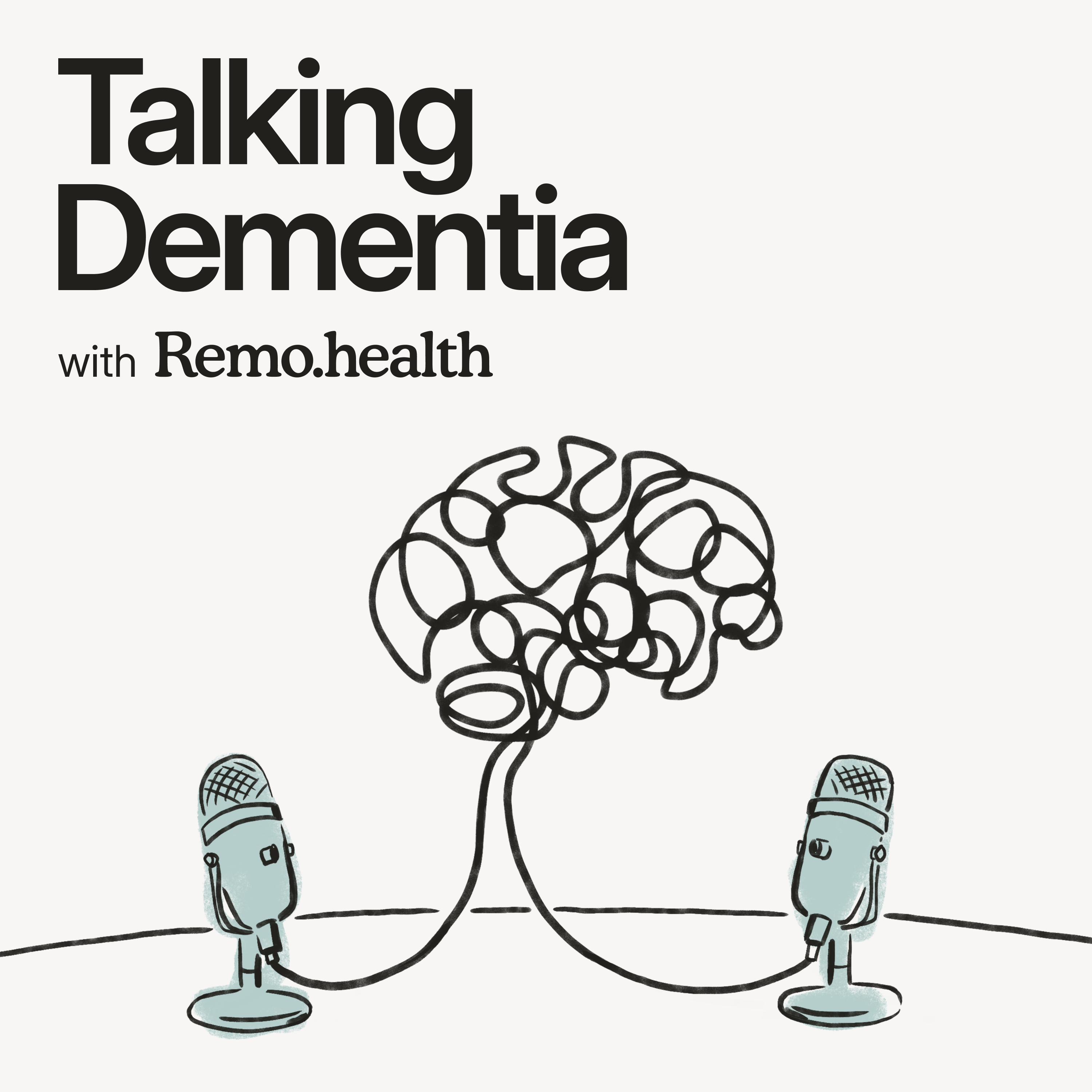
Talking Dementia
Hosted by Remo Health · EN
"Talking Dementia with Remo Health" features experts in dementia leading the charge across medicine, research, policy, and caregiving. Together, we explore the latest advancements, guidance, and science to help people with dementia and their families navigate this complex disease.
Remo Health is a virtual dementia care company. To learn more, visit www.remo.health.
Better dementia care. Delivered virtually.
© Remo Health, Inc. 2024
The information in this podcast series is for general informational purposes only and is not the practice of medicine or any profession. It is not intended to be medical advice and is not a substitute for professional medical advice, diagnosis, or treatment.
24episodes
Episodes
Newest firstAll episodes
Finding Connection & Purpose in Caregiving
Dec 12, 202400:35:27Tap to summarizeCaregiver stress can be overwhelming – interfering with work, disrupting sleep, and making it difficult to provide proper care. Cultivating communication skills can empower caregivers to navigate difficult conversations with their loved one and care team.This episode features clinical psychologist Dr. Allison Applebaum who speaks with Remo’s Chief Medical Officer Dr. Meredith Bock about practical strategies for navigating the complexities of caregiving. Drawing from both her professional experience and personal journey as a caregiver for her father with Lewy body dementia, Dr. Applebaum offers compassionate advice on communication, self-care, and building a support network – emphasizing the importance of finding meaning and purpose in caregiving, even in the face of immense challenges.***Dr. Allison Applebaum is a clinical psychologist who primarily focuses on addressing the unmet psycho-social needs of family caregivers – the family members and friends of patients with chronic or life-limiting illnesses who serve a critical and often unrecognized role on the healthcare team. For the past 15 years, Dr. Applebaum was on faculty in the Department of Psychiatry and Behavioral Sciences at Memorial Sloan Kettering Cancer Center (MSK), where she was Founding Director of the Caregivers Clinic. She is author of “Stand by Me: A Guide to Navigating Modern, Meaningful Caregiving.”Learn more about Dr. Applebaum and her publications by visiting her website.About our hostDr. Meredith Bock is a board certified neurologist and Chief Medical Officer of Remo Health. She's dedicated her career to caring for people with neurodegenerative diseases and their families. Her clinical expertise is in cognitive and movement disorders. Her research at UCSF and the San Francisco Veterans Affairs has focused on earlier diagnosis of neurodegenerative disease, and the evaluation of interdisciplinary care models to manage complex symptoms. She is a Volunteer Assistant Clinical Professor in Geriatrics at UCSF. She has received research funding from the NIH, NIA, American Academy of Neurology, and Michael J. Fox Foundation.Connect with usLearn more about Remo Health and how we’re delivering better dementia care to patients and those who care for them.Subscribe to the Remo Health newsletter.Follow us on LinkedIn, Facebook and Bluesky for the latest on all things #dementia and #brainhealth.Have a question or a topic you’d like to hear more about? Email us at hello@remo.health.The information in this podcast is for general informational purposes only and is not the practice of medicine or any profession. It is not intended to be medical advice and is not a substitute for professional medical advice, diagnosis, or treatment.
Transcribe →
Alzheimer’s & Why Early Detection Matters
Dec 12, 202400:53:19Tap to summarizeWhy is timely and accurate diagnosis for dementia important, and how can we create preventative systems that keep patients safe, healthy, and independent for as long as possible?In today’s episode, Dr. Armen Moughamian talks with Dr. Emily Silverman about the crucial role of early diagnosis in managing cognitive impairment and highlights the importance of family involvement in the care process. Join us to learn about emerging treatment options and hear his vision of a future where cognitive decline can be effectively managed.***Dr. Armen Moughamian is a neurologist and Medical Director of the Ray Dolby Brain Health Center at the California Pacific Medical Center (CPMC) in San Francisco. He leads a multidisciplinary team of doctors, nurse practitioners, neuropsychologists and social workers in the treatment of patients with cognitive impairment. He also heads the clinical trials program at Dolby with a specific focus on Alzheimer's. Armen went to undergrad at UC Berkeley, got an MD PhD at Penn and did neurology residency and fellowship at University of California San Francisco (UCSF).Learn more about Armen by visiting his LinkedIn.About our hostDr. Emily Silverman is an internal-medicine physician, Assistant Volunteer Professor of Medicine at UCSF. She is the creator and host of The Nocturnists, an award-winning medical storytelling program that has uplifted the voices of more than 450 clinicians since 2016 through its podcast and live performances. Her work has been supported by a MacDowell fellowship and widely published in numerous publications including JAMA, The New York Times, and NPR. Learn more about Emily by visiting her website.Connect with usLearn more about Remo Health and how we’re delivering better dementia care to patients and those who care for them.Subscribe to the Remo Health newsletter.Follow us on LinkedIn, Facebook and Bluesky for the latest information, news, and guidance on all things #dementia and #brainhealth.Have a question or a topic you’d like to hear more about? Email us at hello@remo.health.The information in this podcast is for general informational purposes only and is not the practice of medicine or any profession. It is not intended to be medical advice and is not a substitute for professional medical advice, diagnosis, or treatment.
Transcribe →
Dementia Care Insights & Hope
Dec 12, 202400:53:07Tap to summarizeThis episode features Dr. Meredith Bock, neurologist and Chief Medical Officer at Remo Health, in conversation with Dr. Emily Silverman about the complexities of neurodegenerative diseases like dementia. Meredith talks about the unique challenges and rewards of working in the dementia space, the crucial role of interdisciplinary teams, and how palliative care can improve quality of life for patients and families. She also shares insights on the future of dementia care from her personal experience leading a healthcare organization, offering a message of hope and progress amidst the challenges.***Dr. Meredith Bock has dedicated her career to caring for individuals with neurodegenerative diseases and their families. Her clinical expertise is in cognitive and movement disorders, and her research at UCSF and the San Francisco VA focuses on earlier diagnosis of neurodegenerative disease, optimizing quality of life at each stage, and the evaluation of interdisciplinary care models to manage complex symptoms.Learn more about Meredith by visiting her LinkedIn.Recommended readsDr. Bock on integrating neuropalliative care across the entire dementia journey, and the future of blood-based biomarkers for Alzheimer’s diagnosis.About our hostDr. Emily Silverman is an internal-medicine physician, Assistant Volunteer Professor of Medicine at UCSF. She is the creator and host of The Nocturnists, an award-winning medical storytelling program that uplifts clinician voices through its podcast and live performances. Her work has been supported by a MacDowell fellowship and widely published in numerous publications. Learn more about Emily.Connect with usLearn more about Remo Health and how we’re delivering better dementia care to patients and those who care for them.Subscribe to the Remo Health newsletter.Follow us on LinkedIn, Facebook and Bluesky for the latest on all things #dementia and #brainhealth.Have a question or a topic you’d like to hear more about? Email us at hello@remo.health.The information in this podcast is for general informational purposes only and is not the practice of medicine or any profession. It is not intended to be medical advice and is not a substitute for professional medical advice, diagnosis, or treatment.
Transcribe →
An End-of-Life Doula on Grief & Death
Dec 12, 202401:07:57Tap to summarizeIt's often hard to know how to navigate the end-of-life journey with our loved ones, and our own anxieties about death can make it difficult to offer the comfort they need and deserve. On today’s episode, end-of-life doula Autumn Campbell speaks openly and emotionally to Remo’s Chief Medical Officer Dr. Meredith Bock about the dying process and how we can support others experiencing grief and loss. Autumn explains how end-of-life doulas help families navigate difficult conversations and decisions around death and grief – including the importance of advanced care planning, asking for help, self-care for caregivers, and the dying process.***Autumn Campbell is an end-of-life doula and co-founder/facilitator at Justice Leaders Collaborative. In her role as an end-of-life doula, Autumn offers compassionate and caring service to people who are going through the dying process. She provides a voice and perspective for individuals approaching the end of life and support to those around them, be it their caregivers, family members, or friends.Learn more about Autumn by visiting her LinkedIn.Here are links for topics from this episode:The Conversation ProjectNo One Dies AloneGrief is a Sneaky BitchAbout our hostDr. Meredith Bock is a board certified neurologist and Chief Medical Officer of Remo Health. She's dedicated her career to caring for people with neurodegenerative diseases and their families. Her clinical expertise is in cognitive and movement disorders. Her research at UCSF and the San Francisco Veterans Affairs has focused on earlier diagnosis of neurodegenerative disease, and the evaluation of interdisciplinary care models to manage complex symptoms. She is a Volunteer Assistant Clinical Professor in Geriatrics at UCSF. She has received research funding from the NIH, NIA, American Academy of Neurology, and Michael J. Fox Foundation.Connect with usLearn more about Remo Health and how we’re delivering better dementia care to patients and those who care for them.Subscribe to the Remo Health newsletter.Follow us on LinkedIn, Facebook and Bluesky for the latest on all things #dementia and #brainhealth.Have a question or a topic you’d like to hear more about? Email us at hello@remo.health.The information in this podcast is for general informational purposes only and is not the practice of medicine or any profession. It is not intended to be medical advice and is not a substitute for professional medical advice, diagnosis, or treatment.
Transcribe →