← The Audiobook Club with John York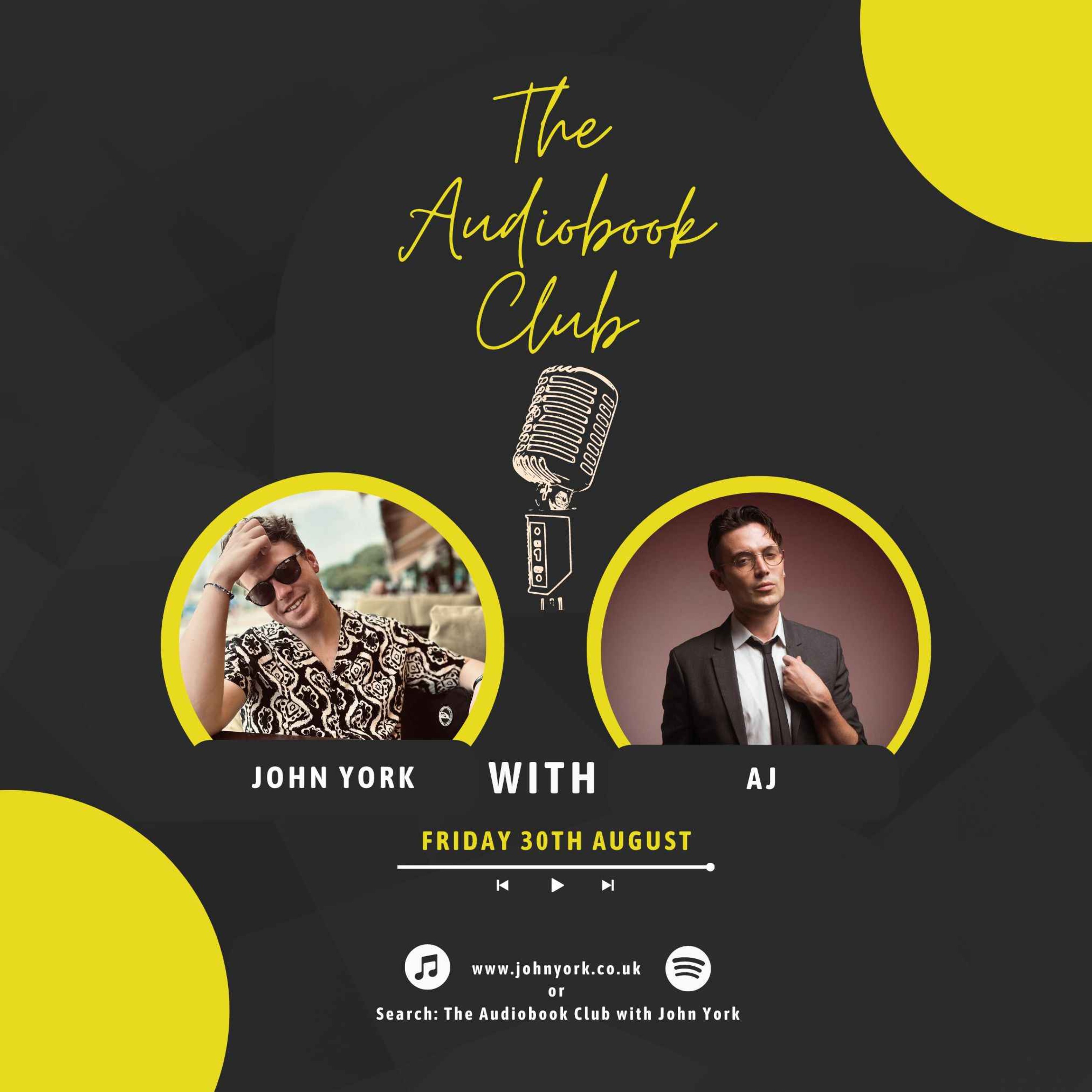
The Audiobook Club with John York
AJ | Musician & Quinn Creator
01:20:31
Imposter Syndrome, Navigating a Creative Life and BookTok
Loading summary
Transcript154 lines
- [00:00]
A
Foreign.
- [00:13]
B
Hello and welcome to the Audiobook Club. In this week's episode, we're so lucky to be joined by musician and Quinn creator aj. Hello, mate. How are you? Thank you so much for joining me on the show today.
- [00:27]
A
I'm very good. I'm very excited to be here. It's my first podcast outing as a Quinn audio creator. So you've got your world exclusive there. Congratulations.
- [00:36]
B
I'm over the moon with that. I had no idea.
- [00:40]
A
No, I'm very excited to be here. It's. It's good to be. Good to be talking to a fellow creator.
- [00:44]
B
Yeah, it's a really weird one because I think that with like, creators, especially for like, Unquin, it's like unlike any sort even. It's quite a. I was gonna say exclusive group, but in only in the terms of like, there's not many of us doing this and it's a very sort of specific world, obviously. So it's quite nice to be able to, you know, there's not many people who will be able to get it and share experiences and all that sort of stuff. So it's quite nice, really.
- [01:09]
A
I think we all feel that we are participating in some sort of strange, cutting edge of this world. I'm not aware of any corner of the Internet that feels so new and fresh or I certainly haven't been in a core of the Internet that feels that way for quite some time. You know, like, when YouTube first started, they were kind of a core group of creators. Or when Twitter first started, there were people who are posting on there and I don't know, it feels kind of special. Like there's this new fledgling platform that we're a part of and we're all treading into the unknown. And I guess we all have that in common.
- [01:42]
B
Yeah. And it's nice, really. And it's also like, quite. I'll get into this more as we. As we chat further and things. But like, from a, like a creative standpoint, would there been like so much new territory to explore? I mean, I do get excited by that idea of like this, you know, because it's still relatively new. There's like so many things that can happen to. The possibility is quite. Is quite extraordinary really.
- [02:06]
A
It's quite intimidating. The endless possibilities that you could go into in this sort of platform. There's literally you could do anything. And I think what I'm learning over my last six weeks of being here is that listeners have very broad imaginations and they. They really want you to push the boundaries of what you want to do, like, try new things and get out there. And I'm kind of very much still in my getting to know you phase of this whole thing. So maybe I've not pushed the boundaries of my imagination as much as I will do in the future, but, yeah, I mean, listening to some of the other audios and particularly some of the originals as well, and you think, you know, these are works of literature, really, and they're painting whole worlds and these incredible characters, and I'm excited to eventually get into doing more stuff like that.
- [02:56]
B
Yeah, I 100% get that. Right. There's so much for us to talk about in that realm. But first, as is tradition on this show, I'd really love to talk and start getting to know you a little bit more about your background. So I believe now, please correct me if I'm wrong, that it will start with music and, you know, music school. So, like, when did that. Like, when did your love for music sort of bloom into something that you were going to turn into a career and run with that path?
- [03:25]
A
It's a really interesting question. Music's something that I've always done. I kind of. If someone said to you, oh, you know, when did you first start walking? It would be like, I've kind of always done it. There was a part of my life that. That started, and I don't remember it. Music for me was the same. I started playing piano when I was like, three or four years old. I was very lucky to be encouraged to do that when I was really, really young. And it just connected with me in a way that other things didn't. I had amazing music teachers at school, and that was my happy place. I always felt really comfortable sitting in front of a piano or singing in choir and things like that. Eventually it became an outlet for the kind of more angsty teenage years. You know, you get to 16, 17, and suddenly all the things that you. You can't quite process emotionally, the things you can't say to people, that they found their way into songs that I began writing and. And then that kind of compulsion to do that became a need, an urge to get out there and play those songs in front of people. So I went and did some open mics and I got invited to play a few shows in London, and next thing you know, that's it. I'm just doing that all the time. And then I went to music school around the same sort of time, met some incredible people. And, yeah, it kind of went from there, really. And I've sort of occupied every single corner of the music industry since then in some way, shape or form. I think with music and most other creative industries, I think you, you learn to wear many hats and you learn to pivot and diversify quite quickly, which leads you into different parts of the industry. You pick up different skill sets, like being a video director, for example, or an audio engineer. These are not skills that you set out to acquire from the very beginning. You think, I'll play my instrument, I'll write my songs and that'll be that. But actually you have to become a jack of all trades, I guess, to do all of these things. So it's been a pretty varied, pretty varied couple of decades for sure.
- [05:21]
B
I think as well. Like one of those, one of those skills that you need to acquire is that you need to sort of be your own promoter as well. I suppose, you know, you need to. Because I mean, like anything sort of creatively trying to get people to listen to your stuff is obviously like such a task and can be challenging in some areas as well. You know, trying to get people to shows and things in an arena where you can showcase and say, this is why you've come to me, because I'm gonna knock your socks off or whatever. Right. But like, how do you sort of find that aspect of sort of promotion? Because obviously with what we're going to be talking about in a little bit, with the voice acting side of things, again comes with its own side of promotion. On your social media and, and, and, and your work on social media and growing and engaging with people. Did that area of promotion come naturally or is that, did you always have that in you?
- [06:10]
A
I've kind of been pretty bad at doing that for the last, yeah, maybe 15 years or so. I mean, when I was first beginning to play in bands and promote my music in, in a way that you'd expect someone to online, I was doing it on MySpace. So it was a very different landscape and no one really knew what social media was. And then I, I kind of dropped the ball a bit over the following ten years after that. I kind of always had this old school mentality that online promotion isn't as valuable as being out there and playing shows and meeting people and doing it the old fashioned way. Unfortunately, just because of my very specific age, I think I bridged these two worlds in the wrong way. You know, like maybe 10 years before I started, people only made a name for themselves by touring and playing physical venues and meeting audiences physically and doing it that way. Ten years after I started online is the way people blow up. And I managed to fail at both of those. In a way. I just, I fell between the two chairs, you know, those two worlds. And, you know, I was, I was really late to starting on Tick Tock. I only started doing Tick Tock six months ago, really. And I sort of wish that I'd not hidden myself away from it for so long. I guess I've always thought maybe a bit too cool for school, you know, like, it doesn't apply to me, you know, I'm an old school musician or whatever and I don't need to play that game. And how wrong was I? You know, it's such a great way of promoting what you do. And I think what's. What's interesting about promoting online these days is that I'd had this misconception for a long time that you can create an allure about yourself or as a musician or an artist by keeping some sort of boundary between you and your audience. You know, you could be perceived as like, maybe otherworldly or kind of mystical, or there's something about you they don't understand and that's a draw for an audience. It always used to be, you know, you sort of elevated on a stage. And people think, I don't know him, but I want to and that's why I'm going to buy his record.
- [08:19]
B
Yeah.
- [08:20]
A
These days that doesn't translate at all. And I'd always thought that if I gave too much of my personality away or I sort of told people who I really was, the illusion would be spoiled. No one would come to the shows, no one would buy my music because they think, oh, he's just like me, he's just a normal guy. Yeah. And I couldn't have been more wrong. You know, this, this way of communicating directly with an audience like we do on TikTok, that feels so immediate and so conversational, has drawn more people to listening to my music than I've ever had. And I just feel a bit silly having misinterpreted it for so long. And it's such fun. It's such a great, like, I'm loving having a conversation with my audience on a daily basis. It's. It's enlightening, it's fun for me. And like, they give me ideas I. I never would have had before, like joining Quinn, for example. You know, all of these things are beneficial to the work that I do. They don't take anything away from it. And that's a lesson that I've unfortunately learned the hard way. But I'm here now so, yeah, well, that's.
- [09:23]
B
That's all that matters. But I think, I think also the fact that you've only been on Tick Tock for. Did you say six months?
- [09:28]
A
Yeah, pretty much.
- [09:30]
B
I mean, what you've like achieved on that platform is really cool in that short space of time in terms of your engagement, in terms of like, you know, the sort of buzz around all of your content is really cool. And like, so how did. So where was like the sort of transition into like, more voiceover stuff? Like, how did that kind of come about? Was it always something that you had your eyes set on or was it just. I don't know, Tell me about that.
- [09:57]
A
Three words changed the course of my existence as we know it. And those three words were, what is Booktok? That was the question I asked my audience maybe two and a half months ago. And it was a question I asked that I did. Pure, genuine curiosity. I had no clue. I wasn't just being coy. And you know, yeah, people were like, oh, you knew what you were doing. I had no idea. I was getting comment. I was getting comments on a lot of my videos of me singing and people were saying, this is Booktok approved. And I'm like, I don't know what that means. I'm not cool enough to understand what that reference is. And it was happening so often. Eventually I just asked the question, like, someone's got to tell me what's happening here. Yeah, who else am I going to ask? You know, I don't have family members who would be able to tell me what that means. And immediately things changed. I mean, just like within 45 minutes of posting it, I realized something, something was different. Suddenly the audience was, was filled with people from that corner of TikTok. And yeah, it just, it very much spiraled from that moment. And I think, like, the thing about my approach to doing social media and tick tock and everything recently is that I've got like a fun analogy for what I've been doing with this. Like, whenever you go to a new city, let's say you're traveling a new country. Like when I went to New York for the first time, the first day I spent just walking around having no idea what I was doing or I had no plans. I just wanted to get to know the place on foot. And instead of saying, right, I want to go here, I want to go here, I'll just walk aimlessly. And then when the green man would show up and say, you can cross the road, I'd cross the road. And I just Keep going until another green man came up. And I'd cross the road at that point and I just keep going, following the green men all over the city. And it was a great way to just, just follow fate, I suppose, and just let it decide what you're going to do.
- [11:54]
B
Yeah.
- [11:55]
A
My Tick Tock experience has been that every time there's been a green man saying, go this way, I've done it and it's been really rewarding. And I truthfully have no idea what I'm doing, but I'm having like a lot of fun learning, I suppose.
- [12:14]
B
I'm so pleased. You have no idea how pleased I am to hear that, because I have no idea either.
- [12:20]
A
Does anybody really?
- [12:21]
B
No. I don't know. I don't want to speak on anyone's behalf, but I hope not. It's strange because when making that jump and like finding Quinn and being like, I'm guessing, and please do correct me if I'm wrong, but I'm guessing this was like your first experience with like audio erotic content. It was, right? Yeah. So, like, because it's so, it's so, so different from other forms of content, even other forms of like, erotic content as well. It's so different. So its own thing. And this was like, for my own personal journey, like, you know, because I've done audiobooks and stuff, but this was still so different and such a new sort of skill level. Were there any. As you were sort of delving in that, did you do much, like, research into, like, kind of, you know, other creators or other, like, what was going on before you sort of dived in? Like, could you tell us a bit, a little bit more about what it was like at that really early point that you've just heard of it? You're just doing the research, like, what was that like?
- [13:17]
A
Yeah, so I, I only heard of Quinn as a result of people tagging Quinn in my Tick Tock comments section, which, which happened a few hours after that book talk. Tick Tock. And I was like, oh, wow, what is this? This is another word I don't understand. So I looked them up and thought, oh, well, that's really, really cool. And obviously curiosity took over at that point and I was looking into it and thinking, oh, this is a really interesting platform and something that I'm. I'm kind of really curious about. Woke up the next morning and I'd received a DM on TikTok from Caroline, CEO of Quinn, saying, hey, you up for, you know, having a shot at doing some stuff for us for Quinn. I was like, oh, my gosh, like, what is going on? This is so cool. So it was at that point that I really kind of looked into it and their, their team over there, as you know, extraordinary group of people, they're so cool, so professional, and so amazing at what they do. They, they said, look, here's a kind of onboarding package. Here's a bunch of our best performing audios for you to check out, a bit of a guide on kind of what we expect, and go and check out some stuff on the platform and come back to us and see what you think. And it was an experience. I was like, wow, I feel like I'm having a bit of an intimate moment in my studio here. Like, plenty of things have come out of the speakers in this studio, but nothing quite like that. And that moment. And I thought, are the neighbors going to hear what I'm listening to? Like, maybe I should have put some headphones in. You know, it was, it was exciting. It was really cool. And then immediately my feeling of I'd gone into that listening experience thinking, I can do this. And then very quickly, after listening to it, I was like, I can't do that. Like, because it's so good, it's so well produced, so well written, so, so incredibly well done. I thought, that's a lot of work and, and these are skills that I don't have. So I kind of immediately really, really was filled with doubt. Like, I don't know if I'm capable of producing something to this standard, especially with no prior knowledge or experience of this space at all. It was, it was quite scary, and I don't know how you overcame that, but it was, it was definitely intimidating to start with, but they gave me a bit of time to try some stuff out, gave me some feedback, and they were very kind, very, very specific with their notes and, and really encouraging. And fortunately, it went okay. But, yeah, those are. That first few days, I was definitely anxious about it, for sure.
- [16:11]
B
Yeah, no, I 100% get that. It's so. It's such a weird. This is the thing. I have no idea whether I'll keep this in the podcast or not, but the, this, this what, what I'm about to say, but I think the weirdest thing was for me was like that, that first, you know, if you went to say that when they say, give it a go and go and record something and send it back to us and we'll let you know what we think. And it's like you're in like a professional setting like an email. But it's like, still, you know, you're trying to be professional and look competent at things in this email, and then just knowing what's on that audio file that you're attaching to this email and thinking, I'm going to send the most sort of intimate, like. Like, you know, I mean, like, audio that I've ever recorded. I'm going to send it off to this complete stranger.
- [16:54]
A
And.
- [16:55]
B
And it's like, I really hope that this is real.
- [16:58]
A
Like, I've not been. Not been catfished and this is gonna end up on. End up on MTV Punks, you know? I totally know what you mean. Yeah, it's very strange. Very strange. Yeah. And I kind of had this. You know, I struggle with imposter syndrome anyway. Most of the time. I think anybody who's kind of analyzing what they do has a bit of that. But with this. With this space, I felt. And I'm really curious to know whether or not you felt the same way, actually, because it might make me feel a bit better. I felt a bit like Happy Gilmore, which may need some explaining, but, like, I walked into this space with no. No specific skills that made me belong in this room, really. Maybe some, like, transferable skills from other jobs that I'd done, but I walked into a space filled with the most dedicated professional, you know, amazing people who. Who live and breathe this stuff and do the most phenomenal job. And I don't even know which way around to hold the golf club, really. Do you know what I mean? And. And that's taken some getting used to. Definitely do.
- [18:18]
B
You know, I think that in my personal experience, I think that's often, like, the best way to be, though, because if you see, like, you know, the folks who've been doing this for the. For the longest, like, on Quinn, and, you know, you check out this stuff and you think that is just on a level that is, like, I don't know if I can reach that level. And in my experience, like, you're like, such a high level of quality, and then you sit down to write your own thing and you think, okay, well, I'm not going to try and be worse. Like, I'm going to try and match that. I'm going to try and do my version of the best that I can possibly be. And I think it's sort of like that. That feeling of, like, I better start proving that I belong here. I better start showing that I'm, you know, how much I care about, like, this opportunity. And I think it's at Least for me. It sort of really spurs me on and keeps me from getting complacent, I suppose. Not that I've been doing it way long enough to be complacent anyway. But you get my point, you know, And I think that that's sometimes quite a nice place to be. And it's like with any. Anything, really. It's like. Like if you're playing a gig and the band that is playing before you or the artist who's playing before you is phenomenal, and it's got a really good reaction to that audience, from that audience. Surely what's running through your head is right. Okay, it's game time. I'm going to show you what's. What's. What's up, you know?
- [19:42]
A
Yeah, you brought back some terrible memories for me on that one, actually, over the years. I don't know if these names would mean anything to you, but I was playing a show. I must have been 18 at the time. So I was incredibly self conscious about what I was doing. And I was in a basement in Surbiton and I was sandwiched between Jamie Woon went on before me, who is just that. Like, he. He's magic. He. He channels something directly from God. I swear, it's terrifying how good he is. He was on before me, and then John O. McCleary was on after me, who is as close to a living version of Jeff Buckley as you can possibly imagine. And there I was, little 18 year old me, just having the worst night of my life. But, you know, then I suppose I get to tell this story. I don't know, almost 18, well, 18 years later, to say what a cool position to be in. I was sandwiched between John O'McCleary and Jamie Woon in a basement in Surbiton in the year 2005. How cool is that? So, you know, we live to tell a tale, don't we? And I guess we just do what we do. And, you know, I guess maybe I've not. I've deliberately veered away in some aspects from over analyzing what some of the other creators do on Quinn at this point. And I intend to really do a deep dive, as it were, on all the creators that are on there at some point because there's so much to learn. But my experience told me that the right thing to do when I was starting was to actually not listen to too many other Quinn audios and kind of follow my own instincts enough to the point where maybe I'm, you know, five, six weeks in now, I can change that. Because otherwise I would just be wrapped up in that comparison, and it would just cripple me completely. And, you know, my audience thankfully like me for me at this point. And I'm sure that the same is very much the case for you, that they come to you for what you bring specifically. That's unique about you. Yeah. And we've always got stuff we can learn from other people, but we just do. We do what we do better than anybody else.
- [21:54]
B
Yeah, I know.
- [21:55]
A
That's our skill.
- [21:56]
B
Exactly. And I think that the idea. Because the words are the words, but, like, you reading a script versus, like, Tom Yorke reading a script versus, like, Mersey reading a script, or the devil or whoever, you've got four or five different audios. They're completely different because it's that personality that's. I don't. You know, that a lot of us don't even realize we're portraying when we're reading something or, you know, we're doing an audio. And he's like, that's the bit that's the key to it. So I think you're absolutely right in the sense of, like, I've just got to be the most. This is a question, actually, because this is something I struggled with, you know, in terms of that, I guess, music as well. It's like the biggest example of this. It's like authenticity. Your story, your message, it has to be yours. You have to believe it to make a song work. Right. If you're writing a song, if you're performing a song, even if it's like somebody else's song, you make it your own, because that's what you have to do to give, like, a great performance. And it's like, did you. Did you struggle at all? Even, like, social media or Queen or even in music of, like, sort of allowing that authenticity to come forward? Because I actually found that tremendously difficult because I would say something in a way that I would say it and go, well, that doesn't sound very good. Or that that's not like. Like, this person, or that doesn't. And then it's taken me quite a while to say, no, that's doing. The thing at the start is copying somebody. Like, you have to be you. You have to say it for you. And, you know, the people who are your audience will like that. And, you know, and I don't know, did you. Do you have any sort of.
- [23:30]
A
I. I struggle with that on a daily basis. Yeah. I always think everybody else is so much cooler than me. I go and watch their things And I'm like, oh man, I wish I'd thought of saying it like that. Or how do they get away with it? Or like, oh, they look so good and what they said is so accurate and resonates so deeply with me and with everybody they're talking to. I wish I could do that. I try to be less hard on myself these days. I think you probably get to a certain age and you stop worrying about it too much. And like I, I know for a fact that nobody cringes harder at me than me. I cringe on such a deep level at myself that I suppose at least if it's 5% less cringy for somebody else watching me, that's okay. It doesn't matter. So it's, yeah, we're not always going to get it right every single time, are we? And I think that's okay. And to a degree, the process of doing that, the process of allowing myself to be cringy or to be perceived as cringy, particularly by people that I know in real life. By the way, this is one of the major hurdles of posting on social media. And maybe one of the reasons I didn't do it properly for so long is because I didn't want people who knew me in real life to judged the fact that I was like putting myself out there. Like, does this jive with the real version of me that they know? Or like, are they going to comment? Are they going to bring me down? Are they going to like play the game? All of those questions are going around in your head. And I guess what's been cool about Tick Tock is that maybe it's the Discovery is better on that platform. So you go to people who don't know you and that's been quite liberating in a way because they don't see you the way you see you or the way your friends or family see you. They see for the most part the good in you that perhaps is invisible to you. And I found that actually it's like interacting with people on TikTok that's given me permission to stop worrying about it. Because the things that I feel most self conscious about, the things that I've been most embarrassed about putting out there are the things that people have embraced the most about what I put out there on Tick Tock. And I think that's okay. And I've definitely got now people in, in real life who know me show up on my Tick Tock and my Instagram comments and stuff and now they want to be involved that's the funny thing, because there's all this fun stuff happening over there that they're like, oh, yeah, I want to be part of that conversation. So, yeah, the audience, I think, has given me permission to not worry about embarrassing myself, which has been really nice.
- [26:18]
B
Yeah, I think that's a really interesting sort of discovery, really. I get what you mean about, like, people in real life who know, like, you know, remember the embarrassing times in college or uni or whatever, and you sort of like, you know, you're sort of there. Like, I sometimes see someone from, like, I went to school with and I haven't spoken to in 15 years and they've liked something that I've done. I'm thinking, oh, the only thing they know about me is all that really embarrassing stuff. And now they're like, see me, like, trying to be cool doing all this stuff and it's. I get exactly what you mean of like, trying to sort of seeing like, different versions of yourself and like. Because obviously you as. As you are the only ones who see all. And most of the time people don't even give a shit, you know?
- [27:03]
A
No, they don't.
- [27:05]
B
And it's, It's. I mean, that's quite a nice revelation. I always remember, like, seeing like. Like, I hate dancing, right? I have to be 10 pints in before. You'll see before you.
- [27:17]
A
Only 10. For me it's 30. There's no way.
- [27:21]
B
But like, I always remember, like, kind of like my partner when we first started going out. Dad got married, so I went to their wedding and everyone was sort of having a little boogie on this dance floor and. And then I was kind of shuffling and feeling really self conscious and there was a guy next to me, he was really going for it, right? Pulling out all the big moves. And in my head I thought, like, oh, that's so embarrassing. Like, oh, whatever, right? And someone had filmed it and I saw the footage and after. And next to each other, this guy really going for it and me being really embarrassed. I felt the only embarrassing one was me, because I did, you know, I mean, because you're like, you didn't even give it a go.
- [28:00]
A
Yeah.
- [28:00]
B
And I think, like, I always try and remind myself that. And it's the same with Quinn as well. It's like, it's more embarrassing to not give it your all. There's nothing worse than that. Like you. But you, like, if you go for it and you, you know, really put yourself out there and really go for it, which I always thought was like an interesting, interesting thing.
- [28:16]
A
Yeah, totally. And it's easy to forget that every single creator you look up to who's also pushed through that cringe barrier themselves. Yeah, they did it. They were posting to five people when no one cares at some point.
- [28:28]
B
Yeah.
- [28:29]
A
So it's a rite of passage, isn't it? I suppose we need to go through. It's. It's that. That letting go of ego enough to just go, it's fine. I'm. I'm having a nice time. And people can see it. People can, like, smell it. Almost like the authenticity. The second you let that go, people in really enjoy hanging out with you online, I think.
- [28:51]
B
Yes.
- [28:51]
A
It's just like, oh, you're a real person. Cool. Great.
- [28:53]
B
Yeah.
- [28:54]
A
You know, there's no pretense and. And suddenly things are communicated much more easily. So, yeah, it's. It's been fun. It's been humbling, don't get me wrong. It's been extremely humbling, but ultimately, I think quite. Quite cathartic in the end. Yeah.
- [29:09]
B
Yeah. So, like, did you find any. Did you find that your songwriting experience in terms of, like, writing a script for Quinn? Right. Did you find your songwriting experience help in any way to bring that sort of, you know, get in touch with your feelings and bring. Bring out the innards that we're often told in the rest of life to shut in. Like, did you find that help in any way at all?
- [29:31]
A
Yeah, 100%. I think everybody approaches kind of creativity and I guess accessing inspiration differently to some degree. I. I never feel like I'm fully in charge of accessing inspiration. Do you know what I mean? So, like, I. I feel as though my job is to come into the room with. With a. Some skills that I've been working on that kind of give me the toolkit to kind of access inspiration in a way or to understand it or to translate it into something. But I. I never feel fully. Like it's a process that I'm completely in control of. I feel like I. I'm kind of tapping into some sort of collective consciousness that sits somewhere up there that I've just been given temporary access to while I'm trying to be inspired in some way. Sometimes I don't get access. Right. Sometimes I'm like, I'm gonna write a song today, and, you know, I try and tune my brain into that. That process, and it doesn't happen. Okay, well, whatever. I guess I'm not allowed to. Not allowed to get any inspiration today. And. And then I suppose after the fact, like, after I've been Through that process of kind of writing and coming up with something, only then do I sort of examine what I've written and go, okay, maybe this is what I'm trying to say. Or maybe my subconscious is trying to say a particular thing that I didn't know I felt or, you know, there's an emotion that I need to process that this song is helping me understand and helping me communicate. So for me, it's a very, it's, it's kind of a very hands off process. I just kind of just get in the zone and then things happen and I go, okay, well, that was cool. Sometimes you write things where you, you think, oh, my God, that was really out there. Like, did, did I really write that? Like, should I be worried about that? You know, like, why did I write that particular lyric? You know, there's some lyrics that I wrote for a most recent, like, band album, and I'm like, that is. That's really dark. Like, that's really horrifyingly dark. Is that okay, what, what is going on there? But giving yourself permission to say, well, this is a feeling that my subconscious has had. This is an emotion, you know, that I'm. I'm willing to explore is nice. And without overanalyzing it too much and without saying, am I allowed to feel that feeling? Am I allowed to say that lyric? Am I allowed to express particular emotion? Of course you are. And I think what's funny is that sometimes people. I had this. When I was writing songs, people would come up to me, people I was in relationships with would be like, so that song you wrote, is that how you feel? Do you feel that way? Or like, was it, Was that written about me? Was that written about us? You know, and people really think it's like a literal thing. Like, it's me doing. Seeing that, that Rick and Morty episode where like, Tiny Rick is doing that song on a dance and he's like, let me out. And it's like his subconscious just saying, like, I'm trapped. People, people think it's like that, where you're trying to tell them something true and real and meaningful and literal. And like, it isn't, it isn't that it's okay to write things that are really extraordinary and really strange and really, you know, scary and dark and. Or fun. And those may not be representations of how you're actually feeling. They're just little slices of the complex thing that's happening inside. And yeah, I think Quinn is the same for that. And, you know, people will ask the question, are These are these bits of you that you have lived out in your real life, or are they fantasies that you have about living out in real life or things like that? And you think, well, maybe not necessarily, but my subconscious wants to explore it somehow. And that's not a reflection on real life me. It's just trying to understand, I don't know, the variety of things that can come out of your brain, I guess, and giving yourself permission to let them come out. I think I don't even really know what I'm talking about.
- [33:58]
B
No, it makes perfect sense. No, honestly, it makes perfect. It's a really interesting one, really, because there's also another side to this where it's like, if you're. I don't know, maybe this is just me overthinking things, but it's like, do you feel there's sort of any responsibility to be that person that you're portraying in certain aspects? Do you know what I mean? Because, like, the idea. Because what you said about, like, if you write something like, just take Quinn, because that's the thing. I'm not musically minded in the slightest, so my experience sort of stops with you, but with this. But the Quinn I can sort of get my head around a little bit more is that if you. If you write something right, and it's a specific scenario and people, like, I can totally understand why they think, oh, he must be into that, or that that's something that you think about. And it's not necessarily the case. It's just something, as you said, like your subconscious just wants to explore for some reason, or you think that it can be just simple as. I actually think it's quite a good idea or it's quite a good sort of way to get two people together, you know, to tell this sort of story as it is. And then it may be like a little, you know, because it's got to be adventurous in some way, you know, emotionally or, you know, you know, in the literal place where they are. So it's this idea of, like, do you find there's any sort of realm of you that goes, oh, I should. When I'm doing, like, my social media stuff or if I meet someone, I'm talking about it, I sort of need to be a lot more adventurous than I actually am. I need to be a lot more sort of exciting in this way? I don't know, It's.
- [35:26]
A
It's. Yeah, it's a really, really good question. I. I think. I think for me, I don't feel an obligation to behave any Differently. I mean, again, I was so early days. That might completely change. However, I suppose I probably do feel that there is an element of what I'm doing creatively on Quinn that maybe is rubbing off into my real life just, just a little bit. Like maybe I'm carrying myself a little taller than I would normally. Maybe. I don't know. It may be that there are things that I begin exploring for a Quinn audio that actually I might think I might give that a go in real life. Do you know what I mean? I'd like. I don't know. I think, I think what's really cool about Quinn is that it's such a safe space for exploration, for creators and for listeners, is that it's, it's liberating for me so far to do these things. And it may, it may turn out that there's a part of me in real life that goes, yeah, you know what? I liked exploring that on Quinn and I'm going to have a go in real life. I don't know.
- [36:35]
B
Yeah, yeah, it is interesting. I think it's just because I've never before doing Quinn, I've never had any attention in the slightest of anything that I put out into the world. So I get, you know, and with this, this is like been even. I've narrated audiobooks for seven years before Quinn and no one really cared. I knew a lot of other narrators, but I had like, no real listeners would ever like sort of reach out. So people have started to reach out. I've got this like constant panic of like, if you met me, I'd be boring as hell.
- [37:02]
A
And like, yeah, it's a problem. I, I was in that situation for many years as a musician, you know, where people would come to shows and like, sometimes people do extraordinary things. I mean, we turn up at a venue on tour and there would be people sleeping outside the venue in sleeping bags.
- [37:20]
B
Oh, wow.
- [37:21]
A
Like they're like, and don't get me wrong, like, we were not a well known band. We were just like a mid level band playing to a couple of hundred people a night. It was not like we were big, big time, but people would be there and you suddenly be like, oh my God. Like they have this expectation of this, this meeting that's about to happen and like I'm covered in like coffee. I slept on the floor of the van, like, I don't smell good. I'm not interesting even at the best of times. But at 1:30pm In a car park in Yeovil in November, I'm definitely Not interesting. And it was hard to accept that it doesn't actually matter, really. People are just excited to talk to you in those situations and they'll get what they want. You know, I learned that just like being polite and friendly and saying hello really was enough and, and people would be excited about that and that's okay. But like, I was dying inside. Like, really, you wait out here to meet me? Me, Like, I felt embarrassed.
- [38:37]
B
No, I think that's the coolest thing. I mean, like, how did you find, like, you know, that life on the roads in the van with like, you know, a couple guys and you're traveling around in not the most glamorous conditions, but that in itself is quite glamorous in its own way because it's like that rock and roll life, if that's not too cringy to say, but like that. So how did you find that sort of aspect of living? Because from an outside, I've never been on tour, but I would have very much wanted to as a younger man. I don't think my back can take it anymore. But as a, as a younger. But I mean, it's one of the coolest things that Scottish somebody can imagine doing. So, like, how did you find that? How did you find that way of life?
- [39:17]
A
I'm gonna break your heart now. I'm really. I feel a bit bad doing this. This may not be true for everybody in that situation. Like, maybe, maybe not everybody who goes on tour has the same experience. But truly it was dreadful.
- [39:33]
B
Was it really?
- [39:34]
A
I was, I was the most depressed and poor I've ever been in my life. And this is part of the process, I suppose, of paying your dues as a touring musician, is that you have to go through this if you want to prove to the industry that you're hungry enough to go to the next level. At least it was when, when I was avoiding posting on social media and doing that instead. It was, it was really, really hard work. There were moments of absolute life changing magic which made the whole thing worthwhile. Don't get me wrong, I absolutely would do it all again. You know, just, just those glimpses as moments of connection with people where they, they tell you that what you're doing creatively matters to them in some way is just the most extraordinary, just rewarding moment you could ever hope for. But you know, not being able to afford to like, buy toothpaste and like eating only pot noodles that were given to you by the venue and like, basically all of your personal relationships are crumbling because they think that you're living this rock star life and actually all you're doing is like you're waking up in a car park in Dundee which. And there's ice on the floor and you know, you just got a one star review in Kerrang magazine. You know, it's. It's terrible. It truly is terrible. But you know, all the people you do it with are on that sinking ship with you and there's no camaraderie like it. I suppose for that reason it was, it was for me life affirming and dreadful simultaneously and. And that's why it's like nothing else, I suppose.
- [41:19]
B
Yeah. Was there any sort of. Because this, I mean even Quinn as well is that you are fully on like a creative artistic life. Right. That's the journey that you were setting out. So was there ever like a doubt in your mind that you think like. Because it would be this. I talk a lot about on this podcast with uncertainty because I think it's regardless of whether you're a writer or an actor or a musician or you know, you do Quinn voice acting, whatever. One thing that we all have common is that usually we're in a place of constant uncertainty. So it's like, you know, things might be looking alright now, but six months down the line, don't ask me what I'm doing. I have no idea. I have no idea what projects I'm gonna be working on. I don't know what life's gonna throw which can be incredibly exciting. But mostly realistically it's actually kind of terrifying for the. You know and I think that a lot of us when we have those big dreams when we're starting out and say I'm gonna create my own path and I'm gonna go for through life on my own terms. I think the one, the main thing that stops people from doing is I can't take this anymore. I need some stability. I need to know when rent, you know that rent is going to get paid two months down the line. And I always find it very interesting to sort of ask whether there was moments. Do you want one? Do you worry about that? Do you have that, you know, the downsides of an exciting life really. And like were there moments where you were like assault this. I'm just, I'm going to go and work in an office and you know, like how. How did you sort of navigate that?
- [42:59]
A
Yeah. 100 the it's been a roller coaster pretty much exactly as you described of you know, crazy self doubt, dreams, ambitions dashed, you know, moving to different parts of the Industry to do different things. I. I have certainly stepped off this creative treadmill to move in a more conventional work direction. For many years, I did it I word for a big tech company and operations for a long time. Found myself accidentally doing quite well at it for a while, I guess, you know, bringing to a regular job the kind of work ethic that you and I have, which is that, like, well, if I don't do it, nobody else is going to. So I'm gonna get this done and I'm gonna do it the best way possible, and I'm gonna be really resourceful. That actually works really, really well in conventional work environments. Like, people like us inevitably thrive in those situations. Problem is, it just. It comes knocking on the door again, doesn't it? It says to you, remember me, Remember that thing that you loved, that I'm here to haunt you again. I'm back, and you're going to fall in love with me all over again. So, you know, there were moments when I had a more conventional time. Yeah. And actually kind of immediately after the time I just described to you, when I was touring a lot, I hit a brick wall with that and thought, nope, can't do this anymore. Like, I need to make a choice. You know, I either need to, like, actually pay my rent and like, feed myself or keep doing this. And I decided that I wasn't happy doing what I was doing, and I decided to, you know, get a real job, as they say. Yeah. But I. I think when we begin this journey into a creative world, when we're young, we think there's like rock star level of success or there's failure, and it's binary like that. We, we can't visualize, like an in between. When we're that young, we think, I'm gonna make it. I'm gonna be the most successful in this part of the world, part of the creative world as I can possibly be. But the truth is, is that there's actually a huge section in the middle of that industry where people are professionals, they work and they get paid, and it's a job like every other person's job, without the kind of accoutrements like the trimmings of fame and like all of those things that you think of. It's not glamorous, it is hard, but you do okay. And we touched on it right at the top in learning to diversify and learning to have different skill sets and learning to put those skill sets together, skill sets to use in different parts of your industry to make money. Like, I. I Wasn't making money as a touring musician, but I had skills as a writer and as a producer because I'd learned those skills in service of my attempt to be a rock star. But my. I. I got paid for those skills when I decided to actually start making music for TV and film, as a composer, for advertising and things like that. And that's not something I'd ever visualized for myself. I'd never thought, I'm gonna write music for a Coca Cola commercial. Yeah, it didn't occur to me. But actually, that was a way for me to get paid doing what I love doing, and that was okay. And I think once you acknowledge that, like, maybe dreams of vast riches in a huge, you know, palatial mansion in Los Angeles and are not actually. And they're not important, it's not that you don't want them anymore because you can't have them. You don't want them anymore because it's actually not important. You realize that, you know, you're very happy just being and without chasing that crazy, crazy dream. And you want less, you have less, you need less, and you give yourself permission to work the right amount to have what you need. That's a version of success that I'm very, very happy with, which is happily where I find myself these days. And I'd recommend that part of success for people when they wanted to get into creative industries. And anything more than that is a bonus, I suppose.
- [47:13]
B
Yeah, yeah, yeah. 100%. 100%. Do you mind if I ask you some sort of. Well, it's kind of quick fire questions. Not really quick fire, but there's sort of more vague questions. It's just. It's just to let our audience know a little bit more about, you know, the AJ behind the mic. What is a challenge that you're facing currently?
- [47:42]
A
Oh, God. A challenge that I'm facing currently. I'm perpetually renovating this house that I bought in France. It's doing its best to fall down faster than I can prop it back up again. It's one of the dangers of buying something that is hundreds of years old, and there's a reason why nobody else wanted it. So I could reel off a long list of challenges that this house has presented me on a daily basis. One, currently being comfortable in a temperature way because it's roasting hot here in France. I'm too hot right now, as you can probably tell. And in winter, I'm much too cold. So the house. The house is a challenge that I'm always facing. Yeah, yeah.
- [48:24]
B
What made you move out to France or have you been in France for a while?
- [48:27]
A
I moved to France in 2018. So yeah, six years ago now.
- [48:32]
B
Yeah.
- [48:33]
A
There's a short version of this story and there's a sl. There's a quite a long version of this story. I'll tell you the short version. I was offered a job out in la in around 2016. Ish. As a composer for TV and film. I was sat, waiting to move for about a year and a half and after that time it just, it fell through. It didn't happen. One day got the email saying, sorry, this isn't happening anymore. By that time I'd been kind of living out of a suitcase for 18 months, not committing to anything and not buying a house, which is what I wanted to do. So then I was met with the decision, do I now buy a place in the UK and kind of go back to my life as it was before I was offered the job in la? Which felt like a kind of admission of defeat in a way.
- [49:22]
B
Yeah.
- [49:23]
A
Or do I take on a new, an exciting challenge? I think I'd sort of mentally decided I wasn't going to live in the UK anymore. By that point I was kind of not in the room anymore. I was like, I need, I need to live somewhere else. Brexit was coming and I'm like, I don't feel at home in this country anymore. I feel like I want to be somewhere else. And it just so happens that you can buy a place in France for basically what you'd spend on a deposit in the uk, which permitted me to not have as many overheads or, or any, you know, expenses to cover each month, which, which gave me the opportunity to, to take more risks, you know, and to have that uncertainty and to say yes to things because I, I'm not constantly worrying about how to pay the mortgage each month. So it was a decision to, to get off, get off the, the treadmill, I guess, leave the rat race. And then covert happened which like changed and changed everything, obviously for everybody. And it made the move here more difficult than it would have been otherwise. But I love it here. I love France. It's great. I love the culture. There's lots of things about it that can be frustrating that are a culture shock. Selfishly for me, like I wish I could just go to like a 24 hour Tesco at like 2 in the morning and, you know, get some chocolate. Can't do that. Just not an option. Supermarkets close at 7pm and that's it. There's Nothing you can do. I'd have to drive for. I would have to drive for about six hours to get some late night Pringles. Do you know what I mean? Just not possible. And I miss Argos. Oh yeah, I love, I like the thought of there being a shop down the road that has the stock of all the things I could possibly need now. Oh, it's a, it's a distant memory, let me tell you.
- [51:13]
B
I think it's. Argos got less so because when the catalog kind of faded away and it was just a website, I think it got a lot less exciting because the idea of like running and flipping and you know, going to the section that you want and now it's just like there's less sort of. Now you actually have to type in something on the website to find something specific. And that was never. I always found that the thing with Argos, I don't know why I'm going down this road. But the thing is, Argos was the exploration, the discovery of finding something that you definitely didn't need, that you're now gonna buy.
- [51:46]
A
Words from the wise John. Do not take Argos for granted. If there's one thing you learn from this conversation, let that be it. I miss it daily.
- [51:59]
B
It was the same with Woolworths, if you remember that. And that went away along with my dreams. Love that. Love that store.
- [52:09]
A
Okay, CDs and pick and mix. That's it. What a combo.
- [52:12]
B
Yeah, it's all you needed.
- [52:14]
A
That's all.
- [52:14]
B
You need something also. This is something. So I stayed for a couple weeks, about three weeks in Brittany last year. It might have been the year before, but we went in August and past 2pm everything closed. Is that, Is that like summer, Summer holidays for everybody. I don't know why I'm holding you personally accountable for this.
- [52:38]
A
So the French opening hours. Maybe it's not just the French. I just think they're very good at it. Honestly. You need a doctorate degree to be able to fully understand the mechanics of French opening hours. They shot for lunch every single day for two hours. They're not open on Wednesdays, they're not open on weekends. They're. They're. Sometimes they'll get a public holiday, which is on a Thursday, for example. They'll then decide to take the Friday off and the weekend and the Monday. So you'll find that the shop you want to go to isn't open actually from Wednesday, which there's a day off anyway. So you basically like everything's shut for no reason. They all take all of August off just as a national holiday, basically. So you can't do anything in August. There's an amazing thing about that where I, I don't know if this is true or not. This might just be one of those urban legends. But there is legislation in place that prevents all of the, the boulangeries from closing simultaneously in August. There's like an actual law in place that means half of the bakeries in Paris go on holiday for these weeks and half of the bakeries go on these other weeks to prevent there from being like zero access to bread for the public. Because it's effectively a basic human right here in France to have access to a baguette.
- [54:01]
B
As it should be.
- [54:02]
A
As it should be. But you know, the two very conflicting French passions there that like that law sums up French culture very well because there's that, that right to not work if you choose to, which they take incredibly seriously and at perfect opposition to their right to their fresh French bread every single morning. So it's complicated and I don't understand it. And I always find myself in a car park locked out of the shop that I want to get into and there's nothing I can do about it. This is nothing.
- [54:37]
B
Have you, have you adopted any of that sort of that French culture to working in terms of your work life balance? Like how, how is that looking for you right now? Are you quite a good, evened out person or is it tip a certain way?
- [54:55]
A
It's very hard to do that in my previous job. So until basically exactly a year ago, I was working in TV and film production. I was doing lots of work for Netflix and for Amazon and for, for networks like that who were all based out in la. And I was back and forth and I was doing a bit of work out there and it was a conversation that came up all the time because, you know, the, the kind of Netflix la production work culture is sleep when you're dead, you know.
- [55:26]
B
Yeah.
- [55:26]
A
Like this job needs doing. We need it now. It's four in the morning for you, don't care, Jump on a call, let's talk it through. And like, it's brutal. And we had offices here in France and you know, I'd sort of very often find myself in the office at 3:30 in the morning, like on, on a, on a deadline. And we had French employees also working with us who would just, it would get to 5:00 and they'd be like, bye, see ya. As they absolutely should have done, by the way.
- [55:58]
B
Yeah.
- [55:58]
A
And, and they were like, well, I'm not coming in tomorrow because, you know, it's. It's a national holiday, so, you know, too bad to see. See you on Tuesday. I'm like, okay, great. Like. And I couldn't bring myself to do it. I don't know why I felt this need. Maybe it's like the people pleaser in me, I don't know, felt this need to just go, it's okay, I'll do it. You know, I'll get through. I'll do the work. Ultimately, it just completely burned me out. It burned me out to a husk. And it's kind of why I ended up quitting doing that job, because it's so not compatible with the life here, you know, and, and the confusion on, on Colleagues in America's Faces where they sort of. They say, oh, well, you know, it's okay, we'll do it. We'll do it tomorrow. And they're like, you don't understand. We're not in the office tomorrow. And they're like, what do you mean? Like, it's gonna have to wait until the next day. And they're like, that can't happen. You're like, you don't understand. It has to. It's very strange. I. Now I'm working for myself and probably a bit better. Yeah, probably. I think. I think there are days when I give myself permission to go, I'm not feeling it today. I'm not in the headspace today. You'll know exactly what this feels like. I suppose when you know you need to be in a certain mental frame of mind to go and perform in front of a microphone. And you might wake up one day just feeling like your brain is made of cheese and just go, I can't do this. Like, I can't even smile properly. Something about my brain chemistry today is wrong. It's not happening. I couldn't have given myself permission to not go to the office for the Netflix job, that's for sure. But for. For this, these days, I think, no, do you know what? Like, I'm going to do a better job at this if I just look after myself for these next few hours. Give in to the urge to scroll on TikTok for a little bit, it's okay, you know, and then come back to this when my brain is going to let me do a good job of it. Yeah, I, I definitely. I definitely work more than French people do around me anyway. That's a great. That's a massive generalization. But from my, from the people that I. I kind of Know, around here they're very disciplined with their time off, and I definitely am not. And I still juggle multiple projects, multiple jobs. You know, I'm a working musician out here still. After a day of recording in the studio, then I'll go and do a gig and I won't get home until 3 in the morning. And most people don't do that. They do one or the other. And I'm learning. I'm learning to be better at it. I just, I struggle to say no to things. Someone's like, I've got this project, you know, do you want to do it? I'm like, yeah, what is it? You know? And then I. I lament that decision. And a few months later I'm like, why? Why did I say yes to that? Yeah, like, I just. Oh God, like, I wish I had an extra few hours here. So, yeah, it's a process, isn't it? And I'm not great at it, but I'm getting there.
- [58:57]
B
It's. It's difficult like being sort of in the middle as well between like if you. So in this example you have like sort of typical, like, you know, taking lots of bank holidays off and like closing three days a week and stuff of like your peers around you. And then you have like the other extreme of like the typical LA or New York lifestyle where it is just go seven days a week and this is your life. And I often find this, like, especially in the uk, kind of in between that because we do have our. I want to be in the pub by 5pm on Friday, you know, if time allows or if you can. But then you also have that other sort of ambitious kind of like Americanized idea of like, we should be grinding, we should be putting in all of our efforts. I always find myself not knowing which side I want to be at. And it changes like all the time. Like, you know, I might have like a David Goggins sort of morning and I'll be like, say, like, I'm gonna go crazy and I'm gonna get everything done and. But then the next time I'm like, oh, well, I should just be on, you know, the. I'm gonna live like a caveman today and just eat and protect.
- [60:03]
A
Yeah, I pretend that my Sundays of watching F1 are my self care days. But I'm sort of telling people I've got to watch the race. It's very important. I absolutely have to. Quite often I just, I fall asleep on the sofa about 45 minutes in, around, around the sort of the second pit stop. Window. I sor. Start falling asleep. I wake up at the end to go, that was good. That was a good race. I'm really glad I watched that. I'll tell everybody. I had a really important day of watching the race on Sunday.
- [60:35]
B
Yeah, but whatever you need, though, you got it. It's nice to just take those times to just let your body decide what it wants to do. And like, as you said, like, just sometimes you just need to scroll. I know scrolling is inherently bad for you, but sometimes it's nice, like, because it just, you know, because it like switches your brain off, doesn't it? And you sort of numb and mindlessly and I know that's inherited. Yeah, exactly. But it's like, what's the alternative? Because I think that, like, we need to feel sort of numb every now and again in order to feel sane. So it's either I'll scroll TikTok for 10 minutes or I'm gonna go sink a load of pints in the garden. Like, which one would you rather?
- [61:12]
A
I've really struggled with this in my whole life. That feeling of being able to actually switch my brain off, you know? And I sense by talking to you and getting to know you that maybe you might have had similar struggles in your life where you've maybe like an active br and you're sort of thinking about things more than some people do. And I've definitely been my own worst enemy for that. It's really hard to switch your brain off and find ways of just disconnecting it and being in some kind of float. Sports is good for that is a lot of sports. When I was young, I used to play tennis and actually all you're thinking about is just like getting the ball over the net. It's great. You're not thinking about all that really embarrassing thing you said to someone five years ago that wakes you up in the middle of the night. You're just thinking of hitting the ball over them. It. That's nice. Riding a motorbike does that for me sometimes playing gigs does that for me. Although not that often. Quite often I'm thinking, oh, what am I going to have for breakfast tomorrow? Like, I'll be playing this song and thinking, oh, you know, that's nice. Maybe I could cook that. So that's doing it less and less for me these days. But we need it. And, like, has Tik tok become that a bit for me? Maybe. I don't know. What it's missing is that the positive mental health aspect that sports or things like that brings to your life, whereas all you've done is you just plugged it into your eyeballs and let it take over for a bit. So I don't know. But I do like it. I do like a good scroll.
- [62:41]
B
I know exactly what you mean. You know, I never played sports as a kid, but I've just started playing baseball, like literally in the last.
- [62:47]
A
I saw your TikTok about it while I was there. That's really cool. Why baseball? It's a really unusual choice, I think, for the uk.
- [62:55]
B
I don't. I couldn't tell you why. And I think, well, I got into it a few years ago and I don't know why. I don't know why. You know, just some things just resonate and you just end for whatever reason you think, actually quite enjoy this. And then I found myself like. Because I watched like a few clips somehow and I was like, okay, I'll watch a game. And then I got like the subscription and started watching games and stuff. And then you start like. I realized I was thinking about it quite a lot.
- [63:22]
A
Yeah.
- [63:23]
B
And then I was like, oh, I can't do that on Thursday because that game starts at 6pm and it's the only game this week that starts not 2:00 in the morning. So I've got to make sure, you know, I started doing that more. And then I was doing some workout in Fort Worth and with. And my colleague friends, really, who I was working with, we were staying sort of near them and they said, like, oh, we're going to take you to a Texas Rangers game.
- [63:48]
A
Nice.
- [63:49]
B
And we went and it was just like the best thing I've ever seen in my life. It was like the atmosphere and, you know, it was like, you know, if you go to like a football game in the UK and it's like, I don't look at gross generalization. I apologize to any. I don't think anybody who will be offended by this will be listening to this podcast. So I'm going to go out on a limb. But like 60% of the people at grand are dicks. Right? Like aggressive and like argumentative and just make the whole experience negative.
- [64:21]
A
Yeah.
- [64:22]
B
And that, you know, you have to. If you support a certain team, you have to sit on this side because if you go over there, you might get smacked in the face or whatever grotesque thing. Whereas at baseball, everyone was like, just. It was just family friendly. Yeah. Everyone was there to have a great time. There's a bit of joking or whatever. Like the idea if the other team threw and you Caught the ball, you throw it back for a bit of a laugh, but you wouldn't. And it's all just, like. It's just so, like, jolly.
- [64:47]
A
Yeah.
- [64:47]
B
And I just came up.
- [64:49]
A
Yeah. I've been to some Red Sox games, and it was. I totally understand completely what you're saying. It was an amazing experience. Not a single part of me felt that kind of, I don't belong here. Because I'm not. Like, I'm not all. I don't fit in with the men in this. In this building. I felt totally fine being a baseball game. It was great. Yeah. Really cool. I love it. Have you watched. There's an amazing movie, which I used to watch a lot when I was a kid, A League of Their Own with Madonna in it about a women's baseball team.
- [65:19]
B
I do know. I don't think I've seen it, but it's a classic.
- [65:22]
A
You got to watch it.
- [65:23]
B
Interested?
- [65:24]
A
It's so good. I had it on VHS when I was a kid. It's like. It's. It's very good. If you like baseball, it's a good movie.
- [65:30]
B
I think it's like, you know, it was like, what you were saying about, like, switching your brain off in a. In a healthy way because you get the exercise from it. Like, you know, because regardless of what people say, you do actually have to run up and down quite a bit. Fair. Bit more than I thought anyway. But, like, the only thing you're thinking of, especially if you do, like, fielding or whatever, it's like, please don't hit me in the face with this ball. As long as I can deal with a broken arm, I can deal with a leg or a rib or whatever. It wouldn't be nice. But I will survive if you hit me in the face with that. So, like, your mind is just focused on that and that alone. For me, anyway, just. Just, you know, anywhere but the face.
- [66:11]
A
I felt that with. With cricket and hockey in school. Oh, man. Like, people started playing hockey in the winter season. I was like, I'm not up. That's why I play tennis instead. Because. Very limited amount of damage you can do with a tennis ball.
- [66:25]
B
The thing is, though, with. With tennis, it's all like, the elbows, isn't it, that you. Shaftier. It's a lot of like. Is it tennis elbow? It's like, even.
- [66:31]
A
It's a thing.
- [66:32]
B
Yeah, yeah, yeah. It's interesting, though. Do you. What? Do you play anything. Any at the moment?
- [66:38]
A
Oh, sorry. Microphone bump. Do I play any sports these days? Not really. I really love go Karting a lot.
- [66:49]
B
Nice.
- [66:50]
A
Any opportunity I have to go go karting, I'm there. Does that count as sport? Well, my apple watch thought it did anyway. Yeah, Love it. I think of myself as a bit of a racing driver. I'm not really. I'm normally like towards the front of the pack. People. People think, oh, he's quite quick. But I'm not. I'm not that good at it, really.
- [67:09]
B
Do you take. Do you like. So this. This again, shows my limited knowledge of F1 and stuff. But are you pretty good on, like the placement of the track when you go. Like when you turn in a corner, you go to the. That to me is advanced.
- [67:20]
A
I speak the language. Yeah. Of racing convincingly enough. I caught myself talking about the fact that go karts have a live axle and that you can help the fact that there's no front or rear differential by changing your lean angle as you go around corners. So some of the men that were there were like, oh, yeah, yeah, yeah, yeah, yeah. Totally agree with you. I was like, yeah, I feel like a bloke now, so I really know what I'm talking about.
- [67:46]
B
I think that that's an acceptable thing to say, only dependent on who you're saying it to.
- [67:53]
A
I felt really cool in that moment, but who knows if it's true or not? Not me. No idea.
- [68:00]
B
I don't know. I used to work at a go karting place.
- [68:03]
A
Did you. Can you get me a discount still or.
- [68:07]
B
I don't know. I think it's changed hands. It was a bowling alley that had a. It had a bar in it and it had a go karting thing and I started off doing the bowling and then that got. I just. Because you could. You had a choice of which area you wanted to work in, which actually I thought was actually really cool for like a first job. But then the. The bowling got old really quickly and used to have this league where they used to come on a Tuesday night and they were just the worst people, just awful. And they would scream at you and like blame you. Like, you know, if they were playing really badly, they would like take it out on the staff. Because we're all like 17, 18.
- [68:44]
A
It's your fault that they've got gutterball after gutter ball.
- [68:49]
B
Yeah. So. And then I moved to the go karting thing and the amount of time because there was like a kiddie bit and then there was like a proper one for adults and I used to work on the kids one because I was only 17 and I used to get shunned in, like, the legs when they'd set off too quick because you'd be in the front doing the flag, right? And then they would set off and you'd miss the first few. But then there'd be some kid at the end who would get you in the leg, and that was really bad. So then I vacated right at the end to the bar, and that was where I was happiest.
- [69:17]
A
You know, we all find our way to the bar eventually, don't we?
- [69:22]
B
Completely point the story. I do apologise. So the last question that I wanted to ask you, which I always like to finish on, and it's. I think it's an interesting question, but can be difficult and can be pointless as well, so apologies, and if you want to skip it, we can too. But what is a question that you wished you were asked more in any. Whatever comes to mind. It can be as specific or as vague as you so wish.
- [69:53]
A
My immediate thought is just go to really socially awkward questions, like, is it okay if we just sit here in silence for the next 30 minutes? If someone asked me that, I would hug them, especially if I didn't know them and I was kind of in a situation where I had to talk to them, and if they genuinely came to me and said, look, I'd really appreciate it if we could just not talk for a bit, I'd be like, oh, thank you. I love you. And I probably. This is brilliant. I don't mean this to reflect in any way on the conversation we've just had, by the way, because this has been amazing. It's been lovely. I mean, if you're kind of. If you're. If you're, you know, sitting on a bus or something and someone wants to start talking to you, or you, you know, you're at a bar and you're sharing a table with a friend of a friend and you're like, I really just don't want to be talking about stuff. I would love it. Is that a terrible answer? Probably.
- [70:54]
B
No. No, it isn't. And do you know what? It's. There's nothing worth. I've never admitted this to anybody, but this. This. There is, like, nothing worse than if you're getting on a flight and you're on your own and you're. You sit down and then the person next to you starts talking and you're like, oh, is this gonna be it? Because this is like eight hours. I can't. I just need to be. Headphones and looking either. You know what I mean?
- [71:18]
A
The atrocities I'VE considered committing when people have started talking to me in airplanes. I couldn't tell you. I have no time for it at all. I was in a plane back from Dublin a couple of years ago for a wedding that I was attending over there which happened to be St. Patrick's Day weekend. And you can imagine the state of the people that were sat on that flight with me. And like some guy got on wearing, wearing a Guinness hat and sat next to me and I'm like, for fun, like, please, for the love of God, don't start talking to me. Obviously he did and he was, you know, they were all like and like lads and like all. Again, I don't, I lack the, I lack the vocabulary for conversations like that, as you might well have guessed. And I, I swear I've never written more of a like don't talk to me look on my face than I did in that exact moment. If I could have a photo of it, sort of frame it just, just to remember it. It was because he physically recoiled from me when, when I shot that look at him. He didn't even turn towards me after that for the rest of the flight. It was incredible. He still managed to wind me up for an hour and a half, don't get me wrong. But no, God, like, headphones in, don't talk to me. I'm so antisocial in situations like that. It's terrible.
- [72:47]
B
I was, you know, I was once, it was actually quite recently me and my partner went to Amsterdam on like the piano, you know, like P and O ferries. They do like, they, they do like a little two nighter and you go over and spend the day in Amsterdam and it's like. But when you, you sail over to Rotterdam and then get the bus from Rotterdam into Amsterdam, spend like five hours in Amsterdam, come back, it's like a lovely little trip and the prices are really good in winter anyway. But the, on the, on the bus is like an hour and a half bus journey from Rotterdam to Amsterdam and it stag du galore on those trips because it's cheap and essentially the holidays you get pissed on the ferry, you spend the day going around the red light district and then you come back again another night getting pissed. And then so it makes a really. And it's like 90 quid a ticket. So it makes like a really good like stag do place. But it was like. So we were sat on this bus and the stag do sort of piles in and they're all like off the tits and like dancing around us. And stuff. And then they're talking about this wedding, and I'm sat there with my headphones trying to pretend that I'm elsewhere. My partner, like, starts talking to this guy and she goes, oh, how? Like, it starts asking about his marriage and stuff. And I've never been more like, what the did you do that for?
- [74:05]
A
Betrayal.
- [74:06]
B
I was. I was appalled. And this guy was like, he just hit the jackpot, Right? So he scooched over. He's leaning on the thing, telling him about his fall, his, you know, previous four marriages and everything. I'm, like, raging. But the thing is, this is what makes me so, like, angry about the situation, is that I spent that entire journey in utter, just contempt and misery and anger. And when we all left and stuff and we got off the bus, because obviously I would never say that in front of, like, the group. I turn to my partner and she goes. She goes, do you know what? He was a lot nicer than I expected. It was a lovely conversation. She though, you had the whale of a time. And I was like. I went from being so angry to being like, I wish I was like that.
- [74:47]
A
Oh, God. Yeah. Are we the problem? Maybe.
- [74:50]
B
Yeah, I do. I think so.
- [74:54]
A
It's disappointing, isn't it, to come to that conclusion that maybe we're the issue. Yeah. You know, I don't mind if I'm the issue. That's fine.
- [75:03]
B
Right. I'll ask you one more podcasty thing if that's okay. What is something. Have you got anything lined up in the diary in the schedule that you are excited about that we can. We can share in that excitement?
- [75:16]
A
Oh, man, so much. I'm producing a documentary which begins shooting next year, which is a huge project, and it was actually the original reason that I decided to start posting on social media. Incredibly, this idea led me here to talking with you. It's that crossing the road when the Green Man's their situation.
- [75:36]
B
Yeah.
- [75:37]
A
This documentary, the idea is, is that I'm going to be traveling through 22 countries of Europe on a motorbike to try and get a flavor of what makes the music that they make in countries like Norway and Iceland and Denmark and Sweden so incredible for TV and film, because the composers and musicians from those countries are just not like musicians from where I grew up, you know? Yeah. And I've got a suspicion that the. The reason for that is, while I was inspired by rebelling against the cul de sac that I was trapped in, these musicians like Bjork and Siguros and Agnes Obel, they're inspired by the prehistoric beauty of the landscapes that they've been brought up in. And I want a piece of it. So that's why the motorbike, so I can be fully in contact with the environment around me. So it's 12 weeks on a motorbike, 22 countries of Europe. And here's the twist. I'm going to be recording and writing the soundtrack to the documentary on the road from the motorbike, using little recording studio that's like built into the luggage of the bike. So I have that coming up. It's. It's hugely ambitious. Probably going to fail, but I'm going to have a good go doing it anyway.
- [76:56]
B
I tell you something, that's a really good idea for a documentary, you know.
- [76:59]
A
Yeah. I mean, there's so much about it. I think, you know that I'm a huge fan of anything motorbike travel related. Obviously. Long way round those documentaries. Like, I just love the adventure and, and that, you know, that. That sense of exploration. But there's this additional angle of exploring the culture of music and what's inspired people and getting to know what, you know, makes those places sound the way they do musically, that I think. I don't know if that's really been explored before. There may be a reason for that. It may be that no one's done this because it doesn't work, but I think I have a unique set of skills and passions that positions me perfectly in that space and maybe that's my job to try and figure it out. So, yeah, I've got that coming up. Yeah.
- [77:45]
B
All right. Well, that sounds like quite the task, to be fair. A hell of a task, though. Really fun. But I mean, it sounds like logistically, like planning, you're going to be busy getting everything.
- [77:56]
A
It's the stuff you don't think about, like, you know, creating half a terabyte's worth of footage a day for 12 weeks, carrying that with you on a motorbike which, you know, you could drop into a ravine at any point, you could lose the entire show with one wrong move of the steering. So having a backup of that and the logistics of actually getting that footage back to base is. Is its own thing. This is why people take support vehicles. I'm not. Because I can't afford it. But yeah, it's. There's. There's problems that I know are going to be difficult to solve and then there's problems that won't reveal themselves until I'm probably 10, 000 miles into the trip and then suddenly I realize. Oh, I didn't think about this very much.
- [78:42]
B
I think with things like that, though, it's like, it's. You will never be able to know until you're there because it'll be something that is so unthinkable. So like, you know, you know, I mean, like sort of embedded in the whole journey. But that sounds amazing though.
- [78:55]
A
Like, yeah, I'm terrified.
- [78:58]
B
Are you gonna be doing like, like behind the scenes stuff on social media while you're doing it? Like little vlogs and stuff?
- [79:02]
A
Yeah, that's the goal. Yeah. The TikTok will be the kind of live behind the scenes, you know, sort of growing. The ambition was to grow the audience for the documentary via TikTok whilst on the trip. I just happened to start a year early and here we are doing this instead. Which is fine because I think, you know, this, this all benefits the project in, you know, in loads of ways. But yeah, the behind the scenes stuff will be happening while I'm on the trip on Tick Tock and then the documentary. It's going to take me probably a year to edit at least.
- [79:34]
B
Yeah.
- [79:35]
A
So that'll be coming out, you know, much later on. Yeah.
- [79:39]
B
Yeah. Well, I for one can't wait.
- [79:42]
A
We've got one, one viewer.
- [79:45]
B
I think you'll have plenty more than that, I'm absolutely sure. This has been, this has been so much fun and yeah, I just really appreciate your time. It's gone over, I'm afraid, which isn't very professional of me, but I very much enjoyed talking to you. That just about does it for this episode, folks of the Audiobook club. All of JJ's socials and links can be found in the show notes as well as more information on Amplify Audiobooks, who very much kindly sponsor this podcast. It's been so much fun. Thank you so much for joining me.
- [80:22]
A
I've loved every minute. Thank you so much for having me on and let's do it again sometime.
- [80:26]
B
Yeah, I don't know why I said yeah. So weird then. Okay.