← The Audiobook Club with John York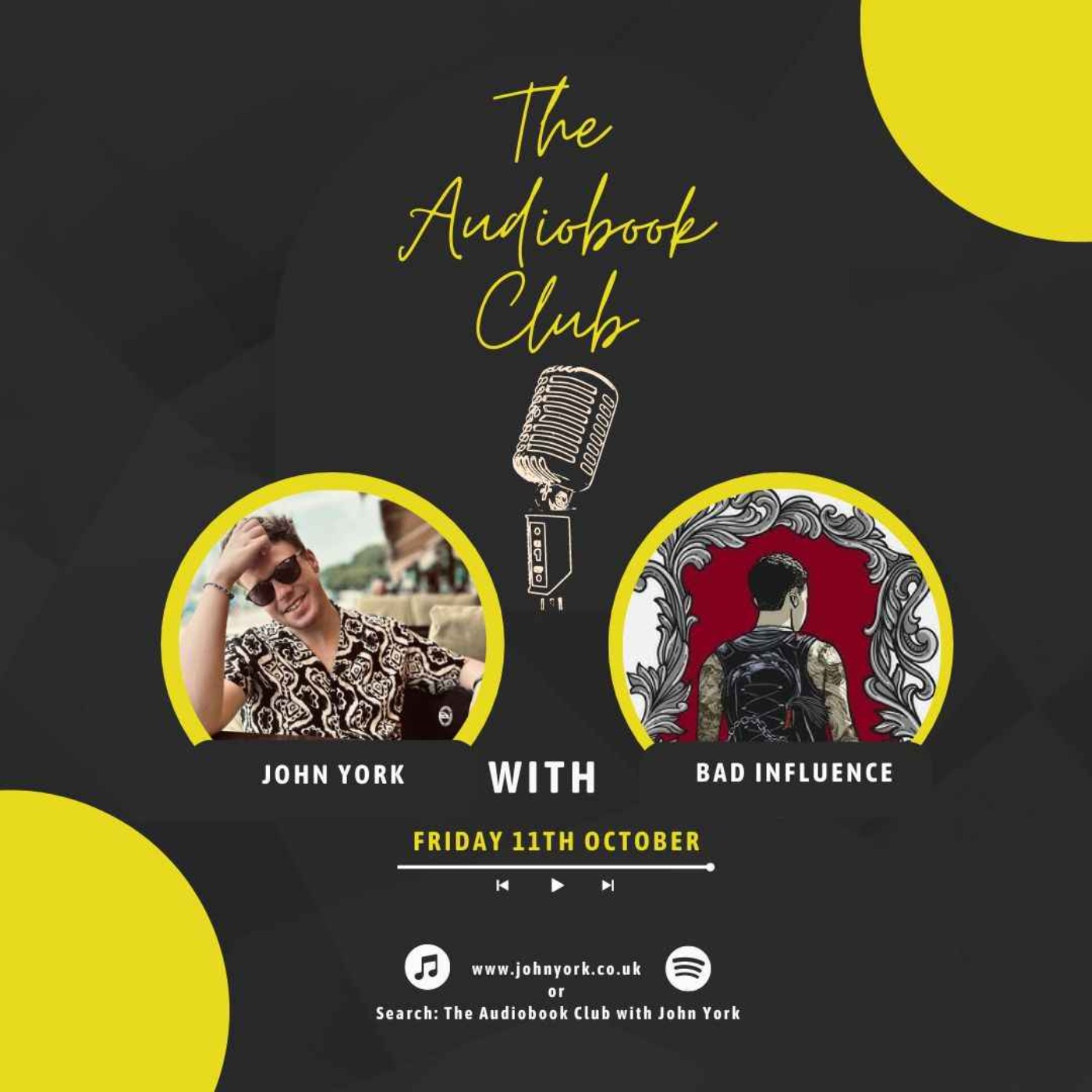
The Audiobook Club with John York
Bad Influence | Quinn Creator
01:01:14
The benefits of anonymity, imposter syndrome and more
Loading summary
Transcript141 lines
- [00:00]
Quinn
Foreign.
- [00:14]
Host
Hello, and welcome to the Audiobook Club. In this week's episode, we are so lucky to be joined by Quinn creator, Bad Influence. Hello, mate. Thanks so much for joining me on the show. How are you?
- [00:26]
Quinn
Hi. I am fantastic. Just living it up in the States. I can't think of something clever to say now that the record button is on. God damn it. Yeah, I'm doing well.
- [00:40]
Host
You're doing perfect. And that's the clover. I mean. Yeah. So, like, how is everything going in your area? Are you having, like, you just asked me this, so I'm gonna steal this question and ask you straight back. But how's your October going so far?
- [00:52]
Quinn
Oh, I mean, so things have been going pretty well, pretty non stop. I am, as some of my fans might know, I am like a workaholic. And sometimes I have to keep track of that because I will, like, run myself into the ground. But it's just because I think my brain feels very lucky to be in a creative role. So it's one of those things where it's like I need to get as much work done as possible while I can. Cause who knows if this will last forever and I'll be working retail again or something. So, yeah, no, but otherwise I'm good. I'm enjoying stuff.
- [01:33]
Host
I'm so pleased to hear that. And I want to ask you all about your brain and how you cope with such a demanding schedule and things. But first, we love a routine. As is tradition of the show. I'd really love to start by getting to know a little bit more about, like, how you got, how you got started in this crazy world. Because it is so niche. It is so ridiculous. Like how, how did, how did this all come about for you?
- [01:59]
Quinn
So many people have completely different answers. I mean, it's, it's, it's wild how varied the people come from their, their backgrounds. So mine, my story is a bit long, but I will try and keep it as succinct as possible for the listeners at home. So I went to film school and originally was wanting to be a director and a starving artist. And so after film school I went to grad school for screenwriting. And then right after screenwriting, I went and lived in Brooklyn. I lived in this sort of loft that I was spending way too much money on out of, like, all my savings. And I literally, I couldn't afford it. I was sharing it with four people. And my room was literally a plywood box with no windows. So I hooked up a light with a timer to simulate daytime. Wow. It was it was something I was not going through the best, best time. I was sort of, you know, I was really going through it as far as an artist and my money was running out and I was just all sorts of stressed and so as stressed artists do. One night at like, I want to say it was like two or three in the morning, I was surfing Craigslist because. Because back when. I don't even know if that's still a thing anymore, but I was serving Craigslist for gigs, which is, if you're living in Brooklyn, that's a good way to get murdered. But I stumbled upon this one that seemed innocent enough, and it was just these people saying, hey, if you want to audition for this erotic vocal performance, we are having opening calls. And so I reached out via email and I met Caroline, who I'm sure people have mentioned she's fantastic. And she invited me to audition and pointed me towards their website. I don't think they had an app at the time, and they only had, I want to say, four voices so far. So it was very new and it was like super new to me. And immediately as I was going through this site, you know, I mean, I would find some audios that I was like, oh, this is kind of funny, you know, and then I realized, like, over time as they got, as I was listening to more of them, that it was incredibly immersive.
- [04:44]
Host
Yeah.
- [04:45]
Quinn
And, you know, I like very quickly realized I need to, like, I need to do well on this. So I spent like a day and recorded and rerecorded and re recorded on this really crappy microphone and I submitted it to them and they asked me for like a. To submit under a username and I had no idea. I just, like, I submitted like, Bad Influence as a username, just like, as a, you know, like, I've been told sometimes that I'm Bad Influence. I didn't think it would stick. Like, I didn't think. I didn't think people would remember Bad Influence. And yeah, from there it. It took off. It was a side hustle for a while. And I think about like a year in, it's sort of, sort of like with all the other creators on this platform, I had to go through the learning process of, you know, how to manage fans and listeners and how to. I have to go through the process of figuring out, like, okay, what, like, how to keep people at a respectful distance while also, you know, appreciating that they're coming here to listen and making sure that no one feels not so great or anything. For lack of a better phrase. And so about a year and a half in, I felt like things were getting very overwhelming for me. I had tried, I think opening a Patreon or something and it was just very chaotic. So I decided, you know, maybe this stuff isn't really for me. Maybe someone will fill my shoes. So I sort of withdrew from Quinn. I took my audios down and I was like, all right, well that was fun, but moving along. And then about eight months later, I got an email from Caroline again saying, hey, you know, as with anyone, I totally respect your request for privacy and if you don't want to do this, you don't have to, but I just want to let you know that a lot of people want, like were getting a lot of people wanting you to come back and if you would, you know, we'd be happy to have you. And so I came back and that's why my most listened to audio is Rough Return is that that was the first one that I put up.
- [07:32]
Host
Yeah.
- [07:33]
Quinn
Honestly, I don't even remember what I said during that audio. Like, I don't. I haven't listened to it since then, but yeah, yeah. So I came back and ever since then it's been pretty wild, the growth of the site and of the app. And like by the time I came back, they also, they had an app, they had like 30 some artists and all this stuff. So it was like really coming together as a community.
- [08:01]
Host
What was it like? So with that time, I'm really interested to know when you took a break and of course, like you didn't have like at that point you thought that that was it, this was that chapter closing and onto the next one. When making that decision to come back, like, how was that for you? Because you obviously have like the lot of people wanting you back and you know, really looking forward. I mean, that's gonna put a lot of pressure on that first drop.
- [08:30]
Quinn
Yeah, yeah. It was equal parts wildly flattering and also immense wanting to make people happy. I'm a very, like, I'm a people pleaser at heart. I do really draw pleasure from making people happy. And so it was a little nerve wracking. But at the end of the day, the decision wasn't that difficult because the. I know this sounds really hokey, but I really love the mission that Quinn has, which is like providing a healthier form of adult, you know, sexual exploration. As someone who, you know, I struggled in my youth with pornography addiction and I mean it never, thankfully never really interfered with my love life. But at the Same time, I think it did give me this sense of. I don't know, I think there's this unique sense of loneliness that comes with, quote, unquote, traditional porn, you know, of. Of being the outsider looking in. So, yeah, I think that, like, it was hard, but also, by principle, it was very easy to come back.
- [09:55]
Host
Yeah, yeah, I get that. I certainly know. I certainly know what you mean. And there is, like. Even though it is, like, erotic stories and things, it couldn't be further away from that traditional sense of things. And it sounds like we're very similar in the sense that I also take immense comfort in that. And it really feels like he's paving the way for positive exploration and positive enjoyment when, you know, which can't be said for all of the traditional outlets.
- [10:28]
Quinn
I think the traditional outlets, and I do think that some of them really do try to make it as welcoming or as inviting as possible, but there always is gonna be that kind of barrier of lack of immersion, I think. Yeah, yeah, yeah.
- [10:52]
Host
When you were first, like. Like when you first started to learn more about what this, like, you know, what the audios would entail and what you would have to, you know, to do in order to create them, I kind of. Do you remember, like, the sort of. Maybe there was a challenge that you faced when creating that first audio that was there. Is there anything that comes to mind when I ask you about challenges in those early days? Because it's. It's a lot to get one's head.
- [11:16]
Quinn
Around you, you know, in all aspects, really, so. Well, okay. I know this isn't really like, the. This isn't an actual challenge exactly, but I remember when I was first starting up again, I was living in that plywood box, so I had to sit my roommates, my three roommates down and just tell them, you know, if you hear this coming from that box, it's just like. Just so you know, it's like. I mean. I mean, granted, some of them were a little too understanding, really. Like, oh, no, it's cool if you're just, like, playing with yourself all day. And, you know, some of them loved it. They thought it was, like, hilarious but awesome. So I think that was. That was a big thing was for. For me, was getting comfortable enough in doing it that I wouldn't be embarrassed if someone else outside of the area heard. So I think in general, what I struggle with most as a creator is that I am. I am really obsessively critical about making things feel as organic as possible. You know, I think you. I'm sure that, you know, from making audios, and I'm sure that most people who listen know that, you know, there is that distinction shift from the beginning of the audio to where things start to get a little bit fun, you know, and like, and I, I always want to keep that as authentic and as organic as possible. And so that can unfortunately mean rewrites in the last minute. It can mean redoing an entire audio because it feels too. I don't know, it feels too set up, you know, it feel too like I'm here with a pizza or something like that, or here to fix your pipes, you know, I don't, I don't want to provide that stage sense. I want to, I want you to feel like. Like it is just sort of happening naturally. It's not forced.
- [13:27]
Host
Yeah, that's such a good point. And I think it also speaks to why people enjoy your work so much because they truly, like, truly are there.
- [13:36]
Quinn
Stop.
- [13:38]
Host
So, like, how, like, how did you really sort of. Did you have to break down those barriers in order to get yourself to that point? Because you have to be so vulnerable to do that.
- [13:49]
Quinn
Yeah.
- [13:50]
Host
And like, was that a process? Was it something that came naturally?
- [13:55]
Quinn
That's a, That's a good question. I'm having to think back because it's been nearly six years now. Yeah. So I, I think that, believe it or not, it kind of. There was something very freeing about it in performing alone to the microphone, in that there is this sense of like, oh, I hope I sound good and I hope this, I hope that. But especially as I was beginning and I had all these ideas already bursting out of my head that I just wanted to improvise, really. You know, there were sessions that I never published that were just me improvising in my room. And to a point that's just kind of. That's kind of fun. It's like any improv game where it really loosens you up. So I think that, yeah, I think that it did come somewhat naturally, but there, there definitely were days where I had to coax it out of myself, you know, where it's like. I think also I can't imagine I'm the only creator who feels this way, where sometimes you either just feel like, you know, like, well, I can't seriously be as, like, I'm not as alluring as I may be coming off in this audio and sort of letting it get to your immediate self esteem. And so I think that sometimes when that happens, like there are days where that happens for, for myself, where I'M just like, oh man. Like there's, there's. I'm just not this suave and I wish I was. And I think once you. That's sort of like the bane of an actor's performance. Right. Is when you become self aware of things. Oh, yeah, yeah. And you're thinking about how things sound versus just doing them, just saying it, you know. So those days, you kind of just have to like chalk it up and come back the next day.
- [15:57]
Host
It's so interesting these that you mentioned that, you know, because I was. I was going to. Was going to ask you. I've been having conversations with other creators on this show about like the. In the ways that, you know, working on coin. Working on the Coin audios has maybe changed us in some ways or made us, you know, cause to reflect on certain things. And I was having a chat quite recently about maybe that like this sort of maybe self put on pressure and I said, because I can only speak for myself really, but like pressure that I put on myself to maybe be a little bit more like the John that's in the audio.
- [16:35]
Quinn
Oh, really? Oh, yeah.
- [16:37]
Host
Maybe a little bit more interesting. Maybe a little bit more sort of versatile than I may be serious and dark.
- [16:43]
Quinn
Yeah. All right. Yeah. No, I just felt that when we came on the phone, you were just all this. This dark, brooding gentleman. No, I totally see what you mean. I mean, I think I am inherently in real life, I am a very goofy person. I'm one of those people who. I tend to sort of try to disarm people by having like making them feel comfortable or making an ass out of myself so they can feel like they can be goofy. And so there are some times because I do a lot of MDAM audios and those are very serious. They're very self serious. They're very like, you know, don't make fun of me. All that stuff. And the truth is I think that, you know, dominance and submissiveness are like really great things to explore. But I think there's. It's always important to keep in mind that in real life, like it's okay to have moments of like, okay, that was silly. That didn't work out. That, that one thing you said was kind of funny. Like, you know, it's so It's. I think that it's really easy to accidentally fall down the tunnel of taking it seriously and then wanting to be that guy, you know, like all the time. So. Yeah, yeah, I get you.
- [18:03]
Host
Yeah. With the. I'm so pleased to hear that, you know. Yeah.
- [18:07]
Quinn
You're not alone.
- [18:09]
Host
Now on, like, so you mentioned about film school and about those early, early days, you know, being the creative or the starving artist, as you say now on, on projects like that, you know, even as, Even if you, if you're approaching a project as the director, you'll know that, you know, you wear so many hats. That isn't just, you know, you sort of do, you know, and that guerrilla filmmaking, you know, on those projects you're doing so much, you covering from, you know, from the start of pre production right to the end.
- [18:36]
Quinn
Absolutely.
- [18:36]
Host
And I, I just wondered if there was an element to this line of work which does invol not just the performer. You're seeing this through from start to end. Do you think there is an element of that that does appeal to that filmmaker?
- [18:51]
Quinn
That little itch in my brain? Yeah, I, you know, I think so. I. I think that there is particularly independent filmmaking. It's. It's this sort of sense of like very, like a very scrappy production where everyone's really hustling to get things out. You know, I. The first thing that comes to mind is that short documentary that the people came out with on south park called Seven Days to Air, where basically, you know, the creators of south park, they were coming out with an episode every week. And so you got to see a little bit of how they broke up their different days. And there is similar to filmmaking when things start to click, when things like when you figure something out. When you break an audio's script, like not break it. When you break the spine of an audio and it's ready, like there is this sort of. I don't want to sound too flowery, but there is this sort of like energy or magic that feels like going to, like you're catching a glimpse of this moment where everything is just kind of clicking and working and you in that moment can see the finished product and see what you want for the finished product. And that is like a huge high. That's. That's like super exciting and super fun and. Yeah, I mean, I'd say at least for the. The story, like the story, narrative audios, you know, when it comes to the rambles, I think that those are. Those are a whole different beast, which I know I'm. I am partially known for. So. Yeah, yeah, yeah.
- [20:38]
Host
That's like a totally different headspace, isn't it?
- [20:41]
Quinn
It is, it is. I, like, they're. They're. In some ways they're easier and in some ways they're way more difficult. Like, technically speaking, they're way more difficult because, you know, the best part about it is also the worst part, which is just that you're, you're just ad libbing, you're just talking, you're just talking to this person. You're closing your eyes, you're visualizing, you're talking to this person. And the thing is, as you probably know from editing podcasts, et cetera, is that talking can get pretty messy and there can be bits that just don't really. They're okay, but they don't really fit in. And so you really have to just like comb through every second of it.
- [21:26]
Host
Yeah, yeah, yeah. And on, on the end, as well as doing that, you then also like having to keep it so natural and keep it, you know, keeping those minds sort of open because I suppose that's why people love like rambles and like so much is because it really feels so natural. Because it is.
- [21:44]
Quinn
Yeah. At some point you get into that flow state, you know. Yeah, yeah, it's great. I think that, I think that particularly with Ramble audios, there's a, you know, there's this sort of feeling that is the goal, which is that, like that like you really are there with the person as the performer and once you get into that space, like you are, you are good for like however long you need because they're there. So.
- [22:15]
Host
Yeah, yeah, absolutely. Are you, are you a creature of habit? Do you like a routine?
- [22:22]
Quinn
Habit and routine? You know, I, I think yes, but I'm, I'm also a creature of horrible laziness. So keeping, keeping routine is very difficult for me for a while. Like I do work out very frequently and that does help ground me.
- [22:45]
Host
Yeah, I think it's like. I was going to ask you because with this, with there being like such high demands of like being creative so consistently and it can really sort of take its toll. You know, we don't wake up every single day and feel 100% all the time.
- [23:03]
Quinn
Yeah, yeah.
- [23:03]
Host
So I was, I was going to actually ask you and this and maybe you know, physical exercise for yourself. Are there any sort of specific habits or exercises or routines or like maybe like non negotiables that you have to sort of keep in place that, that sort of help you professionally, you know?
- [23:20]
Quinn
Right, yeah, that's a really good question. You know, because over the years in working in this role, I've had different things that worked for me to help, you know, make sure that it wasn't just output and that I was also getting input. I think that these days there is sort of the, the non negotiable for me is making sure that I have downtime in which I am, I am not thinking about audios or I'm not thinking about the next story or I'm walking my dog or something like that. Because I think that you really, you really get into the tunnel of like, tunnel vision of like, what next? And when you take a step back and when you, for lack of a better term, smell the flowers and like just play some video games or, or play a game of solitaire by yourself, it's really just sort of refreshes you. Yeah.
- [24:32]
Host
I was going to say so important just to sort of take that time away. And I think it can be really difficult when you're in charge of your own time and you're in charge of. You do that work. Because it's like.
- [24:45]
Quinn
Yeah, yeah. Well, sorry to interrupt. I, I, you know, I. Especially because when you're, when you're managing your own time, taking time off feels wrong. Like, it feels like, you know, even so, one of my audios, all about that Bass Part 2, takes place in a museum. And funny enough, when I was trying to think of ideas for audios, I was at a museum, like, trying to take time off. And so that's like part of the hardest thing is just like taking time off and being like, no, I'm not doing work, I'm not thinking like, oh, this would be a good place. Like, I am, I am being me right now. Not that, you know.
- [25:25]
Host
Yeah. And it's so difficult as well because it's that sort of crux. Because ideas do. I always find ideas come more like the best when you do let yourself sort of drift off and think about other things. And then it could be so infuriating because you're like, do I write that down? Do I make the decision to get out my phone and write that down and admit. And admit defeat.
- [25:46]
Quinn
Right. Yeah. Admit that the creative beast owns you. Yeah.
- [25:53]
Host
So you meant, obviously you said six years you've been, you've been producing audios and Quinn has, has really ramped up and grown and is doing some incredible things.
- [26:06]
Quinn
They have.
- [26:07]
Host
My God, it's crazy, isn't it?
- [26:10]
Quinn
Yeah.
- [26:11]
Host
I wondered if you'd noticed any sort of changes that thread throughout your time here. Like, is there, is there anything that sort of comes to mind?
- [26:20]
Quinn
Well, you know, I think that changes, I'd say the main changes I have seen over the years is that, you know, I already felt good about Caroline and her team when they were first starting. You know, they were Ironing out the kinks. But I mean, you see them on like social media, on TikTok, on how they have things planned out for the future. Like, I'm sure they probably already have a next Quinn original lined up. Like at this point it's interesting to see the Quinn platform operate as a well oiled machine. And I think the other significant change I have seen is just how outspoken and supportive the community is of each other, which is like absurdly beautiful. I mean like, I talk about this whenever, whenever I'm sharing with a close friend that I do this, which isn't very often, but it's really amazing how like, seeing how many people have made friends, how many people feel like parts of their lives have been changed by listening to audio erotica. You know, I remember the moment that I felt, you know, that like, really truly, like, thank God I came back was when this woman reached out to Quinn who said that her partner and her had been trying to conceive a child for a number of years and they were about to do medical intervention. And then through arousal alone, supposedly between myself and another creator whose name I forget, they were able to conceive. And I was like, my God, like, this is. Yeah, I was like, this, this is too, like, I can't even believe that that happened. Like, that's, that's beautiful.
- [28:29]
Host
So like that's not life changing, that's life creating.
- [28:34]
Quinn
So like, I mean, getting to be a part of that, like, I mean that' partially why I loved it so much before I took my, my break was that like being a part of this is, is such a movement for people. It's such a, it's such a like positive shift in the right direction for the way that people are intimate with themselves and with each other. So like, yeah, it's, it's great. That'll probably always be the highlight of the entirety of my time on Quinn.
- [29:10]
Host
Is so amazing though. What a good one. So not to. We could, we can skip this one if you so wish. But I'm very interested to know if you have any advice because there are many creators and I can count my, count myself included in this that are essentially being sort of confronted with attention perhaps for the first time with work.
- [29:38]
Quinn
Yeah.
- [29:39]
Host
And it can be a little bit overwhelming, it can be a little bit scary, but you can also find yourself sort of swept up in this kind of like, oh, people are actually like giving a shit about like, like, like my stuff. And I just sort of wondered if you had any advice on like how to navigate that because it can, as you mentioned before, with your own experience, it can get too much in certain areas. I just wondered, like, how you sort of look at that now.
- [30:03]
Quinn
So, I mean. Yeah, I mean, it's tricky because I think to an extent, no one can prepare you for feeling like that, for the feeling that comes with, you know, hundreds of thousands of people saying they like your voice. I mean, that's. That's incredibly sweet and lovely. And, you know, I'd say. I guess I'd say two things. One is, you know, act as if, like, when it comes to interacting with people, behave as if your parents are in the room because otherwise, you know, you people. I think our brains sort of need that reminder to our conscience. You know, a lot of people, their parent is that voice in their head. Um, and B, is that. I think another thing that I struggle with, that I'm sure some other creators struggle with, is a sense of imposter syndrome, a sense of, oh, I don't deserve, or like, oh, well, my voice isn't this good. Like, people. People are just being like, this is a fad that'll go away in two days, you know, And I'd say, just be nice to yourself. You know, be nice to yourself and behave as well as you can. Be a gentleman or gentlewoman because, you know, everybody's. Everybody's people got to be kind.
- [31:44]
Host
Yeah, yeah. It's really, really good, good advice, if I do say so. And I think. I think it's different. I don't know if you found this as well, because it's such a niche space. It's quite. It's quite difficult to run into people who kind of get it.
- [32:03]
Quinn
It is. And I think that something that can be very difficult to navigate, particularly for people who are getting this newfound attention when they maybe haven't broken through yet and then suddenly people are picking up on it, is knowing how to behave when fans start crossing lines, potentially, whether they know it or not. You know, sometimes mistakes happen. People don't really, you know, again, like, no one, no one can prepare fans to feel the way they feel. Just like no one can prepare creators to feel how they feel when that sort of connection happens, when people start listening and really enjoying. And yeah, I mean, I'd say again, just like, behave as if your parents are in the room and just be nice, but also be firm and know when to call in your parents. And in this case, just consider your parents, Caroline and the team, because they will brush people away for you side of the thing. So, yeah, yeah.
- [33:15]
Host
Which is just so Important to have that support as well.
- [33:18]
Quinn
Oh, yeah, yeah. They've always, like, I've always felt so taken care of and safe and like, if I ever had an issue, you know, it doesn't matter if it's me or if it's a creator that only has one audio out. Like, they. Their primary cause of creation was to make people feel safe. So.
- [33:40]
Host
Yeah, absolutely. I have some. I have a few questions from listeners of this podcast about the topic of anonymity, and I would love to throw them your way, if that's okay.
- [33:53]
Quinn
Of course.
- [33:55]
Host
So we have. The first one is from Kristen. Are there any surprising benefits to being anonymous? Like, is it ever difficult to maintain an anonymity as well?
- [34:06]
Quinn
Do I ever want to walk up to people and say, do you know who I am? Close your eyes and listen to my voice. Are there any advantages? Yeah, there are tons of advantages to staying anonymous. I mean, one of them being that I can just be a stranger in a crowd. I can go to a concert and not be worried that someone's gonna run to me, or I can go to a target and not think that I'm gonna be swarmed by people. I've always had. You know, growing up, I was a huge class clown. I loved attention. I loved people talking to me. And as I've gotten older, I still do. I have that class clown in me. But I do have social anxiety and I'm always afraid that I like, I. I get very chatty because, you know, I. I always assume that silences mean that I'm being boring or something and then I end up saying something stupid. So I mean, there, there's that. And I mean, if I ever do want to play the card of, of this is my voice, I could, but I think that would be. I feel like that would be more off putting than. Than. Than it would be charming. Um, yeah, first, that's first.
- [35:36]
Host
We have a second question from Kira, which I do hope I pronounced that right. Apologies. Not. Some voice actors keep their work secret, even from friends. How do you celebrate your successes while still safeguarding your anonymity?
- [35:50]
Quinn
That is a really good question. Well, it's true A lot of my. A lot of the times when I have, like when I feel like an audio has done really well or when it goes live and I'm like, fuck, yeah, that was really good. A lot of it is either kept to me or it's. You know, I'm friends with some of the VAs on this platform. I've been really, really lucky to meet some VAs and befriend them and text them and be like, hey, like, this is awesome. Right? And then I have a couple close friends who I share big milestones with, and my brother, who I share milestones with, who still kind of doesn't believe me. Like, I'm fairly sure my brother thinks I'm lying about this whole thing. When I said I hit 1 million listens, I'm pretty sure he started thinking, like, okay, he's just, like, pretending now. And I don't blame him, but, you know. Yeah, it is hard sometimes to celebrate the victories. It is like, a lot of, like, just me and my dog having a good time.
- [37:08]
Host
Yeah. Yeah, that's fair. Lanuna Luna, great name asks, do you feel that being an anonymous creator gives more freedom when it comes to writing scripts and exploring different topics or themes that they might not otherwise feel comfortable addressing?
- [37:27]
Quinn
Man, these are. Where do you get these goods? These are great questions. Okay. Wow. Shit, I should have prepared for this. Okay, so I will say something that's great about being anonymous, and I know that, like, you know, maybe won't ever last forever or maybe it won't last forever. But one of the great things about being anonymous is that with the listener not knowing what I look like, I think that that can really affect believability for some people when it comes to particularly, you know, more butch, dominant roles. I mean, you know, I don't talk about my body a lot in audios, but I have shared that I'm a pretty. Like, I'm a lanky guy and, like, I'm a former punk, so I'm covered in tattoos and there are aspects of my looks that maybe wouldn't make it as easy to pull off some things. But I think, yeah, I think overall, the best part of being anonymous is just knowing that everyone has a different image of me in their own heads. It's. It makes me think of this short story from one of my favorite collections, which I can. I can send to you. But I'm rambling, so.
- [39:05]
Host
No.
- [39:07]
Quinn
So the. The idea. I don't remember it exactly, but the idea is, as you're reading it, it's about this, like, state fair where there's this guy who has, like. He's one of these people who has a talent for, like, you know, people who get covered in bees at, like, a state fair or something like that.
- [39:26]
Host
Oh, yeah, yeah, yeah, yeah.
- [39:27]
Quinn
So he does it with his beard or something. People are making fun of him. And then the. The chapter tells you about how the bees fly out from his beard. And each one goes out of this book and into your mind and creates a completely unique flower to the ones that are going out into every other book and all that stuff. And it's. There's something really cool about that to me is that, like, on one hand I am. I'm just me, and on the other hand, I am like thousands of different people. Yeah.
- [40:03]
Host
Oh, yeah.
- [40:04]
Quinn
Yeah.
- [40:05]
Host
So it is a really cool aspect of this.
- [40:09]
Quinn
Yeah, for sure. I mean, it's. It's exciting being able to be that for people. And I think that, you know, I. I've always been so impressed with people who like you, who can. Who can manage, like, having faces on social media and being active and stuff like that. Because I think that without that anonymity, it can probably. It must be sort of hard sometimes trying to feel like you're. You can turn off, you know, like there's. There's so much more of being on that you always have to be where even when you just want to make a video, you know, people are expecting. The Persona from your most recent audio. I think maybe a creator who faces this really well is Sarah Gibson. Cause, like, she just, you know, she's. I mean, her own personality. She's so, like, her personality so strong and. And she doesn't really. She doesn't suffer fools. So props to her for. For maintaining that healthy sense of, like, you know, I am a person and, like, this is my art, but I am also a person and I'm separate from my art. So.
- [41:31]
Host
Yeah. And I think it takes guts and courage to do that for yourself.
- [41:36]
Quinn
Yeah.
- [41:36]
Host
You know, especially in this, like, demanding. As demanding as, like, the Internet in general can be.
- [41:41]
Quinn
Totally, totally.
- [41:43]
Host
Yeah, the. That's. I really like that. And I must admit, I'd never thought about it like that before.
- [41:50]
Quinn
Yeah.
- [41:51]
Host
It caused me. Caused me. Caused me to think. So if I could ask you this, a little bit of a vague question, so apologies.
- [42:00]
Quinn
Okay. Yeah. No, hey, by all means.
- [42:02]
Host
What is a challenge that you're. You're currently facing? It can be with anything that springs to mind.
- [42:08]
Quinn
Challenge I'm currently facing. Hmm. Well, as mentioned, I am a workaholic. And part of. I think something that I struggle with is that since it's. Since it's only me in this room when I'm working, I have no one to rein it in. So my ambitions can sometimes get the best of me. So right now I am working on, I want to say, like, four or five different projects simultaneously, which is very fun. It's. It's very fun, but also it does mean some nights staying up till like 4am and like having no idea what I'm doing. So I think, like, I think right now. Yeah, I am struggling with just like sort of directing myself, if that makes sense. Yeah, yeah, yeah.
- [43:11]
Host
It can be. It can be so tough. And as we said before, as we spoke about before with the. When you're managing, your time is sometimes the worst. It's a great privilege, but it does have its downfalls.
- [43:22]
Quinn
Right, right.
- [43:23]
Host
4:00 in the morning and you still going out, you know?
- [43:27]
Quinn
Yeah, totally, totally.
- [43:29]
Host
So if you. If I could ask you, and this is super cheeky considering it's me asking you this, but if you could give advice to another Queen creator, another voice actor looking to do this work, does anything spring to mind, anything that you wish maybe that someone had told you or perhaps even did tell you?
- [43:50]
Quinn
Yeah. So are we talking like new creators or any creators?
- [43:53]
Host
I suppose. Any, really. I suppose. Yeah.
- [43:57]
Quinn
Yeah. I'd say don't worry so much about the technical side of things. I guess that goes for new people too. Is that creating for something like Quinn, your mind is going to come up with roadblocks, like non stop, because it's inherently putting yourself in a vulnerable, vulnerable position. Excuse me. And our brains don't really like being vulnerable, so it'll be constantly looking for ways out. And so I'd say just like try and strip everything away. Try and try and, you know, of course, get your microphone set up, but then set it and forget it and get your script ready or your premise ready, read it a few times so you're acclimated and then forget it and then just strip all of these things away to the point where the only thing that you have to think about is imagining a person right in front of you. Because, I mean, once you get past those roadblocks, that self awareness, it really is a fantastic gig. It does feel sometimes like you have this connection with the listeners. I know that's really absurdly corny and might sound like I'm pandering, but it's, it's true. You feel like, you know, there's just this like. Like you're sending love letters, essentially. They just happen to be dirty, you know. Yeah.
- [45:50]
Host
Do you think now this may be a question completely out of left field, so do feel free to shoo it away. Your favorite type of cheese hazard has producing. I am, I'm specifically talking now about like the writing side of things. And now I don't know what you were like, obviously in your person before all of this. So it may not be the case at all. But do you think it has made you maybe a little bit more of a romantic in some regards?
- [46:21]
Quinn
Well, you know, I would say yes. But I was, I was always a romantic growing up. I was always this like lanky at points, scrawny like kid just dreaming about sweeping someone off their feet. And so I think that that really lent itself to making this transition. I mean, when I was writing before this work, I never did romance stuff. You know, I always sort of, when I would try to write romance stuff for, you know, short films or movies, I would just feel like, you know, it, it. There's so much demand for it to not be real. There's so much demand for it to be this, this thing that I could never achieve in real life. And so I think that's. That is what I try to do with my audios. I try to make these as like as much something that could happen as possible. And yeah, I mean like a lot of this stuff, especially a lot of my earlier stuff was born from fantasy or like bits and pieces from real life experiences that I had. I was been like kind of a, kind of a SAP. The best way I've been. The best way I've been described by someone when they were talking to my friend, they were trying to get me to set them up was that I looked like, I looked dangerous, but she knew I wasn't and she knew that I was actually kind of like a goofball sweetheart. Like I give off that vibe of like, you know, and I don't think I can hide that level of goofy, romantic, sappy kid in me. I'm basically like a 10 year old. Well, let's not say that because I'm making erotic audios, but I know what you mean. Yeah, yeah.
- [48:43]
Host
And nor should you hide it. Let it run free.
- [48:47]
Quinn
Yeah.
- [48:48]
Host
Whatever you're doing, it's working, man.
- [48:50]
Quinn
Thank you. Thank you. Yeah, I mean, I like to think so. I'm always like, I mean, don't get me wrong, I still, when I put out audios, even if they're just like a little experimental, I still get like shaky, nervous the day. Yeah, I am. Because I mean, what I like. My relationship with the listeners, while it may not be, you know, a traditional relationship, it's still a relationship. It's. It's winding, wanting, you know, accepting it's trying something new out in the bedroom, you know, and so there's that sense of like right behind the curtain right before showtime where it's like, oh fuck. Okay, here we go, here we go. Like, hope they like it. If they don't, just like gotta breeze right past it. Cause otherwise like show's ruined. Yeah. Yeah. After all these years it's still super nerve wracking which thank God I have creators I can text being like, fuck, dude. Like I think this is gonna go poorly and then it becomes one of my most liked audios. So I don't know.
- [49:53]
Host
Yeah, it's, I, I guess that's what comes from like, because as we've said before, it's because it comes from, it comes from you, it comes from the soul. It comes, you know, so intimate, so real.
- [50:02]
Quinn
Yeah. And it's like very, yeah, very intimate.
- [50:06]
Host
You're laying yourself bare in front of everybody. So it's got to be, it's got to be. So on those, on drop days then, have you got like a little routine around? Are you like reading the comments as they come in? Do you put the phone down? Like, how does it, how does it go?
- [50:18]
Quinn
So drop day? I, I basically I do the opposite where I do not look at the creator portal. I do not. Like, I'll, you know, I'll text a couple of creator friends but like I will, I refuse to check on it the day of because, you know, like on the, the sheer, you know, everyone's been rejected before and they, and the, and so they know what it's like where it's just like you go to ask someone out or something or to try something new and you're just like, oh God, what if they don't like it? If they don't like it, I just die. And so, so that entire day I'm just like, I can't, I can't feel that until they drop it. I'm just like, you know, because also when it drops it's going to take time for people to listen to it and actually see whether or not they like it. So I, yeah, I like sequester myself because I just, I can't, I can't handle it.
- [51:12]
Host
So like how long until you do like take that look? Is it a couple of days?
- [51:16]
Quinn
Yeah, I'd say it' usually the day after. And then I sort of have like a post mortem with myself of just like, okay, that went well, don't fuck it up again. And you know, sometimes things like, I think again, I can be really hard on myself. I have like extremely high standards and imperfectionists. Even though the stuff that I put out, maybe to someone else, it may not be good, maybe it is. But like, you know, there are some audios where it's like, I put them out and I just. I hate them. Like, I hate how they say. I'm like, no one will ever find this sexy. And then it just takes off. And so then I have this talk to myself of, like, okay, you need to chill out and recognize that people are. Are like, their game to try things with you. Yeah. Like, yeah, but it's still. It's still a roller coaster. Like, it never. It never stops when.
- [52:25]
Host
When dealing with, you know, collaborations, when. When working with other creators. How do you find that process? Is it enjoyable? Does it have that element of stress? Because obviously, you've got to get. It's nice to meet people, but then you've got to get something done.
- [52:37]
Quinn
Like, how do you find out? Super fun. I mean, everybody's different, right? You know, I. I notably have collabed with a couple people. I've collabed with Xander from Lonely Fans and with Nadio. And both of them, the experience is very different. You know, like, both fantastic. But they. You know, the process can depend on what creators are comfortable with. You know, some creators want to do things live. Some creators want to splice things in later. Maybe sometimes they want to do a mix, you know, but either way, I think the most fun element of collabing is like, again, it's like breaking that script, breaking that story, where it's just like, oh, yeah, this is what's gonna make it, like, really stick. Like, this is when people are gonna, like, lose their marbles. Yeah. And so, you know, getting to just, like, pal around and make a story with. With Xander or with Nadio, and they're both, like. They're both such creative collaborators. So, like, you're not doing more work than you'd normally be doing. In fact, you know, you're both doing less. It's great. It's really fun. I hope to do a lot more collabs in the future. The ones that can be stressful are the annual collabs that I do around this time of year because I have to do a lot of coordinating. But it's still awesome to see it come together. It's still so fun to get everyone's input on it and see what people can do with. With what little prompts I give them. Yeah.
- [54:35]
Host
Yeah. And it's sort of like that peek behind the curtain of other people's creative processes is always so intriguing, isn't it?
- [54:42]
Quinn
Yeah, well, because everyone has a different one. You know, like, it's. It's really like, they do not have, like, Training videos or anything like that. Like, we all come about it very differently. And I mean, like, I can't imagine. I mean, maybe that would be a fun experiment with a creator who has a very different process of mine. It's like try and trade processes for a day and you try and make an audio doing this and you try and make an audio doing that. But yeah, it's wild.
- [55:16]
Host
Yeah, absolutely. Well, as we do draw near to the end of the episode, I always like to ask, have you anything upcoming in the calendar? I'm sure you do. And in fact, we've spoken about a few things. Anything upcoming coming in the calendar that you're excited about that we can share in that excitement?
- [55:33]
Quinn
For sure. Yeah. Well, so I'm always coming out with my newsletter, Cliterotica Weekly.
- [55:41]
Host
Amazing name.
- [55:44]
Quinn
I'm always coming out with that. I'm working a little bit on my website, but I am also finally getting back towards. I was taking a little hiatus from writing my romance novel, Muse Maker. I'm getting back on that and they can be looking forward more immediately to something happening. This spooky season might involve a few more creators and a stressed out director, you know.
- [56:17]
Host
It'S gonna be amazing.
- [56:19]
Quinn
That was the one thing I noticed in film school. I went in wanting to be a director and then I got on film sets and I didn't see one excited director. They all were super stressed out.
- [56:28]
Host
Starting to think, did I make the right choice here?
- [56:31]
Quinn
Oh yeah. Oh yeah. But yeah, no, lots of stuff going on. Stay tuned and you know, all that stuff. What about you? What you got going on?
- [56:41]
Host
Oh, gosh, yeah, just, I mean, I've got a few very exciting things coming out over the next month on Quinn Heck.
- [56:51]
Quinn
Yeah.
- [56:51]
Host
Yeah, I'm doing some cool stuff over on Patreon, if I do say so myself. Yeah, I did like a meditation the other day.
- [57:00]
Quinn
Nice, nice. Those are, those are harder to write than it seems like because you really want to get people in the right headspace. It's difficult.
- [57:09]
Host
Do you know what you're telling me?
- [57:11]
Quinn
Right.
- [57:11]
Host
I sent. I launched it on Monday and I'm not kidding you, it took me the entire weekend to write and it's like 20 minutes long. It took me so long and then it was a love. All the comments were like really nice about it, but most of them followed the thing of. Well, I fell asleep after about 10min and I was like, you have no idea how long that other 10 minutes took me.
- [57:32]
Quinn
Right? Yeah, yeah, I feel that. Oh man, if only people knew just like how long Some, because that's another thing is like, you know, all of our scripts are the same, but some of them. If only people knew how long some of these scripts took to put together, like, surprised, it'd be wild.
- [57:53]
Host
Yeah. What's your average sort of time that it takes you to do?
- [57:59]
Quinn
Oh, boy, that's tricky because it depends on the type of audio. But I'd say that any given like, story audio usually takes me, I write it in. I write a script that's about four pages, single spaced in one day, and then I wait until the next day to come back and pretty much rewrite it completely because I'll find that the first day I was really trying to get the, get the different points down of like, okay, well, you know, this is what I want to happen here. And this is, this is where I want to start getting freaky or whatever. And then you can, you can come back the next day and really finesse the actual back and forth. You know, I was actually telling another screenwriter this recently who wrote one of my previous scripts. They did the Midsummer Night's Fling, is that initially I sometimes will write in screenwriting format and write lines for the listener and then the next day come back and see if it carries without those lines. But that can take more time.
- [59:17]
Host
So. Yeah, but you know, you know, I've, I've heard a few creators say that they do write the lines of the listener in because, you know, to help with the, with the flow and as you've just said, and I don't, I must admit, but I'm starting to think that I'm really missing out.
- [59:32]
Quinn
It comes out with some. You find yourself writing some, some interesting things that you didn't think you would before. Like, I'd say that that's, that's where the real benefit comes from, is when you write the listener talking back to you. Especially if, you know, you sort of start to characterize a listener too, of like, oh, this person is being sort of flirtatious. Well, how would I respond to a flirtatious person versus a shy person or versus, like, you know, someone who is outright blunt, you know, and it's, it really helps set the, set the mood.
- [60:06]
Host
So, you know, I think just in a single, like, few sentences, you've convinced me that.
- [60:13]
Quinn
Give it a shot. Highly recommend. Writerdoet.com it's free. Or for the first, I think three scripts, it's free.
- [60:20]
Host
Oh, nice. Very nice. Well, this just does it about. For this episode of the Audiobook Club, all socials and links can of course be found in the show notes, including the link to the newsletter, as well, as well as more information on Amplify Audiobook, who very kindly sponsor this podcast. Mate, it's been such a pleasure getting to chat with you. I can't thank you enough for spending the time.
- [60:43]
Quinn
Yeah, sorry if I. I'm. I'm. As I've explained to my fans before, I am far from succinct, so I hope my. My answers were. Were simple enough, you know?
- [60:54]
Host
No, mate, it was so much fun and. And just packed with value for me. I do entertainment for everyone else, but pure knowledge for me.
- [61:02]
Quinn
God bless. Sounds good, man. Well, listen, if you ever want to have me back on, I will be. I'll be here and ready.
- [61:10]
Host
Oh, I never shy away from a part two.
- [61:13]
Quinn
There you go.