← The Audiobook Club with John York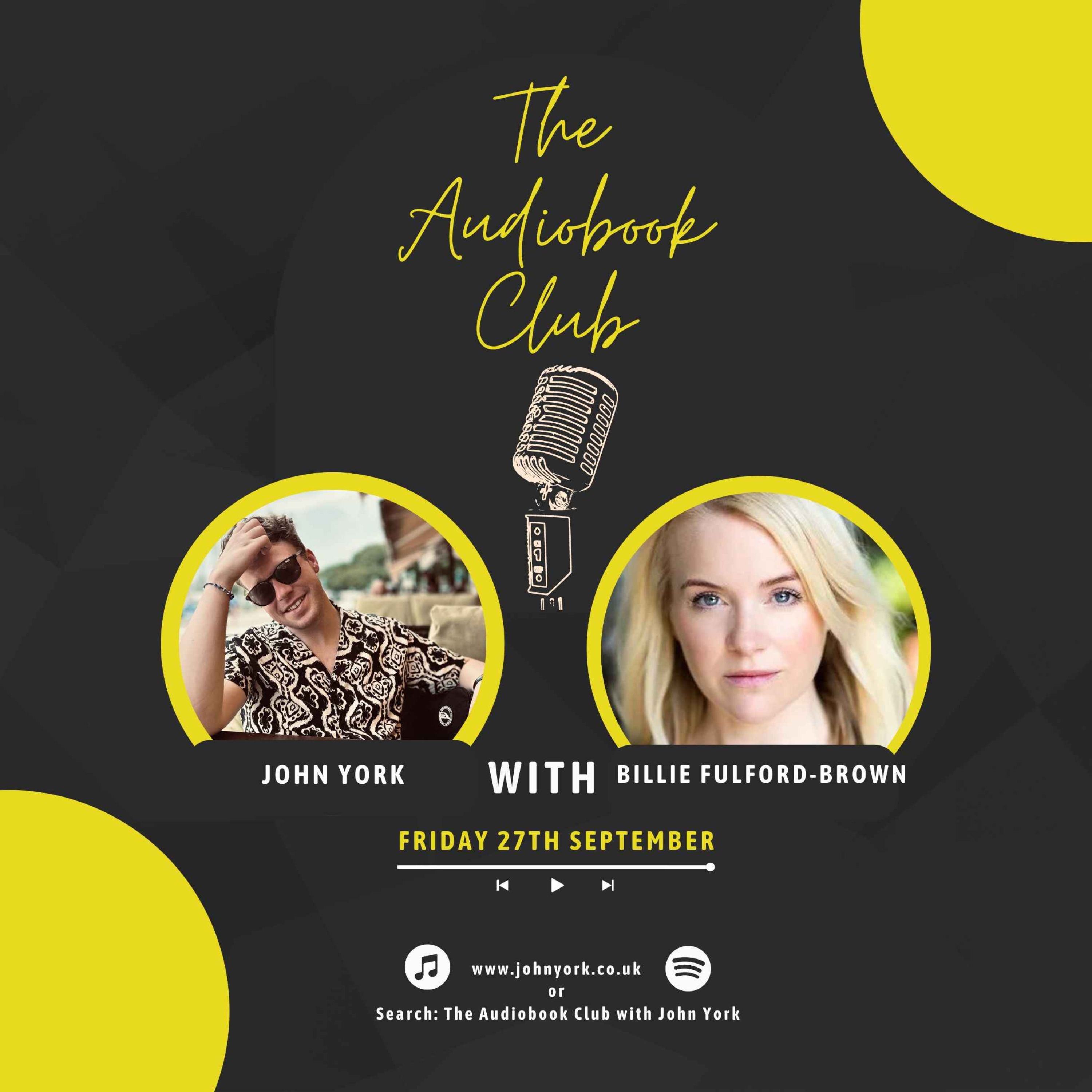
The Audiobook Club with John York
Billie Fulford-Brown | Voice Actor & Audiobook Narrator
00:56:39
Outsourcing, Narrator Advice, and Beating Acting Legends
Loading summary
Transcript97 lines
- [00:00]
A
Foreign.
- [00:13]
B
Hello and welcome to the Audiobook Club. In this week's episode, we're so lucky to be joined by award winning voice actor and audiobook narrator, Billy Fulford Brown. Billy, thank you so much for joining me on the show. How are you today?
- [00:26]
A
No, I'm really well. Thank you so much for having me. It's an absolute pleasure and an honor.
- [00:31]
B
Oh, thank you. When was the last time we saw each other? Was it APAC a few years ago? Was that last time?
- [00:37]
A
Was it 2023? So last March in New York, I think. Yeah.
- [00:43]
B
And I know I wanted to wait a little bit to get into this, but I can't help myself. So you've been to, you've been to the Audi's and APAC and things since then and something quite extraordinary happened and I wondered, before we get into asking if, before I get into asking you all of the questions, if I may lead you into where that story may possibly go.
- [01:06]
A
Oh, well, I mean it's. Well yeah, it's very exciting and equally very embarrassing. Yeah. So I had already booked my flights to la. I thought I'm going to the Audis regardless. I've never been to la. Why not? That'd be so exciting. See the American Friends audiobook community. And I had submitted myself for the Audis. So the publishers get, I think it's five, but I could be wrong, but a certain amount of entries per category. And so I knew that PRH weren't putting this one in, sadly this time, but I felt really strong about it so I thought, why not? I'm going to enter it. And then after I booked my flights and bought my ticket, I got the email to say that I'd been nominated and I thought, yeah, it's in the Best Book section. That's great. Yeah, best book. And then my friend, the lovely John Pierhaller, who is just the most incredible narrator, messaged me saying, oh my God, you're in Best Fiction Narrator. And I was like, yeah, best Fiction Book. He was like, no, best Fiction Narrator. And I was like, what? And I didn't realize that this year they'd got rid of Best Female and Best Male, rightly so that's off to the apa. And so I had, I mean, yes, I mean, admin. I need someone to do this for me. I had submitted myself for Best Fiction Narrator sort of half by mistake and was nominated. So I was like, oh my God, amazing. Because you get a medal when you're nominated and that's like winning. And I was like, I can't I can't believe I'm nominated. And then I saw who was in my category and I was like, well, I haven't won because there's Ethan Hawke and Meryl Streep. So, you know, like, super. You know what it's like with the Audis? If you get nominated, that's to me, that's a win, right? It's like, oh, my God, I've been nominated. And so I thought, well, I'm going. And I had a lovely, lovely afternoon because it was in the afternoon because it was being streamed to in New York. And I was totally relaxed because I knew I hadn't won. And it got to our category and they pulled up all the names and da, da, da. And they announced the winner and I clapped the winner. And then my friend nudged me and she was like, it, it's you. And I'm there like, what? And I was like, clapping Meryl, obviously, and she. So Stephanie Nimf Parker, another amazing audiobook narrator, has got a video of me like. Like, and then, like looking at the screen and then the big screen of me, like, clapping the winner and then she, like, shoves me off. And I was like, oh. So, yes. So the last lifeboat won. It won. Yes. So, yeah. Mad madness. And it's up there, actually. I don't know if you can see it.
- [03:40]
B
I can see it. I was gonna say, look at that.
- [03:43]
A
She's on the top. She's on the top. She lives up there on her own.
- [03:46]
B
That is so cool. And such a cool. Like you have Meryl Streep and Ethan Hawkins. You were like, yep, sorted.
- [03:54]
A
Yeah. But actually, do you know what's really weird? Because you know what it's like, I think, for us when we often nominate ourselves for. I mean, not always with the Audis, but, you know, with Vox and One Voice and all of that, which are such wonderful things that people run and we nominate ourselves. And it's a weird thing because then, you know, you do. I do get quite nervous if I'm nominated, but this time I wasn't because I was like, well, I haven't won. So I had the best afternoon, honestly, like the best most relaxed award. But yeah, so it's a great book, though. Like, such a good book. And I'm so grateful to Penguin and the director, Ali Muden. So, yeah, mad, mad, mad.
- [04:35]
B
So with the. It's absolutely crazy, by the way, and also officially, a massive congratulations for that. It's honestly unbelievable. It's so cool. But like, the. So with events like that, not maybe not necessarily the audience, but more like APAC and the sort of conventions and things that go with it, the more sort of networking, the networking side of things. Because our day to day, you know, depending on the sort of projects you usually sort of recording from home, isolated, sort of on our own, how do you sort of find those conventions and those times where you do have to go, you know, overseas sometimes for events. Is it, is it fun? Is it like how are you with those sort of events?
- [05:17]
A
So yeah, so I guess for us in terms of pure audiobook narration, APAC once a year in March, which is the Audio Publishing Association's conference, it is like the conference basically. So I found it through Helen Lloyd, who is like the OG narrator. She's the best. Absolutely love her. And she kind of said, oh, we know. Well, I've been to APAC way back when, pre Covid, all of that stuff. Because I think, I don't know for you, but for me really it was, I was dabbling a little bit before COVID but not really. And it was kind of during COVID and Post that it's really taken off and obviously audiobook sales have gone crazy and you know, all of that and I'd never heard of it. So you, you join the APA and it is the Audio Publishers Association. So I think sometimes people are under the impression that they'll go to this one day conference, whether it's online or in person. And it's all for us narrators and it's not, it's for the publishers. But there are loads of producers there. There are kind of more performance led talks as well, talks on AI and I only went for the first time when I met you last year. That was my first one. But I had sort of been in touch with quite a few producers on email before and I thought why like, why not go meet them? It's a business expense and we have to start thinking like we're running a business. And it's very easy as an actor to not think like that, I think. And I loved it. And LA was, you know, so APAC was online last year, so LA didn't have the conference, it was just the Audis. But it's back in person next year in March. Are you coming, John?
- [06:53]
B
I think so.
- [06:53]
A
New York. Okay, good, good. Yes, yes, yes, yes. March, beginning of March. I'll see you there. And yeah, so they're trying to do one on one off since COVID because it worked well. But I just think if you either work with the American market or you want to work with The American market, I think it would be crazy not to go. You know, there are really good flight sales. You can. American hotels are great. They always have two double beds so you can share a room with someone, like with a friend and split the cost of the hotel. You know, I literally go for four days. Like I don't stay long, you know. But yeah, I, it, it's nerve wracking, isn't it? I don't know how you found it when you.
- [07:32]
B
Yeah, yeah, pretty much it was, it was more like. Because I think because I very much like working in solitude, you know, is. That's incredibly grumpy of me to say. I very much like this sort of hermit lifestyle.
- [07:45]
A
Yeah.
- [07:45]
B
So I get, I often find it sort of like so overwhelmingly exciting to go and sort of see. And then suddenly you go from like. I mean, I don't know what it's like in your area, but I'm. I'm the only audiobook narrator in about 35 miles from. Because I live in a tiny village up north. So it's like you suddenly go from knowing nobody. Like people don't even know what an audiobook narrator is. They've never conceived it as a job to suddenly been in a room with hundreds of people who are amazing at it. And I think it's so overwhelming but then so brilliant at the same time as well. It's such an experience, I think.
- [08:19]
A
Yeah. And I think in terms of work and if we're trying to think of it as a business, I think it's quite important to whether you go or you're attendant online, depending on which year it's on. I think it is important, you know, and to reach out to people and send emails and, you know, we have to do everything, don't we? Like marketing, hr, admin, you know, I mean, you know, my admin is not very good. Just trying to do better. Trying to do better. I've got a great assistant now, thank God, you know, and, and we have to do everything. And I think it's not. I don't know, this might sound bad. I think sometimes it's not even about being the best actor narrator in the world. It's about being really, really good at your job and really, really trustworthy, reliable on time and all those other things that come with it because you know what it's like. There are unbelievable actors and narrators out there. But if they're always sending in their audio late or they haven't actually just introduced themselves to any of these producers. Yeah, they're not going to work. So I think it is not to get corporate on it, but it is like the package of it. It's not. You've got to deliver obviously a solid performance and truthful, but you've, you've got to do all the other things as well. And yeah, I think it's, I think it's important for me to go every year. So I'm going to escape from my children and go every year.
- [09:39]
B
Yeah, no, I totally get it. And you're absolutely right with that idea of like, because we do wear so many hats. It's. And I say that marketing is a thing that I've noticed become really like we have to sort of focus on our own marketing. I'd say I've seen that since COVID sort of really ramp up. You know, I know TikTok and Instagram essentially, you know, the rate is there, the live streaming sessions, if that's ever possible. There's so much that, you know, one has to do. How do you find that side of things? Are you a good self marketer? Do you enjoy that side of the job?
- [10:13]
A
No, I pay people, John, because I hate it. I hate it. So I don't know if you've ever done Mark Scott's voiceover playbook. No, he is a Canadian, so he's a Canadian voice actor or voiceover and. But he's an incredible businessman and I got put onto this by a couple of friends and I'm, you know, sometimes a little wary about courses. I want to dig a little bit and make sure they're legit and all of that. But I have to say he's fantastic. And, and it just sort of teaches you how to run a business. And he's like, if there's a part of it you don't enjoy, hire someone. And I was like, like revelationary. I was like, oh my God. And I'm just, I'm just not very good at being consistent on social media. I can absolutely knock a post together and I can put it out and da, da, da. But then I think, oh, I haven't posted for three weeks, you know, and then I get the panic of like, oh, so yes. And I have an assistant, so she does, she helps me with my Instagram, she helps me with background emails with CRM, you know, input producers and emails and you know, all of that kind of background stuff that I don't always have time to do. And we touched briefly before we start recording on our romance world. And for my romance world, I have someone who entirely manages my social media. So of course I dip in and I see what's going on and I respond to people personally when that is required. But I also know that she is looking after it as well. And, you know, if I haven't dipped in that day and a message has come in from an author, she will alert me. So I still absolutely go into that Instagram and see what's going on and message people where I need to. But I. It takes the pressure off for me because I'm just not very good at that.
- [11:58]
B
I totally get it and I totally appreciate that and resonate with that as well, because it's such a different part of this job, you know, And I think that that's something that a lot of us don't realize, especially when we're starting out of how much there is to do. You know, not in terms of just that, you know, you book a job and you've got to do the job, but all of that time around, it getting the, you know, working on your profile and your. Your brand or whatever, and as you said at the start, about. About apac, is that looking at it corporately almost, is it? I think that doesn't necessarily come all that easy for actors.
- [12:32]
A
No, same. It's taken me years. I mean, I'm quite old now. It's taken me years. And I think it was just things when I look like, right, so does Stephen Bartlett running his Instagram on his own. And I was like, well, of course he's not like, of course these people aren't. Of course they are dipping in. They're seeing what's going on there. You know, they're seeing what's happening on TikTok. They've got their own feed. They're responding to things. They want to respond to you. But of course, they've got people making the content and helping them with it because they're experts at that. And he is an expert in so many other areas. And, you know, I don't know about. For you, but, like, in the booth, I'm. I'm happy. I'm like, right, I've got this. I'm in. I can nail it. I love this. I know what I'm doing, but I am old. As I said, I don't really understand social media that well. And so, yeah, I just. I wasn't bothered about, like, growing followers or suddenly having all these, you know, people. I just wanted to have a consistent presence there, you know. And, I mean, it is part of our job, as much as we might want to say. It's not like social Media is here to stay and it is important. I look at people's Instagram all the time. I look at authors, Instagrams and, you know, I want to see other narrators and what they've been doing. So, yeah, I guess if there's a part you're not sure about. Yeah, look at it as a business. It's an expense. Is there an area that you can get some help with?
- [13:56]
B
Yeah, that's a really good. Just as you were saying that my mind's turning now. Who can I employ? Who do I know?
- [14:02]
A
Well, I can. I can help you. I don't know if you know Brigid Real. So she started up a company with Lynn, her friend Lynn called VA for vo. And that is how I found my virtual assistant. So it's assistants for VO's. So it's VA4VO.com and loads of my friends have used them and they kind of like Tinder match you. So it's great. So you kind of say what you want and then they look through their, like, personally, they don't just AI it, they look through who, what assistants they've got. Because some people are like, I just want someone to do all my accounts or I want someone to do all my Instagram or all my, you know, diary management or whatever it is. So she's got people on her books and then she can match you and you have a chat and see if you want to work with them.
- [14:45]
B
So what a good idea for a business as well.
- [14:48]
A
Oh, genius. I was like, I wish I thought of that. But also well done. So sorry, it's a bit businessy. Sorry, very businessy.
- [14:56]
B
No, you have no idea how much it's helpful for me, let alone the listeners. So I usually ask this at the start, but I'll throw it in now that we've got going a little bit. I would love to know a little bit more about your background and how you sort of first came into this voice, acting and audiobook world. I read that you studied was at the Central School of Speech and Drama in London.
- [15:20]
A
Yeah, I studied all over the place, many places.
- [15:23]
B
I would love to know more about your experience, like your education and then. And then how you transitioned into.
- [15:28]
A
Yeah, well, try and keep it condensed. Yeah, so I probably like you always sort of loved performing arts and theatre and that whole world, but came from quite a traditional family and you know, family in normal jobs, inverted commas. And so my parents kind of said, look, go to uni, get a proper degree, whatever that is these days. Well, 20 years ago. And if still want to do acting in theatre? Then we'll support you after that. We'll be there for you and, you know, be behind you. So obviously I spent three years doing the Theatre Society and Drama Society at university alongside my degree, which took a bit of a backseat and was like, still want to do it? But I had just done three years a dissertation. I'd had a couple of gap years living abroad all over the place and, you know, being away and enjoying the world and I just, I couldn't face doing another three year course with a dissertation because I was already 23 or something. So my mum actually found this place which I don't think even exists anymore, called the London center for Theatre Studies. And it was run by these two fascinating men who had all the teachers from Central Lambda rada. It was run Thursday to Sunday so you could work for a couple of days in the week open to all ages. So that was lovely because you meet people from all walks of life and it was a one year intensive, but you didn't come away with any sort of accreditation per se, do you know what I mean? You didn't get a degree or, you know, anything like that. But for me, I was like, perfect, one year. I can learn from all these amazing teachers and they were incredible. And then obviously tried to be an actor for a while, which is quite hard. Loved it, really loved it, you know, had some lovely little jobs, was kind of half getting places and then, you know, you have six months of no job and. And then I got very, very close to a couple of jobs which I didn't get for visual reasons rather than performance reasons. And I got a little bit disenfranchised, I suppose, with the acting world. And I had. I'd completely randomly done a commercial by complete chance, a VO commercial and then on. Was it Mandy back then? What's it called now? Is it Mandy now?
- [17:44]
B
No, it's not anymore, but it was. Yeah, I know what you mean, yeah, yeah.
- [17:47]
A
Like back in the day there was an advert from Bee Audio in the US saying that they were looking for UK narrators. And I, I love reading. Like, I'm a voracious reader. So I was like, oh my God. I could read and get, like read a book out loud and get paid. So my husband very fortunately is a sound engineer, which I didn't just marry him for that, I promise, and so love him. He knocked me up, you know, my first duvet fort, which was. I feel it's quite highbrow duvet for well done sound engineer husband. And I auditioned and B took me on and I was literally doing, I don't know, one or two books a year for a couple of years. Just tiny, you know, double dabble. And then Harper I think found, I think I must have done a Harper book, Harper Collins through B. And I didn't understand the model in the US that kind of a lot of the publishers use a production house. So they hire the production house, the production house casts and does the whole production. So Harper I think were using different production houses. So I started getting emails from different production houses saying oh, Harper would like to use you for this book. And I was like, okay, this is amazing. I love, I love this. And yeah, and it kind of snowballed and then I sort of started emailing more people and Covid hit and we had a 10 week old and a three week old, three month old, sorry, three year old and a 10 week old at home. And my husband lost all his live work. So I, I think I had done an APAC online by that point. I think maybe there had been an online one due to Covid. And I emailed everyone who had been to apac, all the, you know, producers. I was like, have you got any work? Like, you know. And so once my mat leave was kind of done, I had sort of, you know, put a few feelers out and yeah, it just kind of like snowballed a bit I guess. I don't know. Yeah, sorry, that wasn't very short at all. No, sorry. No.
- [19:50]
B
That is really fascinating to let so in those like when you first started with that you build. I'm guessing that's how you met like Helen and.
- [19:57]
A
Yeah.
- [19:59]
B
So that when you first started that when on those early audiobook projects, were there any sort of challenges that you sort of faced? Like unforeseen challenges that you can only ever come across when you're actually doing it for the first time. Can you remember any?
- [20:14]
A
Well, apart from not knowing what to do, the first book we all do is like, well I helpfully lived on a train line and a main road with three bus routes which was a dream. So I did the classic pre children recording from like 12pm till 4am for a while which now I'm like how and why did I do that? But needs must at the time that was what I needed to do, definitely the editing. So before I knew how to punch and roll because that was, you know, seven years ago, it wasn't really a thing. So I was editing. Oh my God. I was editing my work which I can do because of Mark, my husband, kindly showing me. So I knew I was editing it very well, but I am very slow and it was incredibly painful. So that would be one thing. Hire an editor. I now have a wonderful editor if I ever do need one, who I pay to do that for me. Although I do punch and roll now and then. Probably the biggest issue I had was having my first baby because I was like, oh, I can't record from home. She's here all the time. So I had to find somewhere. So I don't know if you know Neil Gardner. Yeah, he runs Ladbroke. Yeah, Neil and Mars. So Moz is my editor. Love Moz. And so, yeah, so I basically put the feelers out to hire a studio short term while we worked out because we were moving and all that kind of stuff. And Neil very sweetly said I could come and use his studio on his down days. So we became. He's like unofficial godparent to my children. I just, I adore him. I love him. So he would sit and do his accounts and he would press record and I would free roll for like five hours and record my book and go home. So that was a challenge, but. And that was an expense, right? I had to pay him to be there. But at the same time, I literally had a. You know, at that point, when did I go back to work? 9, 10 month old baby and I couldn't record at home. So, yeah, probably more life issues than tech issues, I suppose, for me.
- [22:17]
B
Yeah, I totally get what you mean. That. I mean that. I mean that experience, like recording. That experience recording at Ladbroke with is. You say that Neil was present on most of. The. Most of the sessions. I mean, that must be in a really cool, like, educational bonus to recording, having having.
- [22:35]
A
You have no idea. I mean, obviously love him, he wasn't producing, but I would often get a. You've said that wrong. It's debris, not debris. Thanks, Neil. You know, so I learned all these words that I've been saying wrong all my life and just things like it's him who said, right. Punch through to the end of the line. Push through to the end of the line. If you see the full stop, don't give up. And I was like, oh, okay. Like in the glass. And so, yeah, he would just come in with these little tips over cans when I was least expecting it, even though he was doing a different job. And he. Yeah, he's just. He's a. He's a wonderful, wonderful, wonderful man. So I'm. I'm really happy that everything's working out for him at the moment, and he's super busy. But, yeah, he massively helped me. Kind of. Maybe not acting performance wise, but with a lot of technical. Technical performance. Do you know what I mean?
- [23:25]
B
Yeah, yeah, absolutely. Because you've done like, a lot of. You've done like, all the mediums of voiceover work, voice acting, vocal performance, all of the mediums that one can think of. What was it about audiobooks that drew you specifically to, you know, to. I wouldn't say focus on it, but to essentially do as many titles as you have done. What was it about the medium of narrating all the books that sort of called out to you?
- [23:53]
A
Well, yeah, I was thinking about this because I didn't, like, I didn't mean to. I know that sounds stupid, but I didn't. I wanted to be an animation vo, which, you know, I'm still trying. That's really hard. Like, one day, and I remember I was talking to my husband years ago when, like, you, you know, you're such a fantastic narrator. And I was obviously doing like an all right job and getting repeat, you know, custom basically from producers and stuff. And I was like, but this isn't what I was meant to be doing, and I meant to be doing animation. And. And my husband was like, gift horse mouth. And I was like, oh, my. Like, wow, what. Like, what am I thinking? This. This is a gift. Like. And I hear people saying, oh, do you need to, like, reading to be an audiobook narrator? And I've heard people say no. And I'm like, yes. So I'm sorry, maybe that's controversial. I just think if you don't enjoy literature and reading, I, I personally don't know how this could be the job for you, because you know what? It's like, we're reading four to six hours a day, three to five days a week, and I. I love reading. I like, I literally. Oh, it bubbles inside me. I. I literally am like, obsessed with literature. Last year I got to record Wuthering Heights for Spotify, which is my, like, favorite ever book, you know, that I've read about 15 times in a year. You know, I just. Yeah. So I think for me, don't know about. For you, like, it's. There's a. It's a character connection, being able to really, like, embody those characters and bring the characters and the relationships to life, which I guess is kind of like the acting. Acting side of things. And then just the, like, just the love of literature and the world, like the worlds that you get to go away to in your brain and paint the pictures and. Yeah, I just think it's. It's very special. I feel very, like, lucky every day. I know we were saying that earlier, like, lucky every day to be doing this job. And obviously it can be fairly consistent once you get going. So with two children. With two children and bills, I was like, okay, this is all falling into place. So, yeah, I feel very lucky to be doing this job.
- [26:04]
B
Yeah, I think one of the aspects of narration, which I've sort of struggled with more recently than I did before was prep. Because when. When you don't have that many projects on the go, you have a lot of time to prep, or you can. You can have more time to prep and, you know, to read the book in full and do all of the things you need to do the research, if that's, you know, what you need to do for that specific project. But as they start to go and back, you know, you get projects back to back to back to back. And that prep can often be quite taxing and more difficult to keep sustained. So I wondered how. Well, what does your process for prepping a book look like now? Because I know that there's ways to outsource that also as well in some departments. So what's your prep look like right now?
- [26:47]
A
Well, I'm going to say pay someone. No. Well, yes and no. Yes and no. So I. Yeah, same as you. When you've just got one a month or two a month, it's a. It's a pleasure to read the book twice, you know, to prep it and then read it in the. In the booth. When you're getting three a month, it can be more. If it's a dual, you know, romance narration or something, and you've only got three hours of actual. Your narration, but you still got to read the whole book. Suddenly your month can become very full and you know what it's like. You also want to have a life and for me, be with my husband and my children and friends and family, it was all consuming. I was prepping every night before bed, every holiday, every you. So now my process is I have a prepper, but only for certain books. So, for example, if I have anything, a fantasy, a romance, anything like that, where there's 3, 4, 5, 8 in a series, I will always prep the first one, if not the first two, to make sure I'm in the world. I've got all my characters, I know what's going on, and then I will hand them over to my prepper I will caveat this by saying my prepper is one of my best friends. I'm very lucky, who I trained with at drama school. She's got my brain. She's very type A. I know she won't miss anything. And she preps how I would prep. So I get a full synopsis of every single chapter. I mean, sometimes the synopsis are like 14 pages. I'm like, this is a book. But it's good because then I know exactly what's going on. She does a character breakdown for every character, as I would from an actor's point of view. What do I say about myself? What do I say about the world? What do other people say about me? How do I speak? Do I stutter? Do I slur? What would my laban movement be? What would you know? Are there any famous people that come to mind? It's so. It's very comprehensive prep. And she then highlights the script, how I do with my colors. So. And I only say that as a caveat because I have heard stories of people hiring preppers and sometimes a bit last minute and really not getting very much back. And I think in that case. Well, not that you should ever go in, not prepped to narrate a book, but you kind of might as well have just. Just gone in. So I think if you do get a prepper, be very careful. Ask around, get recommendations, maybe do a test one with them, make sure that they're reliable. I've also heard stories where people have asked for the prep and a week later it hasn't come in, and then they found out they haven't done it and they're meant to start the book the next day. So having a prepper is not like the answer, you know. But then for. Sorry. For my prepper prep, I still prep a lot. And all the kind of bigger books, the first in series for any publisher or especially, you know, if you've got a director, 100% prep your book. You know, you. You want to be in it. And I guess I don't know about you. I'm definitely faster. Definitely faster now. I'm very good at kind of scanning through to see what information is needed and what I can kind of skip through. Like they're in a cave. Okay, they're sitting on the cave. Three pages later, this one. In the cave, nothing's really happened. Like, you know, you can kind of jump through. But I still make all of those notes, you know, I. For every character, I have a really thorough description in notes on my phone because Then I can open that notes on my iPad or my computer, so I can see that anywhere. I still highlight everything. I make notes in the margin. I have a certain color that I highlight everything like he whispered, she shouted. So that my eye can see that that's coming. So it still takes time. I'm just trying to manage the time better. I don't know. But. Yeah. How do you find it?
- [30:25]
B
That's really interesting. I struggle a lot. I don't outsource it, but I think after this conversation I'm going to have a. Have a little chat with the. Chat with. Chat with those around me. Yeah. But the. Yeah, I do. Essentially, I'm less on the highlighting for me personally, because I've got a little brain and it gets overwhelmed very easily. And if I see lots of annotations on things, I kind of sort of start to freak out. And although that does mean the occasional I shout something that's supposed to be spoken.
- [31:00]
A
Oh, we all do.
- [31:01]
B
Yeah. But the. I think rather similar, really. Yeah. It's just one of those things that I get because if you're in the booth, I do. I tend to. I'm in the booth about six hours a day trying to get two and a half hours of finished, which is pretty solid graft. And then, you know, you're trying to have a life. You know, you've got your admin, you've got your marketing to do on top of that, and then you want a life on top of that as well. And I think sometimes the last thing you want to do is go, then get out the iPad and stare at the screen more.
- [31:32]
A
Yeah. And you need to protect your eyes as well. Like, you know, we forget about that. We are, you know. So do you listen back to your audio when you've recorded or do you keep going usually?
- [31:43]
B
Oh, do you mean. Do you mean for like what I've recorded in that session?
- [31:46]
A
Yeah, like if you're in a session, do you stop yourself and like re. Record stuff if you weren't sure about it?
- [31:51]
B
Or occasionally I'll. So I don't punch and roll. I'll fluff and repeat. My sister's an audio engineer and she's been lumped with the terrible job of being my editor. She's been, you know, been. She's edited my books for the last eight years and she's, you know, she started doing audiobooks when I started and we're doing fluff and repeat. I would leave everything in, send her this file and say, please make this sound. Okay. And then she's just started recently or just after Covid started getting other clients as well as I was because I started doing more like publisher work. So I used, you know, use their post production team. So she started getting more clients who would send her pretty much perfect punch and roll back. And she was like, I can't believe how. Like, how. How shafted I have. I've been dealing with your files.
- [32:41]
A
Sisterly love. Sisterly love.
- [32:44]
B
But sometimes she'll, you know, I'll make a note to myself if something comes up, and I think. I'm not 100% sure on that, but I'm just going to get to the end of the session and then we'll patch it in. And sometimes we'll do like a pickup even before it's been proofed just on like a weird. More. Sometimes I'll just go and send Lou a few extra takes of something just. Just for a hunch. And I'm pretty sure she ignores them. But, you know, makes me.
- [33:06]
A
You never know. You never know. Okay, so you know what I'm gonna say? Learn punch and roll. Everyone is so scared of punch and roll. And it's like once you do it, you're like, oh, my God, is that it? Like, honestly, I put it off for about two years. I was like, no, I can't do it. And then I was like, I'm just going to add a week with no book. I'm going to learn. And within an hour, I was like, oh, so I can do it. Okay, It's. I know it sounds silly, but oh, my God, it's just learning where to punch in and not trying to be too clever. You know, at first you're like, oh, I could punch in at the end of that breath halfway through a sentence. And then you're like, no, that's a terrible idea. That's clearly punched in. Go back to the beginning of the sentence. It's so easy. It's so easy.
- [33:50]
B
Do you find that Brits are less, like, open to punch and roll than the folks over across the pond? Because that's my experience.
- [34:01]
A
I think we are. I think in all things audiobooks, we're like five years behind. Because I remember even seven, eight years ago when Helen Lloyd and Matt Lloyd Davis and Liam Gerrard and all of Nigel Patterson, everybody in Malk, they were all recording from home and they had proper, you know, is it like a whisper room? You know, they had proper booths, but all the publishers in the UK were like, you can't record from home. But of course, they were working with America already. And they knew that you could record from home. And so I think. And now we'll see. Everyone records from home in their booths. So, yeah, I think we're just behind. And I think in terms of programs, we use punch and roll, all of that. We are. We're just a little bit behind them because we. I guess our home booths are relatively new compared to their home booths. But honestly, not to put your sister out of work. Sorry, Lou. But seriously, like you, it would. It would and it will change. It's funny, sometimes I'm so. When I record with Penguin Random House, I always have a director over Zoom, which the first time I was absolutely terrified. Like, it, you know, like, oh, my God, someone's going to listen to me for like six hours and I'm going to just mess up every sentence. But that's free roll. So I literally press record and I send it all off. And Ali, my director, marks up her script and that gets sent off. So between them, they can kind of edit it pretty quickly. And sometimes I find that faster because I'm not having to stop and edit.
- [35:32]
B
Yeah.
- [35:32]
A
But equally, once you get going with it, it's super easy. Yeah, I think you'll surprise yourself.
- [35:39]
B
Yeah, I certainly do. I do feel called to. Have you ever been in a session where they've taken over the computer from their end? Like, taken over your computer?
- [35:49]
A
Yeah, kind of. So when you work for. You've recorded for Disney, right?
- [35:52]
B
Yeah, yeah. And we've done the same series, haven't we?
- [35:55]
A
Yeah, yeah. And it's all over Source Connect. And you're like, can't record anything at home in case we sell it. And I'm like, I mean, who am I? I can't even edit this nicely. Like, what are you? What are you? But I totally get it. Like, I totally get it. So, yeah, so in that respect, yes, sometimes it is kind of the engineer is in control, but more of my computer rather than my software. Like, normally, if I have a director over Zoom, they want to be able to see my screen so they can see the timings to do markups. So they want to see my time meter at the bottom of. I use Studio one. But they're not in control of it, but they like to see it. That's normally the only time, I think, because if you record with a director, it's only over your ears. You obviously don't have to look at each other.
- [36:42]
B
I think for the last Disney, but they had. They set me up through Source Connect, but then, like, through Zoom, took control of my computer. To do everything. So I was, I was sat in the booth, I could hear them through talkback. And it was a amazing. It was, it was. I just did nothing. I couldn't get over. And I kept saying to Lou as well, you have no idea. Like, they did everything for me. For you. I have to press record, I have to send them the files. I did. They just, I was. And like every few minutes they were going, you okay, John? Everything. Can we, you know, can we do anything on our end? It was like royalty. It was amazing.
- [37:16]
A
That's so nice, isn't it? No, that's not normally the case, is it? Normally it's just us on our own in our pajamas pressing record.
- [37:25]
B
So when, when in terms of like a typical recording day, sort of how long, like, do you, a creature of habit, do you like to record the same amount of hours a day? Does it depend, like, how does it work?
- [37:37]
A
Yeah, I, I was actually just thinking about this earlier. I definitely don't have a set amount, particularly I sort of. So I've got to get the kids to school, all that kind of stuff. You know, sort the house out with a bomb site or Washington hang up. There's always something to do. But I try and I'm. My brain is better in the morning, so I do try and kind of crack on. I'm. I'm pretty quick now, maybe because I punch and record. John. And so, yeah, I try and get probably three hours a day finished sometimes if I'm with Penguin, it's easily four, four and a half easily because we just like you get in the story, you've got some on the line, so you can't keep checking Instagram, getting, getting another cup of tea. I'm like, oh, the pressure. I've got to keep recording. But yeah, I tend to try and do. I suppose a lot of books are kind of 8 to 10 hours, ish, give or take. And I try and do one a week sometimes or not every week, but, you know, in a week. So, yeah, I'm probably in the studio, try and record. I get out, do a bit of exercise, you know, must go out and do exercise and run or yoga. I could do PT every week, all that kind of stuff. But yeah, I can probably record for like four, four and a half hours and probably get two and a half to three finished. So that's. I aim for that. Obviously some days you're not feeling very well or you've got a headache or a bit ill or. Yeah, I don't know. Aim for it.
- [39:06]
B
What about you no, well, a little bit less than that. I must say. I'm very like, I totally appreciate how long, you know, because you say like three hours, four hours work and people who don't get it will be like, well, that's nothing. You have no idea how much graft to get, to get finished, to get finished, to get finished hours work. So it's like, what are you like? Or do you have, I should say really any sort of non negotiables that you have to adhere to in order to like get that done? Because I'm sure it's the same for you. But when you're working from home, there's distractions everywhere and it's not even, I'm not even talking about procrastination, I'm talking about just natural distractions that pop up, arise from you just being around in the house.
- [39:47]
A
Yeah.
- [39:48]
B
So like, like how do you, how do you sort of manage that? And have you any sort of non negotiables that you have to set those boundaries that you have to.
- [39:57]
A
Yeah. I am very bad for getting distracted on TikTok. So I put my phone on do not disturb and you can actually add certain numbers to your. There's something in Apple I can't remember, but you can add certain numbers. So I've got like my husband and school. So even on Do Not Disturb my watch will ring but no one else, nothing else will come through. So I have that because I have an Apple watch so that, you know, if something happened at the school they can still call me. But do not disturb, I have to do that because otherwise I'm like between chapters. And a chapter could be like seven minutes long, right. I'm like, why am I stopping every for three minutes between every seven minute chapter? And I don't know if you've read or listened to Mel Robbins, Five Second rule. So she's like a motivational speaker, really interesting woman. And I've listened to her book a couple of times now and the crux of it is you sort of got five seconds to make that decision and beyond that your brain's like, no, not doing it. So I do quite often find myself like, oh, do I. Do I check my phone or go for tea? And then I'm like, 5, 4, 3, 2, 1, press record. And I just make myself press record. And then once it's recording I'm like, well I'm recording now. So I, yeah, I do that a lot more than I used to before listening. Well, I didn't do it at all before the book, but I do that quite a lot. Because you just have to hit record.
- [41:20]
B
Yeah.
- [41:21]
A
Because otherwise I just sit there faffing about for ages.
- [41:25]
B
Yeah. That is fascinating, though. I'm. I'm definitely gonna steal that because I'm a bugger for it, you know, for sort of like, I've got to get back in the. I'm sat in this chair, my booth just over there, and I'm like, I've got it. But I'll just check this website and I'll just check Facebook.
- [41:39]
A
I know, I know. And I think that's the thing. I think it's very hard to. It's easy to turn the phone off, obviously. I record on my computer and I've got a mirrored screen, so I can. Yes, of course, you could turn your WI fi off while you're doing it, but I, you know, I do still like to see what's going on. But, yeah, you could. I mean, I suppose you could just. Just, you know, turn your WI fi off if you're not ethernetted in. And that would be another distraction gone. And I suppose for me, like, I have got probably a certain amount of pages per day to hit, maybe rather than hours. And I can't record on the weekends because children. So, like, I have to. Well, and obviously we give them a deadline, don't we? We say to them, I'll up, you know, upload on these few days. So, yeah, I'm like, I would rather get it done and have an hour in the afternoon to do some admin. But I am quite, like, efficient as a human. I am. I didn't realize until quite recently, but, yes, I think I'm quite, you know, Energizer Bunny, kind of get it done. Yeah. And I do love it as well. I do. But you're right, we have to get rid of the distractions because the whole world is just destruction now.
- [42:49]
B
Well, I think also, I think just for your own mental health, and this doesn't just go for creatives or, you know, audible narrators or voice actors or whatever. I think it's just everybody. But if you do spend a lot of time with easy access to updates in the world, it's just. It can be terrifying. And I think there's something that I've brought in my own life. I used to watch the news twice a day religiously. I used to be updates on the phone. Used to have notifications from BBC News coming up on my phone. It's just had to. To go.
- [43:15]
A
Yeah.
- [43:16]
B
It's just that because it was just I was living my Life as a, like a worried, like, wreck.
- [43:20]
A
Yeah. You know, and it's too much and. Yeah, exactly. You worry or you feel like it's FOMO or, you know, I don't have a Facebook app on my phone, so I have to go to Safari and log in because I was just mindlessly checking stuff. And I think that's where that five second rule thing really comes in. Because I'd be like, what am I doing? Put it down. 5, 4, 3, 2, 1. Oh. And then I'm like, once it's recording, it's recording.
- [43:44]
B
Yeah.
- [43:45]
A
So, yeah, that has, it has really helped me. If I find myself procrastinating or treat myself, I'll be like, one more chapter, then lunch, you know, like, kind of. Come on, you know. Although it's funny because I. Do you do a lot of the live recording like on Discord or Tick Tock or anything?
- [44:01]
B
No, I can't.
- [44:02]
A
No, I find it. It scares me because I'm just can't handle it. But I've got friends who either find that that's really helpful because they have people watching them and they'll kind of go, oh, should I do one more chapter? And people comment, they're like, yeah, one more. And it gives them the impetus to keep going and they're more focused. Or I've heard of narrators kind of jumping into Discord rooms and they're both in the room together and obviously can't hear each other, but they both record. But they're both kind of like work buddies.
- [44:32]
B
Yeah. Like an accountability. Accountability.
- [44:35]
A
Yeah. So there'll be. I mean, I don't really understand Discord, but yeah. So they'll be like, right, we're going to record for two hours. And they both hit record and they focus and they record for two hours.
- [44:47]
B
Yeah.
- [44:48]
A
So I guess if you need that. But yeah, I think remove the distractions from your person as much as possible, I suppose is that I lock myself in my office as well so the children can't get in. I'm locked in now, literally. So I've got like a garden office and I used to leave the door just pulled to. And then obviously coming to be like a knock on the, on the booth door and I was like, I'm recording. So I, I lock it now so no one can get in. I'm just in here on my own all the time.
- [45:21]
B
I don't blow at all. Oh. So I get, I get a lot of messages from aspiring voice actors and narrators from this show and they're usually looking for advice about breaking into the industry, getting started. How does one start? Because it's such a. It can be from the outside so such a weird little niche of an industry that, you know, how do you. How would you even start getting into all of this stuff? So I would love to ask if you have any advice for those, you know, feeling themselves drawn to this kind of work that want to, you know, maybe, you know, want to get into voice acting, maybe want to narrate an audiobook like have you got any advice for those who do come? I'm sure you get it as well. People asking you the same thing.
- [46:03]
A
Yeah, for sure. No, often. And I think, well a brilliant. Because there are so many books either now, you know, old school books which can be narrated or books just being published all day every day. There is so much work. So firstly, brilliant. Secondly, I tend to push people towards a push suggest people go towards people like Karen Commons is narrator Roadmap, which is fantastic. I also love Andy Aunt and Ron Butler and a few others set up a company called Narrator Life. That's the website. I don't know how. It's not.com or something but it's Narrator Life magic and it's got loads of incredible courses on there and you can do one on one coaching with people. So for me personally, I mean I've done loads of the courses on there. I've done one on one coaching with like January Lavoy and people and yeah, I just think it's. It's quite a minefield and lots of people will be offering coaching. But yeah, I think those are two, probably two places to start. I think also like, do you have an acting background? Because I think if someone wants to do this and they've never acted, I don't think that's necessarily an absolute hard. No, I'd be interesting to hear your views on this. But I do think, I think that would be quite hard, you know, to embody quite a. Quite a sort of emotional tense situation within a book between characters or relationships, you know, to have. No, not just the accents or whatever because I suppose most people could probably learn an accent. But yeah, I think if you've got no acting background whatsoever, maybe consider some acting in classes, see if there's something locally to you and just start practicing reading out loud because I think. I don't know about you. There used to be this distinction, didn't there, where the us, you know, eight years ago was like very flat and no changes between characters and everything was very, you know, plain sort of thing. And over in the uk it was all very active and I feel like they kind of merged, you know, so there's feeling behind the narration, but equally, you know, I've got my AirPods in now. If you've got someone in your ears, you don't want the narration to be. And then he went over to the shop and did it, you know, So I guess practice, like, practice reading out loud and listen back. And did you. And, well, I mean, I don't know. I never like my own voice, but yeah. Did you. Did you not hate it and. Yeah, those would probably be the main places I would start. Yeah.
- [48:38]
B
It's so interesting that you said that. It was one of the first things that I sort of. It was a real realization for me when first getting into it because I thought I very much saw it as a performance. And then the idea is that, you know, if you. Most people as well listen to audiobooks as they're trying to get to sleep as well, and, you know, obviously you can't do every book situational for the list, but the sort of idea behind that was like, I was trying to go big for these characters when really I should have been inhabiting the feeling of those and letting that little nuances that you can barely even pick up on in yourself sort of direct the way that they're feeling rather than go, I'm angry now and I'm sad now.
- [49:17]
A
Yeah. And I think, I think also what I found I've definitely discovered and learned from mistakes. I mean, to be honest, that's how I learn is I listen back or I've done something, you know, tech wise, and I'm like, oh, you know, I learned from the mistakes. You know, there are definitely, I suppose there's no hard and fast rule from my point of view. Like, it's not like, never do a big character, but never do a big character if it's not appropriate. Like, is that truthfully the, you know, you must do historical romances and there's often an absolutely wonderful, very jovial, big jolly father, you know, and that is a slightly bigger fun character, you know, but that is because that is who he is. Not because we've gone, oh, I'll just make them sound like this. Yeah. And I think that's when the acting side comes back in, you know, it's. It has to be truthful and honest. And, you know, we've all heard horror stories and I've heard of someone who just gave accents to characters because they thought they suited the character. And you're like, but it's like a playscript. Does it, does it say it in the book that they're from there? Because if it doesn't, they don't have that accent. So I think it's, yeah. About getting that truth and that honesty and that reality of those characters. And like you said, sometimes it could be just a little, a tiny nuance, a laban, a flick rather than a push or you know, whatever it is. Especially when you've got six 20 year old men who all went to Eton and have grown up together and you're like all the same accent and the same age and live in the same place. Good. You know, so you do have to find gentle little ways. And I use love and a lot for that. But yeah, I think, I think just to remember that, yeah, you're in someone's ears. And I, and I probably wasn't for the first couple of books because we're all learning from mistakes, right? It's how we learn. But I think there is a. For me, I love listening to narrators who have a. Not like a gentleness as in, you know, oh, I can hardly hear them, but just a. They're easy to listen to. I don't necessarily want a very hard, staccato, you know, kind of voice in my ears the whole time, but, but then equally other people do like that. So I don't know, I guess if that's your style.
- [51:30]
B
Yeah, it is, isn't it? And I think, and also I think that's a wonderful thing about this medium is that you know, this obviously the whole world of books, whole world of characters, no matter sort of where what you sort of natural voice sounds like, there will be a character for you. And I think, you know, you know, when you, you know, when you get, you get turned out for a job, but you don't get the job that you were hoping for. And it's like that idea of like really just wasn't for me, but there's for me, you know.
- [51:59]
A
So I had this twice recently where I auditioned for books and then I like to obviously go on audible and see who got it and just take a minute and obviously send them all the. No, I'm like, that is great. It was so for the last two that I looked at men got the job really. So I was like, right, well I'm glad I actually looked it up because they did say in the audition process the author doesn't know what they want. We're getting lots of different auditions in and I think that's, it's good to remember for us as the narrators as well. Like you said, like, sometimes it's not that we're not. We haven't done a good audition or we're not a good narrator or whatever, but the author just hears something different in someone else's voice and it could be someone from, you know, a different walk of life or a different, you know, American versus our accent or. But yeah, and I think just, you know, I don't know about you, but there's things like Panner. There's loads of kind of APA groups that you can join as a new narrator and kind of, you know, meet people, make the effort, go to the social drinks, even though it's scary to know about you. But it's like, it's the nicest industry, right?
- [53:02]
B
Yeah.
- [53:03]
A
Oh. So, yeah, I think don't be scared. Go to things people are welcoming. Learn your craft, you know, as best you can. And. And I think be open to learning. Like, I still train with people 100 because, like, with acting, when have you ever learned everything, you know, and accents, you know, we have to do an accent that we don't know. And. Oh, and if you don't know an accent or you can't do it, don't say yes to a job just to get the job. That's like, you know, when you're an actor and they're like, don't put horse riding on spotlight if you can't horse ride. Like, it's kind of like that because it will bite you in the ass. So, yeah, don't do that.
- [53:41]
B
But, yeah, no, you're absolutely right. And I can say from my own personal experience, it's. I've never known an industry like it of so, like, people so generous with their time and their knowledge and their guidance. And you can have such a laugh as well at those. Those places. And, yeah, I'd love it for one. But as we. As we approach the end of this episode, I just wondered if I could ask you if you have anything in the. In the upcoming, in the schedule, in the diary that you're excited about that we can perhaps share in that excitement?
- [54:16]
A
Well, yeah, so the big one I've got at the moment, which actually just came out in the us, but the UK release is October is. I just did Jodi Pico's new book, which was with a few other amazing narrators, and it's just abs. I mean, I've been reading her book since I was like, 18, so that was a dream come true. And it's from an actor's point of view. I think you'll enjoy it. It's all about kind of whether Shakespeare wrote his plays. And Jody has done the most unbelievable amount of research. And so she basically follows the story of Emilia Bassano, who I was reading the chapters of, who is thought to be one of the women, one of the only women who actually wrote a lot of his plays. They think that there was a band of four or five and that he wrote some as well, perhaps, but that people wrote them and he put them on. And it follows her life and kind of what it was to be a woman in those times. And it jumps between that and modern day New York and a playwright and what they're going through. And it's just. Oh, it. Just even prepping it, I was like, oh, my God. Oh my God, that's true. And I was like, oh, my God. Everything I've ever thought is, yeah, so that's out in October in the UK, so audible.co.uk. so that's the kind of. Yeah, that's the big one at the moment. And then just loads of other lovely, lovely books coming out soon. Lots of nice romances, lots of nice historical fiction, literary fictions. So, yeah, that would be the main one at the moment.
- [55:49]
B
That sounds amazing. What I'll make sure to do is put the link for that title as well in the. In the show notes of the show so people can check that out. Well, that just about does it for this episode of the Audiobook Club. All of Billy's socials links and the link to that project as well can of course be found in the show notes as well as more information on Amplify Audiobooks, who very kindly sponsor this podcast. Billy, it's been such a pleasure chatting with you today. Thank you so much for taking the time and, yeah, I'm looking forward to catching up next year.
- [56:21]
A
Oh, no, thank you so much and I'm sorry if I've waffled. If anyone has any questions about anything, I always say, feel free to drop me an email. Might take me a while to get back to you, but I will, like you said, about time. People have been so generous with their time to us. I feel like I've always got time. So, yeah, send an email and thank you for having me. Thank you so much.