← The Audiobook Club with John York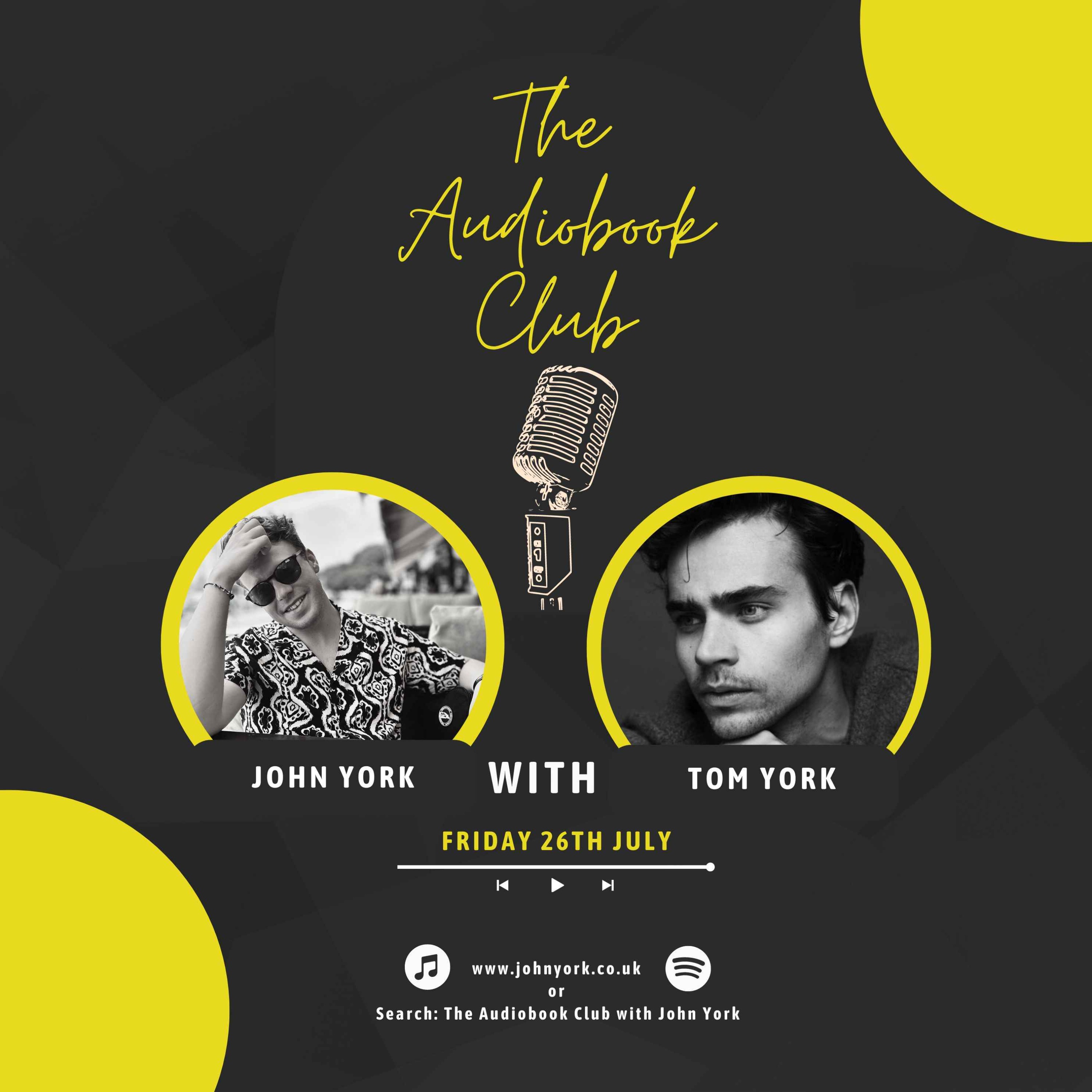
The Audiobook Club with John York
Tom York | Actor & Voice Actor
00:59:26
Finding Quinn, Writing Process & Life as an Actor
Loading summary
Transcript98 lines
- [00:13]
John
Hello, and welcome to the Audiobook Club. In this week's episode, we're so lucky to be joined by actor and Quinn creator Tom Yorke. Tom, thank you so much for joining me on the show. How are you today?
- [00:25]
Tom Yorke
I'm very well, thank you. Thank you for having me on the show.
- [00:28]
John
Oh, it's my pleasure. I'm so chuffed to be chatting with you today. You know, as I said right at the start of us joining this call, I'm a huge admirer of your work and I have been for quite a while. So it's. Yeah, it's really nice to get to meet you and get to have a chat.
- [00:42]
Tom Yorke
That's the first time anyone has ever said that to me, so thank you. That's so lovely.
- [00:46]
John
That can't be true. I don't believe it. So, as is tradition on this show, I'd really like to start with a huge question which may be very difficult to answer, but essentially how acting and performing feeling found its way to you? Like, you know, I read somewhere that you began acting classes, like, super young in, like, the Netherlands.
- [01:07]
Tom Yorke
Oh, my gosh. Yeah. I don't know how you found that, but. Yes. Well, basically what happened was I, I. When I was five years old, my dad's work moved to the Netherlands, and so we. His family obviously went there and. And I didn't really have any hobbies, and I think my mom wanted me to have something to do after school at least some days a week. So I was never very coordinated, really. So bit off the. Yeah, off the track for me. So she found this, like, drama class thing, and I went along and I just ended up having a great time. And we worked up and did, like, lambda exams and things, you know, as you do when you're a young guy wants to do some acting. And I ended up doing. There was an American amateur theater group that I. As far as I know, they're still there over in the Netherlands, but they did it. They put on a pantomime every year. And so from a very young age, I was in the chorus of that pantomime. And I just remember having the best time, you know, backstage with a bunch of other young kids, getting up to mischief, eating, you know, takeout food and getting all nervous and excited about going on stage for a few shows. And I remember just thinking, this is the. This is the best place to be. And really, that's. That's where. Where it got its hooks into me. And then obviously from there I went on and I did it at school and, you know, I had some amazing teachers. I went to a school up in York called Queen Ethelbergus College and I had some amazing teachers there who really pushed me, believed in me. And so I thought, oh, okay, well, I'll try and get into drama school. I know that the chances are almost zero, but I'll, I'll try. And I managed to get into Lambda at the London Academy, Music, Dramatic art. And I went there for, for four years in total. I did a little foundation year first and. Yeah, and then, and then I was lucky. I, I got a really good agent in my final year and then I went on to, to work and that's, you know, 10 years later, that career. Here I am chatting to you today.
- [03:14]
John
Yeah, that's really cool. So that Lambda, how transformational was that, you know, experience for you? You know, four years, you with people who are really taking it seriously. You know, this is their, this is their career in future. Like, how transformational was that for you?
- [03:29]
Tom Yorke
It was massive. But it was funny because I was used to being the biggest fish in my little pond at my college or school or whatever. I was leading the school plays and everything and suddenly here I am at one of the best institutions in the world for teaching actors and practicing actors and. Yeah, and there were all these people who I was so intimidated by. I just thought they were all incredible and I, I really wanted to live up to that. And it, yeah, it took me the first couple of years. Well, the first couple of years when I was on the three year course with all these, these guys who come straight from school, they were, you know, they're walking chest up, proud, first time try into the, you know, into school and I was intimidated by them. But over time I found my place, I found what I was good at and yeah, not really looked back since then.
- [04:22]
John
Yeah, yeah, that's fair. So like, you featured. So after Lambda, you featured in some tremendously cool TV shows. It's like tremendously cool. And I think I'd be shouted at by a lot of people if I didn't ask you about Poldark straight off the bat. How did that come about? Because that's huge.
- [04:41]
Tom Yorke
Yeah, it was massive. I got. Originally there were two brothers in the show for season three, which is when I joined the Brothers of Demelza, who's the lead female character played by Eleanor Tomlinson. And there was Drake and Sam and I, I think everyone auditioned for both brothers. And there was the romantic lead, which was Drake, and then there was the zealoted Methodist preacher brother Sam, who I immediately fell in love with just because he was so out there. And as a, as a young guy, it was so far away from anything else. Any other audition I'd really seen or, you know, it tended to be, you know, ingenue, young, trying to be a hero type characters or, you know, sort of romantic lead. Here was this guy who had, in romance was, you know, he had the word of God and that he was going to spread it. And I just thought it was such an opportunity to, you know, try and get into a completely different frame of mind, which is, which is what I love about acting is really trying to put yourself in other people's shoes. And I was very, very, very lucky. I had to do lots of rounds and oh, my gosh, the weight. I, after my final audition, I, I, I, firstly, I think the wait for the second round audition was months. I thought it gone away. I just thought, oh, you do, you do a bunch of auditions as an actor and, you know, it's just another one that's flown off into the ether. And then they got back in touch. And after I did my final one, I think I had to wait six weeks. And I knew I was close, you know, I, and I kept like, I was that really annoying actor who, who kept messaging his agent just saying, if you hear anything at all, I know you would let me know, obviously, but please, if you do know anything at all, please put me out my mise.
- [06:23]
John
Yeah.
- [06:24]
Tom Yorke
And I still remember to this day there is nothing better. There really is nothing better than getting that phone call, you know, and I had a terrible one, which was right before Poldark. I got, I got a phone call from my agent and I picked up like, oh, my God, this is it. And he was like, the first thing he said, this is not about Poldark. Okay, okay. Okay. I had to calm myself down and I had another audition to go to, but when I finally got that call, I remember it was just like, yeah, it was, it was amazing because I knew it was a great show. I knew it had great actors in, I knew it was really popular. It was again, this transformative role that I was going to get to experience for potentially three years, which is what it ended up being. And yeah, I, yeah, it was just the most amazing moment.
- [07:12]
John
Yeah, I bet, I bet, like six weeks when you know that you're that close must have just been excruciating because I imagine it's like all you're thinking about because it's like, you know, it's game changer changing, isn't it? In Terms of career. So it's. Yeah, that must have been really difficult day and night.
- [07:27]
Tom Yorke
Yeah, I, I couldn't, yeah, I just couldn't relax. I mean that you think when you get something like that, you, you jump for joy and you just, you know, raw emotion, roaring and just, you know, celebrating. But it was more like this wave of relief. I like just kind of lay down on my bed like, oh my God, I can't believe it. You know, this is, this is, this is amazing. And yeah, oh my God. And it was that relief of releasing the tension of that six weeks and. Yeah, no, it was, I can, I can still feel it now. Even thinking about it now, I'm like, oh, that was the day.
- [08:05]
John
So like that does lead on to what I did want to ask you next, which is, it's about uncertainty. So of course like this, you know, any sort of actor, performer, artists, life is I suppose anyone's life really. But, but really when you sort of betting on yourself on the, you know, on short term projects, you know, project, you know, it's not like a full time job where you know you're going to be on something for the next 25 years or whatever and you're going to retire after this. It brings about it so much uncertainty. We don't always know what we're going to be doing three months down the line or all that sort of stuff. How are you with that? Has that been a journey of acceptance or is it, you know, do you thrive off of that kind of buzz?
- [08:42]
Tom Yorke
Well, that's, that's a really, really great question and I fear that I might have a disappointing answer to this question because I think I've gone the opposite way. I think when I was younger I, the uncertainty was fine. You know, I'm, I'm 21 years old, I'm coming out of drama school, I have no expectations, I have no plans and I'm ready for, to just accept whatever the universe throws at me. And I, I think when it came to rejection as well, you know, auditions and getting rejected, when I, when I first started out, I just sort of had this blind confidence and, and that that really was absolutely fine. And then as time went on, you know, I'm 31 now and I started thinking about the future and things like this and I wanted to make plans and I started, I think slowly to let the tension of the unpredictable nature of the industry kind of filter in. And it has been through finding other outlets for my creative work such as, I'm sure we're going to talk about Quinn, when we get onto it. But really, I mean, I. I started trying to look in, to get into audiobook narration, and I started a little kind of podcast thing that is discontinued at the moment because I've just been too busy, which is amazing. But I. I was trying to diversify my income streams than just waiting for the phone to ring because that. That what is. What I find is the most difficult thing about being an actor. Particularly, you know, I. I am fortunate in the sense that I love to. Again, we'll get on to Quinn and there's a big writing component of that. But. But having. No, necessarily not a creative outlet without that phone ringing and you auditioning for something. I. I think over time I started to. That started to be difficult for me and I am a very creative person. I have a real impulse to do something and I think that, you know, everything happens for a reason. And the fact that that tension built in me and I wasn't always being able to satisfy that. I think that the writing side, and I write just with pleasure as well, that writing outlet has been the most. Probably the most important thing for me, and it connects me to being an artist when I'm unable to do it through my acting.
- [11:10]
John
I love that. That is such an amazing answer. It's connecting with your art rather than the payoff for the, you know, life or death depending on somebody else's actions. It's just you're in it for the art and that's. That story is. I absolutely love that. So we will talk about Quinn. I promise you. I am. I'm very interested to hear more about your passion for writing and you say so. Obviously there is a component of writing Quinn audios there. But you mentioned also writing privately, writing, you know, separately. Has that been a thing that's. That's gone on, you know, underlying your acting career as well?
- [11:47]
Tom Yorke
Yes, it has. I mean, not professionally yet. It is definitely. I mean, again, other than Quinn. But. But that is my. That is a big aspiration of mine. Now. I. I remember I went away and I did my. My second job out of drama school. I did this show called Olympus, and it's a. It's a little bit of a cult show. You know, it's. It's a little bit janky in places, but I loved it. I had the best time. I went over to Vancouver and I filmed it for six months. And I thought, wow, this is amazing. This is life. I mean, this is crazy. And when I got back from that trip, there was. There was a natural pause. I didn't know if there was going to be a second season. I didn't know what was next. And I. I really distinctly remember having this idea. I just had this idea for this film and it was so amorphous. It, you know, just as all, I think budding writers who don't really know that they're a writer yet. It was just this mess of ideas. And so I sat down and I went to Foyles bookstore in London on Tottenham Court Road. And I went to the cafe at the top. And I went there for weeks and weeks and I just sat with my notebook and I tried to understand. I just tried to even understand what the idea was that I was having. And it was. It was kind of a. Because there was no pressure on. It was a really fun experience. You know, it was sort of weird. It took a lot of back and forth rewriting the same thing again and again and again. And eventually I started to form what this idea really was. And. And then I started to write a screenplay about it and then I got another job and you know, thing. Things moved away. But I remember that, that, that was. I. It was in that time that I realized this is what I want to do when I'm not working in a version commas as an actor. This is. And it just came. I had. It wasn't. I sat down one day and thought I want to be a writer. It was just this thing was in me and I wanted to get it out in some way. And that really. That's really what's permeated the writing thing. I do Morning Pages for who's familiar with the. The Artist's Way. It's a great book and a sort of process about connecting to your inner artist. But one of the fundamental exercises that you do straight away is every morning. And I don't do this every morning. I wish I did. I'm not. I'm not as infallible as that. But you get up and you just write three pages with a pen on a. In a notebook of stream of consciousness. No agenda. No one's ever going to read it. You're never going to read it again. Just stream of consciousness. Whatever is inside you could just be making a list of things you need to do today. It can. Writing down the dream you had from last night or, you know, working out some emotion that you've got that you don't fully understand or whatever it is. And I just did that. And through that process I really connected to this inner artist or whatever it is in me that wants to be creative. So, yeah, that's a very long answer to that.
- [14:45]
John
No, it's a fantastic answer. And I think I definitely. I've played around with journals before and I keep a diary, but it's, you know, when you get busy, it just turns out to be like, I did this. I went to the shops, Irish, you know, and you sort of hope for sort of David Sedaris, kind of like gold, you know. But it is an interesting, is an interesting concept of getting that kind of, I think, like Tim Ferriss calls it, like your monkey mind or something, of getting all of that fuzz out and then you're connecting with yourself, but then also you're allowing your brain space to breathe and it opens up to where the thoughts that really want to come out in that subconscious can come out.
- [15:25]
Tom Yorke
I really feel that I super, super acutely feel that if I have things on my mind, I have to write lists. If I've got things to do, I have to write. Firstly, I've got a terrible memory. So if I, if I think, oh, I've got to do that, I have to write it down, otherwise it's not going to get done. So I, I like to keep lists. But it's, it's just this crazy thing. I can, I can even have a list on my phone. But if I sit down and I write it out freehand and just say, okay, this is everything I've got to do. These are my pr. I. And I'm going to do this today. I'll. I'm going to a lot tomorrow time for these two and whatever. Suddenly that if you call it monkey mind, that's what Tim Ferriss calls it, it just relaxes and suddenly I'm able to feel relaxed. And only when I'm feeling relaxed can I really do I feel like I can truly be creative. Maybe that's not true. It's not necessarily relaxed, but it's without that noise. Because, you know, sometimes the best, best things I'll write or the things that I'm like, wow, there was something in there is when I'm feeling very emotional, you know, if I'm very angry about something or very upset about something, it's often I. There's a little twisted artist part of me that goes, oh, this is going to be good for some writings.
- [16:42]
John
I think. You know, I think that's one of the healthiest things about writing, but also just performing as well in general is that if you have something that you know is going wrong or this, you know, something happens to you later down the line, you may come across a character who's feeling a lot of pain, and you think, I've got this. I know exactly where this is coming from, or in the sense of, you know, writing. Of course, you think, well, this is, you know, at least use it. At least you've got it. You get something out of it. So, yeah, Quinn, a platform that you have, without a shadow of a doubt, taken by storm. I do not think there's a single person listening to Quinn audios that doesn't count you as one of their favorites. You know, it's so. It is so wonderful to see, and that's creators included. So, like, how did Quinn come about for you? Like, what drew you into to begin making audios?
- [17:34]
Tom Yorke
Okay, well, I give you the most honest answer that I can. So I, as we said at the beginning of this, I was in a. A place where I felt like I, I need to diversify my income. I need to find a way of, you know, using what I love doing. I don't, I, you know, I don't want to go and just say, okay, I'm gonna go do some other job. I want to try, if I can, to stay in the realm of what I love doing. And so I thought about, you know, I, I felt like I never really had given voice acting a. A proper shot, and I was interested in trying. So, like all people who are a bit financially constrained, I started a podcast, which I, much to the chagrin of my partner, I basically said, look, I want to try and narrate some classic novels, and I just want to see how that does, see if there's any response, see whether this is something that I could do or potentially monetize. And she was super supportive. So I started, I read Pride and Prejudice, Alice's Adventures in Wonderland Land, and Wuthering Heights. Wuthering Heights is a tough book, by the way. I did not know what to expect. So I, I, I started doing these episodes, and I wanted to promote it, so I started doing a bit of social media stuff around it, and it was a lot, A lot of work. I got so much respect now for audiobook narrators because especially if they are, you know, audio engineering the thing themselves. It was a, A big, big learning curve for me, but it was something. I was channeling a lot of my energy into a lot of time and just trying to figure this whole thing out. And after halfway through reading Pride and Prejudice, someone who had seen one of my Instagram posts, I, I actually think that. I think the post that actually got to Quinn was me Reading a section of my favorite book, which is the Song of Achilles by Madeline Miller, which I, I'm, I'm always talking about because I just, I just think it's stunning, stunning book. And I was reading a section of it because it's my favorite book and I think it went, you know, many, many, many viral, viral for me, you know, tens of thousands of, of watches or what have you. And someone, someone who liked the podcast I was doing, sent it to Quint and I went on Instagram. I, I'm really not very good at social media and so I, I just happened to go into Instagram that day and go into my requested messages. Before then, I didn't even know there was a requested inbox. You know, it was just like fate thing. And I clicked on it and I saw that there was a message from Quinn and I clicked on it and they, they got in touch and they said, we, we would like you to work with us. They were very straightforward. They, they came out with an offer straight away and I immediately thought, this is a scam, this can't be real. Clicked on them. You know, they've got, you know, 200,000 followers on. I just had no idea about them. And I immediately got back in touch with Caroline, the CEO, and I said, yes, please, I would like to do this very much. And from then it was, yeah, the adventure started. I mean, when I, when I sat down to write my first audio, I really, I was like, okay, I, I, I guess here we go. And I just, I just started, it came out, I recorded it, I edited it together. And the whole time thinking, what, what, what is, what does this mean? You know, if I, if I put this out in the world, not that there was anything, you know, wrong with it at all. It was like once this sound, the world, this is out in the world because for anyone who does listen to Quinn, it is very erotic content. And, and I was like, well, here we go. And I sent it and I got, I got such a wonderful response to my first audio. The, the Carolina Quinn, she, she was really, really happy with it. All the comments I got was so, so positive. And the, the community on Quinn like blows me away, genuinely blows me away. The, the engagement, the loyalty, the support, the humor of the community on Quinn is just like unparalleled. And yeah, and all that is to say, and this might be a follow up question of yours, but I really, it was just an adventuring into the unknown that I was a bit afraid of, but I was also completely committed to and having been on the platform now for literally almost a year to the day, I have gone from being a little bit, oh, my gosh, what am I getting myself into here? To really proud, genuinely really proud to be a part of the Quinn community and, you know, providing this space for listeners that we do.
- [22:41]
John
I think you hit the nail on the head and especially just following on to what you said about the community. I have never known such support and loving group of people, like, immediately as well, you know, like, and just want to rally around you and celebrate every, you know, all of these things that we've got in common. And I think, I think as creators and as voice actors, I think we're in a really exciting time where you're actually allowed to do this as a job. It feels like for me, I feel like I'm getting away with something.
- [23:16]
Tom Yorke
Me too. Me too. Honestly, Honestly, I, for the, for the first, like, six months, you know, I was like, you know, this, this can't be, this can't go on forever. Surely I'm having too much fun. You know, I, I finally got that security that, that, that regular regularity of work that, that is the toughest thing about being an artist, is not knowing where your next paycheck is and not being able to plan and, or at least you can absolutely plan. But in, I was struggling too, because, you know, I always, I never felt like I could go on a holiday. I'm sure that I'm not alone in saying this as, as a creative, because even paycheck, I, I was like, okay, but when's the next one? I, I have no idea. So, yeah, oh, Quinn has just been, it's just, it's so good. I, I feel like they're so good to their creators. I feel like they run the, the platform in such an positive, straightforward space. And the community, I just don't know how they got the community they got. I honestly don't. You know, for something that is erotic content, traditional erotic content, I, I do not imagine community that we have.
- [24:31]
John
No, I think that's true. Was it Hotel Mishap was your first audio?
- [24:35]
Tom Yorke
That's right.
- [24:36]
John
Yeah. So when you sat down and started, okay, I'm gonna write something, I'm gonna give this a go, and you've done. Maybe you dipped your toe into a little bit of research, listening to what is out there, listening to that kind of thing, when you sat down and wrote it, was that, like, a revelation of, like, oh, hang on a second. I, I, I love that, like, this, this can be like another creative outlet for me. Aside from the acting as well, because I know that it's, it can often be a little bit different from when we write for pleasure or we're working on that screenplay that we, that we believe in. And then having to sit down and write something with a purpose immediately, you know, you've got a deadline, it's like a different skill and it can feel a little different sometimes.
- [25:14]
Tom Yorke
I completely agree, but I think it was liberating, actually. Genuinely, I felt it was liberating because instead of having this, this massive thing that I cannot sit down and finish in one sitting, you know, I say finish. You know, do a first draft in one sitting and I can, I can agonize over, you know, this scene again and again and this line of dialogue again and again and all that, you know, nonsense really. I, I would sit down and, you know, I got the job and it was available as soon as possible. You know, you can do up to three a month was what I started with. And I was like, well, I'm going to do three this month. So I sat down, I was like, well, I've got to get one done asap. And so when I sat down, almost the constraint of the time allowed me to release the constraint of over analytical mind. And so I sat down and I just literally tried to think. I didn't do too much research for my first audio. I don't think I've subsequently done a lot more, but my first audio, I was like, well, what, what scenario do I think is sexy? And I, I've always had, you know, I'm definitely not alone in this. I know from the community, it's one of the favorite tropes, but I, I think the, the one bed trope is just really sexy. Oh, there's two of us. We, we're not supposed to, you know, necessarily sleep together, but there's only one bed and through some mishap at the hotel, hence title, there's only one bed available. And. Okay, well, we'll just, we'll just sleep next together next to each other as friends. You know, we're colleagues. We're, you know, we, we can do that, but you know, the lights go off and, and you know, things happen. So. And I thought that that was a sexy scenario and, and so I, that's what I wrote. And it got such a positive of reaction on the platform that it gave me so much confidence to investigate. Okay, well, what else do I think is, is an interesting dynamic or something that I think is interesting to play with? Because at the end of the day Because I'm writing it. I have to connect to it. I have to. Otherwise then no one else is going to believe it if I don't believe it. I, I think that's true of acting. I think that's true of any artistry really. If, if I don't believe it, if I don't feel something when I'm writing it or performing it, then I can't really expect any.
- [27:43]
John
Yeah, yeah, totally get you. I'm totally with you for that. So with producing, I think you, you're on weekly now, like weekly audios, right?
- [27:52]
Tom Yorke
That's right, yeah.
- [27:53]
John
So with that producing content so consistently it comes with a routine. Right. So what is like a typical day in the life of Tom on a, on a recording day?
- [28:07]
Tom Yorke
Well, it's, it's changing a little bit because for the first, almost, almost year, I've done everything by myself. My, my fiance now, Cara, she, she is also a producer, so she will, she will listen to it, give me some feedback, maybe change this to this. And she's like my quality control manager because, you know, I don't want it to go out into the world, you know, completely unchecked by anyone else. So. But it used to be, you know, I, I sit down, I write, I, I go into the recording booth and I record and then I, I have to edit the whole thing, put in the sound effects. But now I have an amazing audio engineer slash editor who helps me. So it's, and it's helped relieve at least two days work out the process for me because I was again, that's where my analytical finickity brain came back in. It was like, oh, but maybe I can shave half a second off this little gap here or word just needs lowering. And it would just, it was, it ended up taking up the majority of my time and it was not the thing that I loved the most. I loved the writing and I loved the, the performing of it. So nowadays what it looks like is on, on a Tuesday morning, Monday, Tuesday morning, I get up, I, I look at my long list on my notes app of all the little ideas I've had for potential scenarios. And, and I, I find something in there that I feel, oh, they're saying that today. And I sit down and I write out the, the whole audio longhand from start to finish. And I also, I, I write almost all the lines of the female character. So for anyone who is not, who, who's not yet on Quinn and listening, the, the, the way that Quinn works is that the listener, you are the main character and so there are no actual verbalized lines for the female protagonist or male protagonist, depending on who is is it's centered for. So I, I say all the words, but often we're having a conversation and I'm reacting through to what you say and through my reaction you infer what your character said, et cetera. And yeah, when I'm, when I'm sat down to write it, I write out pretty much all the female characters lines because I feel like it helps me respond appropriately and it respond in a way that hopefully I can then check against that and say, okay, does this really help the listener infer what they supposedly just said? So yeah, that's, I do that, that pretty much in one sitting. Sometimes I have a little break, especially when we get to the spicy stuff. Sometimes I have a little. Okay, I've done the hard part really, which is setting up the scenario, building the world, building the story and the dynamics and everything. And now we're at where that plays out in, in the erotic content. And then, yeah, I'll write that and that's that I try and keep that. Okay, that's one day, that's, that's what I do on one of the days. And then on a subsequent day I will go into my recording booth and I will perform it. I will make edits to the, the script I've written on the fly. So while I'm in there, if I'm reading something and I feel no, I, I can word this better or this doesn't quite feel right or now I've said that feels a bit blah, blah, blah, I will just change it then and there. And once I've got a semi cohesive recording, I send it to my lovely audio engineer and, and that, that's sort of how it works. It comes back and then I do a final sort of kind of chief editor pass I guess, which is just a few tiny tweaks to make sure I'm really happy with it. Send it to my quality control manager and, and then. Yeah, and then it's, then it's released next week. But the great thing for me doing one every week about having an audio engineer help me now is it means that I can actually get ahead. You know, before it was, it was a real like. Yeah, because I also have auditions coming in, I have other commitments and stuff and it was, yeah, it was difficult for me to get ahead in audios. I think there's a lot of creators out there who just are on their next one and I really wanted, you know, if I got it on holiday for two weeks. I want to go on holiday for two weeks.
- [32:46]
John
Yes.
- [32:46]
Tom Yorke
I don't want to be thinking about work at all. I need that space. So now I'm getting ahead as well, which is great. So it means that when it comes to a week and I look, I can look at the ones that I have ready to go and I'm like what do I think would suit this week? Or what do I think is in the Zeitgeist at the moment? Or what's a good contrast to the last one that I released? And yeah, yeah, that's, that's my process at the moment.
- [33:09]
John
Yeah, that sounds amazing. And first of all congratulations on your engagement. I saw it.
- [33:15]
Tom Yorke
Thank you so much.
- [33:16]
John
It was huge. Congratulations. It's amazing. And I love the fact that that's your quite quality control pass. It's amazing.
- [33:23]
Tom Yorke
And she's very good at it.
- [33:25]
John
This when you said about you were talking about writing the writing the lines of a character that we don't hear right. I really like that take. When did you first start doing that? Have you always done it? Was that just what came naturally to you?
- [33:41]
Tom Yorke
You know, it's so funny, you know, for talking all this talk about writing. I, I, I think I was in such a bamboozled state when Quinn came calling originally that I, I, the first audios I did I actually didn't write. I, I had the concept and I sort of did a beat sheet. I was like okay, this is going to happen, this is going to happen, this is going to happen, this is going to happen. And then I improvised it in the recording booth and I, I ended up finding it quite a painful process because I would say something or I wouldn't know what to say next or I didn't like what I just said and I' go because I wasn't sure I'd go back and I'd listen to it while I was in okay, no, I don't like that. Maybe I'll, I'll try it again and oh, I did like that. Let me go listen. And it was a very stop start unrewarding type of performance process. And, and, and so I got a bit frustrated with that and I thought well I what I'm I'm just going to try and write out the whole thing. And as soon as I sat down to write out the whole thing, I think immediately I started writing the, the, the female characters lines. I, it just because I'm used to now this sort of stream of consciousness esque style of writing, it seems silly not to continue the stream of consciousness as it appeared to me as her words, to not write them out. You know, she's saying them in my mind. They're coming naturally. So I will, you know, I will write them down just as part of the process. It might be technically unnecessary, it might take slightly longer, but for me, it makes it a more enjoyable, rounded experience of writing. And. And that, yeah, that is just. Just works for me. I'm not saying that everyone should do that, but that it just works for me.
- [35:35]
John
No, you know, I think it's a fantastic idea. And it. While you were speaking, my head was spinning going like that makes. Because what you were saying about when you used to just write out the beats and improvise it. To be honest, that's how I've done most of mine, is that I try and just get in the zone and go for it. And there has been occasions where it has been like a little bit like, you know, maybe I just woke up on the wrong side of the bed and starting to, you know, and I think, oh, no, you don't. You just sound annoyed or you just sound like, you know, and you do just sort of. It makes it a little bit, as you say, unrewarding in some aspects. And it really has made me interested to go that. That, you know, not just do as much as you can to really create that world ahead of time. Sounds like a good idea.
- [36:20]
Tom Yorke
Yeah, Well, I mean, it worked for me. And if you're having the same sort of experience, then definitely give it a go because it might. It might be a more rewarding because there's something about, you know, there is something about slowing down and there is something about writing longhand. You can't rush ahead. You know, when you. We. We can speak at a million miles an hour, and sometimes the brain just can't quite catch up. Whereas when you're writing, you know what you're writing, but it takes longer to actually write it. So as you're writing it, your brain is already sort of relaxing and thinking, okay, well, this is probably what the response is. This is a funny response. And then you write that response out. And, you know, while that's coming. Well, I wonder what she says back. Oh, maybe she'd say that that's actually quite. You know, and it's. It feels much more. For me at least, it feels much more. More fluid. And. Yeah, and I. I just. I really enjoy. I think. I think probably my favorite part is the writing part. These days. I just find it, you know, sit down with a cup of coffee and an idea and see where it goes, because I don't know where it's going to go.
- [37:27]
John
Yeah, yeah. I like the idea of doing it in a bookshop and looking around and thinking, nobody knows what I'm doing here. No, nobody knows the naughtiness that is going on.
- [37:40]
Tom Yorke
It's the same with people wearing their headphones and listening to Quinn. No one knows what's going on in those headphones.
- [37:49]
John
I must say that I was once at an audio came out once and I was at the gym. And I always like to just listen to the first two minutes when it comes out just to make sure that it sounds okay and just, you know, just that. And I have my big picture of my face on the thing and I was on, like, the benches and I just put my phone on the bench and I got a text so the screen lit up. It's just a big picture of my own face, me stood next to it and everyone like, what? Like, you know, I mean, it caught.
- [38:13]
Tom Yorke
The eye of some people.
- [38:14]
John
It's like that, that guy's just listening to himself.
- [38:19]
Tom Yorke
No, that's so brilliant. I, I don't think I've had any, any instances where I've been caught listening to Quinn in public yet. But I, I have had one person come up to me and say, oh, my God, are you Tom York from Quinn? And that was like, okay, now I've made it.
- [38:37]
John
That's fantastic. So I was gonna ask. So have you any, have you any advice for creators? Fellow queen creators who are looking to, you know, produce better and better work, perhaps have just started or perhaps they're just, just constantly trying to improve. I just wondered if you had any advice for those. And that is definitely asking for a friend.
- [39:01]
Tom Yorke
Oh, I happily, I happily give any advice that I have. I, I, I think that, I think that for me, look again. People come onto the app for different reasons, like, and, and they're going to have different tastes. And so what, what works for me may well not work for other people. But I think, I think it comes down to the story and the scenario are probably the most important thing. You know, setting the scene, creating the dynamic so that it, it's going to be sexy when the sexy part starts. Because I, I, you know, people, people enjoy the erotic side of the content, but I think they enjoy it so much more in the context of the story and the scenario and the dynamic that you set up. So I always put that at the front and center, even if it ends up being a kind of quote unquote quickie sort of audio there still needs to. Okay, who are these people to each other? And is the fact that it's a quickie because they're so familiar with each other other? Are they just two people in a relationship and they've woke up on a morning and you know, they, they're hot for each other and how, how can I convey their closeness, their relationship in as in a short amount of time so that by the time the erotic stuff starts happening, we, so we know, we know who these people are and we can imagine ourselves as one of them. So I put that so front and center. I think you have to find a it sexy, you know, if you're writing it for a friend. I just don't think that works. I, I, I just, yeah, I just think that's the case with everything. Like things that are written by committee for needless notes and stuff. They never have that sort of, you know, rawness, for lack of a better word, that things that are written by someone with a, with a sole focus and it might, you know, that might have some rough edges. But at least people, especially in this sort of content, they want to connect to someone's voice, someone's like, idea of what this, you know, this erotic idea is. Like those, those are the two biggest, you know, you can always improve, you know, audio stuff. Like you can get a really good microphone, you can get good software and you can get like stuff to help tidy it up. Which I'm sure as someone who's done loads of voice stuff you're familiar with already. But I just think my first audio Hotel Mishap is my most listened to audio. It still gets listens, you know, regularly. And that one, I had an old microphone. I didn't sit down and write it, I improvised it. I had no idea what I was doing. There were no, you know, spicy sound effects in it or anything. It was just the most raw, basic first attempt thing. But the, the story and the dynamic still gets people. So I think that, that, that shows that that's the most important thing for me because as I've gone on, I've added loads of different things. I do binaural recording now. So I have another mic, I have two microphones and I can whisper ear and you know, people like that. And so it really, it will come through only one side of their headphones and it feels like I'm in there, you know, tickling them there. So, you know, I've done that, I've added spicy sound effects. I tried to build more sound effects into world building and what have you. And. And. But all of that stuff is secondary.
- [42:24]
John
I'm very. I'm very eager to know more about your. Was it binaural recording?
- [42:29]
Tom Yorke
Yes, yes.
- [42:30]
John
So you have like, A two. So is that. So you can. You can do, like, stereo.
- [42:34]
Tom Yorke
Yeah, right, exactly. Yeah, exactly. So I have, you know, probably people can't see because this is podcast, but I've got one microphone on my left here. I have exactly the same microphone on my right. And when they're both sort of equidistant from me, it sounds just like, you know, normal, balanced audio. But as the erotic content starts to hot up, you know, and I get closer, I get closer into this microphone, it will only really be picked up in one of the ears. And so it, you know, it triggers that ASMR thing for listeners, or they feel like I'm, you know, they. Depending on the quality of the headphones, I get quite a lot of comments of it. Like, it feels like my breath is literally on the. And so I think that that's obviously.
- [43:17]
John
Yeah, it's brilliant.
- [43:18]
Tom Yorke
Stimulating.
- [43:19]
John
That's absolutely fantastic. What a great idea.
- [43:22]
Tom Yorke
Yeah, it's not my idea. I. I can't take. I think Nau, who is the. For anyone who doesn't know the crown king of Quinn, I think he's been doing binaural audio for quite a long time. So it was through thinking, oh, he does it. I wonder how you do that. And. And then I. I got the stuff and I. I learned how to do it and. And my listeners seem to really like it.
- [43:48]
John
Yeah. Yeah. That's fascinating. Sorry, that was my engineering side coming out and being.
- [43:53]
Tom Yorke
No, that's great.
- [43:54]
John
I think what you were saying about story and character been the most important. I think that has to be true, as you were saying, because that is. I think that is what sets it apart. And I think also from, you know, you think back to, like, traditional erotic content, specifically ones, you know, I don't want to point fingers at anyone, but specifically those that you find that are directed for males and, you know, your normal Internet stuff, all that sort of stuff that's without that character, without that story, mostly. And. And I think that, you know, you can. It sort of lacks. Lacks a quality. It lacks a carefulness, a caringness to. To that side of things. And I think that that is the. One of the reasons, my own personal opinion, why Quinn is just on another level.
- [44:38]
Tom Yorke
Yeah.
- [44:39]
John
You know, it brings so much more to it. It brings. It brings so much more of a human side to it as well, and so much More fun.
- [44:46]
Tom Yorke
Well, I also think. I. I think that there is, like, I think firstly, I think they're saying for everyone, you know, I. It. You know, if you're just looking for something that's not traditional erotic content, there is so much available of all different, you know, levels of intensity is a nice way to put it. You know, you can go as far on the spectrum as you really like. So if you're looking for something spicy, you're also. You're the main character. You are centered in this situation. You know, it really is made for you. And so I think that's really also. A lot of people come onto the platform just looking for a way to maybe reconnect themselves and that part of themselves, because maybe, for whatever reason, maybe they've. They've had you had a child and gone through pregnancy and what have you, and maybe feeling a little bit separated from that sexy side of themselves, they're coming to that perhaps they've had something really difficult happen in the past, and they. They want to be able to enjoy their partner in the way that they wish they could, but they don't feel necessarily so safe. I've had so many amazing comments of people who have come to the audios, which is an incredibly safe environment. There's no one else. There is just a voice. There is no pressure on you to do anything. And you can decide over time how far you want to go, what you want to explore, and I think it's a great tool for that. I also think there's something really kind of beautiful, actually, about the idea that mostly I think the creators write their own content or create their own content. There are writers as well as some great writers out there. But I think there is something kind of beautiful that here are these men who are deliberately trying to make this content and hold this space for women. I think that there's something that. I think there's something in there that feels very positive, and I think. Yeah, I really like that.
- [46:42]
John
Yeah, I couldn't agree more. I couldn't agree more. I think it was beautifully put as well. And I think that's something that I haven't. That's. This is something I haven't actually touched on with anyone yet. But. So this is just. Just off the top of my head asking you this. Do you think that this has improved you as a man, as a. As a person, as a partner, as has this, you know, as writing this, getting into the headspace of Queen Audios and getting in touch with that side of yourself that perhaps you weren't all that familiar with before has, has it, you know, changed you, adapt you, allowed you.
- [47:19]
Tom Yorke
I think so. I think so. I really do think so. I think, I think there's lots of aspects that it probably has improved me as a person on, but I think the clearest one for me is, the clearest indication of it is I'm really proud to talk about the work with Quinn. Whereas at the beginning I was sort of bashful or, you know, you know, oh, I'm doing this kind of thing. It's a bit, a bit out there. It's a bit kind of crazy. It's erotic content, blah, blah. But now, I don't know. I, I don't, I, I'm someone who, I don't believe that there should be shame around sex. That's, that's my personal feeling and my belief and so holding a space for people to connect to themselves in a, in a, in an imaginative way, I, I, I think it's a kind of a wonderful thing. And the fact of realizing that and holding that within myself, I think has got to be. I would class that as an improvement. I also, I think I, I think it's improved, it's, it's improved my life as well, which also improves me as a person. You know, I'm less stressed. I'm, Yeah, I, I think it, I, I'd have to think about the, the question some more to give you a really truthful, you know, succinct answer. But I think it's probably improved me in more ways than I can articulate in this moment.
- [48:51]
John
Yeah. Yeah, it's a really interesting one, if I do say so myself.
- [48:57]
Tom Yorke
Do you feel that, do you feel like it is improved you as a person?
- [49:01]
John
Definitely. And I, I think just because I don't know what's, I don't know what side of myself I tap into to, to, to do this, but I, I certainly find myself been a lot more kind of understanding, caring in a way as well also. And I think this, just this idea of like, I mean, also, I think from the like, productivity aspect of being able to work on something every single week and being able to put my all my heart and soul into something and share it with the community and get feedback from it and all of that, I think that has improved my mindset towards work, which I think makes me a more positive person around all of my life. But I think in just, in terms of creating, I think definitely because I think I'm having to access parts of myself that I tried to shut away so long you know, I tried. You know, we all see all this, you know, especially the certain influences and everything, and you think, oh, as a guy, I've got to shut up and just crack on with something. You know, if, if I don't want to go to the gym this morning, I have to shut that down. And, and you know, it doesn't, you don't, your feelings don't matter. You've got to get stuff done. Done. Whereas for Quinn, you have to go, okay, let me really access my feelings now. What do I find sexy? What do I find funny? What do I think I can connect with another person over? And it's sort of allowing that part of your head to open up again.
- [50:28]
Tom Yorke
I think that something signed it. I think there's something kind of weirdly, amazingly masculine, inadverted commas about the idea of servicing female pleasure.
- [50:39]
John
Yeah.
- [50:39]
Tom Yorke
I find, find a, I find a really interesting connection to, you know, my, whatever my masculinity is in that idea. I, I think that that's way more masculine again in inverted commas than alpha dog behavior. I, you know, I'm the boss. I never feel pain. I do this. I think there's something about serving. Yeah. Women also having female pleasure in particular. To me, I find it's a very interesting dynamic from a masculinity perspective. It makes me feel good.
- [51:20]
John
I totally get you. I'm totally with you on that one. To finish us off on this episode, I was wondering if I could throw to you some quick fire style questions which are a little bit more vague, just to help us get to know a little bit bit more about, about the Tom behind the screen and behind the mic.
- [51:38]
Tom Yorke
Yeah, of course.
- [51:40]
John
What's a challenge you're currently facing?
- [51:44]
Tom Yorke
Oh, okay. Well, I, I'm starting to plan a wedding, so, so that, that is a challenge I'm currently facing in terms of a mental space sort of thing. But what challenge? I think, I think my real challenge, though, is that I'm, I'm facing a challenge of trying not to put too much pressure myself. I, I think that again, we just touched on it there. I think that I've been putting too much pressure on myself and I've been in a sort of state of, you know, I just need to get through this. I just need to make sure this is as good as possible. I just need to get this done today. I just need to make sure. And eventually over time, it's been a sort of process of I just need to get through today. And I, I, I really want to distance myself from that I want to come back to a feeling of gosh, I'm in such a wonderful position. I'm so fortunate and I want to be able to feel the joy and the space of my life. And that's my challenge at the moment, is decompressing.
- [52:49]
John
What does downtime look for you right now?
- [52:53]
Tom Yorke
Downtime. I have a rather extensive board game collection.
- [52:59]
John
Really, I really do.
- [53:02]
Tom Yorke
I really, really do. So me and my fiance say we play, we play a lot of audience of the night. Recently we've been watching more tv, but we try, we try most evenings to sit down and play something together because I think it helps, you know, helps communication. We, we often play on a team. There are lots of cooperative board games now, which means you don't have to go to bed angry at each other. So we, we play a lot of cooperative games together. And yeah, I always feel really satisfied and good and relaxed after playing a game as opposed to. I have recently been scrolling a bit too much and I really don't want to scroll on my phone. It's. It doesn't feel good for me.
- [53:49]
John
Yeah, no, I get, it's difficult as well. Especially because if it's part of like the work as well, isn't it replying to people and all that stuff and then you get sucked in and. Yeah, it's a tricky one. What has you excited Cody differently?
- [54:03]
Tom Yorke
I'm going on holiday.
- [54:05]
John
Very nice. Where are you going?
- [54:08]
Tom Yorke
I'm going to Portugal for nearly two weeks. I'm going with my brother, my best friend and my fiance and we're gonna have such a good time and we, we haven't been on holiday. Holiday in so like I, I think, yeah, a long time. So I'm really, really, really excited to just go and not think about anything work related. I'm going to help use that as some decompression time and it's my job when I get back to stay somewhat in that zone and yeah, I'm really excited.
- [54:43]
John
Yeah, I bet it just gives you time to reset, doesn't it? Just totally.
- [54:46]
Tom Yorke
That's what I need.
- [54:47]
John
And then you can start fresh when you get back and work out. Exactly, yeah, exactly. Yeah. And the last question, and this is. So I've been asking this question for the last two series of this podcast and it's everybody most hated question. Oh no, because it doesn't really make any sense but I, I like it myself.
- [55:07]
Tom Yorke
Okay, okay, bring it.
- [55:09]
John
What do you wish you were asked more?
- [55:12]
Tom Yorke
Oh gosh. Would you like to write a screenplay for this multi million pound project? We've got coming up that I would love, love to be asked what I was. Why do I wish I was asked more? That's such a tough question. Because I try in my life to not want too much from other people. Like, that is a, a sort of, you know, a subconscious goal. Because obviously when you're in the somewhat of, you know, public position in terms of like, I'm producing content for people that a lot of people listen to or, you know, I'm an actor in something that's watched by a lot of people, I've sort of tried to train myself to not want a specific reaction from people. Now, in a position where you have asked me to want a specific reaction from people, I am really at a loss to answer it. How do you get your hair looking that good? I'll take that one.
- [56:12]
John
That's a good one. That's a good one. I like it. I like it.
- [56:16]
Tom Yorke
So what other answers have you had out of curiosity?
- [56:19]
John
There's always the funny one. So it's can I pay you? Or something like that. You know, I wish I was asked that. And these had some really deep ones just about like, checking in a lot of sort of like people wanting to not necessarily ask about work or projects or things like that, but more just like different variations of just like, how are you doing? How are you coping with all of this? Or, you know, and just kind of like checking in. A lot of it revolving around friendship, actually, which I think says a lot about our day and age when we're posting things on social media. Oh, look at me. I've done this. And then really craving just someone to just ask, like, you know, go for a coffee with someone and just say, like, how are you doing? Like, how are you? Like, how's, how's your mum? Or whatever, you know. And so I always find that quite interesting. But I think it was Rich Miller, who's a fantastic audiobook narrator and podcast host of his own, and he threw that question around at me and I had nothing. And it was so embarrassing, isn't it?
- [57:17]
Tom Yorke
Yeah, it's really a tough question to ask. To answer. Yeah, I, I, I think that, that because also I'm ironically, because of the interview format of this, I much rather asking questions than answering questions. I'm, you know, if someone asks about me, I'll sort of skirt over it as a tendency and try and get the questions back onto them because I find that a lot of people do like to talk. I just tend to be one of the more, yeah, quiet ones, I guess.
- [57:45]
John
Yeah, well, I mean, if that. That is the case. Well, thank you so much for doing this.
- [57:50]
Tom Yorke
My pleasure.
- [57:52]
John
Well, that just about does it for this episode of the Audiobook Club. All of Tom's socials and links can be found in the show notes, as well as more information on Amplify Audiobooks. Who very kindly sponsored this podcast. Tom, it's been such a pleasure getting to chat with you. Thank you so much.
- [58:09]
Tom Yorke
The feeling is reciprocal. Okay. Thank you so much, John. This was honestly so lovely and it was really just like a chat. So thank you and I hope people enjoy listening to it. Frustrated by the royalty rates for your audiobook? Annoyed that when the Digital distributors say 70% royalties, they actually mean 70% of 50% or 80% of 70%, neither of which is an actual 70%. Wishing there was a way to cut out the middleman. Yet you want your audiobook listeners to have a smooth and positive experience, and a direct download sale from your website won't deliver that. We at Pro Audio Voices hear you. Out of our commitment to our author clients, we've created Amplify, a program that provides an actual 65% of the sales price that you set that gives you access to your customers names and emails so you can reconnect with them and keeps you in the driver's seat. Check it out at proaudiovoices.com you'll find amplify in the marketing menu.