Podcast
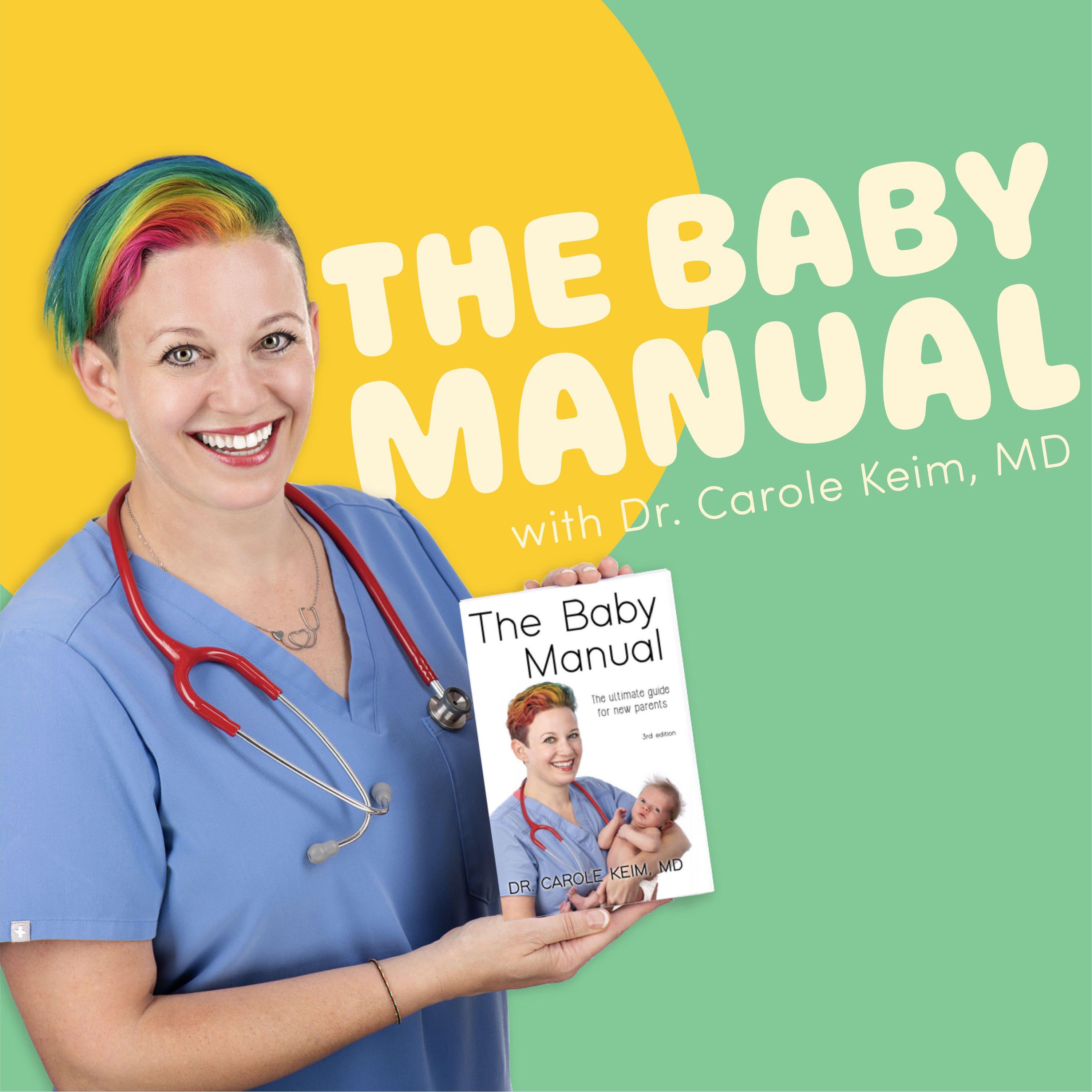
The Baby Manual
Hosted by Dr. Carole Keim MD · EN
New babies are difficult. Don't you wish they came with a manual? Well, now there is one! Hosted by a pediatrician mom, The Baby Manual will help guide you through everything you actually need to know to take care of a baby. Whether this is your first baby or your fifth, I bet you’ll hear something helpful in here that you didn’t know. Enjoy The Baby Manual podcast, and enjoy your new baby!
64episodes
Episodes
Newest firstAll episodes
507 - Neonatology with Dr. Geoff Binney MD MPH
Oct 800:37:10Tap to summarizeDr. Carole Keim welcomes neonatologist and chair of pediatrics at Tufts Medical Center, Dr. Geoff Binney, MD, MPH, to The Baby Manual for a conversation about what expectant parents should know regarding newborn care and the NICU, the Neonatal Intensive Care Unit. Drs. Keim and Binney discuss the age of viability for premature babies, advances in neonatology such as surfactant therapy for Respiratory Distress Syndrome, and the different levels of NICU care available depending on gestational age and medical needs.Dr. Binney and Dr. Keim talk about common newborn challenges, including breathing difficulties, infections, blood sugar monitoring for at-risk infants, and jaundice. Both doctors stress the importance of preventive care, such as antibiotics for Group B strep and vitamin K injections at birth. Dr. Binney shares that a neonatologist’s role is to provide a supportive environment for premature or ill infants so they can continue developing safely. He reassures parents that most children born early grow up healthy and indistinguishable from their peers. This episode gives parents-to-be information about what to expect if their child is born preterm and offers them comfort in knowing how far medical care for newborn infants has come. Dr. Geoff Binney, MD, MPH:Dr. Geoffrey Binney is a neonatologist in Boston, Massachusetts and is affiliated with multiple hospitals in the area, including Boston Children's Hospital and Tufts Medical Center. He is the Chair and David And Leona F. Karp Professor of Pediatrics, and the Tufts University School of Medicine Pediatrician-in-Chief. He received his medical degree from the University of California, San Diego School of Medicine and has been in practice for more than 20 years.__ Resources discussed in this episode:The Holistic Mamas Handbook is available on AmazonThe Baby Manual is also available on Amazon__Contact Dr. Carole Keim, MDlinktree | tiktok | instagramContact Dr. Geoff Binney, MD, MPHBoston Children’s Hospital | Tufts Medicine | linktree ---FullScript VitaminsUse this link to get 10% off and free shipping for orders over $50.HIRO DiapersUse code DRCAROLEKEIM for a discount at checkout. Click here. Hosted by Simplecast, an AdsWizz company. See pcm.adswizz.com for information about our collection and use of personal data for advertising.
Transcribe →506 - Dentistry with Dr. Ian Kott, DDS
Sep 2400:30:20Tap to summarizeDr. Carole Keim welcomes pediatric dentist Dr. Ian Kott, DDS, to The Baby Manual to talk about children’s oral hygiene, everything from brushing teeth to weaning kids off pacifiers. Dr. Kott explains when a child’s first dental visit should happen and what to expect from it, and gives tips on how to start brushing children’s teeth as soon as the teeth appear. Dr. Keim and Dr. Kott discuss cavity prevention, the importance of discouraging thumb sucking and pacifiers, and when to consider discontinuing bedtime bottle use. Dr. Kott explains that training toothpaste is useful, even when it doesn’t contain fluoride, because it teaches children the aspect of teeth brushing that involves spitting. He shares tips on how to make teeth brushing easier or more fun for children who fight it. The causes of cavities in kids are from anything that is a fermentable carbohydrate: milk, juice, and even breast milk, once a child is on solid food. One of the reasons to wean children off nighttime bottles of formula is to prevent tooth decay from the fermentable carbohydrate staying on their teeth too long, but also because pacifiers, bottles, and thumb sucking all change the swallowing patterns and shape of the palate in children over the age of two. There is a vast amount of very helpful practical advice, knowledge, and information about pediatric dental care contained in this episode. Dr. Ian Kott, DDS:Originally from Michigan, Dr. Kott received his Doctor of Dental Surgery degree from the University of Michigan in 1999. As a Lieutenant Commander in the United States Public Health Service, Dr. Kott has completed several tours of duty as Senior Dental Officer in the United States Coast Guard and as Deputy Chief Clinic Administrator with the Indian Health Service, all stationed in Alaska. After gaining a variety of valuable experiences in general dentistry, Dr. Kott felt compelled to specialize in treating children. He completed his Postgraduate Residency in Pediatric Dentistry at Tufts University School of Dental Medicine in Boston in 2009. Dr. Kott is married with two young sons.__ Resources discussed in this episode:The Holistic Mamas Handbook is available on AmazonThe Baby Manual is also available on Amazon__Contact Dr. Carole Keim, MDlinktree | tiktok | instagramContact Dr. Ian Kott, DDSwebsite | linkedin ---FullScript VitaminsUse this link to get 10% off and free shipping for orders over $50.HIRO DiapersUse code DRCAROLEKEIM for a discount at checkout. Click here. Hosted by Simplecast, an AdsWizz company. See pcm.adswizz.com for information about our collection and use of personal data for advertising.
Transcribe →505 - Dermatology with Dr. Teresa Wright, MD
Sep 1000:32:24Tap to summarizeDr. Carole Keim welcomes pediatric dermatologist Dr. Teresa Wright, MD, to the podcast to talk about baby skin care, birthmarks, eczema, and anything to watch out for with a baby’s skin that could potentially be dangerous. Dr. Wright works at Le Bonheur Children’s Hospital in Memphis, Tennessee and is also faculty at the University of Tennessee Medical Center. She shares her journey into pediatric dermatology and explores all manner of common skin concerns, conditions, and questions regarding infants and their skin care with Dr. Keim, based on a wealth of experience and knowledge. Dr. Keim and Dr. Wright open by addressing the little pink or red spots in the middle of a newborn’s forehead that are sometimes called angel kisses. The medical term is nevus simplex, and Dr. Wright assures listeners that they’re nothing to worry about and will fade over time. They discuss types of newborn skin rashes, such as transient neonatal pustular melanosis, which are normal, before addressing conditions that might need a pediatrician’s attention. Baby moles are explained in detail, atopic dermatitis or eczema is described, and Dr. Wright offers insight on how to mitigate or improve child skin dryness, along with tips on avoiding exposure to known irritants and allergens. This episode is full of facts and advice on infant skin, offering a practical guide to what is normal and what might need additional attention.Dr. Teresa Wright, MD:Dr. Wright attended medical school at the University of Massachusetts in Worcester, Massachusetts. She went on to complete a residency in pediatrics at the University of Massachusetts Medical Center. Subsequently, she completed a dermatology residency at the University of Kansas Medical Center and a fellowship in pediatric dermatology at Children’s Mercy Hospitals and Clinics in Kansas City, Missouri. She joined the dermatology faculty at Baylor College of Medicine and Texas Children’s Hospital (TCH) in January of 2009. In January of 2012, she was promoted to Section Chief of Pediatric Dermatology at TCH. She also served as Co-Director of the Vascular Anomalies Program at TCH from October 2011 through March of 2015. In July of 2015, she returned to her hometown of Memphis, TN to join the dermatology faculty at the University of Tennessee and establish a pediatric dermatology division at LeBonheur Children's Hospital. She has special interests and expertise in the diagnosis and management of hemangiomas and other vascular lesions, as well as pigmented lesions and pediatric melanoma. She is board-certified in pediatric dermatology, dermatology, and pediatrics. She is a member of the American Academy of Dermatology, the American Academy of Pediatrics, and the Society for Pediatric Dermatology.Dr. Wright has special interests and expertise in the diagnosis and management of hemangiomas and other vascular lesions, as well as pigmented lesions and pediatric melanoma.__ Resources discussed in this episode:The Holistic Mamas Handbook is available on AmazonThe Baby Manual is also available on Amazon__Contact Dr. Carole Keim, MDlinktree | tiktok | instagramContact Dr. Teresa Wright, MDwebsite | linkedin ---FullScript VitaminsUse this link to get 10% off and free shipping for orders over $50.HIRO DiapersUse code DRCAROLEKEIM for a discount at checkout. Click here. Hosted by Simplecast, an AdsWizz company. See pcm.adswizz.com for information about our collection and use of personal data for advertising.
Transcribe →504 - Pulmonology with Dr. Jason Bronstein, MD
Aug 2700:30:14Tap to summarizeDr. Carole Keim welcomes Dr. Jason Bronstein, a pediatric pulmonologist and sleep medicine specialist at Mount Sinai Hospital in New York City, to The Baby Manual. Dr. Bronstein shares his journey from general pediatrics to specializing in childhood asthma, sleep apnea in children, and other pediatric breathing issues. He explains the types of cases referred to a pulmonologist, such as persistent chronic cough, difficulty breathing, or repeated respiratory infections. Dr. Keim and Dr. Bronstein discuss how conditions like asthma or congenital lung disorders are diagnosed, and Dr. Bronstein also highlights how environmental asthma triggers, such as smoke, mould, and allergens, can affect a child's lung health. Dr. Keim and Dr. Bronstein explore how pediatric sleep studies are used to evaluate children for obstructive sleep apnea, especially those with snoring, ADHD-like symptoms, or conditions like Down syndrome or autism. Dr. Bronstein describes what to expect during a sleep study and outlines when it's appropriate. They also cover safe and effective cough remedies for children, including honey for cough, saline nebulizers, and tips for using humidifiers without causing mould exposure. This episode is all about actionable advice for parents concerned about their child’s breathing, sleep quality, or lung function. Dr. Jason Bronstein, MD:Jason Bronstein, MD, is the Medical Director of the Mount Sinai Pediatric Sleep Medicine Program and Director of the Mount Sinai Children's Integrative Sleep Center.He received his medical degree from New York University School of Medicine and he completed his Pediatrics Residency at Northwell Health, Cohen Children's Medical Center. Dr. Bronstein completed his Pediatric Pulmonology Fellowship at Nemours, Alfred I. duPont Hospital for Children. He completed fellowship in Sleep Medicine at the Children's Hospital of Philadelphia and jointly at the University of Pennsylvania.He treats sleep disorders across the age spectrum, including obstructive sleep apnea, narcolepsy, insomnia, and other pulmonary, neurologic, and behavioral conditions of sleep. He performs advanced interpretation of polysomnography and associated sleep study testing.Dr. Bronstein is dedicated to improving the diagnosis and management of sleep disorders in infants, children, and adolescents. His professional activities include clinical care, graduate medical education, and research. He also treats general respiratory disorders in children in the Division of Pediatric Pulmonology, delivers multidisciplinary care of children with complex medical disorders via various special programs, and works with the adult sleep medicine and adult sleep laboratory programs in the Department of Medicine.__ Resources discussed in this episode:The Holistic Mamas Handbook is available on AmazonThe Baby Manual is also available on Amazon__Contact Dr. Carole Keim MDlinktree | tiktok | instagramContact Dr. Jason Bronstein, MDwebsite ---FullScriptUse this link to get 10% off and free shipping for orders over $50.HIRO DiapersUse code DRCAROLEKEIM for a discount at checkout. Click here. Hosted by Simplecast, an AdsWizz company. See pcm.adswizz.com for information about our collection and use of personal data for advertising.
Transcribe →503 - Genetics with Dr. David Tegay, DO
Aug 13, 202500:36:34Tap to summarizeDr. Carole Keim welcomes Dr. David Tegay, DO, to The Baby Manual to talk about genetics, the different types of testing and screening involved in genetics, and how it’s a key part of pediatric medicine. Dr. Tegay was in residency when he encountered a patient who required a consult from a clinical geneticist from Mount Sinai, and the experience fascinated him so much that he moved from his internal medicine residency to a fellowship in genetics. He discusses all aspects of his field with Dr. Keim. One of the first things Dr. Tegay explains about genetic testing is that most genetic tests are no different than other routine laboratory testing, using a blood sample or even a non-invasive cheek swab or saliva sample to do the testing. It’s the results that are different from other testing. He and Dr. Keim discuss how prenatal genetic testing has developed, what kind of screening might occur during pregnancy, and the types of conditions a geneticist may be looking for. Dr. Tegay sheds light on the truth of birth defects, or congenital anomalies, and how frequently they may occur, including how many are not necessarily significant. The conversation exploring DNA, genetics, and exome sequencing, and the diseases or conditions such testing may reveal, is both enlightening and informative, explaining methodology and treatment for fetal and newborn ailments.Dr. David Tegay, DO, FACMG, FACOI:Dr. David Tegay, DO, is a clinical geneticist in Great Neck, NY and has over 25 years of experience in the medical field. He specializes in the areas of Clinical Genetics and Genomics & Internal Medicine. Dr. Tegay graduated from New York Institute of Technology College of Osteopathic Medicine in 1997. He is affiliated with the medical facilities North Shore University Hospital and St. Mary's Hospital Amsterdam.__ Resources discussed in this episode:The Holistic Mamas Handbook is available on AmazonThe Baby Manual is also available on Amazon__Contact Dr. Carole Keim MDlinktree | tiktok | instagram Contact Dr. David Tegay, DO, FACMG, FACOIlinkedin ---FullScriptUse this link to get 10% off and free shipping for orders over $50.HIRO DiapersUse code DRCAROLEKEIM for a discount at checkout. Click here. Hosted by Simplecast, an AdsWizz company. See pcm.adswizz.com for information about our collection and use of personal data for advertising.
Transcribe →502 - Endocrinology with Dr. Lauren Kanner, MD
Jul 30, 202500:39:29Tap to summarizeDr. Carole Keim welcomes Dr. Lauren Kanner, MD, to The Baby Manual to discuss the wide-ranging field of pediatric endocrinology. Dr. Kanner is the Clinical Associate Professor of Pediatric Endocrinology at the University of Iowa Hospital and Clinics, and she shares how she got into the specialty before discussing the conditions she treats. She offers information and insights into thyroid disorders, growth hormone deficiency, early and delayed puberty, and Type 1 and Type 2 diabetes in children based on her knowledge and years of experience. Dr. Keim and Dr. Kanner talk about the signs and symptoms of diabetes in children, detailing what to look for, and Dr. Kanner explains how blood sugar testing and insulin therapy play crucial roles in treatment. Throughout the conversation, the doctors exchange practical insights for parents into childhood nutrition and normal growth patterns. Dr. Kanner addresses the challenges of toddlers with picky eating habits and emphasizes healthy routines such as reducing sugar-sweetened drinks and increasing physical activity, or ‘joyful movement’ as she calls it. The emphasis is on fostering positive eating habits and imparting information on the variety of conditions a pediatric endocrinologist can diagnose and treat. Dr. Lauren Kanner, MD:Dr. Lauren Kanner is the Clinical Associate Professor of Pediatric Endocrinology at the University of Iowa Hospital and Clinics. Dr. Kanner completed her medical school at Rush Medical College of Rush University in Chicago, IL, before continuing her training in pediatrics at North Shore Long Island Jewish Health System Cohen Children's Hospital. Dr Kanner completed a pediatric endocrinology fellowship at the University of Wisconsin and is currently part of the University of Iowa Endocrinology and Diabetes team. Dr Kanner has interests in both diabetes and care of endocrine conditions, with a special interest in female, adolescent endocrinology and quality improvement. She has recently joined the Member Board of Directors for the North American Society of Pediatric and Adolescent Gynecology (NASPAG).__ Resources discussed in this episode:The Holistic Mamas Handbook is available on AmazonThe Baby Manual is also available on Amazon__Contact Dr. Carole Keim MD:linktree | tiktok | instagram Contact Dr. Lauren Kanner, MD:linktree | website Win an awesome bundle of free hair care products and accessories!We're running a competition in collaboration with Arctic Fox. Be in with the chance to win a complete hair transformation kit.Enter the competition today!Check out Arctic Fox's website - use code DRKEIM at checkout for 15% discount.—— Did you know an estimated 18 to 20 billion disposable diapers go into the landfills every year in the us? And those diapers take between 400 and 500 years to break down because of the plastic in them. HIRO Diapers is helping the planet and also helping parents out by not being any more expensive than regular disposable diapers.These diapers are made with no plastic. They also come with these packets of fungal spores that you can drop in the diaper. And when those go into the landfill, they grow into a fungus that eats the plastic around them so you can help the planet get healthier while also helping your baby.Check out the website. They also do a monthly diaper subscription. Use code DRCAROLEKEIM for a discount. Hosted by Simplecast, an AdsWizz company. See pcm.adswizz.com for information about our collection and use of personal data for advertising.
Transcribe →501 - Gastroenterology with Dr. Victoria Martin, MD, MPH
Jul 16, 202500:32:12Tap to summarizeDr. Carole Keim talks with Dr. Victoria Martin, MD, MPH, a gastroenterologist, a specialist who focuses on everything related to the stomach and intestines in babies. Dr. Martin trained in pediatrics and became interested in what happens in baby intestines, especially early on, during training. She talks with Dr. Keim about things like blood in a baby’s stool, protein allergies, signs of food allergies in children, and what to look for at home for signs of intestinal distress. She differentiates between what might be cause for concern versus what is normal for infants regarding reflux, breastfeeding, constipation, and more.Dr. Martin explains normal reflux in babies and what to try at home before getting to a doctor’s appointment in regards to concerns about too much spitting up. She and Dr. Keim discuss food allergies in infants, common concerns over what allergens are transferred from a mother’s breastmilk, and why there are things to consider before immediately eliminating foods from a mother’s diet if an allergy is suspected. Food allergies, causes, and substitute formulas are discussed, and Dr. Martin shares insights into possibilities for preventing the development of allergies, when to introduce solid foods, and what a baby’s poop reveals about the baby’s health. It’s an episode full of practical advice and in-depth knowledge from Dr. Martin about babies’ intestinal functions. About Dr. Victoria Martin, MD, MPH:Dr. Martin graduated from Harvard University with a degree in Biology. She completed her medical school and residency training in Pediatrics at the University of Massachusetts Medical School. She then completed her fellowship training at the Massachusetts General Hospital for Children in the division of Pediatric Gastroenterology and Nutrition, during which she was awarded the Outstanding Teaching Award by the pediatric housestaff. She also completed a Master's degree in Public Health in Clinical Effectiveness at the Harvard School of Public Health.Dr. Martin's clinical and research interests include the developing infant microbiome and its potential role in gastrointestinal food allergic diseases, including allergic proctocolitis and eosinophilic esophagitis.__ Resources discussed in this episode:The Holistic Mamas Handbook is available on AmazonThe Baby Manual is also available on Amazon__Contact Dr. Carole Keim MDLinktree: linktr.ee/drkeimTiktok: @dr.keimInstagram: @doctoratyourdoor Contact Dr. Victoria Martin, MD, MPHWorkplace: Mass General Brigham for ChildrenLinkedIn: Victoria-Mackenzie-Martin-644337102 Win an awesome bundle of free hair care products and accessories!We're running a competition in collaboration with Arctic Fox. Be in with the chance to win a complete hair transformation kit.Enter the competition today!Check out Arctic Fox's website - use code DRKEIM at checkout for 15% discount.—— Did you know an estimated 18 to 20 billion disposable diapers go into the landfills every year in the us? And those diapers take between 400 and 500 years to break down because of the plastic in them. HIRO Diapers is helping the planet and also helping parents out by not being any more expensive than regular disposable diapers.These diapers are made with no plastic. They also come with these packets of fungal spores that you can drop in the diaper. And when those go into the landfill, they grow into a fungus that eats the plastic around them so you can help the planet get healthier while also helping your baby.Check out the website. They also do a monthly diaper subscription. Use code DRCAROLEKEIM for a discount. Hosted by Simplecast, an AdsWizz company. See pcm.adswizz.com for information about our collection and use of personal data for advertising.
Transcribe →410 - Apps and Electronics
Apr 2, 202500:13:28Tap to summarizeDr. Carole Keim discusses baby apps and electronics in this episode, exploring what is helpful and what isn’t necessary. Dr. Keim says that not much is really needed in terms of electronics for babies. The things she recommends include baby trackers, baby monitors, white noise machines, Kindle for mom, and aromatherapy diffusers to aid with sleep. She details what each app or electronic item does and highlights specific brands and best use practices.Baby tracker apps are helpful because they track how many times babies are eating, peeing, and pooping to ensure they’re doing enough. Useful apps for moms include a Kindle or audiobook, so reading can be done while feeding. Dr. Keim breaks down all the types of baby monitors and sorts through the best to use in terms of convenience, expense, and video versus audio. She also explores electronic bulb suckers and why they can be more helpful than manual versions and the benefits of essentail oil diffusers. There are not a lot of electronics needed, which makes this episode so useful in sorting through the myriad of ads and options available.In this episode:AppsBaby tracker - feeding, peeing, poopingWonder weeksSolid starts app for baby led weaning Kindle app for mom Audiobooks or podcasts for mom Don’t need: owlet ElectronicsBaby monitor with 2 parent units for sound / video baby monitorWhite noise machine - Hatch sound machine + rest go, or any portable white noise machineElectric bulb suckerMobile for over the changing tableDiffuser for essential oils (listen to season 3 for specifics on oils)Don’t need: special music for baby, humidifier, video monitor (though it can be nice to have in addition to a regular monitor), snoo bassinet As an Amazon Associate, I earn from qualifying purchases.Dr. Keim has extensively researched the information presented in this episode. She is pulling on the knowledge of hundreds of thousands of new parents, other pediatricians, doctor moms, the Academy of Pediatrics, and breaking pediatrics news sites. Her insight and knowledge on alternative and holistic treatments can be found in her book Holistic Mamas Handbook, and her first book, The Baby Manual, covers year one of a baby’s life. Follow Dr. Carole Keim on her TikTok and YouTube channels for additional tips and advice on babies and toddlers. Join The Baby Manual podcast for next season, Season 5, which will feature interviews with specialists.__ Resources discussed in this episode:The Holistic Mamas Handbook is available on AmazonThe Baby Manual is also available on AmazonYour Parenting Mojo podcast__Dr. Carole Keim MD: linktree | tiktok | instagram Win an awesome bundle of free hair care products and accessories!We're running a competition in collaboration with Arctic Fox. Be in with the chance to win a complete hair transformation kit.Enter the competition today!Check out Arctic Fox's website - use code DRKEIM at checkout for 15% discount.—— Did you know an estimated 18 to 20 billion disposable diapers go into the landfills every year in the us? And those diapers take between 400 and 500 years to break down because of the plastic in them. HIRO Diapers is helping the planet and also helping parents out by not being any more expensive than regular disposable diapers.These diapers are made with no plastic. They also come with these packets of fungal spores that you can drop in the diaper. And when those go into the landfill, they grow into a fungus that eats the plastic around them so you can help the planet get healthier while also helping your baby.Check out the website. They also do a monthly diaper subscription. Use code DRCAROLEKEIM for a discount. Hosted by Simplecast, an AdsWizz company. See pcm.adswizz.com for information about our collection and use of personal data for advertising.
Transcribe →409 - Teething and Feeding
Mar 19, 202500:18:24Tap to summarizeDr. Carole Keim talks all about teething and feeding needs for babies in this episode. Teething usually happens at around six months of age, but teeth can appear any time in the first 0 to 18 months of life. Dr. Keim shares all the best teething information to prepare new parents. She goes through everything from what to feed babies and when they start eating certain foods to high chairs, covering all the feeding needs.Dr. Keim explains what Orajel and Anbesol teething ointments do, what type of toothbrush a baby needs, and shares advice on everything from teething crackers to drool rashes. She talks about when to use toothpaste and what kind of products are safest for teething babies to chew on. Once babies are six months old, they can start having foods, and Dr. Keim details what to start them on and how to feed it to them. Bibs, high chairs, plates, everything useful for feeding a baby (and some things that aren’t) are in this episode.In this episode:Teethingorajel or topical teething ointmentToothbrush with soft bristlesAfter 1 year of age, fluoride toothpaste (grain of rice amount at a time)Teething toys - banana toothbrush, silicone toysGiraffe teething toy | horse | turtle | mushroom | teething tubesBandana bib for droolAquaphor / Vaseline for drool rash; could consider antifungal cream if rash is spotty (has satellite lesions) and not going away Teething crackers Don’t need: homeopathic teething tablets, baby toothbrush, finger toothbrush, practice toothpaste (fluoride-free), dental floss, mouthwash, wooden teething toys, teething mitt, amber teething necklace Feedingbowl with suction on the backplate/placemat in onehigh chairspoons/forks for baby | nuby spoonsWater bottleSippy cups - 360 kind, munchkin one BibsDon’t need: plastic bowls/plates/cups, kid-sized plastic utensils, pouches, baby food, rice/oat cereal As an Amazon Associate, I earn from qualifying purchases.Dr. Keim has extensively researched the information presented in this episode. She is pulling on the knowledge of hundreds of thousands of new parents, other pediatricians, doctor moms, the Academy of Pediatrics, and breaking pediatrics news sites. Her insight and knowledge on alternative and holistic treatments can be found in her book Holistic Mamas Handbook, and her first book, The Baby Manual, covers year one of a baby’s life. Follow Dr. Carole Keim on her TikTok and YouTube channels for additional tips and advice on babies and toddlers. __ Resources discussed in this episode:The Holistic Mamas Handbook is available on AmazonThe Baby Manual is also available on Amazon__Dr. Carole Keim MD: linktree | tiktok | instagram Win an awesome bundle of free hair care products and accessories!We're running a competition in collaboration with Arctic Fox. Be in with the chance to win a complete hair transformation kit.Enter the competition today!Check out Arctic Fox's website - use code DRKEIM at checkout for 15% discount.—— Did you know an estimated 18 to 20 billion disposable diapers go into the landfills every year in the us? And those diapers take between 400 and 500 years to break down because of the plastic in them. HIRO Diapers is helping the planet and also helping parents out by not being any more expensive than regular disposable diapers.These diapers are made with no plastic. They also come with these packets of fungal spores that you can drop in the diaper. And when those go into the landfill, they grow into a fungus that eats the plastic around them so you can help the planet get healthier while also helping your baby.Check out the website. They also do a monthly diaper subscription. Use code DRCAROLEKEIM for a discount. Hosted by Simplecast, an AdsWizz company. See pcm.adswizz.com for information about our collection and use of personal data for advertising.
Transcribe →408 - Health and Hygiene
Mar 5, 202500:24:55Tap to summarizeDr. Carole Keim addresses health and hygiene products in this episode. She details which hygiene items are actually necessary for newborn babies and then explains medications to keep on hand for newborns. She also recommends some medications useful to have for babies over 6 months of age. With each item Dr. Keim offers insight and advice, as well as identifying certain popular products not actually required for babies. Dr. Keim offers tips to help make cutting baby fingernails a less daunting task, what items make bathing babies easier, and explains why baby powder is no longer used. What medications are safe for babies and what is actually useful and necessary? Dr. Keim highlights exactly what vitamins and dosages to look for, what it is that antifungal creams treat and how to identify whether or not a baby’s diaper rash is fungal, and has practical teething advice and pain management options. This episode ensures parents have all key health information on hand for their infants.In this episode:Newborn itemsNasal bulb sucker | bulb sucker w/ oral aspirator | electric bulb suckerNail clippersNail file q tipsbaby bathtubbaby washbody lotionwashclothsthermometerBaby hairbrush / combUnscented and dye-free laundry detergent and dryer sheetsDon’t need: shampoo/conditioner (the baby wash works as shampoo), baby towel, baby washcloths, scented products, baby q tips, baby nail clippers, baby powder Medications to keep on handSaline dropsChildren’s acetaminophenDosing syringeVitamin D dropsinfant tri-vitaminsAntifungal cream (clotrimazole and/or terbinafine)Hydrocortisone cream 1%Neosporin / bacitracin ointment Oragel | AnbseolVicks vapor rub or essential oils for breathing Don’t need: gripe water, benadryl, infant’s acetaminophen, homeopathic medications, baby vicks Ages 6 months and up ibuprofenironmultivitaminliquid claritin / zyrtecDon’t need - infant ibuprofen, baby aspirin As an Amazon Associate, I earn from qualifying purchases.Dr. Keim has extensively researched the information presented in this episode. She is pulling on the knowledge of hundreds of thousands of new parents, other pediatricians, doctor moms, the Academy of Pediatrics, and breaking pediatrics news sites. Her insight and knowledge on alternative and holistic treatments can be found in her book Holistic Mamas Handbook, and her first book, The Baby Manual, covers year one of a baby’s life. Follow Dr. Carole Keim on her TikTok and YouTube channels for additional tips and advice on babies and toddlers. __ Resources discussed in this episode:The Holistic Mamas Handbook is available on AmazonThe Baby Manual is also available on Amazon__Dr. Carole Keim MD: linktree | tiktok | instagram Win an awesome bundle of free hair care products and accessories!We're running a competition in collaboration with Arctic Fox. Be in with the chance to win a complete hair transformation kit.Enter the competition today!Check out Arctic Fox's website - use code DRKEIM at checkout for 15% discount.—— Did you know an estimated 18 to 20 billion disposable diapers go into the landfills every year in the us? And those diapers take between 400 and 500 years to break down because of the plastic in them. HIRO Diapers is helping the planet and also helping parents out by not being any more expensive than regular disposable diapers.These diapers are made with no plastic. They also come with these packets of fungal spores that you can drop in the diaper. And when those go into the landfill, they grow into a fungus that eats the plastic around them so you can help the planet get healthier while also helping your baby.Check out the website. They also do a monthly diaper subscription. Use code DRCAROLEKEIM for a discount. Hosted by Simplecast, an AdsWizz company. See pcm.adswizz.com for information about our collection and use of personal data for advertising.
Transcribe →