← The Centaur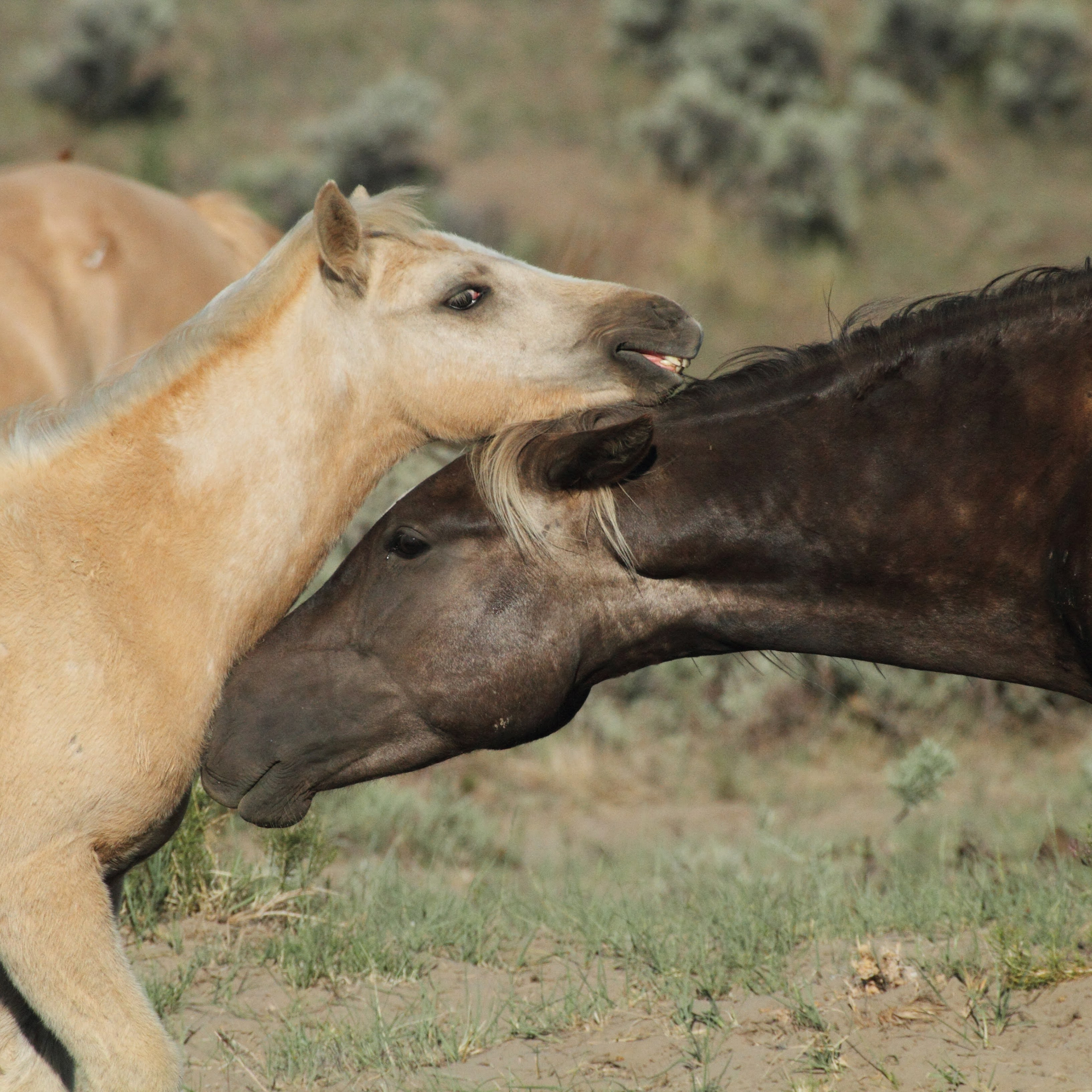
The Centaur
Wild Herd Dynamics with Mary Ann Simonds and Barbara Wheeler, Part 2
00:51:58
Part 2 of a phenomenal interview with Mary Ann Simonds, an esteemed equine behavioral ecologist, and Barbara Wheeler, a wild horse photographer. This is the first time I had them speaking together about the myths about wild herds, the overview of how...
Loading summary
Transcript185 lines
- [00:00]
Barbara Wheeler
Foreign.
- [00:06]
Cameron Adibi
Podcast.
- [00:07]
I'm Cameron Adibi, and together we will explore the fascinating world of horse human communication and the extraordinary connections they develop between our species. Join me as we delve into the unique ways humans and horses connect and understand each other. Through discussions with true innovators, we uncover the subtle cues, bonding techniques, and emotional connections that enrich our relationships with these remarkable animals. Whether you are a seasoned equestrian or simply curious about the language of horses, there's something here for everyone. This is part two of a phenomenal interview I had with Marianne Simons, an esteemed equine behavioral ecologist, and Barbara Wheeler, a wild horse photographer. In this episode, we discussed the myths about wild herds, the overview and the functional and dysfunctional behaviors of how they operate. Sit back and enjoy the show.
- [01:04]
Barbara Wheeler
It's a young palomino foal. So the. The stallion colt. Sorry, he's a little more than a yearling. Wait a second, let me think about this. He's a little. Probably a little bit less than a yearling. He was born in the fall. We happened to be there when he was born, which is why I know was born to a very elderly mother. She was somewhere around 25 or 26, according to the BLM, and things were fine in the spring, but in the fall she fell behind the band and got left behind. We happened to be there when that happened. If we were frantic trying to figure out where she and this. This who was then a foal was, could not find them anywhere, didn't know what happened to them. Other photographers came in and, you know, kind of picked up from where we were trying to find them. They were eventually found the dam, and the four were eventually found in a very large bachelor band. So my fellow photographers, who I knew most of them very well, a lot of them thought she was crazy. I thought she was really smart because she was quite old. She died that winter. So when she died, the bachelor band continued to raise this colt. The colt is in this. In this photo is on the right at the point we took this picture. He was in the bachelor band and hadn't seen his little brother who was on the left. Well, probably had seen him because it was spring here. But they were in the same natal band all summer long the previous summer. Separated in the fall because they fell behind the. The herd sort of rejoined again in the spring. So we have lots of bands together, including the bachelor band, his previous natal band, and this is his little brother greeting his big brother. They're no longer in the same band. I hope that makes sense. Kind of complicated.
- [03:25]
Marianne Simons
Yeah. Well, it also shows, you know, the greeting of a youngster or foal is doing a submissive greeting to his brother with the. The clacking, which I'm sure do that around stallions or older horses as a way of being submissive to say, I'm not going to do anything. You can I enter your space? It's permission to enter space because so much of nation is my space. Your space. So he's clacking at his older brother, whose eyes are sleepy and going, yeah, he's just touching him, you know, and you can see the ear posture, one forward, one off to the side, that the older brother is enjoying the contact with the youngster.
- [04:08]
Barbara Wheeler
Now go to the next picture, Cameron, the one right after this.
- [04:12]
Cameron Adibi
Great.
- [04:15]
Marianne Simons
So, again, communication horses do eye contact. They have proprioception, MySpace, Your Space. And we'll go through kind of the greeting on all of them. And so this is a. A little bit more of what would be called a familiar greeting, meaning they're not a stallion greeting or stallion mare. These are brothers and siblings. So there's a lot more tactile in interaction right off the bat. And he's going right in to get, you know, maximum nose up on that little guy's chest and. And being able to let the. His younger brother put his head on his head because he probably can't reach up to do a putty scrap. It's like, okay, I'll just drop my head down so you can put your head on me. But the touch is extremely important for horses to redo their social bonds.
- [05:02]
Barbara Wheeler
And you can tell he's being very gentle. I really appreciated his posture here. Not only was he smelling him, letting him put his head on, but he was being very. And of course, I was there when it was taken. So he was being very gentle with his little brother and seen that many times, too. So these yearling, yeah, they can be rough and crazy and not paying any attention, the yearling colts especially. But they also, I've seen many times, I've seen them walk their little brothers to the water hole. I've seen them babysit their little brothers. I've seen them walk with their little brothers. And this is just sort of another example of this bond, particularly between brothers, even though these two were no longer in the same band.
- [05:51]
Marianne Simons
Well, and one of the things I looked at in my undergraduate work was everybody looked at aggressive behaviors and then it was correct.
- [05:58]
Barbara Wheeler
That's correct.
- [05:59]
Marianne Simons
And I looked at nurturing behaviors, and that's where I identified a lot of subtle gestures That I don't think had been identified before. For instance, a mare glance, you know, a mare, if a mare walks past another mare who's a friend, she'll make an eye glance and a blink and just tweak an ear at her. That's it. And that was a gentle, subtle greeting. And people miss that. Like if you, even in domestic world, it's a little bit more exaggerated. But if a horse, say you're out on trail together and a horse wants to pass a mare, she'll pin her ears back, both of them, as one passes. And people mistake that for, oh, mare aggression. They're communicating. I see you, I understand you ask permission to walk through my space. And yes, I acknowledge it. And now you can walk through my space. So there's nothing aggressive about using your ears. But mares had about 11 different ear positions that I was able to figure out fairly clearly identify because they were repeated by other mares in different groups. You know, they have them toward their foals one way, toward stallions another way, and toward other mares. And, and those were all different postures. But people weren't noticing eye, glance and.
- [07:10]
Barbara Wheeler
You know, and heads, they think ears, they, they automatically think ears. Back, ears, pin equals angry, right? Or aggressive. Just like here. They would probably say, oh, he's mad because his ears are pinned. That's the furthest thing from what is going on. Exactly.
- [07:27]
Cameron Adibi
So I gotta ask this now because, Marianne, you shared this study with me over 17 different emotions and were observed with domesticated horses. Barbara, have you, did you start to, as you were photographing, did you start to see the different emotions and, and can pick them out as you're photo making photos or.
- [07:50]
Barbara Wheeler
Well, that's an interesting question. I think that Marianne was probably much more detailed in what she was looking at. I was more looking at the entire picture, so to speak. Their posture, how relaxed were they? Certainly eyes, certainly ears. But more probably globally perhaps than she was. Absolutely. Because first of all, if you don't as a photographer, you're never going to be ready for what happens next. So you really have to learn to sort of interpret, you know, what's happening here. Do I need to be watching whether that's something that ends up being a, you know, fight breaking out or something that's more positive, where a brother escorts his two babies, siblings into the water hole. I mean, you just need to be, you know, you need to be sort of watchful for that whole behavioral thing. But I could, I don't think I could probably say other than things like no, Just because his ears are pinned does not mean he's mad. Um, I, I don't think I got into the. Into the minutia quite as much as Marianne did.
- [09:14]
Cameron Adibi
But we. We can see from the photo this is, you know, there's joy and, and love in this photo, right?
- [09:20]
Barbara Wheeler
Oh, these two were extremely close the summer before. So I would see. And this is another thing where, you know, that I knew this. I knew these two had been close here before. So you watch. Even if nothing's happening at the moment, you just keep watching because sure enough, something will.
- [09:40]
Cameron Adibi
Yeah.
- [09:40]
Marion, would you have anything to say about your. Your.
- [09:42]
Marianne Simons
Well, I was going to say again, the emotions. I mean, I. I write a lot about that in the book, that horses are extremely emotionally intelligent because everything in. In their world from a functional standpoint is to manage the emotion of the herd because there's awareness toward each other's emotions. And in a functional herd, which was, know, pretty socially stable, you could see there would be a social facilitator. And it wasn't always a mayor, but usually it was a mayor that if something broke out or something happened, she'd be paying attention to it. She might monitor it and she might send another, you know, mayor over to pay attention with her. Sometimes it would be a stallion and. And you could watch him have the same concern and look. And I guess that's what I looked for was that expression in their eye that not so much are their ears forward or back, but are they alert? Are they aware? And the horses that were very aware, not just sensitive, like going, what's that? What's that? But the one that were aware, that studied the situation and paid attention to what was going on around them, would seek to try to bring peace. And I saw horses where they felt, you know, where you'd see some dynamics going on. And even with mayor Stallion, where Amer and a stallion know the stallion was getting rather aggressive. I've seen other mayors go over to try to intercede on their friend's behalf, like, stop, you know, knock it off. And I've seen mayors pin their ears and run a stallion off. Two mayors run them off because neither one liked them. So I think the emotional attachment of horses, their social bonds, was very, very critical to the stability and social structure of the horses. And, you know, ultimately, I think that's why horses have survived so well, is that they're very adaptable. And, you know, they do make strong social bonds. And that, of course, sets them up to have humans as their social partner too, because sometimes they weren't picky that it had to be a horse. Like John Turner and Jake, you know, Kirkpatrick, their studies in Bishop for years, they had one. I think it's in one of Jay's books or one of the books that they did a photograph of a bighorn sheep that stayed with the bachelor band. And then when they had mayors, he stayed with them still. So he was out on patrol and guard along with the horses. And it was just like he found his people. They were horses.
- [12:00]
Barbara Wheeler
And I. I've had this. We've not seen this, but I know of two friends who have seen domestic sheep that got left behind when the sheep herders left, who have joined up with the horses and stayed with them sometimes for years.
- [12:14]
Marianne Simons
Well, you see that with.
- [12:15]
Barbara Wheeler
Very interesting.
- [12:16]
Marianne Simons
Often you see pronghorn, you see elk, you may see horses, particularly in certain habitats. And I was going to stay on the diets. I saw more overlap with elk in a lot of the habitats than any other species.
- [12:29]
Barbara Wheeler
Oh, interesting. We saw. We saw a pronghorn foal, very young one that was left behind somehow. You know how pronghorn are. You slam the door in one city and they, you know, run 50 miles away. They're so. They're so shy in many places, not everywhere. But for whatever reason, got separated from his family and stayed with the horse, with the horse group, large horse group, probably 75 horses for two or three days before one day he was just gone. And we assumed his mama found him. We hope his mama found him. But he stayed with the horses. And the horses were quite tolerant and probably watchful. And it was probably. You know, I'm sure he was under two weeks old.
- [13:18]
Marianne Simons
Well, you talk about pronghorn. When I was doing my studies in Gillette, Wyoming, I was out in the field for, you know, no cell phone. There is nothing. No food, no.
- [13:29]
Barbara Wheeler
No. You know, nobody even knew cell phones would ever.
- [13:33]
Marianne Simons
I know I. I think about that now, and thank God. I was in the middle of nowhere, out doing wildlife studies, but I was studying a group. I was photographing pronghorn antelope. And you know how you have the feeling somebody's watching you? And it was. I was out in the field like 80 miles from Gillette, so there was nobody, but. So it was a little bit of a creepy feeling, like some. Somebody's watching me. And I'm out on the range and, you know, there weren't a lot of trees. But I turn around and I had all my photographic equipment behind me and my backpack, and I turn around and There is a young buck, like maybe a two year old pronghorn, investigating and watching me take pictures. And I thought at the time, this is really funny because here I'm watching pronghorn and he's, and he's watching you watch them sort of step back a little bit. But he was so curious about the smells and, you know, it's like curiosity kills a cat. I didn't want to become friends with him because he'd probably get shot, but it was just like it. When you become part. And I think this is, this is the beauty of what you do as a photographer too, probably is when you're in the field, you reach down into a different level of existence. You become one with nature. You start thinking, thinking and feeling more like all the animals around you because you're not talking, you're not describing things. You're not looking at, you're looking with.
- [14:54]
Barbara Wheeler
Well, you forget about who I'm married to. Yeah. Another photographer, the most, the most talkative man on earth.
- [15:04]
Cameron Adibi
Oh, I didn't know that.
- [15:05]
Marianne Simons
Oh, okay. Yeah, well, I didn't have that. So I, I had to silence. And that's, I think, what allowed me to see some subtle behaviors like, you know, and I think I've told this one before on podcast. But when I started a herd on Green Mountain studying them, I became a vegetarian because I felt like they were so skittish and so shy and they would always be leaving and I never got to see them.
- [15:30]
Barbara Wheeler
Yes.
- [15:30]
Marianne Simons
So I decided, well, I'm just going to become a vegetarian. Which then did help. But I slept up on Green Mountain because I knew their behaviors because I could get up there in the afternoon, there'd be manure everywhere. So I thought, okay, hey, they're up here at night, so I'm gonna, I'm gonna see these horses. So I camped out up on a meadow and on, you know, out on the timber. Well, there's forest was all around. It was a little meadow I knew they'd been in. And it was about 2 o' clock in the morning and I could hear them rustling. And it was fairly dark night. The moon was like about a half a moon. And all of a sudden I'm realizing all the foals are bedding down around me and I'm thinking, do they know that I am a human sleeping in a sleeping bag here? And, you know, would come over and they were like, I'm looking around, there's like three or four foals all around. I'm thinking, well, I guess it's sleepy Time energy. I mean, this really helped me in the future of realizing how energetically sensitive horses are. So I'm, I'm like debating, do I, do I get up and try to take it? Obviously I can't take pictures because I don't have anything. Night lenses. But I'm thinking, how am I going to see what's going on? So I'm buried in my sleepy man. Of course it's Wyoming. It's cold even though it's summertime. And all of a sudden I have two FS over me breathing hot air in my sleeping bag and starting like thinking, oh dear, I know what comes next. They're going to grab it and start pawing at it, you know, because it's like, what is this? And so I was so tempted to just kind of go, boo.
- [16:59]
Barbara Wheeler
You know, so that might not have been a hot idea. No.
- [17:03]
Marianne Simons
I knew it. Friendly. But then I thought, okay, breathe and relax. Breathe and relax. And so I did. And they kind of gave up. And then they just. One wandered off and the other one laid down too. So here I am lying on green mountain mares are off over a little bit farther in the meadow. I don't know where the stallion was. And I've got these four or five foals all around me sleeping. And I realized they don't care what kind of social mammals asleep. If I'm asleep as a social mammal and the energy is sleepy time energy and it feels safe, well, then it's got to be safe for the foals.
- [17:32]
Barbara Wheeler
No, I wouldn't have been worried about the foals. I would have been worried about somebody else in the band or the herd maybe not thinking they never, they never came over. It's so safe.
- [17:42]
Marianne Simons
Yeah.
- [17:42]
Barbara Wheeler
Interesting. Interesting.
- [17:44]
Marianne Simons
If I, I thought, okay, they know me, they know my smell now. So next time I see them, they're going to be a little friendlier. Nope, they were not. They. As soon, as soon as you're upright like this, walking around.
- [17:55]
Barbara Wheeler
Yes.
- [17:56]
Marianne Simons
On the ground. So. But that did help me because after that, when I wanted to get close to different herds, I would be on my belly or my hands and knees, which was always fun. It was a group in the.
- [18:07]
Barbara Wheeler
Yes.
- [18:09]
Marianne Simons
And I could win you.
- [18:11]
Barbara Wheeler
We, we accidentally discovered the very same thing. That if we got into a situation where the horses were really skittish and afraid, we would sit down.
- [18:22]
Marianne Simons
Yeah.
- [18:23]
Barbara Wheeler
And all of a sudden it's like, what, what happened? Who are you? What are you? And all of a sudden, very scared horses would be trying to investigate us. So. Exactly the same thing. It's very funny. Can we maybe look at the video? It's pretty funny, I was gonna say. And I think Marianne will have some things to say about that, too.
- [18:44]
Cameron Adibi
I have to just, you know, point out what you're already discussing, that there is a whole interspecies communication going on in the wild.
- [18:52]
Barbara Wheeler
Yes.
- [18:52]
Cameron Adibi
And you just pointed it out very obviously. And so, of course, why wouldn't they be having conversations with, you know, the other animals there? Because they're. They're getting information. It helps. It's helpful information. And that's the same with domesticated animals. I've noticed that right there.
- [19:09]
Barbara Wheeler
Yes. Yes.
- [19:11]
Cameron Adibi
A couple of horses I work with, they. They have the bird. They're bird watchers. I watched. They watch. They're watching the birds. And I can see that they have a few birds that come to visit them. One is a great blue heron that comes to visit.
- [19:25]
Barbara Wheeler
Oh, interesting.
- [19:26]
Cameron Adibi
Yeah. This is the interspecies communication that you've been documenting and writing about Marianne. But let's say this, the video. This is a really cool.
- [19:35]
Barbara Wheeler
So let's see.
- [19:36]
Cameron Adibi
Here we go. Do you want to give. Before I play it, do you want to give any lead in.
- [19:41]
Barbara Wheeler
Well, I think. I don't remember if you were recording at the time, but these two stallions are seniors. Quite senior, actually. For wild. You know, wild horses, you don't often see science who are in the mid-20s range. They just don't tend to live that long. But some connection had probably. Was probably present between these two, whether they were brothers, whether they had been friends for 25 years, you know, whatever it was, there seemed to be some connection. Other people that were familiar with just real quickly, other people that were familiar with the band had seen these signs together off and on, sometimes for maybe up to a year together, and then they would split. So they had been apart for probably close to a year. Not to say they hadn't seen each other, but they'd not been bonded together as a pair. And we were photographing the pinto in the center, and he suddenly took off running toward the trees. You can see the trees here. We didn't know what was going on, but suddenly the black and white pinto came running out of the trees some. The horse in the center's name is Picasso. Picasso knew he was there. And they had this wild greeting together. This is just a little snippet of it. Beef and maybe several minutes and then ran off in different directions.
- [21:11]
Cameron Adibi
Awesome. All right, I'm gonna play it. Let's see. It's a 35 second.
- [21:20]
Marianne Simons
So you're seeing a stallion posturing. This is what I love about it because they're mimicking behavior, which is so common of stallions to use smell, urinate, defecate, make stud piles, and they're doing it simultaneously, which does establish equality with them. And you can see there's no aggressiveness, but it is tit for tat. I get good poop, I get good pee. I can arch my neck. I can arch my neck. It's like, yep. And, and you see that a lot with stallion mimicking behavior. I would say they, they possibly could be related. I'm just looking at their confirmation.
- [21:58]
Barbara Wheeler
I'm thinking so too, but nobody of course knows. But I agree their confirmation is very, confirmation is very similar. Yeah. Wouldn't surprise me at all if they were brothers.
- [22:10]
Marianne Simons
Yeah.
- [22:10]
Barbara Wheeler
And you can just see in their, in their posture that this was a friendly, fun little greeting here.
- [22:18]
Marianne Simons
Right. Nothing aggressive about it and nothing aggressive at all. They wanted to be aggressive. What they would have done was to urinate and poop on top of each other. And that with stud piles where a stallion will come and mark. I mean, they don't really mark territories too often, but you'll see it on roads and trails. Sometimes they'll mark and then you'll see a big pile of manure because another stallion comes along and, and start smelling. If they smell marine, they'll pee on top of it to try to say no. So smell is a huge communication tool. It's like going on Facebook for them.
- [22:49]
Barbara Wheeler
I'm laughing because sometimes we would come on these, come upon these huge step piles in the middle of the road and we would always say, careful, careful. Now we could get high centered. I mean, it's like, how many horses have pooped on this poop pile here?
- [23:08]
Marianne Simons
Well, and you don't even think about that domestic world. There was a gal in California when I was there that had adopted a two year old mustang and she kept it in Danville. And they had me come out because he'd gotten very aggressive toward the groom. Like every time the groom would come to even feed or clean the stall, he started coming at him. And he wasn't a, he wasn't a tough cult at all. He was really kind of cute and sweet. Little black guy, little black cult. And so I go out there and I'm looking at the living situations. They have stalls and paddocks and the, there's a gelding on one side of the cult and there's a mare on the other side. And the poor Cult. He was trying to make stud piles in his paddock, and the. The stall cleaner would come and clean the paddock twice a day and take all his stud piles out. And the cold.
- [23:54]
Barbara Wheeler
Love that story.
- [23:55]
Marianne Simons
And so I said, just leave his manure. Leave him a little manure out there, will you? Once they did that, he was fine because he couldn't make any more. To Mark.
- [24:06]
Barbara Wheeler
That's a great story. And such a simple little solution for a. What would. Was probably perceived as a bad problem.
- [24:13]
Marianne Simons
It was. And he could have gotten more aggressive because what he was asking for was leave my poop alone. But that you know enough about horse behavior and male behavior to know that stallion pooping and defecating is important, and you want to take it all around. And, you know, I use manure a lot in. In helping I have through the years is you want to load a horse in the trailer. Don't give them a crystal clear, shiny, beautiful trailer. Put a lot of manure of their manure and their friends manure in it.
- [24:41]
Barbara Wheeler
Let them decide they want to investigate.
- [24:43]
Marianne Simons
Yeah, they'll go right in. If it smells safe. And my buddies were in here. It's got to be good. Yeah.
- [24:48]
Barbara Wheeler
Because smell is they have to leave their own. They also have to leave their own, though, too.
- [24:53]
Marianne Simons
Yeah, they do.
- [24:54]
Barbara Wheeler
But they have to be the last one to leave their stallions.
- [24:57]
Marianne Simons
Yeah, the stallions like to leave their own. It's like. It's amazing how much manure stallions can have.
- [25:02]
Barbara Wheeler
They'll poop. My gosh. Yes. And then poop again.
- [25:04]
Marianne Simons
And then poop again. It's like, wow. You know, it's almost like they conserve their poop. Like, they'll do two or three little and then wait. And then all at once, you've got nothing left to shoot.
- [25:18]
Barbara Wheeler
You think there's nothing left to shoot.
- [25:21]
Cameron Adibi
All right, I got two questions. One is, so these are both older stallions, is that correct?
- [25:25]
Barbara Wheeler
Yes, these are what I would consider to be senior stallions. Some of the oldest stallions we've probably seen that we know of their age, because these horses have been followed by the BLM for a long time.
- [25:38]
Cameron Adibi
So roughly maybe 20 years.
- [25:42]
Barbara Wheeler
Well, the. The pinto on the left died maybe two or three years after we took this video, and he was estimated to be between 25 and 30.
- [25:51]
Marianne Simons
Okay, so that's been.
- [25:54]
Barbara Wheeler
What's that, Marianne?
- [25:56]
Marianne Simons
Look at what good shape he is in.
- [25:58]
Barbara Wheeler
Yes, yes. And he's pretty lean. He's pretty lean here. Even a couple years before this, he. He looked like he was under 20. I mean, just fat and sassy. The stallion on the right died that the next winter, but he was hit by a car. So he had also been failing, so his health was not very good. He may not have lasted through the winter anyway, so this was a gift for us to have this video because it wasn't very much longer that both of these horses were gone. And Picasso was, at this time, probably the most famous mustang stallion in the world.
- [26:44]
Cameron Adibi
You mentioned that.
- [26:44]
Barbara Wheeler
And he was for a while after Cloud died, I would say he was the most well known and popular wild stallion in the world.
- [26:52]
Marianne Simons
Yeah. And that shows what functional social bonds two stallions can have.
- [26:57]
Barbara Wheeler
Very much. So you've got this. These two were just fun. I mean, they were just fun to watch.
- [27:02]
Cameron Adibi
So the second question, Marianne, I'm gonna play this. You just, you know, it's just something I just picked up watching this. But what is. When he shakes his head, can you give, like, what is going on right here?
- [27:12]
Marianne Simons
Oh, the stallion posturing.
- [27:14]
Cameron Adibi
Yeah, right there, Right there. He just kind of did a little head shake.
- [27:17]
Marianne Simons
Yep, yep.
- [27:18]
Barbara Wheeler
That's.
- [27:18]
Marianne Simons
That's pretty common. And you'll see, you'll see. Actually, mares will do that too, but stallions do it as part of posturing. Yeah, it's a. It's a good feeling to them. It's a posturing of saying, I can move my neck. I feel pretty good. But you'll also see horses, when they want to play with you, you see how he gets Archie and he starts to paw. So now he's going to paw and Archie. So it's. It's showing off. Tell how good I am, that I've got all my muscle and that I'm flexible. But it's also can be used as an invitation to play. You'll see sometimes a head flick and flex. Even with mares, where they come in like that and say, you know, hey, pay attention to me. Let's go. Let's go play. So, you know, when you. When I see a horse do that, I mean, sometimes. And this is where the behavior and body language, you have to put the whole thing together. Because I've also seen horses do that before they come to attack because something has irritated them. But that's. You have to look at what's happened before there. If. If a horse is, say, very stressed and not liking something, and they start flicking their head and bringing it up, it's a release of stress, and they're posturing because they don't like what's happening. In this case, that behavior is related to you know what I call normal stallion greeting? I'm still pretty cool. And, and you know, in this case, I'd say probably Picasso is older than the other one, so he's at least demonstrating a little bit more senior behavior than the other one who's mimicking him. But it's common and it's fun to see the head tossing. And Barbara, you've probably seen it when, even before you do a greeting, lots of times when you see two horses, the stallions will stand off from each other and they'll stare at each other. Stallions.
- [29:01]
Barbara Wheeler
Yeah, yeah.
- [29:02]
Marianne Simons
And then they start to arch and.
- [29:04]
Barbara Wheeler
They nod, they nod.
- [29:06]
Marianne Simons
Then they come closer to closer, then they stop, then they get the go ahead. They arch and shake their heads again. It's like this whole dialogue. And then they'll sniff noses and they'll might be some posturing, some pooping, but it also could be, oh yeah, let's do some buddy scratch. And they'll do that.
- [29:23]
Barbara Wheeler
So, yeah, that there are some herds that, that just take the head bobbing to excess. This is actually the herd. We saw them one day at coming into a water trough and there were, I don't know, maybe 20 horses or so coming into the water trough. And I swear they never stopped head bopping. Marty and I were nearly rolling on the ground because they can't. They just. And we were doing it back to them. That's the other thing. I think Marianne told me that one time, if, you know, if they're bobbing their head at you, bob your head back. So we're all bobbing our head. If anybody had seen us, they probably would have thought we were all crazy horses included. I do want to say that this video, I want to say this real quick. This video, this is just a 35 seconds out of a five, almost a six minute video. So they're, they're greeting each other, they're goofing around, they're doing more antics, more posturing, more copying more, all kinds of stuff for almost six minutes. And I'm sure I edited some of that out. So this wasn't a quick little greeting. And then off they went. It was pretty, pretty elaborate.
- [30:32]
Cameron Adibi
It's a go. It's gorgeous video.
- [30:35]
Marianne Simons
You have more in your blog. I'm sorry, you have more of the video on the blog? On your blog?
- [30:40]
Barbara Wheeler
No, but I'm actually going to write a blog about this particular incident because Marty, Marty has a lot of stills. This is a nice thing about doing the partnership. I do the video, he does the stills. So I. That's probably going to be either my next blogger, the one after that, because this was really a pretty amazing experience. I think a lot of people were really jealous of our opportunity to get this, even to participate in it, because he was a very desirable style. Picasso was a very desirable stallion to see. And most of the time, he totally ignored people. He wouldn't even look at them. So. So this is pretty special.
- [31:24]
Cameron Adibi
Can you just. Just express why this is so amazing from your. Your perspective?
- [31:30]
Barbara Wheeler
Generally, when you see stallions who don't know. Well, let's not say they don't know each other, but they aren't palling around together, and they greet each other. They. They do their. You know, they do their little greeting. They, you know, maybe run circles around each other. Pop. Who maybe even urinate, bob their head up and down with each other, and off they go. You don't have six minutes of this going on. You have probably less than a minute, maybe even sometimes just seconds. So that's what was so unique about it, was that it went on so long. And I think that really told me what a unique bond these two had, that it did go on that long. And what was really funny is you could see when they were done, they just said, oh, okay, well, it was nice to see you. They both turned and ran in exactly the opposite direction of each other. They didn't run off together. They just. It was just. I don't know, it was something that was a. It was a very unique experience for both Marty and. I don't think we ever saw anything quite like this particular greeting.
- [32:41]
Marianne Simons
Yeah.
- [32:41]
Barbara Wheeler
Meeting.
- [32:43]
Cameron Adibi
That's beautiful. All right, you know, we have. I'm gonna have to. I'm gonna have to pin you guys down to do this again. But we have to talk about this photo. This is. There's. Because this is. There's so much to talk about in this one. But this is off Marianne's website. Marianne new edit.
- [33:00]
Marianne Simons
Yeah, well, the. The. Obviously, the photo to the left is Barbara's, and that's another one of my favorite photos, because when I saw that, I went, oh, I have a picture like that.
- [33:09]
Barbara Wheeler
Now I know why you like it so much, because I had never seen this other one.
- [33:14]
Marianne Simons
Oh, you haven't? Oh, my God.
- [33:15]
Barbara Wheeler
No, I haven't.
- [33:16]
Marianne Simons
Okay.
- [33:17]
Barbara Wheeler
My goodness. Yeah, so I'll have to photoshop that horse on the left out, and it would be exactly the same. Or cut him out. I'll just crop it. Yeah, exactly the same.
- [33:27]
Cameron Adibi
It's identical. It's so there's.
- [33:29]
Marianne Simons
So.
- [33:29]
Barbara Wheeler
Yes, it is.
- [33:30]
Marianne Simons
Look at Their eyes and how they're going to nose to nose and all three of them sticking them in together. And so, you know, the one on the left being three young stallions, but the one on the right are three German Olympic dressage horses. And, wow. Bonaparte on the right had just come back from the Greek Olympics, and he grew up at the Olympics. He was. Well, the team was a gold medal, and I think he was 11th, and then the next time, he was the bronze medal winner. But he. He wasn't the bravest horse when he left. And we worked a lot to get him in confidence. So he's coming back, and these are all lovely horses. And she. And you notice he has no nose band on his nose, which, you know.
- [34:16]
Barbara Wheeler
Yeah, yeah.
- [34:18]
Marianne Simons
So she. He looks like a western pleasure doing dressage sometimes. Yeah. So he came to say hi, and you just look at the conversation, you know, and I love looking at this going, well, the ones at the left are talking about, hey, do you get any mirrors where the girls are?
- [34:36]
Barbara Wheeler
That's exactly right.
- [34:39]
Marianne Simons
Are going, whoa, you went on an airplane ride and.
- [34:44]
Barbara Wheeler
You'Re back. So I have a. I have a question about your. About your image. Marianne would. Oops. I'm so sorry. I meant to put that on. Do not deserve. Do they often let horses greet each other like this? Is this unusual?
- [35:03]
Marianne Simons
It is for German fighters, yes. Micah is a bit outside the box, and she. I worked with her as a consultant on behavior, and she was just delightful because she listened to everything and adapted her farm, her Hannah in Hanover, to be more horse friendly. And when I first met her, you know, I was saying, your horse is having a hard time breathing. Can I loosen the nose band? And she's like, well, just take it off. And I said, okay. And then, wow. She built a trail around her property because she didn't know they wanted to go outside and see the world. And so she just, you know, they don't have. They don't even have the word, you know, horsewomen or horsemen. In Europe, it's equestrians. And so there was a big gap in knowledge about horses as a species. Who are they? They've always just been, you train them for war, you train them for dressage, you train them to jump. You know, they're just, you train. And so she was. And Dr. Meyer, who I worked with there, too, were very interested and open in altering the behavior. And it paid off. She did very, very well. Two golds. And. Yeah, so.
- [36:08]
Barbara Wheeler
And I think I had a feeling when I saw that that wasn't a common Occurrence. I don't know why, but.
- [36:14]
Marianne Simons
No, but, you know, it's getting more common. And, you know, I think when people realize how important it is for horses to have friends and greet and except expect, like, if these. These horses are friends, they all know each other. So there's a. It's like the two stallions. There's not going to be any aggressiveness here. These are buddies.
- [36:30]
Barbara Wheeler
Right?
- [36:31]
Marianne Simons
But when you take a new horse, to meet a new horse, you want to be a little careful and, you know, do it within safe boundaries. They can sniff each other from 2, 4 inches away, 6 inches away. You don't have. And so, you know, you can regulate greeting ceremonies with new horses. But I still think it's important to walk horses up and down a barn aisle and let them know that there's friends around, because that's one of the behavior things I see so much, whether it's wild horses or domestic horses, they need to belong. They need to know who are my friends. And, you know, that's where humans step in. And we can be their friends, but you also want to have some horse friends. And so if we learn how to greet like a horse, which really involves eye contact and a nose bump and tactile and a buddy scratch, then horses start to feel more relaxed because it's like, oh, there's something in my, you know, my limbic portion of my brain that goes, oh, this is normal. You make eye contacts with a social. All you touch them, and now you get a buddy scratch. That feels good. And yet so many of the training technologies out there, you know, theories, don't. Don't look at the horse, drop your eyes.
- [37:33]
Barbara Wheeler
These silly things, right?
- [37:35]
Marianne Simons
And I've never seen a horse greet a horse and drop their eyes. It's like, oh, don't look at.
- [37:39]
Barbara Wheeler
Never. No, no, no, never, never, never. I haven't either.
- [37:43]
Marianne Simons
Because they read their emotional context through the eyes. And that's where just we were talking about the head shaking. If you are looking at the eye of the horse and it has an aggressive look and it starts shaking its head, you might want to think about retreat, retracting, retreating. But if the eye is soft and there's a head shake, you might want to mimic that behavior and do it together. And so, right, we're looking at the eye, and the expression of the horse becomes extremely important.
- [38:11]
Barbara Wheeler
Well, and for us, I think it was just looking at the whole. The whole body as well. Is there tense? You know, are they tense? How are they standing? Yeah, that. That's why I say that. I think I look at the animals very globally as well as definitely looking at the eye, the ears, you know, are they snorting even if it's silently?
- [38:35]
Marianne Simons
Yeah.
- [38:36]
Barbara Wheeler
Yeah. The whole thing will. Will pretty much tell you if you need to hide behind that tree or it's okay to come out with your camera.
- [38:48]
Cameron Adibi
This is like. This is the fundamental thing, I think, both of your offerings, how to really learn from wild herds, that. How this still. These instincts are still very much in the domesticate, domesticated population. Like, you know, the friendship model and like Marianne, you know, this. And so many horses are just isolated and left in a panic.
- [39:10]
Barbara Wheeler
Yeah.
- [39:11]
Cameron Adibi
Nobody wants them to get hurt, you.
- [39:13]
Marianne Simons
Know, but at the same time.
- [39:15]
Barbara Wheeler
Or they don't want to get hurt. Yeah, they think they're going to get hurt.
- [39:19]
Cameron Adibi
No, they're. They're so valuable.
- [39:21]
They don't let them interact.
- [39:23]
Barbara Wheeler
They don't let them interact.
- [39:25]
Marianne Simons
Also can't force friendships. And so one of the things I've noticed with wild horses, too, is when the BLM would bring them in, if they were from different groups, different herds, they had different social behaviors. Sometimes they would just get so beat up in the pens. It was awful. There were many times I said, you've got to move that horse out of there. He's going to kill the other ones. Well, they all need to get along. No, they don't, because they separated them by age and gender and things. And. And they didn't because they had different. They didn't have their friends, and some were very spatial dominant and kicking all the other ones to get in a corner, and there was no corner to get to. And others were very, you know, gentle and quiet, and they don't know how to react to that kind of bullying. And so there was different cultures, and it was much better to keep the same cultures together because they all could read each other's behaviors. So some of the horses didn't read each other's behaviors that well. And so being able to get a horse to feel safe, and I think, again, why so many people finally have seen the value of having mustangs is I used to tell people, you get one, you'll never have a domestic horse again because they. They rely on emotional intelligence. They want a social partner. And if you are a good social partner, they'll bond to you, and they won't even go off to another group of horses. And that. I've heard that story many times where, you know, someone's adopted a wild horse, and then they turn them out in the pasture with their other horses and the wild horse doesn't leave their side. That's not my herd. You're my herd.
- [40:51]
Barbara Wheeler
And I know many, many people at this point in time who've adopted mustangs. And they all say the same thing. Not every adoption is successful, but the ones that are successful, they all say the same thing. That that bond is an unbelievable bond.
- [41:06]
Marianne Simons
Yeah.
- [41:07]
Barbara Wheeler
And many of them have had domestic horses before and find that it's quite different.
- [41:13]
Marianne Simons
Yeah.
- [41:14]
Barbara Wheeler
Quite different situation. I do want to say one. I do want to say one thing about the picture on the left that, that definitely kind of reiterates what Marianne was talking about. But this, this group of bachelors was running around. This area was a. It was actually a residential area in Virginia City. So there were houses all over the place. They stopped and did this over and over and over. So it wasn't one greeting. It was, oh, let's stop and you know, compare notes and off they'd go and. And pretty soon you'd be seeing them do it again. And that's actually very common where you see these especially young bachelor bands. You know, they'll stop and talk to each other every few minutes. Check in, you know, check in. And it might be. Did you see any girls? Whatever it is. But he looked at not just one time and leave it, you know, like the horses on the right. But they did it frequently throughout the time that we were there.
- [42:14]
Cameron Adibi
It's also fascinating, the positioning too. Can you talk about that like this? But three of.
- [42:20]
Barbara Wheeler
Well, you know, we. We weren't with this particular little band very long and it's not like we saw them day after day. So, you know, it was sort of a one, a one time thing. But what I have seen in the past is say you have a bachelor band that six or seven horses. Six or seven bachelors. This little three, you know, three way greeting could be three different horses. Every single time they did, they did it. It wouldn't always be the same three. It wouldn't. There was usually a leader in the band. And that became clear if you watched them for a while. It wasn't even necessarily that the leader was always one of the three or four that were greeting. It just sort of shuffled. Who knows why. I don't really know why. On the other hand, you would sometimes see horses that were a little more shy. And I kind of think maybe the bay on the far left here would have been one of those horses with a little. Little more shy, maybe not as certain, maybe younger, who wouldn't necessarily enter into this, but wanted to know what was going on. Well, that would be my assessment, my assessment of this and what is interesting.
- [43:31]
Marianne Simons
Is in humans we usually think of greetings as one on one, two people or two, two of something. And in horses it's much more. Threesome was pretty normal, you know, or a group it is where I saw it was also with mayors and whoever the social facilitator was, in other words the one kind of that's hold the holder of keeper of the wisdom, so to speak, that horse was the one that the other ones all checked in with the most. And so when something would happen, they go running to that horse to check in. And oftentimes you would see two horses around that horse checking in and which was helpful to identify the social facilitator. And you know, that type of behavior of the other animals in the social group checking in with that one has been identified in other social mammals as well. So it's just.
- [44:19]
Barbara Wheeler
And we, that, that we have seen that too. There was one particular very large batter band. There must have been seven or eight, nine, I don't even remember for sure. But one of them we knew was an older stallion who had lost his band and he definitely was top dog in that band. And the rest of the, he was palomino. The whole rest of the band was black. So we, it was easy to identify who are they talking to and they would. That palomino was always part of the greeting. So just like you say, you know, he's they're coming to check in on, you know, check in with him. And sometimes it was five noses together, six noses together, seven noses together.
- [45:07]
Marianne Simons
Yeah.
- [45:09]
Barbara Wheeler
Which is very fun to see.
- [45:11]
Marianne Simons
Well, that's what's so fascinating about horses is you can have a group exchange of breath and touching and everybody gets the same knowledge.
- [45:20]
Barbara Wheeler
But. Right.
- [45:21]
Marianne Simons
You know, it's very hard for us to do that other than if you're doing a lecture or something because people, we only use our ears where they're exchanging all kinds of information, you know, health, where the water is and what's happened. And so, you know, I think we're going to make great leaps and bounds as people start to tune in and think more horse centric, not human centric. And look at the emotional exchange of checking in and making sure everybody's healthy. I mean I've, I've watched horses change direction on where they were moving based on just smelling manure of another horse that wasn't in their band. And I always have been fascinated thinking that they, they actually could probably tell how far that horse went. To water, you know, and what they ate, that food was because their sense of smell is so good. It's not as good as a dog, but it's much, much, much, much better than a human. And so even exchanging the breath of giving a. An exchange of health and what have you been eating? And you know, where we might go? Oh, you have bad breath. They're like, oh, breathing and taking in a lot of sensing information that way.
- [46:27]
Cameron Adibi
It's. This is, I mean, this is, there's so. This is such a rich conversation. I've learned so much. And what is this about? 2 hours? But really this is historic moment. The two of you are together. I mean, you've talked before, but now I got it on, I've recorded it. This is an education. I mean, Barbara, you said this is something maybe you thought about maybe like working with the university. And I know, Marianne, you've done this. You just gave a really, not just a beginner course, advanced course.
- [47:00]
Marianne Simons
We're not even scratching the surface.
- [47:02]
Barbara Wheeler
Oh, Cameron, we haven't scratched.
- [47:05]
Cameron Adibi
I know.
- [47:05]
Barbara Wheeler
Yeah, but I learned so much.
- [47:09]
Marianne Simons
We'll have to call it the Wild Horse Chronicles and just start with different herbs and different.
- [47:14]
Cameron Adibi
I think there's something here. There really is something here that maybe you have to be. We'll have to like outline it a little bit. With your help. Maybe I can help do that. But yeah, I think we need to continue.
- [47:26]
Barbara Wheeler
That would be great. I mean, I've often been frustrated that, you know, lots of people have images of wild horses. But I kind of feel like I have this huge compendium of stories and what to do with them, how to pass them on. And Marianne has encouraged me continuously to not let them be lost. Yeah, so this is good. Thank you, Cameron. And thank you, Mary. No, I can't.
- [47:51]
Cameron Adibi
Thank you.
- [47:52]
Thank you guys.
- [47:53]
Marianne Simons
But yes way, because capturing the stories is much more entertaining than doing a lecture.
- [47:58]
Barbara Wheeler
Far more.
- [47:59]
Marianne Simons
You know, I've got lots of PowerPoints and they all have stories with them, like what sex got to do with it, behaviors between stallions and mares. And you know, that one always gets a lot of good reviews.
- [48:11]
Barbara Wheeler
That's a five hour lecture.
- [48:14]
Marianne Simons
It's makes it fun because people don't think of training their stallions or geldings or mayors any different. The reason why geldings do so well in domestic life is because they don't have a role in the wildlife. And so most stallions in captivity never get to do anything. And you know, just to kind of end it, I, I worked with an ex stallion yesterday At a barn. And the trainer is great because she's like, I think, I think he's, he's study acting. He's acting like a stallion. Well, here's a nine year old from Europe that was gelded before he was shipped. So he was, get this, gelded. As soon as he was recovered, he was shipped on an airplane to the United States and stuck in a barn. And all he's been able to do is go from the stall to the ring to be ridden. And the hot walker, he didn't know where.
- [48:57]
Barbara Wheeler
Now, wait a second. He was nine when he was gelded. Yep, yep.
- [49:01]
Marianne Simons
So here's the oldest.
- [49:03]
Cameron Adibi
Thirteen, I've heard, a 13 year old.
- [49:05]
Marianne Simons
They gelded him. So here's this poor horse has been a stallion. Now he has no friends. He's not a stallion. His balls are gone and he's in a.
- [49:13]
Barbara Wheeler
He doesn't know he's not a stallion, though.
- [49:15]
Marianne Simons
No, but the thing is, his behavior when I went in, I could see it in his demeanor. His behavior of stallion behavior was trying because he was afraid. And so he was posturing stallion behavior, but he wasn't mean. So I took him out for a walk yesterday and just worked on eye contact and spatial awareness. And of course, at first he was pushy and then he backed up and. And he got the idea very, very quickly. And. And then I would position myself between what was scary to him because he'd get quick, and the other horses, but I would let him see and get within a foot of them so he could say hi. And he was the gentlest, sweetest horse. And, you know, and the trainer said, well, did he act out? And I said, not a bit. And you could just see his eye. I took a picture of his eye when we started, which was all worried and wrinkled and like, I don't know where I am or who I am. And we worked on manners. My space, your space, stand back, nose bump, eye contact. And within four minutes, five minutes, coming in, his head was down, he was relaxed. It was like, I'm gonna have some friends here. After all, he didn't know where he was.
- [50:20]
Barbara Wheeler
Wow.
- [50:20]
Marianne Simons
And so those kind of simple things of letting people realize horses just need to walk around and know where their environment is. And you see them in new environments and they get pushed, they get hurried, they get hurt.
- [50:30]
Barbara Wheeler
Hurt.
- [50:30]
Marianne Simons
When you give them time, they want to explore their environment, they want to make friends. And so, you know, bringing those stories from the field of how functional they can do it in the wild, how we can use that when we have them in captivity. I think we can make comfortable lives for horses.
- [50:47]
Cameron Adibi
Wow, what a dynamic duo. I hope to have them on the show more. But in the meantime, to learn more about Marianne Simons, you you can go to her website that's M A R Y A N n S I M O N D s dot com and for Barbara Wheeler and her photography you can go to Barbara Wheeler that's w h e e l e r photography.com Barbara Wheeler photography.com and again, Marianne Simons.com thank you for joining the episode this episode on the Centaur Podcast. I'm Cameron Adibi again and please check out my website to learn more about what I do@cameronadibi.com that's C-A-M-R-O-N-A-I-B I.com I hope you enjoyed this discussion and gained some valuable insights. Don't forget to subscribe and tune in next time for more engaging conversations. Until then, take care.
- [51:57]
Barbara Wheeler
Of.